

The DOI matches its Crossref record; 128 of the 128 references it cites were found in a registry or an index.
A complex systems approach to the study of change in psychotherapy
Open accessAbstract
BACKGROUND: A growing body of research highlights the limitations of traditional methods for studying the process of change in psychotherapy. The science of complex systems offers a useful paradigm for studying patterns of psychopathology and the development of more functional patterns in psychotherapy. Some basic principles of change are presented from subdisciplines of complexity science that are particularly relevant to psychotherapy: dynamical systems theory, synergetics, and network theory. Two early warning signs of system transition that have been identified across sciences (critical fluctuations and critical slowing) are also described. The network destabilization and transition (NDT) model of therapeutic change is presented as a conceptual framework to import these principles to psychotherapy research and to suggest future research directions. DISCUSSION: A complex systems approach has a number of implications for psychotherapy research. We describe important design considerations, targets for research, and analytic tools that can be used to conduct this type of research. CONCLUSIONS: A complex systems approach to psychotherapy research is both viable and necessary to more fully capture the dynamics of human change processes. Research to date suggests that the process of change in psychotherapy can be nonlinear and that periods of increased variability and critical slowing might be early warning signals of transition in psychotherapy, as they are in other systems in nature. Psychotherapy research has been limited by small samples and infrequent assessment, but ambulatory and electronic methods now allow researchers to more fully realize the potential of concepts and methods from complexity science.
Overview
The claims and statistics of this paper haven’t been checked yet.
Run the check — free, no account needed. It reads the open-access text and checks the sources it cites.
Integrity signals
Registry
Cites
Statistics
Figures
Verification
Claims the paper makes
The claims and statistics of this paper haven’t been checked yet.
Run the check — free, no account needed. It reads the open-access text and checks the sources it cites.
Claims other papers make about this one
Each is checked against this paper’s own text: does it say what the citing paper says it does?
The cited source says what the claim attributes to it.
In the citing paper
“Modeling downstream mechanisms will likely require complex approaches such as network analytic frameworks”
From Measuring the active elements of cognitive-behavioral therapies (2023) · cites this paper as Hayes & Andrews, 2020
Self-check
Percentages, sums and reported differences re-computed from the paper’s own numbers.
The self-check needs the paper’s full text.
Citations
Cites
Estimating psychological networks and their accuracy: A tutorial paper
Epskamp, S., Borsboom, D., & Fried, E. I. (2018) · Behavior Research Methods · doi:10.3758/s13428-017-0862-1 · Cited by 5,715
Early-warning signals for critical transitions
Scheffer, M., Bascompte, J., Brock, W. A., Brovkin, V., Carpenter, S. R., Dakos, V., Held, H., van Nes, E. H., Rietkerk, M., & Sugihara, G. (2009) · Nature · doi:10.1038/nature08227 · Cited by 4,854
Network analysis: An integrative approach to the structure of psychopathology
Borsboom, D., & Cramer, A. O. J. (2013) · Annual Review of Clinical Psychology · doi:10.1146/annurev-clinpsy-050212-185608 · Cited by 4,359
A dynamic systems approach to the development of cognition and action
Thelen, E., & Smith, L. B. (1996) · Computers & Mathematics with Applications · doi:10.1016/s0898-1221(96)90021-8 · Cited by 3,454
Hölzel, B. K., Lazar, S. W., Gard, T., Schuman-Olivier, Z., Vago, D. R., & Ott, U. (2011) · Perspectives on Psychological Science · doi:10.1177/1745691611419671 · Cited by 3,024
Dynamic patterns: The self-organization of brain and behavior
(1997) · Computers & Mathematics with Applications · doi:10.1016/s0898-1221(97)90151-6 · Cited by 2,857
Positive Emotions Trigger Upward Spirals Toward Emotional Well-Being
Fredrickson, B. L., & Joiner, T. (2002) · Psychological Science · doi:10.1111/1467-9280.00431 · Cited by 2,655
Maximizing exposure therapy: An inhibitory learning approach
Craske, M. G., Treanor, M., Conway, C. C., Zbozinek, T., & Vervliet, B. (2014) · Behaviour Research and Therapy · doi:10.1016/j.brat.2014.04.006 · Cited by 2,339
Anticipating Critical Transitions
Scheffer, M., Carpenter, S. R., Lenton, T. M., Bascompte, J., Brock, W., Dakos, V., van de Koppel, J., van de Leemput, I. A., Levin, S. A., van Nes, E. H., et al. (2012) · Science · doi:10.1126/science.1225244 · Cited by 2,208
Nahum-Shani, I., Smith, S. N., Spring, B. J., Collins, L. M., Witkiewitz, K., Tewari, A., & Murphy, S. A. (2018) · Annals of Behavioral Medicine · doi:10.1007/s12160-016-9830-8 · Cited by 2,171
Research works printed but not linked: 2
- Schiepek G, Aichhorn W, Schöller H. Monitoring change dynamics - a nonlinear approach to psychotherapy feedback. Chaos Complex Lett. 2017;11(3):355–75.
- Ruwaard J, Kooistra L, Thong M. Early warning signs of depression. In: Ecological momentary assessment in mental health research: a practical introduction, with examples in R. 1st ed. Amsterdam: APH Mental Health; 2018.
Cited by
Sorted by citations
Modeling psychopathology: From data models to formal theories.
Haslbeck, J. M. B., Ryan, O., Robinaugh, D. J., Waldorp, L., & Borsboom, D. (2021) · Psychological Methods · doi:10.1037/met0000303 · Cited by 253
Roefs, A., Fried, E. I., Kindt, M., Martijn, C., Elzinga, B., Evers, A. W. M., Wiers, R. W., Borsboom, D., & Jansen, A. (2022) · Behaviour Research and Therapy · doi:10.1016/j.brat.2022.104096 · Cited by 185
“It is embedded in a wider framework of systems science and network science (e.g., Hayes, 2020; Robinaugh, Hoekstra, Toner, & Borsboom, 2020; Schiepek, 2009, 2020).”
BackgroundSystems all the way down: embracing complexity in mental health research
Fried, E. I., & Robinaugh, D. J. (2020) · BMC Medicine · doi:10.1186/s12916-020-01668-w · Cited by 176
Complexity theory of psychopathology.
Olthof, M., Hasselman, F., Oude Maatman, F., Bosman, A. M. T., & Lichtwarck-Aschoff, A. (2023) · Journal of Psychopathology and Clinical Science · doi:10.1037/abn0000740 · Cited by 131
van der Velden, A. M., Scholl, J., Elmholdt, E.-M., Fjorback, L. O., Harmer, C. J., Lazar, S. W., O’Toole, M. S., Smallwood, J., Roepstorff, A., & Kuyken, W. (2023) · Biological Psychiatry · doi:10.1016/j.biopsych.2022.06.038 · Cited by 83
Early warning signals and critical transitions in psychopathology: challenges and recommendations
Helmich, M. A., Olthof, M., Oldehinkel, A. J., Wichers, M., Bringmann, L. F., & Smit, A. C. (2021) · Current Opinion in Psychology · doi:10.1016/j.copsyc.2021.02.008 · Cited by 85
A cultural-ecosocial systems view for psychiatry
Gómez-Carrillo, A., & Kirmayer, L. J. (2023) · Frontiers in Psychiatry · doi:10.3389/fpsyt.2023.1031390 · Cited by 89
“In clinical settings, nonlinear dynamics are commonly observed and putative explanations in terms of loops could be tested by interventions that target specific parameters (188, 189).”
BackgroundBos, F. M., Schreuder, M. J., George, S. V., Doornbos, B., Bruggeman, R., van der Krieke, L., Haarman, B. C. M., Wichers, M., & Snippe, E. (2022) · International Journal of Bipolar Disorders · doi:10.1186/s40345-022-00258-4 · Cited by 76
“2016; Hayes and Andrews 2020).”
Measuring the active elements of cognitive-behavioral therapies
Cohen, Z. D., Barnes-Horowitz, N. M., Forbes, C. N., & Craske, M. G. (2023) · Behaviour Research and Therapy · doi:10.1016/j.brat.2023.104364 · Cited by 58
Pattern breaking: a complex systems approach to psychedelic medicine
Hipólito, I., Mago, J., Rosas, F. E., & Carhart-Harris, R. L. (2023) · Neuroscience of Consciousness · doi:10.1093/nc/niad017 · Cited by 70
“…described ‘thin-skinned’ or ‘open-hearted’ quality of individuals in the aftermath of a psychedelic experience, where interpersonal support and a grounded psychosocial matrix (Eisner 1997) may be vital for a positive therapeutic trajectory [see Hayes and Andrews (2020) for relevant material].”
Complexity in psychological self-ratings: implications for research and practice
Olthof, M., Hasselman, F., & Lichtwarck‐Aschoff, A. (2020) · BMC Medicine · doi:10.1186/s12916-020-01727-2 · Cited by 61
“Our primary aim is to illustrate how the clinical implications of a complex systems approach, as we and others have proposed elsewhere [1, 2, 90, 91], relate to the three characteristics that we examined.”
BackgroundNetworks of Adversity in Childhood and Adolescence and Their Relationship to Adult Mental Health
Pollmann, A., Fritz, J., Barker, E. D., & Fuhrmann, D. (2022) · Research on Child and Adolescent Psychopathology · doi:10.1007/s10802-022-00976-4 · Cited by 47
“Using this approach in psychopathology, instead of analysing individual parts of a mental health disorder (e.g., a specific symptom), we can look at different aspects of a disorder interacting and changing over time (Hayes & Andrews, 2020).”
MethodFried, E. I., Rieble, C., & Rieble, C. (2023) · Clinical Psychology in Europe · doi:10.32872/cpe.10075 · Cited by 64
“In clinical psychology and psychiatry, recent studies have demonstrated the potential utility of a systems approach for understanding mental health problems like depression (Hayes & Andrews, 2020; Lutz et al., 2018; Olthof et al., 2023; Robinaugh et al., 2020; Wichers, 2014).”
BackgroundImplications of the Network Theory for the Treatment of Mental Disorders
Schumacher, L., Klein, J. P., Elsaeßer, M., Härter, M. C., Hautzinger, M., Schramm, E., & Kriston, L. (2023) · JAMA Psychiatry · doi:10.1001/jamapsychiatry.2023.2823 · Cited by 41
Slow down and be critical before using early warning signals in psychopathology
Helmich, M. A., Schreuder, M. J., Bringmann, L. F., Riese, H., Snippe, E., & Smit, A. C. (2024) · Nature Reviews Psychology · doi:10.1038/s44159-024-00369-y · Cited by 39
“Clinically, a method such as EWS (which promises to facilitate personalized early detection of destabilization) could be extremely valuable for timely intervention in relapse prevention, or for reinforcement when the patient is most receptive in the context of therapy 10,36–40 .”
Helmich, M. A., Smit, A. C., Bringmann, L. F., Schreuder, M. J., Oldehinkel, A. J., Wichers, M., & Snippe, E. (2022) · Clinical Psychological Science · doi:10.1177/21677026221137006 · Cited by 48
“…for those individuals, the process of depressive remission showed the nonlinearity one would expect from a dynamic system, particularly in the context of therapy (Hayes & Andrews, 2020; Hayes & Strauss, 1998; Heinzel et al., 2014; Schiepek, 2009; Shapiro, 2015; Strunk & Lichtwarck-Aschoff, 2019).”
BackgroundLazarus, G., & Rafaeli, E. (2023) · Journal of Psychopathology and Clinical Science · doi:10.1037/abn0000699 · Cited by 28
The best of both worlds? General principles of psychopathology in personalized assessment.
Olthof, M., Hasselman, F., Aas, B., Lamoth, D., Scholz, S., Daniels-Wredenhagen, N., Goldbeck, F., Weinans, E., Strunk, G., Schiepek, G. K., et al. (2023) · Journal of Psychopathology and Clinical Science · doi:10.1037/abn0000858 · Cited by 27
Burger, S. R., Hardy, A., van der Linden, T., van Zelst, C., de Bont, P. A. J. M., van der Vleugel, B. M., Staring, A. B. P., de Roos, C., de Jongh, A., Marcelis, M. C., et al. (2023) · Journal of Traumatic Stress · doi:10.1002/jts.22907 · Cited by 27
Therapeutic Potential of Embodied Cognition for Clinical Psychotherapies: From Theory to Practice
Fugate, J. M. B., Macrine, S. L., & Hernandez-Cuevas, E. M. (2024) · Cognitive Therapy and Research · doi:10.1007/s10608-024-10468-y · Cited by 29
“Recognizing the intertwined nature of body, mind, and social environment enhances the effectiveness of therapeutic interventions, allowing for a deeper understanding of human change processes (Hayes & Andrews, 2020).”
Transdiagnostic symptom dynamics during psychotherapy
O'Driscoll, C., Epskamp, S., Fried, E. I., Saunders, R., Cardoso, A., Stott, J., Wheatley, J., Cirkovic, M., Naqvi, S. A., Buckman, J., et al. (2022) · Scientific Reports · doi:10.1038/s41598-022-14901-8 · Cited by 22
Examining emotional processing theory and predictors of outcome in prolonged exposure for PTSD
Alpert, E., Hayes, A. M., & Foa, E. B. (2023) · Behaviour Research and Therapy · doi:10.1016/j.brat.2023.104341 · Cited by 21
Self-citationWesthoff, M., Berg, M., Reif, A., Rief, W., & Hofmann, S. G. (2024) · Cognitive Therapy and Research · doi:10.1007/s10608-024-10487-9 · Cited by 28
“Both assumptions are violated in psychological testing (Gomes et al., 2019) and in treatment research most of the time (Hayes et al., 2020).”
InfluentialThe Kere of Madagascar: a qualitative exploration of community experiences and perspectives
Ralaingita, M. I., Ennis, G., Russell‐Smith, J., Sangha, K. K., & Razanakoto, T. (2022) · Ecology and Society · doi:10.5751/es-12975-270142 · Cited by 18
Preventive mental health care: A complex systems framework for ambient smart environments
White, B. P., & Hipólito, I. (2023) · Cognitive Systems Research · doi:10.1016/j.cogsys.2023.101199 · Cited by 16
Individual-Specific Animated Profiles of Mental Health
Zilcha‐Mano, S. (2024) · Perspectives on Psychological Science · doi:10.1177/17456916231226308 · Cited by 18
“…whereas changes in the dynamic patterns can be understood as destabilizing the pathological attractor and developing new, more healthy patterns of functioning, switching from a pathological to a healthier attractor, or making minor adjustments to maladaptive patterns (Hayes & Andrews, 2020).”
InfluentialOn the transience or stability of subthreshold psychopathology
Schreuder, M. J., Wigman, J. T. W., Groen, R. N., Wichers, M., & Hartman, C. A. (2021) · Scientific Reports · doi:10.1038/s41598-021-02711-3 · Cited by 17
Gauld, C., & Depannemaecker, D. (2023) · Frontiers in Psychology · doi:10.3389/fpsyg.2023.1099257 · Cited by 15
“The warning signals leading to this attracting state can thus be detected upstream (Hayes and Andrews, 2020).”
BackgroundThe need for systems thinking to advance Alzheimer's disease research
Uleman, J. F., Quax, R., Melis, R. J. F., Hoekstra, A. G., & Rikkert, M. G. M. O. (2024) · Psychiatry Research · doi:10.1016/j.psychres.2024.115741 · Cited by 15
“Consequently, an increasing number of researchers recommend conceptualizing such disorders (Cramer et al., 2016; Hayes and Andrews, 2020; Kenzie et al., 2017; van der Wal et al., 2021), including LOAD (Cohen et al., 2022; Pomorska and Ockene, 2017; Rollo et al., 2016; Tang et al., 2019) as emergent…”
BackgroundHoffart, A., Bauer, D. J., Johnson, S. U., & Ebrahimi, O. V. (2022) · Scientific Reports · doi:10.1038/s41598-022-22686-z · Cited by 12
Understanding the Risk of Sexual Reoffending in Adult Men: A Network-Based Model
van den Berg, J. W., van Beek, D. J., Bouman, Y. H. A., Janssen, E., Smid, W., & Gijs, L. A. C. L. (2023) · Sexual Abuse · doi:10.1177/10790632231153633 · Cited by 15
“From the NBM-RSR, both the relative stability of and changes in risk of sexual reoffending can be understood from self-sustaining networks of dynamic risk factors and their critical transitions (Hayes & Andrews, 2020; Kossakowski, 2020).”
BackgroundAn Introduction to Change in Psychotherapy: Moderators, Course of Change, and Change Mechanisms
Antichi, L., & Giannini, M. (2023) · Journal of Contemporary Psychotherapy · doi:10.1007/s10879-023-09590-x · Cited by 14
Helmich, M. A., Smit, A. C., Bringmann, L. F., Schreuder, M. J., Oldehinkel, A. J., Wichers, M., & Snippe, E. (2021) · doi:10.31234/osf.io/vf86s · Cited by 13
Pattern Breaking: A Complex Systems Approach to Psychedelic MedicinePreprint
Hipólito, I., Mago, J., Rosas, F. E., & Carhart-Harris, R. L. (2022) · doi:10.31234/osf.io/ydu3h · Cited by 13
A complex systems view on physical activity with actionable insights for behaviour change
Schüler, J., Heino, M. T. J., Balagué, N., Chater, A., Grüber, M., Kanning, M. K., Keim, D. A., Mier, D. U., Moreno‐Villanueva, M., Nußbeck, F. W., et al. (2025) · Nature Human Behaviour · doi:10.1038/s41562-025-02279-2 · Cited by 13
“The illustration is reminiscent of similar representations of attractor landscapes 48 , such as those used in psychotherapy research 30 . d , In all panels, the progression from left to right represents the second layer of complexity: the temporal dynamics inherent in the interactions between…”
Problem-sustaining patterns: redesigning the concept of mental disorder
Voerman, S. A., Strijbos, D., Staring, A. B. P., de Boer, F. E., van Dijk, M. B., Driessen, J., Glas, G. G., Goekoop, R., Mulder, A., Tromp, N., et al. (2025) · Frontiers in Psychiatry · doi:10.3389/fpsyt.2025.1382915 · Cited by 12
“Mental healthcare may thus be viewed as a form of assisted equilibrium-shifting or phase transition (40, 68), where the goal is often not merely to disrupt the problem-sustaining equilibrium, but also to establish and strengthen a new equilibrium that facilitates the client ’ s values and plans.”
Alpert, E., Hayes, A. M., Barnes, J. B., & Sloan, D. M. (2022) · Behavior Therapy · doi:10.1016/j.beth.2022.09.002 · Cited by 12
Self-citationFried, E. I., Rieble, C., & Proppert, R. K. K. (2022) · doi:10.31234/osf.io/9qcvs · Cited by 12
Freichel, R., Veer, I. M., Wiers, R. W. H. J., McNally, R. J., & Epskamp, S. (2023) · doi:10.31234/osf.io/b94qt · Cited by 15
Quantifying the stability landscapes of psychological networks
Cui, J., Lunansky, G., Lichtwarck‐Aschoff, A., Mendoza, N. B., & Hasselman, F. (2026) · Behavior Research Methods · doi:10.3758/s13428-025-02917-7 · Cited by 13
“…stability landscape metaphor has been frequently used in the literature of psychopathology, especially from the complex systems approach (Scheffer et al., 2018; van Bork et al., 2024; Hayes & Andrews, 2020; Olthof et al., 2023b), it has not been fully computed from estimated psychological networks.”
The inner workings of anger: A network analysis of anger and emotion regulation
Larsson, J., Bjureberg, J., Zhao, X., & Hesser, H. (2023) · Journal of Clinical Psychology · doi:10.1002/jclp.23622 · Cited by 17
“In each cluster, every anger node reinforces the other nodes within that cluster, a phenomenon akin to “ pathological attractor states ” as outlined by Hayes and Andrews (2020).”
Sarasso, P., Tschacher, W., Schoeller, F., Francesetti, G., Roubal, J., Gecele, M., Sacco, K., & Ronga, I. (2024) · Physics of Life Reviews · doi:10.1016/j.plrev.2024.09.005 · Cited by 12
“The therapeutic dyad or group self-organizes and reorganizes into more and less stable relational patterns [6 – 14] and destabilizes and transits into novel patterns [15].”
Elkarif, T., Orkibi, H., & Keisari, S. (2024) · The Journal of Positive Psychology · doi:10.1080/17439760.2024.2427581 · Cited by 13
“Change process research examines how or why psychotherapy leads to change (Hayes & Andrews, 2020).”
Hoffart, A., Skjerdingstad, N., Freichel, R., Mansueto, A. C., Johnson, S. U., Epskamp, S., & Ebrahimi, O. V. (2023) · Clinical Psychological Science · doi:10.1177/21677026231208172 · Cited by 13
Helmich, M. A., Wichers, M., Peeters, F. P. M. L., & Snippe, E. (2022) · Cognition & Emotion · doi:10.1080/02699931.2022.2129593 · Cited by 10
Ambient smart environments: affordances, allostasis, and wellbeing
White, B., & Miller, M. (2024) · Synthese · doi:10.1007/s11229-024-04679-9 · Cited by 9
“…relating it to work in psychiatry and complex systems theory that casts the primary role of therapeutic intervention as disrupting so-called ‘stuck states’, wherein a cognitive system becomes rigidly trapped within a particular attractor state (Hayes & Andrews, 2020 ; Olthof et al., 2020).”
Modeling the onset of a depressive episode: A self-regulation perspective
Strauman, T. J. (2021) · Current Opinion in Psychology · doi:10.1016/j.copsyc.2021.04.003 · Cited by 10
Dynamic Associations Among Sleep, Emotion Dysregulation, and Desire to Live in a Perinatal Sample
Kaliush, P. R., Butner, J., Williams, P., Conradt, E. D., & Crowell, S. E. (2024) · Psychosomatic Medicine · doi:10.1097/psy.0000000000001297 · Cited by 9
“Predictors of change are meaningfully distinct from variables that correlate with or simply predict each other because they help to illuminate temporal patterns and potentially more impactful treatment targets (10,64,65).”
BackgroundImproving treatments for mental disorders using computational models
Ryan, O., Haslbeck, J. M. B., & Robinaugh, D. J. (2025) · Behaviour Research and Therapy · doi:10.1016/j.brat.2025.104706 · Cited by 9
Brazeau, B. W., Cunningham, J. A., & Hodgins, D. C. (2024) · Internet Interventions · doi:10.1016/j.invent.2023.100707 · Cited by 9
“Complexity science can inform the field in terms of more sophisticated theories and analytic methods to discover how people change and how that can be facilitated (Hayes and Andrews, 2020; Hayes et al., 2022; Heino et al., 2022; Hofmann et al., 2020; Olthof et al., 2020).”
BackgroundCoyne, A. E., Mattson, E. K., Bagley, J. M., Klein, A. B., Shekhtman, K., Payat, S., Levine, D. S., Feeny, N. C., & Zoellner, L. A. (2023) · Journal of Consulting and Clinical Psychology · doi:10.1037/ccp0000837 · Cited by 8
Resurrecting Gaia: harnessing the Free Energy Principle to preserve life as we know it
Montgomery, C., & Hipólito, I. (2023) · Frontiers in Psychology · doi:10.3389/fpsyg.2023.1206963 · Cited by 7
“thinking, so that the Earth and its inhabitants can be encountered as the highly complex adaptive systems they are (Varela et al., 1991; Margulis and Sagan, 1995; Capra, 1997; Duncan, 2018; Fried and Robinaugh, 2020; Hayes and Andrews, 2020).”
BackgroundA Dynamic Autocatalytic Network Model of Therapeutic Change
Ganesh, K., & Gabora, L. M. (2022) · Entropy · doi:10.3390/e24040547 · Cited by 10
“Traditional methods for studying psychotherapeutic change have limitations [54] that the complex systems approach is well positioned to overcome [85–88], by enabling psychotherapy to be modeled and understood more precisely, using tools that embed it in a larger framework that includes other systems and disciplines.”
BackgroundTransitions and resilience in ecological momentary assessment: A multiple single-case study
Olthof, M., Bunge, A., Maciejewski, D. F., Hasselman, F., & Lichtwarck‐Aschoff, A. (2024) · Journal for Person-Oriented Research · doi:10.17505/jpor.2024.27102 · Cited by 6
“Such pattern transitions have been extensively studied with EMA in psychotherapy and psychopathology research (Hayes & Andrews, 2020).”
Shifting boundaries, extended minds: ambient technology and extended allostatic control
White, B. P., Clark, A., GUÉNIN--CARLUT, A., Constant, A., & Paolo, L. D. D. (2025) · Synthese · doi:10.1007/s11229-025-04924-9 · Cited by 6
Methodological challenges and opportunities when studying the course of autism
Bal, V. H., Szatmári, P., Georgiades, S., Gentles, S. J., Girault, J. B., Howlin, P., Lai, M., Leno, V. C., Lord, C., Madgett, K., et al. (2025) · Autism · doi:10.1177/13623613251341012 · Cited by 6
“…data analysis allow for sophisticated approaches to estimating change over time (e.g. Mund & Nestler, 2019), encompassing multiple outcome domains (e.g. Hayes & Andrews, 2020) and assessing the impact of many prognostic variables simultaneously via formalized theories (Haslbeck et al., 2022).”
Dynamic changes in network structure of depressive symptoms: a two-year naturalistic follow-up study
Shen, G., Yang, X., Zou, Y., Zheng, Y., Fang, J., Huang, J., Tang, J., Wu, S., & Chen, L. (2025) · BMC Psychiatry · doi:10.1186/s12888-025-07124-4 · Cited by 8
A Network Analysis of Fear-Avoidance Beliefs, Mood, and Disability in Chronic Pain
van der Wijk, G., Huygelier, H., Haslbeck, J. M. B., Evers, A. W. M., Peters, M. L., Teppers, M., & Vlaeyen, J. W. S. (2025) · Clinical Journal of Pain · doi:10.1097/ajp.0000000000001322 · Cited by 7
Mirzaie, K., Burns-Gebhart, A., Meyerheim, M., Sander, A., & Graf, N. M. (2022) · Cancers · doi:10.3390/cancers14163874 · Cited by 7
The network dynamics of self‐compassion components and psychological symptoms during an intervention
Huang, J., Chen, S., Yang, W., & Wang, Y. (2023) · Applied Psychology Health and Well-Being · doi:10.1111/aphw.12488 · Cited by 11
Myers, C. E., Dave, C. V., Chesin, M. S., Marx, B. P., Hill, L. M. S., Reddy, V., Miller, R. B., King, A. R., & Interian, A. (2024) · Behaviour Research and Therapy · doi:10.1016/j.brat.2024.104637 · Cited by 7
MT Evaluation in the Context of Language Complexity
Munková, D., Munk, M., Benko, Ľ., & Stastny, J. (2021) · Complexity · doi:10.1155/2021/2806108 · Cited by 6
“Complex systems have shifted from reductionist analyses of component parts (agents) and simple linear change to the study of interconnected elements ([24], p.”
BackgroundZhang, W., Zhang, K., Yang, M.-B., & Si, S. (2024) · Clinical Psychology & Psychotherapy · doi:10.1002/cpp.2971 · Cited by 7
Cao, J., Pai, Y. S., Li, C., Hoermann, S., & Billinghurst, M. (2025) · CHI Conference Extended Abstracts on Human Factors in Computing Systems (CHI EA) · doi:10.1145/3706599.3720086 · Cited by 5
“Giventhe dynamic nature of psychological therapy[11], co-design sessions with therapists during the development phase are important for implementing effective programmatic controls in virtual supporters.”
Eckes, T., & Nestler, S. (2023) · Clinical Psychological Science · doi:10.1177/21677026231165677 · Cited by 5
“Dynamic systems emerge when elements that behave in a self-organizing and nonlinear fashion interact in a way that creates system-specific patterns (DeRuiter et al., 2017; Gelo & Salvatore, 2016; Hayes & Andrews, 2020).”
BackgroundHulsmans, D. H. G., Otten, R., Poelen, E. A. P., van Vonderen, A., Daalmans, S., Hasselman, F., Olthof, M., & Lichtwarck‐Aschoff, A. (2024) · BMC Psychiatry · doi:10.1186/s12888-024-05836-7 · Cited by 7
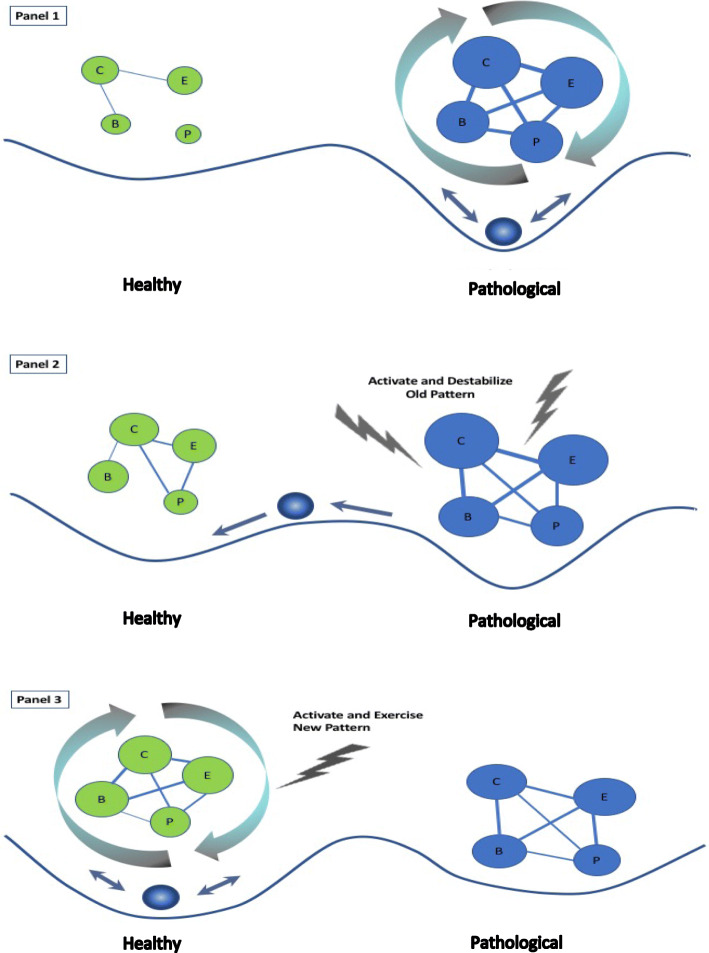
“Figure 1A shows instability-induced change, in which an existing attractor destabilizes to the extent that there is no valley left to contain the ball, making the ball roll towards a new valley [11, 12, 32].”
BackgroundTrajectories of parent criticism across treatment for youth self‐harm
Aitken, M., Perquier, F., Park, B., Carvalho, D., Wright-Hughes, A. M., Cottrell, D. J., & Szatmári, P. (2025) · Journal of Child Psychology and Psychiatry · doi:10.1111/jcpp.14144 · Cited by 7
“Participating in therapy may change established parent – youth interaction patterns, creating opportunities for therapy effects (Hayes & Andrews, 2020).”
Bouwman, V., Mobach, L., Teachman, B. A., & Salemink, E. (2025) · Behaviour Research and Therapy · doi:10.1016/j.brat.2025.104685 · Cited by 4
A Narrative Identity Perspective on Mechanisms of Change in Imagery Rescripting
Çili, S., & Stopa, L. L. (2021) · Frontiers in Psychiatry · doi:10.3389/fpsyt.2021.636071 · Cited by 5
Cane, T. P. C., Newton, P. D., & Foster, J. (2022) · Advances in Dual Diagnosis · doi:10.1108/add-12-2021-0019 · Cited by 4
Prediction of depression onset and development based on network analysis
Weixia, Z., Min, X., Tiantian, Y., Cheng, W., & Shubin, S. (2023) · Advances in Psychological Science · doi:10.3724/sp.j.1042.2023.02129 · Cited by 4
Cui, J., Olthof, M., Hasselman, F., & Lichtwarck‐Aschoff, A. (2025) · BMC Psychiatry · doi:10.1186/s12888-025-06688-5 · Cited by 4
“The destabilization of the unhealthy phase, which corresponds to the loosening of undesirable cognitive, affective, or behavioral patterns [12], then functions as a mechanism for the sudden gain toward a healthier phase.”
InfluentialFeyaerts, J., Brar, P. S., Sass, L. A., & Nelson, B. (2025) · The Lancet Psychiatry · doi:10.1016/s2215-0366(25)00244-5 · Cited by 3
Seizer, L., Kratzer, L., Löchner, J., Schöller, H. J., Aichhorn, W., & Schiepek, G. K. (2026) · Clinical Psychology & Psychotherapy · doi:10.1002/cpp.70222 · Cited by 3
“This pattern resonates with dynamic systems perspectives that conceptualize improvement as the emergence of new attractor states after periods of instability (Hayes and Andrews 2020; G. Schiepek et al. 2020).”
Driessen, J., Goekoop, R., Voerman, S. A., Mulder, A., Verhaar, M., Bos, J. H., Glas, G. G., & van den Berg, D. P. G. (2026) · Clinical Psychological Science · doi:10.1177/21677026251414040 · Cited by 3
Bernardi, R., & Eidlin, M. (2025) · The Psychoanalytic Quarterly · doi:10.1080/00332828.2025.2518927 · Cited by 3
Echterhoff, J., Kriston, L., Klein, J. P., Härter, M. C., Schramm, E., & Schumacher, L. (2024) · Psychotherapy Research · doi:10.1080/10503307.2024.2320349 · Cited by 3
“A first step in understanding potential mechanisms of change is to investigate whether the treatment had effects on the postulated mediators of a treatment and whether these postulated mediators impacted, in turn, relevant symptoms (Hayes & Andrews, 2020).”
Bos, F. M., Schreuder, M. J., George, S. V., Doornbos, B., Bruggeman, R., van der Krieke, L., Haarman, B. C. M., Wichers, M., & Snippe, E. (2021) · doi:10.31234/osf.io/v5b7t · Cited by 3
A unified pathogenic hypothesis for mental disorders based on schismogenesis
Garcı́a-Toro, M., & Gómez-Juanes, R. (2025) · Biosystems · doi:10.1016/j.biosystems.2025.105431 · Cited by 4
Darnell, B. C., Benfer, N., & Litz, B. T. (2025) · Clinical Psychology Review · doi:10.1016/j.cpr.2025.102671 · Cited by 2
Ngabo-Woods, H., Dunai, L., & Verdú, I. S. (2025) · Applied Sciences · doi:10.3390/app152312524 · Cited by 2
The Future of the Biopsychosocial Model: Toward a Transdisciplinary Systems Science of Mental Health
Robinaugh, D. J., Blanken, T. F., Bridger, E. K., Casamento‐Moran, A., de Ron, J., Henry, T. R., Hoekstra, R. H. A., Stratis, G., van de Leemput, I. A., van Nes, E. H., et al. (2026) · Clinical Psychological Science · doi:10.1177/21677026261435464 · Cited by 6
“…the notion that mental disorders emerge from complex systems of interacting components has seen a resurgence of interest (e.g., Borsboom, 2017; Hayes & Andrews, 2020; Nelson et al., 2017; Olthof et al., 2023; Schiepek & Pincus, 2023), and researchers collaborating across ecology, psychiatry,…”
A Multimodal Framework for Prognostic Modelling of Mental Health Treatment and Recovery Trajectories
Ngabo-Woods, H., Dunai, L., Verdú, I. S., & Sui, L. (2026) · Applied Sciences · doi:10.3390/app16020763 · Cited by 2
Mikkonen, K., Lintula, S. J., Rosenström, T. H., Lahti, J. M. T., Helminen, E.-E., Saarni, S. I., & Saarni, S. E. (2026) · Journal of Affective Disorders · doi:10.1016/j.jad.2026.121225 · Cited by 2
A topological data analysis method for revealing dynamic changes in psychotherapy microprocesses
Luo, X., & Zhang, M. (2026) · Frontiers in Psychology · doi:10.3389/fpsyg.2025.1711782 · Cited by 2
“Such saddle-driven dynamics are rarely examined in psychotherapy literature [see recent reviews by Hayes and Andrews (2020), and Klocek et al. (2024)], while continue to gain attention in other domains such as neuroscience (Kelso, 2012; Tognoli and Kelso, 2014; Hancock et al., 2025).”
Pham, T. D. (2021) · International Conference on Electrical, Computer and Energy Technologies (ICECET) · doi:10.1109/icecet52533.2021.9698467 · Cited by 2
“Based on this hypothesis, the theory of chaos and methods for nonlinear data analysis of complex systems have been applied for studying mood disorders and psychotherapy [5], [6].”
BackgroundThe subject-environment interplay between runners from different Brazilian macro-regions
Thuany, M., Bandeira, P. F. R., Vieira, D. A., Weiss, K., Knechtle, B., & Gomes, T. N. (2023) · Frontiers in Psychology · doi:10.3389/fpsyg.2023.1134797 · Cited by 3
“, 2022), psychology (Medin, 2017; Hayes and Andrews, 2020), and sports science”
BackgroundBooth, N., McConnell, T., Tully, M. A., Hamill, R., & Best, P. (2024) · Mental Health and Digital Technologies · doi:10.1108/mhdt-11-2023-0002 · Cited by 4
Kroemeke, A., Dudek, J. E., Kijowska, M., Owen, R., & Sobczyk‐Kruszelnicka, M. (2024) · Trials · doi:10.1186/s13063-024-08235-1 · Cited by 2
“The latter assumes that an intervention transforms the connectivity of the networks of intervention goals, the outcome of the intervention, and the connections between the two networks [35, 36].”
BackgroundComparing two major approaches to unifying psychology: Different goals, different outcomes
Young, G. C. (2024) · Current Psychology · doi:10.1007/s12144-024-06838-0 · Cited by 2
“In terms of the research program required to test the cur - rent model, the article gives one example related to sys - tems theory, following Gelo and Salvatore ( 2016), Hayes and Andrews ( 2020), Hofmann et al. (2020 ), and Schiepek and Pincus (2023 ).”
The Evolution of Parenting: Styles or Principles?
Friggieri, J., & Ellul, D. B. (2025) · Education and human development · doi:10.5772/intechopen.1008384 · Cited by 2
Systemische (Psychotherapie-)Forschung
Ochs, M. (2024) · Springer eBooks · doi:10.1007/978-3-662-64728-8_7 · Cited by 2
Preventive Mental Health Care: A Complex Systems Framework for Ambient Smart EnvironmentsPreprint
White, B. P., & Hipólito, I. (2023) · PsyArXiv (OSF Preprints) · doi:10.31234/osf.io/etsu4 · Cited by 3
Mind as “E”nteraction: Towards the Complexity HypothesisPreprint
Hipólito, I., van Geert, P. L. C., & Pessoa, L. (2023) · doi:10.31234/osf.io/2dtp6 · Cited by 2
Cui, J., Hasselman, F., Olthof, M., & Lichtwarck‐Aschoff, A. (2024) · PsyArXiv (OSF Preprints) · doi:10.31234/osf.io/b68wh · Cited by 2
Farahani, H., Blagojević, M., Azadfallah, P., Watson, P., Esrafilian, F., & Saljoughi, S. (2023) · Springer eBooks · doi:10.1007/978-3-031-31172-7_4 · Cited by 1
Otaif, F. A., & Asiri, A. (2025) · Multimodal Communication · doi:10.1515/mc-2024-0080 · Cited by 1
Psychodynamic psychotherapists’ perceptions of change: A phenomenological analysis
Antichi, L., Biondi, B., Giannini, M., & Grotto, R. L. (2025) · Psychotherapy Research · doi:10.1080/10503307.2025.2535564 · Cited by 1
“Research suggests that change often happens nonli-nearly, through sudden shifts or early rapid gains (Hayes et al., 2005; Hayes & Andrews, 2020; Tang & DeRubeis, 1999), which challenges models that assume steady progression.”
Pacing in New York City Marathon: a tracking approach
Thuany, M., Weiss, K., Villiger, E., Scheer, V., Gomes, T. N., Čuk, I., Andrade, M. S., Nikolaidis, P. Τ., Rosemann, T. J., & Knechtle, B. (2025) · Sport Sciences for Health · doi:10.1007/s11332-025-01549-w · Cited by 1
“Stability, change, and predictability are important facets of tracking, having been primordially studied in the context of motor behavior [20] and physical activity [19, 21].”
Cheng, F., Ma, Z., & Zeng, C. (2025) · Physica A Statistical Mechanics and its Applications · doi:10.1016/j.physa.2025.131170 · Cited by 1
Metadata
- Authors
- Hayes, A. M., & Andrews, L. A.
- Affiliations
- University of Delaware (US)
- Corresponding author
- Hayes, Adele M.
- Venue
- BMC Medicine
- Published
- 2020-07-14
- Volume
- 18
- Issue
- 1
- Pages
- 197-197
- ISSN
- 1741-7015 (ISSN-L)
- PMC
- PMC7359463
- OpenAlex
- W3042416448
- Cited by
- 149
- References
- 128
- Citations by year
- 2026: 25 · 2025: 31 · 2024: 25 · 2023: 33 · 2022: 22 · 2021: 11 · 2020: 2
- FWCI
- 6.81
- Type
- journal article
- Language
- en
- Open access
- gold
- doi.org
- Locations
- BMC Medicine (publishedVersion, cc-by)
- PubMed Central (publishedVersion, cc-by)
- PubMed (publishedVersion)
- DOAJ (DOAJ: Directory of Open Access Journals) (submittedVersion, cc-by-sa)
- Funders
- Foundation for the National Institutes of Health (R21-MH062662, R01-MH086558)
- Topics
- Social Sciences › Psychology › Clinical Psychology › Psychotherapy Techniques and Applications
- Social Sciences › Psychology › Experimental and Cognitive Psychology › Mental Health Research Topics
- Social Sciences › Education › Chaos, Complexity, and Education
- Keywords
- psychotherapeutic change, complex systems, dynamical systems theory, synergetics, network theory, critical slowing down, critical fluctuations, early warning indicators, system transition, nonlinear dynamics, psychopathology, ambulatory assessment, digital assessment
- MeSH terms
- Delivery of Health Care, Feedback, Humans, Psychotherapy
About these checks
Registry, retraction, Cites and statistics results are computed, not judged, with one exception: a printed reference that no index lists is read once by a model before it counts as a citation error. Claims are extracted by a model and kept only when their quote appears verbatim in the text; each cited source is then checked, with a model’s help, for whether it says what the claim relies on. Those verdicts can be wrong — read the claim’s quote and the cited source before relying on one.
Statistics and arithmetic are recomputed, not judged.
Confidence bands are shown only for fields calibrated on our annotated test set. None is calibrated yet, so no band is shown.
What counts as a claim ›How we measure confidence ›How we check this ›
Are you an author, or do you see a problem with this page? Request a review
