

Genomic correlation, shared loci, and causal relationship between obesity and polycystic ovary syndrome: a large-scale genome-wide cross-trait analysis
Open accessThe DOI matches its Crossref record; 71 of the 71 references it cites were found in a registry or an index.
Abstract
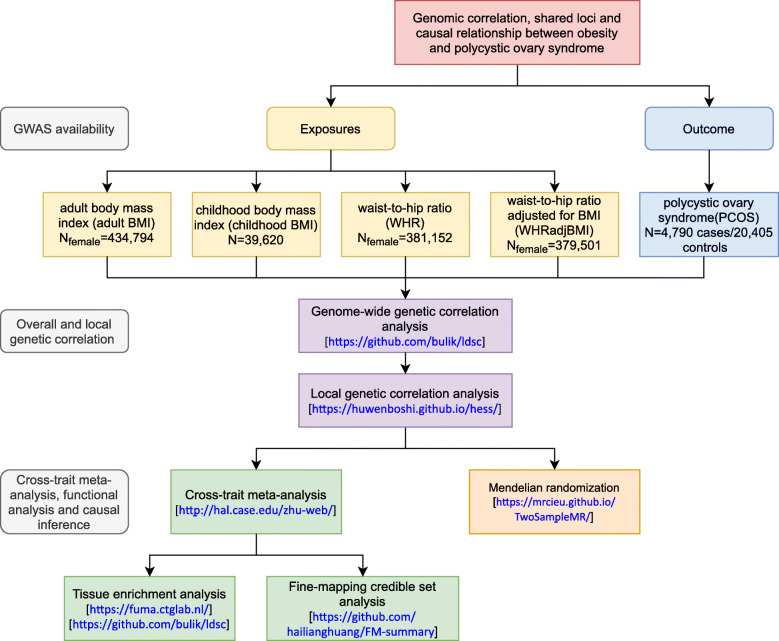
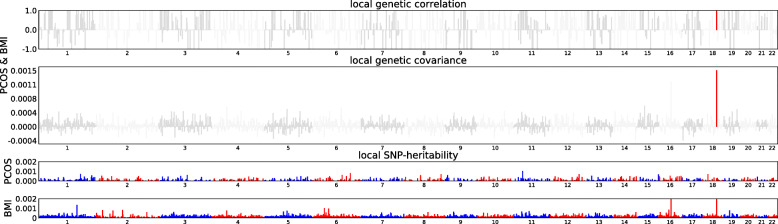
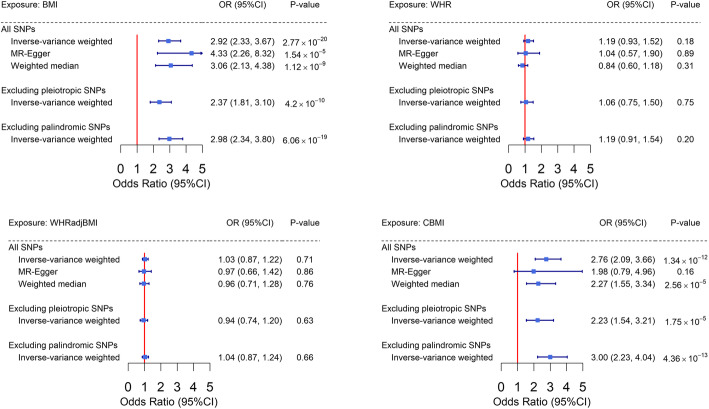
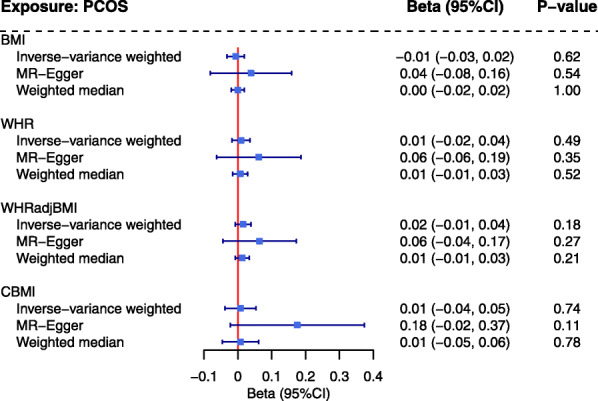
Background: The comorbidity between polycystic ovary syndrome (PCOS) and obesity has long been observed in clinical settings, but their shared genetic basis remains unclear. Methods: Leveraging summary statistics of large-scale GWAS(s) conducted in European-ancestry populations on body mass index (adult BMI, N female =434,794; childhood BMI, N =39,620), waist-to-hip ratio (WHR, N female =381,152), WHR adjusted for BMI (WHR adj BMI, N female =379,501), and PCOS ( N case =10,074, N control =103,164), we performed a large-scale genome-wide cross-trait analysis to quantify overall and local genetic correlation, to identify shared loci, and to infer causal relationship. Results: We found positive genetic correlations between PCOS and adult BMI ( r g =0.47, P =2.19×10 −16 ), childhood BMI ( r g =0.31, P =6.72×10 −5 ), and WHR ( r g =0.32, P =1.34×10 −10 ), all withstanding Bonferroni correction. A suggestive significant genetic correlation was found between PCOS and WHR adj BMI ( r g =0.09, P =0.04). Partitioning the whole genome into 1703 nearly independent regions, we observed a significant local genetic correlation for adult BMI and PCOS at chromosome 18: 57630483–59020751. We identified 16 shared loci underlying PCOS and obesity-related traits via cross-trait meta-analysis including 9 loci shared between BMI and PCOS (adult BMI and PCOS: 5 loci; childhood BMI and PCOS: 4 loci), 6 loci shared between WHR and PCOS, and 5 loci shared between WHR adj BMI and PCOS. Mendelian randomization (MR) supported the causal roles of both adult BMI (OR=2.92, 95% CI=2.33–3.67) and childhood BMI (OR=2.76, 95% CI=2.09–3.66) in PCOS, but not WHR (OR=1.19, 95% CI=0.93–1.52) or WHR adj BMI (OR=1.03, 95% CI=0.87–1.22). Genetic predisposition to PCOS did not seem to influence the risk of obesity-related traits. Conclusions: Our cross-trait analysis suggests a shared genetic basis underlying obesity and PCOS and provides novel insights into the biological mechanisms underlying these complex traits. Our work informs public health intervention by confirming the important role of weight management in PCOS prevention.
Overview
The claims and statistics of this paper haven’t been checked yet.
Free: it reads the open-access text and checks the first 5 claims that cite a source we can check. Create a free account to check every claim.
Integrity signals
Registry
Cites
Statistics
Figures
Verification
Claims the paper makes
The claims and statistics of this paper haven’t been checked yet.
Free: it reads the open-access text and checks the first 5 claims that cite a source we can check. Create a free account to check every claim.
Self-check
Percentages, sums and reported differences re-computed from the paper’s own numbers.
The self-check needs the paper’s full text.
Citations
Cites
PLINK: a tool set for whole-genome association and population-based linkage analyses.
Purcell, S., Neale, B., Todd-Brown, K., Thomas, L., Ferreira, M. A. R., Bender, D., Maller, J., Sklar, P., de Bakker, P. I. W., Daly, M. J., et al. (2007) · The American Journal of Human Genetics · doi:10.1086/519795 · Cited by 34,089 · cited 5×
“05) were first used to obtain LD-based clumps [16], followed by a proximal conditional and joint testing to identify primary and secondary signals within each of the clumping-based loci.”
MethodInfluentialBowden, J., Davey Smith, G., & Burgess, S. (2015) · International Journal of Epidemiology · doi:10.1093/ije/dyv080 · Cited by 9,816 · cited 1×
“We applied an inverse-variance weighted (IVW) approach [25] as our primary MR analysis, an MR-Egger regression [26], and a weighted-median estimator approach [27] to examine the robustness of our findings under relaxed model assumptions.”
MethodBowden, J., Davey Smith, G., Haycock, P. C., & Burgess, S. (2016) · Genetic Epidemiology · doi:10.1002/gepi.21965 · Cited by 8,922 · cited 1×
“We applied an inverse-variance weighted (IVW) approach [25] as our primary MR analysis, an MR-Egger regression [26], and a weighted-median estimator approach [27] to examine the robustness of our findings under relaxed model assumptions.”
MethodGenetics of Food Intake Self-Regulation in Childhood: Literature Review and Research Opportunities
Faith, M. S., Carnell, S., & Kral, T. V. E. (2013) · Human Heredity · doi:10.1159/000353879 · Cited by 7,601
Integrative analysis of 111 reference human epigenomes
Roadmap Epigenomics Consortium, Kundaje, A., Meuleman, W., Ernst, J., Bilenky, M., Yen, A., Heravi-Moussavi, A., Kheradpour, P., Zhang, Z., Wang, J., et al. (2015) · Nature · doi:10.1038/nature14248 · Cited by 6,368 · cited 1×
“Pre-computed annotations constructed from epigenomics data from Roadmap Epigenomics Project [24] (DNase hypersensitivity, H3K27ac, H3K4me3, H3K4me1, H3K9ac, and/or H3K36me3 chromatin marks) were used in our analysis.”
MethodLippa, N. C., & Sanderson, S. C. (2013) · Human Heredity · doi:10.1159/000353712 · Cited by 6,078
LD Score regression distinguishes confounding from polygenicity in genome-wide association studies
Schizophrenia Working Group of the Psychiatric Genomics Consortium, Bulik-Sullivan, B. K., Loh, P.-R., Finucane, H. K., Ripke, S., Yang, J., Patterson, N., Daly, M. J., Price, A. L., & Neale, B. M. (2015) · Nature Genetics · doi:10.1038/ng.3211 · Cited by 5,559 · cited 8×
“Genome-wide genetic correlations estimated by LDSC quantify the genome-wide contribution of genetic variation to the correlation between two traits.”
MethodInfluentialFrayling, T. M., Timpson, N. J., Weedon, M. N., Zeggini, E., Freathy, R. M., Lindgren, C. M., Perry, J. R. B., Elliott, K. S., Lango, H., Rayner, N. W., et al. (2007) · Science · doi:10.1126/science.1141634 · Cited by 4,531
An atlas of genetic correlations across human diseases and traits
ReproGen Consortium, Bulik-Sullivan, B., Psychiatric Genomics Consortium, Genetic Consortium for Anorexia Nervosa of the Wellcome Trust Case Control Consortium 3, Finucane, H. K., Anttila, V., Gusev, A., Day, F. R., Loh, P.-R., Duncan, L., et al. (2015) · Nature Genetics · doi:10.1038/ng.3406 · Cited by 4,255 · cited 8×
“Genome-wide genetic correlations estimated by LDSC quantify the genome-wide contribution of genetic variation to the correlation between two traits.”
MethodInfluentialYengo, L., Sidorenko, J., Kemper, K. E., Zheng, Z., Wood, A. R., Weedon, M. N., Frayling, T. M., Hirschhorn, J., Yang, J., Visscher, P. M., et al. (2018) · Human Molecular Genetics · doi:10.1093/hmg/ddy271 · Cited by 2,367 · cited 3×
“(before age 10) (N=39,620) [14] and adult [11]), waistto-hip ratio [15] (WHR, adult), and waist-to-hip ratio”
BackgroundMethod
Research works printed but not linked: 1
- Huang H. hailianghuang/FM-summary. R; 2021.
Cited by
Stener-Victorin, E., Teede, H., Norman, R. J., Legro, R., Goodarzi, M. O., Dokras, A., Laven, J., Hoeger, K., & Piltonen, T. T. (2024) · Nature Reviews Disease Primers · doi:10.1038/s41572-024-00511-3 · Cited by 495
“Mendelian randomization has suggested that high BMI 79,82,88–90 , insulin resistance 79 , increased fasting insulin 5 and reduced levels of sex hormone-binding globulin (SHBG) 6,79 may cause PCOS.”
Self-citationPolycystic ovary syndrome as a metabolic disease
Helvaci, N., & Yildiz, B. O. (2025) · Nature Reviews Endocrinology · doi:10.1038/s41574-024-01057-w · Cited by 188
“Mendelian randomization analyses in European and East Asian cohorts indicate that increased BMI is a causal factor in the development of PCOS, with an almost threefold increased risk of PCOS per standard deviation increment (4.8 kg/m 2 ) in BMI 55,110–112 .”
InfluentialPolycystic Ovary Syndrome: Challenges and Possible Solutions
Che, Y., Yu, J., Li, Y., Zhu, Y., & Tao, T. (2023) · Journal of Clinical Medicine · doi:10.3390/jcm12041500 · Cited by 87
“[12,13] reported obesity and T2DM shared a common genetic basis to PCOS through serval loci (ERBB3, FTO, PROX1, GIPR, and MC4R for obesity [12], and ADCY5, FTO, GIPR, and”
BackgroundVine, D., Ghosh, M., Wang, T., & Bakal, J. (2024) · CJC Open · doi:10.1016/j.cjco.2023.12.010 · Cited by 53
“68 However, genetic predisposition to PCOS may not predict obesity-related traits, and PCOS has been shown to be independent of obesity and to be dependent on ethnicity, nationality, socioeconomic status, and demographics.”
BackgroundLiu, Q., Tang, B., Zhu, Z., Kraft, P., Deng, Q., Stener-Victorin, E., & Jiang, X. (2022) · Diabetologia · doi:10.1007/s00125-022-05746-x · Cited by 56
“BMI may not be sufficient at reflecting adiposity, yet the results from our previous investigation largely supported the role of BMI rather than fat distribution (waist-to-hip ratio with and without adjusting for BMI) in the development of PCOS [30].”
ResultSelf-citationPolycystic ovary syndrome: A metabolic disorder with therapeutic opportunities
Zhang, Y., Chen, Z., & Zhao, H. (2025) · Cell Metabolism · doi:10.1016/j.cmet.2025.08.002 · Cited by 67
Mączka, K., Stasiak, O., Przybysz, P., Grymowicz, M., & Smolarczyk, R. (2024) · International Journal of Molecular Sciences · doi:10.3390/ijms25179391 · Cited by 38
Update on Animal Models of Polycystic Ovary Syndrome
Stener‐Victorin, E. (2022) · Endocrinology · doi:10.1210/endocr/bqac164 · Cited by 46
Self-citationMin, Q., Geng, H., Gao, Q., & Xu, M. (2023) · Frontiers in Microbiology · doi:10.3389/fmicb.2023.1203902 · Cited by 39
“Currently, MR methods have been extensively employed in association studies between PCOS and related diseases or traits, including breast cancer, ovarian cancer, hormones, and human body composition (Chen et al., 2021; De Silva et al., 2022; Liu et al., 2022; Wang et al., 2022).”
MethodGenetic and Epigenetic Landscape for Drug Development in Polycystic Ovary Syndrome
Chen, Y., Wang, G., Chen, J., Wang, C., Dong, X., Chang, H., Yuan, S., Zhao, Y., & Mu, L. (2024) · Endocrine Reviews · doi:10.1210/endrev/bnae002 · Cited by 41
Unraveling the complexity of polycystic ovary syndrome with animal models
Liu, H., Tu, M., Yin, Z., Zhang, D., Ma, J., & He, F. (2023) · Journal of genetics and genomics/Journal of Genetics and Genomics · doi:10.1016/j.jgg.2023.09.012 · Cited by 30
Liu, K., Zhang, Y., Martín, C., Ma, X., & Shen, B. (2022) · International Journal of Molecular Sciences · doi:10.3390/ijms24010004 · Cited by 23
From Pathophysiology to Treatment: The Role of Ferroptosis in PCOS
An, J., Zhou, Q., Guo, X., Xu, C., Jia, X., Cao, Z., & Lu, Q. (2025) · Frontiers in Bioscience-Landmark · doi:10.31083/fbl25586 · Cited by 20
An enhanced framework for local genetic correlation analysis
Li, Y., Yudi Pawitan, Y., & Shen, X. (2025) · Nature Genetics · doi:10.1038/s41588-025-02123-3 · Cited by 21
Pathogenesis and treatment of obesity-related polycystic ovary syndrome
Ouyang, X., Zhou, Q., Tang, H., & Li, L. (2025) · Journal of Ovarian Research · doi:10.1186/s13048-025-01817-w · Cited by 28
“It is both a common comorbidity and a significant pathogenic factor in PCOS [7, 8].”
Bila, J. S., Dotlić, J., Andjić, M., Ivanović, K., Micić, J., Tulić, L., Pupovac, M., Stojnić, J., Vuković, I., & Ivanovic, S. (2025) · Journal of Clinical Medicine · doi:10.3390/jcm14165642 · Cited by 25
“…by ovarian 17-hydroxyprogesterone (17-OH-Pg) hyper-responsivity to gonadotropin stimulation, marked by deregulated steroidogenesis, particularly at the level of cytochrome P450c17, which is the main enzyme in the process of androgen synthesis in the ovaries and the adrenal glands [13,14].”
Lunddorf, L. L. H., Arendt, L. H., Ernst, A., Brix, N., Knudsen, U. B., Olsen, J., & Ramlau‐Hansen, C. H. (2022) · Human Reproduction · doi:10.1093/humrep/deac197 · Cited by 17
Stener‐Victorin, E., Eriksson, G., Shrestha, M. M., Paris, V. R., Lu, H., Banks, J. L., Samad, M., Perian, C., Jude, B., Engman, V., et al. (2024) · eLife · doi:10.7554/elife.87592 · Cited by 22
“In recent independent bidirectional Mendelian studies, obesity is even thought to contribute to or cause the development of PCOS ( Brower et al., 2019 ; Zhao et al., 2020 ; Liu et al., 2022 ).”
Self-citationDu, C., & Wang, C. (2024) · Environmental Science and Pollution Research · doi:10.1007/s11356-024-32758-4 · Cited by 16
“Many developed nations have allocated significant research funding towards enhancing digital technol-ogy’s research and development to dominate the industry (Liu et al. 2022).”
Li, X., Xiao, H., Ma, Y., Zhou, Z., & Chen, D. (2022) · Frontiers in Genetics · doi:10.3389/fgene.2022.905716 · Cited by 15
“The mapped genes (FTO, SLC38A11, and RNA5SP111) of the identified PCOS SNPs in our study were also associated with obesity-related traits, including WHR, WHR adjusting for BMI, and childhood BMI (CBMI), suggesting the shared genetic architecture of PCOS, T2D, and obesity (Liu et al., 2022).”
BackgroundPei, Y., Risal, S., Jiang, H., Lu, H., Lindgren, E., Stener‐Victorin, E., & Deng, Q. (2023) · Communications Biology · doi:10.1038/s42003-022-04362-0 · Cited by 12
Self-citationPCOS - the many faces of a disorder in women and men
Lafcı, N. G., Yılmaz, B., & Yıldız, B. O. (2024) · Journal of Endocrinological Investigation · doi:10.1007/s40618-024-02512-1 · Cited by 14
“In addition, the polygenic overlap between PCOS and T2DM was evaluated using the summary statistics of multi-GWAS and it was shown that the genes predisposing to PCOS risk also increase the risk of diabetes [109, 110].”
Almawi, W. Y., Nemr, R., Atazhanova, T., Malalla, Z. H. A., Sarray, S., Mustafa, F. E., & Mahmood, N. (2023) · Reproductive Sciences · doi:10.1007/s43032-022-01149-w · Cited by 13
“This was highlighted by the capacity of FTO gene variants in altering the activity of nearby genes, including IRX3 and IRX5, and consequently adipocytes differentiation and function [28], and by the association of FTO polymorphic variants with several pathologies, including PCOS [11, 27, 28].”
BackgroundChan, J. L., Masini, I., & Pisarska, M. D. (2026) · Journal of Clinical Investigation · doi:10.1172/jci202824 · Cited by 22
“These incretin receptors are targets for medications approved for the treatment of obesity and diabetes, and given the shared underlying genetics between obesity and PCOS/ PMOS, the drugs may prove effective for PCOS/PMOS as well (113, 114).”
Diagnosis and Treatment of Adolescent Polycystic Ovary syndrome:A Review
Zhang, Y., Yang, K., Fan, T., Zheng, D., & Liu, H. (2025) · International Journal of Women s Health · doi:10.2147/ijwh.s506498 · Cited by 12
“60 In summary, when adolescent females display one or more metabolic abnormalities (such as obesity, dyslipidemia, or impaired glucose tolerance), clinical vigilance should increase to consider the possibility of PCOS, prompting timely screening and assessment.”
Tinano, F. R., Machado, I. F. R., Latronico, A. C., & Gomes, L. G. (2025) · Journal of Neuroscience · doi:10.1523/jneurosci.1681-24.2024 · Cited by 9
Lu, X., Ji, L., Chen, D., Lian, X., & Yuan, M. (2025) · Diabetes Metabolic Syndrome and Obesity · doi:10.2147/dmso.s528669 · Cited by 7
MASLD, diabetes and PMOS across the female life stages
Stener‐Victorin, E., Carlsson, S., Hagström, H., & Taebnia, N. (2026) · Diabetologia · doi:10.1007/s00125-026-06761-y · Cited by 7
“Mendelian randomisation supports a causal contribution of increased BMI (and in some analyses type 2 diabetes liability) to PMOS risk, while evidence for reverse causality is inconsistent [48, 51, 52].”
Self-citationMiao, J., Gao, L., Liu, X., Cai, W., Chen, L., Chen, M., & Sun, Y. (2024) · Frontiers in Medicine · doi:10.3389/fmed.2024.1455964 · Cited by 8
“Epidemiologic surveys estimate that the global prevalence of PCOS is approximately 8–13% (3).”
BackgroundNext-generation Approaches in Targeting Polycystic Ovarian Syndrome: Innovative Strategies
Narayanan, P. L., Sugumar, S., Rushendran, R., & Vellapandian, C. (2025) · Current Medicinal Chemistry · doi:10.2174/0109298673368951250404170052 · Cited by 12
Zhang, Q., Ke, W., Ye, J., Zhang, P., Yang, Q., Pan, F., Wang, K., & Zha, B. (2024) · Endocrine · doi:10.1007/s12020-024-03756-w · Cited by 5
“In this session, rs2068834 and rs429358 were excluded of thyroid function due to their genome-wide signi fi cant association with obesity and dyslipidemia, which had been reported to be causally associated with the onset of PCOS [27, 28].”
Xia, Q., Wu, Q., Feng, J., He, H., Cai, W.-Y., Li, J., Cong, J., Ma, H., Jia, L., Xie, L., et al. (2024) · Journal of Ovarian Research · doi:10.1186/s13048-024-01505-1 · Cited by 5
“Moreover, BMI and WHR, as proxy measures of obesity, have been demonstrated to be good predictors of reproductive outcomes in women with PCOS [23].”
BackgroundMethodLi, Z., Dang, W., Hao, T., Zhang, H., Yao, Z., Zhou, W., Deng, L., Yu, H., Wen, Y., & Liu, L. (2023) · Frontiers in Psychiatry · doi:10.3389/fpsyt.2023.1144697 · Cited by 6
“For example, the cross-trait meta-analysis has found that there are shared genetic mechanisms between polycystic ovary syndrome and obesity (8), and it also provided the novel insights into the potential shared genetic architectures among five ocular diseases (9).”
BackgroundShao, H., Xu, C., Wang, H., Lu, N., Gu, H., Zhang, C., Li, L., Sun, Q., Guan, R., & Xuan, B. (2025) · Reproductive Biology and Endocrinology · doi:10.1186/s12958-025-01406-y · Cited by 4
“Jiang et al. conducted a large-scale genomic analysis revealing significant genetic links between BMI and PCOS, identifying several shared genetic loci [15].”
Linkage Disequilibrium Score Statistic Regression for Identifying Novel Trait Associations
Pettit, R. W., & Amos, C. I. (2022) · Current Epidemiology Reports · doi:10.1007/s40471-022-00297-6 · Cited by 4
Clinical Value and Mechanism Exploration of Serum miR-379 in Obesity-Polycystic Ovary Syndrome
Huang, L., Fu, Y., Cao, J., & Zhai, J. (2024) · International Journal of Women s Health · doi:10.2147/ijwh.s427997 · Cited by 3
“14 Moderate weight loss (5”
Basnet, J., Rezq, S., Huffman, A. M., Asala, T. E., Cardozo, L. L. Y., & Romero, D. G. (2025) · Endocrinology · doi:10.1210/endocr/bqaf091 · Cited by 3
Polycystic ovary syndrome and obesity: a modern paradigm
Khamoshina, M. B., Artemenko, Y. S., Bayramova, A. A., Андреевна, Р. В., & Orazov, M. R. (2022) · RUDN Journal of Medicine · doi:10.22363/2313-0245-2022-26-4-382-395 · Cited by 6
“This study suggests a common genetic basis for obesity and PCOS [81].”
BackgroundStener‐Victorin, E., Eriksson, G., Shrestha, M. M., Paris, V. R., Lu, H., Banks, J. L., Samad, M., Perian, C., Jude, B., Engman, V., et al. (2023) · medRxiv · doi:10.1101/2023.03.08.23286896 · Cited by 3
“In recent independent bidirectional Mendelian studies, obesity is even thought to contribute to or cause the development of PCOS (Brower et al. , 2019; Zhao et al. , 2020; Liu et al. , 2022).”
Self-citationLi, S., Wang, T., Liu, M., Ma, T., Li, Y., Liu, J., Liu, Y., Shen, W., Ma, J., Wang, X., et al. (2025) · Molecular Nutrition & Food Research · doi:10.1002/mnfr.70136 · Cited by 5
Lyu, Y., Cai, L., & Li, M. (2025) · Frontiers in Medicine · doi:10.3389/fmed.2025.1609131 · Cited by 2
Wu, Y., Cai, W., Chen, M., Luo, T., Norman, R. J., Khomami, M. B., Moran, L., Zhang, H., Samarasinghe, S., Rawaf, S., et al. (2026) · iScience · doi:10.1016/j.isci.2026.115116 · Cited by 3
Petersen, L. K., Brixi, G., Li, J., Hu, J., Wang, Z., Han, X., Meir, A. Y., Tyrmi, J. S., Mahalingaiah, S., Piltonen, T., et al. (2023) · medRxiv · doi:10.1101/2023.10.17.23297115 · Cited by 3
“Previous studies have found significant genetic correlations between PCOS, BMI, and waist-to-hip ratio (WHR), suggesting a shared genetic architecture [15].”
Wang, Q., Wang, X., Zhuang, Q.-Z., Wu, Y., Zhang, J., Lu, Y., Wu, J., Liu, J., Hu, X., & Han, L. (2024) · Molecular Genetics & Genomic Medicine · doi:10.1002/mgg3.70022 · Cited by 1
“Here, we applied paired S Het , which is an expansion of S Hom with greater capability in the presence of multiple genetic effects and which is more commonly used (Liu et al. 2022).”
MethodChen, P., Ni, S., Liu, Q., & Ouyang, L. (2024) · Frontiers in Nutrition · doi:10.3389/fnut.2024.1434648 · Cited by 1
Self-citationWang, Y., Ding, J., Min, Y., Zhang, Y., Ming, J., & Yin, T. (2025) · International Journal of Gynecology & Obstetrics · doi:10.1002/ijgo.70108 · Cited by 2
Yang, J., Zhang, X., Zhang, H., Guo, X., Ren, F., & Dong, C. (2025) · International Journal of Women s Health · doi:10.2147/ijwh.s552619 · Cited by 1
“11 Furthermore, according to the WHO, body fat distribution is a superior predictor of metabolic abnormalities compared to overall obesity.”
Zhu, H., Yi, X., He, M., Wu, S., Li, M., & Gao, S. (2025) · Pediatric Obesity · doi:10.1111/ijpo.70071 · Cited by 3
“Most studies provided a comprehensive delineation of their inherent limitations within the ‘Discussion’ section, whereas three studies didn't mention them [38, 49].”
Genome‐wide cross‐trait analysis of heterogeneous outcomes in early life atopic dermatitis
Martin, L. J., He, H., Spagna, D., Jenkins, S., Grashel, B., Chang, W. C., Williams, L., Hammonds, M., Johansson, E., Sherenian, M. G., et al. (2025) · Pediatric Allergy and Immunology · doi:10.1111/pai.70253 · Cited by 1
“Cross-trait GWAS, successful in other diseases, 15,16 offers a powerful approach to uncover shared genetics across AD traits.”
杨, 宇. (2023) · Advances in Clinical Medicine · doi:10.12677/acm.2023.1391943 · Cited by 1
Sivalingarajah, R., Kopalasuntharan, M., Thirunavukarasu, K., Sivakumar, A., & Kavirajan, T. (2024) · Sri Lanka Journal of Obstetrics and Gynaecology · doi:10.4038/sljog.v46i2.8156 · Cited by 1
Type I fiber decrease and ectopic fat accumulation in skeletal muscle from women with PCOSPreprint
Stener‐Victorin, E., Eriksson, G., Shrestha, M. M., Paris, V. R., Lu, H., Banks, J. L., Samad, M., Perian, C., Jude, B., Engman, V., et al. (2023) · eLife · doi:10.7554/elife.87592.2 · Cited by 1
Self-citationType I fiber decrease and ectopic fat accumulation in skeletal muscle from women with PCOSPreprint
Stener‐Victorin, E., Eriksson, G., Shrestha, M. M., Perian, C., Jude, B., Engman, V., Boi, R., Nilsson, E., Ling, C., Nyström, J., et al. (2023) · eLife · doi:10.7554/elife.87592.1 · Cited by 1
Self-citationCerebellum Connects the Genetic Architecture of Site-Specific Osteoarthritis and Body Mass IndexPreprint
Yu, Y., Tang, M., Hong, D., Lei, X., & Zhang, L. (2023) · SSRN Electronic Journal · doi:10.2139/ssrn.4603258
岳, 玺. (2024) · Advances in Clinical Medicine · doi:10.12677/acm.2024.142635
Polytechnic Overeat Sintrems and Disease
Bhushan, S. R. P. (2023) · International Journal of Science and Research (IJSR) · doi:10.21275/sr23514113131
Feng, W., Xie, X., Su, Y. A., Jin, R., & Shi, W. (2024) · Gynecological Endocrinology · doi:10.1080/09513590.2024.2439886 · Cited by 2
“As reported, non-obese PCOS patients had mild to severe endocrine and metabolic abnormalities and IR, in contrast to obese PCOS patients (16, 17).”
Zhang, Y., Zhou, W., Su, Q., & Chen, Q. (2025) · Combinatorial Chemistry & High Throughput Screening · doi:10.2174/0113862073325251241101054306
Ding, N., Chen, Y.-R., Jia, R. J., Lu, X., Xie, S.-L., Shang, H. L., & Jian-gang, S. (2025) · Endocrine Research · doi:10.1080/07435800.2025.2521386
“15,16 To date, just one study 17 also has been performed on impact of gene-obesity interaction on PCOS risk.”
Xu, Y., Si, Y., Li, N., Wang, R., Hua, M., Xiu, L., Zhao, H., & Ren, Q. (2025) · Frontiers in Nutrition · doi:10.3389/fnut.2025.1644496 · Cited by 1
Polyzystisches Ovarsyndrom: Sinnvolle Betreuung über die Gynäkologie hinaus
Lee-Barkey, Y. H., Stratmann, B., Klose, J. M., & Reger-Tan, S. (2025) · Deutsches Ärzteblatt · doi:10.3238/persgyn.2025.10.17.05
Metabolic complications in a large cohort of Portuguese women with hirsutism-related disorders
Pinto, J., Cera, N., & Pignatelli, D. (2025) · Journal of Endocrinological Investigation · doi:10.1007/s40618-025-02744-9 · Cited by 1
Wei, S., Wang, Y., Liu, N., & Zhao, R. (2025) · Eating and Weight Disorders - Studies on Anorexia Bulimia and Obesity · doi:10.1007/s40519-025-01801-9
“Similarly, a Northern Finnish birth cohort study revealed that women with PCOS had lower birth weight, earlier adiposity rebound, and a higher prevalence of subsequent obesity [18].”
Polycystic Ovarian Syndrome: A Breakthrough Etiology, Symptoms and Therapy
Gomaa, H. F. (2026) · JOURNAL of QASSIM UNIVERSITY FOR SCIENCE · doi:10.25259/jqus_14_2026
Li, H., Zhang, X., Yang, H., Li, J., & Yang, J. (2026) · Skin Appendage Disorders · doi:10.1159/000553568
Cheng, X., Li, Y., Zhu, M., 蔡亞潔, Wei, N., Liu, Y., & Liu, Y. (2026) · Chinese Herbal Medicines · doi:10.1016/j.chmed.2026.10.002
Metadata
- Authors
- Liu, Q., Zhu, Z., Kraft, P., Deng, Q., Stener-Victorin, E., & Jiang, X.
- Affiliations
- Karolinska Institutet (SE)
- Harvard University (US)
- Corresponding author
- Jiang, Xia
- Venue
- BMC Medicine
- Published
- 2022-02-11
- Volume
- 20
- Issue
- 1
- Pages
- 66-66
- ISSN
- 1741-7015 (ISSN-L)
- PMC
- PMC8832782
- OpenAlex
- W4211187870
- Semantic Scholar
- 4fa90cb2aaf69b97f11e10ae99873d07d707e3c8
- Cited by
- 68
- References
- 70
- Citations by year
- 2026: 6 · 2025: 23 · 2024: 16 · 2023: 15 · 2022: 8
- FWCI
- 2.50
- Type
- journal article
- Language
- en
- Open access
- gold
- doi.org
- Licence
- cc-by
- creativecommons.org/licenses/by/4.0 (tdm)
- creativecommons.org/licenses/by/4.0 (vor)
- Locations
- BMC Medicine (publishedVersion, cc-by)
- PubMed Central (publishedVersion, cc-by)
- PubMed (publishedVersion)
- DOAJ (DOAJ: Directory of Open Access Journals) (submittedVersion, cc-by-sa)
- Funders
- Karolinska Institutet
- Novo Nordisk Fonden (NNF22OC0072904, NNF18OC0033992, NNF19OC0056647)
- National Institute of Allergy and Infectious Diseases (K01AI153558)
- Topics
- Health Sciences › Medicine › Reproductive Medicine › Ovarian function and disorders
- Life Sciences › Biochemistry, Genetics and Molecular Biology › Genetics › Genetic Associations and Epidemiology
- Life Sciences › Biochemistry, Genetics and Molecular Biology › Genetics › Genetic and Kidney Cyst Diseases
- Keywords
- polycystic ovary syndrome, obesity, body mass index, waist-to-hip ratio, genetic correlation, shared genetic loci, causal inference, childhood BMI, adult BMI, Mendelian randomization, chromosome 18, comorbidities, women's health, European ancestry populations
- MeSH terms
- Adult, Child, Female, Humans, Obesity, Polycystic Ovary Syndrome, Body Mass Index, Polymorphism, Single Nucleotide, Genomics, Genome-Wide Association Study
About these checks
Registry, retraction, Cites and statistics results are computed, not judged, with one exception: a printed reference that no index lists is read once by a model before it counts as a citation error. Claims are extracted by a model and kept only when their quote appears verbatim in the text; each cited source is then checked, with a model’s help, for whether it says what the claim relies on. Those verdicts can be wrong — read the claim’s quote and the cited source before relying on one.
Statistics and arithmetic are recomputed, not judged.
Confidence bands are shown only for fields calibrated on our annotated test set. None is calibrated yet, so no band is shown.
What counts as a claim ›How we measure confidence ›How we check this ›
Are you an author, or do you see a problem with this page? Request a review
Data sources
Bibliographic data: Semantic Scholar, OpenAlex, Crossref.
Contains information from the Semantic Scholar Academic Graph Datasets, made available under the ODC Attribution License (ODC-BY 1.0).
Semantic Scholar’s data is described in: Kinney, R., et al. (2023). The Semantic Scholar Open Data Platform. arXiv:2301.10140.
