

Genomic correlation, shared loci, and causal relationship between obesity and polycystic ovary syndrome: a large-scale genome-wide cross-trait analysis
Open accessThe DOI matches its Crossref record; 71 of the 71 references it cites were found in a registry or an index.
Abstract
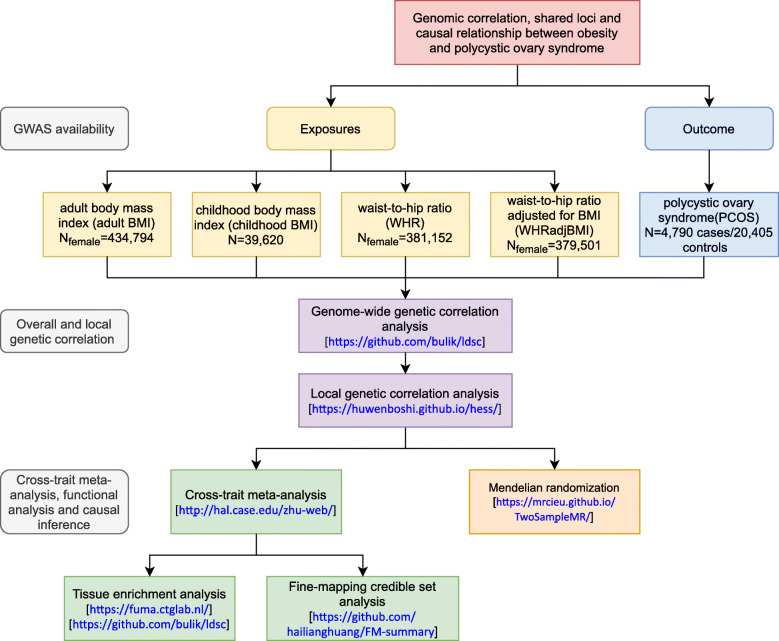
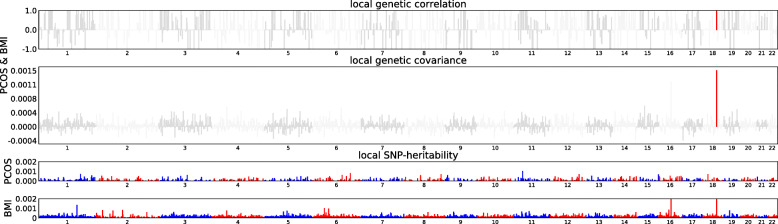
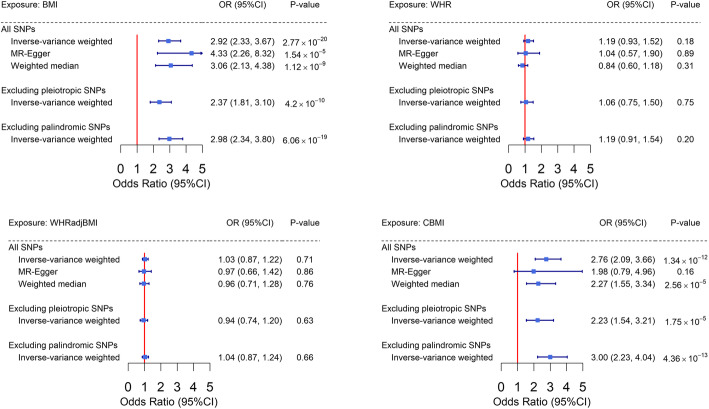
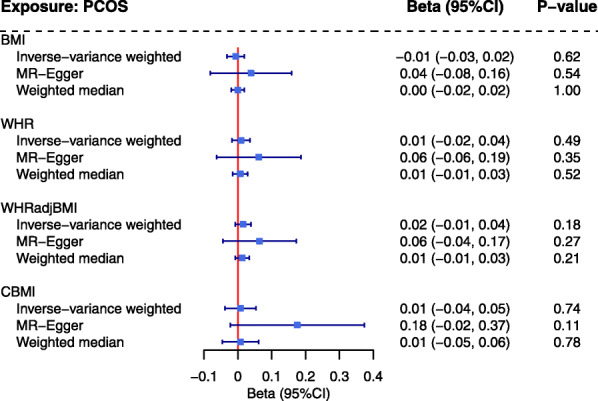
Background: The comorbidity between polycystic ovary syndrome (PCOS) and obesity has long been observed in clinical settings, but their shared genetic basis remains unclear. Methods: Leveraging summary statistics of large-scale GWAS(s) conducted in European-ancestry populations on body mass index (adult BMI, N female =434,794; childhood BMI, N =39,620), waist-to-hip ratio (WHR, N female =381,152), WHR adjusted for BMI (WHR adj BMI, N female =379,501), and PCOS ( N case =10,074, N control =103,164), we performed a large-scale genome-wide cross-trait analysis to quantify overall and local genetic correlation, to identify shared loci, and to infer causal relationship. Results: We found positive genetic correlations between PCOS and adult BMI ( r g =0.47, P =2.19×10 −16 ), childhood BMI ( r g =0.31, P =6.72×10 −5 ), and WHR ( r g =0.32, P =1.34×10 −10 ), all withstanding Bonferroni correction. A suggestive significant genetic correlation was found between PCOS and WHR adj BMI ( r g =0.09, P =0.04). Partitioning the whole genome into 1703 nearly independent regions, we observed a significant local genetic correlation for adult BMI and PCOS at chromosome 18: 57630483–59020751. We identified 16 shared loci underlying PCOS and obesity-related traits via cross-trait meta-analysis including 9 loci shared between BMI and PCOS (adult BMI and PCOS: 5 loci; childhood BMI and PCOS: 4 loci), 6 loci shared between WHR and PCOS, and 5 loci shared between WHR adj BMI and PCOS. Mendelian randomization (MR) supported the causal roles of both adult BMI (OR=2.92, 95% CI=2.33–3.67) and childhood BMI (OR=2.76, 95% CI=2.09–3.66) in PCOS, but not WHR (OR=1.19, 95% CI=0.93–1.52) or WHR adj BMI (OR=1.03, 95% CI=0.87–1.22). Genetic predisposition to PCOS did not seem to influence the risk of obesity-related traits. Conclusions: Our cross-trait analysis suggests a shared genetic basis underlying obesity and PCOS and provides novel insights into the biological mechanisms underlying these complex traits. Our work informs public health intervention by confirming the important role of weight management in PCOS prevention.
Overview
The claims and statistics of this paper haven’t been checked yet.
Free: it reads the open-access text and checks the first 5 claims that cite a source we can check. Create a free account to check every claim.
Integrity signals
Registry
Cites
Statistics
Figures
Verification
Claims the paper makes
The claims and statistics of this paper haven’t been checked yet.
Free: it reads the open-access text and checks the first 5 claims that cite a source we can check. Create a free account to check every claim.
Self-check
Percentages, sums and reported differences re-computed from the paper’s own numbers.
The self-check needs the paper’s full text.
Citations
Cites
PLINK: a tool set for whole-genome association and population-based linkage analyses.
Purcell, S., Neale, B., Todd-Brown, K., Thomas, L., Ferreira, M. A. R., Bender, D., Maller, J., Sklar, P., de Bakker, P. I. W., Daly, M. J., et al. (2007) · The American Journal of Human Genetics · doi:10.1086/519795 · Cited by 34,089 · cited 5×
“05) were first used to obtain LD-based clumps [16], followed by a proximal conditional and joint testing to identify primary and secondary signals within each of the clumping-based loci.”
MethodInfluentialBowden, J., Davey Smith, G., & Burgess, S. (2015) · International Journal of Epidemiology · doi:10.1093/ije/dyv080 · Cited by 9,816 · cited 1×
“We applied an inverse-variance weighted (IVW) approach [25] as our primary MR analysis, an MR-Egger regression [26], and a weighted-median estimator approach [27] to examine the robustness of our findings under relaxed model assumptions.”
MethodBowden, J., Davey Smith, G., Haycock, P. C., & Burgess, S. (2016) · Genetic Epidemiology · doi:10.1002/gepi.21965 · Cited by 8,922 · cited 1×
“We applied an inverse-variance weighted (IVW) approach [25] as our primary MR analysis, an MR-Egger regression [26], and a weighted-median estimator approach [27] to examine the robustness of our findings under relaxed model assumptions.”
MethodGenetics of Food Intake Self-Regulation in Childhood: Literature Review and Research Opportunities
Faith, M. S., Carnell, S., & Kral, T. V. E. (2013) · Human Heredity · doi:10.1159/000353879 · Cited by 7,601
Integrative analysis of 111 reference human epigenomes
Roadmap Epigenomics Consortium, Kundaje, A., Meuleman, W., Ernst, J., Bilenky, M., Yen, A., Heravi-Moussavi, A., Kheradpour, P., Zhang, Z., Wang, J., et al. (2015) · Nature · doi:10.1038/nature14248 · Cited by 6,368 · cited 1×
“Pre-computed annotations constructed from epigenomics data from Roadmap Epigenomics Project [24] (DNase hypersensitivity, H3K27ac, H3K4me3, H3K4me1, H3K9ac, and/or H3K36me3 chromatin marks) were used in our analysis.”
MethodLippa, N. C., & Sanderson, S. C. (2013) · Human Heredity · doi:10.1159/000353712 · Cited by 6,078
LD Score regression distinguishes confounding from polygenicity in genome-wide association studies
Schizophrenia Working Group of the Psychiatric Genomics Consortium, Bulik-Sullivan, B. K., Loh, P.-R., Finucane, H. K., Ripke, S., Yang, J., Patterson, N., Daly, M. J., Price, A. L., & Neale, B. M. (2015) · Nature Genetics · doi:10.1038/ng.3211 · Cited by 5,559 · cited 8×
“Genome-wide genetic correlations estimated by LDSC quantify the genome-wide contribution of genetic variation to the correlation between two traits.”
MethodInfluentialFrayling, T. M., Timpson, N. J., Weedon, M. N., Zeggini, E., Freathy, R. M., Lindgren, C. M., Perry, J. R. B., Elliott, K. S., Lango, H., Rayner, N. W., et al. (2007) · Science · doi:10.1126/science.1141634 · Cited by 4,531
An atlas of genetic correlations across human diseases and traits
ReproGen Consortium, Bulik-Sullivan, B., Psychiatric Genomics Consortium, Genetic Consortium for Anorexia Nervosa of the Wellcome Trust Case Control Consortium 3, Finucane, H. K., Anttila, V., Gusev, A., Day, F. R., Loh, P.-R., Duncan, L., et al. (2015) · Nature Genetics · doi:10.1038/ng.3406 · Cited by 4,255 · cited 8×
“Genome-wide genetic correlations estimated by LDSC quantify the genome-wide contribution of genetic variation to the correlation between two traits.”
MethodInfluentialYengo, L., Sidorenko, J., Kemper, K. E., Zheng, Z., Wood, A. R., Weedon, M. N., Frayling, T. M., Hirschhorn, J., Yang, J., Visscher, P. M., et al. (2018) · Human Molecular Genetics · doi:10.1093/hmg/ddy271 · Cited by 2,367 · cited 3×
“(before age 10) (N=39,620) [14] and adult [11]), waistto-hip ratio [15] (WHR, adult), and waist-to-hip ratio”
BackgroundMethodNew genetic loci implicated in fasting glucose homeostasis and their impact on type 2 diabetes risk
DIAGRAM Consortium, Dupuis, J., GIANT Consortium, Global BPgen Consortium, Anders Hamsten on behalf of Procardis Consortium, the MAGIC investigators, Langenberg, C., Prokopenko, I., Saxena, R., Soranzo, N., et al. (2010) · Nature Genetics · doi:10.1038/ng.520 · Cited by 2,166
Predicting adult obesity from childhood obesity: a systematic review and meta‐analysis
Simmonds, M., Llewellyn, A., Owen, C. G., & Woolacott, N. (2016) · Obesity Reviews · doi:10.1111/obr.12334 · Cited by 2,103 · cited 1×
“Furthermore, early life weight pattern also influences obesity and metabolic alterations later on [13].”
BackgroundAzziz, R., Carmina, E., Chen, Z., Dunaif, A., Laven, J. S. E., Legro, R. S., Lizneva, D., Natterson-Horowtiz, B., Teede, H. J., & Yildiz, B. O. (2016) · Nature Reviews Disease Primers · doi:10.1038/nrdp.2016.57 · Cited by 2,005
EPIC- InterAct Consortium, Burgess, S., Scott, R. A., Timpson, N. J., Davey Smith, G., & Thompson, S. G. (2015) · European Journal of Epidemiology · doi:10.1007/s10654-015-0011-z · Cited by 1,803 · cited 1×
“We applied an inverse-variance weighted (IVW) approach [25] as our primary MR analysis, an MR-Egger regression [26], and a weighted-median estimator approach [27] to examine the robustness of our findings under relaxed model assumptions.”
MethodMarch, W. A., Moore, V. M., Willson, K. J., Phillips, D. I. W., Norman, R. J., & Davies, M. J. (2010) · Human Reproduction · doi:10.1093/humrep/dep399 · Cited by 1,799 · cited 1×
“tion including hyperinsulinemia, insulin resistance, and type 2 diabetes [1, 2].”
BackgroundScuteri, A., Sanna, S., Chen, W.-M., Uda, M., Albai, G., Strait, J., Najjar, S., Nagaraja, R., Orrú, M., Usala, G., et al. (2007) · PLoS Genetics · doi:10.1371/journal.pgen.0030115 · Cited by 1,724
Variation in FTO contributes to childhood obesity and severe adult obesity
Dina, C., Meyre, D., Gallina, S., Durand, E., Körner, A., Jacobson, P., Carlsson, L. M. S., Kiess, W., Vatin, V., Lecoeur, C., et al. (2007) · Nature Genetics · doi:10.1038/ng2048 · Cited by 1,619 · cited 1×
“56×10 ) was near FTO, a locus known to affect BMI and the predisposition to childhood and adult obesity [36, 37].”
BackgroundPulit, S. L., Stoneman, C., Morris, A. P., Wood, A. R., Glastonbury, C. A., Tyrrell, J., Yengo, L., Ferreira, T., Marouli, E., Ji, Y., et al. (2019) · Human Molecular Genetics · doi:10.1093/hmg/ddy327 · Cited by 1,163
Divergence of Melanocortin Pathways in the Control of Food Intake and Energy Expenditure
Balthasar, N., Dalgaard, L. T., Lee, C. E., Yu, J., Funahashi, H., Williams, T., Ferreira, M., Tang, V., McGovern, R. A., Kenny, C. D., et al. (2005) · Cell · doi:10.1016/j.cell.2005.08.035 · Cited by 1,120 · cited 1×
“MC4R encodes melanocortin 4 receptor that plays an important role in central melanocortin neuronal pathways [67].”
BackgroundFinucane, H. K., Reshef, Y. A., Anttila, V., Slowikowski, K., Gusev, A., Byrnes, A., Gazal, S., Loh, P.-R., Lareau, C., Shoresh, N., et al. (2018) · Nature Genetics · doi:10.1038/s41588-018-0081-4 · Cited by 1,097
Inactivation of the Fto gene protects from obesity
Fischer, J., Koch, L., Emmerling, C., Vierkotten, J., Peters, T., Brüning, J. C., & Rüther, U. (2009) · Nature · doi:10.1038/nature07848 · Cited by 949
Lim, S. S., Davies, M. J., Norman, R. J., & Moran, L. J. (2012) · Human Reproduction Update · doi:10.1093/humupd/dms030 · Cited by 939
Genetic variation in GIPR influences the glucose and insulin responses to an oral glucose challenge
GIANT consortium, Saxena, R., the MAGIC investigators, Hivert, M.-F., Langenberg, C., Tanaka, T., Pankow, J. S., Vollenweider, P., Lyssenko, V., Bouatia-Naji, N., et al. (2010) · Nature Genetics · doi:10.1038/ng.521 · Cited by 626 · cited 2×
“87×10 ) was located near GIPR, a gene associated with BMI and glucose tolerance [34, 35], and MIR642A, a gene involved in post-transcriptional regulation of gene expression.”
BackgroundDay, F., Karaderi, T., Jones, M. R., Meun, C., He, C., Drong, A., Kraft, P., Lin, N., Huang, H., Broer, L., et al. (2018) · PLOS Genetics · doi:10.1371/journal.pgen.1007813 · Cited by 619 · cited 8×
“Despite three MR studies [7, 9, 10] have been conducted to explore the role of adult BMI in PCOS, these studies used a small number of index SNPs (< 100 instruments vs.”
BackgroundResultInfluentialSelf-citationFine-mapping inflammatory bowel disease loci to single-variant resolution
International Inflammatory Bowel Disease Genetics Consortium, Huang, H., Fang, M., Jostins, L., Umićević Mirkov, M., Boucher, G., Anderson, C. A., Andersen, V., Cleynen, I., Cortes, A., et al. (2017) · Nature · doi:10.1038/nature22969 · Cited by 611 · cited 1×
“Details of the method were described elsewhere [21, 22].”
MethodLymphatic vascular defects promoted by Prox1 haploinsufficiency cause adult-onset obesity
Harvey, N. L., Srinivasan, R. S., Dillard, M. E., Johnson, N. C., Witte, M. H., Boyd, K., Sleeman, M. W., & Oliver, G. (2005) · Nature Genetics · doi:10.1038/ng1642 · Cited by 580 · cited 1×
“Results from both large-scale population study and mice models have shown that PROX1 was associated with visceral fat accumulation [62, 63].”
BackgroundBayesian refinement of association signals for 14 loci in 3 common diseases
The Wellcome Trust Case Control Consortium, Maller, J. B., McVean, G., Byrnes, J., Vukcevic, D., Palin, K., Su, Z., Howson, J. M. M., Auton, A., Myers, S., et al. (2012) · Nature Genetics · doi:10.1038/ng.2435 · Cited by 479 · cited 1×
“Details of the method were described elsewhere [21, 22].”
MethodDay, F. R., Hinds, D. A., Tung, J. Y., Stolk, L., Styrkarsdottir, U., Saxena, R., Bjonnes, A., Broer, L., Dunger, D. B., Halldorsson, B. V., et al. (2015) · Nature Communications · doi:10.1038/ncomms9464 · Cited by 459 · cited 2×
“Despite three MR studies [7, 9, 10] have been conducted to explore the role of adult BMI in PCOS, these studies used a small number of index SNPs (< 100 instruments vs.”
BackgroundResultZhu, X., Feng, T., Tayo, B. O., Liang, J., Young, J. H., Franceschini, N., Smith, J. A., Yanek, L. R., Sun, Y. V., Edwards, T. L., et al. (2015) · The American Journal of Human Genetics · doi:10.1016/j.ajhg.2014.11.011 · Cited by 426
Obesity and Polycystic Ovary Syndrome: Implications for Pathogenesis and Novel Management Strategies
Barber, T. M., Hanson, P., Weickert, M. O., & Franks, S. (2019) · Clinical Medicine Insights: Reproductive Health · doi:10.1177/1179558119874042 · Cited by 411 · cited 1×
“drogenic, and metabolic features of PCOS [5], highlighting a biological link underlying obesity and PCOS.”
BackgroundMeta-analysis identifies common variants associated with body mass index in east Asians
The Genetic Investigation of ANthropometric Traits (GIANT) Consortium, Wen, W., Cho, Y.-S., Zheng, W., Dorajoo, R., Kato, N., Qi, L., Chen, C.-H., Delahanty, R. J., Okada, Y., et al. (2012) · Nature Genetics · doi:10.1038/ng.1087 · Cited by 395 · cited 1×
“87×10 ) was located near GIPR, a gene associated with BMI and glucose tolerance [34, 35], and MIR642A, a gene involved in post-transcriptional regulation of gene expression.”
BackgroundMannerås-Holm, L., Leonhardt, H., Kullberg, J., Jennische, E., Odén, A., Holm, G., Hellström, M., Lönn, L., Olivecrona, G., Stener-Victorin, E., et al. (2011) · The Journal of Clinical Endocrinology & Metabolism · doi:10.1210/jc.2010-1290 · Cited by 369
Self-citationPoint: Visceral Adiposity Is Causally Related to Insulin Resistance
Lebovitz, H. E., & Banerji, M. A. (2005) · Diabetes Care · doi:10.2337/diacare.28.9.2322 · Cited by 328 · cited 1×
“For example, abdominal visceral fat, a known contributor to metabolic dysfunction including insulin resistance and abnormal adipokine and fatty acid release [12], is important for PCOS.”
BackgroundCarmina, E., Bucchieri, S., Esposito, A., Del Puente, A., Mansueto, P., Orio, F., Di Fede, G., & Rini, G. (2007) · The Journal of Clinical Endocrinology & Metabolism · doi:10.1210/jc.2006-2725 · Cited by 317 · cited 1×
“[45], however, recent imaging studies using a gold standard approach of magnetic resonance-based methodology”
Dapas, M., Lin, F. T. J., Nadkarni, G. N., Sisk, R., Legro, R. S., Urbanek, M., Hayes, M. G., & Dunaif, A. (2020) · PLOS Medicine · doi:10.1371/journal.pmed.1003132 · Cited by 297 · cited 1×
“higher BMI, glucose, and insulin levels with lower SHBG and LH levels [69].”
BackgroundNovel loci for childhood body mass index and shared heritability with adult cardiometabolic traits
Vogelezang, S., Bradfield, J. P., Ahluwalia, T. S., Curtin, J. A., Lakka, T. A., Grarup, N., Scholz, M., van der Most, P. J., Monnereau, C., Stergiakouli, E., et al. (2020) · PLOS Genetics · doi:10.1371/journal.pgen.1008718 · Cited by 217 · cited 2×
“(before age 10) (N=39,620) [14] and adult [11]), waistto-hip ratio [15] (WHR, adult), and waist-to-hip ratio”
BackgroundHassan, M., Ahmad, N., Adam, S. M., Nawi, A., & Ghazi, H. (2016) · International Journal of Preventive Medicine · doi:10.4103/2008-7802.183654 · Cited by 183
Ollila, M.-M. E., Piltonen, T., Puukka, K., Ruokonen, A., Järvelin, M.-R., Tapanainen, J. S., Franks, S., & Morin-Papunen, L. (2016) · The Journal of Clinical Endocrinology & Metabolism · doi:10.1210/jc.2015-3543 · Cited by 182
BMI, fat mass, abdominal adiposity and visceral fat: where is the ‘beef’?
Bouchard, C. (2007) · International Journal of Obesity · doi:10.1038/sj.ijo.0803653 · Cited by 181 · cited 1×
“71) [44], results for the association between fat distribution and PCOS from observational studies were contrasting.”
ResultBarber, T. M., Golding, S. J., Alvey, C., Wass, J. A. H., Karpe, F., Franks, S., & McCarthy, M. I. (2008) · The Journal of Clinical Endocrinology & Metabolism · doi:10.1210/jc.2007-2117 · Cited by 179
Transcription factor PROX1: its role in development and cancer
Elsir, T., Smits, A., Lindström, M. S., & Nistér, M. (2012) · Cancer and Metastasis Reviews · doi:10.1007/s10555-012-9390-8 · Cited by 166
Waist-hip ratio is a poor predictor of changes in visceral fat
van der Kooy, K., Leenen, R., Seidell, J., Deurenberg, P., Droop, A., & Bakker, C. (1993) · The American Journal of Clinical Nutrition · doi:10.1093/ajcn/57.3.327 · Cited by 161
Barber, T. M., Bennett, A. J., Groves, C. J., Sovio, U., Ruokonen, A., Martikainen, H. K., Pouta, A. M., Hartikainen, A., Elliott, P., Lindgren, C. M., et al. (2008) · Diabetologia · doi:10.1007/s00125-008-1028-6 · Cited by 158 · cited 1×
“Indeed, the most evident association between FTO and PCOS was observed in obese PCOS women, which was attenuated when adjusting for BMI [59].”
BackgroundThe prevalence of polycystic ovary syndrome in adolescents: A systematic review and meta-analysis
Saei Ghare Naz, M., Ramezani Tehrani, F., Alavi Majd, H., Ahmadi, F., Ozgoli, G., Rashidi Fakari, F., & Ghasemi, V. (2019) · International Journal of Reproductive BioMedicine (IJRM) · doi:10.18502/ijrm.v17i8.4818 · Cited by 151
Epigenetic and Transcriptional Alterations in Human Adipose Tissue of Polycystic Ovary Syndrome
Kokosar, M., Benrick, A., Perfilyev, A., Fornes, R., Nilsson, E., Maliqueo, M., Behre, C. J., Sazonova, A., Ohlsson, C., Ling, C., et al. (2016) · Scientific Reports · doi:10.1038/srep22883 · Cited by 137 · cited 1×
“methylated in adipose tissue in PCOS women and controls [64].”
BackgroundSelf-citationChristakoudi, S., Evangelou, E., Riboli, E., & Tsilidis, K. K. (2021) · Scientific Reports · doi:10.1038/s41598-021-89176-6 · Cited by 120
Brower, M. A., Hai, Y., Jones, M. R., Guo, X., Chen, Y. D. I., Rotter, J. I., Krauss, R. M., Legro, R. S., Azziz, R., & Goodarzi, M. O. (2019) · Human Reproduction · doi:10.1093/humrep/dey343 · Cited by 115 · cited 3×
“Despite three MR studies [7, 9, 10] have been conducted to explore the role of adult BMI in PCOS, these studies used a small number of index SNPs (< 100 instruments vs.”
BackgroundResultZhu, Z., Hasegawa, K., Camargo, C. A., & Liang, L. (2020) · Journal of Allergy and Clinical Immunology · doi:10.1016/j.jaci.2020.07.004 · Cited by 114
Self-citationFTO and MC4R Gene Variants Are Associated with Obesity in Polycystic Ovary Syndrome
Ewens, K. G., Jones, M. R., Ankener, W., Stewart, D. R., Urbanek, M., Dunaif, A., Legro, R. S., Chua, A., Azziz, R., Spielman, R. S., et al. (2011) · PLoS ONE · doi:10.1371/journal.pone.0016390 · Cited by 106 · cited 1×
“Using BMImatched samples or BMI-adjusted statistical models, studies have found MC4R to be associated with an elevated BMI in PCOS [31, 66].”
MethodMR-Clust: clustering of genetic variants in Mendelian randomization with similar causal estimates
Foley, C. N., Mason, A. M., Kirk, P., & Burgess, S. (2020) · Bioinformatics · doi:10.1093/bioinformatics/btaa778 · Cited by 100
Liu, A. L., Xie, H. J., Xie, H. Y., Liu, J., Yin, J., Hu, J. S., & Peng, C. Y. (2017) · BMC Medical Genetics · doi:10.1186/s12881-017-0452-1 · Cited by 88 · cited 1×
“56×10 ) was near FTO, a locus known to affect BMI and the predisposition to childhood and adult obesity [36, 37].”
BackgroundObesity and Lifestyle Management in Polycystic Ovary Syndrome
HOEGER, K. M. (2007) · Clinical Obstetrics and Gynecology · doi:10.1097/grf.0b013e31802f54c8 · Cited by 79 · cited 1×
“Findings on the [41] overall and local genetic correlation between adult BMI and PCOS suggest a shared genetic basis underlying these two traits, which is either directly through variants affecting both traits (pleiotropy), or through the causal effect of one trait on the other.”
BackgroundZhao, Y., Xu, Y., Wang, X., Xu, L., Chen, J., Gao, C., Wu, C., Pan, D., Zhang, Q., Zhou, J., et al. (2020) · The Journal of Clinical Endocrinology & Metabolism · doi:10.1210/clinem/dgaa125 · Cited by 67
Dolfing, J. G., Stassen, C. M., van Haard, P. M. M., Wolffenbuttel, B. H. R., & Schweitzer, D. H. (2011) · Human Reproduction · doi:10.1093/humrep/der070 · Cited by 63
Joo, Y. Y., Actkins, K., Pacheco, J. A., Basile, A. O., Carroll, R., Crosslin, D. R., Day, F., Denny, J. C., Velez Edwards, D. R., Hakonarson, H., et al. (2020) · The Journal of Clinical Endocrinology & Metabolism · doi:10.1210/clinem/dgz326 · Cited by 63
Self-citationObesity‐Related Traits and the Development of Rheumatoid Arthritis: Evidence From Genetic Data
Tang, B., Shi, H., Alfredsson, L. S., Klareskog, L., Padyukov, L., & Jiang, X. (2020) · Arthritis & Rheumatology · doi:10.1002/art.41517 · Cited by 56
Self-citationKretowski, A. J., Adamska-Patruno, E., Maliszewska, K., Wawrusiewicz‐Kurylonek, N., Citko, A., Gościk, J., Bauer, W., Wilk, J., Golonko, A., Waszczeniuk, M., et al. (2015) · Genes & Nutrition · doi:10.1007/s12263-015-0454-6 · Cited by 49 · cited 1×
“Results from both large-scale population study and mice models have shown that PROX1 was associated with visceral fat accumulation [62, 63].”
BackgroundNishiyama, Y., Hasegawa, T., Fujita, S., Iwata, N., Nagao, S., Hosoya, T., Inagaki, K., Wada, J., & Otsuka, F. (2018) · The Journal of Steroid Biochemistry and Molecular Biology · doi:10.1016/j.jsbmb.2017.11.004 · Cited by 43 · cited 1×
“Evidence has suggested that modulation of GIPR affects progesterone synthesis and expression of many progestogenic factors and enzymes that may involve in the subfertility feature of PCOS [65].”
BackgroundFTO gene variants are not associated with polycystic ovary syndrome in women from Southern Brazil
Ramos, R. B., & Spritzer, P. M. (2015) · Gene · doi:10.1016/j.gene.2015.01.012 · Cited by 40
He, Y., Tian, J., Blizzard, L., Oddy, W. H., Dwyer, T., Bazzano, L. A., Hickey, M., Harville, E. W., & Venn, A. J. (2020) · Human Reproduction · doi:10.1093/humrep/deaa069 · Cited by 39 · cited 1×
“In addition to adult BMI, childhood BMI appears to influence the risk of PCOS later on [42, 43].”
BackgroundKim, J. J., Choi, Y. M., Cho, Y. M., Hong, M. A., Chae, S. J., Hwang, K. R., Hwang, S. S., Yoon, S. H., & Moon, S. Y. (2012) · Clinical Endocrinology · doi:10.1111/j.1365-2265.2012.04389.x · Cited by 38
Interaction between common variants of FTO and MC4R is associated with risk of PCOS
Yuan, H., Zhu, G., Wang, F., Wang, X., Guo, H., & Shen, M. (2015) · Reproductive Biology and Endocrinology · doi:10.1186/s12958-015-0050-z · Cited by 35
Birthweight, Childhood Body Mass Index, Height and Growth, and Risk of Polycystic Ovary Syndrome
Aarestrup, J., Pedersen, D. C., Thomas, P. E., Glintborg, D., Holm, J., Bjerregaard, L. G., & Baker, J. L. (2021) · Obesity Facts · doi:10.1159/000515294 · Cited by 34 · cited 1×
“In addition to adult BMI, childhood BMI appears to influence the risk of PCOS later on [42, 43].”
BackgroundLouwers, Y. V., Rayner, N. W., Herrera, B. M., Stolk, L., Groves, C. J., Barber, T. M., Uitterlinden, A. G., Franks, S., Laven, J. S. E., & McCarthy, M. I. (2014) · PLoS ONE · doi:10.1371/journal.pone.0087335 · Cited by 33 · cited 1×
“Using BMImatched samples or BMI-adjusted statistical models, studies have found MC4R to be associated with an elevated BMI in PCOS [31, 66].”
MethodKowalska, I., Adamska, A., Malecki, M. T., Karczewska‐Kupczewska, M., Nikołajuk, A., Szopa, M., Górska, M., & Strączkowski, M. (2012) · Clinical Endocrinology · doi:10.1111/j.1365-2265.2012.04379.x · Cited by 33 · cited 1×
“Moreover, the impact of FTO on lipid oxidation in PCOS women might also contribute to the mechanism underlying the comorbidity of obesity and PCOS [60].”
BackgroundCensin, J. C., Bovijn, J., Holmes, M. V., & Lindgren, C. M. (2021) · European Journal of Human Genetics · doi:10.1038/s41431-021-00835-8 · Cited by 28 · cited 1×
“ates LH-induced steroidogenesis, which plays an important role in follicular development [52].”
BackgroundBełtowski, J., & Jazmroz-Wisniewska, A. (2014) · Current Pharmaceutical Design · doi:10.2174/138161282004140213155050 · Cited by 24
Nooranizadeh, M. H., Rahmanifar, F., Ahmadloo, S., Shaaban, Z., Shirazi, M. R. J., & Tamaddon, A. (2018) · Galen Medical Journal · doi:10.31661/gmj.v7i0.1070 · Cited by 15
MR-Clust: Clustering of genetic variants in Mendelian randomization with similar causal estimatesPreprint
Foley, C. N., Kirk, P., & Burgess, S. (2019) · bioRxiv (Cold Spring Harbor Laboratory) · doi:10.1101/2019.12.18.881326 · Cited by 13
Metabolic and Hormonal Consequencies of the „Obesity Risk“ MC4R Variant (rs12970134) in Czech Women
Bradnová, O., Vejražková, D., Vaňková, M., Lukášová, P., Včelák, J., Stanická, S., DVOŘÁKOVÁ, K., & Bendlová, B. (2015) · Physiological Research · doi:10.33549/physiolres.933119 · Cited by 9
Nooranizadeh, M. H., Rahmanifar, F., Ahmadloo, S., Shaaban, Z., Shirazi, M. R. J., & Tamadon, A. (2018) · PubMed Central · doi:10.22086/gmj.v0i0.1070 · Cited by 5
Research works printed but not linked: 1
- Huang H. hailianghuang/FM-summary. R; 2021.
Cited by
Stener-Victorin, E., Teede, H., Norman, R. J., Legro, R., Goodarzi, M. O., Dokras, A., Laven, J., Hoeger, K., & Piltonen, T. T. (2024) · Nature Reviews Disease Primers · doi:10.1038/s41572-024-00511-3 · Cited by 495
“Mendelian randomization has suggested that high BMI 79,82,88–90 , insulin resistance 79 , increased fasting insulin 5 and reduced levels of sex hormone-binding globulin (SHBG) 6,79 may cause PCOS.”
Self-citationPolycystic ovary syndrome as a metabolic disease
Helvaci, N., & Yildiz, B. O. (2025) · Nature Reviews Endocrinology · doi:10.1038/s41574-024-01057-w · Cited by 188
“Mendelian randomization analyses in European and East Asian cohorts indicate that increased BMI is a causal factor in the development of PCOS, with an almost threefold increased risk of PCOS per standard deviation increment (4.8 kg/m 2 ) in BMI 55,110–112 .”
InfluentialPolycystic Ovary Syndrome: Challenges and Possible Solutions
Che, Y., Yu, J., Li, Y., Zhu, Y., & Tao, T. (2023) · Journal of Clinical Medicine · doi:10.3390/jcm12041500 · Cited by 87
“[12,13] reported obesity and T2DM shared a common genetic basis to PCOS through serval loci (ERBB3, FTO, PROX1, GIPR, and MC4R for obesity [12], and ADCY5, FTO, GIPR, and”
BackgroundVine, D., Ghosh, M., Wang, T., & Bakal, J. (2024) · CJC Open · doi:10.1016/j.cjco.2023.12.010 · Cited by 53
“68 However, genetic predisposition to PCOS may not predict obesity-related traits, and PCOS has been shown to be independent of obesity and to be dependent on ethnicity, nationality, socioeconomic status, and demographics.”
BackgroundLiu, Q., Tang, B., Zhu, Z., Kraft, P., Deng, Q., Stener-Victorin, E., & Jiang, X. (2022) · Diabetologia · doi:10.1007/s00125-022-05746-x · Cited by 56
“BMI may not be sufficient at reflecting adiposity, yet the results from our previous investigation largely supported the role of BMI rather than fat distribution (waist-to-hip ratio with and without adjusting for BMI) in the development of PCOS [30].”
ResultSelf-citation
Metadata
- Authors
- Liu, Q., Zhu, Z., Kraft, P., Deng, Q., Stener-Victorin, E., & Jiang, X.
- Affiliations
- Karolinska Institutet (SE)
- Harvard University (US)
- Corresponding author
- Jiang, Xia
- Venue
- BMC Medicine
- Published
- 2022-02-11
- Volume
- 20
- Issue
- 1
- Pages
- 66-66
- ISSN
- 1741-7015 (ISSN-L)
- PMC
- PMC8832782
- OpenAlex
- W4211187870
- Cited by
- 68
- References
- 70
- Citations by year
- 2026: 6 · 2025: 23 · 2024: 16 · 2023: 15 · 2022: 8
- FWCI
- 2.50
- Type
- journal article
- Language
- en
- Open access
- gold
- doi.org
- Licence
- cc-by
- creativecommons.org/licenses/by/4.0 (tdm)
- creativecommons.org/licenses/by/4.0 (vor)
- Locations
- BMC Medicine (publishedVersion, cc-by)
- PubMed Central (publishedVersion, cc-by)
- PubMed (publishedVersion)
- DOAJ (DOAJ: Directory of Open Access Journals) (submittedVersion, cc-by-sa)
- Funders
- Karolinska Institutet
- Novo Nordisk Fonden (NNF22OC0072904, NNF18OC0033992, NNF19OC0056647)
- National Institute of Allergy and Infectious Diseases (K01AI153558)
- Topics
- Health Sciences › Medicine › Reproductive Medicine › Ovarian function and disorders
- Life Sciences › Biochemistry, Genetics and Molecular Biology › Genetics › Genetic Associations and Epidemiology
- Life Sciences › Biochemistry, Genetics and Molecular Biology › Genetics › Genetic and Kidney Cyst Diseases
- Keywords
- polycystic ovary syndrome, obesity, body mass index, waist-to-hip ratio, genetic correlation, shared genetic loci, causal inference, childhood BMI, adult BMI, Mendelian randomization, chromosome 18, comorbidities, women's health, European ancestry populations
- MeSH terms
- Adult, Child, Female, Humans, Obesity, Polycystic Ovary Syndrome, Body Mass Index, Polymorphism, Single Nucleotide, Genomics, Genome-Wide Association Study
About these checks
Registry, retraction, Cites and statistics results are computed, not judged, with one exception: a printed reference that no index lists is read once by a model before it counts as a citation error. Claims are extracted by a model and kept only when their quote appears verbatim in the text; each cited source is then checked, with a model’s help, for whether it says what the claim relies on. Those verdicts can be wrong — read the claim’s quote and the cited source before relying on one.
Statistics and arithmetic are recomputed, not judged.
Confidence bands are shown only for fields calibrated on our annotated test set. None is calibrated yet, so no band is shown.
What counts as a claim ›How we measure confidence ›How we check this ›
Are you an author, or do you see a problem with this page? Request a review
Data sources
Bibliographic data: Semantic Scholar, OpenAlex, Crossref.
Contains information from the Semantic Scholar Academic Graph Datasets, made available under the ODC Attribution License (ODC-BY 1.0).
Semantic Scholar’s data is described in: Kinney, R., et al. (2023). The Semantic Scholar Open Data Platform. arXiv:2301.10140.
