

Effects of Mediterranean diet, exercise, and their combination on body composition and liver outcomes in metabolic dysfunction-associated steatotic liver disease: a systematic review and meta-analysis of randomized controlled trials
Open accessThe DOI matches its Crossref record; 108 of the 108 references it cites were found in a registry or an index; 84 of the 128 sources its claims cite were checked for support.
Abstract
BACKGROUND: Metabolic dysfunction-associated steatotic liver disease (MASLD) is a leading cause of liver-related morbidity and mortality. Lifestyle interventions like the Mediterranean diet (MD) and exercise are recommended for management, but the most effective lifestyle approach remains unclear. METHODS: A comprehensive literature search was conducted in Embase, MEDLINE via Ovid, Cochrane Central, and Web of Science Core Collection from inception to April 1, 2025, without language restrictions. We included randomized controlled trials (RCTs) in adults with MASLD or metabolic dysfunction-associated steatohepatitis (MASH) assessing the MD and/or exercise interventions on anthropometric measures, liver enzymes, and indices or grades of liver steatosis and fibrosis. The mean difference and corresponding 95% confidence interval (CI) were pooled using a random-effects model. Risk of bias was assessed with ROB-2, and evidence certainty was evaluated using GRADE. RESULTS: , 95% CI = - 1.03 to - 0.36), waist circumference (WC) (WMD = - 1.56 cm, 95% CI - 3.02 to - 0.09), and alanine aminotransferase (ALT) (WMD = - 3.96 IU/L, 95% CI - 6.54 to - 1.38). Aerobic and combined aerobic-resistance exercises in comparison with the control group reduced body weight (WMD = - 1.56 kg, 95%CI - 2.31 to - 0.82; WMD = - 1.90 kg, 95%CI - 3.59 to - 0.22, respectively). In addition, aerobic exercise significantly decreased WC (WMD = - 2.14 IU/L, 95%CI - 2.87 to - 1.41) and resistance exercise reduced ALT (WMD = - 15.40 IU/L, 95%CI - 28.60 to - 2.20) in patients with MASLD/MASH compared to the control group. CONCLUSIONS: The MD and aerobic exercise, whether alone or combined with resistance training, support weight loss and improve liver health in patients with MASLD/MASH. Standardized methods for measuring and reporting outcomes are essential to build robust evidence on the impact of lifestyle changes on clinical outcomes. TRIAL REGISTRATION: PROSPERO registration code. CRD42024577846.
Overview
CoChat Summary
TL;DR
This systematic review and meta-analysis of 37 RCTs found that Mediterranean diet and aerobic exercise, alone or combined with resistance training, support weight loss and some liver improvements in adults with MASLD/MASH. Evidence certainty was mostly low or very low, and the authors call for standardized outcome measurement and reporting.
Key findings
- Mediterranean diet vs control significantly reduced body weight (WMD = −2.38 kg, 95% CI −4.11 to −0.66), BMI (WMD = −0.70 kg/m², 95% CI −1.03 to −0.36), waist circumference (WMD = −1.56 cm, 95% CI −3.02 to −0.09), and ALT (WMD = −3.96 IU/L, 95% CI −6.54 to −1.38); AST and GGT did not change significantly.
- Aerobic exercise reduced body weight (WMD = −1.56 kg, 95% CI −2.31 to −0.82) and waist circumference (WMD = −2.14 IU/L, 95% CI −2.87 to −1.41, as reported); combined aerobic-resistance exercise reduced body weight (WMD = −1.90 kg, 95% CI −3.59 to −0.22); resistance exercise reduced ALT (WMD = −15.40 IU/L, 95% CI −28.60 to −2.20).
- Two RCTs assessed combined Mediterranean diet and exercise: one 6- and 12-month intervention reduced intrahepatic fat by MRI with no significant between-group differences; another found no significant between-group differences in BMI, waist circumference, or AST after 3 months, though CAP decreased in all groups.
- GRADE certainty was low for Mediterranean diet effects on weight, BMI, waist circumference, ALT, and GGT; very low for AST. For exercise, certainty ranged from moderate for aerobic exercise on GGT to low or very low for most other outcomes.
Methods
- Systematic review and meta-analysis following PRISMA, registered in PROSPERO (CRD42024577846). Searches covered Embase, MEDLINE via Ovid, Cochrane Central, and Web of Science Core Collection from inception to April 1, 2025, without language restrictions.
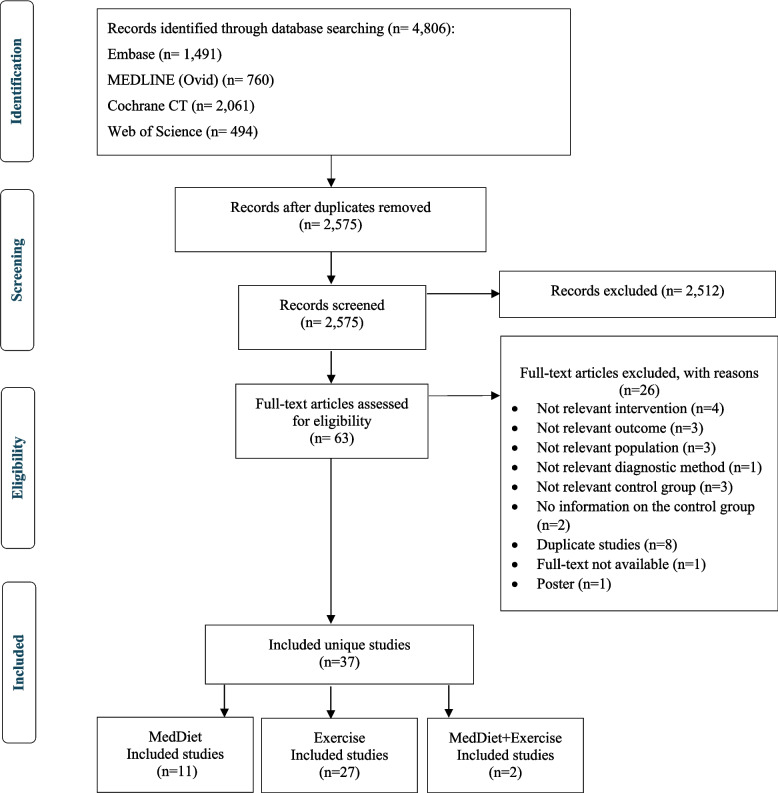
- Included RCTs in adults with MASLD/MASH assessing Mediterranean diet and/or exercise on anthropometric measures, liver enzymes, and liver steatosis or fibrosis indices/grades. From 4,806 search results, 37 unique RCTs were included: 11 Mediterranean diet, 27 exercise, and 2 combined Mediterranean diet plus exercise.
- Random-effects models pooled mean differences with 95% CIs; risk of bias was assessed with ROB-2 and certainty with GRADE. Exercise was categorized as aerobic, resistance, or combined aerobic-resistance, with HIIT grouped under combined; studies reporting geometric means were not pooled.
Limitations
- The authors state that lifestyle interventions were heterogeneous in design and implementation, with variability in exercise intensity, frequency, and adherence; blinding was not feasible; Mediterranean diet definitions and control groups varied widely; and many studies had small samples and short durations.
- The authors also note that several outcomes were supported by low or very low certainty evidence, limiting confidence in pooled estimates.
- Evident from the text: risk of bias was high in 12 exercise RCTs and 2 Mediterranean diet RCTs, with additional “some concerns” in many others, which further constrains interpretation.
Model-written summary. Check it against the paper before relying on it.
Integrity signals
Registry
Cites
Statistics
Figures
Verification
Claims the paper makes
41 Valid · 8 Not valid · 17 Not checked · 39 Own results and interpretations
Some cited sources support this claim and some don’t — read each source’s verdict below.
In the paper
“The overall results showed that the MD significantly reduced weight [weighted mean difference (WMD = − 2.38 kg, 95% CI − 4.11 to − 0.66, P = 0.01) in comparison to standard care or control diet.”
§ Effects of Mediterranean diet, exercise, and their combination on body composition and liver outcomes in metabolic dysfunction-associated steatotic liver disease: a systematic review and meta-analysis of randomized controlled trials > Results > Findings from systematic review and meta-analyses
What the sources say
- Not checked — no full text of the sourcecites [56] Properzi C, O’Sullivan TA, Sherriff JL, Ching HL, Jeffrey GP, Buckley RF, et al. Ad libitum Mediterranean and low-fat diets both significantly reduce hepatic steatosis: a randomized controlled trial. Hepatology. 2018;68(5):1741–54. 29729189 source
- Disputedcites [57] Ryan MC, Itsiopoulos C, Thodis T, Ward G, Trost N, Hofferberth S, et al. The Mediterranean diet improves hepatic steatosis and insulin sensitivity in individuals with non-alcoholic fatty liver disease. J Hepatol. 2013;59(1):138–43. 23485520 sourceExperimental — accuracy not yet measured
The Results report that weight loss was small and that the difference in weight change between the Mediterranean and comparison diets was not significant (p=0.1). The paper does not report the claimed weighted mean difference or confidence interval; its weight finding is contrary to the attributed significant reduction. (LLM, conf=0.91)
Checked by a reasoning model — may be wrong.
- Partly supportedcites [59] Abenavoli L, Greco M, Milic N, Accattato F, Foti D, Gulletta E, et al. Effect of Mediterranean diet and antioxidant formulation in non-alcoholic fatty liver disease: a randomized study. Nutrients. 2017. 10.3390/nu9080870. 28805669 PMC5579663 sourceExperimental — accuracy not yet measured
The Results report significantly greater weight change in the Mediterranean-diet group than in the untreated control group (p = 0.0001). The paper does not report the claimed weighted mean difference of −2.38 kg, its 95% confidence interval, or p = 0.01; its Data Analysis section describes comparisons within this trial, not a pooled estimate. (LLM, conf=0.90)
plainstates a cause- Asserted: passes — The authors put it forward as true.
- Checkable: passes — It can be checked against evidence.
- Load-bearing: passes — The paper’s conclusions depend on it.
- Based: passes — The paper gives a reason why it holds.
Some cited sources support this claim and some don’t — read each source’s verdict below.
In the paper
“and WC [56–60, 62, 64] (WMD = − 1.56 cm, 95% CI = − 3.02 to − 0.09, P = 0.04) in comparison to standard care or control diet”
§ Effects of Mediterranean diet, exercise, and their combination on body composition and liver outcomes in metabolic dysfunction-associated steatotic liver disease: a systematic review and meta-analysis of randomized controlled trials > Results > Findings from systematic review and meta-analyses
What the sources say
- Not checked — no full text of the sourcecites [56] Properzi C, O’Sullivan TA, Sherriff JL, Ching HL, Jeffrey GP, Buckley RF, et al. Ad libitum Mediterranean and low-fat diets both significantly reduce hepatic steatosis: a randomized controlled trial. Hepatology. 2018;68(5):1741–54. 29729189 source
- Disputedcites [57] Ryan MC, Itsiopoulos C, Thodis T, Ward G, Trost N, Hofferberth S, et al. The Mediterranean diet improves hepatic steatosis and insulin sensitivity in individuals with non-alcoholic fatty liver disease. J Hepatol. 2013;59(1):138–43. 23485520 sourceExperimental — accuracy not yet measured
The Results report no change in waist circumference between the Mediterranean and low-fat/high-carbohydrate diet periods, contrary to a significant reduction in this trial. The cited paper does not report the stated WMD; that figure appears to be a pooled estimate from the citing document. (LLM, conf=0.88)
Checked by a reasoning model — may be wrong.
- Partly supportedcites [58] Curci R, Bianco A, Franco I, Bonfiglio C, Campanella A, Mirizzi A, et al. Lifestyle modification: evaluation of the effects of physical activity and low-glycemic-index Mediterranean diet on fibrosis score. Nutrients. 2023. 10.3390/nu15163520. 37630711 PMC10459797 sourceExperimental — accuracy not yet measured
Materials and Methods (sections 2.4 and 2.6) describe a trial comparing a low-glycemic-index Mediterranean diet with a control diet and measuring waist circumference. The Results (section 3) report effects on liver stiffness, but the passages in our copy do not establish a significant waist-circumference reduction or the quoted WMD, confidence interval, and P value; those appear to be the citing paper’s pooled estimates, not findings reported by this trial. (LLM, conf=0.84)
- Supportedcites [59] Abenavoli L, Greco M, Milic N, Accattato F, Foti D, Gulletta E, et al. Effect of Mediterranean diet and antioxidant formulation in non-alcoholic fatty liver disease: a randomized study. Nutrients. 2017. 10.3390/nu9080870. 28805669 PMC5579663 source
The Results report a significant reduction in waist circumference in the Mediterranean-diet group compared with the untreated control group (intergroup p = 0.0001). The WMD and confidence interval in the citing sentence are pooled estimates associated with several citations, not estimates attributed to this study alone. (LLM, conf=0.89)
- Partly supportedcites [60] Montemayor S, Bouzas C, Mascaró CM, Casares M, Llompart I, Abete I, et al. Effect of dietary and lifestyle interventions on the amelioration of NAFLD in patients with metabolic syndrome: the FLIPAN study. Nutrients. 2022. 10.3390/nu14112223. 35684022 PMC9182851 sourceExperimental — accuracy not yet measured
The Results report reduced waist circumference in both Mediterranean-diet groups, and the Conclusions say the high-meal-frequency group improved waist circumference compared with the control group. The paper does not report the cited WMD of −1.56 cm, its confidence interval, or P = 0.04; those are pooled estimates in the citing sentence, not this study’s results. (LLM, conf=0.85)
- Partly supportedcites [62] Ristic-Medic D, Kovacic M, Takic M, Arsic A, Petrovic S, Paunovic M, et al. Calorie-restricted Mediterranean and low-fat diets affect fatty acid status in individuals with nonalcoholic fatty liver disease. Nutrients. 2020;13(1): 15. 33374554 PMC7822481 sourceExperimental — accuracy not yet measured
The Results (page unavailable) report that waist circumference improved significantly from baseline after 12 weeks on either the Mediterranean or low-fat diet. The paper does not report a significant Mediterranean-diet advantage for waist circumference over the low-fat diet, nor the cited pooled estimate of −1.56 cm (95% CI −3.02 to −0.09). (LLM, conf=0.87)
- Not checked — no full text of the sourcecites [64] Chooi YC, Zhang QA, Magkos F, Ng M, Michael N, Wu X, et al. Effect of an Asian-adapted Mediterranean diet and pentadecanoic acid on fatty liver disease: the TANGO randomized controlled trial. Am J Clin Nutr. 2024;119(3):788–99. 38035997 source
plainstates a cause- Asserted: passes — The authors put it forward as true.
- Checkable: passes — It can be checked against evidence.
- Load-bearing: passes — The paper’s conclusions depend on it.
- Based: passes — The paper gives a reason why it holds.
Some cited sources support this claim and some don’t — read each source’s verdict below.
In the paper
“In total, seven studies reported data revealed that the MD significantly reduced BMI [56–60, 62, 64](WMD = − 0.70 kg/m2, 95% CI = − 1.03 to − 0.36, P < 0.001)”
§ Effects of Mediterranean diet, exercise, and their combination on body composition and liver outcomes in metabolic dysfunction-associated steatotic liver disease: a systematic review and meta-analysis of randomized controlled trials > Results > Findings from systematic review and meta-analyses
What the sources say
- Not checked — no full text of the sourcecites [56] Properzi C, O’Sullivan TA, Sherriff JL, Ching HL, Jeffrey GP, Buckley RF, et al. Ad libitum Mediterranean and low-fat diets both significantly reduce hepatic steatosis: a randomized controlled trial. Hepatology. 2018;68(5):1741–54. 29729189 source
- Disputedcites [57] Ryan MC, Itsiopoulos C, Thodis T, Ward G, Trost N, Hofferberth S, et al. The Mediterranean diet improves hepatic steatosis and insulin sensitivity in individuals with non-alcoholic fatty liver disease. J Hepatol. 2013;59(1):138–43. 23485520 sourceExperimental — accuracy not yet measured
The Results section states that there was no change in BMI between the Mediterranean and comparison diet periods. It also reports that the difference in weight change was not significant. This trial therefore does not support a significant BMI reduction; the quoted WMD is a pooled estimate from seven studies, not a result reported by this paper. (LLM, conf=0.88)
Checked by a reasoning model — may be wrong.
- Partly supportedcites [58] Curci R, Bianco A, Franco I, Bonfiglio C, Campanella A, Mirizzi A, et al. Lifestyle modification: evaluation of the effects of physical activity and low-glycemic-index Mediterranean diet on fibrosis score. Nutrients. 2023. 10.3390/nu15163520. 37630711 PMC10459797 sourceExperimental — accuracy not yet measured
The Methods describe a low-glycemic-index Mediterranean diet arm and a control-diet arm in a trial of people with NAFLD, and the Results report baseline BMI. The Results report significant reductions in liver stiffness (kPa), not a significant reduction in BMI. This paper therefore fits the group of studies cited, but our copy does not establish its contribution to the stated pooled BMI estimate. (LLM, conf=0.78)
- Supportedcites [59] Abenavoli L, Greco M, Milic N, Accattato F, Foti D, Gulletta E, et al. Effect of Mediterranean diet and antioxidant formulation in non-alcoholic fatty liver disease: a randomized study. Nutrients. 2017. 10.3390/nu9080870. 28805669 PMC5579663 source
The Results report a significant difference in BMI change between the Mediterranean-diet-only group and the untreated control group (p = 0.0001). The WMD and confidence interval are the citing paper’s pooled estimate across seven studies, not a result attributed to this individual study. (LLM, conf=0.90)
- Supportedcites [60] Montemayor S, Bouzas C, Mascaró CM, Casares M, Llompart I, Abete I, et al. Effect of dietary and lifestyle interventions on the amelioration of NAFLD in patients with metabolic syndrome: the FLIPAN study. Nutrients. 2022. 10.3390/nu14112223. 35684022 PMC9182851 source
Methods (sections 2.3 and 2.5; page unavailable) describe a trial comparing two Mediterranean-diet interventions with a conventional diet and measuring BMI. Results (section 3; page unavailable) report BMI changes, so this paper fits the citing sentence’s identification of studies contributing BMI data. The quoted WMD is the citing authors’ pooled estimate, not an effect reported for this individual trial; this trial found no BMI difference between its groups. (LLM, conf=0.84)
- Partly supportedcites [62] Ristic-Medic D, Kovacic M, Takic M, Arsic A, Petrovic S, Paunovic M, et al. Calorie-restricted Mediterranean and low-fat diets affect fatty acid status in individuals with nonalcoholic fatty liver disease. Nutrients. 2020;13(1): 15. 33374554 PMC7822481 sourceExperimental — accuracy not yet measured
The Results report that BMI improved significantly from baseline after 12 weeks in both the Mediterranean- and low-fat-diet groups. This paper is relevant as a study contributing BMI data, but it does not report a significant between-diet BMI difference or the seven-study pooled WMD and confidence interval quoted in the citing sentence. (LLM, conf=0.84)
- Not checked — no full text of the sourcecites [64] Chooi YC, Zhang QA, Magkos F, Ng M, Michael N, Wu X, et al. Effect of an Asian-adapted Mediterranean diet and pentadecanoic acid on fatty liver disease: the TANGO randomized controlled trial. Am J Clin Nutr. 2024;119(3):788–99. 38035997 source
plainstates a cause- Asserted: passes — The authors put it forward as true.
- Checkable: passes — It can be checked against evidence.
- Load-bearing: passes — The paper’s conclusions depend on it.
- Based: passes — The paper gives a reason why it holds.
At least one cited source doesn’t support this claim or points to a different paper, and none confirmed it — see the verdicts below.
In the paper
“Interventions on aerobic and aerobic-resistance combination showed weight reduction in comparison to control (WMD = − 1.56 kg, 95%CI − 2.31 to − 0.82, P < 0.001 and WMD = − 1.90 kg, 95%CI − 3.59 to − 0.22, P = 0.03, respectively).”
§ Effects of Mediterranean diet, exercise, and their combination on body composition and liver outcomes in metabolic dysfunction-associated steatotic liver disease: a systematic review and meta-analysis of randomized controlled trials > Results > Findings from systematic review and meta-analyses
What the sources say
- Could not verifycites [84] Aliniya N, Elmieh A, Fadaei Chafy M. The effect of combined training and Portulaca oleracea supplementation on plasma lipid profile and liver ultrasound in obese females with nonalcoholic fatty liver disease. J Arak Univ Med Sci. 2020;23(1):92–107. sourceExperimental — accuracy not yet measured
Our copy of Aliniya et al. (2020) is a single 4-arm RCT (n=40 obese women with NAFLD) whose reported outcomes are plasma lipids and liver ultrasound grade; the Results and Conclusion sections state only significant changes in cholesterol, triglyceride, LDL, HDL and hepatic sonography, with no weight comparison statistics. No passage gives a weighted mean difference, confidence interval or P=0.03 for body weight versus control — searched for 'body weight reduction kg combined training' and 'weighted mean difference meta-analysis weight BMI anthropometric'. The only weight data are descriptive pre/post means in the Persian extended-abstract Table 5 (e.g. training 92.8±8.01 to 89.1±6.48 kg, placebo 89.7±9.71 to 89.2±8.62 kg), which carry no inferential test, so the meta-analytic effect size attributed here cannot be checked against this paper. (LLM, conf=0.72)
- Disputedcites [85] Houghton D, Thoma C, Hallsworth K, Cassidy S, Hardy T, Burt AD, et al. Exercise Reduces Liver Lipids and Visceral Adiposity in Patients With Nonalcoholic Steatohepatitis in a Randomized Controlled Trial. Clin Gastroenterol Hepatol. 2017;15(1):96-102.e3. 27521509 PMC5196006 sourceExperimental — accuracy not yet measured
The Results section (“Body Mass Index, Body Composition, and Hepatic Triglyceride Content”; page not provided) states that weight remained constant in both groups, contrary to the claimed significant weight reduction versus control. The exercise program did combine aerobic and resistance training, but this paper does not report the attributed weight-loss result or WMD. (LLM, conf=0.91)
Checked by a reasoning model — may be wrong.
- Disputedcites [86] Rajabi S, Askari R, Haghighi AH, Razavianzadeh N. The Effects of Two Different Intensities of Combined Training on C1q/TNF-Related Protein 3 (CTRP3) and Insulin Resistance in Women with Non-alcoholic Fatty Liver Disease. Hepat Mon. 2021;21. sourceExperimental — accuracy not yet measured
Our copy is a single 12-week RCT of 33 women with NAFLD, not a meta-analysis, and it reports no significant weight reduction from combined resistance-plus-interval-aerobic training versus control: Table 1 gives weight group × time F = 1.24, P = 0.25, with the RT + AIT group going 85.8 → 86.0 kg and RT + HIIT 76.7 → 76.43 kg against control 77.04 → 77.76 kg, and no pre-post weight change flagged as significant. The Results (section 4) likewise list only CTRP3, fasting insulin and glucose as the significant time × group interactions, stating the HOMA-IR decrease was non-significant, and never report a weighted mean difference for body weight. Hence the pooled estimate attributed here (WMD = −1.90 kg, 95% CI −3.59 to −0.22, P = 0.03) is contrary to what this paper shows; our copy names no meta-analytic source for it, so the point cannot be reassigned within this paper. (LLM, conf=0.80)
Checked by a reasoning model — may be wrong.
plainstates a cause- Asserted: passes — The authors put it forward as true.
- Checkable: passes — It can be checked against evidence.
- Load-bearing: passes — The paper’s conclusions depend on it.
- Based: passes — The paper gives a reason why it holds.
- Could not verify
Some cited sources support this claim and some don’t — read each source’s verdict below.
In the paper
“Interventions on aerobic and aerobic-resistance combination showed weight reduction in comparison to control (WMD = − 1.56 kg, 95%CI − 2.31 to − 0.82, P < 0.001 and WMD = − 1.90 kg, 95%CI − 3.59 to − 0.22, P = 0.03, respectively).”
§ Effects of Mediterranean diet, exercise, and their combination on body composition and liver outcomes in metabolic dysfunction-associated steatotic liver disease: a systematic review and meta-analysis of randomized controlled trials > Results > Findings from systematic review and meta-analyses
What the sources say
- Partly supportedcites [66] Astinchap A, Monazzami A, Fereidoonfara K, Rahimi Z, Rahimi M. Modulation of Fibroblast Growth Factor-21 and βklotho Proteins Expression in Type 2 DiabeticWomen with Non-alcoholic Fatty Liver Disease Following Endurance and Strength Training. Hepat Mon. 2021;21(7). sourceExperimental — accuracy not yet measured
Our copy of Astinchap et al. (2021) is a single 8-week randomized trial in type 2 diabetic women with NAFLD, and it does support the direction of the claim: Section 4.1 reports a significant group×time interaction for weight between control and exercise groups (P < 0.05), and Table 2 shows weight falling 2.3 kg in the endurance (aerobic) group versus rising 0.5 kg in controls (P = 0.001, η = 0.58). However, the specific magnitude attributed — a pooled weighted mean difference of −1.56 kg with 95% CI −2.31 to −0.82 and P < 0.001 for aerobic exercise, and a separate aerobic-resistance estimate — is absent: Section 3.4 (Statistical Analysis) describes only two-way/one-way ANOVA with Bonferroni and Tukey post hoc tests in SPSS v21, with no meta-analysis, effect-size pooling or confidence intervals anywhere in the paper (searched: 'weighted mean difference', 'meta-analysis pooled estimate', '95% CI', 'endurance training weight loss vs control kg'). The citation therefore cannot be the source of these pooled statistics, and the population (T2D women with NAFLD) is narrower than the generic claim implies. (LLM, conf=0.78)
- Disputedcites [67] Cheng S, Ge J, Zhao C, Le S, Yang Y, Ke D, et al. Effect of aerobic exercise and diet on liver fat in pre-diabetic patients with non-alcoholic-fatty-liver-disease: a randomized controlled trial. Sci Rep. 2017;7(1):15952. 29162875 PMC5698376 sourceExperimental — accuracy not yet measured
The Results > Intention to treat (ITT) analysis (page unavailable) says body weight changed in the intervention groups but found no significant group-by-time difference. It reports a significant body-weight difference versus no intervention only for exercise plus diet, not aerobic exercise alone. The paper also does not report the claimed −1.56 kg WMD or its confidence interval. (LLM, conf=0.88)
Checked by a reasoning model — may be wrong.
- Partly supportedcites [69] Cuthbertson DJ, Shojaee-Moradie F, Sprung VS, Jones H, Pugh CJ, Richardson P, et al. Dissociation between exercise-induced reduction in liver fat and changes in hepatic and peripheral glucose homoeostasis in obese patients with non-alcoholic fatty liver disease. Clin Sci (Lond). 2016;130(2):93–104. 26424731 sourceExperimental — accuracy not yet measured
Cuthbertson et al. (2016) is a single 16-week RCT of supervised moderate-intensity aerobic exercise in obese NAFLD patients, and our copy (Changes in body composition and biochemistry, p. results section) does report a significant greater reduction in total body weight versus control [-2.5 kg (-3.9, -1.1); P<0.001], plus ~3% body weight loss in the Discussion — so the direction, significance and aerobic modality of the claim are supported. However, the pooled effect quoted (WMD = -1.56 kg, 95% CI -2.31 to -0.82) is a meta-analytic estimate across multiple trials and appears nowhere in this paper; this trial's own magnitude and interval (-2.5 kg; -3.9, -1.1) do not match, and its population is restricted to overweight/obese patients with NAFLD rather than the broader aerobic-exercise population the citing pooled statistic covers. (LLM, conf=0.78)
plainstates a cause- Asserted: passes — The authors put it forward as true.
- Checkable: passes — It can be checked against evidence.
- Load-bearing: passes — The paper’s conclusions depend on it.
- Based: passes — The paper gives a reason why it holds.
- Partly supported
60 more claims · 31 with their cited sources checked
Create a free account to see all 105 claims and to verify the 12 references still open.
- Probably not a substantial claim. 21
- It may state two separate claims as one. 27
- The quote only partly states this claim. 1
Self-check
Percentages, sums and reported differences re-computed from the paper’s own numbers.
Each contradiction between two passages listed here was confirmed by an independent check.
Rated major: it would touch a result — a value a result rests on, reported and recomputed p-values on opposite sides of the significance level, two passages that conflict with no sign which is right, or a cited work retracted before this paper was published.
In the paper
§ Effects of Mediterranean diet, exercise, and their combination on body composition and liver outcomes in metabolic dysfunction-associated steatotic liver disease: a systematic review and meta-analysis of randomized controlled trials > Abstract > Results
“aerobic exercise significantly decreased WC (WMD = − 2.14 IU/L, 95%CI − 2.87 to − 1.41)”
§ Effects of Mediterranean diet, exercise, and their combination on body composition and liver outcomes in metabolic dysfunction-associated steatotic liver disease: a systematic review and meta-analysis of randomized controlled trials > Results > Findings from systematic review and meta-analyses
“Nine aerobic interventions reported WC [69–72, 74, 75, 78, 79, 90], but no differences were found in comparison to control”
Rated minor: it would not touch a result — a value no result rests on, a p-value that stays on the same side of the significance level, or a conflict that is clerical, resolved elsewhere in the paper, or outside its own findings.
In the paper
“Regarding the RCTs on the MD, three were defined as “Low Risk” [56, 60]; seven studies were defined as “Some concerns” [28, 55, 57, 59, 61, 62, 64]; and two studies were defined as “High-Risk” [58, 63].”
§ Effects of Mediterranean diet, exercise, and their combination on body composition and liver outcomes in metabolic dysfunction-associated steatotic liver disease: a systematic review and meta-analysis of randomized controlled trials > Results > Risk of bias and certainty of evidence
Reported 11 · recomputed 12
Rated minor: it would not touch a result — a value no result rests on, a p-value that stays on the same side of the significance level, or a conflict that is clerical, resolved elsewhere in the paper, or outside its own findings.
In the paper
“Fifteen studies assessed only aerobic interventions [29, 66–79], four studies performed only resistance interventions [80–83], seven studies conducted combined aerobic-resistance [84–87] or HIIT [88, 89] interventions, and two studies assessed both aerobic and resistance as separate arms [90, 91].”
§ Effects of Mediterranean diet, exercise, and their combination on body composition and liver outcomes in metabolic dysfunction-associated steatotic liver disease: a systematic review and meta-analysis of randomized controlled trials > Results > Study characteristics
Reported 27 · recomputed 28
Citations
Cites
The PRISMA 2020 statement: An updated guideline for reporting systematic reviews
Page, M. J., McKenzie, J. E., Bossuyt, P. M., Boutron, I., Hoffmann, T. C., Mulrow, C. D., Shamseer, L., Tetzlaff, J. M., Akl, E. A., Brennan, S. E., et al. (2021) · BMJ · doi:10.1136/bmj.n71 · Cited by 108,283
Measuring inconsistency in meta-analyses
Higgins, J. P. T., Thompson, S. G., Deeks, J. J., & Altman, D. G. (2003) · BMJ · doi:10.1136/bmj.327.7414.557 · Cited by 63,139
Quantifying heterogeneity in a meta‐analysis
Higgins, J. P. T., & Thompson, S. G. (2002) · Statistics in Medicine · doi:10.1002/sim.1186 · Cited by 36,763
RoB 2: a revised tool for assessing risk of bias in randomised trials
Sterne, J. A. C., Savović, J., Page, M. J., Elbers, R. G., Blencowe, N. S., Boutron, I., Cates, C. J., Cheng, H.-Y., Corbett, M. S., Eldridge, S. M., et al. (2019) · BMJ · doi:10.1136/bmj.l4898 · Cited by 34,787
Osterberg, L., & Blaschke, T. (2005) · New England Journal of Medicine · doi:10.1056/nejmra050100 · Cited by 7,974
Chalasani, N., Younossi, Z., Lavine, J. E., Charlton, M., Cusi, K., Rinella, M., Harrison, S. A., Brunt, E. M., & Sanyal, A. J. (2018) · Hepatology · doi:10.1002/hep.29367 · Cited by 7,239 · cited 3×
“Current guidelines recommend weight loss through dietary modifications, increased physical activity, or both combined in MASLD patients [7, 11, 12].”
EASL–EASD–EASO Clinical Practice Guidelines for the management of non-alcoholic fatty liver disease
(2016) · Journal of Hepatology · doi:10.1016/j.jhep.2015.11.004 · Cited by 4,836 · cited 1×
“Current guidelines recommend weight loss through dietary modifications, increased physical activity, or both combined in MASLD patients [7, 11, 12].”
Eslam, M., Newsome, P. N., Sarin, S. K., Anstee, Q. M., Targher, G., Romero-Gomez, M., Zelber-Sagi, S., Wai-Sun Wong, V., Dufour, J.-F., Schattenberg, J. M., et al. (2020) · Journal of Hepatology · doi:10.1016/j.jhep.2020.03.039 · Cited by 4,472 · cited 1×
“Previously known as non-alcoholic fatty liver disease (NAFLD) [5], MASLD is a complex and heterogeneous condition characterized by abnormal hepatic fat accumulation unrelated to alcohol consumption or specific liver toxins [6, 7].”
Kirk, J., MacDonald, A., Lavender, P., Dean, J., & Rubin, G. (2017) · Biomedicine Hub · doi:10.1159/000480347 · Cited by 3,887
A multisociety Delphi consensus statement on new fatty liver disease nomenclature
Rinella, M. E., Lazarus, J. V., Ratziu, V., Francque, S. M., Sanyal, A. J., Kanwal, F., Romero, D., Abdelmalek, M. F., Anstee, Q. M., Arab, J. P., et al. (2023) · Journal of Hepatology · doi:10.1016/j.jhep.2023.06.003 · Cited by 3,100 · cited 1×
“Previously known as non-alcoholic fatty liver disease (NAFLD) [5], MASLD is a complex and heterogeneous condition characterized by abnormal hepatic fat accumulation unrelated to alcohol consumption or specific liver toxins [6, 7].”
Rinella, M. E., Neuschwander-Tetri, B. A., Siddiqui, M. S., Abdelmalek, M. F., Caldwell, S., Barb, D., Kleiner, D. E., & Loomba, R. (2023) · Hepatology · doi:10.1097/hep.0000000000000323 · Cited by 2,667
Vilar-Gomez, E., Martinez-Perez, Y., Calzadilla-Bertot, L., Torres-Gonzalez, A., Gra-Oramas, B., Gonzalez-Fabian, L., Friedman, S. L., Diago, M., & Romero-Gomez, M. (2015) · Gastroenterology · doi:10.1053/j.gastro.2015.04.005 · Cited by 2,492
The prevalence and incidence of NAFLD worldwide: a systematic review and meta-analysis
Riazi, K., Azhari, H., Charette, J. H., Underwood, F. E., King, J. A., Afshar, E. E., Swain, M. G., Congly, S. E., Kaplan, G. G., & Shaheen, A.-A. (2022) · The Lancet Gastroenterology & Hepatology · doi:10.1016/s2468-1253(22)00165-0 · Cited by 2,246
Younossi, Z. M., Golabi, P., de Avila, L., Paik, J. M., Srishord, M., Fukui, N., Qiu, Y., Burns, L., Afendy, A., & Nader, F. (2019) · Journal of Hepatology · doi:10.1016/j.jhep.2019.06.021 · Cited by 2,235 · cited 1×
“[4].”
Tacke, F., Horn, P., Wai-Sun Wong, V., Ratziu, V., Bugianesi, E., Francque, S., Zelber-Sagi, S., Valenti, L., Roden, M., Schick, F., et al. (2024) · Journal of Hepatology · doi:10.1016/j.jhep.2024.04.031 · Cited by 2,210
Treatment of NAFLD with diet, physical activity and exercise
Romero-Gómez, M., Zelber-Sagi, S., & Trenell, M. (2017) · Journal of Hepatology · doi:10.1016/j.jhep.2017.05.016 · Cited by 1,347 · cited 1×
“Our meta-analysis demonstrated that both aerobic and combined aerobic-resistance exercise interventions significantly reduced body weight compared to controls, consistent with previous studies showing the benefits of exercise for weight management in patients with MASLD [96, 97].”
Cusi, K., Isaacs, S., Barb, D., Basu, R., Caprio, S., Garvey, W. T., Kashyap, S., Mechanick, J. I., Mouzaki, M., Nadolsky, K., et al. (2022) · Endocrine Practice · doi:10.1016/j.eprac.2022.03.010 · Cited by 1,021
Milanović, Z., Sporiš, G., & Weston, M. (2015) · Sports Medicine · doi:10.1007/s40279-015-0365-0 · Cited by 923
The GRADE Working Group clarifies the construct of certainty of evidence
Hultcrantz, M., Rind, D., Akl, E. A., Treweek, S., Mustafa, R. A., Iorio, A., Alper, B. S., Meerpohl, J. J., Murad, M. H., Ansari, M. T., et al. (2017) · Journal of Clinical Epidemiology · doi:10.1016/j.jclinepi.2017.05.006 · Cited by 853 · cited 1×
“…certainty of evidence can be interpreted as, it is very likely or probable that the true effect lies close to the estimated finding, and a recommendation can be made, while low or very low certainty of evidence indicates that our confidence in the result is limited or very weak, respectively [24].”
Ryan, M. C., Itsiopoulos, C., Thodis, T., Ward, G., Trost, N., Hofferberth, S., O’Dea, K., Desmond, P. V., Johnson, N. A., & Wilson, A. M. (2013) · Journal of Hepatology · doi:10.1016/j.jhep.2013.02.012 · Cited by 778
Quek, J., Chan, K. E., Wong, Z. Y., Tan, C., Tan, B., Lim, W. H., Tan, D. J. H., Tang, A. S. P., Tay, P., Xiao, J., et al. (2023) · The Lancet Gastroenterology & Hepatology · doi:10.1016/s2468-1253(22)00317-x · Cited by 749 · cited 1×
“[3] and type 2 diabetes (T2D) (56”
2019 Global NAFLD Prevalence: A Systematic Review and Meta-analysis
Le, M. H., Yeo, Y. H., Li, X., Li, J., Zou, B., Wu, Y., Ye, Q., Huang, D. Q., Zhao, C., Zhang, J., et al. (2022) · Clinical Gastroenterology and Hepatology · doi:10.1016/j.cgh.2021.12.002 · Cited by 711 · cited 1×
“Its prevalence in the adult population ranges from 32% [1] to 37% [2], with even higher rates in individuals with obesity (up to 75”
Hallsworth, K., Fattakhova, G., Hollingsworth, K. G., Thoma, C., Moore, S., Taylor, R., Day, C. P., & Trenell, M. I. (2011) · Gut · doi:10.1136/gut.2011.242073 · Cited by 529 · cited 6×
“Hallsworth et al. [80] assessed the effects of only resistance exercise on liver steatosis in participants with NAFLD, showing no differences between the intervention group and con-trol.”
InfluentialWeston, M., Taylor, K. L., Batterham, A. M., & Hopkins, W. G. (2014) · Sports Medicine · doi:10.1007/s40279-014-0180-z · Cited by 392
Sullivan, S., Kirk, E. P., Mittendorfer, B., Patterson, B. W., & Klein, S. (2012) · Hepatology · doi:10.1002/hep.25548 · Cited by 301
Effect of green-Mediterranean diet on intrahepatic fat: the DIRECT PLUS randomised controlled trial
Yaskolka Meir, A., Rinott, E., Tsaban, G., Zelicha, H., Kaplan, A., Rosen, P., Shelef, I., Youngster, I., Shalev, A., Blüher, M., et al. (2021) · Gut · doi:10.1136/gutjnl-2020-323106 · Cited by 287
Zhang, H.-J., He, J., Pan, L.-L., Ma, Z.-M., Han, C.-K., Chen, C.-S., Chen, Z., Han, H.-W., Chen, S., Sun, Q., et al. (2016) · JAMA Internal Medicine · doi:10.1001/jamainternmed.2016.3202 · Cited by 276
Zelber‐Sagi, S., Salomone, F., & Mlynarsky, L. (2017) · Liver International · doi:10.1111/liv.13435 · Cited by 273 · cited 1×
“In general, the MD favourable effects in patients with MASLD/ MASH can be attributed to several components of this diet pattern, such as olive oil, fish, vegetables, and fruit, which have been associated with a reduction in liver steatosis content and liver enzymes [92, 93].”
Katsagoni, C. N., Georgoulis, M., Papatheodoridis, G. V., Panagiotakos, D. B., & Kontogianni, M. D. (2017) · Metabolism · doi:10.1016/j.metabol.2016.12.006 · Cited by 270 · cited 1×
“Overall, two RCTs on the MD [27, 28] and one on aerobic exercise intervention [29] reported geometric means derived from log-transformed weight data due to skewed distributions, while the remaining studies reported arithmetic means.”
Properzi, C., O'Sullivan, T. A., Sherriff, J. L., Ching, H. L., Jeffrey, G. P., Buckley, R. F., Tibballs, J., MacQuillan, G. C., Garas, G., & Adams, L. A. (2018) · Hepatology · doi:10.1002/hep.30076 · Cited by 227
Obesity and Nonalcoholic Fatty Liver Disease
Angulo, P. (2008) · Nutrition Reviews · doi:10.1111/j.1753-4887.2007.tb00329.x · Cited by 217
Orci, L. A., Gariani, K., Oldani, G., Delaune, V., Morel, P., & Toso, C. (2016) · Clinical Gastroenterology and Hepatology · doi:10.1016/j.cgh.2016.04.036 · Cited by 209
Haigh, L., Kirk, C., El Gendy, K., Gallacher, J., Errington, L., Mathers, J. C., & Anstee, Q. M. (2022) · Clinical Nutrition · doi:10.1016/j.clnu.2022.06.037 · Cited by 209 · cited 3×
“In contrast, Haigh et al. [14] reported that the MD interventions were associated with favourable reductions in alanine aminotransferase (ALT) levels based on their meta-analysis.”
Houghton, D., Thoma, C., Hallsworth, K., Cassidy, S., Hardy, T., Burt, A. D., Tiniakos, D., Hollingsworth, K. G., Taylor, R., Day, C. P., et al. (2017) · Clinical Gastroenterology and Hepatology · doi:10.1016/j.cgh.2016.07.031 · Cited by 209
Hallsworth, K., Thoma, C., Hollingsworth, K. G., Cassidy, S., Anstee, Q. M., Day, C. P., & Trenell, M. I. (2015) · Clinical Science · doi:10.1042/cs20150308 · Cited by 201 · cited 5×
“…70, 72, 74, 75, 77–79, 90 ] and four combined aerobic-resistance [ 85 Twelve RCTs assessed aerobic [29, 66, 67, 69–71, 74– 76, 78, 79, 90], three resistance [66, 80, 90], and four com - bined aerobic-resistance [84, 85, 87, 88] interventions on liver fat content, though units of measurement varied.”
InfluentialObesity and Nonalcoholic Fatty Liver Disease
Angulo, P. (2007) · Nutrition Reviews · doi:10.1301/nr.2007.jun.s57-s63 · Cited by 198
Ezpeleta, M., Gabel, K., Cienfuegos, S., Kalam, F., Lin, S., Pavlou, V., Song, Z., Haus, J. M., Koppe, S., Alexandria, S. J., et al. (2023) · Cell Metabolism · doi:10.1016/j.cmet.2022.12.001 · Cited by 181 · cited 6×
“Regarding RCTs on exercises, five studies were defined as “Low Risk” [74, 79, 82, 83, 89]; Ten RCTs were defined as “Some concerns” [67, 70, 73, 75, 77, 78, 80, 87, 88, 91]; and 12 RCTs were defined as “High-Risk” [29, 66, 68, 69, 71, 72, 76, 81, 84–86 The GRADE assessments of the included studies…”
InfluentialKatsagoni, C. N., Papatheodoridis, G. V., Ioannidou, P., Deutsch, M., Alexopoulou, A., Papadopoulos, N., Papageorgiou, M.-V., Fragopoulou, E., & Kontogianni, M. D. (2018) · British Journal of Nutrition · doi:10.1017/s000711451800137x · Cited by 167 · cited 3×
“Regarding the RCTs on the MD, three were defined as “Low Risk” [56, 60]; seven studies were defined as “Some concerns” [28, 55, 57, 59, 61, 62, 64]; and two studies were defined as “High-Risk” [58, 63].”
Eckard, C., Cole, R., Lockwood, J., Torres, D. M., Williams, C. D., Shaw, J. C., & Harrison, S. A. (2013) · Therapeutic Advances in Gastroenterology · doi:10.1177/1756283x13484078 · Cited by 155
Winnick, J. J., Sherman, W. M., Habash, D. L., Stout, M. B., Failla, M. L., Belury, M. A., & Schuster, D. P. (2008) · The Journal of Clinical Endocrinology & Metabolism · doi:10.1210/jc.2007-1524 · Cited by 153 · cited 1×
“Regular aerobic activity increases mitochondrial capacity and promotes fatty acid oxidation, leading to greater utilization of fat as an energy source [102].”
Effect of resistance training on non-alcoholic fatty-liver disease a randomized-clinical trial
Zelber-Sagi, S. (2014) · World Journal of Gastroenterology · doi:10.3748/wjg.v20.i15.4382 · Cited by 152
Oh, S., So, R., Shida, T., Matsuo, T., Kim, B., Akiyama, K., Isobe, T., Okamoto, Y., Tanaka, K., & Shoda, J. (2017) · Scientific Reports · doi:10.1038/srep43029 · Cited by 146 · cited 2×
“Moreover, enhanced hepatic insulin sensitivity reduces de novo lipogenesis and improves glucose regulation, effectively lowering lipid accumulation within the liver [100].”
Abenavoli, L., Greco, M., Milic, N., Accattato, F., Foti, D., Gulletta, E., & Luzza, F. (2017) · Nutrients · doi:10.3390/nu9080870 · Cited by 144 · cited 8×
“Six studies were included in the meta-analysis of the effect of the MD on weight [56, 57, 59, 60, 62, 64] (Table 3, Additional file 2: Figure S1).”
InfluentialSmart, N. A., King, N., McFarlane, J. R., Graham, P. L., & Dieberg, G. (2018) · British Journal of Sports Medicine · doi:10.1136/bjsports-2016-096197 · Cited by 140 · cited 1×
“Findings from a meta-analysis by Smart et al. [104] showed no significant changes in the levels of ALT and AST following the aerobic and resistance exercise interventions.”
Cuthbertson, D. J., Shojaee-Moradie, F., Sprung, V. S., Jones, H., Pugh, C. J. A., Richardson, P., Kemp, G. J., Barrett, M., Jackson, N. C., Thomas, E. L., et al. (2016) · Clinical Science · doi:10.1042/cs20150447 · Cited by 138 · cited 6×
“…as “Low Risk” [74, 79, 82, 83, 89]; Ten RCTs were defined as “Some concerns” [67, 70, 73, 75, 77, 78, 80, 87, 88, 91]; and 12 RCTs were defined as “High-Risk” [29, 66, 68, 69, 71, 72, 76, 81, 84–86 The GRADE assessments of the included studies are presented in Additional file 2: Tables S3-S6.”
InfluentialMisciagna, G., del Pilar Díaz, M., Caramia, D. V., Bonfiglio, C., Franco, I., Noviello, M. R., Chiloiro, M., Abbrescia, D. I., Mirizzi, A., Tanzi, M., et al. (2017) · The Journal of nutrition, health and aging · doi:10.1007/s12603-016-0809-8 · Cited by 134 · cited 4×
“Regarding the RCTs on the MD, three were defined as “Low Risk” [56, 60]; seven studies were defined as “Some concerns” [28, 55, 57, 59, 61, 62, 64]; and two studies were defined as “High-Risk” [58, 63].”
InfluentialCheng, S., Ge, J., Zhao, C., Le, S., Yang, Y., Ke, D., Wu, N., Tan, X., Zhang, X., Du, X., et al. (2017) · Scientific Reports · doi:10.1038/s41598-017-16159-x · Cited by 127
Shamsoddini, A., Sobhani, V., Ghamar Chehreh, M. E., Alavian, S. M., & Zaree, A. (2015) · Hepatitis Monthly · doi:10.5812/hepatmon.31434 · Cited by 126 · cited 9×
“…aerobic [67, 70, 72, 74, 75, 77–79, 90 ] and four combined aerobic-resistance [ 85 Twelve RCTs assessed aerobic [29, 66, 67, 69–71, 74– 76, 78, 79, 90], three resistance [66, 80, 90], and four com - bined aerobic-resistance [84, 85, 87, 88] interventions on liver fat content, though units of…”
InfluentialThe role of fibrates in managing hyperlipidemia: Mechanisms of action and clinical efficacy
Fazio, S., & Linton, M. F. (2004) · Current Atherosclerosis Reports · doi:10.1007/s11883-004-0104-8 · Cited by 118 · cited 1×
“Activation of PPAR-α promotes β-oxidation of fatty acids, lowers circulating triglyceride levels, increases HDL cholesterol, and improves liver function [94, 95].”
Exercise training reverses endothelial dysfunction in nonalcoholic fatty liver disease
Pugh, C. J. A., Sprung, V. S., Kemp, G. J., Richardson, P., Shojaee-Moradie, F., Umpleby, A. M., Green, D. J., Cable, N. T., Jones, H., & Cuthbertson, D. J. (2014) · American Journal of Physiology-Heart and Circulatory Physiology · doi:10.1152/ajpheart.00306.2014 · Cited by 116 · cited 6×
“Overall, two RCTs on the MD [27, 28] and one on aerobic exercise intervention [29] reported geometric means derived from log-transformed weight data due to skewed distributions, while the remaining studies reported arithmetic means.”
InfluentialShojaee-Moradie, F., Cuthbertson, D. J., Barrett, M., Jackson, N. C., Herring, R., Thomas, E. L., Bell, J., Kemp, G. J., Wright, J., & Umpleby, A. M. (2016) · The Journal of Clinical Endocrinology & Metabolism · doi:10.1210/jc.2016-2353 · Cited by 116 · cited 6×
“…70, 72, 74, 75, 77–79, 90 ] and four combined aerobic-resistance [ 85 Twelve RCTs assessed aerobic [29, 66, 67, 69–71, 74– 76, 78, 79, 90], three resistance [66, 80, 90], and four com - bined aerobic-resistance [84, 85, 87, 88] interventions on liver fat content, though units of measurement varied.”
InfluentialVILAR GOMEZ, E., RODRIGUEZ DE MIRANDA, A., GRA ORAMAS, B., ARUS SOLER, E., LLANIO NAVARRO, R., CALZADILLA BERTOT, L., YASELLS GARCIA, A., & DEL ROSARIO ABREU VAZQUEZ, M. (2009) · Alimentary Pharmacology & Therapeutics · doi:10.1111/j.1365-2036.2009.04122.x · Cited by 105
Glass, O., Filozof, C., Noureddin, M., Berner-Hansen, M., Schabel, E., Omokaro, S. O., Schattenberg, J. M., Barradas, K., Miller, V., Francque, S., et al. (2020) · Journal of Hepatology · doi:10.1016/j.jhep.2020.04.030 · Cited by 89 · cited 1×
“Our meta-analysis demonstrated that both aerobic and combined aerobic-resistance exercise interventions significantly reduced body weight compared to controls, consistent with previous studies showing the benefits of exercise for weight management in patients with MASLD [96, 97].”
Abenavoli, L., Greco, M., Nazionale, I., Peta, V., Milic, N., Accattato, F., Foti, D., Gulletta, E., & Luzza, F. (2015) · Expert Review of Gastroenterology & Hepatology · doi:10.1586/17474124.2015.1004312 · Cited by 88
Marin-Alejandre, B. A., Abete, I., Cantero, I., Monreal, J. I., Elorz, M., Herrero, J. I., Benito-Boillos, A., Quiroga, J., Martinez-Echeverria, A., Uriz-Otano, J. I., et al. (2019) · Nutrients · doi:10.3390/nu11102543 · Cited by 82
Ristic-Medic, D., Kovacic, M., Takic, M., Arsic, A., Petrovic, S., Paunovic, M., Jovicic, M., & Vucic, V. (2020) · Nutrients · doi:10.3390/nu13010015 · Cited by 81 · cited 9×
“Six studies were included in the meta-analysis of the effect of the MD on weight [56, 57, 59, 60, 62, 64] (Table 3, Additional file 2: Figure S1).”
InfluentialDel Bo’, C., Perna, S., Allehdan, S., Rafique, A., Saad, S., AlGhareeb, F., Rondanelli, M., Tayyem, R. F., Marino, M., Martini, D., et al. (2023) · Nutrients · doi:10.3390/nu15102250 · Cited by 80
George, E. S., Reddy, A., Nicoll, A. J., Ryan, M. C., Itsiopoulos, C., Abbott, G., Johnson, N. A., Sood, S., Roberts, S. K., & Tierney, A. C. (2022) · Liver International · doi:10.1111/liv.15264 · Cited by 76 · cited 4×
“Regarding the RCTs on the MD, three were defined as “Low Risk” [56, 60]; seven studies were defined as “Some concerns” [28, 55, 57, 59, 61, 62, 64]; and two studies were defined as “High-Risk” [58, 63].”
InfluentialBerge, J., Hjelmesæth, J., Hertel, J. K., Gjevestad, E., Småstuen, M. C., Johnson, L. K., Martins, C., Andersen, E., Helgerud, J., & Støren, Ø. (2021) · Obesity · doi:10.1002/oby.23078 · Cited by 73 · cited 1×
“The observed weight reduction with aerobic exercise may be attributed to increased energy expenditure and improved metabolic efficiency, while combined aerobic-resistance training likely benefits from enhanced muscle mass, which promotes a higher resting metabolic rate [98, 99].”
Chooi, Y. C., Zhang, Q. A., Magkos, F., Ng, M., Michael, N., Wu, X., Volchanskaya, V. S. B., Lai, X., Wanjaya, E. R., Elejalde, U., et al. (2024) · The American Journal of Clinical Nutrition · doi:10.1016/j.ajcnut.2023.11.013 · Cited by 69 · cited 7×
“…by changes in magnetic resonance by comparing the MD to the American Association for the Study of Liver Disease diet [60], while two others reported significantly lower liver fat percentages in the MD group compared to either a low-fat– high-carbohydrate diet [57] or a standard control group [64].”
InfluentialFranco, I., Bianco, A., Mirizzi, A., Campanella, A., Bonfiglio, C., Sorino, P., Notarnicola, M., Tutino, V., Cozzolongo, R., Giannuzzi, V., et al. (2020) · Nutrients · doi:10.3390/nu13010066 · Cited by 68
Wang, S.-T., Zheng, J., Peng, H.-W., Cai, X.-L., Pan, X.-T., Li, H.-Q., Hong, Q.-Z., & Peng, X.-E. (2020) · BMC Gastroenterology · doi:10.1186/s12876-020-01204-3 · Cited by 68
Moradi Kelardeh, B., Rahmati-Ahmadabad, S., Farzanegi, P., Helalizadeh, M., & Azarbayjani, M.-A. (2020) · Journal of Bodywork and Movement Therapies · doi:10.1016/j.jbmt.2020.02.021 · Cited by 67
Morisco, F., Vitaglione, P., Amoruso, D., Russo, B., Fogliano, V., & Caporaso, N. (2008) · Molecular Aspects of Medicine · doi:10.1016/j.mam.2007.09.003 · Cited by 67 · cited 2×
“Activation of PPAR-α promotes β-oxidation of fatty acids, lowers circulating triglyceride levels, increases HDL cholesterol, and improves liver function [94, 95].”
Stine, J. G., Schreibman, I. R., Faust, A. J., Dahmus, J., Stern, B., Soriano, C., Rivas, G., Hummer, B., Kimball, S. R., Geyer, N. R., et al. (2022) · Hepatology · doi:10.1002/hep.32274 · Cited by 65 · cited 6×
“Regarding RCTs on exercises, five studies were defined as “Low Risk” [74, 79, 82, 83, 89]; Ten RCTs were defined as “Some concerns” [67, 70, 73, 75, 77, 78, 80, 87, 88, 91]; and 12 RCTs were defined as “High-Risk” [29, 66, 68, 69, 71, 72, 76, 81, 84–86 The GRADE assessments of the included studies…”
InfluentialCharatcharoenwitthaya, P., Kuljiratitikal, K., Aksornchanya, O., Chaiyasoot, K., Bandidniyamanon, W., & Charatcharoenwitthaya, N. (2021) · Clinical and Translational Gastroenterology · doi:10.14309/ctg.0000000000000316 · Cited by 64
Zhang, H., Pan, L., Ma, Z., Chen, Z., Huang, Z., Sun, Q., Lu, Y., Han, C., Lin, M., Li, X., et al. (2017) · Diabetes, Obesity and Metabolism · doi:10.1111/dom.12809 · Cited by 63
Montemayor, S., Bouzas, C., Mascaró, C. M., Casares, M., Llompart, I., Abete, I., Angullo-Martinez, E., Zulet, M. Á., Martínez, J. A., & Tur, J. A. (2022) · Nutrients · doi:10.3390/nu14112223 · Cited by 62
Rezende, R. E. F., Duarte, S. M. B., Stefano, J. T., Roschel, H., Gualano, B., de Sá Pinto, A. L., Vezozzo, D. C. P., Carrilho, F. J., & Oliveira, C. P. (2016) · Menopause · doi:10.1097/gme.0000000000000647 · Cited by 62 · cited 8×
“Regarding RCTs on exercises, five studies were defined as “Low Risk” [74, 79, 82, 83, 89]; Ten RCTs were defined as “Some concerns” [67, 70, 73, 75, 77, 78, 80, 87, 88, 91]; and 12 RCTs were defined as “High-Risk” [29, 66, 68, 69, 71, 72, 76, 81, 84–86 The GRADE assessments of the included studies…”
InfluentialXiong, Y., Peng, Q., Cao, C., Xu, Z., & Zhang, B. (2021) · International Journal of Environmental Research and Public Health · doi:10.3390/ijerph18063242 · Cited by 53 · cited 1×
“Xiong et al. [17] demonstrated that aerobic exercise is associated with significant improvements in ALT, aspartate aminotransferase (AST), and body mass index (BMI), while resistance training appears to only reduce AST levels.”
Chai, X.-N., Zhou, B.-Q., Ning, N., Pan, T., Xu, F., He, S.-H., Chen, N.-N., & Sun, M. (2023) · Frontiers in Endocrinology · doi:10.3389/fendo.2023.1081096 · Cited by 52 · cited 1×
“However, a meta-analysis by Chai et al. [18] has reported reductions in intrahepatic lipid content and liver enzymes in response to physical activity, though their findings were drawn from populations with diverse metabolic disorders.”
Sigal, R. J., Kenny, G. P., Boulé, N. G., Wells, G. A., Prud'homme, D., Fortier, M., Reid, R. D., Tulloch, H., Coyle, D., Phillips, P., et al. (2007) · Annals of Internal Medicine · doi:10.7326/0003-4819-147-6-200709180-00005 · Cited by 48
Tsitsou, S., Bali, T., Adamantou, M., Saridaki, A., Poulia, K., Karagiannakis, D. S., Papakonstantinou, E., & Cholongitas, Ε. (2025) · Alimentary Pharmacology & Therapeutics · doi:10.1111/apt.70044 · Cited by 46
Bouzianas, D. G., Bouziana, S. D., & Hatzitolios, A. I. (2013) · Nutrition Reviews · doi:10.1111/nure.12073 · Cited by 45 · cited 3×
“The MD, rich in dietary fibre from legumes and whole grains, contributes to weight management primarily through enhanced satiety, thereby reducing overall energy intake [93].”
Cueto-Galán, R., Barón-López, F. J., Valdivielso, P., Pintó, X., Corbella, E., Gómez‐Gracia, E., & Wärnberǵ, J. (2017) · Medicina Clínica (English Edition) · doi:10.1016/j.medcle.2017.04.030 · Cited by 44
Balducci, S., Cardelli, P., Pugliese, L., D’Errico, V., Haxhi, J., Alessi, E., Iacobini, C., Menini, S., Bollanti, L., Conti, F., et al. (2015) · Diabetes Research and Clinical Practice · doi:10.1016/j.diabres.2015.05.033 · Cited by 43
Cueto-Galán, R., Barón-López, F. J., Valdivielso, P., Pintó, X., Corbella, E., Gómez‐Gracia, E., & Wärnberǵ, J. (2017) · Medicina Clínica · doi:10.1016/j.medcli.2016.11.032 · Cited by 41
Cuthbertson, D. J., Keating, S. E., Pugh, C. J. A., Owen, P. J., Kemp, G. J., Umpleby, M., Geyer, N. G., Chinchilli, V. M., & Stine, J. G. (2024) · Liver International · doi:10.1111/liv.15947 · Cited by 38 · cited 4×
“Five RCTs on aerobic exercise [68, 70, 72, 74, 75] and two on combined aerobic-resistance (including HIIT) [85, 89] exercise assessed the liver fibrosis.”
InfluentialKeating, S. E., Croci, I., Wallen, M. P., Cox, E. R., Thuzar, M., Pham, U., Mielke, G. I., Coombes, J. S., Macdonald, G. A., & Hickman, I. J. (2023) · Digestive Diseases and Sciences · doi:10.1007/s10620-022-07779-z · Cited by 37
Mogna-Peláez, P., Riezu‐Boj, J. I., Milagro, F. I., Herrero, J. I., Elorz, M., Benito, A., Tobaruela-Resola, A. L., Tur, J. A., Martínez, J. A., Abete, I., et al. (2024) · Clinical Nutrition · doi:10.1016/j.clnu.2024.05.042 · Cited by 36
Hoseini, Z., Behpoor, N., & Hoseini, R. (2020) · Hepatitis Monthly · doi:10.5812/hepatmon.96437 · Cited by 35
Banitalebi, E., Faramarzi, M., Nasiri, S., Ghahfarrokhi, M. M., & Rabiee, V. (2019) · Clinical and Molecular Hepatology · doi:10.3350/cmh.2018.0086 · Cited by 35
Alternate-Day Fasting Combined with Exercise: Effect on Sleep in Adults with Obesity and NAFLD
Ezpeleta, M., Gabel, K., Cienfuegos, S., Kalam, F., Lin, S., Pavlou, V., & Varady, K. A. (2023) · Nutrients · doi:10.3390/nu15061398 · Cited by 34
Harris, S. J., Smith, N., Hummer, B., Schreibman, I. R., Faust, A. J., Geyer, N. R., Chinchilli, V. M., Sciamanna, C., Loomba, R., & Stine, J. G. (2024) · Liver International · doi:10.1111/liv.15769 · Cited by 31 · cited 4×
“…as “Low Risk” [74, 79, 82, 83, 89]; Ten RCTs were defined as “Some concerns” [67, 70, 73, 75, 77, 78, 80, 87, 88, 91]; and 12 RCTs were defined as “High-Risk” [29, 66, 68, 69, 71, 72, 76, 81, 84–86 The GRADE assessments of the included studies are presented in Additional file 2: Tables S3-S6.”
InfluentialHejazi, K., & Hackett, D. (2023) · Journal of Clinical Medicine · doi:10.3390/jcm12083011 · Cited by 29
Ismail, A. M. A., Saad, A., & Draz, R. S. (2023) · Reumatologia/Rheumatology · doi:10.5114/reum/162995 · Cited by 28
Abbate, M., Mascaró, C. M., Montemayor, S., Barbería-Latasa, M., Casares, M., Gómez, C., Angullo-Martinez, E., Tejada, S., Abete, I., Zulet, M. A., et al. (2021) · Nutrients · doi:10.3390/nu13020629 · Cited by 28
Ghamarchehreh, M. E., Shamsoddini, A., & Alavian, S. M. (2019) · Gastroenterology and hepatology from bed to bench. · Cited by 25
Tan, J., Krasilshchikov, O., Kuan, G., Hashim, H. A., Aldhahi, M. I., Al-Mhanna, S. B., & Badicu, G. (2023) · Healthcare · doi:10.3390/healthcare11172443 · Cited by 23 · cited 1×
“The observed weight reduction with aerobic exercise may be attributed to increased energy expenditure and improved metabolic efficiency, while combined aerobic-resistance training likely benefits from enhanced muscle mass, which promotes a higher resting metabolic rate [98, 99].”
So‐Armah, K., Freiberg, M. S., Cheng, D. M., Lim, J. K., Gnatienko, N., Patts, G. J., Doyle, M. F., Fuster, D., Lioznov, D. A., Krupitsky, E. M., et al. (2019) · BMC Gastroenterology · doi:10.1186/s12876-019-1136-4 · Cited by 20
Stine, J. G., Welles, J. E., Keating, S., Hussaini, Z., Soriano, C., Heinle, J. W., Geyer, N., Chinchilli, V. M., Loomba, R., & Kimball, S. R. (2023) · Nutrients · doi:10.3390/nu15061481 · Cited by 17
Quetglas‐Llabrés, M. M., Monserrat-Mesquida, M., Bouzas, C., García, S., Mateos, D., Casares, M., Gómez, C., Ugarriza, L., Tur, J. A., & Sureda, A. (2024) · Antioxidants · doi:10.3390/antiox13070754 · Cited by 16
Astinchap, A., Monazzami, A., Fereidoonfara, K., Rahimi, Z., & Rahimi, M. (2021) · Hepatitis Monthly · doi:10.5812/hepatmon.116513 · Cited by 15
Fateh, H. L., Rashid, S. A., Muhammad, S. S., Al-Jaf, S. H., & Ali, A. M. (2023) · Frontiers in Nutrition · doi:10.3389/fnut.2023.1181706 · Cited by 13 · cited 5×
“In addition, the overall results of six RCTs [56, 57, 59, 60, 62, 63] showed a significant effect of the MD on ALT levels (WMD = − 3.96 IU/L, 95% CI = − 6.54 to − 1.38, P 0.001).”
InfluentialDawei, G. U. O., Sun, J., & Feng, S. (2024) · The Journal of Sports Medicine and Physical Fitness · doi:10.23736/s0022-4707.24.16206-8 · Cited by 13
Curci, R., Bianco, A., Franco, I., Bonfiglio, C., Campanella, A., Mirizzi, A., Giannuzzi, V., Cozzolongo, R., Veronese, N., & Osella, A. R. (2023) · Nutrients · doi:10.3390/nu15163520 · Cited by 11
Us Altay, D., Kaya, Y., Mataraci Değirmenci, D., Kocyiğit, E., Üner, A., & Noyan, T. (2024) · Journal of Gastroenterology and Hepatology · doi:10.1111/jgh.16756 · Cited by 10
(2021) · PubMed · doi:10.26402/jpp.2021.6.10 · Cited by 10
Irandoust, K., Gholamhosseini, M., Samimi, R., Dergaa, I., Saad, H. B., & Taheri, M. (2024) · La Tunisie Médicale · doi:10.62438/tunismed.v102i1.4669 · Cited by 10
Willis, S. A., Malaikah, S., Bawden, S. J., Sherry, A. P., Sargeant, J. A., Coull, N. A., Bradley, C. R., Rowlands, A., Naim, I., Ennequin, G., et al. (2024) · Diabetes, Obesity and Metabolism · doi:10.1111/dom.15755 · Cited by 9
Qi, Z., Le, S., Cheng, R., Du, X., Zhao, C., Zhang, Z., Zhang, X., Feng, L., Schumann, M., Mao, L., et al. (2024) · Medicine & Science in Sports & Exercise · doi:10.1249/mss.0000000000003388 · Cited by 8
Varmazyar, I., Monazzami, A. A., Moradi, M., & McAinch, A. J. (2024) · BMC Sports Science, Medicine and Rehabilitation · doi:10.1186/s13102-024-00972-9 · Cited by 7
Jafarikhah, R., Damirchi, A., Rahmani Nia, F., Razavi-Toosi, S. M. T., Shafaghi, A., & Asadian, M. (2023) · Scientific Reports · doi:10.1038/s41598-023-42687-w · Cited by 7 · cited 4×
“Twelve aerobic [67, 69, 70, 72, 74–79, 90, 91], five resistance [80, 81, 83, 90, 91], and four combined aero-bic-resistance [85, 87–89] interventions reported ALT levels were included in the meta-analysis (Tables 4, 5, and 6, Additional file 2: Figure S2-S4).”
InfluentialCouret, A., King, J. A., Pereira, B., Courteix, D., Obert, P., Vinet, A., Walther, G., Lesourd, B., Chapier, R., Žák, M., et al. (2024) · Clinics and Research in Hepatology and Gastroenterology · doi:10.1016/j.clinre.2024.102461 · Cited by 6
Rajabi, S., Askari, R., Haghighi, A. H., & Razavianzadeh, N. (2021) · Hepatitis Monthly · doi:10.5812/hepatmon.108106 · Cited by 6
Aliniya, N., Elmieh, A., & Fadaei Chafy, M. (2020) · Journal of Arak University of Medical Sciences · doi:10.32598/jams.23.1.5910.2 · Cited by 4 · cited 6×
“…70, 72, 74, 75, 77–79, 90 ] and four combined aerobic-resistance [ 85 Twelve RCTs assessed aerobic [29, 66, 67, 69–71, 74– 76, 78, 79, 90], three resistance [66, 80, 90], and four com - bined aerobic-resistance [84, 85, 87, 88] interventions on liver fat content, though units of measurement varied.”
Influential(2023) · PubMed Central · doi:10.22037/ghfbb.v16i1.2466 · Cited by 2
Rajabi, S., Askari, R., Haghighi, A. H., & Razaviyanzadeh, N. (2020) · DOAJ (DOAJ: Directory of Open Access Journals) · doi:10.22038/ijogi.2020.15999 · Cited by 1
Research works printed but not linked: 1
- Bayat Z, Gaeini A, Nuri R. Comparative effect of interval, continuous, and combined aerobic exercise on cardiovascular disease risk factors in type 2 diabetic patients with fatty liver. Pejouhesh dar Pezeshki (Research in Medicine). 2021;45(1):8–14.
Cited by
Paredes-Marin, A., He, Y., & Zhang, X. (2025) · Nutrients · doi:10.3390/nu17213491 · Cited by 18
Ma, C., Wang, J., Song, X., Wang, X., & Zong, S. (2025) · Frontiers in Immunology · doi:10.3389/fimmu.2025.1682755 · Cited by 10
Chen, J., Wang, S., Xin, X., & Xie, J. (2025) · BMC Gastroenterology · doi:10.1186/s12876-025-04517-3 · Cited by 9
Silent inflammation: a hidden cause of liver fibrosis
Schon, H.-T., & Weiskirchen, R. (2026) · Frontiers in Pharmacology · doi:10.3389/fphar.2026.1676534 · Cited by 5
Xiang, S., Li, Y., Li, Y., Xie, S., Wang, C., Che, X., & Du, Y. (2026) · The journal of nutrition health & aging · doi:10.1016/j.jnha.2026.100775 · Cited by 6
Metadata
- Authors
- Arita, V. A., Cabezas, M. C., Hernández Vargas, J. A., Trujillo-Cáceres, S. J., Mendez Pernicone, N., Bridge, L. A., Raeisi-Dehkordi, H., Dietvorst, C. A. W., Dekker, R., Uriza-Pinzón, J. P., Tawfik, M., Berk, K. A., Massoels, J., Driessen, S., Tushuizen, M. E., Holleboom, A. G., Grobbee, D. E., Franco, O. H., Beigrezaei, S., & GRIPonMASH Consortium
- Affiliations
- University Medical Center Utrecht (NL)
- Erasmus MC (NL)
- Novo Nordisk (Denmark) (DK)
- Echosens (France) (FR)
- Amsterdam University Medical Centers (NL)
- Leiden University Medical Center (NL)
- Corresponding author
- Beigrezaei, Sara
- ORCID
- Venue
- BMC Medicine
- Published
- 2025-08-27
- Volume
- 23
- Issue
- 1
- Pages
- 502-502
- ISSN
- 1741-7015 (ISSN-L)
- PMC
- PMC12392582
- OpenAlex
- W4413745403
- Cited by
- 43
- References
- 107
- Citations by year
- 2026: 38 · 2025: 5
- FWCI
- 6.55
- Type
- journal article
- Language
- en
- Open access
- gold
- doi.org
- Licence
- cc-by-nc-nd
- creativecommons.org/licenses/by-nc-nd/4.0 (tdm)
- creativecommons.org/licenses/by-nc-nd/4.0 (vor)
- Locations
- BMC Medicine (publishedVersion, cc-by-nc-nd)
- PubMed Central (publishedVersion, cc-by-nc-nd)
- PubMed (publishedVersion)
- EUR Research Repository (Erasmus University Rotterdam) (publishedVersion, cc-by-nc-nd)
- Pure Amsterdam UMC (submittedVersion, cc-by)
- DOAJ (DOAJ: Directory of Open Access Journals) (submittedVersion, cc-by-sa)
- Utrecht University Repository (Utrecht University) (submittedVersion, other-oa)
- Funders
- Innovative Health Initiative Joint Undertaking (101132946)
- Topics
- Health Sciences › Medicine › Hepatology › Liver Disease Diagnosis and Treatment
- Health Sciences › Medicine › Public Health, Environmental and Occupational Health › Nutritional Studies and Diet
- Health Sciences › Medicine › Endocrinology, Diabetes and Metabolism › Diet, Metabolism, and Disease
- Keywords
- Mediterranean diet, physical activity, non-alcoholic fatty liver disease, nonalcoholic steatohepatitis, body composition, hepatic steatosis, liver fibrosis, aerobic exercise, resistance training, weight loss, waist circumference, alanine aminotransferase, lifestyle intervention, liver enzymes
- MeSH terms
- Body Composition, Fatty Liver, Humans, Liver, Exercise, Randomized Controlled Trials as Topic, Diet, Mediterranean
About these checks
Registry, retraction, Cites and statistics results are computed, not judged, with one exception: a printed reference that no index lists is read once by a model before it counts as a citation error. Claims are extracted by a model and kept only when their quote appears verbatim in the text; each cited source is then checked, with a model’s help, for whether it says what the claim relies on. Those verdicts can be wrong — read the claim’s quote and the cited source before relying on one.
The claim verdicts this report counts are experimental: their accuracy is not yet measured.
A language model drew the claims from the paper on 2026-10-10, under version 3 of the claim definition (model deepseek-v4.1-flash, prompt extract-v3).
A second model labelled each claim on 2026-10-10 (model jev-1.13-20260917, definition revision gold-guideline-v0.2).
Cited sources are checked with a language model’s help (gpt-6-sol and qwen3.8-omni-flash).
Statistics and arithmetic are recomputed, not judged.
Confidence bands are shown only for fields calibrated on our annotated test set. None is calibrated yet, so no band is shown.
What counts as a claim ›How we measure confidence ›How we check this ›
Are you an author, or do you see a problem with this page? Request a review
Data sources
Bibliographic data: Semantic Scholar, OpenAlex, Crossref.
Contains information from the Semantic Scholar Academic Graph Datasets, made available under the ODC Attribution License (ODC-BY 1.0).
Semantic Scholar’s data is described in: Kinney, R., et al. (2023). The Semantic Scholar Open Data Platform. arXiv:2301.10140.
