

Investigating NF-κB signaling in lung fibroblasts in 2D and 3D culture systems
Open accessThe DOI matches its Crossref record; 50 of the 50 references it cites were found in a registry or an index.
Abstract
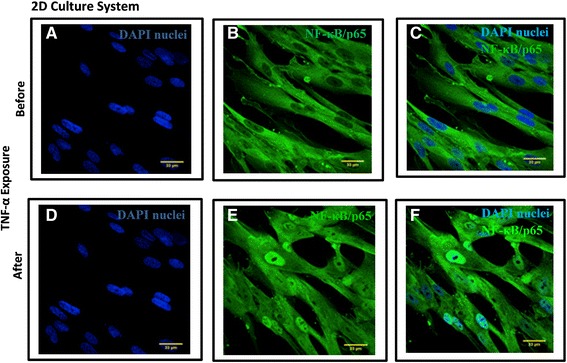
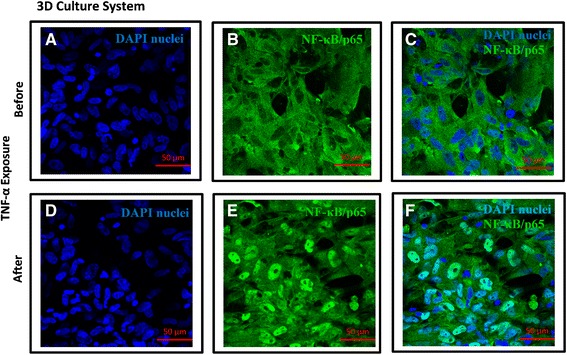
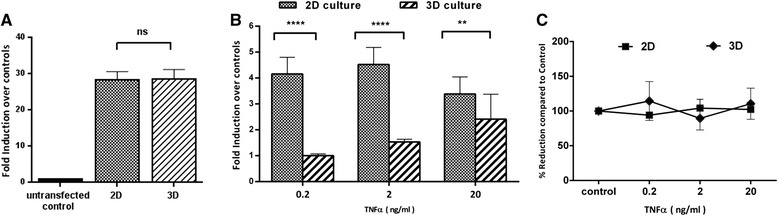
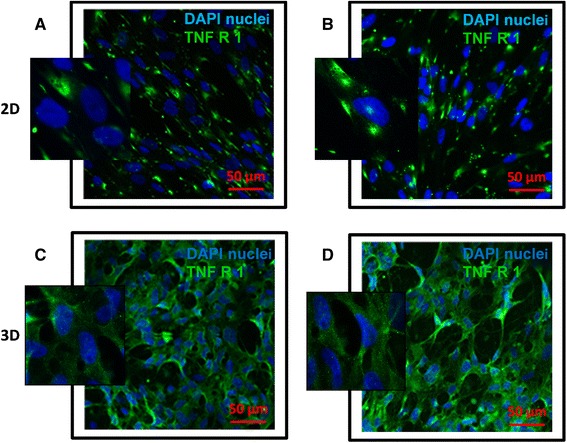
BACKGROUND: Inflammatory respiratory diseases are amongst major global health challenges. Lung fibroblasts have been shown to play a key role in lung inflammatory responses. However, their exact role in initiation and maintenance of lung diseases has remained elusive partly due to the limited availability of physiologically relevant in vitro models. Therefore, developing new tools that enable investigating the molecular pathways (e.g. nuclear factor-kappa B (NF-κB) activation) that underpin inflammatory responses in fibroblasts could be a valuable resource for scientists working in this area of research. RESULTS: In order to investigate NF-κB activation in response to pro-inflammatory stimuli in real-time, we first developed two detection systems based on nuclear localization of NF-κB by immunostaining and luciferase reporter assay system. Furthermore using electrospun porous scaffolds, with similar geometry to human lung extracellular matrix, we developed 3D cultures of lung fibroblasts allowing comparing NF-κB activation in response to pro-inflammatory stimuli (i.e. TNF-α) in 2D and 3D. Our data clearly show that the magnitude of NF-κB activation in 2D cultures is substantially higher than 3D cultures. However, unlike 2D cultures, cells in the 3D model remained responsive to TNF-α at higher concentrations. The more subdued and wider dynamic range of NF-κB responses in 3D culture system was associated with a different expression pattern for TNF receptor I in 3D versus 2D cultures collectively reflecting a more in vivo like TNF receptor I expression and NF-κB activation pattern in the 3D system. CONCLUSION: Our data suggest that lung fibroblasts are actively involved in the pathogenesis of lung inflammation by activation of NF-κB signaling pathway. The 3D culture detection system provides a sensitive and biologically relevant tool for investigating different pro-inflammatory events involving lung fibroblasts.
Overview
The claims and statistics of this paper haven’t been checked yet.
Free: it reads the open-access text and checks the first 5 claims that cite a source we can check. Create a free account to check every claim.
Integrity signals
Registry
Cites
Statistics
Figures
Verification
Claims the paper makes
The claims and statistics of this paper haven’t been checked yet.
Free: it reads the open-access text and checks the first 5 claims that cite a source we can check. Create a free account to check every claim.
Claims other papers make about this one
Each is checked against this paper’s own text: does it say what the citing paper says it does?
The cited source says what the claim attributes to it.
In the citing paper
“3D cultures of lung fibroblasts resemble in vivo tumour necrosis factor (TNF) receptor expression and nuclear factor κ-light-chain-enhancer of activated B cells (NF-κB) activation patterns more closely than 2D cultures12.”
From Human disease models in drug development (2023) · cites this paper as [12]
Self-check
Percentages, sums and reported differences re-computed from the paper’s own numbers.
The self-check needs the paper’s full text.
Citations
Cites
Function and Activation of NF-kappaB in the Immune System
Baeuerle, P. A., & Henkel, T. (1994) · Annual Review of Immunology · doi:10.1146/annurev.iy.12.040194.001041 · Cited by 4,745 · cited 1×
“Upon exposure to external stimuli, IκB is promptly phosphorylated, ubiquitinated and degraded by 26S proteasomes releasing active NF-κB into the nucleus [19] in which it binds to a specific sequence in the promoter regions of target inflammatory genes leading to the activation of RNA polymerase type-II and synthesis o…”
BackgroundNuclear Factor-κB — A Pivotal Transcription Factor in Chronic Inflammatory Diseases
Barnes, P. J., & Karin, M. (1997) · New England Journal of Medicine · doi:10.1056/nejm199704103361506 · Cited by 4,669 · cited 2×
“Two cytokines, TNF-α and IL-1β, produced by inflammatory cells especially monocyte/macrophages in the early inflammatory stage, are also shown to be capable of setting up a positive feedback loop in NF-κB activation pathway which is important for perpetuation of a local inflammatory response [10].”
BackgroundTaking Cell-Matrix Adhesions to the Third Dimension
Cukierman, E., Pankov, R., Stevens, D. R., & Yamada, K. M. (2001) · Science · doi:10.1126/science.1064829 · Cited by 3,027 · cited 1×
“Moreover, it was shown that fibroblasts have greater cell attachment when cultured on 3D scaffolds, as they provide an environment for spatial organization, sustainment and high density culturing [27–31].”
BackgroundDayer, J. M., Beutler, B., & Cerami, A. (1985) · The Journal of experimental medicine · doi:10.1084/jem.162.6.2163 · Cited by 1,216
Cell interactions with three-dimensional matrices
Cukierman, E., Pankov, R., & Yamada, K. M. (2002) · Current Opinion in Cell Biology · doi:10.1016/s0955-0674(02)00364-2 · Cited by 889
IκB-β regulates the persistent response in a biphasic activation of NF-κB
Thompson, J. E., Phillips, R. J., Erdjument-Bromage, H., Tempst, P., & Ghosh, S. (1995) · Cell · doi:10.1016/0092-8674(95)90511-1 · Cited by 751
Interleukin-1 Mitogenic Activity for Fibroblasts and Smooth Muscle Cells Is Due to PDGF-AA
Raines, E. W., Dower, S. K., & Ross, R. (1989) · Science · doi:10.1126/science.2783498 · Cited by 646 · cited 2×
“Fibroblasts have been shown to produce a plethora of inflammatory mediators such as Interleukin-8 (IL-8), monocyte chemoattractant protein (MCP-1,3,4), macrophage inflammatory protein-1-alpha (MIP-1-α), eotaxin, granulocyte monocyte colony stimulating factor (GM-CSF), platelet derived growth factor (PDGF) and transfor…”
BackgroundRole of TNFα in pulmonary pathophysiology
Mukhopadhyay, S., Hoidal, J. R., & Mukherjee, T. K. (2006) · Respiratory Research · doi:10.1186/1465-9921-7-125 · Cited by 576 · cited 1×
“More importantly TNF-α itself has been demonstrated to play a central role in pathology of various pulmonary diseases [23].”
BackgroundKumar, R. K. (1990) · American Review of Respiratory Disease · doi:10.1164/ajrccm/142.5.1234 · Cited by 559
Role of transcription factors in inflammatory lung diseases
Rahman, I., & MacNee, W. (1998) · Thorax · doi:10.1136/thx.53.7.601 · Cited by 468 · cited 1×
“It can also prevent further NF-κB uptake by the nucleus [45, 46].”
BackgroundKelley, J. (1990) · American Review of Respiratory Disease · doi:10.1164/ajrccm/141.3.765 · Cited by 462 · cited 1×
“Immune cells recruited at the site of inflammation are regarded as the key effector cells in lung inflammation through the production of various proinflammatory cytokines [1].”
BackgroundZhou, Y., Huang, X., Hecker, L., Kurundkar, D., Kurundkar, A., Liu, H., Jin, T.-H., Desai, L., Bernard, K., & Thannickal, V. J. (2013) · Journal of Clinical Investigation · doi:10.1172/jci66700 · Cited by 455 · cited 1×
“In addition to being a transcription factor controlling a number of inflammatory responses, NF-κB activation is probably the earliest cellular event in response to exogenous stress and injury [15].”
BackgroundZucali, J. R., Dinarello, C. A., Oblon, D. J., Gross, M. A., Anderson, L., & Weiner, R. S. (1986) · Journal of Clinical Investigation · doi:10.1172/jci112512 · Cited by 441 · cited 1×
“Moreover these two cytokines have been shown to be involved in initial activation of fibroblasts for synthesis of inflammatory mediators [4, 7, 9, 20–22].”
BackgroundIncreased expression of nuclear factor-κB in bronchial biopsies from smokers and patients with COPD
Di Stefano, A., Caramori, G., Oates, T., Capelli, A., Lusuardi, M., Gnemmi, I., Ioli, F., Chung, K. F., Donner, C. F., Barnes, P. J., et al. (2002) · European Respiratory Journal · doi:10.1183/09031936.02.00272002 · Cited by 429 · cited 1×
“Previous in vivo studies in both human [36–38] and animal models [39–41] have shown NF-κB activation is associated with a number of inflammatory lung diseases (e.”
ResultBashur, C. A., Dahlgren, L. A., & Goldstein, A. S. (2006) · Biomaterials · doi:10.1016/j.biomaterials.2006.07.005 · Cited by 395
Idiopathic pulmonary fibrosis: an epithelial/fibroblastic cross-talk disorder
Selman, M., & Pardo, A. (2001) · Respiratory Research · doi:10.1186/rr175 · Cited by 379
Targeting the NF-κB pathway in asthma and chronic obstructive pulmonary disease
Edwards, M. R., Bartlett, N. W., Clarke, D., Birrell, M., Belvisi, M., & Johnston, S. L. (2009) · Pharmacology & Therapeutics · doi:10.1016/j.pharmthera.2008.09.003 · Cited by 375
Sun, T., Jackson, S., Haycock, J. W., & MacNeil, S. (2006) · Journal of Biotechnology · doi:10.1016/j.jbiotec.2005.12.021 · Cited by 308 · cited 2×
“Furthermore, cells cultured in 3D rather than 2D are thought to be able to withstand more stress when encountered cytotoxic agents [24].”
BackgroundSelf-citationHaeberle, H. A., Takizawa, R., Casola, A., Brasier, A. R., Dieterich, H., van Rooijen, N., Gatalica, Z., & Garofalo, R. P. (2002) · The Journal of Infectious Diseases · doi:10.1086/344644 · Cited by 237 · cited 1×
“Previous in vivo studies in both human [36–38] and animal models [39–41] have shown NF-κB activation is associated with a number of inflammatory lung diseases (e.”
ResultSchindler, M., Ahmed, I., Kamal, J., Nur-E-Kamal, A., Grafe, T. H., Young Chung, H., & Meiners, S. (2005) · Biomaterials · doi:10.1016/j.biomaterials.2005.02.014 · Cited by 233 · cited 5×
“For example, in vivo fibroblasts are non-polar cells supported by ECM and exist in a 3D conformation within a particular geometry.”
BackgroundInfluentialFibroblasts in three dimensional matrices: cell migration and matrix remodeling
Rhee, S. (2009) · Experimental and Molecular Medicine · doi:10.3858/emm.2009.41.12.096 · Cited by 189 · cited 1×
“Moreover, it was shown that fibroblasts have greater cell attachment when cultured on 3D scaffolds, as they provide an environment for spatial organization, sustainment and high density culturing [27–31].”
BackgroundElectrospun scaffold tailored for tissue‐specific extracellular matrix
Teo, W., He, W., & Ramakrishna, S. (2006) · Biotechnology Journal · doi:10.1002/biot.200600044 · Cited by 164 · cited 1×
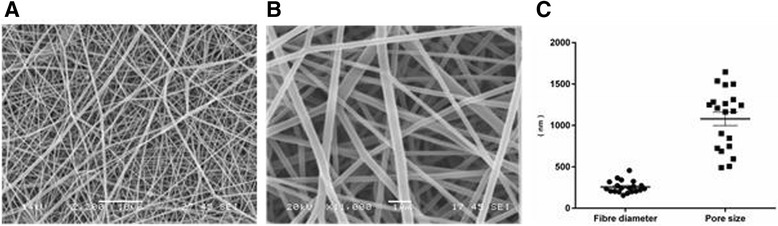
“Interestingly, we and others have shown that such electrospun scaffolds with fibre diameters of approximately 240 ± 70 nm highly resemble the natural ECM of normal lung tissue (245 ± 83 nm) [33, 34].”
BackgroundPersistent Activation of Nuclear Factor–κB Signaling Pathway in Severe Uncontrolled Asthma
Gagliardo, R., Chanez, P., Mathieu, M., Bruno, A., Costanzo, G., Gougat, C., Vachier, I., Bousquet, J., Bonsignore, G., & Vignola, A. M. (2003) · American Journal of Respiratory and Critical Care Medicine · doi:10.1164/rccm.200205-479oc · Cited by 161 · cited 1×
“Previous in vivo studies in both human [36–38] and animal models [39–41] have shown NF-κB activation is associated with a number of inflammatory lung diseases (e.”
ResultDynamic role of epithelium-derived cytokines in asthma
Bartemes, K. R., & Kita, H. (2012) · Clinical Immunology · doi:10.1016/j.clim.2012.03.001 · Cited by 154
Three-dimensional microenvironments modulate fibroblast signaling responses☆
Green, J. B. A., & Yamada, K. M. (2007) · Advanced Drug Delivery Reviews · doi:10.1016/j.addr.2007.08.005 · Cited by 152 · cited 1×
“Human fibroblasts seeded in cell derived tissue matrix have higher proliferation than when cultured in 2D [27].”
BackgroundPoynter, M. E., Irvin, C. G., & Janssen-Heininger, Y. M. W. (2002) · American Journal Of Pathology · doi:10.1016/s0002-9440(10)62559-x · Cited by 152 · cited 1×
“Previous in vivo studies in both human [36–38] and animal models [39–41] have shown NF-κB activation is associated with a number of inflammatory lung diseases (e.”
ResultPANG, G., COUCH, L., BATEY, R., CLANCY, R., & CRIPPS, A. (2008) · Clinical and Experimental Immunology · doi:10.1111/j.1365-2249.1994.tb06048.x · Cited by 150
Broide, D. H., Lawrence, T., Doherty, T., Cho, J. Y., Miller, M., McElwain, K., McElwain, S., & Karin, M. (2005) · Proceedings of the National Academy of Sciences · doi:10.1073/pnas.0509235102 · Cited by 144 · cited 1×
“Previous in vivo studies in both human [36–38] and animal models [39–41] have shown NF-κB activation is associated with a number of inflammatory lung diseases (e.”
ResultMultiorgan Nuclear Factor Kappa B Activation in a Transgenic Mouse Model of Systemic Inflammation
BLACKWELL, T. S., YULL, F. E., CHEN, C.-L., VENKATAKRISHNAN, A., BLACKWELL, T. R., HICKS, D. J., LANCASTER, L. H., CHRISTMAN, J. W., & KERR, L. D. (2000) · American Journal of Respiratory and Critical Care Medicine · doi:10.1164/ajrccm.162.3.9906129 · Cited by 134 · cited 2×
“This is supported by studies in animal models showing dose dependent NF-κB activation in response to LPS challenge in lung inflammation of transgenic mouse model [39].”
BackgroundResultNuclear Factor-κB Activation in Airway Epithelium Induces Inflammation and Hyperresponsiveness
Pantano, C., Ather, J. L., Alcorn, J. F., Poynter, M. E., Brown, A. L., Guala, A. S., Beuschel, S. L., Allen, G. B., Whittaker, L. A., Bevelander, M., et al. (2008) · American Journal of Respiratory and Critical Care Medicine · doi:10.1164/rccm.200707-1096oc · Cited by 123 · cited 1×
“Moreover, NF-κB has been shown to be activated in structural cells of lung in association with increased transcription of some proinflammatory cytokines and growth factors [16–18].”
BackgroundImmune-inflammatory functions of fibroblasts
Jordana, M., Sarnstrand, B., Sime, P., & Ramis, I. (1994) · European Respiratory Journal · doi:10.1183/09031936.94.07122212 · Cited by 108 · cited 2×
“Moreover these two cytokines have been shown to be involved in initial activation of fibroblasts for synthesis of inflammatory mediators [4, 7, 9, 20–22].”
BackgroundCross-Talk Between Pulmonary Injury, Oxidant Stress, and Gap Junctional Communication
Johnson, L. N., & Koval, M. H. (2008) · Antioxidants and Redox Signaling · doi:10.1089/ars.2008.2183 · Cited by 101 · cited 1×
“As gap junction proteins can be expressed more in cell populations with higher cell to cell contact [48], we suggest that the formation of cellular networks in 3D culture system favours the formation of gap junctions between the fibroblasts.”
BackgroundSundararaj, K. P., Samuvel, D. J., Li, Y., Sanders, J. J., Lopes-Virella, M. F., & Huang, Y. (2009) · Journal of Biological Chemistry · doi:10.1074/jbc.m806573200 · Cited by 98
Jiang, H., & Grinnell, F. (2005) · Molecular Biology of the Cell · doi:10.1091/mbc.e05-01-0007 · Cited by 98 · cited 1×
“Moreover, it was shown that fibroblasts have greater cell attachment when cultured on 3D scaffolds, as they provide an environment for spatial organization, sustainment and high density culturing [27–31].”
BackgroundRedhu, N. S., Saleh, A., Halayko, A. J., Ali, A. S., & Gounni, A. S. (2011) · American Journal of Physiology-Lung Cellular and Molecular Physiology · doi:10.1152/ajplung.00301.2009 · Cited by 85 · cited 1×
“Moreover, NF-κB has been shown to be activated in structural cells of lung in association with increased transcription of some proinflammatory cytokines and growth factors [16–18].”
BackgroundMoustafa, M., Kemp, E. H., MacNeil, S., Szabo, M., Haycock, J. W., Ghanem, G., & Morandini, R. (2002) · Journal of Investigative Dermatology · doi:10.1046/j.1523-1747.2002.19602.x · Cited by 74
Self-citationImmunocompetent 3D Model of Human Upper Airway for Disease Modeling and In Vitro Drug Evaluation
Harrington, H., Cato, P., Salazar, F., Wilkinson, M., Knox, A., Haycock, J. W., Rose, F., Aylott, J. W., & Ghaemmaghami, A. M. (2014) · Molecular Pharmaceutics · doi:10.1021/mp5000295 · Cited by 73 · cited 8×
“For example, in vivo fibroblasts are non-polar cells supported by ECM and exist in a 3D conformation within a particular geometry.”
BackgroundMethodInfluentialSelf-citationVancheri, C., Ohtoshi, T., Cox, G., Xaubet, A., Abrams, J. S., Gauldie, J., Dolovich, J., Denburg, J. A., & Jordana, M. (1991) · American Journal of Respiratory Cell and Molecular Biology · doi:10.1165/ajrcmb/4.1.11 · Cited by 69 · cited 1×
“Fibroblasts have been shown to produce a plethora of inflammatory mediators such as Interleukin-8 (IL-8), monocyte chemoattractant protein (MCP-1,3,4), macrophage inflammatory protein-1-alpha (MIP-1-α), eotaxin, granulocyte monocyte colony stimulating factor (GM-CSF), platelet derived growth factor (PDGF) and transfor…”
BackgroundHellweg, C. E., Arenz, A., Bogner, S., Schmitz, C., & Baumstark‐Khan, C. (2006) · Annals of the New York Academy of Sciences · doi:10.1196/annals.1378.066 · Cited by 61
Meyer‐Hoffert, U., Lezcano-Meza, D., Bartels, J., Montes-Vizuet, A. R., Schröder, J., & Teran, L. M. (2003) · International Archives of Allergy and Immunology · doi:10.1159/000072138 · Cited by 54 · cited 1×
“It is now accepted that in addition to immune cells, the structural lung cells such as airway epithelium, smooth muscles and lung fibroblasts also play an important role in initiation and maintenance of chronic lung inflammation through producing proinflammatory cytokines and growth factors [2–5].”
BackgroundIs Airway Smooth Muscle the “Missing Link” Modulating Airway Inflammation in Asthma?
Tliba, O., Amrani, Y., & Panettieri, R. A. (2008) · CHEST Journal · doi:10.1378/chest.07-0262 · Cited by 53 · cited 1×
“It is now accepted that in addition to immune cells, the structural lung cells such as airway epithelium, smooth muscles and lung fibroblasts also play an important role in initiation and maintenance of chronic lung inflammation through producing proinflammatory cytokines and growth factors [2–5].”
BackgroundA paracrine network regulates the cross-talk between human lung stem cells and the stroma
Ruiz, E. J., Oeztuerk-Winder, F., & Ventura, J.-J. (2014) · Nature Communications · doi:10.1038/ncomms4175 · Cited by 53 · cited 1×
“Fibroblasts can also proliferate and have the potential to transform into myofibroblasts [11, 12].”
BackgroundMorris, G. E., Bridge, J. C., Brace, L. A., Knox, A. J., Aylott, J. W., Brightling, C. E., Ghaemmaghami, A. M., & Rose, F. R. A. J. (2014) · Biofabrication · doi:10.1088/1758-5082/6/3/035014 · Cited by 47 · cited 6×
“For example, in vivo fibroblasts are non-polar cells supported by ECM and exist in a 3D conformation within a particular geometry.”
BackgroundInfluentialSelf-citationCell Migration Analyses Within Fibroblast-Derived 3-D Matrices
Cukierman, E. (2004) · Cell Migration · doi:10.1385/1-59259-860-9:079 · Cited by 39 · cited 2×
“Stromal cells such as fibroblasts naturally grow on 3D extracellular matrix bed that supports acquiring more physiologically relevant characteristics like receptor expression, proliferation and cytokine production [26].”
BackgroundAuto-induction of Transforming Growth Factor- β in Human Lung Fibroblasts
Kelley, J., Shull, S., Walsh, J. J., Cutroneo, K. R., & Absher, M. (1993) · American Journal of Respiratory Cell and Molecular Biology · doi:10.1165/ajrcmb/8.4.417 · Cited by 37 · cited 1×
“Fibroblasts have been shown to produce a plethora of inflammatory mediators such as Interleukin-8 (IL-8), monocyte chemoattractant protein (MCP-1,3,4), macrophage inflammatory protein-1-alpha (MIP-1-α), eotaxin, granulocyte monocyte colony stimulating factor (GM-CSF), platelet derived growth factor (PDGF) and transfor…”
BackgroundGM-CSF Induction in Human Lung Fibroblasts by IL-1 β , TNF-α, and Macrophage Contact
Fitzgerald, S. M., Chi, D. S., Hall, H. K., Reynolds, S. A., Aramide, O., Lee, S. A., & Krishnaswamy, G. A. (2003) · Journal of Interferon & Cytokine Research · doi:10.1089/107999003321455453 · Cited by 31
Cytokine Regulation of Gap Junction Connectivity
Brosnan, C. F., Scemes, E., & Spray, D. C. (2001) · American Journal Of Pathology · doi:10.1016/s0002-9440(10)64110-7 · Cited by 23
Cantón, I., Sarwar, U., Kemp, E. H., Ryan, A. J., MacNeil, S., & Haycock, J. W. (2007) · Tissue Engineering · doi:10.1089/ten.2006.0357 · Cited by 19 · cited 1×
“Most studies on NF-κB activation have been performed in conventional 2D culture systems, however the limitations of 2D cell cultures are becoming more apparent [24, 25].”
BackgroundSelf-citationGreen, N. H., Huang, Q., Corfe, B. M., Bury, J. P., & MacNeil, S. (2011) · International Journal of Experimental Pathology · doi:10.1111/j.1365-2613.2011.00778.x · Cited by 9 · cited 1×
“epithelial cell or monocytes) or through direct response to injury or exogenous stimuli [13, 14].”
BackgroundEvidence for tumor necrosis factor receptors (TNFRs) in human MRC5 fibroblast cells.
Guergour, D., Pelloux, H., Aldebert, D., Demenge, P., & Ambroise-Thomas, P. (2001) · PubMed · Cited by 6
Cited by
Human disease models in drug development
Loewa, A., Feng, J. J., & Hedtrich, S. (2023) · Nature Reviews Bioengineering · doi:10.1038/s44222-023-00063-3 · Cited by 331
Advances in Engineering Human Tissue Models
Moysidou, C.-M., Barberio, C., & Owens, R. M. (2021) · Frontiers in Bioengineering and Biotechnology · doi:10.3389/fbioe.2020.620962 · Cited by 179
Enabling high throughput drug discovery in 3D cell cultures through a novel bioprinting workflow
Engel, M., Belfiore, L., Aghaei‐Ghareh‐Bolagh, B., & Sutija, M. (2022) · SLAS TECHNOLOGY · doi:10.1016/j.slast.2021.10.002 · Cited by 60
Understanding Fibroblast Behavior in 3D Biomaterials
Woodley, J. P., Lambert, D., & Asencio, Í. O. (2022) · Tissue Engineering Part B Reviews · doi:10.1089/ten.teb.2021.0010 · Cited by 60
Htwe, S. S., Cha, B. H., Yue, K., Khademhosseini, A., Knox, A. J., & Ghaemmaghami, A. M. (2017) · American Journal of Respiratory Cell and Molecular Biology · doi:10.1165/rcmb.2016-0306oc · Cited by 53
“siRNA Gene Silencing of ROCK Isoform A human lung fibroblast cell line (MRC-5) obtained from American Tissue Culture Collection (Manassas, VA) was cultured routinely as described previously (28).”
MethodSelf-citation
Metadata
- Authors
- Htwe, S. S., Harrington, H., Knox, A., Rose, F., Aylott, J., Haycock, J. W., & Ghaemmaghami, A. M.
- Affiliations
- University of Nottingham (GB)
- University of Sheffield (GB)
- Corresponding author
- Ghaemmaghami, Amir M
- Venue
- Respiratory Research
- Published
- 2015-12
- Volume
- 16
- Issue
- 1
- Pages
- 144-144
- ISSN
- 1465-9921 (ISSN-L)
- 1465-993X
- PMC
- PMC4666055
- OpenAlex
- W2263885780
- Cited by
- 42
- References
- 50
- Citations by year
- 2026: 4 · 2025: 3 · 2024: 4 · 2023: 4 · 2022: 5 · 2021: 3 · 2020: 5 · 2019: 3 · 2018: 3 · 2017: 6 · 2016: 2
- FWCI
- 1.21
- Type
- journal article
- Language
- en
- Open access
- gold
- doi.org
- Licence
- cc-by
- Locations
- Respiratory Research (publishedVersion, cc-by)
- PubMed Central (publishedVersion, cc-by)
- PubMed (publishedVersion)
- Repository@Nottingham (University of Nottingham) (publishedVersion, cc-by)
- Repository@Nottingham (University of Nottingham) (submittedVersion, cc-by)
- Funders
- Biotechnology and Biological Sciences Research Council (BB/H011293/1)
- Topics
- Life Sciences › Biochemistry, Genetics and Molecular Biology › Cancer Research › NF-κB Signaling Pathways
- Life Sciences › Biochemistry, Genetics and Molecular Biology › Molecular Biology › Signaling Pathways in Disease
- Health Sciences › Medicine › Complementary and alternative medicine › Natural Compounds in Disease Treatment
- Keywords
- NF-κB signaling, lung fibroblasts, 3D cell culture, TNF-α, TNF receptor 1, lung inflammation, luciferase reporter assay, extracellular matrix
- MeSH terms
- Cell Line, Dose-Response Relationship, Drug, Fibroblasts, Humans, Lung, Pneumonia, Time Factors, Transfection, Tumor Necrosis Factor-alpha, Signal Transduction, Genes, Reporter, Inflammation Mediators, Cell Culture Techniques, Receptors, Tumor Necrosis Factor, Type I, Transcription Factor RelA
About these checks
Registry, retraction, Cites and statistics results are computed, not judged, with one exception: a printed reference that no index lists is read once by a model before it counts as a citation error. Claims are extracted by a model and kept only when their quote appears verbatim in the text; each cited source is then checked, with a model’s help, for whether it says what the claim relies on. Those verdicts can be wrong — read the claim’s quote and the cited source before relying on one.
Statistics and arithmetic are recomputed, not judged.
Confidence bands are shown only for fields calibrated on our annotated test set. None is calibrated yet, so no band is shown.
What counts as a claim ›How we measure confidence ›How we check this ›
Are you an author, or do you see a problem with this page? Request a review
Data sources
Bibliographic data: Semantic Scholar, OpenAlex, Crossref.
Contains information from the Semantic Scholar Academic Graph Datasets, made available under the ODC Attribution License (ODC-BY 1.0).
Semantic Scholar’s data is described in: Kinney, R., et al. (2023). The Semantic Scholar Open Data Platform. arXiv:2301.10140.
