

Exposure to common respiratory bacteria alters the airway epithelial response to subsequent viral infection
Open accessThe DOI matches its Crossref record; 61 of the 61 references it cites were found in a registry or an index.
Abstract
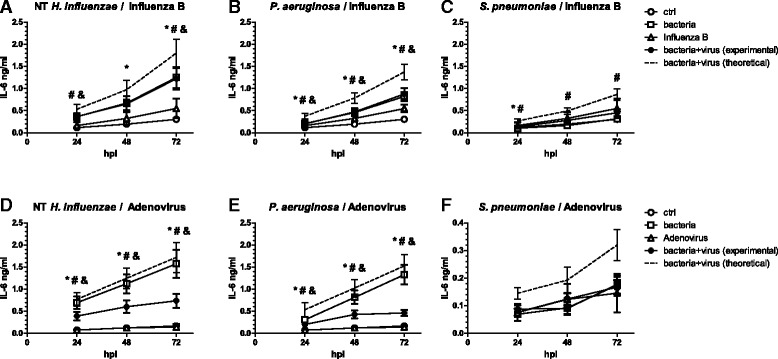
BACKGROUND: Colonization of the airways with potential pathogenic bacteria is observed in a number of chronic respiratory diseases, such as COPD or cystic fibrosis. Infections with respiratory viruses are known triggers of exacerbations of these diseases. We here investigated if pre-exposure to bacteria alters the response of lung epithelial cells to subsequent viral infection. METHODS: Bronchial epithelial cells (BEAS-2B cells and primary bronchial epithelial cells) were exposed to heat-inactivated Haemophilus influenzae, Pseudomonas aeruginosa or Streptococcus pneumoniae and subsequently infected with respiratory syncytial virus (RSV), type 2 human adenovirus or influenza B. Levels of pro-inflammatory cytokines, viral replication and expression of pattern recognition receptors were determined in culture supernatants and/or cell lysates. RESULTS: Exposure of BEAS-2B cells to H. influenzae before and during RSV-infection synergistically increased the release of IL-6 (increase above calculated additive effect at 72 h: 56 % ± 3 %, mean ± SEM) and IL-8 (53 % ± 12 %). This effect was sustained even when bacteria were washed away before viral infection and was neither associated with enhanced viral replication, nor linked to increased expression of key pattern recognition receptors. P. aeruginosa enhanced the release of inflammatory cytokines to a similar extent, yet only if bacteria were also present during viral infection. S. pneumoniae did not enhance RSV-induced cytokine release. Surprisingly, adenovirus infection significantly reduced IL-6 release in cells exposed to either of the three tested bacterial strains by on average more than 50 %. Infection with influenza B on the other hand did not affect cytokine production in BEAS-2B cells exposed to the different bacterial strains. CONCLUSION: Pre-exposure of epithelial cells to bacteria alters the response to subsequent viral infection depending on the types of pathogen involved. These findings highlight the complexity of microbiome interactions in the airways, possibly contributing to the susceptibility to exacerbations and the natural course of airway diseases.
Overview
The claims and statistics of this paper haven’t been checked yet.
Free: it reads the open-access text and checks the first 5 claims that cite a source we can check. Create a free account to check every claim.
Integrity signals
Registry
Cites
Statistics
Figures
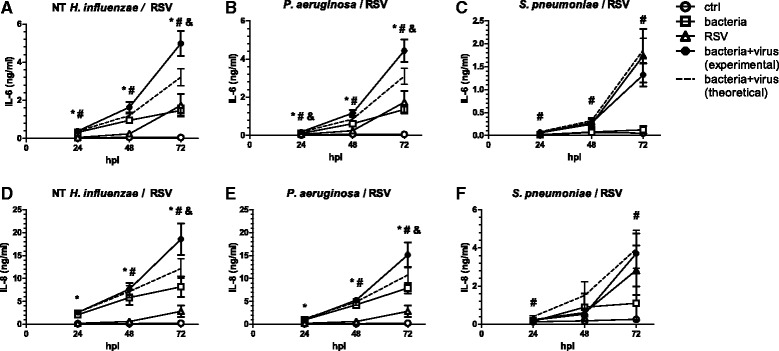
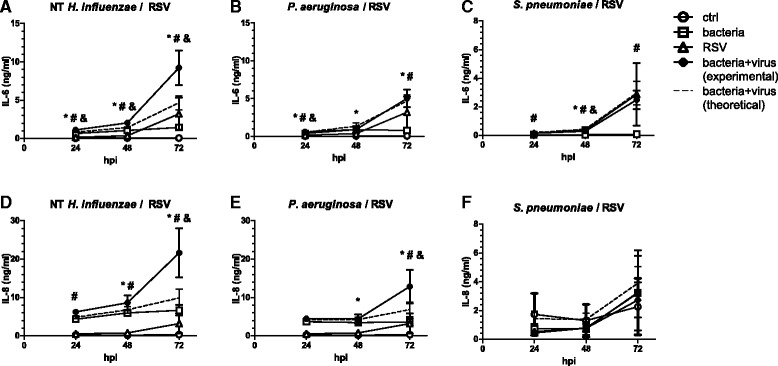
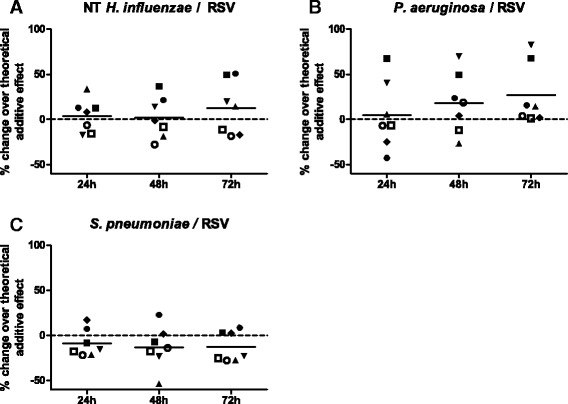
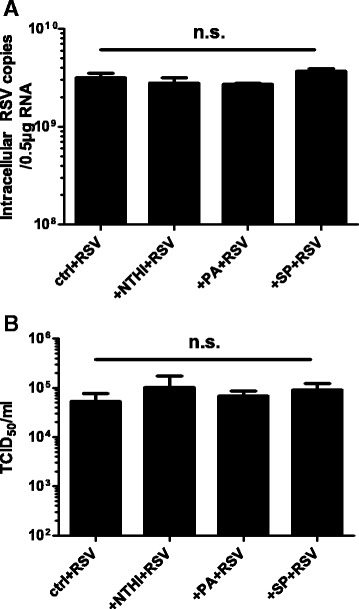
Verification
Claims the paper makes
The claims and statistics of this paper haven’t been checked yet.
Free: it reads the open-access text and checks the first 5 claims that cite a source we can check. Create a free account to check every claim.
Claims other papers make about this one
Each is checked against this paper’s own text: does it say what the citing paper says it does?
The source backs part of the claim, not all of it — or backs it for a different population, condition or comparison.
In the citing paper
“the upregulation of adhesion receptors, such as intercellular adhesion molecule 1 (ICAM1), was shown to increase the binding of HRV and respiratory syncytial virus (RSV) to epithelial cells and amplify pro-inflammatory responses114,115,116.”
From The microbiota of the respiratory tract: gatekeeper to respiratory health (2017) · cites this paper as [116]
Experimental — accuracy not yet measured
Self-check
Percentages, sums and reported differences re-computed from the paper’s own numbers.
The self-check needs the paper’s full text.
Citations
Cites
Disordered Microbial Communities in Asthmatic Airways
Hilty, M., Burke, C., Pedro, H., Cardenas, P., Bush, A., Bossley, C., Davies, J., Ervine, A., Poulter, L., Pachter, L., et al. (2010) · PLoS ONE · doi:10.1371/journal.pone.0008578 · Cited by 1,824 · cited 1×
“Furthermore, changes in the lung microbiome in asthma and COPD have been reported in several studies [59–61]; particularly pathogenic proteobacteria, such as H.”
Pattern recognition receptors TLR4 and CD14 mediate response to respiratory syncytial virus
Kurt-Jones, E. A., Popova, L., Kwinn, L., Haynes, L. M., Jones, L. P., Tripp, R. A., Walsh, E. E., Freeman, M. W., Golenbock, D. T., Anderson, L. J., et al. (2000) · Nature Immunology · doi:10.1038/80833 · Cited by 1,683
Lung Infections Associated with Cystic Fibrosis
Lyczak, J. B., Cannon, C. L., & Pier, G. B. (2002) · Clinical Microbiology Reviews · doi:10.1128/cmr.15.2.194-222.2002 · Cited by 1,628 · cited 1×
“Likewise, increased load of PPMs has also been described for other chronic lung diseases, such as asthma and cystic fibrosis [11–13].”
Bafadhel, M., McKenna, S., Terry, S., Mistry, V., Reid, C., Haldar, P., McCormick, M., Haldar, K., Kebadze, T., Duvoix, A., et al. (2011) · American Journal of Respiratory and Critical Care Medicine · doi:10.1164/rccm.201104-0597oc · Cited by 1,094 · cited 5×
“Presence of both, potential pathogenic bacteria and viruses, during the same period of exacerbations have been observed in as much as 12 to 25 % of AECOPD [21, 22].”
InfluentialInfections and Airway Inflammation in Chronic Obstructive Pulmonary Disease Severe Exacerbations
Papi, A., Bellettato, C. M., Braccioni, F., Romagnoli, M., Casolari, P., Caramori, G., Fabbri, L. M., & Johnston, S. L. (2006) · American Journal of Respiratory and Critical Care Medicine · doi:10.1164/rccm.200506-859oc · Cited by 1,072 · cited 5×
“Presence of both, potential pathogenic bacteria and viruses, during the same period of exacerbations have been observed in as much as 12 to 25 % of AECOPD [21, 22].”
InfluentialSEEMUNGAL, T., HARPER-OWEN, R., BHOWMIK, A., MORIC, I., SANDERSON, G., MESSAGE, S., MacCALLUM, P., MEADE, T. W., JEFFRIES, D. J., JOHNSTON, S. L., et al. (2001) · American Journal of Respiratory and Critical Care Medicine · doi:10.1164/ajrccm.164.9.2105011 · Cited by 1,018 · cited 1×
“Changes in IL-6 between stable state and exacerbation were found to be particularly pronounced, if the exacerbations were associated with a viral infection [17–19].”
Analysis of the lung microbiome in the “healthy” smoker and in COPD.
Erb-Downward, J. R., Thompson, D. L., Han, M. K., Freeman, C. M., McCloskey, L., Schmidt, L. A., Young, V. B., Toews, G. B., Curtis, J. L., Sundaram, B., et al. (2011) · PLoS ONE · doi:10.1371/journal.pone.0016384 · Cited by 973 · cited 1×
“Furthermore, changes in the lung microbiome in asthma and COPD have been reported in several studies [59–61]; particularly pathogenic proteobacteria, such as H.”
Relation of sputum inflammatory markers to symptoms and lung function changes in COPD exacerbations
Bhowmik, A. (2000) · Thorax · doi:10.1136/thorax.55.2.114 · Cited by 730 · cited 1×
“Furthermore, pro-inflammatory cytokines, such as IL-6 and IL-8, have been shown to be elevated in the sputum of frequent exacerbators and during exacerbation [17].”
The co-pathogenesis of influenza viruses with bacteria in the lung.
McCullers, J. A. (2014) · Nature Reviews Microbiology · doi:10.1038/nrmicro3231 · Cited by 722 · cited 1×
“Even though secondary bacterial infection is a major contributor to influenza virus pathology the reverse order of sequential infections does not seem to have such detrimental effects [34].”
Airway microbiota and bronchial hyperresponsiveness in patients with suboptimally controlled asthma
Huang, Y. J., Nelson, C. E., Brodie, E. L., DeSantis, T. Z., Baek, M. S., Liu, J., Woyke, T., Allgaier, M., Bristow, J., Wiener-Kronish, J. P., et al. (2011) · Journal of Allergy and Clinical Immunology · doi:10.1016/j.jaci.2010.10.048 · Cited by 696 · cited 1×
“Likewise, increased load of PPMs has also been described for other chronic lung diseases, such as asthma and cystic fibrosis [11–13].”
Cited by
The microbiota of the respiratory tract: gatekeeper to respiratory health
Man, W. H., de Steenhuijsen Piters, W. A. A., & Bogaert, D. (2017) · Nature Reviews Microbiology · doi:10.1038/nrmicro.2017.14 · Cited by 1,384
“Vice versa, respiratory bacteria can also promote viral infection through numerous pathways [112] [113] [114] [115] [116] .”
BackgroundA critical review on the health benefits of fish consumption and its bioactive constituents
Chen, J., Jayachandran, M., Bai, W., & Xu, B. (2022) · Food Chemistry · doi:10.1016/j.foodchem.2021.130874 · Cited by 289
Viral–bacterial co-infections in the respiratory tract
Bakaletz, L. O. (2017) · Current Opinion in Microbiology · doi:10.1016/j.mib.2016.11.003 · Cited by 205
“viral infection of the airway Whereas more typically we think of viral URT infection predisposing to bacterial superinfection, recently we’ve learned that pre-existing bacterial infection can promote viral shedding [58 ,59].”
Wilkinson, T. M. A., Aris, E., Bourne, S., Clarke, S. C., Peeters, M., Pascal, T. G., Schoonbroodt, S., Tuck, A. C., Kim, V., Ostridge, K., et al. (2017) · Thorax · doi:10.1136/thoraxjnl-2016-209023 · Cited by 195
MAIT Cell Activation and Functions
Hinks, T. S. C., & Zhang, X.-W. (2020) · Frontiers in Immunology · doi:10.3389/fimmu.2020.01014 · Cited by 180
“Might MAIT cells be important in more common respiratory diseases? Persistent infection with Haemophilus influenzae, which can persist intracellularly (70), can drive inflammation in chronic obstructive pulmonary disease (COPD) (71) and severe neutrophilic asthma (72, 73) and enhance susceptibility to virally-induced…”
BackgroundRespiratory viral infection: a potential “missing link” in the pathogenesis of COPD
Linden, D. A., Guo-Parke, H., Coyle, P. V., Fairley, D., McAuley, D. F., Taggart, C. C., & Kidney, J. (2019) · European Respiratory Review · doi:10.1183/16000617.0063-2018 · Cited by 162
Bajinka, O., Simbilyabo, L., Tan, Y., Jabang, J. N., & Saleem, S. A. (2021) · Critical Reviews in Microbiology · doi:10.1080/1040841x.2021.1960483 · Cited by 140
“In addition to bacterial respiratory infections such as tuberculosis (TB) and bacterial pneumonia (Dubourg et al. 2019), Pseudomonas aeruginosa, Streptococcus pneumonia and H influenza (strains of non-typeable) are frequently detected in acute exacerbations (Bellinghausen et al. 2016).”
BackgroundInfluentialAdenoid hypertrophy in children: a narrative review of pathogenesis and clinical relevance
Niedzielski, A., Chmielik, L. P., Mielnik–Niedzielska, G., Kasprzyk, A., & Bogusławska, J. (2023) · BMJ Paediatrics Open · doi:10.1136/bmjpo-2022-001710 · Cited by 201
“39 Whenever long-term chronic inflammation arises, this barrier is damaged and may contribute to there being bacterial superinfection.”
BackgroundJia, L., Xie, J., Zhao, J., Cao, D., Liang, Y., Hou, X., Wang, L., & Li, Z. (2017) · Frontiers in Cellular and Infection Microbiology · doi:10.3389/fcimb.2017.00338 · Cited by 135
“However, it has not been possible to identify synergistic pathogenicity genes that facilitate co-infections using traditional virulence screens during single-agent infections (Bellinghausen et al., 2016).”
BackgroundSu, Y.-C., Jalalvand, F., Thegerström, J., & Riesbeck, K. (2018) · Frontiers in Immunology · doi:10.3389/fimmu.2018.02530 · Cited by 124
Ederveen, T. H. A., Ferwerda, G., Ahout, I. M. L., Vissers, M., de Groot, R., Boekhorst, J., Timmerman, H. M., Huynen, M. A., van Hijum, S. A. F. T., & de Jonge, M. I. (2018) · Microbiome · doi:10.1186/s40168-017-0395-y · Cited by 99
“Much more in vitro and in vivo evidence is present with regard to increased susceptibility for viral infections and increased inflammatory responses associated with Haemophilus colonization and infection [38] [39] [40] [41] [42] .”
BackgroundThe microbiome: an integral player in immune homeostasis and inflammation in the respiratory tract
Perdijk, O., Azzoni, R., & Marsland, B. J. (2023) · Physiological Reviews · doi:10.1152/physrev.00020.2023 · Cited by 105
Linking microbiota and respiratory disease
Hauptmann, M., & Schaible, U. E. (2016) · FEBS Letters · doi:10.1002/1873-3468.12421 · Cited by 89
Viral–bacterial interactions in the respiratory tract
Bellinghausen, C., Rohde, G. G. U., Savelkoul, P. H. M., Wouters, E. F. �., & Stassen, F. R. M. (2016) · Journal of General Virology · doi:10.1099/jgv.0.000627 · Cited by 87
Self-citationRijsbergen, L. C., van Dijk, L. L. A., Engel, M. F. M., de Vries, R. D., & de Swart, R. L. (2021) · Frontiers in Immunology · doi:10.3389/fimmu.2021.683002 · Cited by 81
Relationship between nasopharyngeal microbiota and patient’s susceptibility to viral infection
Dubourg, G., Edouard, S., & Raoult, D. (2019) · Expert Review of Anti-infective Therapy · doi:10.1080/14787210.2019.1621168 · Cited by 72
“while this result was not found following HRV infection [73,74].”
ResultBesteman, S. B., Bogaert, D., Bont, L., Mejías, A., Ramilo, O., Weinberger, D. M., & Dagan, R. (2024) · The Lancet Respiratory Medicine · doi:10.1016/s2213-2600(24)00148-6 · Cited by 74
“Exposure of bronchial epithelial cells to pneumococcus before and during RSV infection did not increase RSV-induced interleukin-6 (IL-6) or IL-8 release, 34 suggesting that other cytokines and chemokines are involved in the inflammatory response during RSV and pneumococcal co-infection.”
Zhang, X., Zhang, X., Zhang, N., Wang, X., Sun, L., Chen, N., Zhao, S., & He, Q. (2019) · Pediatric Allergy and Immunology · doi:10.1111/pai.13183 · Cited by 65
Mertens, T. C. J., Karmouty‐Quintana, H., Taube, C., & Hiemstra, P. S. (2017) · Pulmonary Pharmacology & Therapeutics · doi:10.1016/j.pupt.2017.05.008 · Cited by 56
Surviving Deadly Lung Infections: Innate Host Tolerance Mechanisms in the Pulmonary System
Crane, M. J., Lee, K. M., FitzGerald, E. S., & Jamieson, A. M. (2018) · Frontiers in Immunology · doi:10.3389/fimmu.2018.01421 · Cited by 49
“This is especially true after preceding viral infections where previously harmless bacteria become pathogenic (233, 234).”
BackgroundA cooperativity between virus and bacteria during respiratory infections
Lalbiaktluangi, C., Yadav, M., Singh, P. K., Singh, A., Iyer, M., Vellingiri, B., Zomuansangi, R., Zothanpuia, Z., & Ram, H. (2023) · Frontiers in Microbiology · doi:10.3389/fmicb.2023.1279159 · Cited by 46
Li, Q., Wang, H., Tan, L., Zhang, S., Lin, L., Tang, X., & Pan, Y. (2021) · Frontiers in Cellular and Infection Microbiology · doi:10.3389/fcimb.2021.643913 · Cited by 44
The Role of Upper Airway Microbiome in the Development of Adult Asthma
Losol, P., Choi, J., Kim, S., & Chang, Y. (2021) · Immune Network · doi:10.4110/in.2021.21.e19 · Cited by 47
Alsayed, A. R., Abed, A. I., Khader, H. A., Al-Shdifat, L., Hasoun, L., Al‐Rshaidat, M. M. D., Alkhatib, M., & Zihlif, M. A. (2023) · International Journal of Molecular Sciences · doi:10.3390/ijms24044086 · Cited by 39
Cleary, D. W., & Clarke, S. C. (2017) · Emerging Topics in Life Sciences · doi:10.1042/etls20170041 · Cited by 33
Choi, J., Oh, J. Y., Lee, Y. S., Hur, G. Y., Lee, S. Y., Shim, J. J., Kang, K. H., & Min, K. H. (2019) · Yonsei Medical Journal · doi:10.3349/ymj.2019.60.2.216 · Cited by 32
“On the other hand, bacterial infections in the airway can promote respiratory viral infection.(26) When the lungs are infected with P.”
BackgroundMénage à trois: Virus, Host, and Microbiota in Experimental Infection Models
Mazel‐Sanchez, B., Yildiz, S., & Schmolke, M. (2019) · Trends in Microbiology · doi:10.1016/j.tim.2018.12.004 · Cited by 29
“exposure to commensal respiratory bacteria [51].”
Nasopharyngeal Microbiome in Premature Infants and Stability during Rhinovirus Infection
Pérez, G. F., Pérez‐Losada, M., Isaza, N. A., Rose, M. C., Colberg‐Poley, A. M., & Niño, G. (2017) · Journal of Investigative Medicine · doi:10.1136/jim-2017-000414 · Cited by 26
Shilts, M. H., Rosas‐Salazar, C., Turi, K. N., Rajan, D., Rajagopala, S. V., Patterson, M. F., Gebretsadik, T. S., Anderson, L. J., Peebles, R. S., Hartert, T. V., et al. (2020) · Journal of Allergy and Clinical Immunology · doi:10.1016/j.jaci.2020.06.023 · Cited by 21
“Likewise, 2 in vitro studies found similar results for IL-6 and IL-8, which also supports our findings.(8,9) Our study has multiple strengths, including the populationbased design of the parent study, the close surveillance during the infants’ first winter viral season to capture their initial RSVARI, the use of next-…”
Meng, F., Tong, J., Vötsch, D., Peng, J.-Y., Cai, X., Willenborg, M., Herrler, G., Wu, N., & Valentin‐Weigand, P. (2019) · Infection and Immunity · doi:10.1128/iai.00350-19 · Cited by 22
“been performed previously (7, 34, 35), the porcine ALI culture system has not yet been”
MethodChmayssem, A., Tanase, C. E., Verplanck, N., Gougis, M., Mourier, V., Zebda, A., Ghaemmaghami, A. M., & Mailley, P. (2022) · Biosensors · doi:10.3390/bios12070452 · Cited by 24
“Previous studies have shown that cytokine secretion can be activated via specific pathways triggered by exposure to an insult [23,24].”
BackgroundDisease Tolerance during Viral-Bacterial Co-Infections
Barman, T. K., & Metzger, D. W. (2021) · Viruses · doi:10.3390/v13122362 · Cited by 18
“It is clear that following viral infection, normally colonizing bacteria can become pathogenic and cause secondary bacterial infections, leading to superinfection [50,153,154].”
BackgroundMasna, K., Zwierz, A., Domagalski, K., & Burduk, P. (2021) · Journal of Clinical Medicine · doi:10.3390/jcm10235603 · Cited by 18
“state that pre-exposure of airway epithelial cells to pathological bacteria aggravates the production of proinflammatory cytokines in response to subsequent infections [27].”
BackgroundBurstein, R., Althouse, B. M., Adler, A., Akullian, A. N., Brandstetter, E., Cho, S., Emanuels, A., Fay, K. A., Gamboa, L., Han, P. D., et al. (2022) · medRxiv · doi:10.1101/2022.02.04.22270474 · Cited by 16
Lung Microbiome in Critically Ill Patients
Fromentin, M., Ricard, J.-D., & Roux, D. (2021) · Life · doi:10.3390/life12010007 · Cited by 14
“The reciprocal mechanism could also occur [32].”
Endres, A., Hügel, C., Boland, H., Hogardt, M., Schubert, R., Jonigk, D. D., Braubach, P., Rohde, G. G. U., & Bellinghausen, C. (2022) · Frontiers in Cellular and Infection Microbiology · doi:10.3389/fcimb.2022.846828 · Cited by 15
“To date, mechanisms underlying bacterial-viral interactions have largely been studied in vitro using acute infection models, with relatively high bacterial loads and/or short infection times (Sajjan et al., 2006; Van Ewijk et al., 2007; Chattoraj et al., 2011b; Bellinghausen et al., 2016).”
BackgroundSelf-citationSudaryatma, P. E., Saito, A., Mekata, H., Kubo, M., Fahkrajang, W., Mazimpaka, E., & Okabayashi, T. (2020) · Frontiers in Microbiology · doi:10.3389/fmicb.2020.01676 · Cited by 16
Giménez, M.-J., Aguilar, L., & Granizo, J. J. (2018) · Multidisciplinary Respiratory Medicine · doi:10.1186/s40248-018-0152-5 · Cited by 13
“pneumoniae in lungs [118], and these potential pathogenic microorganisms have been detected in approximately 25% of patients with chronic obstructive pulmonary disease (COPD) during stable disease [119].”
BackgroundKrammer, M., Hoffmann, R. F. G., Ruf, H.-G., Neumann, A. U., Traidl‐Hoffmann, C., Goekkaya, M., & Gilles, S. (2024) · iScience · doi:10.1016/j.isci.2024.110136 · Cited by 13
“In vitro studies have reported reduced cytokine production as a result of AdV infection after initial bacterial exposure 17 and decreased AdV transduction after inoculation of epithelial cells with S. pneumoniae .”
Disseminated adenovirus infection causing severe ARDS
Campbell, S. J., Kynyk, J. A., & Davis, J. A. (2017) · BMJ Case Reports · doi:10.1136/bcr-2016-217524 · Cited by 12
Role and significance of virus–bacteria interactions in disease progression
Pokhrel, V., Kuntal, B. K., & Mande, S. S. (2024) · Journal of Applied Microbiology · doi:10.1093/jambio/lxae130 · Cited by 11
Li, Y., Liu, G., Zhang, J., Zhong, X., & He, Z. (2018) · BMC Microbiology · doi:10.1186/s12866-018-1187-7 · Cited by 10
“Infections caused by viral and/or bacterial pathogens exacerbate chronic respiratory diseases [3].”
BackgroundBanjar, H. H., Chaballout, M., Karkour, K., Alghamdi, H., Almogarri, I., Alhaider, S. A., Nizami, I. Y., Raja, R., & Alnakhli, A. (2019) · International Journal of Pediatrics and Adolescent Medicine · doi:10.1016/j.ijpam.2019.09.003 · Cited by 8
“Bellinghausen et al. suggested that the pre-exposure to normal respiratory bacteria may modify the response of lung epithelia to viruses and may explain the susceptibility to pulmonary exacerbations [8].”
Miron, V. D., Drăgănescu, A. C., Săndulescu, O., Vișan, C. A., Merisescu, M., Streinu‐Cercel, A., Pițigoi, D., Rafilă, A., Dorobăţ, O. M., Jugulete, G., et al. (2018) · Revista de Chimie · doi:10.37358/rc.18.10.6618 · Cited by 11
Deng, W., Almeida, G., & Gibson, K. E. (2019) · Food and Environmental Virology · doi:10.1007/s12560-019-09381-5 · Cited by 8
Transkingdom Interactions Important for the Pathogenesis of Human Viruses
Nishimoto, A. T., Wohlgemuth, N., Rosch, J. W., Schultz‐Cherry, S., Cortez, V. A., & Rowe, H. M. (2020) · The Journal of Infectious Diseases · doi:10.1093/infdis/jiaa735 · Cited by 8
“The enhancement of respiratory viral pathogenesis by bacterial products extends to heat-killed Pseudomonas aeruginosa, adenovirus, and influenza B virus, but not to heat-killed S pneumoniae [51], suggesting that the respiratory bacterial community exerts species-specific effects on viral pathogenesis.”
BackgroundInfluentialAnalysis of the upper respiratory tract microbiota in mild and severe COVID-19 patientsPreprint
Babenko, V. V., Bakhtyev, R., Baklaushev, V. P., Балыкова, Л. А., Bashkirov, P. V., Bespyatykh, J., Blagonravova, A. S., Boldyreva, D. I., Fedorov, D., Gafurov, I., et al. (2021) · bioRxiv (Cold Spring Harbor Laboratory) · doi:10.1101/2021.09.20.461025 · Cited by 7
“At the same time, certain bacteria can promote viral infections [5] and bacterial secondary infections are leading to serious complications and mortalities during viral infections including new coronavirus disease [6][7][8].”
BackgroundBajinka, O., Ouédraogo, S. Y., Li, N., & Zhan, X. (2025) · The EPMA Journal · doi:10.1007/s13167-024-00395-z · Cited by 8
Bacterial and Viral Co-Infections in COVID-19 Patients: Etiology and Clinical Impact
Trifonova, I. T., Trifonova, I. T., Korsun, N., Levterova, V., Velikov, P., Voleva, S., Ivanov, I., Ivanov, D. T., Yordanova, R., Tcherveniakova, T., et al. (2024) · Biomedicines · doi:10.3390/biomedicines12102210 · Cited by 9
“Bacteria and viruses have a symbiotic relationship that can lead to co-infections [19].”
BackgroundGaleeva, J. S., Starikova, E. V., Fedorov, D. E., Manolov, A. I., Pavlenko, A. V., Konanov, D. N., Krivonos, D. V., Babenko, V. V., Klimina, K. M., Veselovsky, V. A., et al. (2023) · Frontiers in Microbiomes · doi:10.3389/frmbi.2023.1067019 · Cited by 6
“At the same time, certain bacteria can promote viral infections (Bellinghausen et al., 2016), and secondary bacterial infections can lead to serious complications and mortalities (Morens et al.”
BackgroundMechanisms driving immunopathogenesis of viral exacerbations in chronic respiratory disease
McKenzie, J., Carter, C., Jackson, M. M., Singanayagam, A., & Shah, A. (2026) · Thorax · doi:10.1136/thorax-2024-222169 · Cited by 7
Song, D., Xu, W., Zhuo, Y., Zhu, A., & Long, F. (2025) · Microchimica Acta · doi:10.1007/s00604-025-07289-5 · Cited by 4
“Bacteria promote viral infections by suppressing the host immunity [7], increasing adhesion proteins [8], and activating viral proteins [9].”
Giménez, M.-J., Aguilar, L., & Granizo, J. J. (2018) · Multidisciplinary Respiratory Medicine · doi:10.4081/mrm.2018.197 · Cited by 4
Su, X., Wang, H., He, J., & Bai, H. (2026) · Hereditas · doi:10.1186/s41065-026-00665-y · Cited by 2
“BEAS-2B cells, derived from human bronchi, offer higher reproducibility than primary cells [28].”
The early-life microbiome: the key to respiratory health?
de Koff, E. M., Pattaroni, C., Marsland, B. J., & Bogaert, D. (2019) · European Respiratory Society eBooks · doi:10.1183/2312508x.10015818 · Cited by 3
Okda, F. A., Sakr, A., Webster, R. G., & Webby, R. J. (2021) · bioRxiv (Cold Spring Harbor Laboratory) · doi:10.1101/2021.05.03.442542 · Cited by 2
Fish for health and prosperity
Gupta, A., Fatima, S., Chaurasia, S., & Kumar, V. (2024) · Elsevier eBooks · doi:10.1016/b978-0-443-22082-1.00001-8 · Cited by 2
Slack, M., & Grimwood, K. (2025) · Elsevier eBooks · doi:10.1016/b978-0-323-82763-8.00133-3
Bacterial and Viral Co-Infections in COVID-19 Patients: Etiology and Clinical ImpactPreprint
Madzharova, I., Trifonova, I. T., Korsun, N., Levterova, V., Velikov, P., Voleva, S., Ivanov, I., Ivanov, D. T., Yordanova, R., Tcherveniakova, T., et al. (2024) · Preprints.org · doi:10.20944/preprints202408.1995.v1 · Cited by 1
Viral/bacterial respiratory tract co-infections in children
Brealey, J. C. (2017) · The University of Queensland · doi:10.14264/uql.2017.568 · Cited by 1
“influenzae prior to RSV infection has also been shown to contribute to virus-induced cytokine production, although no effect was observed on virus replication (123).”
Volgers (2017) · Research Publications (Maastricht University) · doi:10.26481/dis.20171005cv
“This may compromise innate immune responses required to resolve infection [28,42].”
BackgroundMethodInfluentialThe development of the respiratory microbiota in infants and children
Powell, E. A. (2019) · doi:10.25560/82376
Li, Q., Wang, H., Tan, L., Zhang, S., Lin, L., Tang, X., & Pan, Y. (2020) · doi:10.21203/rs.3.rs-102369/v1
Tiew, P. Y. (2020) · DR-NTU (Nanyang Technological University) · doi:10.32657/10356/145518
Infective Exacerbations of Chronic Lung Disease
Mallia, P., Coultas, J. A., & Cafferkey, J. (2021) · Elsevier eBooks · doi:10.1016/b978-0-08-102723-3.00138-4
Impfen und chronische Atemwegserkrankungen: Immunologische Aspekte am Beispiel der RSV-Impfung
Rohde, G. G. U. (2023) · Allergo Journal · doi:10.1007/s15007-023-5717-8
“In diesem Zusammenhang spielt die Co-Infektion mit Haemophilus influenzae eine wichtige Rolle, da es hier zur synergistischen Hochregulation von Interleukin-6 und -8 kommt [12].”
BackgroundSelf-citationDynamic microbiotal changes in the human lung
Zhang, C., Georgian, E. M., & Pinkerton, K. E. (2024) · Elsevier eBooks · doi:10.1016/b978-0-323-91824-4.00018-6
Kafer, L. A., Escapa, I. F., Boyd, A. I., Tostado, A. R., Kambal, A., Blutt, S. E., Avadhanula, V., Piedra, P. A., & Lemon, K. P. (2026) · bioRxiv (Cold Spring Harbor Laboratory) · doi:10.64898/2026.02.05.703985 · Cited by 1
Host-pathogens interactions during RSV / S. pneumoniae infection immune response and p53 pathway
Machado, D. B. B. (2017) · theses.fr (ABES) · doi:10.70675/3b4a9038z62abz41fcz8fa8zd0dbd4dcbfe4
Innate airway responses shape permissiveness to human respiratory syncytial virus
van Dijk, L. L. A., Rijsbergen, L. C., Havelaar, A. C., den Hartog, Y., Koutstaal, R. W., Groen, K., de Vries, R. D., & de Swart, R. L. (2026) · Virus Research · doi:10.1016/j.virusres.2026.199734
“…cell line (BEAS-2B) with heat-inactivated H. influenzae , a bacterium linked to more severe disease in infants, followed by HRSV infection resulted in a synergistic increase in IL-6 and IL-8 production, compared to cells infected with HRSV alone (Gulraiz et al., 2015; Bellinghausen et al., 2016).”
Respiratory syncytial virus and Streptococcus pneumoniae: Partners in crime
Rzymski, P. (2026) · Advances in virus research · doi:10.1016/bs.aivir.2026.06.001
Metadata
- Authors
- Bellinghausen, C., Gulraiz, F., Heinzmann, A. C. A., Dentener, M. A., Savelkoul, P. H. M., Wouters, E. F., Rohde, G. G., & Stassen, F. R.
- Affiliations
- Maastricht University Medical Centre (NL)
- University of North Texas Health Science Center (US)
- Maastricht University (NL)
- Corresponding author
- Stassen, Frank R.
- Venue
- Respiratory Research
- Published
- 2016-06-03
- Volume
- 17
- Issue
- 1
- Pages
- 68-68
- ISSN
- 1465-9921 (ISSN-L)
- 1465-993X
- PMC
- PMC4891894
- OpenAlex
- W2408820312
- Cited by
- 71
- References
- 61
- Citations by year
- 2026: 5 · 2025: 3 · 2024: 7 · 2023: 6 · 2022: 3 · 2021: 11 · 2020: 6 · 2019: 10 · 2018: 7 · 2017: 10 · 2016: 3
- FWCI
- 9.38
- Type
- journal article
- Language
- en
- Open access
- gold
- doi.org
- Licence
- cc-by
- Locations
- Respiratory Research (publishedVersion, cc-by)
- PubMed Central (publishedVersion, cc-by)
- PubMed (publishedVersion)
- Research Publications (Maastricht University) (publishedVersion, cc-by)
- Amsterdam UMC (VU Amsterdam) - Institutional Repository (publishedVersion)
- Pure Amsterdam UMC (submittedVersion, other-oa)
- Research Publications (Maastricht University) (submittedVersion, other-oa)
- Data Archiving and Networked Services (DANS) (submittedVersion)
- Funders
- European Respiratory Society
- Universiteit Maastricht
- Maastricht Universitair Medisch Centrum
- Topics
- Health Sciences › Medicine › Epidemiology › Respiratory viral infections research
- Life Sciences › Immunology and Microbiology › Immunology › Immune Response and Inflammation
- Health Sciences › Medicine › Pulmonary and Respiratory Medicine › Asthma and respiratory diseases
- Keywords
- airway epithelial cells, viral infection, respiratory syncytial virus, influenza B, adenovirus type 2, Haemophilus influenzae, Pseudomonas aeruginosa, Streptococcus pneumoniae, interleukin-6, interleukin-8, inflammatory cytokines, pattern recognition receptors, viral replication, airway microbiome, COPD exacerbations, cystic fibrosis
- MeSH terms
- Adenoviridae, Animals, Bacteria, Chlorocebus aethiops, Dogs, Epithelial Cells, Haemophilus influenzae, HeLa Cells, Humans, Lung, Influenza B virus, Pseudomonas aeruginosa, Respiratory Syncytial Viruses, Respiratory Tract Infections, Streptococcus pneumoniae, Time Factors, Vero Cells, Viruses, Cytokines, Inflammation Mediators, Host-Pathogen Interactions, Coinfection, Primary Cell Culture, Madin Darby Canine Kidney Cells
About these checks
Registry, retraction, Cites and statistics results are computed, not judged, with one exception: a printed reference that no index lists is read once by a model before it counts as a citation error. Claims are extracted by a model and kept only when their quote appears verbatim in the text; each cited source is then checked, with a model’s help, for whether it says what the claim relies on. Those verdicts can be wrong — read the claim’s quote and the cited source before relying on one.
Statistics and arithmetic are recomputed, not judged.
Confidence bands are shown only for fields calibrated on our annotated test set. None is calibrated yet, so no band is shown.
What counts as a claim ›How we measure confidence ›How we check this ›
Are you an author, or do you see a problem with this page? Request a review
Data sources
Bibliographic data: Semantic Scholar, OpenAlex, Crossref.
Contains information from the Semantic Scholar Academic Graph Datasets, made available under the ODC Attribution License (ODC-BY 1.0).
Semantic Scholar’s data is described in: Kinney, R., et al. (2023). The Semantic Scholar Open Data Platform. arXiv:2301.10140.
