

Exposure to common respiratory bacteria alters the airway epithelial response to subsequent viral infection
Open accessThe DOI matches its Crossref record; 61 of the 61 references it cites were found in a registry or an index.
Abstract
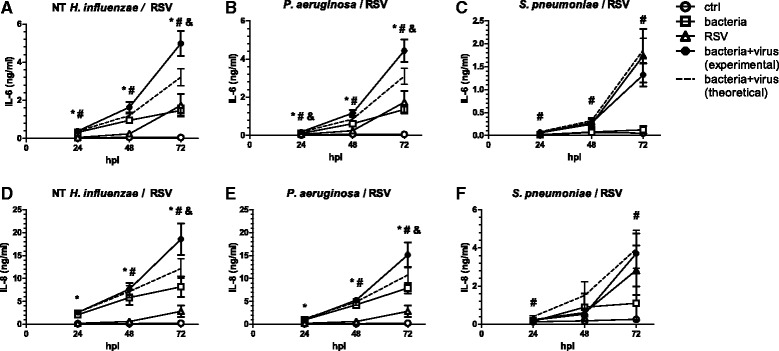
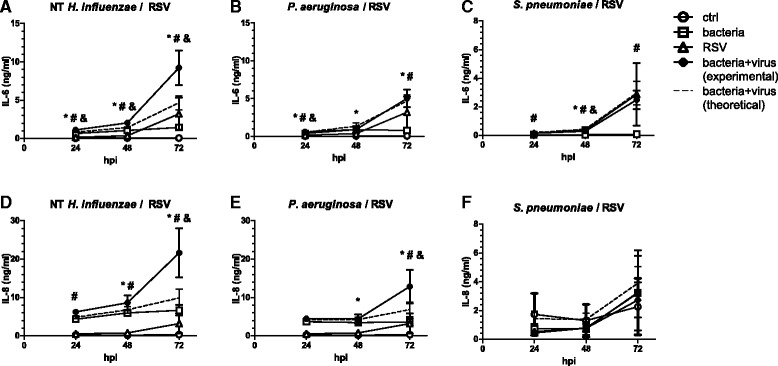
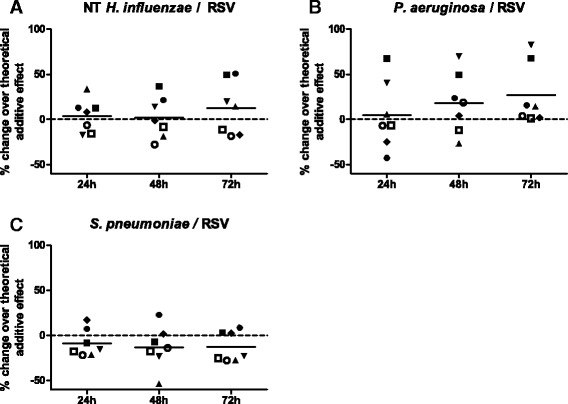
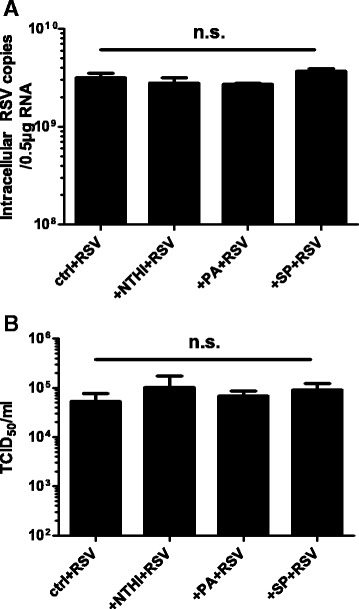
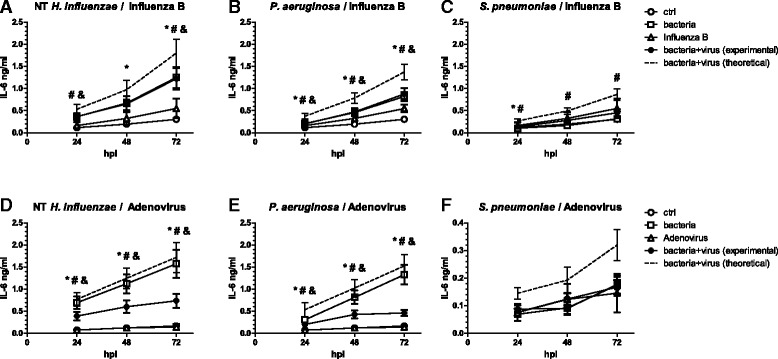
BACKGROUND: Colonization of the airways with potential pathogenic bacteria is observed in a number of chronic respiratory diseases, such as COPD or cystic fibrosis. Infections with respiratory viruses are known triggers of exacerbations of these diseases. We here investigated if pre-exposure to bacteria alters the response of lung epithelial cells to subsequent viral infection. METHODS: Bronchial epithelial cells (BEAS-2B cells and primary bronchial epithelial cells) were exposed to heat-inactivated Haemophilus influenzae, Pseudomonas aeruginosa or Streptococcus pneumoniae and subsequently infected with respiratory syncytial virus (RSV), type 2 human adenovirus or influenza B. Levels of pro-inflammatory cytokines, viral replication and expression of pattern recognition receptors were determined in culture supernatants and/or cell lysates. RESULTS: Exposure of BEAS-2B cells to H. influenzae before and during RSV-infection synergistically increased the release of IL-6 (increase above calculated additive effect at 72 h: 56 % ± 3 %, mean ± SEM) and IL-8 (53 % ± 12 %). This effect was sustained even when bacteria were washed away before viral infection and was neither associated with enhanced viral replication, nor linked to increased expression of key pattern recognition receptors. P. aeruginosa enhanced the release of inflammatory cytokines to a similar extent, yet only if bacteria were also present during viral infection. S. pneumoniae did not enhance RSV-induced cytokine release. Surprisingly, adenovirus infection significantly reduced IL-6 release in cells exposed to either of the three tested bacterial strains by on average more than 50 %. Infection with influenza B on the other hand did not affect cytokine production in BEAS-2B cells exposed to the different bacterial strains. CONCLUSION: Pre-exposure of epithelial cells to bacteria alters the response to subsequent viral infection depending on the types of pathogen involved. These findings highlight the complexity of microbiome interactions in the airways, possibly contributing to the susceptibility to exacerbations and the natural course of airway diseases.
Overview
The claims and statistics of this paper haven’t been checked yet.
Free: it reads the open-access text and checks the first 5 claims that cite a source we can check. Create a free account to check every claim.
Integrity signals
Registry
Cites
Statistics
Figures
Verification
Claims the paper makes
The claims and statistics of this paper haven’t been checked yet.
Free: it reads the open-access text and checks the first 5 claims that cite a source we can check. Create a free account to check every claim.
Claims other papers make about this one
Each is checked against this paper’s own text: does it say what the citing paper says it does?
The source backs part of the claim, not all of it — or backs it for a different population, condition or comparison.
In the citing paper
“the upregulation of adhesion receptors, such as intercellular adhesion molecule 1 (ICAM1), was shown to increase the binding of HRV and respiratory syncytial virus (RSV) to epithelial cells and amplify pro-inflammatory responses114,115,116.”
From The microbiota of the respiratory tract: gatekeeper to respiratory health (2017) · cites this paper as [116]
Experimental — accuracy not yet measured
Self-check
Percentages, sums and reported differences re-computed from the paper’s own numbers.
The self-check needs the paper’s full text.
Citations
Cites
Disordered Microbial Communities in Asthmatic Airways
Hilty, M., Burke, C., Pedro, H., Cardenas, P., Bush, A., Bossley, C., Davies, J., Ervine, A., Poulter, L., Pachter, L., et al. (2010) · PLoS ONE · doi:10.1371/journal.pone.0008578 · Cited by 1,824 · cited 1×
“Furthermore, changes in the lung microbiome in asthma and COPD have been reported in several studies [59–61]; particularly pathogenic proteobacteria, such as H.”
Pattern recognition receptors TLR4 and CD14 mediate response to respiratory syncytial virus
Kurt-Jones, E. A., Popova, L., Kwinn, L., Haynes, L. M., Jones, L. P., Tripp, R. A., Walsh, E. E., Freeman, M. W., Golenbock, D. T., Anderson, L. J., et al. (2000) · Nature Immunology · doi:10.1038/80833 · Cited by 1,683
Lung Infections Associated with Cystic Fibrosis
Lyczak, J. B., Cannon, C. L., & Pier, G. B. (2002) · Clinical Microbiology Reviews · doi:10.1128/cmr.15.2.194-222.2002 · Cited by 1,628 · cited 1×
“Likewise, increased load of PPMs has also been described for other chronic lung diseases, such as asthma and cystic fibrosis [11–13].”
Bafadhel, M., McKenna, S., Terry, S., Mistry, V., Reid, C., Haldar, P., McCormick, M., Haldar, K., Kebadze, T., Duvoix, A., et al. (2011) · American Journal of Respiratory and Critical Care Medicine · doi:10.1164/rccm.201104-0597oc · Cited by 1,094 · cited 5×
“Presence of both, potential pathogenic bacteria and viruses, during the same period of exacerbations have been observed in as much as 12 to 25 % of AECOPD [21, 22].”
InfluentialInfections and Airway Inflammation in Chronic Obstructive Pulmonary Disease Severe Exacerbations
Papi, A., Bellettato, C. M., Braccioni, F., Romagnoli, M., Casolari, P., Caramori, G., Fabbri, L. M., & Johnston, S. L. (2006) · American Journal of Respiratory and Critical Care Medicine · doi:10.1164/rccm.200506-859oc · Cited by 1,072 · cited 5×
“Presence of both, potential pathogenic bacteria and viruses, during the same period of exacerbations have been observed in as much as 12 to 25 % of AECOPD [21, 22].”
InfluentialSEEMUNGAL, T., HARPER-OWEN, R., BHOWMIK, A., MORIC, I., SANDERSON, G., MESSAGE, S., MacCALLUM, P., MEADE, T. W., JEFFRIES, D. J., JOHNSTON, S. L., et al. (2001) · American Journal of Respiratory and Critical Care Medicine · doi:10.1164/ajrccm.164.9.2105011 · Cited by 1,018 · cited 1×
“Changes in IL-6 between stable state and exacerbation were found to be particularly pronounced, if the exacerbations were associated with a viral infection [17–19].”
Analysis of the lung microbiome in the “healthy” smoker and in COPD.
Erb-Downward, J. R., Thompson, D. L., Han, M. K., Freeman, C. M., McCloskey, L., Schmidt, L. A., Young, V. B., Toews, G. B., Curtis, J. L., Sundaram, B., et al. (2011) · PLoS ONE · doi:10.1371/journal.pone.0016384 · Cited by 973 · cited 1×
“Furthermore, changes in the lung microbiome in asthma and COPD have been reported in several studies [59–61]; particularly pathogenic proteobacteria, such as H.”
Relation of sputum inflammatory markers to symptoms and lung function changes in COPD exacerbations
Bhowmik, A. (2000) · Thorax · doi:10.1136/thorax.55.2.114 · Cited by 730 · cited 1×
“Furthermore, pro-inflammatory cytokines, such as IL-6 and IL-8, have been shown to be elevated in the sputum of frequent exacerbators and during exacerbation [17].”
The co-pathogenesis of influenza viruses with bacteria in the lung.
McCullers, J. A. (2014) · Nature Reviews Microbiology · doi:10.1038/nrmicro3231 · Cited by 722 · cited 1×
“Even though secondary bacterial infection is a major contributor to influenza virus pathology the reverse order of sequential infections does not seem to have such detrimental effects [34].”
Airway microbiota and bronchial hyperresponsiveness in patients with suboptimally controlled asthma
Huang, Y. J., Nelson, C. E., Brodie, E. L., DeSantis, T. Z., Baek, M. S., Liu, J., Woyke, T., Allgaier, M., Bristow, J., Wiener-Kronish, J. P., et al. (2011) · Journal of Allergy and Clinical Immunology · doi:10.1016/j.jaci.2010.10.048 · Cited by 696 · cited 1×
“Likewise, increased load of PPMs has also been described for other chronic lung diseases, such as asthma and cystic fibrosis [11–13].”
Patel, I. S. (2002) · Thorax · doi:10.1136/thorax.57.9.759 · Cited by 690 · cited 1×
“Not only is bacterial colonization associated with an increased risk to develop an acute exacerbation, it is also associated with increased levels of inflammatory markers in the stable state [14–16].”
The Lung Tissue Microbiome in Chronic Obstructive Pulmonary Disease
Sze, M. A., Dimitriu, P. A., Hayashi, S., Elliott, W. M., McDonough, J. E., Gosselink, J. V., Cooper, J., Sin, D. D., Mohn, W. W., & Hogg, J. C. (2012) · American Journal of Respiratory and Critical Care Medicine · doi:10.1164/rccm.201111-2075oc · Cited by 552 · cited 1×
“Furthermore, changes in the lung microbiome in asthma and COPD have been reported in several studies [59–61]; particularly pathogenic proteobacteria, such as H.”
Rohde, G. (2003) · Thorax · doi:10.1136/thorax.58.1.37 · Cited by 524 · cited 2×
“Other viruses that are detected during AECOPD include respiratory syncytial virus (RSV), influenza viruses and adenovirus strains [5, 6].”
Self-citationMessage, S. D., Laza-Stanca, V., Mallia, P., Parker, H. L., Zhu, J., Kebadze, T., Contoli, M., Sanderson, G., Kon, O. M., Papi, A., et al. (2008) · Proceedings of the National Academy of Sciences · doi:10.1073/pnas.0804181105 · Cited by 487 · cited 1×
“acteristic for acute exacerbations in both diseases [3, 4].”
Activation of Airway Epithelial Cells by Toll-Like Receptor Agonists
Sha, Q., Truong-Tran, A. Q., Plitt, J. R., Beck, L. A., & Schleimer, R. P. (2004) · American Journal of Respiratory Cell and Molecular Biology · doi:10.1165/rcmb.2003-0388oc · Cited by 487 · cited 1×
“responses to pathogens and displays similar expression of pattern recognition receptors (PRRs) as primary bronchial epithelial cells [38].”
COPD exacerbations {middle dot} 2: Aetiology
Sapey, E. (2006) · Thorax · doi:10.1136/thx.2005.041822 · Cited by 437 · cited 2×
“Among the bacterial species that are frequently detected during such episodes are strains of non-typeable (NT) Haemophilus influenzae, Pseudomonas aeruginosa and Streptococcus pneumoniae [1].”
Virus isolation and quantitation
Hierholzer, J. C., & Killington, R. A. (1996) · Virology Methods Manual · doi:10.1016/b978-012465330-6/50003-8 · Cited by 425
Mallia, P., Message, S. D., Gielen, V., Contoli, M., Gray, K., Kebadze, T., Aniscenko, J., Laza-Stanca, V., Edwards, M. R., Slater, L., et al. (2011) · American Journal of Respiratory and Critical Care Medicine · doi:10.1164/rccm.201006-0833oc · Cited by 415 · cited 1×
“acteristic for acute exacerbations in both diseases [3, 4].”
Soler, N., Ewig, S., Torres, A., Filella, X., Gonzalez, J., & Zaubet, A. (1999) · European Respiratory Journal · doi:10.1183/09031936.99.14510159 · Cited by 371 · cited 1×
“Not only is bacterial colonization associated with an increased risk to develop an acute exacerbation, it is also associated with increased levels of inflammatory markers in the stable state [14–16].”
Avadhanula, V., Rodriguez, C. A., DeVincenzo, J. P., Wang, Y., Webby, R. J., Ulett, G. C., & Adderson, E. E. (2006) · Journal of Virology · doi:10.1128/jvi.80.4.1629-1636.2006 · Cited by 357
Rhinovirus Disrupts the Barrier Function of Polarized Airway Epithelial Cells
Sajjan, U., Wang, Q., Zhao, Y., Gruenert, D. C., & Hershenson, M. B. (2008) · American Journal of Respiratory and Critical Care Medicine · doi:10.1164/rccm.200801-136oc · Cited by 354 · cited 1×
“[24], increasing bacterial attachment or colonization [25–28], or modulating innate and adaptive immune”
Detection of rhinovirus in induced sputum at exacerbation of chronic obstructive pulmonary disease
Seemungal, T. A. R., Harper-Owen, R., Bhowmik, A., Jeffries, D. J., & Wedzicha, J. A. (2000) · European Respiratory Journal · doi:10.1034/j.1399-3003.2000.16d19.x · Cited by 334 · cited 1×
“Changes in IL-6 between stable state and exacerbation were found to be particularly pronounced, if the exacerbations were associated with a viral infection [17–19].”
Wilkinson, T. M. A., Hurst, J. R., Perera, W. R., Wilks, M., Donaldson, G. C., & Wedzicha, J. A. (2006) · Chest · doi:10.1378/chest.129.2.317 · Cited by 317 · cited 1×
“AECOPD associated with the detection of a combination of bacterial and viral pathogens have been reported to be particularly severe in terms of inflammation and decline in lung function [20].”
Microbiologic Determinants of Exacerbation in Chronic Obstructive Pulmonary Disease
Rosell, A., Monsó, E., Soler, N., Torres, F., Angrill, J., Riise, G., Zalacaín, R., Morera, J., & Torres, A. (2005) · Archives of Internal Medicine · doi:10.1001/archinte.165.8.891 · Cited by 302 · cited 1×
“Potential pathogenic microorganisms (PPMs) have been detected in approximately 25 % of COPD patients during stable disease, even when rather insensitive culture-dependent techniques were employed [7–10].”
Cabello, H., Torres, A., Celis, R., El-Ebiary, M., Puig de la Bellacasa, J., Xaubet, A., Gonzalez, J., Agusti, C., & Soler, N. (1997) · European Respiratory Journal · doi:10.1183/09031936.97.10051137 · Cited by 284 · cited 1×
“Potential pathogenic microorganisms (PPMs) have been detected in approximately 25 % of COPD patients during stable disease, even when rather insensitive culture-dependent techniques were employed [7–10].”
Respiratory Syncytial Virus Activates Innate Immunity through Toll-Like Receptor 2
Murawski, M. R., Bowen, G. N., Cerny, A. M., Anderson, L. J., Haynes, L. M., Tripp, R. A., Kurt-Jones, E. A., & Finberg, R. W. (2009) · Journal of Virology · doi:10.1128/jvi.00671-08 · Cited by 279
Shuto, T., Xu, H., Wang, B., Han, J., Kai, H., Gu, X.-X., Murphy, T. F., Lim, D. J., & Li, J.-D. (2001) · Proceedings of the National Academy of Sciences · doi:10.1073/pnas.151236098 · Cited by 258
Predisposing factors to bacterial colonization in chronic obstructive pulmonary disease
Zalacain, R., Sobradillo, V., Amilibia, J., Barron, J., Achotegui, V., Pijoan, J. I., & Llorente, J. L. (1999) · European Respiratory Journal · doi:10.1034/j.1399-3003.1999.13b21.x · Cited by 210 · cited 1×
“Potential pathogenic microorganisms (PPMs) have been detected in approximately 25 % of COPD patients during stable disease, even when rather insensitive culture-dependent techniques were employed [7–10].”
Wang, X., Moser, C., Louboutin, J.-P., Lysenko, E. S., Weiner, D. J., Weiser, J. N., & Wilson, J. M. (2002) · The Journal of Immunology · doi:10.4049/jimmunol.168.2.810 · Cited by 185
Jamieson, A. M., Yu, S., Annicelli, C. H., & Medzhitov, R. (2010) · Cell Host & Microbe · doi:10.1016/j.chom.2010.01.010 · Cited by 180 · cited 1×
“responses [29–33].”
Ramphal, R., Small, P. M., Shands, J. W., Fischlschweiger, W., & Small, P. A. (1980) · Infection and Immunity · doi:10.1128/iai.27.2.614-619.1980 · Cited by 171 · cited 2×
“[24], increasing bacterial attachment or colonization [25–28], or modulating innate and adaptive immune”
Behera, A. K., Matsuse, H., Kumar, M., Kong, X., Lockey, R. F., & Mohapatra, S. S. (2001) · Biochemical and Biophysical Research Communications · doi:10.1006/bbrc.2000.4093 · Cited by 168 · cited 1×
“Although neutralizing antibodies for ICAM-1 can reduce RSV infection in vitro, it is not the main functional receptor for this virus [49, 50].”
Zwaans, W. A. R., Mallia, P., van Winden, M. E. C., & Rohde, G. G. U. (2014) · Journal of Clinical Virology · doi:10.1016/j.jcv.2014.06.025 · Cited by 159 · cited 1×
“Other viruses that are detected during AECOPD include respiratory syncytial virus (RSV), influenza viruses and adenovirus strains [5, 6].”
Self-citationBRESSER, P., OUT, T. A., van ALPHEN, L., JANSEN, H. M., & LUTTER, R. (2000) · American Journal of Respiratory and Critical Care Medicine · doi:10.1164/ajrccm.162.3.9908103 · Cited by 159 · cited 1×
“Not only is bacterial colonization associated with an increased risk to develop an acute exacerbation, it is also associated with increased levels of inflammatory markers in the stable state [14–16].”
Risk factors for lower airway bacterial colonization in chronic bronchitis
Monso, E., Rosell, A., Bonet, G., Manterola, J., Cardona, P. J., Ruiz, J., & Morera, J. (1999) · European Respiratory Journal · doi:10.1034/j.1399-3003.1999.13b20.x · Cited by 153 · cited 1×
“Potential pathogenic microorganisms (PPMs) have been detected in approximately 25 % of COPD patients during stable disease, even when rather insensitive culture-dependent techniques were employed [7–10].”
Smith, C. M., Sandrini, S., Datta, S., Freestone, P., Shafeeq, S., Radhakrishnan, P., Williams, G., Glenn, S. M., Kuipers, O. P., Hirst, R. A., et al. (2014) · American Journal of Respiratory and Critical Care Medicine · doi:10.1164/rccm.201311-2110oc · Cited by 153 · cited 1×
“pneumoniae [54].”
Sajjan, U. S., Jia, Y., Newcomb, D. C., Bentley, J. K., Lukacs, N. W., LiPuma, J. J., Hershenson, M. B., Sajjan, U. S., Jia, Y., Newcomb, D. C., et al. (2006) · The FASEB Journal · doi:10.1096/fj.06-5806fje · Cited by 146 · cited 10×
“influenzae has been shown to increase the cells’ susceptibility to secondary infection with major group HRV by upregulating their cellular entry receptor, ICAM-1 [36, 42].”
InfluentialSynergistic proinflammatory responses induced by polymicrobial colonization of epithelial surfaces
Ratner, A. J., Lysenko, E. S., Paul, M. N., & Weiser, J. N. (2005) · Proceedings of the National Academy of Sciences · doi:10.1073/pnas.0500599102 · Cited by 142 · cited 1×
“showed that interactions of pathogens on the release of cytokines in vitro which were in a similar order of magnitude as the ones we observed in our study, could indeed translate to a biologically relevant effect in vivo [58].”
Rhinovirus enhances various bacterial adhesions to nasal epithelial cells simultaneously
Wang, J. H., Kwon, H. J., & Jang, Y. J. (2009) · The Laryngoscope · doi:10.1002/lary.20498 · Cited by 136
Lee, B., Robinson, K. M., McHugh, K. J., Scheller, E. V., Mandalapu, S., Chen, C., Di, Y. P., Clay, M. E., Enelow, R. I., Dubin, P. J., et al. (2015) · American Journal of Physiology-Lung Cellular and Molecular Physiology · doi:10.1152/ajplung.00338.2014 · Cited by 135 · cited 1×
“responses [29–33].”
Robinson, K. M., McHugh, K. J., Mandalapu, S., Clay, M. E., Lee, B., Scheller, E. V., Enelow, R. I., Chan, Y. R., Kolls, J. K., & Alcorn, J. F. (2014) · The Journal of Infectious Diseases · doi:10.1093/infdis/jit527 · Cited by 131 · cited 1×
“responses [29–33].”
Stimulated Innate Resistance of Lung Epithelium Protects Mice Broadly against Bacteria and Fungi
Evans, S. E., Scott, B. L., Clement, C. G., Larson, D. T., Kontoyiannis, D., Lewis, R. E., LaSala, P. R., Pawlik, J., Peterson, J. W., Chopra, A. K., et al. (2010) · American Journal of Respiratory Cell and Molecular Biology · doi:10.1165/rcmb.2008-0260oc · Cited by 129 · cited 1×
“influenzae can reduce bacterial and fungal burden after secondary infection with several pathogens, and also limit influenza virus replication in a mouse model of influenza virus pneumonia [51, 52].”
Influenza A Exacerbates Staphylococcus aureus Pneumonia by Attenuating IL-1β Production in Mice
Robinson, K. M., Choi, S. M., McHugh, K. J., Mandalapu, S., Enelow, R. I., Kolls, J. K., & Alcorn, J. F. (2013) · The Journal of Immunology · doi:10.4049/jimmunol.1301237 · Cited by 126
Wood, L. G., Simpson, J. L., Hansbro, P. M., & Gibson, P. G. (2010) · Free Radical Research · doi:10.3109/10715760903362576 · Cited by 124
Regulation of SLPI and elafin release from bronchial epithelial cells by neutrophil defensins
van Wetering, S., van der Linden, A. C., van Sterkenburg, M. A. J. A., de Boer, W. I., Kuijpers, A. L. A., Schalkwijk, J., & Hiemstra, P. S. (2000) · American Journal of Physiology-Lung Cellular and Molecular Physiology · doi:10.1152/ajplung.2000.278.1.l51 · Cited by 119
RSV Mediates Pseudomonas aeruginosa Binding to Cystic Fibrosis and Normal Epithelial Cells
van Ewijk, B. E., Wolfs, T. F. W., Aerts, P. C., Van Kessel, K. P. M., Fleer, A., Kimpen, J. L. L., & Van Der Ent, C. K. (2007) · Pediatric Research · doi:10.1203/pdr.0b013e3180332d1c · Cited by 113
Hament, J.-M., Aerts, P. C., Fleer, A., van Dijk, H., Harmsen, T., Kimpen, J. L. L., & Wolfs, T. F. W. (2004) · Pediatric Research · doi:10.1203/01.pdr.0000127431.11750.d9 · Cited by 112 · cited 2×
“[24], increasing bacterial attachment or colonization [25–28], or modulating innate and adaptive immune”
Augmented Lung Inflammation Protects against Influenza A Pneumonia
Tuvim, M. J., Evans, S. E., Clement, C. G., Dickey, B. F., & Gilbert, B. E. (2009) · PLoS ONE · doi:10.1371/journal.pone.0004176 · Cited by 110 · cited 2×
“influenzae can reduce bacterial and fungal burden after secondary infection with several pathogens, and also limit influenza virus replication in a mouse model of influenza virus pneumonia [51, 52].”
Jiang, Z., Nagata, N., Molina, E., Bakaletz, L. O., Hawkins, H., & Patel, J. A. (1999) · Infection and Immunity · doi:10.1128/iai.67.1.187-192.1999 · Cited by 98 · cited 2×
“influenzae to epithelial cells [41, 48].”
A Mouse Model of Lethal Synergism Between Influenza Virus and Haemophilus influenzae
Lee, L. N., Dias, P. B., Han, D., Yoon, S., Shea, A., Zakharov, V., Parham, D. M., & Sarawar, S. R. (2009) · American Journal Of Pathology · doi:10.2353/ajpath.2010.090596 · Cited by 82 · cited 1×
“influenzae type b before an influenza challenge, despite a strong lethal synergism when mice were infected in the reverse order [55].”
Patel, J., Faden, H., Sharma, S., & Ogra, P. L. (1992) · International Journal of Pediatric Otorhinolaryngology · doi:10.1016/0165-5876(92)90075-z · Cited by 77 · cited 1×
“[24], increasing bacterial attachment or colonization [25–28], or modulating innate and adaptive immune”
Gulraiz, F., Rellinghausen, C., Bruggeman, C. A., & Stassen, F. R. (2015) · The FASEB Journal · doi:10.1096/fj.14-254359 · Cited by 70 · cited 7×
“influenzae has been shown to increase the cells’ susceptibility to secondary infection with major group HRV by upregulating their cellular entry receptor, ICAM-1 [36, 42].”
InfluentialSelf-citationBandi, V., Jakubowycz, M., Kinyon, C., Mason, E. O., Atmar, R. L., Greenberg, S. B., & Murphy, T. F. (2003) · FEMS Immunology & Medical Microbiology · doi:10.1016/s0928-8244(03)00100-7 · Cited by 69 · cited 1×
“influenzae, almost half of the patients were also tested positive for at least one respiratory virus [23].”
Transcriptional repression of interleukin-6 gene by adenoviral E1A proteins.
Janaswami, P. M., Kalvakolanu, D. V., Zhang, Y., & Sen, G. C. (1992) · Journal of Biological Chemistry · doi:10.1016/s0021-9258(18)35846-0 · Cited by 55 · cited 1×
“the induction of IL-6 in response to bacterial and inflammatory stimuli in human epithelial cells [56, 57].”
RSV Fusion: Time for a New Model
Mastrangelo, P., & Hegele, R. G. (2013) · Viruses · doi:10.3390/v5030873 · Cited by 55 · cited 1×
“Although neutralizing antibodies for ICAM-1 can reduce RSV infection in vitro, it is not the main functional receptor for this virus [49, 50].”
Blevins, L. K., Wren, J. T., Holbrook, B. C., Hayward, S. L., Swords, W. E., Parks, G. D., & Alexander-Miller, M. A. (2014) · The Journal of Immunology · doi:10.4049/jimmunol.1400529 · Cited by 45 · cited 1×
“responses [29–33].”
Bacterial Adherence to the Upper Respiratory Tract of Ferrets Infected with Influenza A Virus
Sanford, B. A., & Ramsay, M. A. (1987) · Experimental Biology and Medicine · doi:10.3181/00379727-185-42525 · Cited by 45 · cited 1×
“[24], increasing bacterial attachment or colonization [25–28], or modulating innate and adaptive immune”
Raza, M. W., Ogilvie, M. M., Blackwell, C. C., Stewart, J., Elton, R. A., & Weir, D. M. (1993) · Epidemiology and Infection · doi:10.1017/s095026880006828x · Cited by 42
Association between respiratory viruses and exacerbation of COPD: a case-control study
Hosseini, S. S., Ghasemian, E., Jamaati, H., Tabaraie, B., Amini, Z. Z., & Cox, K. (2015) · Scandinavian Journal of Infectious Diseases · doi:10.3109/23744235.2015.1022873 · Cited by 27 · cited 1×
“Next to RSV, rhinoviruses, influenza viruses and specific adenoviruses are among the most frequently detected respiratory viral pathogens [5, 43].”
Exacerbation phenotyping in chronic obstructive pulmonary disease
MacDonald, M., Korman, T. M., King, P. T., Hamza, K., & Bardin, P. G. (2013) · Respirology · doi:10.1111/resp.12197 · Cited by 26 · cited 2×
“Moreover, these events on average required longer hospitalizations [2].”
E1A expression dysregulates IL-8 production and suppresses IL-6 production by lung epithelial cells
van den Berg, A., Snoek, M., Jansen, H. M., & Lutter, R. (2005) · Respiratory Research · doi:10.1186/1465-9921-6-111 · Cited by 10
Cited by
The microbiota of the respiratory tract: gatekeeper to respiratory health
Man, W. H., de Steenhuijsen Piters, W. A. A., & Bogaert, D. (2017) · Nature Reviews Microbiology · doi:10.1038/nrmicro.2017.14 · Cited by 1,384
“Vice versa, respiratory bacteria can also promote viral infection through numerous pathways [112] [113] [114] [115] [116] .”
BackgroundA critical review on the health benefits of fish consumption and its bioactive constituents
Chen, J., Jayachandran, M., Bai, W., & Xu, B. (2022) · Food Chemistry · doi:10.1016/j.foodchem.2021.130874 · Cited by 289
Viral–bacterial co-infections in the respiratory tract
Bakaletz, L. O. (2017) · Current Opinion in Microbiology · doi:10.1016/j.mib.2016.11.003 · Cited by 205
“viral infection of the airway Whereas more typically we think of viral URT infection predisposing to bacterial superinfection, recently we’ve learned that pre-existing bacterial infection can promote viral shedding [58 ,59].”
Wilkinson, T. M. A., Aris, E., Bourne, S., Clarke, S. C., Peeters, M., Pascal, T. G., Schoonbroodt, S., Tuck, A. C., Kim, V., Ostridge, K., et al. (2017) · Thorax · doi:10.1136/thoraxjnl-2016-209023 · Cited by 195
MAIT Cell Activation and Functions
Hinks, T. S. C., & Zhang, X.-W. (2020) · Frontiers in Immunology · doi:10.3389/fimmu.2020.01014 · Cited by 180
“Might MAIT cells be important in more common respiratory diseases? Persistent infection with Haemophilus influenzae, which can persist intracellularly (70), can drive inflammation in chronic obstructive pulmonary disease (COPD) (71) and severe neutrophilic asthma (72, 73) and enhance susceptibility to virally-induced…”
Background
Metadata
- Authors
- Bellinghausen, C., Gulraiz, F., Heinzmann, A. C. A., Dentener, M. A., Savelkoul, P. H. M., Wouters, E. F., Rohde, G. G., & Stassen, F. R.
- Affiliations
- Maastricht University Medical Centre (NL)
- University of North Texas Health Science Center (US)
- Maastricht University (NL)
- Corresponding author
- Stassen, Frank R.
- Venue
- Respiratory Research
- Published
- 2016-06-03
- Volume
- 17
- Issue
- 1
- Pages
- 68-68
- ISSN
- 1465-9921 (ISSN-L)
- 1465-993X
- PMC
- PMC4891894
- OpenAlex
- W2408820312
- Semantic Scholar
- f536b85836e5db731d2edc075ff11f3be5f0251b
- Cited by
- 71
- References
- 61
- Citations by year
- 2026: 5 · 2025: 3 · 2024: 7 · 2023: 6 · 2022: 3 · 2021: 11 · 2020: 6 · 2019: 10 · 2018: 7 · 2017: 10 · 2016: 3
- FWCI
- 9.38
- Type
- journal article
- Language
- en
- Open access
- gold
- doi.org
- Licence
- cc-by
- Locations
- Respiratory Research (publishedVersion, cc-by)
- PubMed Central (publishedVersion, cc-by)
- PubMed (publishedVersion)
- Research Publications (Maastricht University) (publishedVersion, cc-by)
- Amsterdam UMC (VU Amsterdam) - Institutional Repository (publishedVersion)
- Pure Amsterdam UMC (submittedVersion, other-oa)
- Research Publications (Maastricht University) (submittedVersion, other-oa)
- Data Archiving and Networked Services (DANS) (submittedVersion)
- Funders
- European Respiratory Society
- Universiteit Maastricht
- Maastricht Universitair Medisch Centrum
- Topics
- Health Sciences › Medicine › Epidemiology › Respiratory viral infections research
- Life Sciences › Immunology and Microbiology › Immunology › Immune Response and Inflammation
- Health Sciences › Medicine › Pulmonary and Respiratory Medicine › Asthma and respiratory diseases
- Keywords
- airway epithelial cells, viral infection, respiratory syncytial virus, influenza B, adenovirus type 2, Haemophilus influenzae, Pseudomonas aeruginosa, Streptococcus pneumoniae, interleukin-6, interleukin-8, inflammatory cytokines, pattern recognition receptors, viral replication, airway microbiome, COPD exacerbations, cystic fibrosis
- MeSH terms
- Adenoviridae, Animals, Bacteria, Chlorocebus aethiops, Dogs, Epithelial Cells, Haemophilus influenzae, HeLa Cells, Humans, Lung, Influenza B virus, Pseudomonas aeruginosa, Respiratory Syncytial Viruses, Respiratory Tract Infections, Streptococcus pneumoniae, Time Factors, Vero Cells, Viruses, Cytokines, Inflammation Mediators, Host-Pathogen Interactions, Coinfection, Primary Cell Culture, Madin Darby Canine Kidney Cells
About these checks
Registry, retraction, Cites and statistics results are computed, not judged, with one exception: a printed reference that no index lists is read once by a model before it counts as a citation error. Claims are extracted by a model and kept only when their quote appears verbatim in the text; each cited source is then checked, with a model’s help, for whether it says what the claim relies on. Those verdicts can be wrong — read the claim’s quote and the cited source before relying on one.
Statistics and arithmetic are recomputed, not judged.
Confidence bands are shown only for fields calibrated on our annotated test set. None is calibrated yet, so no band is shown.
What counts as a claim ›How we measure confidence ›How we check this ›
Are you an author, or do you see a problem with this page? Request a review
Data sources
Bibliographic data: Semantic Scholar, OpenAlex, Crossref.
Contains information from the Semantic Scholar Academic Graph Datasets, made available under the ODC Attribution License (ODC-BY 1.0).
Semantic Scholar’s data is described in: Kinney, R., et al. (2023). The Semantic Scholar Open Data Platform. arXiv:2301.10140.
