

The DOI matches its Crossref record; 27 of the 27 references it cites were found in a registry or an index.
Prevalence and management of severe asthma in primary care: an observational cohort study in Sweden (PACEHR)
Open accessAbstract
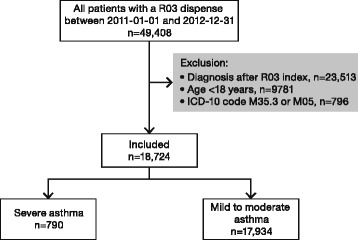
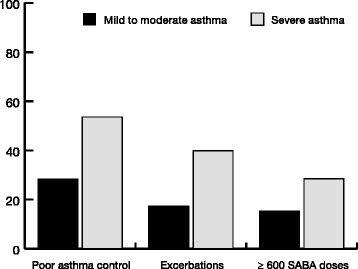
BACKGROUND: Severe and uncontrolled asthma is associated with increased risk of exacerbations and death. A substantial proportion of asthma patients have poor asthma control, and a concurrent COPD diagnosis often increases disease burden. The objective of the study was to describe the prevalence and managemant of severe asthma in a Swedish asthma popuöation. METHODS: In this observational cohort study, primary care medical records data (2006-2013) from 36 primary health care centers were linked to data from national mandatory Swedish health registries. The studied population (>18 years) had a record of drug collection for obstructive pulmonary disease (ATC code R03) during 2011-2012, and a physician diagnosed asthma (ICD-10 code J45-J46) prior to drug collection. Severe asthma was classified as collection of high dose inhaled steroid (> 800 budesonide or equivalent per day) and leukotriene receptor antagonist and/or long-acting beta-agonist. Poor asthma control was defined as either collection of ≥600 doses of short-acting beta-agonists, and/or ≥1 exacerbation(s) during the year post index date. RESULTS: A total of 18,724 asthma patients (mean 49 years, 62.8% women) were included, of whom 17,934 (95.8%) had mild to moderate and 790 (4.2%) had severe asthma. Exacerbations were more prevalent in severe asthma (2.59 [2.41-2.79], Relative Risk [95% confidence interval]; p < 0.001). Poor asthma control was observed for 28.2% of the patients with mild to moderate asthma and for more than half (53.6%) of the patients with severe asthma (<0.001). Prior to index, one in five severe asthma patients had had a contact with secondary care and one third with primary care. A concurrent COPD diagnosis increased disease burden. CONCLUSION: Severe asthma was found in 4.2% of asthma patients in Sweden, more than half of them had poor asthma control, and most patients had no regular health care contacts.
Overview
The claims and statistics of this paper haven’t been checked yet.
Run the check — free, no account needed. It reads the open-access text and checks the sources it cites.
Integrity signals
Registry
Cites
Statistics
Figures
Verification
Claims the paper makes
The claims and statistics of this paper haven’t been checked yet.
Run the check — free, no account needed. It reads the open-access text and checks the sources it cites.
Claims other papers make about this one
Each is checked against this paper’s own text: does it say what the citing paper says it does?
In the citing paper
“For example, in has been reported that 4.2% of Swedish adult asthmatic patients in primary care settings have severe disease (36).”
From Epidemiology of Asthma in Children and Adults (2019) · cites this paper as [36]
Self-check
Percentages, sums and reported differences re-computed from the paper’s own numbers.
The self-check needs the paper’s full text.
Citations
Cites
GLOBAL STRATEGY FOR ASTHMA MANAGEMENT AND PREVENTION
PAUWELS, R. A. (1996) · Arerugī/Arerugi · doi:10.15036/arerugi.45.792 · Cited by 9,997
International ERS/ATS guidelines on definition, evaluation and treatment of severe asthma
Chung, K. F., Wenzel, S. E., Brozek, J. L., Bush, A., Castro, M., Sterk, P. J., Adcock, I. M., Bateman, E. D., Bel, E. H., Bleecker, E. R., et al. (2014) · European Respiratory Journal · doi:10.1183/09031936.00202013 · Cited by 3,926 · cited 3×
“Most patients with asthma have a mild or moderate disease and data on the prevalence of severe asthma is sparse but reports indicate between 5 and 10% of the asthmatic populations to have had severe disease [8, 10].”
BackgroundClinical management of asthma in 1999: the Asthma Insights and Reality in Europe (AIRE) study
Rabe, K. F., Vermeire, P., Soriano, J. B., & Maier, W. (2000) · European Respiratory Journal · doi:10.1183/09031936.00.16580200 · Cited by 1,024
The prevalence of severe refractory asthma
Hekking, P.-P. W., Wener, R. R. L., Amelink, M., Zwinderman, A. H., Bouvy, M. L., & Bel, E. H. (2014) · Journal of Allergy and Clinical Immunology · doi:10.1016/j.jaci.2014.08.042 · Cited by 815 · cited 1×
“6% of patients with asthma had severe refractory asthma [17], but lower than in another study which reported a prevalence of 8.”
ResultAttitudes and actions of asthma patients on regular maintenance therapy: the INSPIRE study
Partridge, M. R., van der Molen, T., Myrseth, S.-E., & Busse, W. W. (2006) · BMC Pulmonary Medicine · doi:10.1186/1471-2466-6-13 · Cited by 497 · cited 2×
“This is in agreement with previous studies in which approximately half of patients reported daytime symptoms or were regarded as having uncontrolled asthma as assessed by the Asthma Control Questionnaire [3, 4].”
BackgroundResultAdherence to inhaled therapies, health outcomes and costs in patients with asthma and COPD
Mäkelä, M. J., Backer, V., Hedegaard, M. S., & Larsson, K. (2013) · Respiratory Medicine · doi:10.1016/j.rmed.2013.04.005 · Cited by 485 · cited 2×
“We also conclude that 5 to 15% of the patients with severe asthma did not collect inhaled steroids which most likely contributes to the increased costs as it is well known that poor adherence to asthma treatment is associated with increased health care costs [12].”
BackgroundInhaled corticosteroids in COPD and the risk of serious pneumonia
Suissa, S., Patenaude, V., Lapi, F., & Ernst, P. (2013) · Thorax · doi:10.1136/thoraxjnl-2012-202872 · Cited by 440 · cited 1×
“Treatment with ICS increases the risk of pneumonia in COPD [21] although there are intra-class differences between different steroids [22, 23].”
BackgroundInhaled steroids and risk of pneumonia for chronic obstructive pulmonary disease
Kew, K. M., & Seniukovich, A. (2014) · Cochrane Database of Systematic Reviews · doi:10.1002/14651858.cd010115.pub2 · Cited by 395 · cited 1×
“Treatment with ICS increases the risk of pneumonia in COPD [21] although there are intra-class differences between different steroids [22, 23].”
BackgroundBel, E. H., Sousa, A. R., Fleming, L., Bush, A., Chung, K. F., Versnel, J., Wagener, A. H., Wagers, S. S., Sterk, P. J., & Compton, C. (2010) · Thorax · doi:10.1136/thx.2010.153643 · Cited by 341 · cited 1×
“2%, which is somewhat lower than the commonly reported prevalence of 5–-10% [15, 16].”
BackgroundSevere asthma in adults: What are the important questions?
Chanez, P., Wenzel, S. E., Anderson, G. P., Antó, J. M., Bel, E. H., Boulet, L., Brightling, C. E., Busse, W. W., Castro, M., Dahlén, B., et al. (2007) · Journal of Allergy and Clinical Immunology · doi:10.1016/j.jaci.2006.11.702 · Cited by 281 · cited 1×
“Most patients with asthma have a mild or moderate disease and data on the prevalence of severe asthma is sparse but reports indicate between 5 and 10% of the asthmatic populations to have had severe disease [8, 10].”
Background
Cited by
Sorted by citations
Epidemiology of Asthma in Children and Adults
Dharmage, S. C., Perret, J. L., & Custovic, A. (2019) · Frontiers in Pediatrics · doi:10.3389/fped.2019.00246 · Cited by 1,200
“2% of Swedish adult asthmatic patients in primary care settings have severe disease (36).”
BackgroundNwaru, B. I., Ekström, M. P., Hasvold, P., Wiklund, F., Telg, G., & Janson, C. (2020) · European Respiratory Journal · doi:10.1183/13993003.01872-2019 · Cited by 472
Canonica, G. W., Colombo, G. L., Bruno, G. M., Matteo, S. D., Martinotti, C., Blasi, F., Bucca, C. B., Crimi, N., Paggiaro, P., Pelaia, G., et al. (2019) · World Allergy Organization Journal · doi:10.1016/j.waojou.2018.12.001 · Cited by 120
Severe Asthma in a General Population Study: Prevalence and Clinical Characteristics
Rönnebjerg, L., Axelsson, M., Kankaanranta, H., Bäckman, H., Rådinger, M., Lundbäck, B., & Ekerljung, L. (2021) · Journal of Asthma and Allergy · doi:10.2147/jaa.s327659 · Cited by 110
“This finding is supported by another Swedish study of severe asthma, showing even fewer had annual follow-ups.(14) Among asthmatics in Finland, the follow-ups occurred generally every third year.”
ResultLee, H. J., Ryu, J., Nam, E., Chung, S. J., Yeo, Y., Park, D. W., Park, T. S., Moon, J., Kim, T., Sohn, J. W., et al. (2019) · European Respiratory Journal · doi:10.1183/13993003.00804-2019 · Cited by 100
Abdel‐Aziz, M. I., Brinkman, P., Vijverberg, S. J. H., Neerincx, A. H., Riley, J., Bates, S., Hashimoto, S., Kermani, N. Z., Chung, K. F., Djukanović, R., et al. (2020) · Journal of Allergy and Clinical Immunology · doi:10.1016/j.jaci.2020.04.018 · Cited by 98
Ekström, M. P., Nwaru, B. I., Hasvold, P., Wiklund, F., Telg, G., & Janson, C. (2019) · Allergy · doi:10.1111/all.13874 · Cited by 97
Potential Severe Asthma Hidden in UK Primary Care
Ryan, D. P., Heatley, H., Heaney, L. G., Jackson, D. J., Pfeffer, P., Busby, J., Menzies-Gow, A. N., Jones, R. C. M., Tran, T. N., Al-Ahmad, M. S., et al. (2020) · The Journal of Allergy and Clinical Immunology In Practice · doi:10.1016/j.jaip.2020.11.053 · Cited by 74
The increase in allergic conditions based on a review of literature
Gutowska-Ślesik, J., Samolinski, B. K., & Krzych‐Fałta, E. (2022) · Advances in Dermatology and Allergology · doi:10.5114/ada.2022.119009 · Cited by 73
Biological Therapies of Severe Asthma and Their Possible Effects on Airway Remodeling
Kardas, G., Kuna, P., & Panek, M. (2020) · Frontiers in Immunology · doi:10.3389/fimmu.2020.01134 · Cited by 72
Monoclonal antibodies in the management of asthma: Dead ends, current status and future perspectives
Kardas, G., Panek, M., Kuna, P., Damiański, P., & Kupczyk, M. (2022) · Frontiers in Immunology · doi:10.3389/fimmu.2022.983852 · Cited by 62
Ödling, M., Jonsson, M., Janson, C., Melén, E., Bergström, A., & Kull, I. (2019) · Journal of Asthma · doi:10.1080/02770903.2019.1640726 · Cited by 57
Bringing asthma care into the twenty-first century
Larsson, K., Kankaanranta, H., Janson, C., Lehtimäki, L. A., Ställberg, B., Løkke, A., Høines, K. J., Roslind, K., & Ulrik, C. S. (2020) · npj Primary Care Respiratory Medicine · doi:10.1038/s41533-020-0182-2 · Cited by 56
International Severe Asthma Registry
Canonica, G. W., Alacqua, M., Altraja, A., Backer, V., Bel, E. H., Bjermer, L. H., Björnsdóttir, U. S., BOURDIN, A. A., Brusselle, G., Christoff, G., et al. (2019) · CHEST Journal · doi:10.1016/j.chest.2019.10.051 · Cited by 53
“severe asthma registries to gather information on severe asthma and to better understand the disease history, progression, impact, and response to treatment.(14,20-26)”
BackgroundChoi, H., Lee, H. J., Ryu, J., Chung, S. J., Park, D. W., Sohn, J. W., Yoon, H. J., & Kim, S. (2020) · Therapeutic Advances in Respiratory Disease · doi:10.1177/1753466620963030 · Cited by 46
Socioeconomic biases in asthma control and specialist referral of possible severe asthma
Håkansson, K. E. J., Backer, V., & Ulrik, C. S. (2021) · European Respiratory Journal · doi:10.1183/13993003.00741-2021 · Cited by 45
Clinical and economic burden of severe asthma: A French cohort study
Nordon, C., Grimaldi‐Bensouda, L., Pribil, C., Nachbaur, G., Amzal, B., Thabut, G., Marthan, R., Aubier, M., Aubier, M., Crestani, B., et al. (2018) · Respiratory Medicine · doi:10.1016/j.rmed.2018.10.002 · Cited by 41
Hansen, S., von Bülow, A., Sandin, P., Ernstsson, O., Janson, C., Lehtimäki, L. A., Kankaanranta, H., Ulrik, C. S., Aarli, B. B., Wahl, H. F., et al. (2023) · ERJ Open Research · doi:10.1183/23120541.00687-2022 · Cited by 40
Janson, C., Lisspers, K., Ställberg, B., Johansson, G. S., Telg, G., Thuresson, M., Christensen, H. N., & Larsson, K. (2018) · Respiratory Research · doi:10.1186/s12931-018-0855-3 · Cited by 40
Strategies to reduce corticosteroid-related adverse events in asthma
Heffler, E. M., Bagnasco, D., & Canonica, G. W. (2018) · Current Opinion in Allergy and Clinical Immunology · doi:10.1097/aci.0000000000000493 · Cited by 36
Asthma management and control in Nigeria: the asthma insight and reality Nigeria (AIRNIG) study
Ozoh, O. B., Ayuk, A. C., Ukwaja, K. N., Desalu, O. O., Olufemi, O., Aderibigbe, S. A., Egbagbe, E. E., Oridota, O. E., Dede, S. K., Shopeyin, A., et al. (2019) · Expert Review of Respiratory Medicine · doi:10.1080/17476348.2019.1651201 · Cited by 35
Przysucha, N., Górska, K., & Krenke, R. (2020) · International Journal of COPD · doi:10.2147/copd.s236640 · Cited by 35
Müllerová, H., Cockle, S. M., Gunsoy, N. B., Nelsen, L. M., & Albers, F. C. (2019) · Journal of Asthma · doi:10.1080/02770903.2019.1708095 · Cited by 33
“Previous studies have estimated that around 55% of patients with SA have uncontrolled disease (44,45).”
BackgroundLee, H. J., Kim, S., Kim, B., Lee, Y., Lee, H. Y., Ban, G., Kim, M., Kim, J., Kwon, J., Park, S., et al. (2020) · Allergy · doi:10.1111/all.14483 · Cited by 32
Milger, K., Korn, S., Buhl, R., Hamelmann, E. H., Herth, F. J. F., Gappa, M., Drick, N., Fuge, J., & Suhling, H. (2020) · Respiratory Medicine · doi:10.1016/j.rmed.2019.105858 · Cited by 31
A Gap Between Asthma Guidelines and Management for Adolescents and Young Adults
Ödling, M., Andersson, N., Hallberg, J., Almqvist, C., Janson, C., Bergström, A., Melén, E., & Kull, I. (2020) · The Journal of Allergy and Clinical Immunology In Practice · doi:10.1016/j.jaip.2020.05.034 · Cited by 31
“21 However, the transition from pediatric to adult health care is an international concern, and we believe that our results can be transferred to other countries and populations.”
ResultAdvances in respiratory physiology in mouse models of experimental asthma
Carroll, O. R., Pillar, A. L., Brown, A. C., Feng, M., Chen, H., & Donovan, C. (2023) · Frontiers in Physiology · doi:10.3389/fphys.2023.1099719 · Cited by 31
“Globally, around 3%–10% of asthma is classified as severe, which predominantly affects females (Busse et al., 2000; The ENFUMOSA cross, 2003; Larsson et al., 2018).”
BackgroundAssociation of Obesity and Severe Asthma in Adults
Olejnik, A. E., & Kuźnar-Kamińska, B. (2024) · Journal of Clinical Medicine · doi:10.3390/jcm13123474 · Cited by 31
“According to numerous studies, the incidence of severe asthma among all asthma patients is estimated at 3–10% in European countries [3–6].”
Backgroundaf Rosenschöld, M. M., Johannesson, P., Nikitidis, A., Tyrchan, C., Chang, H., Rönn, R., Chapman, D., Ullah, V., Nikitidis, G., Glader, P., et al. (2019) · Journal of Medicinal Chemistry · doi:10.1021/acs.jmedchem.9b00555 · Cited by 26
Le, T. T., Price, D. B., Erhard, C., Cook, B., QUINTON, A. R., Katial, R. K., Christoff, G., de Llano, L. P., Altraja, A., Bergeron, C., et al. (2024) · Journal of Asthma and Allergy · doi:10.2147/jaa.s468068 · Cited by 25
Prevalence and characterization of severe asthma in Hungary
Csoma, Z., Gál, Z., Gézsi, A., Herjavecz, I., & Szalai, C. (2020) · Scientific Reports · doi:10.1038/s41598-020-66445-4 · Cited by 24
Lee, H. J., Ryu, J., Chung, S. J., Park, D. W., Sohn, J. W., Yoon, H. J., & Kim, S. (2020) · Allergy Asthma and Immunology Research · doi:10.4168/aair.2020.12.5.821 · Cited by 23
Targeting of the IL-5 pathway in severe asthma reduces mast cell progenitors
Alvarado-Vazquez, P. A., Méndez-Enríquez, E., Salomonsson, M., Kopač, P., Koren, A., Bidovec‐Stojkovič, U., Škrgat, S., Simonson, O. E., Yasinska, V., Dahlén, S.-E., et al. (2024) · Journal of Allergy and Clinical Immunology · doi:10.1016/j.jaci.2024.10.025 · Cited by 20
“3,4 Importantly, severe asthma is associated with MC activation regardless of the etiology.”
Picturing asthma in Turkey: results from the Turkish adult asthma registry
Çelík, G., Aydın, Ö., Gokmen, D., Buhari, G. K., Sözener, Z. Ç., Gemicioğlu, B., Bulut, İ., Beyaz, Ş., Örçen, C., Özdemir, S. K., et al. (2023) · Journal of Asthma · doi:10.1080/02770903.2023.2206902 · Cited by 22
Janson, C., Accordini, S., Cazzoletti, L., Cerveri, I., Chanoine, S., Corsico, A. G., Ferreira, D. S., García‐Aymerich, J., Gíslason, D., Nielsen, R., et al. (2019) · ERJ Open Research · doi:10.1183/23120541.00073-2018 · Cited by 20
Ainsworth, B., Chatburn, E., Bansal, A. T., Fulton, O., Hamerlijnck, D., Coleman, C., Eger, K. A. B., Hyland, M. E., Holmes, J., Heaney, L. G., et al. (2023) · ERJ Open Research · doi:10.1183/23120541.00717-2022 · Cited by 19
“Poorly controlled severe asthma remains common despite advances in treatment, especially the advent of biologics [11].”
Risk of Rehospitalization and Death in Patients Hospitalized Due to Asthma
Ekström, M. P., Nwaru, B. I., Wiklund, F., Telg, G., & Janson, C. (2020) · The Journal of Allergy and Clinical Immunology In Practice · doi:10.1016/j.jaip.2020.12.030 · Cited by 19
Biologics in Severe Eosinophilic Asthma: Three-Year Follow-Up in a SANI Single Center
Solidoro, P., Nicola, S., Ridolfi, I., Canonica, G. W., Blasi, F., Paggiaro, P., Heffler, E. M., Bagnasco, D., Patrucco, F., Ribolla, F., et al. (2022) · Biomedicines · doi:10.3390/biomedicines10020200 · Cited by 18
“The mild or moderate form of the disease affects over 90% of asthmatics, while severe asthma (SA) affects about 5–10% of patients [2].”
BackgroundOptimizing asthma management: Role of long-acting muscarinic antagonists
Casale, T. B., Foggs, M. B., & Balkissoon, R. (2022) · Journal of Allergy and Clinical Immunology · doi:10.1016/j.jaci.2022.06.015 · Cited by 18
Integral Membrane Enzymes in Eicosanoid Metabolism: Structures, Mechanisms and Inhibitor Design
Thulasingam, M., & Haeggström, J. Z. (2020) · Journal of Molecular Biology · doi:10.1016/j.jmb.2020.07.020 · Cited by 19
Viinanen, A., Lassenius, M. I., Toppila, I., Karlsson, A., Veijalainen, L., Idänpään-Heikkilä, J. J., & Laitinen, T. (2019) · Journal of Asthma · doi:10.1080/02770903.2019.1633664 · Cited by 16
Wirth, L. E., Weigel, W., Stamper, C. T., Kolmert, J., Ferreira, S. D. S., Hammer, Q., Mikus, M. S., Theorell, J., Andersson, L. I., Lantz, A., et al. (2025) · Allergy · doi:10.1111/all.16633 · Cited by 14
Packham, S., Ödling, M., Bossios, A., Konradsen, J. R., & Stridsman, C. (2024) · Respiratory Medicine · doi:10.1016/j.rmed.2024.107714 · Cited by 17
Takala, J., Ilmarinen, P., Tuomisto, L. E., Vähätalo, I., Niemelä, O. J., & Kankaanranta, H. (2020) · npj Primary Care Respiratory Medicine · doi:10.1038/s41533-020-0166-2 · Cited by 15
Ribó, P., Molina, J., Rubio, M. C., Maiz, L., Campo, C., Rytilä, P. H., Plaza, V., & Valero, A. (2020) · npj Primary Care Respiratory Medicine · doi:10.1038/s41533-020-00189-6 · Cited by 14
Real-world treatment and health care resource use among severe asthma patients in Japan
To, Y., Taguchi, Y., Shimazaki, T., Arima, K., Yu, E., Demiya, S., & Iwanaga, T. (2021) · Respiratory Investigation · doi:10.1016/j.resinv.2021.02.010 · Cited by 14
Håkansson, K. E. J., Backer, V., & Ulrik, C. S. (2022) · Chronic Respiratory Disease · doi:10.1177/14799731221117297 · Cited by 12
Jöud, A., Nilsson-Condori, E., Schmidt, L., Ziebe, S., Vassard, D., & Mattsson, K. (2022) · Human Reproduction · doi:10.1093/humrep/deac216 · Cited by 12
“This might also have led to underdiagnosing of active asthma, since reports have shown a low frequency of healthcare visits (compared to the recommended level) for patients with severe or uncontrolled asthma (Janson et al., 2018; Larsson et al., 2018).”
ResultMIA 2021, Manejo Integral del Asma. Lineamientos para México
Larenas‐Linnemann, D. E., Salas‐Hernandez, J., Del-Rio-Navarro, B. E., Luna-Pech, J. A., Navarrete-Rodriguez, E. M., Gochicoa‐Rangel, L., Cano-Salas, M. D. C., García‐Ramírez, U. N., López‐Estrada, E. D. C., Ortega‐Martell, J. A., et al. (2021) · Revista Alergia México · doi:10.29262/ram.v68i5.880 · Cited by 13
Trinkmann, F., Lenz, S., Schäfer, J. C., Gawlitza, J. F., Schroeter, M., Gradinger, T., Akın, İ., Borggrefe, M., Ganslandt, T., & Saur, J. (2020) · Scientific Reports · doi:10.1038/s41598-020-58538-x · Cited by 12
NORDSTAR: paving the way for a new era in asthma research
Geale, K., Darabi, H., Lindh, M., Wahl, H. F., Ström, O., Cao, H., Alvares, L., Dodge, R., Loefroth, E., Altraja, A., et al. (2020) · European Respiratory Journal · doi:10.1183/13993003.02476-2019 · Cited by 12
“high use of inhaled corticosteroids and leukotriene receptor antagonists and/or LABA, have been used efficiently in recent large epidemiological studies [9, 26-28], revealing opportunities to study severe asthma patient group as well.”
MethodStewart, J. E., Kee, F., & Hart, N. D. (2021) · npj Primary Care Respiratory Medicine · doi:10.1038/s41533-020-00213-9 · Cited by 11
Impact of reslizumab on outcomes of severe asthmatic patients: current perspectives
Galo, A. P., Labor, M., Tiotiu, A. I., Baiardini, I., Scichilone, N., & Braido, F. (2018) · Patient Related Outcome Measures · doi:10.2147/prom.s146966 · Cited by 11
“of life (HRQoL).(5) Although the prevalence of severe asthma is low, the burden of the disease on the patient, family, health care system, and society is disproportionally high, accounting for up to 30% of all costs incurred by all asthmatic patients.”
Sandelowsky, H., Ställberg, B., Wiklund, F., Telg, G., Licht, S. D. F., & Janson, C. (2022) · Journal of Asthma and Allergy · doi:10.2147/jaa.s357086 · Cited by 10
“The linked database was managed by the Department of Medical Sciences, Respiratory Medicine at Uppsala University, Sweden.”
ResultInfluentialKidwai, S., Barbiero, P., Meijerman, I., Tonda, A. P., Perez‐Pardo, P., Lió, P., der Zee, A. H. M., Oberski, D. L., Kraneveld, A. D., & Lopez‐Rincon, A. (2023) · Clinical and Translational Allergy · doi:10.1002/clt2.12306 · Cited by 10
Oh, C., Lee, S. S., Kwon, H., Hwangbo, B., & Cho, H. (2023) · BMJ Open Respiratory Research · doi:10.1136/bmjresp-2023-001772 · Cited by 9
Zhang, Y., Yang, Y., Xu, X., & Yuan, Y. (2021) · Brain Imaging and Behavior · doi:10.1007/s11682-021-00490-z · Cited by 9
Lehtimäki, L. A., Arvidsson, M., Erdemli, B., Nan, C., Nguyen, T.-M., Samant, A., & Telg, G. (2022) · European Clinical Respiratory Journal · doi:10.1080/20018525.2022.2066815 · Cited by 8
“6%) have poorly controlled asthma [12]; by comparison, an estimated 8.”
BackgroundInfluentialvan den Bosch, W. B., Kloosterman, S. F., Andrinopoulou, E., Greidanus, R., Pijnenburg, M. W. H., Tiddens, H. A. W. M., & Janssens, H. M. (2021) · Journal of Asthma · doi:10.1080/02770903.2021.1996597 · Cited by 8
Takala, J., Vähätalo, I., Tuomisto, L. E., Niemelä, O. J., Ilmarinen, P., & Kankaanranta, H. (2022) · BMC Pulmonary Medicine · doi:10.1186/s12890-022-01850-1 · Cited by 8
“Our results are in line with previous studies [9, 16, 32, 33], showing that frequent scheduled contacts were not associated with asthma control and that patients with more symptomatic asthma participated more regularly in follow-up and used more health care services.”
ResultBagci, M. F., Do, T., Bagsic, S. R. S., Gomez, R. F., JUN, J., Ritko, A. L., Wenzel, S. E., Nguyen, T. Q., Öztürk, Y., & Modena, B. D. (2025) · Journal of Allergy and Clinical Immunology Global · doi:10.1016/j.jacig.2025.100473 · Cited by 7
“28,29 However, similar to prior studies, 27,30 using the ATS guidelines definition of >_2 oral steroid courses (>3 days) with guidelines-suggested medications for GINA step 4-5 asthma, our analysis indicated that many patients diagnosed with mild-to-moderate asthma likely had SA.”
Patient perspectives on living with severe asthma in Denmark and Sweden
Papapostolou, G., Tunsäter, A., Binnmyr, J., Telg, G., & Roslind, K. (2020) · European Clinical Respiratory Journal · doi:10.1080/20018525.2020.1856024 · Cited by 7
“Patients with severe asthma who do not achieve asthma control with inhaled treatments, such as inhaled corticosteroids and long-acting bronchodilators, are often prescribed oral corticosteroids (OCS), both as short-term treatment for exacerbations and as longterm medication to maintain asthma control [6].”
BackgroundOprescu, B., Rădună, O., Mihaicuta, S. D., & Frent, S. (2024) · Medicina · doi:10.3390/medicina60030387 · Cited by 6
“Data on the prevalence of severe asthma are sparse, but reports indicate that between 5 and 10% of the asthmatic population has severe disease [4].”
BackgroundImpact of the Asthma Quality Assessment Program on Burden of Asthma
Park, H. J., Kim, S., Kim, S., Lee, H. S., Kim, B., Kim, H., Ahn, S. I., Shin, J. H., Lee, J., & Park, J. (2020) · The Journal of Allergy and Clinical Immunology In Practice · doi:10.1016/j.jaip.2020.08.038 · Cited by 6
Biologics in asthma management – Are we out of breath yet?
Struß, N., & Hohlfeld, J. M. (2021) · Allergologie select · doi:10.5414/alx02192e · Cited by 6
“2% [4], respectively, of all asthmatics studied.”
Overcoming Barriers to the Effective Management of Severe Asthma in Italy
Paggiaro, P., Barbaglia, S., Centanni, S., Croce, D., Desideri, E., Giustini, S. E., Micheletto, C., Musarra, A., Scichilone, N., Trama, U., et al. (2021) · Journal of Asthma and Allergy · doi:10.2147/jaa.s293380 · Cited by 6
Maternal asthma and early fetal growth, the MAESTRO study
Rejnö, G., Lundholm, C., Saltvedt, S., Larsson, K., & Almqvist, C. (2021) · Clinical & Experimental Allergy · doi:10.1111/cea.13864 · Cited by 5
Glamočlija, S., Sabljić, L., Schmid, A. M., Ilić, N., Gruden‐Movsesijan, A., Vasilev, S., Inić‐Kanada, A., Wiedermann, U., Schabussová, I., & Kosanović, M. (2025) · Frontiers in Immunology · doi:10.3389/fimmu.2025.1637569 · Cited by 4
Trends in pediatric hospitalizations for ambulatory care sensitive respiratory diseases in Brazil
Carneiro, V. S. M., Vila, V. D. S. C., & Vieira, M. A. (2020) · Public Health Nursing · doi:10.1111/phn.12818 · Cited by 4
Takala, J., Vähätalo, I., Tuomisto, L. E., Niemelä, O. J., Ilmarinen, P., & Kankaanranta, H. (2024) · npj Primary Care Respiratory Medicine · doi:10.1038/s41533-024-00360-3 · Cited by 4
“Annual follow-up reviews do not, unfortunately, occur often according to guidelines 21 – 24 , even in severe asthma 25,26 , that is shown to be underdiagnosed in primary health care (PHC) 27 .”
Hu, Y., Kung, J. Y. C., Galatis, D., & Banh, H. L. (2022) · Journal of Pharmacy & Pharmaceutical Sciences · doi:10.18433/jpps32738 · Cited by 3
“Studies also showed that persistent use of SABA did not prompt the health care professionals to make changes to the asthma management (26-27).”
BackgroundSkov, I. R., Madsen, H., Andersen, J. H., Pottegård, A., & Davidsen, J. R. (2022) · ERJ Open Research · doi:10.1183/23120541.00142-2022 · Cited by 3
“2%) (n<5) Years since first asthma drug dispensing (any time before index date), median (IQR) 7 (4-13) 9 (4-14) 7 (4-12) <0.”
BackgroundCase Report: Extending dosing intervals of biologics in adults severe asthma: a case series
Harada, T., Nishigami, M., Tanaka, H., Inui, G., Ishikawa, H., Kohno, H., Funaki, Y., Sakamoto, T., Takata, M., Okazaki, R., et al. (2026) · Frontiers in Allergy · doi:10.3389/falgy.2025.1635540 · Cited by 2
Kim, S., Um, Y. J., Chung, S. I., Jeong, K. Y., Park, H. J., Park, K., Park, J., Park, S. G., & Lee, J. (2024) · World Allergy Organization Journal · doi:10.1016/j.waojou.2024.100956 · Cited by 2
“5 , 6 9 Therefore, several biologics have been developed for the treatment of severe asthma.”
BackgroundGemicioğlu, B., Gokmen, D., Can, A., Sevinç, C., Oğuzülgen, İ. K., Soyyiğit, Ş., Yakut, T., Havlucu, Y., Aydın, Ö., Buhari, G. K., et al. (2024) · Respiratory Medicine · doi:10.1016/j.rmed.2024.107883 · Cited by 2
The Epidemiology of Severe Childhood Asthma
Čustović, A., & Martínez, F. D. (2019) · Springer eBooks · doi:10.1007/978-3-030-27431-3_1 · Cited by 2
Identifying and addressing health inequalities in asthma care
Ryan, D. P., & Sabroe, I. (2021) · European Respiratory Journal · doi:10.1183/13993003.01829-2021 · Cited by 2
Ghadimi, Z. S., Miri, A., Assadi, Z., Mohammadi, M., & Teimouri, A. (2025) · Zahedan Journal of Research in Medical Sciences · doi:10.5812/zjrms-162520 · Cited by 1
Estimating the financial burden of asthma among young adults in Sweden
Rovsing, A. H., Ssegonja, R., Janson, C., Løkke, A., Ibsen, R., Hilberg, O., Backer, V., Ulrik, C. S., Weinreich, U. M., & Håkansson, K. E. J. (2025) · European Clinical Respiratory Journal · doi:10.1080/20018525.2025.2569135 · Cited by 1
“With an estimated asthma prevalence of 10.9–12.2%, a high proportion of patients with poor disease control, and a low prevalence of ICS-treated asthma, Sweden has a relatively high asthma burden [10–12].”
InfluentialNilsson, J. L. G., Bäckman, H., Sundbaum, J. K., Strandkvist, V. J., Hedman, L., & Stridsman, C. (2026) · npj Primary Care Respiratory Medicine · doi:10.1038/s41533-026-00497-3 · Cited by 1
“%) were seen in another study, albeit with higher rates in patients with severe asthma 51 .”
Characterization of Austrian severe asthma patients
Renner, A., Stoshikj, S., Pohl, W., Bal, C., Reisinger, M., Löffler‐Ragg, J., Zacharasiewicz, A. S., Buhl, R., Hamelmann, E. H., Taube, C., et al. (2023) · Respiratory Medicine · doi:10.1016/j.rmed.2023.107427 · Cited by 1
Zhang, Y., Ma, K., Yang, Y., Yin, Y., Hou, Z., Zhang, D., & Yuan, Y. (2020) · Frontiers in Neuroscience · doi:10.3389/fnins.2020.575771 · Cited by 2
The impact of socioeconomic risk factors and mental health on asthma
Le, T. P., Sutherlin, T. K., Teverbaugh, L. A., Gleason, M. M., & Carlson, J. C. (2021) · Annals of Allergy Asthma & Immunology · doi:10.1016/j.anai.2021.02.014 · Cited by 1
Event dependent overall survival in the population-based LIFE-Adult-Study
Zeynalova, S., Rillich, K., Linnebank, E., Stegmann, T., Brosig, M., Reusche, M., & Loeffler, M. (2022) · PLoS ONE · doi:10.1371/journal.pone.0278069 · Cited by 1
Efeito da reabilitação pulmonar aliado à capacidade funcional e função ventilatória de asmáticos
Ywmamoto, L. S., Oliveira, D. V., Antunes, M. D., Júnior, J. R. A. N., Bueno, G. R., & Cappellazo, R. (2020) · Saúde e Desenvolvimento Humano · doi:10.18316/sdh.v8i2.6262
Issa, H. Y., Ramadhan, A. A., Safo, A., & Habib, O. (2020) · International Journal of Research in Medical Sciences · doi:10.18203/2320-6012.ijrms20202239
“Most patients with asthma have a mild or moderate disease and data on the prevalence of severe asthma is sparse but reports indicate between 5 and 10% of the asthmatic populations to have had severe disease.(23) In this study, the method used for classifying asthma severity incorporated patient’s symptoms into pulmona…”
MethodTHE CORRELATION OF SYMPTOMS AND OBJECTIVE WHEEZE IN ASTHMATICS
Khattak, A. L., Khan, M. K., Naz, S., Kashif, N., Shah, S. K. H., & Ibrahim, M. T. (2020) · Pakistan Armed Forces Medical Journal · doi:10.51253/pafmj.v70i6.4736
Masjedi, M. R., Ainy, E., Fakharian, A., Eslaminejad, A., & Paydar, R. (2020) · PubMed Central
FACTORS RESTRICT TREATMENT EFFICIENCY IN ASTHMA PATIENTS
Hassan, K. (2021) · International Journal of Medical and Biomedical Studies · doi:10.32553/ijmbs.v5i9.2183
“Spirometry and a bronchodilator test were performed on all patients to confirm or rule out asthma [19-24].”
MethodLake, G. A., Yoo, S. D. J., Disasa, G. M., & Temesgen, T. A. (2023) · Student s Journal of Health Research Africa · doi:10.51168/sjhrafrica.v4i12.898
Sánchez, J., Álvarez, L., Caraballo, A.-L., Santamaría-Salazar, L. C., Acevedo, A.-M., Calle, A., & Olivares, M. (2025) · The Journal of Allergy and Clinical Immunology In Practice · doi:10.1016/j.jaip.2025.03.035
Efficacy of biologic therapy in patients with severe occupational and work-related asthma
Shpagina, L. A., Сергеевна, К. О., Шпагин, И. С., Kuznetsova, G. V., Александровна, К. С., Kondyurina, E. G., Zelenskaya, V. V., Kamneva, N. V., Sergeev, V. A., & Makarov, K. Y. (2025) · PULMONOLOGIYA · doi:10.18093/0869-0189-2025-35-5-635-645
Sundbom, F., Stridsman, C., Palm, A., Emilsson, Ö. I., & Janson, C. (2025) · European Clinical Respiratory Journal · doi:10.1080/20018525.2026.2707771
“The majority of all asthma patients present with mild to moderate disease, but approximately 5–10% of individuals with asthma in Sweden are affected by severe asthma [1,2].”
Jerdabi, F. A., Alawainati, M., Al-Saweer, A., Arafat, F. A., Alhalwaji, M., Sharaf, E. S. M., & Aradi, L. A. (2025) · Journal of Family Medicine and Primary Care · doi:10.4103/jfmpc.jfmpc_24_25
“[29] ’s report, this study found that most participants had mild to moderate asthma (32.9% and 52.0%, respectively).”
InfluentialTakala, J., Vähätalo, I., Tuomisto, L. E., Niemelä, O. J., Ilmarinen, P., & Kankaanranta, H. (2022) · Figshare · doi:10.6084/m9.figshare.19220935
Kim, J. H., Shin, J., Ha, E. K., Han, B. E., & Han, H. Y. (2026) · Pediatric Pulmonology · doi:10.1002/ppul.71494
“X) as the primary diagnosis [17].”
Konradsen, J. R., Packham, S., Vanfleteren, L. E. G. W., Syk, J., Bossios, A., & Stridsman, C. (2026) · Journal of Asthma and Allergy · doi:10.2147/jaa.s585933
“7,8 Severe uncontrolled asthma was associated with female sex, obesity, current smoking, and depression.”
Dowell, A. C., MacRae, J., Blanch, R., Hiroi, M., Castelino, L., & Turner, N. M. (2026) · BMJ Open · doi:10.1136/bmjopen-2025-103176
Sharma, S., Agarwal, R., Muthu, V., Rudramurthy, S. M., Kumar, Y., Prabhakar, N., Sehgal, I. S., Dhooria, S., Aggarwal, A. N., & Prasad, K. T. (2026) · Lung India · doi:10.4103/lungindia.lungindia_751_25
Dreval, R. О., Avdeev, S. N., Nikitina, L. Y., & Шипицын, В. В. (2026) · Journal of Respiratory Medicine · doi:10.17116/respmed2026203145
Metadata
- Authors
- Larsson, K., Ställberg, B., Lisspers, K., Telg, G., Johansson, G., Thuresson, M., & Janson, C.
- Affiliations
- Karolinska Institutet (SE)
- Uppsala University (SE)
- AstraZeneca (Sweden) (SE)
- Statisticon (Sweden) (SE)
- Corresponding author
- Larsson, Kjell
- ORCID
- Venue
- Respiratory Research
- Published
- 2018-01-18
- Volume
- 19
- Issue
- 1
- Pages
- 12-12
- ISSN
- 1465-9921 (ISSN-L)
- 1465-993X
- PMC
- PMC5774144
- OpenAlex
- W2794020024
- Cited by
- 100
- References
- 27
- Citations by year
- 2026: 7 · 2025: 9 · 2024: 8 · 2023: 8 · 2022: 13 · 2021: 13 · 2020: 26 · 2019: 12 · 2018: 4
- FWCI
- 9.60
- Type
- journal article
- Language
- en
- Open access
- gold
- doi.org
- Licence
- cc-by
- Locations
- Respiratory Research (publishedVersion, cc-by)
- PubMed Central (publishedVersion, cc-by)
- PubMed (publishedVersion)
- DOAJ (DOAJ: Directory of Open Access Journals) (submittedVersion, cc-by-sa)
- Funders
- AstraZeneca
- Topics
- Health Sciences › Medicine › Pulmonary and Respiratory Medicine › Asthma and respiratory diseases
- Health Sciences › Medicine › Pulmonary and Respiratory Medicine › Chronic Obstructive Pulmonary Disease (COPD) Research
- Health Sciences › Medicine › Public Health, Environmental and Occupational Health › Occupational exposure and asthma
- Keywords
- severe asthma, asthma prevalence, asthma control, asthma exacerbations, COPD comorbidities, primary care, asthma management, inhaled corticosteroids, leukotriene receptor antagonists, long-acting beta2-agonists, short-acting beta2-agonists, health care utilization, disease burden
- MeSH terms
- Adult, Aged, Aged, 80 and over, Asthma, Female, Humans, Male, Middle Aged, Primary Health Care, Registries, Severity of Illness Index, Sweden, Cohort Studies, Prevalence, Anti-Asthmatic Agents, Disease Management
About these checks
Registry, retraction, Cites and statistics results are computed, not judged, with one exception: a printed reference that no index lists is read once by a model before it counts as a citation error. Claims are extracted by a model and kept only when their quote appears verbatim in the text; each cited source is then checked, with a model’s help, for whether it says what the claim relies on. Those verdicts can be wrong — read the claim’s quote and the cited source before relying on one.
Statistics and arithmetic are recomputed, not judged.
Confidence bands are shown only for fields calibrated on our annotated test set. None is calibrated yet, so no band is shown.
What counts as a claim ›How we measure confidence ›How we check this ›
Are you an author, or do you see a problem with this page? Request a review
