

PDGF-BB regulates the pulmonary vascular tone: impact of prostaglandins, calcium, MAPK- and PI3K/AKT/mTOR signalling and actin polymerisation in pulmonary veins of guinea pigs
Open accessThe DOI matches its Crossref record; 136 of the 138 references it cites were found in a registry or an index.
Abstract
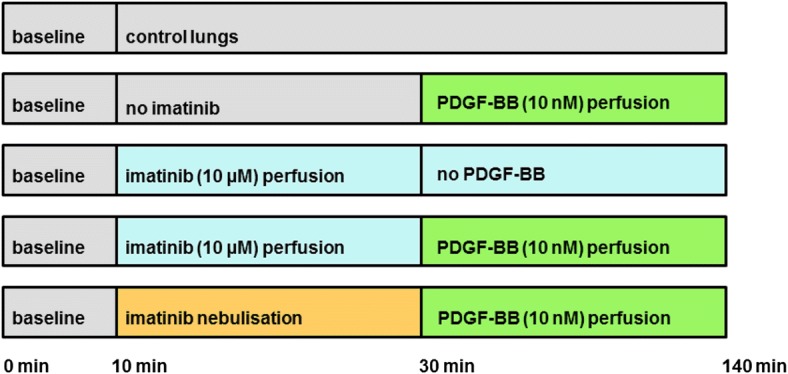
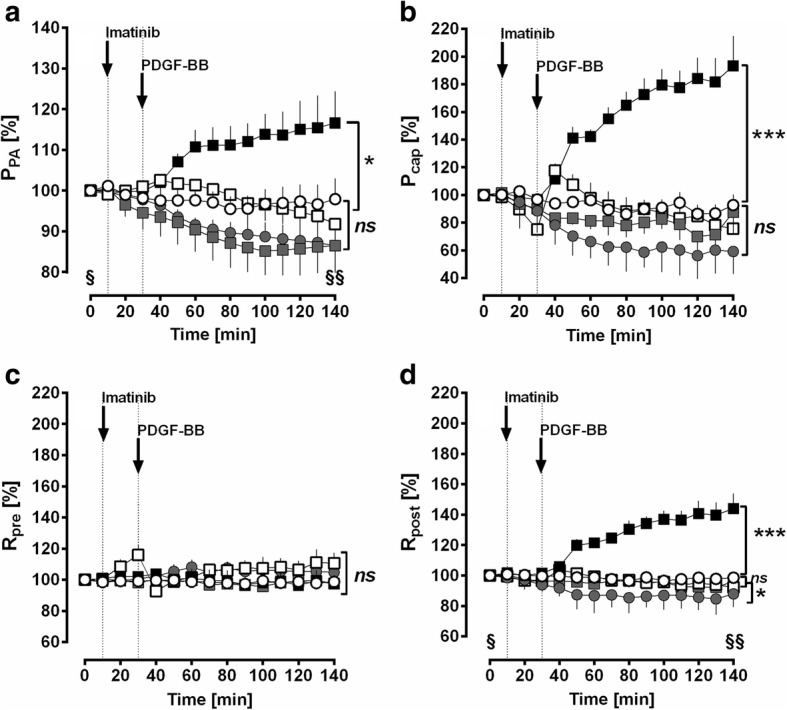
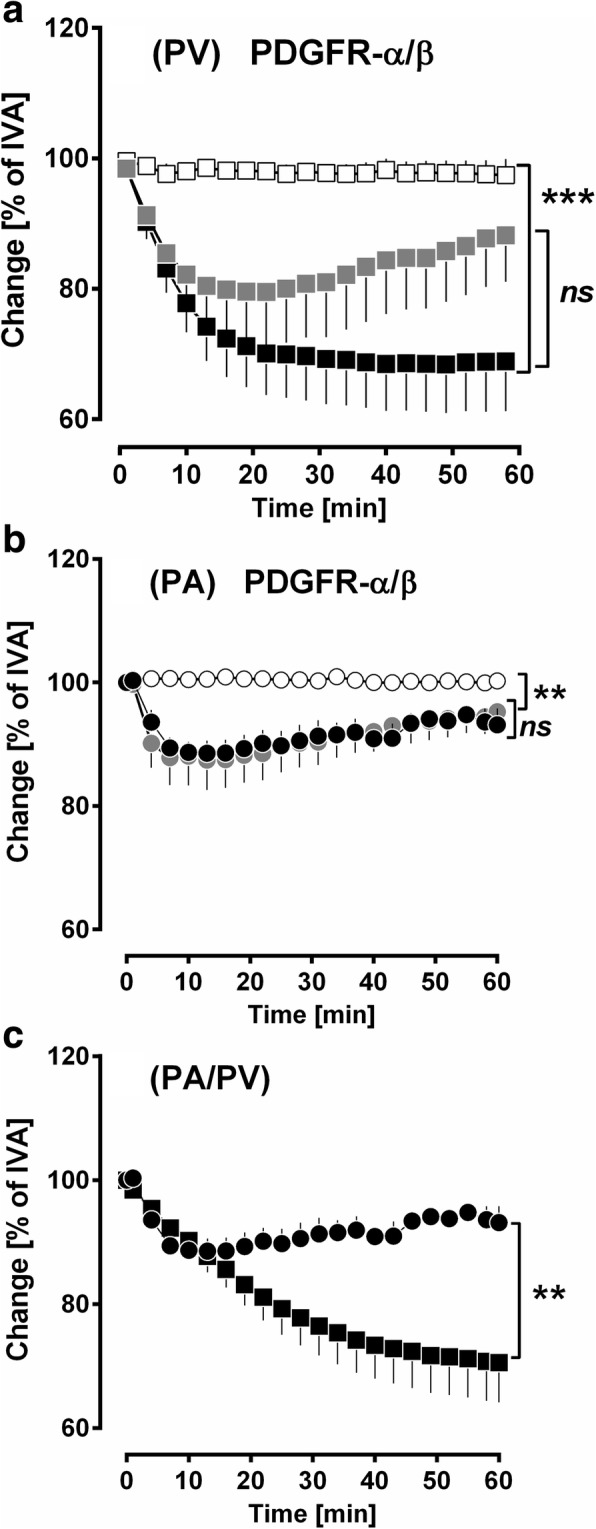
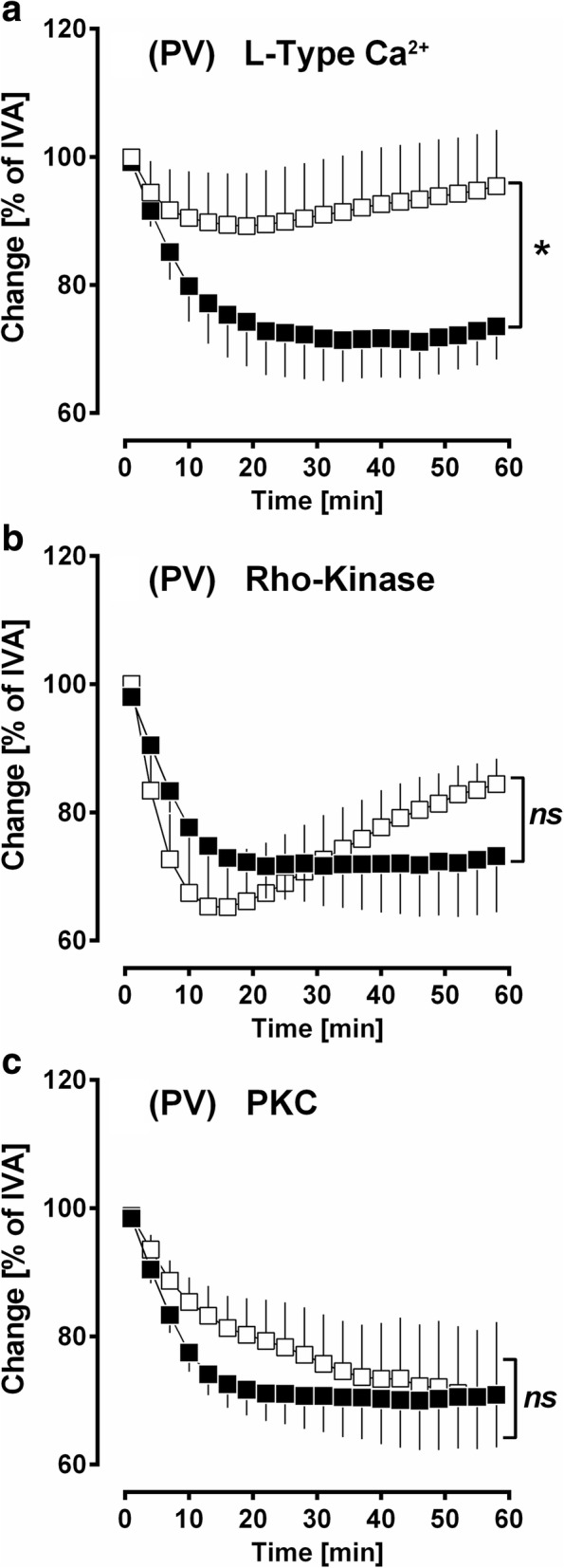
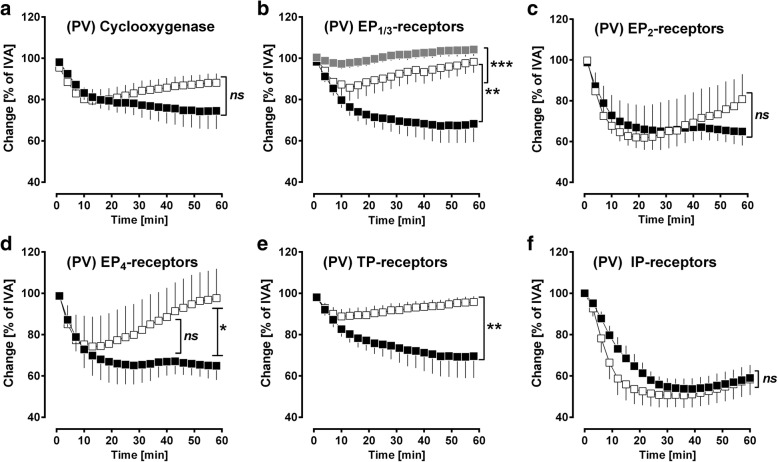
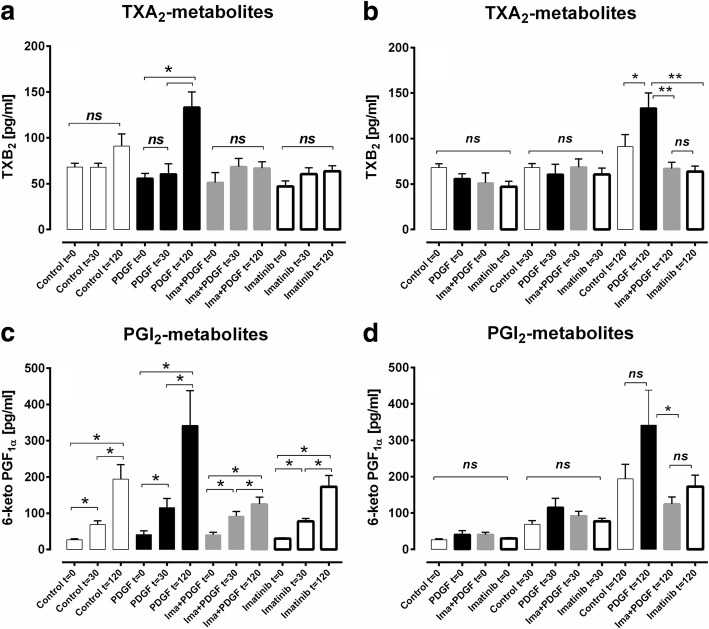
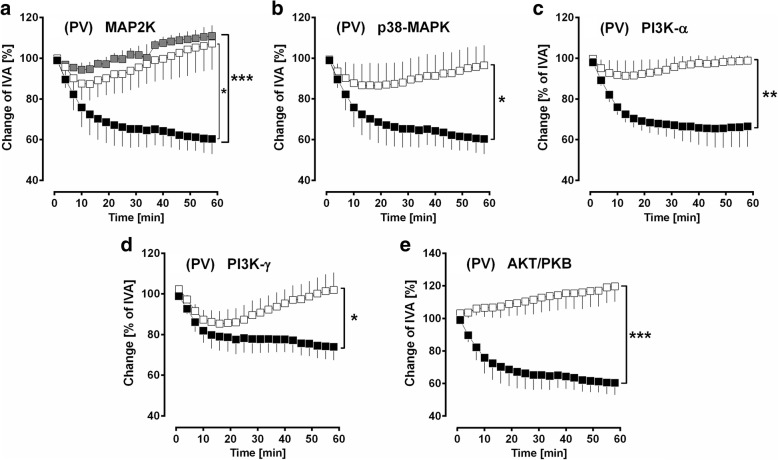
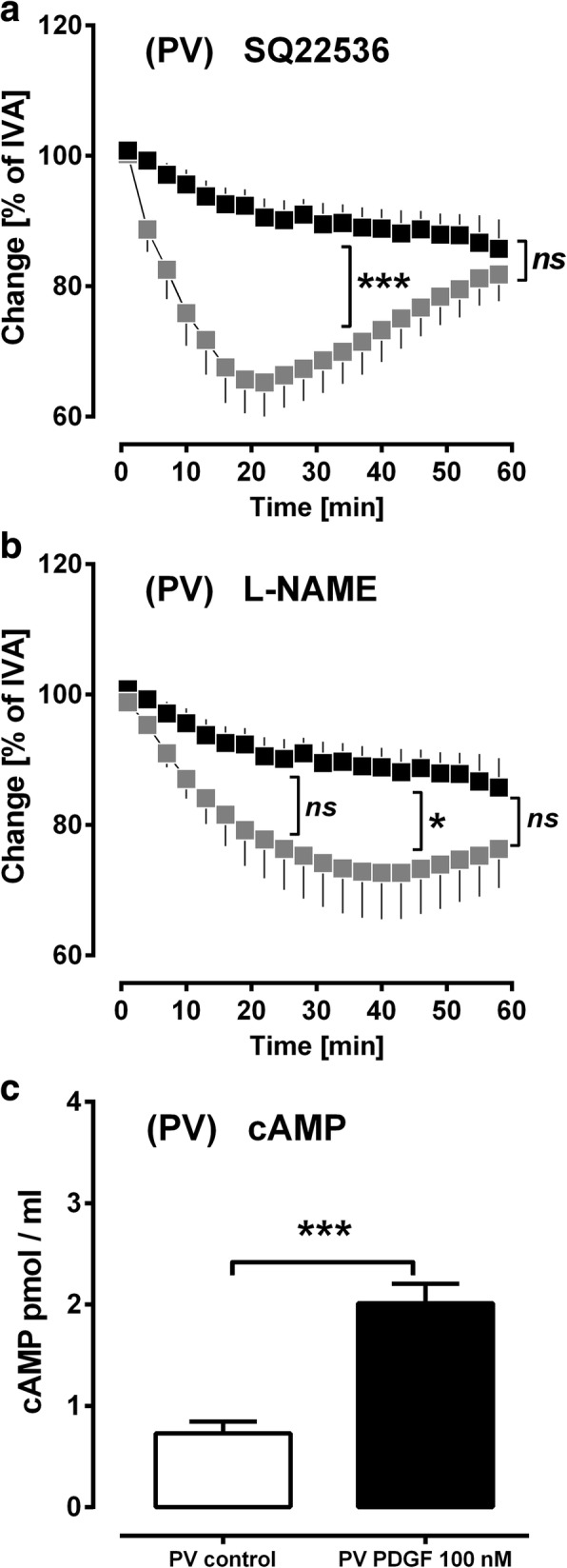
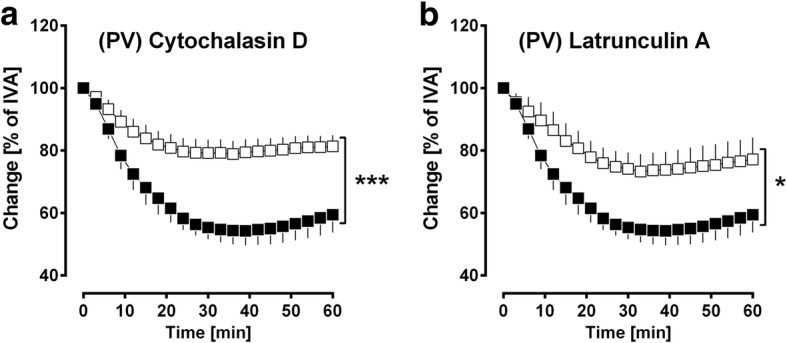
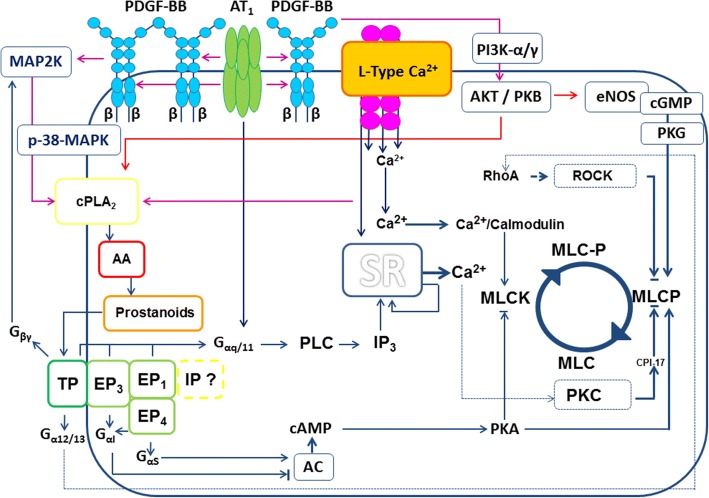
Platelet-derived growth factor (PDGF)-BB and its receptor PDGFR are highly expressed in pulmonary hypertension (PH) and mediate proliferation. Recently, we showed that PDGF-BB contracts pulmonary veins (PVs) and that this contraction is prevented by inhibition of PDGFR-β (imatinib/SU6668). Here, we studied PDGF-BB-induced contraction and downstream-signalling in isolated perfused lungs (IPL) and precision-cut lung slices (PCLS) of guinea pigs (GPs). In IPLs, PDGF-BB was perfused after or without pre-treatment with imatinib (perfused/nebulised), the effects on the pulmonary arterial pressure (P PA ), the left atrial pressure (P LA ) and the capillary pressure (P cap ) were studied and the precapillary (R pre ) and postcapillary resistance (R post ) were calculated. Perfusate samples were analysed (ELISA) to detect the PDGF-BB-induced release of prostaglandin metabolites (TXA 2 /PGI 2 ). In PCLS, the contractile effect of PDGF-BB was evaluated in pulmonary arteries (PAs) and PVs. In PVs, PDGF-BB-induced contraction was studied after inhibition of PDGFR-α/β, L-Type Ca 2+ -channels, ROCK/PKC, prostaglandin receptors, MAP2K, p38-MAPK, PI3K-α/γ, AKT/PKB, actin polymerisation, adenyl cyclase and NO. Changes of the vascular tone were measured by videomicroscopy. In PVs, intracellular cAMP was measured by ELISA. In IPLs, PDGF-BB increased P PA , P cap and R post . In contrast, PDGF-BB had no effect if lungs were pre-treated with imatinib (perfused/nebulised). In PCLS, PDGF-BB significantly contracted PVs/PAs which was blocked by the PDGFR-β antagonist SU6668. In PVs, inhibition of actin polymerisation and inhibition of L-Type Ca 2+ -channels reduced PDGF-BB-induced contraction, whereas inhibition of ROCK/PKC had no effect. Blocking of EP 1/3 - and TP-receptors or inhibition of MAP2K-, p38-MAPK-, PI3K-α/γ- and AKT/PKB-signalling prevented PDGF-BB-induced contraction, whereas inhibition of EP 4 only slightly reduced it. Accordingly, PDGF-BB increased TXA 2 in the perfusate, whereas PGI 2 was increased in all groups after 120 min and inhibition of IP-receptors did not enhance PDGF-BB-induced contraction. Moreover, PDGF-BB increased cAMP in PVs and inhibition of adenyl cyclase enhanced PDGF-BB-induced contraction, whereas inhibition of NO-formation only slightly increased it. PDGF-BB/PDGFR regulates the pulmonary vascular tone by the generation of prostaglandins, the increase of calcium, the activation of MAPK- or PI3K/AKT/mTOR signalling and actin remodelling. More insights in PDGF-BB downstream-signalling may contribute to develop new therapeutics for PH.
Overview
The claims and statistics of this paper haven’t been checked yet.
Free: it reads the open-access text and checks the first 5 claims that cite a source we can check. Create a free account to check every claim.
Integrity signals
Registry
Cites
Statistics
Figures
Verification
Claims the paper makes
The claims and statistics of this paper haven’t been checked yet.
Free: it reads the open-access text and checks the first 5 claims that cite a source we can check. Create a free account to check every claim.
Claims other papers make about this one
Each is checked against this paper’s own text: does it say what the citing paper says it does?
The source backs part of the claim, not all of it — or backs it for a different population, condition or comparison.
In the citing paper
“PDGF binds to its receptors, particularly PDGFRα and PDGFRβ, on the surface of fibroblasts and smooth muscle cells in the penile tissue.This binding activates intracellular signaling pathways, such as the mitogen-activated protein kinase (MAPK) pathway and the PI3K (phosphatidylinositol 3-kinase)/Akt pathway, which promote fibroblast proliferation and migration.”
From Research advances in Peyronie's disease: a comprehensive review on genomics, pathways, phenotypic manifestation, and therapeutic targets. (2024) · cites this paper as [58]
Experimental — accuracy not yet measured
Self-check
Percentages, sums and reported differences re-computed from the paper’s own numbers.
The self-check needs the paper’s full text.
Citations
Cites
Mizgerd, J. P., Kubo, H., Kutkoski, G. J., Bhagwan, S. D., Scharffetter-Kochanek, K., Beaudet, A. L., & Doerschuk, C. M. (1997) · The Journal of Experimental Medicine · doi:10.1084/jem.186.8.1357 · Cited by 7,306
Alessi, D. R., Cuenda, A., Cohen, P., Dudley, D. T., & Saltiel, A. R. (1995) · Journal of Biological Chemistry · doi:10.1074/jbc.270.46.27489 · Cited by 3,393 · cited 1×
“[51]; MAP2K: 5 μM U0126 (IC50: 58–72 nM) [52]; p38-MAPK: 5 μM SB203580 (IC50: 0.”
Identification of a Novel Inhibitor of Mitogen-activated Protein Kinase Kinase
Favata, M. F., Horiuchi, K. Y., Manos, E. J., Daulerio, A. J., Stradley, D. A., Feeser, W. S., Van Dyk, D. E., Pitts, W. J., Earl, R. A., Hobbs, F., et al. (1998) · Journal of Biological Chemistry · doi:10.1074/jbc.273.29.18623 · Cited by 3,015 · cited 1×
“[51]; MAP2K: 5 μM U0126 (IC50: 58–72 nM) [52]; p38-MAPK: 5 μM SB203580 (IC50: 0.”
Role of platelet-derived growth factors in physiology and medicine
Andrae, J., Gallini, R., & Betsholtz, C. (2008) · Genes & Development · doi:10.1101/gad.1653708 · Cited by 2,438 · cited 7×
“PDGFR-α is involved in organogenesis (lungs, skin, gonads or central nervous system), whereas PDGFR-β is responsible for the formation of vessel [3] and for proliferation in pulmonary vascular remodelling [1].”
BackgroundInfluentialACCF/AHA 2009 Expert Consensus Document on Pulmonary Hypertension
McLaughlin, V. V., Archer, S. L., Badesch, D. B., Barst, R. J., Farber, H. W., Lindner, J. R., Mathier, M. A., McGoon, M. D., Park, M. H., Rosenson, R. S., et al. (2009) · Journal of the American College of Cardiology · doi:10.1016/j.jacc.2009.01.004 · Cited by 2,360
(1995) · FEBS Letters · doi:10.1016/0014-5793(95)00357-f · Cited by 2,086 · cited 1×
“5 μM, for AKT/ PKB 3–5 μM) [53, 54]; PI3K-α: 100 nM GSK 1059625 (IC50: 2 nM); PI3K-γ: 100 nM AS252424 (IC50: 33 nM) [55]; AKT/PKB: 10 μM 10-DEBC (IC50: 2 μM) [56]; actin polymerisation: 10 μM cytochalasin D (IC50: 100 nM) [57] or 1 μM latrunculin A [58]; adenyl cyclase (AC): 100 μM SQ22536 (IC50: 1.”
Angiotensin II cell signaling: physiological and pathological effects in the cardiovascular system
Mehta, P. K., & Griendling, K. K. (2007) · American Journal of Physiology-Cell Physiology · doi:10.1152/ajpcell.00287.2006 · Cited by 1,924 · cited 1×
“transactivation of AT1-receptors and PDGFR [101] is described leading to the increase of calcium [134].”
BackgroundDiversity of group types, regulation, and function of phospholipase A2.
Dennis, E. A. (1994) · Journal of Biological Chemistry · doi:10.1016/s0021-9258(17)36794-7 · Cited by 1,436 · cited 1×
“Increased intracellular calcium-levels activate cPLA2 [19] leading to the formation of arachidonic acid (AA) [131].”
BackgroundO'Hare, T., Shakespeare, W. C., Zhu, X., Eide, C. A., Rivera, V. M., Wang, F., Adrian, L. T., Zhou, T., Huang, W.-S., Xu, Q., et al. (2009) · Cancer Cell · doi:10.1016/j.ccr.2009.09.028 · Cited by 1,259
Sugimoto, Y., & Narumiya, S. (2007) · Journal of Biological Chemistry · doi:10.1074/jbc.r600038200 · Cited by 1,196 · cited 10×
“Moreover, EP4-receptors also couple to Gαi representing the counter player of Gαs [25, 88].”
BackgroundInfluentialReversal of experimental pulmonary hypertension by PDGF inhibition
Schermuly, R. T. (2005) · Journal of Clinical Investigation · doi:10.1172/jci24838 · Cited by 1,058 · cited 5×
“PDGF [1, 2] leading to the introduction of TKIs in the therapy of PH [2, 4, 65].”
BackgroundInfluentialFunction of PI3Kγ in Thymocyte Development, T Cell Activation, and Neutrophil Migration
Sasaki, T., Irie-Sasaki, J., Jones, R. G., Oliveira-dos-Santos, A. J., Stanford, W. L., Bolon, B., Wakeham, A., Itie, A., Bouchard, D., Kozieradzki, I., et al. (2000) · Science · doi:10.1126/science.287.5455.1040 · Cited by 1,031
Inhibition of actin polymerization by latrunculin A
Coué, M., Brenner, S. L., Spector, I., & Korn, E. D. (1987) · FEBS Letters · doi:10.1016/0014-5793(87)81513-2 · Cited by 822 · cited 1×
“5 μM, for AKT/ PKB 3–5 μM) [53, 54]; PI3K-α: 100 nM GSK 1059625 (IC50: 2 nM); PI3K-γ: 100 nM AS252424 (IC50: 33 nM) [55]; AKT/PKB: 10 μM 10-DEBC (IC50: 2 μM) [56]; actin polymerisation: 10 μM cytochalasin D (IC50: 100 nM) [57] or 1 μM latrunculin A [58]; adenyl cyclase (AC): 100 μM SQ22536 (IC50: 1.”
Properties and Regulation of Cytosolic Phospholipase A2
Leslie, C. C. (1997) · Journal of Biological Chemistry · doi:10.1074/jbc.272.27.16709 · Cited by 809 · cited 1×
“there are several possibilities to activate cPLA2, 1) by the increase of intracellular calcium [71, 104, 113], 2) by PDGF-BB-induced MAPK-signalling [71, 103–105] and”
BackgroundHoeper, M. M., Barst, R. J., Bourge, R. C., Feldman, J., Frost, A. E., Galié, N., Gómez-Sánchez, M. A., Grimminger, F., Grünig, E., Hassoun, P. M., et al. (2013) · Circulation · doi:10.1161/circulationaha.112.000765 · Cited by 574 · cited 1×
“PDGF [1, 2] leading to the introduction of TKIs in the therapy of PH [2, 4, 65].”
BackgroundSU6668 is a potent antiangiogenic and antitumor agent that induces regression of established tumors.
Laird, A., Vajkoczy, P., Shawver, L. K., Thurnher, A., Liang, C., Mohammadi, M., Schlessinger, J., Ullrich, A., Hubbard, S. R., Blake, R. A., et al. (2000) · PubMed · Cited by 537
Regulation of the c-Abl and Bcr–Abl tyrosine kinases
Hantschel, O., & Superti-Furga, G. (2004) · Nature Reviews Molecular Cell Biology · doi:10.1038/nrm1280 · Cited by 487
Platelet-derived Growth Factor Expression and Function in Idiopathic Pulmonary Arterial Hypertension
Perros, F., Montani, D., Dorfmüller, P., Durand-Gasselin, I., Tcherakian, C., Le Pavec, J., Mazmanian, M., Fadel, E., Mussot, S., Mercier, O., et al. (2008) · American Journal of Respiratory and Critical Care Medicine · doi:10.1164/rccm.200707-1037oc · Cited by 472 · cited 5×
“PDGFR-α is involved in organogenesis (lungs, skin, gonads or central nervous system), whereas PDGFR-β is responsible for the formation of vessel [3] and for proliferation in pulmonary vascular remodelling [1].”
BackgroundInfluentialThromboxane A2: Physiology/pathophysiology, cellular signal transduction and pharmacology
Nakahata, N. (2008) · Pharmacology & Therapeutics · doi:10.1016/j.pharmthera.2008.01.001 · Cited by 443 · cited 10×
“Within this context, there are several possibilities to activate cPLA2, 1) by the increase of intracellular calcium [71, 104, 113], 2) by PDGF-BB-induced MAPK-signalling [71, 103–105] and 3) by the inhibitory properties of AKT on cPLA2-degradation [107].”
BackgroundInfluentialVasoconstriction: A New Activity for Platelet-Derived Growth Factor
Berk, B. C., Alexander, R. W., Brock, T. A., Gimbrone, M. A., & Webb, R. C. (1986) · Science · doi:10.1126/science.3485309 · Cited by 432 · cited 3×
“PDGFR-downstream-signalling is associated with the increase of intracellular calcium [9, 10, 64].”
BackgroundThe critical role of Akt in cardiovascular function
Abeyrathna, P., & Su, Y. (2015) · Vascular Pharmacology · doi:10.1016/j.vph.2015.05.008 · Cited by 423 · cited 2×
“PDGFR-signalling also activates AKT/PKB [101] which stimulates eNOS [108].”
BackgroundPhysiological roles of K+ channels in vascular smooth muscle cells
Ko, E. A., Han, J., Jung, I. D., & Park, W. S. (2008) · Journal of Smooth Muscle Research · doi:10.1540/jsmr.44.65 · Cited by 409
Gunst, S. J., & Zhang, W. (2008) · American Journal of Physiology-Cell Physiology · doi:10.1152/ajpcell.00253.2008 · Cited by 375 · cited 10×
“isation and cytoskeletal remodeling [26, 27] which we inhibited by cytochalasin D and latrunculin A.”
BackgroundInfluentialHuang, W.-S., Metcalf, C. A., Sundaramoorthi, R., Wang, Y., Zou, D., Thomas, R. M., Zhu, X., Cai, L., Wen, D., Liu, S., et al. (2010) · Journal of Medicinal Chemistry · doi:10.1021/jm100395q · Cited by 369
Riendeau, D., Percival, M. D., Boyce, S., Brideau, C., Charleson, S., Cromlish, W., Ethier, D., Evans, J., Falgueyret, J. ‐., Ford‐Hutchinson, A. W., et al. (1997) · British Journal of Pharmacology · doi:10.1038/sj.bjp.0701076 · Cited by 322 · cited 1×
“4 μM) [41]; protein kinase C (PKC): 5 μM calphostin C (IC50: 50 nM) [42]; cyclooxygenase 1/2: 3 μM indomethacin (IC50: 13–26 nM) [43, 44]; EP1: 1 μM SC51322 (IC50: 13.”
Regulation of arachidonic acid release and cytosolic Phospholipase A2 activation
Gijón, M. A., & Leslie, C. C. (1999) · Journal of Leukocyte Biology · doi:10.1002/jlb.65.3.330 · Cited by 319
Regulation of pulmonary vascular tone.
Barnes, P. J., & Liu, S. F. (1995) · Pharmacological Reviews · doi:10.1016/s0031-6997(25)06822-x · Cited by 315
Lali, F. V., Hunt, A. E., Turner, S. J., & Foxwell, B. M. J. (2000) · Journal of Biological Chemistry · doi:10.1074/jbc.275.10.7395 · Cited by 303 · cited 1×
“5 μM, for AKT/ PKB 3–5 μM) [53, 54]; PI3K-α: 100 nM GSK 1059625 (IC50: 2 nM); PI3K-γ: 100 nM AS252424 (IC50: 33 nM) [55]; AKT/PKB: 10 μM 10-DEBC (IC50: 2 μM) [56]; actin polymerisation: 10 μM cytochalasin D (IC50: 100 nM) [57] or 1 μM latrunculin A [58]; adenyl cyclase (AC): 100 μM SQ22536 (IC50: 1.”
Phosphoinositide 3-kinase signalling in the vascular system
Morello, F., Perino, A., & Hirsch, E. (2008) · Cardiovascular Research · doi:10.1093/cvr/cvn325 · Cited by 235
Cell signalling through thromboxane A2 receptors
Huang, J. (2004) · Cellular Signalling · doi:10.1016/j.cellsig.2003.10.008 · Cited by 227 · cited 7×
“Further, TP-receptors are coupled to Gα12/13, hence their stimulation should activate Rho [85], unless TP-receptors are primarily coupled to Gαq/11 [80].”
BackgroundInfluentialOverview of physiological and pathophysiological effects of thromboxane A2.
Ogletree, M. L. (1987) · PubMed · Cited by 220
Targeted therapies in pulmonary arterial hypertension
Montani, D., Chaumais, M.-C., Guignabert, C., Günther, S., Girerd, B., Jaïs, X., Algalarrondo, V., Price, L. C., Savale, L., Sitbon, O., et al. (2014) · Pharmacology & Therapeutics · doi:10.1016/j.pharmthera.2013.10.002 · Cited by 213
Pomel, V., Klicic, J., Covini, D., Church, D. D., Shaw, J. P., Roulin, K., Burgat-Charvillon, F., Valognes, D., Camps, M., Chabert, C., et al. (2006) · Journal of Medicinal Chemistry · doi:10.1021/jm0601598 · Cited by 205 · cited 1×
“5 μM, for AKT/ PKB 3–5 μM) [53, 54]; PI3K-α: 100 nM GSK 1059625 (IC50: 2 nM); PI3K-γ: 100 nM AS252424 (IC50: 33 nM) [55]; AKT/PKB: 10 μM 10-DEBC (IC50: 2 μM) [56]; actin polymerisation: 10 μM cytochalasin D (IC50: 100 nM) [57] or 1 μM latrunculin A [58]; adenyl cyclase (AC): 100 μM SQ22536 (IC50: 1.”
Cyclic nucleotide-dependent relaxation pathways in vascular smooth muscle
Morgado, M., Cairrão, E., Santos-Silva, A. J., & Verde, I. (2012) · Cellular and Molecular Life Sciences · doi:10.1007/s00018-011-0815-2 · Cited by 196 · cited 2×
“6-keto PGF1α: 6-keto prostaglandin F1α; AA: Arachidonic acid; ABL: Abelson tyrosine kinase; AC: Adenyl cyclase; Cdyn: Dynamic compliance; cPLA2: Cytosolic phospholipase A2; eNOS: Endothelial NOS; EPreceptor: Prostaglandin E2 receptor; GPCR: G-Protein-coupled receptor; GPs: Guinea pigs; IP3: Inositol trisphosphate; IPL…”
BackgroundRegulation of Smooth Muscle Contraction by Small GTPases
Puetz, S., Lubomirov, L. T., & Pfitzer, G. (2009) · Physiology · doi:10.1152/physiol.00023.2009 · Cited by 195 · cited 4×
“activation of L-Type Ca-channels and on calcium [9, 10, 64], promoting the activation of myosin light chain kinase (MLCK) and vascular SMC contraction [24].”
BackgroundInfluentialProstacyclin among prostanoids.
Gryglewski, R. J. (2008) · PubMed · Cited by 193
Phosphatidylinositol 3‐kinase inhibitors: promising drug candidates for cancer therapy
Kong, D., & Yamori, T. (2008) · Cancer Science · doi:10.1111/j.1349-7006.2008.00891.x · Cited by 184
Characterisation of guinea pig precision-cut lung slices: comparison with human tissues
Ressmeyer, A. R., Larsson, A. K., Vollmer, E., Dahlèn, S. E., Uhlig, S., & Martin, C. (2006) · European Respiratory Journal · doi:10.1183/09031936.06.00004206 · Cited by 175 · cited 1×
“Thereafter, PCLS were prepared as described before [13, 16, 30].”
MethodSelf-citationProstanoid receptor antagonists: development strategies and therapeutic applications
Jones, R., Giembycz, M. A., & Woodward, D. F. (2009) · British Journal of Pharmacology · doi:10.1111/j.1476-5381.2009.00317.x · Cited by 172 · cited 3×
“2 nM) [48]; TP: 10 μM SQ29548 (IC50 10 nM) [48]; IP: 1 μM RO-1138452 (IC50: 5– 10 nM) [50]; MAP2K: 50 μM PD98059 (IC50: 2–7 μM) Fig.”
Backgroundaf Forselles, K., Root, J., Clarke, T., Davey, D., Aughton, K., Dack, K., & Pullen, N. (2011) · British Journal of Pharmacology · doi:10.1111/j.1476-5381.2011.01495.x · Cited by 161
Okahara, K., Sun, B., & Kambayashi, J.-I. (1998) · Arteriosclerosis, Thrombosis, and Vascular Biology · doi:10.1161/01.atv.18.12.1922 · Cited by 159
Structural features of subtype-selective EP receptor modulators
Markovič, T., Jakopin, Ž., Dolenc, M. S., & Mlinarič-Raščan, I. (2017) · Drug Discovery Today · doi:10.1016/j.drudis.2016.08.003 · Cited by 159 · cited 8×
“Moreover, EP4-receptors also couple to Gαi representing the counter player of Gαs [25, 88].”
BackgroundInfluentialCharacterization of airway and vascular responses in murine lungs
Held, H., Martin, C., & Uhlig, S. (1999) · British Journal of Pharmacology · doi:10.1038/sj.bjp.0702394 · Cited by 155
Self-citationDifferent effects of platelet-derived growth factor isoforms on rat vascular smooth muscle cells.
Sachinidis, A., Locher, R., Vetter, W., Tatje, D., & Hoppe, J. (1990) · Journal of Biological Chemistry · doi:10.1016/s0021-9258(18)86937-x · Cited by 154 · cited 1×
“In rat aortic smooth muscle cells (SMCs), the same group [10, 69] found that PDGF-AA potently stimulates PKC, whereas PDGF-BB activates PKC”
BackgroundGozgit, J. M., Wong, M. J., Wardwell, S., Tyner, J. W., Loriaux, M., Mohemmad, Q. K., Narasimhan, N. I., Shakespeare, W. C., Wang, F., Druker, B. J., et al. (2011) · Molecular Cancer Therapeutics · doi:10.1158/1535-7163.mct-10-1044 · Cited by 153
Block, L. H., Emmons, L. R., Vogt, E., Sachinidis, A., Vetter, W., & Hoppe, J. (1989) · Proceedings of the National Academy of Sciences · doi:10.1073/pnas.86.7.2388 · Cited by 150
Long-term safety and efficacy of imatinib in pulmonary arterial hypertension
Frost, A. E., Barst, R. J., Hoeper, M. M., Chang, H.-J., Frantz, R. P., Fukumoto, Y., Galié, N., Hassoun, P. M., Klose, H., Matsubara, H., et al. (2015) · The Journal of Heart and Lung Transplantation · doi:10.1016/j.healun.2015.05.025 · Cited by 148 · cited 1×
“Thus, TKI-inhibtion appears to be beneficial and particularly nebulised imatinib might prevent systemic side effect [130].”
BackgroundBornfeldt, K., Campbell, J. S., Koyama, H., Argast, G. M., Leslie, C. C., Raines, E. W., Krebs, E. G., & Ross, R. (1997) · Journal of Clinical Investigation · doi:10.1172/jci119603 · Cited by 147
Laird, A. D., Christensen, J. G., Li, G., Carver, J., Smith, K., Xin, X., Moss, K. G., Louie, S. G., Mendel, D. B., & Cherrington, J. M. (2002) · The FASEB Journal · doi:10.1096/fj.01-0700com · Cited by 131
Félétou, M., Huang, Y., & Vanhoutte, P. M. (2010) · Pflügers Archiv - European Journal of Physiology · doi:10.1007/s00424-010-0812-6 · Cited by 128 · cited 1×
“Increased intracellular calcium-levels activate cPLA2 [19] leading to the formation of arachidonic acid (AA) [131].”
BackgroundBurges, R. A., Gardiner, D. G., Gwilt, M., Higgins, A. J., Blackburn, K. J., Campbell, S. F., Cross, P. E., & Stubbs, J. K. (1987) · Journal of Cardiovascular Pharmacology · doi:10.1097/00005344-198701000-00018 · Cited by 127 · cited 1×
“9 nM) [40]; Rho-Kinase: 10 μM fasudile (IC50: 1.”
Role of veins in regulation of pulmonary circulation
Gao, Y., & Raj, J. U. (2005) · American Journal of Physiology-Lung Cellular and Molecular Physiology · doi:10.1152/ajplung.00103.2004 · Cited by 127 · cited 3×
“This result is of high clinical relevance, as the pulmonary venous bed contributes about 40% to pulmonary vascular resistance (PVR) [60] and plays a major role in PH due to left heart disease [61], the most common cause of PH [62, 63].”
BackgroundJûteau, H., Gareau, Y., Labelle, M., Sturino, C. F., Sawyer, N., Tremblay, N. M., Lamontagne, S., Carrière, M., Denis, D., & Metters, K. M. (2001) · Bioorganic & Medicinal Chemistry · doi:10.1016/s0968-0896(01)00110-9 · Cited by 119 · cited 1×
“7 nM) [46, 47]; EP3: 1 μM L798106 (IC50: 10 nM) [48, 49]; EP4: 1 μM L161982 (IC50: 3.”
Comprehensive Dissection of PDGF-PDGFR Signaling Pathways in PDGFR Genetically Defined Cells
Wu, E., Palmer, N., Tian, Z., Moseman, A. P., Galdzicki, M., Wang, X., Berger, B., Zhang, H., & Kohane, I. S. (2008) · PLoS ONE · doi:10.1371/journal.pone.0003794 · Cited by 118
Prostaglandin Receptor Signaling in Disease
Matsuoka, T., & Narumiya, S. (2007) · The Scientific World JOURNAL · doi:10.1100/tsw.2007.182 · Cited by 115 · cited 1×
“EP2/4, IP or DP should increase intracellular cAMP [98, 99].”
BackgroundGraves, L. M., Bornfeldt, K., Sidhu, J. S., Argast, G. M., Raines, E. W., Ross, R., Leslie, C. C., & Krebs, E. G. (1996) · Journal of Biological Chemistry · doi:10.1074/jbc.271.1.505 · Cited by 115 · cited 1×
“[96] who found in human arterial SMCs that”
BackgroundPhysiologic Properties and Regulation of the Actin Cytoskeleton in Vascular Smooth Muscle
Tang, D. D., & Anfinogenova, Y. (2008) · Journal of Cardiovascular Pharmacology and Therapeutics · doi:10.1177/1074248407313737 · Cited by 113 · cited 1×
“They are even less unexpected, as MAPK-signalling which represents a cornerstone of PDGF-BB downstream signalling influences actin polymerisation [117, 118].”
BackgroundRecent advances in targeting the prostacyclin pathway in pulmonary arterial hypertension
Lang, I. M., & Gaine, S. (2015) · European Respiratory Review · doi:10.1183/16000617.0067-2015 · Cited by 111 · cited 1×
“This idea is supported by the circumstance that PGI2, as a main source for cAMP [91] did not significantly increase due to PDGF-BB.”
BackgroundDurocher, Y., Perret, S., Thibaudeau, E., Gaumond, M.-H., Kamen, A., Stocco, R., & Abramovitz, M. (2000) · Analytical Biochemistry · doi:10.1006/abio.2000.4698 · Cited by 110 · cited 1×
“8 nM) [45]; EP2: 1 μM PF04418948 (IC50: 2.”
Noskovičová, N., Petřek, M., Eickelberg, O., & Heinzelmann, K. (2015) · American Journal of Respiratory Cell and Molecular Biology · doi:10.1165/rcmb.2014-0294tr · Cited by 110 · cited 5×
“downstream-signalling mainly activates two pathways: 1) the MAPK-pathway and 2) the PI3K/AKT/mTOR pathway [101].”
BackgroundInfluentialTang, D. D. (2015) · Respiratory Research · doi:10.1186/s12931-015-0296-1 · Cited by 109 · cited 14×
“isation and cytoskeletal remodeling [26, 27] which we inhibited by cytochalasin D and latrunculin A.”
BackgroundInfluentialYuhki, K., Kojima, F., Kashiwagi, H., Kawabe, J.-I., Fujino, T., Narumiya, S., & Ushikubi, F. (2010) · Pharmacology & Therapeutics · doi:10.1016/j.pharmthera.2010.09.004 · Cited by 106
Godl, K., Gruß, O. J., Eickhoff, J., Wissing, J. B., Blencke, S., Weber, M., Degen, H., Brehmer, D., Őrfi, L., Horváth, Z., et al. (2005) · Cancer Research · doi:10.1158/0008-5472.can-05-0574 · Cited by 105
Phosphoinositide 3-Kinase Isoforms Selectively Couple Receptors to Vascular L-Type Ca 2+ Channels
Macrez, N., Mironneau, C., Carricaburu, V., Quignard, J., Babich, A., Czupalla, C., Nürnberg, B., & Mironneau, J. (2001) · Circulation Research · doi:10.1161/hh2001.097864 · Cited by 105
Bonnet, S., & Archer, S. L. (2007) · Pharmacology & Therapeutics · doi:10.1016/j.pharmthera.2007.03.014 · Cited by 100
Identification of N10-Substituted Phenoxazines as Potent and Specific Inhibitors of Akt Signaling
Thimmaiah, K. N., Easton, J. B., Germain, G. S., Morton, C. L., Kamath, S., Buolamwini, J. K., & Houghton, P. J. (2005) · Journal of Biological Chemistry · doi:10.1074/jbc.m507057200 · Cited by 99 · cited 1×
“5 μM, for AKT/ PKB 3–5 μM) [53, 54]; PI3K-α: 100 nM GSK 1059625 (IC50: 2 nM); PI3K-γ: 100 nM AS252424 (IC50: 33 nM) [55]; AKT/PKB: 10 μM 10-DEBC (IC50: 2 μM) [56]; actin polymerisation: 10 μM cytochalasin D (IC50: 100 nM) [57] or 1 μM latrunculin A [58]; adenyl cyclase (AC): 100 μM SQ22536 (IC50: 1.”
Pulmonary hypertension in left heart disease
Guazzi, M., & Galiè, N. (2012) · European Respiratory Review · doi:10.1183/09059180.00004612 · Cited by 99 · cited 1×
“disease [61], the most common cause of PH [62, 63].”
BackgroundPotent contractile actions of prostanoid EP3‐receptor agonists on human isolated pulmonary artery
Qian, Y., Jones, R. L., Chan, K., Stock, A. I., & Ho, J. K. (1994) · British Journal of Pharmacology · doi:10.1111/j.1476-5381.1994.tb16997.x · Cited by 96 · cited 2×
“In general, EP3-agonists strongly contract human PAs [74].”
BackgroundRussell-Puleri, S., Paz, N. G. D., Adams, D., Chattopadhyay, M., Cancel, L. M., Ebong, E. E., Orr, A. W., Frangos, J. A., & Tarbell, J. M. (2016) · American Journal of Physiology-Heart and Circulatory Physiology · doi:10.1152/ajpheart.00035.2016 · Cited by 93 · cited 1×
“6c), including control lungs is explainable by the endothelial release of PGI2 counteracting the increased shear stress in perfused lungs [92, 93].”
BackgroundLü, A., Zuo, C., He, Y., Chen, G., Piao, L., Zhang, J., Xiao, B., Shen, Y., Tang, J., Kong, D., et al. (2015) · Journal of Clinical Investigation · doi:10.1172/jci77656 · Cited by 90 · cited 2×
“Beyond that, they influence the progress of PH, as EP3-receptor deficiency attenuates the expression of PH [89].”
BackgroundThe PI3K inhibitor arsenal: choose your weapon!
Crabbe, T., Welham, M. J., & Ward, S. G. (2007) · Trends in Biochemical Sciences · doi:10.1016/j.tibs.2007.09.001 · Cited by 90
An improved setup for the isolated perfused rat lung
Uhlig, S., & Wollin, L. (1994) · Journal of Pharmacological and Toxicological Methods · doi:10.1016/1056-8719(94)90047-7 · Cited by 87 · cited 4×
“contrast, the IPL allows addressing the entire pulmonary vascular bed (except central PVs); particularly, it enables to determine the segmental vascular resistance (Rpre / Rpost) by the double occlusion method [7, 13, 14].”
BackgroundMethodInfluentialSelf-citationMEK1 is required for PDGF-induced ERK activation and DNA synthesis in tracheal myocytes
Karpova, A. Y., Abe, M. K., Li, J., Liu, P. T., Rhee, J. M., Kuo, W. L., & Hershenson, M. B. (1997) · American Journal of Physiology-Lung Cellular and Molecular Physiology · doi:10.1152/ajplung.1997.272.3.l558 · Cited by 86
Kuebler, W. M., Yang, Y., Samapati, R., & Uhlig, S. (2010) · Cellular Physiology and Biochemistry · doi:10.1159/000315103 · Cited by 75 · cited 2×
“Moreover, with regard to tone or endothelial barrier, pulmonary and systemic vessels are diversely regulated [70].”
BackgroundSelf-citationProstanoid EP1‐ and TP‐receptors involved in the contraction of human pulmonary veins
Walch, L., de Montpréville, V., Brink, C., & Norel, X. (2001) · British Journal of Pharmacology · doi:10.1038/sj.bjp.0704423 · Cited by 74 · cited 1×
“TP- or EP1/3-receptors are involved within the regulation of the tone of human PAs [74] and PVs [75, 76].”
BackgroundLevosimendan attenuates pulmonary vascular remodeling
Revermann, M., Schloss, M., Mieth, A., Bábelová, A., Schröder, K., Neofitidou, S., Buerkl, J., Kirschning, T., SCHERMULY, R. T., Hofstetter, C., et al. (2011) · Intensive Care Medicine · doi:10.1007/s00134-011-2254-9 · Cited by 72
Shear Stress-Induced Release of PGE2and PGI2by Vascular Smooth Muscle Cells
Alshihabi, S. N., Chang, Y. S., Frangos, J. A., & Tarbell, J. M. (1996) · Biochemical and Biophysical Research Communications · doi:10.1006/bbrc.1996.1104 · Cited by 72
Schlepütz, M., Rieg, A. D., Seehase, S., Spillner, J. W., Pérez-Bouza, A., Braunschweig, T. A., Schröder, T., Bernau, M., Lambermont, V. A., Schlumbohm, C., et al. (2012) · PLoS ONE · doi:10.1371/journal.pone.0047344 · Cited by 66
Self-citationKim, H. R., Graceffa, P., Ferrón, F., Gallant, C. M., Boczkowska, M., Domínguez, R., & Morgan, K. G. (2009) · American Journal of Physiology-Cell Physiology · doi:10.1152/ajpcell.00431.2009 · Cited by 66 · cited 1×
“[120], rat mesenteric arteries [121, 122], rat thoracic aorta [57] or rat extrapulmonary PAs [123], as well as in”
BackgroundTargeting the Prostacyclin Pathway: Beyond Pulmonary Arterial Hypertension
Pluchart, H., Khouri, C., Blaise, S., Roustit, M., & Cracowski, J. (2017) · Trends in Pharmacological Sciences · doi:10.1016/j.tips.2017.03.003 · Cited by 66
Tyrosine Kinase Inhibitors Are Potent Acute Pulmonary Vasodilators in Rats
Abe, K., Toba, M., Alzoubi, A., Koubský, K., Ito, M., Ota, H., Gairhe, S., Gerthoffer, W. T., Fagan, K. A., McMurtry, I. F., et al. (2011) · American Journal of Respiratory Cell and Molecular Biology · doi:10.1165/rcmb.2010-0371oc · Cited by 64 · cited 1×
“imatinib relaxes the pulmonary arterial bed of healthy and pulmonary hypertensive rats [5, 6].”
BackgroundCytochalasin D Inhibits Smooth Muscle Contraction by Directly Inhibiting Contractile Apparatus.
Saito, S., Hori, M., Ozaki, H., & Karaki, H. (1996) · Journal of Smooth Muscle Research · doi:10.1540/jsmr.32.51 · Cited by 63 · cited 2×
“5 μM, for AKT/ PKB 3–5 μM) [53, 54]; PI3K-α: 100 nM GSK 1059625 (IC50: 2 nM); PI3K-γ: 100 nM AS252424 (IC50: 33 nM) [55]; AKT/PKB: 10 μM 10-DEBC (IC50: 2 μM) [56]; actin polymerisation: 10 μM cytochalasin D (IC50: 100 nM) [57] or 1 μM latrunculin A [58]; adenyl cyclase (AC): 100 μM SQ22536 (IC50: 1.”
BackgroundImatinib mesylate for the treatment of pulmonary arterial hypertension
ten Freyhaus, H., Dumitrescu, D., Berghausen, E., Vantler, M., Caglayan, E., & Rosenkranz, S. (2012) · Expert Opinion on Investigational Drugs · doi:10.1517/13543784.2012.632408 · Cited by 63 · cited 1×
“PDGF [1, 2] leading to the introduction of TKIs in the therapy of PH [2, 4, 65].”
BackgroundSachinidis, A., Locher, R., Hoppe, J., & Vetter, W. (1990) · FEBS Letters · doi:10.1016/0014-5793(90)81447-v · Cited by 63 · cited 6×
“[10] showed in systemic vessels that PDGF-BB leads to the generation of TXA2 which exerts as well as the TP-agonist U46619 a strong and long-lasting contraction along the pulmonary vascular Fig.”
BackgroundInfluentialKong, S., Ki, C., Yoo, B. C., & Kim, J. (2008) · Cancer Science · doi:10.1111/j.1349-7006.2007.00693.x · Cited by 62
Ogawa, A., Nakamura, K., Matsubara, H., Fujio, H., Ikeda, T., Kobayashi, K., Miyazaki, I., Asanuma, M., Miyaji, K., Miura, D., et al. (2005) · Circulation · doi:10.1161/circulationaha.105.536169 · Cited by 60 · cited 1×
“In respect thereof it is worth mentioning that EP3-receptor deficiency attenuates PH [89] and that prednisolone inhibits PDGF-BB-induced proliferation of PAs’ SMCs [129].”
BackgroundTang, D. D., & Tan, J. (2003) · American Journal of Physiology-Heart and Circulatory Physiology · doi:10.1152/ajpheart.00188.2003 · Cited by 60
Effect of cytochalasin D on smooth muscle contraction
Adler, K. B., Krill, J., Alberghini, T. V., & Evans, J. N. (1983) · Cell Motility · doi:10.1002/cm.970030521 · Cited by 59 · cited 1×
“[120], rat mesenteric arteries [121, 122], rat thoracic aorta [57] or rat extrapulmonary PAs [123], as well as in”
BackgroundAbl regulates smooth muscle cell proliferation by modulating actin dynamics and ERK1/2 activation
Li, J., Wang, R., & Tang, D. D. (2012) · American Journal of Physiology-Cell Physiology · doi:10.1152/ajpcell.00373.2011 · Cited by 52
Miki, T.-O., Zen-Ichi, T., & Koichi, K. (1990) · Biochemical Pharmacology · doi:10.1016/0006-2952(90)90592-9 · Cited by 49
Deacon, K., & Knox, A. J. (2010) · Journal of Biological Chemistry · doi:10.1074/jbc.m110.139485 · Cited by 48 · cited 2×
“TXA2 or ET-1 [80, 128], but also hypoxia [125, 127] or PDGF-BB [2, 64] do not constrain to increase the pulmonary vascular tone, but also promote pulmonary vascular remodelling.”
BackgroundRole of Abl in airway hyperresponsiveness and airway remodeling
Cleary, R. A., Wang, R., Wang, T., & Tang, D. D. (2013) · Respiratory Research · doi:10.1186/1465-9921-14-105 · Cited by 48
Ionic responses rapidly elicited by porcine platelet‐derived growth factor in Swiss 3T3 cells.
López‐Rivas, A., Stroobant, P., Waterfield, M. D., & Rozengurt, E. (1984) · The EMBO Journal · doi:10.1002/j.1460-2075.1984.tb01911.x · Cited by 47
Schaafsma, D., Gosens, R., Bos, I. S. T., Meurs, H., Zaagsma, J., & Nelemans, S. A. (2005) · Respiratory Research · doi:10.1186/1465-9921-6-85 · Cited by 45 · cited 1×
“[102] showed in GPs’ tracheal strips that PDGF-BB-induced contraction highly depends on the activation of MAP2K.”
BackgroundNorel, X., Walch, L., Gascard, J., de Montpréville, V., & Brink, C. (2004) · British Journal of Pharmacology · doi:10.1038/sj.bjp.0705843 · Cited by 44 · cited 1×
“TP- or EP1/3-receptors are involved within the regulation of the tone of human PAs [74] and PVs [75, 76].”
BackgroundOhanian, V., Gatfield, K. M., & Ohanian, J. (2005) · Hypertension · doi:10.1161/01.hyp.0000167990.82235.3c · Cited by 44 · cited 1×
“[120], rat mesenteric arteries [121, 122], rat thoracic aorta [57] or rat extrapulmonary PAs [123], as well as in”
BackgroundCardiovascular Agents Affect the Tone of Pulmonary Arteries and Veins in Precision-Cut Lung Slices
Rieg, A. D., Rossaint, R., Uhlig, S., & Martin, C. (2011) · PLoS ONE · doi:10.1371/journal.pone.0029698 · Cited by 41 · cited 3×
“PAs accompany the airways and PVs lie aside [13, 16].”
BackgroundMethodSelf-citationJones, R. L., Wise, H. M., Clark, R. G., Whiting, R. L., & Bley, K. R. (2006) · British Journal of Pharmacology · doi:10.1038/sj.bjp.0706841 · Cited by 40 · cited 1×
“2 nM) [48]; TP: 10 μM SQ29548 (IC50 10 nM) [48]; IP: 1 μM RO-1138452 (IC50: 5– 10 nM) [50]; MAP2K: 50 μM PD98059 (IC50: 2–7 μM) Fig.”
Pollack, I. F., & Kawecki, S. (1997) · Journal of Neuro-Oncology · doi:10.1023/a:1005729626354 · Cited by 37 · cited 1×
“4 μM) [41]; protein kinase C (PKC): 5 μM calphostin C (IC50: 50 nM) [42]; cyclooxygenase 1/2: 3 μM indomethacin (IC50: 13–26 nM) [43, 44]; EP1: 1 μM SC51322 (IC50: 13.”
Liu, H., Li, K., & Sperelakis, N. (1997) · Canadian Journal of Physiology and Pharmacology · doi:10.1139/cjpp-75-9-1058 · Cited by 37
Pankey, E. A., Thammasiboon, S., Lasker, G. F., Baber, S. R., Lasky, J. A., & Kadowitz, P. J. (2013) · American Journal of Physiology-Heart and Circulatory Physiology · doi:10.1152/ajpheart.00329.2013 · Cited by 37 · cited 1×
“imatinib relaxes the pulmonary arterial bed of healthy and pulmonary hypertensive rats [5, 6].”
BackgroundLiu, H., & Sperelakis, N. (1997) · Canadian Journal of Physiology and Pharmacology · doi:10.1139/cjpp-75-9-1063 · Cited by 36
Rieg, A. D., Rossaint, R., Verjans, E., Maihöfer, N. A., Uhlig, S., & Martin, C. (2013) · PLoS ONE · doi:10.1371/journal.pone.0066195 · Cited by 36 · cited 1×
“effect of PDGF-BB in pulmonary arteries (PAs) or PVs after or without inhibtion of PDGFR-α (ponatinib) or PDGFR-β (SU6668) in GPs’ precision-cut lung slices (PCLS) [13, 15, 16].”
BackgroundSelf-citationLiu, H., Li, K., & Sperelakis, N. (1997) · Canadian Journal of Physiology and Pharmacology · doi:10.1139/y97-127 · Cited by 35
Sulfur Dioxide-Induced Bronchoconstriction in the Isolated Perfused and Ventilated Guinea-Pig Lung
Atzori, L., Bannenberg, G. L., Corriga, A. M., Moldéus, P., & Ryrfeldt, Å. (2009) · Respiration · doi:10.1159/000196018 · Cited by 34
Birrell, M. A., Maher, S. A., Buckley, J., Dale, N., Bonvini, S. J., Raemdonck, K., Pullen, N., Giembycz, M. A., & Belvisi, M. G. (2012) · British Journal of Pharmacology · doi:10.1111/j.1476-5381.2012.02088.x · Cited by 33
Carnevale, D., & Lembo, G. (2012) · Cardiovascular Research · doi:10.1093/cvr/cvs166 · Cited by 33
Milrinone Relaxes Pulmonary Veins in Guinea Pigs and Humans
Rieg, A. D., Suleiman, S., Pérez-Bouza, A., Braunschweig, T. A., Spillner, J. W., Schröder, T., Verjans, E., Schälte, G., Rossaint, R., Uhlig, S., et al. (2014) · PLoS ONE · doi:10.1371/journal.pone.0087685 · Cited by 33 · cited 7×
“Thereafter, PCLS were prepared as described before [13, 16, 30].”
BackgroundMethodInfluentialSelf-citationMedarametla, V., Festin, S., Sugarragchaa, C., Eng, A., Naqwi, A., Wiedmann, T. S., & Zisman, L. S. (2014) · Pulmonary Circulation · doi:10.1086/674881 · Cited by 32 · cited 1×
“8 μM) [39]; L-Type Ca-channels: 100 nM amlodipine (IC50: 1.”
Hughes, A. D. (1995) · British Journal of Pharmacology · doi:10.1111/j.1476-5381.1995.tb14917.x · Cited by 32 · cited 3×
“PDGFR-downstream-signalling is associated with the increase of intracellular calcium [9, 10, 64].”
BackgroundChen, X., Pavlish, K., Zhang, H.-Y., & Benoit, J. N. (2005) · American Journal of Physiology-Heart and Circulatory Physiology · doi:10.1152/ajpheart.00643.2005 · Cited by 30 · cited 1×
“[120], rat mesenteric arteries [121, 122], rat thoracic aorta [57] or rat extrapulmonary PAs [123], as well as in”
BackgroundWang, Q., Wang, D., YAN, G., Sun, L. V., & Tang, C. (2015) · Molecular Medicine Reports · doi:10.3892/mmr.2015.4750 · Cited by 29
Xu, S., Li, X., LaPenna, K. B., Yokota, S. D., Huke, S., & He, P. (2017) · Cardiovascular Research · doi:10.1093/cvr/cvx021 · Cited by 29 · cited 3×
“[11] exposed rat mesenteric arteries to shear stress, generally going ahead with endothelial NO-release [100], 2) systemic and pulmonary vessel be-”
BackgroundLiu, H., & Sperelakis, N. (1997) · Canadian Journal of Physiology and Pharmacology · doi:10.1139/y97-126 · Cited by 29
Paddenberg, R., Mermer, P., Goldenberg, A., & Kummer, W. (2014) · Journal of Visualized Experiments · doi:10.3791/50970 · Cited by 28 · cited 1×
“In contrast, in PCLS shear stress is hardly effective [95], hence time-dependent PGI2-release is not expected.”
BackgroundSelectivity of cyclo-oxygenase inhibitors in human pulmonary epithelial and smooth muscle cells
Range, S. P., Pang, L., Holland, E. D., & Knox, A. J. (2000) · European Respiratory Journal · doi:10.1034/j.1399-3003.2000.15d20.x · Cited by 28 · cited 1×
“4 μM) [41]; protein kinase C (PKC): 5 μM calphostin C (IC50: 50 nM) [42]; cyclooxygenase 1/2: 3 μM indomethacin (IC50: 13–26 nM) [43, 44]; EP1: 1 μM SC51322 (IC50: 13.”
Role of cyclic nucleotides in vasodilations of the rat thoracic aorta induced by adenosine analogues
Hourani, S. M. O., Boon, K., Fooks, H. M., & Prentice, D. J. (2001) · British Journal of Pharmacology · doi:10.1038/sj.bjp.0704140 · Cited by 27 · cited 1×
“4–200 μM) [59] and NO-synthase (NOS): 100 μM L-NAME (IC50: 25 μM).”
Filep, J. G., Fournier, A., & Földes‐Filep, É. (1994) · British Journal of Pharmacology · doi:10.1111/j.1476-5381.1994.tb13175.x · Cited by 26 · cited 14×
“This is opposing to Murtha et al. [84] who showed in rabbits’ pulmonary arterial rings that the contractile effect of TXA2 depends on PKC.”
BackgroundInfluentialImatinib relaxes the pulmonary venous bed of guinea pigs
Maihöfer, N. A., Suleiman, S., Dreymüller, D., Manley, P. W., Rossaint, R., Uhlig, S., Martin, C., & Rieg, A. D. (2017) · Respiratory Research · doi:10.1186/s12931-017-0514-0 · Cited by 26 · cited 7×
“isolated perfused lungs (IPL) of guinea pigs (GPs) [7, 13, 14].”
BackgroundMethodInfluentialSelf-citationMaeda, Y., Hirano, K., Hirano, M., Kikkawa, Y., Kameda, K., Sasaki, T., & Kanaide, H. (2008) · Stroke · doi:10.1161/strokeaha.108.530196 · Cited by 25 · cited 1×
“contraction of the basilar artery [8] or aorta [9, 10], but relaxation of the mesenteric artery [11, 12].”
BackgroundBoulven, I., Palmier, B., Robin, P., Vacher, M., Harbon, S., & Leiber, D. (2001) · Biology of Reproduction · doi:10.1095/biolreprod65.2.496 · Cited by 25
Pulmonary Hypertension Associated with Left Heart Disease
Amir, O., & Adir, Y. (2013) · Seminars in Respiratory and Critical Care Medicine · doi:10.1055/s-0033-1356490 · Cited by 24 · cited 1×
“disease [61], the most common cause of PH [62, 63].”
BackgroundPfitzer, G., Sonntag‐Bensch, D., & Brkic‐Koric, D. (2001) · The Journal of Physiology · doi:10.1111/j.1469-7793.2001.t01-2-00651.x · Cited by 22
Regulation of Vascular Smooth Muscle Function
Khalil, R. A. (2010) · Colloquium Series on Integrated Systems Physiology From Molecule to Function · doi:10.4199/c00012ed1v01y201005isp007 · Cited by 22
Beazely, M. A., Weerapura, M., & MacDonald, J. F. (2008) · Molecular Brain · doi:10.1186/1756-6606-1-20 · Cited by 21
The role of protein kinase C in thromboxane A2-induced pulmonary artery vasoconstriction
Murtha, Y. M., Allen, B. M., & Orr, J. A. (1999) · Journal of Biomedical Science · doi:10.1007/bf02253571 · Cited by 18
TxA2-induced pulmonary artery contraction requires extracellular calcium
Liu, F., Wu, J., Beasley, D., & Orr, J. A. (1997) · Respiration Physiology · doi:10.1016/s0034-5687(97)00046-7 · Cited by 17
Jernigan, N. L. (2014) · Experimental Physiology · doi:10.1113/expphysiol.2014.081612 · Cited by 17 · cited 1×
“TXA2 or ET-1 [80, 128], but also hypoxia [125, 127] or PDGF-BB [2, 64] do not constrain to increase the pulmonary vascular tone, but also promote pulmonary vascular remodelling.”
BackgroundYamawaki, H., Sato, K., Hori, M., Ozaki, H., & Karaki, H. (2000) · British Journal of Pharmacology · doi:10.1038/sj.bjp.0703771 · Cited by 14
Yan, G., Wang, Q., Shi, H., Han, Y., Ma, G., Tang, C., & Gu, Y. (2013) · PLoS ONE · doi:10.1371/journal.pone.0073839 · Cited by 12 · cited 1×
“These data suggest 1) a possible minor expression of EP2-receptors in GPs’ PVs or 2) a possible dominant coupling of EP4-receptors to Gαi [90] which has been already reported in the hypoxic pulmonary arterial bed of the rat.”
BackgroundLiu, C., Tazzeo, T., Lippton, H. L., & Janssen, L. J. (2007) · Journal of Cardiovascular Pharmacology · doi:10.1097/fjc.0b013e31813542bd · Cited by 12
Carrithers, J. A., Brown, D., Liu, F., & Orr, J. A. (1994) · Journal of Applied Physiology · doi:10.1152/jappl.1994.77.3.1466 · Cited by 12
PDGF-Stimulated Cyclic AMP Formation in Airway Smooth Muscle
Pyne, N. J., & Pyne, S. (1998) · Cellular Signalling · doi:10.1016/s0898-6568(97)00138-1 · Cited by 11
AKT and cytosolic phospholipase A2α form a positive loop in prostate cancer cells
Hua, S., Vignarajan, S., Yao, M., Xie, C., Sved, P. D., & Dong, Q. (2015) · Current Cancer Drug Targets · doi:10.2174/1568009615666150706103234 · Cited by 9 · cited 3×
“[107] who showed that AKT prevents the deg-”
BackgroundTakase, H., Oemar, B. S., Pech, M., & Lüscher, T. F. (1999) · Journal of Cardiovascular Pharmacology · doi:10.1097/00005344-199902000-00007 · Cited by 9 · cited 4×
“[11] exposed rat mesenteric arteries to shear stress, generally going ahead with endothelial NO-release [100], 2) systemic and pulmonary vessel be-”
BackgroundMethodInfluentialSasahara, T., Yayama, K., & Okamoto, H. (2013) · Biological and Pharmaceutical Bulletin · doi:10.1248/bpb.b13-00563 · Cited by 7 · cited 1×
“They are even less unexpected, as MAPK-signalling which represents a cornerstone of PDGF-BB downstream signalling influences actin polymerisation [117, 118].”
BackgroundLubomirov, L. T., Schubert, R., Gagov, H., Duridanova, D. B., & Pfitzer, G. (2006) · PubMed · Cited by 5
The Role of Protein Kinase C in Thromboxane A2-Induced Pulmonary Artery Vasoconstriction
Murtha, Y. M., Allen, B. M., & Orr, J. A. (1999) · Journal of Biomedical Science · doi:10.1159/000025398 · Cited by 4 · cited 1×
“[84] who showed in rabbits’ pulmonary arterial rings that the contractile effect of TXA2 depends on PKC.”
Background
Cited by
Pandey, P., Khan, F., Upadhyay, T. K., Seungjoon, M., Park, M. N., & Kim, B. (2023) · Biomedicine & Pharmacotherapy · doi:10.1016/j.biopha.2023.114491 · Cited by 161
Pan, L., Cheng, Y., Yang, W., Wu, X., Zhu, H., Hu, M., Zhang, Y., & Zhang, M. (2023) · Inflammation · doi:10.1007/s10753-023-01825-2 · Cited by 157
Su, H., Xu, X., Yan, C., Shi, Y., Hu, Y., Dong, L., Ying, S., Ying, K., & Zhang, R. (2018) · Respiratory Research · doi:10.1186/s12931-018-0956-z · Cited by 108
Koziol‐White, C. J., Gebski, E. B., Cao, G., & Panettieri, R. A. (2024) · Respiratory Research · doi:10.1186/s12931-024-02855-6 · Cited by 85
Bailey, K. E., Pino, C. J., Lennon, M. L., Lyons, A. C., Jacot, J. G., Lammers, S. R., Königshoff, M., & Magin, C. M. (2019) · American Journal of Respiratory Cell and Molecular Biology · doi:10.1165/rcmb.2019-0232ma · Cited by 66
“Initial PLCS studies focused on airway constriction that is characteristic of asthma (7), and this technology has since been validated in studies of idiopathic pulmonary fibrosis (IPF) (8, 9), pulmonary hypertension (10, 11), and COPD (12, 13).”
Background
Metadata
- Authors
- Rieg, A. D., Suleiman, S., Anker, C., Verjans, E., Rossaint, R., Uhlig, S., & Martin, C.
- Affiliations
- RWTH Aachen University (DE)
- Corresponding author
- Rieg, Annette D.
- Venue
- Respiratory Research
- Published
- 2018-06-19
- Volume
- 19
- Issue
- 1
- Pages
- 120-120
- ISSN
- 1465-9921 (ISSN-L)
- 1465-993X
- PMC
- PMC6009037
- OpenAlex
- W2809056942
- Cited by
- 59
- References
- 136
- Citations by year
- 2026: 5 · 2025: 10 · 2024: 8 · 2023: 7 · 2022: 7 · 2021: 6 · 2020: 7 · 2019: 7 · 2018: 2
- FWCI
- 4.14
- Type
- journal article
- Language
- en
- Open access
- gold
- doi.org
- Licence
- cc-by
- creativecommons.org/licenses/by/4.0/ (tdm)
- Locations
- Respiratory Research (publishedVersion, cc-by)
- Europe PMC (PubMed Central) (publishedVersion, other-oa)
- PubMed Central (publishedVersion, cc-by)
- PubMed (publishedVersion)
- RWTH Publications (RWTH Aachen) (submittedVersion, cc-by)
- DOAJ (DOAJ: Directory of Open Access Journals) (submittedVersion, cc-by-sa)
- RWTH Publications (RWTH Aachen)
- Funders
- RWTH Aachen University (109/14 (691440))
- Topics
- Health Sciences › Medicine › Pulmonary and Respiratory Medicine › Pulmonary Hypertension Research and Treatments
- Health Sciences › Medicine › Surgery › Cardiovascular, Neuropeptides, and Oxidative Stress Research
- Life Sciences › Biochemistry, Genetics and Molecular Biology › Biochemistry › Eicosanoids and Hypertension Pharmacology
- Keywords
- PDGF-BB, pulmonary vascular tone, pulmonary hypertension, pulmonary veins, pulmonary artery, imatinib, SU6668, PDGFRβ, prostaglandins, thromboxane A2, prostacyclin, L-type calcium channels, actin polymerization, p38 MAPK, PI3K/AKT/mTOR signalling, cAMP signaling
- MeSH terms
- Becaplermin, Phosphoinositide-3 Kinase Inhibitors, Actins, Animals, Calcium, Female, Guinea Pigs, Prostaglandins, Pulmonary Veins, Vasomotor System, Phosphatidylinositol 3-Kinases, Proto-Oncogene Proteins c-sis, MAP Kinase Signaling System, Angiogenesis Inducing Agents, Protein Kinase Inhibitors, Proto-Oncogene Proteins c-akt, Polymerization, TOR Serine-Threonine Kinases
About these checks
Registry, retraction, Cites and statistics results are computed, not judged, with one exception: a printed reference that no index lists is read once by a model before it counts as a citation error. Claims are extracted by a model and kept only when their quote appears verbatim in the text; each cited source is then checked, with a model’s help, for whether it says what the claim relies on. Those verdicts can be wrong — read the claim’s quote and the cited source before relying on one.
Statistics and arithmetic are recomputed, not judged.
Confidence bands are shown only for fields calibrated on our annotated test set. None is calibrated yet, so no band is shown.
What counts as a claim ›How we measure confidence ›How we check this ›
Are you an author, or do you see a problem with this page? Request a review
Data sources
Bibliographic data: Semantic Scholar, OpenAlex, Crossref.
Contains information from the Semantic Scholar Academic Graph Datasets, made available under the ODC Attribution License (ODC-BY 1.0).
Semantic Scholar’s data is described in: Kinney, R., et al. (2023). The Semantic Scholar Open Data Platform. arXiv:2301.10140.
