

Cardiovascular effects of Glucagon-like peptide 1 (GLP-1) receptor agonists
Open accessThe DOI matches its Crossref record; 83 of the 84 references it cites were found in a registry or an index.
Abstract
Patients with type 2 diabetes have a several-fold increased risk of developing cardiovascular disease when compared with nondiabetic controls. Myocardial infarction and stroke are responsible for 75% of all death in patients with diabetes, who present a 2-4× increased incidence of death from coronary artery disease. Patients with diabetes are considered for cardiovascular disease secondary prevention because their risk level is similar to that reported in patients without diabetes who have already suffered a myocardial infarction. More recently, with a better risk factors control, mainly in intensive LDL cholesterol targets with statins, a significant decrease in acute cardiovascular events was observed in population with diabetes. Together with other major risk factors, type 2 diabetes must be considered as an important cause of cardiovascular disease.Glucagon like peptide-1 receptor agonists represent a novel class of anti-hyperglycemic agents that have a cardiac-friendly profile, preserve neuronal cells and inhibit neuronal degeneration, an anti-inflammatory effect in liver protecting it against steatosis, increase insulin sensitivity, promote weight loss, and increase satiety or anorexia.This review is intended to rationally compile the multifactorial cardiovascular effects of glucagon-like peptide-1 receptor agonists available for the treatment of patients with type 2 diabetes.
Overview
The claims and statistics of this paper haven’t been checked yet.
Free: it reads the open-access text and checks the first 5 claims that cite a source we can check. Create a free account to check every claim.
Integrity signals
Registry
Cites
Statistics
Figures
Verification
Claims the paper makes
The claims and statistics of this paper haven’t been checked yet.
Free: it reads the open-access text and checks the first 5 claims that cite a source we can check. Create a free account to check every claim.
Claims other papers make about this one
Each is checked against this paper’s own text: does it say what the citing paper says it does?
The source backs part of the claim, not all of it — or backs it for a different population, condition or comparison.
In the citing paper
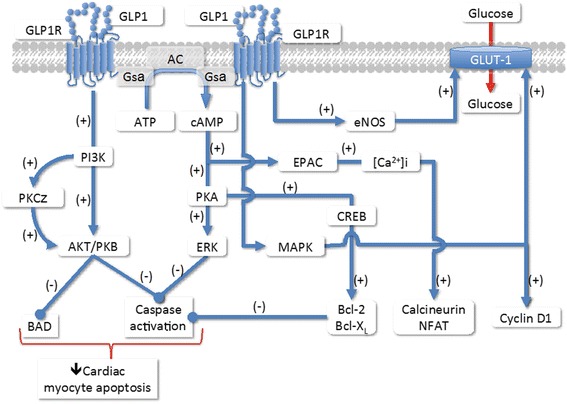
“GLP-1 can also enhance endothelial function by promoting the production of NO, possibly through activating eNOS, thereby affecting vasodilation, anti-inflammatory actions, and anti-atherosclerosis.43,192,440,441”
From Glucagon-like peptide-1 receptor: mechanisms and advances in therapy (2024) · cites this paper as [192]
Experimental — accuracy not yet measured
Self-check
Percentages, sums and reported differences re-computed from the paper’s own numbers.
The self-check needs the paper’s full text.
Citations
Cites
1 retracted
Hattori, Y., Jojima, T., Tomizawa, A., Satoh, H., Hattori, S., Kasai, K., & Hayashi, T. (2010) · Diabetologia · doi:10.1007/s00125-010-1831-8 · Cited by 183
RetractedEuropean Guidelines on cardiovascular disease prevention in clinical practice (version 2012)
Authors/Task Force Members:, Perk, J., De Backer, G., Gohlke, H., Graham, I., Reiner, Ž., Verschuren, M., Albus, C., Benlian, P., Boysen, G., et al. (2012) · European Heart Journal · doi:10.1093/eurheartj/ehs092 · Cited by 8,490
Haffner, S. M., Lehto, S., Rönnemaa, T., Pyörälä, K., & Laakso, M. (1998) · New England Journal of Medicine · doi:10.1056/nejm199807233390404 · Cited by 7,000
Authors/Task Force Members, Graham, I., Atar, D., Borch-Johnsen, K., Boysen, G., Burell, G., Cifkova, R., Dallongeville, J., De Backer, G., Ebrahim, S., et al. (2007) · European Heart Journal · doi:10.1093/eurheartj/ehm316 · Cited by 3,753
Biology of Incretins: GLP-1 and GIP
Baggio, L. L., & Drucker, D. J. (2007) · Gastroenterology · doi:10.1053/j.gastro.2007.03.054 · Cited by 3,639 · cited 1×
“Fifty-eight patients with ST-segment-elevation MI and thrombolysis were randomized to receive either saline (n = 40) or exenatide (n = 18, 10 μg SC and 10 μg as an IV bolus 5 min before the onset of reperfusion plus 10 μg SC twice daily on the following 2 days) to evaluate whether this GLP-1R agonist could reduce the…”
MethodInfluentialSaxagliptin and cardiovascular outcomes in patients with type 2 diabetes mellitus
Scirica, B. M., Bhatt, D. L., Braunwald, E., Steg, P. G., Davidson, J., Hirshberg, B., Ohman, P., Frederich, R., Wiviott, S. D., Hoffman, E. B., et al. (2013) · New England Journal of Medicine · doi:10.1056/nejmoa1307684 · Cited by 3,470
Grundy, S. M., Benjamin, I. J., Burke, G. L., Chait, A., Eckel, R. H., Howard, B. V., Mitch, W., Smith, S. C., & Sowers, J. R. (1999) · Circulation · doi:10.1161/01.cir.100.10.1134 · Cited by 2,698 · cited 1×
“Indeed, from a cardiological point of view, “diabetes is a cardiovascular disease” [4].”
BackgroundAlogliptin after acute coronary syndrome in patients with type 2 diabetes
White, W. B., Cannon, C. P., Heller, S. R., Nissen, S. E., Bergenstal, R. M., Bakris, G. L., Perez, A. T., Fleck, P. R., Mehta, C. R., Kupfer, S., et al. (2013) · New England Journal of Medicine · doi:10.1056/nejmoa1305889 · Cited by 2,502 · cited 1×
“On the other hand, EXAMINE study showed that T2D patients, who had had a recent acute coronary syndrome, the rates of major adverse cardiovascular events were not increased with the DPP-4 inhibitor alogliptin as compared with placebo [28].”
ResultGlucagon-like peptide 1 promotes satiety and suppresses energy intake in humans.
Flint, A., Raben, A., Astrup, A., & Holst, J. J. (1998) · Journal of Clinical Investigation · doi:10.1172/jci990 · Cited by 1,402 · cited 1×
“This effect seems to be very important for the normalization of postprandial glucose (PPG) elevations, and potentially even more important than the insulinotropic effects of GLP-1 for maintaining PPG homeostasis [19].”
BackgroundReduced incretin effect in Type 2 (non-insulin dependent) diabetes
Nauck, M., Stöckmann, F., Ebert, R., & Creutzfeldt, W. (1986) · Diabetologia · doi:10.1007/bf02427280 · Cited by 1,307 · cited 1×
“[8] demonstrated that the incretin effect is impaired in patients with T2D.”
Background
Cited by
Items 101–144 of 144
Gliozzi, M., Coppoletta, A. R., Cardamone, A., Carresi, C., Mollace, R., Musolino, V., & Mollace, V. (2025) · Pharmacological Research · doi:10.1016/j.phrs.2025.107744 · Cited by 3
Saiti, A., Giannopoulos‐Dimitriou, A., Kazakos, I., Galatou, E., & Vizirianakis, I. S. (2023) · Future Pharmacology · doi:10.3390/futurepharmacol3010021 · Cited by 5
Wijma, R., Emous, M., Totté, E., van, D. B. M., Wolthuis, A. M., Laskewitz, A. J., Kobold, A. C. M., Wolffenbuttel, B. H. R., & van Beek, A. P. (2018) · Endocrine Abstracts · doi:10.1530/endoabs.56.p576 · Cited by 3
Roever, L., Tse, G., Versaci, F., & Biondi‐Zoccai, G. (2019) · European Heart Journal · doi:10.1093/eurheartj/ehz868 · Cited by 3
Alluri, J. V., Sontakke, T. R., Acharya, S., Bardiya, N. A., & Rode, A. C. (2025) · Journal of the Practice of Cardiovascular Sciences · doi:10.4103/jpcs.jpcs_57_25 · Cited by 2
Incretin-Based Therapies: A Novel Pathway in Addiction Treatment
Rosiejka, D., Joanna, M., Marcickiewicz, J., Bogdańska, A., Błażejewska, W., & Szulińska, M. (2026) · Journal of Clinical Medicine · doi:10.3390/jcm15041613 · Cited by 2
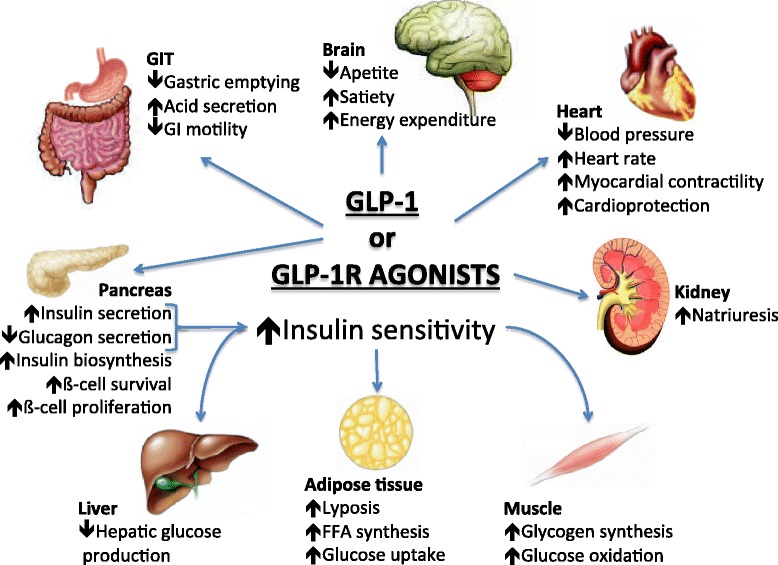
“GLP-1 analogs lower blood pressure through natriuretic effect [34,49,50].”
GLP-1 and GIP in Type 1 Diabetes Therapy: A Time for Reappraisal?
Piras, G., Brasili, S., Demontis, D., Sala, L. D., Cocchiara, F., Maggi, D. C., & Arecco, A. (2026) · Diabetology · doi:10.3390/diabetology7030050 · Cited by 2
Pharmacological considerations for next-generation protein therapeutics in cardiovascular disease
Lin, E., & Momin, N. (2025) · Journal of Pharmacology and Experimental Therapeutics · doi:10.1016/j.jpet.2025.103696 · Cited by 3
“130 — 133”
Cardiometabolic Effects of Glucagon-Like Peptide-1 Agonists
Sarraju, A., Kim, S. H., & Knowles, J. W. (2016) · Current Atherosclerosis Reports · doi:10.1007/s11883-016-0558-5 · Cited by 2
Ying, Y.-L., Chen, Y., Jandeleit-Dahm, K. A. M., & Peter, K. (2017) · Atherosclerosis · doi:10.1016/j.atherosclerosis.2017.08.006 · Cited by 2
“Activation of ceptors stimulates insulin secretion in the pancreatic bcells, slows down gastric emptying and increases satiety, thereby decreasing blood glucose level [8].”
BackgroundGlucagon-like peptide 1 receptor agonists: anti-inflammatory effects in cardiovascular diseases
Bajić, Z., Šobot, T., Stojiljković, M. P., Djuric, D. M., & Škrbić, R. (2026) · Canadian Journal of Physiology and Pharmacology · doi:10.1139/cjpp-2026-0021 · Cited by 1
Ezeani, I. U., Eregie, A., & Ohwovoriole, A. E. (2021) · Annals of Health Research (The Journal of the Medical and Dental Consultants Association of Nigeria OOUTH Sagamu Nigeria) · doi:10.30442/ahr.0703-02-131 · Cited by 2
Discovery of a new GLP-1 receptor agonist using DNA encoded-libraries and similarity search
Lee, J. H., Kim, D., Jeon, H., Park, S. B., Koh, B., Lim, B., Lee, K. A., Choi, K. J., Kim, S. S., Kwon, Y., et al. (2026) · Results in Chemistry · doi:10.1016/j.rechem.2026.103415 · Cited by 1
Incretin Mimetics Vildagliptin and Exenatide Improve Pedicle Skin Flap Survival in Rats.
Даниленко, Л. М., Tarasova, A. P., Pokrovskiy, M. V., Trunov, K. S., Stepenko, Y. V., Artyushkova, E. B., & Гудырев, О. С. (2019) · Journal of World s Poultry Research · doi:10.36380/scil.2019.wvj24 · Cited by 1
“At the same time, according to some studies, metabolites of incretins have their own physiological effects (Deacon et al., 2006; Saraiva and Sposito, 2014).”
ResultQUANTIFICATION OF VILDAGLIPTIN IN TABLETS USING HIGH LIQUID-PERFORMANCE CHROMATOGRAPHY
Chung, D. Đ., Thảo, T. T. T., Trang, T. T., Nhàn, V. T., Vy, T. L. N., Nguyên, C. K., Nguyên, Đ. M., Chi, L. T. Y., Quan, N. H. K., & Nguyen, Y. T. N. (2023) · TNU Journal of Science and Technology · doi:10.34238/tnu-jst.7680 · Cited by 1
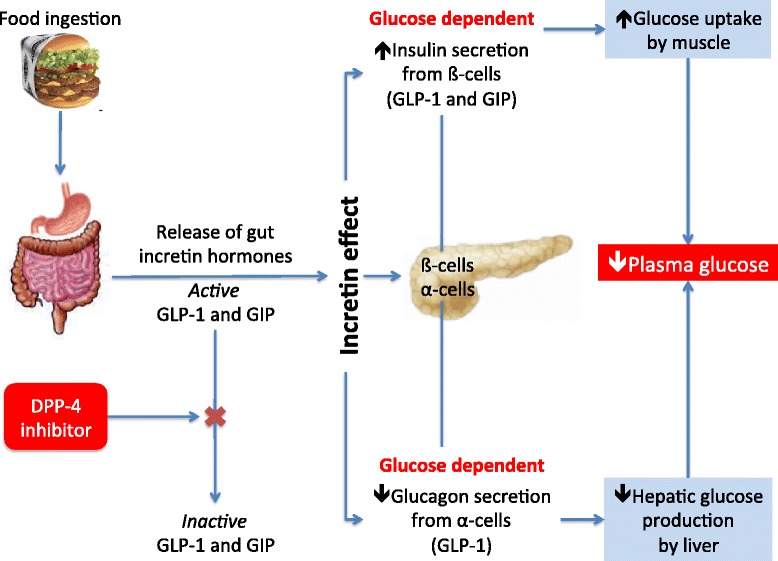
“The result is an increase in glucose uptake into the muscles and a decrease in glucose production by the liver leading to a reduction in blood sugar levels [4].”
BackgroundSong, J., Li, N., Zhuang, Y., Chen, Y., Zhang, C., & Zhu, J. (2024) · Frontiers in Endocrinology · doi:10.3389/fendo.2024.1449558 · Cited by 2
Ferreira, A. L. A., Bastos, F., Cordeiro, M., & Portugal, J. (2019) · Portuguese Journal of Nephrology & Hypertension · doi:10.32932/pjnh.2019.07.021 · Cited by 4
Azarias, W. S., & Sinésio, L. E. M. (2021) · Editora Conhecimento Livre eBooks · doi:10.37423/211004820 · Cited by 1
Combination therapy of GLP-1 analogues and insulin: do the benefits outweigh the costs?
Versmissen, J. (2014) · PubMed
Glucagon-like Receptor 1 Agonists in the Treatment of Type 2 Diabetes
Penlioglou, T., & Παπάνας, Ν. (2018) · Med One · doi:10.20900/mo.20180013 · Cited by 1
“The most important challenge for GLP-1RAs is, as indeed for all antidiabetic agents, the potential cardioprotective actions ([21,22]).”
BackgroundDumping syndrome after bariatric surgery
Emous, M. (2019) · University of Groningen research database (University of Groningen / Centre for Information Technology) · doi:10.33612/diss.106406421
GLP-1R Agonists & Cardiac Energy Metabolism in Type 2 Diabetes
Almutairi, M. G. (2019) · ERA: Education and Research Archive (University of Alberta) · doi:10.7939/r3-fhr3-cr50
PREVENÇAO DO CANCER CERVICO UTERINO; FATORES PARA NAO REALIZAÇAO
Magalhães, A. W. D., & MEDEIROS, A. A. D. A. (2021) · Editora Conhecimento Livre eBooks · doi:10.37423/211004933
A INFLUÊNCIA DA LIRAGLUTIDA NOS RECEPTOR GLP-1 DURANTE O PROCESSO DE EMAGRECIMENTO
de Carvalho, R. A., Neto, V. F., Siqueira, R. D. M., de Carvalho, P. S. V., de Carvalho, C. S. V., Fróes, Y. N., Pavão, F. M. F. A., Filho, J. J. J. P., da Silva, D. F., & Silva, M. R. C. (2021) · Editora Conhecimento Livre eBooks · doi:10.37423/211004889
Armelin, P. V. D. A. (2021) · Editora Conhecimento Livre eBooks · doi:10.37423/211004898
VIVÊNCIA DE IDOSOS EM INSTITUIÇÃO DE LONGA PERMANÊNCIA EM JOÃO PESSOA - PB: RELATO DE EXPERIÊNCIA
Carvalho, M. D. S., Barbosa, L. C. D. C., Aranda, L. D., & de Holanda, V. M. V. M. (2021) · Editora Conhecimento Livre eBooks · doi:10.37423/211004928
Silva, A. C. D. O., de Carvalho, R. R., & Marques, A. (2021) · Editora Conhecimento Livre eBooks · doi:10.37423/211104956
AVALIAÇÃO DA COBERTURA VACINAL DE CRIANÇAS MENORES DE 5 ANOS NO HAITI - 2016-2018
Bayard, C., Lexius, O., Ribeiro, M. D. N. D. S., dos Santos, E. R., & Melo, G. Z. D. S. (2021) · Editora Conhecimento Livre eBooks · doi:10.37423/211004852
SINDROME DE RAPUNZEL: TRICOBEZOAR GASTRODUODENAL GIGANTE
MEDEIROS, A. A. D. A., & Magalhães, A. W. D. (2021) · Editora Conhecimento Livre eBooks · doi:10.37423/211004918
BENEFÍCIOS DA AURICULOTERAPIA EM PACIENTES COM DORES CRÔNICAS
Cavalcante, F. V., Mendes, M. R. P., & Ferreira, P. D. D. S. (2021) · Editora Conhecimento Livre eBooks · doi:10.37423/211004817
Aguiar, G. E. D., Nani, M. C. B., Bani, G. M. A. C., & Nasser, T. F. (2021) · Editora Conhecimento Livre eBooks · doi:10.37423/211004906
Drug-induced metabolic alterations in adipose tissue - with an emphasis in epicardial adipose tissue
Pinho, A. C. O., Burgeiro, A., Pereira, M. J., & Carvalho, E. (2022) · Anais da Academia Brasileira de Ciências · doi:10.1590/0001-3765202220201819
Investigation the impact of liraglutide on the thyroid function tests
Urhan, E. (2023) · Turkish Journal of Clinics and Laboratory · doi:10.18663/tjcl.1284003 · Cited by 1
Management of hyperglycemia in diabetics with cardiovascular disease
Prasun, D., Khare, J., Ashish, K. J., & Mehrotra, R. (2016) · Journal of Medical and Scientific Research · doi:10.17727/jmsr.2016/4-042
Capítulo 6: Efecto de los polifenoles de los alimentos en la salud cardiovascular
(USC), U. D. S. D. C., Lence, J. P., Cardelle‐Cobas, A., (USC), U. D. S. D. C., Vázquez, B. I., (USC), U. D. S. D. C., Cepeda, A., & (USC), U. D. S. D. C. (2024) · doi:10.59899/impo-anti-c6
The impact of antidiabetic medications on COVID-19 outcomes in diabetic patients: an overview
Zarei, M., Vaighan, N. S., Shiravand, S., Samani, S. M. V., Sheikholeslami, M. A., & Roudbari, Z. (2024) · Physiology and Pharmacology · doi:10.61186/phypha.28.4.363
Do, T. C., Bui, P. T., Tran, T., Trinh, T. T., Dinh, P. N., Nguyen, L. T. C., Doan, C. P., & Ha, Q. A. (2025) · World Congress on Medical Physics and Biomedical Engineering, September 7 - 12, 2009, Munich, Germany · doi:10.1007/978-3-031-90197-3_57
Chen, Z., Yang, Q., Liu, J. S., Zhao, H., Ying, H., Liu, H., Huang, L., Lin, H. Y., Wang, S., Li, M., et al. (2026) · BMC Medicine · doi:10.1186/s12916-026-04888-8
“Most of the recent clinical trials suggested broad cardiovascular benefits of GLP-1R agonists [73].”
Hassan, F. E., Al‐Shahed, F. A. N., Selmy, A., Mahmoud, L. M., & Aldreny, B. A. (2026) · Frontiers in Physiology · doi:10.3389/fphys.2026.1885144
Yalçın, N. (2026) · Cukurova Anestezi ve Cerrahi Bilimler Dergisi · doi:10.36516/jocass.1933450
Pagel, P. S., Hang, D., Freed, J. K., & Crystal, G. J. (2026) · Journal of Cardiothoracic and Vascular Anesthesia · doi:10.1053/j.jvca.2026.07.032
Chen, K., Ma, J., & Peng, Y. (2026) · Ageing Research Reviews · doi:10.1016/j.arr.2026.103285
Jin, C. A., Many, G. M., Spurrier, C. S. R., Borsellino, P., Wheeler, M. T., Adkins, J., Snyder, M. P., Newgard, C. B., Radom‐Aizik, S., Cooper, D. M., et al. (2026) · Physiological Genomics · doi:10.1152/physiolgenomics.00171.2026
Lee, K.-H., Ma, H.-H., Tsai, S.-Y., Chiang, E., Su, Y.-P., Chien, C., & Wu, T. (2026) · Scientific Reports · doi:10.1038/s41598-026-77550-1
Metadata
- Authors
- Saraiva, F. K., & Sposito, A. C.
- Affiliations
- Pontifícia Universidade Católica de Campinas (BR)
- Universidade Estadual de Campinas (UNICAMP) (BR)
- Corresponding author
- Sposito, Andrei C
- ORCID
- Sposito, Andrei C
- Venue
- Cardiovascular Diabetology
- Published
- 2014-10-22
- Volume
- 13
- Issue
- 1
- Pages
- 142-142
- ISSN
- 1475-2840 (ISSN-L)
- PMC
- PMC4216654
- OpenAlex
- W2115692972
- Cited by
- 143
- References
- 83
- Citations by year
- 2026: 13 · 2025: 14 · 2024: 9 · 2023: 9 · 2022: 8 · 2021: 19 · 2020: 7 · 2019: 16 · 2018: 12 · 2017: 18 · 2016: 9 · 2015: 8 · 2014: 1
- FWCI
- 1.91
- Type
- journal article
- Language
- en
- Open access
- gold
- doi.org
- Locations
- Cardiovascular Diabetology (publishedVersion, cc-by)
- Europe PMC (PubMed Central) (publishedVersion, cc-by)
- PubMed Central (publishedVersion, cc-by)
- PubMed (publishedVersion)
- Funders
- Conselho Nacional de Desenvolvimento Científico e Tecnológico (300313/2007-1)
- Novo Nordisk
- Topics
- Health Sciences › Medicine › Endocrinology, Diabetes and Metabolism › Diabetes Treatment and Management
- Health Sciences › Medicine › Endocrinology, Diabetes and Metabolism › Diabetes, Cardiovascular Risks, and Lipoproteins
- Health Sciences › Medicine › Cardiology and Cardiovascular Medicine › Cardiovascular Function and Risk Factors
- Keywords
- GLP-1 receptor agonists, cardiovascular effects, type 2 diabetes, cardiovascular risk, myocardial infarction, stroke, secondary prevention, statins, LDL cholesterol, anti-inflammatory activity, hepatic steatosis, insulin sensitivity, weight loss, satiety
- MeSH terms
- Glucagon-Like Peptide-1 Receptor, Animals, Cardiovascular Diseases, Cardiovascular System, Diabetes Mellitus, Type 2, Humans, Hypoglycemic Agents, Receptors, Glucagon, Glucagon-Like Peptide 1
About these checks
Registry, retraction, Cites and statistics results are computed, not judged, with one exception: a printed reference that no index lists is read once by a model before it counts as a citation error. Claims are extracted by a model and kept only when their quote appears verbatim in the text; each cited source is then checked, with a model’s help, for whether it says what the claim relies on. Those verdicts can be wrong — read the claim’s quote and the cited source before relying on one.
Statistics and arithmetic are recomputed, not judged.
Confidence bands are shown only for fields calibrated on our annotated test set. None is calibrated yet, so no band is shown.
What counts as a claim ›How we measure confidence ›How we check this ›
Are you an author, or do you see a problem with this page? Request a review
Data sources
Bibliographic data: Semantic Scholar, OpenAlex, Crossref.
Contains information from the Semantic Scholar Academic Graph Datasets, made available under the ODC Attribution License (ODC-BY 1.0).
Semantic Scholar’s data is described in: Kinney, R., et al. (2023). The Semantic Scholar Open Data Platform. arXiv:2301.10140.
