

Pemafibrate (K-877), a novel selective peroxisome proliferator-activated receptor alpha modulator for management of atherogenic dyslipidaemia
Open accessThe DOI matches its Crossref record; 72 of the 72 references it cites were found in a registry or an index.
Abstract
Despite best evidence-based treatment including statins, residual cardiovascular risk poses a major challenge for clinicians in the twenty first century. Atherogenic dyslipidaemia, in particular elevated triglycerides, a marker for increased triglyceride-rich lipoproteins and their remnants, is an important contributor to lipid-related residual risk, especially in insulin resistant conditions such as type 2 diabetes mellitus. Current therapeutic options include peroxisome proliferator-activated receptor alpha (PPARα) agonists, (fibrates), but these have low potency and limited selectivity for PPARα. Modulating the unique receptor-cofactor binding profile to identify the most potent molecules that induce PPARα-mediated beneficial effects, while at the same time avoiding unwanted side effects, offers a new therapeutic approach and provides the rationale for development of pemafibrate (K-877, Parmodia™), a novel selective PPARα modulator (SPPARMα). In clinical trials, pemafibrate either as monotherapy or as add-on to statin therapy was effective in managing atherogenic dyslipidaemia, with marked reduction of triglycerides, remnant cholesterol and apolipoprotein CIII. Pemafibrate also increased serum fibroblast growth factor 21, implicated in metabolic homeostasis. There were no clinically meaningful adverse effects on hepatic or renal function, including no relevant serum creatinine elevation. A major outcomes study, PROMINENT, will provide definitive evaluation of the role of pemafibrate for management of residual cardiovascular risk in type 2 diabetes patients with atherogenic dyslipidaemia despite statin therapy.
Overview
The claims and statistics of this paper haven’t been checked yet.
Free: it reads the open-access text and checks the first 5 claims that cite a source we can check. Create a free account to check every claim.
Integrity signals
Registry
Cites
Statistics
Figures
Verification
Claims the paper makes
The claims and statistics of this paper haven’t been checked yet.
Free: it reads the open-access text and checks the first 5 claims that cite a source we can check. Create a free account to check every claim.
Claims other papers make about this one
Each is checked against this paper’s own text: does it say what the citing paper says it does?
The source backs part of the claim, not all of it — or backs it for a different population, condition or comparison.
In the citing paper
“Phase 2 studies have shown that, as compared with PPARα agonists such as fenofibrate, pemafibrate had greater triglyceride-lowering and HDL cholesterol-raising actions with fewer off-target effects. 9-14”
From Triglyceride Lowering with Pemafibrate to Reduce Cardiovascular Risk (2022) · cites this paper as [9]
Experimental — accuracy not yet measuredThe cited source says what the claim attributes to it.
In the citing paper
“Pemafibrate, a selective peroxisome proliferator-activated receptor α modulator, reduces triglyceride levels and improves other lipid levels.”
From Triglyceride Lowering with Pemafibrate to Reduce Cardiovascular Risk (2022) · cites this paper as [9]
The cited source says what the claim attributes to it.
In the citing paper
“we conducted a double-blind, randomized, placebo-controlled trial to evaluate cardiovascular outcomes in patients who received pemafibrate, 9 a potent and selective peroxisome proliferator-activated receptor α (PPARα) modulator.”
From Triglyceride Lowering with Pemafibrate to Reduce Cardiovascular Risk (2022) · cites this paper as [9]
The check wasn’t confident either way, so it gives no verdict — never disputed.
In the citing paper
“As a consequence of its mechanism of action, lomitapide has been shown to be associated with increased aminotransferase levels, which most likely reflects the increased fat in the liver, as well as poor GI tolerability [301,302].”
From 2019 ESC/EAS guidelines for the management of dyslipidaemias: lipid modification to reduce cardiovascular risk (2019) · cites this paper as [301]
Experimental — accuracy not yet measuredIn the citing paper
“In an open-label, single-arm titration study evaluating lomitapide as adjunct therapy to statins, with or without apheresis and a lowfat diet [301], LDL-C was reduced by 50% from baseline at 26 weeks and by 44% at 56 weeks.”
From 2019 ESC/EAS guidelines for the management of dyslipidaemias: lipid modification to reduce cardiovascular risk (2019) · cites this paper as [301]
Self-check
Percentages, sums and reported differences re-computed from the paper’s own numbers.
The self-check needs the paper’s full text.
Citations
Cites
Stone, N. J., Robinson, J. G., Lichtenstein, A. H., Bairey Merz, C. N., Blum, C. B., Eckel, R. H., Goldberg, A. C., Gordon, D., Levy, D., Lloyd-Jones, D. M., et al. (2014) · Circulation · doi:10.1161/01.cir.0000437738.63853.7a · Cited by 7,081
Evolocumab and Clinical Outcomes in Patients with Cardiovascular Disease
Sabatine, M. S., Giugliano, R. P., Keech, A. C., Honarpour, N., Wiviott, S. D., Murphy, S. A., Kuder, J. F., Wang, H., Liu, T., Wasserman, S. M., et al. (2017) · New England Journal of Medicine · doi:10.1056/nejmoa1615664 · Cited by 6,138
Ezetimibe Added to Statin Therapy after Acute Coronary Syndromes
Cannon, C. P., Blazing, M. A., Giugliano, R. P., McCagg, A., White, J. A., Theroux, P., Darius, H., Lewis, B. S., Ophuis, T. O., Jukema, J. W., et al. (2015) · New England Journal of Medicine · doi:10.1056/nejmoa1410489 · Cited by 4,487
Stone, N. J., Robinson, J. G., Lichtenstein, A. H., Bairey Merz, C. N., Blum, C. B., Eckel, R. H., Goldberg, A. C., Gordon, D., Levy, D., Lloyd-Jones, D. M., et al. (2014) · Journal of the American College of Cardiology · doi:10.1016/j.jacc.2013.11.002 · Cited by 3,845 · cited 15×
“Despite improvement in CVD mortality in developed regions, low to middle-income countries have a growing burden of CVD mortality and disability, driven by increasing rates of obesity, diabetes and dyslipidaemia [1–3].”
BackgroundInfluential2016 ESC/EAS Guidelines for the Management of Dyslipidaemias
Catapano, A. L., Graham, I., De Backer, G., Wiklund, O., Chapman, M. J., Drexel, H., Hoes, A. W., Jennings, C. S., Landmesser, U., Pedersen, T. R., et al. (2016) · European Heart Journal · doi:10.1093/eurheartj/ehw272 · Cited by 3,162
Effects of torcetrapib in patients at high risk for coronary events
Barter, P. J., Caulfield, M., Eriksson, M., Grundy, S. M., Kastelein, J. J. P., Komajda, M., Lopez-Sendon, J., Mosca, L., Tardif, J.-C., Waters, D. D., et al. (2007) · New England Journal of Medicine · doi:10.1056/nejmoa0706628 · Cited by 3,139
Effects of dalcetrapib in patients with a recent acute coronary syndrome
Schwartz, G. G., Olsson, A. G., Abt, M., Ballantyne, C. M., Barter, P. J., Brumm, J., Chaitman, B. R., Holme, I. M., Kallend, D., Leiter, L. A., et al. (2012) · New England Journal of Medicine · doi:10.1056/nejmoa1206797 · Cited by 2,022
(2012) · RePEc: Research Papers in Economics · Cited by 1,951
Mechanism of Action of Fibrates on Lipid and Lipoprotein Metabolism
Staels, B., Dallongeville, J., Auwerx, J., Schoonjans, K., Leitersdorf, E., & Fruchart, J.-C. (1998) · Circulation · doi:10.1161/01.cir.98.19.2088 · Cited by 1,786 · cited 2×
“macrophages and the large intestine, and PPARβ in virtually all tissues and cell types [23, 30, 31].”
BackgroundSelf-citation2016 ESC/EAS Guidelines for the Management of Dyslipidaemias
Catapano, A. L., Graham, I., De Backer, G., Wiklund, O., Chapman, M. J., Drexel, H., Hoes, A. W., Jennings, C. S., Landmesser, U., Pedersen, T. R., et al. (2016) · Atherosclerosis · doi:10.1016/j.atherosclerosis.2016.08.018 · Cited by 1,582
Effects of medical therapies on retinopathy progression in type 2 diabetes
The ACCORD Study Group and ACCORD Eye Study Group (2010) · New England Journal of Medicine · doi:10.1056/nejmoa1001288 · Cited by 1,311
Activation of human aortic smooth-muscle cells is inhibited by PPARα but not by PPARγ activators
Staels, B., Koenig, W., Habib, A., Merval, R., Lebret, M., Torra, I. P., Delerive, P., Fadel, A., Chinetti, G., Fruchart, J.-C., et al. (1998) · Nature · doi:10.1038/31701 · Cited by 1,134
Self-citationRemnant Cholesterol as a Causal Risk Factor for Ischemic Heart Disease
Varbo, A., Benn, M., Tybjærg-Hansen, A., Jørgensen, A. B., Frikke-Schmidt, R., & Nordestgaard, B. G. (2013) · Journal of the American College of Cardiology · doi:10.1016/j.jacc.2012.08.1026 · Cited by 1,115 · cited 13×
“Taken together, these studies show that pemafibrate (0.2–0.4 mg/day) is effective in the management of hypertriglyceridaemia, with or without low plasma HDL-C concentration, either as monotherapy or against a background of stable statin therapy.”
BackgroundInfluentialKeech, A., Mitchell, P., Summanen, P., O'Day, J., Davis, T., Moffitt, M., Taskinen, M.-R., Simes, R., Tse, D., Williamson, E., et al. (2007) · The Lancet · doi:10.1016/s0140-6736(07)61607-9 · Cited by 1,109
Delerive, P., De Bosscher, K., Besnard, S., Vanden Berghe, W., Peters, J. M., Gonzalez, F. J., Fruchart, J.-C., Tedgui, A., Haegeman, G., & Staels, B. (1999) · Journal of Biological Chemistry · doi:10.1074/jbc.274.45.32048 · Cited by 1,089
Self-citationEffects of anacetrapib in patients with atherosclerotic vascular disease
The HPS3/TIMI55–REVEAL Collaborative Group (2017) · New England Journal of Medicine · doi:10.1056/nejmoa1706444 · Cited by 1,047
Ratziu, V., Harrison, S. A., Francque, S., Bedossa, P., Lehert, P., Serfaty, L., Romero-Gomez, M., Boursier, J., Abdelmalek, M., Caldwell, S., et al. (2016) · Gastroenterology · doi:10.1053/j.gastro.2016.01.038 · Cited by 1,035
Evacetrapib and cardiovascular outcomes in high-risk vascular disease
Lincoff, A. M., Nicholls, S. J., Riesmeyer, J. S., Barter, P. J., Brewer, H. B., Fox, K. A. A., Gibson, C. M., Granger, C., Menon, V., Montalescot, G., et al. (2017) · New England Journal of Medicine · doi:10.1056/nejmoa1609581 · Cited by 801
(2014) · The Lancet Diabetes & Endocrinology · doi:10.1016/s2213-8587(14)70102-0 · Cited by 800
PPARs in Obesity-Induced T2DM, Dyslipidaemia and NAFLD
Gross, B., Pawlak, M., Lefebvre, P., & Staels, B. (2017) · Nature Reviews Endocrinology · doi:10.1038/nrendo.2016.135 · Cited by 778 · cited 5×
“Thus, activation of PPARɑ results in attenuation of abnormal lipid and/or glucose metabolism, and is also protective against atherothrombosis by down-regulating inflammatory genes of monocytes and macrophages [23, 32, 33].”
BackgroundInfluentialVarbo, A., Benn, M., Tybjærg-Hansen, A., & Nordestgaard, B. G. (2013) · Circulation · doi:10.1161/circulationaha.113.003008 · Cited by 692 · cited 13×
“Taken together, these studies show that pemafibrate (0.2–0.4 mg/day) is effective in the management of hypertriglyceridaemia, with or without low plasma HDL-C concentration, either as monotherapy or against a background of stable statin therapy.”
BackgroundInfluentialIntegrated physiology and systems biology of PPARα
Kersten, S. (2014) · Molecular Metabolism · doi:10.1016/j.molmet.2014.02.002 · Cited by 670
Hegele, R. A., Ginsberg, H. N., Chapman, M. J., Nordestgaard, B. G., Kuivenhoven, J. A., Averna, M., Borén, J., Bruckert, E., Catapano, A. L., Descamps, O. S., et al. (2014) · The Lancet Diabetes & Endocrinology · doi:10.1016/s2213-8587(13)70191-8 · Cited by 635 · cited 15×
“Despite improvement in CVD mortality in developed regions, low to middle-income countries have a growing burden of CVD mortality and disability, driven by increasing rates of obesity, diabetes and dyslipidaemia [1–3].”
BackgroundInfluentialTalukdar, S., Zhou, Y., Li, D., Rossulek, M., Dong, J., Somayaji, V., Weng, Y., Clark, R., Lanba, A., Owen, B. M., et al. (2016) · Cell Metabolism · doi:10.1016/j.cmet.2016.02.001 · Cited by 496
Fox, C. S., Golden, S. H., Anderson, C., Bray, G. A., Burke, L. E., de Boer, I. H., Deedwania, P., Eckel, R. H., Ershow, A. G., Fradkin, J., et al. (2015) · Diabetes Care · doi:10.2337/dci15-0012 · Cited by 492
Fruchart, J.-C., Duriez, P., & Staels, B. (1999) · Current Opinion in Lipidology · doi:10.1097/00041433-199906000-00007 · Cited by 425
Self-citationon behalf of the FIELD Study investigators, Davis, T. M. E., Ting, R., Best, J. D., Donoghoe, M. W., Drury, P. L., Sullivan, D. R., Jenkins, A. J., O’Connell, R. L., Whiting, M. J., et al. (2011) · Diabetologia · doi:10.1007/s00125-010-1951-1 · Cited by 403
Combination lipid therapy in type 2 diabetes
(2010) · New England Journal of Medicine · doi:10.1056/nejmc1006407 · Cited by 245
Fruchart, J.-C. (2009) · Atherosclerosis · doi:10.1016/j.atherosclerosis.2009.03.008 · Cited by 233
Self-citationIshibashi, S., Yamashita, S., Arai, H., Araki, E., Yokote, K., Suganami, H., Fruchart, J.-C., & Kodama, T. (2016) · Atherosclerosis · doi:10.1016/j.atherosclerosis.2016.02.029 · Cited by 208 · cited 6×
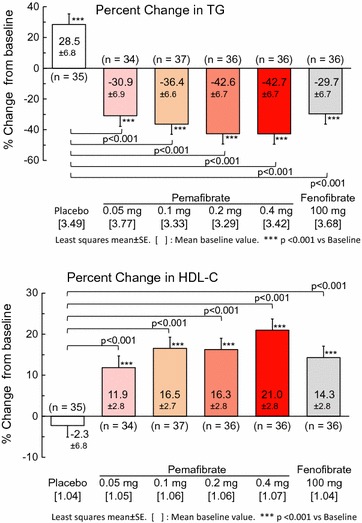
“3 mmol/L) and low HDL-C (< 50 mg/dL in men or < 55 mg/dL in women) [56], treatment with pemafibrate (0.”
BackgroundInfluentialSelf-citationFruchart, J.-C. (2013) · Cardiovascular Diabetology · doi:10.1186/1475-2840-12-82 · Cited by 189 · cited 1×
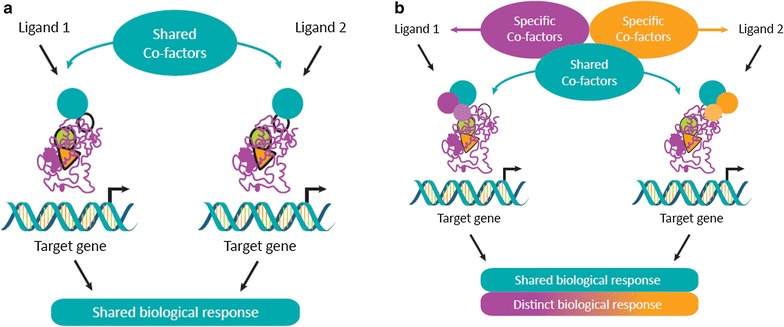
“This concept underlies the rationale for the development of SPPARMs which differentially induce a unique receptorcofactor binding profile conferring improved efficacy and avoidance of unwanted side effects [37].”
BackgroundSelf-citationElam, M. B., Ginsberg, H. N., Lovato, L. C., Corson, M., Largay, J., Leiter, L. A., Lopez, C., O’Connor, P. J., Sweeney, M. E., Weiss, D., et al. (2017) · JAMA Cardiology · doi:10.1001/jamacardio.2016.4828 · Cited by 185 · cited 1×
“Despite this, there is support from subgroup analyses of the major fibrate trials that targeting these treatments to patients with atherogenic dyslipidaemia significantly reduces CVD risk (with or without statin treatment) [26]; the ACCORDION study, involving passive extended follow-up of the Action to Control Cardiov…”
ResultResidual macrovascular risk in 2013: what have we learned?
(R3i), F. T. R. R. R. I., Fruchart, J.-C., Davignon, J., Hermans, M. P., Al-Rubeaan, K., Amarenco, P., Assmann, G., Barter, P., Betteridge, J., Bruckert, E., et al. (2014) · Cardiovascular Diabetology · doi:10.1186/1475-2840-13-26 · Cited by 172
Self-citationVarbo, A., Benn, M., Smith, G. D., Timpson, N. J., Tybjærg-Hansen, A., & Nordestgaard, B. G. (2015) · Circulation Research · doi:10.1161/circresaha.116.304846 · Cited by 171 · cited 1×
“Most recently, remnant cholesterol has been implicated as a contributor to the increased CVD risk associated with obesity [20].”
BackgroundHiggins, L. S., & DePaoli, A. M. (2010) · The American Journal of Clinical Nutrition · doi:10.3945/ajcn.2009.28449e · Cited by 166 · cited 1×
“The first such SPPARMγs, INT131 and MK0533, have been shown in preclinical studies to exhibit at least comparable antidiabetic effects to pioglitazone but with an improved adverse event profile [23, 38, 39].”
BackgroundAraki, E., Yamashita, S., Arai, H., Yokote, K., Satoh, J., Inoguchi, T., Nakamura, J., Maegawa, H., Yoshioka, N., Tanizawa, Y., et al. (2018) · Diabetes Care · doi:10.2337/dc17-1589 · Cited by 164
Pathogenic role of diabetes-induced PPAR-α down-regulation in microvascular dysfunction
Hu, Y., Chen, Y., Ding, L., He, X., Takahashi, Y., Gao, Y., Shen, W., Cheng, R., Chen, Q., Qi, X., et al. (2013) · Proceedings of the National Academy of Sciences · doi:10.1073/pnas.1307211110 · Cited by 152 · cited 1×
“While the pathogenesis of diabetic retinopathy is still incompletely understood, evidence suggests a role for diabetes-induced down-regulation of PPARα [74], as well as the involvement of inflammatory pathways, especially in obese individuals [75].”
BackgroundMychaleckyj, J. C., Craven, T., Nayak, U., Buse, J., Crouse, J. R., Elam, M., Kirchner, K., Lorber, D., Marcovina, S., Sivitz, W., et al. (2012) · Diabetes Care · doi:10.2337/dc11-1811 · Cited by 149 · cited 1×
“001) [57], consistent with previous findings from both the Fenofibrate Intervention and Event Lowering in Diabetes (FIELD) and ACCORD studies [64, 65].”
ResultFibrates for primary prevention of cardiovascular disease events
Jakob, T., Nordmann, A. J., Schandelmaier, S., Ferreira-González, I., & Briel, M. (2016) · Cochrane Database of Systematic Reviews · doi:10.1002/14651858.cd009753.pub2 · Cited by 147
Fibrates for secondary prevention of cardiovascular disease and stroke
Wang, D., Liu, B., Tao, W., Hao, Z., & Liu, M. (2015) · Cochrane Database of Systematic Reviews · doi:10.1002/14651858.cd009580.pub2 · Cited by 142 · cited 1×
“While evidence in both primary and secondary prevention settings is supportive of their use [24, 25], the lack of a definitive mortality benefit has led many clinicians to view these agents as ‘second choice’.”
BackgroundHuman HMGCS2 Regulates Mitochondrial Fatty Acid Oxidation and FGF21 Expression in HepG2 Cell Line
Vilà-Brau, A., De Sousa-Coelho, A. L., Mayordomo, C., Haro, D., & Marrero, P. F. (2011) · Journal of Biological Chemistry · doi:10.1074/jbc.m111.235044 · Cited by 137 · cited 14×
“In addition, pemafibrate induced expression of fibroblast growth factor 21 (FGF21) to a greater extent than fenofibric acid [43].”
BackgroundInfluentialKim, H., Mendez, R., Zheng, Z., Chang, L., Cai, J., Zhang, R., & Zhang, K. (2014) · Endocrinology · doi:10.1210/en.2013-1490 · Cited by 134 · cited 14×
“In addition, pemafibrate induced expression of fibroblast growth factor 21 (FGF21) to a greater extent than fenofibric acid [43].”
BackgroundInfluentialHennuyer, N., Duplan, I., Paquet, C., Vanhoutte, J., Woitrain, E., Touche, V., Colin, S., Vallez, E., Lestavel, S., Lefebvre, P., et al. (2016) · Atherosclerosis · doi:10.1016/j.atherosclerosis.2016.03.003 · Cited by 132
Honda, Y., Kessoku, T., Ogawa, Y., Tomeno, W., Imajo, K., Fujita, K., Yoneda, M., Takizawa, T., Saito, S., Nagashima, Y., et al. (2017) · Scientific Reports · doi:10.1038/srep42477 · Cited by 131 · cited 1×
“Indeed, in animal studies, pemafibrate appeared to ameliorate diet-induced NASH [70], by modulation of lipid turnover and energy metabolism, as well as NAFLD induced by a methionine-choline-deficient diet, by increased expression of fatty acid β-oxidation genes [71].”
BackgroundArai, H., Yamashita, S., Yokote, K., Araki, E., Suganami, H., & Ishibashi, S. (2017) · Atherosclerosis · doi:10.1016/j.atherosclerosis.2017.03.032 · Cited by 124 · cited 2×
“[60] Add‐on to pitavastatin Japanese patients with TG ≥ 2.”
BackgroundMethodDuez, H., Lefebvre, B., Poulain, P., Torra, I. P., Percevault, F., Luc, G., Peters, J. M., Gonzalez, F. J., Gineste, R., Helleboid, S., et al. (2005) · Arteriosclerosis, Thrombosis, and Vascular Biology · doi:10.1161/01.atv.0000154140.73570.00 · Cited by 120 · cited 1×
“Indeed, there was early evidence for this as regulation of human apoA-I by gemfibrozil and fenofibrate was mediated by selective modulation of PPARα [40].”
BackgroundSelf-citationAdair, L. S., Gordon‐Larsen, P., Du, S. F., Zhang, B., & Popkin, B. M. (2014) · Obesity Reviews · doi:10.1111/obr.12123 · Cited by 119
FGF21 Revolutions: Recent Advances Illuminating FGF21 Biology and Medicinal Properties
Kharitonenkov, A., & DiMarchi, R. D. (2015) · Trends in Endocrinology and Metabolism · doi:10.1016/j.tem.2015.09.007 · Cited by 118 · cited 8×
“Gross B, Pawlak M, Lefebvre P, Staels B. PPARs in obesity‑induced T2DM, dyslipidaemia and NAFLD.”
BackgroundInfluentialThe role of the brain renin–angiotensin system in hypertension: Implications for new treatment
Marc, Y., & Llorens‐Cortés, C. (2011) · Progress in Neurobiology · doi:10.1016/j.pneurobio.2011.06.006 · Cited by 107 · cited 1×
“Pemafibrate (but not fenofibric acid) upregulated the genes encoding mannose-binding lectin 2 (MBL2), involved in regulation of the innate immune system, inflammation and, possibly, vascular complications in diabetes [46, 47], as well as glutamyl aminopeptidase (ENPEP), involved in regulation of blood pressure [48], i…”
BackgroundThe FIELD Study Investigators (2005) · Cardiovascular Diabetology · doi:10.1186/1475-2840-4-13 · Cited by 103
Raza-Iqbal, S., Tanaka, T., Anai, M., Inagaki, T., Matsumura, Y., Ikeda, K., Taguchi, A., Gonzalez, F. J., Sakai, J., & Kodama, T. (2015) · Journal of Atherosclerosis and Thrombosis · doi:10.5551/jat.28720 · Cited by 100 · cited 3×
“Pemafibrate (but not fenofibric acid) upregulated the genes encoding mannose-binding lectin 2 (MBL2), involved in regulation of the innate immune system, inflammation and, possibly, vascular complications in diabetes [46, 47], as well as glutamyl aminopeptidase (ENPEP), involved in regulation of blood pressure [48], i…”
BackgroundYamazaki, Y., Abe, K., Toma, T., Nishikawa, M., Ozawa, H., Okuda, A., Araki, T., Oda, S., Inoue, K., Shibuya, K., et al. (2007) · Bioorganic & Medicinal Chemistry Letters · doi:10.1016/j.bmcl.2007.05.066 · Cited by 84 · cited 1×
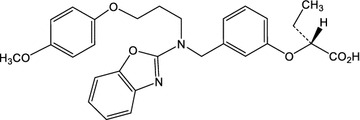
“Structurally, pemafibrate (K-877) has an acidic region as in other PPARα agonists, but with the addition of unique benzoxazole and phenoxyalkyl side-chains, resulting in greatly enhanced PPARα activity and selectivity [41] (Fig.”
BackgroundSelf-citationThe ACCORD (Action to Control Cardiovascular Risk in Diabetes) Lipid Trial
Ginsberg, H. N. (2011) · Diabetes Care · doi:10.2337/dc11-s203 · Cited by 82
Valensi, P. E., Avignon, A., Sultan, A., Chanu, B., Nguyen, M. T., & Cosson, E. (2016) · Cardiovascular Diabetology · doi:10.1186/s12933-016-0415-4 · Cited by 75
Reiner, Ž., Bacquer, D. D., Kotseva, K., Prugger, C., Backer, G. D., & Wood, D. (2013) · Atherosclerosis · doi:10.1016/j.atherosclerosis.2013.09.020 · Cited by 74
Sasongko, M. B., Wong, T. Y., Jenkins, A. J., Nguyen, T. T. L., Shaw, J. E., & Wang, J. J. (2014) · Diabetic Medicine · doi:10.1111/dme.12640 · Cited by 70 · cited 1×
“While the pathogenesis of diabetic retinopathy is still incompletely understood, evidence suggests a role for diabetes-induced down-regulation of PPARα [74], as well as the involvement of inflammatory pathways, especially in obese individuals [75].”
BackgroundDiscovery and development of selective PPARγ modulators as safe and effective antidiabetic agents
Doshi, L. S., Brahma, M. K., Bahirat, U. A., Dixit, A. V., & Nemmani, K. V. (2010) · Expert Opinion on Investigational Drugs · doi:10.1517/13543781003640169 · Cited by 59 · cited 1×
“The first such SPPARMγs, INT131 and MK0533, have been shown in preclinical studies to exhibit at least comparable antidiabetic effects to pioglitazone but with an improved adverse event profile [23, 38, 39].”
BackgroundInagaki, T. (2015) · Frontiers in Endocrinology · doi:10.3389/fendo.2015.00147 · Cited by 55 · cited 9×
“Gross B, Pawlak M, Lefebvre P, Staels B. PPARs in obesity‑induced T2DM, dyslipidaemia and NAFLD.”
BackgroundResultInfluentialPPAR-α agonists are still on the rise: an update on clinical and experimental findings
Ferri, N., Corsini, A., Sirtori, C., & Ruscica, M. (2017) · Expert Opinion on Investigational Drugs · doi:10.1080/13543784.2017.1312339 · Cited by 55 · cited 1×
“Selective PPARα modulators– SPPARMα agents—could well provide one approach to resolving this challenge, and offer a more accessible therapeutic approach to managing this dyslipidaemia [29].”
BackgroundTakei, K., Han, S., Murayama, Y., Satoh, A., Oikawa, F., Ohno, H., Osaki, Y., Matsuzaka, T., Sekiya, M., Iwasaki, H., et al. (2017) · Journal of Diabetes Investigation · doi:10.1111/jdi.12621 · Cited by 44
Maki, T., Maeda, Y., Sonoda, N., Makimura, H., Kimura, S., Maeno, S., Takayanagi, R., & Inoguchi, T. (2017) · Metabolism · doi:10.1016/j.metabol.2017.02.013 · Cited by 44
Matsuba, I., Matsuba, R., Ishibashi, S., Yamashita, S., Arai, H., Yokote, K., Suganami, H., & Araki, E. (2018) · Journal of Diabetes Investigation · doi:10.1111/jdi.12845 · Cited by 43
for the BIP Study Group, Arbel, Y., Klempfner, R., Erez, A., Goldenberg, I., Benzekry, S., Shlomo, N., Fisman, E. Z., & Tenenbaum, A. (2016) · Cardiovascular Diabetology · doi:10.1186/s12933-016-0332-6 · Cited by 40 · cited 1×
“Additionally, the Bezafibrate Infarction Prevention (BIP) study showed long-term benefit in reducing mortality, more so in individuals with baseline hypertriglyceridaemia [28].”
BackgroundMannose-Binding Lectin Binds to Amyloid Protein and Modulates Inflammation
Larvie, M., Shoup, T., Chang, W.-C., Chigweshe, L., Hartshorn, K., White, M. R., Stahl, G. L., Elmaleh, D. R., & Takahashi, K. (2012) · Journal of Biomedicine and Biotechnology · doi:10.1155/2012/929803 · Cited by 26 · cited 1×
“Pemafibrate (but not fenofibric acid) upregulated the genes encoding mannose-binding lectin 2 (MBL2), involved in regulation of the innate immune system, inflammation and, possibly, vascular complications in diabetes [46, 47], as well as glutamyl aminopeptidase (ENPEP), involved in regulation of blood pressure [48], i…”
BackgroundPerreault, L., Bergman, B. C., Hunerdosse, D. M., Howard, D. J., & Eckel, R. H. (2011) · Metabolism · doi:10.1016/j.metabol.2010.12.003 · Cited by 18 · cited 1×
“The focus of interest in this review, PPARɑ, plays a key role in metabolic homeostasis, regulating lipid metabolism, specifically HDL synthesis and metabolism, and VLDL turnover, by controlling the expression of key targets including apo A-I, A-II, A-V and C-III, lipoprotein lipase (LPL), scavenger receptor B1 (SR-B1)…”
BackgroundMannose-Binding Lectin Levels and Carotid Intima-Media Thickness in Type 2 Diabetic Patients
Káplár, M., Sweni, S., Kulcsár, J., Cogoi, B., Esze, R., Somodi, S., Papp, M., Oláh, L., Magyar, M. T., Szabó, K., et al. (2015) · Journal of Diabetes Research · doi:10.1155/2016/8132925 · Cited by 17 · cited 1×
“Pemafibrate (but not fenofibric acid) upregulated the genes encoding mannose-binding lectin 2 (MBL2), involved in regulation of the innate immune system, inflammation and, possibly, vascular complications in diabetes [46, 47], as well as glutamyl aminopeptidase (ENPEP), involved in regulation of blood pressure [48], i…”
BackgroundTakizawa, T., Inokuchi, Y., Goto, S., Yoshinaka, Y., Abe, K., Inoue, K., & Tanabe, S. (2013) · Circulation · Cited by 9
2014 AHA Late-Breaking Basic Science Abstracts
Durrant, D., Mauro, A. G., Raleigh, J. V., Das, A., He, J., Nguyen, K. A., Toldo, S. A., Abbate, A., Salloum, F. N., & Richmond (2014) · Circulation Research · doi:10.1161/res.0000000000000038 · Cited by 6
Arai, H., Ishibashi, S., Yamashita, S., Araki, E., Yokote, K., Suganami, H., & Kodama, T. (2015) · Circulation · doi:10.1161/circ.132.suppl_3.13374 · Cited by 6
Iwata, H., Murakami, K., Ricchiuto, P., Singh, S. A., Mojcher, A., Libby, P., Aikawa, E. R., & Aikawa, M. (2013) · Circulation · Cited by 5
Masuda, D., Kobayashi, T. K., Okada, T., Nakaoka, H., Kawase, R., Nakatani, K., Koseki, M., Ohama, T., Nishida, M., Sakata, Y., et al. (2014) · Atherosclerosis · doi:10.1016/j.atherosclerosis.2014.05.490 · Cited by 2
Research works printed but not linked: 4
- Arai H Ishibashi S Yamashita S Araki E Yokote K Kodama T The novel highly potent and specific peroxisome proliferator-activated receptor alpha agonist K-877 improved liver enzymes and lipid profile without adversely affecting renal functions; integrated analysis of phase 2 and phase 2/3 double blind clinical trials Circulation 2013 128 A13118
- Kastelein JP Senko Y Hounslow N Hovingh GK Ginsberg HN K-877, a selective PPAR alpha modulator (SPPARM alpha), ameliorates dyslipidaemia in patients with well-controlled LDL cholesterol levels on statin therapy, without increases in serum creatinine Eur Heart J 2015 36 Abstract Supplement 1048
- Kastelein JJP Senko Y Hounslow N Nojima T Suganami H Hovingh GK K-877, a selective PPAR alpha modulator (SPPARM alpha), improves dyslipidaemia in statin-treated patients with type 2 diabetes mellitus Eur Heart J 2015 36 Abstract Supplement 1048
- Ishibashi S Yamashita S Arai H Araki E Yokote K Kodama T Efficacy and safety of K-877, a potent and selective PPAR-a agonist, in Japanese patients with dyslipidemia Circulation 2013 128 A10718
Cited by
Mach, F., Baigent, C., Catapano, A. L., Koskinas, K. C., Casula, M., Badimon, L., Chapman, M. J., De Backer, G. G., Delgado, V., Ference, B. A., et al. (2020) · European Heart Journal · doi:10.1093/eurheartj/ehz455 · Cited by 8,961
Mach, F., Baigent, C., Catapano, A. L., Koskinas, K. C., Casula, M., Badimon, L., Chapman, M. J., De Backer, G. G., Delgado, V., Ference, B. A., et al. (2019) · Atherosclerosis · doi:10.1016/j.atherosclerosis.2019.08.014 · Cited by 4,854
“The ongoing PROMINENT trial is exploring the efficacy of pemafibrate, a new selective PPAR-a modulator, in reducing CVD outcomes in 10 000 diabetic patients with atherogenic dyslipidaemia on a statin.(317,423) There are limited data on the impacts on CVD of adding omega-3 fatty acids to statin therapy in patients with…”
BackgroundMethodTriglyceride Lowering with Pemafibrate to Reduce Cardiovascular Risk
Das Pradhan, A., Glynn, R. J., Fruchart, J.-C., MacFadyen, J. G., Zaharris, E. S., Everett, B. M., Campbell, S. E., Oshima, R., Amarenco, P., Blom, D. J., et al. (2022) · New England Journal of Medicine · doi:10.1056/nejmoa2210645 · Cited by 749
Self-citationDuan, Y., Gong, K., Xu, S., Zhang, F., Meng, X., & Han, J. (2022) · Signal Transduction and Targeted Therapy · doi:10.1038/s41392-022-01125-5 · Cited by 538
Duran, E. K., Aday, A. W., Cook, N. R., Buring, J. E., Ridker, P. M., & Pradhan, A. D. (2020) · Journal of the American College of Cardiology · doi:10.1016/j.jacc.2020.02.059 · Cited by 334
“Recent evidence related to the efficacy of pemafibrate, a novel selective peroxisome proliferator-activated receptor alpha modulator (63), may also be informative.”
Background
Metadata
- Authors
- Fruchart, J.-C.
- Corresponding author
- Fruchart, Jean-Charles
- Venue
- Cardiovascular Diabetology
- Published
- 2017-10-04
- Volume
- 16
- Issue
- 1
- Pages
- 124-124
- ISSN
- 1475-2840 (ISSN-L)
- PMC
- PMC5628452
- OpenAlex
- W2762341782
- Cited by
- 141
- References
- 72
- Citations by year
- 2026: 8 · 2025: 10 · 2024: 11 · 2023: 19 · 2022: 16 · 2021: 20 · 2020: 20 · 2019: 24 · 2018: 13
- FWCI
- 1.48
- Type
- journal article
- Language
- en
- Open access
- gold
- doi.org
- Licence
- cc-by
- Locations
- Cardiovascular Diabetology (publishedVersion, cc-by)
- Europe PMC (PubMed Central) (publishedVersion, cc-by)
- PubMed Central (publishedVersion, cc-by)
- PubMed (publishedVersion)
- DOAJ (DOAJ: Directory of Open Access Journals) (submittedVersion)
- Topics
- Life Sciences › Biochemistry, Genetics and Molecular Biology › Molecular Biology › Peroxisome Proliferator-Activated Receptors
- Health Sciences › Medicine › Cardiology and Cardiovascular Medicine › Lipoproteins and Cardiovascular Health
- Health Sciences › Medicine › Cardiology and Cardiovascular Medicine › Lipid metabolism and disorders
- Keywords
- pemafibrate, atherogenic dyslipidemia, hypertriglyceridemia, triglyceride-rich lipoproteins, remnant cholesterol, apolipoprotein C-III, type 2 diabetes, residual cardiovascular risk, statin therapy, FGF21, PPARα agonist, fibrates
- MeSH terms
- Animals, Benzoxazoles, Butyrates, Cholesterol, Humans, Lipids, Disease Management, PPAR alpha, Dyslipidemias, Atherosclerosis
About these checks
Registry, retraction, Cites and statistics results are computed, not judged, with one exception: a printed reference that no index lists is read once by a model before it counts as a citation error. Claims are extracted by a model and kept only when their quote appears verbatim in the text; each cited source is then checked, with a model’s help, for whether it says what the claim relies on. Those verdicts can be wrong — read the claim’s quote and the cited source before relying on one.
Statistics and arithmetic are recomputed, not judged.
Confidence bands are shown only for fields calibrated on our annotated test set. None is calibrated yet, so no band is shown.
What counts as a claim ›How we measure confidence ›How we check this ›
Are you an author, or do you see a problem with this page? Request a review
Data sources
Bibliographic data: Semantic Scholar, OpenAlex, Crossref.
Contains information from the Semantic Scholar Academic Graph Datasets, made available under the ODC Attribution License (ODC-BY 1.0).
Semantic Scholar’s data is described in: Kinney, R., et al. (2023). The Semantic Scholar Open Data Platform. arXiv:2301.10140.
