

Comparative effectiveness of dulaglutide versus liraglutide in Asian type 2 diabetes patients: a multi-institutional cohort study and meta-analysis
Open accessPublished version of a preprint
The DOI matches its Crossref record; 47 of the 48 references it cites were found in a registry or an index.
Abstract
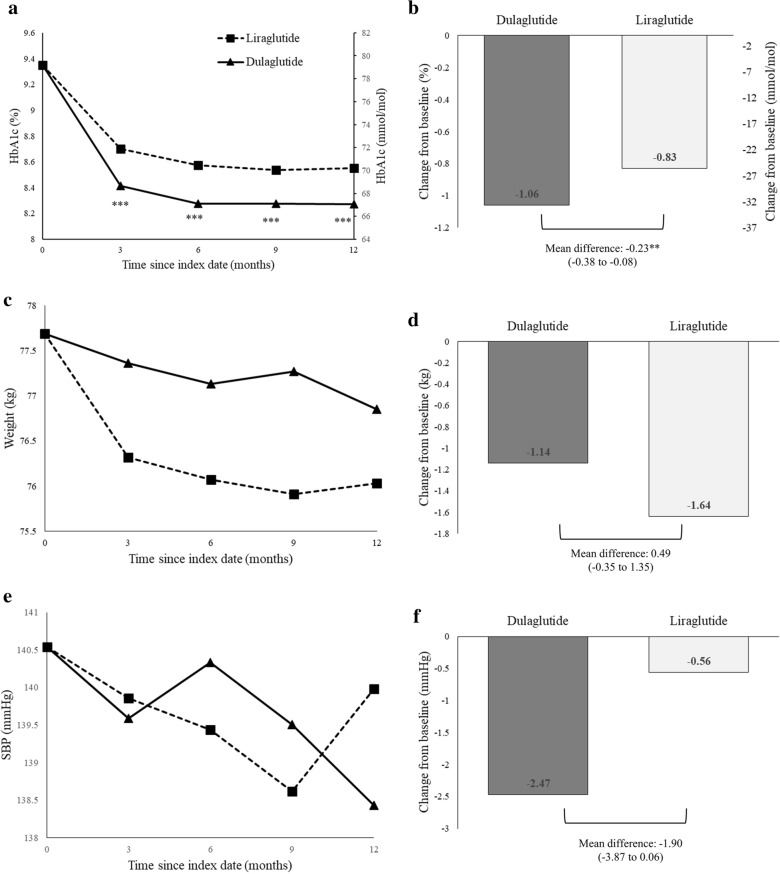
Background: Head-to-head comparison of clinical effectiveness between dulaglutide and liraglutide in Asia is limited. This study was aimed to assess the real-world comparative effectiveness of dulaglutide versus liraglutide. Methods: We conducted a retrospective cohort study by utilizing multi-institutional electronic medical records to identify real-world type 2 diabetes patients treated with dulaglutide or liraglutide during 2016–2018 in Taiwan and followed up until 2019. Effectiveness outcomes were assessed at every 3 months in the 1-year follow-up. Propensity score techniques were applied to enhance between-group comparability. Significant differences in changes of effectiveness outcomes between treatment groups during the follow-up were examined and further analyzed using mixed-model repeated-measures approaches. Results: A total of 1512 subjects receiving dulaglutide and 1513 subjects receiving liraglutide were identified. At 12 months, significant HbA1c changes from baseline were found in both treatments (dulaglutide: − 1.06%, p < 0.001; liraglutide: − 0.83%, p < 0.001), with a significant between-group difference (− 0.23%, 95% confidence interval − 0.38 to − 0.08%, p < 0.01). Both treatments yielded significant declines in weight, alanine aminotransferase level, and estimated glomerular filtration rate from baseline (dulaglutide: − 1.14 kg, − 3.08 U/L and − 2.08 mL/min/1.73 m 2 , p < 0.01; liraglutide: − 1.64 kg, − 3.65 U/L and − 2.33 mL/min/1.73 m 2 , p < 0.001), whereas only dulaglutide yielded a significant systolic blood pressure reduction (− 2.47 mmHg, p < 0.001). Between-group differences in changes of weight, blood pressure, and liver and renal functions at 12 months were not statistically significant. Conclusions: In real-world T2D patients, dulaglutide versus liraglutide was associated with better glycemic control and comparable effects on changes of weight, blood pressure, and liver and renal functions.
Overview
The claims and statistics of this paper haven’t been checked yet.
Free: it reads the open-access text and checks the first 5 claims that cite a source we can check. Create a free account to check every claim.
Integrity signals
Registry
Cites
Statistics
Figures
Verification
Claims the paper makes
The claims and statistics of this paper haven’t been checked yet.
Free: it reads the open-access text and checks the first 5 claims that cite a source we can check. Create a free account to check every claim.
Claims other papers make about this one
Each is checked against this paper’s own text: does it say what the citing paper says it does?
The source backs part of the claim, not all of it — or backs it for a different population, condition or comparison.
In the citing paper
“exhibits an average biological half-life of 90 h.105”
From Glucagon-like peptide-1 receptor: mechanisms and advances in therapy (2024) · cites this paper as [105]
Experimental — accuracy not yet measuredThe cited source says what the claim attributes to it.
In the citing paper
“Liraglutide has been compared with dulaglutide, 76 , 77 , 78 showing no clear difference in weight loss.”
From Real‐world evidence on the utilization, clinical and comparative effectiveness, and adverse effects of newer GLP ‐ 1RA ‐based weight‐loss therapies (2025) · cites this paper as [76]
Self-check
Percentages, sums and reported differences re-computed from the paper’s own numbers.
The self-check needs the paper’s full text.
Citations
Cites
Austin, P. C. (2011) · Multivariate Behavioral Research · doi:10.1080/00273171.2011.568786 · Cited by 12,242
Liraglutide and Cardiovascular Outcomes in Type 2 Diabetes
Marso, S. P., Daniels, G. H., Brown-Frandsen, K., Kristensen, P., Mann, J. F. E., Nauck, M. A., Nissen, S. E., Pocock, S., Poulter, N. R., Ravn, L. S., et al. (2016) · New England Journal of Medicine · doi:10.1056/nejmoa1603827 · Cited by 7,629
Gerstein, H. C., Colhoun, H. M., Dagenais, G. R., Diaz, R., Lakshmanan, M., Pais, P., Probstfield, J., Riesmeyer, J. S., Riddle, M. C., Rydén, L., et al. (2019) · The Lancet · doi:10.1016/s0140-6736(19)31149-3 · Cited by 3,163
Self-citationKristensen, S. L., Rørth, R., Jhund, P. S., Docherty, K. F., Sattar, N., Preiss, D., Køber, L., Petrie, M. C., & McMurray, J. J. V. (2019) · The Lancet Diabetes & Endocrinology · doi:10.1016/s2213-8587(19)30249-9 · Cited by 1,663
9. Pharmacologic Approaches to Glycemic Treatment: Standards of Medical Care in Diabetes—2022
American Diabetes Association Professional Practice Committee (2022) · Diabetes Care · doi:10.2337/dc22-s009 · Cited by 1,555
Diabetes, Hypertension, and Cardiovascular Disease: An Update
Sowers, J. R., Epstein, M., & Frohlich, E. D. (2001) · Hypertension · doi:10.1161/01.hyp.37.4.1053 · Cited by 1,332
Liraglutide and renal outcomes in type 2 diabetes
Mann, J. F. E., Ørsted, D. D., Brown-Frandsen, K., Marso, S. P., Poulter, N. R., Rasmussen, S., Tornøe, K., Zinman, B., & Buse, J. B. (2017) · New England Journal of Medicine · doi:10.1056/nejmoa1616011 · Cited by 1,253
Vilsboll, T., Christensen, M., Junker, A. E., Knop, F. K., & Gluud, L. L. (2012) · BMJ · doi:10.1136/bmj.d7771 · Cited by 970
9. Pharmacologic Approaches to Glycemic Treatment: Standards of Medical Care in Diabetes—2020
American Diabetes Association (2020) · Diabetes Care · doi:10.2337/dc20-s009 · Cited by 914
Desai, R. J., & Franklin, J. M. (2019) · BMJ · doi:10.1136/bmj.l5657 · Cited by 657 · cited 4×
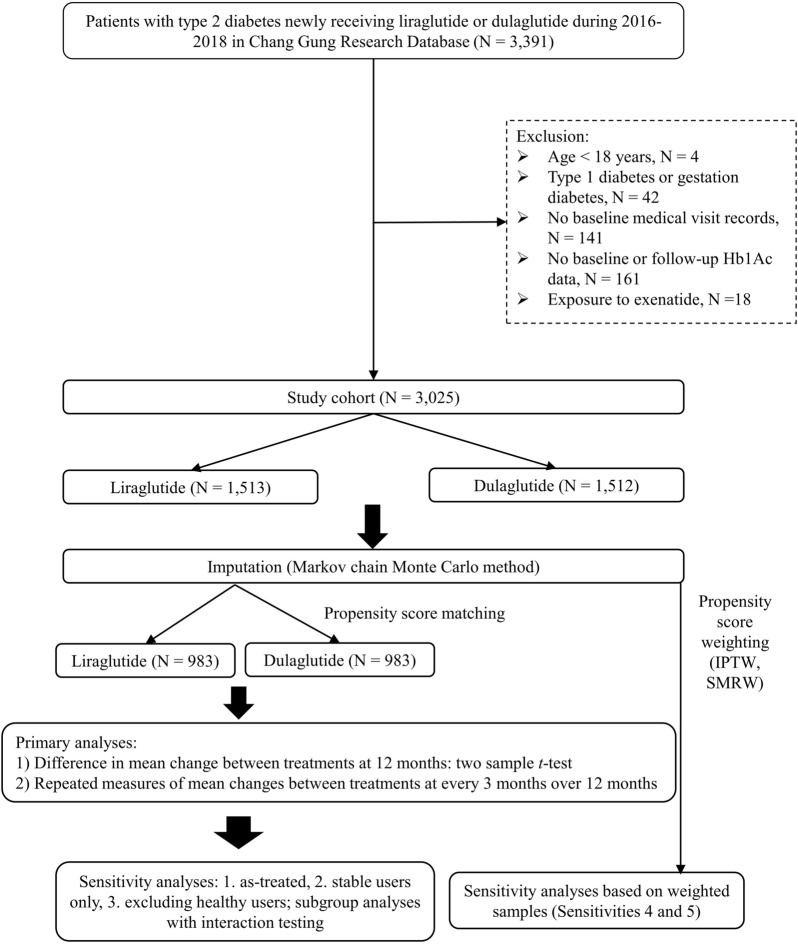
“1512 and 1513 patients newly-initiated on dulaglutide and liraglutide, respectively, were included for the analyses under PS weighting procedures (IPTW and SMRW; Fig.”
MethodInfluentialTuttle, K. R., Lakshmanan, M. C., Rayner, B., Busch, R. S., Zimmermann, A. G., Woodward, D. B., & Botros, F. T. (2018) · The Lancet Diabetes & Endocrinology · doi:10.1016/s2213-8587(18)30104-9 · Cited by 648
Propensity Score Methods for Confounding Control in Nonexperimental Research
Brookhart, M. A., Wyss, R., Layton, J. B., & Stürmer, T. (2013) · Circulation: Cardiovascular Quality and Outcomes · doi:10.1161/circoutcomes.113.000359 · Cited by 588
One‐to‐many propensity score matching in cohort studies
Rassen, J. A., Shelat, A. A., Myers, J., Glynn, R. J., Rothman, K. J., & Schneeweiss, S. (2012) · Pharmacoepidemiology and Drug Safety · doi:10.1002/pds.3263 · Cited by 510
Dungan, K. M., Povedano, S. T., Forst, T., González, J. G. G., Atisso, C., Sealls, W., & Fahrbach, J. L. (2014) · The Lancet · doi:10.1016/s0140-6736(14)60976-4 · Cited by 486
Multiple imputation: review of theory, implementation and software
Harel, O., & Zhou, X. (2007) · Statistics in Medicine · doi:10.1002/sim.2787 · Cited by 427
Analyzing Repeated Measurements Using Mixed Models
Detry, M. A., & Ma, Y. (2016) · JAMA · doi:10.1001/jama.2015.19394 · Cited by 406
Zheng, S. L., Roddick, A. J., Aghar-Jaffar, R., Shun-Shin, M. J., Francis, D., Oliver, N., & Meeran, K. (2018) · JAMA · doi:10.1001/jama.2018.3024 · Cited by 403
Tsapas, A., Avgerinos, I., Karagiannis, T., Malandris, K., Manolopoulos, A., Andreadis, P., Liakos, A., Matthews, D. R., & Bekiari, E. (2020) · Annals of Internal Medicine · doi:10.7326/m20-0864 · Cited by 346
Shao, S., Chan, Y., Kao Yang, Y., Lin, S., Hung, M., Chien, R., Lai, C., & Lai, E. C. (2019) · Pharmacoepidemiology and Drug Safety · doi:10.1002/pds.4713 · Cited by 329
Self-citationReview of head‐to‐head comparisons of glucagon‐like peptide‐1 receptor agonists
Madsbad, S. (2016) · Diabetes, Obesity and Metabolism · doi:10.1111/dom.12596 · Cited by 305
Davies, M. J., Bain, S. C., Atkin, S. L., Rossing, P., Scott, D., Shamkhalova, M. S., Bosch-Traberg, H., Syrén, A., & Umpierrez, G. E. (2016) · Diabetes Care · doi:10.2337/dc14-2883 · Cited by 235 · cited 1×
“, liraglutide versus placebo [39]) or reduced eGFR declines (eGFR preservation) (i.”
BackgroundSposito, A. C., Berwanger, O., de Carvalho, L. S. F., & Saraiva, J. F. K. (2018) · Cardiovascular Diabetology · doi:10.1186/s12933-018-0800-2 · Cited by 171
Lund, A., Knop, F. K., & Vilsbøll, T. (2014) · European Journal of Internal Medicine · doi:10.1016/j.ejim.2014.03.005 · Cited by 165
Pharmacologic Treatment of Type 2 Diabetes
Tran, L., Zielinski, A., Roach, A. H., Jende, J. A., Householder, A. M., Cole, E. E., Atway, S. A., Amornyard, M., Accursi, M. L., Shieh, S. W., et al. (2015) · Annals of Pharmacotherapy · doi:10.1177/1060028014558289 · Cited by 121
Miyagawa, J., Odawara, M., Takamura, T., Iwamoto, N., Takita, Y., & Imaoka, T. (2015) · Diabetes, Obesity and Metabolism · doi:10.1111/dom.12534 · Cited by 96
Mody, R., Huang, Q., Yu, M., Zhao, R., Patel, H., Grabner, M., & Landó, L. F. (2019) · Diabetes, Obesity and Metabolism · doi:10.1111/dom.13603 · Cited by 93
Cusi, K., Sattar, N., García‐Pérez, L. ‐., Pavo, I., Yu, M., Robertson, K. E., Karanikas, C. A., & Haupt, A. (2018) · Diabetic Medicine · doi:10.1111/dme.13697 · Cited by 89
Shao, S., Chang, K., Hung, M., Yang, N.-I., Chan, Y., Chen, H., Yang, Y. K., & Lai, E. C. (2019) · Cardiovascular Diabetology · doi:10.1186/s12933-019-0919-9 · Cited by 82
Self-citationPasternak, B., Wintzell, V., Eliasson, B., Svensson, A.-M., Franzén, S., Gudbjörnsdottir, S., Hveem, K., Jonasson, C., Melbye, M., Svanström, H., et al. (2020) · Diabetes Care · doi:10.2337/dc19-2088 · Cited by 69
Singh, P., Taufeeq, M., Pesavento, T. E., Washburn, K., Walsh, D., & Meng, S. (2020) · Diabetes Obesity and Metabolism · doi:10.1111/dom.13964 · Cited by 66
Shao, S., Chang, K., Lin, S.-J., Chien, R., Hung, M., Chan, Y., Yang, Y. K., & Lai, E. C. (2020) · Cardiovascular Diabetology · doi:10.1186/s12933-020-0990-2 · Cited by 63
Self-citationPinelli, N. R., & Hurren, K. M. (2011) · Annals of Pharmacotherapy · doi:10.1345/aph.1q024 · Cited by 59
Odawara, M., Miyagawa, J., Iwamoto, N., Takita, Y., Imaoka, T., & Takamura, T. (2016) · Diabetes, Obesity and Metabolism · doi:10.1111/dom.12602 · Cited by 56
Sposito, A. C., Berwanger, O., de Carvalho, L. S. F., & Saraiva, J. F. K. (2019) · Cardiovascular Diabetology · doi:10.1186/s12933-019-0825-1 · Cited by 52
Bajaj, H. S., Brown, R. E., Bhullar, L., Sohi, N., Kalra, S., & Aronson, R. (2018) · Diabetes & Metabolism · doi:10.1016/j.diabet.2018.08.001 · Cited by 50
Onishi, Y., Oura, T., Matsui, A., Matsuura, J., & Iwamoto, N. (2017) · Endocrine Journal · doi:10.1507/endocrj.ej16-0552 · Cited by 47
Hou, W., Chang, K., Li, C., & Ou, H. (2018) · British Journal of Clinical Pharmacology · doi:10.1111/bcp.13636 · Cited by 42
Self-citationAlfayez, O. M., Almohammed, O. A., Alkhezi, O. S., Almutairi, A. R., & Al Yami, M. S. (2020) · Cardiovascular Diabetology · doi:10.1186/s12933-020-01070-z · Cited by 41
Shao, S., Lin, Y.-H., Chang, K., Chan, Y., Hung, M., Yang, Y. K., & Lai, E. C. (2019) · BMJ Open Diabetes Research & Care · doi:10.1136/bmjdrc-2019-000742 · Cited by 40
Self-citationReal‐world GLP‐1 RA therapy in type 2 diabetes: A long‐term effectiveness observational study
Tofé, S., Argüelles, I., Mena, E., Serra, G., Codina, M., Urgeles, J. R., García, H., & Pereg, V. (2019) · Endocrinology, Diabetes & Metabolism · doi:10.1002/edm2.51 · Cited by 38
Morieri, M. L., Rigato, M., Frison, V., Simioni, N., D'Ambrosio, M., Tadiotto, F., Paccagnella, A., Lapolla, A., Avogaro, A., & Fadini, G. P. (2020) · Metabolism · doi:10.1016/j.metabol.2020.154190 · Cited by 31
Shao, S., Chang, K., Chien, R., Lin, S., Hung, M., Chan, Y., Yang, Y. K., & Lai, E. C. (2019) · Diabetes Obesity and Metabolism · doi:10.1111/dom.13875 · Cited by 22
Self-citationGhosal, S., & Sinha, B. (2018) · Clinical Diabetes and Endocrinology · doi:10.1186/s40842-018-0061-8 · Cited by 21
Seeger, J. D., Nunes, A., & Loughlin, A. M. (2020) · Diabetes, Obesity and Metabolism · doi:10.1111/dom.14021 · Cited by 20
Pasternak, B., Wintzell, V., Eliasson, B., Svensson, A.-M., Franzén, S., Gudbjörnsdottir, S., Hveem, K., Jonasson, C., Melbye, M., Svanström, H., et al. (2020) · doi:10.2337/dc20-1234/suppl.12016407.v1 · Cited by 17
Brown, R. E., Abitbol, A., Bajaj, H. S., Goldenberg, R., Khandwala, H., Abdel-Salam, S., & Aronson, R. (2019) · Diabetes Research and Clinical Practice · doi:10.1016/j.diabres.2019.107820 · Cited by 12
Umpierrez, G. E., Pantalone, K. M., Atisso, C. M., Landó, L. F., & Patel, H. (2019) · Diabetes Obesity and Metabolism · doi:10.1111/dom.13662 · Cited by 9
Cited by
Glucagon-like peptide-1 receptor: mechanisms and advances in therapy
Zheng, Z., Zong, Y., Ma, Y., Tian, Y., Pang, Y., Zhang, C., & Gao, J. (2024) · Signal Transduction and Targeted Therapy · doi:10.1038/s41392-024-01931-z · Cited by 1,036
Thomsen, R. W., Mailhac, A., Løhde, J. B., & Pottegård, A. (2025) · Diabetes Obesity and Metabolism · doi:10.1111/dom.16364 · Cited by 207
Tsai, C.-Y., Lu, H.-C., Chou, Y.-H., Liu, P.-Y., Chen, H.-Y., Huang, M.-C., Lin, C.-H., & Tsai, C.-N. (2022) · Frontiers in Endocrinology · doi:10.3389/fendo.2021.814770 · Cited by 92
“To have enough responders and non-responders to identify the relationships between their gut microbiota and treatment effects of GLP-1 RA, we used information from a Taiwan cohort study to estimate sample sizes (24).”
MethodSelf-citationZhang, Y., Qu, Z., Lu, T., Shao, X., Cai, M., Dilimulati, D., Gao, X., Mao, W., Hu, F., Su, L., et al. (2023) · Nutrients · doi:10.3390/nu15030556 · Cited by 45
Mirabelli, M., Chiefari, E., Tocci, V., Caroleo, P., Giuliano, S., Greco, E., Luque, R. M., Puccio, L., Foti, D. P., Aversa, A., et al. (2021) · Journal of Clinical Medicine · doi:10.3390/jcm10050985 · Cited by 37
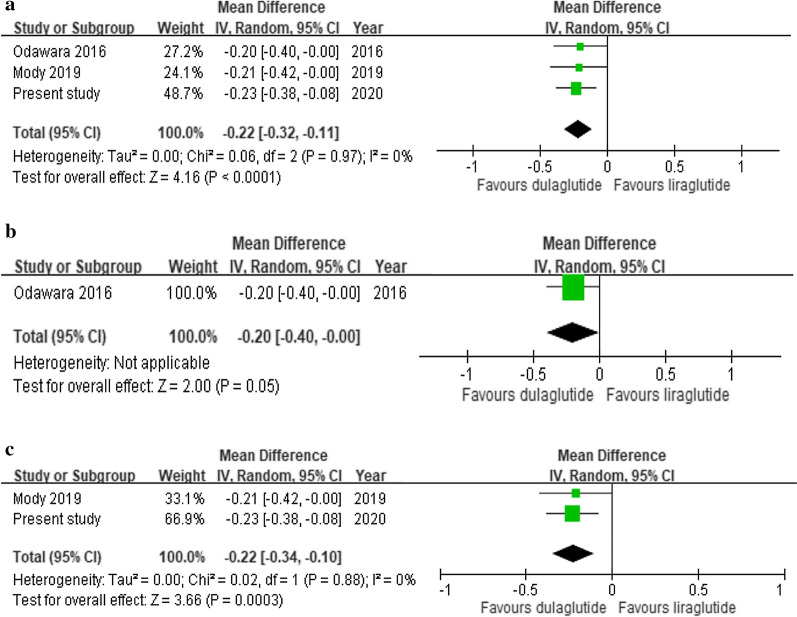
“In absence of dedicated clinical trials, with long-term and comparative follow-up, the effect of DU on the risk of diabetic kidney disease remains equivocal [36], as both DU and LIRA treatments could relate with significant declines in eGFR at 12-month follow-up in real-world scenarios [14].”
Background
Metadata
- Authors
- Chang, K.-C., Shao, S.-C., Kuo, S., Yang, C.-Y., Chen, H.-Y., Chan, Y.-Y., & Ou, H.-T.
- Affiliations
- Linkou Chang Gung Memorial Hospital (TW)
- Keelung Chang Gung Memorial Hospital (TW)
- University of Michigan (US)
- National Cheng Kung University (TW)
- Chang Gung Memorial Hospital (TW)
- National Cheng Kung University Hospital (TW)
- Corresponding author
- Ou, Huang-Tz
- Venue
- Cardiovascular Diabetology
- Published
- 2020-10-09
- Volume
- 19
- Issue
- 1
- Pages
- 172-172
- ISSN
- 1475-2840 (ISSN-L)
- PMC
- PMC7547475
- OpenAlex
- W3092048046
- Cited by
- 28
- References
- 48
- Citations by year
- 2026: 2 · 2025: 5 · 2024: 10 · 2023: 5 · 2022: 4 · 2021: 2
- FWCI
- 2.07
- Type
- journal article
- Language
- en
- Open access
- gold
- doi.org
- Licence
- cc-by
- creativecommons.org/licenses/by/4.0 (tdm)
- creativecommons.org/licenses/by/4.0 (vor)
- Locations
- Cardiovascular Diabetology (publishedVersion, cc-by)
- Research Square (acceptedVersion, cc-by)
- PubMed Central (publishedVersion, cc-by)
- PubMed (publishedVersion)
- Deep Blue (University of Michigan) (submittedVersion)
- DOAJ (DOAJ: Directory of Open Access Journals) (submittedVersion, cc-by-sa)
- Funders
- Chang Gung Medical Foundation (CMRPG3K0101)
- Ministry of Science and Technology, Taiwan (MOST 108-2320-B-006-048)
- Topics
- Health Sciences › Medicine › Endocrinology, Diabetes and Metabolism › Diabetes Treatment and Management
- Health Sciences › Medicine › Endocrinology, Diabetes and Metabolism › Diabetes Management and Research
- Health Sciences › Medicine › Endocrinology, Diabetes and Metabolism › Diabetes, Cardiovascular Risks, and Lipoproteins
- Keywords
- dulaglutide, liraglutide, type 2 diabetes, comparative effectiveness, GLP-1 receptor agonists, glycemic control, HbA1c, weight loss, alanine aminotransferase, estimated glomerular filtration rate, systolic blood pressure, real-world evidence, Asian patients, Taiwan, propensity score matching
- MeSH terms
- Liraglutide, Glycemic Control, Adult, Aged, Blood Glucose, Diabetes Mellitus, Type 2, Glucagon-Like Peptides, Female, Glycated Hemoglobin, Humans, Hypoglycemic Agents, Immunoglobulin Fc Fragments, Male, Middle Aged, Recombinant Fusion Proteins, Retrospective Studies, Taiwan, Time Factors, Biomarkers, Treatment Outcome, Asian People, Comparative Effectiveness Research
About these checks
Registry, retraction, Cites and statistics results are computed, not judged, with one exception: a printed reference that no index lists is read once by a model before it counts as a citation error. Claims are extracted by a model and kept only when their quote appears verbatim in the text; each cited source is then checked, with a model’s help, for whether it says what the claim relies on. Those verdicts can be wrong — read the claim’s quote and the cited source before relying on one.
Statistics and arithmetic are recomputed, not judged.
Confidence bands are shown only for fields calibrated on our annotated test set. None is calibrated yet, so no band is shown.
What counts as a claim ›How we measure confidence ›How we check this ›
Are you an author, or do you see a problem with this page? Request a review
Data sources
Bibliographic data: Semantic Scholar, OpenAlex, Crossref.
Contains information from the Semantic Scholar Academic Graph Datasets, made available under the ODC Attribution License (ODC-BY 1.0).
Semantic Scholar’s data is described in: Kinney, R., et al. (2023). The Semantic Scholar Open Data Platform. arXiv:2301.10140.
