

The dual glucose-dependent insulinotropic polypeptide (GIP) and glucagon-like peptide-1 (GLP-1) receptor agonist tirzepatide: a novel cardiometabolic therapeutic prospect
Open accessThe DOI matches its Crossref record; 28 of the 28 references it cites were found in a registry or an index.
Abstract
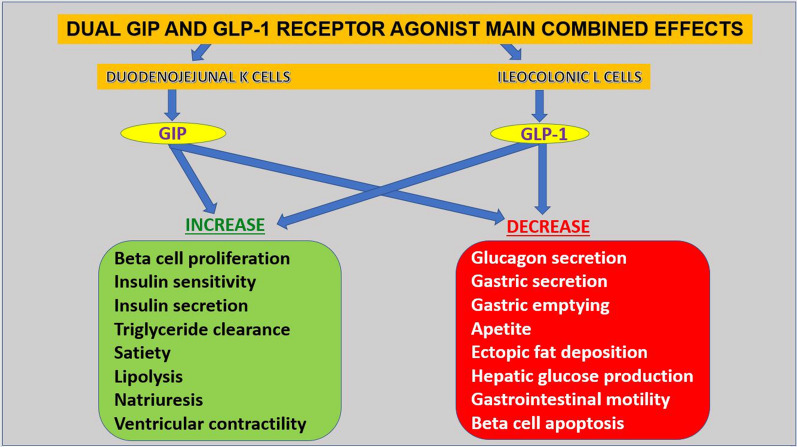
Incretin hormones are peptides released in the intestine in response to the presence of nutrients in its lumen. The main incretins are glucagon-like peptide-1 (GLP-1) and glucose-dependent insulinotropic polypeptide (GIP). GLP-1 stimulates insulin secretion, inhibits glucagon secretion at pancreatic α cells and has also extrapancreatic influences as slowing of gastric emptying which increases the feeling of satiety. GIP is the main incretin hormone in healthy people, causative of most the incretin effects, but the insulin response after GIP secretion in type 2 diabetes mellitus (T2DM) is strongly reduced. Therefore, in the past GIP has been considered an unappealing therapeutic target for T2DM. This conception has been changing during recent years, since it has been reported that resistance to GIP can be reversed and its effectiveness restored by improving glycemic control. This fact paved the way for the development of a GIP receptor agonist-based therapy for T2DM, looking also for the possibility of finding a combined GLP-1/GIP receptor agonist. In this framework, the novel dual GIP and GLP-1 receptor agonist tirzepatide seems to be not just a new antidiabetic medication. Administered as a subcutaneous weekly injection, it is a manifold single pharmacological agent that has the ability to significantly lower glucose levels, as well as improve insulin sensitivity, reduce weight and amend dyslipidemia favorably modifying the lipid profile. Tirzepatide and additional dual GLP-1/GIP receptor agonists that could eventually be developed in the future seem to be a promising furthest advance for the management of several cardiometabolic settings. Obviously, it is too early to be overly hopeful since it is still necessary to determine the long-term effects of these compounds and properly verify the potential cardiovascular benefits. Anyway, we are currently facing a novel and very appealing therapeutic option.
Overview
The claims and statistics of this paper haven’t been checked yet.
Free: it reads the open-access text and checks the first 5 claims that cite a source we can check. Create a free account to check every claim.
Integrity signals
Registry
Cites
Statistics
Figures
Verification
Claims the paper makes
The claims and statistics of this paper haven’t been checked yet.
Free: it reads the open-access text and checks the first 5 claims that cite a source we can check. Create a free account to check every claim.
Claims other papers make about this one
Each is checked against this paper’s own text: does it say what the citing paper says it does?
The source backs part of the claim, not all of it — or backs it for a different population, condition or comparison.
In the citing paper
“It also promotes proliferation and reduces apoptosis of pancreatic β-cells, thereby maintaining their quality and functionality.130,218”
From Glucagon-like peptide-1 receptor: mechanisms and advances in therapy (2024) · cites this paper as [130]
Experimental — accuracy not yet measuredThe source backs part of the claim, not all of it — or backs it for a different population, condition or comparison.
In the citing paper
“By regulating appetite, insulin secretion, and lipid metabolism, GLP-1RAs have potential benefits in the treatment of NAFLD, NASH, and T2DM.130,492,493”
From Glucagon-like peptide-1 receptor: mechanisms and advances in therapy (2024) · cites this paper as [130]
Experimental — accuracy not yet measuredThe source backs part of the claim, not all of it — or backs it for a different population, condition or comparison.
In the citing paper
“GIP also has beneficial effects such as minimizing insulin resistance by preventing excess storage of lipids and increasing the sensitivity of adipose tissue to insulin.18”
From Tirzepatide: Clinical review of the twincretin injectable (2023) · cites this paper as [18]
Experimental — accuracy not yet measuredThe cited source says what the claim attributes to it.
In the citing paper
“Reversing GIP resistance while simultaneously enhancing the effects of GLP-1 is thought to bolster the previously described incretin effect even more than GLP-1 receptor agonism alone and create synergistic effects on glucose control”
From Tirzepatide: Clinical review of the twincretin injectable (2023) · cites this paper as [18]
The cited source says what the claim attributes to it.
In the citing paper
“recent research has demonstrated that it is possible to reverse GIP resistance.”
From Tirzepatide: Clinical review of the twincretin injectable (2023) · cites this paper as [18]
2 more claims about this paper
Create a free account to see every claim other papers make about this one.
Self-check
Percentages, sums and reported differences re-computed from the paper’s own numbers.
The self-check needs the paper’s full text.
Citations
Cites
Biology of Incretins: GLP-1 and GIP
Baggio, L. L., & Drucker, D. J. (2007) · Gastroenterology · doi:10.1053/j.gastro.2007.03.054 · Cited by 3,639 · cited 7×
“Abbreviations DPP-4: Dipeptidylpeptidase-4; GIP: Glucose-dependent insulinotropic polypeptide; GLP-1: Glucagon-like peptide-1; HbA1C: Hemoglobin A1C; HDL-C: High-density lipoprotein cholesterol; LDL-C: Low-density lipoprotein cholesterol; T2DM: Type 2 diabetes mellitus.”
BackgroundInfluentialTirzepatide versus Semaglutide Once Weekly in Patients with Type 2 Diabetes
Frías, J. P., Davies, M. J., Rosenstock, J., Pérez Manghi, F. C., Fernández Landó, L., Bergman, B. K., Liu, B., Cui, X., & Brown, K. (2021) · New England Journal of Medicine · doi:10.1056/nejmoa2107519 · Cited by 2,096
Nauck, M. A., Heimesaat, M. M., Orskov, C., Holst, J. J., Ebert, R., & Creutzfeldt, W. (1993) · Journal of Clinical Investigation · doi:10.1172/jci116186 · Cited by 1,651 · cited 1×
“It has been shown that in patients with type 2 diabetes mellitus (T2DM) the response to the incretin effect is altered as a result of a severe defect in the sensitivity for GIP in the β cells [4] and a reduction in food-induced GLP-1 secretion [5, 6].”
BackgroundReduced incretin effect in Type 2 (non-insulin dependent) diabetes
Nauck, M., Stöckmann, F., Ebert, R., & Creutzfeldt, W. (1986) · Diabetologia · doi:10.1007/bf02427280 · Cited by 1,307 · cited 1×
“It has been shown that in patients with type 2 diabetes mellitus (T2DM) the response to the incretin effect is altered as a result of a severe defect in the sensitivity for GIP in the β cells [4] and a reduction in food-induced GLP-1 secretion [5, 6].”
BackgroundRosenstock, J., Wysham, C., Frías, J. P., Kaneko, S., Lee, C. J., Fernández Landó, L., Mao, H., Cui, X., Karanikas, C. A., & Thieu, V. T. (2021) · The Lancet · doi:10.1016/s0140-6736(21)01324-6 · Cited by 1,080 · cited 1×
“Thus, these results showed a strong glucoselowering effects towards a nearly-normal range with weight loss of a not previously reported extent in people with T2DM and without increased risk of clinically significant hypoglycemia [24].”
BackgroundCoskun, T., Sloop, K. W., Loghin, C., Alsina-Fernandez, J., Urva, S., Bokvist, K. B., Cui, X., Briere, D. A., Cabrera, O., Roell, W. C., et al. (2018) · Molecular Metabolism · doi:10.1016/j.molmet.2018.09.009 · Cited by 882 · cited 1×
“The mechanism of action is very imbalanced, since while it has a comparable GIP receptor binding affinity to native GIP, the affinity to the native GLP-1 receptor is five times lower [20, 21].”
BackgroundNAUCK, M. A., HOMBERGER, E., SIEGEL, E. G., ALLEN, R. C., EATON, R. P., EBERT, R., & CREUTZFELDT, W. (1986) · The Journal of Clinical Endocrinology & Metabolism · doi:10.1210/jcem-63-2-492 · Cited by 874 · cited 1×
“This effect is part of the entero-insular axis of glucose homeostasis and is estimated to be responsible for at least 50% of insulin secretion [2, 3].”
BackgroundPlasma Insulin Response to Oral and Intravenous Glucose Administration1
ELRICK, H., STIMMLER, L., HLAD, C. J., & ARAI, Y. (1964) · The Journal of Clinical Endocrinology & Metabolism · doi:10.1210/jcem-24-10-1076 · Cited by 857 · cited 1×
“The observation that the induced effect on insulin secretion is different when oral glucose was administered versus the same amount of glucose parenterally coined the term ‘incretin effect’, supporting the idea that some substances secreted in the intestines favored the release of insulin after ingestion [1].”
BackgroundFrias, J. P., Nauck, M. A., Van, J., Kutner, M. E., Cui, X., Benson, C., Urva, S., Gimeno, R. E., Milicevic, Z., Robins, D., et al. (2018) · The Lancet · doi:10.1016/s0140-6736(18)32260-8 · Cited by 815 · cited 2×
“Tirzepatide at 5 mg and 10 mg provided superior glycemic and bodyweight control versus dulaglutide, presenting similar tolerability [22].”
BackgroundCreutzfeldt, W. (1979) · Diabetologia · doi:10.1007/bf01225454 · Cited by 731 · cited 1×
“This effect is part of the entero-insular axis of glucose homeostasis and is estimated to be responsible for at least 50% of insulin secretion [2, 3].”
Background
Cited by
Glucagon-like peptide-1 receptor: mechanisms and advances in therapy
Zheng, Z., Zong, Y., Ma, Y., Tian, Y., Pang, Y., Zhang, C., & Gao, J. (2024) · Signal Transduction and Targeted Therapy · doi:10.1038/s41392-024-01931-z · Cited by 1,036
The cardio-renal-metabolic connection: a review of the evidence
Marassi, M., & Fadini, G. P. (2023) · Cardiovascular Diabetology · doi:10.1186/s12933-023-01937-x · Cited by 386
“The novel bireceptor agonist Tirzepatide simultaneously activates two incretin-dependent pathways [138], and this duality acts synergistically on glycemic and weight control, significantly improving metabolic outcomes when compared to selective GLP-1 RA [139].”
BackgroundCardiovascular-Kidney-Metabolic (CKM) syndrome: A state-of-the-art review
Sebastian, S. A., Padda, I., & Johal, G. (2024) · Current Problems in Cardiology · doi:10.1016/j.cpcardiol.2023.102344 · Cited by 343
Tirzepatide, a new era of dual-targeted treatment for diabetes and obesity: A mini-review
Chavda, V. P., Ajabiya, J., Teli, D., Bojarska, J., & Apostolopoulos, V. (2022) · Molecules · doi:10.3390/molecules27134315 · Cited by 208
Syed, Y. Y. (2022) · Drugs · doi:10.1007/s40265-022-01746-8 · Cited by 144
“GIP and GLP-1 are incretin hormones released in the intestine in response to food intake [4, 5].”
BackgroundStefanakis, K., Kokkorakis, M., & Mantzoros, C. S. (2024) · Metabolism · doi:10.1016/j.metabol.2024.156057 · Cited by 142
Glucagon-Like Peptide-1: New Regulator in Lipid Metabolism
Bu, T., Sun, Z., Pan, Y., Deng, X., & Yuan, G. (2024) · Diabetes & Metabolism Journal · doi:10.4093/dmj.2023.0277 · Cited by 131
“In contrast, GLP-/GIP dual agonists, while controlling blood sugar, can more comprehensively regulate lipid metabolism and reduce the risk of cardiovascular diseases [138,139].”
BackgroundTirzepatide: A Systematic Update
Forzano, I., Varzideh, F., Avvisato, R., Jankauskas, S. S., Mone, P., & Santulli, G. (2022) · International Journal of Molecular Sciences · doi:10.3390/ijms232314631 · Cited by 118
Luna-Marco, C., Iannantuoni, F., Hermo-Argibay, A., Devos, D., Salazar, J. D., Víctor, V. M., & Rovira-Llopis, S. (2024) · Free Radical Biology and Medicine · doi:10.1016/j.freeradbiomed.2024.01.015 · Cited by 114
Emerging pharmacotherapies for obesity: A systematic review
Kokkorakis, M., Chakhtoura, M., Rhayem, C., Al Rifai, J., Ghezzawi, M., Valenzuela-Vallejo, L., & Mantzoros, C. S. (2025) · Pharmacological Reviews · doi:10.1124/pharmrev.123.001045 · Cited by 102
Understanding the impact of diabetes on bone health: A clinical review
Sharma, P., Sharma, R., & Gaur, K. (2024) · Metabolism Open · doi:10.1016/j.metop.2024.100330 · Cited by 92
GLP-1 agonist to treat obesity and prevent cardiovascular disease: what have we achieved so far
Pedrosa, M. R., Franco, D. R., Gieremek, H. W., Vidal, C. M., Bronzeri, F., de Cassia Rocha, A., de Carvalho Cara, L. G., Fogo, S. L., & Eliaschewitz, F. G. (2022) · Current Atherosclerosis Reports · doi:10.1007/s11883-022-01062-2 · Cited by 68
Skelley, J. W., Swearengin, K., York, A. L., & Glover, L. H. (2024) · Journal of the American Pharmacists Association · doi:10.1016/j.japh.2023.10.037 · Cited by 66
Taktaz, F., Fontanella, R. A., Scisciola, L., Pesapane, A., Basilicata, M. G., Ghosh, P., Franzese, M., Tortorella, G., Puocci, A., Vietri, M. T., et al. (2024) · Cardiovascular Diabetology · doi:10.1186/s12933-024-02319-7 · Cited by 74
“The most significant changes were observed at the highest dosages of tirzepatide, i.e., 10 and 15 mg [89, 90].”
BackgroundTegegne, B. A., Adugna, A., Yenet, A., Yihunie Belay, W., Yibeltal, Y., Dagne, A., Hibstu Teffera, Z., Amare, G. A., Abebaw, D., Tewabe, H., et al. (2024) · Frontiers in Endocrinology · doi:10.3389/fendo.2024.1440456 · Cited by 61
“In addition, tirzepatide lowers systolic blood pressure in adults who are obese, which can reduce the risk of hypertension and cardiovascular issues (86 – 88).”
BackgroundPandey, S., Mangmool, S., & Parichatikanond, W. (2023) · Pharmaceuticals · doi:10.3390/ph16060836 · Cited by 56
“Tirzepatide stimulated cAMP production in pancreatic ß-cells, similar to a combination of GLP-1 and GIP [51], while also eliciting better efficacy in controlling cardiovascular disease risk factors such as glucose levels and body weight loss in diabetic patients [148,149].”
BackgroundEvidence that tirzepatide protects against diabetes-related cardiac damages
Taktaz, F., Scisciola, L., Fontanella, R. A., Pesapane, A., Ghosh, P., Franzese, M., Tortorella, G., Puocci, A., Sommella, E., Signoriello, G., et al. (2024) · Cardiovascular Diabetology · doi:10.1186/s12933-024-02203-4 · Cited by 50
“Tirzepatide, a novel dual glucose-dependent insulinotropic polypeptide (GIP) and GLP1 receptor (GLP1-1R) agonist has been demonstrated to have cardiovascular safety [13].”
BackgroundDiabetes and Bone Health: A Comprehensive Review of Impacts and Mechanisms
Upadhyay, P., & Kumar, S. (2025) · Diabetes/Metabolism Research and Reviews · doi:10.1002/dmrr.70062 · Cited by 47
“Despite these findings, the presence of functional GLP‐1 receptors in bone remains a subject of debate, suggesting that its skeletal effects may be indirect and related to its insulinotropic actions [72].”
InfluentialMechanisms of action of incretin receptor based dual- and tri-agonists in pancreatic islets
Folli, F. B., Finzi, G., Manfrini, R., Galli, A., Casiraghi, F., Centofanti, L., Berra, C., Fiorina, P., Davalli, A. M., Rosa, S. L., et al. (2023) · American Journal of Physiology-Endocrinology and Metabolism · doi:10.1152/ajpendo.00236.2023 · Cited by 35
Tirzepatide: A Promising Drug for Type 2 Diabetes and Beyond
Dutta, P., Kumar, Y., Babu, A. T., Ravindran, S. G., Salam, A., Rai, B., Baskar, A., Dhawan, A., & Jomy, M. (2023) · Cureus · doi:10.7759/cureus.38379 · Cited by 46
“…obesity, hypertension, heart disease, hyperlipidemia, and their vascular complications, including the likes of ischemic cardiomyopathy, stroke, neuropathy, retinopathy, and chronic kidney disease, are currently some of the leading causes of morbidity, disability, and mortality globally [32,33].”
BackgroundTreatment and practical considerations of diabetic kidney disease
Bilen, Y., Almoushref, A., Alkwatli, K., Osman, O., Mehdi, A., & Sawaf, H. (2023) · Frontiers in Medicine · doi:10.3389/fmed.2023.1264497 · Cited by 32
Diabesity in Elderly Cardiovascular Disease Patients: Mechanisms and Regulators
García‐Vega, D., González‐Juanatey, J. R., & Eirás, S. (2022) · International Journal of Molecular Sciences · doi:10.3390/ijms23147886 · Cited by 26
“Both molecules are complementary because they reduce blood glucose without hypoglycaemia risk, promote weight loss and benefits in cardiovascular disease [217].”
BackgroundGuan, R., Yang, Q., Yang, X., Du, W., Li, X., & Ma, G. (2022) · Frontiers in Pharmacology · doi:10.3389/fphar.2022.998816 · Cited by 27
“GIP was not considered as an appealing target for the treatment of T2DM, because early research showed there was no reduction of GIP secretion in patients with diabetes, and GIP agonism seemed to have a less insulinotropic effect (Fisman and Tenenbaum, 2021).”
BackgroundHossain, A., Rahman, M. E., Faruqe, M. O., Saif, A., Suhi, S., Zaman, R., Hirad, A. H., Matin, M. N., Rabbee, M. F., & Baek, K.-H. (2024) · Pharmaceutics · doi:10.3390/pharmaceutics16040483 · Cited by 28
“The main function of DPP-4 is to cleave and deactivate incretin hormones, such as glucagon-like peptide-1 (GLP-1) [35] and glucose-dependent insulinotropic polypeptide (GIP) [36], which are involved in glucose homeostasis and insulin secretion [37].”
BackgroundAhmad, P., Estrin, N. E., Farshidfar, N., Zhang, Y., & Miron, R. J. (2025) · Journal of Periodontal Research · doi:10.1111/jre.13410 · Cited by 34
Allocca, S., Monda, A., Messina, A., Casillo, M., Sapuppo, W., Monda, V., Polito, R., Maio, G. D., Monda, M., & Marra, M. L. (2025) · Healthcare · doi:10.3390/healthcare13121437 · Cited by 38
Bulum, T. (2022) · Biomedicines · doi:10.3390/biomedicines10102586 · Cited by 31
“Recently, a dual GIP and GLP-1 receptor agonist has been put on the market for the treatment of patients with T2DM [8].”
BackgroundTirzepatide—Friend or Foe in Diabetic Cancer Patients?
Samuel, S. M., Varghese, E., Kubatka, P., & Büsselberg, D. (2022) · Biomolecules · doi:10.3390/biom12111580 · Cited by 24
“It reversed dyslipidemia in the direction of an improved cardiometabolic profile [26,27].”
BackgroundYang, J., Gu, Y., Chen, H., Wang, H., Hong, L., Li, B., & Yang, L. (2024) · Frontiers in Pharmacology · doi:10.3389/fphar.2024.1453825 · Cited by 27
Lisco, G., Tullio, A. D., Disoteo, O., Geronimo, V. D., Piazzolla, G., Pergola, G. D., Giagulli, V. A., Jirillo, E., Guastamacchia, E., Sabbà, C., et al. (2022) · Frontiers in Endocrinology · doi:10.3389/fendo.2022.920541 · Cited by 25
Rohani, P., Malekpour Alamdari, N., Bagheri, S. E., Hekmatdoost, A., & Sohouli, M. H. (2023) · Frontiers in Endocrinology · doi:10.3389/fendo.2023.1230206 · Cited by 18
Unraveling Chronic Cardiovascular and Kidney Disorder through the Butterfly Effect
Bedo, D., Beaudrey, T., & Florens, N. (2024) · Diagnostics · doi:10.3390/diagnostics14050463 · Cited by 25
Tamilwanan, S., Aziz, Z., Rong, L. Y., Bitar, A. N., Zarzour, R. A., & Alshehade, S. A. (2025) · BMC Gastroenterology · doi:10.1186/s12876-025-04358-0 · Cited by 26
“This differential efficacy pattern aligns with recent mechanistic insights suggesting that GIP receptor activation provides complementary metabolic benefits beyond those offered by GLP-1 receptor stimulation alone [20, 56].”
Mechanism of molecular interaction of sitagliptin with human DPP4 enzyme - New Insights
Gonzatti, M. B., Monteiro-Júnior, J. E., Rocha, A. J., de Oliveira, J. S., Evangelista, A. J. D. J., Fonseca, F. M. P., Ceccatto, V. M., de Oliveira, A. C., & Freire, J. E. D. C. (2023) · Advances in Medical Sciences · doi:10.1016/j.advms.2023.10.002 · Cited by 20
Barać, M., & Roganović, J. (2025) · Biology · doi:10.3390/biology14121650 · Cited by 32
Nowak, M., Nowak, W., & Grzeszczak, W. (2022) · Endokrynologia Polska · doi:10.5603/ep.a2022.0029 · Cited by 28
Weight Loss Therapies and Hypertension Benefits
Katsi, V. K., Manta, E., Fragoulis, C., & Tsioufis, K. P. (2024) · Biomedicines · doi:10.3390/biomedicines12102293 · Cited by 17
“Tirzepatide increases insulin secretion, inhibits glucagon release, and aids in weight reduction via activating the GLP-1 and GIP receptors [42].”
BackgroundA new kind of diabetes medication approved by the FDA: is there hope for obesity?
Dhirani, D., Shahid, A., & Mumtaz, H. (2023) · International Journal of Surgery · doi:10.1097/js9.0000000000000044 · Cited by 13
“Furthermore, GLP-1 inhibits pancreatic glucagon release and has extrapancreatic effects such as direct suppressive action on appetite centers and a delay in stomach emptying, boosting the sense of fullness([4]).”
BackgroundTirzepatide: Clinical review of the twincretin injectable
Krauss, Z., Hintz, A., & Fisk, R. (2023) · American Journal of Health-System Pharmacy · doi:10.1093/ajhp/zxad080 · Cited by 12
Park, J. H., Jung, K. H., Jia, D., Yang, S., Attri, K. S., Ahn, S., Murthy, D., Samanta, T., Dutta, D., Ghidey, M., et al. (2025) · Cell Reports Medicine · doi:10.1016/j.xcrm.2025.101941 · Cited by 20
Immunomodulation through Nutrition Should Be a Key Trend in Type 2 Diabetes Treatment
Napiórkowska-Baran, K., Treichel, P., Czarnowska, M., Drozd, M., Koperska, K., Węglarz, A., Schmidt, O., Darwish, S., Szymczak, B., & Bartuzi, Z. (2024) · International Journal of Molecular Sciences · doi:10.3390/ijms25073769 · Cited by 12
“Tirzepatide has a five times lower affinity for the GLP-1 receptor than the native GLP-1, yet it binds to the GIP receptor with the same strength as native GIP [40,41].”
BackgroundHarrington, J., Felker, G. M., Januzzi, J. L., Lam, C. S. P., Lingvay, I., Pagidipati, N. J., Sattar, N. A., Spall, H. G. C. V., Verma, S., & McGuire, D. K. (2024) · Current Cardiology Reports · doi:10.1007/s11886-023-02016-z · Cited by 12
GLP-1 receptor agonists for the treatment of obstructive sleep apnea and obesity
Romariz, L. M., Araújo¹, B. D. S. G., Barbosa, L., Jain, R., & Janovsky, C. C. P. S. (2024) · European Journal of Internal Medicine · doi:10.1016/j.ejim.2024.10.027 · Cited by 9
Dasgupta, S. S., & Noor, A. (2025) · Food Bioscience · doi:10.1016/j.fbio.2025.106743 · Cited by 9
Hoffmann, K., Michalak, M., & Paczkowska, A. (2025) · Diabetes Metabolic Syndrome and Obesity · doi:10.2147/dmso.s531697 · Cited by 11
“9 According to current guidelines, GLP-1 receptor agonists (GLP-1RA) are the first-line therapy in T2DM, especially in patients with atherosclerotic cardiovascular disease or obesity, and some of them are recommended for obese people without T2DM.”
Mody, R., Valentine, W. J., Hoog, M. M., Sharland, H., & Belger, M. A. (2024) · Journal of Managed Care & Specialty Pharmacy · doi:10.18553/jmcp.2024.30.2.153 · Cited by 13
Naseem, S., & Rizwan, M. (2025) · Diabetes Research and Clinical Practice · doi:10.1016/j.diabres.2025.112285 · Cited by 11
Munawar, N., Mahato, A., Rawat, A., Gill, F. S., Kumar, D., Katwal, S., Wei, C. R., & Ali, N. (2025) · Cureus · doi:10.7759/cureus.86080 · Cited by 20
“However, the emergence of tirzepatide, a novel dual glucose-dependent insulinotropic polypeptide (GIP) and GLP-1 receptor agonist, has introduced a new therapeutic paradigm [10].”
Gorini, F., & Tonacci, A. (2025) · Nutrients · doi:10.3390/nu17142350 · Cited by 12
“…K cells in the postprandial state, and it is responsible for the increased uptake of lipids and glucose, stimulation of insulin secretion, and inhibition of glucagon secretion from pancreatic cells in healthy subjects, although the incretin effect remains active 1–2 min after its secretion [66,67].”
Hoffmann, K., Michalak, M., Rizzo, M., Maggio, V., & Paczkowska, A. (2026) · Expert Opinion on Drug Safety · doi:10.1080/14740338.2025.2586703 · Cited by 8
“Preclinical and early clinical studies suggest that GIP receptor agonism may augment insulin secretion, promote lipid metabolism, and counteract GI AEs of GLP-1RA [8,9,11,59].”
Abdelhamid, M., Abdrabou, M. M., Faris, E., Elkaffas, S. M. H., Hosny, M., & Hassan, A. (2025) · Cardiac failure review · doi:10.15420/cfr.2025.17 · Cited by 12
Meeks, K. A. C., Bentley, A. R., Assimes, T. L., Franceschini, N., Adeyemo, A., Rotimi, C. N., & Doumatey, A. P. (2023) · Genome Medicine · doi:10.1186/s13073-023-01263-7 · Cited by 7
“DPP-4 inhibitors are used in these GLP-1-based therapies to prevent degradation and inactivation of GLP-1 and prolong its action in improving glucose metabolism [47, 51].”
BackgroundChen, W., Chen, Q., Huang, J., Shen, X., Zhang, L., Jiang, G., Wu, T., Wang, F., & Cheng, X. (2024) · Neurogastroenterology & Motility · doi:10.1111/nmo.14779 · Cited by 7
“48 Many TCM prescriptions have obvious effects in this respect and were gradually receiving attention.”
BackgroundCock, I. E., Orchard, A., Booi, L., & van Vuuren, S. F. (2024) · South African Journal of Botany · doi:10.1016/j.sajb.2024.08.002 · Cited by 13
Patel, R., Kokori, E., Olatunji, G. D., Adejumo, F. A., Ukah, J. D., Babalola, A. E., Ndakotsu, A., Abraham, I. C., & Aderinto, N. (2025) · Current Heart Failure Reports · doi:10.1007/s11897-025-00704-1 · Cited by 10
New Drug: Tirzepatide (Mounjaro™)
Gettman, L. (2023) · The Senior Care Pharmacist · doi:10.4140/tcp.n.2023.50 · Cited by 12
Liu, X., Mao, S., Yuan, Y., Wang, Z., Tian, Y., Tao, L., & Dai, J. (2025) · Frontiers in Nutrition · doi:10.3389/fnut.2024.1517087 · Cited by 9
Critical Appraisal of Pharmaceutical Therapy in Diabetic Cardiomyopathy—Challenges and Prospectives
Khattab, E., Kyriakou, M., Leonidou, E., Sokratous, S., Mouzarou, A., Myrianthefs, M. M., & Kadoglou, N. P. E. (2025) · Pharmaceuticals · doi:10.3390/ph18010134 · Cited by 7
“GLP-1, an incretin hormone released by enteroendocrine L-cells in the gut, lowers blood glucose by stimulating insulin production, inhibiting α -cell function, and promoting β -cell proliferation and differenti-Pharmaceuticals ation [91].”
Tirzepatide: A First-in-class Twincretin for the Management of Type 2 Diabetes
Jaswal, S., Bisht, P., Patel, R., Parveen, D., Gupta, G. D., & Verma, S. K. (2023) · Letters in Drug Design & Discovery · doi:10.2174/1570180820666230130153219 · Cited by 5
Dual GSK3β/SIRT1 modulators for Alzheimer’s: mechanisms, drug discovery and future perspectives
Kareem, A. I., Kapp, E., Joubert, J., & Zou, X. (2025) · Frontiers in Pharmacology · doi:10.3389/fphar.2025.1662241 · Cited by 6
Demidova, T. Y., & Izmaylova, M. Y. (2025) · FOCUS Endocrinology · doi:10.62751/2713-0177-2025-6-3-03 · Cited by 8
Multimodal Prehabilitation for Hernia Repair: Linking Metabolic Modulation and Mechanical Methods
Păduraru, D. N., Palcău, A. C., Daniel, I., & Seicaru, R. (2025) · Biomedicines · doi:10.3390/biomedicines13123117 · Cited by 8
Sosibo, A. M., Mzimela, N. C., Ngubane, P. S., & Khathi, A. (2024) · International Journal of Diabetes in Developing Countries · doi:10.1007/s13410-024-01363-z · Cited by 5
“Comparable results have been observed in studies using participants with T2DM, where the effectiveness of GIP is almost completely lost [25, 26].”
Rajab, A. M., Pearson, S. M., & Ajjan, R. (2025) · Diabetes Obesity and Metabolism · doi:10.1111/dom.16332 · Cited by 7
Chai, S., Zhang, R., Carr, R. D., Deacon, C. F., Zheng, Y., Rajpathak, S. N., Chen, J., & Yu, M. (2023) · Frontiers in Endocrinology · doi:10.3389/fendo.2023.1203187 · Cited by 8
MASLD and the cardiovascular-kidney-liver-metabolic syndrome
Angelidi, A. M., Boutari, C., Kokkorakis, M., Stefanakis, K., Mikhailidis, D. P., Jacob, G., & Mantzoros, C. S. (2026) · Endocrine Reviews · doi:10.1210/endrev/bnag023 · Cited by 7
Ellberg, C. C., Schwartz, H. R., Witt, A., McCowen, K. C., Fuentes, A. L., & Malhotra, A. (2025) · Current Pulmonology Reports · doi:10.1007/s13665-025-00384-1 · Cited by 6
“The main incretins relevant to this discussion are glucagon-like peptide 1 (GLP-1) and glucose-dependent insulinotropic polypeptide (GIP), and they are released by the entero-endocrine L cells in the intestine in response to the presence of nutrients in the gut lumen [37 ].”
Swandiny, G. F., Primahana, G., Prastya, M. E., Ariani, N., Darnis, D. S., Hanafi, M., & Abdillah, S. (2023) · Pharmacia · doi:10.3897/pharmacia.70.e104437 · Cited by 5
“(Manandhar and Ahn 2015; Fisman and Tenenbaum 2021).”
Synergistic effects of GABA and hypoglycemic drugs
Tyurenkov, I. N., Faibisovich, T. I., & Bakulin, D. A. (2023) · Problems of Endocrinology · doi:10.14341/probl13257 · Cited by 5
Tirzepatide for the Treatment of Heart Failure in Type 2 Diabetes Mellitus: (SUR)PASS, or Not?
Patoulias, D., Dimosiari, A., & Fragakis, N. (2023) · Future Cardiology · doi:10.2217/fca-2022-0112 · Cited by 4
Song, J., Fang, K., 张运周, Zhang, R., Yin, C., & Gao, D. (2026) · Neurological Research · doi:10.1080/01616412.2026.2640121 · Cited by 3
Rabbani, S. A., Saini, M., El-Tanani, M. E.-T., Kumar, R., Matalka, I. I., El‐Tanani, Y., Sharma, S., & Rizzo, M. (2026) · Pharmaceuticals · doi:10.3390/ph19050732 · Cited by 5
“Its significance as a comprehensive metabolic therapy was reinforced by significant decreases in body weight, blood pressure and lipid indices in addition to glycemic management [165–167].”
Barakat, S., Ramdeen, S., & Khaimova, R. (2024) · Hospital Pharmacy · doi:10.1177/00185787241266803 · Cited by 3
Cardiorenal Benefit of Tirzepatide in Type 1 Diabetes: A Case Report
Ahmed, K., Koubeh, S., Ahmed, A. S., & Hussain, S. (2024) · Journal of Diabetology · doi:10.4103/jod.jod_97_24 · Cited by 3
Abulehia, A., Ayesh, H., Ayesh, O., Jaber, D., Asad, T., Itbaisha, A., Abugharbieh, H., Gharbia, R., Abu‐Hilal, L. H., & Leon, B. G. C. (2026) · Endocrinology, Diabetes & Metabolism · doi:10.1002/edm2.70187 · Cited by 3
Zohora, F. T., Mou, S. S., Haque, M. R., Baidya, M., Jahan, I., & Al-Mamun, M. E. (2025) · Translational Medicine of Aging · doi:10.1016/j.tma.2025.08.005 · Cited by 2
Hierholzer, J. D., Benson, H., Ewida, H. A., & Ahmed, M. S. (2026) · Biochimica et Biophysica Acta (BBA) - Molecular Basis of Disease · doi:10.1016/j.bbadis.2026.168172 · Cited by 4
Lipid dysregulation in chronic diseases: systems biology and omics perspectives
Majumder, D., Bhattacharya, D., Gill, H. S., Rajeev, M., Sharma, S., Dwivedi, S. P., Nag, M., & Lahiri, D. (2026) · Xenobiotica · doi:10.1080/00498254.2026.2680076 · Cited by 2
“Medicines aimed at GlP-1 alone, or GlP-1/glucagon and GlP-1/GiP combination approaches, have shown reductions in tri-glycerides, changes in lipoprotein profiles, and substantial lowering of cardiovascular risk in randomised trials (Fisman and tenenbaum 2021).”
Tirzepatid - a new hope in the treatment of obesity and a new antidiabetic drug
Prosecký, R., & Vítovec, J. (2023) · Klinická farmakologie a farmacie · doi:10.36290/far.2023.012 · Cited by 2
GIP und GLP-1-Rezeptoragonismus in der Therapie des Typ 2 Diabetes mit Fokus auf Tirzepatid
Nauck, M. A., Blüher, M., Meyhöfer, S. M., Heitmann, E., & Görgens, S. W. (2023) · Diabetologie und Stoffwechsel · doi:10.1055/a-2102-2436 · Cited by 3
“Zum einen ist die akute insulinotrope Aktivität von GIP beim Typ-2-Diabetes stark reduziert, was sich jedoch bei längerer Exposition oder in Kombination mit GLP-1 R-Agonismus ändern könnte [99].”
BackgroundCardiovascular effects of semaglutide and tirzepatide and their potential for cardioprevention
Cherkashin, D. V., Салухов, В. В., & Khalimov, Y. S. (2025) · Meditsinskiy sovet = Medical Council · doi:10.21518/ms2025-323 · Cited by 2
Obesity in Modern Society: Analysis, Statistics, and Treatment Approaches
Shah, B. (2023) · International Journal of Science and Research (IJSR) · doi:10.21275/sr231203194836 · Cited by 2
Fajkić, A., Lam, Y. W., & Belančić, A. (2025) · Amino Acids · doi:10.1007/s00726-025-03488-9 · Cited by 1
“Current data indicate that its metabolic efficacy is largely GLP-1R–dependent (Fisman and Tenenbaum 2021).”
Tirzepatide vs. semaglutide: clinical decision-making in the GLP-1 landscape
Mondoh, A., Crotty, M., & le Roux, C. W. (2025) · Expert Opinion on Pharmacotherapy · doi:10.1080/14656566.2025.2601060 · Cited by 3
“These combined actions promote a rapid reduction of hepatic steatosis and limit fibro-genesis [56].”
GLP-1 receptor agonists and smoking cessation: therapeutic promise beyond glycemia
Bhaduri, G., Mukherjee, S., Parikh, R. M., Karak, S., & Pal, J. (2026) · Endocrine · doi:10.1007/s12020-026-04559-x · Cited by 2
“More recently, dual GLP-1/glucose-dependent insulinotropic polypeptide (GIP) receptor agonists (e.g., tirzepatide) have been developed, offering potentially superior metabolic effi - cacy and CNS effects via dual receptor engagement [ 7].”
Uti, D. E., Egbung, J. E., Alum, E. U., Bawa, I., Agada, S. A., Ogbu, C. O., & Ugwu, O. P.-C. (2026) · Obesity Medicine · doi:10.1016/j.obmed.2026.100712 · Cited by 3
Beyond Glycemic Control: Ocular Effects of Glucagon-like Peptide-1 Receptor Agonists
Lixi, F., Troisi, M., Calabresi, V., Giagoni, A., Rossi, C., Timofte-Zorila, M.-M., Tarași, T.-C., Vitiello, L., Tomi, M.-I., Gheorghe, A. G., et al. (2026) · Vision · doi:10.3390/vision10020029 · Cited by 3
“This integrated GLP-1/GIP signaling may also influence adipose tissue biology, lipid metabolism, and central appetite pathways, helping explain the magnitude of its effects on weight and cardiometabolic risk markers [52].”
Obesity and biological aging across the life course: A geroscience framework for metabolic health
Correa‐Burrows, P., Burrows, R., Kennedy, B. K., & González-Billault, C. E. (2026) · Metabolism · doi:10.1016/j.metabol.2026.156634 · Cited by 1
Beyond glycemic control: clinical cardiovascular effects of tirzepatide—a narrative review
Alawad, A. O., Merghani, T. H., Fadelelmoula, T. E. Y., Elamin, N. A., Satti, S., Edris, A., Hakim, A., El-Hindi, R. F., Alhaj-Ali, A. A., Ibrahim, W. E., et al. (2026) · Therapeutic Advances in Endocrinology and Metabolism · doi:10.1177/20420188261469947 · Cited by 1
“15 Structurally, TZP consists of 39 amino acids in a linear peptide similar in structure to GIP but incorporates specific modifications to allow binding and activation of both GIP and GLP-1 receptors (GLP-1R).”
Tirzepatide: A Novel Dual GIP and GLP-1 Receptor Agonist
Wong, E. (2022) · The Journal for Nurse Practitioners · doi:10.1016/j.nurpra.2022.10.003 · Cited by 1
BEYOND BLOOD SUGAR CONTROL: A COMPREHENSIVE REVIEW OF DPP-4 INHIBITORS AND THEIR EXPANDING LANDSCAPE
Srivastava, P., Wal, P., Chaturvedi, V., Wal, A., & Srivastava, A. (2022) · Journal of Population Therapeutics and Clinical Pharmacology · doi:10.53555/jptcp.v29i04.4372 · Cited by 1
Diabetes Mellitus and the Risk of Carcinogenesis: An Interdisciplinary Approach
Tkaczenko, H., Kamiński, P., & Kurhaluk, N. (2024) · Interdisciplinary cancer research · doi:10.1007/16833_2024_426 · Cited by 1
Novel bioactive peptides from red seaweed (Pyropia vietnamensis) proteinsPreprint
Basri, N. I., Amin, A. M., & Ahmad, F. (2023) · Research Square · doi:10.21203/rs.3.rs-3077041/v1 · Cited by 1
Abramov, V. V., & Maksimov, M. L. (2024) · Glavvrač (Chief Medical Officer) · doi:10.33920/med-03-2407-03
Ensuring the Appropriate Use of Glucagon‐Like Peptide‐1 Receptor Agonists
Moore, K. T., Gupta, A. S., Shen, J., & Kumar, P. (2024) · The Journal of Clinical Pharmacology · doi:10.1002/jcph.6136
Long-term Safety Profile of Semaglutide in the Management of Type 2 Diabetes and Obesity
Meng, Z. (2024) · MedScien · doi:10.61173/42stre19 · Cited by 1
van der Giet, M. (2025) · CardioVasc · doi:10.1007/s15027-025-3751-z
Shi, J. (2025) · Turkish Journal of Biochemistry · doi:10.1515/tjb-2024-0393
“In weight reduction, heterogeneity was particularly pronounced, with I 2 values of 97 % for bexagli fl ozin and 98 % for tirzepatide (p 0.001), re fl ecting variability in responses across populations.”
InfluentialDrug–drug interactions between tirzepatide and antiretrovirals: time to reassess and reassure?
Poloni, A., Cattaneo, D., Giacomelli, A., Gori, A., Ridolfo, A. L., & Gervasoni, C. (2025) · Journal of Antimicrobial Chemotherapy · doi:10.1093/jac/dkaf245
Tanaka, H., Nakamura, Y., Fujimoto, A., Sato, K., & Suzuki, M. (2025) · bioRxiv (Cold Spring Harbor Laboratory) · doi:10.1101/2025.09.07.674712
Metadata
- Authors
- Fisman, E. Z., & Tenenbaum, A.
- Affiliations
- Tel Aviv University (IL)
- Corresponding author
- Fisman, Enrique Z.
- Venue
- Cardiovascular Diabetology
- Published
- 2021-11-24
- Volume
- 20
- Issue
- 1
- Pages
- 225-225
- ISSN
- 1475-2840 (ISSN-L)
- PMC
- PMC8613929
- OpenAlex
- W3216821013
- Cited by
- 124
- References
- 28
- Citations by year
- 2026: 29 · 2025: 32 · 2024: 27 · 2023: 24 · 2022: 12
- FWCI
- 11.76
- Type
- journal article
- Language
- en
- Open access
- gold
- doi.org
- Licence
- cc-by
- creativecommons.org/licenses/by/4.0 (tdm)
- creativecommons.org/licenses/by/4.0 (vor)
- Locations
- Cardiovascular Diabetology (publishedVersion, cc-by)
- PubMed Central (publishedVersion, cc-by)
- PubMed (publishedVersion)
- DOAJ (DOAJ: Directory of Open Access Journals) (submittedVersion, cc-by-sa)
- Funders
- No funding sources
- Topics
- Health Sciences › Medicine › Endocrinology, Diabetes and Metabolism › Diabetes Treatment and Management
- Health Sciences › Medicine › Pharmacology (medical) › Pharmacology and Obesity Treatment
- Health Sciences › Medicine › Endocrinology, Diabetes and Metabolism › Diabetes Management and Research
- Keywords
- tirzepatide, GIP/GLP-1 receptor agonist, glucose-dependent insulinotropic polypeptide, glucagon-like peptide-1, incretins, type 2 diabetes, insulin sensitivity, weight loss, dyslipidemia, cardiovascular safety
- MeSH terms
- Glucagon-Like Peptide-1 Receptor, Insulin Secretion, Glucagon-Like Peptide-1 Receptor Agonists, Tirzepatide, Animals, Blood Glucose, Diabetes Mellitus, Type 2, Gastric Inhibitory Polypeptide, Humans, Hypoglycemic Agents, Insulin, Lipids, Receptors, Gastrointestinal Hormone, Biomarkers, Treatment Outcome, Metabolic Syndrome, Incretins
About these checks
Registry, retraction, Cites and statistics results are computed, not judged, with one exception: a printed reference that no index lists is read once by a model before it counts as a citation error. Claims are extracted by a model and kept only when their quote appears verbatim in the text; each cited source is then checked, with a model’s help, for whether it says what the claim relies on. Those verdicts can be wrong — read the claim’s quote and the cited source before relying on one.
Statistics and arithmetic are recomputed, not judged.
Confidence bands are shown only for fields calibrated on our annotated test set. None is calibrated yet, so no band is shown.
What counts as a claim ›How we measure confidence ›How we check this ›
Are you an author, or do you see a problem with this page? Request a review
Data sources
Bibliographic data: Semantic Scholar, OpenAlex, Crossref.
Contains information from the Semantic Scholar Academic Graph Datasets, made available under the ODC Attribution License (ODC-BY 1.0).
Semantic Scholar’s data is described in: Kinney, R., et al. (2023). The Semantic Scholar Open Data Platform. arXiv:2301.10140.
