

The cardio-renal-metabolic connection: a review of the evidence
Open accessThe DOI matches its Crossref record; 146 of the 146 references it cites were found in a registry or an index.
Abstract
Type 2 diabetes (T2D), cardiovascular disease (CVD) and chronic kidney disease (CKD), are recognized among the most disruptive public health issues of the current century. A large body of evidence from epidemiological and clinical research supports the existence of a strong interconnection between these conditions, such that the unifying term cardio-metabolic-renal (CMR) disease has been defined. This coexistence has remarkable epidemiological, pathophysiologic, and prognostic implications. The mechanisms of hyperglycemia-induced damage to the cardio-renal system are well validated, as are those that tie cardiac and renal disease together. Yet, it remains controversial how and to what extent CVD and CKD can promote metabolic dysregulation. The aim of this review is to recapitulate the epidemiology of the CMR connections; to discuss the well-established, as well as the putative and emerging mechanisms implicated in the interplay among these three entities; and to provide a pathophysiological background for an integrated therapeutic intervention aiming at interrupting this vicious crosstalks.
Overview
The claims and statistics of this paper haven’t been checked yet.
Free: it reads the open-access text and checks the first 5 claims that cite a source we can check. Create a free account to check every claim.
Integrity signals
Registry
Cites
Statistics
Figures
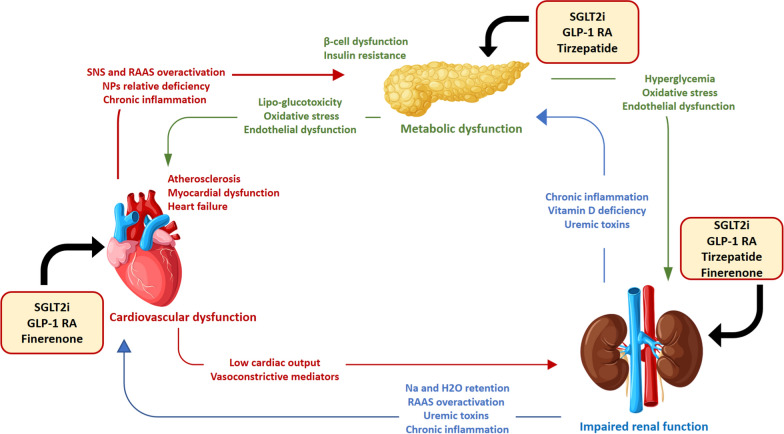
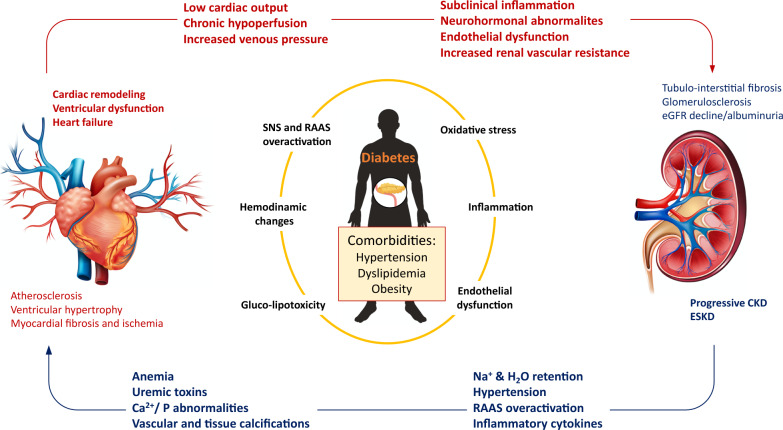
Verification
Claims the paper makes
The claims and statistics of this paper haven’t been checked yet.
Free: it reads the open-access text and checks the first 5 claims that cite a source we can check. Create a free account to check every claim.
Claims other papers make about this one
Each is checked against this paper’s own text: does it say what the citing paper says it does?
In the citing paper
“Nevertheless, sustained weight reduction can help to defer the onset and reduce the progression of these co-morbidities [68-71].”
From Recent advances in peptide-based therapies for obesity and type 2 diabetes (2024) · cites this paper as [71]
Self-check
Percentages, sums and reported differences re-computed from the paper’s own numbers.
The self-check needs the paper’s full text.
Citations
Cites
Empagliflozin, Cardiovascular Outcomes, and Mortality in Type 2 Diabetes
Zinman, B., Wanner, C., Lachin, J. M., Fitchett, D., Bluhmki, E., Hantel, S., Mattheus, M., Devins, T., Johansen, O. E., Woerle, H. J., et al. (2015) · New England Journal of Medicine · doi:10.1056/nejmoa1504720 · Cited by 12,315
Chronic kidney disease and the risks of death, cardiovascular events, and hospitalization
Go, A. S., Chertow, G. M., Fan, D., McCulloch, C. E., & Hsu, C.-Y. (2004) · New England Journal of Medicine · doi:10.1056/nejmoa041031 · Cited by 11,369
Sun, H., Saeedi, P., Karuranga, S., Pinkepank, M., Ogurtsova, K., Duncan, B. B., Stein, C., Basit, A., Chan, J. C. N., Mbanya, J. C., et al. (2022) · Diabetes Research and Clinical Practice · doi:10.1016/j.diabres.2021.109119 · Cited by 10,123 · cited 1×
“Introduction The International Diabetes Federation estimates that there are currently more than 500 million people living with diabetes worldwide, the vast majority of whom suffering from type 2 diabetes (T2D) [1].”
BackgroundBiochemistry and molecular cell biology of diabetic complications
Brownlee, M. (2001) · Nature · doi:10.1038/414813a · Cited by 9,107 · cited 1×
“In brief, according to the “unifying hypothesis”, in hyperglycemic states, the excessive intracellular glucose flux leads to mitochondrial superoxide production and exacerbation of oxidative stress, postulated as the primary initiating event in diabetes-induced organ damage [32].”
Semaglutide and Cardiovascular Outcomes in Patients with Type 2 Diabetes
Marso, S. P., Bain, S. C., Consoli, A., Eliaschewitz, F. G., Jódar, E., Leiter, L. A., Lingvay, I., Rosenstock, J., Seufert, J., Warren, M. L., et al. (2016) · New England Journal of Medicine · doi:10.1056/nejmoa1607141 · Cited by 6,900 · cited 4×
“…Hypertension [132, 136] • HF [127, 134, 136] • CV death [128, 132] • CKD [127, 131, 132, 142] • ESKD [127] • Albuminuria [132, 142] GLP1 – RA • T2D [126, 131] • Overweight/obesity [126, 131] • Hypertension [126, 134, 137] • Atherosclerosis [131, 137] • Stroke [126, 134, 137] • CV death [131, 137]…”
BackgroundInfluentialBikbov, B., Purcell, C. A., Levey, A. S., Smith, M., Abdoli, A., Abebe, M., Adebayo, O. M., Afarideh, M., Agarwal, S. K., Agudelo-Botero, M., et al. (2020) · The Lancet · doi:10.1016/s0140-6736(20)30045-3 · Cited by 6,648 · cited 1×
“Moreover, globally, there are about 64 million persons diagnosed with heart failure (HF) [2] and almost 700 million individuals affected by chronic kidney disease (CKD) [3], these three entities being the major pandemics of the twenty-first century.”
BackgroundDapagliflozin and Cardiovascular Outcomes in Type 2 Diabetes
Wiviott, S. D., Raz, I., Bonaca, M. P., Mosenzon, O., Kato, E. T., Cahn, A., Silverman, M. G., Zelniker, T. A., Kuder, J. F., Murphy, S. A., et al. (2019) · New England Journal of Medicine · doi:10.1056/nejmoa1812389 · Cited by 6,382 · cited 1×
“SGLT2i • T2D [128, 132, 136] • Overweight [132, 136] • Hypertension [132, 136] • HF [127, 134, 136] • CV death [128, 132] • CKD [127, 131, 132, 142] • ESKD [127] • Albuminuria [132, 142]”
Oxidative stress and diabetic complications
Giacco, F., & Brownlee, M. (2010) · Circulation Research · doi:10.1161/circresaha.110.223545 · Cited by 5,461
The Emerging Risk Factors Collaboration (2010) · The Lancet · doi:10.1016/s0140-6736(10)60484-9 · Cited by 5,125
Empagliflozin and Progression of Kidney Disease in Type 2 Diabetes
Wanner, C., Inzucchi, S. E., Lachin, J. M., Fitchett, D., von Eynatten, M., Mattheus, M., Johansen, O. E., Woerle, H. J., Broedl, U. C., & Zinman, B. (2016) · New England Journal of Medicine · doi:10.1056/nejmoa1515920 · Cited by 3,655 · cited 1×
“SGLT2i • T2D [128, 132, 136] • Overweight [132, 136] • Hypertension [132, 136] • HF [127, 134, 136] • CV death [128, 132] • CKD [127, 131, 132, 142] • ESKD [127] • Albuminuria [132, 142]”
Cited by
Cardiovascular-Kidney-Metabolic (CKM) syndrome: A state-of-the-art review
Sebastian, S. A., Padda, I., & Johal, G. (2024) · Current Problems in Cardiology · doi:10.1016/j.cpcardiol.2023.102344 · Cited by 343
Li, W., Shen, C., Kong, W., Zhou, X., Fan, H., Zhang, Y., Liu, Z., & Zheng, L. (2024) · Cardiovascular Diabetology · doi:10.1186/s12933-024-02352-6 · Cited by 234
Stefanakis, K., Kokkorakis, M., & Mantzoros, C. S. (2024) · Metabolism · doi:10.1016/j.metabol.2024.156057 · Cited by 142
Cardiovascular-kidney-metabolic syndrome – An integrative review
Kittelson, K. S., Gasparotto, A., Fillmore, N., & Gomes, R. D. S. (2024) · Progress in Cardiovascular Diseases · doi:10.1016/j.pcad.2024.10.012 · Cited by 134
Yue, Y., Li, P., Sun, Z., Murayama, R., Li, Z., Hashimoto, K., & Zhang, Y. (2025) · Cardiovascular Diabetology · doi:10.1186/s12933-025-02854-x · Cited by 117
“This framework highlights bidirectional, synergistic interactions among these systems that accelerate disease and worsen outcomes [3, 4].”
Xie, K., Cao, H., Ling, S., Zhong, J., Chen, H., Chen, P., & Huang, R. (2025) · Frontiers in Endocrinology · doi:10.3389/fendo.2025.1526482 · Cited by 152
“Elevated blood sugar and high blood pressure accelerate injury to renal microvessels, impair the normal function of renal tubules and glomeruli, and ultimately lead to a gradual decline in renal function (36).”
Ou, H., Wei, M., Li, X., & Xia, X. (2025) · Cardiovascular Diabetology · doi:10.1186/s12933-025-02848-9 · Cited by 127
“The CTI index is calculated according to this formula [23] : CTI = 0.412 × Ln (CRP [mg/L]) + Ln (TG [mg/ dl] × FPG [mg/dl])/2.”
InfluentialZhang, N., Liu, X., Wang, L., Zhang, Y., Xiang, Y., Cai, J., Xu, H. Y., Xiao, X., & Zhao, X. (2024) · Cardiovascular Diabetology · doi:10.1186/s12933-024-02347-3 · Cited by 109
“This result was lower than previously reported [3], probably because of insufficiently follow-up times.”
BackgroundResultInfluentialZheng, G., Jin, J., Wang, F., Zheng, Q., Shao, J., Yao, J., Huang, P., Zhou, H., & Zhou, J. (2025) · Cardiovascular Diabetology · doi:10.1186/s12933-025-02589-9 · Cited by 108
Dong, B., Chen, Y., Yang, X., Chen, Z., Zhang, H., Gao, Y., Zhao, E., & Zhang, C. (2025) · Cardiovascular Diabetology · doi:10.1186/s12933-025-02729-1 · Cited by 103
“CKM syndrome represents an inter-connected spectrum of conditions, wherein metabolic abnormalities, CKD, and cardiovascular diseases (CVD) synergistically elevate the risk of multiorgan dysfunction and adverse cardiovascular outcomes [1, 2].”
InfluentialGlobal burden of chronic kidney disease due to diabetes mellitus, 1990-2021, and projections to 2050
Ma, X., Liu, R., Xi, X., Zhuo, H., & Gu, Y. (2025) · Frontiers in Endocrinology · doi:10.3389/fendo.2025.1513008 · Cited by 116
“Studies have found that nearly half of patients with type 2 diabetes and one-third of patients with type 1 diabetes can progress to CKD (6).”
Tan, M., Zhang, Y., Zhu, S.-X., Wu, S., Zhang, P., & Gao, M. J. (2025) · Cardiovascular Diabetology · doi:10.1186/s12933-025-02689-6 · Cited by 93
“In CKM stages 2–3, patients often already suffer from hypertension, diabetes, or CKD [55].”
Hu, Y., Yu, L., Li, J., Li, X., Yu, M., & Cui, W. (2025) · Cardiovascular Diabetology · doi:10.1186/s12933-025-02593-z · Cited by 85
Tsai, M., Kao, J. T., Wong, C., Liao, C.-T., Lo, W., Chien, K., Wen, C.-P., Wu, K., & Wu, M. (2025) · PLoS Medicine · doi:10.1371/journal.pmed.1004629 · Cited by 97
Seidu, S., Alabraba, V., Davies, S., Newland‐Jones, P., Fernando, K., Bain, S. C., Diggle, J., Evans, M., James, J., Kanumilli, N., et al. (2024) · Diabetes Therapy · doi:10.1007/s13300-024-01550-5 · Cited by 98
“With swift and effective intervention following T2DM diagnosis, the course of disease can be altered to impede or prevent gradual progression toward chronic kidney disease (CKD)/diabetic kidney disease (DKD) and cardiovascular disease (CVD) [8, 9, 12, 37].”
Zheng, Q., Cao, Z., Teng, J., Lü, Q., Huang, P., & Zhou, J. (2025) · Cardiovascular Diabetology · doi:10.1186/s12933-025-02742-4 · Cited by 80
Li, J., & Wei, X. (2025) · American Journal of Preventive Cardiology · doi:10.1016/j.ajpc.2025.100985 · Cited by 78
“In addition, a recent study reported a CKD prevalence of nearly 40 % among individuals with T2D and 50 % among individuals with HF [18].”
Huang, X., Liang, J., Zhang, J., Fu, J., Xie, W., & Zheng, F. (2024) · Psychological Medicine · doi:10.1017/s0033291724002381 · Cited by 64
“Epidemiological research indicated that metabolic, cardiovascular, and renal diseases often coexist, and growing evidence supported the pathophysiological interactions between these diseases (Grundy, Hansen, Smith, Cleeman, & Kahn, 2004; Marassi & Fadini, 2023; Rangaswami et al., 2019).”
Chen, Y., Lian, W., Wu, L., Huang, A., Zhang, D., Liu, B., Qiu, Y., & Wei, Q. (2025) · Cardiovascular Diabetology · doi:10.1186/s12933-025-02692-x · Cited by 64
“This interrelation substantially elevates the risk of adverse cardiovascular events in affected individuals [2].”
Wu, L., & Huang, Z. (2024) · Scientific Reports · doi:10.1038/s41598-024-82881-y · Cited by 51
Prevalence and Mortality of Cardiovascular-Kidney-Metabolic Syndrome in China
Zheng, C., Cai, A., Sun, M., Wang, X., Song, Q., Pei, X., Cao, X., Tian, Y., Lip, G. Y. H., Parati, G., et al. (2025) · JACC Asia · doi:10.1016/j.jacasi.2025.04.007 · Cited by 71
Liu, Y., Li, W., Zhou, H., Zeng, H., Jiang, J., Wang, Q., Liu, T., Liu, X., Chen, P., & Zhong, X. (2025) · Cardiovascular Diabetology · doi:10.1186/s12933-025-02732-6 · Cited by 50
“Given the growing recognition of the intricate interplay among obesity, metabolic disorders, chronic kidney disease (CKD), and cardiovascular dysfunction, CKM syndrome population may be at an enhanced risk for cardiovascular disease (CVD) [4–6].”
Integrating liver endpoints in clinical trials of cardiovascular and kidney disease
Zannad, F. M., Sanyal, A. J., Butler, J., Miller, V., & Harrison, S. A. (2024) · Nature Medicine · doi:10.1038/s41591-024-03223-z · Cited by 52
Liu, L., Yu, G., Ji, X., Wang, Y., & He, H. (2025) · Cardiovascular Diabetology · doi:10.1186/s12933-025-02928-w · Cited by 42
“Evidence suggests that CRM multimorbidity does not occur at random but follows a sequential and cumulative trajectory, typically from a disease-free state to the first chronic condition, followed by the accumulation of additional diseases [8, 9].”
Tang, H., Huang, J., Zhang, X., Chen, X., Yang, Q., Luo, N., Lin, H., Hong, J., Wu, S., Tian, C., et al. (2025) · Cardiovascular Diabetology · doi:10.1186/s12933-025-02693-w · Cited by 38
“However, the exact mechanism by which CVD and CKD contribute to metabolic dysregulation remains controversial [5].”
InfluentialTang, J., Xu, Z., Ren, L., Xu, J., Chen, X., Jin, Y., Liang, R., & Zhang, H. (2024) · Lipids in Health and Disease · doi:10.1186/s12944-024-02400-w · Cited by 37
Pathophysiology and emerging biomarkers of cardiovascular-renal-hepato-metabolic syndrome
Nzobokela, J., Muchaili, L., Mwambungu, A., Masenga, S. K., & Kirabo, A. (2025) · Frontiers in Cardiovascular Medicine · doi:10.3389/fcvm.2025.1661563 · Cited by 45
Zhang, H., Huang, S., Fang, Y., Zhang, H., Yang, W., & Yu, M. (2025) · Cardiovascular Diabetology · doi:10.1186/s12933-025-02860-z · Cited by 37
Wu, H., Zhou, Y., Lai, X., Ma, B., Ding, L., Zhu, X., Chen, Z., & Liu, Z. (2025) · Cardiovascular Diabetology · doi:10.1186/s12933-025-02932-0 · Cited by 37
Cases, A., Broseta, J. J., Marqués, M., Guldris, S. C., Mauro, J. C. J., Arroyo, R. A., & Ortíz, A. (2024) · Nefrología (English Edition) · doi:10.1016/j.nefroe.2024.11.011 · Cited by 43
Recent advances in peptide-based therapies for obesity and type 2 diabetes
Bailey, C. J., Flatt, P. R., & Conlon, J. M. (2024) · Peptides · doi:10.1016/j.peptides.2024.171149 · Cited by 25
“Nevertheless, sustained weight reduction can help to defer the onset and reduce the progression of these co-morbidities [68 – 71].”
BackgroundMarassi, M., & Fadini, G. P. (2024) · Clinical Therapeutics · doi:10.1016/j.clinthera.2024.11.005 · Cited by 27
Self-citationIacoviello, M., Gori, M., Grandaliano, G., Minutolo, R., Pitocco, D., & Trevisan, R. (2025) · Frontiers in Cardiovascular Medicine · doi:10.3389/fcvm.2025.1583702 · Cited by 35
C‐peptide in diabetes: A player in a dual hormone disorder?
Dakroub, A. H., Dbouk, A., Asfour, A., Nasser, S. A., EL‐Yazbi, A. F., Sahebkar, A., Eid, A. A., Iratni, R., & Eid, A. H. (2024) · Journal of Cellular Physiology · doi:10.1002/jcp.31212 · Cited by 26
“Chronically elevated glucose levels in the blood have been linked to several complications affecting the kidneys, eyes, heart, and nervous system (Marassi & Fadini, 2023).”
BackgroundFernando, K., Connolly, D. L., Darcy, E., Evans, M., Hinchliffe, W., Holmes, P., & Strain, W. D. (2025) · Diabetes Therapy · doi:10.1007/s13300-025-01738-3 · Cited by 32
“This interconnected nature of CKM conditions, where dysfunction in one organ system often exacerbates or drives dysfunction in another, emphasises the need for therapies targeting multiple systems to improve patient outcomes [1, 4, 21, 22].”
InfluentialNovel Cardiometabolic Medications in the Cardiovascular-Kidney-Metabolic Syndrome Era
Pohlman, N., Patel, P. N., Essien, U. R., Tang, J., & Joseph, J. J. (2025) · The Journal of Clinical Endocrinology & Metabolism · doi:10.1210/clinem/dgaf295 · Cited by 28
Chen, J., Yan, L., He, L., & Wang, W. (2025) · Diabetology & Metabolic Syndrome · doi:10.1186/s13098-025-01882-7 · Cited by 27
“The development of CKM syndrome is closely linked to pathological mechanisms such as endothelial dysfunction, inflammatory responses, and insulin resistance (IR), which also form the core pathological basis for the onset and progression of CVD [1, 3, 4].”
Cherney, D. Z. I., Belmar, N., Bjornstad, P., Chacko, M. M., Gunnarsson, T. P., Hodgin, J. B., Kretzler, M., Pruijm, M. T., Schytz, P. A., & Tuttle, K. R. (2025) · Nephrology Dialysis Transplantation · doi:10.1093/ndt/gfaf114 · Cited by 26
“In addition, there is growing interest in the interplay among CKD, CVD and T2D, termed cardiovascular– kidney–metabolic (CKM) syndrome, with a significant proportion of diabetes-associated excess CVD risk occurring in people with CKD [5 –7 ].”
Mikłosz, A., & Chabowski, A. (2023) · Diabetes Obesity and Metabolism · doi:10.1111/dom.15375 · Cited by 24
Semaglutide: a key medication for managing cardiovascular-kidney-metabolic syndrome
MacIsaac, R. J. (2025) · Future Cardiology · doi:10.1080/14796678.2025.2511412 · Cited by 31
“…pathophysiology of CKM syndrome involves a complex interplay of hemodynamic and neurohormonal mechanisms, including sympathetic overactivity, renin-angiotensin-aldosterone system (RAAS) activation, oxidative stress, and chemical mediators (e.g., nitric oxide, prostaglandins, endothelins) [14,15].”
Han, S.-S., Liu, Q., Zeng, Z.-M., Li, Y., Li, P.-W., Cheng, F.-X., Zhong, P., & Li, J.-B. (2026) · Cardiovascular Diabetology · doi:10.1186/s12933-026-03084-5 · Cited by 31
“…with comorbid hypertension, diabetes, or CKD, these mechanisms converge with hemodynamic stress and glomerular hypertension to drive myocardial fibrosis, renal functional decline, and ultimately precipitate acute cardiovascular events including myocardial infarction and heart failure [4, 72].”
Carvalho, L. R. R. A., Shimari, M., Boeder, A. M., Zhuge, Z., Cai, M., Leijding, C., Gastaldello, S., Kleschyov, A. L., Schiffer, T. A., Guimarães, D. D., et al. (2024) · Lab Animal · doi:10.1038/s41684-024-01457-5 · Cited by 23
“Taken individually, each of these three conditions is associated with elevated morbidity and mortality and represents one of the biggest concerns of preventive health systems in the world 1 .”
Ultra-processed foods and cardio-kidney-metabolic syndrome: A review of recent evidence
Kanbay, M., Özbek, L., Güldan, M., Abdel‐Rahman, S. M., Narin, A. E., & Ortíz, A. (2025) · European Journal of Internal Medicine · doi:10.1016/j.ejim.2025.03.017 · Cited by 27
Rethinking the Diabetes–Cardiovascular Disease Continuum: Toward Integrated Care
Caturano, A., Morciano, C., Zielińska, K., Russo, V., Perrone, M. A., Berra, C., & Conte, C. (2025) · Journal of Clinical Medicine · doi:10.3390/jcm14186678 · Cited by 26
“For instance, the cardio–renal–metabolic axis links hyperglycemia and insulin resistance to maladaptive kidney activation of the renin– angiotensin–aldosterone system (RAAS), which in turn worsens cardiac remodeling and vascular stiffness [27].”
Duan, Y., Yang, K., Zhang, T., Guo, X., Yin, Q., & Liu, H. (2025) · Frontiers in Nutrition · doi:10.3389/fnut.2025.1548851 · Cited by 23
Chronic kidney disease and menopausal health: An EMAS clinical guide
Cevik, E. C., Erel, C. T., Erkan, İ. B. Ö., Sarafidis, P. A., Armeni, E., Fistonić, I., Hillard, T., Hirschberg, A. L., Męczekalski, B., Mendoza, N., et al. (2024) · Maturitas · doi:10.1016/j.maturitas.2024.108145 · Cited by 21
Tian, Y., Wang, J., Zhu, T., Li, X., Zhang, H., Zhao, X., Yang, X., Luo, Y., Tao, L., Wu, Z., et al. (2025) · Nutrients · doi:10.3390/nu17111783 · Cited by 19
“Compared to those with a single CRMD, patients with CRMM may experience greater disability, more complications, and a higher mortality risk [3,6–8].”
InfluentialYing, Q., He, F., Wu, L., Wei, Q., & Xu, J. (2025) · Diabetology & Metabolic Syndrome · doi:10.1186/s13098-025-01947-7 · Cited by 24
Liu, J., Liu, Z., Zhou, Y., Liu, Y., Weijian, S., Wang, N., Wu, L., Liu, X., Yin, X., Wang, Y., et al. (2025) · Journal of Affective Disorders · doi:10.1016/j.jad.2025.04.072 · Cited by 15
Liang, X., Lai, K., Li, X., Gui, S., Xing, Z., & Li, Y. (2025) · Diabetology & Metabolic Syndrome · doi:10.1186/s13098-025-01659-y · Cited by 18
Shang, Z., Feng, S., Qian, H., Deng, Z., Wang, Y., & Gao, Y.-M. (2025) · Renal Failure · doi:10.1080/0886022x.2024.2446656 · Cited by 15
Chen, M., Cai, S., Jia, Q., Suo, Y., Tang, Y., Shi, Y., Zhu, X., & Zhang, H. (2025) · Journal of Diabetes · doi:10.1111/1753-0407.70046 · Cited by 18
Kim, B. S., Kim, H., Kim, H., Lee, J., Shin, J., & Sung, K. (2025) · Journal of Clinical Medicine · doi:10.3390/jcm14113888 · Cited by 19
“First, CKM staging identifies patients at high risk and stratifies risk via longitudinal CKM stage changes [19].”
Chen, T., Yin, H., Zhou, Y., & Liang, M. (2025) · Nutrition Metabolism and Cardiovascular Diseases · doi:10.1016/j.numecd.2025.104192 · Cited by 15
Yin, X., Zou, J., & Yang, J. (2025) · Frontiers in Nutrition · doi:10.3389/fnut.2025.1595119 · Cited by 13
“This hypothesis is progressively substantiated by scientific research, illustrating a constant association among metabolic dysfunctions, CVDs, and CKD, with these illnesses often co-occurring in patients (2, 3).”
Pottegård, A., Andersen, J. H., Søndergaard, J., Rasmussen, L., Kildegaard, H., Vilsbøll, T., & Thomsen, R. W. (2024) · Diabetes Obesity and Metabolism · doi:10.1111/dom.15912 · Cited by 14
“6,7 CVD affects approximately one-third of the T2D population 8,9 and accounts for a significant proportion of mortality.”
Lee, S.-Y., Ciou, D., Lee, H.-Y., Chen, J., Wei, Y.-C., & Shieh, M. (2024) · Biosensors · doi:10.3390/bios14100463 · Cited by 16
Shen, X., Liu, Q., Lin, T., Zheng, D., & He, Q. (2025) · International Urology and Nephrology · doi:10.1007/s11255-025-04403-7 · Cited by 15
Taub, P. R., Greene, S. J., & Fudim, M. (2025) · Heart Failure Reviews · doi:10.1007/s10741-025-10520-3 · Cited by 15
“In the heart, the effects of sustained proinflammatory processes result in ventricular hypertrophy, fibrosis, and damage to the microvasculature supplying the heart, which may manifest as reduced cardiac output [11, 12].”
GLP-1 RA for cardiometabolic risk reduction in obesity – How do we best describe benefit and value?
Kumar, S., & Blaha, M. J. (2024) · American Journal of Preventive Cardiology · doi:10.1016/j.ajpc.2024.100682 · Cited by 13
“Indeed, there is growing evidence that supports the interplay be-tween obesity, diabetes, chronic kidney disease (CKD), and cardiovascular disease (CVD) [6].”
BackgroundZhu, L., Wu, Y., Yang, Y., Wang, L., Dou, S., Sun, F., & Xiang, F. (2026) · Cardiovascular Diabetology · doi:10.1186/s12933-025-03057-0 · Cited by 11
“The complex interactions and shared pathological mechanisms among these diseases further contribute to the disease burden and mortality risk [3].”
An Updated Review of the Management of Chronic Heart Failure in Patients with Chronic Kidney Disease
Tumelty, E. H., Chung, I., Hussain, S. A., Ali, M. A., Addada, H., & Banerjee, D. (2024) · Reviews in Cardiovascular Medicine · doi:10.31083/j.rcm2504144 · Cited by 13
“Furthermore, both conditions share several common comorbidities including hypertension, atherosclerosis, type 2 diabetes mellitus, obesity and metabolic syndrome, the prevalence of which are increasing [9–11].”
BackgroundCases, A., Broseta, J. J., Marqués, M., Guldris, S. C., Mauro, J. C. J., Arroyo, R. A., & Ortíz, A. (2024) · Nefrología · doi:10.1016/j.nefro.2024.05.001 · Cited by 18
Zhang, J. J., Huang, H., Lin, Z., Dong, J., Zhang, X., Gao, J., Liu, Y., Li, C., & Cui, Z. (2025) · Frontiers in Public Health · doi:10.3389/fpubh.2024.1480576 · Cited by 11
“It is considered that these conditions frequently coexist (10).”
Revisiting the role of IL-27 in obesity-related metabolic diseases: safeguard or perturbation?
An, J., Fu, D., Chen, X., Guan, C., Li, L., Bai, J., & Lv, H. (2025) · Frontiers in Immunology · doi:10.3389/fimmu.2024.1498288 · Cited by 13
Shi, K., Zhang, G., Fu, H., Li, X., Gao, Y., Shi, R., Xu, H., Li, Y., Guo, Y., & Yang, Z. (2024) · Cardiovascular Diabetology · doi:10.1186/s12933-024-02243-w · Cited by 14
“The increased risk of cardiovascular events associated with the highest HbA1c level in this study cohort may include both direct and indirect effects of hyperglycemia [20, 21].”
BackgroundCardiovascular-Kidney-Metabolic Syndrome Among Healthcare Workers in Chinese Tertiary Hospital
Zhang, Q., Zheng, J., Wang, G., Jiang, S., Gao, P., Sun, S., Ding, X., & Wu, Y. (2024) · Risk Management and Healthcare Policy · doi:10.2147/rmhp.s488289 · Cited by 11
Zhou, D.-C., Liang, J.-L., Hu, X., Fang, H.-C., Liu, D.-L., Zhao, H., Li, H.-L., & Xu, W. (2024) · PLoS ONE · doi:10.1371/journal.pone.0314152 · Cited by 10
Liu, L., Sun, H., Yi, L., Wang, G., & Zou, Y. (2024) · BMC Cardiovascular Disorders · doi:10.1186/s12872-024-04407-8 · Cited by 11
Wang, G., Wu, Y., Chen, A., Hu, L., Wang, Z., Xie, X., He, Q., Xue, Y., Jia, Y., & Zheng, Z. (2025) · Journal of Affective Disorders · doi:10.1016/j.jad.2025.119429 · Cited by 12
Association between body roundness index and advanced cardiovascular-kidney-metabolic syndrome
Chen, Y., Tu, H., Liang, M., & Shen, M. (2025) · Frontiers in Nutrition · doi:10.3389/fnut.2025.1623766 · Cited by 14
Finerenone in Chronic Kidney Disease: A Comprehensive Review of Mechanisms, Efficacy and Safety
Hu, Y., Li, C., Li, S., Xu, L., Wang, Y., & Dong, B. (2025) · Diabetes/Metabolism Research and Reviews · doi:10.1002/dmrr.70075 · Cited by 15
“The pathophysiological mechanisms of CVD, CKD, T2DM and obesity are interconnected and mutually reinforcing [97].”
Mei, D. A., Imberti, J. F., Vitolo, M., Romiti, G. F., Corica, B., Mantovani, M., Bonini, N., Cherubini, B., Marín, F. R., Diemberger, I., et al. (2025) · European Journal of Internal Medicine · doi:10.1016/j.ejim.2025.106512 · Cited by 14
Wei, S., Shu, Z., Li, X., Zhong, S., Xiao, L., Shen, R., Lu, X., He, L., Zhang, Y., Quan, Y., et al. (2025) · Metabolism · doi:10.1016/j.metabol.2025.156452 · Cited by 11
Hua, R., Yang, A., Gao, L., Chow, E., Ji, W., & Cheung, Y. T. (2025) · Diabetes Obesity and Metabolism · doi:10.1111/dom.70067 · Cited by 9
Addressing unmet needs for chronic kidney disease treatment in type 1 diabetes: A review
Tuttle, K. R., Ji, L., Mathieu, C., & Rosen, J. (2025) · Diabetes Obesity and Metabolism · doi:10.1111/dom.70180 · Cited by 8
“28 The prevalence of obesity in people with T1D is rising and is associated with higher risk of CKD in this population, 29 which supports the concept that obesity and other factors in addition to hyper-glycemia contribute to CKD in T1D.”
Romiti, G. F., Mei, D. A., Corica, B., Proietti, M., Boriani, G., Olshansky, B., Chao, T., Huisman, M. V., Lip, G. Y. H., & the GLORIA-AF Investigators (2025) · Cardiovascular Diabetology · doi:10.1186/s12933-025-02950-y · Cited by 11
“The CKM syndrome predisposes to end-organ damage, and is responsible for a significant proportion of cardio-vascular mortality worldwide [1, 2].”
Wang, T., Zhang, L., Chen, P., Chen, C., Xu, L., & Guo, M. (2025) · BMC Public Health · doi:10.1186/s12889-025-25830-2 · Cited by 9
“Cardiovascular-kidney-metabolic (CKM) syndrome has been recently conceptualized to frame the integrated pathophysiology connecting metabolic risk factors, chronic kidney disease (CKD), and cardiovascular disease (CVD) [1].”
Li, S., Zhang, Y. L., Fu, K., Fang, K., Zheng, L., Lin, Y., & Wu, J. (2025) · Journal of Advanced Research · doi:10.1016/j.jare.2025.06.072 · Cited by 11
“Comor-bidities such as cardiovascular or renal diseases may further increase risk due to the underlying metabolic burden [36,37].”
Wei, Y., & Hu, X. (2025) · American Journal of Preventive Cardiology · doi:10.1016/j.ajpc.2025.101060 · Cited by 11
“A growing number of studies suggest that the clinical burden attributed to CKM syndrome is disproportionately driven by clinical CVD [5-7].”
Liang, Z., Qing, S., Liang, Y., Zhang, R., Sun, M., Ren, Z., Xu, C. C., Lin, F., & Wang, Y. (2025) · BMC Public Health · doi:10.1186/s12889-025-23906-7 · Cited by 8
“Based on the pathophysiological mechanisms, prevention and treatment strategies, as well as disease risks, the CKM syndrome is classified into five stages (Stage 0 to Stage 4), as follows [1, 2]: Stage 0: No risk factors for CKM.”
He, Y., Zhou, X. J., Huang, W., Wu, Y., Zhang, Z., Jin, Y., Li, F., Chen, G., Tao, K. X., Zhan, Y., et al. (2025) · Ecotoxicology and Environmental Safety · doi:10.1016/j.ecoenv.2025.118885 · Cited by 13
Yang, Z., Wu, S., Li, Y.-J., Liu, H., Zhao, M., Xu, Y., Chen, Y.-Y., Chen, Y., & Lip, G. Y. H. (2025) · Journal of Clinical Medicine · doi:10.3390/jcm14176008 · Cited by 8
“CKM patients are often in a state of chronic systemic inflammation, where oxidative stress induced by insulin resistance, hyperglycemia, and lipid metabolism disorders leads to cellular dysfunction, further exacerbating degenerative changes in the cardiac, renal, and metabolic systems [23,24].”
Wei, Y., & Li, J. (2025) · American Journal of Preventive Cardiology · doi:10.1016/j.ajpc.2025.101312 · Cited by 11
“In addition, individuals with CKD and/or diabetes exhibit worsened cardiovascular prognoses [5].”
Zhang, S., Tang, H., Pan, L., & Zhou, M. (2025) · BMC Public Health · doi:10.1186/s12889-025-25894-0 · Cited by 7
“Sympathetic overactivity, the renin-angiotensin-aldosterone system (RAAS), inflammation, and oxidative stress all play roles in the initiation and development of diseases linked to CKM syndrome [4, 21–24].”
Xue, E., Zhao, J., Chen, B., Ye, J., Wu, J., Shao, J., Li, X., & Ye, Z. (2026) · Metabolism · doi:10.1016/j.metabol.2026.156596 · Cited by 8
Jin, X., Feng, Y., Liu, C., Cheng, T., Jin, Y., Shao, Z., Bian, Y., Wu, H., Li, J., Liu, Y., et al. (2026) · Cardiovascular Diabetology · doi:10.1186/s12933-026-03149-5 · Cited by 8
“It emphasizes the interactions and co-morbid mechanisms among the cardiovascular, renal, and metabolic systems, establishing a novel pathophysiological framework for systematically compre-hending the link between metabolic abnormalities and cardiovascular disease [5].”
Chen, S., Kong, Y., Wang, N., Kang, N., Chen, H., Zhang, Z., Liu, L., & Chen, L. (2024) · Scientific Reports · doi:10.1038/s41598-024-69556-4 · Cited by 8
“Epidemiological research has repeatedly shown that patients with cardiovascular, renal, and metabolic illnesses frequently overlap and coexist with one another 41 .”
Ramos, T. A., Verma, A., Speirits, I. A., Zhang, L., McInally, J., McShane, C., Kennon, B., Forsyth, P., Lowrie, R., & Johnson, C. F. A. (2025) · International Journal of Clinical Pharmacy · doi:10.1007/s11096-025-01938-8 · Cited by 8
“Hypertension and diabetes are the most common causes of CKD [12, 51], and our population reflected this with 72% of participants being hypertensive and 30% T2DM [52].”
Wang, Y., Wang, Y., He, X., & Li, X. (2025) · Frontiers in Endocrinology · doi:10.3389/fendo.2025.1554637 · Cited by 19
“…type 2 (T2DM) who commenced oral hypoglycemic therapy between 2008 and 2018 and had no history of cardiovascular disease or CKD, it was found that approximately 24% of initial events during the observation period were associated with HF, and 36% were related to the progression of CKD (2, 3).”
Cardiorenal Syndrome in the Elderly: Challenges and Considerations
Jarocki, M., Green, S., Wu, H. H. L., & Chinnadurai, R. (2025) · Geriatrics · doi:10.3390/geriatrics10040104 · Cited by 13
“Cardiovascular, kidney, and metabolic diseases overlap, and their coexistence has been demonstrated in many epidemiological studies [22].”
Li, J., Xu, Z., Lin, J., Luo, S., & Xu, S. (2025) · Frontiers in Nutrition · doi:10.3389/fnut.2025.1612293 · Cited by 12
“For example, poor blood glucose regulation has been linked to a more rapid deterioration of kidney function in individuals with diabetic nephropathy (20, 39).”
Zhang, Y.-P., Gao, J., Liao, G.-H., Gao, Q., Huang, Z.-G., Zeng, C.-R., Cai, Y.-W., Ruan, Y.-X., Chen, Z.-T., Chen, Y., et al. (2025) · The Journal of Prevention of Alzheimer s Disease · doi:10.1016/j.tjpad.2025.100325 · Cited by 9
Wang, W., Liu, Y., Yuan, D., Yang, Y., Yang, Y., Ji, D., Pan, Y., Zhang, Y., Xu, J., Guo, H., et al. (2025) · Public Health · doi:10.1016/j.puhe.2025.106020 · Cited by 9
Practical guidelines for addressing common questions and misconceptions about the ketogenic diet
Rice, S. M., & Reynolds, D. B. (2025) · Journal of Metabolic Health · doi:10.4102/jmh.v8i1.113 · Cited by 6
Cai, J., Zheng, D., Xu, S., Jiang, S., Jiang, Y., Zhang, R., Li, C., Zhang, L., & Wang, B. (2025) · Diabetology & Metabolic Syndrome · doi:10.1186/s13098-025-02007-w · Cited by 8
“Our findings align with prior cross-sectional studies highlighting BRI’s predictive capacity for hypertension, dyslipidemia, and insulin resistance [12–14, 31] , yet Notably, the study analyzed the association between BRI and CVD across different stages of the CKM syndrome population.”
Interconnections between local Schumann resonances and episodes of kidney disease
Невойт, Г. В., Stankuvienė, A., Jaruševičius, G., McCraty, R., Landauskas, M., Potyazhenko, M., Bumblytė, I. A., & Vainoras, A. (2024) · Journal of Complexity in Health Sciences · doi:10.21595/chs.2024.23941 · Cited by 6
de la Flor, J. C., Morales, B. C., Velasco, E. B., Hernandez, M. R., González-Mariño, R. Z., Tudero, C. R., Benites-Flores, I. R., Espinoza, C. V., Terrones, M. C., Guldris, S. C., et al. (2024) · Medicina · doi:10.3390/medicina60122096 · Cited by 8
Chen, Q., Li, Y., He, H., Xie, Y., Fu, D., Gao, R., Li, N., Fu, S., Yuan, M., Sun, Y., et al. (2025) · Journal of clinical lipidology · doi:10.1016/j.jacl.2025.09.002 · Cited by 5
Li, Z., Ren, W., Li, X., Duan, R., Gao, L., Li, J., Bai, Y., Yan, Y., Lü, A., Zhao, A., et al. (2025) · BMC Cardiovascular Disorders · doi:10.1186/s12872-025-05295-2 · Cited by 6
Metadata
- Authors
- Marassi, M., & Fadini, G. P.
- Affiliations
- University of Padua (IT)
- Corresponding author
- Fadini, Gian Paolo
- ORCID
- Fadini, Gian Paolo
- Venue
- Cardiovascular Diabetology
- Published
- 2023-07-31
- Volume
- 22
- Issue
- 1
- Pages
- 195-195
- ISSN
- 1475-2840 (ISSN-L)
- PMC
- PMC10391899
- OpenAlex
- W4385415147
- Semantic Scholar
- 1c0031582da7b39aa3f480b56ec0a630db68cc78
- Cited by
- 386
- References
- 146
- Citations by year
- 2026: 173 · 2025: 156 · 2024: 54 · 2023: 3
- FWCI
- 16.23
- Type
- journal article
- Language
- en
- Open access
- gold
- doi.org
- Licence
- cc-by
- creativecommons.org/licenses/by/4.0 (tdm)
- creativecommons.org/licenses/by/4.0 (vor)
- Locations
- Cardiovascular Diabetology (publishedVersion, cc-by)
- PubMed Central (publishedVersion, cc-by)
- PubMed (publishedVersion)
- Padua Research Archive (University of Padova) (submittedVersion, cc-by)
- DOAJ (DOAJ: Directory of Open Access Journals) (submittedVersion, cc-by-sa)
- Funders
- Italian Diabetes Society
- Università degli Studi di Padova
- Topics
- Health Sciences › Medicine › Nephrology › Chronic Kidney Disease and Diabetes
- Health Sciences › Medicine › Endocrinology, Diabetes and Metabolism › Diabetes, Cardiovascular Risks, and Lipoproteins
- Health Sciences › Medicine › Cardiology and Cardiovascular Medicine › Cardiovascular Function and Risk Factors
- Keywords
- type 2 diabetes, cardiovascular disease, chronic kidney disease, hyperglycemia, metabolic dysfunction, pathophysiology, prognosis
- MeSH terms
- Cardiovascular Diseases, Diabetes Mellitus, Type 2, Humans, Kidney, Metabolic Diseases, Renal Insufficiency, Chronic, Cardio-Renal Syndrome
About these checks
Registry, retraction, Cites and statistics results are computed, not judged, with one exception: a printed reference that no index lists is read once by a model before it counts as a citation error. Claims are extracted by a model and kept only when their quote appears verbatim in the text; each cited source is then checked, with a model’s help, for whether it says what the claim relies on. Those verdicts can be wrong — read the claim’s quote and the cited source before relying on one.
Statistics and arithmetic are recomputed, not judged.
Confidence bands are shown only for fields calibrated on our annotated test set. None is calibrated yet, so no band is shown.
What counts as a claim ›How we measure confidence ›How we check this ›
Are you an author, or do you see a problem with this page? Request a review
Data sources
Bibliographic data: Semantic Scholar, OpenAlex, Crossref.
Contains information from the Semantic Scholar Academic Graph Datasets, made available under the ODC Attribution License (ODC-BY 1.0).
Semantic Scholar’s data is described in: Kinney, R., et al. (2023). The Semantic Scholar Open Data Platform. arXiv:2301.10140.
