

GIP receptor agonism improves dyslipidemia and atherosclerosis independently of body weight loss in preclinical mouse model for cardio-metabolic disease
Open accessPublished version of a preprint
The DOI matches its Crossref record; 30 of the 30 references it cites were found in a registry or an index.
Abstract
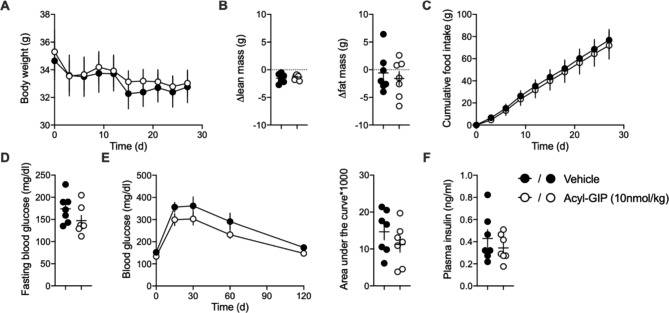
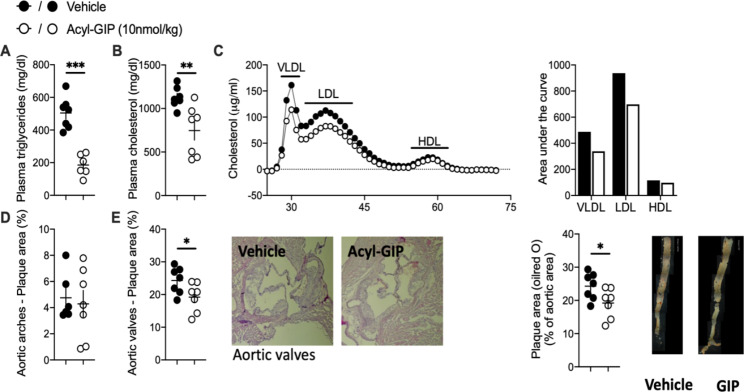
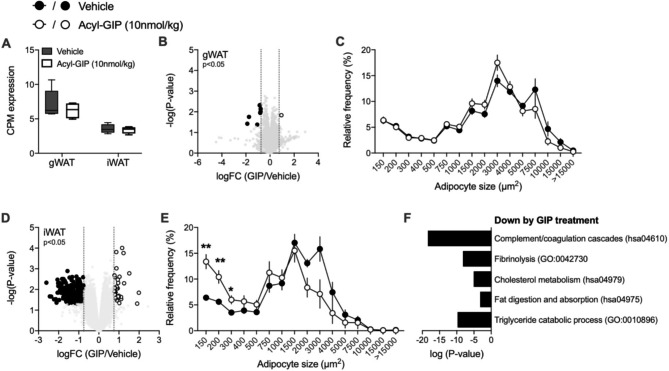
Background: Agonism at the receptor for the glucose-dependent insulinotropic polypeptide (GIPR) is a key component of the novel unimolecular GIPR:GLP-1R co-agonists, which are among the most promising drugs in clinical development for the treatment of obesity and type 2 diabetes. The therapeutic effect of chronic GIPR agonism to treat dyslipidemia and thus to reduce the cardiovascular disease risk independently of body weight loss has not been explored yet. Methods: After 8 weeks on western diet, LDL receptor knockout (LDLR-/-) male mice were treated with daily subcutaneous injections of long-acting acylated GIP analog (acyl-GIP; 10nmol/kg body weight) for 28 days. Body weight, food intake, whole-body composition were monitored throughout the study. Fasting blood glucose and intraperitoneal glucose tolerance test (ipGTT) were determined on day 21 of the study. Circulating lipid levels, lipoprotein profiles and atherosclerotic lesion size was assessed at the end of the study. Acyl-GIP effects on fat depots were determined by histology and transcriptomics. Results: Herein we found that treatment with acyl-GIP reduced dyslipidemia and atherogenesis in male LDLR-/- mice. Acyl-GIP administration resulted in smaller adipocytes within the inguinal fat depot and RNAseq analysis of the latter revealed that acyl-GIP may improve dyslipidemia by directly modulating lipid metabolism in this fat depot. Conclusions: This study identified an unanticipated efficacy of chronic GIPR agonism to improve dyslipidemia and cardiovascular disease independently of body weight loss, indicating that treatment with acyl-GIP may be a novel approach to alleviate cardiometabolic disease.
Overview
The claims and statistics of this paper haven’t been checked yet.
Free: it reads the open-access text and checks the first 5 claims that cite a source we can check. Create a free account to check every claim.
Integrity signals
Registry
Cites
Statistics
Figures
Verification
Claims the paper makes
The claims and statistics of this paper haven’t been checked yet.
Free: it reads the open-access text and checks the first 5 claims that cite a source we can check. Create a free account to check every claim.
Claims other papers make about this one
Each is checked against this paper’s own text: does it say what the citing paper says it does?
The cited source says what the claim attributes to it.
In the citing paper
“GIPR agonism further promotes bone formation [40], has beneficial effects in animal models for atherosclerosis [41–43] and neurodegenerative diseases [44, 45], and decreases body weight in obese rodents via inhibition of food intake [46, 47].”
From Dual and Triple Incretin-Based Co-agonists: Novel Therapeutics for Obesity and Diabetes (2024) · cites this paper as [41]
Self-check
Percentages, sums and reported differences re-computed from the paper’s own numbers.
The self-check needs the paper’s full text.
Citations
Cites
Fox, C. S., Massaro, J. M., Hoffmann, U., Pou, K. M., Maurovich-Horvat, P., Liu, C.-Y., Vasan, R. S., Murabito, J. M., Meigs, J. B., Cupples, L. A., et al. (2007) · Circulation · doi:10.1161/circulationaha.106.675355 · Cited by 2,882 · cited 1×
“Fat accumulation in subcutaneous fat harbors little to no risk to develop metabolic complications, whereas expansion of visceral depots predisposes to the metabolic syndrome [11].”
BackgroundTirzepatide versus Semaglutide Once Weekly in Patients with Type 2 Diabetes
Frías, J. P., Davies, M. J., Rosenstock, J., Pérez Manghi, F. C., Fernández Landó, L., Bergman, B. K., Liu, B., Cui, X., & Brown, K. (2021) · New England Journal of Medicine · doi:10.1056/nejmoa2107519 · Cited by 2,096
Inhibition of gastric inhibitory polypeptide signaling prevents obesity
Miyawaki, K., Yamada, Y., Ban, N., Ihara, Y., Tsukiyama, K., Zhou, H., Fujimoto, S., Oku, A., Tsuda, K., Toyokuni, S., et al. (2002) · Nature Medicine · doi:10.1038/nm727 · Cited by 963
Frias, J. P., Nauck, M. A., Van, J., Kutner, M. E., Cui, X., Benson, C., Urva, S., Gimeno, R. E., Milicevic, Z., Robins, D., et al. (2018) · The Lancet · doi:10.1016/s0140-6736(18)32260-8 · Cited by 815 · cited 3×
“In addition, GLP-1/GIP co-agonists lowered fasting cholesterol and triglyceride levels more efficiently than comparable benchmarked GLP-1 mono-agonist treatments in phase 2 clinical trials with T2D patients [8, 9].”
BackgroundUnimolecular Dual Incretins Maximize Metabolic Benefits in Rodents, Monkeys, and Humans
Finan, B., Ma, T., Ottaway, N., Müller, T. D., Habegger, K. M., Heppner, K. M., Kirchner, H., Holland, J., Hembree, J., Raver, C., et al. (2013) · Science Translational Medicine · doi:10.1126/scitranslmed.3007218 · Cited by 696 · cited 3×
“Compound synthesis The synthesis, purification, and characterization of the fatty-acylated GIP mono-agonist acyl-GIP was described previously and was used without any further chemical modification or change in formulation [3].”
BackgroundMethodSelf-citationRNA-seq analysis is easy as 1-2-3 with limma, Glimma and edgeR
Law, C. W., Alhamdoosh, M., Su, S., Dong, X., Tian, L., Smyth, G. K., & Ritchie, M. E. (2018) · F1000Research · doi:10.12688/f1000research.9005.3 · Cited by 614
RNA-seq analysis is easy as 1-2-3 with limma, Glimma and edgeR
Law, C. W., Alhamdoosh, M., Su, S., Smyth, G. K., & Ritchie, M. E. (2016) · F1000Research · doi:10.12688/f1000research.9005.1 · Cited by 547
Zhang, Q., Delessa, C. T., Augustin, R., Bakhti, M., Colldén, G., Drucker, D. J., Feuchtinger, A., Caceres, C. G., Grandl, G., Harger, A., et al. (2021) · Cell Metabolism · doi:10.1016/j.cmet.2021.01.015 · Cited by 322 · cited 13×
“Based on these findings it seems plausible that Tirzepa-tide is not suitable to assess the mode of action of GIPR agonism and GIPR:GLP-1R co-agonism in mice and was hence omitted herein.”
BackgroundMethodInfluentialSelf-citationFrias, J. P., Bastyr, E. J., Vignati, L., Tschöp, M. H., Schmitt, C., Owen, K., Christensen, R. H., & DiMarchi, R. D. (2017) · Cell Metabolism · doi:10.1016/j.cmet.2017.07.011 · Cited by 321 · cited 4×
“In addition, GLP-1/GIP co-agonists lowered fasting cholesterol and triglyceride levels more efficiently than comparable benchmarked GLP-1 mono-agonist treatments in phase 2 clinical trials with T2D patients [8, 9].”
BackgroundInfluentialSelf-citationBeyond the pancreas: contrasting cardiometabolic actions of GIP and GLP1
Hammoud, R., & Drucker, D. J. (2023) · Nature Reviews Endocrinology · doi:10.1038/s41574-022-00783-3 · Cited by 244 · cited 3×
“GIP also modulates macro-phage-dependent inflammation in WAT [6].”
BackgroundInfluentialOptimized GIP analogs promote body weight lowering in mice through GIPR agonism not antagonism
Mroz, P. A., Finan, B., Gelfanov, V., Yang, B., Tschöp, M. H., DiMarchi, R. D., & Perez-Tilve, D. (2019) · Molecular Metabolism · doi:10.1016/j.molmet.2018.12.001 · Cited by 229 · cited 1×
“Recently, Mroz et al. showed that optimized long-acting GIP peptide analogs reduce body weight of diet-induced obese (DIO) mice [16].”
BackgroundSelf-citationRole of adipose tissue in haemostasis, coagulation and fibrinolysis
Faber, D. R., De Groot, P. G., & Visseren, F. L. J. (2009) · Obesity Reviews · doi:10.1111/j.1467-789x.2009.00593.x · Cited by 194 · cited 1×
“These findings are of interest as alterations in the hemostatic system are associated with WAT dysfunction and the prothrombotic state observed in obesity [23] and thus may suggest an ulterior acyl-GIPmediated effect in adipose tissue.”
BackgroundFinan, B., Clemmensen, C., Zhu, Z., Stemmer, K., Gauthier, K., Müller, L., De Angelis, M., Moreth, K., Neff, F., Perez-Tilve, D., et al. (2016) · Cell · doi:10.1016/j.cell.2016.09.014 · Cited by 191
Self-citationAsmar, M., Simonsen, L., Madsbad, S., Stallknecht, B., Holst, J. J., & Bülow, J. (2010) · Diabetes · doi:10.2337/db10-0098 · Cited by 184 · cited 1×
“GIP plays a physiologic role in the disposition of ingested fat by stimulating lipid uptake in subcutaneous adipose tissue [17–21].”
BackgroundReappraisal of GIP Pharmacology for Metabolic Diseases
Finan, B., Müller, T. D., Clemmensen, C., Perez-Tilve, D., DiMarchi, R. D., & Tschöp, M. H. (2016) · Trends in Molecular Medicine · doi:10.1016/j.molmed.2016.03.005 · Cited by 180 · cited 1×
“The biological function of GIP to potentiate glucose-dependent beta cell insulin secretion (incretin effect) is well established [for review see 5].”
BackgroundSelf-citationWilson, J. M., Nikooienejad, A., Robins, D. A., Roell, W. C., Riesmeyer, J. S., Haupt, A., Duffin, K. L., Taskinen, M., & Ruotolo, G. (2020) · Diabetes, Obesity and Metabolism · doi:10.1111/dom.14174 · Cited by 164 · cited 1×
“Notably, GLP-1/GIP co-agonists not only reduce body weight and improve glucose metabolism with greater efficacy relative to GLP-1 receptor (GLP-1R) agonism in preclinical [3] and clinical studies [2], but also outperform GLP-1R monotherapy in reducing tri-glyceride and cholesterol levels [4].”
BackgroundEffect of gastric inhibitory polypeptide on plasma levels of chylomicron triglycerides in dogs.
Wasada, T., McCorkle, K., Harris, V, Kawai, K., Howard, B., & Unger, R. H. (1981) · Journal of Clinical Investigation · doi:10.1172/jci110335 · Cited by 153
Recent Advances in Incretin-Based Pharmacotherapies for the Treatment of Obesity and Diabetes
Tan, Q., Akindehin, S. E., Orsso, C. E., Waldner, R. C., DiMarchi, R. D., Müller, T. D., & Haqq, A. M. (2022) · Frontiers in Endocrinology · doi:10.3389/fendo.2022.838410 · Cited by 146 · cited 1×
“Together with the known effect of GIP to regulate lipid metabolism in adipocytes [25] our findings might initiate future studies to explore the potential of GIP mono-or poly-pharmacology to treat disturbances of lipid metabolism and potentially reducing cardiovascular mortality.”
BackgroundSelf-citationThe incretin co-agonist tirzepatide requires GIPR for hormone secretion from human islets
El, K., Douros, J. D., Willard, F. S., Novikoff, A., Sargsyan, A., Perez-Tilve, D., Wainscott, D. B., Yang, B., Chen, A., Wothe, D., et al. (2023) · Nature Metabolism · doi:10.1038/s42255-023-00811-0 · Cited by 118 · cited 1×
“We just recently showed that Tirzepatide is only a weak and partial agonist at the mouse GIPR with a 75-fold less potency at the mouse relative to human GIPR [29].”
BackgroundSelf-citationLehti, M., Donelan, E., Abplanalp, W., Al-Massadi, O., Habegger, K. M., Weber, J., Ress, C., Mansfeld, J., Somvanshi, S., Trivedi, C., et al. (2013) · Circulation · doi:10.1161/circulationaha.113.001551 · Cited by 103 · cited 1×
“For lipoprotein separation, samples were pooled and analyzed via fast-performance liquid chromatography gel filtration as described previously [13].”
MethodSelf-citationNolan, J. J., Kahkoska, A. R., Semnani‐Azad, Z., Hivert, M., Ji, L., Mohan, V., Eckel, R. H., Philipson, L. H., Rich, S. S., Gruber, C., et al. (2022) · Diabetes Care · doi:10.2337/dc21-2216 · Cited by 98
Comprehensive Care Models for Cardiometabolic Disease
Reiter–Brennan, C., Dzaye, O. D. A., Davis, D. M., Blaha, M., & Eckel, R. H. (2021) · Current Cardiology Reports · doi:10.1007/s11886-021-01450-1 · Cited by 84 · cited 1×
“…disease will perhaps be the greatest health challenge throughout the world and that therefore multifaceted interventions and treatments in a new era of precision medicine will be required to provide the best possible comprehensive care for patients with cardiometabolic disease [26–28].”
BackgroundEbert, R., Nauck, M., & Creutzfeldt, W. (1991) · Hormone and Metabolic Research · doi:10.1055/s-2007-1003745 · Cited by 79
Møller, C. L., Vistisen, D., Færch, K., Johansen, N. B., Witte, D. R., Jonsson, A., Pedersen, O., Hansen, T., Lauritzen, T., Jørgensen, M. E., et al. (2016) · The Journal of Clinical Endocrinology & Metabolism · doi:10.1210/jc.2015-3133 · Cited by 62 · cited 4×
“Similarly to human trials [17], we observed that the acyl-GIP-mediated improvement of dyslipidemia in LDLR-/- mice was independent of changes in insulin metabolism.”
BackgroundInfluentialAsmar, M., Simonsen, L., Arngrim, N., Holst, J. J., Dela, F., & Bülow, J. (2013) · International Journal of Obesity · doi:10.1038/ijo.2013.73 · Cited by 61 · cited 1×
“This effect is pronounced in lean individuals and blunted in obese and T2D subjects [22].”
BackgroundAmerican Heart Association Diabetes and Cardiometabolic Health Summit: Summary and Recommendations
Sasson, C., Eckel, R. H., Alger, H. M., Bozkurt, B., Carson, A. P., Daviglus, M. L., DEEDWANIA, P. C., Kirley, K., Lamendola, C. A., Nguyen, M., et al. (2018) · Journal of the American Heart Association · doi:10.1161/jaha.118.009271 · Cited by 45 · cited 1×
“…disease will perhaps be the greatest health challenge throughout the world and that therefore multifaceted interventions and treatments in a new era of precision medicine will be required to provide the best possible comprehensive care for patients with cardiometabolic disease [26–28].”
BackgroundAsmar, M., Arngrim, N., Simonsen, L., Asmar, A., Nordby, P., Holst, J. J., & Bülow, J. (2016) · Nutrition & Diabetes · doi:10.1038/nutd.2016.15 · Cited by 42 · cited 1×
“Interestingly, there is evidence in the literature that body weight loss by caloric restriction re-sensitized obese individuals to GIP action in subcutaneous fat [24].”
BackgroundJujić, A., Nilsson, P. M., Atabaki-Pasdar, N., Dieden, A., Tuomi, T., Franks, P. W., Holst, J. J., Torekov, S. S., Ravassa, S., Díez, J., et al. (2021) · Diabetes Care · doi:10.2337/dc20-1318 · Cited by 33 · cited 1×
“However, it has also been shown that increased plasma levels of GIP are associated with atherosclerosis in humans [7].”
BackgroundBeaudry, J. L., & Drucker, D. J. (2019) · Endocrinology · doi:10.1210/endocr/bqz029 · Cited by 24 · cited 1×
“Albeit best known for its ability to enhance glucose-stimulated insulin secretion, the glucose-dependent insulinotropic polypeptide (GIP) also stimulates white adipose tissue (WAT) lipid disposal and reduces inflammation in the brain and WAT [1].”
BackgroundSachs, S., Niu, L., Geyer, P. E., Jall, S., Kleinert, M., Feuchtinger, A., Stemmer, K., Brielmeier, M., Finan, B., DiMarchi, R. D., et al. (2020) · Diabetes Obesity and Metabolism · doi:10.1111/dom.14215 · Cited by 23 · cited 1×
“Blood glucose was subsequently measured at time points 0, 15, 30, 60, and 120 min using a handheld glucometer (FreeStyle) as described previously [12].”
MethodSelf-citation
Cited by
Glucose-dependent insulinotropic polypeptide (GIP)
Müller, T. D., Adriaenssens, A. E., Ahrén, B., Blüher, M., Birkenfeld, A. L., Campbell, J. E., Coghlan, M. P., D’Alessio, D. D., Deacon, C. F., DelPrato, S., et al. (2025) · Molecular Metabolism · doi:10.1016/j.molmet.2025.102118 · Cited by 114
Self-citationDual and Triple Incretin-Based Co-agonists: Novel Therapeutics for Obesity and Diabetes
Gutgesell, R. M., Nogueiras, R., Tschöp, M. H., & Müller, T. D. (2024) · Diabetes Therapy · doi:10.1007/s13300-024-01566-x · Cited by 61
“GIPR agonism further promotes bone formation [40], has beneficial effects in animal models for atherosclerosis [41–43] and neurodegenerative diseases [44, 45], and decreases body weight in obese rodents via inhibition of food intake [46, 47].”
BackgroundSelf-citationGLP-1 and GIP agonism has no direct actions in human hepatocytes or hepatic stellate cells
Lima, N. D. S., Cabaleiro, A., Nóvoa, E., Riobello, C., Knerr, P. J., He, Y., Esquinas-Román, E. M., González‐García, I., Prévot, V., Schwaninger, M., et al. (2024) · Cellular and Molecular Life Sciences · doi:10.1007/s00018-024-05507-6 · Cited by 62
Self-citationThe chylomicron saga: time to focus on postprandial metabolism
Gugliucci, A. (2024) · Frontiers in Endocrinology · doi:10.3389/fendo.2023.1322869 · Cited by 55
Bailey, C. J., Flatt, P. R., & Conlon, J. M. (2025) · Peptides · doi:10.1016/j.peptides.2025.171380 · Cited by 42
“Endothelial effects of GIP that are similar to GLP-1 have been reported, such as increased vasodilation via increased nitric oxide production and reduced inflammation [55,56].”
Metadata
- Authors
- Sachs, S., Götz, A., Finan, B., Feuchtinger, A., DiMarchi, R. D., Döring, Y., Weber, C., Tschöp, M. H., Müller, T. D., & Hofmann, S. M.
- Affiliations
- Helmholtz Munich (DE)
- Indiana University Bloomington (US)
- University of Bern (CH)
- Maastricht University (NL)
- Corresponding author
- Müller, Timo D.
- Hofmann, Susanna M.
- ORCID
- Venue
- Cardiovascular Diabetology
- Published
- 2023-08-17
- Volume
- 22
- Issue
- 1
- Pages
- 217-217
- ISSN
- 1475-2840 (ISSN-L)
- PMC
- PMC10436634
- OpenAlex
- W4385913183
- Cited by
- 24
- References
- 30
- Citations by year
- 2026: 10 · 2025: 7 · 2024: 7
- FWCI
- 4.92
- Type
- journal article
- Language
- en
- Update notices
- correction (2024-09-12)
- Open access
- gold
- doi.org
- Licence
- cc-by
- creativecommons.org/licenses/by/4.0 (tdm)
- creativecommons.org/licenses/by/4.0 (vor)
- Locations
- Cardiovascular Diabetology (publishedVersion, cc-by)
- PubMed Central (publishedVersion, cc-by)
- PubMed (publishedVersion)
- Open access LMU (Ludwid Maxmilian's Universitat Munchen) (submittedVersion, cc-by)
- PuSH - Publication Server of Helmholtz Zentrum München (submittedVersion, cc-by)
- Research Publications (Maastricht University) (submittedVersion, cc-by)
- DOAJ (DOAJ: Directory of Open Access Journals) (submittedVersion, cc-by-sa)
- mediaTUM (Technical University of Munich) (submittedVersion)
- mediaTUM – the media and publications repository of the Technical University Munich (Technical University Munich) (submittedVersion, other-oa)
- Funders
- Helmholtz Zentrum München - Deutsches Forschungszentrum für Gesundheit und Umwelt (GmbH)
- Topics
- Health Sciences › Medicine › Endocrinology, Diabetes and Metabolism › Diabetes Treatment and Management
- Health Sciences › Medicine › Endocrinology, Diabetes and Metabolism › Diabetes, Cardiovascular Risks, and Lipoproteins
- Health Sciences › Medicine › Endocrinology, Diabetes and Metabolism › Adipokines, Inflammation, and Metabolic Diseases
- Keywords
- glucose-dependent insulinotropic polypeptide, dyslipidemia, atherosclerosis, LDL receptor knockout mice, cardiovascular disease, cardiometabolic disease, adipocyte lipid metabolism, obesity, type 2 diabetes, weight loss
- MeSH terms
- Animals, Body Weight, Cardiovascular Diseases, Diabetes Mellitus, Type 2, Male, Receptors, Gastrointestinal Hormone, Weight Loss, Dyslipidemias, Atherosclerosis, Mice
About these checks
Registry, retraction, Cites and statistics results are computed, not judged, with one exception: a printed reference that no index lists is read once by a model before it counts as a citation error. Claims are extracted by a model and kept only when their quote appears verbatim in the text; each cited source is then checked, with a model’s help, for whether it says what the claim relies on. Those verdicts can be wrong — read the claim’s quote and the cited source before relying on one.
Statistics and arithmetic are recomputed, not judged.
Confidence bands are shown only for fields calibrated on our annotated test set. None is calibrated yet, so no band is shown.
What counts as a claim ›How we measure confidence ›How we check this ›
Are you an author, or do you see a problem with this page? Request a review
Data sources
Bibliographic data: Semantic Scholar, OpenAlex, Crossref.
Contains information from the Semantic Scholar Academic Graph Datasets, made available under the ODC Attribution License (ODC-BY 1.0).
Semantic Scholar’s data is described in: Kinney, R., et al. (2023). The Semantic Scholar Open Data Platform. arXiv:2301.10140.
