

Treatment with orforglipron, an oral glucagon-like peptide-1 receptor agonist, is associated with improvements of CV risk biomarkers in participants with type 2 diabetes or obesity without diabetes
Open accessThe DOI matches its Crossref record; 43 of the 43 references it cites were found in a registry or an index; 5 of the 10 sources its claims cite were checked for support.
Abstract
Abstract Background Orforglipron, a novel oral, non-peptide glucagon like peptide-1 (GLP-1) receptor agonist, has demonstrated efficacy in improving body weight reduction and glycemic control. However, its potential benefits in improving cardiovascular (CV) risk factors have yet to be determined. We assessed the effect of orforglipron in participants with type 2 diabetes (T2D) and/or overweight or obesity on blood pressure, lipid, and inflammatory biomarkers associated with risk for major adverse cardiovascular events. Methods Using data from participants with available samples from Phase 2 trials of orforglipron in participants with T2D (N = 361) or with overweight or obesity without diabetes mellitus (N = 234), we performed an exploratory analysis of changes in CV risk markers. For the T2D study, participants mean age 59 years, 40% were assigned female at birth with a mean HbA 1c of 8.1% and mean BMI of 35.3 kg/m 2 ; they received once daily orforglipron doses (3, 12, 24, 36, or 45 mg) or once weekly subcutaneous dulaglutide 1.5 mg, or placebo. In the obesity study, participants had a mean age 54 years, 60% were assigned female at birth, and mean BMI was 37.9 kg/m 2 ; they received once daily orforglipron (12, 24, 36, or 45 mg) or placebo. The change from baseline at 26 weeks (T2D study) or 36 weeks (obesity study) in blood pressure, lipids (cholesterol, triglycerides, Apolipoprotein B (ApoB), Apolipoprotein C3 (ApoC3), N-terminal pro-b-type natriuretic peptide (NT-pro-BNP), and inflammatory biomarkers (high-sensitivity C-reactive protein (hsCRP), interleukin-6 (IL-6)) were assessed. Results Significant placebo-adjusted decreases from baseline in blood pressure, low-density lipoprotein (LDL) cholesterol, triglycerides, ApoB, ApoC3, and hsCRP were observed following orforglipron treatment in participants with T2D and/or overweight or obesity. In both studies, improvements in blood pressure, lipid parameters, and most of the evaluated biomarkers were of similar magnitude after treatment with 12 mg orforglipron as with 24, 36, and 45 mg. Conclusion Orforglipron treatment was associated with beneficial changes in CV risk markers in participants with T2D and in participants with overweight/obesity without T2D. (Clinicaltrials.gov: NCT05048719, NCT05051579). Graphical abstract
Overview
CoChat Summary
TL;DR
In exploratory analyses of two Phase 2 orforglipron trials, treatment was associated with improvements in several cardiovascular risk biomarkers in people with type 2 diabetes and in people with overweight/obesity without diabetes. The main signals were lower blood pressure, LDL cholesterol, triglycerides, ApoB, ApoC3, and hsCRP, with some effects appearing similar at 12 mg and higher doses.
Key findings
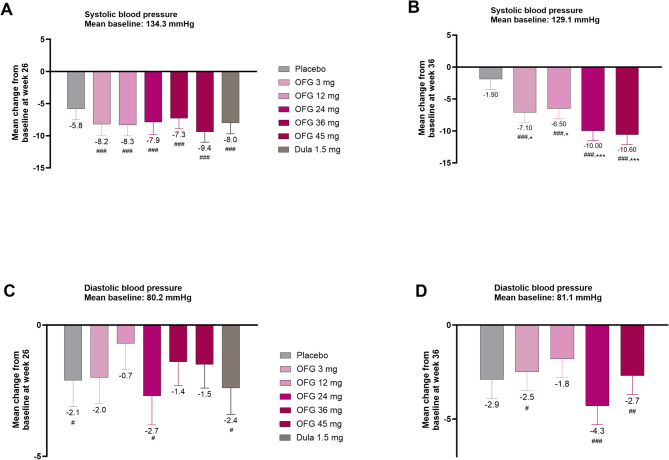
- In the T2D trial, orforglipron reduced systolic blood pressure by −7.3 to −9.4 mmHg at week 26, versus −5.8 mmHg with placebo; diastolic blood pressure changes were −0.7 to −2.7 mmHg and not significantly different from placebo.
- In the obesity trial, systolic blood pressure fell by −6.5 to −10.6 mmHg at week 36 versus −1.9 mmHg with placebo, and diastolic blood pressure reductions of −1.8 to −4.3 mmHg were significant for the 12, 36, and 45 mg groups versus placebo.
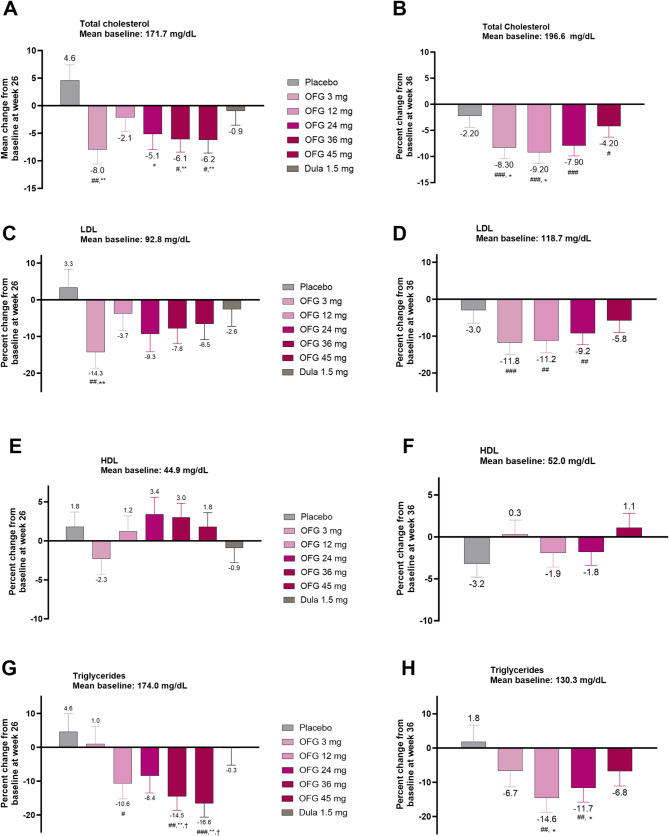
- Lipids improved with orforglipron: in T2D, LDL cholesterol decreased by −3.7 to −14.3%, triglycerides by −8.4 to −16.6%, and total cholesterol by −2.1 to −8.0%; in obesity, LDL decreased by −5.8 to −11.8% and triglycerides by −6.7 to −14.6%.
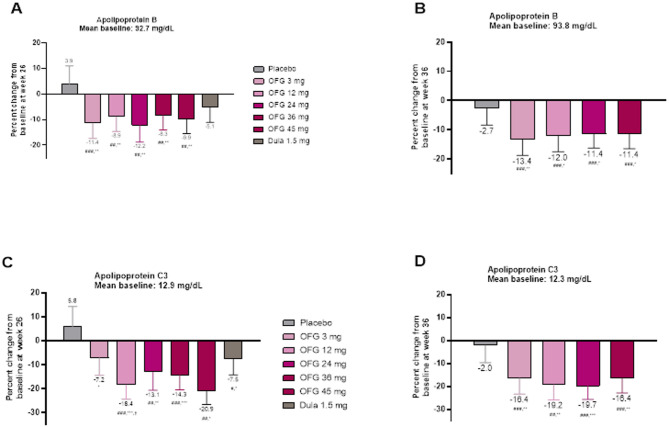
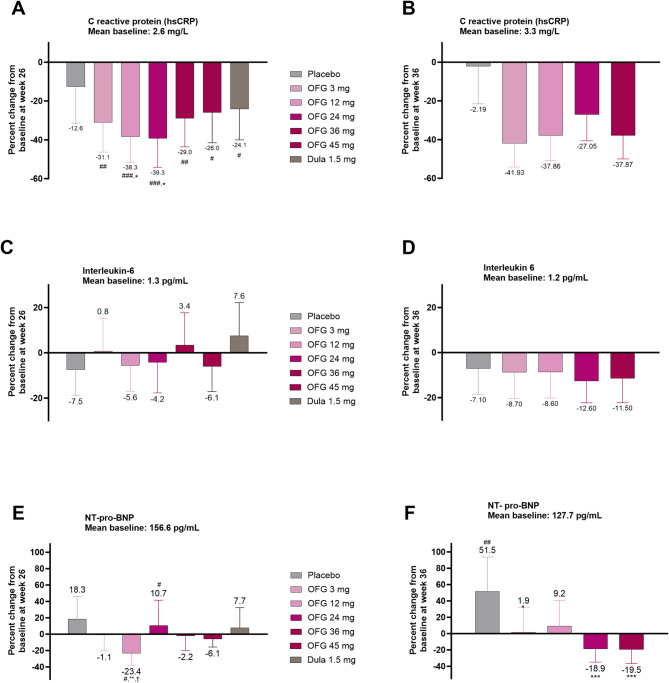
- Inflammatory/other biomarkers also improved: hsCRP fell by −26.0 to −39.3% in T2D and −27.1 to −41.9% in obesity; ApoB fell by −8.3 to −12.2% in T2D and −11.4 to −13.4% in obesity; ApoC3 fell by −7.2 to −20.9% in T2D and −16.4 to −19.7% in obesity.
Methods
- Exploratory analysis of biomarker changes using data from two completed Phase 2 randomized multicenter studies of orforglipron: one in T2D and one in overweight/obesity without diabetes.
- Sample sizes with evaluable biomarker data were 361/383 randomized participants in the T2D study and 234/272 in the obesity study; treatment arms included multiple once-daily orforglipron doses, placebo, and in T2D a once-weekly dulaglutide 1.5 mg comparator.
- Outcomes were change from baseline in blood pressure, lipids, ApoB, ApoC3, NT-pro-BNP, hsCRP, and IL-6 at 26 weeks (T2D) or 36 weeks (obesity), analyzed with mixed model repeated measures or ANCOVA and compared to placebo at p < 0.05 without multiple-comparison adjustment.
Limitations
- The paper states the analyses were exploratory, the trials were not specifically designed to assess these biomarker changes, and the findings require further validation through larger, more targeted studies.
- The paper states that relatively small sample sizes for each treatment group may have contributed to apparent inconsistencies in dose response.
- Evident from the text: the analysis is limited to biomarkers, so it does not demonstrate cardiovascular outcome benefit; the authors explicitly note that formal comparisons between the T2D and obesity studies were not performed and that cross-trial comparisons should be interpreted with caution.
Model-written summary. Check it against the paper before relying on it.
Integrity signals
Registry
Cites
Statistics
Figures
Verification
Claims the paper makes
3 Valid · 0 Not valid · 3 Not checked · 30 Own results and interpretations
The cited sources support only part of this claim — read each source’s verdict below.
In the paper
“In addition to improving glucose levels and weight, subcutaneous glucagon-like peptide-1 receptor agonists (GLP-1 RAs) have produced meaningful reductions in major adverse cardiovascular events (MACE) [3].”
§ Treatment with orforglipron, an oral glucagon like peptide-1 receptor agonist, is associated with improvements of CV risk biomarkers in participants with type 2 diabetes or obesity without diabetes > Introduction
What the sources say
- Partly supportedcites [3] Giugliano D, Scappaticcio L, Longo M, Caruso P, Maiorino MI, Bellastella G, et al. GLP-1 receptor agonists and cardiorenal outcomes in type 2 diabetes: an updated meta-analysis of eight CVOTs. Cardiovasc Diabetol. 2021;20(1):189. 34526024 PMC8442438 sourceExperimental — accuracy not yet measured
The Results (Outcomes; page unavailable) report a 14% reduction in MACE with GLP-1 receptor agonists versus placebo. However, the pooled analysis includes PIONEER 6, which the Results (Search results and study characteristics; page unavailable) identifies as a trial of oral semaglutide. The paper therefore supports a MACE reduction for the pooled class, but does not establish a subcutaneous-only result. (LLM, conf=0.86)
plainstates a cause- Asserted: passes — The authors put it forward as true.
- Checkable: passes — It can be checked against evidence.
- Load-bearing: unclear — It is unclear whether the paper’s conclusions depend on it.
- Based: passes — The paper gives a reason why it holds.
- Partly supported
A result the paper states — it cites no source for it, so there is none to check. The quote shows it is in the paper.
In the paper
“Broadly speaking, the improvements in the evaluated cardiovascular risk factors were similar between these study populations.”
§ Treatment with orforglipron, an oral glucagon like peptide-1 receptor agonist, is associated with improvements of CV risk biomarkers in participants with type 2 diabetes or obesity without diabetes > Discussion
hedged- Asserted: passes — The authors put it forward as true.
- Checkable: passes — It can be checked against evidence.
- Load-bearing: unclear — It is unclear whether the paper’s conclusions depend on it.
- Based: passes — The paper gives a reason why it holds.
A result the paper reports from its own data — it cites no other source for it, so there is none to check. The quote shows it is in the paper.
In the paper
“In both studies, improvements in blood pressure, lipid parameters, and most of the evaluated biomarkers were of similar magnitude after treatment with 12 mg orforglipron as with 24, 36, and 45 mg.”
§ Treatment with orforglipron, an oral glucagon like peptide-1 receptor agonist, is associated with improvements of CV risk biomarkers in participants with type 2 diabetes or obesity without diabetes > Abstract > Results
plain- Asserted: passes — The authors put it forward as true.
- Checkable: passes — It can be checked against evidence.
- Load-bearing: passes — The paper’s conclusions depend on it.
- Based: passes — The paper gives a reason why it holds.
A result the paper reports from its own data — it cites no other source for it, so there is none to check. The quote shows it is in the paper.
In the paper
“Decreases in DBP with orforglipron (− 1.8 to − 4.3 mmHg) were significantly different from the − 2.9 mmHg change with placebo for the 12, 36, and 45 mg treatment groups (Fig. 1, Supplemental Table 2).”
§ Treatment with orforglipron, an oral glucagon like peptide-1 receptor agonist, is associated with improvements of CV risk biomarkers in participants with type 2 diabetes or obesity without diabetes > Results > Change from baseline in blood pressure
plainstates a cause- Asserted: passes — The authors put it forward as true.
- Checkable: passes — It can be checked against evidence.
- Load-bearing: passes — The paper’s conclusions depend on it.
- Based: passes — The paper gives a reason why it holds.
A result the paper reports from its own data — it cites no other source for it, so there is none to check. The quote shows it is in the paper.
In the paper
“In this trial, an apparent dose effect was observed, where higher doses of orforglipron were associated with larger decreases in NT-pro-BNP, with − 18.9% in the 36 mg group and − 19.5% in the 45 mg group, compared to a significant increase of + 51.5% with placebo (Fig. 4, Supplemental Table 2).”
§ Treatment with orforglipron, an oral glucagon like peptide-1 receptor agonist, is associated with improvements of CV risk biomarkers in participants with type 2 diabetes or obesity without diabetes > Results > Change from baseline in NT-pro-BNP
hedgedstates an association- Asserted: passes — The authors put it forward as true.
- Checkable: passes — It can be checked against evidence.
- Load-bearing: passes — The paper’s conclusions depend on it.
- Based: passes — The paper gives a reason why it holds.
6 more claims
Create a free account to see all 36 claims and every source verdict.
- Probably not a substantial claim. 8
- It may state two separate claims as one. 17
- The quote only partly states this claim. 2
Claims other papers make about this one
Each is checked against this paper’s own text: does it say what the citing paper says it does?
The check wasn’t confident either way, so it gives no verdict — never disputed.
In the citing paper
“Notably, a substantial proportion of participants achieved ≥10% weight loss, a threshold associated with meaningful metabolic improvements and cardiovascular risk reduction.”
From Orforglipron: A Comprehensive Review of an Oral Small-Molecule GLP-1 Receptor Agonist for Obesity and Type 2 Diabetes (2026) · cites this paper as [47]
Experimental — accuracy not yet measuredIn the citing paper
“Across both trials, orforglipron produced significant, sustained weight reductions over 72 weeks, with the highest dose yielding mean body weight loss of 12–15% in non-diabetic participants and 10–12% in T2D populations [25,30,46,47].”
From Orforglipron: A Comprehensive Review of an Oral Small-Molecule GLP-1 Receptor Agonist for Obesity and Type 2 Diabetes (2026) · cites this paper as [47]
In the citing paper
“So, available evidence indicates that orforglipron achieves a safety profile that is at least comparable to injectable GLP-1 RAs while offering additional advantages related to route of administration and lack of immunogenicity [47,84,85].”
From Orforglipron: A Comprehensive Review of an Oral Small-Molecule GLP-1 Receptor Agonist for Obesity and Type 2 Diabetes (2026) · cites this paper as [47]
Self-check
Percentages, sums and reported differences re-computed from the paper’s own numbers.
Each contradiction between two passages listed here was confirmed by an independent check.
Rated minor: it would not touch a result — a value no result rests on, a p-value that stays on the same side of the significance level, or a conflict that is clerical, resolved elsewhere in the paper, or outside its own findings.
In the paper
§ Treatment with orforglipron, an oral glucagon like peptide-1 receptor agonist, is associated with improvements of CV risk biomarkers in participants with type 2 diabetes or obesity without diabetes > Results > Change from baseline in blood pressure
“Heart rate was increased with orforglipron (+ 2.6 to + 6.5 beats/min), with significantly greater increases at all doses compared to placebo”
§ Treatment with orforglipron, an oral glucagon like peptide-1 receptor agonist, is associated with improvements of CV risk biomarkers in participants with type 2 diabetes or obesity without diabetes > Discussion
“Heart rates were increased by 2.4–7.9 bpm with orforglipron treatment in both study populations.”
Citations
Cites
Liraglutide and Cardiovascular Outcomes in Type 2 Diabetes
Marso, S. P., Daniels, G. H., Brown-Frandsen, K., Kristensen, P., Mann, J. F. E., Nauck, M. A., Nissen, S. E., Pocock, S., Poulter, N. R., Ravn, L. S., et al. (2016) · New England Journal of Medicine · doi:10.1056/nejmoa1603827 · Cited by 7,629 · cited 3×
“For example, in participants with type 2 diabetes, treatment with dulaglutide reduced the risk of CV death, myocardial infarction, or non-fatal stroke by 12%, while liraglutide produced a 13% reduction an analogous 3-point composite MACE [4, 5].”
InfluentialSemaglutide and Cardiovascular Outcomes in Patients with Type 2 Diabetes
Marso, S. P., Bain, S. C., Consoli, A., Eliaschewitz, F. G., Jódar, E., Leiter, L. A., Lingvay, I., Rosenstock, J., Seufert, J., Warren, M. L., et al. (2016) · New England Journal of Medicine · doi:10.1056/nejmoa1607141 · Cited by 6,900
Self-citationCardiovascular Risk Reduction with Icosapent Ethyl for Hypertriglyceridemia
Bhatt, D. L., Steg, P. G., Miller, M., Brinton, E. A., Jacobson, T. A., Ketchum, S. B., Doyle, R. T., Juliano, R. A., Jiao, L., Granowitz, C., et al. (2019) · New England Journal of Medicine · doi:10.1056/nejmoa1812792 · Cited by 3,317
Semaglutide and Cardiovascular Outcomes in Obesity without Diabetes
Lincoff, A. M., Brown-Frandsen, K., Colhoun, H. M., Deanfield, J., Emerson, S. S., Esbjerg, S., Hardt-Lindberg, S., Hovingh, G. K., Kahn, S. E., Kushner, R. F., et al. (2023) · New England Journal of Medicine · doi:10.1056/nejmoa2307563 · Cited by 3,236
Gerstein, H. C., Colhoun, H. M., Dagenais, G. R., Diaz, R., Lakshmanan, M., Pais, P., Probstfield, J., Riesmeyer, J. S., Riddle, M. C., Rydén, L., et al. (2019) · The Lancet · doi:10.1016/s0140-6736(19)31149-3 · Cited by 3,163
Self-citationEffects of once-weekly exenatide on cardiovascular outcomes in type 2 diabetes
Holman, R. R., Bethel, M. A., Mentz, R. J., Thompson, V. P., Lokhnygina, Y., Buse, J. B., Chan, J. C., Choi, J., Gustavson, S. M., Iqbal, N., et al. (2017) · New England Journal of Medicine · doi:10.1056/nejmoa1612917 · Cited by 2,162
Oral Semaglutide and Cardiovascular Outcomes in Patients with Type 2 Diabetes
Husain, M., Birkenfeld, A. L., Donsmark, M., Dungan, K., Eliaschewitz, F. G., Franco, D. R., Jeppesen, O. K., Lingvay, I., Mosenzon, O., Pedersen, S. D., et al. (2019) · New England Journal of Medicine · doi:10.1056/nejmoa1901118 · Cited by 1,997
Hernandez, A. F., Green, J. B., Janmohamed, S., D'Agostino, R. B., Granger, C. B., Jones, N. P., Leiter, L. A., Rosenberg, A. E., Sigmon, K. N., Somerville, M. C., et al. (2018) · The Lancet · doi:10.1016/s0140-6736(18)32261-x · Cited by 1,829
Virani, S. S., Newby, L. K., Arnold, S. V., Bittner, V., Brewer, L. C., Demeter, S. H., Dixon, D. L., Fearon, W. F., Hess, B., Johnson, H. M., et al. (2023) · Circulation · doi:10.1161/cir.0000000000001168 · Cited by 1,598 · cited 1×
“Biomarkers such as elevated blood pressure, lipid levels, and inflammatory markers are closely associated with CVD risk, and treatments that reduce these markers can reduce CVD risk in populations with and without diabetes [11–13].”
Lloyd-Jones, D. M., Braun, L. T., Ndumele, C. E., Smith, S. C., Sperling, L. S., Virani, S. S., & Blumenthal, R. S. (2019) · Circulation · doi:10.1161/cir.0000000000000638 · Cited by 554
Navarese, E. P., Robinson, J. G., Kowalewski, M., Kolodziejczak, M., Andreotti, F., Bliden, K., Tantry, U., Kubica, J., Raggi, P., & Gurbel, P. A. (2018) · JAMA · doi:10.1001/jama.2018.2525 · Cited by 549
Ridker, P. M., Libby, P., MacFadyen, J. G., Thuren, T., Ballantyne, C., Fonseca, F., Koenig, W., Shimokawa, H., Everett, B. M., & Glynn, R. J. (2018) · European Heart Journal · doi:10.1093/eurheartj/ehy310 · Cited by 544
Rakipovski, G., Rolin, B., Nøhr, J., Klewe, I., Frederiksen, K. S., Augustin, R., Hecksher-Sørensen, J., Ingvorsen, C., Polex-Wolf, J., & Knudsen, L. B. (2018) · JACC: Basic to Translational Science · doi:10.1016/j.jacbts.2018.09.004 · Cited by 509
Daily Oral GLP-1 Receptor Agonist Orforglipron for Adults with Obesity
Wharton, S., Blevins, T., Connery, L., Rosenstock, J., Raha, S., Liu, R., Ma, X., Mather, K. J., Haupt, A., Robins, D., et al. (2023) · New England Journal of Medicine · doi:10.1056/nejmoa2302392 · Cited by 478 · cited 8×
“Further details of the clinical trial protocols, study populations, statistical analysis plans, and study outcomes have been published [25, 26].”
InfluentialSelf-citationCardiovascular disease in type 2 diabetes mellitus: progress toward personalized management
Ma, C.-X., Ma, X.-N., Guan, C.-H., Li, Y.-D., Mauricio, D., & Fu, S.-B. (2022) · Cardiovascular Diabetology · doi:10.1186/s12933-022-01516-6 · Cited by 464 · cited 1×
“Cardiovascular disease (CVD) remains a significant threat to people with obesity and type 2 diabetes (T2D), with a two to three times higher incidence compared to people without diabetes or obesity [1, 2].”
10. Cardiovascular Disease and Risk Management: Standards of Care in Diabetes—2024
American Diabetes Association Professional Practice Committee, ElSayed, N. A., Aleppo, G., Bannuru, R. R., Bruemmer, D., Collins, B. S., Das, S. R., Ekhlaspour, L., Hilliard, M. E., Johnson, E. L., et al. (2024) · Diabetes Care · doi:10.2337/dc24-s010 · Cited by 438
Oral Semaglutide and Cardiovascular Outcomes in High-Risk Type 2 Diabetes
McGuire, D. K., Marx, N., Mulvagh, S. L., Deanfield, J. E., Inzucchi, S. E., Pop-Busui, R., Mann, J. F. E., Emerson, S. S., Poulter, N. R., Engelmann, M. D. M., et al. (2025) · New England Journal of Medicine · doi:10.1056/nejmoa2501006 · Cited by 416 · cited 1×
“Orally delivered semaglutide produces improvements in cardio-vascular risk factors [8, 9], and has demonstrated potential to reduce the risk of 3-point MACE in participants with type 2 diabetes with established CVD [10].”
Lloyd-Jones, D. M., Braun, L. T., Ndumele, C. E., Smith, S. C., Sperling, L. S., Virani, S. S., & Blumenthal, R. S. (2019) · Journal of the American College of Cardiology · doi:10.1016/j.jacc.2018.11.005 · Cited by 302
Giugliano, D., Scappaticcio, L., Longo, M., Caruso, P., Maiorino, M. I., Bellastella, G., Ceriello, A., Chiodini, P., & Esposito, K. (2021) · Cardiovascular Diabetology · doi:10.1186/s12933-021-01366-8 · Cited by 263 · cited 1×
“In addition to improving glucose levels and weight, subcutaneous glucagon-like peptide-1 receptor agonists (GLP-1 RAs) have produced meaningful reductions in major adverse cardio-vascular events (MACE) [3].”
Obesity and cardiovascular health
Welsh, A., Hammad, M., Piña, I. L., & Kulinski, J. (2024) · European Journal of Preventive Cardiology · doi:10.1093/eurjpc/zwae025 · Cited by 239
Remnants of the triglyceride-rich lipoproteins, diabetes, and cardiovascular disease
Chait, A., Ginsberg, H. N., Vaisar, T., Heinecke, J. W., Goldberg, I. J., & Bornfeldt, K. E. (2020) · Diabetes · doi:10.2337/dbi19-0007 · Cited by 229 · cited 3×
“These changes may be prognostically important, as the relationships of cardio-vascular risk with these apolipoproteins are additive to the risk associated with traditional lipid species [18].”
Frias, J. P., Hsia, S., Eyde, S., Liu, R., Ma, X., Konig, M., Kazda, C., Mather, K. J., Haupt, A., Pratt, E., et al. (2023) · The Lancet · doi:10.1016/s0140-6736(23)01302-8 · Cited by 184 · cited 8×
“Further details of the clinical trial protocols, study populations, statistical analysis plans, and study outcomes have been published [25, 26].”
InfluentialSelf-citationAddressing dyslipidemic risk beyond LDL-cholesterol
Tall, A. R., Thomas, D. G., Gonzalez-Cabodevilla, A. G., & Goldberg, I. J. (2022) · Journal of Clinical Investigation · doi:10.1172/jci148559 · Cited by 150 · cited 1×
“…reductions in triglyceride and increases in HDL cholesterol to reductions in CV risk are less directly demonstrated compared to the relationship with LDL cholesterol [18] but may signal improvements in fasting and meal-related lipid handling that favorably impact cardiovascular risk [32, 33].”
Hermansen, K., Bækdal, T. A., Düring, M., Pietraszek, A., Mortensen, L. S., Jørgensen, H., & Flint, A. (2013) · Diabetes, Obesity and Metabolism · doi:10.1111/dom.12133 · Cited by 143
Liu, W., Östberg, N. K., Yalçınkaya, M., Dou, H., Endo‐Umeda, K., Tang, Y., Hou, X., Xiao, T., Fidler, T. P., Abramowicz, S., et al. (2022) · Journal of Clinical Investigation · doi:10.1172/jci155724 · Cited by 140
Matikainen, N., Söderlund, S., Björnson, E., Pietiläinen, K., Hakkarainen, A., Lundbom, N., Taskinen, M., & Borén, J. (2019) · Diabetes, Obesity and Metabolism · doi:10.1111/dom.13487 · Cited by 129 · cited 2×
“…reductions in triglyceride and increases in HDL cholesterol to reductions in CV risk are less directly demonstrated compared to the relationship with LDL cholesterol [18] but may signal improvements in fasting and meal-related lipid handling that favorably impact cardiovascular risk [32, 33].”
Kosiborod, M. N., Bhatta, M., Davies, M., Deanfield, J. E., Garvey, W. T., Khalid, U., Kushner, R., Rubino, D. M., Zeuthen, N., & Verma, S. (2023) · Diabetes, Obesity and Metabolism · doi:10.1111/dom.14890 · Cited by 127 · cited 2×
“In an exploratory analysis of CV risk factor changes in people with obesity but not T2D, aggregating data from STEP1 and STEP4 studies of the weight loss effects, a mean placebo-adjusted treatment effect of − 5.1 mmHg for SBP and − 2.4 mmHg for DPB was reported [17].”
InfluentialSemaglutide and NT-proBNP in Obesity-Related HFpEF
Petrie, M. C., Borlaug, B. A., Butler, J., Davies, M. J., Kitzman, D. W., Shah, S. J., Verma, S., Jensen, T. J., Einfeldt, M. N., Liisberg, K., et al. (2024) · Journal of the American College of Cardiology · doi:10.1016/j.jacc.2024.04.022 · Cited by 95
Mosenzon, O., Capehorn, M. S., De Remigis, A., Rasmussen, S., Weimers, P., & Rosenstock, J. (2022) · Cardiovascular Diabetology · doi:10.1186/s12933-022-01585-7 · Cited by 91
Self-citationMazidi, M., Karimi, E., Rezaie, P., & Ferns, G. A. (2017) · Journal of Diabetes and its Complications · doi:10.1016/j.jdiacomp.2016.05.022 · Cited by 89 · cited 1×
“In a comprehensive meta-analysis, GLP-1 RAs were found to produce significant reductions in hsCRP [37].”
Oral semaglutide for type 2 diabetes: A systematic review and meta‐analysis
Avgerinos, I., Michailidis, T., Liakos, A., Karagiannis, T., Matthews, D. R., Tsapas, A., & Bekiari, E. (2020) · Diabetes, Obesity and Metabolism · doi:10.1111/dom.13899 · Cited by 88
Dahl, K., Brooks, A., Almazedi, F., Hoff, S. T., Boschini, C., & Bækdal, T. A. (2021) · Diabetes, Obesity and Metabolism · doi:10.1111/dom.14373 · Cited by 87
Efficacy and safety of once-weekly semaglutide in adults with overweight or obesity: a meta-analysis
Zhong, P., Zeng, H., Huang, M., Fu, W., & Chen, Z. (2022) · Endocrine · doi:10.1007/s12020-021-02945-1 · Cited by 74 · cited 1×
“In participants with overweight/obesity with and without type 2 diabetes, injected semaglutide similarly reduced LDL by up to 7%, triglycerides by up to 18%, and c-reactive protein by up to 25% in association with reductions in cardiovascular outcomes [9, 16].”
Vergès, B., Duvillard, L., Pais de Barros, J. P., Bouillet, B., Baillot-Rudoni, S., Rouland, A., Petit, J. M., Degrace, P., & Demizieux, L. (2021) · Diabetes Care · doi:10.2337/dc20-1843 · Cited by 54
Nielsen, R. R., Jorsal, A., Tougaard, R. S., Rasmussen, J., Schou, M., Videbæk, L. M., Gustafsson, I., Faber, J. O., Flyvbjerg, A., Wiggers, H., et al. (2020) · Diabetes Obesity and Metabolism · doi:10.1111/dom.14135 · Cited by 32
Zhang, C., Ni, J., & Chen, Z. (2022) · Clinical Therapeutics · doi:10.1016/j.clinthera.2022.06.010 · Cited by 26
Soroush, N., Shahraki, M. N., Jouabadi, S. M., Amiri, M., Aribas, E., Stricker, B. H. C., & Ahmadizar, F. (2024) · Nutrition Metabolism and Cardiovascular Diseases · doi:10.1016/j.numecd.2024.04.015 · Cited by 24
Gerstein, H. C., Lee, S.-F., Paré, G., Bethel, M. A., Colhoun, H. M., Hoover, A., Lakshmanan, M. C., Lin, Y., Pirro, V., Qian, H.-R., et al. (2023) · Diabetes Care · doi:10.2337/dc22-2397 · Cited by 18
Self-citationSchwartz, G. G., Szarek, M. J., Reijnders, E., Jukema, J. W., Bhatt, D. L., Bittner, V., Fazio, S., Garon, G., Goodman, S. G., Harrington, R. A., et al. (2025) · European Journal of Preventive Cardiology · doi:10.1093/eurjpc/zwaf067 · Cited by 9
Efficacy and safety of inclisiran based on background lipid-lowering treatment
Landmesser, U., Köenig, W., Leiter, L. A., Raal, F. J., Ray, K. K., Schwartz, G. G., Han, J., Conde, L. G., & Wright, R. S. (2025) · European Journal of Preventive Cardiology · doi:10.1093/eurjpc/zwaf214 · Cited by 9
Kim, C., Lee, S. H., Kim, H. K., Kim, M. C., Kim, J. H., Hong, Y. J., Ahn, Y. K., Jeong, M. H., Hur, S., Kim, D. I., et al. (2024) · Circulation Journal · doi:10.1253/circj.cj-24-0129 · Cited by 8
Frary, C. E., Blicher, M. K., Olesen, T. B., Pareek, M., Vishram‐Nielsen, J. K. K., Rasmussen, S. B., & Olsen, M. H. (2024) · Heart Lung and Circulation · doi:10.1016/j.hlc.2023.11.015 · Cited by 5
Association of cardiac biomarkers with long-term cardiovascular events in a community cohort
Churchill, R., Gochanour, B. R., Scott, C. G., Vasile, V. C., Rodeheffer, R. J., Meeusen, J. W., & Jaffe, A. S. (2024) · Biomarkers · doi:10.1080/1354750x.2024.2335245 · Cited by 5
Cited by
Kansakar, U., Jankauskas, S. S., Pande, S., Mone, P., Varzideh, F., & Santulli, G. (2026) · International Journal of Molecular Sciences · doi:10.3390/ijms27031409 · Cited by 22
“These observations align with clinical data from larger efficacy trials, including ACHIEVE-1 and ATTAIN studies, in which renal function remained stable throughout treatment despite substantial weight loss and glycemic improvement [27,45,47,62,69].”
Immune activation induced by dysregulated lipid metabolism in the pathogenesis of type 2 diabetes
Yang, H., Yu, W., Mao, Q., & Zhao, L. (2025) · World Journal of Diabetes · doi:10.4239/wjd.v16.i12.114395 · Cited by 11
Pandey, R. K., Jan, M., Mohammad, A., Jawaid, K. A., Naveed, M., Abid, M. A., Amir, A. B., Ahmed, S., Safiullah, M., Bhatti, M. I., et al. (2025) · Endocrinology, Diabetes & Metabolism · doi:10.1002/edm2.70134 · Cited by 9
Obesity and Cardiovascular Disease: Mechanistic Insights and Nutritional Management Strategies
Grossman, E. (2025) · Nutrients · doi:10.3390/nu17142281 · Cited by 6
Alper, A., Peleg, G., Fagin, A., Shah, P. P., Chowdhury, I. Z., Gonzales, A., & FAILLACE, R. T. (2026) · Cardiovascular Diabetology – Endocrinology Reports · doi:10.1186/s40842-025-00270-4 · Cited by 7
Metadata
- Authors
- Wharton, S., Rosenstock, J., Konige, M., Lin, Y., Duffin, K., Wilson, J., Banerjee, H., Pirro, V., Kazda, C., & Mather, K.
- Affiliations
- York University (CA)
- Velocity Clinical Research (United States) (US)
- Eli Lilly (United States) (US)
- Corresponding author
- Wharton, Sean
- ORCID
- Venue
- Cardiovascular Diabetology
- Published
- 2025-06-06
- Volume
- 24
- Issue
- 1
- Pages
- 240-240
- ISSN
- 1475-2840 (ISSN-L)
- PMC
- PMC12142847
- OpenAlex
- W4411100032
- Cited by
- 26
- References
- 43
- Citations by year
- 2026: 20 · 2025: 6
- FWCI
- 17.60
- Type
- journal article
- Language
- en
- Open access
- gold
- doi.org
- Licence
- cc-by
- creativecommons.org/licenses/by/4.0 (tdm)
- creativecommons.org/licenses/by/4.0 (vor)
- Locations
- Cardiovascular Diabetology (publishedVersion, cc-by)
- PubMed Central (publishedVersion, cc-by)
- PubMed (publishedVersion)
- DOAJ (DOAJ: Directory of Open Access Journals) (submittedVersion, cc-by-sa)
- Funders
- Eli Lilly and Company
- Topics
- Health Sciences › Medicine › Endocrinology, Diabetes and Metabolism › Diabetes Treatment and Management
- Health Sciences › Medicine › Endocrinology, Diabetes and Metabolism › Diabetes, Cardiovascular Risks, and Lipoproteins
- Health Sciences › Medicine › Pharmacology (medical) › Pharmacology and Obesity Treatment
- Keywords
- orforglipron, GLP-1 receptor agonists, type 2 diabetes, obesity, overweight, cardiovascular risk markers, blood pressure, lipid profile, LDL cholesterol, triglycerides, apolipoprotein B, apolipoprotein C-III, NT-proBNP, high-sensitivity C-reactive protein, interleukin-6, dulaglutide, major adverse cardiovascular events
- MeSH terms
- Glucagon-Like Peptide-1 Receptor, Heart Disease Risk Factors, Glucagon-Like Peptide-1 Receptor Agonists, Administration, Oral, Aged, Blood Glucose, Blood Pressure, Cardiovascular Diseases, Diabetes Mellitus, Type 2, Female, Glycated Hemoglobin, Humans, Hypoglycemic Agents, Lipids, Male, Middle Aged, Obesity, Oxadiazoles, Time Factors, Biomarkers, Treatment Outcome, Fluorine Compounds, Risk Assessment, Inflammation Mediators, Incretins
About these checks
Registry, retraction, Cites and statistics results are computed, not judged, with one exception: a printed reference that no index lists is read once by a model before it counts as a citation error. Claims are extracted by a model and kept only when their quote appears verbatim in the text; each cited source is then checked, with a model’s help, for whether it says what the claim relies on. Those verdicts can be wrong — read the claim’s quote and the cited source before relying on one.
The claim verdicts this report counts are experimental: their accuracy is not yet measured.
A language model drew the claims from the paper on 2026-10-10, under version 3 of the claim definition (model deepseek-v4.1-flash, prompt extract-v3).
A second model labelled each claim on 2026-10-10 (model jev-1.13-20260917, definition revision gold-guideline-v0.2).
Cited sources are checked with a language model’s help (gpt-6-sol).
Statistics and arithmetic are recomputed, not judged.
Confidence bands are shown only for fields calibrated on our annotated test set. None is calibrated yet, so no band is shown.
What counts as a claim ›How we measure confidence ›How we check this ›
Are you an author, or do you see a problem with this page? Request a review
Data sources
Bibliographic data: Semantic Scholar, OpenAlex, Crossref.
Contains information from the Semantic Scholar Academic Graph Datasets, made available under the ODC Attribution License (ODC-BY 1.0).
Semantic Scholar’s data is described in: Kinney, R., et al. (2023). The Semantic Scholar Open Data Platform. arXiv:2301.10140.
