

Automation of a Nile red staining assay enables high throughput quantification of microalgal lipid production
Open accessThe DOI matches its Crossref record; 48 of the 50 references it cites were found in a registry or an index; 2 of the 26 sources its claims cite were checked for support.
Abstract
BACKGROUND: Within the context of microalgal lipid production for biofuels and bulk chemical applications, specialized higher throughput devices for small scale parallelized cultivation are expected to boost the time efficiency of phototrophic bioprocess development. However, the increasing number of possible experiments is directly coupled to the demand for lipid quantification protocols that enable reliably measuring large sets of samples within short time and that can deal with the reduced sample volume typically generated at screening scale. To meet these demands, a dye based assay was established using a liquid handling robot to provide reproducible high throughput quantification of lipids with minimized hands-on-time. RESULTS: Lipid production was monitored using the fluorescent dye Nile red with dimethyl sulfoxide as solvent facilitating dye permeation. The staining kinetics of cells at different concentrations and physiological states were investigated to successfully down-scale the assay to 96 well microtiter plates. Gravimetric calibration against a well-established extractive protocol enabled absolute quantification of intracellular lipids improving precision from ±8 to ±2 % on average. Implementation into an automated liquid handling platform allows for measuring up to 48 samples within 6.5 h, reducing hands-on-time to a third compared to manual operation. Moreover, it was shown that automation enhances accuracy and precision compared to manual preparation. It was revealed that established protocols relying on optical density or cell number for biomass adjustion prior to staining may suffer from errors due to significant changes of the cells' optical and physiological properties during cultivation. Alternatively, the biovolume was used as a measure for biomass concentration so that errors from morphological changes can be excluded. CONCLUSIONS: The newly established assay proved to be applicable for absolute quantification of algal lipids avoiding limitations of currently established protocols, namely biomass adjustment and limited throughput. Automation was shown to improve data reliability, as well as experimental throughput simultaneously minimizing the needed hands-on-time to a third. Thereby, the presented protocol meets the demands for the analysis of samples generated by the upcoming generation of devices for higher throughput phototrophic cultivation and thereby contributes to boosting the time efficiency for setting up algae lipid production processes.
Overview
CoChat Summary
TL;DR
The paper presents an automated Nile red staining assay in 96-well microtiter plates for absolute quantification of intracellular neutral lipids in *Chlorella vulgaris*, using biovolume instead of optical density or cell number for biomass standardization. Automation on a liquid handling robot measured up to 48 samples in 6.5 h, reduced hands-on time by 66%, and improved precision from ±8% to ±2% on average after gravimetric calibration.
Key findings
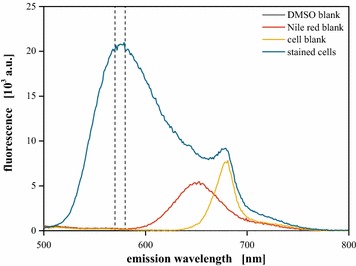
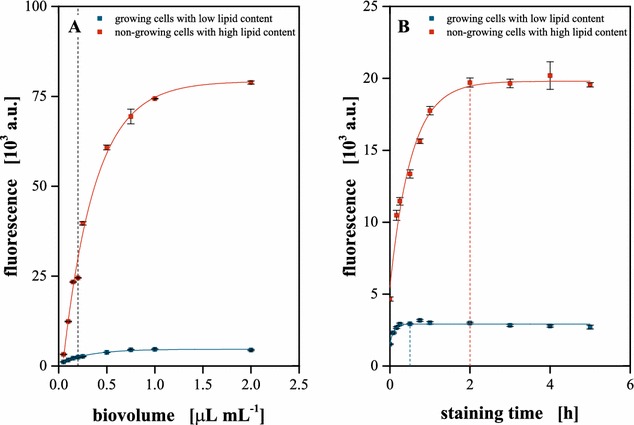
- The optimized Nile red assay used 1 mg L−1 dye, 25% (v v−1) DMSO, 40 °C, excitation at 480 nm, and emission at 570–580 nm. Fluorescence was linear up to a biovolume of 0.2 µL mL−1; growing low-lipid cells stained quantitatively within 0.5 h, while starved high-lipid cells needed at least 2 h.
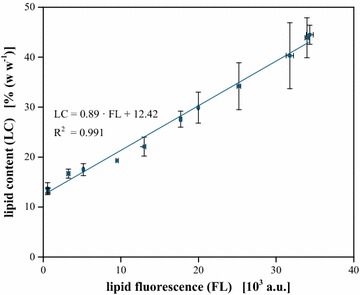
- Gravimetric calibration showed linear correlation (R² = 0.991) between Nile red fluorescence and lipid content from 13.3–44.5% (w w−1). Average relative errors were ±2% for lipid fluorescence versus ±8% for gravimetry.
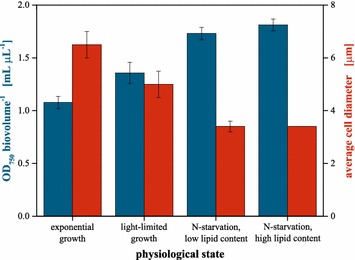
- Optical density was unreliable for biomass adjustment: the OD750-to-biovolume ratio increased significantly (p < 0.05) by more than 60% across physiological states, from 1.08 ± 0.06 for exponentially growing cells to 1.81 ± 0.05 for N-starved cells with high lipid content, while average cell size shrank from approximately 6.5 µm to 3.4 µm.
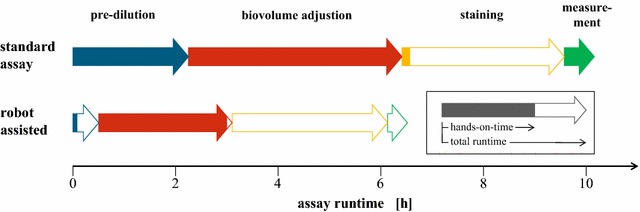
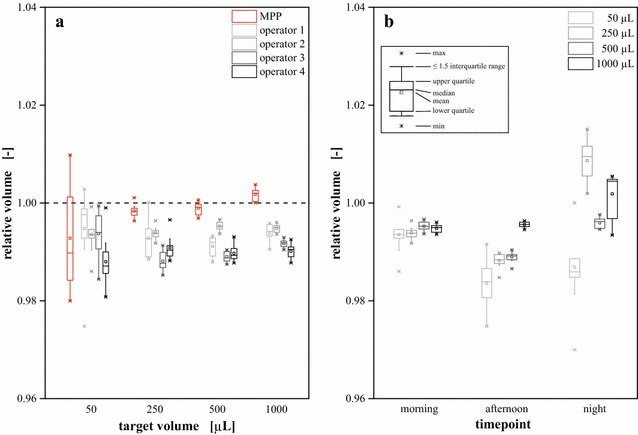
- Automation handled up to 48 samples per run in 6.5 h total runtime with 2.5 h hands-on time, versus 10.5 h total and 7.5 h hands-on manually, reducing runtime by 37% and hands-on time by 66%. Automated pipetting had 0.3% systematic error versus 0.6–1.0% manual, and technical replicate standard errors were 2.1% automated versus 4.3% manual.
Methods
- *Chlorella vulgaris* 211–11b was cultivated axenically in enriched Bold’s Basal Medium under phototrophic shaking-flask conditions; different lipid contents were obtained by harvesting during growth or at different times during nitrogen starvation.
- Biomass was measured by OD750 photometry and by a Coulter counter (MultiSizer 3, 30 µm capillary, volumetric control, 100 µL sample, 40 µA) to determine cell counts and biovolume, with particles sized 1.8–14 µm analyzed.
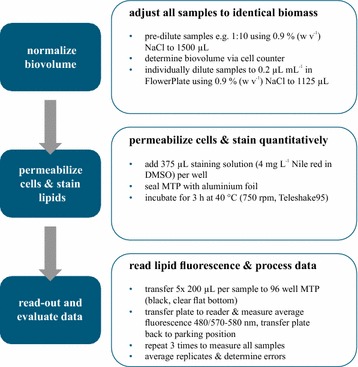
- The Nile red assay was adapted from Chen et al. to 96-well MTP format and automated on a JANUS Integrator liquid handling platform with Varispan arm, MTP railgripper, Teleshake95 shaker/heater, and EnSpire photometer. Samples were diluted to a biovolume of 0.2 µL mL−1 before adding staining solution, yielding a final assay biovolume of 0.15 µL mL−1, and stained for 3 h. Gravimetric lipid quantification used a modified single-step chloroform–methanol extraction with lyophilized biomass, evaporation, and weighing. Pipetting accuracy and precision were determined gravimetrically with 10 replicates, and statistical comparisons used two-sided t-tests for unequal variances at 95% significance.
Limitations
- The paper states that the contribution of each possible effect to the slowed staining kinetics of starved cells was not further investigated.
- The paper states that reliable quantitative Nile red staining conditions are highly strain specific due to varying dye uptake, so individual gravimetric calibration is needed for cross-strain comparison; this study used only *C. vulgaris* as the model organism.
- Evident from the text: the Nile red assay specifically detects neutral lipids, whereas gravimetric extraction measures total cellular lipids. This explains the offset where growing cells showed 13.3% (w w−1) lipid content by gravimetry but no detectable Nile red signal.
Model-written summary. Check it against the paper before relying on it.
Integrity signals
Registry
Cites
Statistics
Figures
Verification
Claims the paper makes
2 Valid · 0 Not valid · 13 Not checked · 44 Own results and interpretations
Every source the paper cites for this claim was checked and supports it.
In the paper
“As stated previously, conditions for reliable quantitative staining enabling lipid quantification via Nile red fluorescence were observed to be highly strain specific due to varying dye uptake characteristics [10].”
§ Automation of a Nile red staining assay enables high throughput quantification of microalgal lipid production > Results and discussion > Assay development and validation
What the sources say
- Supportedcites [10] Rumin J Bonnefond H Saint-Jean B Rouxel C Sciandra A Bernard O Cadoret JP Bougaran G The use of fluorescent Nile red and BODIPY for lipid measurement in microalgae Biotechnol Biofuels 2015 8 42 10.1186/s13068-015-0220-4 25788982 PMC4364489 source
The Introduction ('Staining parameters') states that 'a reliable estimate of the neutral lipid content in microalgae with dye fluorescence depends upon a variety of staining and measuring conditions' and that 'in most cases, the staining and measuring procedure is highly species specific'. The species-dependence of dye uptake is stated in the same paper: 'Fluorescence and staining kinetics depend on the microalgae species' and 'The first limitation to staining with lipophilic dyes is related to the composition and structure of the algal cell wall... preventing Nile red dye from efficiently penetrating cells' (Introduction, Permeation issues and improvements), with examples of differential staining success (only 25% of Nannochloropsis cells stained; poor NR-gravimetric correlation in Chlorella vulgaris). The Discussion ('Applications of fluorochromes') repeats that 'staining protocol is species specific'. The only divergence is wording: the source speaks of species (and physiological state) rather than 'strain', and uptake/permeation is presented as one of several drivers (with quenching, dye and cell concentration, pigments, salinity) rather than the sole cause. (LLM, conf=0.82)
plainstates a cause- Asserted: passes — The authors put it forward as true.
- Checkable: passes — It can be checked against evidence.
- Load-bearing: passes — The paper’s conclusions depend on it.
- Based: passes — The paper gives a reason why it holds.
- Supported
Every source the paper cites for this claim was checked and supports it.
In the paper
“Despite the significant progress regarding protocol simplification [16], extractive lipid quantification still remains unsuitable for microscale high throughput applications for the following reasons:”
§ Automation of a Nile red staining assay enables high throughput quantification of microalgal lipid production > Background
What the sources say
- Supportedcites [16] Axelsson M Gentili F A single-step method for rapid extraction of total lipids from green microalgae PLoS One 2014 PMC3933640 24586930 source
Citation [16] sits on the concessive clause 'the significant progress regarding protocol simplification', and our copy of Axelsson & Gentili (2014) is exactly that advance: the Introduction states the aim was 'to find a faster and simpler procedure to simultaneously obtain extracts from multiple small samples of green freshwater microalgae', and the Abstract/Conclusions report a single-step procedure with 'at least five times higher sample throughput' that is 'suitable for total lipid extraction and may be applied for screening of algae'. The trailing assertion that extractive lipid quantification 'still remains unsuitable for microscale high throughput applications' is the citing authors' own framing (they enumerate 'the following reasons' themselves) and is not what this citation is offered for; notably our copy argues the opposite direction for its own method while confining it to green freshwater microalgae and small tube-scale samples. Judged on the part attributed to this source, the claim is supported. (LLM, conf=0.85)
plain- Asserted: passes — The authors put it forward as true.
- Checkable: passes — It can be checked against evidence.
- Load-bearing: passes — The paper’s conclusions depend on it.
- Based: passes — The paper gives a reason why it holds.
- Rests on 2 assumptions not shown here.
- Supported
None of the sources cited for this claim have been checked yet.
In the paper
“In accordance with literature [26, 33], intracellular neutral lipids could be detected by staining of lipid producing cells via a fluorescence signal with a maximum at 570–580 nm.”
§ Automation of a Nile red staining assay enables high throughput quantification of microalgal lipid production > Results and discussion > Assay development and validation
What the sources say
- Not checked yetcites [26] Cooksey KE Guckert JB Williams SA Callis PR Fluorometric determination of the neutral lipid content of microalgal cells using Nile Red J Microbiol Meth 1987 6 333 345 10.1016/0167-7012(87)90019-4 source
- Not checked yetcites [33] Chen W Zhang C Song L Sommerfeld M Hu Q A high throughput Nile red method for quantitative measurement of neutral lipids in microalgae J Microbiol Meth 2009 77 41 47 10.1016/j.mimet.2009.01.001 19162091 source
hedgedstates a cause- Asserted: passes — The authors put it forward as true.
- Checkable: passes — It can be checked against evidence.
- Load-bearing: passes — The paper’s conclusions depend on it.
- Based: passes — The paper gives a reason why it holds.
A result the paper reports from its own data — it cites no other source for it, so there is none to check. The quote shows it is in the paper.
In the paper
“For C.vulgaris cells at the different physiological states, it increased significantly (p < 0.05) by more than 60 % from 1.08 ± 0.06 for exponentially growing via 1.36 ± 0.1 for light-limited growing cells to 1.73 ± 0.06 and 1.81 ± 0.05 for N-starved cells containing low and high amounts of intracellular lipids, respectively.”
§ Automation of a Nile red staining assay enables high throughput quantification of microalgal lipid production > Results and discussion > Standardization of biomass concentration
plainstates a cause- Asserted: passes — The authors put it forward as true.
- Checkable: passes — It can be checked against evidence.
- Load-bearing: passes — The paper’s conclusions depend on it.
- Based: passes — The paper gives a reason why it holds.
A result the paper reports from its own data — it cites no other source for it, so there is none to check. The quote shows it is in the paper.
In the paper
“Moreover, it was shown that automation enhances accuracy and precision compared to manual preparation.”
- Also stated in: § Automation · plain
“Compared to preparation by hand, automated liquid handling increases accuracy and precision.”
§ Automation of a Nile red staining assay enables high throughput quantification of microalgal lipid production > Abstract > Results
boostedstates a causen = 4 ·- Asserted: passes — The authors put it forward as true.
- Checkable: passes — It can be checked against evidence.
- Load-bearing: passes — The paper’s conclusions depend on it.
- Based: passes — The paper gives a reason why it holds.
- Also stated in: § Automation · plain
22 more claims
Create a free account to see all 59 claims and to verify the 24 references still open.
- It may state two separate claims as one. 24
- Probably not a substantial claim. 10
Claims other papers make about this one
Each is checked against this paper’s own text: does it say what the citing paper says it does?
The source backs part of the claim, not all of it — or backs it for a different population, condition or comparison.
In the citing paper
“Another drawback is that continuous sampling is not possible due to the low volume [60, 62, 63].”
From Lab-scale photobioreactor systems: principles, applications, and scalability (2022) · cites this paper as [63]
Experimental — accuracy not yet measured
Citations
Cites
A SIMPLE METHOD FOR THE ISOLATION AND PURIFICATION OF TOTAL LIPIDES FROM ANIMAL TISSUES
Folch, J., Lees, M., & Stanley, G. H. S. (1957) · Journal of Biological Chemistry · doi:10.1016/s0021-9258(18)64849-5 · Cited by 65,189
A RAPID METHOD OF TOTAL LIPID EXTRACTION AND PURIFICATION
Bligh, E. G., & Dyer, W. J. (1959) · Canadian Journal of Biochemistry and Physiology · doi:10.1139/o59-099 · Cited by 54,751
Absorption and Scattering of Light by Small Particles
Bohren, C. F., & Huffman, D. R. (1998) · doi:10.1002/9783527618156 · Cited by 18,474
Absorption and Scattering of Light by Small Particles
Brown, R. G. W. (1984) · Optica Acta: International Journal of Optics · doi:10.1080/716099663 · Cited by 6,612
Nile red: a selective fluorescent stain for intracellular lipid droplets.
Greenspan, P., Mayer, E. P., & Fowler, S. D. (1985) · The Journal of cell biology · doi:10.1083/jcb.100.3.965 · Cited by 2,543
‘Morphology, composition, production, processing and applications of Chlorella vulgaris: a review’.
Safi, C., Zebib, B., Merah, O., Pontalier, P.-Y., & Vaca-Garcia, C. (2014) · Renewable and Sustainable Energy Reviews · doi:10.1016/j.rser.2014.04.007 · Cited by 1,127 · cited 1×
“vulgaris used throughout this study replicates via vegetative autosporulation [32, 37] and thereby undergoes significant morphological changes during a cultivation process.”
BackgroundMicroalgae as a sustainable energy source for biodiesel production: A review
Ahmad, A. L., Yasin, N. H. M., Derek, C. J. C., & Lim, J. K. (2011) · Renewable and Sustainable Energy Reviews · doi:10.1016/j.rser.2010.09.018 · Cited by 1,063 · cited 1×
“Background To promote the shift from fossil resources to a sustainable bio-economy, microalgal production of lipids for biofuels and bulk chemical applications have been intensively investigated for the last two decades [1, 2].”
BackgroundLepage, G., & Roy, C. C. (1984) · Journal of Lipid Research · doi:10.1016/s0022-2275(20)34457-6 · Cited by 1,021
Spectrofluorometric studies of the lipid probe, nile red.
Greenspan, P., & Fowler, S. D. (1985) · Journal of Lipid Research · doi:10.1016/s0022-2275(20)34307-8 · Cited by 980
A high throughput Nile red method for quantitative measurement of neutral lipids in microalgae
Chen, W., Zhang, C., Song, L., Sommerfeld, M., & Hu, Q. (2009) · Journal of Microbiological Methods · doi:10.1016/j.mimet.2009.01.001 · Cited by 681 · cited 4×
“Furthermore, diffusion of Nile red from the hydrophobic cell membrane via the aqueous cytoplasm towards the liposomes, as well as the dye uptake by the liposomes itself, could be ratelimiting [27, 33, 34].”
BackgroundMethodInfluential
Research works printed but not linked: 1
- Beijerinck MW Culturversuche mit Zoochlorellen und anderen niederen Algen Btg Ztg 1890 45 725 740
Cited by
Lab-scale photobioreactor systems: principles, applications, and scalability
Benner, P., Meier, L., Pfeffer, A., Krüger, K., Oropeza Vargas, J. E., & Weuster-Botz, D. (2022) · Bioprocess and Biosystems Engineering · doi:10.1007/s00449-022-02711-1 · Cited by 215
How does the Internet of Things (IoT) help in microalgae biorefinery?
Wang, K., Khoo, K. S., Leong, H. Y., Nagarajan, D., Chew, K. W., Ting, H. Y., Selvarajoo, A., Chang, J.-S., & Show, P. L. (2022) · Biotechnology Advances · doi:10.1016/j.biotechadv.2021.107819 · Cited by 134
Development of Novel Bioreactor Control Systems Based on Smart Sensors and Actuators
Wang, B., Wang, Z., Chen, T., & Zhao, X. (2020) · Frontiers in Bioengineering and Biotechnology · doi:10.3389/fbioe.2020.00007 · Cited by 107
Price, S., Kuzhiumparambil, U., Pernice, M., & Ralph, P. J. (2020) · Journal of Environmental Chemical Engineering · doi:10.1016/j.jece.2020.104007 · Cited by 82
Zhang, J., Chen, Y., Fu, L., Guo, E., Wang, B., Dai, L., & Si, T. (2021) · Current Opinion in Biotechnology · doi:10.1016/j.copbio.2021.01.010 · Cited by 79
Back, A., Rossignol, T., Krier, F., Nicaud, J., & Dhulster, P. (2016) · Microbial Cell Factories · doi:10.1186/s12934-016-0546-z · Cited by 80
Tailoring the properties of (catalytically)-active inclusion bodies
Jäger, V. D., Kloss, R., Grünberger, A., Seide, S., Hahn, D., Karmainski, T., Piqueray, M., Embruch, J., Longerich, S., Mackfeld, U., et al. (2019) · Microbial Cell Factories · doi:10.1186/s12934-019-1081-5 · Cited by 59
“Lipid content determination For the gravimetric determination of the lipid content [90] approx.”
BackgroundSelf-citationStrain Development in Microalgal Biotechnology—Random Mutagenesis Techniques
Bleisch, R., Freitag, L., Ihadjadene, Y., Sprenger, U., Steingroewer, J., Walther, T., & Krujatz, F. (2022) · Life · doi:10.3390/life12070961 · Cited by 63
High-throughput screening for high-efficiency small-molecule biosynthesis
Rienzo, M., Jackson, S. J., Chao, L. K., Leaf, T. A., Schmidt, T. J., Navidi, A. H., Nadler, D. C., Ohler, M., & Leavell, M. D. (2020) · Metabolic Engineering · doi:10.1016/j.ymben.2020.09.004 · Cited by 53
Worku, L. A., Bachheti, R. K., Bachheti, A., Milessi, T. S., & Chandel, A. K. (2024) · Cellulose · doi:10.1007/s10570-024-06081-7 · Cited by 47
“The presence of lignin is one of the primary causes of recalcitrance, increasing processing costs by requiring pretreatment and additional enzymes (Morschett et al. 2016; Pu et al. 2011).”
Freier, L., Hemmerich, J., Schöler, K., Wiechert, W., Oldiges, M., & von Lieres, E. (2016) · Engineering in Life Sciences · doi:10.1002/elsc.201500171 · Cited by 42
Self-citationTailor-made catalytically active inclusion bodies for different applications in biocatalysis
Kloß, R., Karmainski, T., Jäger, V. D., Hahn, D., Grünberger, A., Baumgart, M., Krauß, U., Jaeger, K., Wiechert, W., & Pohl, M. (2018) · Catalysis Science & Technology · doi:10.1039/c8cy01891j · Cited by 37
Self-citationJavanmard, A., Daud, W. M. A. W., Patah, M. F. A., Zuki, F. M., Saw, P. A., Azman, D. Q., & Chen, W. (2023) · Process Safety and Environmental Protection · doi:10.1016/j.psep.2023.11.053 · Cited by 26
Hemmerich, J., Moch, M., Jurischka, S., Wiechert, W., Freudl, R., & Oldiges, M. (2018) · Biotechnology and Bioengineering · doi:10.1002/bit.26873 · Cited by 24
Self-citationKumar, L., Mohan, L., Anand, R., Joshi, V., Chugh, M., & Bharadvaja, N. (2022) · Frontiers in Chemical Engineering · doi:10.3389/fceng.2022.998289 · Cited by 23
“Although, these methods are quick, cheap, and simple in nature but cannot detect fatty acid chains having less than 12 carbon atoms (Morschett et al., 2016).”
BackgroundMorschett, H., Schiprowski, D., Müller, C., Mertens, K., Felden, P., Meyer, J., Wiechert, W., & Oldiges, M. (2017) · Biotechnology and Bioengineering · doi:10.1002/bit.26051 · Cited by 19
“Taking account of the increased sample load and the simultaneously decreased volumes obtained from cultivation at 1 mL scale, a specially tailored robotic assay was used for the quantification of the intracellular neutral lipid content (nLC) (Morschett et al., 2016b).”
MethodSelf-citationMorschett, H., Freier, L., Rohde, J., Wiechert, W., von Lieres, E., & Oldiges, M. (2017) · Biotechnology for Biofuels · doi:10.1186/s13068-017-0711-6 · Cited by 19
“To take full advantage of phototrophic microscale cultivation, supporting methodologies and technologies, such as simplified strain maintenance [28], high throughput analytics [29, 30], and automated processing [20, 31], are needed.”
MethodSelf-citationAwad, D., Younes, S., Glemser, M., M. Wagner, F., Schenk, G., Mehlmer, N., & Brueck, T. (2020) · Sustainable Energy & Fuels · doi:10.1039/d0se00540a · Cited by 15
Nanocosm: a well plate photobioreactor for environmental and biotechnological studies
Volpe, C., Vadstein, Ô., Andersen, G. Ø., & Andersen, T. (2021) · Lab on a Chip · doi:10.1039/d0lc01250e · Cited by 13
Qualitative and quantitative estimation of algal lipids for biofuel production
Arathi, S. M., Jayakumar, T., Jothibasu, K., Karthikeyan, S., & Suchitra, R. (2020) · International Journal of Chemical Studies · doi:10.22271/chemi.2020.v8.i4ab.10003 · Cited by 12
“The advantage of Nile Red over BODIPY 505/515 is that the latter has a strong background fluorescence which distorts the actual lipid fluorescence (Morschett et al., 2016) [49].”
BackgroundMorschett, H., Schiprowski, D., Rohde, J., Wiechert, W., & Oldiges, M. (2017) · Bioprocess and Biosystems Engineering · doi:10.1007/s00449-016-1731-5 · Cited by 11
“Despite optical signals (OD750) showed significant changes, they were not reliable at this point as being strictly distorted by morphological changes [28].”
BackgroundMethodSelf-citationLegodi, L. M., & Moganedi, K. L. M. (2023) · Annals of Microbiology · doi:10.1186/s13213-023-01725-8 · Cited by 12
Keil, T., Dittrich, B., Rührer, J., Morschett, H., Lattermann, C., Möller, M., & Büchs, J. (2019) · Bioresource Technology · doi:10.1016/j.biortech.2019.121821 · Cited by 12
Self-citationMrunalini, B. R., & Girisha, S. T. (2017) · Indian Journal of Science and Technology · doi:10.17485/ijst/2017/v10i21/111382 · Cited by 10
Hemmerich, J., Freier, L., Wiechert, W., von Lieres, E., & Oldiges, M. (2017) · Journal of Visualized Experiments · doi:10.3791/56234-v · Cited by 9
Self-citationPriyanka, P., Kinsella, G. K., HENEHAN, G. T. M., & Ryan, B. J. (2020) · The EuroBiotech Journal · doi:10.2478/ebtj-2020-0025 · Cited by 6
“Furthermore, Nile Red diffusion from the hydrophobic cell membrane, via the aqueous cytoplasm towards the liposomes, as well as its uptake by the liposomes itself, could be rate limiting step (16).”
BackgroundBioprocess Automation with Robotics: Streamlining Microbiology for Biotech Industry
Shajahan, M. A. (2022) · Asia Pacific Journal of Energy and Environment · doi:10.18034/apjee.v9i2.748 · Cited by 5
“This degree of control reduces variation and increases consistency in product quality, which is crucial for fulfilling legal obligations and consumer expectations (Morschett et al., 2016).”
BackgroundVargas-Pérez, M., González-Horta, A., Mendoza-Hernández, H., Elías-Santos, M., Askar, K. A., Galán-Wong, L. J., & Luna‐Olvera, H. A. (2023) · Biotechnology Letters · doi:10.1007/s10529-023-03451-2 · Cited by 2
“The degree of cell disruption ( D ) was calculated according to the equation used by Morschett et al. (2016), where Cb is the average intact cell count before the melittin treatment and Ca is the average cell count following melittin treatment at 10 µg/ml. Cell disruption was expressed as a…”
Deng, K., Wang, X., Ing, N., Opgenorth, P. H., de Raad, M., Kim, J., Simmons, B. A., Adams, P. D., Singh, A. K., Lee, T. S., et al. (2022) · Analytical Biochemistry · doi:10.1016/j.ab.2022.114997 · Cited by 1
Renta, P. P., Huang, T.-Y., Yu, P.-H., Jang, A. C.-C., & Chen, Y.-M. (2025) · AMB Express · doi:10.1186/s13568-025-01859-9 · Cited by 1
“Unfortunately, these stains cannot be used to differentiate between saturated and unsaturated fats, due to their limited specificity for HUFA (Moreira et al. 2020; Morschett et al. 2016; Rumin et al. 2015; Wang et al. 2018).”
Colina, F., Carbó, M. T. D., Álvarez, A. B., Meijón, M., Cañal, M. J., & Valledor, L. (2020) · Methods in molecular biology · doi:10.1007/978-1-0716-0528-8_2 · Cited by 1
Novel Lipase(s): Application in Biodiesel production from Wastewater Grown Microalgae
Anilkumar, P. (2020) · Arrow - TU Dublin (Technological University Dublin) · doi:10.21427/dxmc-4r80 · Cited by 2
Lagares, A., Garavaglia, M. J., Robledo, N. B., Valverde, C., Goñi, S. E., & Lozano, M. E. (2020) · Journal of Biological Education · doi:10.1080/00219266.2020.1757482
Bioprocess designing towards clean energy production from industrial wastewater
(2024) · Frontiers research topics · doi:10.3389/978-2-8325-4560-7
Abbassi, A. E., Fürstenwerth, P. C., Würth, C., Tavernaro, I., & Resch‐Genger, U. (2026) · Analytical and Bioanalytical Chemistry · doi:10.1007/s00216-026-06443-z
“Such self-programmable liquid handling systems have meanwhile been successfully applied in organic synthesis, bioconjugation, and nanoparticle formulation workflows, improving reproducibility, reducing operator effects, and increasing throughput [24–26].”
Jayakumar, T., Sundaresan, S., Arumuka Pravin, I., & Rakesh, S. (2026) · World Journal of Microbiology and Biotechnology · doi:10.1007/s11274-026-05142-2
“The cell suspensions were mixed with 1 µL of Nile Red stock solution and incubated at room temperature for 5 min in complete darkness to allow optimal fluorophore penetra - tion and binding to intracellular lipid bodies (Morschett et al. 2016 ).”
Metadata
- Authors
- Morschett, H., Wiechert, W., & Oldiges, M.
- Affiliations
- Forschungszentrum Jülich (DE)
- Corresponding author
- Oldiges, Marco
- Venue
- Microbial Cell Factories
- Published
- 2016-02-09
- Volume
- 15
- Issue
- 1
- Pages
- 34-34
- ISSN
- 1475-2859 (ISSN-L)
- PMC
- PMC4748563
- OpenAlex
- W2257190949
- Semantic Scholar
- 924dc2fdc7b1c000868c16e82595ce99e51e6bb8
- Cited by
- 36
- References
- 50
- Citations by year
- 2026: 2 · 2025: 1 · 2024: 1 · 2023: 2 · 2022: 6 · 2021: 3 · 2020: 9 · 2019: 2 · 2018: 2 · 2017: 5 · 2016: 3
- FWCI
- 1.09
- Type
- journal article
- Language
- en
- Open access
- gold
- doi.org
- Licence
- cc-by
- Locations
- Microbial Cell Factories (publishedVersion, cc-by)
- PubMed Central (publishedVersion, cc-by)
- PubMed (publishedVersion)
- Funders
- Bundesministerium für Wirtschaft und Energie (DE) (KF2519304CS3)
- Topics
- Physical Sciences › Energy › Renewable Energy, Sustainability and the Environment › Algal biology and biofuel production
- Life Sciences › Biochemistry, Genetics and Molecular Biology › Molecular Biology › Microbial Metabolic Engineering and Bioproduction
- Life Sciences › Biochemistry, Genetics and Molecular Biology › Biochemistry › Lipid metabolism and biosynthesis
- Keywords
- microalgal lipid production, Nile Red staining, automated liquid handling, dimethyl sulfoxide, 96-well plate, gravimetric calibration, phototrophic cultivation, algal biofuels
- MeSH terms
- Automation, Calibration, Chlorella, Lipids, Oxazines, Reference Standards, Spectrometry, Fluorescence, Staining and Labeling, Reproducibility of Results, Biomass, Cell Size, High-Throughput Screening Assays, Microalgae
About these checks
Registry, retraction, Cites and statistics results are computed, not judged, with one exception: a printed reference that no index lists is read once by a model before it counts as a citation error. Claims are extracted by a model and kept only when their quote appears verbatim in the text; each cited source is then checked, with a model’s help, for whether it says what the claim relies on. Those verdicts can be wrong — read the claim’s quote and the cited source before relying on one.
A language model drew the claims from the paper on 2026-10-07, under version 3 of the claim definition (model deepseek-v4.1-flash, prompt extract-v3).
A second model labelled each claim on 2026-10-07 (model jev-1.13-20260917, definition revision gold-guideline-v0.2).
Cited sources are checked with a language model’s help (qwen3.8-omni-flash).
Statistics and arithmetic are recomputed, not judged.
Confidence bands are shown only for fields calibrated on our annotated test set. None is calibrated yet, so no band is shown.
What counts as a claim ›How we measure confidence ›How we check this ›
Are you an author, or do you see a problem with this page? Request a review
Data sources
Bibliographic data: Semantic Scholar, OpenAlex, Crossref.
Contains information from the Semantic Scholar Academic Graph Datasets, made available under the ODC Attribution License (ODC-BY 1.0).
Semantic Scholar’s data is described in: Kinney, R., et al. (2023). The Semantic Scholar Open Data Platform. arXiv:2301.10140.
