

Combinatorial pathway enzyme engineering and host engineering overcomes pyruvate overflow and enhances overproduction of N-acetylglucosamine in Bacillus subtilis
Open accessThe DOI matches its Crossref record; 34 of the 36 references it cites were found in a registry or an index.
Abstract
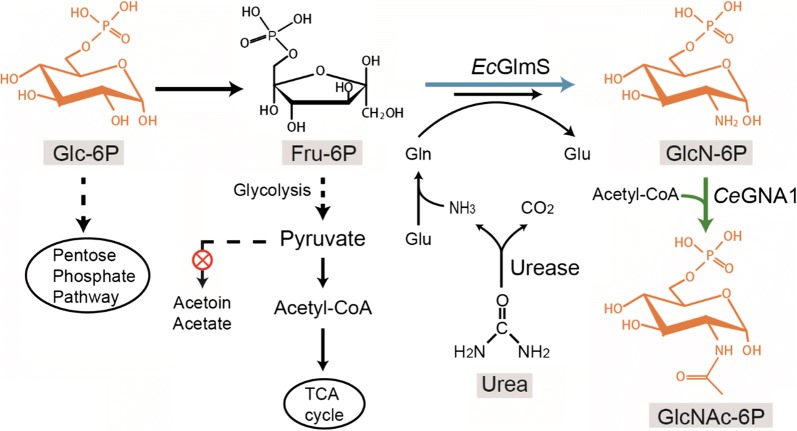
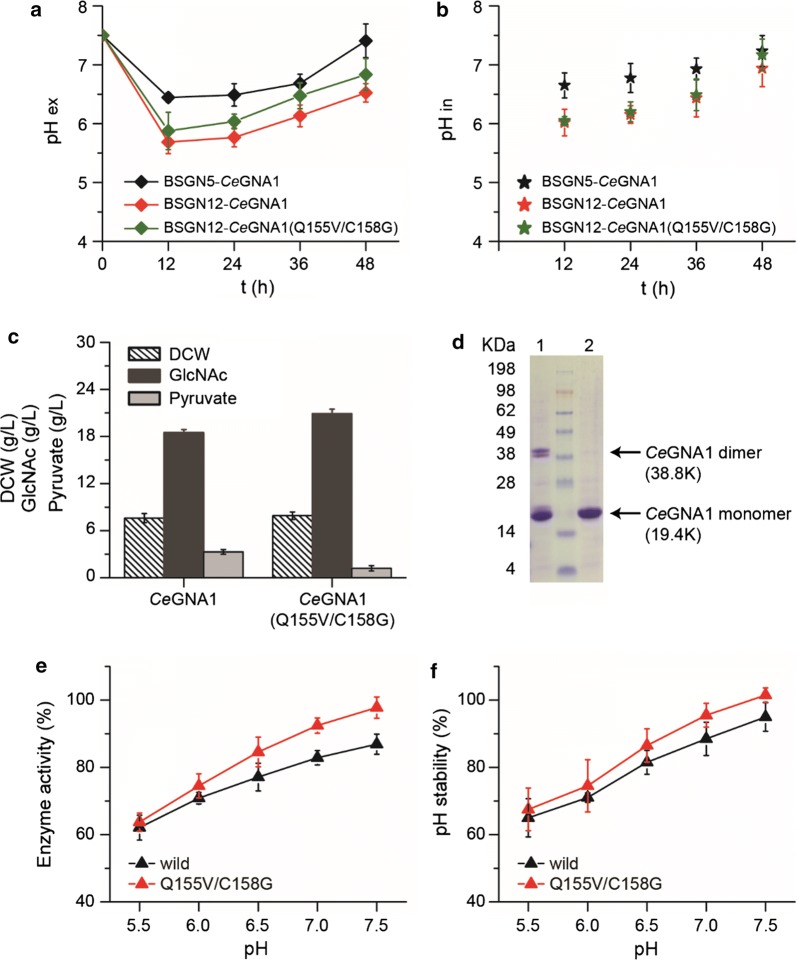
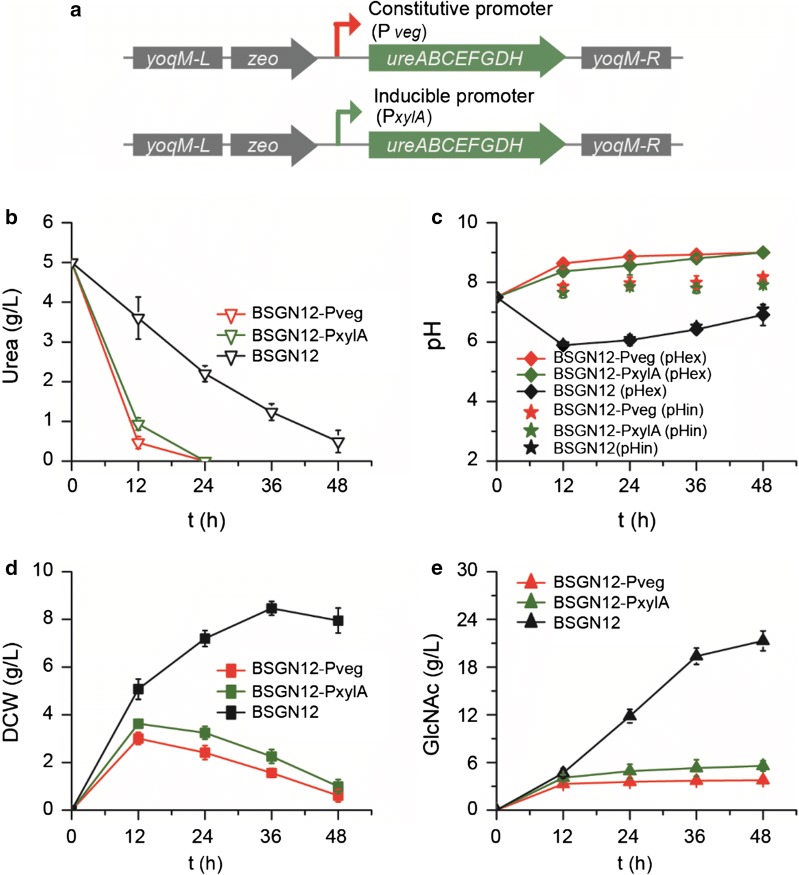
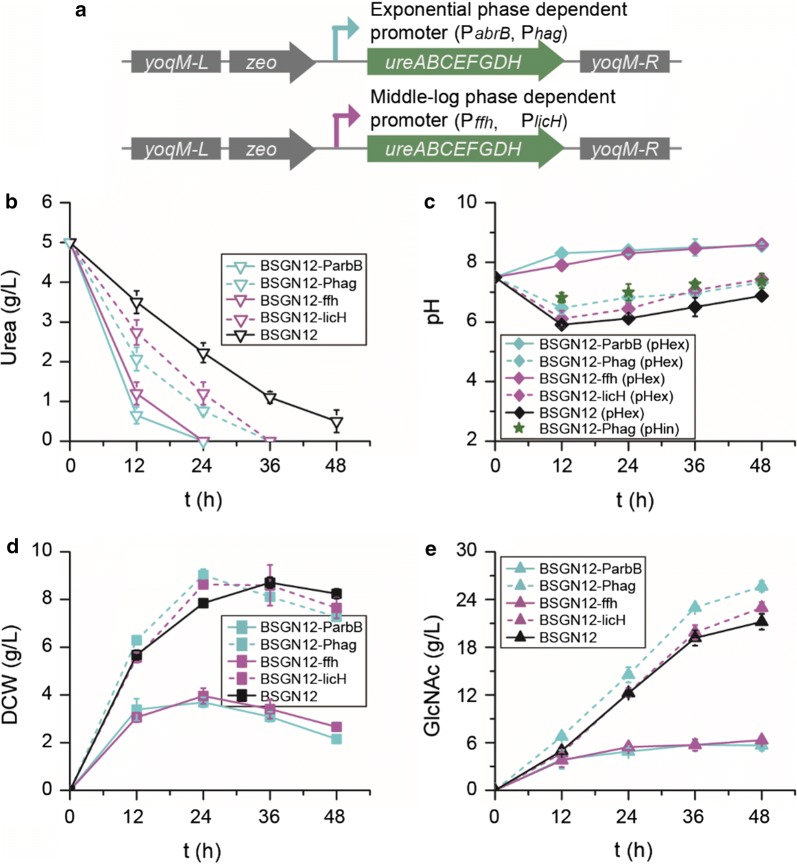
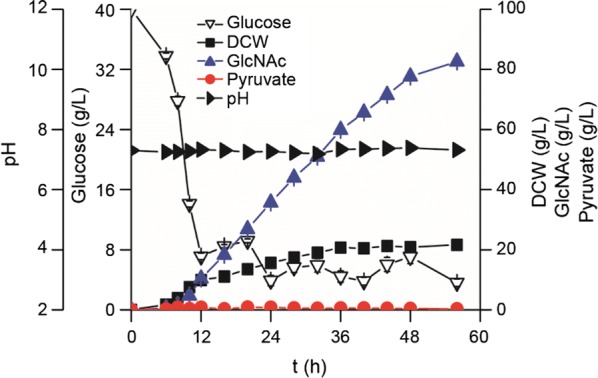
Glucosamine-6-phosphate N -acetyltransferase (GNA1) is the key enzyme that causes overproduction of N -acetylglucosamine in Bacillus subtilis . Previously, we increased GlcNAc production by promoting the expression of GNA1 from Caenorhabditis elegans ( Ce GNA1) in an engineered B. subtilis strain BSGN12. In this strain overflow metabolism to by-products acetoin and acetate had been blocked by mutations, however pyruvate accumulated as an overflow metabolite. Although overexpression of Ce GNA1 drove carbon flux from pyruvate to the GlcNAc synthesis pathway and decreased pyruvate accumulation, the residual pyruvate reduced the intracellular pH, resulting in inhibited Ce GNA1 activity and limited GlcNAc production. In this study, we attempted to further overcome pyruvate overflow by enzyme engineering and host engineering for enhanced GlcNAc production. To this end, the key enzyme Ce GNA1 was evolved through error-prone PCR under pyruvate stress to enhance its catalytic activity. Then, the urease from Bacillus paralicheniformis was expressed intracellularly to neutralize the intracellular pH, making it more robust in growth and more efficient in GlcNAc production. It was found that the activity of mutant Ce GNA1 increased by 11.5% at pH 6.5–7.5, with the catalytic efficiency increasing by 27.5% to 1.25 s −1 µM −1 . Modulated expression of urease increased the intracellular pH from 6.0 to 6.8. The final engineered strain BSGN13 overcame pyruvate overflow, produced 25.6 g/L GlcNAc with a yield of 0.43 g GlcNAc/g glucose in a shake flask fermentation and produced 82.5 g/L GlcNAc with a yield of 0.39 g GlcNAc/g glucose by fed-batch fermentation, which was 1.7- and 1.2-times, respectively, of the yield achieved previously. This study highlights a strategy that combines pathway enzyme engineering and host engineering to resolve overflow metabolism in B. subtilis for the overproduction of GlcNAc. By means of modulated expression of urease reduced pyruvate burden, conferred bacterial survival fitness, and enhanced GlcNAc production, all of which improved our understanding of co-regulation of cell growth and metabolism to construct more efficient B. subtilis cell factories.
Overview
The claims and statistics of this paper haven’t been checked yet.
Free: it reads the open-access text and checks the first 5 claims that cite a source we can check. Create a free account to check every claim.
Integrity signals
Registry
Cites
Statistics
Figures
Verification
Claims the paper makes
The claims and statistics of this paper haven’t been checked yet.
Free: it reads the open-access text and checks the first 5 claims that cite a source we can check. Create a free account to check every claim.
Claims other papers make about this one
Each is checked against this paper’s own text: does it say what the citing paper says it does?
The check wasn’t confident either way, so it gives no verdict — never disputed.
In the citing paper
“Accumulation of oils in microalgae cells is favored during conditions of stress which leads slower growth rate of cells and this aspect is particularly important when the focus is on lipid productivity (Aratboni et al. 2019).”
From Production of microalgae with high lipid content and their potential as sources of nutraceuticals (2023) · cites this paper as Aratboni et al. 2019
Experimental — accuracy not yet measured
Self-check
Percentages, sums and reported differences re-computed from the paper’s own numbers.
The self-check needs the paper’s full text.
Citations
Cites
Liu, H., & Naismith, J. H. (2008) · BMC Biotechnology · doi:10.1186/1472-6750-8-91 · Cited by 1,214
Construction of long DNA molecules using long PCR-based fusion of several fragments simultaneously
Shevchuk, N. A. (2004) · Nucleic Acids Research · doi:10.1093/nar/gnh014 · Cited by 336 · cited 16×
“After screening approximately 104 Ep-PCR clones, 15 mutants with enhanced GlcNAc titer were selected and retested in batch cultures and one evolved mutant, CeGAN1Q155V/C158G, which increased the GlcNAc titer from 18.5 to 20.9 g/L and decreased the extracellular pyruvate from 3.5 to 1.2 g/L, was identified and further…”
MethodInfluentialZhu, B., & Stülke, J. (2018) · Nucleic Acids Research · doi:10.1093/nar/gkx908 · Cited by 230
Cre/ lox System and PCR-Based Genome Engineering in Bacillus subtilis
Yan, X., Yu, H.-J., Hong, Q., & Li, S.-P. (2008) · Applied and Environmental Microbiology · doi:10.1128/aem.01156-08 · Cited by 226
Computational redesign of enzymes for regio- and enantioselective hydroamination
Li, R., Wijma, H. J., Song, L., Cui, Y., Otzen, M., Tian, Y., Du, J., Li, T., Niu, D., Chen, Y., et al. (2018) · Nature Chemical Biology · doi:10.1038/s41589-018-0053-0 · Cited by 188
Structure and Functional Diversity of GCN5-Related N-Acetyltransferases (GNAT)
Salah Ud-Din, A., Tikhomirova, A., & Roujeinikova, A. (2016) · International Journal of Molecular Sciences · doi:10.3390/ijms17071018 · Cited by 180
Modular pathway engineering of Bacillus subtilis for improved N-acetylglucosamine production
Liu, Y., Zhu, Y., Li, J., Shin, H., Chen, R. R., Du, G., Liu, L., & Chen, J. (2014) · Metabolic Engineering · doi:10.1016/j.ymben.2014.02.005 · Cited by 155 · cited 1×
“subtilis 168 derivate, ΔnagPΔgamPΔgamAΔnagAΔnagBΔldh::lox72 [30]”
Self-citationClark, S., Francis, P. S., Conlan, X. A., & Barnett, N. W. (2007) · Journal of Chromatography A · doi:10.1016/j.chroma.2007.05.085 · Cited by 135
Farag, I., Youssef, N. H., & Elshahed, M. S. (2017) · Applied and Environmental Microbiology · doi:10.1128/aem.00521-17 · Cited by 125
Characterization and application of endogenous phase-dependent promoters in Bacillus subtilis
Yang, S., Du, G., Chen, J., & Kang, Z. (2017) · Applied Microbiology and Biotechnology · doi:10.1007/s00253-017-8142-7 · Cited by 124
Self-citation
Cited by
Sustainable advances in SLA/DLP 3D printing materials and processes
Maines, E. M., Porwal, M. K., Ellison, C. J., & Reineke, T. M. (2021) · Green Chemistry · doi:10.1039/d1gc01489g · Cited by 360
Production of microalgae with high lipid content and their potential as sources of nutraceuticals
Udayan, A., Pandey, A. K., Sirohi, R., Sreekumar, N., Sang, B.-I., Sim, S. J., Kim, S. H., & Pandey, A. (2023) · Phytochemistry Reviews · doi:10.1007/s11101-021-09784-y · Cited by 302
Biofuel production from microalgae: challenges and chances
Hoang, A. T., Sirohi, R., Pandey, A., Nižetić, S., Lam, S. S., Chen, W.-H., Luque, R., Thomas, S., Arıcı, M., & Pham, V. V. (2023) · Phytochemistry Reviews · doi:10.1007/s11101-022-09819-y · Cited by 287
Natural products of pentacyclic triterpenoids: from discovery to heterologous biosynthesis
Li, Y., Wang, J., Li, L., Song, W., Li, M., Hua, X., Wang, Y., Yuan, J., & Xue, Z. (2023) · Natural Product Reports · doi:10.1039/d2np00063f · Cited by 237
Pyruvate-responsive genetic circuits for dynamic control of central metabolism
Xu, X., Li, X., Liu, Y., Zhu, Y., Li, J., Du, G., Chen, J., Ledesma-Amaro, R., & Liu, L. (2020) · Nature Chemical Biology · doi:10.1038/s41589-020-0637-3 · Cited by 175
Self-citationWu, Y., Chen, T., Liu, Y., Tian, R., Lv, X., Li, J., Du, G., Chen, J., Ledesma-Amaro, R., & Liu, L. (2020) · Nucleic Acids Research · doi:10.1093/nar/gkz1123 · Cited by 173
Self-citationMicrobial production of ectoine and hydroxyectoine as high-value chemicals
Liu, M., Liu, H., Shi, M., Jiang, M., Li, L., & Zheng, Y. (2021) · Microbial Cell Factories · doi:10.1186/s12934-021-01567-6 · Cited by 159
Bustos, A. Y., Taranto, M. P., Gerez, C. L., Agriopoulou, S., Smaoui, S., Varzakas, T. H., & Enshasy, H. A. E. (2024) · Probiotics and Antimicrobial Proteins · doi:10.1007/s12602-024-10273-9 · Cited by 158
High-value bioproducts from microalgae: Strategies and progress
Liang, M.-H., Wang, L., Wang, Q., Zhu, J., & Jiang, J.-G. (2019) · Critical Reviews in Food Science and Nutrition · doi:10.1080/10408398.2018.1455030 · Cited by 140
Alternative metabolic pathways and strategies to high-titre terpenoid production in Escherichia coli
Rinaldi, M. A., Ferraz, C. A., & Scrutton, N. S. (2022) · Natural Product Reports · doi:10.1039/d1np00025j · Cited by 132
Groenewald, M., Hittinger, C. T., Bensch, K., Opulente, D. A., Shen, X.-X., Li, Y., Liu, C., LaBella, A. L., Zhou, X., Limtong, S., et al. (2023) · Studies in Mycology · doi:10.3114/sim.2023.105.01 · Cited by 112
Systems metabolic engineering of microorganisms for food and cosmetics production
Choi, K. R., & Lee, S. Y. (2023) · Nature Reviews Bioengineering · doi:10.1038/s44222-023-00076-y · Cited by 95
“Increasing the mass-transfer rates can also be achieved by modulating bioreactor configurations 31,89,178 , decreasing the viscosity of the medium 22,24 or by supplementing water-miscible organic solvents to dissolve the substrates of low solubility in the medium 135 .”
BackgroundYu, Y., Rasool, A., Liu, H., Lv, B., Chang, P., Song, H., Wang, Y., & Li, C. (2020) · Metabolic Engineering · doi:10.1016/j.ymben.2020.08.010 · Cited by 92
Gao, B., Hong, J., Chen, J., Zhang, H., Ren, H., & Zhang, C. (2023) · Biotechnology for Biofuels and Bioproducts · doi:10.1186/s13068-022-02249-0 · Cited by 91
Chen, D., Lv, X., Li, J., Zhang, H., Liu, Y., Du, G., Ledesma‐Amaro, R., & Liu, L. (2021) · Metabolic Engineering · doi:10.1016/j.ymben.2021.07.012 · Cited by 87
Self-citationComparative effects of alive and pasteurized Akkermansia muciniphila on normal diet-fed mice
Ashrafian, F., Raftar, S. K. A., Shahryari, A., Behrouzi, A., Yaghoubfar, R., Lari, A., Moradi, H. R., Khatami, S., Omrani, M. D., Vaziri, F., et al. (2021) · Scientific Reports · doi:10.1038/s41598-021-95738-5 · Cited by 87
El-Sheekh, M. M., El-Kassas, H. Y., & Ali, S. S. (2025) · Microbial Cell Factories · doi:10.1186/s12934-024-02638-0 · Cited by 86
El‐Borady, O. M., Fawzy, M., & Hosny, M. (2021) · Applied Nanoscience · doi:10.1007/s13204-021-01776-w · Cited by 85
Vijayakumar, V. E., & Venkataraman, K. (2023) · Molecular Biotechnology · doi:10.1007/s12033-023-00803-1 · Cited by 76
The Beauty of Biocatalysis: Sustainable Synthesis of Ingredients in Cosmetics
Heath, R. S., Ruscoe, R. E., & Turner, N. J. (2022) · Natural Product Reports · doi:10.1039/d1np00027f · Cited by 65
Metabolic Cascade for Remediation of Plastic Waste: a Case Study on Microplastic Degradation
Gaur, V. K., Gupta, S., Sharma, P., Gupta, P., Varjani, S., Srivastava, J. K., Chang, J., & Bui, X. (2022) · Current Pollution Reports · doi:10.1007/s40726-021-00210-7 · Cited by 66
Yang, J., Zhang, T., Tian, C., Zhu, Y., Zeng, Y., Men, Y., Chen, P., Sun, Y., & Ma, Y. (2019) · Biotechnology Advances · doi:10.1016/j.biotechadv.2019.06.005 · Cited by 65
Ranjbar, S., & Malcata, F. X. (2022) · Fuel · doi:10.1016/j.fuel.2022.124567 · Cited by 64
Genetic optimisation of bacteria-induced calcite precipitation in Bacillus subtilis
Hoffmann, T. D., Paine, K. A., & Gebhard, S. (2021) · Microbial Cell Factories · doi:10.1186/s12934-021-01704-1 · Cited by 64
“subtilis background (30), giving confidence in its suitability for our 151 purposes.”
BackgroundSun, W. Y., Yin, Q., Wan, H., Gao, R., Xiong, C., Xie, C., Meng, X., Mi, Y., Wang, X., Wang, C., et al. (2023) · Nature Communications · doi:10.1038/s41467-023-42253-y · Cited by 58
Shahzadi, I., Al-Ghamdi, M. A., Nadeem, M. S., Sajjad, M., Ali, A., Khan, J. A., & Kazmi, I. A. (2021) · Scientific Reports · doi:10.1038/s41598-021-86000-z · Cited by 54
Yang, L., Henriksen, M. M., Hansen, R. S., Lübeck, M., Vang, J., Andersen, J. E., Bille, S., & Lübeck, P. S. (2020) · Biotechnology for Biofuels · doi:10.1186/s13068-020-01850-5 · Cited by 53
Latest Trends and Developments in Microalgae as Potential Source for Biofuels: The Case of Diatoms
Mourya, M., Khan, M. J., Ahirwar, A., Schoefs, B., Marchand, J., Rai, A., Varjani, S., Rajendran, K., Banu, J. R., & Vinayak, V. (2022) · Fuel · doi:10.1016/j.fuel.2021.122738 · Cited by 52
An update on CRISPR-Cas12 as a versatile tool in genome editing
Senthilnathan, R., Ilangovan, I., Kunale, M., Easwaran, N., Ramamoorthy, S., Ashokkumar, V., & Muthukaliannan, G. K. (2023) · Molecular Biology Reports · doi:10.1007/s11033-023-08239-1 · Cited by 50
The Role of Structural Variation in Adaptation and Evolution of Yeast and Other Fungi
Gorkovskiy, A., & Verstrepen, K. J. (2021) · Genes · doi:10.3390/genes12050699 · Cited by 47
Strategies to increase the robustness of microbial cell factories
Xu, P., Lin, N.-Q., Zhang, Z., & Liu, J.-Z. (2024) · Advanced Biotechnology · doi:10.1007/s44307-024-00018-8 · Cited by 46
Meng, D., Wei, X., Bai, X., Zhou, W., & You, C. (2020) · ACS Catalysis · doi:10.1021/acscatal.0c03767 · Cited by 46
Sreeharsha, R. V., Dubey, N., & Mohan, S. V. (2023) · Journal of Cleaner Production · doi:10.1016/j.jclepro.2023.137526 · Cited by 45
Abdella, A., Ramadan, S., Hamouda, R. A., Saddiq, A. A., Alhazmi, N. M., & Al‐Saman, M. A. (2021) · Scientific Reports · doi:10.1038/s41598-021-95965-w · Cited by 45
Bertacchi, S., Bettiga, M., Porro, D., & Branduardi, P. (2020) · Biotechnology for Biofuels · doi:10.1186/s13068-020-01682-3 · Cited by 43
Ma, Q., Sun, Q., Tan, M., Li, X., Zhang, Y., Yang, M., Zhuo, M., Zhao, K., Li, Y., Xu, Q., et al. (2021) · Journal of Agricultural and Food Chemistry · doi:10.1021/acs.jafc.1c01513 · Cited by 41
Hydroxysteroid Dehydrogenases: An Ongoing Story
Ferrandi, E. E., Bertuletti, S., Monti, D., & Riva, S. (2020) · European Journal of Organic Chemistry · doi:10.1002/ejoc.202000192 · Cited by 40
Algal glycobiotechnology: omics approaches for strain improvement
Sirohi, R., Joun, J., Choi, H. I., Gaur, V. K., & Sim, S. J. (2021) · Microbial Cell Factories · doi:10.1186/s12934-021-01656-6 · Cited by 39
Chen, D., Lv, X., Liu, Y., Li, J., Lu, W., Du, G., & Liu, L. (2019) · Synthetic and Systems Biotechnology · doi:10.1016/j.synbio.2019.05.002 · Cited by 37
Self-citationCho, S., Lee, Y. S., Chai, H., Lim, S. E., Na, J. G., & Lee, J. (2022) · Biotechnology for Biofuels and Bioproducts · doi:10.1186/s13068-022-02104-2 · Cited by 37
Categories and biomanufacturing methods of glucosamine
Ma, Q., & Gao, X. (2019) · Applied Microbiology and Biotechnology · doi:10.1007/s00253-019-10084-x · Cited by 36
Biosynthesis of pinene in purple non-sulfur photosynthetic bacteria
Wu, X., Ma, G., Liu, C., Qiu, X., Lu, M., Kuang, J., & Zhu, L. (2021) · Microbial Cell Factories · doi:10.1186/s12934-021-01591-6 · Cited by 35
High‐Throughput Optimization of Recombinant Protein Production in Microfluidic Gel Beads
Napiorkowska, M., Pestalozzi, L., Panke, S., Held, M., & Schmitt, S. (2020) · Small · doi:10.1002/smll.202005523 · Cited by 34
Rana, Q. U. A., Latif, S., Perveen, S., Haq, A., Ali, S., Irfan, M., Gauttam, R., Shah, T. A., Dawoud, T. M. S., Wondmie, G. F., et al. (2024) · Bioresources and Bioprocessing · doi:10.1186/s40643-023-00720-w · Cited by 34
Synthetic biology approaches to improve tolerance of inhibitors in lignocellulosic hydrolysates
Tian, L., Qi, T. Y., Zhang, F., Tran, V. G., Yuan, J., Wang, Y., He, N., & Cao, M. (2024) · Biotechnology Advances · doi:10.1016/j.biotechadv.2024.108477 · Cited by 33
Saleem, A. S. A., Abdelnour, S. A., Bassiony, S. M., Abdel-Monem, U. M., Elaref, M. Y., & Al-Marakby, K. M. (2025) · Tropical Animal Health and Production · doi:10.1007/s11250-025-04439-y · Cited by 33
Wang, K., Wang, X., Luo, H., Wang, Y., Wang, Y., Tu, T., Qin, X., Bai, Y., Huang, H., Yao, B., et al. (2022) · International Journal of Molecular Sciences · doi:10.3390/ijms23020773 · Cited by 31
“coli [29], gna1* gene from Caenorhabditis elegans [30] and yqaB gene (GlcNAc6-phosphate phosphatase) from E.”
BackgroundZhuang, Q., & Qi, Q. (2019) · Microbial Cell Factories · doi:10.1186/s12934-019-1186-x · Cited by 31
Nath, S. (2025) · Food Reviews International · doi:10.1080/87559129.2025.2520453 · Cited by 29
Coiled-coil inspired functional inclusion bodies
Gil-García, M., Navarro, S., & Ventura, S. (2020) · Microbial Cell Factories · doi:10.1186/s12934-020-01375-4 · Cited by 29
Yuan, P., Xu, M., Mao, C., Zheng, H. Y., & Sun, D. (2023) · ACS Synthetic Biology · doi:10.1021/acssynbio.3c00315 · Cited by 28
Lv, X., Zhang, C., Cui, S., Xu, X., Wang, L., Li, J., Du, G., Chen, J., Ledesma‐Amaro, R., & Liu, L. (2020) · Metabolic Engineering · doi:10.1016/j.ymben.2020.05.011 · Cited by 25
Self-citationDirected genome evolution driven by structural rearrangement techniques
Zhou, S., Wu, Y., Xie, Z., Jia, B., & Yuan, Y. (2021) · Chemical Society Reviews · doi:10.1039/d1cs00722j · Cited by 26
Expanding the promoter toolbox for metabolic engineering of methylotrophic yeasts
Yan, C., Yu, W., Yao, L., Guo, X., Zhou, Y. J., & Gao, J. (2022) · Applied Microbiology and Biotechnology · doi:10.1007/s00253-022-11948-5 · Cited by 25
Engineering Corynebacterium glutamicum for the efficient production of N-acetylglucosamine
Li, Z., Wang, Q., Liu, H., Wang, Y., Zheng, Z., Zhang, Y., & Tan, T. (2023) · Bioresource Technology · doi:10.1016/j.biortech.2023.129865 · Cited by 25
Magadlela, A., Lembede, Z., Egbewale, S. O., & Olaniran, A. O. (2022) · Applied Soil Ecology · doi:10.1016/j.apsoil.2022.104647 · Cited by 23
Cui, Y., Rasul, F., Jiang, Y., Zhong, Y., Zhang, S., Boruta, T., Riaz, S., & Daroch, M. (2022) · Frontiers in Microbiology · doi:10.3389/fmicb.2022.965968 · Cited by 24
“In this way, a variety of functional genes are expressed in different strains and work separately to avoid interaction between gene expression, which strengthens the core characteristics of each microbial strain, reducing the metabolic load of each bacterial chassis and is suitable for completing multiple complex task…”
BackgroundGreen hydrogen production by Rhodobacter sphaeroides
Akroum-Amrouche, D., Akroum, H., & Lounici, H. (2019) · Energy Sources Part A Recovery Utilization and Environmental Effects · doi:10.1080/15567036.2019.1666190 · Cited by 21
mGem: Revisiting bacterial overflow metabolism
Chowdhury, N. B., Schroeder, W. L., Monteiro, L. M. O., & Burnum-Johnson, K. (2025) · mBio · doi:10.1128/mbio.01193-25 · Cited by 20
“However, these are generally considered “waste” products (particularly in carbon-limited growth conditions) in microbial cell factories, diverting carbon flux away from desirable products (8, 9) leading to interest in overflow metabolism, particularly avoidance or tight regulation (10, 11).”
Vitreoscilla Haemoglobin: A Tool to Reduce Overflow Metabolism
Taymaz‐Nikerel, H., & Lara, A. R. (2021) · Microorganisms · doi:10.3390/microorganisms10010043 · Cited by 20
“Bacillus subtilis Acetoin, acetate [9] CHO cells Lactate [10] Clostridium thermocellum Lactate, acetate, ethanol [11] Corynebacterium glutamicum Dihydroxyacetone, acetate [12] Escherichia coli Acetate [13] Lachance kluyveri Ethylacetate [14] Saccharomyces cerevisiae Ethanol [13] Penicillium chrysogenum Gluconate [15]…”
MethodNdlovu, S., Suinyuy, T. N., Pérez‐Fernández, M. A., & Magadlela, A. (2023) · Plants · doi:10.3390/plants12051034 · Cited by 20
“[88] observed increased β-Glucosaminidase, acid, and alkaline phosphatases activity in P-deficient and acidic soils compared with P-rich soils.”
BackgroundSharma, S., Ghoshal, C., Arora, A., Samar, W., Nain, L., & Paul, D. (2021) · Applied Biochemistry and Biotechnology · doi:10.1007/s12010-021-03539-3 · Cited by 18
Microbial host engineering for sustainable isobutanol production from renewable resources
Nawab, S., Zhang, Y., Ullah, M. W., Lodhi, A. F., Shah, S. B., Rahman, M. U., & Yong, Y.-C. (2024) · Applied Microbiology and Biotechnology · doi:10.1007/s00253-023-12821-9 · Cited by 16
Tryptophan plays an important role in yeast’s tolerance to isobutanol
Liu, H.-L., Wang, C. H.-T., Chiang, E. I., Huang, C., & Li, W. (2021) · Biotechnology for Biofuels · doi:10.1186/s13068-021-02048-z · Cited by 17
A self‐propagating, barcoded transposon system for the dynamic rewiring of genomic networks
English, M. A., Alcantar, M. A., & Collins, J. J. (2023) · Molecular Systems Biology · doi:10.15252/msb.202211398 · Cited by 16
Application of CRISPR/Cas System in the Metabolic Engineering of Small Molecules
Singh, R., Chandel, S., Ghosh, A., Dey, D., Chakravarti, R., Roy, S., Ravichandiran, V., & Ghosh, D. (2021) · Molecular Biotechnology · doi:10.1007/s12033-021-00310-1 · Cited by 15
Recent updates on immunological, pharmacological, and alternative approaches to combat COVID-19
Saleem, A., Akhtar, M. F., Haris, M., & Abdel‐Daim, M. M. (2021) · Inflammopharmacology · doi:10.1007/s10787-021-00850-7 · Cited by 15
Hussain, S. B., Shah, S. M. U., Nosheen, A., & Mumtaz, S. (2024) · Waste and Biomass Valorization · doi:10.1007/s12649-024-02482-8 · Cited by 14
Zawawy, N. A. E., El-Esawi, M. A., Attia, N., & Mahmoud, Y. A. ‐. (2025) · BMC Plant Biology · doi:10.1186/s12870-025-06517-7 · Cited by 14
Ionic liquid method for the extraction of lipid from microalgae biomass: a review
Motlagh, S. R., Elgharbawy, A. A. M., Khezri, R., Harun, R., Biak, D. R. A., & Hussain, S. A. (2021) · Biomass Conversion and Biorefinery · doi:10.1007/s13399-021-01972-2 · Cited by 14
Combining nucleotide variations and structure variations for improving astaxanthin biosynthesis
Jin, J., Jia, B., & Yuan, Y. (2022) · Microbial Cell Factories · doi:10.1186/s12934-022-01793-6 · Cited by 14
Brink, D. P., Mierke, F., Norbeck, J., Siewers, V., & Andlid, T. A. (2023) · Microbial Cell Factories · doi:10.1186/s12934-023-02175-2 · Cited by 14
Fan, D., Yuan, Z., Tang, H., Ren, P., & Han, S. (2025) · Bioresource Technology · doi:10.1016/j.biortech.2025.132915 · Cited by 13
Altın, N., & Akay, R. G. (2023) · Journal of Electrochemical Energy Conversion and Storage · doi:10.1115/1.4062991 · Cited by 13
Saad, M., Ibrahim, W., Hasanin, A. H., Elyamany, A. M., & Matboli, M. (2024) · RSC Medicinal Chemistry · doi:10.1039/d4md00477a · Cited by 12
Dębowski, M., Dudek, M., Nowicka, A., Quattrocelli, P., Kazimierowicz, J., & Zieliński, M. (2022) · Environmental Technology · doi:10.1080/09593330.2022.2112981 · Cited by 12
“When grown under the right conditions, its biomass is rich in protein and carbohydrates for the food industry, and lipid substances for the bio-energy industry [11].”
BackgroundTunable cell differentiation via reprogrammed mating-type switching
Heng, Y. C., Kitano, S., Susanto, A. V., Foo, J. L., & Chang, M. W. (2024) · Nature Communications · doi:10.1038/s41467-024-52282-w · Cited by 11
Lázaro, J., Wongprommoon, A., Júlvez, J., & Oliver, S. G. (2025) · Bioinformatics Advances · doi:10.1093/bioadv/vbaf166 · Cited by 3
Wu, Y., Liu, J., Han, X. J., Meng, X., Li, M., Wang, J., Xue, H., Yang, Y., Xu, P., & Tao, F. (2022) · iScience · doi:10.1016/j.isci.2022.105774 · Cited by 11
“In the GlcNAc synthesis pathway, the glucosamine-6-phosphate acetyltransferase (GNA1) is the key enzyme for the overproduction ofGlcNAc requiring heterologous expression.(37) Currently, the reported GNA1s are mostly derived frommesophiles, such as yeasts, which limits the host options for microbial fermentation.”
BackgroundZhou, P., Li, H., Lin, Y., Zhou, Y., Chen, Y., Li, Y., Li, X., Yan, H., Lin, W., Xu, B., et al. (2023) · BMC Plant Biology · doi:10.1186/s12870-023-04478-3 · Cited by 11
Recent advances in yeast genome evolution with stress tolerance for green biological manufacturing
Xu, K., Zhang, Y., Guo, D., Qin, L., Ashraf, M. U., & Ahmad, N. (2022) · Biotechnology and Bioengineering · doi:10.1002/bit.28183 · Cited by 11
Gut bacteriome dynamics in high altitude-adapted chicken lines: a key to future poultry therapeutics
Bhagat, N. R., Bharti, V. K., Shukla, G., Rishi, P., & Chaurasia, O. P. (2025) · Scientific Reports · doi:10.1038/s41598-025-96178-1 · Cited by 10
Bacillus subtilis chassis in biomanufacturing 4.0
Zhang, W., Zhu, X., Wang, Y., & Tao, L. (2022) · Journal of Chemical Technology & Biotechnology · doi:10.1002/jctb.7053 · Cited by 10
Eldiehy, K. S. H., Daimary, N., Borah, D., Mandal, M., & Deka, D. (2023) · Applied Biochemistry and Biotechnology · doi:10.1007/s12010-023-04312-4 · Cited by 9
Varada, V. V., Kumar, S., Balaga, S., Thanippilly, A. J., Pushpadass, H. A., Rashmi, H. M., Jangir, B. L., Tyagi, N., & Samanta, A. K. (2024) · Food & Function · doi:10.1039/d4fo02732a · Cited by 9
Latest advances in research methods for high-yield cellulase production
Xiang, X., Zhang, Y., Wei, W., & Zhou, G. (2025) · Sustainable Energy & Fuels · doi:10.1039/d4se01553c · Cited by 9
Engineering Saccharomyces boulardii for enhanced surface display capacity
Xu, L., Bai, X., Jeong, D., Lee, D. H., Semidey, F., Li, C. F., & Oh, E. J. (2025) · Microbial Cell Factories · doi:10.1186/s12934-025-02702-3 · Cited by 9
A New Perspective on Metabolites and Bioactive Compounds from Fungi
Balasubramaniyam, T., Choi, S., Nathan, V. K., Basu, A., & Lee, J. (2023) · The American Journal of Chinese Medicine · doi:10.1142/s0192415x23500799 · Cited by 9
Gautam, A., Sahai, V., & Mishra, S. (2020) · Bioprocess and Biosystems Engineering · doi:10.1007/s00449-020-02427-0 · Cited by 9
Song, H. M., Jo, S. Y., Lee, H., Jeon, S., Yun, D., Kim, C., Son, J., Sohn, Y. J., Choi, J., & Park, S. J. (2023) · Systems Microbiology and Biomanufacturing · doi:10.1007/s43393-023-00215-x · Cited by 8
An iterative strategy to design 4-1BB agonist nanobodies de novo with generative AI models
Poddiakov, I., Umerenkov, D., Shulcheva, I., Golovina, V., Borisova, V., Pozdnyakova-Filatova, I., Loktyushov, E., Zubkova, G., Savchenko, A., Ulitin, A. B., et al. (2025) · Scientific Reports · doi:10.1038/s41598-025-10241-5 · Cited by 8
Zhang, Y., Xu, Z., Lu, M., Ding, B., Chen, S., Wen, Z., Yu, Y., Zhou, L., & Jin, M. (2022) · Bioresource Technology · doi:10.1016/j.biortech.2022.127268 · Cited by 8
Anti-cancer Immunotoxins, Challenges, and Approaches
Dashtiahangar, M., Rahbarnia, L., Farajnia, S., Salmaninejad, A., Shabgah, A. G., & Ghasemali, S. (2020) · Current Pharmaceutical Design · doi:10.2174/1381612826666201006155346 · Cited by 8
Flavin Biosynthesis Enhances Extracellular Electron Transfer in Bioengineered Escherichia coli
Mouhib, M., Reggente, M., Wang, H., Roullier, C., & Boghossian, A. A. (2025) · Advanced Science · doi:10.1002/advs.202412230 · Cited by 7
Deciphering the anti-aging potential of probiotics: A narrative review on gerobiotics
Hussain, A., Mojgani, N., Koser, N., Siddiqui, M. F., & Ali, S. A. (2025) · The Microbe · doi:10.1016/j.microb.2025.100607 · Cited by 9
Othman, A. S., Ahmed, N. A., Elneklawi, M. S., Hassan, M. M., & El-Mongy, M. A. (2023) · Microbial Cell Factories · doi:10.1186/s12934-023-02187-y · Cited by 7
Li, P., Li, X., We, Z., Dong, R., Li, K., Fan, H., Wang, R., Wang, J., & Lv, M. (2020) · Molecular Biotechnology · doi:10.1007/s12033-020-00257-9 · Cited by 7
Construction of a syntrophic Pseudomonas putida consortium with reciprocal substrate processing
Burýšková, B., Miró-Bueno, J., Popelářová, B., Gavendova, B., Goñi‐Moreno, Á., & Dvořák, P. (2025) · Synthetic Biology · doi:10.1093/synbio/ysaf012 · Cited by 6
Ali, N. M., Hussein, M. K., Elbarbary, N. K., Amgad, Z.-E., & Noseer, E. A. (2025) · BMC Veterinary Research · doi:10.1186/s12917-025-04955-x · Cited by 6
Badiefar, L., Rodríguez‐Couto, S., & Riazalhosseini, B. (2023) · Elsevier eBooks · doi:10.1016/b978-0-323-99895-6.00003-4 · Cited by 6
Metadata
- Authors
- Ma, W., Liu, Y., Lv, X., Li, J., Du, G., & Liu, L.
- Affiliations
- Jiangnan University (CN)
- Corresponding author
- Liu, Long
- Venue
- Microbial Cell Factories
- Published
- 2019-01-04
- Volume
- 18
- Issue
- 1
- Pages
- 1-1
- ISSN
- 1475-2859 (ISSN-L)
- PMC
- PMC6318901
- OpenAlex
- W2907630779
- Cited by
- 148
- References
- 36
- Citations by year
- 2026: 3 · 2025: 26 · 2024: 15 · 2023: 28 · 2022: 22 · 2021: 31 · 2020: 15 · 2019: 7
- FWCI
- 6.21
- Type
- journal article
- Language
- en
- Open access
- gold
- doi.org
- Licence
- cc-by
- creativecommons.org/licenses/by/4.0/ (tdm)
- Locations
- Microbial Cell Factories (publishedVersion, cc-by)
- Europe PMC (PubMed Central) (publishedVersion, cc-by)
- PubMed Central (publishedVersion, cc-by)
- PubMed (publishedVersion)
- DOAJ (DOAJ: Directory of Open Access Journals) (submittedVersion)
- Funders
- National Natural Science Foundation of China (31622001, 31671845, 21676119, 31600068)
- Natural Science Foundation of Jiangsu Province (BK20160176)
- Fundamental Research Funds for the Central Universitie (JUSRP11725)
- 111 Projec (111-2-06)
- China Postdoctoral Science Foundation (2016M600363, 2017T100327, 2018M630523)
- Topics
- Life Sciences › Biochemistry, Genetics and Molecular Biology › Molecular Biology › Microbial Metabolic Engineering and Bioproduction
- Life Sciences › Biochemistry, Genetics and Molecular Biology › Molecular Biology › Fungal and yeast genetics research
- Life Sciences › Biochemistry, Genetics and Molecular Biology › Biotechnology › Enzyme Production and Characterization
- Keywords
- Bacillus subtilis, urease, intracellular pH, acetoin, acetate, carbon flux, fed-batch fermentation, host engineering, pathway engineering
- MeSH terms
- Acetoin, Acetylglucosamine, Animals, Bacillus subtilis, Bacterial Proteins, Glucose, Hydrogen-Ion Concentration, Kinetics, Urease, Caenorhabditis elegans, Pyruvic Acid, Caenorhabditis elegans Proteins, Glucosamine 6-Phosphate N-Acetyltransferase, Metabolic Engineering, Batch Cell Culture Techniques
About these checks
Registry, retraction, Cites and statistics results are computed, not judged, with one exception: a printed reference that no index lists is read once by a model before it counts as a citation error. Claims are extracted by a model and kept only when their quote appears verbatim in the text; each cited source is then checked, with a model’s help, for whether it says what the claim relies on. Those verdicts can be wrong — read the claim’s quote and the cited source before relying on one.
Statistics and arithmetic are recomputed, not judged.
Confidence bands are shown only for fields calibrated on our annotated test set. None is calibrated yet, so no band is shown.
What counts as a claim ›How we measure confidence ›How we check this ›
Are you an author, or do you see a problem with this page? Request a review
Data sources
Bibliographic data: Semantic Scholar, OpenAlex, Crossref.
Contains information from the Semantic Scholar Academic Graph Datasets, made available under the ODC Attribution License (ODC-BY 1.0).
Semantic Scholar’s data is described in: Kinney, R., et al. (2023). The Semantic Scholar Open Data Platform. arXiv:2301.10140.
