

SEVA-Cpf1, a CRISPR-Cas12a vector for genome editing in cyanobacteria
Open accessThe DOI matches its Crossref record; 56 of the 56 references it cites were found in a registry or an index.
Abstract
Background: Cyanobacteria are photosynthetic autotrophs that have tremendous potential for fundamental research and industrial applications due to their high metabolic plasticity and ability to grow using CO 2 and sunlight. CRISPR technology using Cas9 and Cpf1 has been applied to different cyanobacteria for genome manipulations and metabolic engineering. Despite significant advances with genome editing in several cyanobacteria strains, the lack of proper genetic toolboxes is still a limiting factor compared to other model laboratory species. Among the limitations, it is essential to have versatile plasmids that could ease the benchwork when using CRISPR technology. Results: In the present study, several CRISPR-Cpf1 vectors were developed for genetic manipulations in cyanobacteria using SEVA plasmids. SEVA collection is based on modular vectors that enable the exchangeability of diverse elements (e.g. origins of replication and antibiotic selection markers) and the combination with many cargo sequences for varied end-applications. Firstly, using SEVA vectors containing the broad host range RSF1010 origin we demonstrated that these vectors are replicative not only in model cyanobacteria but also in a new cyanobacterium specie, Chroococcidiopsis sp., which is different from those previously published. Then, we constructed SEVA vectors by harbouring CRISPR elements and showed that they can be easily assimilated not only by conjugation, but also by natural transformation. Finally, we used our SEVA-Cpf1 tools to delete the nblA gene in Synechocystis sp. PCC 6803, demonstrating that our plasmids can be applied for CRISPR-based genome editing technology. Conclusions: The results of this study provide new CRISPR-based vectors based on the SEVA (Standard European Vector Architecture) collection that can improve editing processes using the Cpf1 nuclease in cyanobacteria.
Overview
The claims and statistics of this paper haven’t been checked yet.
Free: it reads the open-access text and checks the first 5 claims that cite a source we can check. Create a free account to check every claim.
Integrity signals
Registry
Cites
Statistics
Figures
Verification
Claims the paper makes
The claims and statistics of this paper haven’t been checked yet.
Free: it reads the open-access text and checks the first 5 claims that cite a source we can check. Create a free account to check every claim.
Claims other papers make about this one
Each is checked against this paper’s own text: does it say what the citing paper says it does?
The source backs part of the claim, not all of it — or backs it for a different population, condition or comparison.
In the citing paper
“Notably, Cas12a-based systems have emerged as particularly advantageous in cyanobacterial applications due to their capacity to process multiple guide RNAs from a single transcript, enabling multiplex genome editing and concurrent manipulation of several genetic targets [115,116].”
From Cyanobacteria as a Photosynthetic Chassis for Metabolic Pathway Engineering with Heterologous Gene Expression (2026) · cites this paper as [115]
Experimental — accuracy not yet measuredThe source backs part of the claim, not all of it — or backs it for a different population, condition or comparison.
In the citing paper
“Third, CRISPR-based systems can accelerate segregation by selectively cleaving unedited wild-type alleles and enriching fully edited genome copies.”
From Cyanobacteria as a Photosynthetic Chassis for Metabolic Pathway Engineering with Heterologous Gene Expression (2026) · cites this paper as [115]
Experimental — accuracy not yet measuredThe source backs part of the claim, not all of it — or backs it for a different population, condition or comparison.
In the citing paper
“CRISPR-Cpf1/Cas12a systems and inducible CRISPR-Cas9 approaches have both been developed for cyanobacterial genome engineering and can help improve editing efficiency in polyploid hosts [115].”
From Cyanobacteria as a Photosynthetic Chassis for Metabolic Pathway Engineering with Heterologous Gene Expression (2026) · cites this paper as [115]
Experimental — accuracy not yet measuredThe cited source says what the claim attributes to it.
In the citing paper
“These nucleases facilitate site-specific double-stranded DNA breaks at designated loci, which are subsequently repaired via homologous recombination utilising supplied donor DNA templates [115,116].”
From Cyanobacteria as a Photosynthetic Chassis for Metabolic Pathway Engineering with Heterologous Gene Expression (2026) · cites this paper as [115]
Self-check
Percentages, sums and reported differences re-computed from the paper’s own numbers.
The self-check needs the paper’s full text.
Citations
Cites
Cpf1 Is a Single RNA-Guided Endonuclease of a Class 2 CRISPR-Cas System
Zetsche, B., Gootenberg, J. S., Abudayyeh, O. O., Slaymaker, I. M., Makarova, K. S., Essletzbichler, P., Volz, S. E., Joung, J., van der Oost, J., Regev, A., et al. (2015) · Cell · doi:10.1016/j.cell.2015.09.038 · Cited by 4,761 · cited 1×
“An alternative to Cas9 that has been successfully developed in cyanobacteria is CRISPR-Cpf1 (Cas12a), a single RNA-guided endonuclease that, among other features, differs from Cas9 in that: i) it recognises a target with a 5′ T-rich protospacer-adjacent motif (5′-TTN-3′) instead of G-rich Cas9 PAM; ii) Cpf1associated…”
BackgroundSilva-Rocha, R., Martínez-García, E., Calles, B., Chavarría, M., Arce-Rodríguez, A., de las Heras, A., Páez-Espino, A. D., Durante-Rodríguez, G., Kim, J., Nikel, P. I., et al. (2013) · Nucleic Acids Research · doi:10.1093/nar/gks1119 · Cited by 663
[83] Conjugal transfer of DNA to cyanobacteria
Elhai, J., & Wolk, C. P. (1988) · Methods in Enzymology · doi:10.1016/0076-6879(88)67086-8 · Cited by 567
Cai, Y. P., & Wolk, C. P. (1990) · Journal of Bacteriology · doi:10.1128/jb.172.6.3138-3145.1990 · Cited by 500 · cited 1×
“In the presence of 5% sucrose, sacB expression is lethal and therefore, survival depends on recombination events or alternatively on the spontaneous loss of the sacB-containing vector, allowing the curation of the editing plasmids from cyanobacteria cells [26, 57].”
BackgroundRied, J. L., & Collmer, A. (1987) · Gene · doi:10.1016/0378-1119(87)90127-2 · Cited by 351 · cited 1×
“[26] described the use of the counter selection marker sacB, which encodes the Bacillus subtilis levansucrase [56] for curing the pCpf1 editing vector (a pSL2680-derived plasmid) in Anabaena.”
BackgroundHuang, H.-H., Camsund, D., Lindblad, P., & Heidorn, T. (2010) · Nucleic Acids Research · doi:10.1093/nar/gkq164 · Cited by 349
Elhai, J., Vepritskiy, A., Muro-Pastor, A. M., Flores, E., & Wolk, C. P. (1997) · Journal of Bacteriology · doi:10.1128/jb.179.6.1998-2005.1997 · Cited by 334
Cpf1 Is a Versatile Tool for CRISPR Genome Editing Across Diverse Species of Cyanobacteria
Ungerer, J., & Pakrasi, H. B. (2016) · Scientific Reports · doi:10.1038/srep39681 · Cited by 308 · cited 11×
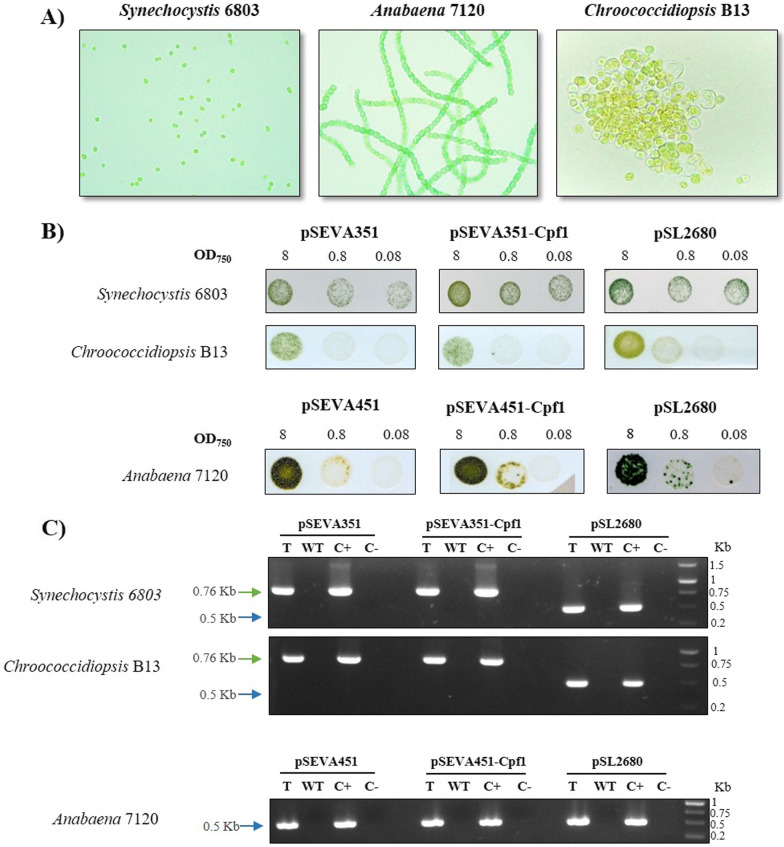
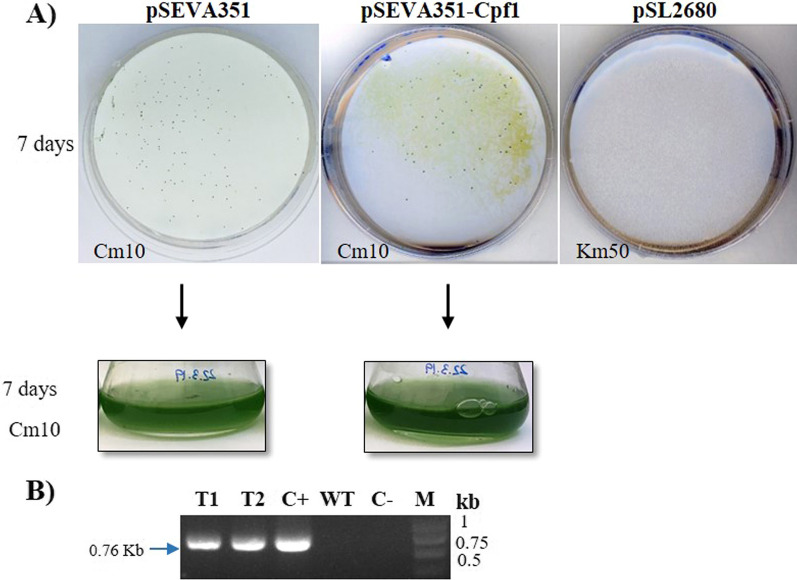
“As has been previously described for Synechococcus 2973 [28], no toxicity was observed in the presence of Cpf1 nuclease in all the strains tested.”
BackgroundMethodResultInfluentialCRISPR-Cas9 for the genome engineering of cyanobacteria and succinate production
Li, H., Shen, C. R., Huang, C.-H., Sung, L.-Y., Wu, M.-Y., & Hu, Y.-C. (2016) · Metabolic Engineering · doi:10.1016/j.ymben.2016.09.006 · Cited by 233 · cited 1×
“The first report of CRISPR-Cas9 RNA-guided genome editing system developed in cyanobacteria was carried out in Synechococcus 7942 in 2016 [21].”
BackgroundWendt, K. E., Ungerer, J., Cobb, R. E., Zhao, H., & Pakrasi, H. B. (2016) · Microbial Cell Factories · doi:10.1186/s12934-016-0514-7 · Cited by 232 · cited 3×
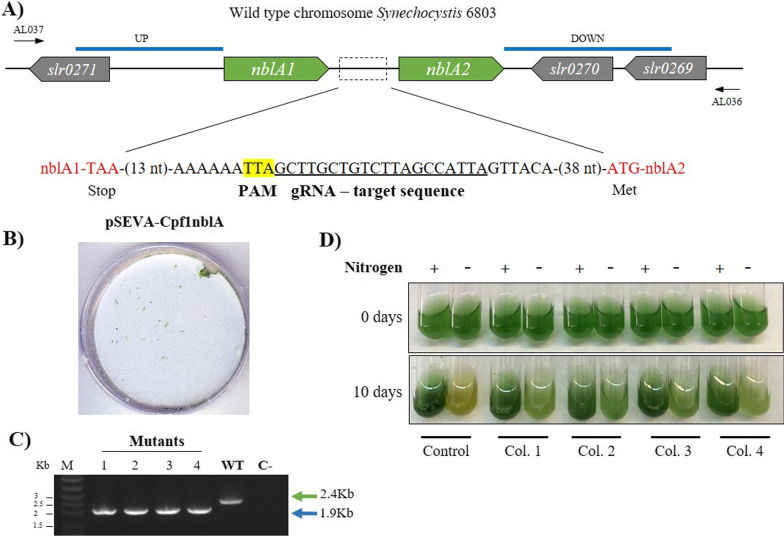
“For these reasons, the nblA gene knock-out has often been used as a reporter of editing processes in cyanobacteria [2, 20, 28].”
BackgroundMethodGenetic tools for cyanobacteria
Wolk, O. K. (2002) · Applied Microbiology and Biotechnology · doi:10.1007/s00253-001-0864-9 · Cited by 228
New applications of synthetic biology tools for cyanobacterial metabolic engineering
Santos-Merino, M., Singh, A. K., & Ducat, D. C. (2019) · Frontiers in Bioengineering and Biotechnology · doi:10.3389/fbioe.2019.00033 · Cited by 222 · cited 1×
“Briefly, Cas9 and Cpf1 proteins make a double-stranded cleavage in the genome and this break can be lethal unless it can be repaired using a suitable template [16, 20].”
BackgroundMartínez-García, E., Aparicio, T., Goñi-Moreno, A., Fraile, S., & de Lorenzo, V. (2015) · Nucleic Acids Research · doi:10.1093/nar/gku1114 · Cited by 204 · cited 1×
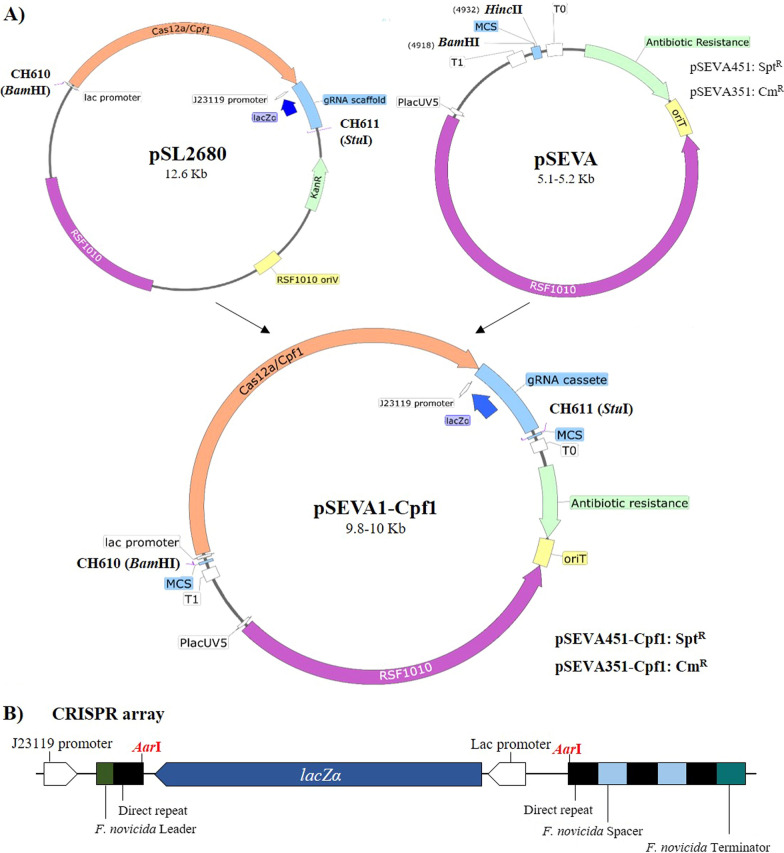
“For potential candidates, we chose vectors from the SEVA repository as this collection is particularly interesting owing to the modular and interchangeable structure of their plasmids [32, 33].”
BackgroundCyanogate: a modular cloning suite for engineering cyanobacteria based on the plant moclo syntax
Vasudevan, R., Gale, G. A. R., Schiavon, A. A., Puzorjov, A., Malin, J., Gillespie, M. D., Vavitsas, K., Zulkower, V., Wang, B., Howe, C. J., et al. (2019) · Plant Physiology · doi:10.1104/pp.18.01401 · Cited by 189 · cited 2×
“So far it has been reported that in one strain, Synechocystis 6803, SEVA vectors containing RSF1010 or RK2 origins can be successfully transformed by natural transformation, electroporation and conjugation to express heterologous genes [41, 42].”
BackgroundMethodThompson, F. L., Stackebrandt, E. S., Lory, S. J., DeLong, E. F., & ROSENBERG, E. B. (2014) · Springer eBooks · doi:10.1007/978-3-642-30197-1 · Cited by 139
CRISPR-Based Technologies for Metabolic Engineering in Cyanobacteria
Behler, J., Vijay, D., Hess, W. R., & Akhtar, M. K. (2018) · Trends in Biotechnology · doi:10.1016/j.tibtech.2018.05.011 · Cited by 138 · cited 20×
“T4 DNA ligase, In-fusion HD cloning kit and all restriction enzymes were from Takara, except AarI, which was purchased from Thermo Fisher Scientific.”
BackgroundInfluentialNg, I., Keskin, B. B., & Tan, S. (2020) · Biotechnology Journal · doi:10.1002/biot.201900228 · Cited by 135
Ungerer, J., Wendt, K. E., Hendry, J. I., Maranas, C. D., & Pakrasi, H. B. (2018) · Proceedings of the National Academy of Sciences · doi:10.1073/pnas.1814912115 · Cited by 128
Niu, T.-C., Lin, G.-M., Xie, L.-R., Wang, Z.-Q., Xing, W.-Y., Zhang, J.-Y., & Zhang, C.-C. (2019) · ACS Synthetic Biology · doi:10.1021/acssynbio.8b00437 · Cited by 117
Sigma Factors for Cyanobacterial Transcription
Imamura, S., & Asayama, M. (2009) · Gene Regulation and Systems Biology · doi:10.4137/grsb.s2090 · Cited by 115
Kufryk, G. (2002) · FEMS Microbiology Letters · doi:10.1016/s0378-1097(01)00540-7 · Cited by 97
Tailoring cyanobacteria as a new platform for highly efficient synthesis of astaxanthin
Diao, J., Song, X., Zhang, L., Cui, J., Chen, L., & Zhang, W. (2020) · Metabolic Engineering · doi:10.1016/j.ymben.2020.07.003 · Cited by 85 · cited 1×
“To date, cyanobacteria have been exploited to convert CO2 into a wide range of valuable products, for instance: biofuels [6, 7]; commercial terpenoids [8, 9]; polymeric compounds useful for bioplastic materials [10]; bioactive compounds and vitamins [11]; sugars [12]; and pigments with potent antioxidant activity [13].”
BackgroundLin, P.-C., Zhang, F., & Pakrasi, H. B. (2021) · Metabolic Engineering Communications · doi:10.1016/j.mec.2021.e00164 · Cited by 84 · cited 1×
“To date, cyanobacteria have been exploited to convert CO2 into a wide range of valuable products, for instance: biofuels [6, 7]; commercial terpenoids [8, 9]; polymeric compounds useful for bioplastic materials [10]; bioactive compounds and vitamins [11]; sugars [12]; and pigments with potent antioxidant activity [13].”
BackgroundGene Transfer to the Desiccation-Tolerant Cyanobacterium Chroococcidiopsis
Billi, D., Friedmann, E. I., Helm, R. F., & Potts, M. (2001) · Journal of Bacteriology · doi:10.1128/jb.183.7.2298-2305.2001 · Cited by 82
Metabolic engineering of Synechocystis sp. PCC 6803 for improved bisabolene production
Rodrigues, J. S., & Lindberg, P. (2021) · Metabolic Engineering Communications · doi:10.1016/j.mec.2020.e00159 · Cited by 80 · cited 1×
“To date, cyanobacteria have been exploited to convert CO2 into a wide range of valuable products, for instance: biofuels [6, 7]; commercial terpenoids [8, 9]; polymeric compounds useful for bioplastic materials [10]; bioactive compounds and vitamins [11]; sugars [12]; and pigments with potent antioxidant activity [13].”
BackgroundMetabolic engineering tools in model cyanobacteria
Carroll, A. L., Case, A. E., Zhang, A., & Atsumi, S. (2018) · Metabolic Engineering · doi:10.1016/j.ymben.2018.03.014 · Cited by 75 · cited 1×
“Synechococcus 11,801 and Synechococcus 11,901) are also becoming popular for biotechnological purposes [4, 5].”
BackgroundMartínez-García, E., Goñi-Moreno, A., Bartley, B., McLaughlin, J., Sánchez-Sampedro, L., del Pozo, H. P., Hernández, C. P., Marletta, A. S., De Lucrezia, D., Sánchez-Fernández, G., et al. (2020) · Nucleic Acids Research · doi:10.1093/nar/gkaa114 · Cited by 74
Progress and challenges in engineering cyanobacteria as chassis for light‐driven biotechnology
Hitchcock, A., Hunter, C. N., & Canniffe, D. P. (2020) · Microbial Biotechnology · doi:10.1111/1751-7915.13526 · Cited by 66
Billi, D., Verseux, C., Fagliarone, C., Napoli, A., Baqué, M., & de Vera, J.-P. (2019) · Astrobiology · doi:10.1089/ast.2017.1807 · Cited by 65
Higo, A., Isu, A., Fukaya, Y., Ehira, S., & Hisabori, T. (2018) · Plant and Cell Physiology · doi:10.1093/pcp/pcx166 · Cited by 64 · cited 1×
“Some genome editing vectors based on both Cas9 and Cpf1 have been built for Anabaena [26, 28, 48, 49].”
BackgroundChen, Y., Taton, A., Go, M., London, R. E., Pieper, L. M., Golden, S. S., & Golden, J. W. (2016) · Microbiology · doi:10.1099/mic.0.000377 · Cited by 61 · cited 1×
“Also, the SEVA vectors used here are relatively small (5100–5200 bp pSEVA351-451 respectively) compared to other vectors used in cyanobacteria, such as pPMQAK1 (8372 bp) [35], pSCB (6592 bp) [36] or pANS based vectors (7842 bp) [37], making transference easier.”
MethodEmerging Species and Genome Editing Tools: Future Prospects in Cyanobacterial Synthetic Biology
Gale, G. A. R., Schiavon Osorio, A. A., Mills, L. A., Wang, B., Lea-Smith, D. J., & McCormick, A. J. (2019) · Microorganisms · doi:10.3390/microorganisms7100409 · Cited by 61
Ferreira, E. A., Pacheco, C. C., Pinto, F., Pereira, J., Lamosa, P., Oliveira, P., Kirov, B., Jaramillo, A., & Tamagnini, P. (2018) · Synthetic Biology · doi:10.1093/synbio/ysy014 · Cited by 59 · cited 18×
“The SEVA vectors chosen for this study contained the RSF1010 origin that has been reported to work well on Synechocystis and other cyanobacteria and that have a higher copy number than those of RK2 origin (Table 1) [41, 42].”
BackgroundMethodInfluentialRecent advances of Cas12a applications in bacteria
Meliawati, M., Schilling, C., & Schmid, J. (2021) · Applied Microbiology and Biotechnology · doi:10.1007/s00253-021-11243-9 · Cited by 59
Synthetic Biology Toolkits for Metabolic Engineering of Cyanobacteria
Xia, P., Ling, H., Foo, J. L., & Chang, M. W. (2019) · Biotechnology Journal · doi:10.1002/biot.201800496 · Cited by 58 · cited 1×
“Nowadays, CRISPR-based genome engineering in cyanobacteria is under active development as there are still some challenges to overcome, for instance the need to increase the repertoire of plasmids for CRISPR applications that could facilitate a suitable episomal expression for the CRISPR nuclease [19].”
BackgroundSengupta, A., Pritam, P., Jaiswal, D., Bandyopadhyay, A., Pakrasi, H. B., & Wangikar, P. P. (2020) · Metabolites · doi:10.3390/metabo10060250 · Cited by 55
Evaluation of the Resistance of Chroococcidiopsis spp. to Sparsely and Densely Ionizing Irradiation
Verseux, C., Baqué, M., Cifariello, R., Fagliarone, C., Raguse, M., Moeller, R., & Billi, D. (2017) · Astrobiology · doi:10.1089/ast.2015.1450 · Cited by 52
CRISPR-Assisted Multiplex Base Editing System in Pseudomonas putida KT2440
Sun, J. F., Lu, L., Liang, T., Yang, L.-R., & Wu, J. (2020) · Frontiers in Bioengineering and Biotechnology · doi:10.3389/fbioe.2020.00905 · Cited by 52
Recent advances in synthetic biology of cyanobacteria for improved chemicals production
Wang, F., Gao, Y., & Yang, G. (2020) · Bioengineered · doi:10.1080/21655979.2020.1837458 · Cited by 49 · cited 1×
“Whereas most of the genetic tools for cyanobacteria reported are frequently focused on Synechococcus or Synechocystis [18], the SEVA vectors described in this work may broaden the potential applications for other strains, such as Anabaena and Chroococcidiopsis tested here and, by extension, to other cyanobacteria.”
BackgroundJin, H., Wang, Y., Idoine, A., & Bhaya, D. (2018) · Frontiers in Microbiology · doi:10.3389/fmicb.2018.01662 · Cited by 46
Genomics Approaches to Deciphering Natural Transformation in Cyanobacteria
Wendt, K. E., & Pakrasi, H. B. (2019) · Frontiers in Microbiology · doi:10.3389/fmicb.2019.01259 · Cited by 46
Ciebiada, M., Kubiak, K., & Daroch, M. (2020) · International Journal of Molecular Sciences · doi:10.3390/ijms21197204 · Cited by 44
Pattharaprachayakul, N., Lee, M., Incharoensakdi, A., & Woo, H. M. (2020) · Enzyme and Microbial Technology · doi:10.1016/j.enzmictec.2020.109619 · Cited by 43
Engineering cyanobacteria as cell factories for direct trehalose production from CO2
Qiao, Y., Wang, W., & Lu, X. (2020) · Metabolic Engineering · doi:10.1016/j.ymben.2020.08.014 · Cited by 43 · cited 1×
“To date, cyanobacteria have been exploited to convert CO2 into a wide range of valuable products, for instance: biofuels [6, 7]; commercial terpenoids [8, 9]; polymeric compounds useful for bioplastic materials [10]; bioactive compounds and vitamins [11]; sugars [12]; and pigments with potent antioxidant activity [13].”
BackgroundCRISPR /Cas9‐enhanced ss DNA recombineering for Pseudomonas putida
Aparicio, T., de Lorenzo, V., & Martínez‐García, E. (2019) · Microbial Biotechnology · doi:10.1111/1751-7915.13453 · Cited by 42
Heterologous Expression of Cryptomaldamide in a Cyanobacterial Host
Taton, A., Ecker, A., Diaz, B., Moss, N. A., Anderson, B., Reher, R., Leão, T. F., Simkovsky, R., Dorrestein, P. C., Gerwick, L., et al. (2020) · ACS Synthetic Biology · doi:10.1021/acssynbio.0c00431 · Cited by 39
Engineering Photosynthetic Bioprocesses for Sustainable Chemical Production: A Review
Stephens, S., Mahadevan, R., & Allen, D. G. (2021) · Frontiers in Bioengineering and Biotechnology · doi:10.3389/fbioe.2020.610723 · Cited by 39 · cited 1×
“To date, cyanobacteria have been exploited to convert CO2 into a wide range of valuable products, for instance: biofuels [6, 7]; commercial terpenoids [8, 9]; polymeric compounds useful for bioplastic materials [10]; bioactive compounds and vitamins [11]; sugars [12]; and pigments with potent antioxidant activity [13].”
BackgroundDoing synthetic biology with photosynthetic microorganisms
Vavitsas, K., Kugler, A., Satta, A., Hatzinikolaou, D. G., Lindblad, P., Fewer, D. P., Lindberg, P., Toivari, M., & Stensjö, K. (2021) · Physiologia Plantarum · doi:10.1111/ppl.13455 · Cited by 38
Developing a Cas9‐based tool to engineer native plasmids in Synechocystis sp. PCC 6803
Xiao, Y., Wang, S., Rommelfanger, S., Balassy, A., Barba‐Ostria, C., Gu, P., Galazka, J. M., & Zhang, F. (2018) · Biotechnology and Bioengineering · doi:10.1002/bit.26747 · Cited by 36
Racharaks, R., Arnold, W., & Peccia, J. (2021) · Journal of Microbiological Methods · doi:10.1016/j.mimet.2021.106315 · Cited by 29
Kachel, B., & Mack, M. (2020) · Metabolic Engineering · doi:10.1016/j.ymben.2020.09.010 · Cited by 24 · cited 1×
“To date, cyanobacteria have been exploited to convert CO2 into a wide range of valuable products, for instance: biofuels [6, 7]; commercial terpenoids [8, 9]; polymeric compounds useful for bioplastic materials [10]; bioactive compounds and vitamins [11]; sugars [12]; and pigments with potent antioxidant activity [13].”
BackgroundImproved Bioproduction of 1-Octanol Using Engineered Synechocystis sp. PCC 6803
Yunus, I. S., Wang, Z., Sattayawat, P., Muller, J., Zemichael, F. W., Hellgardt, K., & Jones, P. R. (2021) · ACS Synthetic Biology · doi:10.1021/acssynbio.1c00029 · Cited by 24 · cited 1×
“To date, cyanobacteria have been exploited to convert CO2 into a wide range of valuable products, for instance: biofuels [6, 7]; commercial terpenoids [8, 9]; polymeric compounds useful for bioplastic materials [10]; bioactive compounds and vitamins [11]; sugars [12]; and pigments with potent antioxidant activity [13].”
BackgroundBilli, D. (2012) · Origins of Life and Evolution of Biospheres · doi:10.1007/s11084-012-9277-2 · Cited by 19 · cited 1×
“On the other hand, Chroococcidiopsis is an extremophile strain for which just a few references relating to its genetic modification can be found but none related to CRISPR editing [50, 51].”
BackgroundEfficient genome editing for Pseudomonas aeruginosa using CRISPR-Cas12a
Lin, Z., Li, H., He, L., Jing, Y., Pistolozzi, M., Wang, T., & Ye, Y. (2021) · Gene · doi:10.1016/j.gene.2021.145693 · Cited by 18
Sebesta, J., Werner, A. Z., & Peebles, C. A. M. (2019) · Methods in molecular biology · doi:10.1007/978-1-4939-9142-6_10 · Cited by 16 · cited 1×
“Natural transformation of Synechocystis 6803 Synechocystis natural transformation was carried out as previously published [55] with a few modifications.”
MethodCyanobacteria: Wonderful Microorganisms for Basic and Applied Research
Cassier‐Chauvat, C., & Chauvat, F. (2018) · Wiley eBooks · doi:10.1002/9780470015902.a0027884 · Cited by 13
Research works printed but not linked: 1
- Bothe H The Cyanobacterium Chroococcidiopsis and Its potential for life on mars J Astrobiol Space Sci Rev 2019 2 398 412
Cited by
Developing algae as a sustainable food source
Diaz, C. J., Douglas, K. J., Kang, K., Kolarik, A. L., Malinovski, R., Torres-Tiji, Y., Molino, J. V., Badary, A., & Mayfield, S. P. (2023) · Frontiers in Nutrition · doi:10.3389/fnut.2022.1029841 · Cited by 194
Harnessing the potential: Advances in cyanobacterial natural product research and biotechnology
Baunach, M., Guljamow, A., Miguel-Gordo, M., & Dittmann, E. (2024) · Natural Product Reports · doi:10.1039/d3np00045a · Cited by 66
Micro-algae: Revolutionizing food production for a healthy and sustainable future
Naik, B., Mishra, R., Kumar, V., Mishra, S., Gupta, U., Rustagi, S., Gupta, A. K., Preet, M. S., Bhatt, S. C., & Rizwanuddin, S. (2024) · Journal of Agriculture and Food Research · doi:10.1016/j.jafr.2023.100939 · Cited by 65
Research progress on nucleic acid detection and genome editing of CRISPR/Cas12 system
Yang, Y., Wang, D., Lü, P., Ma, S., & Chen, K. (2023) · Molecular Biology Reports · doi:10.1007/s11033-023-08240-8 · Cited by 59
“CRISPR/ Cas12a has been verified to be suitable for precise genome editing of cyanobacteria through homologous recombination [56, 57].”
BackgroundRecent Progress and Challenges in CRISPR-Cas9 Engineered Algae and Cyanobacteria
Patel, V. K., Das, A., Kumari, R., & Kajla, S. (2023) · Algal Research · doi:10.1016/j.algal.2023.103068 · Cited by 50
Metadata
- Authors
- Baldanta, S., Guevara, G., & Navarro-Llorens, J. M.
- Affiliations
- Universidad Complutense de Madrid (ES)
- Corresponding author
- Guevara, Govinda
- Venue
- Microbial Cell Factories
- Published
- 2022-05-28
- Volume
- 21
- Issue
- 1
- Pages
- 103-103
- ISSN
- 1475-2859 (ISSN-L)
- PMC
- PMC9148489
- OpenAlex
- W4281654745
- Semantic Scholar
- eda84a76c1dc4fdf0cc2679c8c959032e6e9dd60
- Cited by
- 42
- References
- 56
- Citations by year
- 2026: 9 · 2025: 4 · 2024: 17 · 2023: 11 · 2022: 1
- FWCI
- 2.69
- Type
- journal article
- Language
- en
- Open access
- gold
- doi.org
- Licence
- cc-by
- creativecommons.org/licenses/by/4.0 (tdm)
- creativecommons.org/licenses/by/4.0 (vor)
- Locations
- Microbial Cell Factories (publishedVersion, cc-by)
- PubMed Central (publishedVersion, cc-by)
- PubMed (publishedVersion)
- DOAJ (DOAJ: Directory of Open Access Journals) (submittedVersion)
- Funders
- Comunidad de Madrid (ALGATEC-CM (P2018/BAA-4532))
- Topics
- Life Sciences › Biochemistry, Genetics and Molecular Biology › Molecular Biology › CRISPR and Genetic Engineering
- Life Sciences › Biochemistry, Genetics and Molecular Biology › Molecular Biology › Microbial Metabolic Engineering and Bioproduction
- Life Sciences › Biochemistry, Genetics and Molecular Biology › Genetics › Bacterial Genetics and Biotechnology
- Keywords
- CRISPR/Cas12a, genome editing, cyanobacteria, plasmid vectors, conjugation, natural transformation, Chroococcidiopsis, Synechocystis sp. PCC 6803, broad-host-range plasmids, genetic instruments
- MeSH terms
- Gene Editing, Endonucleases, Plasmids, Synechocystis, CRISPR-Cas Systems
About these checks
Registry, retraction, Cites and statistics results are computed, not judged, with one exception: a printed reference that no index lists is read once by a model before it counts as a citation error. Claims are extracted by a model and kept only when their quote appears verbatim in the text; each cited source is then checked, with a model’s help, for whether it says what the claim relies on. Those verdicts can be wrong — read the claim’s quote and the cited source before relying on one.
Statistics and arithmetic are recomputed, not judged.
Confidence bands are shown only for fields calibrated on our annotated test set. None is calibrated yet, so no band is shown.
What counts as a claim ›How we measure confidence ›How we check this ›
Are you an author, or do you see a problem with this page? Request a review
Data sources
Bibliographic data: Semantic Scholar, OpenAlex, Crossref.
Contains information from the Semantic Scholar Academic Graph Datasets, made available under the ODC Attribution License (ODC-BY 1.0).
Semantic Scholar’s data is described in: Kinney, R., et al. (2023). The Semantic Scholar Open Data Platform. arXiv:2301.10140.
