

dCas12a-mediated CRISPR interference for multiplex gene repression in cyanobacteria for enhanced isobutanol and 3-methyl-1-butanol production
Open accessThe DOI matches its Crossref record; 50 of the 50 references it cites were found in a registry or an index.
Abstract
Background: Cyanobacteria of the genera Synechocystis and Synechococcus have emerged as promising platforms for metabolic engineering endeavors aimed at converting carbon dioxide into valuable fuels and chemicals, thus addressing the pressing energy demand and mitigating global climate change. Notably, Synechocystis sp. strain PCC 6803 ( Synechocystis ) has been engineered to produce isobutanol (IB) and 3-methyl-1-butanol (3M1B) via heterologous expression of α-ketoisovalerate decarboxylase (Kivd). Despite these advances, the achieved IB/3M1B titers remain low. CRISPR interference (CRISPRi), an emerging tool for targeted gene repression, has demonstrated success in various cellular systems to enhance biochemical productivity. Results: In this study, we developed a dCas12a-mediated CRISPRi system (CRISPRi-dCas12a) that effectively blocked the transcriptional initiation/elongation of essential gene(s), resulting in up to 60% gene repression in Synechocystis . Subsequently, the CRISPRi-dCas12a system was successfully integrated into an IB/3M1B producer strain, where it exhibited target gene repression under optimal cultivation conditions. To identify gene targets involved in metabolic pathways potentially limiting IB/3M1B biosynthesis, we initially designed a CRISPR RNA (crRNA) library targeting fifteen individual gene(s), where repression of ten genes significantly increased IB/3M1B production per cell. Moreover, a synergetic effect was observed on IB/3M1B production by designing a single crRNA targeting multiple genes for simultaneous repression. A final strain HX106, featuring dual repression of ppc and gltA , both involved in the TCA cycle , resulted in 2.6-fold and 14.8-fold improvement in IB and 3M1B production per cell, respectively. Conclusions: Our findings underscore the effectiveness of the CRISPRi-dCas12a system in Synechocystis for identifying competing pathways and redirecting carbon flux to enhance IB/3M1B production. Furthermore, this study established a solid groundwork for utilizing an expanded CRISPRi-crRNA library to undertake genome-wide exploration of potential competing pathways not only for IB/3M1B biosynthesis but also for other diverse biofuels and biochemical production processes.
Overview
The claims and statistics of this paper haven’t been checked yet.
Free: it reads the open-access text and checks the first 5 claims that cite a source we can check. Create a free account to check every claim.
Integrity signals
Registry
Cites
Statistics
Figures


Verification
Claims the paper makes
The claims and statistics of this paper haven’t been checked yet.
Free: it reads the open-access text and checks the first 5 claims that cite a source we can check. Create a free account to check every claim.
Claims other papers make about this one
Each is checked against this paper’s own text: does it say what the citing paper says it does?
The cited source says what the claim attributes to it.
In the citing paper
“In this method, a catalytically inactive Cas protein [dCas] is directed to specific genomic sites where it obstructs transcription without causing DNA breaks [118].”
From Cyanobacteria as a Photosynthetic Chassis for Metabolic Pathway Engineering with Heterologous Gene Expression (2026) · cites this paper as [118]
The cited source says what the claim attributes to it.
In the citing paper
“The competition between native metabolic processes and introduced pathways can thereby restrict the supply of precursor molecules essential for pathway function.”
From Cyanobacteria as a Photosynthetic Chassis for Metabolic Pathway Engineering with Heterologous Gene Expression (2026) · cites this paper as [118]
Self-check
Percentages, sums and reported differences re-computed from the paper’s own numbers.
The self-check needs the paper’s full text.
Citations
Cites
Repurposing CRISPR as an RNA-Guided Platform for Sequence-Specific Control of Gene Expression
Qi, L. S., Larson, M. H., Gilbert, L. A., Doudna, J. A., Weissman, J. S., Arkin, A. P., & Lim, W. A. (2013) · Cell · doi:10.1016/j.cell.2013.02.022 · Cited by 5,016 · cited 1×
“Derived from the CRISPR-Cas system, the CRISPR interference-deactivated Cas (CRISPRi-dCas) system, lacking cleavage activity while retaining the ability to bind to target DNA using a single guide RNA, stands out as a preferred tool for fine-tuning gene expression [36].”
Cpf1 Is a Single RNA-Guided Endonuclease of a Class 2 CRISPR-Cas System
Zetsche, B., Gootenberg, J. S., Abudayyeh, O. O., Slaymaker, I. M., Makarova, K. S., Essletzbichler, P., Volz, S. E., Joung, J., van der Oost, J., Regev, A., et al. (2015) · Cell · doi:10.1016/j.cell.2015.09.038 · Cited by 4,761 · cited 2×
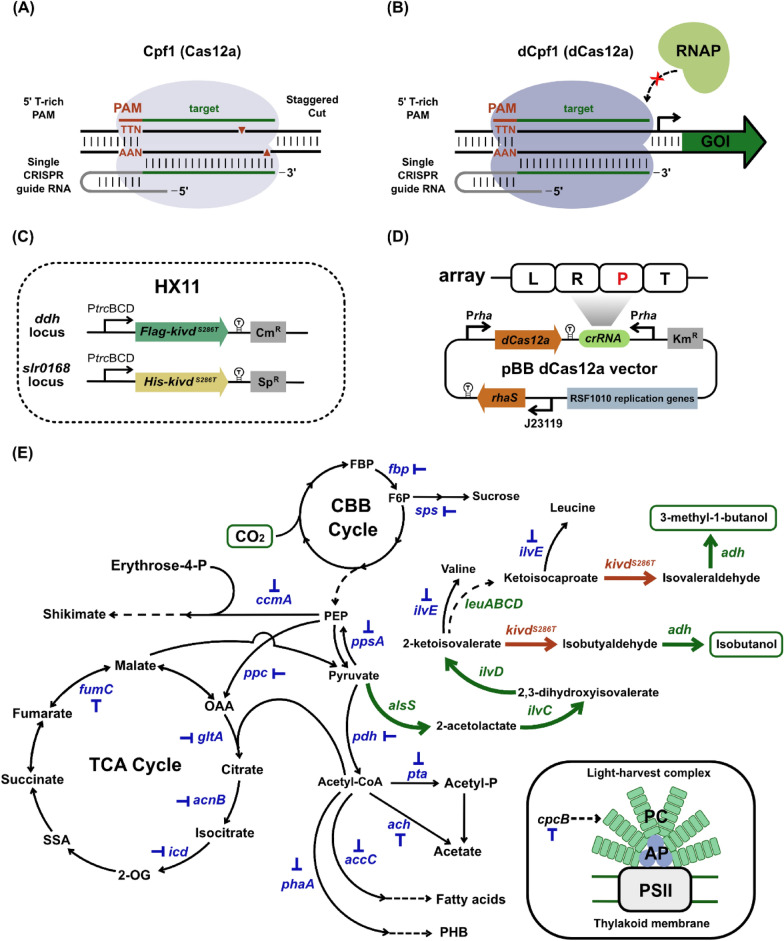
“Consequently, Cas12a can be converted to a deactivated form, dCas12a, via a single D917A mutation [48] (Fig.”
The CRISPR-associated DNA-cleaving enzyme Cpf1 also processes precursor CRISPR RNA
Fonfara, I., Richter, H., Bratovič, M., Le Rhun, A., & Charpentier, E. (2016) · Nature · doi:10.1038/nature17945 · Cited by 988 · cited 2×
“Utilizing a T-rich protospacer-adjacent motif (PAM), the mature crRNA guides Cas12a to recognize and cut the target DNA, generating a double-stranded break with a 5’ overhang [13] (Fig.”
Williams, J. G. K. (1988) · Methods in Enzymology · doi:10.1016/0076-6879(88)67088-1 · Cited by 986
Direct photosynthetic recycling of carbon dioxide to isobutyraldehyde
Atsumi, S., Higashide, W., & Liao, J. C. (2009) · Nature Biotechnology · doi:10.1038/nbt.1586 · Cited by 870 · cited 1×
“…(AlsS from Bacillus subtilis ), acetohydroxy-acid isomeroreductase (IlvC from Escherichia coli ), dihydroxy-acid dehydratase (IlvD from E. coli ), α-ketoisovalerate decarboxylase (Kivd from Lactococcus lactis ), and alcohol dehydrogenases (YqhD from E. coli ) were heterologously expressed [1].”
Photosynthetic production of ethanol from carbon dioxide in genetically engineered cyanobacteria
Gao, Z., Zhao, H., Li, Z., Tan, X., & Lu, X. (2012) · Energy Environ. Sci. · doi:10.1039/c2ee22675h · Cited by 375 · cited 1×
“Recent advancements in synthetic biology and metabolic engineering tools have motivated numerous studies exploring the potential of cyanobacteria as green cell factories for producing both commodity and specialized chemicals, such as alcohols [16, 30, 45, 46], terpenes [5], and organic acids [29].”
Mitschke, J., Georg, J., Scholz, I., Sharma, C. M., Dienst, D., Bantscheff, J., Voß, B., Steglich, C., Wilde, A., Vogel, J., et al. (2011) · Proceedings of the National Academy of Sciences · doi:10.1073/pnas.1015154108 · Cited by 359 · cited 1×
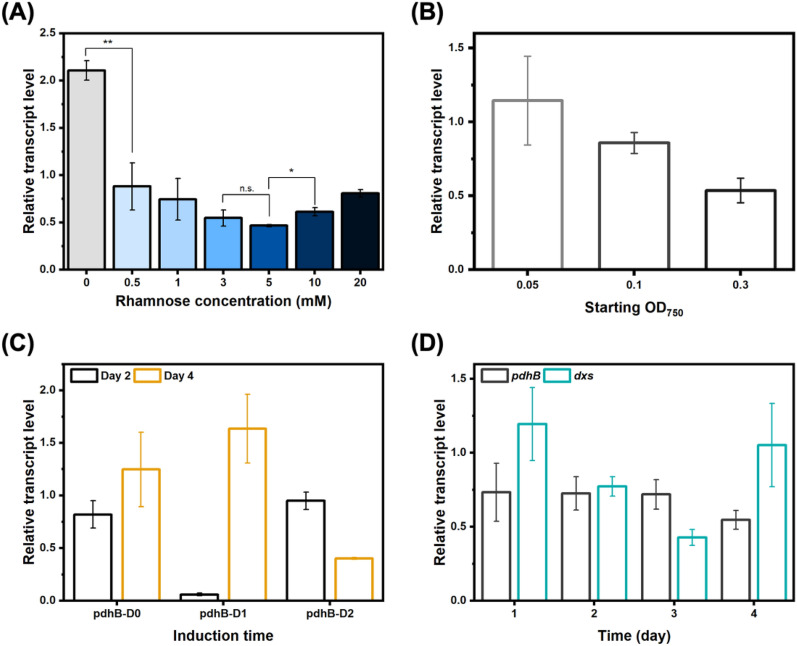
“It is important to note that these tests were conducted with the ppc target, different target genes may exhibit varied transcription patterns under different environmental conditions [34].”
Cpf1 Is a Versatile Tool for CRISPR Genome Editing Across Diverse Species of Cyanobacteria
Ungerer, J., & Pakrasi, H. B. (2016) · Scientific Reports · doi:10.1038/srep39681 · Cited by 308 · cited 4×
“The emergence of the clustered regularly interspaced short palindromic repeats-CRISPR-asso-ciated protein (CRISPR-Cas) system has revolutionized metabolic engineering in cyanobacteria [6, 38, 41], facilitating targeted and marker-less genome editing with remarkable efficiency [4, 26, 40, 42].”
InfluentialSynthetic Biology in Cyanobacteria
(2011) · Methods in Enzymology · doi:10.1016/b978-0-12-385075-1.00024-x · Cited by 234 · cited 1×
“Target-specific CRISPRi plasmids were introduced into the wild-type strain or HX11 strain individually through triparental mating [18], employing E. coli strain HB101 carrying the conjugative plasmid This study This study pRL443-AmpR.”
Self-citationCRISPR-Cas9 for the genome engineering of cyanobacteria and succinate production
Li, H., Shen, C. R., Huang, C.-H., Sung, L.-Y., Wu, M.-Y., & Hu, Y.-C. (2016) · Metabolic Engineering · doi:10.1016/j.ymben.2016.09.006 · Cited by 233 · cited 1×
“The emergence of the clustered regularly interspaced short palindromic repeats-CRISPR-asso-ciated protein (CRISPR-Cas) system has revolutionized metabolic engineering in cyanobacteria [6, 38, 41], facilitating targeted and marker-less genome editing with remarkable efficiency [4, 26, 40, 42].”
Cited by
Bourgade, B., Xie, H., Lindblad, P. C., & Stensjö, K. (2025) · Communications Biology · doi:10.1038/s42003-025-08164-y · Cited by 20
“…study found that a Δ acnSP mutant 40 yielded an approximately two-fold increase in valine and leucine biosynthesis under higher light conditions (100µmol photons m − 2 s − 1 ), while our experiments were performed at 50 µmol photons m − 2 s − 1 for consistency with earlier IB/3M1B studies 4,18,30 .”
InfluentialSelf-citationMolla, A., & Abebe, G. M. (2025) · Science Frontiers · doi:10.11648/j.sf.20250603.14 · Cited by 11
Xie, H., Begum, A., Gunn, L. H., & Lindblad, P. C. (2025) · Biotechnology for Biofuels and Bioproducts · doi:10.1186/s13068-025-02687-6 · Cited by 4
“Recently, both CRISPR inteference and CRISPR activation systems have been successfully implemented in IB-producing cyanobacteria, demonstrating their effectiveness as tools for enhancing IB production [12, 13].”
Self-citationChen, J., Hao, J., & Baganz, F. (2026) · Biotechnology for Biofuels and Bioproducts · doi:10.1186/s13068-025-02720-8 · Cited by 3
“A recent study by Xie et al. [129] established a dCas12a-mediated CRISPRi platform in the cyanobacterium Synechocystis sp. PCC 6803 for multiplex gene repression to improve photosynthetic production of isobutanol.”
Harnessing engineered cyanobacteria for next-generation therapeutics
Bhardwaj, A., & Mishra, A. K. (2026) · Archives of Microbiology · doi:10.1007/s00203-026-04790-0 · Cited by 2
Metadata
- Authors
- Xie, H., Bourgade, B., Stensjö, K., & Lindblad, P.
- Affiliations
- Uppsala University (SE)
- Corresponding author
- Lindblad, Peter
- Venue
- Microbial Cell Factories
- Published
- 2025-05-13
- Volume
- 24
- Issue
- 1
- Pages
- 104-104
- ISSN
- 1475-2859 (ISSN-L)
- PMC
- PMC12076865
- OpenAlex
- W4410333375
- Semantic Scholar
- 6fc48694867a255fe1217746abae8f8f0a44da72
- Cited by
- 11
- References
- 50
- Citations by year
- 2026: 6 · 2025: 5
- FWCI
- 3.31
- Type
- journal article
- Language
- en
- Open access
- gold
- doi.org
- Licence
- cc-by
- creativecommons.org/licenses/by/4.0 (tdm)
- creativecommons.org/licenses/by/4.0 (vor)
- Locations
- Microbial Cell Factories (publishedVersion, cc-by)
- PubMed Central (publishedVersion, cc-by)
- PubMed (publishedVersion)
- Uppsala University Publications (Uppsala University) (submittedVersion, other-oa)
- DOAJ (DOAJ: Directory of Open Access Journals) (submittedVersion, cc-by-sa)
- Funders
- Svenska Forskningsrådet Formas (2021-01669)
- Carl Tryggers Stiftelse för Vetenskaplig Forskning (CTS 20:412)
- Vinnova (2024-00443)
- Uppsala University
- Topics
- Life Sciences › Biochemistry, Genetics and Molecular Biology › Molecular Biology › Microbial Metabolic Engineering and Bioproduction
- Life Sciences › Biochemistry, Genetics and Molecular Biology › Molecular Biology › CRISPR and Genetic Engineering
- Physical Sciences › Energy › Renewable Energy, Sustainability and the Environment › Algal biology and biofuel production
- Keywords
- CRISPR interference, gene repression, Synechocystis sp. PCC 6803, cyanobacteria, isobutanol production, TCA cycle, PPC, gltA
- MeSH terms
- Pentanols, Butanols, Synechocystis, Metabolic Engineering, Clustered Regularly Interspaced Short Palindromic Repeats, CRISPR-Cas Systems
About these checks
Registry, retraction, Cites and statistics results are computed, not judged, with one exception: a printed reference that no index lists is read once by a model before it counts as a citation error. Claims are extracted by a model and kept only when their quote appears verbatim in the text; each cited source is then checked, with a model’s help, for whether it says what the claim relies on. Those verdicts can be wrong — read the claim’s quote and the cited source before relying on one.
Statistics and arithmetic are recomputed, not judged.
Confidence bands are shown only for fields calibrated on our annotated test set. None is calibrated yet, so no band is shown.
What counts as a claim ›How we measure confidence ›How we check this ›
Are you an author, or do you see a problem with this page? Request a review
How to cite
Cite CoChat for the checks on this page, and the paper for its own findings.
- This page
- CoChat. (2026). Citation check: dCas12a-mediated CRISPR interference for multiplex gene repression in cyanobacteria for enhanced isobutanol and 3-methyl-1-butanol production. https://app.cochat.ai/papers/10.1186/s12934-025-02727-8
- The paper
- Xie, H., Bourgade, B., Stensjö, K., & Lindblad, P. (2025). dCas12a-mediated CRISPR interference for multiplex gene repression in cyanobacteria for enhanced isobutanol and 3-methyl-1-butanol production. Microbial Cell Factories. https://doi.org/10.1186/s12934-025-02727-8
Data sources
Bibliographic data: Semantic Scholar, OpenAlex, Crossref.
Contains information from the Semantic Scholar Academic Graph Datasets, made available under the ODC Attribution License (ODC-BY 1.0).
Semantic Scholar’s data is described in: Kinney, R., et al. (2023). The Semantic Scholar Open Data Platform. arXiv:2301.10140.
