

Mapping multiple components of malaria risk for improved targeting of elimination interventions
Open accessThe DOI matches its Crossref record; 89 of the 89 references it cites were found in a registry or an index.
Abstract
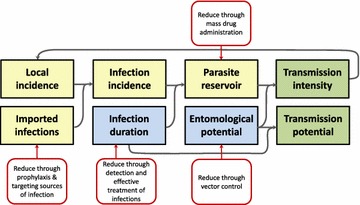
There is a long history of considering the constituent components of malaria risk and the malaria transmission cycle via the use of mathematical models, yet strategic planning in endemic countries tends not to take full advantage of available disease intelligence to tailor interventions. National malaria programmes typically make operational decisions about where to implement vector control and surveillance activities based upon simple categorizations of annual parasite incidence. With technological advances, an enormous opportunity exists to better target specific malaria interventions to the places where they will have greatest impact by mapping and evaluating metrics related to a variety of risk components, each of which describes a different facet of the transmission cycle. Here, these components and their implications for operational decision-making are reviewed. For each component, related mappable malaria metrics are also described which may be measured and evaluated by malaria programmes seeking to better understand the determinants of malaria risk. Implementing tailored programmes based on knowledge of the heterogeneous distribution of the drivers of malaria transmission rather than only consideration of traditional metrics such as case incidence has the potential to result in substantial improvements in decision-making. As programmes improve their ability to prioritize their available tools to the places where evidence suggests they will be most effective, elimination aspirations may become increasingly feasible.
Overview
The claims and statistics of this paper haven’t been checked yet.
Free: it reads the open-access text and checks the first 5 claims that cite a source we can check. Create a free account to check every claim.
Integrity signals
Registry
Cites
Statistics
Figures
Verification
Claims the paper makes
The claims and statistics of this paper haven’t been checked yet.
Free: it reads the open-access text and checks the first 5 claims that cite a source we can check. Create a free account to check every claim.
Claims other papers make about this one
Each is checked against this paper’s own text: does it say what the citing paper says it does?
The source backs part of the claim, not all of it — or backs it for a different population, condition or comparison.
In the citing paper
“Malaria risk models have incorporated land use factors to develop spatially and/or temporal predictions of malaria risks, potentially allowing targeting of interventions and strategic planning [103].”
From Achieving global malaria eradication in changing landscapes (2021) · cites this paper as [103]
Experimental — accuracy not yet measured
Self-check
Percentages, sums and reported differences re-computed from the paper’s own numbers.
The self-check needs the paper’s full text.
Citations
Cites
The effect of malaria control on Plasmodium falciparum in Africa between 2000 and 2015
Bhatt, S., Weiss, D. J., Cameron, E., Bisanzio, D., Mappin, B., Dalrymple, U., Battle, K. E., Moyes, C. L., Henry, A., Eckhoff, P. A., et al. (2015) · Nature · doi:10.1038/nature15535 · Cited by 3,225
Self-citationA new world malaria map: Plasmodium falciparum endemicity in 2010
Gething, P. W., Patil, A. P., Smith, D. L., Guerra, C. A., Elyazar, I. R., Johnston, G. L., Tatem, A. J., & Hay, S. I. (2011) · Malaria Journal · doi:10.1186/1475-2875-10-378 · Cited by 1,146
Self-citationQuantifying the Impact of Human Mobility on Malaria
Wesolowski, A., Eagle, N., Tatem, A. J., Smith, D. L., Noor, A. M., Snow, R. W., & Buckee, C. O. (2012) · Science · doi:10.1126/science.1223467 · Cited by 992 · cited 1×
“between places can influence the staging of elimination strategies by prioritizing malaria reduction in source locations [91], potentially increasing cost-effectiveness [92].”
BackgroundSelf-citationDrakeley, C. J., Corran, P. H., Coleman, P. G., Tongren, J. E., McDonald, S. L. R., Carneiro, I., Malima, R., Lusingu, J., Manjurano, A., Nkya, W. M. M., et al. (2005) · Proceedings of the National Academy of Sciences · doi:10.1073/pnas.0408725102 · Cited by 510 · cited 1×
“Related, serologic testing offers the potential to measure past exposure to malaria and thus to evaluate what transmission patterns might occur in the absence of intervention [86].”
BackgroundRevisiting the Basic Reproductive Number for Malaria and Its Implications for Malaria Control
Smith, D. L., McKenzie, F. E., Snow, R. W., & Hay, S. I. (2007) · PLoS Biology · doi:10.1371/journal.pbio.0050042 · Cited by 466 · cited 1×
“The transmission potential that results from the combination of entomological potential and human infection duration in the absence of active interventions to modify them is classically represented by the basic reproductive number, R0 [79].”
BackgroundSelf-citationThe entomological inoculation rate and Plasmodium falciparum infection in African children
Smith, D. L., Dushoff, J., Snow, R. W., & Hay, S. I. (2005) · Nature · doi:10.1038/nature04024 · Cited by 369 · cited 1×
“Transmission intensity in a place can be represented by the EIR, or the rate at which people are bitten by infectious mosquitoes [71, 72].”
BackgroundSelf-citationThe Malaria Atlas Project: Developing Global Maps of Malaria Risk
Hay, S. I., & Snow, R. W. (2006) · PLoS Medicine · doi:10.1371/journal.pmed.0030473 · Cited by 346 · cited 1×
“The potential for mapping malaria transmission using relevant malaria metrics has grown in recent years, facilitated by the widespread availability of curated databases [5], geographic information systems, satellite imagery, and handheld tools for geocoded data collection and rapid reporting; model-based geostatistica…”
BackgroundMeasuring malaria endemicity from intense to interrupted transmission
Hay, S. I., Smith, D. L., & Snow, R. W. (2008) · The Lancet Infectious Diseases · doi:10.1016/s1473-3099(08)70069-0 · Cited by 334 · cited 1×
“Population-based cross-sectional blood surveys can provide a point estimate of the overall prevalence in a target area, though the sample size to do so is typically infeasibly large in settings where prevalence may be lower than 1–3% [53].”
BackgroundSelf-citationSerology: a robust indicator of malaria transmission intensity?
Corran, P., Coleman, P., Riley, E., & Drakeley, C. (2007) · Trends in Parasitology · doi:10.1016/j.pt.2007.08.023 · Cited by 289 · cited 2×
“Nevertheless, transmission potential is rarely mapped [25] directly [77], since it essentially involves measuring the unobservable counterfactual of what the malaria map look like in the absence of intervention.”
BackgroundMapping Plasmodium falciparum Mortality in Africa between 1990 and 2015
Gething, P. W., Casey, D. C., Weiss, D. J., Bisanzio, D., Bhatt, S., Cameron, E., Battle, K. E., Dalrymple, U., Rozier, J., Rao, P. C., et al. (2016) · New England Journal of Medicine · doi:10.1056/nejmoa1606701 · Cited by 233
Self-citation
Research works printed but not linked: 2
- Foege WH. House on fire: the fight to eradicate smallpox [Internet]. Berkeley; New York: University of California Press; Milbank Memorial Fund; 2011. http://public.eblib.com/choice/publicfullrecord.aspx?p=672392. Accessed 17 Aug 2015.
- Pampana E. Textbook of malaria eradication. 2nd ed. Oxford: Oxford University Press; 1969.
Cited by
Are malaria elimination efforts on right track? An analysis of gains achieved and challenges ahead
Dhiman, S. (2019) · Infectious Diseases of Poverty · doi:10.1186/s40249-019-0524-x · Cited by 186
Achieving global malaria eradication in changing landscapes
Fornace, K. M., Diaz, A. V., Lines, J., & Drakeley, C. J. (2021) · Malaria Journal · doi:10.1186/s12936-021-03599-0 · Cited by 112
Stresman, G., Bousema, T., & Cook, J. (2019) · Trends in Parasitology · doi:10.1016/j.pt.2019.07.013 · Cited by 89
“In practice, different metrics tend to identify different areas as hotspots and it is often unclear how best to operationally use the information garnered [28,95].”
Landier, J., Haohankhunnatham, W., Das, S., Konghahong, K., Christensen, P. R., Raksuansak, J., Phattharakokoedbun, P., Kajeechiwa, L., Thwin, M. M., Jang, I. K., et al. (2018) · Journal of Clinical Microbiology · doi:10.1128/jcm.00565-18 · Cited by 83
Kang, S. Y., Battle, K. E., Gibson, H. S., Ratsimbasoa, A. C., Randrianarivelojosia, M., Ramboarina, S., Zimmerman, P. A., Weiss, D. J., Cameron, E., Gething, P. W., et al. (2018) · BMC Medicine · doi:10.1186/s12916-018-1060-4 · Cited by 80
“A recent review by Cohen and colleagues [43], however, has argued for a multi-component mapping process that will adequately identify the underlying drivers of transmission, to enable Kang et al.”
BackgroundSelf-citationAn Overview of Malaria Transmission Mechanisms, Control, and Modeling
Savi, M. K. (2022) · Medical Sciences · doi:10.3390/medsci11010003 · Cited by 111
“These include, for example, the age structure of the host [64], migration of the vectors and hosts [65], host beliefs and practices [66], and host income classes [67,68].”
BackgroundSallum, M. A. M., Conn, J. E., Bergo, E. S., Laporta, G. Z., Chaves, L. S. M., Bickersmith, S. A., Oliveira, T. M. P., Figueira, É. A. G., Moresco, G. G., Olívêr, L., et al. (2019) · Malaria Journal · doi:10.1186/s12936-019-2753-7 · Cited by 72
Greenhouse, B., Daily, J., Guinovart, C., Gonçalves, B. P., Beeson, J. G., Bell, D., Chang, M., Cohen, J. M., Ding, X. C., Domingo, G. J., et al. (2019) · Gates Open Research · doi:10.12688/gatesopenres.12897.1 · Cited by 62
Self-citationKraemer, M. U. G., Bisanzio, D., Reiner, R. C., Zakar, R., Hawkins, J. B., Freifeld, C. C., Smith, D. L., Hay, S. I., Brownstein, J. S., & Perkins, T. A. (2018) · EPJ Data Science · doi:10.1140/epjds/s13688-018-0144-x · Cited by 52
“Such considerations can become highly relevant when human mobility is high, as observed in large urban areas [12] and can critically inform how resources to control and eliminate disease should be allocated [9, 11].”
BackgroundResultSelf-citationMass drug administration can be a valuable addition to the malaria elimination toolbox
Eisele, T. P. (2019) · Malaria Journal · doi:10.1186/s12936-019-2906-8 · Cited by 60
Self-citationRemote sensing of environmental risk factors for malaria in different geographic contexts
McMahon, A., Mihretie, A., Agmas, A., Lake, M. W., Awoke, W., & Wimberly, M. C. (2021) · International Journal of Health Geographics · doi:10.1186/s12942-021-00282-0 · Cited by 55
Runge, M., Snow, R. W., Molteni, F., Thawer, S., Mohamed, A., Mandike, R., Giorgi, E., Macharia, P. M., Smith, T. A., Lengeler, C., et al. (2020) · PLOS ONE · doi:10.1371/journal.pone.0228469 · Cited by 44
“In contrast, sub-council spatial heterogeneity was not considered, even though there is important smaller-area variation in intervention usage, components of vectorial capacity [82,83] and malaria endemicity [84,85].”
BackgroundSelf-citationOliveira, T. M. P., Laporta, G. Z., Bergo, E. S., Chaves, L. S. M., Antunes, J. L. F., Bickersmith, S. A., Conn, J. E., Massad, E., & Sallum, M. A. M. (2021) · Parasites & Vectors · doi:10.1186/s13071-021-04725-2 · Cited by 37
“Together with local socioecological factors, a high density of vector species and high prevalence of infection in humans and in the vector populations, malaria transmission becomes endemic and sustainable [28].”
BackgroundAmoah, B., McCann, R., Kabaghe, A. N., Mburu, M. M., Chipeta, M. G., Moraga, P., Gowelo, S., Tizifa, T. A., van den Berg, H., Mzilahowa, T., et al. (2021) · eLife · doi:10.7554/elife.65682 · Cited by 34
Knudson, A., González-Casabianca, F., Feged-Rivadeneira, A., Pedreros, M. F., Aponte, S., Olaya, L. A., Castillo, C. F., Mancilla, E., Piamba, A. H., Sánchez, R., et al. (2020) · Scientific Reports · doi:10.1038/s41598-020-60676-1 · Cited by 40
Catry, T., Li, Z., Roux, E., Herbreteau, V., Gurgel, H., Mangeas, M., Seyler, F., & Dessay, N. (2018) · International Journal of Environmental Research and Public Health · doi:10.3390/ijerph15030468 · Cited by 35
“[90] in which mathematical models are exploited in order to: (i) map and evaluate malaria metrics related to a variety of risk components relating to the malaria transmission cycle and (ii) assess the implications of these components in the decision-making process in the frame of health policies.”
MethodHowes, R. E., Franchard, T., Rakotomanga, T. A., Ramiranirina, B., Zikursh-Blood, M., Cramer, E. Y., Tisch, D. J., Kang, S. Y., Ramboarina, S., Ratsimbasoa, A. C., et al. (2018) · American Journal of Tropical Medicine and Hygiene · doi:10.4269/ajtmh.18-0417 · Cited by 23
“These two complimentary malariometrics allow a more comprehensive description of the overall status of malaria than a single one in isolation.(8) Here, we present a study investigating the parasite reservoir and infection risk factors in an area of central Madagascar known tobeco-endemic forbothPlasmodium falciparum a…”
BackgroundOuédraogo, M., Rouamba, T., Samadoulougou, S., & Kirakoya‐Samadoulougou, F. (2020) · International Journal of Environmental Research and Public Health · doi:10.3390/ijerph17020417 · Cited by 25
“These covariates have been widely used in mapping malaria in sub-Saharan Africa [3,17,18,21,26,37,38].”
BackgroundInfluentialSpatiotemporal Clustering Analysis of Malaria Infection in Pakistan
Umer, M. F., Zofeen, S., Majeed, A., Hu, W., Qi, X., & Zhuang, G. (2018) · International Journal of Environmental Research and Public Health · doi:10.3390/ijerph15061202 · Cited by 25
Mapping Risk of Malaria Transmission in Mainland Portugal Using a Mathematical Modelling Approach
Gomes, E., Capinha, C., Rocha, J., & Sousa, C. A. (2016) · PLoS ONE · doi:10.1371/journal.pone.0164788 · Cited by 25
Genetic evidence for imported malaria and local transmission in Richard Toll, Senegal
Daniels, R. F., Schaffner, S. F., Dieye, Y., Dieng, G., Hainsworth, M., Fall, F. B., Diouf, C. N., Ndiop, M., Cissé, M., Guèye, A. B., et al. (2020) · Malaria Journal · doi:10.1186/s12936-020-03346-x · Cited by 19
Golumbeanu, M., Edi, C., Hetzel, M. W., Koepfli, C., & Nsanzabana, C. (2023) · American Journal of Tropical Medicine and Hygiene · doi:10.4269/ajtmh.22-0749 · Cited by 23
“9 Furthermore, not all of these indicators can be collected in all settings.”
Host feeding patterns of Nyssorhynchus darlingi (Diptera: Culicidae) in the Brazilian Amazon
Nagaki, S. S., Chaves, L. S. M., López, R. V. M., Bergo, E. S., Laporta, G. Z., Conn, J. E., & Sallum, M. A. M. (2020) · Acta Tropica · doi:10.1016/j.actatropica.2020.105751 · Cited by 20
“As a key component in the dynamics of vector-borne disease transmission, mosquitoes continue to be a major focus of research to obtain new information on ecology, blood-feeding patterns and other factors involved in malaria transmission (Cohen et al., 2017; Reeves et al., 2018a; Tedrow et al., 2019; O’Donnell et al.,…”
BackgroundGhilardi, L., Okello, G., Nyondo-Mipando, L., Chirambo, C. M., Malongo, F., Hoyt, J., Lee, J., Sedekia, Y., Parkhurst, J., Lines, J., et al. (2020) · Malaria Journal · doi:10.1186/s12936-020-03425-z · Cited by 16
Demari-Silva, B., Laporta, G. Z., Oliveira, T., & Sallum, M. A. M. (2019) · Infection Genetics and Evolution · doi:10.1016/j.meegid.2019.104061 · Cited by 15
Malaria Elimination: Lessons from El Salvador
Bennett, A. F., & Smith, J. L. (2018) · American Journal of Tropical Medicine and Hygiene · doi:10.4269/ajtmh.18-0390 · Cited by 14
“In addition, advances in geostatistical modeling have allowed for the incorporation of incidence, prevalence, and related data into high-resolution maps of risk that can supplement health system data.(4) Mathematical”
BackgroundNguyen, H. L. T., Dzianach, P. A., Castle, P., Rumisha, S. F., Rozier, J. A., Harris, J. R., Gibson, H. S., Twohig, K. A., Vargas-Ruiz, C. A., Bisanzio, D., et al. (2023) · PLOS Global Public Health · doi:10.1371/journal.pgph.0002134 · Cited by 12
Self-citationMassad, E., Laporta, G. Z., Conn, J. E., Chaves, L. S. M., Bergo, E. S., Figueira, É. A. G., Coutinho, F. A. B., López, L. F., Struchiner, C. J., & Sallum, M. A. M. (2020) · Travel Medicine and Infectious Disease · doi:10.1016/j.tmaid.2020.101792 · Cited by 13
“Poor access to antimalarial treatment or a high prevalence of both subpatent and asymptomatic infections increase Plasmodium infection duration in an infectious host, and thus the local transmission potential [28].”
BackgroundSallum, M. A. M., Obando, R. G., Carrejo, N., & Wilkerson, R. C. (2020) · Parasites & Vectors · doi:10.1186/s13071-020-04299-5 · Cited by 12
Mapping Malaria by Sharing Spatial Information Between Incidence and Prevalence Data Sets
Lucas, T. C. D., Nandi, A. K., Chestnutt, E. G., Twohig, K. A., Keddie, S., Collins, E. L., Howes, R. E., Nguyen, H. L. T., Rumisha, S. F., Python, A., et al. (2021) · Journal of the Royal Statistical Society Series C (Applied Statistics) · doi:10.1111/rssc.12484 · Cited by 18
“, 2018), night lights (Elvidge et al., 2017) and proportion of urban land cover (Esch et al.”
BackgroundSelf-citationKarim, A., de Savigny, D., Awor, P., Muñoz, D. C., Mäusezahl, D., Tshefu, A. K., Ngaima, S., Enebeli, U. U., Isiguzo, C., Nsona, H., et al. (2022) · BMJ Global Health · doi:10.1136/bmjgh-2022-008493 · Cited by 14
“28 31 The healthcare, socioeconomic and geophysical context can also determine whether iCCM is even a suitable response at all to address child mortality in a target area or population.”
Kouame, R. M. A., Edi, C., Cain, R., Weetman, D., Donnelly, M. J., & Sedda, L. (2023) · Journal of Applied Ecology · doi:10.1111/1365-2664.14565 · Cited by 10
Chipoya, M. N., & Shimaponda-Mataa, N. M. (2020) · Malaria Journal · doi:10.1186/s12936-020-03504-1 · Cited by 17
Endriyas, M., Kassa, M., Chisha, Y., Mekonnen, E., Misganaw, T., Loha, E., & Astatkie, A. (2024) · Malaria Journal · doi:10.1186/s12936-024-04909-y · Cited by 9
“Mapping malaria situations (like prevalence, incidence, intervention coverage, mortality, risk factors, etc.) is key for malaria programme decision-making [11–16].”
BackgroundMarked heterogeneity in malaria infection rate in a Malian longitudinal cohort
LaVerriere, E., Johnson, Z. M., Shieh, M., Nziza, N., Alter, G., Buckee, C. O., Crompton, P. D., Traoré, B., Tran, T. M., & Neafsey, D. E. (2025) · Nature Communications · doi:10.1038/s41467-025-61462-1 · Cited by 13
“Other unmeasured host genetic factors mayalsoin fl uenceinfection rate, but are likelytoexhibit smaller effect sizes than HbS and HbC. Previous studies have linked infection risk heterogeneity with geographic factors 32,33 .”
Managing vector-borne diseases in a geoAI-enabled society. Malaria as an example
Blanford, J. I. (2024) · Acta Tropica · doi:10.1016/j.actatropica.2024.107406 · Cited by 11
Wiru, K., Oppong, F. B., Gyaase, S., Agyei, O., Abubakari, S. W., Amenga‐Etego, S., Zandoh, C., & Asante, K. P. (2020) · Annals of GIS · doi:10.1080/19475683.2020.1853231 · Cited by 10
“…of malaria mortality can aid control interventions through targeting resources at hotspots, identification of ecologically suited areas for malaria for possible modification of the drivers of transmission in high mortality clusters (Cohen et al. 2017) and improved health service delivery.”
BackgroundLiu, M., Liu, Y., Ly, P., Xia, S., Huy, R., Zhou, X., & Liu, J. (2023) · Infectious Disease Modelling · doi:10.1016/j.idm.2023.01.006 · Cited by 10
Huber, J. H., Hsiang, M. S., Dlamini, N., Murphy, M., Vilakati, S., Nhlabathi, N., Lerch, A., Nielsen, R., Ntshalintshali, N., Greenhouse, B., et al. (2022) · Malaria Journal · doi:10.1186/s12936-022-04072-2 · Cited by 5
“However, travel history may be an imperfect indicator of importation owing to errors in recall [17] and the fact that travel to an area of ongoing transmission alone does not guarantee that an individual was infected there [17, 23].”
BackgroundChaves, L. S. M., Bergo, E. S., Bickersmith, S. A., Laporta, G. Z., Conn, J. E., & Sallum, M. A. M. (2024) · Malaria Journal · doi:10.1186/s12936-024-04984-1 · Cited by 11
“Malaria transmission can vary depending on both oscillations in the temperature and humidity [25] and density of mosquito vectors and Plasmodium parasites [16, 26, 27].”
BackgroundFine-scale maps of malaria incidence to inform risk stratification in Laos
Kang, S. Y., Amratia, P., Dunn, J. C., Vilay, P., Connell, M., Symons, T. L., Rumisha, S. F., Zhang, S., Ward, A., Sichanthongthip, O., et al. (2024) · Malaria Journal · doi:10.1186/s12936-024-05007-9 · Cited by 7
“In the absence of truly complete data, geosta-tistical models offer the ability to predict the expected risk to unobserved space and provide a complete picture of transmission [12].”
BackgroundSelf-citationBriand, D., Roux, E., Desconnets, J., Gervet, C., & Barcellos, C. (2018) · Malaria Journal · doi:10.1186/s12936-018-2270-0 · Cited by 9
“Work has already started and, in the Geographic Information System (GIS) community, mapping tools are regularly used [14–16], online and/or off-line, for running heterogeneous data analysis or combining and communicating malaria risk information [17].”
BackgroundMonteiro, E. F., Fernández-Becerra, C., Curado, I., Wunderlich, G., Hiyane, M. I., & Kirchgatter, K. (2021) · Pathogens · doi:10.3390/pathogens10091138 · Cited by 6
“Serological assays can measure past exposure identifying at-risk populations and help to produce risk maps to improve the targeting of interventions [17].”
BackgroundA stakeholder workshop about modelled maps of key malaria indicator survey indicators in Madagascar
Howes, R. E., Hawa, K., Andriamamonjy, V. F., Franchard, T., Miarimbola, R., Mioramalala, S. A., Rafamatanantsoa, J. F., Rahantamalala, M. A. M., Rajaobary, S. H., Rajaonera, H. D. G., et al. (2019) · Malaria Journal · doi:10.1186/s12936-019-2729-7 · Cited by 5
Self-citationQuantifying the impact of interventions against Plasmodium vivax: A model for country-specific use
Champagne, C., Gerhards, M., Lana, J. T., Menach, A. L., & Pothin, E. (2024) · Epidemics · doi:10.1016/j.epidem.2024.100747 · Cited by 8
“…with each type of intervention, defining the most appropriate combination of interventions highly depends on context-specific factors, such as the level of transmission, ecological factors, the vulnerability to case importation or the characteristics of the health system (Cohen et al., 2017).”
BackgroundSelf-citationModeling Intraday Aedes-human exposure dynamics enhances dengue risk prediction
Knoblauch, S., Heidecke, J., Rocha, A. A. D. A., Pimenta, P. F. P., Reinmuth, M., Lautenbach, S., Brady, O. J., Jänisch, T., Resch, B., Biljecki, F., et al. (2025) · Scientific Reports · doi:10.1038/s41598-025-91950-9 · Cited by 7
Dlamini, S. N., Fall, I. S., & Mabaso, S. D. (2022) · Journal of Epidemiology and Global Health · doi:10.1007/s44197-022-00054-4 · Cited by 4
“The maps could be used as a guide for timely monthly effective targeting and optimal deployment of resources for malaria prevention and response [41].”
MethodAlqassim, A. Y. (2024) · Journal of Vector Borne Diseases · doi:10.4103/0972-9062.392263 · Cited by 6
Rabia, R., & Ullah, W. (2026) · Transactions of the Royal Society of Tropical Medicine and Hygiene · doi:10.1093/trstmh/traf145 · Cited by 1
Oliveira, T. M. P. (2019) · Digital Library of Theses and Dissertations (Universidade de São Paulo) · doi:10.11606/t.6.2019.tde-30082019-092338
Vásquez, P., Sánchez, F., Barboza, L. A., García, Y. E., Calvo, J. G., Chou, S.-W., & Mery, G. (2021) · medRxiv · doi:10.1101/2021.06.24.21259470
“For instance, estimates of transmission risk can be used to design tailored interventions to specific scenarios [41, 44].”
BackgroundChampagne, C., Gerhards, M., Lana, J. T., Menach, A. L., & Pothin, E. (2023) · medRxiv · doi:10.1101/2023.02.10.23285652
Self-citationGeoinformatics and predictive model for malaria risk in Thailand
Krainara, P. (2019) · Chula Digiverse · doi:10.58837/chula.the.2019.25
Kitawa, Y. S., & Asfaw, Z. G. (2024) · Stochastic Environmental Research and Risk Assessment · doi:10.1007/s00477-024-02852-7
“Thus, mapping such incidences using high-resolution risk maps is essentially needed, as it highlights areas with an unending spread that require urgent interventions (Cohen et al. 2017 ).”
Monteiro, G. M., Aïkpon, R. Y., Dandonougbo, C., Sedda, L., & Djogbénou, L. (2026) · Malaria Journal · doi:10.1186/s12936-026-05891-3 · Cited by 1
“…that joint modelling can improve predictive estimation compared to individual modelling (non-jointly) propose joint modelling as a standard tool for simultaneous mapping of multiple metrics related to malaria risk as recommended for strategic planning in malaria-endemic countries [15].”
Daniels, R. F., Schaffner, S. F., Dieye, Y., Dieng, G., Hainsworth, M., Fall, F. B., Diouf, C. N., Ndiop, M., Cissé, M., Gueye, A. B., et al. (2020) · Figshare · doi:10.6084/m9.figshare.12757459
McMahon, A., Mihretie, A., Ahmed, A. A., Lake, M., Awoke, W., & Wimberly, M. C. (2021) · Figshare · doi:10.6084/m9.figshare.14776670
McMahon, A., Mihretie, A., Ahmed, A. A., Lake, M., Awoke, W., & Wimberly, M. C. (2021) · Figshare · doi:10.6084/m9.figshare.14776673
Endriyas, M., Kassa, M., Chisha, Y., Mekonnen, E., Misganaw, T., Loha, E., & Astatkie, A. (2024) · Figshare · doi:10.6084/m9.figshare.25547141
McMahon, A., Mihretie, A., Ahmed, A. A., Lake, M., Awoke, W., & Wimberly, M. C. (2021) · Figshare · doi:10.6084/m9.figshare.14776667
Endriyas, M., Kassa, M., Chisha, Y., Mekonnen, E., Misganaw, T., Loha, E., & Astatkie, A. (2024) · Figshare · doi:10.6084/m9.figshare.25546932
Daniels, R. F., Schaffner, S. F., Dieye, Y., Dieng, G., Hainsworth, M., Fall, F. B., Diouf, C. N., Ndiop, M., Cissé, M., Gueye, A. B., et al. (2020) · Figshare · doi:10.6084/m9.figshare.12757438
Additional file 1 of Fine-scale maps of malaria incidence to inform risk stratification in Laos
Kang, S. Y., Amratia, P., Dunn, J. C., Vilay, P., Connell, M., Symons, T. L., Rumisha, S. F., Zhang, S., Ward, A., Sichanthongthip, O., et al. (2024) · Figshare · doi:10.6084/m9.figshare.26738922
Self-citationEvans, M., Roche, B., Herbreteau, V., Révillion, C., Catry, T., Bonds, M. H., Finnegan, K. E., Mitsinjoniala, E., Ihantamalala, F. A., Randriamihaja, M., et al. (2026) · medRxiv · doi:10.64898/2026.02.13.26346071
Assessing the impact of absence of coordination in malaria intervention strategies: A modeling study
Iggidr, Y., Ruktanonchai, N., Benhana, B., Turbé, V., Romano, S., Bauzile, B., Ward, A., Cohen, J. M., Pothin, E., & Champagne, C. (2026) · Epidemics · doi:10.64898/2026.06.03.26354857
Self-citationCorrêa, A. P. S. A., Cavalcante, K. D. S., Lima, L. A., Câmara, D. C. P., Muller, J. N., Peniche, T., Furtado, N. V. R., Fernandes, T., Lobato, Ó., Galardo, A. K. R., et al. (2026) · Acta Tropica · doi:10.1016/j.actatropica.2026.108341
Evans, M., Roche, B., Herbreteau, V., Révillion, C., Catry, T., Bonds, M. H., Finnegan, K. E., Mitsinjoniala, E., Ihantamalala, F. A., Randriamihaja, M., et al. (2026) · PLoS Computational Biology · doi:10.1371/journal.pcbi.1014857 · Cited by 1
“The metric chosen to guide a spatially-targeted intervention can also impact its effectiveness, with the proper metric dependent on the planned intervention [16].”
Metadata
- Authors
- Cohen, J. M., Le Menach, A., Pothin, E., Eisele, T. P., Gething, P. W., Eckhoff, P. A., Moonen, B., Schapira, A., & Smith, D. L.
- Affiliations
- Clinton Health Access Initiative (US)
- Swiss Tropical and Public Health Institute (CH)
- Tulane University (US)
- University of Oxford (GB)
- Institute for Disease Modeling (US)
- Gates Foundation (US)
- University of Washington (US)
- Corresponding author
- Cohen, Justin M.
- ORCID
- Venue
- Malaria Journal
- Published
- 2017-11-13
- Volume
- 16
- Issue
- 1
- Pages
- 459-459
- ISSN
- 1475-2875 (ISSN-L)
- PMC
- PMC5683539
- OpenAlex
- W2769690433
- Cited by
- 68
- References
- 89
- Citations by year
- 2026: 5 · 2025: 3 · 2024: 10 · 2023: 6 · 2022: 4 · 2021: 10 · 2020: 12 · 2019: 9 · 2018: 8
- FWCI
- 1.29
- Type
- journal article
- Language
- en
- Open access
- gold
- doi.org
- Licence
- cc-by
- creativecommons.org/licenses/by/4.0/ (tdm)
- creativecommons.org/licenses/by/4.0/ (vor)
- Locations
- Malaria Journal (publishedVersion, cc-by)
- PubMed Central (publishedVersion, cc-by)
- PubMed (publishedVersion)
- DOAJ (DOAJ: Directory of Open Access Journals) (submittedVersion, cc-by-sa)
- Greater South Information System
- Funders
- Bill & Melinda Gates Foundation (OPP1034348)
- Topics
- Health Sciences › Medicine › Public Health, Environmental and Occupational Health › Malaria Research and Control
- Health Sciences › Medicine › Public Health, Environmental and Occupational Health › Mosquito-borne diseases and control
- Physical Sciences › Mathematics › Applied Mathematics › Mathematical and Theoretical Epidemiology and Ecology Models
- Keywords
- malaria risk mapping, malaria elimination, malaria surveillance, vector control, annual parasite incidence, operational decision-making
- MeSH terms
- Communicable Disease Control, Decision Making, Malaria, National Health Programs, Risk
About these checks
Registry, retraction, Cites and statistics results are computed, not judged, with one exception: a printed reference that no index lists is read once by a model before it counts as a citation error. Claims are extracted by a model and kept only when their quote appears verbatim in the text; each cited source is then checked, with a model’s help, for whether it says what the claim relies on. Those verdicts can be wrong — read the claim’s quote and the cited source before relying on one.
Statistics and arithmetic are recomputed, not judged.
Confidence bands are shown only for fields calibrated on our annotated test set. None is calibrated yet, so no band is shown.
What counts as a claim ›How we measure confidence ›How we check this ›
Are you an author, or do you see a problem with this page? Request a review
Data sources
Bibliographic data: Semantic Scholar, OpenAlex, Crossref.
Contains information from the Semantic Scholar Academic Graph Datasets, made available under the ODC Attribution License (ODC-BY 1.0).
Semantic Scholar’s data is described in: Kinney, R., et al. (2023). The Semantic Scholar Open Data Platform. arXiv:2301.10140.
