

Mapping multiple components of malaria risk for improved targeting of elimination interventions
Open accessThe DOI matches its Crossref record; 89 of the 89 references it cites were found in a registry or an index.
Abstract
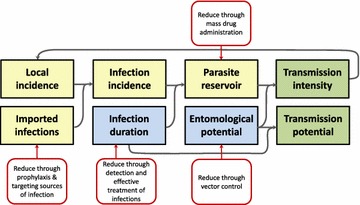
There is a long history of considering the constituent components of malaria risk and the malaria transmission cycle via the use of mathematical models, yet strategic planning in endemic countries tends not to take full advantage of available disease intelligence to tailor interventions. National malaria programmes typically make operational decisions about where to implement vector control and surveillance activities based upon simple categorizations of annual parasite incidence. With technological advances, an enormous opportunity exists to better target specific malaria interventions to the places where they will have greatest impact by mapping and evaluating metrics related to a variety of risk components, each of which describes a different facet of the transmission cycle. Here, these components and their implications for operational decision-making are reviewed. For each component, related mappable malaria metrics are also described which may be measured and evaluated by malaria programmes seeking to better understand the determinants of malaria risk. Implementing tailored programmes based on knowledge of the heterogeneous distribution of the drivers of malaria transmission rather than only consideration of traditional metrics such as case incidence has the potential to result in substantial improvements in decision-making. As programmes improve their ability to prioritize their available tools to the places where evidence suggests they will be most effective, elimination aspirations may become increasingly feasible.
Overview
The claims and statistics of this paper haven’t been checked yet.
Free: it reads the open-access text and checks the first 5 claims that cite a source we can check. Create a free account to check every claim.
Integrity signals
Registry
Cites
Statistics
Figures
Verification
Claims the paper makes
The claims and statistics of this paper haven’t been checked yet.
Free: it reads the open-access text and checks the first 5 claims that cite a source we can check. Create a free account to check every claim.
Claims other papers make about this one
Each is checked against this paper’s own text: does it say what the citing paper says it does?
The source backs part of the claim, not all of it — or backs it for a different population, condition or comparison.
In the citing paper
“Malaria risk models have incorporated land use factors to develop spatially and/or temporal predictions of malaria risks, potentially allowing targeting of interventions and strategic planning [103].”
From Achieving global malaria eradication in changing landscapes (2021) · cites this paper as [103]
Experimental — accuracy not yet measured
Self-check
Percentages, sums and reported differences re-computed from the paper’s own numbers.
The self-check needs the paper’s full text.
Citations
Cites
The effect of malaria control on Plasmodium falciparum in Africa between 2000 and 2015
Bhatt, S., Weiss, D. J., Cameron, E., Bisanzio, D., Mappin, B., Dalrymple, U., Battle, K. E., Moyes, C. L., Henry, A., Eckhoff, P. A., et al. (2015) · Nature · doi:10.1038/nature15535 · Cited by 3,225
Self-citationA new world malaria map: Plasmodium falciparum endemicity in 2010
Gething, P. W., Patil, A. P., Smith, D. L., Guerra, C. A., Elyazar, I. R., Johnston, G. L., Tatem, A. J., & Hay, S. I. (2011) · Malaria Journal · doi:10.1186/1475-2875-10-378 · Cited by 1,146
Self-citationQuantifying the Impact of Human Mobility on Malaria
Wesolowski, A., Eagle, N., Tatem, A. J., Smith, D. L., Noor, A. M., Snow, R. W., & Buckee, C. O. (2012) · Science · doi:10.1126/science.1223467 · Cited by 992 · cited 1×
“between places can influence the staging of elimination strategies by prioritizing malaria reduction in source locations [91], potentially increasing cost-effectiveness [92].”
BackgroundSelf-citationDrakeley, C. J., Corran, P. H., Coleman, P. G., Tongren, J. E., McDonald, S. L. R., Carneiro, I., Malima, R., Lusingu, J., Manjurano, A., Nkya, W. M. M., et al. (2005) · Proceedings of the National Academy of Sciences · doi:10.1073/pnas.0408725102 · Cited by 510 · cited 1×
“Related, serologic testing offers the potential to measure past exposure to malaria and thus to evaluate what transmission patterns might occur in the absence of intervention [86].”
BackgroundRevisiting the Basic Reproductive Number for Malaria and Its Implications for Malaria Control
Smith, D. L., McKenzie, F. E., Snow, R. W., & Hay, S. I. (2007) · PLoS Biology · doi:10.1371/journal.pbio.0050042 · Cited by 466 · cited 1×
“The transmission potential that results from the combination of entomological potential and human infection duration in the absence of active interventions to modify them is classically represented by the basic reproductive number, R0 [79].”
BackgroundSelf-citationThe entomological inoculation rate and Plasmodium falciparum infection in African children
Smith, D. L., Dushoff, J., Snow, R. W., & Hay, S. I. (2005) · Nature · doi:10.1038/nature04024 · Cited by 369 · cited 1×
“Transmission intensity in a place can be represented by the EIR, or the rate at which people are bitten by infectious mosquitoes [71, 72].”
BackgroundSelf-citationThe Malaria Atlas Project: Developing Global Maps of Malaria Risk
Hay, S. I., & Snow, R. W. (2006) · PLoS Medicine · doi:10.1371/journal.pmed.0030473 · Cited by 346 · cited 1×
“The potential for mapping malaria transmission using relevant malaria metrics has grown in recent years, facilitated by the widespread availability of curated databases [5], geographic information systems, satellite imagery, and handheld tools for geocoded data collection and rapid reporting; model-based geostatistica…”
BackgroundMeasuring malaria endemicity from intense to interrupted transmission
Hay, S. I., Smith, D. L., & Snow, R. W. (2008) · The Lancet Infectious Diseases · doi:10.1016/s1473-3099(08)70069-0 · Cited by 334 · cited 1×
“Population-based cross-sectional blood surveys can provide a point estimate of the overall prevalence in a target area, though the sample size to do so is typically infeasibly large in settings where prevalence may be lower than 1–3% [53].”
BackgroundSelf-citationSerology: a robust indicator of malaria transmission intensity?
Corran, P., Coleman, P., Riley, E., & Drakeley, C. (2007) · Trends in Parasitology · doi:10.1016/j.pt.2007.08.023 · Cited by 289 · cited 2×
“Nevertheless, transmission potential is rarely mapped [25] directly [77], since it essentially involves measuring the unobservable counterfactual of what the malaria map look like in the absence of intervention.”
BackgroundMapping Plasmodium falciparum Mortality in Africa between 1990 and 2015
Gething, P. W., Casey, D. C., Weiss, D. J., Bisanzio, D., Bhatt, S., Cameron, E., Battle, K. E., Dalrymple, U., Rozier, J., Rao, P. C., et al. (2016) · New England Journal of Medicine · doi:10.1056/nejmoa1606701 · Cited by 233
Self-citationNoor, A. M., Zurovac, D., Hay, S. I., Ochola, S. A., & Snow, R. W. (2003) · Tropical Medicine & International Health · doi:10.1046/j.1365-3156.2003.01112.x · Cited by 226 · cited 1×
“Similarly, decisions about how best to improve treatment rates must be context-adapted: interventions that focus on training healthcare workers at health facilities may be prioritized in places where the at-risk population has good access to those facilities (something that can be assessed using maps of treatment-seek…”
BackgroundMeasuring Changes in Plasmodium falciparum Transmission
Tusting, L. S., Bousema, T., Smith, D. L., & Drakeley, C. (2014) · Advances in Parasitology · doi:10.1016/b978-0-12-800099-1.00003-x · Cited by 203 · cited 1×
“Although there is a long history of considering the constituent factors of malaria risk and the malaria transmission cycle via the use of mathematical models [20], and careful evaluation has been made of the comparative usefulness of a variety of metrics for measuring the impact of interventions [21], national strateg…”
BackgroundSelf-citationCeccato, P., Vancutsem, C., Klaver, R., Rowland, J., & Connor, S. J. (2012) · Journal of Tropical Medicine · doi:10.1155/2012/595948 · Cited by 198 · cited 1×
“It is not possible in practice to measure vectorial capacity across a region, but its spatial variation may be tentatively mapped according to entomological data and locally relevant ecological covariates which can be measured across the landscape [62].”
BackgroundEpidemiology of transmissible diseases after elimination.
De Serres, G., Gay, N. J., & Farrington, C. P. (2000) · American Journal of Epidemiology · doi:10.1093/oxfordjournals.aje.a010145 · Cited by 198 · cited 1×
“the size and/or longevity of outbreaks [74], may provide useful estimation of how transmission intensities vary across the region of interest.”
BackgroundRecasting the theory of mosquito-borne pathogen transmission dynamics and control
Smith, D. L., Perkins, T. A., Reiner, R. C., Barker, C. M., Niu, T., Chaves, L. F., Ellis, A. M., George, D. B., Le Menach, A., Pulliam, J. R. C., et al. (2014) · Transactions of the Royal Society of Tropical Medicine and Hygiene · doi:10.1093/trstmh/tru026 · Cited by 190 · cited 2×
“Entomological potential can exist in places where there is no parasite reservoir [20, 69], and vice versa, and in such a place transmission intensity will be zero even though the individual risk components of entomological potential or parasite reservoir may exist.”
BackgroundSelf-citationCoverage and system efficiencies of insecticide-treated nets in Africa from 2000 to 2017
Bhatt, S., Weiss, D. J., Mappin, B., Dalrymple, U., Cameron, E., Bisanzio, D., Smith, D. L., Moyes, C. L., Tatem, A. J., Lynch, M., et al. (2015) · eLife · doi:10.7554/elife.09672 · Cited by 188
Self-citationModeling malaria genomics reveals transmission decline and rebound in Senegal
Daniels, R. F., Schaffner, S. F., Wenger, E. A., Proctor, J. L., Chang, H.-H., Wong, W., Baro, N., Ndiaye, D., Fall, F. B., Ndiop, M., et al. (2015) · Proceedings of the National Academy of Sciences · doi:10.1073/pnas.1505691112 · Cited by 178 · cited 1×
“Analysis of genomic [75] or serologic [76] data may also estimate the transmission intensity.”
BackgroundSelf-citationVectorial capacity: Must we measure all its components?
Dye, C. (1986) · Parasitology Today · doi:10.1016/0169-4758(86)90082-7 · Cited by 178
Travel risk, malaria importation and malaria transmission in Zanzibar
Le Menach, A., Tatem, A. J., Cohen, J. M., Hay, S. I., Randell, H., Patil, A. P., & Smith, D. L. (2011) · Scientific Reports · doi:10.1038/srep00093 · Cited by 176 · cited 2×
“Importation can be represented by the rate at which infected humans or (less frequently) mosquitoes travel into a given place from elsewhere [12, 47, 48].”
BackgroundSelf-citationTatem, A. J., Huang, Z., Narib, C., Kumar, U., Kandula, D., Pindolia, D. K., Smith, D. L., Cohen, J. M., Graupe, B., Uusiku, P., et al. (2014) · Malaria Journal · doi:10.1186/1475-2875-13-52 · Cited by 174 · cited 1×
“Since importation will be reduced when prevalence is reduced in the places from which imported cases originate, elimination planning that prioritizes high burden locations and/or coordinates elimination and control efforts nationally and across borders may also increase the efficiency of elimination efforts [18].”
BackgroundSelf-citationGalactionova, K., Tediosi, F., de Savigny, D., Smith, T., & Tanner, M. (2015) · PLOS ONE · doi:10.1371/journal.pone.0127818 · Cited by 172 · cited 14×
“Dambach P, Traoré I, Becker N, Kaiser A, Sié A, Sauerborn R. EMIRA: ecologic Malaria Reduction for Africa—innovative tools for integrated malaria control.”
BackgroundInfluentialInternational population movements and regional Plasmodium falciparum malaria elimination strategies
Tatem, A. J., & Smith, D. L. (2010) · Proceedings of the National Academy of Sciences · doi:10.1073/pnas.1002971107 · Cited by 168 · cited 1×
“Information on human mobility within [49] and between [50] countries can provide valuable information on importation risk.”
BackgroundSelf-citationTatem, A. J., Qiu, Y., Smith, D. L., Sabot, O., Ali, A. S., & Moonen, B. (2009) · Malaria Journal · doi:10.1186/1475-2875-8-287 · Cited by 165 · cited 2×
“Importation can be represented by the rate at which infected humans or (less frequently) mosquitoes travel into a given place from elsewhere [12, 47, 48].”
BackgroundSelf-citationRinderpest Eradication: Appropriate Technology and Social Innovations
Mariner, J. C., House, J. A., Mebus, C. A., Sollod, A. E., Chibeu, D., Jones, B. A., Roeder, P. L., Admassu, B., & van ’t Klooster, G. G. M. (2012) · Science · doi:10.1126/science.1223805 · Cited by 163 · cited 2×
“This lesson was underscored during both the smallpox [1] and rinderpest [2] eradication campaigns, which achieved dramatic successes after shifting from mass vaccination to surveillance-driven targeting.”
BackgroundIdentifying Malaria Transmission Foci for Elimination Using Human Mobility Data
Ruktanonchai, N. W., DeLeenheer, P., Tatem, A. J., Alegana, V. A., Caughlin, T. T., zu Erbach-Schoenberg, E., Lourenço, C., Ruktanonchai, C. W., & Smith, D. L. (2016) · PLOS Computational Biology · doi:10.1371/journal.pcbi.1004846 · Cited by 157 · cited 1×
“Every landscape is a heterogeneous patchwork, but since humans move further than mosquitoes, malaria will be found in more places than it is transmitted [34].”
BackgroundSelf-citationUrbanization and the global malaria recession
Tatem, A. J., Gething, P. W., Smith, D. L., & Hay, S. I. (2013) · Malaria Journal · doi:10.1186/1475-2875-12-133 · Cited by 151 · cited 1×
“However, it is also possible to have a substantial API in the absence of transmission risk, since infections identified in urban centers, for example, due to importation of numerous infections from outlying areas or elsewhere abroad will usually be included in API even if these environments have little to no risk of t…”
BackgroundSelf-citationOkell, L. C., Drakeley, C. J., Bousema, T., Whitty, C. J. M., & Ghani, A. C. (2008) · PLoS Medicine · doi:10.1371/journal.pmed.0050226 · Cited by 146 · cited 2×
“Modelling of treatment rates in Tanzania suggested that replacing all anti-malarial drugs received at current treatment rates with effective artemisinin-based drugs might decrease malaria prevalence by between 21 and 53% [57]; increasing effective treatment rates by increasing the availability of effective drugs or ac…”
BackgroundThe Potential Contribution of Mass Treatment to the Control of Plasmodium falciparum Malaria
Okell, L. C., Griffin, J. T., Kleinschmidt, I., Hollingsworth, T. D., Churcher, T. S., White, M. J., Bousema, T., Drakeley, C. J., & Ghani, A. C. (2011) · PLoS ONE · doi:10.1371/journal.pone.0020179 · Cited by 146 · cited 1×
“The parasite reservoir can be drained rapidly through mass drug administration, though in the absence of effective interventions to prevent reinfection, it is probable that this reduction will be short-lived in most settings [45].”
BackgroundTackling Imported Malaria: An Elimination Endgame
Sturrock, H. J. W., Roberts, K. W., Wegbreit, J., Ohrt, C., & Gosling, R. D. (2015) · American Journal of Tropical Medicine and Hygiene · doi:10.4269/ajtmh.14-0256 · Cited by 136 · cited 1×
“Border screening of all travellers is used in some places but is unlikely to be cost efficient [51] for a number of reasons including the probability that travellers may be asymptomatic or have lower density infections that may be missed by conventional tests [52], especially for Plasmodium vivax malaria carriers who…”
BackgroundMapping malaria transmission in West and Central Africa
Gemperli, A., Sogoba, N., Fondjo, E., Mabaso, M., Bagayoko, M., Briët, O. J. T., Anderegg, D., Liebe, J., Smith, T., & Vounatsou, P. (2006) · Tropical Medicine & International Health · doi:10.1111/j.1365-3156.2006.01640.x · Cited by 129 · cited 4×
“Mapping EIR requires measurements of its component factors, including mosquito density, biting rates, and the sporozoite rate in mosquitoes, and thus is uncommonly performed [26, 27].”
BackgroundInfluentialMueller, I., Schoepflin, S., Smith, T. A., Benton, K. L., Bretscher, M. T., Lin, E., Kiniboro, B., Zimmerman, P. A., Speed, T. P., Siba, P., et al. (2012) · Proceedings of the National Academy of Sciences · doi:10.1073/pnas.1200841109 · Cited by 125 · cited 1×
“Transmission intensity is closely related to the force of infection [70], or the local incidence of new infections in the susceptible population.”
BackgroundEpstein, J. E., Rao, S., Williams, F., Freilich, D., Luke, T., Sedegah, M., Vega, P. D. L., Sacci, J., Richie, T. L., & Hoffman, S. L. (2007) · The Journal of Infectious Diseases · doi:10.1086/518510 · Cited by 124 · cited 1×
“As symptoms typically manifest around the tenth day of infection in non-immune individuals, prompt, effective treatment can greatly reduce the duration of infectivity of clinical cases [60].”
BackgroundHow absolute is zero? An evaluation of historical and current definitions of malaria elimination
Cohen, J. M., Moonen, B., Snow, R. W., & Smith, D. L. (2010) · Malaria Journal · doi:10.1186/1475-2875-9-213 · Cited by 124 · cited 3×
“Less commonly, risk was mapped according to estimated values of metrics such as the basic reproductive number R0 [25], the entomological inoculation rate (EIR) [15, 26, 27], and malariogenic potential [28] (the risk of malaria transmission, determined by importation and transmission potential [29]); Noor et al.”
BackgroundSelf-citationWalker, P. G. T., Griffin, J. T., Ferguson, N. M., & Ghani, A. C. (2016) · The Lancet Global Health · doi:10.1016/s2214-109x(16)30073-0 · Cited by 124 · cited 1×
“Furthermore, determining thresholds for categorizing maps of overlaid metrics into operational strata that can be assigned an optimal intervention package [93] will also require additional analysis.”
BackgroundShaukat, A. M., Breman, J. G., & McKenzie, F. E. (2010) · Malaria Journal · doi:10.1186/1475-2875-9-122 · Cited by 123 · cited 1×
“Metrics related to transmission intensity can be used to assess whether the interventions being implemented are successfully reducing transmission rates [78].”
BackgroundBeck, L. R., Rodriguez, M. H., Dister, S. W., Rodriguez, A. D., Washino, R. K., Roberts, D. R., & Spanner, M. A. (1997) · The American Journal of Tropical Medicine and Hygiene · doi:10.4269/ajtmh.1997.56.99 · Cited by 116
Yukich, J. O., Taylor, C. A., Eisele, T. P., Reithinger, R., Nauhassenay, H., Berhane, Y., & Keating, J. A. (2013) · Malaria Journal · doi:10.1186/1475-2875-12-33 · Cited by 108 · cited 2×
“Accurate quantification of importation rates is challenging given case classification typically relies upon travel histories which may be incomplete or subject to recall biases, the existence of a travel history to an endemic area is not proof of infection there, and the fraction of imported (potentially asymptomatic)…”
BackgroundSelf-citationSong, J., Socheat, D., Tan, B., Dara, P., Deng, C., Sreng, S., Suon, S., Ou, F., Jian, H.-X., & Li, G. (2010) · Malaria Journal · doi:10.1186/1475-2875-9-57 · Cited by 103
Predicting changing malaria risk after expanded insecticide-treated net coverage in Africa
Smith, D. L., Hay, S. I., Noor, A. M., & Snow, R. W. (2009) · Trends in Parasitology · doi:10.1016/j.pt.2009.08.002 · Cited by 101 · cited 1×
“Somewhat complex mathematical modelling can be applied to derive measures of transmission potential from routinely available metrics such as infection prevalence [82], incidence [12], or combinations thereof [83].”
BackgroundSelf-citationIndicators for the forecasting of malaria epidemics.
Onori, E., & Grab, B. (1980) · Europe PMC (PubMed Central) · Cited by 97
Spatial prediction of Plasmodium falciparum prevalence in Somalia
Noor, A. M., Clements, A., Gething, P. W., Moloney, G. M., Borle, M., Shewchuk, T., Hay, S. I., & Snow, R. W. (2008) · Malaria Journal · doi:10.1186/1475-2875-7-159 · Cited by 94
Self-citationBØGH, C., LINDSAY, S. W., CLARKE, S. E., DEAN, A., JAWARA, M., PINDER, M., & THOMAS, C. J. (2007) · The American Journal of Tropical Medicine and Hygiene · doi:10.4269/ajtmh.2007.76.875 · Cited by 93 · cited 4×
“Mapping EIR requires measurements of its component factors, including mosquito density, biting rates, and the sporozoite rate in mosquitoes, and thus is uncommonly performed [26, 27].”
BackgroundInfluentialMalaria elimination: moving forward with spatial decision support systems
Kelly, G. C., Tanner, M., Vallely, A. J., & Clements, A. (2012) · Trends in Parasitology · doi:10.1016/j.pt.2012.04.002 · Cited by 92
Mapping malaria risk and vulnerability in the United Republic of Tanzania: a spatial explicit model
Hagenlocher, M., & Castro, M. C. (2015) · Population Health Metrics · doi:10.1186/s12963-015-0036-2 · Cited by 88 · cited 4×
“Mapping EIR requires measurements of its component factors, including mosquito density, biting rates, and the sporozoite rate in mosquitoes, and thus is uncommonly performed [26, 27].”
BackgroundInfluentialCohen, J. M., Dlamini, S. N., Novotny, J. M., Kandula, D., Kunene, S., & Tatem, A. J. (2013) · Malaria Journal · doi:10.1186/1475-2875-12-61 · Cited by 85
Self-citationHyperendemic malaria transmission in areas of occupation-related travel in the Peruvian Amazon
Parker, B. S., Paredes Olortegui, M., Peñataro Yori, P., Escobedo, K., Florin, D., Rengifo Pinedo, S., Cardenas Greffa, R., Capcha Vega, L., Rodriguez Ferrucci, H., Pan, W. K., et al. (2013) · Malaria Journal · doi:10.1186/1475-2875-12-178 · Cited by 81 · cited 1×
“, logging camps [36]) but will be found later wherever humans live and are examined for parasites (e.”
BackgroundMeasuring the path toward malaria elimination
Churcher, T. S., Cohen, J. M., Novotny, J. M., Ntshalintshali, N., Kunene, S., & Cauchemez, S. (2014) · Science · doi:10.1126/science.1251449 · Cited by 80
Self-citationFine-scale malaria risk mapping from routine aggregated case data
Sturrock, H. J., Cohen, J. M., Keil, P., Tatem, A. J., Le Menach, A., Ntshalintshali, N. E., Hsiang, M. S., & Gosling, R. D. (2014) · Malaria Journal · doi:10.1186/1475-2875-13-421 · Cited by 79
Self-citationTreatment-seeking rates in malaria endemic countries
Battle, K. E., Bisanzio, D., Gibson, H. S., Bhatt, S., Cameron, E., Weiss, D. J., Mappin, B., Dalrymple, U., Howes, R. E., Hay, S. I., et al. (2016) · Malaria Journal · doi:10.1186/s12936-015-1048-x · Cited by 77 · cited 1×
“Similarly, decisions about how best to improve treatment rates must be context-adapted: interventions that focus on training healthcare workers at health facilities may be prioritized in places where the at-risk population has good access to those facilities (something that can be assessed using maps of treatment-seek…”
BackgroundSelf-citationMapping Malaria Transmission Intensity in Malawi, 2000–2010
Bennett, A., Kazembe, L., Mathanga, D. P., Kinyoki, D., Ali, D., Snow, R. W., & Noor, A. M. (2013) · The American Society of Tropical Medicine and Hygiene · doi:10.4269/ajtmh.13-0028 · Cited by 75
Preventing the Reintroduction of Malaria in Mauritius: A Programmatic and Financial Assessment
Tatarsky, A., Aboobakar, S., Cohen, J. M., Gopee, N., Bheecarry, A., Moonasar, D., Phillips, A. A., Kahn, J. G., Moonen, B., Smith, D. L., et al. (2011) · PLoS ONE · doi:10.1371/journal.pone.0023832 · Cited by 73 · cited 1×
“Border screening of all travellers is used in some places but is unlikely to be cost efficient [51] for a number of reasons including the probability that travellers may be asymptomatic or have lower density infections that may be missed by conventional tests [52], especially for Plasmodium vivax malaria carriers who…”
BackgroundSelf-citationBennett, A. F., Yukich, J. O., Miller, J. M., Keating, J. A., Moonga, H. B., Hamainza, B., Kamuliwo, M., Andrade-Pacheco, R., Vounatsou, P., Steketee, R. W., et al. (2016) · Parasites & Vectors · doi:10.1186/s13071-016-1693-0 · Cited by 73 · cited 1×
“For example, in Zambia, prevalence maps created from a series of infection prevalence surveys were used to assess the effect of bed nets over time, revealing significantly different impact in different parts of the country [89].”
BackgroundSelf-citationEndemicity response timelines for Plasmodium falciparum elimination
Smith, D. L., & Hay, S. I. (2009) · Malaria Journal · doi:10.1186/1475-2875-8-87 · Cited by 70 · cited 1×
“5) to achieve elimination on rapid timeframes [80, 81].”
BackgroundSelf-citationMalaria mapping: understanding the global endemicity of falciparum and vivax malaria
Dalrymple, U., Mappin, B., & Gething, P. W. (2015) · BMC Medicine · doi:10.1186/s12916-015-0372-x · Cited by 68 · cited 1×
“The widespread availability of high-resolution, remotely-sensed imagery and data layers related to mosquito habitat and human populations provide data layers that can be used to correlate with observed patterns in malaria distributions [55].”
BackgroundSelf-citationMapping malaria risk among children in Côte d’Ivoire using Bayesian geo-statistical models
Raso, G., Schur, N., Utzinger, J., Koudou, B. G., Tchicaya, E. S., Rohner, F., N’Goran, E. K., Silué, K. D., Matthys, B., Assi, S., et al. (2012) · Malaria Journal · doi:10.1186/1475-2875-11-160 · Cited by 67
ESTIMATING THE DURATION OF PLASMODIUM FALCIPARUM INFECTION FROM TRIALS OF INDOOR RESIDUAL SPRAYING
SAMA, W., KILLEEN, G., & SMITH, T. (2004) · The American Journal of Tropical Medicine and Hygiene · doi:10.4269/ajtmh.2004.70.625 · Cited by 63 · cited 1×
“The duration of an untreated infection will vary substantially by parasite species; studies of Plasmodium falciparum have suggested an average duration of 180–240 days, although infections lasting 300–400 days or longer have been observed [58].”
BackgroundMapping Malaria Risk in Low Transmission Settings: Challenges and Opportunities
Sturrock, H. J. W., Bennett, A. F., Midekisa, A. A., Gosling, R. D., Gething, P. W., & Greenhouse, B. (2016) · Trends in Parasitology · doi:10.1016/j.pt.2016.05.001 · Cited by 63 · cited 1×
“Given the increasing heterogeneity in malaria as transmission declines [95], it may be appropriate to initially map metrics at high resolution before aggregating to operational units at which interventions are to be conducted.”
BackgroundSelf-citationHu, T., Liu, Y., Zhang, S., Xia, Z., Zhou, S., Yan, J., Cao, J., & Feng, Z. (2016) · Infectious Diseases of Poverty · doi:10.1186/s40249-016-0146-5 · Cited by 63 · cited 1×
“Incidence of local clinical cases is typically measured and mapped [38] programmatically as a proxy metric for the incidence of local infections, though immunity and incomplete surveillance mean the incidence of infection and clinical malaria will not be equivalent.”
BackgroundMapping internal connectivity through human migration in malaria endemic countries
Sorichetta, A., Bird, T. J., Ruktanonchai, N. W., zu Erbach-Schoenberg, E., Pezzulo, C., Tejedor, N., Waldock, I. C., Sadler, J. D., Garcia, A. J., Sedda, L., et al. (2016) · Scientific Data · doi:10.1038/sdata.2016.66 · Cited by 62 · cited 1×
“Information on human mobility within [49] and between [50] countries can provide valuable information on importation risk.”
BackgroundDjogbénou, L., Pasteur, N., Bio-Bangana, S., Baldet, T., Irish, S. R., Akogbeto, M. C., Weill, M., & Chandre, F. (2010) · Acta Tropica · doi:10.1016/j.actatropica.2010.02.001 · Cited by 61
Craig, M. H., Sharp, B. L., Mabaso, M. L., & Kleinschmidt, I. (2007) · International Journal of Health Geographics · doi:10.1186/1476-072x-6-44 · Cited by 61
Mapping residual transmission for malaria elimination
Reiner, R. C., Le Menach, A., Kunene, S., Ntshalintshali, N., Hsiang, M. S., Perkins, T. A., Greenhouse, B., Tatem, A. J., Cohen, J. M., & Smith, D. L. (2015) · eLife · doi:10.7554/elife.09520 · Cited by 60
Self-citationMalaria Risk Mapping for Control in the Republic of Sudan
Noor, A. M., Elmardi, K. A., Abdelgader, T. M., Patil, A. P., Amine, A. A. A., Bakhiet, S., Mukhtar, M. M., & Snow, R. W. (2012) · American Journal of Tropical Medicine and Hygiene · doi:10.4269/ajtmh.2012.12-0390 · Cited by 53 · cited 4×
“Noor AM, ElMardi KA, Abdelgader TM, Patil AP, Amine AAA, Bakhiet S, et al. Malaria risk mapping for control in the Republic of Sudan.”
BackgroundInfluentialJohnston, G. L., Gething, P. W., Hay, S. I., Smith, D. L., & Fidock, D. A. (2014) · PLoS Computational Biology · doi:10.1371/journal.pcbi.1003434 · Cited by 49 · cited 1×
“Improved treatment rates can reduce transmission intensity by reducing the average duration of infections and thus decreasing the parasite reservoir available to be transmitted [56, 57].”
BackgroundSelf-citationPothin, E., Ferguson, N. M., DRAKELEY, C. J., & Ghani, A. C. (2016) · Malaria Journal · doi:10.1186/s12936-016-1121-0 · Cited by 49 · cited 1×
“Analysis of genomic [75] or serologic [76] data may also estimate the transmission intensity.”
BackgroundSelf-citationGerardin, J., Bever, C. A., Bridenbecker, D., Hamainza, B., Silumbe, K., Miller, J. M., Eisele, T. P., Eckhoff, P. A., & Wenger, E. A. (2017) · Malaria Journal · doi:10.1186/s12936-017-1903-z · Cited by 49 · cited 2×
“Aggressive measures to drain any local reservoir such as mass drug administration may be appropriate in places where importation rates are low and vectorial capacity and infection duration have already been reduced, as described in a modelling study considering variation in each of these factors [88].”
BackgroundSelf-citationHow Well Are Malaria Maps Used to Design and Finance Malaria Control in Africa?
Omumbo, J. A., Noor, A. M., Fall, I. S., & Snow, R. W. (2013) · PLoS ONE · doi:10.1371/journal.pone.0053198 · Cited by 43 · cited 2×
“Decomposition of malaria risk into local determinants of transmission permits identification of specific interventions that will be most impactful in specific places, but the plurality of national malaria plans [24] focus on heterogeneity in malaria case incidence, while the published risk mapping literature primarily…”
BackgroundMethodRakotomanana, F., Randremanana, R. V., Rabarijaona, L., Duchemin, J., Ratovonjato, J., Ariey, F., Rudant, J.-P., & Jeanne, I. (2007) · International Journal of Health Geographics · doi:10.1186/1476-072x-6-2 · Cited by 42
Mapping hypoendemic, seasonal malaria in rural Bandarban, Bangladesh: a prospective surveillance
Khan, W. A., Sack, D. A., Ahmed, S., Prue, C. S., Alam, M. S., Haque, R., Khyang, J., Ram, M., Akter, J., Nyunt, M. M., et al. (2011) · Malaria Journal · doi:10.1186/1475-2875-10-124 · Cited by 42
Defining and Assessing Measles Elimination Goals
Papania, M. J., & Orenstein, W. A. (2004) · The Journal of Infectious Diseases · doi:10.1086/381556 · Cited by 41 · cited 1×
“These incidence measures alone describe only a single aspect of malaria risk: they cannot indicate whether transmission would persist or die out in the absence of importation [22], nor whether incidence is low only because good implementation of effective tools has reduced it from a much higher baseline [23], nor sugg…”
BackgroundEXPERT Committee on Malaria: sixth report.
(1957) · PubMed · Cited by 41
Noor, A. M., Uusiku, P., Kamwi, R., Katokele, S. T., Ntomwa, B., Alegana, V. A., & Snow, R. W. (2013) · BMC Infectious Diseases · doi:10.1186/1471-2334-13-184 · Cited by 40 · cited 5×
“Less commonly, risk was mapped according to estimated values of metrics such as the basic reproductive number R0 [25], the entomological inoculation rate (EIR) [15, 26, 27], and malariogenic potential [28] (the risk of malaria transmission, determined by importation and transmission potential [29]); Noor et al. mapped…”
BackgroundInfluentialAdde, A., Roux, E., Mangeas, M., Dessay, N., Nacher, M., Dusfour, I., Girod, R., & Briolant, S. (2016) · PLoS ONE · doi:10.1371/journal.pone.0164685 · Cited by 40
Fuller, D. O., Troyo, A., Alimi, T. O., & Beier, J. C. (2014) · Applied Geography · doi:10.1016/j.apgeog.2014.01.002 · Cited by 39 · cited 1×
“Risk maps have also described patterns in components or correlates of vectorial capacity, including mosquito densities [63–65], breeding sites [66], and habitats for specific vectors [67, 68].”
BackgroundEMIRA: Ecologic Malaria Reduction for Africa – innovative tools for integrated malaria control
Dambach, P., Traoré, I., Becker, N., Kaiser, A., Sié, A., & Sauerborn, R. (2014) · Global Health Action · doi:10.3402/gha.v7.25908 · Cited by 38 · cited 1×
“Risk maps have also described patterns in components or correlates of vectorial capacity, including mosquito densities [63–65], breeding sites [66], and habitats for specific vectors [67, 68].”
BackgroundHuber, J. H., Johnston, G. L., Greenhouse, B., Smith, D. L., & Perkins, T. A. (2016) · Malaria Journal · doi:10.1186/s12936-016-1537-6 · Cited by 38 · cited 1×
“Infectiousness waxes and wanes over the course of infections, however, and the highest probability of transmission may occur 3–10 weeks after infection [59].”
BackgroundSelf-citationTravel patterns and demographic characteristics of malaria cases in Swaziland, 2010–2014
Tejedor‐Garavito, N., Dlamini, N., Pindolia, D. K., Soble, A., Ruktanonchai, N., Alegana, V. A., Menach, A. L., Ntshalintshali, N., Dlamini, B., Smith, D. L., et al. (2017) · Malaria Journal · doi:10.1186/s12936-017-2004-8 · Cited by 38 · cited 2×
“Accurate quantification of importation rates is challenging given case classification typically relies upon travel histories which may be incomplete or subject to recall biases, the existence of a travel history to an endemic area is not proof of infection there, and the fraction of imported (potentially asymptomatic)…”
BackgroundSelf-citationMalaria Elimination Campaigns in the Lake Kariba Region of Zambia: A Spatial Dynamical Model
Nikolov, M., Bever, C. A., Upfill-Brown, A. M., Hamainza, B., Miller, J. M., Eckhoff, P. A., Wenger, E. A., & Gerardin, J. (2016) · PLoS Computational Biology · doi:10.1371/journal.pcbi.1005192 · Cited by 34 · cited 1×
“between places can influence the staging of elimination strategies by prioritizing malaria reduction in source locations [91], potentially increasing cost-effectiveness [92].”
BackgroundSelf-citationPinchoff, J., Chaponda, M., Shields, T., Lupiya, J. S., Kobayashi, T., Mulenga, M., Moss, W. J., & Curriero, F. C. (2015) · American Journal of Tropical Medicine and Hygiene · doi:10.4269/ajtmh.15-0283 · Cited by 33 · cited 1×
“Basing decisions on more comprehensive assessments of transmission and its drivers can address these problems [14].”
BackgroundMapping the receptivity of malaria risk to plan the future of control in Somalia
Noor, A. M., Alegana, V. A., Patil, A. P., Moloney, G. M., Borle, M., Yusuf, F. E., Amran, J. G. H., & Snow, R. W. (2012) · BMJ Open · doi:10.1136/bmjopen-2012-001160 · Cited by 29 · cited 5×
“Less commonly, risk was mapped according to estimated values of metrics such as the basic reproductive number R0 [25], the entomological inoculation rate (EIR) [15, 26, 27], and malariogenic potential [28] (the risk of malaria transmission, determined by importation and transmission potential [29]); Noor et al. mapped…”
BackgroundInfluentialCrowell, V., Hardy, D., Briët, O., Chitnis, N., Maire, N., & Smith, T. A. (2011) · Epidemics · doi:10.1016/j.epidem.2011.10.003 · Cited by 28 · cited 2×
“, even a low importation rate may cause problems in a place with high transmission potential, while higher importation may be absorbed in a place where transmission is quite low) [46].”
BackgroundHoly, M., Schmidt, G., & Schröder, W. (2010) · Environmental Science and Pollution Research · doi:10.1007/s11356-010-0388-x · Cited by 27 · cited 2×
“Nevertheless, transmission potential is rarely mapped [25] directly [77], since it essentially involves measuring the unobservable counterfactual of what the malaria map look like in the absence of intervention.”
BackgroundMapping Risk of Malaria Transmission in Mainland Portugal Using a Mathematical Modelling Approach
Gomes, E., Capinha, C., Rocha, J., & Sousa, C. A. (2016) · PLoS ONE · doi:10.1371/journal.pone.0164788 · Cited by 25 · cited 1×
“Less commonly, risk was mapped according to estimated values of metrics such as the basic reproductive number R0 [25], the entomological inoculation rate (EIR) [15, 26, 27], and malariogenic potential [28] (the risk of malaria transmission, determined by importation and transmission potential [29]); Noor et al.”
BackgroundPredicting the Unmet Need for Biologically Targeted Coverage of Insecticide-Treated Nets in Kenya
Noor, A. M., Alegana, V. A., Patil, A. P., & Snow, R. W. (2010) · American Journal of Tropical Medicine and Hygiene · doi:10.4269/ajtmh.2010.10-0331 · Cited by 24 · cited 1×
“Targeting each tool to where it will be most effective while avoiding over-allocation of limited operational and financial resources [3] to unnecessary places [4] thus must become a high priority to maximize impact and sustainability.”
BackgroundManual of epidemiology and epidemiological services in malaria programmes
Black, R. H. (1968) · World Health Organization eBooks · Cited by 22
(1969) · Cited by 22
Yukich, J. O., Briët, O., Bretscher, M. T., Bennett, A. F., Lemma, S., Berhane, Y., Eisele, T. P., Keating, J. A., & Smith, T. A. (2012) · PLoS ONE · doi:10.1371/journal.pone.0042861 · Cited by 21 · cited 1×
“Somewhat complex mathematical modelling can be applied to derive measures of transmission potential from routinely available metrics such as infection prevalence [82], incidence [12], or combinations thereof [83].”
BackgroundSelf-citationRodriguez-Morales, A. J., Orrego-Acevedo, C. A., Zambrano-Muñoz, Y., Garcia-Folleco, F. J., Giraldo, A. C. H., & Lozada-Riascos, C. O. (2015) · Journal of Infection and Public Health · doi:10.1016/j.jiph.2015.05.011 · Cited by 18
Fun with maths: exploring implications of mathematical models for malaria eradication
Eckhoff, P. A., Bever, C. A., Gerardin, J., & Wenger, E. A. (2014) · Malaria Journal · doi:10.1186/1475-2875-13-486 · Cited by 7 · cited 1×
“5) to achieve elimination on rapid timeframes [80, 81].”
BackgroundSelf-citation
Research works printed but not linked: 2
- Foege WH. House on fire: the fight to eradicate smallpox [Internet]. Berkeley; New York: University of California Press; Milbank Memorial Fund; 2011. http://public.eblib.com/choice/publicfullrecord.aspx?p=672392. Accessed 17 Aug 2015.
- Pampana E. Textbook of malaria eradication. 2nd ed. Oxford: Oxford University Press; 1969.
Cited by
Are malaria elimination efforts on right track? An analysis of gains achieved and challenges ahead
Dhiman, S. (2019) · Infectious Diseases of Poverty · doi:10.1186/s40249-019-0524-x · Cited by 186
Achieving global malaria eradication in changing landscapes
Fornace, K. M., Diaz, A. V., Lines, J., & Drakeley, C. J. (2021) · Malaria Journal · doi:10.1186/s12936-021-03599-0 · Cited by 112
Stresman, G., Bousema, T., & Cook, J. (2019) · Trends in Parasitology · doi:10.1016/j.pt.2019.07.013 · Cited by 89
“In practice, different metrics tend to identify different areas as hotspots and it is often unclear how best to operationally use the information garnered [28,95].”
Landier, J., Haohankhunnatham, W., Das, S., Konghahong, K., Christensen, P. R., Raksuansak, J., Phattharakokoedbun, P., Kajeechiwa, L., Thwin, M. M., Jang, I. K., et al. (2018) · Journal of Clinical Microbiology · doi:10.1128/jcm.00565-18 · Cited by 83
Kang, S. Y., Battle, K. E., Gibson, H. S., Ratsimbasoa, A. C., Randrianarivelojosia, M., Ramboarina, S., Zimmerman, P. A., Weiss, D. J., Cameron, E., Gething, P. W., et al. (2018) · BMC Medicine · doi:10.1186/s12916-018-1060-4 · Cited by 79
“A recent review by Cohen and colleagues [43], however, has argued for a multi-component mapping process that will adequately identify the underlying drivers of transmission, to enable Kang et al.”
BackgroundSelf-citation
Metadata
- Authors
- Cohen, J. M., Le Menach, A., Pothin, E., Eisele, T. P., Gething, P. W., Eckhoff, P. A., Moonen, B., Schapira, A., & Smith, D. L.
- Affiliations
- Clinton Health Access Initiative (US)
- Swiss Tropical and Public Health Institute (CH)
- Tulane University (US)
- University of Oxford (GB)
- Institute for Disease Modeling (US)
- Gates Foundation (US)
- University of Washington (US)
- Corresponding author
- Cohen, Justin M.
- ORCID
- Venue
- Malaria Journal
- Published
- 2017-11-13
- Volume
- 16
- Issue
- 1
- Pages
- 459-459
- ISSN
- 1475-2875 (ISSN-L)
- PMC
- PMC5683539
- OpenAlex
- W2769690433
- Cited by
- 68
- References
- 89
- Citations by year
- 2026: 5 · 2025: 3 · 2024: 10 · 2023: 6 · 2022: 4 · 2021: 10 · 2020: 12 · 2019: 9 · 2018: 8
- FWCI
- 1.29
- Type
- journal article
- Language
- en
- Open access
- gold
- doi.org
- Licence
- cc-by
- creativecommons.org/licenses/by/4.0/ (tdm)
- creativecommons.org/licenses/by/4.0/ (vor)
- Locations
- Malaria Journal (publishedVersion, cc-by)
- PubMed Central (publishedVersion, cc-by)
- PubMed (publishedVersion)
- DOAJ (DOAJ: Directory of Open Access Journals) (submittedVersion, cc-by-sa)
- Greater South Information System
- Funders
- Bill & Melinda Gates Foundation (OPP1034348)
- Topics
- Health Sciences › Medicine › Public Health, Environmental and Occupational Health › Malaria Research and Control
- Health Sciences › Medicine › Public Health, Environmental and Occupational Health › Mosquito-borne diseases and control
- Physical Sciences › Mathematics › Applied Mathematics › Mathematical and Theoretical Epidemiology and Ecology Models
- Keywords
- malaria risk mapping, malaria elimination, malaria surveillance, vector control, annual parasite incidence, operational decision-making
- MeSH terms
- Communicable Disease Control, Decision Making, Malaria, National Health Programs, Risk
About these checks
Registry, retraction, Cites and statistics results are computed, not judged, with one exception: a printed reference that no index lists is read once by a model before it counts as a citation error. Claims are extracted by a model and kept only when their quote appears verbatim in the text; each cited source is then checked, with a model’s help, for whether it says what the claim relies on. Those verdicts can be wrong — read the claim’s quote and the cited source before relying on one.
Statistics and arithmetic are recomputed, not judged.
Confidence bands are shown only for fields calibrated on our annotated test set. None is calibrated yet, so no band is shown.
What counts as a claim ›How we measure confidence ›How we check this ›
Are you an author, or do you see a problem with this page? Request a review
Data sources
Bibliographic data: Semantic Scholar, OpenAlex, Crossref.
Contains information from the Semantic Scholar Academic Graph Datasets, made available under the ODC Attribution License (ODC-BY 1.0).
Semantic Scholar’s data is described in: Kinney, R., et al. (2023). The Semantic Scholar Open Data Platform. arXiv:2301.10140.
