

Achieving global malaria eradication in changing landscapes
Open accessThe DOI matches its Crossref record; 118 of the 123 references it cites were found in a registry or an index; 20 of the 39 sources its claims cite were checked for support.
Abstract
Land use and land cover changes, such as deforestation, agricultural expansion and urbanization, are one of the largest anthropogenic environmental changes globally. Recent initiatives to evaluate the feasibility of malaria eradication have highlighted impacts of landscape changes on malaria transmission and the potential of these changes to undermine malaria control and elimination efforts. Multisectoral approaches are needed to detect and minimize negative impacts of land use and land cover changes on malaria transmission while supporting development aiding malaria control, elimination and ultimately eradication. Pathways through which land use and land cover changes disrupt social and ecological systems to increase or decrease malaria risks are outlined, identifying priorities and opportunities for a global malaria eradication campaign. The impacts of land use and land cover changes on malaria transmission are complex and highly context-specific, with effects changing over time and space. Landscape changes are only one element of a complex development process with wider economic and social dimensions affecting human health and wellbeing. While deforestation and other landscape changes threaten to undermine malaria control efforts and have driven the emergence of zoonotic malaria, most of the malaria elimination successes have been underpinned by agricultural development and land management. Malaria eradication is not feasible without addressing these changing risks while, conversely, consideration of malaria impacts in land management decisions has the potential to significantly accelerate progress towards eradication. Multisectoral cooperation and approaches to linking malaria control and environmental science, such as conducting locally relevant ecological monitoring, integrating landscape data into malaria surveillance systems and designing environmental management strategies to reduce malaria burdens, are essential to achieve malaria eradication.
Overview
CoChat Summary
TL;DR
This review argues that land use and land cover changes (LULCC) are complex, context-specific drivers of malaria transmission that must be integrated into eradication strategies because they can both undermine control and be leveraged to reduce transmission. It outlines pathways through vector, human, and wildlife systems and calls for multisectoral surveillance, environmental data integration, and malaria-resistant landscape design.
Key findings
- LULCC—deforestation, agricultural expansion, and urbanization—can increase or decrease malaria risk depending on local Anopheles species and socio-ecological context; the paper concludes malaria eradication is not feasible without addressing these changing risks.
- Deforestation examples include the Peruvian Amazon, where deforestation between 1983 and 1995 corresponded with a fourfold national increase in malaria cases from 1992 to 1997 and a 50-fold increase in Loreto Department; in Nigeria, each standard deviation of forest loss corresponded to an almost 5% increase in malaria in children under 5.
- Large dams in sub-Saharan Africa were predicted to increase malaria risk for around 15 million people, adding more than 1 million cases annually, with an additional 50,000 cases per year from planned dams; agriculture covers over 37% of global land surfaces, 50 million km².
- Environmental management can reduce risk: a systematic review identified 16 studies applying environmental modification and 8 modifying human habitation, reducing the risk ratio of malaria by 88% and 79.5%, respectively; zoonotic malaria, such as Plasmodium knowlesi now the main cause of human malaria in Malaysia and 28 confirmed Plasmodium simium cases in 2015–2016, threatens elimination.
Methods
- Design: narrative review and framework based on a report commissioned by the WHO Strategic Advisory Group for Malaria Eradication (SAGme).
- Data or sample: published literature, global datasets, and case examples; no primary data collection or systematic search strategy is reported.
- Main analysis: conceptual synthesis organized around LULCC drivers, vector biology, changing human populations, wildlife reservoirs, scale, surveillance, and environmental management.
Limitations
- The paper states that LULCC impacts on malaria transmission are complex and highly context-specific, with effects changing over time and space, and that it is difficult to distinguish landscape effects from housing, health coverage, and other development factors.
- The paper states that associations between LULCC and malaria risk are modulated by spatial and temporal scales of analysis and that LULCC data rarely inform malaria surveillance.
- Evident from the text: as a narrative review without a reported systematic search or quantitative synthesis, the examples are illustrative rather than exhaustive.
Model-written summary. Check it against the paper before relying on it.
Integrity signals
Registry
Cites
Statistics
Figures
Verification
Claims the paper makes
15 Valid · 5 Not valid · 16 Not checked · 21 Own results and interpretations
Every source the paper cites for this claim was checked and supports it.
In the paper
“While previous successful disease eradication programmes for smallpox and rinderpest relied heavily on vaccination, there remains no highly effective licensed vaccine for malaria and increasing levels of insecticide resistance threaten to undermine existing vector control methods [9].”
§ Achieving global malaria eradication in changing landscapes > Background
What the sources say
- Supportedcites [9] Hemingway J Ranson H Magill A Kolaczinski J Fornadel C Gimnig J Averting a malaria disaster: will insecticide resistance derail malaria control? Lancet 2016 387 1785 1788 10.1016/S0140-6736(15)00417-1 26880124 PMC6215693 source
The Introduction says insecticide resistance is decreasing the efficacy of pyrethroids, on which malaria prevention relies heavily. The Current situation section reports increasing pyrethroid resistance and settings where resistant mosquitoes survive insecticide-treated bednets and indoor spraying. (LLM, conf=0.94)
plainstates a possible cause- Asserted: passes — The authors put it forward as true.
- Checkable: passes — It can be checked against evidence.
- Load-bearing: passes — The paper’s conclusions depend on it.
- Based: passes — The paper gives a reason why it holds.
- Supported
The cited sources support only part of this claim — read each source’s verdict below.
In the paper
“Malaria risk models have incorporated land use factors to develop spatially and/or temporal predictions of malaria risks, potentially allowing targeting of interventions and strategic planning [103].”
§ Achieving global malaria eradication in changing landscapes > Linking health and environmental data for surveillance in changing landscapes
What the sources say
- Partly supportedcites [103] Cohen JM Le Menach A Pothin E Eisele TP Gething PW Eckhoff PA Mapping multiple components of malaria risk for improved targeting of elimination interventions Malar J 2017 16 459 10.1186/s12936-017-2106-3 29132357 PMC5683539 sourceExperimental — accuracy not yet measured
The Background (page unavailable) describes geostatistical malaria-risk maps used to guide programme decisions, and the Discussion (page unavailable) links mapping local transmission drivers to targeting interventions. The cited paper does not establish the claim’s specific point that these models incorporated land-use factors, nor does it describe temporal risk predictions. (LLM, conf=0.84)
plainstates an association- Asserted: passes — The authors put it forward as true.
- Checkable: passes — It can be checked against evidence.
- Load-bearing: unclear — It is unclear whether the paper’s conclusions depend on it.
- Based: passes — The paper gives a reason why it holds.
- Partly supported
The cited sources support only part of this claim — read each source’s verdict below.
In the paper
“While deforestation and other landscape changes threaten to undermine malaria control efforts and have driven the emergence of zoonotic malaria, most of the malaria elimination successes have been underpinned by agricultural development and land management.”
§ Achieving global malaria eradication in changing landscapes > Abstract
What the sources say
- Partly supportedcites [53] Ramasamy R Zoonotic malaria–global overview and research and policy needs Front Public Health 2014 2 123 10.3389/fpubh.2014.00123 25184118 PMC4135302 sourceExperimental — accuracy not yet measured
In “Changes in Human Habitation and Ecology…” (page not supplied), the paper links deforestation and other ecological changes to a likely increase in human exposure to primate malaria parasites. It presents emergence as a possibility, not as an established outcome already driven by those changes. (LLM, conf=0.86)
plainstates a cause- Asserted: passes — The authors put it forward as true.
- Checkable: passes — It can be checked against evidence.
- Load-bearing: passes — The paper’s conclusions depend on it.
- Based: passes — The paper gives a reason why it holds.
- Partly supported
The cited sources that could be checked couldn’t confirm or dispute this claim.
In the paper
“While previous successful disease eradication programmes for smallpox and rinderpest relied heavily on vaccination, there remains no highly effective licensed vaccine for malaria and increasing levels of insecticide resistance threaten to undermine existing vector control methods [9].”
§ Achieving global malaria eradication in changing landscapes > Background
What the sources say
- Could not verifycites [9] Hemingway J Ranson H Magill A Kolaczinski J Fornadel C Gimnig J Averting a malaria disaster: will insecticide resistance derail malaria control? Lancet 2016 387 1785 1788 10.1016/S0140-6736(15)00417-1 26880124 PMC6215693 sourceExperimental — accuracy not yet measured
The Introduction refers to a “future vaccine roll-out,” and the Abstract mentions progress in vaccine development. Neither passage states whether a highly effective malaria vaccine was licensed. Searches for “licensed vaccine malaria efficacy highly effective” and “vaccine” found no passage that settles the claim. (LLM, conf=0.72)
plain- Asserted: passes — The authors put it forward as true.
- Checkable: passes — It can be checked against evidence.
- Load-bearing: passes — The paper’s conclusions depend on it.
- Based: passes — The paper gives a reason why it holds.
- Could not verify
The cited sources support only part of this claim — read each source’s verdict below.
In the paper
“Low-cost drones (unmanned aerial vehicles or UAVs) have also been utilized by malaria programmes in diverse ecological contexts including Malaysia, Tanzania and Peru [100–102].”
§ Achieving global malaria eradication in changing landscapes > Linking health and environmental data for surveillance in changing landscapes
What the sources say
- Partly supportedcites [100] Carrasco-Escobar G Manrique E Ruiz-Cabrejos J Saavedra M Alava F Bickersmith S High-accuracy detection of malaria vector larval habitats using drone-based multispectral imagery PLoS Negl Trop Dis 2019 13 e0007105 10.1371/journal.pntd.0007105 30653491 PMC6353212 sourceExperimental — accuracy not yet measured
The Introduction (page unavailable) describes a proof-of-concept study using drones to map potential malaria-vector habitats in four Peruvian villages, and the Conclusions describe the UAVs as low-cost. It discusses deployment in larval-source-management campaigns as a possibility, but does not establish that a malaria programme had used the drones operationally. The Malaysia and Tanzania examples are not assessed against this source because the sentence cites multiple papers. (LLM, conf=0.84)
- Not checked — no full text of the sourcecites [101] Fornace KM Drakeley CJ William T Espino F Cox J Mapping infectious disease landscapes: unmanned aerial vehicles and epidemiology Trends Parasitol 2014 30 514 519 10.1016/j.pt.2014.09.001 25443854 source
- Partly supportedcites [102] Hardy A Makame M Cross D Majambere S Msellem M Using low-cost drones to map malaria vector habitats Parasit Vectors 2017 10 29 10.1186/s13071-017-1973-3 28088225 PMC5237572 sourceExperimental — accuracy not yet measured
The Abstract (Background) describes a low-cost drone survey of seven sites in Zanzibar, Tanzania, supporting this paper as the Tanzania example in the citation group. The Conclusions describe operational use by malaria elimination programmes as a potential application, not an established programme use. This paper does not supply the Malaysia or Peru examples. (LLM, conf=0.84)
plain- Asserted: passes — The authors put it forward as true.
- Checkable: passes — It can be checked against evidence.
- Load-bearing: unclear — It is unclear whether the paper’s conclusions depend on it.
- Based: passes — The paper gives a reason why it holds.
- Partly supported
23 more claims · 6 with their cited sources checked
Create a free account to see all 57 claims and to verify the 2 references still open.
- Probably not a substantial claim. 24
- It may state two separate claims as one. 13
Citations
Cites
Global Consequences of Land Use
Foley, J. A., DeFries, R., Asner, G. P., Barford, C., Bonan, G., Carpenter, S. R., Chapin, F. S., Coe, M. T., Daily, G. C., Gibbs, H. K., et al. (2005) · Science · doi:10.1126/science.1111772 · Cited by 13,272
High-Resolution Global Maps of 21st-Century Forest Cover Change
Hansen, M. C., Potapov, P. V., Moore, R., Hancher, M., Turubanova, S. A., Tyukavina, A., Thau, D., Stehman, S. V., Goetz, S. J., Loveland, T. R., et al. (2013) · Science · doi:10.1126/science.1244693 · Cited by 11,704 · cited 1×
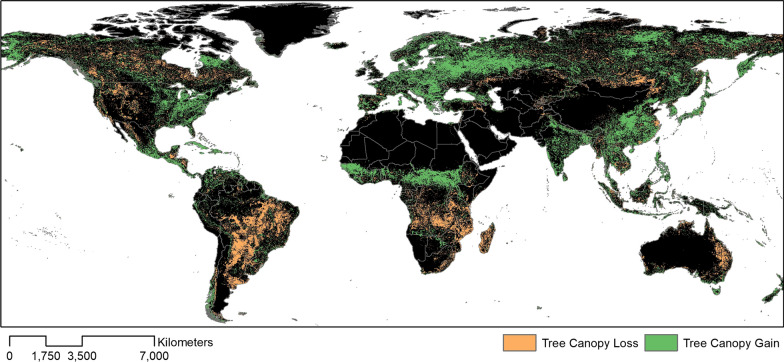
“Changes to forest cover are particularly pronounced in tropical areas, where over 80% of new agricultural land was cleared from tropical rainforests between 1980 and 2000 and an estimated 2100 km2 of forests were lost per year between 2000 and 2012 [15, 16].”
BackgroundSolutions for a cultivated planet
Foley, J. A., Ramankutty, N., Brauman, K. A., Cassidy, E. S., Gerber, J. S., Johnston, M., Mueller, N. D., O’Connell, C., Ray, D. K., West, P. C., et al. (2011) · Nature · doi:10.1038/nature10452 · Cited by 8,476 · cited 1×
“However, increased productivity and industrialization has meant this increase in the amount of food produced is not always accompanied by corresponding increases in land area but rather new management techniques, such as irrigation and fertilizers [19].”
BackgroundHigh-resolution mapping of global surface water and its long-term changes
Pekel, J.-F., Cottam, A., Gorelick, N., & Belward, A. S. (2016) · Nature · doi:10.1038/nature20584 · Cited by 5,513
Proximate Causes and Underlying Driving Forces of Tropical Deforestation
GEIST, H. J., & LAMBIN, E. F. (2002) · BioScience · doi:10.1641/0006-3568(2002)052[0143:pcaudf]2.0.co;2 · Cited by 3,123 · cited 1×
“The causes for LULCC are multifactorial, with underlying political, institutional and economic factors driving agricultural expansion, resource extraction and infrastructure development [22].”
BackgroundThe emergence of land change science for global environmental change and sustainability
Turner, B. L., Lambin, E. F., & Reenberg, A. (2007) · Proceedings of the National Academy of Sciences · doi:10.1073/pnas.0704119104 · Cited by 2,216 · cited 1×
“Land use and land cover changes: definitions and drivers Land cover refers to the physical and biological cover of terrestrial surfaces, such as water, soil, vegetation and infrastructure, while land use refers to the human management and activities which modify land surface processes [11].”
BackgroundGlobal land change from 1982 to 2016
Song, X.-P., Hansen, M. C., Stehman, S. V., Potapov, P. V., Tyukavina, A., Vermote, E. F., & Townshend, J. R. (2018) · Nature · doi:10.1038/s41586-018-0411-9 · Cited by 1,946
Tropical forests were the primary sources of new agricultural land in the 1980s and 1990s
Gibbs, H. K., Ruesch, A. S., Achard, F., Clayton, M. K., Holmgren, P., Ramankutty, N., & Foley, J. A. (2010) · Proceedings of the National Academy of Sciences · doi:10.1073/pnas.0910275107 · Cited by 1,876 · cited 1×
“Changes to forest cover are particularly pronounced in tropical areas, where over 80% of new agricultural land was cleared from tropical rainforests between 1980 and 2000 and an estimated 2100 km2 of forests were lost per year between 2000 and 2012 [15, 16].”
BackgroundPutting people in the map: anthropogenic biomes of the world
Ellis, E. C., & Ramankutty, N. (2008) · Frontiers in Ecology and the Environment · doi:10.1890/070062 · Cited by 1,846
Anthropogenic transformation of the biomes, 1700 to 2000
Ellis, E. C., Klein Goldewijk, K., Siebert, S., Lightman, D., & Ramankutty, N. (2010) · Global Ecology and Biogeography · doi:10.1111/j.1466-8238.2010.00540.x · Cited by 1,543
Research works printed but not linked: 6
- WHO World Malaria Report 2019 2019 Geneva World Health Organization
- Global Malaria Programme WHO Malaria Terminology (updated 2019) 2016 Geneva World Health Organization
- WHO Malaria eradication: benefits, future scenarios and feasibility. A report of the Strategic Advisory Group on Malaria Eradication 2020 Geneva World Health Organization
- FAO. Forest Resource Assessment Terms and Definitions 2015 Rome Food and Agriculture Organization of the United Nations 2012
- Brant HL. Changes in abundance, diversity and community composition of mosquitoes based on different land use in Sabah, Malaysia. MSc Thesis. London: Imperial College London; 2011.
- WHO WHO Meeting report of the WHO Evidence Review Group on assessment of malariogenic potential to inform elimination strategies and plans to prevent re-establishment of malaria 2019 Geneva World Health Organization
Cited by
Neglected tropical diseases risk correlates with poverty and early ecosystem destruction
Magalhães, A. R., Codeço, C. T., Svenning, J., Escobar, L. E., de Vuurst, P. V., & Gonçalves‐Souza, T. (2023) · Infectious Diseases of Poverty · doi:10.1186/s40249-023-01084-1 · Cited by 162
“reservoirs for malaria but only in its zoonotic manifestations, which can even have a distinct pathogen, Plasmodium simium, and have a distinct cycle from typical malaria, which is caused by Plasmodium vivax [67].”
BackgroundClimate-proofing a malaria eradication strategy
Nissan, H., Ukawuba, I., & Thomson, M. (2021) · Malaria Journal · doi:10.1186/s12936-021-03718-x · Cited by 69
“It is critical that the malaria control programme that the WHO pursues is robust to a wide range of possible outcomes for the climate, and indeed for other uncertain drivers of malaria risk such as land use changes [77] or migration patterns.”
BackgroundChilot, D., Mondelaers, A., Alem, A. Z., Asres, M. S., Yimer, M. A., Toni, A. T., & Ayele, T. A. (2023) · PLoS ONE · doi:10.1371/journal.pone.0285265 · Cited by 62
“The control and eradication of malaria demand a multifaceted approach [11].”
BackgroundMechan, F., Bartoníček, Z., Malone, D. J., & Lees, R. S. (2023) · Malaria Journal · doi:10.1186/s12936-022-04414-0 · Cited by 65
“This slow progress against malaria is associated with the challenges of insecticide resistance in vectors and changes in land use that may bring human populations into greater contact with vectors [3].”
BackgroundFletcher, I. K., Grillet, M. E., Moreno, J. E., DRAKELEY, C. J., Hernández-Villena, J. V., Jones, K. E., & Lowe, R. (2022) · The Lancet Planetary Health · doi:10.1016/s2542-5196(22)00192-9 · Cited by 54
Self-citationRole of cytokines in immunomodulation during malaria clearance
Obeagu, E. I. (2024) · Annals of Medicine and Surgery · doi:10.1097/ms9.0000000000002019 · Cited by 66
“Factors contributing to its persistence include drug resistance, insecticide resistance in mosquitoes, socio-economic conditions, and challenges in accessing health-care and preventive measures in affected regions [26] .”
BackgroundEpidemiology of the zoonotic malaria Plasmodium knowlesi in changing landscapes
Cuenca, P. R., Key, S., Jumail, A., Surendra, H., Ferguson, H. M., DRAKELEY, C. J., & Fornace, K. (2021) · Advances in Parasitology/Advances in parasitology · doi:10.1016/bs.apar.2021.08.006 · Cited by 53
Self-citationExploring agricultural land-use and childhood malaria associations in sub-Saharan Africa
Shah, H. A., Carrasco, L. R., Hamlet, A., & Murray, K. A. (2022) · Scientific Reports · doi:10.1038/s41598-022-07837-6 · Cited by 38
Taconet, P., Porciani, A., Soma, D. D., Mouline, K., Simard, F., Koffi, A. A., Pennetier, C., Dabiré, R. K., Mangeas, M., & Moiroux, N. (2021) · Parasites & Vectors · doi:10.1186/s13071-021-04851-x · Cited by 33
Trujillano, F., Jiménez, G., Alatrista-Salas, H., Byrne, I., Núñez-del-Prado, M., Chan, K., Manrique, E., Johnson, E., Apollinaire, N., Kouakou, P. K., et al. (2023) · Remote Sensing · doi:10.3390/rs15112775 · Cited by 32
“EO data additionally provide new opportunities to characterize mosquito habitats and monitor changes in these habitats in response to environmental changes [7].”
Self-citationImpact of Malaria Diagnostic Technologies on the Disease Burden in the Sub-Saharan Africa
Wambani, J., & OKOTH, P. K. (2022) · Journal of Tropical Medicine · doi:10.1155/2022/7324281 · Cited by 28
Jeyaprakasam, N. K., Low, V. L., Pramasivan, S., Liew, J. W. K., Sulaiman, W. Y. W., & Vythilingam, I. (2023) · PLoS neglected tropical diseases · doi:10.1371/journal.pntd.0011438 · Cited by 22
“The P. cynomolgi populations isolated from mosquitoes in Malaysian Borneo showed a very great genetic differentiation as compared to mosquitoes (FST = 0.860), macaques (FST = 0.918) and human (FST = 0.832) from Peninsular Malaysia.”
BackgroundInfluentialSingh, G., Gupta, S., Kaur, J. D., Markan, P., Vikas, V., Yadav, R., Sehgal, R., Singh, J., & Singh, R. (2023) · Journal of Molecular Structure · doi:10.1016/j.molstruc.2023.135687 · Cited by 26
Atusingwize, E., Deane, K. D., & Musoke, D. (2025) · Malaria Journal · doi:10.1186/s12936-025-05407-5 · Cited by 39
“This review provides a contemporary summary that may contribute to changes in malaria policy, practice frameworks, and priority setting for global malaria prevention efforts [9, 13, 19].”
Enhancing Malaria Research, Surveillance, and Control in Endemic Areas of Kenya and Ethiopia
Githure, J. I., Yewhalaw, D., Atieli, H., Hemming‐Schroeder, E., Lee, M., Wang, X., Zhou, G., Zhong, D., King, C. L., Dent, A. E., et al. (2022) · American Journal of Tropical Medicine and Hygiene · doi:10.4269/ajtmh.21-1303 · Cited by 23
Non-Human Primate Malaria Infections: A Review on the Epidemiology in Malaysia
Dian, N. D., Rahim, M. A. F. A., Chan, S. C.-L., & Idris, Z. M. (2022) · International Journal of Environmental Research and Public Health · doi:10.3390/ijerph19137888 · Cited by 27
Byrne, I., Chan, K., Manrique, E., Lines, J., Wolie, R. Z., Trujillano, F., Jiménez, G., Núñez-del-Prado, M., Alatrista-Salas, H., Sternberg, E. D., et al. (2021) · Journal of Environmental and Public Health · doi:10.1155/2021/3220244 · Cited by 27
Self-citationZoonotic malaria requires new policy approaches to malaria elimination
Fornace, K., DRAKELEY, C. J., Lindblade, K. A., et al. (2023) · Nature Communications · doi:10.1038/s41467-023-41546-6 · Cited by 19
Self-citationWang, C., Thakuri, B., Roy, A. K., Mondal, N., Qi, Y., & Chakraborty, A. (2023) · Journal of Environmental Management · doi:10.1016/j.jenvman.2023.117264 · Cited by 25
Masunaga, Y., Ribera, J. M., Nguyen, T. T., Tesfazghi, K., & Grietens, K. P. (2021) · Malaria Journal · doi:10.1186/s12936-021-03903-y · Cited by 19
Yasir, M., Park, J., Han, E., et al. (2024) · International Journal of Molecular Sciences · doi:10.3390/ijms252211881 · Cited by 16
Landscape drives zoonotic malaria prevalence in non-human primates
Johnson, E., Sharma, R. S. K., Cuenca, P. R., Byrne, I., Salgado‐Lynn, M., Shahar, Z. S., Lin, L. C., Zulkifli, N., Saidi, N. D. M., DRAKELEY, C. J., et al. (2024) · eLife · doi:10.7554/elife.88616 · Cited by 35
Self-citationGallalee, S., Zarlinda, I., Silaen, M. G., Cotter, C., Cueto, C., Elyazar, I., Jacobson, J. O., Gosling, R. D., Hsiang, M. S., Bennett, A. F., et al. (2024) · Malaria Journal · doi:10.1186/s12936-024-04856-8 · Cited by 14
“The findings in this study are relevant to other countries nearing elimination in Asia and Latin America, where forest-going (and associated activities such as mining) is often a risk factor for malaria infection [3, 4, 29, 30].”
ResultZhang, H., Fink, G., & Cohen, J. L. (2024) · JAMA · doi:10.1001/jama.2024.12589 · Cited by 19
Larval habitat stability and productivity in two sites in Southern Ghana
Forson, A. O., Hinne, I. A., Sraku, I. K., & Afrane, Y. A. (2023) · Malaria Journal · doi:10.1186/s12936-023-04498-2 · Cited by 13
“In order to make LSM feasible in Ghana, a better understanding of larval habitats and with their physicochemical parameters in endemic areas is crucial, especially as mosquito control is becoming increasingly difficult due to the spread of insecticide resistance [23, 24] and alteration in land use [25, 26].”
BackgroundOjurongbe, T. A., Afolabi, H. A., Bashiru, K. A., Sule, W. F., Akinde, S. B., Ojurongbe, O. D., & Adegoke, N. A. (2023) · Tropical Diseases Travel Medicine and Vaccines · doi:10.1186/s40794-023-00208-7 · Cited by 19
“This study is in line with previous research demonstrating how environmental elements, such as vegetation and water bodies, might affect malaria transmission [70, 71].”
ResultMalaria epidemics in Colombia, 1970-2019
Padilla, J., Olivera, M. J., Herrera, M. C. P., et al. (2022) · Revista da Sociedade Brasileira de Medicina Tropical · doi:10.1590/0037-8682-0559-2021 · Cited by 13
Mosquito vector diversity and malaria transmission
Laurent, B. S. (2025) · Frontiers in Malaria · doi:10.3389/fmala.2025.1600850 · Cited by 19
González-Daza, W., Muylaert, R. L., Sobral‐Souza, T., & Landeiro, V. L. (2023) · International Journal of Environmental Research and Public Health · doi:10.3390/ijerph20156497 · Cited by 19
“Several investigations have shown that deforestation, changes in land use, and anthropic activities are related to malaria transmission in the Amazon, in some cases with increasing effect [13,36,66], in others reducing effect [67], demonstrating that the LULC influence is highly context-specific [68].”
BackgroundImpacts of Deforestation on Childhood Malaria Depend on Wealth and Vector Biology
Estifanos, T. K., Fisher, B., Galford, G. L., & Ricketts, T. H. (2024) · GeoHealth · doi:10.1029/2022gh000764 · Cited by 20
“This multi‐country analysis on the importance of vector biology is a substantial advance in understanding land use change and infectious disease dynamics (Fornace et al., 2021).”
BackgroundA Hybrid CNN-SVM Approach for Malaria in Blood Cell Detection
Karnyoto, A. S., Isnan, M., & Pardamean, B. (2024) · International Conference on Software Engineering and Information Technology (ICoSEIT) · doi:10.1109/icoseit60086.2024.10497463 · Cited by 10
“Malaria remains a significant global health challenge, affecting millions [13], [14].”
BackgroundDian, N. D., Salleh, A. F. M., Rahim, M. A. F. A., Munajat, M. B., Manap, S. N. A. A., Ghazali, N., Hassan, N. W., & Idris, Z. M. (2021) · Tropical Medicine and Infectious Disease · doi:10.3390/tropicalmed6040177 · Cited by 10
Rahman, M. S., & Shiddik, M. A. B. (2025) · Scientific Reports · doi:10.1038/s41598-025-12872-0 · Cited by 16
“Conversely, the negative correlation between malaria incidence and arable land suggests that agricultural methods and land management may help reduce malaria transmission rates 36 .”
Distribution of Anophelinae (Diptera: Culicidae) and challenges for malaria elimination in Brazil
Sallum, M. A. M., de Azevedo, T. S., Conn, J. E., & Lourenço‐de‐Oliveira, R. (2025) · Memórias do Instituto Oswaldo Cruz · doi:10.1590/0074-02760240247 · Cited by 16
“(74) In regions where malaria transmission has been reduced or eliminated, monitoring the presence and expansion of mosquito vectors is critical to sustaining elimination achievements and preventing the resurgence of malaria.”
Malaria at Forest Areas in South Kalimantan, Indonesia: Risk Factors and Strategies for Elimination
Istiana, I., Hadi, U., Dachlan, Y. P., & Arwati, H. (2021) · Open Access Macedonian Journal of Medical Sciences · doi:10.3889/oamjms.2021.7012 · Cited by 16
“Environmental temperature also affects the speed of plasmodium development in the mosquito’s body, the intensity of malaria transmission increases after the rainy season which is associated with an increase in the mosquito population [8], [9], [10].”
BackgroundSemakula, H. M., Liang, S., Mukwaya, P. I., Mugagga, F., Nseka, D., Wasswa, H., Mwendwa, P., Kayima, P., Achuu, S. P., & Nakato, J. (2023) · Malaria Journal · doi:10.1186/s12936-023-04735-8 · Cited by 9
“…humans, and infected mosquitoes, exacerbated by the favourable physical environments for mosquito survival, and breeding, opportunities for human exposure to mosquito bites, poor healthcare systems, inadequate malaria control interventions [1, 6, 7], as well as land use and land cover changes [8].”
BackgroundMethodManaging vector-borne diseases in a geoAI-enabled society. Malaria as an example
Blanford, J. I. (2024) · Acta Tropica · doi:10.1016/j.actatropica.2024.107406 · Cited by 11
Interpretable Machine Learning Models for Predicting Malaria
Rajab, S., Nabende, J. N., & Marvin, G. (2023) · International Conference on Smart Technologies and Systems for Next Generation Computing (ICSTSN) · doi:10.1109/icstsn57873.2023.10151538 · Cited by 10
“The imminent problem of zeroing out malaria is still challenging many individuals and organizations across the globe [1].”
BackgroundAlqassim, A. Y. (2024) · Journal of Vector Borne Diseases · doi:10.4103/0972-9062.383650 · Cited by 41
‘Forest malaria’ in Myanmar? Tracking transmission landscapes in a diversity of environments
Legendre, E., Girond, F., Herbreteau, V., Hoeun, S., Rebaudet, S., Thu, A. M., Rae, J. D., Lehot, L., Dieng, S., Delmas, G., et al. (2023) · Parasites & Vectors · doi:10.1186/s13071-023-05915-w · Cited by 6
“Both mosquito dispersion and human mobility occur within a limited radius around the Karen villages included in this study [24, 25].”
BackgroundGarcía, G. A., Fuseini, G., Donfack, O. T., Wofford, R. N., Nlang, J. A. M., Efiri, P. B. E., Maye, V. O. N., Weppelmann, T. A., Galick, D. S., Phiri, W. P., et al. (2022) · Malaria Journal · doi:10.1186/s12936-022-04362-9 · Cited by 6
“The creation of anopheline larval habitats is often linked to anthropogenic land-use changes, chiefly deforestation and agricultural expansion, that can undermine malaria control and elimination efforts [5, 7, 8].”
BackgroundSafeguarding malaria control gains in Africa through ‘species sanitation’ and structural resilience
Okumu, F. O., Odero, J. O., Charlwood, J. D., Knols, B. G., & Monroe, A. C. (2025) · Trends in Parasitology · doi:10.1016/j.pt.2025.07.004 · Cited by 9
Plasmodium cynomolgi: What Should We Know?
Muh, F., Erwina, A., Fitriana, F., Syahada, J. H., Cahya, A. D., Choe, S., Jun, H., Garjito, T. A., Siregar, J. E., & Han, J. (2024) · Microorganisms · doi:10.3390/microorganisms12081607 · Cited by 6
“The changes in the habitat of vectors may have altered the bio-ecology of Anopheles mosquitoes [40,41].”
BackgroundLandscape and Socioeconomic Factors Determine Malaria Incidence in Tropical Forest Countries
Bailey, A., & Prist, P. R. (2024) · International Journal of Environmental Research and Public Health · doi:10.3390/ijerph21050576 · Cited by 6
“Global research highlights that malaria risk linked to deforestation is highly dependent on regional factors such as elevation and water coverage, type of land use change, mosquito species, and forest type [21,48,49].”
BackgroundAtoyebi, T. O., Olanrewaju, R. F., Blamah, N. V., et al. (2024) · doi:10.1109/seb4sdg60871.2024.10630308 · Cited by 5
“Tragically, the same year saw a total of almost 438,000 fatalities from malaria [2].”
BackgroundA review on current knowledge of major zoonotic protozoan diseases affecting farm and pet animals
Abdelbaky, H. H., Umeda, K., Nguyen, T.-T., Mohamed, A. E. A., & Fereig, R. M. (2021) · German Journal of Veterinary Research · doi:10.51585/gjvr.2021.2.0021 · Cited by 7
Bediako, V. B., Ackah, J. A., Yankey, T. J., Okyere, J., Acheampong, E., Owusu, B. A., Agbemavi, W., Nwameme, A. U., Kamau, E. M., & Asampong, E. (2025) · Scientific Reports · doi:10.1038/s41598-024-75408-y · Cited by 6
Chan, K., Konan, K. A.-C., Doudou, D. T., Kouadio, G. B., Lines, J., Aunger, R. V., N’Guessan, R., & Tusting, L. S. (2023) · Malaria Journal · doi:10.1186/s12936-023-04785-y · Cited by 6
Self-citationNieto-Sánchez, C., Dens, S., Solomon, K., Haile, A., Yuan, Y., Hawer, T., Yewhalaw, D., Addissie, A., & Grietens, K. P. (2022) · PLOS Global Public Health · doi:10.1371/journal.pgph.0000173 · Cited by 7
“In malaria prone areas, deterioration of the land cover in addition to deficient waste management services and practices had shown a direct effect on mosquito abundance and composition [49].”
BackgroundDeterminants of malaria transmission in Indian districts in 2018: insights from ensemble models
Sam, A. K., Khatoon, A., & Phuleria, H. C. (2025) · Malaria Journal · doi:10.1186/s12936-025-05546-9 · Cited by 4
“Eradicating malaria permanently has been the overarching goal of the global community [2], with the World Health Assembly endorsing a 90% reduction in malaria burden by 2030 [3].”
Randriamihaja, M., Randrianjatovo, T. M., Evans, M., Ihantamalala, F. A., Herbreteau, V., Révillion, C., Delaître, É., Catry, T., & Garchitorena, A. (2025) · Malaria Journal · doi:10.1186/s12936-025-05344-3 · Cited by 5
“However, for LSM interventions to target rice fields and other larval habitats, their implementation requires an accurate characterization of these larval habitats to ensure interventions are well-placed and well-timed [4, 10].”
Mitigating risks of malaria and other vector-borne diseases in the new capital city of Indonesia
Surendra, H., Djaafara, B. A., Prameswari, H. D., Supriyanto, D., Waluyo, P., Basuki, S. B., Herdiana, H., Ndoen, E., Siswanto, S., Lubis, I. N. D., et al. (2024) · Nature Communications · doi:10.1038/s41467-024-54891-x · Cited by 6
Self-citationTaconet, P., Zogo, B., Alou, L. P. A., Koffi, A. A., Dabiré, R. K., Pennetier, C., & Moiroux, N. (2024) · PLoS ONE · doi:10.1371/journal.pone.0312132 · Cited by 3
Interpretable Ensemble Model-Agonistc Approaches for Malaria Prediction
Rajab, S., Nakibuule, R., & Marvin, G. (2024) · International Conference on Contemporary Computing · doi:10.1145/3675888.3676092 · Cited by 4
Point of care devices for detection of Covid-19, malaria and dengue infections: A review
Baruah, S., & Betty, C. A. (2024) · Bioelectrochemistry · doi:10.1016/j.bioelechem.2024.108704 · Cited by 3
Trujillano, F., Jiménez, G., Alatrista-Salas, H., et al. (2023) · Preprints.org · doi:10.20944/preprints202303.0494.v1 · Cited by 3
Self-citationLandscape drives zoonotic malaria prevalence in non-human primatesPreprint
Johnson, E., Sharma, R. S. K., Cuenca, P. R., Byrne, I., Salgado‐Lynn, M., Shahar, Z. S., Lin, L. C., Zulkifli, N., Saidi, N. D. M., DRAKELEY, C. J., et al. (2022) · bioRxiv (Cold Spring Harbor Laboratory) · doi:10.1101/2022.06.17.496284 · Cited by 3
“While sporadic cases have been reported across Southeast Asia, including in Indonesia (Setiadi et al., 2016), the Philippines (Fornace et al., 2018), Vietnam (Maeno et al., 2015), Brunei (Koh et al., 2019) and Myanmar (Ghinai et al., 2017), the majority of P. knowlesi cases are found in East Malaysia (Borneo) with hot…”
BackgroundInfluentialSelf-citationChaudhary, S., & Soman, B. (2022) · Osong Public Health and Research Perspectives · doi:10.24171/j.phrp.2021.0304 · Cited by 4
Sero-epidemiology: The Use of Population-Based Antibody Measures to Inform Disease Dynamics
Byrne, I., Wu, L. C., & DRAKELEY, C. J. (2025) · Springer eBooks · doi:10.1007/978-3-031-76448-6_6 · Cited by 3
Self-citationDeforestation changes the effectiveness of bed nets for malaria control
Estifanos, T. K., Fisher, B., & Ricketts, T. H. (2024) · People and Nature · doi:10.1002/pan3.10753 · Cited by 3
Teixeira, A. C. D. L., Silvestrini, C. M. A., Arruda, D. F. D., et al. (2024) · Brazilian Journal of Health Review · doi:10.34119/bjhrv7n1-300 · Cited by 2
Landscape drives zoonotic malaria prevalence in non-human primatesPreprint
Johnson, E., Sharma, R. S. K., Cuenca, P. R., Byrne, I., Salgado‐Lynn, M., Shahar, Z. S., Lin, L. C., Zulkifli, N., Saidi, N. D. M., DRAKELEY, C. J., et al. (2024) · eLife · doi:10.7554/elife.88616.3 · Cited by 2
Self-citationImpacts of deforestation on childhood malaria depends on wealth and vector biologyPreprint
Estifanos, T. K., Fisher, B., & Ricketts, T. H. (2022) · Research Square · doi:10.21203/rs.3.rs-1809058/v1 · Cited by 2
Turki, H., Shekari, M., & Soltani, A. (2021) · Archives of Clinical Infectious Diseases · doi:10.5812/archcid.103728 · Cited by 2
Masunaga, Y., Ribera, J. M., Nguyen, T. T., et al. (2021) · Research Square · doi:10.21203/rs.3.rs-373228/v1 · Cited by 2
Plasmodium knowlesi, an infectious disease challenge for our times
DRAKELEY, C. J. (2021) · Advances in Parasitology/Advances in parasitology · doi:10.1016/s0065-308x(21)00044-0 · Cited by 2
Self-citationInstitutional quality, aid flows, and malaria burden: a geospatial analysis of sub-Saharan Africa
Namubiru, C. (2025) · Malaria Journal · doi:10.1186/s12936-025-05592-3 · Cited by 2
Climate change favours African malaria vector mosquitoesPreprint
van der Deure, T., Nogués‐Bravo, D., Njotto, L. L., & Stensgaard, A. (2025) · bioRxiv (Cold Spring Harbor Laboratory) · doi:10.1101/2025.03.17.643604 · Cited by 1
“As the world strives for malaria elimination while dealing with accelerating climate change 34,35,45 , we stress the need to keep on-going control and eradication efforts efficient in the face of the anticipated distribution changes of malaria vectors to keep this target within reach.”
Githinji, E. K., Okoyo, C. O., Mwatele, C., Mwatasa, J., Chieng, B., Araka, S. B., Kanyi, H. M., Njenga, S. M., & Mwai, J. (2025) · Journal of Parasitology Research · doi:10.1155/japr/6967797 · Cited by 1
“Particularly, malaria vector Anopheles gambiae sensu lato (s.l.) had been reported to exploit favourable habitats created during project-related developments in the modi fi ed physical environment [22, 26].”
Jain, A., Sharma, R. K., Gautam, L., Shrivastava, P., Singh, K. K., & Vyas, S. P. (2024) · Annales Pharmaceutiques Françaises · doi:10.1016/j.pharma.2024.03.005 · Cited by 1
Landscape drives zoonotic malaria prevalence in non-human primatesPreprint
Johnson, E., Sharma, R. S. K., Cuenca, P. R., Byrne, I., Salgado‐Lynn, M., Shahar, Z. S., Lin, L. C., Zulkifli, N., Saidi, N. D. M., DRAKELEY, C. J., et al. (2023) · eLife · doi:10.7554/elife.88616.1 · Cited by 1
Self-citationOjurongbe, T. A., Afolabi, H. A., Bashiru, K. A., et al. (2023) · Research Square · doi:10.21203/rs.3.rs-2860490/v1 · Cited by 1
González-Daza, W., Muylaert, R. L., Sobral‐Souza, T., et al. (2023) · Preprints.org · doi:10.20944/preprints202304.1207.v1 · Cited by 1
Climate Change and the Risk of Future Pandemics
Ferreira, C., Doursout, M.-F. J., & Balingit, J. S. (2023) · Springer eBooks · doi:10.1007/978-3-031-10035-2_13 · Cited by 3
Ridha, M. R., Indriyati, L., Juhairiyah, J., et al. (2022) · JURNAL KESEHATAN LINGKUNGAN · doi:10.20473/jkl.v14i2.2022.130-138 · Cited by 1
“Therefore, the implementation of land use and land cover modification should ideally predict the potential future impacts of deforestation on vector density using information on the type of planned agricultural development adapted to the ecology of the local Anopheles sp (35).”
BackgroundTaconet, P., Porciani, A., Soma, D. D., et al. (2021) · bioRxiv (Cold Spring Harbor Laboratory) · doi:10.1101/2021.04.13.439583 · Cited by 1
Prevention and containment of malaria in forest-fringe communities
Shrivastava, S. R., Bobhate, P. S., Inkane, S. M., & Petkar, P. B. (2026) · Frontiers in Forests and Global Change · doi:10.3389/ffgc.2026.1872406
Hijazi, M. H. A., Jeffree, M. S., Woon, F. C., Jelip, J., Avoi, R., & Ahmed, K. (2026) · Malaria Journal · doi:10.1186/s12936-026-05880-6 · Cited by 1
“Cross-border exposure patterns reported by For-nace et al. [4, 63] emphasize the need for ASEAN-level harmonisation of zoonotic-malaria education under One Health coordination mechanisms [4, 63].”
Pradana, A., Oktaviani, M., Prameswari, H. D., Supriyanto, D., Waluyo, P., Ndoen, E., Rosadi, D., Lubis, I. N. D., Suwarti, S., Subekti, D., et al. (2026) · Wellcome Open Research · doi:10.12688/wellcomeopenres.25303.1
Self-citationDeforestation and malaria prevalence in Ibu Kota Nusantara as new capital city of Indonesia
Paramita, S., Sulistioadi, Y. B., Kiswanto, et al. (2026) · AIP conference proceedings · doi:10.1063/5.0334306
Fornace, K., Reyes, R. A., Macalinao, M. L., Lim, J., Bareng, A. P. N., Luchavez, J., Hafalla, J. C. R., Espino, F. E., Matthiopoulos, J., & DRAKELEY, C. J. (2025) · Frontiers in Public Health · doi:10.3389/fpubh.2025.1699392 · Cited by 1
Self-citationMalaria Elimination: Progress, Challenges, and the Role of Innovative Interventions in Odisha
Bhuyan, K. B., & Goud, S. (2025) · Indian Journal of Entomology · doi:10.55446/ije.2025.3003
“(Fornace et al., 2021).”
Deforestation, Mosquito Ecology, and Malaria Elimination in the Amazon Region
Grillet, M. E., Sallum, M. A. M., & Conn, J. E. (2025) · Annual Review of Entomology · doi:10.1146/annurev-ento-030625-035915 · Cited by 2
Malaria signs, symptoms, prevention knowledge and its associated factors among rural Ethiopians
Kuti, K. A., & Zuma, S. M. (2025) · African Journal of Primary Health Care & Family Medicine · doi:10.4102/phcfm.v17i1.4885 · Cited by 3
“10,11,16,17 Studies conducted in Africa (Zambia and Gabon) and Asia (India and Lao People’s Democratic Republic) on malaria knowledge indicate that there are misconceptions about malaria transmission among the community.”
Ozodiegwu, I. D., Legris, G., Chiziba, C., & Mhlanga, L. (2025) · Research Square · doi:10.1101/2025.07.21.25331926 · Cited by 2
“Moreover, the intensive use of agricultural pesticides, many of which share active ingredients with those used in vector control, can reduce natural predators and foster insecticide resistance [18,19].”
Species Composition of Anopheles Mosquitoes in Danum Valley, Lahad Datu, Sabah
Sonia Hui Meng, L. I. N. G., Rahman, H., Daim, S. J., Mahsol, H. H., Manin, B. O., BALINU, C. P., Fornace, K., & Chua, T. H. (2024) · Journal of Tropical Biology & Conservation (JTBC) · doi:10.51200/jtbc.v21i.5339
“Alterations of landscapes have massive potential to threaten any future malaria eradication efforts (Fornace et al., 2021).”
BackgroundSelf-citationMALÁRIA NO ESTADO DE RONDÔNIA: ANÁLISE EPIDEMIOLÓGICA NO PERÍODO DE 2012 A 2022
de Almeida, H. A., Fagundes, M. F., Silva, G. N. E., RONDON, M. M., Alves, L. D. P., Barreto, B. L., Swidzikiewicz, E. H., Borges, D. D. S., dos Santos, C. A. A., & Grillo, V. T. R. D. S. (2024) · Revista Foco · doi:10.54751/revistafoco.v17n4-148
Bediako, V. B., Ackah, J. A., Yankey, T. J., et al. (2024) · Research Square · doi:10.21203/rs.3.rs-4102992/v1
Taconet, P., Zogo, B., Alou, L. P. A., KOFFI, A. A., Dabiré, R. K., Pennetier, C., & Moiroux, N. (2024) · doi:10.31730/osf.io/jzxdw
Fornace, K., Reyes, R. A., Macalinao, M. L., et al. (2024) · SSRN Electronic Journal · doi:10.2139/ssrn.4764843
Self-citationAditama, W., Zulfikar, Z., & Maulidin, I. (2023) · Berita Kedokteran Masyarakat · doi:10.22146/bkm.v39i12.4565
Spatio‐temporal incidence of malaria patients in Incheon Metropolitan City
An, J., Lee, J., Kim‐Jeon, M., Hong, S., & Kwon, H. W. (2023) · Entomological Research · doi:10.1111/1748-5967.12693
“2018; Fornace et al .”
Landscape drives zoonotic malaria prevalence in non-human primatesPreprint
Johnson, E., Sharma, R. S. K., Cuenca, P. R., Byrne, I., Salgado‐Lynn, M., Shahar, Z. S., Lin, L. C., Zulkifli, N., Saidi, N. D. M., DRAKELEY, C. J., et al. (2023) · eLife · doi:10.7554/elife.88616.2
Self-citationBuriro, A. A., Memon, A. M., Sadiq, N., Warsi, J., Mughal, Z. U. N., Mangi, A. H., Mangi, R., & Mahar, B. (2023) · Pakistan Journal of Public Health · doi:10.32413/pjph.v13i3.1149
Chan, K., Konan, A.-C. K., Doudou, D. T., et al. (2023) · Research Square · doi:10.21203/rs.3.rs-3028411/v1
Self-citationSemakula, H. M., Liang, S., Mukwaya, P. I., et al. (2023) · Research Square · doi:10.21203/rs.3.rs-3018944/v1
Shariatzadeh, S. A., Valadan, R., Hosseini, S. A., et al. (2021) · Research in Molecular Medicine · doi:10.32598/rmm.9.4.1238.1
Metadata
- Authors
- Fornace, K. M., Diaz, A. V., Lines, J., & Drakeley, C. J.
- Affiliations
- London School of Hygiene & Tropical Medicine (GB)
- Corresponding author
- Fornace, Kimberly M.
- Venue
- Malaria Journal
- Published
- 2021-02-02
- Volume
- 20
- Issue
- 1
- Pages
- 69-69
- ISSN
- 1475-2875 (ISSN-L)
- PMC
- PMC7856737
- OpenAlex
- W3128499523
- Cited by
- 112
- References
- 123
- Citations by year
- 2026: 8 · 2025: 20 · 2024: 27 · 2023: 27 · 2022: 13 · 2021: 17
- FWCI
- 3.37
- Type
- journal article
- Language
- en
- Open access
- gold
- doi.org
- Licence
- cc-by
- creativecommons.org/licenses/by/4.0 (tdm)
- creativecommons.org/licenses/by/4.0 (vor)
- Locations
- Malaria Journal (publishedVersion, cc-by)
- PubMed Central (publishedVersion, cc-by)
- PubMed (publishedVersion)
- ENLIGHTEN (Jurnal Bimbingan dan Konseling Islam) (acceptedVersion, cc-by-sa)
- LSHTM Research Online (London School of Hygiene and Tropical Medicine) (acceptedVersion)
- DOAJ (DOAJ: Directory of Open Access Journals) (submittedVersion, cc-by-sa)
- Funders
- World Health Organization
- CGIAR
- Topics
- Health Sciences › Medicine › Public Health, Environmental and Occupational Health › Malaria Research and Control
- Health Sciences › Medicine › Public Health, Environmental and Occupational Health › Mosquito-borne diseases and control
- Physical Sciences › Environmental Science › Global and Planetary Change › Land Use and Ecosystem Services
- Keywords
- malaria eradication, malaria elimination, land use and land cover change, deforestation, agricultural expansion, urbanization, malaria transmission, zoonotic malaria, land management, environmental management, malaria surveillance, intersectoral collaboration, ecological monitoring
- MeSH terms
- Humans, Malaria, Global Health, Ecosystem, Disease Eradication
About these checks
Registry, retraction, Cites and statistics results are computed, not judged, with one exception: a printed reference that no index lists is read once by a model before it counts as a citation error. Claims are extracted by a model and kept only when their quote appears verbatim in the text; each cited source is then checked, with a model’s help, for whether it says what the claim relies on. Those verdicts can be wrong — read the claim’s quote and the cited source before relying on one.
The claim verdicts this report counts are experimental: their accuracy is not yet measured.
A language model drew the claims from the paper on 2026-10-01, under version 3 of the claim definition (model deepseek-v4.1-flash, prompt extract-v3).
A second model labelled each claim on 2026-10-01 (model jev-1.13-20260917, definition revision gold-guideline-v0.2).
Cited sources are checked with a language model’s help (gpt-6-sol).
Statistics and arithmetic are recomputed, not judged.
Confidence bands are shown only for fields calibrated on our annotated test set. None is calibrated yet, so no band is shown.
What counts as a claim ›How we measure confidence ›How we check this ›
Are you an author, or do you see a problem with this page? Request a review
Data sources
Bibliographic data: Semantic Scholar, OpenAlex, Crossref.
Contains information from the Semantic Scholar Academic Graph Datasets, made available under the ODC Attribution License (ODC-BY 1.0).
Semantic Scholar’s data is described in: Kinney, R., et al. (2023). The Semantic Scholar Open Data Platform. arXiv:2301.10140.
