

High prevalence of Pfcrt 76T and Pfmdr1 N86 genotypes in malaria infected patients attending health facilities in East Shewa zone, Oromia Regional State, Ethiopia
The DOI matches its Crossref record; 4 of the 4 references it cites were found in a registry or an index.
Abstract
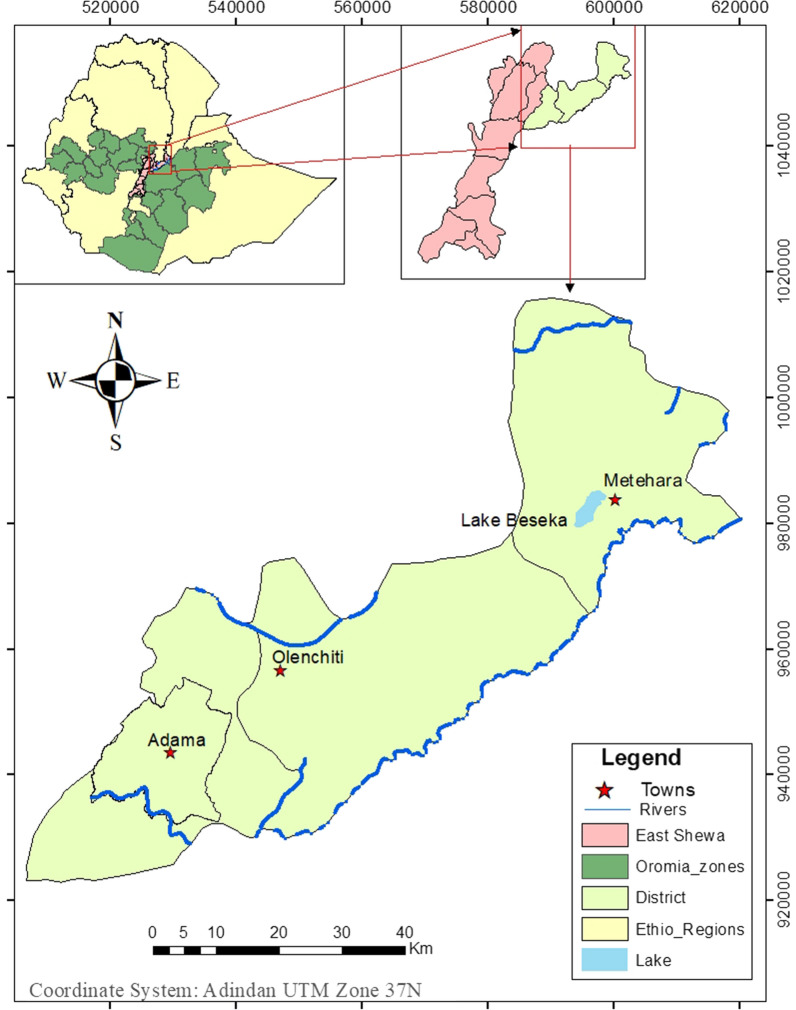
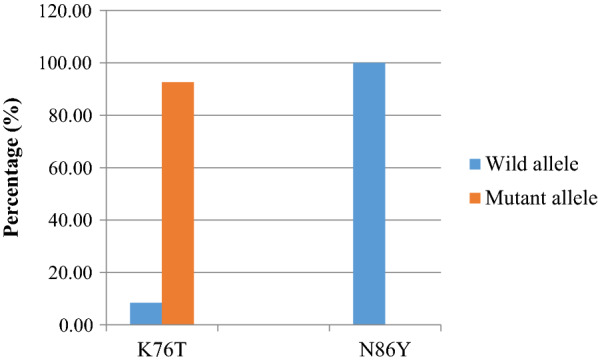
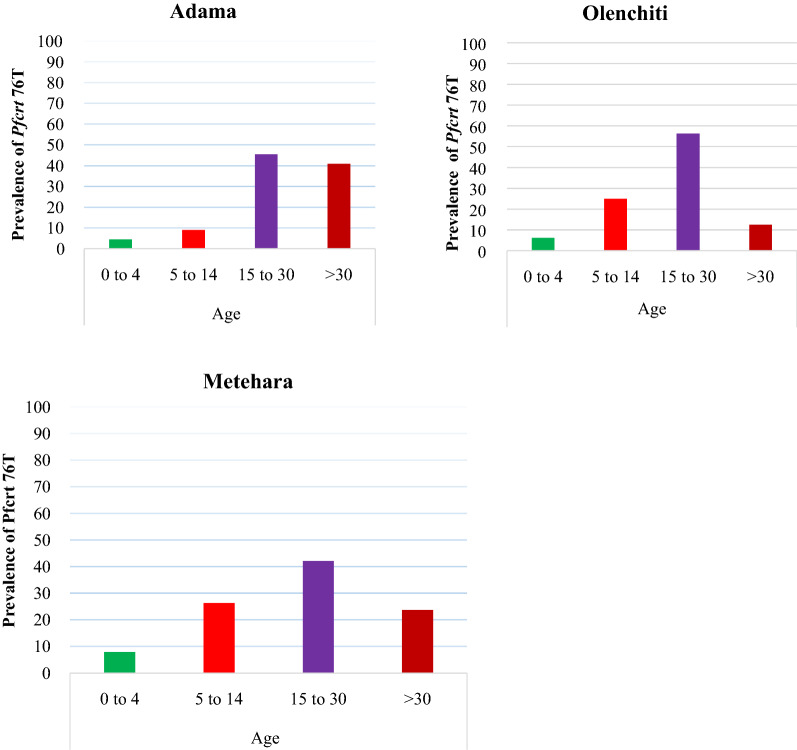
Background: Plasmodium falciparum resistance to series of anti-malarial drugs is a major challenge in efforts to control and/or eliminate malaria globally. In 1998, following the widespread of chloroquine (CQ) resistant P. falciparum , Ethiopia switched from CQ to sulfadoxine–pyrimethamine (SP) and subsequently in 2004 from SP to artemether–lumefantrine (AL) for the treatment of uncomplicated falciparum malaria. Data on the prevalence of CQ resistance markers after more than two decades of its removal is important to map the selection pressure behind the targets codons of interest. The present study was conducted to determine the prevalence of mutations in Pfcrt K76T and Pfmdr1 N86Y codons among malaria-infected patients from Adama, Olenchiti and Metehara sites of East Shewa zone, Oromia Regional State, Ethiopia. Methods: Finger-prick whole blood samples were collected on 3MM Whatman ® filter papers from a total of 121 microscopically confirmed P. falciparum infected patients. Extraction of parasite DNA was done by Chelex-100 method from dried blood spot (DBS). Genomic DNA template was used to amplify Pfcrt K76T and Pfmdr1 N86Y codons by nested PCR. Nested PCR products were subjected to Artherobacter protophormiae-I ( APoI ) restriction enzyme digestion to determine mutations at codons 76 and 86 of Pfcrt and Pfmdr1 genes, respectively. Results: Of 83 P. falciparum isolates successfully genotyped for Pfcrt K76T, 91.6% carried the mutant genotypes (76T). The prevalence of Pfcrt 76T was 95.7%, 92.5% and 84.5% in Adama, Metehara and Olenchiti, respectively. The prevalence of Pfcrt 76T mutations in three of the study sites showed no statistical significance difference (χ 2 = 1.895; P = 0.388). On the other hand, of the 80 P. falciparum samples successfully amplified for Pfmdr1 , all carried the wild-type genotypes ( Pfmdr1 N86). Conclusion: Although CQ officially has been ceased for the treatment of falciparum malaria for more than two decades in Ethiopia, greater proportions of P. falciparum clinical isolates circulating in the study areas carry the mutant 76T genotypes indicating the presence of indirect CQ pressure in the country. However, the return of Pfmdr1 N86 wild-type allele may be favoured by the use of AL for the treatment of uncomplicated falciparum malaria.
Overview
The claims and statistics of this paper haven’t been checked yet.
Free: it reads the open-access text and checks the first 5 claims that cite a source we can check. Create a free account to check every claim.
Integrity signals
Registry
Cites
Statistics
Figures
Verification
Claims the paper makes
The claims and statistics of this paper haven’t been checked yet.
Free: it reads the open-access text and checks the first 5 claims that cite a source we can check. Create a free account to check every claim.
Claims other papers make about this one
Each is checked against this paper’s own text: does it say what the citing paper says it does?
In the citing paper
“The widespread PfMDR1 NFSND haplotype (93.0%), consistent with reports from Ethiopia35,36,53 and across Africa54,55, further complicates resistance dynamics.”
From Genomic surveillance reveals co-occurrence of Plasmodium falciparum drug resistance variants across diverse transmission settings in Ethiopia (2026) · cites this paper as [53]
In the citing paper
“we confirmed previous reports of wild-type mdr1 N86 near fixation [44,51,52].”
From High prevalence and emerging positive association of kelch13 R622I and HRP2-based RDT negativity in Plasmodium falciparum in northern Ethiopia (2025) · cites this paper as [51]
Self-check
Percentages, sums and reported differences re-computed from the paper’s own numbers.
The self-check needs the paper’s full text.
Citations
Cites
Kublin, J. G., Cortese, J. F., Njunju, E. M., G. Mukadam, R. A., Wirima, J. J., Kazembe, P. N., Djimdé, A. A., Kouriba, B., Taylor, T. E., & Plowe, C. V. (2003) · The Journal of Infectious Diseases · doi:10.1086/375419 · Cited by 508
Veiga, M. I., Dhingra, S. K., Henrich, P. P., Straimer, J., Gnädig, N., Uhlemann, A.-C., Martin, R. E., Lehane, A. M., & Fidock, D. A. (2016) · Nature Communications · doi:10.1038/ncomms11553 · Cited by 335
Venkatesan, M., Gadalla, N. B., Stepniewska, K., Dahal, P., Nsanzabana, C., Moriera, C., Price, R. N., Mårtensson, A., Rosenthal, P. J., Dorsey, G., et al. (2014) · The American Society of Tropical Medicine and Hygiene · doi:10.4269/ajtmh.14-0031 · Cited by 285
Nega, D., Dana, D., Tefera, T., & Eshetu, T. (2015) · PLOS ONE · doi:10.1371/journal.pone.0123630 · Cited by 86
Research works printed but not linked: 42
- WHO World Malaria Report 2021 2021 Geneva World Health Organization
- Roux AT Maharaj L Oyegoke O Akoniyon OP Adeleke MA Maharaj R Chloroquine and sulfadoxine–pyrimethamine resistance in sub-Saharan Africa—a review Front Genet 2021 12 668574 10.3389/fgene.2021.668574 34249090 PMC8267899 · DOI
- Fidock DA Nomura T Talley AK Cooper RA Dzekunov SM Ferdig MT Mutations in the P. falciparum digestive vacuole transmembrane protein Pfcrt and evidence for their role in chloroquine resistance Mol Cell 2000 6 861 71 10.1016/S1097-2765(05)00077-8 11090624 PMC2944663 · doi:10.1016/s1097-2765(05)00077-8 · Paper page
- Djimde A Doumbo OK Cortese JF Kayento K Doumbo S Joseph F A molecular marker for chloroquine resistant falciparum malaria N Ingl J Med 2001 344 257 63 10.1056/NEJM200101253440403 11172152 · DOI · Paper page
- Ibrahim ML Steenkste N Khim N Adam HH Konate L Coppee JY Field-based evidence of fast and global increase of Plasmodium falciparum drug resistance by DNA-microarrays and PCR/RFLP in Niger Malar J 2009 8 32 10.1186/1475-2875-8-32 19236701 PMC2654903 · DOI
- Golassa L Kamugisha E Ishengoma DS Baraka V Shayo A Baliraine FN Identification of large variation in Pfcrt, Pfmdr-1 and Pfubp-1 markers in Plasmodium falciparum isolates from Ethiopia and Tanzania Malar J. 2015 14 264 10.1186/s12936-015-0783-3 26152336 PMC4495614 · DOI
- Ikegbunam MN Nkonganyi CN Thomas BN Esimone CO Velavan TP Ojurongbe O Analysis of Plasmodium falciparum Pfcrt and Pfmdr1 genes in parasite isolates from asymptomatic individuals in Southeast Nigeria 11 years after withdrawal of chloroquine Malar J 2019 18 343 10.1186/s12936-019-2977-6 31590670 PMC6781387 · DOI
- Shrivastava SK Gupta RK Mahanta J Dubey ML Correlation of molecular markers, Pfmdr1-N86Y and Pfcrt-K76T, with in vitro chloroquine resistant Plasmodium falciparum, isolated in the malaria endemic states of Assam and Arunachal Pradesh, Northeast India PLoS ONE 2014 9 e103848 10.1371/journal.pone.0103848 25105963 PMC4126653 · doi:10.1371/journal.pone.0103848
- Singh G Singh R Urhekar AD Rane K Gene sequence polymorphisms mutations in Pfmdr-1 and Pfcrt-o genes of Plasmodium falciparum Int J Curr Microbiol Appl Sci. 2016 5 451 8 10.20546/ijcmas.2016.510.051 · doi:10.20546/ijcmas.2016.510.051
- Cui L Mharakurwa S Ndiaye D Rathod PK Rosenthal PJ Antimalarial drug resistance: literature review and activities and findings of the ICEMR Network Am J Trop Med Hyg 2015 93 57 68 10.4269/ajtmh.15-0007 26259943 PMC4574275 · DOI · Paper page
- Tulu AN Webbeg RH Schellenberg AJS Bradley DJ Failure of chloroquine treatment for malaria in the highlands of Ethiopia Trans R Soc Trop Med Hyg 1996 44 556 7 10.1016/S0035-9203(96)90322-3 8944273 · DOI · Paper page
- Hailemeskel E Menberu T Shumie G Behaksra S Chali W Keffale M Prevalence of Plasmodium falciparum Pfcrt and Pfmdr1 alleles in settings with different levels of Plasmodium vivax co-endemicity in Ethiopia Int J Parasitol Drugs Drug Resist 2019 11 8 12 10.1016/j.ijpddr.2019.09.002 31539706 PMC6796752 · DOI · Paper page
- Heuchert A Abduselam N Zeynudin A Eshetu T Loscher T Wieser A Molecular markers of anti-malarial drug resistance in Southwest Ethiopia over time: regional surveillance from 2006 to 2013 Malar J 2015 14 208 10.1186/s12936-015-0723-2 25986047 PMC4490604 · DOI
- Mekonnen SK Aseffa A Berhe N Teklehaymanot T Clouse RM Gebru T Return of chloroquine-sensitive Plasmodium falciparum parasites and emergence of chloroquine-resistant Plasmodium vivax in Ethiopia Malar J 2014 13 244 10.1186/1475-2875-13-244 24964730 PMC4230645 · DOI · Paper page
- Ketema T Bacha K Getahun K Del Portillo HA Bassat Q Plasmodium vivax epidemiology in Ethiopia 2000–2020: a systematic review and meta-analysis PLoS Negl Trop Dis 2021 15 e0009781 10.1371/journal.pntd.0009781 34525091 PMC8476039 · DOI · Paper page
- Golassa L White MT Population – level estimates of the proportion of Plasmodium vivax blood-stage infections attributable to relapses among febrile patients attending Adama Malaria Diagnostic Centre Malar J 2017 16 307 10.1186/s12936-017-1944-3 28750669 PMC5530918 · DOI
- File T Chekol T Solomon G Dinka H Golassa L Detection of high frequency of MAD20 allelic variants of Plasmodium falciparum merozoite surface protein 1 gene from Adama and its surroundings, Oromia, Ethiopia Malar J. 2021 20 385 10.1186/s12936-021-03914-9 34579727 PMC8477549 · doi:10.1186/s12936-021-03914-9
- Atrosh WM Al-Mekhalfi HM Mahdy MAK Surin J The detection of Pfcrt and Pfmdr1 point mutations as molecular markers of chloroquine drug resistance, Pahang, Malaysia Malar J 2012 11 251 10.1186/1475-2875-11-251 22853645 PMC3493286 · DOI
- Mulenga MC Sitali L Ciubotariu II Hawela MB Hamainza B Decreased prevalence of the Plasmodium falciparum Pfcrt K76T and Pfmdr1 N86Y mutations post-chloroquine treatment withdrawal in Katete District, Eastern Zambia Malar J 2021 20 329 10.1186/s12936-021-03859-z 34320992 PMC8317340 · DOI
- Fontecha G Pinto A Archaga O Betancourth S Escober L Henríquez J Assessment of Plasmodium falciparum anti-malarial drug resistance markers in Pfcrt and Pfmdr1 genes in isolates from Honduras and Nicaragua, 2018–2021 Malar J 2021 20 465 10.1186/s12936-021-03977-8 34906144 PMC8670165 · DOI
- Veiga MI Ferreira PE Gil PJ Multiplex PCR-RFLP methods for Pfcrt, Pfmdr1 and Pfdhfr mutations in Plasmodium falciparum Mol Cell Probes. 2006 20 100 04 10.1016/j.mcp.2005.10.003 16460912 · DOI
- Mula P Fernandez-martinez A Lucio A De, Ramos JM Reyes F Gonzalez V Detection of high levels of mutations involved in anti-malarial drug resistance in Plasmodium falciparum and Plasmodium vivax at a rural hospital in Southern Ethiopia Malar J 2011 10 214 10.1186/1475-2875-10-214 21810256 PMC3161020 · DOI
- Jaleta F Garoma G Gerenfes T Evaluation of malaria microscopy diagnosis performance in public hospitals of Eastern and Central part of Oromia Region, Ethiopia, 2019 Pathol Lab Med Int 2020 12 1 8 10.2147/PLMI.S259159 · doi:10.2147/plmi.s259159
- Schunk M Kumma WP Miranda IB Osman ME Roewer S Alano A High prevalence of drug-resistance mutations in Plasmodium falciparum and Plasmodium vivax in Southern Ethiopia Malar J 2006 5 54 10.1186/1475-2875-5-54 16817953 PMC1524791 · DOI
- Yobi DM Kayiba NK Mvumbi DM Boreux R Kabututu PZ Situakibanza HNT Molecular surveillance of anti-malarial drug resistance in Democratic Republic of Congo: high variability of chloroquine resistance and lack of amodiaquinoresistance Malar J 2020 19 121 10.1186/s12936-020-03192-x 32197607 PMC7085146 · DOI
- Al-Mekhlafi AM Mahdy MAK Al-Mekhlafi HM Azazy AA Fong MY High frequency of Plasmodium falciparum chloroquine resistance marker (Pfcrt T76 mutation) in Yemen: an urgent need to re-examine malaria drug policy Parasit Vectors 2011 4 94 10.1186/1756-3305-4-94 21619624 PMC3125383 · DOI
- Adam R Mukhtar MM Abubakar UF Damudi HA Muhammad A Ibrahim SS Polymorphism analysis of Pfmdr1 and Pfcrt from Plasmodium falciparum isolates in Northwestern Nigeria revealed the major markers associated with antimalarial resistance Diseases 2021 9 6 10.3390/diseases9010006 33406727 PMC7838797 · DOI
- Das S Tripathy S Chattopadhayay S Das B Kar Mahapatra S Hati AK Progressive increase in point mutations associates chloroquine resistance: even after withdrawal of chloroquine use in India IJP Drugs Drug Resist 2017 7 251 61 10.1016/j.ijpddr.2017.06.002 PMC5503838 28692943 · DOI
- Johora FT Elahi R Nima MK Hossain MS Rashid H Kibria MG Persistence of markers of chloroquine resistance in Plasmodium falciparum in Bangladesh Am J Trop Med Hyg 2021 104 276 82 10.4269/ajtmh.20-0415 33146120 PMC7790087 · DOI
- Ebel ER Reis F Petrov DA Beleza S Historical trends and new surveillance of Plasmodium falciparum drug resistance markers in Angola Malar J 2021 20 175 10.1186/s12936-021-03713-2 33827587 PMC8028775 · DOI
- Bwire GM Ngasala B Mikomangwa WP Kilonzi M Kamuhabwa AAR Detection of mutations associated with artemisinin resistance at K13- propeller gene and a near complete return of chloroquine susceptible falciparum malaria in Southeast of Tanzania Sci Rep 2020 10 3500 10.1038/s41598-020-60549-7 32103124 PMC7044163 · DOI
- Chebore W Zhou Z Westercamp N Otieno K Shi YP Sergent SB Assessment of molecular markers of anti-malarial drug resistance among children participating in a therapeutic efficacy study in Western Kenya Malar J 2020 19 291 10.1186/s12936-020-03358-7 32795367 PMC7427724 · DOI
- Balikagala B Sakurai-Yatsushiro M Tachibana SI Ikeda M Yamauchi M Katuro OT Recovery and stable persistence of chloroquine sensitivity in Plasmodium falciparum parasites after its discontinued use in Northern Uganda Malar J 2020 19 76 10.1186/s12936-020-03157-0 32070358 PMC7026951 · DOI
- Afoakwah R Boampong JN Egyir-Yawson A Nwaefuna EK Verner ON Asare KK High prevalence of PfCRT K76T mutation in Plasmodium falciparum isolates in Ghana Acta Trop 2014 136 32 6 10.1016/j.actatropica.2014.03.030 24727053 · DOI
- Edogun HA Daramola GO Ojerinde AO Esan CO Adegbuyi AT Prevalence of mutant alleles responsible for chloroquine resistance among Plasmodium falciparum isolates in North Central, Nigeria J Adv Biol Biotechnol 2019 20 1 8 10.9734/jabb/2018/v20i330078 · doi:10.9734/jabb/2018/v20i330078
- Lo E Hemming-schroeder E Yewhalaw D Nguyen J Kebede E Zemene E Transmission dynamics of co-endemic Plasmodium vivax and Plasmodium falciparum in Ethiopia and prevalence of anti-malarial resistant genotypes PLoS Negl Trop Dis 2017 11 e0005806 10.1371/journal.pntd.0005806 28746333 PMC5546713 · DOI
- Otienoburu SD Maiga-Ascofare O Schramm B Jullien V Jones JJ Zolia YM Selection of Plasmodium falciparum Pfcrt and Pfmdr1 polymorphisms after treatment with artesunate-amodiaquine fixed dose combination or artemether–lumefantrine in Liberia Malar J 2016 15 452 10.1186/s12936-016-1503-3 27596849 PMC5011943 · DOI
- Asare KK Africa J Mbata J Opoku YK The emergence of chloroquine-sensitive Plasmodium falciparum is influenced by selected communities in some parts of the Central Region of Ghana Malar J 2021 20 447 10.1186/s12936-021-03985-8 34823528 PMC8620919 · doi:10.1186/s12936-021-03985-8
- Chidimatembue A Svigel SS Mayor A Aide P Nhama A Nhamussua L Molecular surveillance for polymorphisms associated with artemisinin-based combination therapy resistance in Plasmodium falciparum isolates collected in Mozambique, 2018 Malar J 2021 20 398 10.1186/s12936-021-03930-9 34641867 PMC8507114 · DOI
- Malmberg M Ferreira PE Tarning J Ursing J Ngasala B Bjorkman A Plasmodium falciparum drug resistance phenotype as assessed by patient antimalarial drug levels and its association with Pfmdr1 polymorphisms J Infect Dis 2013 207 842 7 10.1093/infdis/jis747 23225895 PMC3563306 · DOI
- Dimbu PR Horth R Candido LM Ferreira M Caquece F Continued low efficacy of artemether–lumefantrine in Angola in 2019 Antimicrob Agents Chemother 2021 65 e01949-20 10.1128/AAC.01949-20 33168604 PMC7849008 · DOI
- Adamu A Jada MS Haruna HMS Yakubu BO Ibrahim MA Balogun EO Plasmodium falciparum multidrug resistance gene-1 polymorphisms in Northern Nigeria: implications for the continued use of artemether–lumefantrine in the region Malar J 2020 19 439 10.1186/s12936-020-03506-z 33256739 PMC7708160 · DOI
Cited by
Zeleke, A. J., Fola, A. A., Tollefson, G. A., Niaré, K., Leonetti, A., Taropawala, O., Marglous, J., Crudale, R., Brhane, B. G., Assefa, A., et al. (2025) · PLOS Pathogens · doi:10.1371/journal.ppat.1013771 · Cited by 12
Letebo, A., Vanheer, L. N., Engdaw, M., Ejigu, L. A., Hailu Alemayehu, D., Deressa, J. D., Adnew, B., Ayele, A., Bezabih, M. K., Demisse, M., et al. (2026) · Nature Microbiology · doi:10.1038/s41564-026-02420-5 · Cited by 4
Metadata
- Authors
- Hassen, J., Alemayehu, G. S., Dinka, H., & Golassa, L.
- Venue
- Malaria Journal
- Published
- 2022-10-07
- Volume
- 21
- Issue
- 1
- ISSN
- 1475-2875
- PMC
- PMC9547420
- Cited by
- 32
- References
- 4
- Language
- en
- Licence
- creativecommons.org/licenses/by/4.0 (tdm)
- creativecommons.org/licenses/by/4.0 (vor)
About these checks
Registry, retraction, Cites and statistics results are computed, not judged, with one exception: a printed reference that no index lists is read once by a model before it counts as a citation error. Claims are extracted by a model and kept only when their quote appears verbatim in the text; each cited source is then checked, with a model’s help, for whether it says what the claim relies on. Those verdicts can be wrong — read the claim’s quote and the cited source before relying on one.
Statistics and arithmetic are recomputed, not judged.
Confidence bands are shown only for fields calibrated on our annotated test set. None is calibrated yet, so no band is shown.
What counts as a claim ›How we measure confidence ›How we check this ›
Are you an author, or do you see a problem with this page? Request a review
Data sources
Bibliographic data: Semantic Scholar, OpenAlex, Crossref.
Contains information from the Semantic Scholar Academic Graph Datasets, made available under the ODC Attribution License (ODC-BY 1.0).
Semantic Scholar’s data is described in: Kinney, R., et al. (2023). The Semantic Scholar Open Data Platform. arXiv:2301.10140.
