

Effectiveness of a Medifast meal replacement program on weight, body composition and cardiometabolic risk factors in overweight and obese adults: a multicenter systematic retrospective chart review study
Open accessThe DOI matches its Crossref record; 55 of the 55 references it cites were found in a registry or an index.
Abstract
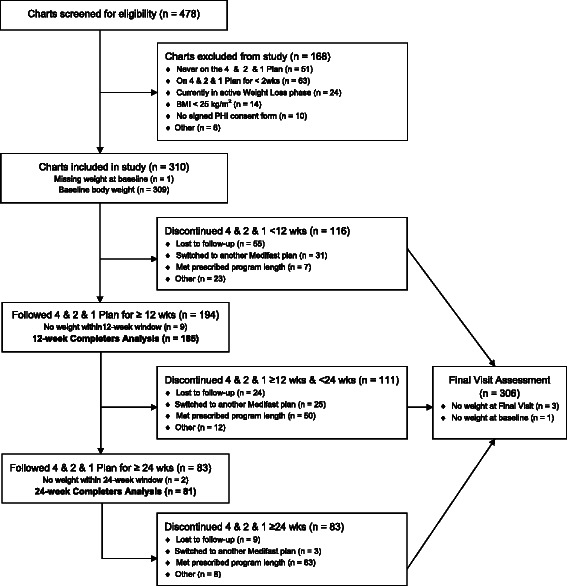
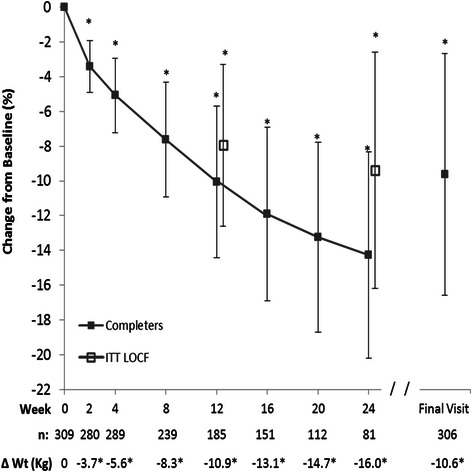
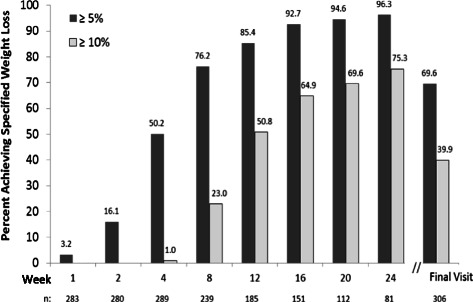
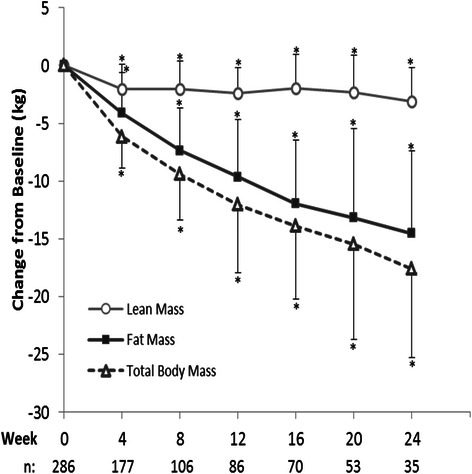
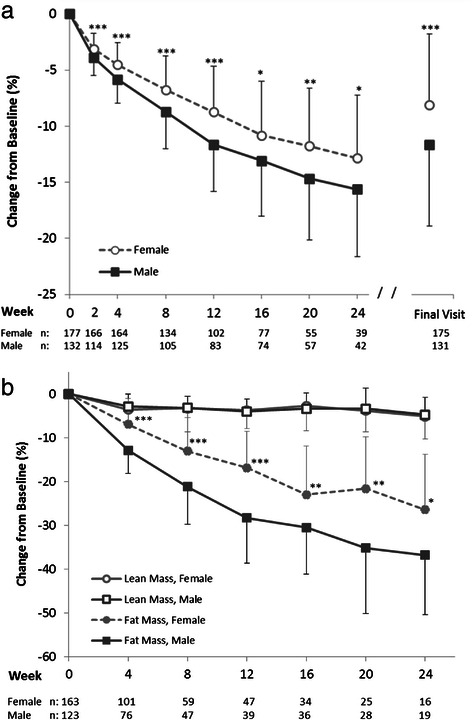
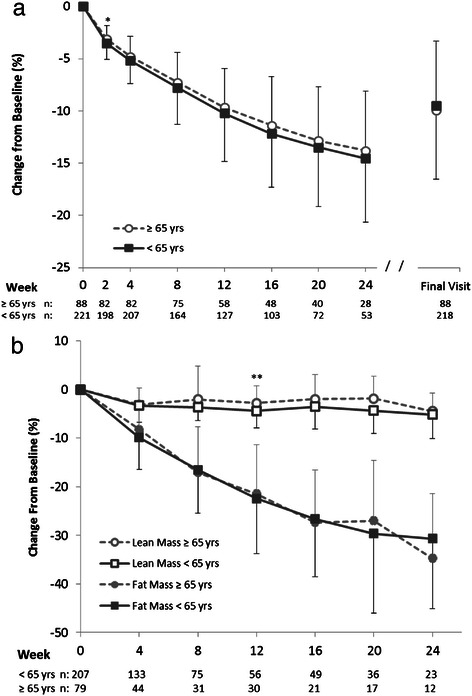
BACKGROUND: Recent medical guidelines emphasize the importance of actively treating overweight and obesity with diet and lifestyle intervention to achieve ≥ 5% weight loss in a 6-month period. Commercial programs offer one approach provided there is evidence of their efficacy and safety. This study was conducted to evaluate the effectiveness of the Medifast® 4 & 2 & 1 Plan™ on weight loss, body composition and cardiometabolic risk factors in overweight and obese adults. METHODS: A systematic retrospective chart review of 310 overweight and obese clients following the Medifast 4 & 2 & 1 Plan at one of 21 Medifast Weight Control Centers® was conducted. Data were recorded electronically and key data points were independently verified. The primary endpoint was change from baseline body weight at 12 weeks. Within group paired t-tests were used to examine changes from baseline in a completers population. Differences between gender and age subgroups were examined using bivariate t-tests and mixed model regression analyses. RESULTS: For the primary endpoint at 12 weeks, body weight among completers (n = 185) was reduced by a mean of 10.9 ± 5.6 kg (-10.1%, p < 0.0001), and at 24 weeks (n = 81) mean weight was reduced by 16.0 ± 7.9 kg (-14.3%). At 12 and 24 weeks, 85% and 96% of those remaining on the plan, respectively, had lost ≥ 5% of their baseline body weight. Lean mass was preserved to within 5% of baseline throughout the 24 weeks, and fat mass represented ≥ 80% of the body weight lost from 12 weeks onward. Men, women, seniors (≥ 65 years), and non-seniors (<65 years) all had significant weight reductions with preservation of lean mass. Significant improvements in blood pressure, pulse and waist-to-hip ratio were observed. Mean weight regain among the subset who entered a formal maintenance phase was <2% during an average follow-up of 34 weeks. The meal plan was well tolerated, and program adherence was >85%. CONCLUSIONS: The 4 & 2 & 1 Plan used at Medifast Weight Control Centers was effective for weight loss, preservation of lean mass and improvement in cardiometabolic risk factors. The plan was generally well tolerated in a broad population of overweight and obese adults. #NCT02150837.
Overview
The claims and statistics of this paper haven’t been checked yet.
Free: it reads the open-access text and checks the first 5 claims that cite a source we can check. Create a free account to check every claim.
Integrity signals
Registry
Cites
Statistics
Figures
Verification
Claims the paper makes
The claims and statistics of this paper haven’t been checked yet.
Free: it reads the open-access text and checks the first 5 claims that cite a source we can check. Create a free account to check every claim.
Claims other papers make about this one
Each is checked against this paper’s own text: does it say what the citing paper says it does?
The source backs part of the claim, not all of it — or backs it for a different population, condition or comparison.
In the citing paper
“VLCDs are very effective at achieving weight loss and significant improvement in cardiometabolic parameters in short periods [221,222], including diabetes remission”
From Lifestyle Medicine for Obesity in the Era of Highly Effective Anti-Obesity Treatment (2025) · cites this paper as [222]
Experimental — accuracy not yet measured
Self-check
Percentages, sums and reported differences re-computed from the paper’s own numbers.
The self-check needs the paper’s full text.
Citations
Cites
Prevalence of Childhood and Adult Obesity in the United States, 2011-2012
Ogden, C. L., Carroll, M. D., Kit, B. K., & Flegal, K. M. (2014) · JAMA · doi:10.1001/jama.2014.732 · Cited by 8,072 · cited 1×
“overweight and 35 % are obese [2].”
Prevalence and Trends in Obesity Among US Adults, 1999-2008
Flegal, K. M. (2010) · JAMA · doi:10.1001/jama.2009.2014 · Cited by 7,580 · cited 1×
“3 % [4, 5].”
2013 AHA/ACC/TOS Guideline for the Management of Overweight and Obesity in Adults
Jensen, M. D., Ryan, D. H., Apovian, C. M., Ard, J. D., Comuzzie, A. G., Donato, K. A., Hu, F. B., Hubbard, V. S., Jakicic, J. M., Kushner, R. F., et al. (2014) · Journal of the American College of Cardiology · doi:10.1016/j.jacc.2013.11.004 · Cited by 4,058
Prevalence of obesity in the United States, 2009-2010.
Ogden, C. L., Carroll, M. D., Kit, B. K., & Flegal, K. M. (2012) · PubMed · Cited by 2,467
Fuller, N. R., Colagiuri, S., Schofield, D., Olson, A. D., Shrestha, R., Holzapfel, C., Wolfenstetter, S. B., Holle, R., Ahern, A. L., Hauner, H., et al. (2013) · International Journal of Obesity · doi:10.1038/ijo.2012.139 · Cited by 2,117
Wing, R. R., Lang, W., Wadden, T. A., Safford, M., Knowler, W. C., Bertoni, A. G., Hill, J. O., Brancati, F. L., Peters, A., Wagenknecht, L., et al. (2011) · Diabetes Care · doi:10.2337/dc10-2415 · Cited by 1,828 · cited 1×
“For overweight or obese individuals, even a relatively small amount of weight loss can reduce the risk of developing related co-morbidities, such as cardiovascular disease, type 2 diabetes and some forms of cancers [1, 8–11].”
BackgroundGadde, K. M., Allison, D. B., Ryan, D. H., Peterson, C. A., Troupin, B., Schwiers, M. L., & Day, W. W. (2011) · The Lancet · doi:10.1016/s0140-6736(11)60205-5 · Cited by 1,064 · cited 1×
“Indeed, the observed rate of serious events is similar to placebo rates observed in pharmacotherapy trials with similar populations [47–49].”
ResultUS Department of Health & Human Services; Public Health Service; Office of Surgeon General (2001) · PsycEXTRA Dataset · doi:10.1037/e301232004-001 · Cited by 1,001
Multicenter, placebo-controlled trial of lorcaserin for weight management.
Smith, S. R., Weissman, N. J., Anderson, C. M., Sanchez, M., Chuang, E., Stubbe, S., Bays, H., & Shanahan, W. R. (2010) · New England Journal of Medicine · doi:10.1056/nejmoa0909809 · Cited by 911 · cited 1×
“Indeed, the observed rate of serious events is similar to placebo rates observed in pharmacotherapy trials with similar populations [47–49].”
Result(2008) · Encyclopedia of Obesity · doi:10.4135/9781412963862.n17 · Cited by 861
Cited by
Vest, A. R., Chan, M., Deswal, A., Givertz, M. M., Lekavich, C., Lennie, T., Litwin, S. E., Parsly, L., Rodgers, J. E., Rich, M. W., et al. (2019) · Journal of Cardiac Failure · doi:10.1016/j.cardfail.2019.03.007 · Cited by 230
“Meal replacement programs, eg, with high-protein shakes, may help to support short- and medium-term weight loss.(52) Cardiovascular obesity management guidelines recommend a diet of 1200 1500 kcal/d for women and 1500 1800 kcal/d for men without endorsing any specific dietary strategies, but they do recommend a person…”
BackgroundValidation of a portable bioelectrical impedance analyzer for the assessment of body composition
Karelis, A. D., Chamberland, G., Aubertin-Leheudre, M., Duval, C., & Ecological mobility in Aging and Parkinson (EMAP) group (2013) · Applied Physiology, Nutrition, and Metabolism · doi:10.1139/apnm-2012-0129 · Cited by 124
“38: 27–32 (2013) dx.”
Jakše, B., Pinter, S., Jakše, B., Bučar Pajek, M., & Pajek, J. (2017) · BioMed Research International · doi:10.1155/2017/9626390 · Cited by 96
“Inclusion of meal replacements may therefore represent one of the solutions for improving the long-term success of weight-reducing diets in free-living subjects [17, 18].”
BackgroundVenkatakrishnan, K., Chiu, H., & Wang, C. (2019) · Food & Function · doi:10.1039/c9fo00293f · Cited by 85
Moldovan, C. P., Weldon, A. J., Daher, N. S., Schneider, L. E., Bellinger, D. L., Berk, L. S., Hermé, A. C., Aréchiga, A. L., Davis, W. L., & Peters, W. R. (2016) · Obesity · doi:10.1002/oby.21649 · Cited by 55
“The InBody 230 was used in a previous study that examined weight loss with Medifast MRS (29).”
MethodBeavers, K. M., Nesbit, B. A., Kiel, J. R., Sheedy, J. L., Arterburn, L. M., Collins, A. E., Ford, S. A., Henderson, R. M., Coleman, C. D., & Beavers, D. P. (2019) · The Journals of Gerontology: Series A · doi:10.1093/gerona/gly146 · Cited by 46
“Dietary weight loss intervention Intentional weight loss in the WL group was achieved through use of the Medifast 4&2&1 Plan, as previously described (26).”
MethodSelf-citationMcEvedy, S. M., Sullivan-Mort, G., McLean, S. A., Pascoe, M. C., & Paxton, S. J. (2017) · Journal of Health Psychology · doi:10.1177/1359105317705983 · Cited by 43
“, 2006) and 14 observational studies (Ahern et al., 2011; Bye et al., 2005; Coleman et al., 2015; Dixon et al., 2012; Finley et al., 2007; Hemmingsson et al., 2012; Hutchesson et al., 2013; Lavin et al., 2006; Lloyd and Khan, 2011; Meffert and Gerdes, 2010; Mitchell et al., 2013; Neve et al., 2011; Stubbs et al., 2011…”
BackgroundLifestyle Medicine for Obesity in the Era of Highly Effective Anti-Obesity Treatment
Sannidhi, D., Abeles, R., Andrew, W., Bonnet, J. P., Vitale, K., Niranjan, V., Gulati, M., Pauly, K., Moran, R., Alexander, L., et al. (2025) · Nutrients · doi:10.3390/nu17142382 · Cited by 29
“VLCDs are very effective at achieving weight loss and significant improvement in cardiometabolic parameters in short periods [221,222], including diabetes remission, which can be helpful for patients needing fast results [199,223].”
Arterburn, L. M., Coleman, C. D., Kiel, J., Kelley, K., Mantilla, L. B., Frye, N., Sanoshy, K. D., & Cook, C. M. (2018) · Obesity Science & Practice · doi:10.1002/osp4.312 · Cited by 18
“Some studied real customers in a more intense weight control center setting (25,27,28).”
BackgroundSelf-citationA review and critique of published real-world weight management program studies
Primack, C. (2018) · Postgraduate Medicine · doi:10.1080/00325481.2018.1498280 · Cited by 15
“Of the 14 publications on diet-only interventions, seven were observational studies [49,50,53,55,56,59,60] and seven were retrospective studies [51,52,54,57,58,61,62] (see Table 1).”
BackgroundInfluentialKrishnaswami, A., Ashok, R., Sidney, S., Okimura, M., Kramer, B., Hogan, L. C., Sorel, M. E., Pruitt, S. D., & Smith, W. H. (2018) · The Permanente Journal · doi:10.7812/tpp/17-082 · Cited by 15
High intensity lifestyle intervention and long-term impact on weight and clinical outcomes
Gotthelf, L., Chen, Y.-T., Rajagopalan, S., Wu, E. C.-T., Doshi, I., & Addy, C. (2018) · PLoS ONE · doi:10.1371/journal.pone.0195794 · Cited by 12
The effects of a low carbohydrate diet combined with partial meal replacement on obese individuals
Zhong, Y., Chen, X., Huang, C., Chen, Y., Zhao, F., Hao, R., Wang, N., Liao, W., Xia, H., Yang, L., et al. (2023) · Nutrition & Metabolism · doi:10.1186/s12986-023-00740-5 · Cited by 9
“Food substitutes can generate sustainable weight-loss effects by reducing food types and controlling food portions, thereby improving obesity-related disease risk factors and minimizing lean weight loss so as to maintain strength, physical function, and weight over extended periods [14].”
BackgroundColeman, C. D., Kiel, J., Guarneiri, L. L., Bell, M., Wilcox, M. L., Maki, K. C., Unick, J. L., & Jonnalagadda, S. S. (2023) · Obesity Science & Practice · doi:10.1002/osp4.724 · Cited by 7
“19,23,24 The specific weight ‐ loss meal plan assigned to each client was determined based on several factors including weight status, personal preferences, lifestyle, exercise habits and medical history.”
BackgroundMethodSelf-citationPlymale, M. A., Davenport, D. L., & Roth, J. S. (2017) · The American Surgeon · doi:10.1177/000313481708300828 · Cited by 6
Coleman, C. D., Kiel, J., Mitola, A. H., & Arterburn, L. M. (2017) · Nutrition and Diabetes · doi:10.1038/nutd.2017.32 · Cited by 8
Self-citationLu, T., Chiu, H., Chen, Y., Shen, Y., Han, Y., Venkatakrishnan, K., & Wang, C. (2019) · Food & Function · doi:10.1039/c9fo00192a · Cited by 10
Meal replacement in dietary management of type-2 diabetes mellitus: a scoping review protocol
Chen, L. L., Ludin, A. F. M., Shahar, S., Manaf, Z. A., & Tohit, N. M. (2020) · Systematic Reviews · doi:10.1186/s13643-020-01517-0 · Cited by 6
Primary care management of obesity
Hensley, R. D. (2018) · The Nurse Practitioner · doi:10.1097/01.npr.0000534941.27466.0b · Cited by 5
“” Research demonstrated robust weight-related and health-related results, fast initial weight loss, and improvement in health parameters.(14,15) Patrons can purchase their Medifast products through a company counselor who is available to provide weekly telephone and personal coaching sessions.”
BackgroundWang, X., Wang, S., Zhong, L., Zhang, C., Guo, Y., Li, M., Zhao, L., Ji, S., Pan, J., & Wu, Y. (2024) · JMIR mhealth and uhealth · doi:10.2196/47104 · Cited by 8
“A systematic review by Coleman et al [22] indicated that food replacement products can minimize the loss of lean mass by reducing the variety of foods.”
BackgroundPartial Meal Replacement for Weight Loss after Stroke: Results of a Pilot Clinical Trial
Dearborn, J. L., Viscoli, C. M., Amin, H., Lovelett, L., Rivera, J., Gull, A., & Kernan, W. N. (2023) · Cerebrovascular Diseases · doi:10.1159/000530996 · Cited by 6
Kiel, J. (2015) · Journal of Obesity & Weight loss Therapy · doi:10.4172/2165-7904.s5-007 · Cited by 5
“Likewise, preservation of lean mass has been observed in previous studies with mixed populations of overweight and obese individuals using other Medifast weight loss meal plans (the 5 & 1 Plan® and the 4 & 2 & 1 PlanTM which also provide > 100 g of protein/day), also suggesting that the combination of meal replacement…”
BackgroundResultSelf-citationEfficacy of Popular Diets for Weight Loss and Weight Maintenance in Adults
Fretto, M. (2017) · UA Campus Repository (The University of Arizona)
Bourke, S., Morton, J. M., & Williams, P. T. (2020) · Journal of Obesity · doi:10.1155/2020/8026016
“Coleman [29] Coleman [29] Medifast 4&2&1”
BackgroundInfluentialMikheeva, O. V. (2019) · Research Exchange (Washington State University)
Interventions for Body Fat Reduction among Pakistani Women: A Randomized Control Trial Study
Tufail, M. W., Khan, R. K. A. W., Shahadan, M. A., & Saleem, M. (2018) · International Journal of Academic Research in Psychology · doi:10.46886/ijarp/v5-i1/2702
“This is composition analyzer is a valid and reliable digital instrument to measure the accurate percentage of body fat among obese people (Coleman et al., 2015; Lee et al., 2014).”
MethodLegarreta-Muela, F., Gortáres‐Moroyoqui, P., Arias‐Gastélum, M., Serna-Gutiérrez, A., Ulloa‐Mercado, G., & Mexía, A. M. R. (2022) · KNOW AND SHARE PSYCHOLOGY · doi:10.25115/kasp.v3i3.7088 · Cited by 1
Curiosities of Weight Loss Diets of the Last 60 Years
Zarzo, I., Boselli, P. M., Onofre, N. S., & Soriano, J. M. (2023) · Recent Progress in Nutrition · doi:10.21926/rpn.2304022
Achieving Effective Weight Loss for Type 2 Diabetes Mellitus Control: From Evidence to Practice
Chan, S. L. (2023) · The Singapore Family Physician · doi:10.33591/sfp.49.3.u2
The Frequency of Meal-Replacement Products Drinking and All-Cause, CVD, and Cancer Mortality
Zhao, Y., Li, A., Haiming, Y., Xiao, M., Song, M., Shao, Z., Jiao, R., Pang, Y., Gao, W., Huang, T., et al. (2024) · Nutrients · doi:10.3390/nu16213770
Singh, J., Feeny, D. H., Ganann, R., Lavis, J. N., Lokker, C., Mbuagbaw, L. C. E., Qutob, M., Samaan, Z., Sutton, A., Walli-Attaei, M., et al. (2025) · PLoS ONE · doi:10.1371/journal.pone.0322118
“…less than the 80% threshold to limit bias in clinical trials [34], the HLP compared favourably to the retention rates observed by real-world lifestyle interventions including 6.6% for Jenny Craig program [35], Diabetes Prevention Program [35], and 26% (after 6-months) for Medifast program [36].”
InfluentialChen, L. L., Mat Ludin, A. F., Shahar, S., Manaf, Z. A., & Tohit, N. M. (2020) · Figshare · doi:10.6084/m9.figshare.13279133
Chen, L. L., Mat Ludin, A. F., Shahar, S., Manaf, Z. A., & Tohit, N. M. (2020) · Figshare · doi:10.6084/m9.figshare.13279130
Miller, A., Coleman, C. D., Kiel, J., Beavers, K. M., & Jonnalagadda, S. S. (2026) · Obesity Pillars · doi:10.1016/j.obpill.2026.100265
“While the structured nature of the program may facilitate adherence for many, real-world completion rates may vary [19,26].”
Self-citation
Metadata
- Authors
- Coleman, C. D., Kiel, J. R., Mitola, A. H., Langford, J. S., Davis, K. N., & Arterburn, L. M.
- Affiliations
- Medifast, Inc. (United States) (US)
- Corresponding author
- Coleman, Christopher D.
- Venue
- Nutrition Journal
- Published
- 2015-08-06
- Volume
- 14
- Issue
- 1
- Pages
- 77-77
- ISSN
- 1475-2891 (ISSN-L)
- PMC
- PMC4527127
- OpenAlex
- W1922250856
- Cited by
- 34
- References
- 55
- Citations by year
- 2026: 1 · 2025: 2 · 2024: 2 · 2023: 5 · 2022: 1 · 2020: 4 · 2019: 4 · 2018: 7 · 2017: 5 · 2016: 1 · 2015: 1
- FWCI
- 3.44
- Type
- journal article
- Language
- en
- Open access
- gold
- doi.org
- Licence
- Locations
- Nutrition Journal (publishedVersion, cc-by)
- Europe PMC (PubMed Central) (publishedVersion, cc-by)
- PubMed Central (publishedVersion, cc-by)
- PubMed (publishedVersion)
- Topics
- Health Sciences › Medicine › Physiology (medical) › Diet and metabolism studies
- Health Sciences › Medicine › Physiology (medical) › Dietary Effects on Health
- Health Sciences › Medicine › Public Health, Environmental and Occupational Health › Obesity, Physical Activity, Diet
- Keywords
- meal replacement, weight loss, obesity, overweight adults, body composition, lean mass preservation, fat loss, cardiometabolic risk factors, blood pressure, waist-to-hip ratio, weight regain, program adherence, commercial weight loss programs, weight maintenance, gender differences, age differences, older adults
- MeSH terms
- Adult, Aged, Body Composition, Body Weight, Cardiovascular Diseases, Diet, Diet, Reducing, Female, Follow-Up Studies, Humans, Life Style, Male, Middle Aged, Obesity, Retrospective Studies, Risk Factors, Body Mass Index, Metabolic Syndrome, Overweight, Meals
About these checks
Registry, retraction, Cites and statistics results are computed, not judged, with one exception: a printed reference that no index lists is read once by a model before it counts as a citation error. Claims are extracted by a model and kept only when their quote appears verbatim in the text; each cited source is then checked, with a model’s help, for whether it says what the claim relies on. Those verdicts can be wrong — read the claim’s quote and the cited source before relying on one.
Statistics and arithmetic are recomputed, not judged.
Confidence bands are shown only for fields calibrated on our annotated test set. None is calibrated yet, so no band is shown.
What counts as a claim ›How we measure confidence ›How we check this ›
Are you an author, or do you see a problem with this page? Request a review
Data sources
Bibliographic data: Semantic Scholar, OpenAlex, Crossref.
Contains information from the Semantic Scholar Academic Graph Datasets, made available under the ODC Attribution License (ODC-BY 1.0).
Semantic Scholar’s data is described in: Kinney, R., et al. (2023). The Semantic Scholar Open Data Platform. arXiv:2301.10140.
