

Gender differences in perceived food healthiness and food avoidance in a Swedish population-based survey: a cross sectional study
Open accessThe DOI matches its Crossref record; 15 of the 15 references it cites were found in a registry or an index.
Abstract
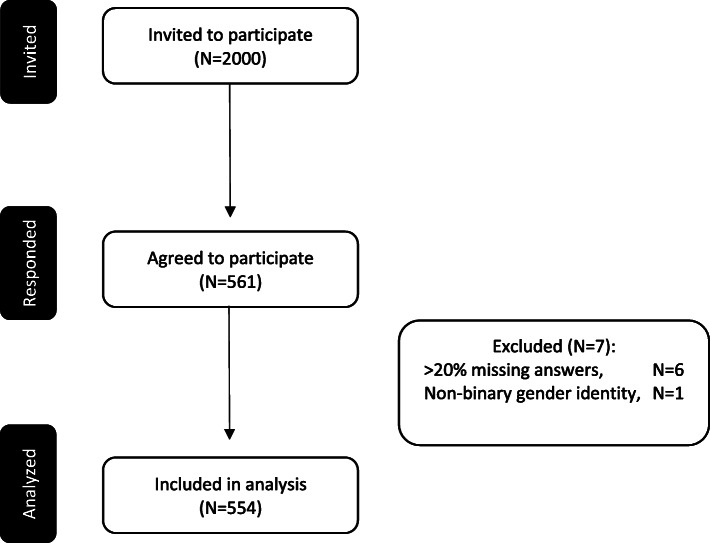
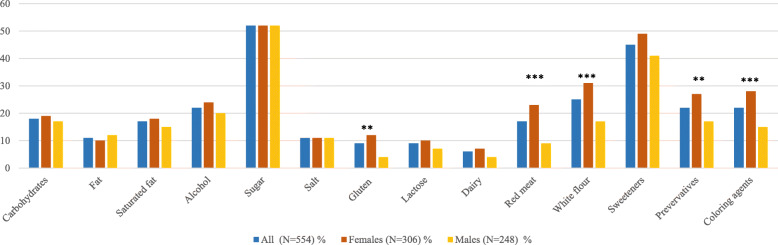
BACKGROUND: The aim of this work was to study potential gender differences in perceived food healthiness and food avoidance in a population-representative sample of the Swedish adult population. METHODS: A questionnaire regarding diet and health was posted to 2000 randomly selected residents in Sweden, aged 20-65 years. Questions were posed regarding which foods or food components the participants avoided due to perceived unhealthiness and how healthy they believed the food items to be. The pre-specified food components included sugar, carbohydrate, gluten, lactose, dairy, fat, saturated fat, red meat, white flour, salt, alcohol and food additives (specifically glutamate, sweetening, preservative and coloring agents). Chi square tests were used to study differences in perceived food healthiness and food avoidance depending on gender. RESULTS: Around 50% reported avoidance of sugar (51.6%) and sweeting agents (45.2%), whereas fewer reported avoidance of saturated fat (16.8%) and salt (10.6%). Women were more likely than men to avoid gluten (AOR [95% CI] 2.84 [1.33-6.05]), red meat (3.29 [1.86-5.80]), white flour (2.64 [1.65-4.21]), preservatives (1.7 [1.07-2.70]) and coloring agents (2.10 [1.29-3.41]) due to perceived unhealthiness. Gender differences were also apparent in perceived healthiness of sugar, gluten, dairy, red meat, white flour, alcohol and food additives, where women tended to be more negative than men in their attitudes. Women more often said to read new findings in media about diet (16% vs 9%, p = 0.029) and prioritize a healthy lifestyle (35% vs 25%, p = 0.015). More than a third of both women and men reported worrying over the healthiness of their diet, and a higher proportion of women than men (18% vs 11%, p = 0.015) agreed with the statement that they were often anxious over having an unhealthy diet. CONCLUSIONS: Women in this population-based study of residents in Sweden were more likely than men to avoid eating gluten, red meat, white flour and food additives due to perceived unhealthiness, and reported more diet and health related anxiety. Future research to identify effective ways of promoting healthy eating for both women and men, while minimizing diet-health related anxiety, is highly warranted.
Overview
The claims and statistics of this paper haven’t been checked yet.
Free: it reads the open-access text and checks the first 5 claims that cite a source we can check. Create a free account to check every claim.
Integrity signals
Registry
Cites
Statistics
Figures
Verification
Claims the paper makes
The claims and statistics of this paper haven’t been checked yet.
Free: it reads the open-access text and checks the first 5 claims that cite a source we can check. Create a free account to check every claim.
Claims other papers make about this one
Each is checked against this paper’s own text: does it say what the citing paper says it does?
The cited source says what the claim attributes to it.
In the citing paper
“For example, women are more health-conscious and risk-averse than men [62,63,64] and thus may not be in favour of upcycled foods [22,25,59] as they probably perceive these foods as unhealthy options.”
From Challenges for Upcycled Foods: Definition, Inclusion in the Food Waste Management Hierarchy and Public Acceptability (2021) · cites this paper as [64]
Self-check
Percentages, sums and reported differences re-computed from the paper’s own numbers.
The self-check needs the paper’s full text.
Citations
Cites
Afshin, A., Sur, P. J., Fay, K. A., Cornaby, L., Ferrara, G., Salama, J. S., Mullany, E. C., Abate, K. H., Abbafati, C., Abebe, Z., et al. (2019) · The Lancet · doi:10.1016/s0140-6736(19)30041-8 · Cited by 5,811
Gender differences in food choice: The contribution of health beliefs and dieting
Wardle, J., Haase, A. M., Steptoe, A., Nillapun, M., Jonwutiwes, K., & Bellisie, F. (2004) · Annals of Behavioral Medicine · doi:10.1207/s15324796abm2702_5 · Cited by 1,358
Gender differences in health information behaviour: a Finnish population-based survey
Ek, S. (2015) · Health Promotion International · doi:10.1093/heapro/dat063 · Cited by 559
Nordic Nutrition Recommendations 2012 : Integrating nutrition and physical activity
Nordic Council of Ministers (2014) · Nordic Council of Ministers eBooks · doi:10.26530/oapen_483279 · Cited by 482
Gender Differences in Opinions and Practices with Regard to a "Healthy Diet">
FAGERLI, R. A., & WANDEL, M. (1999) · Appetite · doi:10.1006/appe.1998.0188 · Cited by 315
Eating Sweet Snacks: Gender Differences in Attitudes and Behaviour
Grogan, S., BELL, R., & Conner, M. T. (1997) · Appetite · doi:10.1006/appe.1996.0067 · Cited by 135
Drake, I., Gullberg, B., Sonestedt, E., Wallström, P., Persson, M., Hlebowicz, J., Nilsson, J., Hedblad, B., & Wirfält, E. (2013) · Public Health Nutrition · doi:10.1017/s1368980012002789 · Cited by 126
Sundberg, L., Agahi, N., Fritzell, J., & Fors, S. (2018) · International Journal of Public Health · doi:10.1007/s00038-018-1097-3 · Cited by 109
Ambwani, S., Shippe, M., Gao, Z., & Austin, S. B. (2019) · Journal of Eating Disorders · doi:10.1186/s40337-019-0246-2 · Cited by 62
Leikas, S., Lindeman, M., Roininen, K., & Lähteenmäki, L. (2006) · Appetite · doi:10.1016/j.appet.2006.09.009 · Cited by 58
Research works printed but not linked: 1
- Amcoff E, Edberg A, Enghardt Barbieri H, Lindroos A, Nälsén C, Pearson M, et al. Riksmaten – vuxna 2010–11. Livsmedels- och näringsintag bland vuxna i Sverige. National Food Agency. 2010–11. National Food Agency, Uppsala, Sweden. ISBN 978 9177142164.
Cited by
Moshtaghian, H., Bolton, K., & Rousta, K. (2021) · Foods · doi:10.3390/foods10112874 · Cited by 150
The credibility of dietary advice formulated by ChatGPT: Robo-diets for people with food allergies
Niszczota, P., & Rybicka, I. (2023) · Nutrition · doi:10.1016/j.nut.2023.112076 · Cited by 138
Lombardo, M., Feraco, A., Armani, A., Camajani, E., Gorini, S., Strollo, R., Padua, E., Caprio, M., & Bellia, A. (2024) · Frontiers in Nutrition · doi:10.3389/fnut.2024.1414217 · Cited by 105
Sex differences in frailty among older adults
Zeidan, R. S., McElroy, T., Rathor, L., Martenson, M. S., Lin, Y., & Mankowski, R. T. (2023) · Experimental Gerontology · doi:10.1016/j.exger.2023.112333 · Cited by 87
“Additionally, women are less likely to eat processed foods like bleached flour and food additives (B ¨ arebring et al., 2020).”
BackgroundZhao, B.-Y., Huang, L., Xiao, C., Chen, T., Li, S., Wang, X.-J., Huang, S.-X., Hu, R., & Li, H. (2024) · BMC Public Health · doi:10.1186/s12889-024-18324-0 · Cited by 107
“Women place a greater importance on healthy lifestyles than men d o[73], females are more likely to seek health-related information online owing to the role they play in their familie s[72, 74, 75], and women search for health information not only for themselves but also for their children or…”
BackgroundDoherty, A., Wall, A. M., Khaldi, N., & Kussmann, M. (2021) · Frontiers in Genetics · doi:10.3389/fgene.2021.768979 · Cited by 72
“, 2019) and triggered negative consumer perception (Buchler et al., 2010; Bearth et al., 2014; Bärebring et al., 2020; Jansen et al., 2020).”
BackgroundHassen, H. Y., Bowyer, M., Gibson, L. M., Abrams, S., & Bastiaens, H. (2022) · BMC Public Health · doi:10.1186/s12889-022-12608-z · Cited by 60
Moshtaghian, H., Bolton, K., & Rousta, K. (2023) · British Food Journal · doi:10.1108/bfj-09-2022-0757 · Cited by 59
Adolescent exposure to food and beverage marketing on social media by gender: a pilot study
Amson, A., Pauzé, E., Remedios, L., Pritchard, M., & Kent, M. P. (2022) · Public Health Nutrition · doi:10.1017/s1368980022002312 · Cited by 49
“and women in attempts to increase consumption of ultraprocessed foods to a group that is traditionally health conscious(31).”
BackgroundSpecific health beliefs mediate sex differences in food choice
Egele, V. S., & Stark, R. (2023) · Frontiers in Nutrition · doi:10.3389/fnut.2023.1159809 · Cited by 49
“Furthermore, numerous studies provide evidence for a close relationship between health beliefs about food and actual food consumption (9, 22, 32).”
BackgroundInfluentialA qualitative study of young peoples’ thoughts and attitudes to follow a more plant-based diet
McInnes, C., Carstairs, S. A., & Cecil, J. E. (2023) · Frontiers in Psychology · doi:10.3389/fpsyg.2023.1196142 · Cited by 46
Eat-in or eat-out? A joint model to analyze the new landscape of dinner meal preferences
Haddad, A. J., Mondal, A., & Bhat, C. R. (2023) · Transportation Research Part C Emerging Technologies · doi:10.1016/j.trc.2023.104016 · Cited by 44
Is obesity associated with taste alterations? a systematic review
Peinado, B. R. R., Frazão, D. R., Bittencourt, L. O., de Souza‐Rodrigues, R. D., Vidigal, M. T. C., da Silva, D. T., Paranhos, L. R., Magno, M. B., Fagundes, N. C. F., Maia, L. C., et al. (2023) · Frontiers in Endocrinology · doi:10.3389/fendo.2023.1167119 · Cited by 36
Gallagher, R., Raimondo, M., & Caracciolo, F. (2022) · Food Quality and Preference · doi:10.1016/j.foodqual.2022.104548 · Cited by 41
O’Leary, M., Mooney, E., & McCloat, A. (2025) · Dietetics · doi:10.3390/dietetics4020016 · Cited by 61
Ma, W., Vatsa, P., Zheng, H., & Guo, Y. (2022) · Journal of Rural Studies · doi:10.1016/j.jrurstud.2022.09.023 · Cited by 30
Association of a Low-Carbohydrate High-Fat Diet With Plasma Lipid Levels and Cardiovascular Risk
Iatan, I., Huang, K., Vikulova, D. N., Ranjan, S., & Brunham, L. R. (2024) · JACC Advances · doi:10.1016/j.jacadv.2024.100924 · Cited by 33
Vanderlee, L., Gómez‐Donoso, C., Acton, R. B., Goodman, S. E., Kirkpatrick, S. I., Penney, T. L., Roberto, C. A., Sacks, G., White, M., & Hammond, D. G. (2022) · Journal of Nutrition · doi:10.1093/jn/nxac057 · Cited by 28
Sex-specific interventions to prevent and manage frailty
Reid, N., Young, A., Hanjani, L. S., Hubbard, R. E., & Gordon, E. H. (2022) · Maturitas · doi:10.1016/j.maturitas.2022.05.012 · Cited by 26
Food Behavior and Lifestyle Among Students: The Influence of the University Environment
Avram, C., Nyulas, V., Onișor, D. M., Georgescu, I. M., Szakács, J., & Ruţă, F. D. (2024) · Nutrients · doi:10.3390/nu17010012 · Cited by 33
“Women also reported more anxiety related to diet and health [35].”
Influence of Food Environments on Dietary Habits: Insights from a Quasi-Experimental Research
Thomas, T. W., & Cankurt, M. (2024) · Foods · doi:10.3390/foods13132013 · Cited by 37
Shaaker, H., & Davenport, A. (2024) · Journal of Renal Nutrition · doi:10.1053/j.jrn.2024.07.009 · Cited by 21
Veenstra, G., & Vanzella‐Yang, A. (2021) · Social Science & Medicine · doi:10.1016/j.socscimed.2021.114565 · Cited by 22
Reyneke, G. L., Hughes, J., & Grafenauer, S. (2022) · Nutrients · doi:10.3390/nu14091753 · Cited by 18
Female Endurance Runners Have a Healthier Diet than Males—Results from the NURMI Study (Step 2)
Motevalli, M. S., Wagner, K., Leitzmann, C., Tanous, D., Wirnitzer, G., Knechtle, B., & Wirnitzer, K. (2022) · Nutrients · doi:10.3390/nu14132590 · Cited by 19
Sahrin, S., Banna, M. H. A., Rifat, M. A., Tetteh, J. K., Ara, T., Hamiduzzaman, M., Spence, C. J., Kundu, S., Abid, M. T., Hasan, M. M. M., et al. (2023) · Heliyon · doi:10.1016/j.heliyon.2023.e15831 · Cited by 25
“As reasoned in the literature, women focus more on the nutritional value of food and prioritize healthy food intake such as avoiding sweet foods and high-fat foods as compared to men [46,48].”
BackgroundResultSchilling, R., Schmidt, S., Fiedler, J., & Wöll, A. (2023) · PLoS ONE · doi:10.1371/journal.pone.0293555 · Cited by 20
Guzek, D., Skolmowska, D., & Głąbska, D. (2022) · Nutrients · doi:10.3390/nu14081679 · Cited by 16
Survey of dietary beliefs and habits of inflammatory bowel disease patients
Verdina, M., Seibold, F., Grandmaison, G., Michetti, P., Barras-Moret, A.-C., Liu, K., Vaucher, J., & Staudenmann, D. (2023) · Clinical Nutrition ESPEN · doi:10.1016/j.clnesp.2023.07.090 · Cited by 14
Whatnall, M. C., Clarke, E. D., Adam, M. T. P., Ashton, L., Burrows, T. L., Hutchesson, M., & Collins, C. E. (2022) · Nutrients · doi:10.3390/nu14194072 · Cited by 17
Navigating Food Fraud: A Survey of Nigerian Consumer Knowledge and Attitudes
Onyeaka, H. N., Anyogu, A., Odeyemi, O. A., Ukwuru, M. U., Eze, U. A., Isaac-Bamgboye, F. J., Anumudu, C. K., Akinwunmi, O. O., Sotayo, O. P., & Jeff-Agboola, Y. A. (2024) · Foods · doi:10.3390/foods13203270 · Cited by 26
Ljubičić, M., Sarić, M. M., Rumbak, I., Barić, I. C., Sarić, A., Komes, D., Šatalić, Z., Dželalija, B., & Guiné, R. P. F. (2022) · Foods · doi:10.3390/foods11152347 · Cited by 18
Gal, A. M., Arhire, L. I., Gherasim, A., Graur, M., Niță, O., Dumitrașcu, O., Soimaru, R. M., Popa, A. D., & Mihalache, L. (2024) · Nutrients · doi:10.3390/nu16132047 · Cited by 23
“This may be attributed to the fact that women tend to be more health-conscious than men [37].”
BackgroundBasheikh, Z. O., Jumbe, T. J., & Kulwa, K. B. M. (2023) · Food Science & Nutrition · doi:10.1002/fsn3.3374 · Cited by 16
“, 2017). This was considered by some vendors while others misinterpreted it with overcooking of foods, particularly vegetables. This finding suggests that vendors' perceptions are not primarily focused on the nutritional aspects of a healthy meal, such as the inclusion of the major five food groups (food variety) in t…”
BackgroundResultInfluentialWatch out for the healthy trap! How food flavor influences healthiness evaluations and consumption
Cai, W., Chen, T., Ren, T., & Qing, P. (2023) · Food Research International · doi:10.1016/j.foodres.2023.113379 · Cited by 15
Hobin, E. P., Thielman, J., Forbes, S. M., Poon, T. H., Bélanger‐Gravel, A., Demers‐Potvin, É., Haynes, A., Li, Y., Niquette, M., Paradis, C., et al. (2024) · Addiction · doi:10.1111/add.16475 · Cited by 16
Chang, Y., Fan, L., Wang, Z., Zhao, Q., Wang, Z., Han, X., Xu, Z., Yu, C., Liu, Y., Chang, S., et al. (2024) · Frontiers in Endocrinology · doi:10.3389/fendo.2024.1397512 · Cited by 16
Sex-specific dietary habits and their association with weight change in healthy adults
Rein, M., Elkan, M., Godneva, A., Cohen-Dolev, N., & Segal, E. (2024) · BMC Medicine · doi:10.1186/s12916-024-03730-3 · Cited by 16
“Typically, women exhibit a greater inclination toward health-conscious behaviors and report healthier diets than men [13].”
BackgroundStright, A., Sloan, G., Code, M., Gorman, M., Moss, R. H., & McSweeney, M. B. (2025) · Journal of Sensory Studies · doi:10.1111/joss.70015 · Cited by 14
Wirnitzer, K., Drenowatz, C. J., Cocca, A., Tanous, D., Motevalli, M. S., Wirnitzer, G., Schätzer, M., Ruedl, G., & Kirschner, W. (2022) · Nutrients · doi:10.3390/nu14051065 · Cited by 15
What makes a food healthy? Sex differences in what is associated to healthiness evaluations
Foroni, F., Esmaeilikia, M., & Rumiati, R. I. (2021) · Food Quality and Preference · doi:10.1016/j.foodqual.2021.104438 · Cited by 19
Ohlau, M., Mörlein, D., & Risius, A. (2023) · Food Quality and Preference · doi:10.1016/j.foodqual.2023.104839 · Cited by 11
Jančius, R., Gavėnauskas, A., & Ūsas, A. (2021) · Sustainability · doi:10.3390/su132011436 · Cited by 17
Wirnitzer, K., Tanous, D., Motevalli, M. S., Wirnitzer, G., Leitzmann, C., Pichler, R., Rosemann, T. J., & Knechtle, B. (2022) · Nutrients · doi:10.3390/nu14183803 · Cited by 15
The attitude of Polish consumers toward food irradiation as one of the methods of food preservation
Buczkowska, M., Dudczak, A., Szajnoga, D., Górski, M. K., Malinowska-Borowska, J., Kulik, A., & Szczyrba, A. (2023) · Frontiers in Public Health · doi:10.3389/fpubh.2022.1047127 · Cited by 9
Medina, N., de Carvalho‐Ferreira, J. P., Beghini, J., & da Cunha, D. T. (2023) · Foods · doi:10.3390/foods13010052 · Cited by 10
“Growing evidence shows that women have different health beliefs and food avoidance [48].”
BackgroundLee, J., Shin, A., Shin, W., Choi, J., Kang, D., & Lee, J. (2023) · Epidemiology and Health · doi:10.4178/epih.e2023070 · Cited by 11
“In Korean culture, women are more likely to purchase and prepare food, which may lead to greater nutritional knowledge and a tendency towards healthier dietary choices compared to men [43,44].”
BackgroundNarrative Review on the Factors Affecting Fast Food Consumption among Adults
Bhatoolaul, Y., Alrefaei, A. F., & Jeewon, R. (2024) · Current Research in Nutrition and Food Science Journal · doi:10.12944/crnfsj.12.2.4 · Cited by 13
Feuillet, T., Cossart, É., Charreire, H., Banos, A., Pilkington, H., Chasles, V., Herçberg, S., Touvier, M., & Oppert, J. (2024) · Geographical Analysis · doi:10.1111/gean.12385 · Cited by 9
Kaman, G. S., & Yazicioğlu, İ. (2024) · International Journal of Gastronomy and Food Science · doi:10.1016/j.ijgfs.2024.100932 · Cited by 8
Wirnitzer, K., Motevalli, M. S., Tanous, D., Wirnitzer, G., Wagner, K., Schätzer, M., Drenowatz, C. J., Cocca, A., Ruedl, G., & Kirschner, W. (2023) · Frontiers in Public Health · doi:10.3389/fpubh.2023.1194602 · Cited by 12
Nybacka, S., Kinnander, A., Augustin, H., & Bärebring, L. (2024) · BMC Nutrition · doi:10.1186/s40795-024-00945-8 · Cited by 8
“The survey has been described in detail in previous publications [20, 21].”
MethodSelf-citationde Frel, D. L., Wicks, H., Bakk, Z., van Keulen, N., Atsma, D. E., & Janssen, V. R. (2023) · Frontiers in Nutrition · doi:10.3389/fnut.2023.1178134 · Cited by 7
Factors associated with diet quality of adolescents in Saudi Arabia
Mumena, W. A. (2024) · Frontiers in Public Health · doi:10.3389/fpubh.2024.1409105 · Cited by 7
Kuno, C. B., Frankel, L. A., Ofosuhene, P., & Keen, L. (2024) · Current Psychology · doi:10.1007/s12144-024-06518-z · Cited by 11
“In addition, women compared to men are more likely to engage in food avoidance behaviors (Bärebring et al., 2020; Wardle et al., 2004).”
Behavior Change Around an Online Health Awareness Campaign: A Causal Impact Study
Suárez-Lledó, V., & Mejova, Y. (2022) · Frontiers in Public Health · doi:10.3389/fpubh.2022.857531 · Cited by 11
Socioeconomic Status and Diabetes Prevalence in the Japanese
Omura, T., Goto, A., Nakayama, I., Saito, J., Noda, M., Yasuda, N., Saito, I., Kato, T., Arima, K., Kawakami, F., et al. (2025) · Mayo Clinic Proceedings · doi:10.1016/j.mayocp.2024.08.016 · Cited by 10
Exploring the Potential for Graphic Warning Labels to Reduce Intentions to Consume Energy Drinks
Zhu, X., Miller, C. L., Roberts, R., & Ettridge, K. A. (2025) · Health Promotion Journal of Australia · doi:10.1002/hpja.70004 · Cited by 7
Larcom, A. B., Lofgren, I. E., Delmonico, M. J., Missimer, A., & Melanson, K. J. (2025) · Appetite · doi:10.1016/j.appet.2025.108352 · Cited by 7
Misir, A., Viechtbauer, W., de Vries, H., & Mesters, I. (2023) · Advances in Nutrition · doi:10.1016/j.advnut.2023.100150 · Cited by 9
Chandrawati, A. A., & Vidyanata, D. (2022) · Jembatan Jurnal Ilmiah Manajemen · doi:10.29259/jmbt.v19i1.17758 · Cited by 6
Östlund, J., Röhnisch, H. E., Zamaratskaia, G., Langton, M., & Wendin, K. (2024) · International Journal of Gastronomy and Food Science · doi:10.1016/j.ijgfs.2023.100865 · Cited by 6
“(B ¨ arebring et al., 2020).”
Meiselman, H. L., Kuesten, C. L., & Bi, J. (2021) · Foods · doi:10.3390/foods10081918 · Cited by 10
Donghia, R., Pesole, P. L., Castellaneta, A., Coletta, S., Squeo, F., Bonfiglio, C., Pergola, G. D., Rinaldi, R., Nucci, S. D., Giannelli, G., et al. (2023) · Nutrients · doi:10.3390/nu15184058 · Cited by 6
Jindarattanaporn, N., Phulkerd, S., Chamratrithirong, A., Gray, R. S., Pattaravanich, U., Loyfah, N., Thapsuwan, S., & Thongcharoenchupong, N. (2024) · BMC Public Health · doi:10.1186/s12889-024-18069-w · Cited by 8
“…fact that, in recent years, there has been growing concern among consumers about the nutritional quality of the products they consume, with this phenomenon being more marked among women, who are more deeply involved in following good dietary habits and maintaining healthy lifestyles [34, 35, 52].”
BackgroundGhamri, R. A. (2024) · Medicine · doi:10.1097/md.0000000000038566 · Cited by 11
“[20] While some studies suggest that women prioritize healthy eating and exhibit more concerns about unhealthy diets, [21,22] recent findings show that women often struggle more than men to maintain a nutritious diet, potentially because of financial constraints and limited autonomy in household…”
BackgroundDisgust or curiosity? Acceptance of edible insects as food alternative in Poland
Sikora, D., & Rzymski, P. (2025) · European Food Research and Technology · doi:10.1007/s00217-025-04673-6 · Cited by 10
Kurita, M., Satoh, H., Kaga, H., Kadowaki, S., Someya, Y., Tosaka, Y., Nishida, Y., Ikeda, F., Tamura, Y., & Watada, H. (2023) · Journal of Diabetes Investigation · doi:10.1111/jdi.14008 · Cited by 9
Andrade, V., & Pinto, P. (2024) · Nutrients · doi:10.3390/nu16193372 · Cited by 6
“Regarding working conditions, the COVID-19 pandemic led people to work remotely, which reduced eating in the company of co-workers [45].”
BackgroundKenger, E. B., Karahan, T. Ö., & Koç, B. M. (2024) · Journal of the Science of Food and Agriculture · doi:10.1002/jsfa.14102 · Cited by 9
Kim, S., Ki, J., Choi, J. Y., Choi, W. H., & Choi‐Kwon, S. (2023) · Korean journal of women health nursing/Yeoseong geon'gang ganho hag'hoeji/Yeoseong geon-gang ganho hakoeji · doi:10.4069/kjwhn.2023.02.21.1 · Cited by 4
Consumer Attitudes and Knowledge Regarding Functional Food as an Element of the Circular Economy
Nowak-Marchewka, K., Stoma, W., Osmólska, E., & Stoma, M. (2026) · Sustainability · doi:10.3390/su18020881 · Cited by 6
Penn Healthy Diet survey: pilot validation and scoring
Compher, C. W., Quinn, R. P., Haslam, R., Bader, E. E., Weaver, J., DUDEK, S. M., Ritchie, M. D., Lewis, J. D., & Wu, G. D. (2023) · British Journal Of Nutrition · doi:10.1017/s0007114523001642 · Cited by 6
“We note that the participants who participated had similar self-reported race, but a larger proportion of females when compared with published data from the PMBB. Women have been described by others as more interested nutrition and healthy diet than men (31,32) .”
A socio-ecological lens to segmenting adult's eating behaviour
Kitunen, A., Carins, J., & Rundle-Thiele, S. R. (2025) · Nutrition and Health · doi:10.1177/02601060251319181 · Cited by 4
“Therefore, understanding factors related to healthy eating behaviour among men is vital to designing health interventions especially since women are more likely to participate in healthy eating research (Bärebring et al., 2020; Oliveira et al., 2024).”
İçer, M. A., Sarıkaya, B., Çelik, E., & Karadağ, M. G. (2025) · International Journal of Environmental Health Research · doi:10.1080/09603123.2025.2465883 · Cited by 5
“While some studies indicate that sex is an important determinant of food neophobia and food preferences (Manippa et al. 2017; Bärebring et al. 2020; Sahrin et al. 2023), our findings reveal no significant differences in attitudes toward food neophobia between the sexes.”
Patients ‘ perspectives on bone replacement materials in a German university hospital setting
Soares, A. P., Fischer, H., Orassi, V., Heiland, M., Checa, S., Schmidt‐Bleek, K., & Rendenbach, C. (2023) · BioMedical Engineering OnLine · doi:10.1186/s12938-023-01147-2 · Cited by 4
Skolmowska, D., Głąbska, D., Guzek, D., Adamczyk, J. G., Nałęcz, H., Mellová, B., Żywczyk, K., & Gutkowska, K. (2024) · Nutrients · doi:10.3390/nu17010064 · Cited by 5
“The acquisition of nutrition knowledge depends on a complex interplay of facilitators and barriers that ultimately influence adolescents’ dietary habits [24].”
Chen, J., Deng, S., & Wagatsuma, Y. (2023) · International Journal of Environmental Research and Public Health · doi:10.3390/ijerph20075338 · Cited by 4
Karam, L., KOSSEIFI, N., Jaoude, M. A., Merhi, S., Elobeid, T., & Hassan, H. F. (2022) · Food Science and Technology · doi:10.1590/fst.72122 · Cited by 4
Forbes, S. M., Vanderlee, L., & Hobin, E. P. (2025) · Alcohol and Alcoholism · doi:10.1093/alcalc/agaf051 · Cited by 6
Cámara, V. L., Bach-Faig, A., Bes‐Rastrollo, M., Jurado-Gonzalez, P., O’Callaghan-Gordo, C., & Bosque‐Prous, M. (2025) · Sustainability · doi:10.3390/su17198580 · Cited by 5
Knowledge, attitude and perception toward probiotics among university students
Webb, M. C., & Singh, K. H. (2025) · Nutrition & Food Science · doi:10.1108/nfs-08-2025-0291 · Cited by 3
Sajdakowska, M., Gniotek, D., & Gębski, J. (2026) · Nutrients · doi:10.3390/nu18040587 · Cited by 4
How hand-made affects consumers’ perceived nutritional quality of organic food
Liu, Q., Cao, J. J., Li, S., Wei, Y., & Ma, C. (2024) · Frontiers in Nutrition · doi:10.3389/fnut.2024.1448751 · Cited by 8
“Given the study of Bärebring et al. (48), it was found that gender is a significant influence on consumers’ perceived nutritional quality of organic food.”
Haddad, A. J., Mondal, A., & Bhat, C. R. (2024) · Transportation Research Part A Policy and Practice · doi:10.1016/j.tra.2024.104337 · Cited by 6
Ross, F., Middleton, C., & Remes, O. (2024) · Challenges · doi:10.3390/challe16010003 · Cited by 6
“In addition, researchers from the Department of Internal Medicine and Clinical Nutrition at the University of Gothenburg showed that women were more likely to avoid eating food additives because of perceived unhealthiness [51].”
Gender and Marital Status are Associated with Healthy Diet Among the Oldest Old
Dahal, P., Sen, R., & Kahana, E. F. (2025) · Journal of Applied Gerontology · doi:10.1177/07334648251343329 · Cited by 4
“Our fi ndings are also consistent with the fact that women are more conscious of what constitutes healthy food as well as tending to be more concerned about a healthful diet (Barebring et al., 2020).”
InfluentialKotb, R. E., Hallit, S. R., Asmar, F., Fakhry, M., Haddad, C., Salameh, P., Younes, S., Hossni, M., Abdelkhalik, M., Cherfane, M., et al. (2025) · PLoS ONE · doi:10.1371/journal.pone.0326629 · Cited by 4
“Contrary to numerous studies [36,47–49], results showed that males tended to avoid FAs use and favored natural or additive-free food products more than females.”
Rahimipouri, E., & Ghaitaranpour, A. (2025) · Food Quality and Preference · doi:10.1016/j.foodqual.2025.105724 · Cited by 4
Swed, S., Alibrahim, H., Alzabibi, M. A., Shibani, M., Hasoon, M., Bohsas, H., Raslan, H., Alholiby, S., Channiss, L., Alsakka, S., et al. (2022) · Annals of Medicine and Surgery · doi:10.1016/j.amsu.2022.104166 · Cited by 4
“suggested that females had more social motives to find health-related information on the internet and enjoy the searching process more than men, and they may be more influenced by health-related awareness campaigns [23].”
BackgroundResultUfholz, K. E., & Werner, J. J. (2023) · Current Cardiovascular Risk Reports · doi:10.1007/s12170-023-00730-5 · Cited by 3
“This relationship may not hold among highly educated, employed men because men are consistently shown to have less concern [15] and less knowledge of nutrition [16], while women have been shown to have greater cooking skills [17] and tend to cook at home more frequently than men [18].”
BackgroundExploring the potential utility of a single-item perceived diet quality measure
Kim, S. H., Joung, H., & Choi, S. K. (2024) · Nutrition Research and Practice · doi:10.4162/nrp.2024.18.6.845 · Cited by 3
Ibenyenwa Ndidi, C., Onyekwere, O. K., Ugwu, N. F., B., A., Ajewole Philip, I., Veronica, M., Onyekachi Blessing, N., Anibueze, A. U., Opele, J. K., & Nwogu Onyemaechi, F. (2023) · African Health Sciences · doi:10.4314/ahs.v23i4.19 · Cited by 3
Asindu, M., Abdulai, A., Bett, B., Roesel, K., & Ouma, E. (2024) · Journal of Behavioral and Experimental Economics · doi:10.1016/j.socec.2024.102226 · Cited by 4
The big five personality traits and eating habits among female students at Zayed University
AlBlooshi, S., AlSabbah, K., Thani, S., Hijazi, R., Dhaheri, A. S. A., Zeb, F., & Ismail, L. C. (2025) · Frontiers in Public Health · doi:10.3389/fpubh.2024.1490634 · Cited by 5
Alshahrani, N. Z. (2025) · Frontiers in Public Health · doi:10.3389/fpubh.2025.1571899 · Cited by 4
Morse, M., Christie, A. J., Cusimano, A., Nguyen, C., Wagner, R., Narayanan, S., & Lopez, G. (2025) · Integrative Cancer Therapies · doi:10.1177/15347354251342756 · Cited by 5
Swahn, J., Pettersson, N., Andrén, D., Baptista, I. Y. F., & Öström, Å. (2025) · International Journal of Gastronomy and Food Science · doi:10.1016/j.ijgfs.2025.101264 · Cited by 2
Epigenetic Clock Analysis of Sex Chromosome Aneuploidies
Zhang, J., Teoli, J., Rey, B., Vieira, C. P., Lemaître, J., Plotton, I., Marais, G. A. B., & Horvath, S. (2025) · Aging Cell · doi:10.1111/acel.70243 · Cited by 2
Ung-Pham, T., Carrillo, E., Robles, C., & Tárrega, A. (2025) · Food Quality and Preference · doi:10.1016/j.foodqual.2025.105836 · Cited by 2
Metadata
- Authors
- Bärebring, L., Palmqvist, M., Winkvist, A., & Augustin, H.
- Affiliations
- University of Gothenburg (SE)
- Corresponding author
- Bärebring, Linnea
- Venue
- Nutrition Journal
- Published
- 2020-12
- Volume
- 19
- Issue
- 1
- Pages
- 140-140
- ISSN
- 1475-2891 (ISSN-L)
- PMC
- PMC7772926
- OpenAlex
- W3115697607
- Semantic Scholar
- 4d41c38e8906f5d8520d47d037bbf19e4b8e76db
- Cited by
- 167
- References
- 15
- Citations by year
- 2026: 25 · 2025: 39 · 2024: 37 · 2023: 34 · 2022: 24 · 2021: 8
- FWCI
- 12.37
- Type
- journal article
- Language
- en
- Open access
- gold
- doi.org
- Licence
- cc-by
- creativecommons.org/licenses/by/4.0/ (tdm)
- creativecommons.org/licenses/by/4.0/ (vor, 28 d)
- Locations
- Nutrition Journal (publishedVersion, cc-by)
- PubMed Central (publishedVersion, cc-by)
- PubMed (publishedVersion)
- DOAJ (DOAJ: Directory of Open Access Journals) (submittedVersion, cc-by-sa)
- Topics
- Health Sciences › Medicine › Public Health, Environmental and Occupational Health › Consumer Attitudes and Food Labeling
- Health Sciences › Nursing › Nutrition and Dietetics › Nutrition, Health and Food Behavior
- Health Sciences › Medicine › Public Health, Environmental and Occupational Health › Nutritional Studies and Diet
- Keywords
- gender differences, food avoidance, gluten avoidance, food additives, preservatives, sweeteners, salt avoidance, women's diet, Swedish adults, population survey
- MeSH terms
- Adult, Cross-Sectional Studies, Diet, Female, Food, Humans, Male, Sex Factors, Sweden
About these checks
Registry, retraction, Cites and statistics results are computed, not judged, with one exception: a printed reference that no index lists is read once by a model before it counts as a citation error. Claims are extracted by a model and kept only when their quote appears verbatim in the text; each cited source is then checked, with a model’s help, for whether it says what the claim relies on. Those verdicts can be wrong — read the claim’s quote and the cited source before relying on one.
Statistics and arithmetic are recomputed, not judged.
Confidence bands are shown only for fields calibrated on our annotated test set. None is calibrated yet, so no band is shown.
What counts as a claim ›How we measure confidence ›How we check this ›
Are you an author, or do you see a problem with this page? Request a review
Data sources
Bibliographic data: Semantic Scholar, OpenAlex, Crossref.
Contains information from the Semantic Scholar Academic Graph Datasets, made available under the ODC Attribution License (ODC-BY 1.0).
Semantic Scholar’s data is described in: Kinney, R., et al. (2023). The Semantic Scholar Open Data Platform. arXiv:2301.10140.
