

Gender differences in perceived food healthiness and food avoidance in a Swedish population-based survey: a cross sectional study
Open accessThe DOI matches its Crossref record; 15 of the 15 references it cites were found in a registry or an index.
Abstract
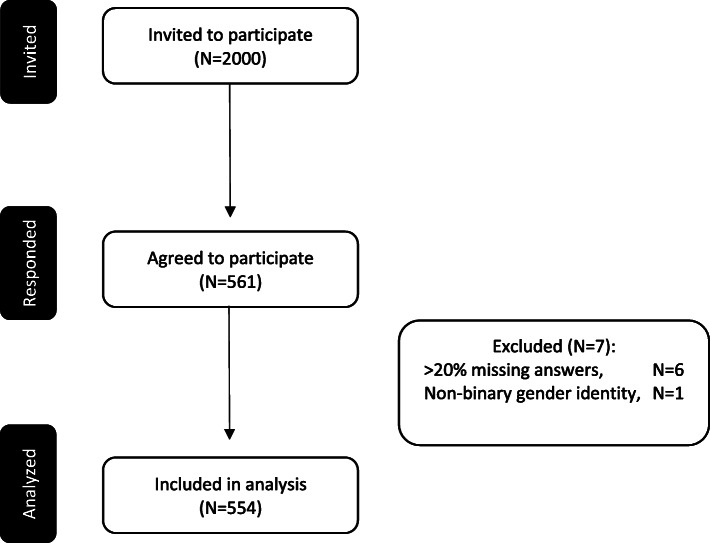
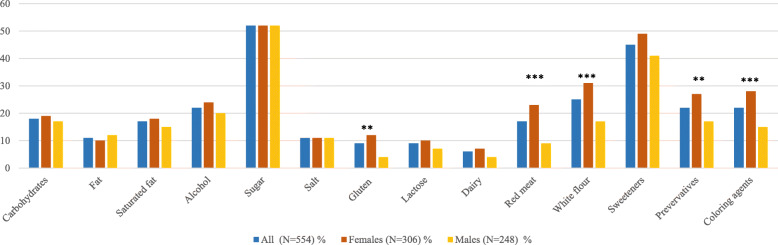
BACKGROUND: The aim of this work was to study potential gender differences in perceived food healthiness and food avoidance in a population-representative sample of the Swedish adult population. METHODS: A questionnaire regarding diet and health was posted to 2000 randomly selected residents in Sweden, aged 20-65 years. Questions were posed regarding which foods or food components the participants avoided due to perceived unhealthiness and how healthy they believed the food items to be. The pre-specified food components included sugar, carbohydrate, gluten, lactose, dairy, fat, saturated fat, red meat, white flour, salt, alcohol and food additives (specifically glutamate, sweetening, preservative and coloring agents). Chi square tests were used to study differences in perceived food healthiness and food avoidance depending on gender. RESULTS: Around 50% reported avoidance of sugar (51.6%) and sweeting agents (45.2%), whereas fewer reported avoidance of saturated fat (16.8%) and salt (10.6%). Women were more likely than men to avoid gluten (AOR [95% CI] 2.84 [1.33-6.05]), red meat (3.29 [1.86-5.80]), white flour (2.64 [1.65-4.21]), preservatives (1.7 [1.07-2.70]) and coloring agents (2.10 [1.29-3.41]) due to perceived unhealthiness. Gender differences were also apparent in perceived healthiness of sugar, gluten, dairy, red meat, white flour, alcohol and food additives, where women tended to be more negative than men in their attitudes. Women more often said to read new findings in media about diet (16% vs 9%, p = 0.029) and prioritize a healthy lifestyle (35% vs 25%, p = 0.015). More than a third of both women and men reported worrying over the healthiness of their diet, and a higher proportion of women than men (18% vs 11%, p = 0.015) agreed with the statement that they were often anxious over having an unhealthy diet. CONCLUSIONS: Women in this population-based study of residents in Sweden were more likely than men to avoid eating gluten, red meat, white flour and food additives due to perceived unhealthiness, and reported more diet and health related anxiety. Future research to identify effective ways of promoting healthy eating for both women and men, while minimizing diet-health related anxiety, is highly warranted.
Overview
The claims and statistics of this paper haven’t been checked yet.
Free: it reads the open-access text and checks the first 5 claims that cite a source we can check. Create a free account to check every claim.
Integrity signals
Registry
Cites
Statistics
Figures
Verification
Claims the paper makes
The claims and statistics of this paper haven’t been checked yet.
Free: it reads the open-access text and checks the first 5 claims that cite a source we can check. Create a free account to check every claim.
Claims other papers make about this one
Each is checked against this paper’s own text: does it say what the citing paper says it does?
The cited source says what the claim attributes to it.
In the citing paper
“For example, women are more health-conscious and risk-averse than men [62,63,64] and thus may not be in favour of upcycled foods [22,25,59] as they probably perceive these foods as unhealthy options.”
From Challenges for Upcycled Foods: Definition, Inclusion in the Food Waste Management Hierarchy and Public Acceptability (2021) · cites this paper as [64]
Self-check
Percentages, sums and reported differences re-computed from the paper’s own numbers.
The self-check needs the paper’s full text.
Citations
Cites
Afshin, A., Sur, P. J., Fay, K. A., Cornaby, L., Ferrara, G., Salama, J. S., Mullany, E. C., Abate, K. H., Abbafati, C., Abebe, Z., et al. (2019) · The Lancet · doi:10.1016/s0140-6736(19)30041-8 · Cited by 5,811
Gender differences in food choice: The contribution of health beliefs and dieting
Wardle, J., Haase, A. M., Steptoe, A., Nillapun, M., Jonwutiwes, K., & Bellisie, F. (2004) · Annals of Behavioral Medicine · doi:10.1207/s15324796abm2702_5 · Cited by 1,358
Gender differences in health information behaviour: a Finnish population-based survey
Ek, S. (2015) · Health Promotion International · doi:10.1093/heapro/dat063 · Cited by 559
Nordic Nutrition Recommendations 2012 : Integrating nutrition and physical activity
Nordic Council of Ministers (2014) · Nordic Council of Ministers eBooks · doi:10.26530/oapen_483279 · Cited by 482
Gender Differences in Opinions and Practices with Regard to a "Healthy Diet">
FAGERLI, R. A., & WANDEL, M. (1999) · Appetite · doi:10.1006/appe.1998.0188 · Cited by 315
Eating Sweet Snacks: Gender Differences in Attitudes and Behaviour
Grogan, S., BELL, R., & Conner, M. T. (1997) · Appetite · doi:10.1006/appe.1996.0067 · Cited by 135
Drake, I., Gullberg, B., Sonestedt, E., Wallström, P., Persson, M., Hlebowicz, J., Nilsson, J., Hedblad, B., & Wirfält, E. (2013) · Public Health Nutrition · doi:10.1017/s1368980012002789 · Cited by 126
Sundberg, L., Agahi, N., Fritzell, J., & Fors, S. (2018) · International Journal of Public Health · doi:10.1007/s00038-018-1097-3 · Cited by 109
Ambwani, S., Shippe, M., Gao, Z., & Austin, S. B. (2019) · Journal of Eating Disorders · doi:10.1186/s40337-019-0246-2 · Cited by 62
Leikas, S., Lindeman, M., Roininen, K., & Lähteenmäki, L. (2006) · Appetite · doi:10.1016/j.appet.2006.09.009 · Cited by 58
Research works printed but not linked: 1
- Amcoff E, Edberg A, Enghardt Barbieri H, Lindroos A, Nälsén C, Pearson M, et al. Riksmaten – vuxna 2010–11. Livsmedels- och näringsintag bland vuxna i Sverige. National Food Agency. 2010–11. National Food Agency, Uppsala, Sweden. ISBN 978 9177142164.
Cited by
Items 101–167 of 167
Nacis, J. S., Labrador, J. P. H., Ronquillo, D. G. D., Rementilla, J. C., Rodriguez, M. P., Madrid, M. L., Frane, R. D., Santos, N. L., Dablo, A. M. F. D., Carrillo, J. J. V., et al. (2026) · Genes & Nutrition · doi:10.1186/s12263-026-00794-z · Cited by 5
Perceived Restaurant Food Healthiness on Consumer Satisfaction at Burgreens Menteng Resto
Putri, N. M. D. R., Tritanya, J., & Rinova, R. (2023) · International Journal of Travel Hospitality and Events · doi:10.56743/ijothe.v2i1.224 · Cited by 2
Obesity and COVID-19 pandemic in South Korea: rapid review and a post-hoc analysis
Kim, Y., Kim, S., & Kim, M. S. (2023) · Life Cycle · doi:10.54724/lc.2023.e15 · Cited by 2
Kelly, E. F. A., Guney-Coskun, M., Weech, M., Fallaize, R., Hwang, F., & Lovegrove, J. A. (2025) · PLoS ONE · doi:10.1371/journal.pone.0319388 · Cited by 3
Kwak, S. A., Lee, J., & Joo, N. (2025) · CyTA - Journal of Food · doi:10.1080/19476337.2025.2502537 · Cited by 4
“A study on healthy diets that women tend to select foods perceived as healthy more frequently than men, and consume these foods more often (Bärebring et al., 2020).”
Collier, E. S., Adevi, M. K., Mayers, J. J., Normann, A., Lennerfors, T. T., Norman, C., & Andersson, J. (2025) · Future Foods · doi:10.1016/j.fufo.2025.100669 · Cited by 3
“Indeed, one survey of Swedish consumers revealed that women showed more negative attitudes towards, and were more likely to avoid, preservatives and colouring agents due to perceiving these as unhealthy (B ¨ arebring et al., 2020).”
Boyar, L., White, C. M., Vanderlee, L., Bhawra, J., & Hammond, D. G. (2025) · BMC Nutrition · doi:10.1186/s40795-025-01109-y · Cited by 2
Yeung, K.-F., Lee, Y. Q., Chong, M. F., Gandhi, M., Lam, A. Y. R., Julianty, S., Tan, G. C. S., Ho, E. T. L., Goh, S., Tan, G. S. W., et al. (2022) · BMJ Open Diabetes Research & Care · doi:10.1136/bmjdrc-2022-002966 · Cited by 3
Panea, B., Ignacio Subiabre, R., Haudorf, A., & Morales, R. (2021) · Foods · doi:10.3390/foods10071482 · Cited by 2
The influence of the COVID-19 pandemic on lifestyle – a pilot study
Zugravu, C., Salmen, T., Ducu, I., Mihai, B.-M., Dima, V., Berceanu, C., Bohiltea, A.-T., École Hôtelière de Lausanne, L., Neagu, S., Heinrich-Heine-Universität, D., et al. (2021) · Romanian Journal of Infectious Diseases · doi:10.37897/rjid.2021.4.5 · Cited by 2
Meal preparation behaviour and obesity: time spent cooking in the Czech Republic
Pilařová, T., Bavorová, M., Vokáčová, L., & Grüner, S. (2022) · British Food Journal · doi:10.1108/bfj-06-2021-0683 · Cited by 2
Nacis, J. S., Labrador, J. P. H., Ronquillo, D. G. D., Rementilla, J. C., Rodriguez, M. P., Madrid, M. L., Frane, R. D., Santos, N. L. C., Dablo, A. M. F. D., Carrillo, J. J. V., et al. (2025) · medRxiv · doi:10.1101/2025.03.02.25323063 · Cited by 2
Opinion: Brazilian consumers and nutrition fact labels in food services
Scheffer, P. A., de Oliveira, V. R., Vitiello, I. P., Helbig, E., Ginani, V. C., Strasburg, V. J., de Mattos, K. M., Silveira, J. T., Marques, C. T., Storck, C. R., et al. (2024) · Journal of Foodservice Business Research · doi:10.1080/15378020.2024.2324564 · Cited by 1
“…et al., 2017; Seward et al., 2018; Sonnenberg et al., 2013; Turconi et al., 2012; Vanderlee & Hammond, 2014; Vyth et al., 2011) One of the reasons for this finding is that women tend to care more about their health (Bärebring et al., 2020), which impacts purchasing decisions (Hwang et al., 2016).”
Expected consumer preferences analyses towards tuber and corm based gluten-free dry noodle
Ngangi, C. M. J., Wangkanusa, V., Agimat, E. A. A., Sajow, S. D., Rawung, L. D., Rahardiyan, D., & Moko, E. M. (2024) · AIP conference proceedings · doi:10.1063/5.0211461 · Cited by 1
Hansen, T. (2024) · Sustainability · doi:10.3390/su16219550 · Cited by 2
“Additionally, studies indicate that there may be differences between genders in food preferences [25,26], eating behaviors [27,28], and emotional reactions [29–31].”
Marchiori, G. N., Loyola, M. A., Sánchez, C., Defagó, M. D., & Oberto, M. G. (2024) · Human Nutrition & Metabolism · doi:10.1016/j.hnm.2024.200294 · Cited by 1
Food consumption among older adults: differences between men and women
Santiago, L. B., Francisco, P. M. S. B., Cocetti, M., & de Assumpção, D. (2025) · Geriatrics Gerontology and Aging · doi:10.53886/gga.e0000243_en · Cited by 3
Awareness and Practice of Global Cancer Prevention Dietary Guidelines among Koreans
Yun, A., Choi, Y., Jung, H., & Kim, B. (2025) · Journal of Cancer Prevention · doi:10.15430/jcp.24.036 · Cited by 1
“This apparently results from sex differences in food knowledge, dietary habits, and health attitudes [23,24].”
Wen, W., Chen, Y., Gao, F., & Tong, L. (2025) · BMJ Open · doi:10.1136/bmjopen-2024-086854 · Cited by 1
Campoli, F., Padua, E., Panzarino, M., Caprioli, L., Annino, G., & Lombardo, M. (2025) · Sports · doi:10.3390/sports13080258 · Cited by 1
“Previous European studies have also shown that women are more likely to consider health aspects in their food choices and avoid certain foods for perceived health reasons, while men may be less restrictive and more likely to consume foods perceived as less healthy [28].”
Foscolou, A., Nikolaou, G., Pratti, T., Kouskouti, A., Kanellaki, V., Machaira, E., Bekari, I., Chalari, E., Gazouli, A., & Gioxari, A. (2025) · Nutrients · doi:10.3390/nu17182975 · Cited by 2
Wirnitzer, K., Tanous, D., Drenowatz, C. J., Wirnitzer, G., Schätzer, M., Ruedl, G., & Kirschner, W. (2025) · Frontiers in Nutrition · doi:10.3389/fnut.2025.1677900 · Cited by 2
Ren, Z., Liu, G., Zhao, J., Ma, Q., Zou, X., Li, X., Liu, X., & Zhao, W. (2026) · Frontiers in Public Health · doi:10.3389/fpubh.2025.1730769 · Cited by 1
Determinants of dairy products purchase decisions among polish doctors: A gender-based analysis
Nowak, A., Jarosz‐Angowska, A., Krukowski, A., Komór, A., Goliszek, A., Białoskurski, S., Sołowiej, B. G., Przybyłowicz, K. E., Staniewska, K., & Dąbrowska, A. Z. (2026) · PLoS ONE · doi:10.1371/journal.pone.0339849 · Cited by 1
“The literature shows that, from a psychological and health perspective, women have a higher level of health awareness and are more committed to health-promoting behaviours [44,45].”
Microbiome stewardship: definition and guiding principles for implementation
O’Doherty, K. C., Beijbom, M., Allen‐Vercoe, E., Choudoir, M. J., Silva, D. S., Bonilla, C. Y., Debelius, J. W., Elton, S., Hauptmann, A. L., Heyland, A., et al. (2026) · Sustainable Microbiology · doi:10.1093/sumbio/qvag028 · Cited by 2
Intergenerational reproduction and self‐rated health in Canada
Veenstra, G., & Vanzella‐Yang, A. (2022) · Canadian Review of Sociology/Revue canadienne de sociologie · doi:10.1111/cars.12384 · Cited by 1
Development of Body Weight Management Among the Hungarian Population
Szilágyi, C., Soós, M., & Kiss, M. (2024) · Healthcare · doi:10.3390/healthcare12222236 · Cited by 1
Consumo alimentar de pessoas idosas: diferenças entre homens e mulheres
Santiago, L. B., Francisco, P. M. S. B., Cocetti, M., & de Assumpção, D. (2025) · Geriatrics Gerontology and Aging · doi:10.53886/gga.e0000243_pt · Cited by 2
Yeo, Z. S., & Lian, C. W. (2022) · Journal of Public Health and Development · doi:10.55131/jphd/2022/200120 · Cited by 2
Sociodemographic and dietary influences on perceptions of eating habits in Jamaica
Foucade, A. L., Gabriel, S., Laptiste, C., Metivier, C., Beharry, V., Scott, E., & Theodore, K. (2022) · Revista Panamericana de Salud Pública · doi:10.26633/rpsp.2022.66 · Cited by 1
“Another study (30) found that the presence of females in the home, who tend to do most of the food preparation and are more health conscious (31, 32), improves the entire family’s welfare.”
BackgroundGłąbska, D., Janowska, M., Bartosz, E., & Guzek, D. (2022) · International Journal of Environmental Research and Public Health · doi:10.3390/ijerph19169859 · Cited by 1
Imtiyaz, H., Soni, P., & Yukongdi, V. (2022) · Food Research · doi:10.26656/fr.2017.6(4).391 · Cited by 1
Food sources of energy and nutrients among US college students: The Health Starts Here cohort study
Rana, Z. H., Frankenfeld, C. L., Kennedy, E. J., Leon, C., de Jonge, L., Jiang, L., Davila, M., & Cheskin, L. J. (2023) · Journal of American College Health · doi:10.1080/07448481.2023.2220397 · Cited by 3
“43 In general, more women than men overestimate their weight, resulting in a greater tendency to reduce the amount of food they eat.”
Park, S., & Kim, J. (2023) · Nutrition Research and Practice · doi:10.4162/nrp.2023.17.5.984
“Studies suggest that there are gender differences in eating habits and food choices [10,11], which may lead to different food expenditures and obesity in men and women.”
BackgroundBocog, R. A., & Paradero, A. L. (2023) · Science and Humanities Journal · doi:10.47773/shj.1998.181.5 · Cited by 1
Functional claim increases the acceptance of oat muesli by consumers
Miranda, K. D. S., Rodrigues, J., de Quadros, E. B., Lemos, P., Maieves, H. A., & Batista, Â. G. (2023) · DEMETRA Alimentação Nutrição & Saúde · doi:10.12957/demetra.2023.68865 · Cited by 1
How Do Brazilian Consumers Understand Food Groups in the Food-based Dietary Guidelines?
Monteiro, J. S., Nakano, E. Y., Zandonadi, R. P., Botelho, R. B. A., & Araújo, W. M. C. (2024) · Foods · doi:10.3390/foods13020338 · Cited by 2
“We identified the need for new studies in other countries that evaluate consumer understanding of food groups, not just a particular group or food consumption, with the aim of improving consumer adherence to dietary guidelines.”
BackgroundInfluentialExploring the spatial mental associations of distinct food types
Okur, B., & Gökçe, A. (2024) · Appetite · doi:10.1016/j.appet.2024.107337
Sociable desires and gendered commitments: Video gaming and food in everyday life
Jensen, K. H., & Skelly, T. A. M. (2024) · Convergence The International Journal of Research into New Media Technologies · doi:10.1177/13548565241270868 · Cited by 3
“There is evidence that women to a larger degree than men engage in practices that align with conventional standards of healthy eating (Bärebring et al., 2020; O’Doherty Jensen and Holm, 1999).”
BackgroundHubungan stres dengan pola makan pekerja kantor di Jakarta
Phelps, A. C., & Silaban, D. Y. L. (2024) · Tarumanagara Medical Journal · doi:10.24912/tmj.v6i1.27354
Lin, Y., Huang, F. F.-Y., Xiao, J., Chen, X., Wu, Y., Zheng, D. K. Y., Chang, J. R., Wang, H., & Jian-dong, H. (2025) · Research Square · doi:10.21203/rs.3.rs-6803079/v1
Virtudazo, M. J. C., Delomen, J. I., Bernardo, A. K. M., & Barrion, A. S. A. (2025) · Journal of Human Ecology and Sustainability · doi:10.56237/jhes-24-020
Tan, S. T., Tan, S. S., & Tan, C. X. (2025) · Health Promotion Practice · doi:10.1177/15248399251382835
“…greater awareness of expert recommendations, are generally more health-conscious, and are more likely to engage in food-related decisions (Bärebring et al., 2020; Grunert et al., 2012; Loginova & Mann, 2024; Spronk et al., 2014), it is understandable that their mean knowledge scores were…”
Bizzozero‐Peroni, B., Carballo‐Casla, A., Triolo, F., Ashtree, D. N., Orr, R., Lane, M. M., Jacka, F. N., O'Neil, A. E., Qiu, C., & Calderón‐Larrañaga, A. (2025) · Research Square · doi:10.21203/rs.3.rs-8020122/v1
Gendered eating: Can gender role orientations explain gender differences in healthy eating?
Effert, A., Eichin, K. N., & Sproesser, G. (2025) · Journal of Health Psychology · doi:10.1177/13591053251388269 · Cited by 3
“…report consuming more fruits and vegetables (Beardsworth et al., 2002; Prättälä et al., 2007; Wardle et al., 2004), but less red and processed meat (Bärebring et al., 2020; Beardsworth et al., 2002; Clonan et al., 2016; Prättälä et al., 2007), and salt (Heller et al., 2023; Wardle et al., 2004)…”
Mohamed, R. R., & Burbur, A. A. S. (2025) · Health Science Reports · doi:10.1002/hsr2.71591 · Cited by 1
“The difference can be explained by the finding that in recent years, females tend to be more careful than males regarding their diet and weight [39, 40].”
Soares, A. P., Fischer, H., Orassi, V., Heiland, M., Checa, S., Schmidt‐Bleek, K., & Rendenbach, C. (2023) · Figshare · doi:10.6084/m9.figshare.24046094
Hubungan Pengatahuan Dan Sikap Dengan Perilaku Pencegahan Kejadian Gagal Ginjal Kronis
Anjani, A. D., & Pribadi, D. R. A. (2025) · Buletin Ilmu Kebidanan dan Keperawatan · doi:10.56741/bikk.v4i03.1428
“Hasil ini sejalan dengan pendapat [20] yang menyatakan bahwa perempuan cenderung lebih peduli terhadap kesehatan dibandingkan laki-laki, karena memiliki tanggung jawab lebih besar dalam menjaga diri sendiri maupun keluarga.”
Ungerer, M. N., Reichel, K., Feisst, M., Tunkl, C., Quenzer, B., & Gumbinger, C. (2026) · BMC Neurology · doi:10.1186/s12883-025-04560-3
“Men have been found to have unhealthier dietary habits and to consume more alcoholic beverages, while women are more likely to avoid unhealthy foods due to perceived unhealthiness [31, 32].”
Alkahtani, R., Alghayhab, R., Alanazi, A. K., Alahmari, L. A., Almohammadi, L., Almanie, A., Alsaleh, H., & Elbeltagy, R. (2026) · The Egyptian Journal of Otolaryngology · doi:10.1186/s43163-026-01005-7 · Cited by 1
“This trend is consistent with broader findings that women often demonstrate greater health consciousness, including proactive health behaviors and healthier life-style choices [27].”
Azeez, E. P. A., Lekha, P. P. S., Verma, P., & Anagha, S. (2026) · Health Education · doi:10.1108/he-06-2025-0087 · Cited by 1
Han, H., Kim, H., Ryu, Y., Lee, J., Chen, X., & McMaughan, D. J. (2026) · American Journal of Health Promotion · doi:10.1177/08901171261428683
Santos‐Báez, L. S., Kazmi, O., Díaz‐Rizzolo, D. A., Popp, C. J., Manoogian, E. N. C., Panda, S., Cheng, B., & Laferrère, B. (2026) · INQUIRY The Journal of Health Care Organization Provision and Financing · doi:10.1177/00469580261419162
“37 Nevertheless, other potential moderators could influence these correlations (eg, body satisfaction), and our study may have not captured these correlations as it is a small sample size in a cohort that only included older participants with overweight or obesity.”
Pramono, M., & Noor, Z. (2026) · Health & Medical Sciences · doi:10.47134/phms.v3i2.584
Sandri, E., Piredda, M., Maria, M. D., Broccolo, A., Capoferri, M., Sguanci, M. E., Mancin, S., Cascio, A. L., & Bernalte‐Martí, V. (2026) · Nutrition Research · doi:10.1016/j.nutres.2026.03.003
Consumer Acceptability of Pungo (Nypha Fruticans) Shake Among Students in Apad National High School
Pera, E., Abaño, J., Adonay, C. J., Alpuerto, J., Magnaye, R. M., Pera, J., Antonio, R. S., Rubios, N., & Borromeo, R. (2026) · Psychology and Education A Multidisciplinary Journal · doi:10.70838/pemj.530907
Sánchez‐Recio, R., Parrilla-Huertas, J. A., Sebastián-Ariño, A., Zuil, M., Llorente, J. M., Asensio-Martínez, Á., & Antón, M. Z. (2026) · Discover Public Health · doi:10.1186/s12982-026-01815-3
Eating attitudes and trauma in third-generation holocaust survivors
Biran, G., & Jakob, L. (2026) · Frontiers in Psychology · doi:10.3389/fpsyg.2026.1718777
Gender and race differences in the ‘unhealthy = tasty’ intuition
Pineño, O. (2026) · Food Quality and Preference · doi:10.1016/j.foodqual.2026.105985 · Cited by 1
Tharcisse, G., Louise, M. M., Tuyishime, J. C., Joseph, R., Mvuyekure, A. F. N., Kayitare, R., PRUDENCE, I. A., Donatien, M., Hakizimana, P., & Mukamana, C. (2026) · Journal of Drug Delivery and Therapeutics · doi:10.22270/jddt.v16i6.7841
Varea, V., Evans, V., Penney, D., & O’Hara, E. (2026) · Sport Education and Society · doi:10.1080/13573322.2026.2697322
Tanous, D., Drenowatz, C. J., Ruedl, G., Wirnitzer, G., Schätzer, M., Kirschner, W., & Wirnitzer, K. (2026) · Discover Public Health · doi:10.1186/s12982-026-02158-9
“…align with previous reports on (i) plant-predominant diets [33], (ii) health and nutrition consciousness regarding healthy, sustainable diets with females having higher awareness and interest [243, 244], and (iii) is also is in line with other studies on Austrian school pedagogues [94–100].”
Berget, I., Dlamini, N. N., de Kock, H. L., & Varela, P. (2026) · Food Quality and Preference · doi:10.1016/j.foodqual.2026.106103
Food experience, place attachment and locavorism in urban destinations
Smith, M., Sziva, I., Szakály, O., & Csapody, B. (2026) · Tourism Recreation Research · doi:10.1080/02508281.2026.2690986
Trust before taste: cognitive and affective drivers of cell-based seafood acceptance in Taiwan
Su, L.-J., & Chen, H. (2026) · Future Foods · doi:10.1016/j.fufo.2026.101198
Nakajima, T., & Mukai, M. (2026) · PLoS ONE · doi:10.1371/journal.pone.0361063
“These results are consistent with those of previous studies, indicating that women tend to eat more fruit and follow healthier diets than men [54], as well as studies showing that women generally have a more negative view of sugar [55].”
Metadata
- Authors
- Bärebring, L., Palmqvist, M., Winkvist, A., & Augustin, H.
- Affiliations
- University of Gothenburg (SE)
- Corresponding author
- Bärebring, Linnea
- Venue
- Nutrition Journal
- Published
- 2020-12
- Volume
- 19
- Issue
- 1
- Pages
- 140-140
- ISSN
- 1475-2891 (ISSN-L)
- PMC
- PMC7772926
- OpenAlex
- W3115697607
- Semantic Scholar
- 4d41c38e8906f5d8520d47d037bbf19e4b8e76db
- Cited by
- 167
- References
- 15
- Citations by year
- 2026: 25 · 2025: 39 · 2024: 37 · 2023: 34 · 2022: 24 · 2021: 8
- FWCI
- 12.37
- Type
- journal article
- Language
- en
- Open access
- gold
- doi.org
- Licence
- cc-by
- creativecommons.org/licenses/by/4.0/ (tdm)
- creativecommons.org/licenses/by/4.0/ (vor, 28 d)
- Locations
- Nutrition Journal (publishedVersion, cc-by)
- PubMed Central (publishedVersion, cc-by)
- PubMed (publishedVersion)
- DOAJ (DOAJ: Directory of Open Access Journals) (submittedVersion, cc-by-sa)
- Topics
- Health Sciences › Medicine › Public Health, Environmental and Occupational Health › Consumer Attitudes and Food Labeling
- Health Sciences › Nursing › Nutrition and Dietetics › Nutrition, Health and Food Behavior
- Health Sciences › Medicine › Public Health, Environmental and Occupational Health › Nutritional Studies and Diet
- Keywords
- gender differences, food avoidance, gluten avoidance, food additives, preservatives, sweeteners, salt avoidance, women's diet, Swedish adults, population survey
- MeSH terms
- Adult, Cross-Sectional Studies, Diet, Female, Food, Humans, Male, Sex Factors, Sweden
About these checks
Registry, retraction, Cites and statistics results are computed, not judged, with one exception: a printed reference that no index lists is read once by a model before it counts as a citation error. Claims are extracted by a model and kept only when their quote appears verbatim in the text; each cited source is then checked, with a model’s help, for whether it says what the claim relies on. Those verdicts can be wrong — read the claim’s quote and the cited source before relying on one.
Statistics and arithmetic are recomputed, not judged.
Confidence bands are shown only for fields calibrated on our annotated test set. None is calibrated yet, so no band is shown.
What counts as a claim ›How we measure confidence ›How we check this ›
Are you an author, or do you see a problem with this page? Request a review
Data sources
Bibliographic data: Semantic Scholar, OpenAlex, Crossref.
Contains information from the Semantic Scholar Academic Graph Datasets, made available under the ODC Attribution License (ODC-BY 1.0).
Semantic Scholar’s data is described in: Kinney, R., et al. (2023). The Semantic Scholar Open Data Platform. arXiv:2301.10140.
