

Movement artefact removal from NIRS signal using multi-channel IMU data
Open accessThe DOI matches its Crossref record; 44 of the 44 references it cites were found in a registry or an index.
Abstract
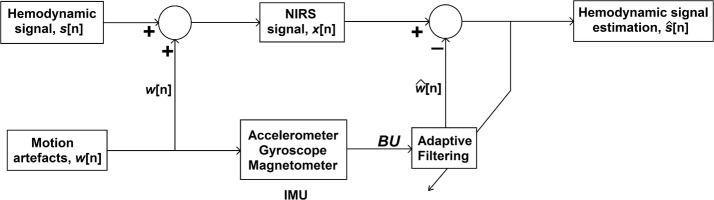
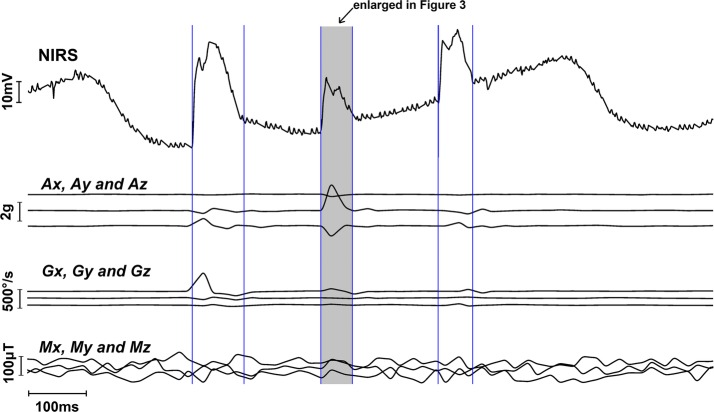
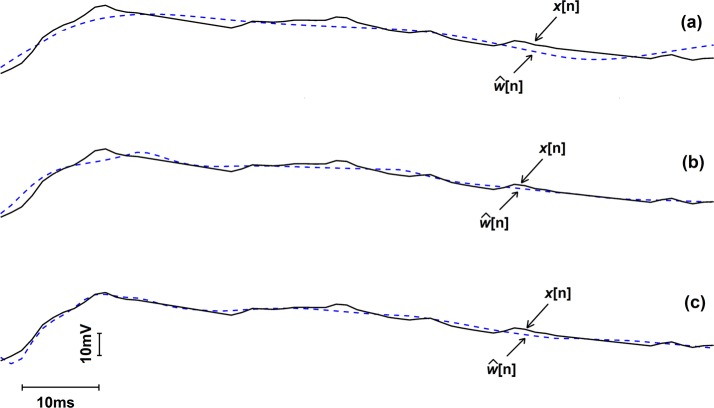
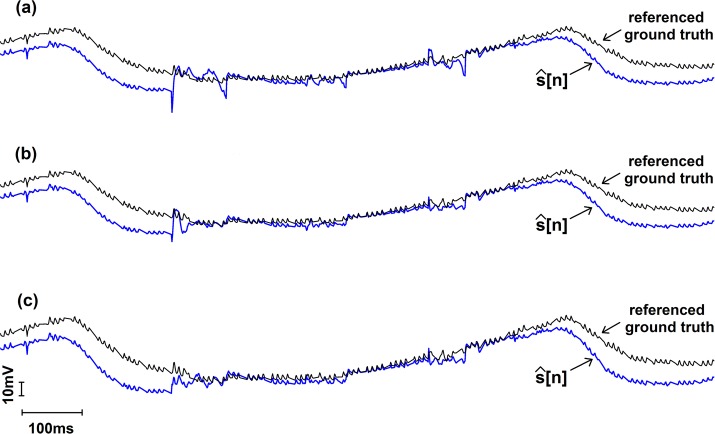
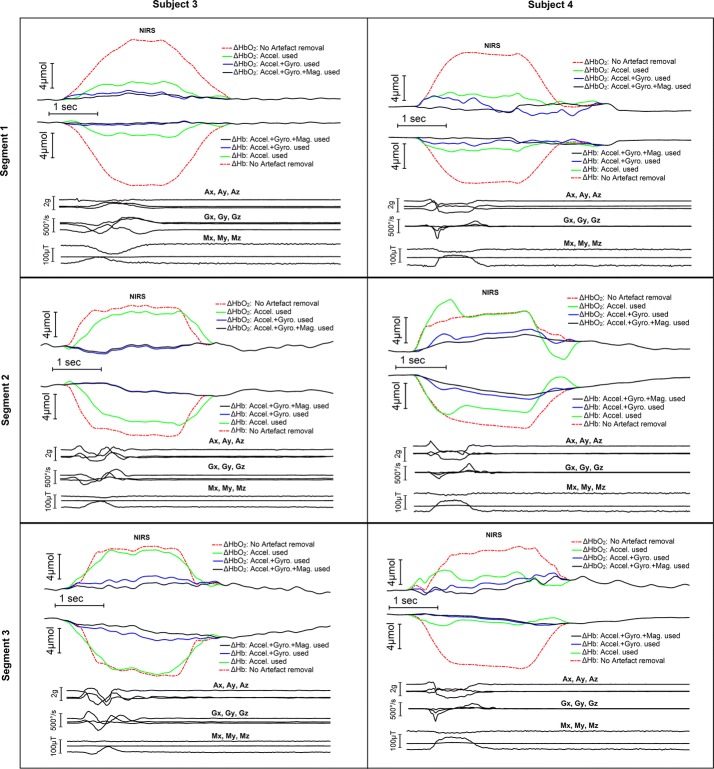
The non-invasive nature of near-infrared spectroscopy (NIRS) makes it a widely accepted method for blood oxygenation measurement in various parts of the human body. One of the main challenges in this method lies in the successful removal of movement artefacts in the detected signal. In this respect, multi-channel inertia measurement unit (IMU) containing accelerometer, gyroscope and magnetometer can be used for better modelling of movement artefact than using accelerometer only, which as a result, movement artefact can be more accurately removed. A wearable two-channel continuous wave NIRS system, incorporating an IMU sensor which contain accelerometer, gyroscope and magnetometer in it, was developed to record NIRS signal along with the simultaneous recording of movement artefacts related signal using the IMU. Four healthy subjects volunteered in the recording of the NIRS signals. During the recording from the first two subject, movement artefacts were simulated in one of the NIRS channels by tapping the photodiode sensor nearby. The corresponding IMU data for the simulated movement artefacts were used to estimate the artefacts in the corrupted signal by autoregressive with exogenous input method and subtracted from the corrupted signal to remove the artefacts in the NIRS signal. Signal-to-noise ratio (SNR) improvement was used to evaluate the performance of the movement artefacts removal process. The performance of the movement artefacts estimation and removal were compared using accelerometer only, accelerometer and gyroscope, and accelerometer, gyroscope and magnetometer data from IMU sensor to estimate the artefact in NIRS reading. For the remaining two subjects the NIRS signal was recorded by natural movement artefacts impact and the results of artefacts removal was compared using accelerometer only, accelerometer and gyroscope, and accelerometer, gyroscope and magnetometer data from IMU sensor to estimate the artefact in NIRS reading. The quantitative and qualitative results revealed that the SNR improvement increases with the number of IMU channels used in the artefacts estimation, and there were approximately 5–11 dB increase in SNR when nine channel IMU data were used rather than using only three channel accelerometer data only. The artefact removal from natural movements also demonstrated that the combination of gyroscope and magnetometer sensors with accelerometer provided better estimation and removal of the movement artefacts, which was revealed by the minimal change of the HbO 2 and Hb level before, during and after movement artefacts occurred in the NIRS signal. The movement artefacts in NIRS can be more accurately estimated and removed by using accelerometer, gyroscope and magnetograph signals from an integrated IMU sensor than using accelerometer signal only.
Overview
The claims and statistics of this paper haven’t been checked yet.
Free: it reads the open-access text and checks the first 5 claims that cite a source we can check. Create a free account to check every claim.
Integrity signals
Registry
Cites
Statistics
Figures
Verification
Claims the paper makes
The claims and statistics of this paper haven’t been checked yet.
Free: it reads the open-access text and checks the first 5 claims that cite a source we can check. Create a free account to check every claim.
Claims other papers make about this one
Each is checked against this paper’s own text: does it say what the citing paper says it does?
The cited source says what the claim attributes to it.
In the citing paper
“This unexpected result underscores the importance of carefully considering muscle selection when using NIRS for physiological assessments, as factors such as movement artifacts (Siddiquee et al., 2018), compression effects and signal stability (Cooper et al., 2012) may influence measurement accuracy more than the metabolic demand per se.”
From Agreement between muscle saturation breakpoints and lactate thresholds: Muscles comparison and sex difference in world‐class Nordic skiers (2026) · cites this paper as Siddiquee et al., 2018
Self-check
Percentages, sums and reported differences re-computed from the paper’s own numbers.
The self-check needs the paper’s full text.
Citations
Cites
Adaptive noise cancelling: Principles and applications
Widrow, B., Glover, J. R., McCool, J. M., Kaunitz, J., Williams, C. S., Hearn, R. H., Zeidler, J. R., Eugene Dong, Jr., & Goodlin, R. C. (1975) · Proceedings of the IEEE · doi:10.1109/proc.1975.10036 · Cited by 3,939
Jöbsis, F. F. (1977) · Science · doi:10.1126/science.929199 · Cited by 3,899
Probability and Statistics for Engineers and Scientists.
Beckman, R. J., Walpole, R. E., & Meyers, R. H. (1973) · Journal of the American Statistical Association · doi:10.2307/2284195 · Cited by 2,835
Ferrari, M., & Quaresima, V. (2012) · NeuroImage · doi:10.1016/j.neuroimage.2012.03.049 · Cited by 2,274 · cited 1×
“The NIRS signal can be detected by illuminating the human body with light from the near-infrared region [2, 3].”
BackgroundScholkmann, F., Kleiser, S., Metz, A. J., Zimmermann, R., Mata Pavia, J., Wolf, U., & Wolf, M. (2014) · NeuroImage · doi:10.1016/j.neuroimage.2013.05.004 · Cited by 2,002
Non-invasive optical spectroscopy and imaging of human brain function
Villringer, A., & Chance, B. (1997) · Trends in Neurosciences · doi:10.1016/s0166-2236(97)01132-6 · Cited by 1,618
Villringer, A., Planck, J., Hock, C., Schleinkofer, L., & Dirnagl, U. (1993) · Neuroscience Letters · doi:10.1016/0304-3940(93)90181-j · Cited by 1,119
A quantitative comparison of NIRS and fMRI across multiple cognitive tasks
Cui, X., Bray, S., Bryant, D. M., Glover, G. H., & Reiss, A. L. (2011) · NeuroImage · doi:10.1016/j.neuroimage.2010.10.069 · Cited by 945 · cited 1×
“The level of blood oxygenation in various parts of the human body convey a great deal of information about various physiological phenomena and processes [5], such as cardiovascular disease [6] and sepsis [7] from muscle oxygenation, cognitive involvement [8, 9] and activation of brain function [10, 11] from cerebral o…”
BackgroundWray, S., Cope, M., Delpy, D. T., Wyatt, J. S., & Reynolds, E. O. R. (1988) · Biochimica et Biophysica Acta (BBA) - Bioenergetics · doi:10.1016/0005-2728(88)90069-2 · Cited by 912
Cui, X., Bray, S., & Reiss, A. L. (2010) · NeuroImage · doi:10.1016/j.neuroimage.2009.11.050 · Cited by 807
Research works printed but not linked: 2
- Izzetoglu M Devaraj A Bunce S Onaral B Motion artifact cancellation in NIR spectroscopy using Wiener filtering IEEE Trans Biomed Eng. 2005 52 934 938 10.1109/TBME.2005.845243 15887543 · DOI · Paper page
- Cope M. The development of a near infrared spectroscopy system and its application for non invasive monitory of cerebral blood and tissue oxygenation in the newborn infants. Doctoral thesis, University of London. 1991. p. 1–342. http://discovery.ucl.ac.uk/1317956/. Accessed 26 Feb 2018.
Cited by
Neonatal NIRS monitoring: recommendations for data capture and review of analytics
Vesoulis, Z. A., Mintzer, J. P., & Chock, V. Y. (2021) · Journal of Perinatology · doi:10.1038/s41372-021-00946-6 · Cited by 88
“NIRS probes with accelerometer-based movement detection sensors have been described in previous publications [52, 53], but this technology is not yet commercially available.”
Klein, F. (2024) · Frontiers in Neuroergonomics · doi:10.3389/fnrgo.2024.1286586 · Cited by 73
Huang, R., Hong, K., Yang, D., & Huang, G. (2022) · Frontiers in Neuroscience · doi:10.3389/fnins.2022.878750 · Cited by 70
Clinical applications of smart wearable sensors
Tao, Q., Liu, S., Zhang, J., Jiang, J., Jin, Z., Huang, Y., Liu, X., Lin, S., Zeng, X., Li, X., et al. (2023) · iScience · doi:10.1016/j.isci.2023.107485 · Cited by 76
“Sensors should also consider the interference caused by motion artifacts and improve the signal-to-noise ratio of the device.(122,123)”
BackgroundPrediction of gait intention from pre-movement EEG signals: a feasibility study
Shafiul Hasan, S. M., Siddiquee, M. R., Atri, R., Ramon, R., Marquez, J. S., & Bai, O. (2020) · Journal of NeuroEngineering and Rehabilitation · doi:10.1186/s12984-020-00675-5 · Cited by 63
“All the boards were also equipped with built-in nine-axis Inertial Measurement Unit (IMU) sensors (MPU-9250, InvenSense) for detecting motion artifacts so that adaptive filtering could be used [43, 44].”
MethodSelf-citation
Metadata
- Authors
- Siddiquee, M. R., Marquez, J. S., Atri, R., Ramon, R., Perry Mayrand, R., & Bai, O.
- Affiliations
- Florida International University (US)
- Corresponding author
- Siddiquee, Masudur R.
- Venue
- BioMedical Engineering OnLine
- Published
- 2018-09-10
- Volume
- 17
- Issue
- 1
- Pages
- 120-120
- ISSN
- 1475-925X (ISSN-L)
- PMC
- PMC6131891
- OpenAlex
- W2892238144
- Cited by
- 33
- References
- 44
- Citations by year
- 2026: 5 · 2025: 1 · 2024: 6 · 2023: 1 · 2022: 4 · 2021: 5 · 2020: 6 · 2019: 5
- FWCI
- 2.76
- Type
- journal article
- Language
- en
- Open access
- gold
- doi.org
- Licence
- cc-by
- creativecommons.org/licenses/by/4.0/ (tdm)
- creativecommons.org/licenses/by/4.0/ (vor)
- Locations
- BioMedical Engineering OnLine (publishedVersion, cc-by)
- Europe PMC (PubMed Central) (publishedVersion, other-oa)
- PubMed Central (publishedVersion, cc-by)
- PubMed (publishedVersion)
- DOAJ (DOAJ: Directory of Open Access Journals) (submittedVersion)
- Funders
- National Science Foundation (CNS-1552163)
- Topics
- Health Sciences › Medicine › Radiology, Nuclear Medicine and Imaging › Optical Imaging and Spectroscopy Techniques
- Physical Sciences › Engineering › Biomedical Engineering › Non-Invasive Vital Sign Monitoring
- Life Sciences › Biochemistry, Genetics and Molecular Biology › Biophysics › Spectroscopy Techniques in Biomedical and Chemical Research
- Keywords
- near-infrared spectroscopy, accelerometer, gyroscope, magnetometer, signal denoising, blood oxygenation, signal-to-noise ratio, continuous-wave NIRS, sensor fusion
- MeSH terms
- Movement, Oxygen, Signal Processing, Computer-Assisted, Least-Squares Analysis, Artifacts, Spectroscopy, Near-Infrared, Signal-To-Noise Ratio
About these checks
Registry, retraction, Cites and statistics results are computed, not judged, with one exception: a printed reference that no index lists is read once by a model before it counts as a citation error. Claims are extracted by a model and kept only when their quote appears verbatim in the text; each cited source is then checked, with a model’s help, for whether it says what the claim relies on. Those verdicts can be wrong — read the claim’s quote and the cited source before relying on one.
Statistics and arithmetic are recomputed, not judged.
Confidence bands are shown only for fields calibrated on our annotated test set. None is calibrated yet, so no band is shown.
What counts as a claim ›How we measure confidence ›How we check this ›
Are you an author, or do you see a problem with this page? Request a review
Data sources
Bibliographic data: Semantic Scholar, OpenAlex, Crossref.
Contains information from the Semantic Scholar Academic Graph Datasets, made available under the ODC Attribution License (ODC-BY 1.0).
Semantic Scholar’s data is described in: Kinney, R., et al. (2023). The Semantic Scholar Open Data Platform. arXiv:2301.10140.
