

Towards health equity: a framework for the application of proportionate universalism
Open accessThe DOI matches its Crossref record; 51 of the 53 references it cites were found in a registry or an index.
Abstract
INTRODUCTION: The finding that there is a social gradient in health has prompted considerable interest in public health circles. Recent influential works describing health inequities and their causes do not always argue cogently for a policy framework that would drive the most appropriate solutions differentially across the social gradient This paper aims to develop a practice heuristic for proportionate universalism. METHODS: Through a review the proposed heuristic integrates evidence from welfare state and policy research, the literature on universal and targeted policy frameworks, and a multi-level governance approach that adopts the principle of subsidiarity. RESULTS: The proposed heuristic provides a more-grained analysis of different policy approaches, integral for operationalizing the concept of proportionate universalism. CONCLUSION: The proposed framework would allow governments at all levels, social policy developers and bureaucrats, public health professionals and activists to consider the appropriateness of distinctive policy objectives across distinctive population needs within universal welfare state principles.
Overview
The claims and statistics of this paper haven’t been checked yet.
Free: it reads the open-access text and checks the first 5 claims that cite a source we can check. Create a free account to check every claim.
Integrity signals
Registry
Cites
Statistics
Figures
Verification
Claims the paper makes
The claims and statistics of this paper haven’t been checked yet.
Free: it reads the open-access text and checks the first 5 claims that cite a source we can check. Create a free account to check every claim.
Claims other papers make about this one
Each is checked against this paper’s own text: does it say what the citing paper says it does?
The source backs part of the claim, not all of it — or backs it for a different population, condition or comparison.
In the citing paper
“In our review, most of interventions were either home visiting and then by nature PU because they are almost individual care, either a sum of actions targeting the most deprived (45,61).”
From Theoretical and practical challenges of proportionate universalism: a review (2020) · cites this paper as [45]
Experimental — accuracy not yet measuredThe cited source says what the claim attributes to it.
In the citing paper
“It appears that the precise and practical definition of the principle is not consensual and may lead to different interpretations (45).”
From Theoretical and practical challenges of proportionate universalism: a review (2020) · cites this paper as [45]
Self-check
Percentages, sums and reported differences re-computed from the paper’s own numbers.
The self-check needs the paper’s full text.
Citations
Cites
Hamilton, H., & Marshall, T. H. (1951) · The British Journal of Sociology · doi:10.2307/587460 · Cited by 4,094
Tudor Hart, J. (1971) · The Lancet · doi:10.1016/s0140-6736(71)92410-x · Cited by 3,253
The Concepts and Principles of Equity and Health
Whitehead, M. (1992) · International Journal of Health Services · doi:10.2190/986l-lhq6-2vte-yrrn · Cited by 2,284 · cited 1×
“grammes and workplace smoking bans increase health inequity [32, 33, 34].”
BackgroundThe Three Worlds of Welfare Capitalism.
O'Connell, P. J., & Esping-Anderson, G. (1991) · Social Forces · doi:10.2307/2580262 · Cited by 2,148
Marmot, M. G., Allen, J., Goldblatt, P., Boyce, T., McNeish, D., Grady, M., & Geddes, I. (2010) · Europe PMC (PubMed Central) · Cited by 1,404
What types of interventions generate inequalities? Evidence from systematic reviews
Lorenc, T., Petticrew, M., Welch, V., & Tugwell, P. (2013) · Journal of Epidemiology and Community Health · doi:10.1136/jech-2012-201257 · Cited by 927
Marshall, T. H. (1987) · Citizenship and Social Class · doi:10.2307/j.ctt18mvns1.5 · Cited by 836
Classifying Welfare States: a Two-dimension Approach
BONOLI, G. (1997) · Journal of Social Policy · doi:10.1017/s0047279497005059 · Cited by 697 · cited 1×
“erate social policies either universally available to all, or focused on categorical entitlements [8].”
BackgroundHill, M. R. H., & Hupe, P. L. (2002) · Andalas University Repository (Andalas University) · Cited by 646
Watts, H. W., Jencks, C., & Peterson, P. E. (1992) · Industrial and Labor Relations Review · doi:10.2307/2524605 · Cited by 598
Research works printed but not linked: 7
- 11. Wilensky H. The Welfare State and Equality. Berkeley: University of California Press; 1975.
- 16. Williams JF. Somewhere over the rainbow: universality and diversity in social policy. In: Manning N, Page R, editors. Social Policy Review. Canterbury: Social Policy Association; 1992. p. 200-19.
- 22. Carey G, Crammond B. Online Firest. A glossary of policy frameworks: the many forms of "universalism" and policy "targeting." Journal of Epidemiology and Community Health. 2014. doi:10.1136/jech-2014-204311. · DOI · Paper page
- 26. Department of Social Services. Consumer directed care (CDC) in home care packages. 2015. Australian Government.
- 34. Whitehead M, Dahlgren G. Concepts and Principles for Tackling Social Inequities in Health: Levelling Up Part 1. Copenhagen: WHO Regional Office for Europe, Copenhagen; 2006.
- 41. House of Commons. The Localism Act 2011. London: House of Commons; 2011.
- 47. Carcillo S, Grubb D. From inactivity to work (OECD social, employment and migration working papers No. 36). 2006.
Cited by
Items 101–200 of 328
Khanolkar, A. R., Amin, R., Taylor-Robinson, D. C., Viner, R., Warner, J., & Stephenson, T. J. (2019) · Pediatric Diabetes · doi:10.1111/pedi.12897 · Cited by 11
“port for poor families; to make healthy food more accessible in disadvantaged neighborhoods; and to encourage physically active lifestyles by improving access to play grounds, recreational areas and other facilities, in addition to targeted support for high-risk groups, following the principle of proportionate univers…”
BackgroundPatterns and Prevalence of Daily Tobacco Smoking in Australia by Industry and Occupation: 2007–2016
McEntee, A., Kim, S., Harrison, N. J., Chapman, J., & ROCHE, A. M. (2021) · Nicotine & Tobacco Research · doi:10.1093/ntr/ntab126 · Cited by 12
A community approach to engaging Gypsy and Travellers’ in cancer services
Smith, D., Newton, P. D., Berlin, J., & Barrett, S. (2019) · Health Promotion International · doi:10.1093/heapro/daz103 · Cited by 10
Raison, H., & Harris, R. V. (2019) · Community Dental Health · doi:10.1922/cdh_4306raison07 · Cited by 13
“This represents a considerable research gap, given that policy now dictates that we should adopt intervention efforts with ‘a scale and intensity that is proportionate to the level of disadvantage’ (proportionate universalism) (Carey et al ., 2015; Marmot & Bell, 2012).”
Evaluation of an intervention aimed at supporting new parents: the Baby Newsletter project
Panza, C., Volta, A., Broccoli, S., Bonvicini, L., Kendall, S. A., Marchesi, M., & Rossi, P. G. (2020) · The Italian Journal of Pediatrics/Italian journal of pediatrics · doi:10.1186/s13052-020-00886-5 · Cited by 14
Kiadaliri, A., Merlo, J., & Englund, M. (2020) · Pain · doi:10.1097/j.pain.0000000000002081 · Cited by 11
Pogrmilović, B. K., Linke, S., & Craike, M. J. (2021) · Health Research Policy and Systems · doi:10.1186/s12961-020-00672-z · Cited by 17
“Although proportionate universalism has been recommended and is an increasingly popular principle in public health, there has been little guidance on how to operationalise this approach in policy and practice and how it may be integrated within existing frameworks to reduce health inequities [16].”
BackgroundInfluentialBerry, V., Mitchell, S. B., Blower, S. L., Whittaker, K. A., Wilkinson, K., McGilloway, S., Mason‐Jones, A. J., Carr, R. M., & Bywater, T. J. (2022) · PLoS ONE · doi:10.1371/journal.pone.0265946 · Cited by 12
“Carey and colleagues argue that while the principle is theoretically appealing, its application in practice has been limited by a lack of guidance for policy makers and practitioners wishing to implement a PU approach [5].”
BackgroundBeaulieu, É., Jiang, A., Zheng, A., Rajabali, F., & Pike, I. (2019) · Child Maltreatment · doi:10.1177/1077559519892332 · Cited by 10
“Our findings imply a need for intensifying AHT prevention services (addressing both neighborhoods and individual risk factors) proportionately to the levels of neighborhood material and social disadvantage—an intervention approach referred to as proportionate universalism (Carey et al., 2015).”
BackgroundStein, C., dos Santos, K. W., Condessa, A. M., Celeste, R. K., Hilgert, J. B., & Hugo, F. N. (2020) · LA Referencia (Red Federada de Repositorios Institucionales de Publicaciones Científicas) · Cited by 10
Settings, populations, and time: a conceptual framework for public health interventions
Aagaard‐Hansen, J., & Bloch, P. (2023) · Frontiers in Public Health · doi:10.3389/fpubh.2023.1297019 · Cited by 12
“The ongoing discussion on proportionate universalism explores how such interventions should be designed with a view to reduce (and not increase) health inequity (12, 13).”
BackgroundNguyen, T. M., Arora, A., Sethi, S., Gavanescu, D. J., Heredia, R., Scully, B., Lin, C., & Hall, M. (2023) · Australian Health Review · doi:10.1071/ah22278 · Cited by 9
The association between household food insecurity and healthcare costs among Canadian children
Clemens, K. K., Le, B., Anderson, K. K., Comeau, J., Tarasuk, V. S., & Shariff, S. Z. (2023) · Canadian Journal of Public Health · doi:10.17269/s41997-023-00812-2 · Cited by 16
“It is also important to emphasize that targeted interventions may be particularly important for those at high risk of food insecurity (i.e. proportionate universalism) (Carey et al., 2015), as some groups require more health action than others.”
Desafíos teóricos y prácticos del universalismo proporcional: una revisión
Francis-Oliviero, F., Cambon, L., Wittwer, J., Marmot, M. G., & Alla, F. (2021) · Revista Panamericana de Salud Pública · doi:10.26633/rpsp.2021.102 · Cited by 10
“La definición precisa y práctica del principio no parece estar consensuada y puede dar lugar a diferentes interpretaciones (45).”
BackgroundInfluentialNHS must tackle racism and sexism for the benefit of patients, staff, and society
Bamrah, J., Womersley, K., Nagpaul, C., Coghill, Y., Issa, R., & Hazard, L. (2025) · BMJ · doi:10.1136/bmj.r1334 · Cited by 8
Health inequalities in secondary prevention
Oertelt‐Prigione, S., & Maas, A. H. E. M. (2017) · European Journal of Preventive Cardiology · doi:10.1177/2047487317703767 · Cited by 8
Nguyen, B., Smith, J. L., Clare, P. J., Phongsavan, P., Cranney, L., & Ding, D. (2023) · PLOS Global Public Health · doi:10.1371/journal.pgph.0001606 · Cited by 9
“A framework for proportionate universalism has been proposed previously in the literature [62, 63], and trialled in various settings [64, 65], with responsibilities described for different levels of governance and the importance of creating partnerships [62].”
BackgroundHelsper, N., Dippon, L., Birkholz, L., Rütten, A., Kohler, S., Weber, P., Pfeifer, K., & Semrau, J. (2023) · Perspectives in Public Health · doi:10.1177/17579139231186693 · Cited by 16
Local government's roles in community health and wellbeing in Australia : Insights from Tasmania
Morgan, M. J., Stratford, E., Harpur, S., & Rowbotham, S. J. (2023) · Health Promotion Journal of Australia · doi:10.1002/hpja.831 · Cited by 9
Youth with disabilities are more likely than their peers to engage in hazardous child labour
Emerson, E., & Llewellyn, G. M. (2020) · Child Care Health and Development · doi:10.1111/cch.12820 · Cited by 10
Blower, S. L., Berry, V., Bursnall, M., Cohen, J., Gridley, N., Loban, A., Mandefield, L., Mason‐Jones, A. J., McGilloway, S., McKendrick, K., et al. (2021) · Journal of Child and Family Studies · doi:10.1007/s10826-021-01991-7 · Cited by 10
Platforms to Reach Children in Early Childhood
Black, M. M., Gove, A. K., & King, K. M. (2017) · World Bank, Washington, DC eBooks · doi:10.1596/978-1-4648-0423-6_ch19 · Cited by 8
Porcherie, M., Bihan, B. L., & Pommier, J. (2018) · Santé Publique · doi:10.3917/spub.184.0025 · Cited by 13
Glossary of health equity concepts for public health action in the Canadian context
Oickle, D., & Clement, C. (2019) · Journal of Epidemiology & Community Health · doi:10.1136/jech-2018-210851 · Cited by 8
Stakeholder Analysis of Community Distribution of Misoprostol in Lao PDR: A Qualitative Study
Durham, J., Warner, M., Phengsavanh, A., Sychareun, V., Vongxay, V., & Rickart, K. (2016) · PLoS ONE · doi:10.1371/journal.pone.0162154 · Cited by 8
“Addressing inequity in maternal health outcomes due to the social and economic gradient in health may require tailored interventions for different ethno-linguistic, geographical or otherwise differentiated populations [36].”
BackgroundTowards universal social protection: Lessons from the universal health coverage initiative
Rim, J.-Y., & Tassot, C. (2019) · OECD development policy papers · doi:10.1787/bae641e2-en · Cited by 19
Calloway, E. E., Fricke, H. E., Carpenter, L. R., & Yaroch, A. L. (2021) · Health Promotion Practice · doi:10.1177/1524839920981950 · Cited by 7
Ilesanmi, M. M., Abonyi, S., Pahwa, P., Gerdts, V., Scwandt, M., & Neudorf, C. (2022) · PLoS ONE · doi:10.1371/journal.pone.0277876 · Cited by 12
“described as proportionate universalism by Carey et al, 2015 [66] and Egan et al, 2016 [65].”
BackgroundResultInfluentialHuang, Z.-T., Lai, E. T. C., Hashimoto, H., Marmot, M. G., & Woo, J. (2025) · Archives of Gerontology and Geriatrics · doi:10.1016/j.archger.2025.105829 · Cited by 13
Seeking the Ideal of Universalism within Norway’s Social Reality
Mehrara, L. (2020) · Social Inclusion · doi:10.17645/si.v8i1.2535 · Cited by 7
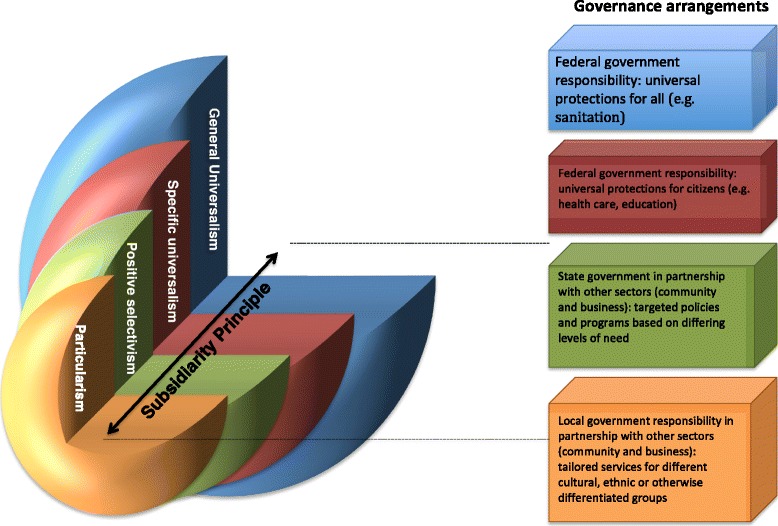
“Selectivism is further subdivided into two categories, positive and negative (Carey et al., 2015; see Figure 2).”
BackgroundGalán, I., Rodríguez‐Blázquez, C., Simón, L., Ortíz, C., López‐Cuadrado, T., & Merlo, J. (2021) · Health & Place · doi:10.1016/j.healthplace.2021.102506 · Cited by 8
“This analytical strategy fits well with the idea of the “Proportionate Universalism” developed by Marmot and Bell (Carey et al., 2015; Marmot and Bell, 2012), although our strategy focuses on the geographical differences (Merlo et al., 2019).”
Infant mortality inequities for Māori in New Zealand: a tale of three policies
Rutter, C., & Walker, S. (2021) · International Journal for Equity in Health · doi:10.1186/s12939-020-01340-y · Cited by 7
“By disproportionately focusing on the more disadvantaged Māori population, these policies reflected a ‘proportionate universalism’ approach to equity, where services were allocated at a scale and intensity proportionate to the degree of need [8].”
BackgroundHeris, C. L., Lovett, R. W., Barrett, E. M., Calma, T., Wright, A., & Maddox, R. (2022) · Australian and New Zealand Journal of Public Health · doi:10.1111/1753-6405.13286 · Cited by 7
COVID-19 and regional inequalities in childhood vaccination uptake in England: a spline regression
Sacre, A., Sowden, S. L., Bambra, C. L., Bennett, N. C., & Todd, A. (2025) · BMC Public Health · doi:10.1186/s12889-025-24207-9 · Cited by 7
“In order to maximise their reach and effectiveness, “health actions [interventions] must be universal, not targeted, but with a scale and intensity that is proportionate” [28, p. 1]].”
Drew, K. J., Homer, C. V., Radley, D., Freeman, C., Kinsella, K., Maynard, M. J., Bakhai, C., & Ells, L. J. (2023) · British Journal of Diabetes · doi:10.15277/bjd.2023.416 · Cited by 7
Jensen, A., Halling, A., Pirouzifard, M., & Lindström, M. (2025) · BMC Family Practice · doi:10.1186/s12875-025-02866-2 · Cited by 6
Health Equity and Universal Provision in Norway: A Case Study
Mehrara, L., & Young, S. M. (2020) · Nordic Journal of Social Research · doi:10.7577/njsr.2638 · Cited by 6
“Drawing on the principle of subsidiarity and the form of particularism as described by Carey et al (2015), amendments to the TEGRA programme in the form of greater cultural responsiveness and understanding could provide some guidance to similar locally based programmes elsewhere in Norway.”
MethodMertens, E., Sagastume, D., & Peñalvo, J. L. (2021) · BMJ Open · doi:10.1136/bmjopen-2021-053260 · Cited by 8
“Twitter José L Peñalvo @JosePenalvo”
Fagerlund, B. H., & Glavin, K. (2023) · Nursing Open · doi:10.1002/nop2.1996 · Cited by 5
Health equity-oriented approaches to inform responses to opioid overdoses: a scoping review protocol
MacKinnon, K., Pauly, B., Shahram, S., Wallace, B. B., Urbanoski, K. A., Gordon, C., Raworth, R., MacDonald, M., Marcellus, L., Sawchuck, D., et al. (2019) · The JBI Database of Systematic Reviews and Implementation Reports · doi:10.11124/jbisrir-2017-003933 · Cited by 6
Baldwin, H., Greenburgh, A., Weir, H., Asif, Z., Laporte, D., Bertram, M., Crawford, A., Duberry, G., Lauter, S., Lloyd‐Evans, B., et al. (2025) · Psychological Medicine · doi:10.1017/s0033291725101128 · Cited by 9
“…interventions on broader populations first, improvements in social inclusion may be most effectively achieved if interventions are designed specifically to address the needs of the most vulnerable first, in line with the framework of proportionate universalism (Carey, Crammond, & De Leeuw, 2015).”
Homel, R. J. (2021) · Journal of Developmental and Life-Course Criminology · doi:10.1007/s40865-021-00163-x · Cited by 7
“These directions include (a) more experiments that integrate universal, selective, and indicated interventions to give effect to the principles of “proportionate universalism” within which the criminogenic and health needs of the many at low risk and the few at high risk can be adequately addressed (Carey et al. 2015)…”
BackgroundDoes providing everyone with free-of-charge organised exercise opportunities work in public health?
Candio, P., Meads, D. M., Hill, A. J., & Bojke, L. (2022) · Health Policy · doi:10.1016/j.healthpol.2022.01.001 · Cited by 5
Returns to work following retirement in Germany, Russia, and the United Kingdom
Platts, L. G., & Glaser, K. (2024) · Work Aging and Retirement · doi:10.1093/workar/waae005 · Cited by 6
The first 1000 days: the price of inequalities in high and middle-income countries
Bono, C. D., Candela, E., Parini, L., Zama, D., Pierantoni, L., Bodini, C. F., Dondi, A., & Lanari, M. (2025) · Pediatric Research · doi:10.1038/s41390-025-03880-x · Cited by 5
“129,130 This strategy seems to be the right strategy for real equality.”
Allen, L. N., Karanja, S., Gichangi, M. M., Mishra, S. K., Sabherwal, S., Motlhatlhedi, K., Nkomazana, O., Macleod, D., Kim, M. J., Ramke, J., et al. (2025) · BMJ Open · doi:10.1136/bmjopen-2023-082975 · Cited by 9
“6 43 Finally, despite being rapid, inexpensive, non-prescriptive, equitable and primarily conducted by non-experts, we are committed to using robust methods to deliver valid, non-tokenistic findings.”
Júnior, J. P. B., & Morais, M. B. (2020) · Revista de Saúde Pública · doi:10.11606/s1518-8787.2020054001713 · Cited by 5
Mackenbach, J. P. (2019) · Oxford University Press eBooks · doi:10.1093/oso/9780198831419.003.0001 · Cited by 6
Patterns of health inequalities
Mackenbach, J. P. (2019) · Oxford University Press eBooks · doi:10.1093/oso/9780198831419.003.0002 · Cited by 5
Williams, S. V., Akande, T. M., & Abbas, K. (2022) · medRxiv · doi:10.1101/2022.01.24.22269771 · Cited by 5
Equity of referrals to type 2 diabetes rehabilitation in a universal welfare state
Bender, A. M., Tapager, I., Brønnum‐Hansen, H., Andersen, I., Glümer, C., & Vrangbæk, K. (2022) · SSM - Population Health · doi:10.1016/j.ssmph.2022.101303 · Cited by 6
Pineo, H., Moore, G., Chaves, K. B., Cooper, E., Dianati, V., & Braithwaite, I. (2025) · Planning Practice and Research · doi:10.1080/02697459.2025.2475628 · Cited by 5
“…also widely discussed, highlighting the importance of residents’ views informing planning policy and decision-making, building on communicative planning and public health theories of participation in governance (Healey, 1997; Innes & Booher, 2010; Kickbusch & Gleicher, 2012; Carey et al ., 2015).”
Tang, K., Feng, J., Lai, H., Zhao, Z., Zou, Y., Lv, Q., Dai, F., Qiu, X., & Lai, W. (2025) · International Journal of Women s Health · doi:10.2147/ijwh.s517387 · Cited by 7
Wemrell, M., Hassan, M., Vicente, R. P., Lindström, M., Öberg, J., & Merlo, J. (2025) · Frontiers in Public Health · doi:10.3389/fpubh.2025.1557921 · Cited by 7
“Accordingly, efforts to avoid discrimination in healthcare should be universal, i.e., directed to the whole population, although proportionally targeted (89) to mitigate discrimination against specific strata such as those including patients with a migration background.”
Boskovic, A., Burgoine, T., & Hoenink, J. C. (2026) · Health & Place · doi:10.1016/j.healthplace.2025.103603 · Cited by 9
Almqvist, L., & Finnman, J. (2024) · Early Education and Development · doi:10.1080/10409289.2024.2423388 · Cited by 8
“However, according to the concept of universal proportionalism (Carey et al., 2015), increasing the proportion of qualified teachers might have a more substantial impact on engagement levels in L2 classrooms, where additional support and expertise are often needed.”
Co‐designing integrated child and family hubs for families experiencing adversity
Montgomery, A. K., Honisett, S., Hall, T., Rungan, S., Drinkwater, A., Bosward, R., Meyers-Morris, T., Liu, H. M., Eapen, V., Eastwood, J. G., et al. (2024) · The Medical Journal of Australia · doi:10.5694/mja2.52486 · Cited by 4
Befus, E.-G., Mølland, E., Helseth, S., Westergren, T., Abildsnes, E., Hagen, M., Nolte, S., & Haraldstad, K. (2024) · Quality of Life Research · doi:10.1007/s11136-024-03834-6 · Cited by 4
“Moreover, interventions should be tailored to individuals mostly in need by the principle of proportionate universalism [59], which is in line with current national recommendations [60].”
Using system dynamics mapping to explore synergy in an equity-focused obesity prevention framework
Headen, I. E., Eaton, T. M., & Kumanyika, S. (2025) · Frontiers in Public Health · doi:10.3389/fpubh.2025.1525224 · Cited by 5
Franzén, C., & Nilsson, E.-L. (2021) · International Journal of Social Science Studies · doi:10.11114/ijsss.v9i6.5281 · Cited by 4
A Health Equity Lens Contributes to an Effective Pandemic Response: A Canadian Regional Perspective
Lam, A., Bacani-Angus, K., Richards, K., Griffin, R., & Karachiwalla, F. (2022) · Health Promotion Practice · doi:10.1177/15248399211072530 · Cited by 4
“Tailored approaches (sometimes termed in the literature as targeted approaches) use selection criteria, such as income, neighborhood, health, or employment status, to tailor eligibility and access to programs and services for priority subgroups within the broader population (Marmot, 2013).”
Background[Assessing the needs of pregnant women: pilot study of the Ariane protoccol].
Saïas, T., Mörch, C.-M., Comtois, J., Girard, I., Bodard, J., & Gerhard, J.-L. (2021) · La Sante publique · doi:10.3917/spub.214.0483 · Cited by 4
Children on the Edge: Starting School with Additional Health and Developmental Needs
O'Connor, M., Quach, J., & Goldfeld, S. (2020) · Springer eBooks · doi:10.1007/978-981-15-3959-6_5 · Cited by 3
Les attentes d’usagers d’un quartier prioritaire en termes de santé : une enquête qualitative
Allory, E., Banâtre, A., Bourbonnois, E., Cavil, G. L., Leborgne, B., Tattevin, F., Chhor, S., & Fiquet, L. (2017) · Santé Publique · doi:10.3917/spub.174.0535 · Cited by 4
Organizing the health interview survey at the local level: design of a pilot study
Hermans, L., Braekman, E., Drieskens, S., & Demarest, S. S. (2022) · Archives of Public Health · doi:10.1186/s13690-022-00909-z · Cited by 7
“the principle of subsidiarity [2] which is a “principled tendency toward solving problems at the local level and empowering individuals, families and voluntary associations to act more efficaciously in their own lives” (p116) [3].”
BackgroundPotter, L. C., Stone, T. J., Swede, J., BG group, Connell, F., Cramer, H., McGeown, H., Carvalho, M., Horwood, J. P., Feder, G. S., et al. (2023) · medRxiv · doi:10.1101/2023.05.24.23290453 · Cited by 3
“The service-improvements co-produced here represent positive selectivism, where targeted approaches (that sit alongside universal services) are used to cater for specific needs(35).”
BackgroundFagerlund, B. H., & Glavin, K. (2025) · BMC Nursing · doi:10.1186/s12912-025-03734-1 · Cited by 3
“NF is rooted in the concept of proportionate universalism [19, 20] meaning that the intervention is both universal and tailored to the individual, with its scope and intensity adjusted to the family’s specific needs.”
Öberg, J., Khalaf, K., Vicente, R. P., Johnell, K., Fastbom, J., & Merlo, J. (2025) · BMC Health Services Research · doi:10.1186/s12913-025-13335-y · Cited by 6
“…the aim of the present and previous publications [11, 13, 32] was to introduce the AIHDA methodology using several quality indicators from different healthcare contexts and applying different statical approaches like traditional regression analyses as well as multilevel models [6, 9, 33–35].”
Navigating and reframing tensions within equity‐centered learning health systems
Abejirinde, I. O., & Wood, B. (2025) · Learning Health Systems · doi:10.1002/lrh2.70040 · Cited by 4
Lamont, A., Harron, K. L., Barlow, J., Bunting, C., Cassidy, R., Clery, A., Kendall, S. A., Liu, M., Lysons, J., Grath-Lone, L. M., et al. (2026) · Journal of Epidemiology & Community Health · doi:10.1136/jech-2026-225934 · Cited by 3
Lignou, S., & Wolfe, I. (2023) · Archives of Disease in Childhood · doi:10.1136/archdischild-2023-325634 · Cited by 3
Grummitt, L. R., Bailey, S., Kelly, E. V., Birrell, L., Gardner, L. A., Halladay, J. E., Chapman, C., Andrews, J. L., Champion, K. E., Hunter, E., et al. (2024) · JMIR Pediatrics and Parenting · doi:10.2196/54637 · Cited by 5
“This is the notion that universal public health policies or interventions be designed to proportionately (equitably) benefit those who need it the most [25,26].”
BackgroundNonlinear child protection intervention and child population density: A prevalence study
ESPOSITO, T., Caldwell, J., Chabot, M., Trocmé, N., Hélie, S., & Fallon, B. (2025) · Children and Youth Services Review · doi:10.1016/j.childyouth.2025.108287 · Cited by 3
Good human functioning, health and the promotion of health
Markham, W. A. (2019) · Health Education · doi:10.1108/he-08-2019-0036 · Cited by 4
How to support equal standing in local health equity?
Haverkamp, B. (2021) · Bioethics · doi:10.1111/bioe.12905 · Cited by 2
Nygren, U. S., Sandberg, H., Tindberg, Y., Nordgren, L., & Eriksson, L. (2021) · Acta Paediatrica · doi:10.1111/apa.16193 · Cited by 3
Eapen, V., Liaw, S., Lingam, R., Woolfenden, S. R., Jalaludin, B. B., Page, A., Kohlhoff, J. R., Scott, J. G., Lawson, K. D., Lam‐Cassettari, C., et al. (2022) · BMJ Open · doi:10.1136/bmjopen-2022-065823 · Cited by 4
Dawes, J., May, T., Fancourt, D. E., & Burton, A. (2022) · International Journal of Environmental Research and Public Health · doi:10.3390/ijerph192315526 · Cited by 4
“This finding fits with the concept of proportional universalism, where health actions must be provided on a scale and intensity that is proportionate to the level of disadvantage and need [28].”
BackgroundConstituent-driven health policy informed by policy advocacy literature
Figueroa, R., & Verma, R. (2023) · Translational Behavioral Medicine · doi:10.1093/tbm/ibac116 · Cited by 7
Kemp, L., Donohoe, K., Matthews, P., & Aspery, W. (2024) · Journal of Advanced Nursing · doi:10.1111/jan.16298 · Cited by 5
“…families within a population, the differential or inequalities in devel - opmental outcomes narrows and more children attain normal de - velopment (Carey et al., 2015 ), although the practical mechanisms for enacting proportionate universalism remain subject to different interpretations…”
Centering Equity in Evidence‐Informed Decision Making: Theoretical and Practical Considerations
Hirsch, B. K., FROBOM, K., GIGLIERANO, G., Stevenson, M., & Givens, M. L. (2025) · Milbank Quarterly · doi:10.1111/1468-0009.70002 · Cited by 4
“60 Examples of proportionate universal interventions are population-based cancer screening programs and needs-based geographical allocation of universal health care services in European countries.”
Public Health Policy and Health Equity
Kim, C. (2016) · Health Policy and Management · doi:10.4332/kjhpa.2016.26.4.256 · Cited by 3
Allen, L. N., Mackinnon, S., Gordon, I., Blane, D., Marques, A. P., Gichuhi, S., Mwangi, A. M., Burton, M. J., Bolster, N. M., Macleod, D., et al. (2022) · BMJ Open · doi:10.1136/bmjopen-2021-057410 · Cited by 2
Mass testing equity during infectious disease outbreaks: a scoping review. v2Preprint
Ost, K., Zinszer, K., Mathevet, I., Traverson, L., & Ridde, V. (2020) · doi:10.17504/protocols.io.bivske6e · Cited by 3
Nimubona, A. (2022) · Health Economics Review · doi:10.1186/s13561-022-00376-w · Cited by 2
“Following the principle of “from each according to his income to each according to his need”, proportionate universal health coverage aims to make both health services and health funds accessible to all groups of the population, but with a relative intensity that corresponds to the level of economic and health status…”
Background“Those Who Need It the Most”: Equity Framing in 2021 U.S. Print News About Food Assistance
Mahmood, H., Mejia, P., Perez-Sanz, S. B., Garcia, K., Gollust, S. E., Niederdeppe, J., Fowler, E. F., Baum, L. M., Floyd, B., & Dorfman, L. E. (2023) · Health Equity · doi:10.1089/heq.2023.0016 · Cited by 3
Kennedy, L. E., Norman‐Burgdolf, H., Jarvandi, S., & Washburn, L. T. (2024) · Health Promotion Practice · doi:10.1177/15248399241285506 · Cited by 2
“Drawing on established frameworks for eliminating inequities in public health, combined with use of the CFIR 2.0, will support that endeavor (Benfer, 2015; Carey et al., 2015; Cowan et al., 2022; Hogan et al., 2018; Lett et al., 2022; Peterson et al., 2021; Trinh-Shevrin et al., 2015).”
InfluentialWhat is the Role of Primary Prevention of Obesity in an Age of Effective Pharmaceuticals?
Gómez‐Martín, M., Canfell, O. J., Chai, L. K., Jansson, A. K., Littlewood, R., Sullivan, C. M., Power, D. D., Clarke, E. D., Ells, L. J., de Vlieger, N., et al. (2025) · Current Obesity Reports · doi:10.1007/s13679-025-00632-0 · Cited by 4
Breivik, H., Forthun, I., Knudsen, A. K., van der Velde, L., & Baravelli, C. M. (2025) · European Journal of Public Health · doi:10.1093/eurpub/ckaf086 · Cited by 2
“Balancing specialized, individual-focused measures with broad, integrative approaches is crucial for effectively addressing health disparities, ensuring that everyone benefits from health services while those with greater needs receive more support [40].”
Silberzan, L., Santos, F., Ugarteche-Pérez, A., Wiernik, E., Bajos, N., & Kelly‐Irving, M. (2026) · Social Science & Medicine · doi:10.1016/j.socscimed.2026.119054 · Cited by 2
Barboza, M., Wennergren, M., Nilses, Å., Bernhardsson, S., & Lundgren, J. S. (2026) · BMC Health Services Research · doi:10.1186/s12913-026-14092-2 · Cited by 3
Poverty, Complexity, and a New Way Forward
Halfon, N. (2016) · Academic Pediatrics · doi:10.1016/j.acap.2016.01.018 · Cited by 3
Clifford, S., Smith, J. A., Adamson, E., & Wallace, T. (2020) · Australian and New Zealand Journal of Public Health · doi:10.1111/1753-6405.12994 · Cited by 2
Tremblay, C., Deshaies, M.-H., Hamelin‐Brabant, L., & Roch, G. (2021) · Reflets Revue d’intervention sociale et communautaire · doi:10.7202/1076141ar · Cited by 2
Zubrick, S. R., Taylor, C. L., Christensen, D., & Hancock, K. (2022) · Life course research and social policies · doi:10.1007/978-3-031-12224-8_3 · Cited by 3
Brothers, T. D., Walley, A. Y., Rivers-Bowerman, H., McLeod, M., & Genge, L. (2023) · Addiction Science & Clinical Practice · doi:10.1186/s13722-023-00370-5 · Cited by 2
Integrated Early Childhood Development in Cambodia: Protocol of a Cluster Stepped-Wedge Trial
King, K. M., Yeng, S., Brennan, C., Creel, D. V., Ames, J. W., Cotes, G. H., Bann, C., & Black, M. M. (2023) · PEDIATRICS · doi:10.1542/peds.2023-060221n · Cited by 2
Omorou, A. Y., Langlois, J., Böhme, P., Legrand, K., Muller, L., Saez, L., Pourcher, C., Spitz, É., Briançon, S., & Lecomte, E. (2023) · Public Health · doi:10.1016/j.puhe.2023.06.006 · Cited by 3
Belon, A. P., Yashadhana, A., Kongats, K., Atkey, K. M., Glenn, N. M., Jaques, K., Nieuwendyk, L., Harris, P. J., de Leeuw, E., & Nykiforuk, C. I. J. (2023) · Health Policy OPEN · doi:10.1016/j.hpopen.2023.100114 · Cited by 2
“At every jurisdictional level, the result is a set of policy ontologies that tend toward universalism rather than proportionate universalism, or even selective proportional-ism [37].”
BackgroundChen, K. J., Kornas, K., & Rosella, L. C. (2024) · Journal of Epidemiology & Community Health · doi:10.1136/jech-2023-221080 · Cited by 2
Metadata
- Authors
- Carey, G., Crammond, B., & De Leeuw, E.
- Affiliations
- Australian National University (AU)
- Monash University (AU)
- Corresponding author
- Carey, Gemma
- ORCID
- Carey, Gemma
- Venue
- International Journal for Equity in Health
- Published
- 2015-09-15
- Volume
- 14
- Issue
- 1
- Pages
- 81-81
- ISSN
- 1475-9276 (ISSN-L)
- PMC
- PMC4570091
- OpenAlex
- W2157527617
- Cited by
- 328
- References
- 53
- Citations by year
- 2026: 32 · 2025: 38 · 2024: 27 · 2023: 50 · 2022: 38 · 2021: 37 · 2020: 40 · 2019: 33 · 2018: 14 · 2017: 12 · 2016: 7
- FWCI
- 2.00
- Type
- journal article
- Language
- en
- Open access
- gold
- doi.org
- Licence
- cc-by
- Locations
- International Journal for Equity in Health (publishedVersion, cc-by)
- Europe PMC (PubMed Central) (publishedVersion, cc-by)
- PubMed Central (publishedVersion, cc-by)
- PubMed (publishedVersion)
- UNSWorks (UNSW Sydney) (submittedVersion, cc-by-nc-nd)
- Minerva Access (University of Melbourne) (submittedVersion, cc-by)
- ANU Open Research (Australian National University) (submittedVersion, cc-by)
- UNSWorks (UNSW Sydney) (submittedVersion, cc-by)
- Topics
- Health Sciences › Medicine › Public Health, Environmental and Occupational Health › Public Health Policies and Education
- Social Sciences › Health › Public Health and Social Inequalities
- Social Sciences › Health › Health disparities and outcomes
- Keywords
- proportionate universalism, health equity, social gradient in health, health disparities, universal welfare state, targeted policy, multi-level governance, subsidiarity, policy framework, social policy
- MeSH terms
- Health Equity, Health Policy, Social Welfare, Healthcare Disparities
About these checks
Registry, retraction, Cites and statistics results are computed, not judged, with one exception: a printed reference that no index lists is read once by a model before it counts as a citation error. Claims are extracted by a model and kept only when their quote appears verbatim in the text; each cited source is then checked, with a model’s help, for whether it says what the claim relies on. Those verdicts can be wrong — read the claim’s quote and the cited source before relying on one.
Statistics and arithmetic are recomputed, not judged.
Confidence bands are shown only for fields calibrated on our annotated test set. None is calibrated yet, so no band is shown.
What counts as a claim ›How we measure confidence ›How we check this ›
Are you an author, or do you see a problem with this page? Request a review
Data sources
Bibliographic data: Semantic Scholar, OpenAlex, Crossref.
Contains information from the Semantic Scholar Academic Graph Datasets, made available under the ODC Attribution License (ODC-BY 1.0).
Semantic Scholar’s data is described in: Kinney, R., et al. (2023). The Semantic Scholar Open Data Platform. arXiv:2301.10140.
