

The DOI matches its Crossref record; 54 of the 54 references it cites were found in a registry or an index.
PKN2 in colon cancer cells inhibits M2 phenotype polarization of tumor-associated macrophages via regulating DUSP6-Erk1/2 pathway
Open accessAbstract
BACKGROUND: Protein kinase N2 (PKN2) is a PKC-related serine/threonine-protein kinase. PKN2 is required for tumor cell migration, invasion and apoptosis. However, the functional role of PKN2 in regulating tumor associated macrophages (TAMs) polarization in colon cancer has never been reported. METHODS: PKN2 expression in human colon cancer tissues was examined with immunohistochemistry (IHC). M1/M2 macrophage signatures were evaluated by RT-PCR, IHC and flow cytometry. The effects of PKN2 on tumor growth and TAM polarization were investigated both in vitro and in vivo. PKN2 targeted cytokines/pathway were analyzed by gene expression analysis and further confirmed by PCR, luciferase assay or western blot. Correlations between PKN2 and transcriptional factors for IL4 and IL10 were confirmed by ChIP-qPCR. The catalytic activities of PKN2 and DUSP6 were determined by kinase activity assay. Interactions between PKN2 and DUSP6 were confirmed by Co-IP. RESULTS: The expression of PKN2 in colon cancer cells predicted a favorable prognosis and was associated with low M2 macrophage content in human colon cancer tissues. PKN2 inhibited tumor growth in mice xenograft model and inhibited M2 phenotype polarization both in vitro and in vivo. Mechanistically, PKN2 suppresses the expression of IL4 and IL10 from colon cancer cells by inhibiting Erk1/2 phosphorylation, which is required for phosphorylation and binding of CREB and Elk-1 to the promoters of IL4 and IL10. DUSP6, which is phosphorylated and activated through direct association with PKN2, suppresses Erk1/2 activation. CONCLUSIONS: The expression of PKN2 in colon cancer cells suppresses tumor associated M2 macrophage polarization and tumor growth. Targeting PKN2 signaling pathway may provide a potential therapeutic strategy for colon cancer.
Overview
The claims and statistics of this paper haven’t been checked yet.
Run the check — free, no account needed. It reads the open-access text and checks the sources it cites.
Integrity signals
Registry
Cites
Statistics
Figures
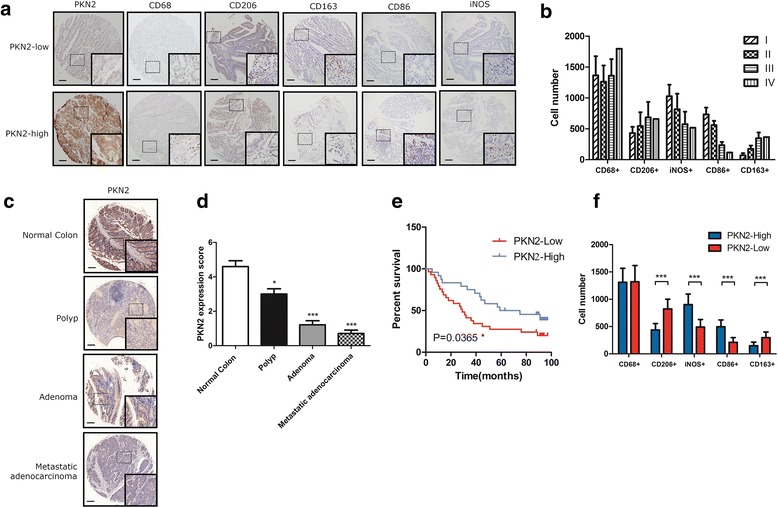
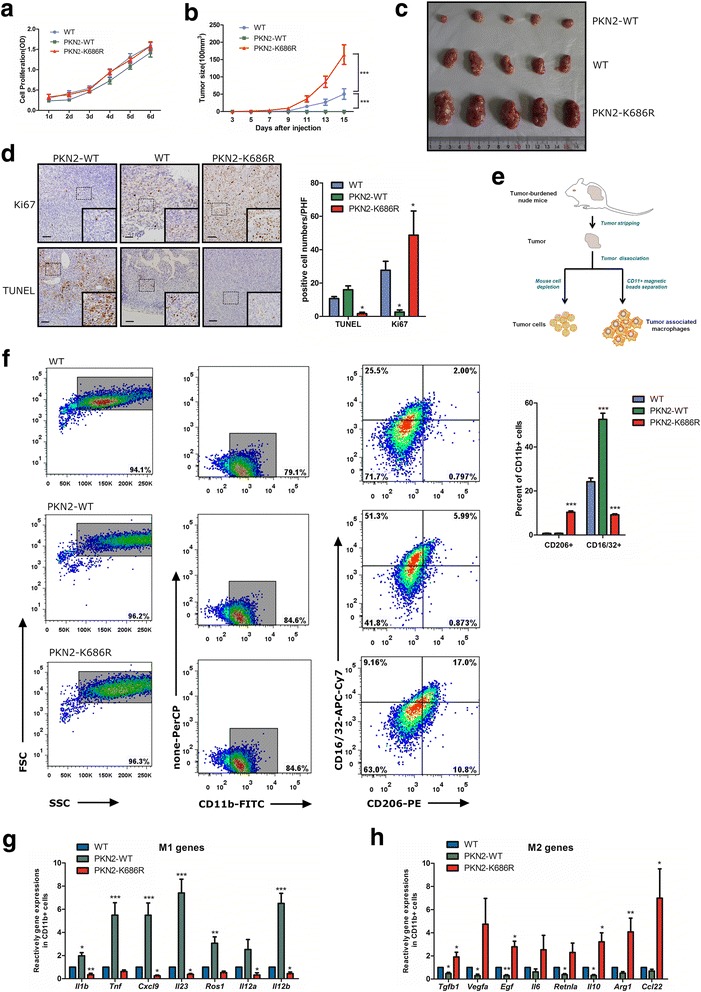
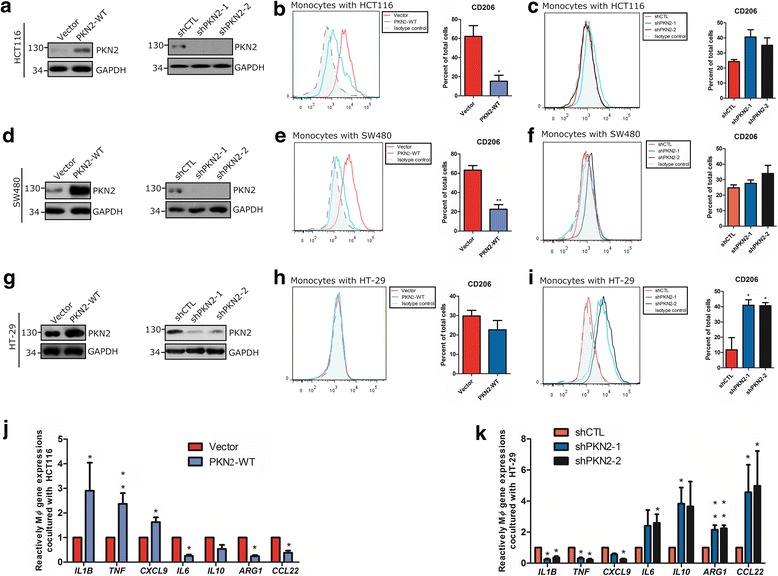
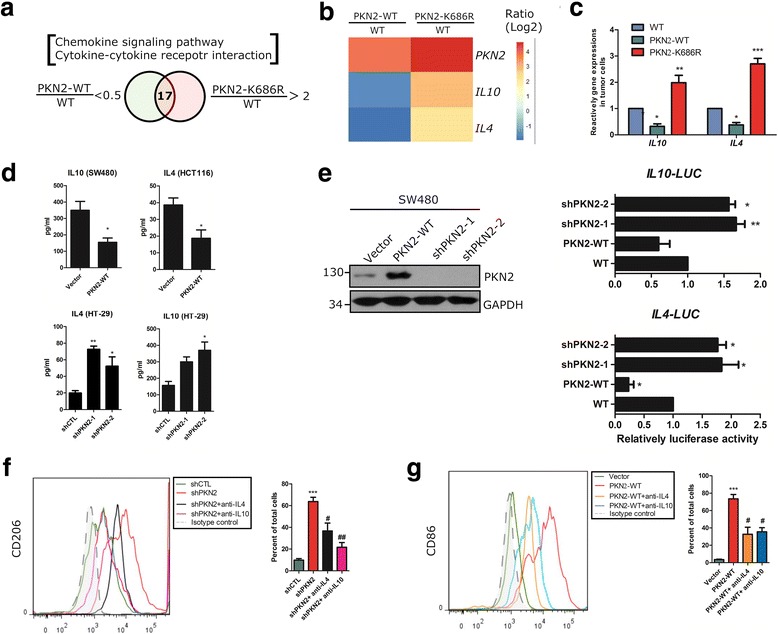
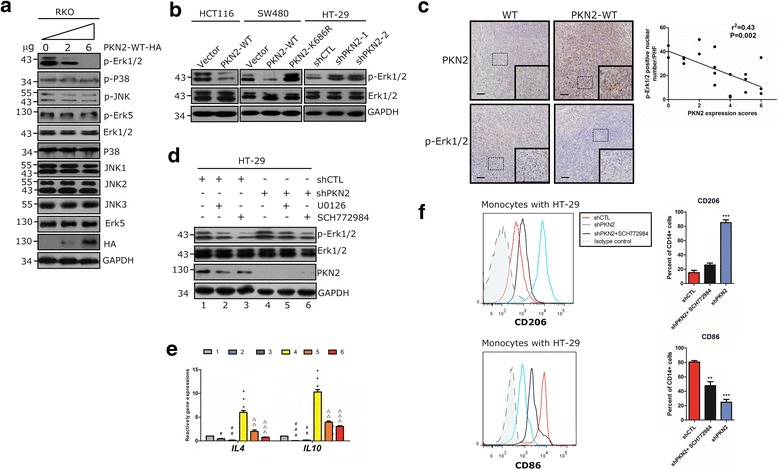
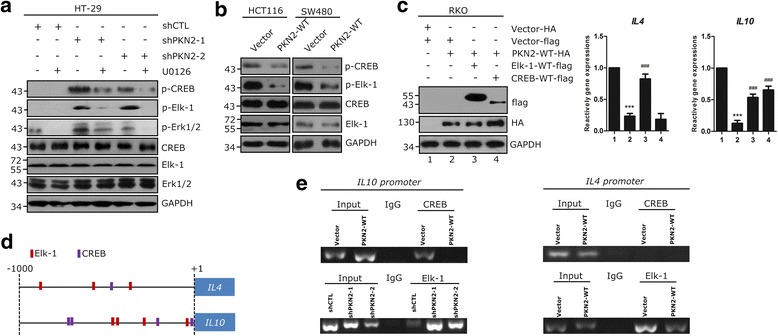
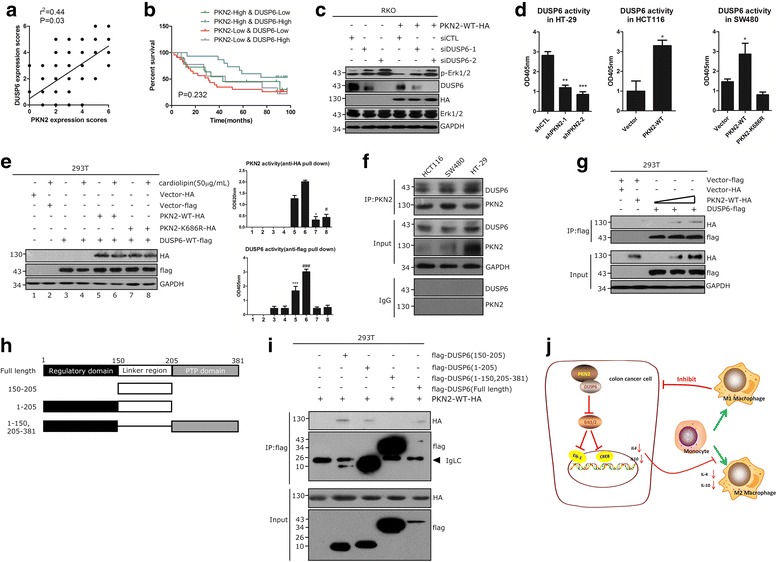
Verification
Claims the paper makes
The claims and statistics of this paper haven’t been checked yet.
Run the check — free, no account needed. It reads the open-access text and checks the sources it cites.
Claims other papers make about this one
Each is checked against this paper’s own text: does it say what the citing paper says it does?
In the citing paper
“Through data analysis, we found that patients with gastric cancer with high expression of PSPH and low immune score had poor prognosis because of a high amount of M0 macrophages and a low amount of M1 macrophages, which was consistent with the previous study [38].”
From Phosphoserine phosphatase as a prognostic biomarker in patients with gastric cancer and its potential association with immune cells (2022) · cites this paper as [38]
Self-check
Percentages, sums and reported differences re-computed from the paper’s own numbers.
The self-check needs the paper’s full text.
Citations
Cites
Lozano, R., Naghavi, M., Foreman, K., Lim, S., Shibuya, K., Aboyans, V., Abraham, J., Adair, T., Aggarwal, R., Ahn, S. Y., et al. (2012) · The Lancet · doi:10.1016/s0140-6736(12)61728-0 · Cited by 14,070
Siegel, R., Naishadham, D., & Jemal, A. (2012) · CA: A Cancer Journal for Clinicians · doi:10.3322/caac.20138 · Cited by 10,679
Macrophage Diversity Enhances Tumor Progression and Metastasis
Qian, B., & Pollard, J. W. (2010) · Cell · doi:10.1016/j.cell.2010.03.014 · Cited by 5,349
Kyriakis, J. M., & Avruch, J. (2001) · Physiological Reviews · doi:10.1152/physrev.2001.81.2.807 · Cited by 3,400
Bingle, L., Brown, N. J., & Lewis, C. E. (2002) · The Journal of Pathology · doi:10.1002/path.1027 · Cited by 2,022
Tumor-Associated Macrophages as Major Players in the Tumor Microenvironment
Chanmee, T., Ontong, P., Konno, K., & Itano, N. (2014) · Cancers · doi:10.3390/cancers6031670 · Cited by 1,591
Tumor-associated macrophages: Functional diversity, clinical significance, and open questions
Biswas, S. K., Allavena, P., & Mantovani, A. (2013) · Seminars in Immunopathology · doi:10.1007/s00281-013-0367-7 · Cited by 551
Pharmacological inhibitors of MAPK pathways
English, J. M., & Cobb, M. H. (2002) · Trends in Pharmacological Sciences · doi:10.1016/s0165-6147(00)01865-4 · Cited by 449
M2 macrophages promote beta-cell proliferation by up-regulation of SMAD7
Xiao, X., Gaffar, I. M., Guo, P., Wiersch, J. C., Fischbach, S., Peirish, L., Song, Z., El‐Gohary, Y., Prasadan, K. L., Shiota, C., et al. (2014) · Proceedings of the National Academy of Sciences · doi:10.1073/pnas.1321347111 · Cited by 312
Sunters, A., Madureira, P. A., Pomeranz, K. M., Aubert, M., Brosens, J. J., Cook, S. J., Burgering, B. M. T., Coombes, R. C., & Lam, E. W. ‐. (2006) · Cancer Research · doi:10.1158/0008-5472.can-05-1997 · Cited by 251
The Specificity of Extracellular Signal-regulated Kinase 2 Dephosphorylation by Protein Phosphatases
Zhou, B., Wang, Z.-X., Zhao, Y. C., Brautigan, D. L., & Zhang, Z. (2002) · Journal of Biological Chemistry · doi:10.1074/jbc.m203969200 · Cited by 211
Vincent, S., & Settleman, J. E. (1997) · Molecular and Cellular Biology · doi:10.1128/mcb.17.4.2247 · Cited by 193
Kortenjann, M., Thomae, O., & Shaw, P. E. (1994) · Molecular and Cellular Biology · doi:10.1128/mcb.14.7.4815 · Cited by 180
Na, Y.-R., Yoon, Y.-N., Son, D.-I., & Seok, S. H. (2013) · PLoS ONE · doi:10.1371/journal.pone.0063451 · Cited by 174
Larsen, C. M., Wadt, K., Juhl, L., Andersen, H. U., Karlsen, A. E., Su, M. S. S., Seedorf, K., Shapiro, L., Dinarello, C. A., & Mandrup-Poulsen, T. R. (1998) · Journal of Biological Chemistry · doi:10.1074/jbc.273.24.15294 · Cited by 155
Marchetti, S., Gimond, C., Chambard, J., Touboul, T., Roux, D., Pouysségur, J., & Pagès, G. (2005) · Molecular and Cellular Biology · doi:10.1128/mcb.25.2.854-864.2005 · Cited by 154
Cloning and Expression Patterns of two Members of A Novel Protein‐kinase‐C‐related Kinase Family
Palmer, R. H., Ridden, J., & Parker, P. J. (1995) · European Journal of Biochemistry · doi:10.1111/j.1432-1033.1995.tb20395.x · Cited by 151
Tumor-associated macrophages in cancers
Hu, W., Li, X., Zhang, C., Yang, Y., Jiang, J., & Wu, C. (2015) · Clinical & Translational Oncology · doi:10.1007/s12094-015-1373-0 · Cited by 147
Zhang, Y., Sime, W., Juhas, M., & Sjölander, A. (2013) · European Journal of Cancer · doi:10.1016/j.ejca.2013.06.005 · Cited by 146
Novel Mechanism of Macrophage-Mediated Metastasis Revealed in a Zebrafish Model of Tumor Development
Wang, J., Cao, Z., Zhang, X., Nakamura, M., Sun, M., Hartman, J., Harris, R. A., Sun, Y., & Cao, Y. (2014) · Cancer Research · doi:10.1158/0008-5472.can-14-2819 · Cited by 133
Karlsson, M. E., Mathers, J. E., Dickinson, R. J., Mandl, M., & Keyse, S. M. (2004) · Journal of Biological Chemistry · doi:10.1074/jbc.m406720200 · Cited by 132
Komohara, Y., Niino, D., Saito, Y., Ohnishi, K., Horlad, H., Ohshima, K., & Takeya, M. (2013) · Cancer Science · doi:10.1111/cas.12167 · Cited by 119
Multiple Regions of MAP Kinase Phosphatase 3 Are Involved in Its Recognition and Activation by ERK2
Zhou, B., Wu, L., Shen, K., Zhang, J., Lawrence, D. S., & Zhang, Z. (2001) · Journal of Biological Chemistry · doi:10.1074/jbc.m009753200 · Cited by 116
Galectin-3 Accelerates M2 Macrophage Infiltration and Angiogenesis in Tumors
Jia, W., Kidoya, H., Yamakawa, D., Naito, H., & Takakura, N. (2013) · American Journal Of Pathology · doi:10.1016/j.ajpath.2013.01.017 · Cited by 108
Rho GTPases regulate PRK2/PKN2 to control entry into mitosis and exit from cytokinesis
Schmidt, A., Durgan, J., Magalhães, A., & Hall, A. (2007) · The EMBO Journal · doi:10.1038/sj.emboj.7601637 · Cited by 107
Specific Proteolysis of the Kinase Protein Kinase C-related Kinase 2 by Caspase-3 during Apoptosis
Cryns, V. L., Byun, Y., Rana, A., Mellor, H., Lustig, K. D., Ghanem, L. R., Parker, P. J., Kirschner, M. W., & Yuan, J. (1997) · Journal of Biological Chemistry · doi:10.1074/jbc.272.47.29449 · Cited by 99
DUSP6/MKP-3 inactivates ERK1/2 but fails to bind and inactivate ERK5
Arkell, R. S., Dickinson, R. J., Squires, M. S., Hayat, S., Keyse, S. M., & Cook, S. J. (2007) · Cellular Signalling · doi:10.1016/j.cellsig.2007.12.014 · Cited by 86
Post-translational regulation of the ERK phosphatase DUSP6/MKP3 by the mTOR pathway
Bermúdez, O. M., Marchetti, S., Pagès, G., & Gimond, C. (2008) · Oncogene · doi:10.1038/sj.onc.1211040 · Cited by 84
Regulatory Domain Selectivity in the Cell-Type Specific PKN-Dependence of Cell Migration
Lachmann, S., Jevons, A. L., Rycker, M. D., Casamassima, A., Radtke, S., Collazos, A., & Parker, P. J. (2011) · PLoS ONE · doi:10.1371/journal.pone.0021732 · Cited by 73
Bhogal, R. K., & Bona, C. A. (2008) · International Reviews of Immunology · doi:10.1080/08830180802430974 · Cited by 69
Lin, W., Huang, J., Yuan, Z., Feng, S., Xie, Y., & Ma, W. (2017) · Scientific Reports · doi:10.1038/s41598-017-02222-0 · Cited by 69
Koh, H., Lee, K. H., Kim, D., Kim, S., Kim, J. W., & Chung, J. (2000) · Journal of Biological Chemistry · doi:10.1074/jbc.m001753200 · Cited by 68
PKN2 and Cdo interact to activate AKT and promote myoblast differentiation
Lee, S.-J., Hwang, J., Jeong, H., Yoo, M., Go, G.-Y., Lee, J.-R., Leem, Y.-E., Park, J. W., Seo, D. W., Kim, Y. K., et al. (2016) · Cell Death and Disease · doi:10.1038/cddis.2016.296 · Cited by 58
Groß, C., Heumann, R., & Erdmann, K. S. (2001) · FEBS Letters · doi:10.1016/s0014-5793(01)02401-2 · Cited by 56
VDR Status Arbitrates the Prometastatic Effects of Tumor-Associated Macrophages
Zhang, Y., Guo, Q., Zhang, Z., Bai, N., Liu, Z., Xiong, M., Wei, Y., Xiang, R., & Tan, X. (2014) · Molecular Cancer Research · doi:10.1158/1541-7786.mcr-14-0036 · Cited by 55
Zhu, Y., Cheng, Y., Guo, Y., Chen, J., Chen, F., Luo, R., & Li, A. (2015) · Oncotarget · doi:10.18632/oncotarget.6633 · Cited by 51
Self-citationFibroblast Growth Factor Regulates Human Neuroectoderm Specification Through ERK1/2-PARP-1 Pathway
Yoo, Y. D., Huang, C. T.-L., Zhang, X., LaVaute, T. M., & Zhang, S. (2011) · Stem Cells · doi:10.1002/stem.758 · Cited by 45
Kim, E., Choi, Y. E., Hwang, S. J., Han, Y.-H., Park, M., & Bae, I. H. (2016) · Oncotarget · doi:10.18632/oncotarget.13561 · Cited by 45
Ye, Y., Huang, X., Zhang, Y., Lai, X., Wu, X., Zeng, X., Tang, X., & Zeng, Y. (2011) · International Immunopharmacology · doi:10.1016/j.intimp.2011.12.011 · Cited by 44
Synergistic anti-tumor efficacy of sorafenib and fluvastatin in hepatocellular carcinoma
Cheng, Y., Luo, R.-C., Zheng, H., Wang, B., Liu, Y., Liu, D., Chen, J., Xu, W., Li, A., & Zhu, Y. (2017) · Oncotarget · doi:10.18632/oncotarget.15575 · Cited by 43
Self-citationKortenjann, M., Thomae, O., & Shaw, P. E. (1994) · Molecular and Cellular Biology · doi:10.1128/mcb.14.7.4815-4824.1994 · Cited by 42
Peng, B. H., Morrice, N. A., Groenen, L. C., & Wettenhall, R. E. H. (1996) · Journal of Biological Chemistry · doi:10.1074/jbc.271.50.32233 · Cited by 41
IL4 from T Follicular Helper Cells Downregulates Antitumor Immunity
Shirota, H., Klinman, D. M., Ito, S.-E. A., Ito, H., Kubo, M., & Ishioka, C. (2016) · Cancer Immunology Research · doi:10.1158/2326-6066.cir-16-0113 · Cited by 41
Yang, C., Melhuish, T. A., Spencer, A., Li, N., Hao, Y., Jividen, K., Harris, T. E., Snow, C. J., Frierson, H. F., Wotton, D., et al. (2017) · The Prostate · doi:10.1002/pros.23400 · Cited by 36
Larynx carcinoma regulates tumor-associated macrophages through PLGF signaling
Xu, Z., & Qi, Y. (2015) · Scientific Reports · doi:10.1038/srep10071 · Cited by 33
Wang, J., Zhang, S., Ma, H., Yang, S., Liu, Z., Wu, X., Wang, S., Zhang, Y., & Liu, Y. (2016) · Neurochemical Research · doi:10.1007/s11064-016-2097-4 · Cited by 33
Cho, Y. A., & Kim, J. (2017) · Journal of Epidemiology · doi:10.1016/j.je.2016.06.002 · Cited by 33
Tripathi, A., & Sodhi, A. (2009) · Immunobiology · doi:10.1016/j.imbio.2008.11.013 · Cited by 27
Wang, H., Zhou, Y., Liu, R., Qin, Y., Cen, Y., Hu, L., Wang, S., & Hu, Z.-J. (2017) · Cell Biochemistry and Biophysics · doi:10.1007/s12013-017-0782-9 · Cited by 24
Rajamanickam, G. D., Kastelic, J. P., & Thundathil, J. C. (2017) · Biology of Reproduction · doi:10.1095/biolreprod.116.141267 · Cited by 23
Regulation of both PDK1 and the Phosphorylation of PKC-ζ and -δ by a C-Terminal PRK2 Fragment
Hodgkinson, C. P., & Sale, G. J. (2001) · Biochemistry · doi:10.1021/bi010719z · Cited by 21
Cejudo-Marín, R., Tárrega, C., Nunes‐Xavier, C. E., & Pulido, R. (2012) · Journal of Molecular Biology · doi:10.1016/j.jmb.2012.04.004 · Cited by 20
Inhibition of Mitogen-activated Protein Kinase Phosphatase 3 Activity by Interdomain Binding
Mark, J. K., Aubin, R. A., Smith, S., & Hefford, M. A. (2008) · Journal of Biological Chemistry · doi:10.1074/jbc.m801747200 · Cited by 12
Karličić, V., Vuković, J., Stanojević, I., Sotirović, J., Perić, A., Jović, M., Cvijanović, V., Djukic, M. M., Banovic, T., & Vojvodić, D. (2016) · PubMed · Cited by 9
Cited by
Sorted by citations
Peña-Romero, A. C., & Orenes‐Piñero, E. (2022) · Cancers · doi:10.3390/cancers14071681 · Cited by 271
He, Z., Wang, J., Zhu, C., Xu, J., Chen, P., Jiang, X., Chen, Y., Jiang, J., & Sun, C.-Y. (2022) · Cancer Letters · doi:10.1016/j.canlet.2022.215751 · Cited by 203
Self-citationYang, Y., Li, S., To, K. K. W., Zhu, S., Wang, F., & Fu, L. (2025) · Journal of Experimental & Clinical Cancer Research · doi:10.1186/s13046-025-03377-9 · Cited by 221
Jiang, H., Wei, H., Wang, H., Wang, Z., Li, J., Ou, Y., Xiao, X., Wang, W., Chang, A., Sun, W., et al. (2022) · Cell Death and Disease · doi:10.1038/s41419-022-04632-z · Cited by 197
Zhong, Q., Fang, Y., Lai, Q., Wang, S., He, C., Li, A., Liu, S., & Yan, Q. (2020) · Journal of Experimental & Clinical Cancer Research · doi:10.1186/s13046-020-01637-4 · Cited by 141
Metadata
- Authors
- Cheng, Y., Zhu, Y., Xu, J., Yang, M., Chen, P., Xu, W., Zhao, J., Geng, L., & Gong, S.
- Affiliations
- Guangzhou Women and Children Medical Center (CN)
- Nanfang Hospital (CN)
- Corresponding author
- Gong, Sitang
- ORCID
- Venue
- Molecular Cancer
- Published
- 2018-01-24
- Volume
- 17
- Issue
- 1
- Pages
- 13-13
- ISSN
- 1476-4598 (ISSN-L)
- PMC
- PMC5784528
- OpenAlex
- W2790033844
- Cited by
- 161
- References
- 54
- Citations by year
- 2026: 11 · 2025: 22 · 2024: 25 · 2023: 22 · 2022: 28 · 2021: 37 · 2020: 8 · 2019: 7
- FWCI
- 5.80
- Type
- journal article
- Language
- en
- Open access
- gold
- doi.org
- Licence
- cc-by
- Locations
- Molecular Cancer (publishedVersion, cc-by)
- PubMed Central (publishedVersion, cc-by)
- PubMed (publishedVersion)
- DOAJ (DOAJ: Directory of Open Access Journals) (submittedVersion, cc-by-sa)
- Funders
- National Natural Science Foundation of China (81301758, 81602646)
- Natural Science Foundation of Guangdong Province (2016A030310254)
- China Postdoctoral Science Foundation (2016M600648)
- Topics
- Life Sciences › Immunology and Microbiology › Immunology › Immune cells in cancer
- Life Sciences › Biochemistry, Genetics and Molecular Biology › Molecular Biology › Angiogenesis and VEGF in Cancer
- Life Sciences › Biochemistry, Genetics and Molecular Biology › Molecular Biology › TGF-β signaling in diseases
- Keywords
- PKN2, colon cancer, tumor-associated macrophages, M2 macrophage polarization, DUSP6, ERK1/2 phosphorylation, IL-4, IL-10, CREB, Elk-1, tumor growth, prognostic factors, kinase signaling pathways
- MeSH terms
- Colonic Neoplasms, Humans, Immunohistochemistry, Macrophage Activation, Macrophages, Neoplasm Staging, Prognosis, Promoter Regions, Genetic, Protein Binding, Protein Kinase C, Biomarkers, Tumor, Gene Expression Regulation, Neoplastic, Cytokines, MAP Kinase Signaling System, Cell Line, Tumor, ets-Domain Protein Elk-1, CREB-Binding Protein, Dual Specificity Phosphatase 6
About these checks
Registry, retraction, Cites and statistics results are computed, not judged, with one exception: a printed reference that no index lists is read once by a model before it counts as a citation error. Claims are extracted by a model and kept only when their quote appears verbatim in the text; each cited source is then checked, with a model’s help, for whether it says what the claim relies on. Those verdicts can be wrong — read the claim’s quote and the cited source before relying on one.
Statistics and arithmetic are recomputed, not judged.
Confidence bands are shown only for fields calibrated on our annotated test set. None is calibrated yet, so no band is shown.
What counts as a claim ›How we measure confidence ›How we check this ›
Are you an author, or do you see a problem with this page? Request a review
