

Harnessing tumor‐associated macrophages as aids for cancer immunotherapy
Open accessThe DOI matches its Crossref record; 137 of the 137 references it cites were found in a registry or an index.
Abstract
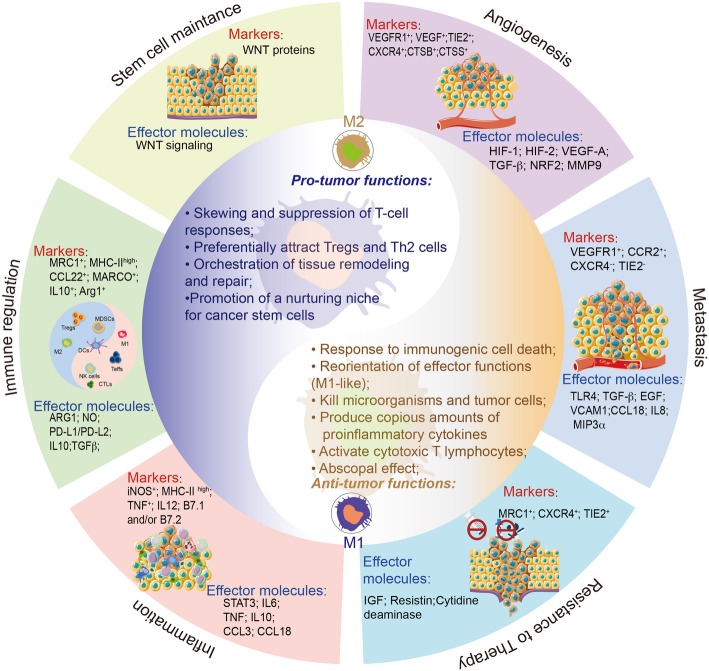
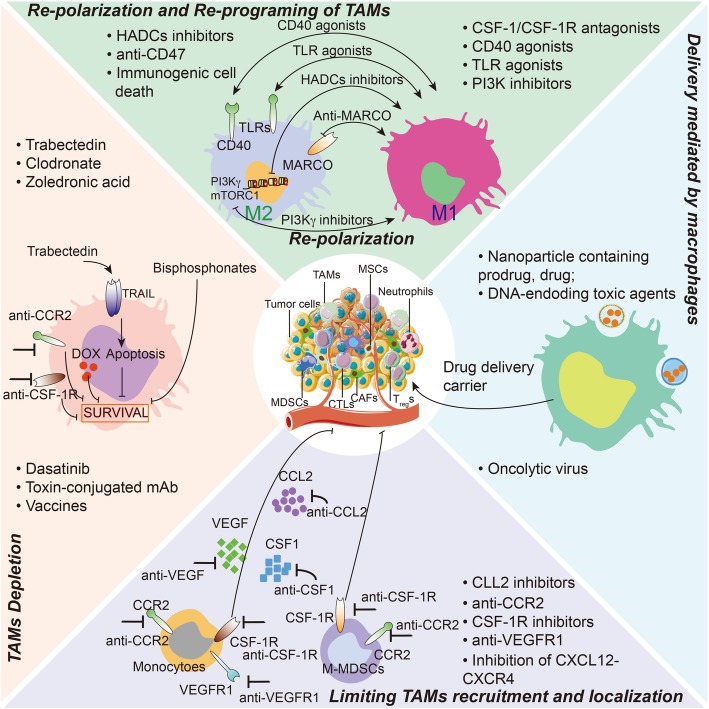
Cancer immunotherapies that engage immune cells to fight against tumors are proving to be powerful weapons in combating cancer and are becoming increasingly utilized in the clinics. However, for the majority of patients with solid tumors, little or no progress has been seen, presumably due to lack of adequate approaches that can reprogram the local immunosuppressive tumor milieu and thus reinvigorate antitumor immunity. Tumor-associated macrophages (TAMs), which abundantly infiltrate most solid tumors, could contribute to tumor progression by stimulating proliferation, angiogenesis, metastasis, and by providing a barrier against antitumor immunity. Initial TAMs-targeting strategies have shown efficacy across therapeutic modalities and tumor types in both preclinical and clinical studies. TAMs-targeted therapeutic approaches can be roughly divided into those that deplete TAMs and those that modulate TAMs activities. We here reviewed the mechanisms by which macrophages become immunosuppressive and compromise antitumor immunity. TAMs-focused therapeutic strategies are also summarized.
Overview
The claims and statistics of this paper haven’t been checked yet.
Free: it reads the open-access text and checks the first 5 claims that cite a source we can check. Create a free account to check every claim.
Integrity signals
Registry
Cites
Statistics
Figures
Verification
Claims the paper makes
The claims and statistics of this paper haven’t been checked yet.
Free: it reads the open-access text and checks the first 5 claims that cite a source we can check. Create a free account to check every claim.
Claims other papers make about this one
Each is checked against this paper’s own text: does it say what the citing paper says it does?
The cited source says what the claim attributes to it.
In the citing paper
“Moreover, the phagocytic role of TAMs can be harnessed to concentrate cytotoxic drugs in the TME [85, 86].”
From Tumor microenvironment signaling and therapeutics in cancer progression (2023) · cites this paper as [86]
Self-check
Percentages, sums and reported differences re-computed from the paper’s own numbers.
The self-check needs the paper’s full text.
Citations
Cites
Hallmarks of Cancer: The Next Generation
Hanahan, D., & Weinberg, R. A. (2011) · Cell · doi:10.1016/j.cell.2011.02.013 · Cited by 66,590
Mantovani, A., Allavena, P., Sica, A., & Balkwill, F. (2008) · Nature · doi:10.1038/nature07205 · Cited by 11,399
Immunity, Inflammation, and Cancer
Grivennikov, S. I., Greten, F. R., & Karin, M. (2010) · Cell · doi:10.1016/j.cell.2010.01.025 · Cited by 10,755
Microenvironmental regulation of tumor progression and metastasis
Quail, D. F., & Joyce, J. A. (2013) · Nature Medicine · doi:10.1038/nm.3394 · Cited by 7,994
The chemokine system in diverse forms of macrophage activation and polarization
MANTOVANI, A., SICA, A., SOZZANI, S., ALLAVENA, P., VECCHI, A., & LOCATI, M. (2004) · Trends in Immunology · doi:10.1016/j.it.2004.09.015 · Cited by 6,534
TGFβ attenuates tumour response to PD-L1 blockade by contributing to exclusion of T cells
Mariathasan, S., Turley, S. J., Nickles, D., Castiglioni, A., Yuen, K., Wang, Y., Kadel III, E. E., Koeppen, H., Astarita, J. L., Cubas, R., et al. (2018) · Nature · doi:10.1038/nature25501 · Cited by 5,400
Macrophage Diversity Enhances Tumor Progression and Metastasis
Qian, B.-Z., & Pollard, J. W. (2010) · Cell · doi:10.1016/j.cell.2010.03.014 · Cited by 5,188
Chen, W., Jin, W., Hardegen, N., Lei, K.-J., Li, L., Marinos, N., McGrady, G., & Wahl, S. M. (2003) · The Journal of Experimental Medicine · doi:10.1084/jem.20030152 · Cited by 4,699
Tumor-Associated Macrophages: From Mechanisms to Therapy
Noy, R., & Pollard, J. W. (2014) · Immunity · doi:10.1016/j.immuni.2014.06.010 · Cited by 4,089
Tumour-associated macrophages as treatment targets in oncology
Mantovani, A., Marchesi, F., Malesci, A., Laghi, L., & Allavena, P. (2017) · Nature Reviews Clinical Oncology · doi:10.1038/nrclinonc.2016.217 · Cited by 4,033
Cited by
Items 201–300 of 365
Fan, Y., Jin, L. G., He, Z., Wei, T., Luo, T., Zhang, J., Liu, C., Chang-jiu, D. A. I., Chao, A., Liang, Y., et al. (2023) · Journal of Animal Science and Biotechnology/Journal of animal science and biotechnology · doi:10.1186/s40104-023-00926-0 · Cited by 19
“Fibroblasts actively participate in tissue remodeling, synthesizing and secreting collagen, and organizing into bundles in the developing mammary gland [4].”
BackgroundWang, R., Li, G., Gao, F., Xu, F., Li, X., Zhang, J., Li, J., & Guan, X. (2023) · Science China Life Sciences · doi:10.1007/s11427-023-2433-y · Cited by 19
“Moreover, targeting TAMs also aids immunotherapy by impeding immune regulation, decreasing local angiogenesis, and hampering cancer cell stemness (Li et al., 2019).”
Self-citationYang, H., Xu, H., Lv, D., Li, S., Rong, Y., Wang, Z., Wang, P., Cao, X., Li, X., Xu, Z., et al. (2024) · International Journal of Biological Macromolecules · doi:10.1016/j.ijbiomac.2024.129348 · Cited by 15
Self-citationLi, Y., & Wang, L. (2026) · Immunology · doi:10.1111/imm.70103 · Cited by 22
“Tumours actively skew this polarization towards the M2 phenotype, which constitutes a complex immune evasion mechanism [72].”
InfluentialCRISPR-Cas9 in basic and translational aspects of cancer therapy
Salavatipour, M. S., Poursalehi, Z., Rouzbahani, N. H., Mohammadyar, S., & Vasei, M. (2024) · Bioimpacts · doi:10.34172/bi.2024.30087 · Cited by 17
“133 Cancer cells use some mechanisms (such as self-labeling) to avoid being destroyed by macrophages.”
BackgroundDu, H., Sun, J., Wang, X., Zhao, L., Liu, X., Zhang, C., Wang, F., & Wu, J. (2024) · Journal of Neuro-Oncology · doi:10.1007/s11060-024-04771-7 · Cited by 15
“Tumor-associated macrophages (TAMs) are one of the most abundant populations of infil - trating immune cells in tumor microenvironment (TME) of many, if not all, solid tumors [12].”
The Role of Macrophages in Hepatocellular Carcinoma and Their Therapeutic Potential
Bannister, M. E., Chatterjee, D. A., Shetty, S., & Patten, D. A. (2024) · International Journal of Molecular Sciences · doi:10.3390/ijms252313167 · Cited by 17
Little things with significant impact: miRNAs in hepatocellular carcinoma
Li, J., Bao, H., Huang, Z., Liang, Z., Wang, M., Lin, N., Ni, C., & Xu, Y. (2023) · Frontiers in Oncology · doi:10.3389/fonc.2023.1191070 · Cited by 14
“M1 and M2 are the two extremes of dynamically changing TAM, and that dynamic changes in TAM phenotype also occur during tumorigenesis, invasion, and metastasis (66).”
BackgroundImproving targeted small molecule drugs to overcome chemotherapy resistance
Rismanbaf, A. (2023) · Cancer Reports · doi:10.1002/cnr2.1945 · Cited by 18
“112,185,186 Generally, TAMs are divided into two subgroups, M1 and M2, with the M2 phenotype playing a role in promoting drug resistance and tumor progression.”
BackgroundLi, H., Gong, Y., Yan, P., Xu, Y. J., Qin, G., Wen, W., & Teng, F. (2024) · Frontiers in Immunology · doi:10.3389/fimmu.2024.1453753 · Cited by 23
“Encouragingly, studies have provided compelling evidence showcasing the effectiveness of TAMs-targeting strategies in diverse tumor types (115 – 118).”
Uddin, M. B., Wang, Z., & Yang, C. (2024) · Advanced Science · doi:10.1002/advs.202403936 · Cited by 21
The role of inflammasomes in hepatocellular carcinoma: Mechanisms and therapeutic insights
Arrè, V., Negro, R., & Giannelli, G. (2024) · Annals of Hepatology · doi:10.1016/j.aohep.2024.101772 · Cited by 15
Herbal polysaccharide-based carrier enhances immunogenic cell death in cancer chemotherapy
Tao, S., Song, Y., Liu, L., Ma, W., Zhou, B., & Hu, F. (2025) · International Journal of Biological Macromolecules · doi:10.1016/j.ijbiomac.2025.140501 · Cited by 15
Qian, S., Han, X., Sha, X., Tian, F., Huang, H., Jiang, P., Huang, G., Ma, B., Zhang, H., Zhu, Y., et al. (2022) · Journal of Inflammation Research · doi:10.2147/jir.s345497 · Cited by 14
“Studies have shown that macrophages can prevent melphalan-induced apoptosis of myeloma cells by inhibiting the activation of poly(ADP ribose) polymerization (PARP) and caspase-3 and maintaining the expression levels of Bcl-XL.32 Previous studies verified that M1-like macrophages can increase the apoptosis of tumor cel…”
BackgroundSelf-citationMeng, M., Zhang, X., Li, Q., Han, J., Chen, Y., Qiao, H., Yang, Y., & Huang, X. (2023) · Cancer Nanotechnology · doi:10.1186/s12645-023-00166-x · Cited by 14
“M2 macrophages play a dominant role in development of TIME, promoting immune escape of tumor cells and lessening the infiltration of antitumoral lymphocytes (Li et al. 2019).”
BackgroundZhang, Z., Bai, L., Lu, C., Li, X., Wu, Y., Zhang, X., & Shen, Y. (2023) · Cellular Signalling · doi:10.1016/j.cellsig.2023.110902 · Cited by 14
Self-citationFeng, J., Ren, J., Li, X., Zhang, X., Yang, Q., Wu, Z., Cui, L., Liao, L., Gong, Y., & Cao, D. (2022) · International Journal of Molecular Sciences · doi:10.3390/ijms231810312 · Cited by 12
“Macrophages show a high degree of plasticity in response to various external signals and are involved in congenital and adaptive immune responses to control numerous factors of the TME [22].”
BackgroundSelf-citationAghamajidi, A., Farhangnia, P., Pashangzadeh, S., Damavandi, A. R., & Jafari, R. (2022) · Cancer Cell International · doi:10.1186/s12935-022-02727-3 · Cited by 12
“Reprogramming cellular signaling To induce tumoricidal potential in MDSCs and TAMs, several factors could be used to reprogram their signaling pathways, including colony-stimulating factor 1/colonystimulating factor 1 receptor (CSF1/CSF1R) blockade, TLR agonists, PI3K inhibitors, CD40 agonists [64], and Class IIa hist…”
BackgroundRole of the ubiquitin–proteasome system on macrophages in the tumor microenvironment
Xiao, Y., Liu, R., Li, N., Li, Y., & Huang, X. (2024) · Journal of Cellular Physiology · doi:10.1002/jcp.31180 · Cited by 13
“Meanwhile, monocytes recruited via the CCL2 ‐ CCR2 axis replenish TAMs (Li et al., 2019).”
BackgroundSelf-citationScott, A. L., Jazwinska, D. E., Kulawiec, D. G., & Zervantonakis, I. K. (2024) · Advanced Healthcare Materials · doi:10.1002/adhm.202401719 · Cited by 16
Chen, M., Song, L., Zhou, R., Xu, T., Sun, T., Liu, Z., Xu, Z., Zhao, Y., Du, P., Ma, Y., et al. (2025) · Acta Biomaterialia · doi:10.1016/j.actbio.2025.01.015 · Cited by 14
Intelligent cell-based therapies for cancer and autoimmune disorders
Chen, R., Ji, J., Siwko, S. K., Huang, Y., & Zhou, Y. (2020) · Current Opinion in Biotechnology · doi:10.1016/j.copbio.2020.08.012 · Cited by 13
Li, J., Zhao, C., Wang, D., Wang, S., Dong, H., Wang, D., Yang, Y., Li, J., Cui, F., He, X., et al. (2022) · Cancer Immunology Immunotherapy · doi:10.1007/s00262-022-03300-7 · Cited by 13
“Tumor-associated macrophages (TAMs) are among the most important immune cells, with functions such as migration and secretion of cytokines and growth factors [8, 9].”
BackgroundGuo, Y., Deng, X., Wang, S., Yuan, Y., Guo, Z., Hao, H., Jiao, Y., Li, P., & Han, S. (2023) · International Journal of Biological Macromolecules · doi:10.1016/j.ijbiomac.2023.127639 · Cited by 13
Nanomedicines modulate the tumor immune microenvironment for cancer therapy
Chao, P., Chan, V., & Li, S. (2024) · Expert Opinion on Drug Delivery · doi:10.1080/17425247.2024.2412245 · Cited by 13
“TAMs also suppress antitumor immune response through inhibition of T cell function and dendritic cell (DC) maturation, recruitment of Tregs, and induction of immune cell apoptosis [24,25].”
Hu, Q., Huang, X., Wang, T., Lu, Z., Sun, D., & Jin, Y. (2025) · ACS Applied Materials & Interfaces · doi:10.1021/acsami.5c02850 · Cited by 12
Alexander, C. A., & Yang, Y. Y. (2021) · Nanomedicine Nanotechnology Biology and Medicine · doi:10.1016/j.nano.2021.102492 · Cited by 12
Dong, L., Fu, L., Zhu, T., Wu, Y., Li, Z., Ding, J., Zhang, J., Wang, X., Zhao, J., & Yu, G. (2023) · Frontiers in Oncology · doi:10.3389/fonc.2023.1180723 · Cited by 13
Pham, L. M., Poudel, K., Phung, C. D., Nguyen, T. T., Pandit, M., Nguyen, H. T., Chang, J., Jin, S. G., Jeong, J., Ku, S., et al. (2021) · Colloids and Surfaces B Biointerfaces · doi:10.1016/j.colsurfb.2021.112093 · Cited by 11
Chu, G., Shan, W., Ji, X., Wang, Y., & Niu, H. (2021) · Frontiers in Cell and Developmental Biology · doi:10.3389/fcell.2021.764125 · Cited by 12
“Therefore, the different states of macrophages between the high- and low-score groups worth investigating further and may contribute to the accurate application of treatments (Li et al., 2019b; Tang et al., 2013).”
BackgroundEmerging advances in engineered macrophages for tumor immunotherapy
Hu, J., Yang, Q., Yue, Z., liao, B., Cheng, H., Li, W., Zhang, H., Wang, S., & Tian, Q. (2022) · Cytotherapy · doi:10.1016/j.jcyt.2022.07.001 · Cited by 12
Corydalis decumbens Alleviates the Migration, Phagocytosis, and Inflammatory Response of Macrophages
Huang, S., Zheng, X., Dong, W., Lin, Y., Jiang, S., Zheng, H., & Qian, C. (2023) · Evidence-based Complementary and Alternative Medicine · doi:10.1155/2023/7000477 · Cited by 10
“In contrast, M2 macrophages are responsible for eliminating infammation and initiating tissue repair [8, 9].”
BackgroundPan‑cancer analysis on the role of KMT2C expression in tumor progression and immunotherapy
Cao, W., Xie, Y., Cai, L., Wang, M., Chen, Z., Wang, Z., Xv, J., Wang, Y., Li, R., Liu, X., et al. (2024) · Oncology Letters · doi:10.3892/ol.2024.14577 · Cited by 13
“Macrophages are important autologous immune cells that participate in the clearance of infected and tumor‑transformed cells and in immunomodulation (60).”
Emerging roles of non-coding RNAs in the metabolic reprogramming of tumor-associated macrophages
Li, J., Lu, Z., Zhang, Y., Xia, L., & Su, Z. (2021) · Immunology Letters · doi:10.1016/j.imlet.2021.02.003 · Cited by 10
BCI Suppresses RANKL-Mediated Osteoclastogenesis and Alleviates Ovariectomy-Induced Bone Loss
Cai, C., Hu, W., Zhang, Y., Hu, X., Yang, S., Qiu, H., Wang, R., Ma, M., Qiu, Y., & Chu, T. (2021) · Frontiers in Pharmacology · doi:10.3389/fphar.2021.772540 · Cited by 10
From Gut to Brain: The Impact of Short-Chain Fatty Acids on Brain Cancer
Saadh, M. J., Allela, O. Q. B., Kareem, R. A., Sanghvi, G. V., Menon, S. V., Sharma, P., Tomar, B. S., Sharma, A., Sameer, H. N., Hamad, A. K., et al. (2025) · NeuroMolecular Medicine · doi:10.1007/s12017-025-08830-8 · Cited by 11
“Additionally, the increased abundance of Bacteroidetes may lead to the production of an inordinate amount of propionate, a substance that has been associated with neurotoxicity and microglial activation, thereby causing inflammation (El-Ansary et al., 2012; Li et al., 2019).”
Application of Cell Membrane-Coated Nanomaterials for Tumor Treatment
Zhu, Y., Cui, H., Zhang, J. C., Bei, Y., Huang, Y., Li, M., Liu, J., Wu, Y., & Gao, J. (2023) · Mini-Reviews in Medicinal Chemistry · doi:10.2174/1389557523666230203145645 · Cited by 10
TLR3 agonism augments CD47 inhibition in acute myeloid leukemia
Ramsey, H. E., Gorska, A. E., Smith, B. N., Monteith, A. J., Fuller, L., Arrate, M. P., & Savona, M. R. (2023) · Haematologica · doi:10.3324/haematol.2023.283850 · Cited by 17
The oncolytic virus VT09X optimizes immune checkpoint therapy in low immunogenic melanoma
Zhu, W., Lv, J., Xie, X., Tian, C., Liu, J., Zhou, H., Sun, C., Li, J., Hu, Z., & Li, X. (2021) · Immunology Letters · doi:10.1016/j.imlet.2021.11.002 · Cited by 10
Self-citationShi, H., Gao, L., Zhang, W., & Jiang, M. (2022) · BMC Bioinformatics · doi:10.1186/s12859-022-04841-5 · Cited by 9
“Tumor-associated macrophages (TAM) represent a pivotal regulator of tumor microenvironment and they can be tumor-inhibitory or tumor-promoting due to their great heterogenicity [35].”
BackgroundCheng, B., Yang, J., Huang, W., Luo, T., Li, L., Wu, J., Zhou, Q., Zhuang, R., Wang, Q., Xu, K., et al. (2025) · International Journal of Surgery · doi:10.1097/js9.0000000000002895 · Cited by 11
Han, L., Huang, X., Zhao, B., Zhu, H., Wang, R., Liu, S., Lin, H., Feng, F., Ma, X., Liu, F., et al. (2023) · Cancer Immunology Immunotherapy · doi:10.1007/s00262-023-03479-3 · Cited by 9
“For TAMs and TANs, as there were different polarization states, we used M1/M2 and N1/N2 to represent the dominant state.”
BackgroundInfluentialCellular Carcinogenesis: Role of Polarized Macrophages in Cancer Initiation
Undi, R. B., Filiberti, A., Ali, N., & Huycke, M. M. (2022) · Cancers · doi:10.3390/cancers14112811 · Cited by 9
Shen, L., Schaefer, A., Tiruthani, K., Wolf, W., & Lai, S. K. (2024) · Bioengineering & Translational Medicine · doi:10.1002/btm2.10651 · Cited by 10
“41 – 43 Given its multifaceted function, and ability to augment ROR1-specific CAR-T for TNBC, 44 it served as an obvious first target for our bsAb engineering, as had been exploited by others.”
Lu, Q., Chen, R., Zeng, F., Liu, Z., Pan, Y., Gao, Y., He, B., & Song, Y. (2024) · Advanced Functional Materials · doi:10.1002/adfm.202408767 · Cited by 8
Self-citationCao, L., Li, Y., Ou, M., Smirnov, A., Liu, R., Wang, T., Su, X., Li, P., Mancini, M., Candi, E., et al. (2025) · Cell Death and Disease · doi:10.1038/s41419-025-07845-0 · Cited by 7
“The investigators were blinded to the group allocation during outcome assessment.”
Self-citationMacrophage Switching in Pregnancy: Regulatory Mechanisms Governing Term Labour and Preterm Birth
Prakash, G. R., Vaidhya, A., Deepthi, V., Rathore, L. S., Panigrahi, M., Madhu, C. L., Singh, T. U., & Parida, S. (2025) · American Journal of Reproductive Immunology · doi:10.1111/aji.70123 · Cited by 8
“Present-day research endeavours focus on leveraging macrophages for immunotherapy [176, 177].”
Mitochondria-mediated inflammation and diabetic wound healing: mechanisms and therapeutic strategies
Chen, Y., Li, H., & He, W. (2026) · Frontiers in Pharmacology · doi:10.3389/fphar.2026.1786693 · Cited by 14
“This shift upregulates the secretion of growth factors such as vascular endothelial growth factor (VEGF) and epidermal growth factor (EGF), ultimately enhancing cellular adhesion, proliferation, and migration (Burnstock et al., 2012; Li et al., 2019).”
Chen, H., Tang, C., Tan, C. H., Wu, F., Li, Z., Ji, W., Lu, L., Xu, C., Shen, Z., & Huang, Y.-Q. (2022) · Journal of Oncology · doi:10.1155/2022/3445350 · Cited by 11
Chen, W., Guo, Q., Zhang, Y., Liu, Q., Zhang, Y., Zhao, C., Li, X., Bai, X., Zhang, L., & Shao, S. (2023) · Scandinavian Journal of Immunology · doi:10.1111/sji.13320 · Cited by 8
Self-citationYang, H., Li, M., Deng, Y., Wen, H., Luo, M., & Zhang, W. (2024) · Genes Chromosomes and Cancer · doi:10.1002/gcc.23233 · Cited by 7
“63,64 One recent study found that downregulated exosomal miRNA induced M2 phenotype polarization of TAMs via peroxisome proliferator activated receptor gamma (PPAR γ ) in SHH medulloblastoma.”
BackgroundHelal, I. M., Kamal, M. A., El‐Aziz, M. K. A., & Tayebi, H. M. E. (2024) · Expert Reviews in Molecular Medicine · doi:10.1017/erm.2024.9 · Cited by 12
“33).”
Artificially Modified NK Cell-Based Synergistic Immuno-Gene-Photodynamic Therapy for Cancer
Wu, J., Shi, K., Chao, W., Qin, Z., Hu, Y., Yang, Y., He, Y., Hua, Y., & Zhao, Z. (2024) · International Journal of Nanomedicine · doi:10.2147/ijn.s481368 · Cited by 7
Zhang, Y., Wu, Y., Wu, J., & Wu, C. (2021) · Oncology Reports · doi:10.3892/or.2021.7974 · Cited by 8
Insights Into the Prognostic Value and Immunological Role of NAAA in Pan-Cancer
Huang, D., Shen, J., Zhai, L., Chen, H., Jing, F., Zhu, X., & Zhou, J. (2022) · Frontiers in Immunology · doi:10.3389/fimmu.2021.812713 · Cited by 11
“decrease the number of suppressive macrophages within tumors, which can be leveraged to potentiate the efficacy of immune checkpoint blockade (55).”
BackgroundHuang, A., Lv, B., Zhang, Y., Yang, J., Li, J., Li, C., Yu, Z., & Xia, J. (2022) · Frontiers in Molecular Biosciences · doi:10.3389/fmolb.2022.983840 · Cited by 8
The Application of Three-Dimensional-Printed Hydrogels in Bone Tissue Engineering
Zhang, C., Shi, T., Wu, D., Hu, D., Li, W., Fei, J., & Liu, W. (2023) · Tissue Engineering Part B Reviews · doi:10.1089/ten.teb.2023.0218 · Cited by 9
“92,97 To address this issue, Li et al. 98 developed a scaffold using 3D printing technology and hydroxybutyl chitosan/oxidized chondroitin sulfate hydrogel, which incorporated the colony-stimulating factor 1 receptor inhibitor GW2580, to repair bone defects after bone tumor resection.”
Bao, B., Li, L., Li, M., Long, Y., Zhu, Y., Yin, J., Zhang, X., & Tang, Y. (2025) · Biomacromolecules · doi:10.1021/acs.biomac.5c00735 · Cited by 6
Zhang, H., Liu, Y., Liu, W., Lin, A., Fang, Y., Qu, L., Zhang, X., Luo, P., Wang, L., & Jiang, A. (2025) · Biomarker Research · doi:10.1186/s40364-025-00811-0 · Cited by 10
Engineering selective PI3Kγ inhibitors with antitumor and immunomodulatory potentials
Zuo, Y., Pu, Y., Liu, J., Chen, H., Chen, Y., Li, X., Wang, Y., Zhang, T., Cheng, H., Liu, J., et al. (2025) · Acta Pharmaceutica Sinica B · doi:10.1016/j.apsb.2025.11.011 · Cited by 6
“Phosphatidylinositol 3-kinase gamma (PI3K γ ), the sole class IB isoform orchestrating immune microenvironment remodeling, has emerged as a groundbreaking immunotherapeutic target for solid tumors 1,2 .”
Self-citationMacrophage ferroptosis in hematologic malignancies: emerging mechanisms and therapeutic implications
Zhou, X., Xu, S., Li, A., & Shan, N. (2026) · APOPTOSIS · doi:10.1007/s10495-025-02247-1 · Cited by 7
“Conversely, M2 macrophages suppress inflamma - tion and support tumor progression by facilitating cell proliferation, angiogenesis, and metastasis [6, 7 ].”
Synergism of TLR3 and TLR4 agonists during macrophage reprogramming into an antitumor state
Bagaev, A., Rybinets, A., Fedorova, A. A., Ushakova, E. I., Лебедева, Е. С., Av, P., & Ataullakhanov, R. I. (2021) · Immunologiya · doi:10.33029/0206-4952-2021-42-6-615-630 · Cited by 7
Li, C., Jia, Y., Li, N., Zhou, Q., Liu, R., & Wang, Q. (2023) · Aging · doi:10.18632/aging.204899 · Cited by 6
Self-citationSong, P., Wan, Z., Huang, G., Song, Z., Zhang, T., Tong, L., Fang, Y., Tang, H., Xue, Y., Zhan, Z., et al. (2024) · Acta Pharmacologica Sinica · doi:10.1038/s41401-024-01311-x · Cited by 8
“Meanwhile, in the context of B-cell lymphoma, increased angiogenesis, promoted by vascular endothelial growth factor (VEGF) secretion, also impedes the immune response against tumors [35].”
Brechbuhl, H. M., Xie, M., Kopin, E. G., Han, A., Vinod-Paul, K., Hagen, J., Edgerton, S. M., Owens, P., Sams, S. B., ELIAS, A. D., et al. (2021) · Molecular Carcinogenesis · doi:10.1002/mc.23377 · Cited by 7
Yan, X., Gao, X., Li, X., Qiu, Q., Li, C., Yan, N. J., Li, J., Liu, M., Tang, X., Liu, X., et al. (2022) · International Journal of Pharmaceutics · doi:10.1016/j.ijpharm.2022.122467 · Cited by 7
Self-citationPrognostic value of mitochondrial CKMT2 in Pan-cancer and its tumor immune correlation analysis
Lin, W., Zhou, J., Ma, Y., Ge, L., Luo, Y., Wang, Y., & Zhou, S. (2024) · Scientific Reports · doi:10.1038/s41598-023-46468-3 · Cited by 9
Tang, K. L., Cheng, Y., & Li, Q. (2021) · Medical Science Monitor · doi:10.12659/msm.934359 · Cited by 6
“In addition, M2 macrophages evade the immune surveillance system in the organism by secreting various immunosuppressive cytokines [40].”
BackgroundZhang, L., Lin, Y., Li, S., Guan, X., & Jiang, X. (2023) · Angewandte Chemie · doi:10.1002/ange.202217089 · Cited by 13
Hoover, A. R., Liu, K., DeVette, C. I., Krawic, J. R., West, C. L., Medcalf, D., Welm, A. L., Sun, X.-H., Hildebrand, W. H., & Chen, W. R. (2020) · bioRxiv (Cold Spring Harbor Laboratory) · doi:10.1101/2020.10.02.323006 · Cited by 6
“LIT induces a proinflammatory phenotype in myeloid cells Within the immunosuppressive TME of an established tumor, TAMs generally resemble M2-like Mφ and inhibit migration and function of T cells (33,34).”
BackgroundZhang, J., Bai, H., Liu, H., Wang, X., Xu, M., Zhang, G., Di, Z., Zhao, X., Wang, J., & Ren, L. (2025) · Journal of Orthopaedic Translation · doi:10.1016/j.jot.2025.01.009 · Cited by 6
Recent Advances in Nanoimmunotherapy by Modulating Tumor-Associated Macrophages for Cancer Therapy
Hao, J., Zhao, X., Wang, C., Cao, X., & Liu, Y. (2024) · Bioconjugate Chemistry · doi:10.1021/acs.bioconjchem.4c00242 · Cited by 10
Hu, B., Lin, H., Quan, X., Sun, F., Zhang, F., Zhang, F., Wang, Y., Chang, Y., Wang, J., Duan, X., et al. (2025) · Biomaterials · doi:10.1016/j.biomaterials.2025.123380 · Cited by 6
[Retracted] The Hub Genes Related to Osteoporosis Were Identified by Bioinformatics Analysis
Hu, M., Ding, H. Y., Chao, R., & Cao, Z. (2023) · BioMed Research International · doi:10.1155/2023/6726038 · Cited by 5
RetractedGuo, R., & Wang, P. (2024) · Breast Cancer · doi:10.1007/s12282-024-01654-7 · Cited by 8
“These include cytokines and growth factors that stimulate cell growth and movement, proangiogenic growth factors like VEGF, platelet-derived growth factor, fibroblast growth factor (FGF), and TGF-β, as well as NF-kB-secreted factors that protect against cell death [84, 85].”
A review of common immunotherapy and nano immunotherapy for acute myeloid leukemia
Wang, Y., Yang, X., Liu, Y., & Li, Y. (2025) · Frontiers in Immunology · doi:10.3389/fimmu.2025.1505247 · Cited by 7
The Impact of Immune Checkpoint-Inhibitors Therapy in Urinary Bladder Cancer
Silva, A. L., Abreu‐Mendes, P., Martins, D. F., & Mendes, F. (2021) · Onco · doi:10.3390/onco1010002 · Cited by 5
“BC is a solid tumor that holds a complex system defined by the cellular components and tumor microenvironment that play an important role in tumor differentiation, immune escape, and metastases development [12,24].”
BackgroundJiang, W., Yang, Z., Chen, P., Zhao, M., Wang, Y., Wang, J., Li, X., Wang, M., & Hou, P. (2023) · Expert Opinion on Therapeutic Targets · doi:10.1080/14728222.2023.2259097 · Cited by 4
“Tumor-associated macrophages (TAMs) are functionally plastic to be polarized to the anti-tumorigenic M1 phenotype or the pro-tumorigenic M2 phenotype [40].”
BackgroundSelf-citationWang, L., Li, Q., Sun, Y., Wang, S., Fu, X., 王秀芬, Zheng, Y., Gao, A., Sun, Y., & Li, J. (2025) · Translational Oncology · doi:10.1016/j.tranon.2025.102381 · Cited by 4
“Targeting TAMs has become a key focus in tumor immunotherapy and can serve as an adjunct to cancer treatments [40,41].”
Peng, X., Yu, S., Xu, L., Wang, Q., Yang, L., Su, Y., Xiong, Z., Shao, M., Geng, M., Zhang, A., et al. (2025) · Molecules · doi:10.3390/molecules30102088 · Cited by 7
Cx43 mediates cross-talk of tumor cells and macrophage via cGAS-STING signaling
Gao, Y., Liang, Y., Yu, W., Tan, X., Zhuang, G., Li, B., Huang, J., Zheng, J., Yang, X., Wen, L., et al. (2025) · Medical Oncology · doi:10.1007/s12032-025-02773-7 · Cited by 5
“In mouse models, TAMs have been shown to promote malignancy by supporting angiogenesis and enhancing tumor cell invasiveness [14, 15].”
Liao, L., Jin, Y., Mao, W. B., Zhu, J. Y., & Chen, Q. (2025) · Biochimica et Biophysica Acta (BBA) - Reviews on Cancer · doi:10.1016/j.bbcan.2025.189434 · Cited by 4
Jia, Z., Long, D., & Yu, Y. (2022) · Current Issues in Molecular Biology · doi:10.3390/cimb44100306 · Cited by 4
Ma, X., Chen, J., Chen, S., Lan, X., Wei, Z., Gao, H., & Hou, E. (2024) · Medicine · doi:10.1097/md.0000000000038991 · Cited by 4
Metabolic and Aging Influence on Anticancer Immunity in Oral Cancer
dos Santos, T. P. M., Hicks, W. L., Magner, W. J., Afif, A. A., & Kirkwood, K. L. (2024) · Journal of Dental Research · doi:10.1177/00220345241264728 · Cited by 5
“In solid tumors, macrophages are one of the major inflammatory cell components of the tumor-infiltrating leukocytes in tumor mass (Li et al. 2019).”
Plant polysaccharides in the regulation of the tumor microenvironment: a review
Li, Y., Sun, Y., Chen, G., Yuan, X., & Cai, D. (2025) · Carbohydrate Polymer Technologies and Applications · doi:10.1016/j.carpta.2025.100952 · Cited by 5
Luo, Y., Wang, K., Zhan, L., Zeng, F., Zheng, J., Chen, S., Duan, X., & Ju, D. (2023) · Frontiers in Oncology · doi:10.3389/fonc.2023.1214413 · Cited by 5
Kam, N., Lau, C. Y., Che, C., & Lee, V. H.-F. (2023) · Cancers · doi:10.3390/cancers15194850 · Cited by 6
“…feature of an inflamed but still immunosuppressive TME can potentially be fueled by various immunosuppressive cell populations, particularly tumor-associated macrophages (TAMs) [82,83], tumor-associated neutrophils (TANs) [84,85], myeloid-derived suppressor cells (MDSCs) [86,87] and Tregs [88,89].”
Firing up the Tumor Microenvironment with Nanoparticle-Based Therapies
Pan, Y., Song, X., Wang, Y., & Wei, J. (2021) · Pharmaceutics · doi:10.3390/pharmaceutics13091338 · Cited by 6
“Therefore, nanoparticles targeting TAMs may potentially normalize tumor angiogenesis and improve hypoxia indirectly [56].”
BackgroundSelf-citationManzo, P., Giudice, V., Napolitano, F., Novellis, D. D., Serio, B., Moscato, P., Montuori, N., & Selleri, C. (2023) · International Journal of Molecular Sciences · doi:10.3390/ijms241310519 · Cited by 4
Chen, Y.-N., Lu, J.-Y., Gao, C., Fang, Z.-R., & Zhou, Y. W. (2025) · Journal of Chinese Integrative Medicine · doi:10.1016/j.joim.2025.02.003 · Cited by 3
Wei, X., Ren, S., Li, M., Wang, Y., Zhang, J., Zhai, S., Liu, L., Wang, H., & Zhou, Y. (2025) · Chemical Engineering Journal · doi:10.1016/j.cej.2025.165548 · Cited by 5
Wang, M., Yang, X., Zhang, Q., Qiu, Y., Qu, J., Xu, H., & Li, Q. (2025) · Phytomedicine · doi:10.1016/j.phymed.2025.157325 · Cited by 5
Liu, Y., Zhang, B., Meng, Z., Lei, L., Song, Y., Lan, J., Li, B., Ouyang, C., Yuan, S., Liu, P., et al. (2025) · Molecular Biology of the Cell · doi:10.1091/mbc.e25-05-0265 · Cited by 3
Sun, Z., Zhou, R., Liu, J., Zhao, Q., Sun, C., & Sun, Y. (2024) · Chemical Engineering Journal · doi:10.1016/j.cej.2024.154506 · Cited by 3
Zhou, Y., Zhang, X., Yin, S., Yao, Y., Chen, T., Zhao, S., Huang, L., & Liu, Z. (2025) · Inflammation Research · doi:10.1007/s00011-025-02038-z · Cited by 3
“TIMP1 also serves as a crucial regulator of macrophage polarization, which can be classified into M1 and M2 phe - notypes [ 79 ].”
Li, H., Pan, L., Guo, J., Lao, J., Wei, M., & Huang, F. (2023) · BMC Gastroenterology · doi:10.1186/s12876-023-03035-4 · Cited by 4
“TAMs induce immune suppression by expressing inhibitory receptors ligands of immune checkpoints [27, 34].”
BackgroundQi, J., Wu, G., He, M., Xu, Y., Yang, Z., Ding, L., Wang, Y., & Zhi, Z. (2024) · Aging · doi:10.18632/aging.205465 · Cited by 3
“Previous research has established that high TMB correlates with improved clinical responses to immune checkpoint inhibitors (ICIs) in patients with melanoma [28], head and neck cancers [29], and urothelial carcinoma [30].”
BackgroundChen, X., Li, Z., Feng, Y., Yang, Z., & Zhao, B. (2024) · International Journal of General Medicine · doi:10.2147/ijgm.s459418 · Cited by 4
Zhao, J., Zhang, K., Sui, D., Wang, S., Li, Y., Tang, X., Liu, X., Song, Y., & Deng, Y. (2024) · Nanoscale · doi:10.1039/d4nr01740d · Cited by 3
Metadata
- Authors
- Li, X., Liu, R., Su, X., Pan, Y., Han, X., Shao, C., & Shi, Y.
- Affiliations
- Soochow University (CN)
- Wuxi No.2 People's Hospital (CN)
- Corresponding author
- Han, Xiaofeng
- Shao, Changshun
- Shi, Yufang
- Venue
- Molecular Cancer
- Published
- 2019-12
- Volume
- 18
- Issue
- 1
- Pages
- 177-177
- ISSN
- 1476-4598 (ISSN-L)
- PMC
- PMC6894344
- OpenAlex
- W2994532040
- Cited by
- 364
- References
- 137
- Citations by year
- 2026: 17 · 2025: 49 · 2024: 61 · 2023: 76 · 2022: 68 · 2021: 70 · 2020: 22 · 2019: 1
- FWCI
- 3.49
- Type
- journal article
- Language
- en
- Open access
- gold
- doi.org
- Licence
- cc-by
- creativecommons.org/licenses/by/4.0/ (tdm)
- creativecommons.org/licenses/by/4.0/ (vor, 4 d)
- Locations
- Molecular Cancer (publishedVersion, cc-by)
- PubMed Central (publishedVersion, cc-by)
- PubMed (publishedVersion)
- DOAJ (DOAJ: Directory of Open Access Journals) (submittedVersion, cc-by-sa)
- Funders
- National Natural Science Foundation of China (81672797, 81530043 and 81930085)
- National Key Research and Development Program of China (2018YFA0107500)
- the State Key Laboratory of Radiation Medicine and Protection (GZN1201804, GZN1201903)
- Topics
- Life Sciences › Immunology and Microbiology › Immunology › Immune cells in cancer
- Health Sciences › Medicine › Oncology › Cancer Immunotherapy and Biomarkers
- Life Sciences › Immunology and Microbiology › Immunology › Immunotherapy and Immune Responses
- Keywords
- tumor-associated macrophages, cancer immunotherapy, TAM depletion, TAM-targeted therapy, immunosuppressive tumor microenvironment, antitumor immunity, TAM reprogramming, TAM polarization, tumor progression, angiogenesis, metastasis
- MeSH terms
- Animals, Antineoplastic Agents, Humans, Immunotherapy, Macrophages, Neoplasms, Biomarkers, Tumor, Molecular Targeted Therapy, Tumor Microenvironment
About these checks
Registry, retraction, Cites and statistics results are computed, not judged, with one exception: a printed reference that no index lists is read once by a model before it counts as a citation error. Claims are extracted by a model and kept only when their quote appears verbatim in the text; each cited source is then checked, with a model’s help, for whether it says what the claim relies on. Those verdicts can be wrong — read the claim’s quote and the cited source before relying on one.
Statistics and arithmetic are recomputed, not judged.
Confidence bands are shown only for fields calibrated on our annotated test set. None is calibrated yet, so no band is shown.
What counts as a claim ›How we measure confidence ›How we check this ›
Are you an author, or do you see a problem with this page? Request a review
Data sources
Bibliographic data: Semantic Scholar, OpenAlex, Crossref.
Contains information from the Semantic Scholar Academic Graph Datasets, made available under the ODC Attribution License (ODC-BY 1.0).
Semantic Scholar’s data is described in: Kinney, R., et al. (2023). The Semantic Scholar Open Data Platform. arXiv:2301.10140.
