

Harnessing tumor‐associated macrophages as aids for cancer immunotherapy
Open accessThe DOI matches its Crossref record; 137 of the 137 references it cites were found in a registry or an index.
Abstract
Cancer immunotherapies that engage immune cells to fight against tumors are proving to be powerful weapons in combating cancer and are becoming increasingly utilized in the clinics. However, for the majority of patients with solid tumors, little or no progress has been seen, presumably due to lack of adequate approaches that can reprogram the local immunosuppressive tumor milieu and thus reinvigorate antitumor immunity. Tumor-associated macrophages (TAMs), which abundantly infiltrate most solid tumors, could contribute to tumor progression by stimulating proliferation, angiogenesis, metastasis, and by providing a barrier against antitumor immunity. Initial TAMs-targeting strategies have shown efficacy across therapeutic modalities and tumor types in both preclinical and clinical studies. TAMs-targeted therapeutic approaches can be roughly divided into those that deplete TAMs and those that modulate TAMs activities. We here reviewed the mechanisms by which macrophages become immunosuppressive and compromise antitumor immunity. TAMs-focused therapeutic strategies are also summarized.
Overview
The claims and statistics of this paper haven’t been checked yet.
Free: it reads the open-access text and checks the first 5 claims that cite a source we can check. Create a free account to check every claim.
Integrity signals
Registry
Cites
Statistics
Figures
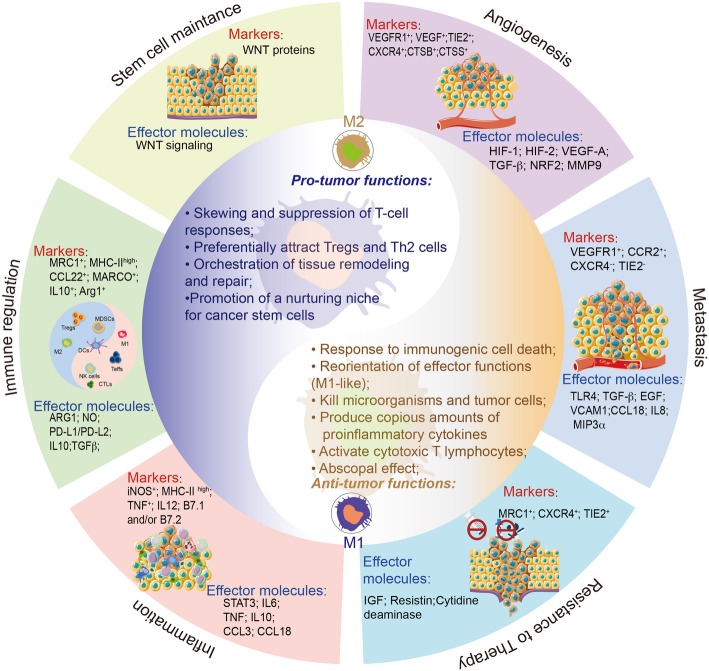
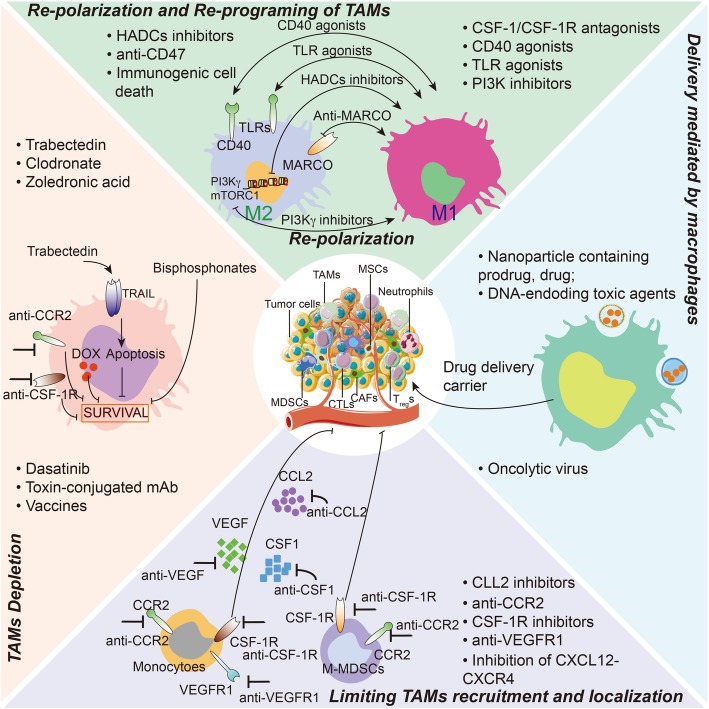
Verification
Claims the paper makes
The claims and statistics of this paper haven’t been checked yet.
Free: it reads the open-access text and checks the first 5 claims that cite a source we can check. Create a free account to check every claim.
Claims other papers make about this one
Each is checked against this paper’s own text: does it say what the citing paper says it does?
The cited source says what the claim attributes to it.
In the citing paper
“Moreover, the phagocytic role of TAMs can be harnessed to concentrate cytotoxic drugs in the TME [85, 86].”
From Tumor microenvironment signaling and therapeutics in cancer progression (2023) · cites this paper as [86]
Self-check
Percentages, sums and reported differences re-computed from the paper’s own numbers.
The self-check needs the paper’s full text.
Citations
Cites
Hallmarks of Cancer: The Next Generation
Hanahan, D., & Weinberg, R. A. (2011) · Cell · doi:10.1016/j.cell.2011.02.013 · Cited by 66,590
Mantovani, A., Allavena, P., Sica, A., & Balkwill, F. (2008) · Nature · doi:10.1038/nature07205 · Cited by 11,399
Immunity, Inflammation, and Cancer
Grivennikov, S. I., Greten, F. R., & Karin, M. (2010) · Cell · doi:10.1016/j.cell.2010.01.025 · Cited by 10,755
Microenvironmental regulation of tumor progression and metastasis
Quail, D. F., & Joyce, J. A. (2013) · Nature Medicine · doi:10.1038/nm.3394 · Cited by 7,994
The chemokine system in diverse forms of macrophage activation and polarization
MANTOVANI, A., SICA, A., SOZZANI, S., ALLAVENA, P., VECCHI, A., & LOCATI, M. (2004) · Trends in Immunology · doi:10.1016/j.it.2004.09.015 · Cited by 6,534
TGFβ attenuates tumour response to PD-L1 blockade by contributing to exclusion of T cells
Mariathasan, S., Turley, S. J., Nickles, D., Castiglioni, A., Yuen, K., Wang, Y., Kadel III, E. E., Koeppen, H., Astarita, J. L., Cubas, R., et al. (2018) · Nature · doi:10.1038/nature25501 · Cited by 5,400
Macrophage Diversity Enhances Tumor Progression and Metastasis
Qian, B.-Z., & Pollard, J. W. (2010) · Cell · doi:10.1016/j.cell.2010.03.014 · Cited by 5,188
Chen, W., Jin, W., Hardegen, N., Lei, K.-J., Li, L., Marinos, N., McGrady, G., & Wahl, S. M. (2003) · The Journal of Experimental Medicine · doi:10.1084/jem.20030152 · Cited by 4,699
Tumor-Associated Macrophages: From Mechanisms to Therapy
Noy, R., & Pollard, J. W. (2014) · Immunity · doi:10.1016/j.immuni.2014.06.010 · Cited by 4,089
Tumour-associated macrophages as treatment targets in oncology
Mantovani, A., Marchesi, F., Malesci, A., Laghi, L., & Allavena, P. (2017) · Nature Reviews Clinical Oncology · doi:10.1038/nrclinonc.2016.217 · Cited by 4,033
Cited by
Items 101–200 of 365
Park, D.-J., Sung, P. S., Lee, G.-W., Cho, S., Kim, S., Kang, B.-Y., Hur, W., Yang, H., Lee, S. K., Lee, S. H., et al. (2021) · International Journal of Molecular Sciences · doi:10.3390/ijms22094710 · Cited by 43
Liu, H. J., Tang, L., Gong, S., Xiao, T., Yang, H., Gu, W., Wang, H., & Chen, P. (2023) · Cell Death and Disease · doi:10.1038/s41419-023-06368-w · Cited by 45
Jing, L., An, Y., Cai, T., Xiang, J., Li, B., Guo, J., Ma, X., Wei, L., Tian, Y., Cheng, X., et al. (2023) · Cellular and Molecular Immunology · doi:10.1038/s41423-023-01047-4 · Cited by 45
“Mounting evidence shows that targeting TAMs in personalized medicine can enhance the antitumor effects of chemotherapy and immunotherapy [3, 7, 8].”
BackgroundExploring the gut microbiota and its potential as a biomarker in gliomas
Aljarrah, D., Chalour, N., Zorgani, A., Nissan, T. A., & Pranjol, M. Z. I. (2024) · Biomedicine & Pharmacotherapy · doi:10.1016/j.biopha.2024.116420 · Cited by 40
Mechanisms and treatment of atherosclerosis: focus on macrophages
Zhang, L., Li, J., Kou, Y., Shen, L., Wang, H., Wang, Y., Ma, R., Wu, T., Yang, X., Gu, Y., et al. (2024) · Frontiers in Immunology · doi:10.3389/fimmu.2024.1490387 · Cited by 54
“…types of chronic in fl ammation and are the main participants in a wide range of diseases, such as autoimmune disorders (6), aging (7), cancer (8), and many CVDs (9), and especially play a crucial role in the formation and development of AS (10, 11). in fl ammation and accumulate in areas of…”
InfluentialReprogramming tumor-associated macrophages in gastric cancer: a pathway to enhanced immunotherapy
He, Y., Hong, Q., Chen, S., Zhou, J., & Qiu, S. (2025) · Frontiers in Immunology · doi:10.3389/fimmu.2025.1558091 · Cited by 54
Cheng, L.-C., Yu, J., Hao, T., Wang, W., Wei, M., & Li, G. (2023) · Pharmaceutics · doi:10.3390/pharmaceutics15112622 · Cited by 48
“…approaches targeting TAMs have been devised, encompassing measures to prevent macrophage recruitment to the tumor, eliminate TAMs directly, reprogram TAMs from their pro-tumoral M 2 -like state to an anti-tumoral M 1 -like state, and utilize TAMs for the delivery of therapeutic payloads [76].”
BackgroundMicroRNAs: As Critical Regulators of Tumor- Associated Macrophages
Chatterjee, B., Saha, P., Bose, S., Shukla, D., Chatterjee, N., Kumar, S., Tripathi, P. P., & Srivastava, A. K. (2020) · International Journal of Molecular Sciences · doi:10.3390/ijms21197117 · Cited by 41
“It is suggested that TAMs can directly impair T-cell functions via multiple mechanisms, such as inhibiting the proliferation of naïve T-cell, degradation of metabolites needed for T-cell division, and suppressing T-cell activation via producing certain cytokines and chemokines [49,50].”
BackgroundSun, M., Zeng, H., Jin, K., Liu, Z., Hu, B., Liu, C., Yan, S. R., Yu, Y., You, R., Zhang, H., et al. (2021) · Cancer Immunology Immunotherapy · doi:10.1007/s00262-021-03098-w · Cited by 53
Zheng, Z., Wang, S., Guo, Y., Liu, J. T., Wang, R., Qiu, X., & Yao, X. (2022) · Cancers · doi:10.3390/cancers14194866 · Cited by 42
“As a crucial component of the TME, TIICs act as a trigger for determining the sensitivity of tumor cells to immune system attack and immunotherapeutic response [28,29].”
BackgroundLin, W., Luo, Y., Wu, J. J., Zhang, H., Jin, G., Guo, C., Zhou, H., Liang, H., & Xu, X. (2023) · Journal for ImmunoTherapy of Cancer · doi:10.1136/jitc-2023-007402 · Cited by 41
“14 15 This motivated us to investigate the possibility and potential pathophysiological impact of macrophage-specific ADAR1 dysfunction in human cancers.”
BackgroundGuo, C., Wu, M., Guo, Z., Zhang, R., Wang, Z., Peng, X., Dong, J., Sun, X., Zhang, Z., Xiao, P., et al. (2023) · ACS Nano · doi:10.1021/acsnano.3c07183 · Cited by 40
Baradaran, A., Asadzadeh, Z., Hemmat, N., Baghbanzadeh, A., Shadbad, M. A., Khosravi, N., Derakhshani, A., Alemohammad, H., Nour, M. A., Safarpour, H., et al. (2021) · Biomedicine & Pharmacotherapy · doi:10.1016/j.biopha.2021.112588 · Cited by 42
RetractedWang, X., Meng, X., Mao, K., Chen, H., Cong, X., Liu, F., Wang, J., Liu, S., Xin, Y., Zhu, G., et al. (2023) · Biomaterials · doi:10.1016/j.biomaterials.2023.122187 · Cited by 40
Tang, C., He, C., Wang, D., Guo, J. F., Yin, X., Ye, H., Wu, L., Zhang, Y., Zeng, S., Zeng, X., et al. (2025) · Nature Communications · doi:10.1038/s41467-025-65056-9 · Cited by 46
“The above results demonstrated that HCC membrane and M2pep modi fi cations to Sv@PM-M2p markedly enhanced blood circulation and tumor uptake through active targeting 52 – 54 .”
Hajiran, A. J., Chakiryan, N. H., Aydın, A. M., Zemp, L. W., Nguyen, J. V., Laborde, J. M., Chahoud, J., Spiess, P. E., Zaman, S., Falasiri, S. S. A., et al. (2021) · Clinical & Experimental Immunology · doi:10.1111/cei.13567 · Cited by 39
Ye, X., An, L., Wang, X., Zhang, C., Huang, W., Sun, C., Li, R., Ma, H., Wang, H., & Gao, M. (2021) · Frontiers in Oncology · doi:10.3389/fonc.2021.675104 · Cited by 36
Targeting the Macrophage-Ferroptosis Crosstalk: A Novel Insight into Tumor Immunotherapy
Zhou, Z., Xu, B., Hu, N., Guo, Z., Bao, W., Shao, B., & Yang, W. (2022) · Frontiers in Bioscience-Landmark · doi:10.31083/j.fbl2707203 · Cited by 41
Postoperative cancer treatments: In-situ delivery system designed on demand
Zhang, Y., & Jiang, C. (2021) · Journal of Controlled Release · doi:10.1016/j.jconrel.2020.12.038 · Cited by 37
Hou, L., Pu, L., Chen, Y., Bai, Y., Zhou, Y., Chen, M., Wang, S., Lv, Y.-P., Ma, C., Cheng, P., et al. (2022) · ACS Nano · doi:10.1021/acsnano.1c10921 · Cited by 36
Gelsomino, L., Naimo, G. D., Malivindi, R., Augimeri, G., Panza, S., Giordano, C., Barone, I., Bonofiglio, D., Mauro, L., Catalano, S., et al. (2020) · Cancers · doi:10.3390/cancers12082078 · Cited by 34
“, arginase 1) and (iii) by the release of anti-inflammatory cytokines [38,39].”
BackgroundResistance Mechanisms of Anti-angiogenic Therapy and Exosomes-Mediated Revascularization in Cancer
Zeng, Y., & Fu, B. M. (2020) · Frontiers in Cell and Developmental Biology · doi:10.3389/fcell.2020.610661 · Cited by 37
Zhou, X., Jiao, L., Qian, Y., Dong, Q., Sun, Y., Zheng, W., Zhao, W., Zhai, W., Qiu, L., Wu, Y., et al. (2021) · Biomolecules · doi:10.3390/biom11050706 · Cited by 35
“As the important innate immune cells and one of the most abundant cells in the tumor microenvironment, macrophages play an important role in adaptive immunity and anti-tumor response [14,15].”
BackgroundMolecular imaging of tumor-associated macrophages in cancer immunotherapy
Li, X., Wang, R., Zhang, Y., Han, S., Gan, Y., Liang, Q., Ma, X., Rong, P., Wang, W., & Li, W. (2022) · Therapeutic Advances in Medical Oncology · doi:10.1177/17588359221076194 · Cited by 42
Self-citationActive ingredients of traditional Chinese medicine for enhancing the effect of tumor immunotherapy
Yang, C., Li, D., Ko, C., Wang, K., & Wang, H. (2023) · Frontiers in Immunology · doi:10.3389/fimmu.2023.1133050 · Cited by 40
“In addition, tumor growth also establishes an immunosuppressive microenvironment, which further aids tumor cell escape and proliferation (32, 33).”
BackgroundLi, Z., Wang, Y., Xing, R. S., Zeng, H., Yu, X.-J., Zhang, Y., Xu, J., & Zheng, L. (2023) · Cancer Immunology Research · doi:10.1158/2326-6066.cir-22-0907 · Cited by 37
Wang, M., Chen, Y., Tian, L. H., Wu, C., Chen, J., Hu, J., Huang, R., Wang, Y., Zhang, J., Ouyang, X., et al. (2025) · Cancer Discovery · doi:10.1158/2159-8290.cd-24-1033 · Cited by 42
A Novel Blockade CD47 Antibody With Therapeutic Potential for Cancer
Lin, F., Xiong, M., Wei, H., Song, Y., Liu, R., Yang, Y., Yuan, X., Fan, D., Zhang, Y., Hao, M., et al. (2021) · Frontiers in Oncology · doi:10.3389/fonc.2020.615534 · Cited by 32
“Poor cell infiltratation and an immunosuppressive tumor milieu are important reasons (2).”
BackgroundSelf-citationYe, W., Li, C. V., Bian, H., Qian, W., Jin, K., Xu, T., Guo, X., Lu, X., & Su, F. (2021) · Molecular Cancer · doi:10.1186/s12943-020-01301-7 · Cited by 34
“From innate to adaptive immunity, macrophages respond to stimuli by promoting multi-cytokine release and interacting with different cell types [7].”
Roles and Regulation of Growth differentiation factor-15 in the Immune and tumor microenvironment
Lodi, R. S., Yu, B., Xia, L., & Liu, F. (2021) · Human Immunology · doi:10.1016/j.humimm.2021.06.007 · Cited by 34
Li, W., Wang, X., Li, C., Chen, T., & Yang, Q. (2021) · Molecular Therapy · doi:10.1016/j.ymthe.2021.12.002 · Cited by 33
Nanotechnology-Based siRNA Delivery Systems to Overcome Tumor Immune Evasion in Cancer Immunotherapy
Deng, K., Yang, D., & Zhou, Y. (2022) · Pharmaceutics · doi:10.3390/pharmaceutics14071344 · Cited by 33
“Repolarizing or eradicating regulatory TAMs is a strategy that may be plausible for TAMs-targeted cancer immunotherapy (Figure 5) [100].”
BackgroundImmunoregulation by resveratrol; implications for normal tissue protection and tumour suppression
Lalani, A. R., Fakhari, F., Radgoudarzi, S., Rastegar‐Pouyani, N., Moloudi, K., Khodamoradi, E., Taeb, S., & Najafi, M. (2023) · Clinical and Experimental Pharmacology and Physiology · doi:10.1111/1440-1681.13760 · Cited by 35
Liao, K., Wen, J., Liu, Z., Zhang, B., Zhang, X., Fu, Y., Zhang, W., Hu, H., Ai, K., Zhu, W., et al. (2025) · Ageing Research Reviews · doi:10.1016/j.arr.2025.102820 · Cited by 40
Desmoplastic Reaction, Immune Cell Response, and Prognosis in Colorectal Cancer
Akimoto, N., Väyrynen, J. P., Zhao, M. M., Ugai, T., Fujiyoshi, K., Borowsky, J., Zhong, R., Haruki, K., Arima, K., Lau, M. C., et al. (2022) · Frontiers in Immunology · doi:10.3389/fimmu.2022.840198 · Cited by 39
“Under the stimulus of IFNG (interferon-gamma) and lipopolysaccharides, macrophages undergo M1 polarization and produce inflammatory cytokines such as TNF (tumor necrosis factor-alpha), thereby accelerating an inflammatory response (45), while M2-like macrophages produce anti-inflammatory cytokines, such as IL10 (inter…”
BackgroundWu, Y.-H., Chen, R.-J., Chiu, H., Yang, L., Wang, Y., Chen, Y., Yeh, Y.-L., Liao, M., & Wang, Y. (2022) · Theranostics · doi:10.7150/thno.77233 · Cited by 33
Tumor-associated macrophages in cancer: from mechanisms to application
Tang, W., Wang, X., Han, B., Jiang, S.-H., & Cao, H. (2025) · Molecular Biomedicine · doi:10.1186/s43556-025-00396-y · Cited by 48
“Tra-bectedin, an anticancer chemotherapeutic, selectively eliminates circulating monocytes and tumor-resident TAMs through a TRAIL-dependent mechanism [131].”
Global Characterization of Immune Infiltration in Clear Cell Renal Cell Carcinoma
Zheng, Y., Wen, Y., Cao, H., Gu, Y., Yan, L., Wang, Y., Wang, L., Zhang, L., & Shao, F. (2021) · OncoTargets and Therapy · doi:10.2147/ott.s282763 · Cited by 32
“M2 macrophages, also known as tumor-associated macrophages (TAMs), which abundantly infiltrate most solid tumors, contribute to tumor progression by suppressing the immune response and promoting the proliferation of tumor cells.(35) Wang et al reported that TAMs promote metastasis and drug resistance of ccRCC through…”
BackgroundNanoparticles Targeting Innate Immune Cells in Tumor Microenvironment
Jang, H., Kim, E. H., Chi, S.-G., Kim, S. H., & Yang, Y. (2021) · International Journal of Molecular Sciences · doi:10.3390/ijms221810009 · Cited by 34
“ccording to the classification, acrophages usually have their o n properties that can contribute to inhibiting or activating tumorigenesis [30].”
BackgroundQiu, Y., Lu, G., Li, N., Hu, Y., Tan, H., & Jiang, C. (2024) · Frontiers in Immunology · doi:10.3389/fimmu.2024.1327281 · Cited by 36
Emerging nanomedicines for macrophage-mediated cancer therapy
Shi, X., Rizvi, S. F. A., Yang, Y., & Liu, G. (2024) · Biomaterials · doi:10.1016/j.biomaterials.2024.123028 · Cited by 35
Macrophages in the pancreas: Villains by circumstances, not necessarily by actions
Cruz, A. F., Rohban, R., & Esni, F. (2020) · Immunity Inflammation and Disease · doi:10.1002/iid3.345 · Cited by 34
“Interestingly, TAMs create an immunosuppressive microenvironment early on in tumorigenesis, hence the disabled cancer immunosurveillance system allows for unhindered disease progression.173 It is hypothesized that TAMs inhibit natural killer T cell response by: (a) depleting the pool of metabolites necessary for T cel…”
BackgroundWang, Y., Miao, Z., Qin, X., Li, B., & Han, Y. (2021) · Journal of Cellular and Molecular Medicine · doi:10.1111/jcmm.16790 · Cited by 31
A multifunctional hydrogel based on Sanghuang polysaccharides and MXene for infected wound healing
Wang, S., Fu, Q., Cen, W., Su, Z., Jin, W., Yu, Z., & Xu, S. (2025) · Chemical Engineering Journal · doi:10.1016/j.cej.2025.159563 · Cited by 46
Oršolić, N., Kunštić, M., Kukolj, M., Odeh, D., & Ančić, D. (2020) · Molecules · doi:10.3390/molecules25235583 · Cited by 32
“These data suggest immunomodulatory activity of CA and GA and their effect in an increase in the M1 tumoricidal efficacy of TAM and the blocking of the M2 tumor activity of TAM, which prevents the immune surveillance system by producing immuno-suppressing cytokines [39].”
BackgroundZhang, X., Chen, D.-G., Li, S. C., Zhu, B., & Li, Z. (2021) · Cells · doi:10.3390/cells10040903 · Cited by 32
Immunology and immunotherapy in gastric cancer
Xu, X., Chen, J., Li, W., Feng, C., Liu, Q., Gao, W., & He, M. S. (2023) · Clinical and Experimental Medicine · doi:10.1007/s10238-023-01104-2 · Cited by 32
“TAMs recruited in GC microenvironment generally display M2-like phenotype facilitating tumor cell angiogenesis and metastatic process [45].”
BackgroundChen, J., Liu, X., Zhao, S., Chen, H., Lu, T., Wang, J., Han, J., Wu, W., Shen, X., & Li, C. (2023) · ACS Applied Materials & Interfaces · doi:10.1021/acsami.3c06828 · Cited by 28
Li, W., Chen, S., Lu, J., Mao, W., Zheng, S., Zhang, M., Wu, T., Chen, Y., Lu, K., Chu, C., et al. (2025) · Nature Communications · doi:10.1038/s41467-025-61560-0 · Cited by 39
“Mechanistically, TAMs can suppress the antitumor T-cell response by inducing tissue fi brosis, producing multiple immunosuppressive cytokines and chemokines, and decreasing the tumoral in fi ltration of CD8 + T cells 18,19 .”
TPD52L2 Is a Prognostic Biomarker and Correlated With Immune Infiltration in Lung Adenocarcinoma
Zhong, A., Chen, T., Zhou, T., Zhang, Z., & Shi, M. (2021) · Frontiers in Pharmacology · doi:10.3389/fphar.2021.728420 · Cited by 27
Immunosenescence and macrophages: From basics to therapeutics
Zhu, H., Shen, F., Liao, T., Qian, H., & Liu, Y. (2023) · The International Journal of Biochemistry & Cell Biology · doi:10.1016/j.biocel.2023.106479 · Cited by 33
Zheng, H., Chen, Y., Luo, W., Han, S., Sun, M., Min, L., Wu, C.-H., Gao, L., Xie, T., & Kong, N. (2025) · Journal of Nanobiotechnology · doi:10.1186/s12951-025-03378-y · Cited by 30
Wang, L., Liu, Z., Liu, L., Guo, C., Jiao, D., Li, L., Zhao, J., Han, X., & Sun, Y. (2021) · Journal of Cellular and Molecular Medicine · doi:10.1111/jcmm.16791 · Cited by 24
“Given that CELF2 expression was significantly correlated with diverse levels of immune infiltration in most of cancer types and combined with the results of CELF2 expression and prognostic analysis in pancancer, we selected subjects by setting the following criteria: (1) CELF2 was significantly up- or downregulated in…”
MethodSelf-citationThe Metabolic Features of Tumor-Associated Macrophages: Opportunities for Immunotherapy?
Mojsilović, S. S., Mojsilović, S. B., Villar, V. H., & Santibanez, J. F. (2021) · Analytical Cellular Pathology · doi:10.1155/2021/5523055 · Cited by 28
Wu, D., Liu, X., Mu, J., Yang, J., Wu, F., & Zhou, H. (2022) · Biomolecules · doi:10.3390/biom12030392 · Cited by 29
“For instance, TAMs would be beneficial for tissue remodeling and the construction of the tumor’s physical barrier, which inhibit the infiltration of immune cells, such as CD8+ T cells [4].”
BackgroundGut microbiota and immune alteration in cancer development: implication for immunotherapy
Lau, H. C.-H., Zhang, X., & Yu, J. (2023) · eGastroenterology · doi:10.1136/egastro-2023-100007 · Cited by 25
“23 Meanwhile, myeloid-derived suppressor cells (MDSCs) can coordinate with other immune cells to maintain an immunosuppressive microenvironment, which in turn favours the survival of tumour cells.”
Applications of single-cell technologies in drug discovery for tumor treatment
Liu, B., Hu, S., & Wang, X. (2024) · iScience · doi:10.1016/j.isci.2024.110486 · Cited by 25
Targeting phagocytosis checkpoints for cancer immunotherapy
Veillette, A., Li, J., Galindo, C. C., Davidson, D., & Tang, Z.-H. (2025) · Nature reviews. Cancer · doi:10.1038/s41568-025-00893-w · Cited by 32
Yu, T., Sang, X., Han, N., Peng, X., Li, Q., Xu, X. M., Xiao, R.-C., Xu, H., Chen, X., Wang, M., et al. (2021) · International Immunopharmacology · doi:10.1016/j.intimp.2021.108164 · Cited by 23
Targeting tumor-associated macrophages for cancer immunotherapy
Cao, X., Lai, S. W. T., Chen, S., Wang, S., & Feng, M. (2022) · International review of cytology · doi:10.1016/bs.ircmb.2022.02.002 · Cited by 28
Liu, C., Wu, K.-Z., Li, J., Mu, X., Gao, H., & Xu, X. (2022) · Biomedicine & Pharmacotherapy · doi:10.1016/j.biopha.2022.114135 · Cited by 24
Research progress in tumor targeted immunotherapy
Fang, Y., Yu, A., Ye, L., & Zhai, G. (2021) · Expert Opinion on Drug Delivery · doi:10.1080/17425247.2021.1882992 · Cited by 25
“The main drugs that have been tested are anti-CCL-2 mAb, carlumab (CNTO 888) and CCR-2 small molecule inhibitor (PF04136309) (summarized in Table 1) [8,9].”
BackgroundBisphosphonate-incorporated coatings for orthopedic implants functionalization
Zhang, J., Bai, H., Bai, M., Wang, X., Li, Z., Xue, H., Wang, J., Cui, Y., Wang, H., Wang, Y., et al. (2023) · Materials Today Bio · doi:10.1016/j.mtbio.2023.100737 · Cited by 22
“Bisphosphonates (BPs) are a component of standard pharmaceutical therapy for osteoporosis and osteoporotic fracture prevention [13].”
BackgroundWang, C., Cao, M., Jiang, X., Yao, Y., Liu, Z., & Luo, D. (2021) · International Immunopharmacology · doi:10.1016/j.intimp.2021.107682 · Cited by 22
Targeting myeloid cells with bispecific antibodies as novel immunotherapies of cancer
Sewnath, C. A. N., Behrens, L. M., & van Egmond, M. (2022) · Expert Opinion on Biological Therapy · doi:10.1080/14712598.2022.2098675 · Cited by 23
“Phagocytosis of tumor cells by macrophages is greatly enhanced in the presence of antibodies [10,32,56].”
BackgroundHuang, H., Chen, Y., Yin, N., Li, G., Ye, S., Guo, L., & Feng, M. (2022) · Molecular Pharmaceutics · doi:10.1021/acs.molpharmaceut.2c00642 · Cited by 23
M1 macrophage-derived exosomes containing miR-150 inhibit glioma progression by targeting MMP16
Yan, P.-F., Wang, J., Liu, H., Liu, X., Fu, R., & Feng, J. (2023) · Cellular Signalling · doi:10.1016/j.cellsig.2023.110731 · Cited by 28
Jin, Y., Jiang, J. F., Mao, W. B., Bai, M., Chen, Q., & Zhu, J. Y. (2024) · Cancer Letters · doi:10.1016/j.canlet.2024.216858 · Cited by 28
Xie, Q.-J., Zeng, Y., Zhang, X., & Yu, F. (2024) · Cancer Immunology Immunotherapy · doi:10.1007/s00262-024-03748-9 · Cited by 28
“Additionally, inhibitors of C3a and C5a receptors can reduce the recruitment and activation of immunosuppressive cell subpopulations [125].”
BackgroundLi, Y., Wang, Z., Lu, F., Miao, Y., Feng, Q., Zhu, W., Kang, Q., Chen, Y., & Zhang, Q. (2024) · Scientific Reports · doi:10.1038/s41598-024-58419-7 · Cited by 21
Li, H., Xing, X., Zhang, X., Li, L., Jiang, Z., Wang, T., Huang, X., Wang, X., Zhang, L., & Sun, L. (2020) · International Immunopharmacology · doi:10.1016/j.intimp.2020.106892 · Cited by 22
Wang, Y., Wu, Y., Zhang, H., Wang, J., Song, A., Qiu, H., Yuan, X., Xiong, H., & Zou, Y. (2024) · Oncology and Translational Medicine · doi:10.1097/ot9.0000000000000064 · Cited by 23
CD47 as a potent target in cancer immunotherapy: A review
Ahvati, H., Roudi, R., Sobhani, N., & Safari, F. (2025) · Biochimica et Biophysica Acta (BBA) - Reviews on Cancer · doi:10.1016/j.bbcan.2025.189294 · Cited by 28
Long Non-Coding RNAs in Lung Cancer: The Role in Tumor Microenvironment
Dai, S., Liu, T., Liu, Y., He, Y., Liu, T., Xu, Z., Wang, Z., & Luo, F. (2022) · Frontiers in Cell and Developmental Biology · doi:10.3389/fcell.2021.795874 · Cited by 23
“…macrophages are roughly divided into classically activated macrophages known as “killer” macrophages (M1) activated by IFN-γ, TNF-α as well as lipopolysaccharide (LPS) and alternatively activated macrophages known as “repair” macrophage (M2) activated by IL-4, IL-10 or IL-13 (Li et al., 2019).”
BackgroundYu, T., Han, N., Li, L., Peng, X., Li, Q., Xu, H., Wang, X., Yang, Z., Chen, X., Wang, M.-F., et al. (2022) · Frontiers in Pharmacology · doi:10.3389/fphar.2022.837784 · Cited by 23
Zhao, J., Zhang, Y., Zhang, J., Wu, H., Li, J., Zhao, Y., Zhang, L., Zou, D., Li, Z., & Wang, S. (2022) · Advanced Healthcare Materials · doi:10.1002/adhm.202200524 · Cited by 20
The immunoregulation effect of tumor microenvironment in pancreatic ductal adenocarcinoma
Zhang, J., Li, R., & Huang, S. (2022) · Frontiers in Oncology · doi:10.3389/fonc.2022.951019 · Cited by 25
Bioactive peptides from venoms against glioma progression
Majc, B., Novak, M., Lah, T. T., & Križaj, I. (2022) · Frontiers in Oncology · doi:10.3389/fonc.2022.965882 · Cited by 25
Zheng, C., Zhao, J., Yuan, C.-H., Peng, X., Geng, M., Ai, J., Fan, Y., & Yue, J. (2023) · Chemical Science · doi:10.1039/d3sc04238c · Cited by 20
The cross-talk between macrophages and tumor cells as a target for cancer treatment
Aizaz, M., Khan, A. U., Khan, F., Khan, M., Saleh, E. A. M., Nisar, M., & Baran, N. (2023) · Frontiers in Oncology · doi:10.3389/fonc.2023.1259034 · Cited by 25
“Given the fact that protumor macrophages (M2 phenotype) create an immune-resistant TME whereas antitumor macrophages (M1 phenotype) stop or slow down cancer growth and metastasis, potential strategies for cancer therapy include switching M2 macrophages to the M1 phenotype (120, 162, 173, 174).”
BackgroundSalmaninejad, A., Layeghi, S. M., Falakian, Z., Golestani, S., Kobravi, S., Talebi, S., & Yousefi, M. (2024) · Clinical and Experimental Medicine · doi:10.1007/s10238-024-01417-w · Cited by 25
Non-canonical PD-1 signaling in cancer and its potential implications in clinic
Zha, H., Jiang, Y., Wang, X., Shang, J., Wang, N., Yu, L., Zhao, W., Li, Z., Zhang, X., Zhang, X., et al. (2021) · Journal for ImmunoTherapy of Cancer · doi:10.1136/jitc-2020-001230 · Cited by 25
Macrophage-modulating nanomedicine for cancer immunotherapy
Khan, M. M., Li, Y., Zhou, Z., Ni, A., Saiding, Q., Qin, D., Tao, W., & Chen, W. (2024) · Nanoscale · doi:10.1039/d3nr06333j · Cited by 27
Osteosarcoma exocytosis of soluble LGALS3BP mediates macrophages toward a tumoricidal phenotype
Li, J., Zhao, C., Li, Y., Wen, J., Wang, S., Wang, D., Dong, H., Wang, D., Zhao, Y., Wang, X., et al. (2021) · Cancer Letters · doi:10.1016/j.canlet.2021.12.023 · Cited by 21
Shi, D., Si, Z., Xu, Z., Cheng, Y., Lin, Q., Fu, Z., Fu, W., Yang, T., Shi, H., & Cheng, D. (2022) · Analytical Chemistry · doi:10.1021/acs.analchem.1c04701 · Cited by 19
Cai, W., Jing, M., Gu, Y., Bei, T., Zhao, X., Chen, S., Wen, J., Gao, J., Wu, C., & Xue, Z. (2022) · Frontiers in Immunology · doi:10.3389/fimmu.2022.984666 · Cited by 19
“This observation was consistent with previous reports that M1TAMs may elevate antitumor immunity by producing immuneactivating cytokines, rendering the patients responsive to immunotherapy (19, 20).”
ResultSubverted macrophages in the triple-negative breast cancer ecosystem
Shang, L., Zhong, Y., Yao, Y., Liu, C., Wang, L., Zhang, W., Liu, J., Wang, X., & Sun, C. (2023) · Biomedicine & Pharmacotherapy · doi:10.1016/j.biopha.2023.115414 · Cited by 23
Role of exosomes in the communication and treatment between OSCC and normal cells
Ma, X., Yang, R., Li, H., Zhang, X., Zhang, X., & Li, X. (2024) · Heliyon · doi:10.1016/j.heliyon.2024.e28148 · Cited by 26
“Tumor-associated macrophages can promote tumor progression by stimulating tumor proliferation, angiogenesis, and metastasis and providing an antitumor immune barrier [83].”
BackgroundSelf-citationMacrophage-based cancer immunotherapy: Challenges and opportunities
Bai, H., Feng, L., & Schmid, F. (2024) · Experimental Cell Research · doi:10.1016/j.yexcr.2024.114198 · Cited by 23
Bartha, L., & Eftimie, R. (2022) · Journal of Theoretical Biology · doi:10.1016/j.jtbi.2022.111207 · Cited by 21
Tumor microenvironment-responsive macrophage-mediated immunotherapeutic drug delivery
Zhang, X., Yue, L., Cao, L., Liu, K., Yang, S., Liang, S., Liu, L., Zhao, C., Wu, D., Wang, Z., et al. (2024) · Acta Biomaterialia · doi:10.1016/j.actbio.2024.07.042 · Cited by 23
Wang, H., Fu, Y., Da, B.-B., & Xiong, G. (2022) · Journal of Healthcare Engineering · doi:10.1155/2022/8256314 · Cited by 22
Thomas, J. A., Moly, A. G. G., Xavier, H., Suboj, P., Ladha, A., Gupta, G., Singh, S. K., Palit, P., & Babykutty, S. (2023) · Frontiers in Oncology · doi:10.3389/fonc.2023.1063051 · Cited by 21
“Therefore, the dichotomy in macrophage differentiation into M1 and M2 type can have varied outcome on tumor progression via hypoxia and angiogenesis machineries (110).”
BackgroundHuang, J., Zhou, L., & Deng, K. (2023) · Journal of Ovarian Research · doi:10.1186/s13048-023-01140-2 · Cited by 16
“On the other hand, the complement system itself has the functions of angiogenesis, promotion of cell invasion and tissue [12].”
BackgroundImportant oncogenic and immunogenic roles of SPP1 and CSF1 in hepatocellular carcinoma
Xiang, T., Cheng, N., Huang, B., Zhang, X., & Zeng, P. (2023) · Medical Oncology · doi:10.1007/s12032-023-02024-7 · Cited by 18
Zhu, Z., Wang, H., Xu, Q., Xue, M., Sun, A., Yin, Y., Tang, J., & Zhang, J. (2024) · Clinical Breast Cancer · doi:10.1016/j.clbc.2024.01.014 · Cited by 17
Effect of LAMA4 on Prognosis and Its Correlation with Immune Infiltration in Gastric Cancer
Wang, M., Li, C., Liu, Y., & Wang, Z. (2021) · BioMed Research International · doi:10.1155/2021/6428873 · Cited by 16
Ding, H., Xia, Q., Shen, J., Zhu, C., Zhang, Y., & Feng, N. (2023) · Colloids and Surfaces B Biointerfaces · doi:10.1016/j.colsurfb.2023.113607 · Cited by 16
Gökşen, S., Varan, G., Bilensoy, E., & Esendağlı, G. (2024) · Molecular Pharmaceutics · doi:10.1021/acs.molpharmaceut.4c00663 · Cited by 16
“28 Many drug delivery strategies have been tested for active targeting of tumors through folate-functionalized nano-particles.”
Tumour‐Associated Macrophages in Oral Squamous Cell Carcinoma
Chaurasia, A., Brigi, C., Daghrery, A., Asa’ad, F., Spirito, F., Hasuike, A., González‐Alva, P., Kojic, D. D., Ünsal, R. B. K., & Sivaramakrishnan, G. (2025) · Oral Diseases · doi:10.1111/odi.15265 · Cited by 24
“Upon recognition, TLR-4 initiates signalling pathways that involve the TIR- domain-containing adapter-inducing interferon-β and the myeloid differentiation primary response 88 genes (MyD88) (Chunxiao et al. 2021; Li et al. 2019; Qiu et al. 2021).”
Metadata
- Authors
- Li, X., Liu, R., Su, X., Pan, Y., Han, X., Shao, C., & Shi, Y.
- Affiliations
- Soochow University (CN)
- Wuxi No.2 People's Hospital (CN)
- Corresponding author
- Han, Xiaofeng
- Shao, Changshun
- Shi, Yufang
- Venue
- Molecular Cancer
- Published
- 2019-12
- Volume
- 18
- Issue
- 1
- Pages
- 177-177
- ISSN
- 1476-4598 (ISSN-L)
- PMC
- PMC6894344
- OpenAlex
- W2994532040
- Cited by
- 364
- References
- 137
- Citations by year
- 2026: 17 · 2025: 49 · 2024: 61 · 2023: 76 · 2022: 68 · 2021: 70 · 2020: 22 · 2019: 1
- FWCI
- 3.49
- Type
- journal article
- Language
- en
- Open access
- gold
- doi.org
- Licence
- cc-by
- creativecommons.org/licenses/by/4.0/ (tdm)
- creativecommons.org/licenses/by/4.0/ (vor, 4 d)
- Locations
- Molecular Cancer (publishedVersion, cc-by)
- PubMed Central (publishedVersion, cc-by)
- PubMed (publishedVersion)
- DOAJ (DOAJ: Directory of Open Access Journals) (submittedVersion, cc-by-sa)
- Funders
- National Natural Science Foundation of China (81672797, 81530043 and 81930085)
- National Key Research and Development Program of China (2018YFA0107500)
- the State Key Laboratory of Radiation Medicine and Protection (GZN1201804, GZN1201903)
- Topics
- Life Sciences › Immunology and Microbiology › Immunology › Immune cells in cancer
- Health Sciences › Medicine › Oncology › Cancer Immunotherapy and Biomarkers
- Life Sciences › Immunology and Microbiology › Immunology › Immunotherapy and Immune Responses
- Keywords
- tumor-associated macrophages, cancer immunotherapy, TAM depletion, TAM-targeted therapy, immunosuppressive tumor microenvironment, antitumor immunity, TAM reprogramming, TAM polarization, tumor progression, angiogenesis, metastasis
- MeSH terms
- Animals, Antineoplastic Agents, Humans, Immunotherapy, Macrophages, Neoplasms, Biomarkers, Tumor, Molecular Targeted Therapy, Tumor Microenvironment
About these checks
Registry, retraction, Cites and statistics results are computed, not judged, with one exception: a printed reference that no index lists is read once by a model before it counts as a citation error. Claims are extracted by a model and kept only when their quote appears verbatim in the text; each cited source is then checked, with a model’s help, for whether it says what the claim relies on. Those verdicts can be wrong — read the claim’s quote and the cited source before relying on one.
Statistics and arithmetic are recomputed, not judged.
Confidence bands are shown only for fields calibrated on our annotated test set. None is calibrated yet, so no band is shown.
What counts as a claim ›How we measure confidence ›How we check this ›
Are you an author, or do you see a problem with this page? Request a review
Data sources
Bibliographic data: Semantic Scholar, OpenAlex, Crossref.
Contains information from the Semantic Scholar Academic Graph Datasets, made available under the ODC Attribution License (ODC-BY 1.0).
Semantic Scholar’s data is described in: Kinney, R., et al. (2023). The Semantic Scholar Open Data Platform. arXiv:2301.10140.
