

Targeting AURKA in Cancer: molecular mechanisms and opportunities for Cancer therapy
Open accessThe DOI matches its Crossref record; 237 of the 238 references it cites were found in a registry or an index.
Abstract
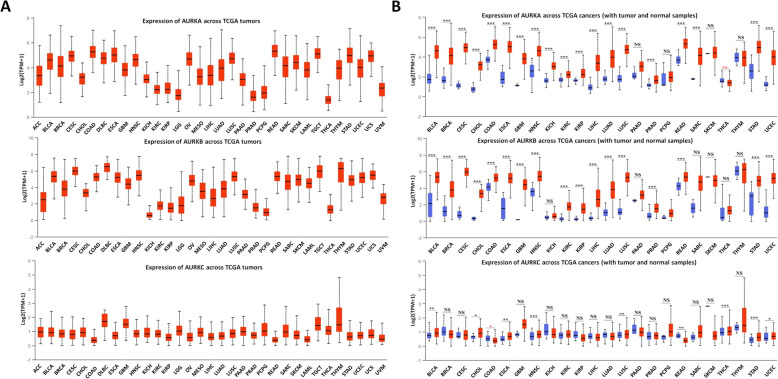
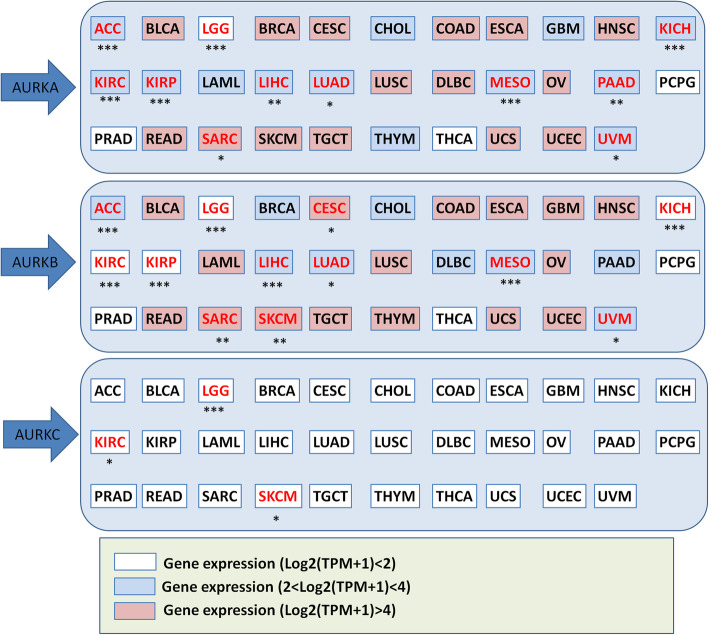
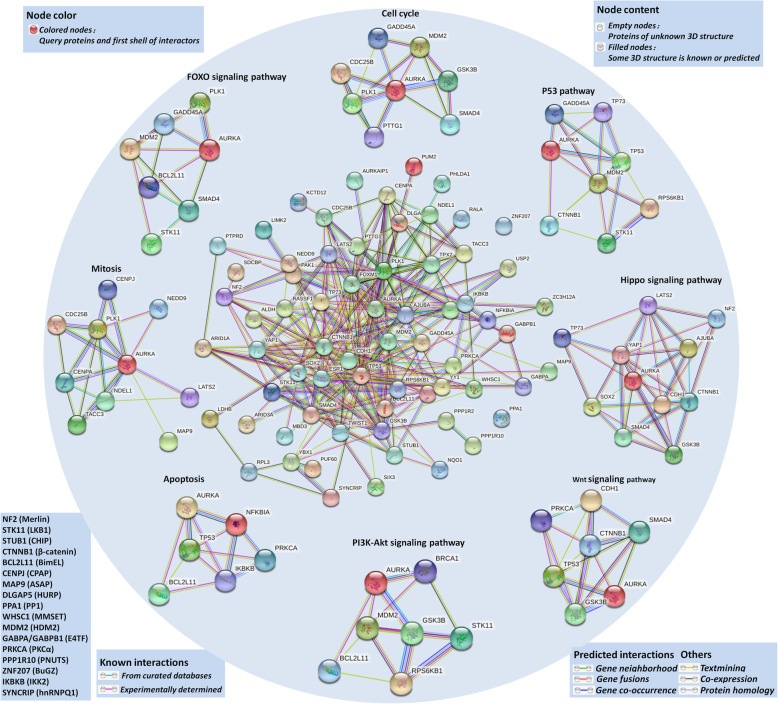
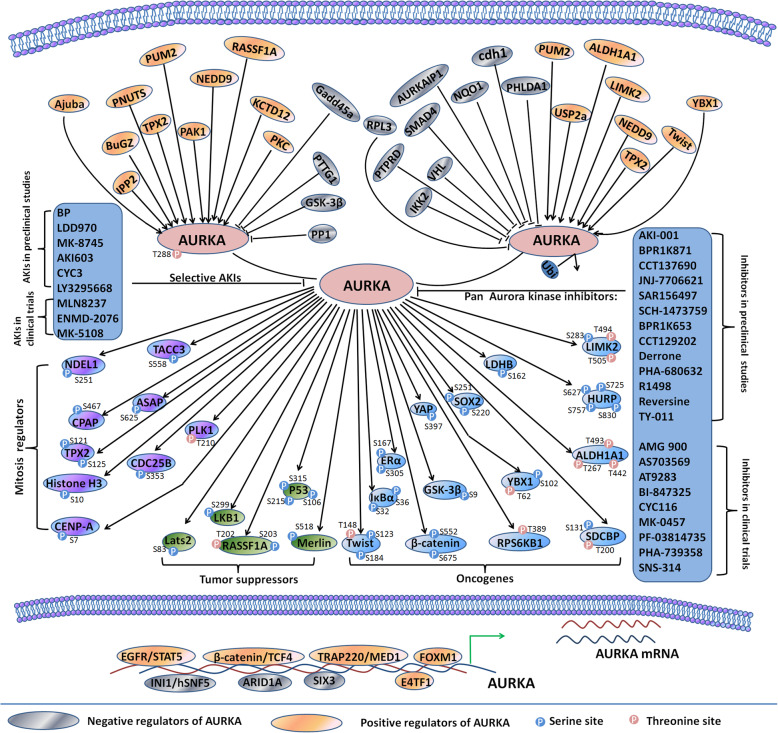
Aurora kinase A (AURKA) belongs to the family of serine/threonine kinases, whose activation is necessary for cell division processes via regulation of mitosis. AURKA shows significantly higher expression in cancer tissues than in normal control tissues for multiple tumor types according to the TCGA database. Activation of AURKA has been demonstrated to play an important role in a wide range of cancers, and numerous AURKA substrates have been identified. AURKA-mediated phosphorylation can regulate the functions of AURKA substrates, some of which are mitosis regulators, tumor suppressors or oncogenes. In addition, enrichment of AURKA-interacting proteins with KEGG pathway and GO analysis have demonstrated that these proteins are involved in classic oncogenic pathways. All of this evidence favors the idea of AURKA as a target for cancer therapy, and some small molecules targeting AURKA have been discovered. These AURKA inhibitors (AKIs) have been tested in preclinical studies, and some of them have been subjected to clinical trials as monotherapies or in combination with classic chemotherapy or other targeted therapies.
Overview
The claims and statistics of this paper haven’t been checked yet.
Free: it reads the open-access text and checks the first 5 claims that cite a source we can check. Create a free account to check every claim.
Integrity signals
Registry
Cites
Statistics
Figures
Verification
Claims the paper makes
The claims and statistics of this paper haven’t been checked yet.
Free: it reads the open-access text and checks the first 5 claims that cite a source we can check. Create a free account to check every claim.
Claims other papers make about this one
Each is checked against this paper’s own text: does it say what the citing paper says it does?
The cited source says what the claim attributes to it.
In the citing paper
“AURKA, a member of the AURK family member, is frequently overexpressed in a wide range of cancers and plays a critical role in oncogenesis [127, 128].”
From Differential Response and Resistance to KRAS-Targeted Therapy (2025) · cites this paper as [127]
Self-check
Percentages, sums and reported differences re-computed from the paper’s own numbers.
The self-check needs the paper’s full text.
Citations
Cites
3 retracted
Zhou, S.-F., Ding, Y.-H., Zhou, Z.-W., Ha, C., Zhang, X.-Y., Pan, S.-T., He, Z.-X., Edelman, J. L., Wang, D., Yang, Y.-X., et al. (2015) · Drug Design Development and Therapy · doi:10.2147/dddt.s74062 · Cited by 87 · cited 1×
“process is also impeded by MLN8237 treatment in human epithelial ovarian and pancreatic cancer cells [134].”
BackgroundRetractedAurora-A is a determinant of tamoxifen sensitivity through phosphorylation of ERα in breast cancer
Zheng, X.-Q., Guo, J., Yang, H., Kanai, M., He, L. L., Li, Y. Y., Koomen, J., Minton, S., Gao, M., Ren, X. B., et al. (2013) · Oncogene · doi:10.1038/onc.2013.444 · Cited by 44 · cited 1×
“Ser167 and Ser305, leading to an increase in the DNAbinding ability of ERα and the transcriptional activity of ERα toward its target cyclin D1 [55].”
BackgroundRetractedZhou, S.-F., Li, J.-P., Yang, Y.-X., Liu, Q., Zhou, Z.-W., Pan, S., He, Z., Zhang, X., Yang, T., Pan, S.-Y., et al. (2015) · Drug Design Development and Therapy · doi:10.2147/dddt.s74412 · Cited by 36 · cited 1×
“PHA-739358 also induces cell cycle arrest, apoptosis and autophagy and suppresses the EMT process [176, 177].”
BackgroundRetractedHarrington, E. A., Bebbington, D., Moore, J., Rasmussen, R. K., Ajose-Adeogun, A. O., Nakayama, T., Graham, J. A., Demur, C., Hercend, T., Diu-Hercend, A., et al. (2004) · Nature Medicine · doi:10.1038/nm1003 · Cited by 965 · cited 1×
“MK-0457, a pyrazoloquinazoline compound, inhibits all three Aurora kinases [166] and inhibits FLT-3 and Abl kinases [167].”
BackgroundDai, Y., Xu, C., Sun, X., & Chen, X. (2017) · Chemical Society Reviews · doi:10.1039/c6cs00592f · Cited by 931 · cited 1×
“Furthermore, development of nanoparticle therapeutic carriers that are passively targeted to tumors through the enhanced permeability and retention effect may be helpful [231].”
BackgroundPolo-like kinase-1 is activated by aurora A to promote checkpoint recovery
Macůrek, L., Lindqvist, A., Lim, D., Lampson, M. A., Klompmaker, R., Freire, R., Clouin, C., Taylor, S. S., Yaffe, M. B., & Medema, R. H. (2008) · Nature · doi:10.1038/nature07185 · Cited by 710 · cited 1×
“It has been reported that AURKA is responsible for the Thr210 phosphorylation of PLK1, which is required for checkpoint recovery [58].”
BackgroundMitotic Phosphorylation of Histone H3: Spatio-Temporal Regulation by Mammalian Aurora Kinases
Crosio, C., Fimia, G. M., Loury, R., Kimura, M., Okano, Y., Zhou, H., Sen, S., Allis, C. D., & Sassone-Corsi, P. (2002) · Molecular and Cellular Biology · doi:10.1128/mcb.22.3.874-885.2002 · Cited by 666 · cited 1×
“phosphorylates Ser10 both in vitro and in vivo [61].”
BackgroundStructural Basis of Aurora-A Activation by TPX2 at the Mitotic Spindle
Bayliss, R., Sardon, T., Vernos, I., & Conti, E. (2003) · Molecular Cell · doi:10.1016/s1097-2765(03)00392-7 · Cited by 636 · cited 1×
“The Nterminal domain of TPX2 binds to AURKA and protects AURKA from dephosphorylation according to experimental and structural analyses [10, 11].”
BackgroundHirota, T., Kunitoku, N., Sasayama, T., Marumoto, T., Zhang, D., Nitta, M., Hatakeyama, K., & Saya, H. (2003) · Cell · doi:10.1016/s0092-8674(03)00642-1 · Cited by 628 · cited 2×
“The LIM protein Ajuba efficiently stimulates AURKA autophosphorylation at Thr288 and increases kinase activity toward histone H3 in the late G2 phase [25].”
BackgroundPhosphorylation by aurora kinase A induces Mdm2-mediated destabilization and inhibition of p53
Katayama, H., Sasai, K., Kawai, H., Yuan, Z.-M., Bondaruk, J., Suzuki, F., Fujii, S., Arlinghaus, R. B., Czerniak, B. A., & Sen, S. (2004) · Nature Genetics · doi:10.1038/ng1279 · Cited by 588 · cited 1×
“It has been reported that AURKA phosphorylates p53 at Ser315, after which p53 is destabilized and the G2-M transition is enhanced [72].”
BackgroundA Novel Mechanism for Activation of the Protein Kinase Aurora A
Eyers, P. A., Erikson, E., Chen, L. G., & Maller, J. L. (2003) · Current Biology · doi:10.1016/s0960-9822(03)00166-0 · Cited by 369 · cited 1×
“The Nterminal domain of TPX2 binds to AURKA and protects AURKA from dephosphorylation according to experimental and structural analyses [10, 11].”
BackgroundAurora-A Abrogation of p53 DNA Binding and Transactivation Activity by Phosphorylation of Serine 215
Liu, Q., Kaneko, S., Yang, L., Feldman, R. I., Nicosia, S. V., Chen, J., & Cheng, J. Q. (2004) · Journal of Biological Chemistry · doi:10.1074/jbc.m406802200 · Cited by 334
Howard, S., Berdini, V., Boulstridge, J. A., Carr, M. G., Cross, D. M., Curry, J., Devine, L. A., Early, T. R., Fazal, L., Gill, A. L., et al. (2009) · Journal of Medicinal Chemistry · doi:10.1021/jm800984v · Cited by 333 · cited 1×
“Inhibitors in clinical studies AT9283 exhibits strong activity against several kinases [162].”
BackgroundBrockmann, M., Poon, E., Berry, T., Carstensen, A., Deubzer, H. E., Rycak, L., Jamin, Y., Thway, K., Robinson, S. P., Roels, F., et al. (2013) · Cancer Cell · doi:10.1016/j.ccr.2013.05.005 · Cited by 299
Beltran, H., Oromendia, C., Danila, D. C., Montgomery, B., Hoimes, C., Szmulewitz, R. Z., Vaishampayan, U., Armstrong, A. J., Stein, M., Pinski, J., et al. (2019) · Clinical Cancer Research · doi:10.1158/1078-0432.ccr-18-1912 · Cited by 290 · cited 1×
“significant clinical benefit from single-agent MLN8237 treatment [151].”
BackgroundShah, K. N., Bhatt, R., Rotow, J., Rohrberg, J., Olivas, V., Wang, V. E., Hemmati, G., Martins, M. M., Maynard, A., Kuhn, J., et al. (2019) · Nature Medicine · doi:10.1038/s41591-018-0264-7 · Cited by 286 · cited 3×
“inhibitors has been found to robustly decrease tumor growth in an EGFR-mutant LUAD PDX model [212].”
BackgroundInfluentialPhosphorylation of CDC25B by Aurora-A at the centrosome contributes to the G2–M transition
Dutertre, S., Cazales, M., Quaranta, M., Froment, C., Trabut, V., Dozier, C., Mirey, G., Bouché, J.-P., Theis-Febvre, N., Schmitt, E., et al. (2004) · Journal of Cell Science · doi:10.1242/jcs.01108 · Cited by 284 · cited 1×
“Another study has demonstrated that the phosphatase CDC25B is phosphorylated by AURKA at the Ser353 site to contribute to the G2-M transition [67].”
BackgroundGörgün, G., Calabrese, E., Hideshima, T., Ecsedy, J., Perrone, G., Mani, M., Ikeda, H., Bianchi, G., Hu, Y., Cirstea, D., et al. (2010) · Blood · doi:10.1182/blood-2009-12-259523 · Cited by 274 · cited 2×
“MLN8237 has demonstrated efficacy in cell-derived and patient-derived xenograft (PDX) models of numerous tumor types, including glioblastoma [139], bladder cancer [140], esophageal adenocarcinoma [136], multiple myeloma [132], neuroblastoma [141] and colon cancer [142].”
BackgroundMelichar, B., Adenis, A., Lockhart, A. C., Bennouna, J., Dees, E. C., Kayaleh, O., Obermannova, R., DeMichele, A., Zatloukal, P., Zhang, B., et al. (2015) · The Lancet Oncology · doi:10.1016/s1470-2045(15)70051-3 · Cited by 254 · cited 1×
“In a multicenter phase II study, MLN8237 treatment obtained an objective response in 18% of 49 women with breast cancer and 21% of 48 participants with small-cell lung cancer [149].”
BackgroundKunitoku, N., Sasayama, T., Marumoto, T., Zhang, D., Honda, S., Kobayashi, O., Hatakeyama, K., Ushio, Y., Saya, H., & Hirota, T. (2003) · Developmental Cell · doi:10.1016/s1534-5807(03)00364-2 · Cited by 248 · cited 1×
“CENP-A, a well-conserved variant of histone H3, is phosphorylated by AURKA at Ser7, which is required for the concentration of AURKB at inner centromeres and for kinetochore function [48].”
BackgroundCarpinelli, P., Ceruti, R., Giorgini, M. L., Cappella, P., Gianellini, L., Croci, V., Degrassi, A., Texido, G., Rocchetti, M., Vianello, P., et al. (2007) · Molecular Cancer Therapeutics · doi:10.1158/1535-7163.mct-07-0444 · Cited by 245 · cited 5×
“PHA-739358 exerts strong activity against all three Aurora kinases and cross-reactivity with tyrosine kinases, including FGFR1 and Abl [173].”
BackgroundInfluentialThe GIT-Associated Kinase PAK Targets to the Centrosome and Regulates Aurora-A
Zhao, Z.-S., Lim, J. P., Ng, Y.-W., Lim, L., & Manser, E. (2005) · Molecular Cell · doi:10.1016/j.molcel.2005.08.035 · Cited by 236 · cited 1×
“Two other kinases, PAK1 and PKC, directly phosphorylate AURKA and then increase AURKA activity [19, 24].”
BackgroundFriedberg, J. W., Mahadevan, D., Cebula, E., Persky, D., Lossos, I., Agarwal, A. B., Jung, J., Burack, R., Zhou, X., Leonard, E. J., et al. (2014) · Journal of Clinical Oncology · doi:10.1200/jco.2012.46.8793 · Cited by 212
Hung, L.-Y., Tseng, J. T., Lee, Y.-C., Xia, W., Wang, Y.-N., Wu, M.-L., Chuang, Y.-H., Lai, C.-H., & Chang, W.-C. (2008) · Nucleic Acids Research · doi:10.1093/nar/gkn417 · Cited by 196 · cited 3×
“Another study has indicated that EGF-induced AURKA expression depends on the interaction of nuclear EGFR and STAT5 [6].”
BackgroundInfluentialKatayama, H., Zhou, H., Li, Q., Tatsuka, M., & Sen, S. (2001) · Journal of Biological Chemistry · doi:10.1074/jbc.m107540200 · Cited by 193 · cited 10×
“[41] Gadd45a Inhibits AURKA activity Attenuates AURKA ability to phosphorylate MBP. [42] PP1 Inhibits AURKA activity Dephosphorylates AURKA and abolishes kinase activity.”
BackgroundInfluentialGontarewicz, A., Balabanov, S., Keller, G., Colombo, R., Graziano, A., Pesenti, E., Benten, D., Bokemeyer, C., Fiedler, W., Moll, J., et al. (2008) · Blood · doi:10.1182/blood-2007-09-113175 · Cited by 165
PHA-680632, a Novel Aurora Kinase Inhibitor with Potent Antitumoral Activity
Soncini, C., Carpinelli, P., Gianellini, L., Fancelli, D., Vianello, P., Rusconi, L., Storici, P., Zugnoni, P., Pesenti, E., Croci, V., et al. (2006) · Clinical Cancer Research · doi:10.1158/1078-0432.ccr-05-1964 · Cited by 162 · cited 2×
“Other Aurora kinase inhibitors with IC50 values> 50 nM against kinase activity, such as BPR1K653 [87], CCT129202 [96], derrone [91], PHA680632 [99], R1498 [94], reversine [101] and TY-011 [88], have also been tested in preclinical studies, and the preliminary data are shown in Table 3.”
BackgroundDees, E. C., Cohen, R. B., von Mehren, M., Stinchcombe, T. E., Liu, H., Venkatakrishnan, K., Manfredi, M., Fingert, H., Burris, H. A., & Infante, J. R. (2012) · Clinical Cancer Research · doi:10.1158/1078-0432.ccr-12-0589 · Cited by 157
O’Connor, O. A., Özcan, M., Jacobsen, E. D., Roncero, J. M., Trotman, J., Demeter, J., Masszi, T., Pereira, J., Ramchandren, R., Beaven, A., et al. (2019) · Journal of Clinical Oncology · doi:10.1200/jco.18.00899 · Cited by 155
Mori, D., Yano, Y., Toyo-oka, K., Yoshida, N., Yamada, M., Muramatsu, M., Zhang, D., Saya, H., Toyoshima, Y. Y., Kinoshita, K., et al. (2007) · Molecular and Cellular Biology · doi:10.1128/mcb.00878-06 · Cited by 152 · cited 1×
“After phosphorylation, NDEL1 displays high affinity for the mitotic protein TACC3, mediating TACC3 recruitment to the centrosome [68].”
BackgroundMori, D., Yamada, M., Mimori‐Kiyosue, Y., Shirai, Y., Suzuki, A., Ohno, S., Saya, H., Wynshaw-Boris, A. J., & Hirotsune, S. (2009) · Nature Cell Biology · doi:10.1038/ncb1919 · Cited by 152 · cited 1×
“Two other kinases, PAK1 and PKC, directly phosphorylate AURKA and then increase AURKA activity [19, 24].”
BackgroundCervantes, A., Elez, E., Roda, D., Ecsedy, J., Macarulla, T., Venkatakrishnan, K., Roselló, S., Andreu, J., Jung, J., Sanchis-Garcia, J. M., et al. (2012) · Clinical Cancer Research · doi:10.1158/1078-0432.ccr-12-0571 · Cited by 151
D’Alise, A. M., Amabile, G., Iovino, M., Giorgio, F. P. D., Bartiromo, M., Sessa, F., Villa, F., Musacchio, A., & Cortese, R. (2008) · Molecular Cancer Therapeutics · doi:10.1158/1535-7163.mct-07-2051 · Cited by 151 · cited 1×
“Other Aurora kinase inhibitors with IC50 values> 50 nM against kinase activity, such as BPR1K653 [87], CCT129202 [96], derrone [91], PHA680632 [99], R1498 [94], reversine [101] and TY-011 [88], have also been tested in preclinical studies, and the preliminary data are shown in Table 3.”
BackgroundThe centrosomal protein Lats2 is a phosphorylation target of Aurora‐A kinase
Toji, S., Yabuta, N., Hosomi, T., Nishihara, S., Kobayashi, T., Suzuki, S., Tamai, K., & Nojima, H. (2004) · Genes to Cells · doi:10.1111/j.1356-9597.2004.00732.x · Cited by 139 · cited 1×
“Phosphorylation of Lats2 by AURKA at the Ser83 site regulates its centrosomal localization [78].”
BackgroundCheng, A., Zhang, P., Wang, B., Yang, D., Duan, X., Jiang, Y., Tian, X., Jiang, Y. P., Shi, J., Ding, C., et al. (2019) · Nature Communications · doi:10.1038/s41467-019-13485-8 · Cited by 139 · cited 1×
“Phosphorylation of LDHB by AURKA at Ser162 amplifies its activity in reducing pyruvate to lactate, thus promoting glycolysis and biosynthesis and promoting tumor growth [45].”
BackgroundHuang, X.-F., Luo, S.-K., Xu, J., Li, J., Xu, D.-R., Wang, L., Yan, M., Wang, X.-R., Wan, X., Zheng, F.-M., et al. (2007) · Blood · doi:10.1182/blood-2007-07-099325 · Cited by 139 · cited 1×
“This compound increases the Bax/ Bcl-2 ratio and induces apoptosis in AML cases with high AURKA expression [168].”
BackgroundWang, J., Nikhil, K., Viccaro, K., Chang, L., White, J., & Shah, K. (2017) · BMC Biology · doi:10.1186/s12915-016-0335-5 · Cited by 137 · cited 16×
“AURKA: Aurora kinase A; AKIs: AURKA inhibitors; EMT: Epithelial-mesenchymal transition; TCGA: The Cancer Genome Atlas; ACC: Adrenocortical carcinoma; BLCA: Bladder urothelial carcinoma; BRCA: Breast invasive carcinoma; CESC: Cervical squamous cell carcinoma; CHOL: Cholangiocarcinoma; COAD: Colon adenocarcinoma; DLBC:…”
BackgroundInfluentialCrystal Structure of the T315I Abl Mutant in Complex with the Aurora Kinases Inhibitor PHA-739358
Modugno, M., Casale, E., Soncini, C., Rosettani, P., Colombo, R., Lupi, R., Rusconi, L., Fancelli, D., Carpinelli, P., Cameron, A. D., et al. (2007) · Cancer Research · doi:10.1158/0008-5472.can-07-1825 · Cited by 137 · cited 1×
“The crystal structure of the Abl-T315IPHA-739358 complex provides a possible structural explanation for the activity of PHA-739358 on the T315I mutation [175].”
BackgroundPayton, M. N., Bush, T. L., Chung, G., Ziegler, B., Eden, P., McElroy, P. L., Ross, S. L., Cee, V. J., Deak, H. L., Hodous, B. L., et al. (2010) · Cancer Research · doi:10.1158/0008-5472.can-10-3001 · Cited by 137 · cited 1×
“Moreover, AMG900 demonstrates potent inhibitory efficiency in paclitaxel-resistant tumor cell lines and xenografts [185].”
BackgroundWu, C., Lyu, J., Yang, E. J., Liu, Y., Zhang, B., & Shim, J. S. (2018) · Nature Communications · doi:10.1038/s41467-018-05694-4 · Cited by 136 · cited 1×
“ARID1A, a component of the SWI/SNF chromatin remodeling complex, occupies the AURKA gene promoter to negatively regulate its transcription [28].”
BackgroundThe aurora kinase A regulates GSK-3β in gastric cancer cells
Dar, A. A., Belkhiri, A., & El-Rifai, W. (2009) · Oncogene · doi:10.1038/onc.2008.434 · Cited by 136 · cited 1×
“AURKA and GSK-3β exist in a complex, and a significant increase in the phosphorylation of GSK-3β at Ser9 has been observed following overexpression of AURKA [57].”
BackgroundEmanuel, S. L., Rugg, C. A., Gruninger, R. H., Lin, R., Fuentes‐Pesquera, A. R., Connolly, P. J., Wetter, S. K., Hollister, B. A., Kruger, W. W., Napier, C., et al. (2005) · Cancer Research · doi:10.1158/0008-5472.can-05-0882 · Cited by 135 · cited 3×
“A375 xenograft model; JNJ-7706621 was treated i.p using 125mg/kg 7 on/7 off schedule and the 100mg/kg QD schedule; TGI values were 93% for both two schedules.”
InfluentialMatulonis, U. A., Sharma, S. K., Ghamande, S., Gordon, M. S., Prete, S. A. D., Ray-Coquard, I. L., Kutarska, E., Liu, H., Fingert, H. J., Zhou, X., et al. (2012) · Gynecologic Oncology · doi:10.1016/j.ygyno.2012.06.040 · Cited by 133 · cited 1×
“One phase II trial of MLN8237 in patients with ovarian cancer, fallopian tube cancer, peritoneal carcinoma, acute myelogenous leukemia and high-grade myelodysplastic syndrome showed that MLN8237 has modest single-agent antitumor activity [148].”
BackgroundFletcher, G. C., Brokx, R. D., Denny, T. A., Hembrough, T. A., Plum, S. M., Fogler, W. E., Sidor, C. F., & Bray, M. R. (2011) · Molecular Cancer Therapeutics · doi:10.1158/1535-7163.mct-10-0574 · Cited by 133
DuBois, S. G., Marachelian, A., Fox, E., Kudgus, R. A., Reid, J. M., Groshen, S. G., Malvar, J., Bagatell, R., Wagner, L. M., Maris, J. M., et al. (2016) · Journal of Clinical Oncology · doi:10.1200/jco.2015.65.4889 · Cited by 132
Sarkissian, M., Mendez, R., & Richter, J. D. (2004) · Genes & Development · doi:10.1101/gad.1136004 · Cited by 130 · cited 1×
“Regulators reducing AURKA activity GSK-3β interacts with AURKA and phosphorylates AURKA at Ser290/291 in vitro, after which autophosphorylation occurs at Ser349, which is an AURKA activity-inhibiting phosphorylation site [44].”
BackgroundYang, N., Wang, C., Wang, Z., Zona, S., Sx, L., Wang, X., Yan, M., Zheng, F.-M., Ss, L., Xu, B.-L., et al. (2017) · Oncogene · doi:10.1038/onc.2016.490 · Cited by 129
LeRoy, P. J., Hunter, J. J., Hoar, K. M., Burke, K. E., Shinde, V., Ruan, J., Bowman, D., Galvin, K., & Ecsedy, J. A. (2007) · Cancer Research · doi:10.1158/0008-5472.can-07-0122 · Cited by 127 · cited 1×
“TACC3 is another substrate of AURKA that is localized to mitotic spindles and proximal mitotic spindles after phosphorylation at Ser558 [52].”
BackgroundShimomura, T., Hasako, S., Nakatsuru, Y., Mita, T., Ichikawa, K., Kodera, T., Sakai, T., Nambu, T., Miyamoto, M., Takahashi, I., et al. (2010) · Molecular Cancer Therapeutics · doi:10.1158/1535-7163.mct-09-0609 · Cited by 123 · cited 2×
“MK-5108 is a novel small molecule that shows robust selectivity for AURKA over AURKB (220-fold greater selectivity) and AURKC (190-fold greater selectivity) [159].”
BackgroundMossé, Y. P., Lipsitz, E. G., Fox, E., Teachey, D. T., Maris, J. M., Weigel, B. J., Adamson, P. C., Ingle, M. A., Ahern, C. H., & Blaney, S. M. (2012) · Clinical Cancer Research · doi:10.1158/1078-0432.ccr-11-3251 · Cited by 120 · cited 1×
“However, because children experience greater frequencies of myelosuppression and hand-foot-skin syndrome on this schedule, the recommended pediatric phase II dose is 80 mg once daily for 7 days [147].”
BackgroundYu, C.-T. R., Hsu, J.-M., Lee, Y.-C. G., Tsou, A.-P., Chou, C.-K., & Huang, C.-Y. F. (2005) · Molecular and Cellular Biology · doi:10.1128/mcb.25.14.5789-5800.2005 · Cited by 119 · cited 1×
“HURP protein stability and serum-independent growth are enhanced after phosphorylation [75].”
BackgroundSelf-citationPhase II study of MLN8237 (Alisertib) in advanced/metastatic sarcoma
Dickson, M. A., Mahoney, M. R., Tap, W. D., D’Angelo, S. P., Keohan, M. L., Tine, B. A. V., Agulnik, M., Horvath, L. E., Nair, J. S., & Schwartz, G. K. (2016) · Annals of Oncology · doi:10.1093/annonc/mdw281 · Cited by 119 · cited 1×
“In another phase II study of MLN8237 in advanced/metastatic sarcoma, occasional responses and prolonged stable disease were observed, and progression-free survival (PFS) was promising [150].”
BackgroundVilgelm, A. E., Pawlikowski, J. S., Liu, Y., Hawkins, O. E., Davis, T. A., Smith, J., Weller, K. P., Horton, L. W., McClain, C. M., Ayers, G. D., et al. (2015) · Cancer Research · doi:10.1158/0008-5472.can-14-2405 · Cited by 115 · cited 1×
“One study showed that AURKA and MDM2 antagonism with MLN8237 and Nutlin-3 halted melanoma growth by inducing growth arrest and senescence, limiting the lifespans of senescent cells, and enhancing tumor immune infiltration and clearance [215].”
BackgroundTanaka, M., Ueda, A., Kanamori, H., Ideguchi, H., Yang, J., Kitajima, S., & Ishigatsubo, Y. (2002) · Journal of Biological Chemistry · doi:10.1074/jbc.m108252200 · Cited by 115 · cited 1×
“One study has reported that the transcription of AURKA is positively regulated by E4TF1, which is a ubiquitously expressed ETS family protein [4].”
BackgroundAurora kinase A mediates epithelial ovarian cancer cell migration and adhesion
Do, T.-V., Xiao, F., Bickel, L. E., Klein-Szanto, A. J., Pathak, H. B., Hua, X., Howe, C., O'Brien, S. W., Maglaty, M., Ecsedy, J. A., et al. (2014) · Oncogene · doi:10.1038/onc.2012.632 · Cited by 115 · cited 3×
“AURKA: Aurora kinase A; AKIs: AURKA inhibitors; EMT: Epithelial-mesenchymal transition; TCGA: The Cancer Genome Atlas; ACC: Adrenocortical carcinoma; BLCA: Bladder urothelial carcinoma; BRCA: Breast invasive carcinoma; CESC: Cervical squamous cell carcinoma; CHOL: Cholangiocarcinoma; COAD: Colon adenocarcinoma; DLBC:…”
BackgroundBarr, P. M., Li, H., Spier, C., Mahadevan, D., LeBlanc, M., Ul Haq, M., Huber, B. D., Flowers, C. R., Wagner-Johnston, N. D., Horwitz, S. M., et al. (2015) · Journal of Clinical Oncology · doi:10.1200/jco.2014.60.6327 · Cited by 114
Inhibition of aurora kinases for tailored risk-adapted treatment of multiple myeloma
Hose, D., Reme, T. X., Meißner, T., Moreaux, J., Seckinger, A., Lewis, J., Beneš, V., Benner, A., Hundemer, M., Hielscher, T., et al. (2009) · Blood · doi:10.1182/blood-2008-09-178350 · Cited by 112 · cited 1×
“MK-0457 has been confirmed to show efficiency in anaplastic THCA cells [169], chemoresistant ovarian cancer models [170], myeloma cell lines and primary myeloma cell samples [171], and imatinib-resistant chronic myelogenous leukemia [172].”
BackgroundCheetham, G. M. T., Charlton, P., Golec, J. M. C., & Pollard, J. R. (2007) · Cancer Letters · doi:10.1016/j.canlet.2006.12.004 · Cited by 112 · cited 1×
“MK-0457, a pyrazoloquinazoline compound, inhibits all three Aurora kinases [166] and inhibits FLT-3 and Abl kinases [167].”
BackgroundAurora-A Regulation of Nuclear Factor-κB Signaling by Phosphorylation of IκBα
Briassouli, P., Chan, F., Savage, K., Reis-Filho, J. S., & Linardopoulos, S. (2007) · Cancer Research · doi:10.1158/0008-5472.can-06-2272 · Cited by 112
Cha, T.-L., Chuang, M.-J., Wu, S.-T., Sun, G.-H., Chang, S.-Y., Yu, D.-S., Huang, S.-M., Huan, S. K.-H., Cheng, T.-C., Chen, T.-T., et al. (2009) · Clinical Cancer Research · doi:10.1158/1078-0432.ccr-08-1918 · Cited by 111 · cited 1×
“HDAC inhibitors have been shown to repress the expression of AURKA in various cancer cells, and AKIs can decrease the activity of HDAC proteins, suggesting that synergetic effects could be obtained by combining AKIs and HDAC inhibitors [203, 204].”
BackgroundActivation of Aurora-A kinase by protein phosphatase inhibitor-2, a bifunctional signaling protein
Satinover, D. L., Leach, C. A., Stukenberg, P. T., & Brautigan, D. L. (2004) · Proceedings of the National Academy of Sciences · doi:10.1073/pnas.0402966101 · Cited by 111 · cited 3×
“Other molecules also modulate AURKA activity, such as PNUTS [20], BUGZ [21], RASSF1A [22], IPP2 [23] and KCTD12 [26].”
BackgroundDegradation of human Aurora‐A protein kinase is mediated by hCdh1
Taguchi, S.-I., Honda, K., Sugiura, K., Yamaguchi, A., Furukawa, K., & Urano, T. (2002) · FEBS Letters · doi:10.1016/s0014-5793(02)02711-4 · Cited by 111 · cited 1×
“targeted for proteolysis through distinct structural features of its destruction box, its KEN box motifs and its kinase activity [31].”
BackgroundRong, R., Jiang, L., Sheikh, M. S., & Huang, Y. K. (2007) · Oncogene · doi:10.1038/sj.onc.1210575 · Cited by 110 · cited 1×
“Phosphorylation of RASSF1A by AURKA at Ser203 and Thr202 removes the ability of RASSF1A to interact with microtubules and induce M-phase cell cycle arrest [71].”
BackgroundLee, S., Cimica, V., Ramachandra, N., Zagzag, D., & Kalpana, G. V. (2011) · Cancer Research · doi:10.1158/0008-5472.can-10-2167 · Cited by 107 · cited 1×
“This regulation is dependent on cell type because in non-RT cells such as Jurkats, CEMX-174, HeLa and SF268, downregulation of INI1/hSNF5 had either no effect or a slight decrease in AURKA [27].”
BackgroundWu, J.-C., Chen, T.-Y., Yu, C.-T. R., Tsai, S.-J., Hsu, J.-M., Tang, M.-J., Chou, C.-K., Lin, W.-J., Yuan, C.-J., & Huang, C.-Y. F. (2005) · Journal of Biological Chemistry · doi:10.1074/jbc.m411068200 · Cited by 106 · cited 1×
“The small GTPase RalA is also a target of AURKA; phosphorylation of RalA at Ser194 enhances cell migration and anchorage-independent growth [66].”
BackgroundSelf-citationSteeghs, N., Eskens, F. A. L. M., Gelderblom, H., Verweij, J., Nortier, J. W. R., Ouwerkerk, J., van Noort, C., Mariani, M., Spinelli, R., Carpinelli, P., et al. (2009) · Journal of Clinical Oncology · doi:10.1200/jco.2008.21.6655 · Cited by 105
Sehdev, V., Peng, D., Soutto, M., Washington, M. K., Revetta, F. L., Ecsedy, J., Zaika, A. I., Rau, T. T., Schneider‐Stock, R., Belkhiri, A., et al. (2012) · Molecular Cancer Therapeutics · doi:10.1158/1535-7163.mct-11-0623 · Cited by 101 · cited 2×
“MLN8237 has demonstrated efficacy in cell-derived and patient-derived xenograft (PDX) models of numerous tumor types, including glioblastoma [139], bladder cancer [140], esophageal adenocarcinoma [136], multiple myeloma [132], neuroblastoma [141] and colon cancer [142].”
BackgroundKretzner, L., Scuto, A., Dino, P. M., Kowolik, C. M., Wu, J., Ventura, P., Jove, R., Forman, S. J., Yen, Y., & Kirschbaum, M. H. (2011) · Cancer Research · doi:10.1158/0008-5472.can-10-2259 · Cited by 101 · cited 1×
“In addition, vorinostat and MK-0457 or MK-5108 combination treatment enhances lymphoma cell killing with reductions in c-Myc, hTERT, and microRNA levels [208].”
BackgroundCarol, H., Boehm, I., Reynolds, C. P., Kang, M. H., Maris, J. M., Morton, C. L., Gorlick, R. G., Kolb, E. A., Keir, S. T., Wu, J., et al. (2011) · Cancer Chemotherapy and Pharmacology · doi:10.1007/s00280-011-1618-8 · Cited by 100 · cited 1×
“MLN8237 has demonstrated efficacy in cell-derived and patient-derived xenograft (PDX) models of numerous tumor types, including glioblastoma [139], bladder cancer [140], esophageal adenocarcinoma [136], multiple myeloma [132], neuroblastoma [141] and colon cancer [142].”
Liu, Y., Hawkins, O. E., Su, Y., Vilgelm, A. E., Sobolik, T., Thu, Y., Kantrow, S., Splittgerber, R. C., Short, S., Amiri, K. I., et al. (2013) · EMBO Molecular Medicine · doi:10.1002/emmm.201201378 · Cited by 99 · cited 1×
“impairing mitosis, inducing cell cycle arrest and autophagy, and accelerating cancer cell apoptosis and senescence in multiple cancer types [132, 133].”
BackgroundControl of Aurora-A stability through interaction with TPX2
Giubettini, M., Asteriti, I. A., Scrofani, J., Luca, M. D., Lindon, C., Lavia, P., & Guarguaglini, G. (2010) · Journal of Cell Science · doi:10.1242/jcs.075457 · Cited by 97 · cited 1×
“TPX2 protects AURKA from degradation both in interphase and in mitosis in a cdh1dependent manner [12].”
BackgroundWang-Bishop, L., Chen, Z., Gomaa, A. R., Lockhart, A. C., Salaria, S. N., Wang, J., Lewis, K. B., Ecsedy, J., Washington, K. M., Beauchamp, R. D., et al. (2018) · Gastroenterology · doi:10.1053/j.gastro.2018.10.030 · Cited by 95 · cited 2×
“Activation of RPS6KB1 occurs through phosphorylation by AURKA at the Thr389 position, which is important for promoting cell proliferation and survival [47].”
BackgroundFalchook, G. S., Coleman, R. L., Roszak, A., Behbakht, K., Matulonis, U. A., Ray-Coquard, I. L., Sawrycki, P., Duska, L., Tew, W. P., Ghamande, S. A., et al. (2018) · JAMA Oncology · doi:10.1001/jamaoncol.2018.3773 · Cited by 94
Katayama, H. G., Wang, J., Treekitkarnmongkol, W., Kawai, H., Sasai, K., Zhang, H., Wang, H., Adams, H. P., Jiang, S., Chakraborty, S. N., et al. (2012) · Cancer Cell · doi:10.1016/j.ccr.2011.12.025 · Cited by 94 · cited 1×
“Furthermore, AURKA phosphorylation of p73 at Ser235 eliminates the p73 transactivation function in both DNA damage-induced cell death and mitotic spindle assembly checkpoint pathways [76].”
BackgroundChromosome Instability Modulated by BMI1–AURKA Signaling Drives Progression in Head and Neck Cancer
Chou, C.-H., Yang, N.-K., Liu, T.-Y., Tai, S.-K., Hsu, D. S.-S., Chen, Y.-W., Chen, Y.-J., Chang, C.-C., Tzeng, C.-H., & Yang, M.-H. (2013) · Cancer Research · doi:10.1158/0008-5472.can-12-2397 · Cited by 94 · cited 1×
“The TRAP220/MED1 complex [5] and β-catenin/TCF4 complex [7] also directly bind to the AURKA promoter to enhance AURKA transcriptional activity.”
BackgroundFaisal, A., Vaughan, L. S., Bavetsias, V., Sun, C., Atrash, B., Avery, S., Jamin, Y., Robinson, S. P., Workman, P., Blagg, J., et al. (2011) · Molecular Cancer Therapeutics · doi:10.1158/1535-7163.mct-11-0333 · Cited by 94 · cited 2×
“Table 3 AKIs in preclinical studies (Continued) Compound names Structures Targets (IC50) Cell-based potency (IC50/EC50/GI50) Animal models (type; concentration; efficiency) Ref CCT137690 AURKA (0.015 μM) AURKB (0.025 μM) AURKC (0.019 μM) FLT3 (0.0025 μM) CCT137690 effectively inhibited the growth of human tumor cell l…”
InfluentialCohen, R. B., Jones, S. F., Aggarwal, C., von Mehren, M., Cheng, J., Spigel, D. R., Greco, F. A., Mariani, M., Rocchetti, M., Ceruti, R., et al. (2009) · Clinical Cancer Research · doi:10.1158/1078-0432.ccr-09-1445 · Cited by 93 · cited 1×
“In this phase I study, escalating the PHA-739358 dose until 1000 mg/m(2) do not cause any bone marrow related toxicities, particularly neutropenia [128].”
BackgroundYin, T., Zhao, Z.-B., Guo, J., Wang, T., Yang, J.-B., Wang, C., Long, J., Ma, S., Huang, Q., Zhang, K., et al. (2019) · Cancer Research · doi:10.1158/0008-5472.can-18-3397 · Cited by 92 · cited 2×
“More importantly, combined administration of alisertib and a PD-L1 antibody has demonstrated synergistic efficacy for the treatment of breast cancer cell 4 T1 xenografts [228].”
BackgroundKinome rewiring reveals AURKA limits PI3K-pathway inhibitor efficacy in breast cancer
Donnella, H. J., Webber, J. T., Levin, R. S., Camarda, R., Momcilovic, O., Bayani, N., Shah, K. N., Korkola, J. E., Shokat, K. M., Goga, A., et al. (2018) · Nature Chemical Biology · doi:10.1038/s41589-018-0081-9 · Cited by 90 · cited 1×
“AURKA attenuates the efficacy of inhibition of the PI3K-AKT-mTOR pathway, a downstream pathway of EGFR, in breast cancer [229].”
BackgroundChefetz, I., Holmberg, J. C., Alvero, A. B., Visintin, I., & Mor, G. (2011) · Cell Cycle · doi:10.4161/cc.10.13.16348 · Cited by 90
DuBois, S. G., Mossé, Y. P., Fox, E., Kudgus, R. A., Reid, J. M., McGovern, R. M., Groshen, S. G., Bagatell, R., Maris, J. M., Twist, C. J., et al. (2018) · Clinical Cancer Research · doi:10.1158/1078-0432.ccr-18-1381 · Cited by 90
Zhou, N., Singh, K., Mir, M. C., Parker, Y., Lindner, D. J., Dreicer, R., Ecsedy, J., Zhang, Z., Teh, B. T., Almasan, A., et al. (2013) · Clinical Cancer Research · doi:10.1158/1078-0432.ccr-12-2383 · Cited by 89 · cited 1×
“MLN8237 has demonstrated efficacy in cell-derived and patient-derived xenograft (PDX) models of numerous tumor types, including glioblastoma [139], bladder cancer [140], esophageal adenocarcinoma [136], multiple myeloma [132], neuroblastoma [141] and colon cancer [142].”
BackgroundBavetsias, V., Large, J. M., Sun, C., Bouloc, N. S., Kosmopoulou, M. N., Matteucci, M., Wilsher, N. E., Martins, V., Reynisson, J., Atrash, B., et al. (2010) · Journal of Medicinal Chemistry · doi:10.1021/jm100262j · Cited by 88
Qi, W., Cooke, L. S., Liu, X., Rimsza, L. M., Roe, D. J., Persky, A. M. D. O., Miller, T. P., & Mahadevan, D. (2011) · Biochemical Pharmacology · doi:10.1016/j.bcp.2011.01.017 · Cited by 87
Macarulla, T., Cervantes, A., Elez, E., Rodríguez-Braun, E., Baselga, J., Roselló, S., Sala, G., Blasco, I., Danaee, H., Lee, Y., et al. (2010) · Molecular Cancer Therapeutics · doi:10.1158/1535-7163.mct-10-0299 · Cited by 86 · cited 1×
“MLN8054, development of which was terminated after phase I studies due to central nervous system side effects, including dose-limiting somnolence [124, 125].”
BackgroundTraynor, A. M., Hewitt, M. R., Liu, G., Flaherty, K. T., Clark, J., Freedman, S. J., Scott, B. B., Leighton, A. M., Watson, P. A., Zhao, B., et al. (2010) · Cancer Chemotherapy and Pharmacology · doi:10.1007/s00280-010-1318-9 · Cited by 85 · cited 9×
“The other study showed that combined MK-0457 and Nutlin-3 treatment activated p53dependent postmitotic checkpoints at pseudo-G1 phase and induced proapoptotic p53 signaling and mitochondrial apoptosis in AML [216].”
BackgroundInfluentialTanshinones suppress AURKA through up-regulation of miR-32 expression in non-small cell lung cancer
Ma, Z., Zhang, B.-J., Wang, D.-T., Li, X., Wei, J., Zhao, B., Jin, Y., Li, Y., & Jin, Y. (2015) · Oncotarget · doi:10.18632/oncotarget.3933 · Cited by 82 · cited 1×
“Although there is no direct evidence that tanshinone I can directly target AURKA, it exhibits potent effects on growth inhibition of colon cancer [233], lung cancer [234] and breast cancer cells [235] through downregulating AURKA expression.”
BackgroundSelf-citationKelly, K. R., Shea, T. C., Goy, A., Berdeja, J. G., Reeder, C. B., McDonagh, K. T., Zhou, X., Danaee, H., Liu, H., Ecsedy, J. A., et al. (2014) · Investigational New Drugs · doi:10.1007/s10637-013-0050-9 · Cited by 80
PHLDA1 is a crucial negative regulator and effector of Aurora A kinase in breast cancer
Johnson, E. O., Chang, K., de Pablo, Y., Ghosh, S., Mehta, R. J., Badve, S., & Shah, K. (2011) · Journal of Cell Science · doi:10.1242/jcs.084970 · Cited by 80 · cited 9×
“[59] VHL S72 In vitro kinase assay, MS, autoradiography NA [60] PHLDA1 S98 In vitro kinase assay, consensus motif, autoradiography Negatively regulates PHLDA1 by promoting PHLDA1 degradation.”
BackgroundInfluentialLee, J. W., Parameswaran, J., Sandoval-Schaefer, T., Eoh, K. J., Yang, D., Zhu, F., Mehra, R., Sharma, R., Gaffney, S. G., Perry, E. B., et al. (2019) · Clinical Cancer Research · doi:10.1158/1078-0432.ccr-18-0440 · Cited by 79 · cited 1×
“Other molecules, such as SRC [217], CHEK1 [218], mTOR [219, 220], WEE1 [221], PDK1 [222, 223], and MEK [224], have also been chosen as targets together with AURKA in preclinical studies.”
BackgroundAntizyme1 mediates AURKAIP1-dependent degradation of Aurora-A
Lim, S. K., & Gopalan, G. (2007) · Oncogene · doi:10.1038/sj.onc.1210482 · Cited by 78 · cited 1×
“localization and subsequent degradation [37].”
Dees, E. C., Infante, J. R., Cohen, R. B., O’Neil, B. H., Jones, S. F., von Mehren, M., Danaee, H., Lee, Y., Ecsedy, J., Manfredi, M. G., et al. (2010) · Cancer Chemotherapy and Pharmacology · doi:10.1007/s00280-010-1377-y · Cited by 78 · cited 1×
“MLN8054, development of which was terminated after phase I studies due to central nervous system side effects, including dose-limiting somnolence [124, 125].”
BackgroundMeulenbeld, H. J., Bleuse, J. P., Vinci, E. M., Raymond, É., Vitali, G., Santoro, A., Dogliotti, L., Berardi, R., Cappuzzo, F., Tagawa, S. T., et al. (2012) · British Journal of Urology · doi:10.1111/j.1464-410x.2012.11404.x · Cited by 77
Ubiquitin-specific Cysteine Protease 2a (USP2a) Regulates the Stability of Aurora-A
Shi, Y., Solomon, L. R., Pereda‐Lopez, A., Giranda, V. L., Luo, Y., Johnson, E. F., Shoemaker, A. R., Leverson, J. D., & Liu, X. (2011) · Journal of Biological Chemistry · doi:10.1074/jbc.m111.231498 · Cited by 77 · cited 3×
“AURKA protein stability is also maintained by Twist [15], ALDH1A1 [16], YBX1 [17] and the deubiquitinase USP2a [18] through ubiquitin-proteosomal degradation pathway.”
BackgroundGong, Y., Li, Y., Abdolmaleky, H. M., Li, L., & Zhou, J.-R. (2012) · PLoS ONE · doi:10.1371/journal.pone.0033656 · Cited by 76 · cited 1×
“Although there is no direct evidence that tanshinone I can directly target AURKA, it exhibits potent effects on growth inhibition of colon cancer [233], lung cancer [234] and breast cancer cells [235] through downregulating AURKA expression.”
BackgroundKCTD12 promotes tumorigenesis by facilitating CDC25B/CDK1/Aurora A-dependent G2/M transition
Zhong, Y., Yang, J., Xu, W. W., Wang, Y., Zheng, C.-C., Li, B., & He, Q. (2017) · Oncogene · doi:10.1038/onc.2017.287 · Cited by 75 · cited 9×
“Notably, some proteins, including ALDH1A1, Twist, YBX1, KCTD12, RASS1A, PHLDA1, PP1, TPX2, LIMK2 and VHL, usually form negative or positive feedback loops with AURKA.”
BackgroundInfluentialA role for IκB kinase 2 in bipolar spindle assembly
Irelan, J. T., Murphy, T. J., DeJesus, P., Teo, H., Xu, D., Gómez-Ferrería, M. A., Zhou, Y., Miraglia, L. J., Rines, D. R., Verma, I. M., et al. (2007) · Proceedings of the National Academy of Sciences · doi:10.1073/pnas.0706493104 · Cited by 74
TPX2 phosphorylation maintains metaphase spindle length by regulating microtubule flux
Fu, J., Bian, M., Xin, G., Deng, Z., Luo, J., Guo, X., Chen, H., Wang, Y., Jiang, Q., & Zhang, C. (2015) · The Journal of Cell Biology · doi:10.1083/jcb.201412109 · Cited by 73 · cited 1×
“Phosphorylation of TPX2 by AURKA is required for establishment of normal spindle length and interaction with cytoplasmic linker-associated protein 1 [77].”
BackgroundTanaka, R., Squires, M. S., Kimura, S. H., Yokota, A., Nagao, R., Yamauchi, T., Takeuchi, M., Yao, H., Reule, M., Smyth, T., et al. (2010) · Blood · doi:10.1182/blood-2009-03-211466 · Cited by 73 · cited 1×
“as well as xenografts has been demonstrated in imatinibresistant BCR-ABL-positive leukemic cells [163], aggres-”
BackgroundTargeting Aurora Kinase A enhances radiation sensitivity of atypical teratoid rhabdoid tumor cells
Venkataraman, S., Alimova, I. N., Tello, T. L., Harris, P. S., Knipstein, J. A., Donson, A. M., Foreman, N. K., Liu, A. K., & Vibhakar, R. (2012) · Journal of Neuro-Oncology · doi:10.1007/s11060-011-0795-y · Cited by 72 · cited 1×
“Two other AURKA inhibitors, MLN8237 and ENMD-2076, also enhance radiation sensitivity in cancer cells [200, 201].”
BackgroundTao, Y., Zhang, P., Frascogna, V., Lécluse, Y., Auperin, A., Bourhis, J., & Deutsch, É. (2007) · British Journal of Cancer · doi:10.1038/sj.bjc.6604083 · Cited by 72 · cited 1×
“PHA680632 treatment prior to radiation treatment leads to an additive effect in cancer cells, especially in p53-deficient cells in vitro or in vivo [198].”
BackgroundLiu, L.-L., Long, Z., Wang, L.-X., Zheng, F.-M., Fang, Z.-G., Yan, M., Xu, D.-F., Chen, J.-J., Wang, S.-W., Lin, D.-J., et al. (2013) · Molecular Cancer Research · doi:10.1158/1541-7786.mcr-13-0172 · Cited by 71 · cited 1×
“Other molecules, such as SRC [217], CHEK1 [218], mTOR [219, 220], WEE1 [221], PDK1 [222, 223], and MEK [224], have also been chosen as targets together with AURKA in preclinical studies.”
BackgroundZheng, F.-M., Long, Z., Hou, Z.-J., Luo, Y., Xu, L.-Z., Xia, J.-L., Lai, X.-J., Liu, J.-W., Wang, X., Muhammad, K. I., et al. (2014) · Molecular Cancer Therapeutics · doi:10.1158/1535-7163.mct-13-1029 · Cited by 71 · cited 2×
“Due to the potent inhibitory effects of ENMD-2076 on cancer cells and xenografts, several phase I/II clinical trials on this compound have been conducted in solid tumors and hematologic malignancies [113–119] (Table 4). are the alternative names of the molecular Table 3 AKIs in preclinical studies Compound names Struc…”
BackgroundInfluentialCoumar, M. S., Chu, C.-Y., Lin, C.-W., Shiao, H.-Y., Ho, Y.-L., Reddy, R., Lin, W.-H., Chen, C.-H., Peng, Y.-H., Leou, J.-S., et al. (2010) · Journal of Medicinal Chemistry · doi:10.1021/jm1000198 · Cited by 70 · cited 2×
“[80] BPR1K0609S1(BP) AURKA (43 nM) HCT116 (400 nM) Parental and BP-resistant HCT116 Puma(−), Bax(−), Chk2(−) and p53(−) cells were transplanted into nude mice; these BP-resistant cells did not show faster tumor development compared to their parental cells, respectively.”
BackgroundSelf-citationDiamond, J. R., Eckhardt, S. G., Pitts, T. M., van Bokhoven, A., Aisner, D. L., Gustafson, D. L., Capasso, A., Sams, S. B., Kabos, P., Zolman, K. L., et al. (2018) · Breast Cancer Research · doi:10.1186/s13058-018-1014-y · Cited by 70
Lheureux, S., Tinker, A. V., Clarke, B. A., Ghatage, P., Welch, S. A., Weberpals, J. I., Dhani, N. C., Butler, M. O., Tonkin, K. S., Tan, D. S. P., et al. (2018) · Clinical Cancer Research · doi:10.1158/1078-0432.ccr-18-1244 · Cited by 69
Kojima, K., Konopleva, M., Tsao, T., Nakakuma, H., & Andreeff, M. (2008) · Blood · doi:10.1182/blood-2008-01-128611 · Cited by 68 · cited 7×
“AURKA: Aurora kinase A; AKIs: AURKA inhibitors; EMT: Epithelial-mesenchymal transition; TCGA: The Cancer Genome Atlas; ACC: Adrenocortical carcinoma; BLCA: Bladder urothelial carcinoma; BRCA: Breast invasive carcinoma; CESC: Cervical squamous cell carcinoma; CHOL: Cholangiocarcinoma; COAD: Colon adenocarcinoma; DLBC:…”
BackgroundInfluentialLIMK2 is a crucial regulator and effector of Aurora-A-kinase-mediated malignancy
Johnson, E. O., Chang, K., Ghosh, S., Chelvam, V., Giger, K., Low, P. S., & Shah, K. (2012) · Journal of Cell Science · doi:10.1242/jcs.092304 · Cited by 68 · cited 2×
“AURKA regulates LIMK2 kinase activity, subcellular localization and protein levels by directly phosphorylating LIMK2 at Ser283, Thr494 and Thr505 [14].”
BackgroundMK-0457, an Aurora kinase and BCR–ABL inhibitor, is active in patients with BCR–ABL T315I leukemia
Giles, F. J., Swords, R. T., Nagler, A., Hochhaus, A., Ottmann, O. G., Rizzieri, D. A., Talpaz, M., Clark, J., Watson, P., Xiao, A. G., et al. (2012) · Leukemia · doi:10.1038/leu.2012.186 · Cited by 68
Fiskus, W. C., Wang, Y., Joshi, R., Rao, R., Yang, Y., Chen, J., Kolhe, R. B., Balusu, R., Eaton, K., Lee, P., et al. (2008) · Clinical Cancer Research · doi:10.1158/1078-0432.ccr-08-0721 · Cited by 68
HDM2 Regulation by AURKA Promotes Cell Survival in Gastric Cancer
Sehdev, V., Katsha, A. M., Arras, J., Peng, D., Soutto, M., Ecsedy, J., Zaika, A. I., Belkhiri, A., & El-Rifai, W. M. (2014) · Clinical Cancer Research · doi:10.1158/1078-0432.ccr-13-1187 · Cited by 68 · cited 4×
“[52] HDM2 S166 In vitro kinase assay, specifc antibody NA [53] β-catenin S552, S675 In vitro kinase assay, truncation mutants, autoradiography Increases its stability and transcriptional activity [54] ERα S167, S305 In vitro kinase assay, truncation mutants, autoradiography Leading to increase in ERα DNA-binding and t…”
BackgroundMethodInfluentialTargeting Aurora Kinase with MK-0457 Inhibits Ovarian Cancer Growth
Lin, Y. G., Immaneni, A., Merritt, W. M., Mangala, L. S., Kim, S. W., Shahzad, M. M. K., Tsang, Y. T. M., Armaiz-Peña, G. N., Lu, C., Kamat, A. A., et al. (2008) · Clinical Cancer Research · doi:10.1158/1078-0432.ccr-07-4922 · Cited by 68 · cited 1×
“MK-0457 has been confirmed to show efficiency in anaplastic THCA cells [169], chemoresistant ovarian cancer models [170], myeloma cell lines and primary myeloma cell samples [171], and imatinib-resistant chronic myelogenous leukemia [172].”
BackgroundSehdev, V., Katsha, A. M., Ecsedy, J., Zaika, A. I., Belkhiri, A., & El-Rifai, W. M. (2012) · Cancer · doi:10.1002/cncr.27801 · Cited by 66
Seymour, J. F., Kim, D. W., Rubin, E., Haregewoin, A., Clark, J., Watson, P., Hughes, T. P., Dufva, I. H., Jiménez, J. L., Mahon, F., et al. (2014) · Blood Cancer Journal · doi:10.1038/bcj.2014.60 · Cited by 65 · cited 1×
“The activity of MK-0457 was also assessed in two other phase I/II studies, both of which showed promising outcomes in patients with BCR-ABL T315I leukemia [121, 122].”
AT9283, a novel aurora kinase inhibitor, suppresses tumor growth in aggressive B‐cell lymphomas
Qi, W., Liu, X., Cooke, L. S., Persky, D. O., Miller, T. P., Squires, M. S., & Mahadevan, D. (2011) · International Journal of Cancer · doi:10.1002/ijc.26324 · Cited by 65 · cited 1×
“sive B-cell lymphoma [164] and medulloblastoma [165].”
Chan, F., Sun, C., Perumal, M., Nguyen, Q., Bavetsias, V., McDonald, E., Martins, V., Wilsher, N. E., Raynaud, F. I., Valenti, M. R., et al. (2007) · Molecular Cancer Therapeutics · doi:10.1158/1535-7163.mct-07-2156 · Cited by 65 · cited 2×
“Other Aurora kinase inhibitors with IC50 values> 50 nM against kinase activity, such as BPR1K653 [87], CCT129202 [96], derrone [91], PHA680632 [99], R1498 [94], reversine [101] and TY-011 [88], have also been tested in preclinical studies, and the preliminary data are shown in Table 3.”
BackgroundInfluentialDiamond, J. R., Bastos, B. R., Hansen, R. J., Gustafson, D. L., Eckhardt, S. G., Kwak, E. L., Pandya, S. S., Fletcher, G. C., Pitts, T. M., Kulikowski, G. N., et al. (2010) · Clinical Cancer Research · doi:10.1158/1078-0432.ccr-10-2144 · Cited by 65
Santo, L., Hideshima, T., Cirstea, D., Bandi, M., Nelson, E. A., Gorgun, G., Rodig, S., Vallet, S., Pozzi, S., Patel, K., et al. (2011) · Clinical Cancer Research · doi:10.1158/1078-0432.ccr-10-3012 · Cited by 64 · cited 1×
“have shown significant synergistic antitumor effects of this regimen both in vitro and in vivo [195].”
BackgroundSynthetic Lethality Interaction Between Aurora Kinases and CHEK1 Inhibitors in Ovarian Cancer
Alcaraz-Sanabria, A. L., Nieto‐Jiménez, C., Corrales‐Sánchez, V., Serrano‐Oviedo, L., Pretel, F. A., Montero, J. C., Burgos, M., Llopis, J., Galán‐Moya, E. M., Pandiella, A., et al. (2017) · Molecular Cancer Therapeutics · doi:10.1158/1535-7163.mct-17-0223 · Cited by 63 · cited 1×
“Other molecules, such as SRC [217], CHEK1 [218], mTOR [219, 220], WEE1 [221], PDK1 [222, 223], and MEK [224], have also been chosen as targets together with AURKA in preclinical studies.”
BackgroundThe Aurora-A–Twist1 axis promotes highly aggressive phenotypes in pancreatic carcinoma
Wang, J., Nikhil, K., Viccaro, K., Chang, L., Jacobsen, M. H., Sandusky, G. E., & Shah, K. (2017) · Journal of Cell Science · doi:10.1242/jcs.196790 · Cited by 63 · cited 9×
“AURKA substrates acting as functional oncogenes Some AURKA substrates, such as GSK-3β, β-catenin, Twist, ERα, IκBα, and YAP, participate in crucial oncogenic signaling.”
BackgroundInfluentialDai, Y., Chen, S., Venditti, C. A., Pei, X., Nguyen, T. K., Dent, P., & Grant, S. (2008) · Blood · doi:10.1182/blood-2007-10-116376 · Cited by 63
Sakai, H., Urano, T., Ookata, K., Kim, M.-H., Hirai, Y., Saito, M., Nojima, Y., & Ishikawa, F. (2002) · Journal of Biological Chemistry · doi:10.1074/jbc.m208461200 · Cited by 61 · cited 3×
“MBD3 S24 In vitro kinase assay, autoradiography, consensus motif NA [70]”
BackgroundMethodAurora A kinase activates YAP signaling in triple-negative breast cancer
Chang, S. H., Yamaguchi, H., Xia, W., Lim, S.-O., Khotskaya, Y. B., Wu, Y., Chang, W.-C., Liu, Q., & Hung, M. (2016) · Oncogene · doi:10.1038/onc.2016.292 · Cited by 60 · cited 1×
“AURKA-mediated phosphorylation of YAP at Ser397 is crucial for YAP-mediated transcriptional activity and transformation in triplenegative breast cancer cells [51].”
BackgroundMahadevan, D., Stejskal, A., Cooke, L. S., Manziello, A., Morales, C., Persky, D. O., Fisher, R. I., Miller, T. P., & Qi, W. (2012) · Clinical Cancer Research · doi:10.1158/1078-0432.ccr-11-2413 · Cited by 60 · cited 4×
“AURKA: Aurora kinase A; AKIs: AURKA inhibitors; EMT: Epithelial-mesenchymal transition; TCGA: The Cancer Genome Atlas; ACC: Adrenocortical carcinoma; BLCA: Bladder urothelial carcinoma; BRCA: Breast invasive carcinoma; CESC: Cervical squamous cell carcinoma; CHOL: Cholangiocarcinoma; COAD: Colon adenocarcinoma; DLBC:…”
BackgroundInfluentialSchöffski, P., Besse, B., Gauler, T. C., de Jonge, M. J. A., Scambia, G., Santoro, A., Davite, C., Jannuzzo, M. G., Petroccione, A., & Delord, J. (2014) · Annals of Oncology · doi:10.1093/annonc/mdu566 · Cited by 60
Effects of the Aurora kinase inhibitor VX-680 on anaplastic thyroid cancer-derived cell lines
Arlot‐Bonnemains, Y., Baldini, E., Martin, B., Delcros, J., Toller, M., Curcio, F., Ambesi‐Impiombato, F. S., D'Armiento, M., & Ulisse, S. (2008) · Endocrine Related Cancer · doi:10.1677/erc-08-0021 · Cited by 60 · cited 2×
“MK-0457 has been confirmed to show efficiency in anaplastic THCA cells [169], chemoresistant ovarian cancer models [170], myeloma cell lines and primary myeloma cell samples [171], and imatinib-resistant chronic myelogenous leukemia [172].”
BackgroundBorthakur, G. M., Dombret, H., Schafhausen, P., Brümmendorf, T. H., Boissel, N., Jabbour, E., Mariani, M., Capolongo, L., Carpinelli, P., Davite, C., et al. (2015) · Haematologica · doi:10.3324/haematol.2014.115279 · Cited by 60
Schöffski, P., Jones, S. F., Dumez, H., Infante, J. R., Mieghem, E. V., Fowst, C., Gerletti, P., Xu, H., Jakubczak, J. L., English, P. A., et al. (2011) · European Journal of Cancer · doi:10.1016/j.ejca.2011.07.008 · Cited by 59 · cited 3×
“3 patients had SD. [125] PF-03814735 IC50 value: AURKA (5 nM) AURKB (0.8 nM) I NCT00424632 Advanced solid tumors (n = 57) Days 1–5 (5-100mg); or days 1–10 (40-60 mg).”
InfluentialGrover, A., Singh, R., Shandilya, A., Priyandoko, D., Agrawal, V., Bisaria, V. S., Wadhwa, R., Kaul, S. C., & Sundar, D. (2012) · PLoS ONE · doi:10.1371/journal.pone.0030890 · Cited by 59
Gadd45a Interacts with Aurora-A and Inhibits Its Kinase Activity
Shao, S., Wang, Y., Jin, S., Song, Y., Wang, X., Fan, W., Zhao, Z., Fu, M., Tong, T., Dong, L., et al. (2006) · Journal of Biological Chemistry · doi:10.1074/jbc.m600235200 · Cited by 58 · cited 1×
“Interaction between Gadd45a and AURKA has been shown to strongly inhibit AURKA kinase activity and antagonize AURKA-induced centrosome amplification [42].”
BackgroundDaniele, S., Sestito, S., Pietrobono, D., Giacomelli, C., Chiellini, G., Maio, D. D., Marinelli, L., Novellino, E., Martini, C., & Rapposelli, S. (2016) · ACS Chemical Neuroscience · doi:10.1021/acschemneuro.6b00251 · Cited by 58 · cited 1×
“Other molecules, such as SRC [217], CHEK1 [218], mTOR [219, 220], WEE1 [221], PDK1 [222, 223], and MEK [224], have also been chosen as targets together with AURKA in preclinical studies.”
BackgroundA Pentacyclic Aurora Kinase Inhibitor (AKI-001) with High in Vivo Potency and Oral Bioavailability
Rawson, T. E., Rüth, M., Blackwood, E. R., Burdick, D., Corson, L., Dotson, J., Drummond, J., Fields, C. T., Georges, G. J., Goller, B., et al. (2008) · Journal of Medicinal Chemistry · doi:10.1021/jm800052b · Cited by 58 · cited 2×
“[99] AKI-001 AURKA (0.004 μM) AURKB (0.005 μM) HCT116 (0.07 μM) HT29 (0.07 μM) MCF7 (0.1 μM) HCT-116 xenograft model; Mice were dosed orally QD for 21 days (0, 1, 2.5, 5, or 10 mg/kg); 2.5 (82% TGI) and 5mg/kg (92% TGI).”
InfluentialShan, W., Akinfenwa, P. Y., Savannah, K. J. B., Kolomeyevskaya, N. V., Laucirica, R., Thomas, D. G., Odunsi, K. O., Creighton, C. J., Lev, D. C., & Anderson, M. L. (2012) · Clinical Cancer Research · doi:10.1158/1078-0432.ccr-11-3058 · Cited by 57 · cited 1×
“MK-5108 also decreases the rate of proliferation and increases intratumoral apoptosis in uterine leiomyosarcoma xenografts [161].”
BackgroundThe induction of polyploidy or apoptosis by the Aurora A kinase inhibitor MK8745 is p53-dependent
Nair, J. S., Ho, A. L., & Schwartz, G. K. (2012) · Cell Cycle · doi:10.4161/cc.11.4.19323 · Cited by 57 · cited 2×
“[81, 82] LDD970 AURKA (0.37 μM) IC50: HT29 (4.22 μM) NA [83] MK-8745 AURKA (0.6 nM) NA HCT116, HCT116 p53(−), HCT116 Puma(−), HCT116 p21(−) and HCT116 Chk2(−) xenografts; MK-8745 (800 nM) was directly s.c. injected daily; HCT116 p53(−) tumorigenesis was weakly inhibited, HCT116 Puma(−), HCT116 p21(−), HCT116 Bax(−) an…”
BackgroundInfluentialBimEL is phosphorylated at mitosis by Aurora A and targeted for degradation by βTrCP1
Moustafa-Kamal, M., Gamache, I., Lü, Y., Li, S., & Teodoro, J. G. (2013) · Cell Death and Differentiation · doi:10.1038/cdd.2013.93 · Cited by 56 · cited 4×
“[55] BimEL S93/94/98 Consensus motif, in vitro kinase assay, specifc antibody NA [56] GSK-3β S9 In vitro kinase assay, specifc antibody Leading to accumulation and activation of the βcatenin/TCF complex.”
BackgroundInfluentialMoreno, L., Marshall, L. V., Pearson, A. D. J., Morland, B. J., Elliott, M., Campbell‐Hewson, Q., Makin, G., Halford, S. E. R., Acton, G. D., Ross, P., et al. (2014) · Clinical Cancer Research · doi:10.1158/1078-0432.ccr-14-1592 · Cited by 56
Du, J., Yan, L., Torres, R., Gong, X., Bian, H., Marugán, C., Boehnke, K., Baquero, C., Hui, Y., Chapman, S. C., et al. (2019) · Molecular Cancer Therapeutics · doi:10.1158/1535-7163.mct-18-0529 · Cited by 56 · cited 2×
“[84, 85] LY3295668 AURKA ( 1 nM) 55 out of 80 cell lines displayed sensitivity (IC50 1 μM) to LY3295668 with an average IC50 of 0.048 μM 1.”
BackgroundInfluentialPark, J., Jong, H.-S., Kim, S. G., Jung, Y., Lee, K., Lee, J., Kim, D., Bang, Y., & Kim, T. (2007) · Journal of Molecular Medicine · doi:10.1007/s00109-007-0260-8 · Cited by 55 · cited 1×
“HDAC inhibitors have been shown to repress the expression of AURKA in various cancer cells, and AKIs can decrease the activity of HDAC proteins, suggesting that synergetic effects could be obtained by combining AKIs and HDAC inhibitors [203, 204].”
BackgroundIce, R. J., McLaughlin, S. L., Livengood, R. H., Culp, M. V., Eddy, E. R., Ivanov, A. V., & Pugacheva, E. N. (2013) · Cancer Research · doi:10.1158/0008-5472.can-12-4008 · Cited by 54 · cited 4×
“Likewise, NEDD9 [9] and PUM2 [13] not only stimulate autophosphorylation and autoactivation of AURKA but also stabilize AURKA protein expression through disassociation from cdh. AURKA protein stability is also maintained by Twist [15], ALDH1A1 [16], YBX1 [17] and the deubiquitinase USP2a [18] through ubiquitin-proteos…”
BackgroundInfluentialDual Targeting of mTOR and Aurora-A Kinase for the Treatment of Uterine Leiomyosarcoma
Brewer Savannah, K. J., Demicco, E. G., Lusby, K., Ghadimi, M. P., Belousov, R., Young, E., Zhang, Y., Huang, K.-L., Lazar, A. J., Hunt, K. K., et al. (2012) · Clinical Cancer Research · doi:10.1158/1078-0432.ccr-12-0436 · Cited by 53 · cited 1×
“Other molecules, such as SRC [217], CHEK1 [218], mTOR [219, 220], WEE1 [221], PDK1 [222, 223], and MEK [224], have also been chosen as targets together with AURKA in preclinical studies.”
BackgroundUbiquitination and regulation of AURKA identifies a hypoxia-independent E3 ligase activity of VHL
Hasanov, E., Chen, G., Chowdhury, P., Weldon, J., Ding, Z., Jonasch, E. W., Sen, S., Walker, C. L., & Dere, R. (2017) · Oncogene · doi:10.1038/onc.2016.495 · Cited by 53 · cited 1×
“VHL is an E3 ligase that multimonoubiquitinates AURKA in quiescent cells and targets it for proteasome-mediated degradation under both normoxic and hypoxic conditions [38].”
BackgroundKelly, K. R., Nawrocki, S. T., Espitia, C. M., Zhang, M., Yang, J. J., Padmanabhan, S., Ecsedy, J., Giles, F. J., & Carew, J. S. (2012) · International Journal of Cancer · doi:10.1002/ijc.27579 · Cited by 53 · cited 1×
“In AML, alisertib increases the efficacy of cytarabine in a FOXO-dependent manner [187].”
BackgroundAmin, M. A., Minton, S. E., LoRusso, P. M., Krishnamurthi, S., Pickett, C. A., Lunceford, J. K., Hille, D. A., Mauro, D. M., Stein, M. N., Wang‐Gillam, A., et al. (2015) · Investigational New Drugs · doi:10.1007/s10637-015-0306-7 · Cited by 53 · cited 1×
“MK-5108 effect has been evaluated in a phase I clinical study as shown in Table 4 [123].”
He, S.-J., Shu, L.-P., Zhou, Z.-W., Yang, T., Duan, W., Zhang, X., He, Z.-X., & Zhou, S.-F. (2016) · Cancer Letters · doi:10.1016/j.canlet.2016.08.016 · Cited by 52 · cited 1×
“PHA-739358 also induces cell cycle arrest, apoptosis and autophagy and suppresses the EMT process [176, 177].”
BackgroundAbou‐Alfa, G. K., Mayer, R. J., Venook, A. P., O'Neill, A. F., Beg, M. S., LaQuaglia, M. P., Kingham, T. P., Kobos, R., Baştürk, O., Brennan, C., et al. (2020) · The Oncologist · doi:10.1634/theoncologist.2020-0093 · Cited by 52
Foran, J. M., Ravandi, F., Wierda, W. G., Garcia‐Manero, G., Verstovšek, S., Kadia, T. M., Burger, J. A., Yule, M., Langford, G. A., Lyons, J. F., et al. (2013) · Clinical Lymphoma Myeloma & Leukemia · doi:10.1016/j.clml.2013.11.001 · Cited by 51
Zheng, X., Chi, J., Zhi, J., Zhang, H., Yue, D., Zhao, J., Li, D., Li, Y., Gao, M., & Guo, J. (2017) · Oncogene · doi:10.1038/onc.2017.354 · Cited by 51 · cited 1×
“Phosphorylation of LKB1 at Ser299 causes LKB1 to dissociate from AMPK, resulting in impairment of the AMPK signaling pathway and facilitating non-small-cell lung cancer (NSCLC) growth and migration [49].”
BackgroundZullo, K. M., Guo, Y., Cooke, L. S., Jirau-Serrano, X., Mangone, M. A., Scotto, L., Amengual, J. E., Mao, Y., Nandakumar, R., Cremers, S., et al. (2015) · Clinical Cancer Research · doi:10.1158/1078-0432.ccr-15-0033 · Cited by 50 · cited 1×
“A study in T-cell lymphoma has suggested that the effects of alisertib in combination with the HDAC inhibitor romidepsin are highly synergistic through modulation of cytokinesis [209].”
BackgroundWang, X., Sinn, A. L., Pollok, K. E., Sandusky, G. E., Zhang, S., Chen, L., Liang, J., Crean, C., Suvannasankha, A., Abonour, R., et al. (2010) · British Journal of Haematology · doi:10.1111/j.1365-2141.2010.08248.x · Cited by 50 · cited 1×
“ENMD-2076 shows antitumor activity in colorectal cancer [154], multiple myeloma [156] and triple-negative breast cancer [157, 158] both in vitro and in vivo.”
BackgroundVenoux, M., Basbous, J., Berthenet, C., Prigent, C., Fernandez, A., Lamb, N. J., & Rouquier, S. (2008) · Human Molecular Genetics · doi:10.1093/hmg/ddm298 · Cited by 49 · cited 1×
“After phosphorylation at Ser625 by AURKA, ASAP localizes to centrosomes from late G2 to telophase and around the midbody during cytokinesis [69].”
BackgroundAurora A activation in mitosis promoted by BuGZ
Huang, Y., Li, T., Ems-McClung, S. C., Walczak, C. E., Prigent, C., Zhu, X., Zhang, X., & Zheng, Y. (2018) · Journal of Cell Biology · doi:10.1083/jcb.201706103 · Cited by 48 · cited 1×
“Other molecules also modulate AURKA activity, such as PNUTS [20], BUGZ [21], RASSF1A [22], IPP2 [23] and KCTD12 [26].”
BackgroundLai, C.-H., Huang, Y.-C., Lee, J., Tseng, J. T.-C., Chang, K., Chen, Y., Ding, N.-J., Huang, P.-H., Chang, W., Lin, B., et al. (2017) · Cell Death and Disease · doi:10.1038/cddis.2016.479 · Cited by 48 · cited 1×
“HnRNP Q1 enhances the translational efficiency of AURKA mRNA by interacting with the 5′UTR of AURKA mRNA through its RNA-binding domains [8].”
BackgroundWang, H., Tian, L. H., Goldstein, A., Liu, J., Lo, H.-C., Sheng, K., Welte, T., Wong, S. T. C., Gugala, Z., Stossi, F., et al. (2017) · Nature Communications · doi:10.1038/ncomms15045 · Cited by 48 · cited 1×
“In another study, PHA-739358 inhibited early-stage bone metastases based on an ex vivo model named the ‘bone-in-culture array’ [179].”
BackgroundAurkA inhibitors enhance the effects of B-RAF and MEK inhibitors in melanoma treatment
Caputo, E., Miceli, R., Motti, M. L., Taté, R., Fratangelo, F., Botti, G., Mozzillo, N., Carriero, M. V., Cavalcanti, E., Palmieri, G., et al. (2014) · Journal of Translational Medicine · doi:10.1186/s12967-014-0216-z · Cited by 48 · cited 2×
“Other molecules, such as SRC [217], CHEK1 [218], mTOR [219, 220], WEE1 [221], PDK1 [222, 223], and MEK [224], have also been chosen as targets together with AURKA in preclinical studies.”
BackgroundLin, Z., Hsu, H., Hsu, C., Yeh, P.-Y., Huang, C. F., Huang, Y.-F., Chen, T.-J., Kuo, S., Hsu, C., Hu, F.-C., et al. (2008) · Journal of Hepatology · doi:10.1016/j.jhep.2008.10.022 · Cited by 47 · cited 2×
“For example, AKI-001 [100], BPR1K871 [89], CCT137690 [97, 98], JNJ-7706621 [92], SAR156497 [93], SCH-1473759 [90] and VE-465 [95] have potent inhibitory effects on Aurora kinase activity with IC50 values< 50 nM.”
InfluentialSelf-citationMatulonis, U. A., Lee, J., Lasonde, B., Tew, W. P., Yehwalashet, A., Matei, D. E., Behbakht, K., Grothusen, J., Fleming, G. F., Lee, N. K., et al. (2012) · European Journal of Cancer · doi:10.1016/j.ejca.2012.07.020 · Cited by 46
Diamond, J. R., Eckhardt, S. G., Tan, A. C., Newton, T. P., Selby, H. M., Brunkow, K. L., Kachaeva, M. I., Varella‐Garcia, M., Pitts, T. M., Bray, M. R., et al. (2013) · Clinical Cancer Research · doi:10.1158/1078-0432.ccr-12-1611 · Cited by 46 · cited 9×
“In one preclinical study, 29 breast cancer cell lines are evaluated for the sensitivity to AURKA inhibitor ENMD-2076 [157].”
BackgroundInfluentialFathi, A. T., Wander, S. A., Blonquist, T. M., Brunner, A. M., Amrein, P. C., Supko, J. G., Hermance, N. M., Manning, A. L., Sadrzadeh, H., Ballen, K. K., et al. (2016) · Haematologica · doi:10.3324/haematol.2016.158394 · Cited by 45 · cited 7×
“AURKA: Aurora kinase A; AKIs: AURKA inhibitors; EMT: Epithelial-mesenchymal transition; TCGA: The Cancer Genome Atlas; ACC: Adrenocortical carcinoma; BLCA: Bladder urothelial carcinoma; BRCA: Breast invasive carcinoma; CESC: Cervical squamous cell carcinoma; CHOL: Cholangiocarcinoma; COAD: Colon adenocarcinoma; DLBC:…”
BackgroundInfluentialDual BRD4 and AURKA Inhibition Is Synergistic against MYCN-Amplified and Nonamplified Neuroblastoma
Felgenhauer, J., Tomino, L., Selich‐Anderson, J., Bopp, E., & Shah, N. (2018) · Neoplasia · doi:10.1016/j.neo.2018.08.002 · Cited by 45
RASSF1A interacts with and activates the mitotic kinase Aurora-A
LIU, L., Guo, C., Dammann, R., Tommasi, S., & Pfeifer, G. P. (2008) · Oncogene · doi:10.1038/onc.2008.220 · Cited by 45 · cited 7×
“1-associated protein (CPAP); Ral small GTPase (RalA); Neurodevelopment protein 1-like 1 (NDEL1); ASter-Associated Protein (ASAP); RAS-association domain family 1, isoform A (RASSF1A); Hepatoma upregulated protein (HURP); Protein Phosphatase 1 (PP1); Large tumor suppressor 2 (Lats2); LIM-domain kinase-2 (LIMK2); Mass s…”
BackgroundInfluentialDu, R., Huang, C., Chen, H., Liu, K., Xiang, P., Yao, N., Yang, L., Zhou, L., Wu, Q., Zheng, Y., et al. (2020) · Oncogene · doi:10.1038/s41388-020-1369-2 · Cited by 45 · cited 2×
“Recently, our research has indicated that phosphorylation of the scaffold and oncogenic protein SDCBP by AURKA maintains its protein stability and proproliferative functions [63].”
BackgroundSelf-citationAurora-A Kinase Interacting Protein (AIP), a Novel Negative Regulator of Human Aurora-A Kinase
Kiat, L. S., Hui, K. M., & Gopalan, G. (2002) · Journal of Biological Chemistry · doi:10.1074/jbc.m206820200 · Cited by 45 · cited 1×
“ation of AURKA through a proteasome-dependent pathway [36].”
BackgroundCarducci, M. A., Shaheen, M. F., Markman, B., Hurvitz, S. A., Mahadevan, D., Kotasek, D., Goodman, O. B., Rasmussen, E., Chow, V., Juan, G., et al. (2018) · Investigational New Drugs · doi:10.1007/s10637-018-0625-6 · Cited by 44 · cited 5×
“Combination treatment with vorinostat and AMG900 produces synergistic antiproliferative effects both in vitro and in vivo [210].”
InfluentialTentler, J. J., Bradshaw‐Pierce, E. L., Serkova, N. J., Hasebroock, K. M., Pitts, T. M., Diamond, J. R., Fletcher, G. C., Bray, M. R., & Eckhardt, S. G. (2010) · Clinical Cancer Research · doi:10.1158/1078-0432.ccr-10-0325 · Cited by 44 · cited 2×
“ENMD-2076 shows antitumor activity in colorectal cancer [154], multiple myeloma [156] and triple-negative breast cancer [157, 158] both in vitro and in vivo.”
BackgroundARID3A promotes the development of colorectal cancer by upregulating AURKA
Tang, J., Yang, L., Li, Y., Ning, X., Chaulagain, A., Wang, T., & Wang, D. (2020) · Carcinogenesis · doi:10.1093/carcin/bgaa118 · Cited by 44 · cited 1×
“the AURKA promoter region and promote AURKA expression [2].”
BackgroundMeehan, M., Parthasarathi, L., Moran, N. M., Jefferies, C. A., Foley, N. H., Lazzari, E., Murphy, D. B., Ryan, J., Ortiz, B., Fabius, A. W. M., et al. (2012) · Molecular Cancer · doi:10.1186/1476-4598-11-6 · Cited by 43 · cited 1×
“It destabilizes the AURKA protein by dephosphorylating tyrosine residues in AURKA, leading to downstream destabilization of the MYCN protein [39].”
BackgroundSAR156497, an Exquisitely Selective Inhibitor of Aurora Kinases
Carry, J., Clerc, F., Minoux, H., Schio, L., Mauger, J., Nair, A. C., Parmantier, E., Moigne, R. L., Delorme, C., Nicolas, J., et al. (2014) · Journal of Medicinal Chemistry · doi:10.1021/jm501326k · Cited by 42 · cited 2×
“[92] SAR156497 AURKA (0.6 nM) AURKB (1 nM) AURKC (3 nM) SAR156497 was active on various tumor cell lines (IC50: 5–500 nM).”
InfluentialHorwacik, I., Durbas, M., Boratyn, E., Węgrzyn, P., & Rokita, H. (2013) · Cancer Letters · doi:10.1016/j.canlet.2013.08.018 · Cited by 41 · cited 1×
“In human neuroblastoma cells, MK-5108 increases the efficacy of an antiganglioside (GD2) 14G2a antibody, which is related to a reduction in N-Myc expression and an increase in PHLDA1 and p53 protein levels [225].”
BackgroundZhang, C., Qu, L., Lian, S., Meng, L., Min, L., Liu, J., Song, Q., Shen, L., & Shou, C. (2019) · Cancer Research · doi:10.1158/0008-5472.can-18-0520 · Cited by 41
Hay, A. E., Murugesan, A., DiPasquale, A. M., Kouroukis, T., Sandhu, I., Kukreti, V., Bahlis, N. J., Lategan, J., Reece, D. E., Lyons, J. F., et al. (2015) · Leukemia & lymphoma/Leukemia and lymphoma · doi:10.3109/10428194.2015.1091927 · Cited by 41
BET and Aurora Kinase A inhibitors synergize against MYCN-positive human glioblastoma cells
Čančer, M., Drews, L. F., Bengtsson, J., Bolin, S., Rosén, G., Westermark, B., Nelander, S., Forsberg‐Nilsson, K., Uhrbom, L., Weishaupt, H., et al. (2019) · Cell Death and Disease · doi:10.1038/s41419-019-2120-1 · Cited by 40 · cited 1×
“expressing human glioblastoma cells [213].”
A novel Aurora-A-mediated phosphorylation of p53 inhibits its interaction with MDM2
Hsueh, K.-W., Fu, S., Chang, C., Chang, Y., & Lin, C. (2012) · Biochimica et Biophysica Acta (BBA) - Proteins and Proteomics · doi:10.1016/j.bbapap.2012.11.005 · Cited by 39 · cited 1×
“After phosphorylation, the interaction of p53 with MDM2 is inhibited and the p53 protein expression is stabilized [73].”
Lin, Y., Richards, F. M., Krippendorff, B.-F., Bramhall, J. L., Harrington, J., Bapiro, T. E., Robertson, A. A. B., Zheleva, D. I., & Jodrell, D. I. (2012) · British Journal of Cancer · doi:10.1038/bjc.2012.450 · Cited by 39 · cited 2×
“Due to the potent inhibitory effects of ENMD-2076 on cancer cells and xenografts, several phase I/II clinical trials on this compound have been conducted in solid tumors and hematologic malignancies [113–119] (Table 4). are the alternative names of the molecular Table 3 AKIs in preclinical studies Compound names Struc…”
BackgroundInfluentialKozyreva, V. K., Kiseleva, A. A., Ice, R. J., Jones, B. C., Loskutov, Y. V., Matalkah, F. K., Smolkin, M. B., Marinak, K. M., Livengood, R. H., Salkeni, M. A., et al. (2016) · Molecular Cancer Therapeutics · doi:10.1158/1535-7163.mct-15-0688 · Cited by 39 · cited 1×
“autophagy in metastases through the LC3B/p62 axis and Akt pathway [194].”
BackgroundNikhil, K., Raza, A., Haymour, H. S., Flueckiger, B. V., Chu, J., & Shah, K. (2020) · Cancers · doi:10.3390/cancers12030660 · Cited by 38
Regulation of Aurora-A Kinase Gene Expression via GABP Recruitment of TRAP220/MED1
Udayakumar, T. S., Belakavadi, M., Choi, K.-H., Pandey, P. K., & Fondell, J. D. (2006) · Journal of Biological Chemistry · doi:10.1074/jbc.m600163200 · Cited by 37 · cited 1×
“The TRAP220/MED1 complex [5] and β-catenin/TCF4 complex [7] also directly bind to the AURKA promoter to enhance AURKA transcriptional activity.”
BackgroundKelly, K. R., Friedberg, J. W., Park, S. I., McDonagh, K. T., Hayslip, J. W., Persky, D. O., Ruan, J., Puvvada, S. D., Rosen, P. J., Iyer, S. P., et al. (2018) · Clinical Cancer Research · doi:10.1158/1078-0432.ccr-18-0286 · Cited by 37
Moretti, L., Niermann, K. J., Schleicher, S. M., Giacalone, N. J., Varki, V., Kim, K. W., Kopsombut, P., Jung, D. K., & Lü, B. (2011) · International Journal of Radiation Oncology*Biology*Physics · doi:10.1016/j.ijrobp.2011.01.060 · Cited by 37 · cited 1×
“Another AURKA inhibitor, MLN8054, sensitizes androgen-insensitive prostate cancer to radiation; this sensitization is associated with sustained DNA doublestrand breaks [199].”
BackgroundFraedrich, K., Schrader, J., Ittrich, H., Keller, G., Gontarewicz, A., Matzat, V., Kromminga, A., Pace, A., Moll, J. K., Bläker, M., et al. (2012) · Clinical Cancer Research · doi:10.1158/1078-0432.ccr-11-2968 · Cited by 37 · cited 1×
“In one study, PHA739358 inhibited liver metastases from gastroenteropancreatic neuroendocrine tumors in an orthotopic xenograft model [178].”
BackgroundYu, T., Tagat, J. R., Kerekes, A. D., Doll, R. J., Zhang, Y., Xiao, Y., Esposite, S. J., Belanger, D., Curran, P. J., Mandal, A. K., et al. (2010) · ACS Medicinal Chemistry Letters · doi:10.1021/ml100063w · Cited by 36 · cited 2×
“For example, AKI-001 [100], BPR1K871 [89], CCT137690 [97, 98], JNJ-7706621 [92], SAR156497 [93], SCH-1473759 [90] and VE-465 [95] have potent inhibitory effects on Aurora kinase activity with IC50 values< 50 nM.”
Lu, M., Wang, C., & Wang, J. (2016) · International Journal of Oncology · doi:10.3892/ijo.2016.3565 · Cited by 36 · cited 1×
“Although there is no direct evidence that tanshinone I can directly target AURKA, it exhibits potent effects on growth inhibition of colon cancer [233], lung cancer [234] and breast cancer cells [235] through downregulating AURKA expression.”
BackgroundKantarjian, H. M., Schuster, M. W., Jain, N., Advani, A. S., Jabbour, E. J., Gamelin, E. C., Rasmussen, E., Juan, G., Anderson, A., Chow, V., et al. (2017) · American Journal of Hematology · doi:10.1002/ajh.24736 · Cited by 35 · cited 5×
“Combination treatment with vorinostat and AMG900 produces synergistic antiproliferative effects both in vitro and in vivo [210].”
InfluentialYu, Z., Sun, Y., She, X., Wang, Z., Chen, S., Deng, Z., Zhang, Y., Liu, Q., Liu, Q., Zhao, C., et al. (2017) · Journal of Hematology & Oncology · doi:10.1186/s13045-017-0483-2 · Cited by 35 · cited 1×
“SIX3, a member of the sine oculis homeobox transcription factor family, suppresses the transcription of both AURKA and AURKB by directly binding with their promoters in astrocytoma [29].”
BackgroundVenkatakrishnan, K., Zhou, X., Ecsedy, J., Mould, D. R., Liu, H., Danaee, H., Fingert, H. J., Kleinfield, R., & Milton, A. (2014) · The Journal of Clinical Pharmacology · doi:10.1002/jcph.410 · Cited by 34 · cited 1×
“The offtarget adverse events in central nervous system including somnolence and dizziness reflect the binding of AKIs to the alpha-1 subunit of the GABA-A receptor [230].”
BackgroundBrunner, A. M., Blonquist, T. M., DeAngelo, D. J., McMasters, M., Fell, G. G., Hermance, N. M., Winer, E. S., Lindsley, R. C., Hobbs, G. S., Amrein, P. C., et al. (2019) · The Lancet Haematology · doi:10.1016/s2352-3026(19)30203-0 · Cited by 34 · cited 7×
“AURKA: Aurora kinase A; AKIs: AURKA inhibitors; EMT: Epithelial-mesenchymal transition; TCGA: The Cancer Genome Atlas; ACC: Adrenocortical carcinoma; BLCA: Bladder urothelial carcinoma; BRCA: Breast invasive carcinoma; CESC: Cervical squamous cell carcinoma; CHOL: Cholangiocarcinoma; COAD: Colon adenocarcinoma; DLBC:…”
BackgroundInfluentialPitts, T. M., Bradshaw‐Pierce, E. L., Bagby, S. M., Hyatt, S. L., Selby, H. M., Spreafico, A., Tentler, J. J., McPhillips, K. L., Klauck, P. J., Capasso, A., et al. (2016) · Oncotarget · doi:10.18632/oncotarget.10366 · Cited by 34 · cited 1×
“MLN8237 has demonstrated efficacy in cell-derived and patient-derived xenograft (PDX) models of numerous tumor types, including glioblastoma [139], bladder cancer [140], esophageal adenocarcinoma [136], multiple myeloma [132], neuroblastoma [141] and colon cancer [142].”
BackgroundVormoor, B. J., Veal, G. J., Griffin, M. J., Boddy, A. V., Irving, J. A. E., Minto, L., Case, M. C., Banerji, U., Swales, K. E., Tall, J. R., et al. (2016) · Pediatric Blood & Cancer · doi:10.1002/pbc.26351 · Cited by 34
Phosphorylation of CPAP by Aurora-A Maintains Spindle Pole Integrity during Mitosis
Chou, E.-J., Hung, L., Tang, C.-J. C., Hsu, W.-B., Wu, H.-Y., Liao, P.-C., & Tang, T. K. (2016) · Cell Reports · doi:10.1016/j.celrep.2016.02.085 · Cited by 33 · cited 1×
“Another centrosome-associated protein, CPAP, directly interacts with AURKA and is phosphorylated by AURKA at Ser467 to maintain the integrity of the spindle pole [65].”
BackgroundDual inhibition of SRC and Aurora kinases induces postmitotic attachment defects and cell death
Ratushny, V., Pathak, H. B., Beeharry, N., Tikhmyanova, N., Xiao, F., Li, T., Litwin, S., Connolly, D. C., Yen, T. J., Weiner, L. M., et al. (2011) · Oncogene · doi:10.1038/onc.2011.314 · Cited by 33
Yee, K. W. L., Chen, H.-W. T., Hedley, D. W., Chow, S., Brandwein, J. M., Schuh, A. C., Schimmer, A. D., Gupta, V. K., Sanfelice, D., Johnson, T., et al. (2016) · Investigational New Drugs · doi:10.1007/s10637-016-0375-2 · Cited by 33
Li, Y., Li, X., Pu, J., Yang, Q., Guan, H., Ji, M., Shi, B., Chen, M., & Hou, P. (2018) · Thyroid · doi:10.1089/thy.2018.0183 · Cited by 33
Self-citationGraff, J. N., Higano, C. S., Hahn, N. M., Taylor, M. H., Zhang, B., Zhou, X., Venkatakrishnan, K., Leonard, E. J., & Sarantopoulos, J. (2016) · Cancer · doi:10.1002/cncr.30073 · Cited by 32
Kurokawa, C., Geekiyanage, H., Allen, C., Iankov, I. D., Schroeder, M. A., Carlson, B. L., Bakken, K., Sarkaria, J. N., Ecsedy, J., D’Assoro, A. B., et al. (2016) · Journal of Neuro-Oncology · doi:10.1007/s11060-016-2285-8 · Cited by 32 · cited 1×
“MLN8237 has demonstrated efficacy in cell-derived and patient-derived xenograft (PDX) models of numerous tumor types, including glioblastoma [139], bladder cancer [140], esophageal adenocarcinoma [136], multiple myeloma [132], neuroblastoma [141] and colon cancer [142].”
BackgroundFiskus, W. C., Hembruff, S. L., Rao, R., Sharma, P., Balusu, R., Venkannagari, S., Smith, J. E., Peth, K., Peiper, S. C., & Bhalla, K. N. (2012) · Breast Cancer Research and Treatment · doi:10.1007/s10549-012-2171-9 · Cited by 32
Song, A. J., Andrews, D. W., Werner‐Wasik, M., Kim, L., Glass, J., Bar‐Ad, V., Evans, J. J., Farrell, C. J., Judy, K. D., Daskalakis, C., et al. (2019) · Radiotherapy and Oncology · doi:10.1016/j.radonc.2018.12.019 · Cited by 32
Chinn, D. C., Holland, W. S., & Mack, P. C. (2014) · Journal of Cancer Research and Clinical Oncology · doi:10.1007/s00432-014-1675-6 · Cited by 32
Pituitary tumor transforming gene 1 regulates Aurora kinase A activity
Tong, Y., Ben-Shlomo, A., Zhou, C., Wawrowsky, K., & Melmed, S. K. (2008) · Oncogene · doi:10.1038/onc.2008.234 · Cited by 31 · cited 1×
“One study has indicated that PTTG1 represses AURKA autophosphorylation, inhibits phosphorylation of histone H3 and results in abnormally condensed chromatin [41].”
BackgroundPaller, C. J., Wissing, M. D., Mendonca, J., Sharma, A. R., Kim, E. S., Kim, H.-S., Kortenhorst, M. S. Q., Gerber, S., Rosen, M. D., Shaikh, F., et al. (2014) · Cancer Medicine · doi:10.1002/cam4.289 · Cited by 31 · cited 1×
“Combination treatment with vorinostat and AMG900 produces synergistic antiproliferative effects both in vitro and in vivo [210].”
BackgroundAurora Kinase A Promotes AR Degradation via the E3 Ligase CHIP
Sarkar, S., Brautigan, D. L., & Larner, J. M. (2017) · Molecular Cancer Research · doi:10.1158/1541-7786.mcr-17-0062 · Cited by 31 · cited 1×
“AURKA-mediated phosphorylation of CHIP at Ser273 promotes androgen degradation in castration-resistant prostate cancer [50].”
BackgroundZhu, Q., Yu, X., Zhou, Z.-W., Zhou, C., Chen, X.-W., & Zhou, S.-F. (2016) · Current Cancer Drug Targets · doi:10.2174/1568009616666160630182344 · Cited by 31 · cited 1×
“Importantly, MLN8237 significantly increases the sensitivity of tumor cells to chemotherapy drugs or radiation [135, 136].”
Background
Cited by
Surface plasmon resonance technology: Recent advances, applications and experimental cases
Capelli, D., Scognamiglio, V., & Montanari, R. (2023) · TrAC Trends in Analytical Chemistry · doi:10.1016/j.trac.2023.117079 · Cited by 239
Clinical significance of FBXW7 loss of function in human cancers
Fan, J., Bellon, M., Ju, M., Zhao, L., Wei, M., Fu, L., & Nicot, C. (2022) · Molecular Cancer · doi:10.1186/s12943-022-01548-2 · Cited by 172
Aurora kinase A, a synthetic lethal target for precision cancer medicine
Mou, P. K., Yang, E. J., Shi, C., Ren, G., Tao, S., & Shim, J. S. (2021) · Experimental & Molecular Medicine · doi:10.1038/s12276-021-00635-6 · Cited by 163
Genetic Heterogeneity, Tumor Microenvironment and Immunotherapy in Triple-Negative Breast Cancer
Kúdelová, E., Smolár, M., Holubeková, V., Horňáková, A., Dvorská, D., Lučanský, V., Koklesová, L., Kúdela, E., & Kubatka, P. (2022) · International Journal of Molecular Sciences · doi:10.3390/ijms232314937 · Cited by 136
Ren, L., Yang, Y., Li, W., Zheng, X., Liu, J., Li, S., Yang, H. S., Zhang, Y., Ge, B., Zhang, S., et al. (2022) · Journal of Translational Medicine · doi:10.1186/s12967-022-03641-y · Cited by 124
“CDK1 facilitated the EMT of ACC cells via Slug and Twist and regulated the G2/M phase transition of ACC cells through interactions with UBE2C and AURKA/B. CDK1 regulated the apoptosis, pyroptosis, and necroptosis (PANoptosis) of ACC cells through binding with the PANoptosome in a ZBP1dependent way.”
BackgroundInfluential
Metadata
- Authors
- Du, R., Huang, C., Liu, K., Li, X., & Dong, Z.
- Affiliations
- Zhengzhou University (CN)
- Corresponding author
- Du, Ruijuan
- Li, Xiang
- Dong, Zigang
- Venue
- Molecular Cancer
- Published
- 2021-01-15
- Volume
- 20
- Issue
- 1
- Pages
- 15-15
- ISSN
- 1476-4598 (ISSN-L)
- PMC
- PMC7809767
- OpenAlex
- W3123995258
- Cited by
- 586
- References
- 238
- Citations by year
- 2026: 71 · 2025: 118 · 2024: 145 · 2023: 124 · 2022: 100 · 2021: 26
- FWCI
- 12.94
- Type
- journal article
- Language
- en
- Open access
- gold
- doi.org
- Licence
- cc-by
- creativecommons.org/licenses/by/4.0/ (tdm)
- creativecommons.org/licenses/by/4.0/ (vor)
- Locations
- Molecular Cancer (publishedVersion, cc-by)
- PubMed Central (publishedVersion, cc-by)
- PubMed (publishedVersion)
- DOAJ (DOAJ: Directory of Open Access Journals) (submittedVersion, cc-by-sa)
- Funders
- National Natural Science Foundation of China (81802795, 82073075, 31301144)
- Topics
- Life Sciences › Biochemistry, Genetics and Molecular Biology › Cell Biology › Microtubule and mitosis dynamics
- Life Sciences › Biochemistry, Genetics and Molecular Biology › Cancer Research › Cancer Mechanisms and Therapy
- Health Sciences › Medicine › Oncology › Cancer-related Molecular Pathways
- Keywords
- AURKA, AURKA inhibitors, cancer therapy, mitosis regulation, serine/threonine kinase, oncogenic signaling, small-molecule kinase inhibitors, combination chemotherapy, targeted therapy
- MeSH terms
- Animals, Humans, Neoplasms, Substrate Specificity, Survival Analysis, Protein Kinase Inhibitors, Molecular Targeted Therapy, Aurora Kinase A
About these checks
Registry, retraction, Cites and statistics results are computed, not judged, with one exception: a printed reference that no index lists is read once by a model before it counts as a citation error. Claims are extracted by a model and kept only when their quote appears verbatim in the text; each cited source is then checked, with a model’s help, for whether it says what the claim relies on. Those verdicts can be wrong — read the claim’s quote and the cited source before relying on one.
Statistics and arithmetic are recomputed, not judged.
Confidence bands are shown only for fields calibrated on our annotated test set. None is calibrated yet, so no band is shown.
What counts as a claim ›How we measure confidence ›How we check this ›
Are you an author, or do you see a problem with this page? Request a review
Data sources
Bibliographic data: Semantic Scholar, OpenAlex, Crossref.
Contains information from the Semantic Scholar Academic Graph Datasets, made available under the ODC Attribution License (ODC-BY 1.0).
Semantic Scholar’s data is described in: Kinney, R., et al. (2023). The Semantic Scholar Open Data Platform. arXiv:2301.10140.
