

Interleukin-21 receptor signaling promotes metabolic dysfunction-associated steatohepatitis-driven hepatocellular carcinoma by inducing immunosuppressive IgA+ B cells
Open accessThe DOI matches its Crossref record; 51 of the 52 references it cites were found in a registry or an index.
Abstract
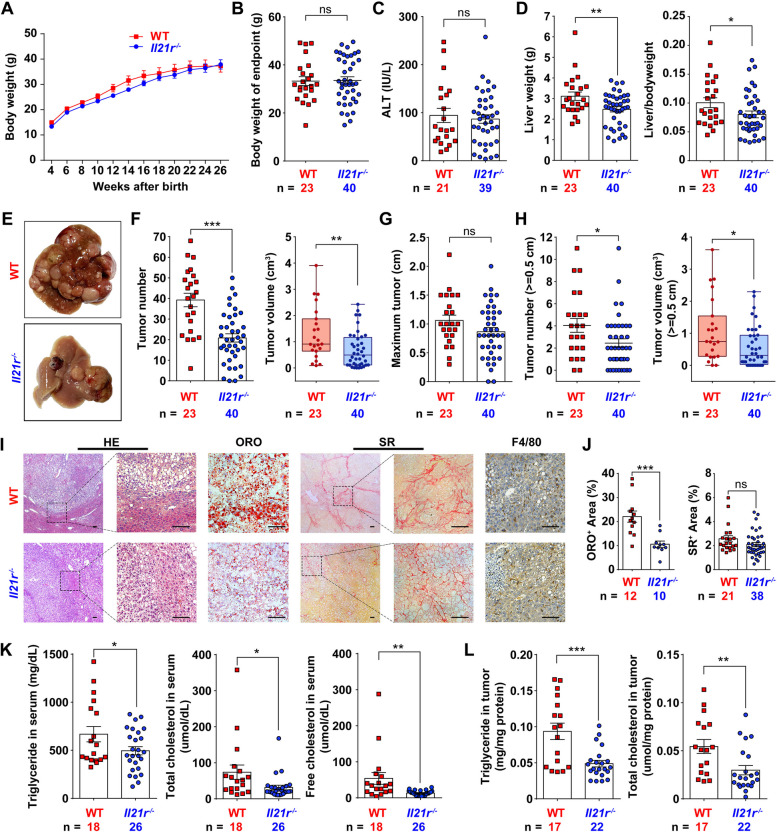
Background: Dysregulation of immune surveillance is tightly linked to the development of metabolic dysfunction-associated steatohepatitis (MASH)-driven hepatocellular carcinoma (HCC); however, its underlying mechanisms remain unclear. Herein, we aimed to determine the role of interleukin-21 receptor (IL-21R) in MASH-driven HCC. Methods: The clinical significance of IL-21R was assessed in human HCC specimens using immunohistochemistry staining. Furthermore, the expression of IL-21R in mice was assessed in the STAM model. Thereafter, two different MASH-driven HCC mouse models were applied between IL-21R-deficient mice and wild type controls to explore the role of IL-21R in MASH-driven HCC. To further elucidate the potential mechanisms by which IL-21R affected MASH-driven HCC, whole transcriptome sequencing, flow cytometry and adoptive lymphocyte transfer were performed. Finally, flow cytometry, enzyme-linked immunosorbent assay, immunofluorescent staining, chromatin immunoprecipitation assay and western blotting were conducted to explore the mechanism by which IL-21R induced IgA + B cells. Results: HCC patients with high IL-21R expression exhibited poor relapse-free survival, advanced TNM stage and severe steatosis. Additionally, IL-21R was demonstrated to be upregulated in mouse liver tumors. Particularly, ablation of IL-21R impeded MASH-driven hepatocarcinogenesis with dramatically reduction of lipid accumulation. Moreover, cytotoxic CD8 + T lymphocyte activation was enhanced in the absence of IL-21R due to the reduction of immunosuppressive IgA + B cells. Mechanistically, the IL-21R-STAT1-c-Jun/c-Fos regulatory axis was activated in MASH-driven HCC and thus promoted the transcription of Igha , resulting in the induction of IgA + B cells. Conclusions: IL-21R plays a cancer-promoting role by inducing IgA + B cells in MASH-driven hepatocarcinogenesis. Targeting IL-21R signaling represents a potential therapeutic strategy for cancer therapy.
Overview
The claims and statistics of this paper haven’t been checked yet.
Free: it reads the open-access text and checks the first 5 claims that cite a source we can check. Create a free account to check every claim.
Integrity signals
Registry
Cites
Statistics
Figures



Verification
Claims the paper makes
The claims and statistics of this paper haven’t been checked yet.
Free: it reads the open-access text and checks the first 5 claims that cite a source we can check. Create a free account to check every claim.
Claims other papers make about this one
Each is checked against this paper’s own text: does it say what the citing paper says it does?
The cited source says what the claim attributes to it.
In the citing paper
“we initially constructed the STAM model, a well-established mouse model of MASH-driven HCC.”
From Single-cell transcriptome reveals the reprogramming of immune microenvironment during the transition from MASH to HCC (2025) · cites this paper as [35]
Self-check
Percentages, sums and reported differences re-computed from the paper’s own numbers.
The self-check needs the paper’s full text.
Citations
Cites
Subramanian, A., Tamayo, P., Mootha, V. K., Mukherjee, S., Ebert, B. L., Gillette, M. A., Paulovich, A., Pomeroy, S. L., Golub, T. R., Lander, E. S., et al. (2005) · Proceedings of the National Academy of Sciences · doi:10.1073/pnas.0506580102 · Cited by 53,625 · cited 1×
“Additionally, gene set enrichment analysis (GSEA) [35, 36] was performed to identify the hallmark gene sets according to the instruction.”
MethodMootha, V. K., Lindgren, C. M., Eriksson, K.-F., Subramanian, A., Sihag, S., Lehar, J., Puigserver, P., Carlsson, E., Ridderstråle, M., Laurila, E., et al. (2003) · Nature Genetics · doi:10.1038/ng1180 · Cited by 10,197 · cited 1×
“Additionally, gene set enrichment analysis (GSEA) [35, 36] was performed to identify the hallmark gene sets according to the instruction.”
MethodA multisociety Delphi consensus statement on new fatty liver disease nomenclature
Rinella, M. E., Lazarus, J. V., Ratziu, V., Francque, S. M., Sanyal, A. J., Kanwal, F., Romero, D., Abdelmalek, M. F., Anstee, Q. M., Arab, J. P., et al. (2023) · Journal of Hepatology · doi:10.1016/j.jhep.2023.06.003 · Cited by 3,100 · cited 2×
“Globally, a quarter of the population has NAFLD [2], and approximately 20% of these individuals harbor non-alcoholic steatohepatitis (NASH), now referred to as metabolic dysfunction-associated steatohepatitis (MASH) [1].”
BackgroundGlobal epidemiology of NAFLD-related HCC: trends, predictions, risk factors and prevention
Huang, D. Q., El-Serag, H. B., & Loomba, R. (2021) · Nature Reviews Gastroenterology & Hepatology · doi:10.1038/s41575-020-00381-6 · Cited by 1,855
From NASH to HCC: current concepts and future challenges
Anstee, Q. M., Reeves, H. L., Kotsiliti, E., Govaere, O., & Heikenwalder, M. (2019) · Nature Reviews Gastroenterology & Hepatology · doi:10.1038/s41575-019-0145-7 · Cited by 1,392 · cited 1×
“MASH, whose key features are steatosis, fibrosis and chronic inflammation [4, 5], can progress to cirrhosis and further to HCC [3].”
BackgroundNASH limits anti-tumour surveillance in immunotherapy-treated HCC
Pfister, D., Núñez, N. G., Pinyol, R., Govaere, O., Pinter, M., Szydlowska, M., Gupta, R., Qiu, M., Deczkowska, A., Weiner, A., et al. (2021) · Nature · doi:10.1038/s41586-021-03362-0 · Cited by 1,294
Self-citationGut Microbial Metabolites Fuel Host Antibody Responses
Kim, M., Qie, Y., Park, J., & Kim, C. H. (2016) · Cell Host & Microbe · doi:10.1016/j.chom.2016.07.001 · Cited by 893 · cited 1×
“…acids or microbial products can activate Toll like receptors, which promote the activation of IκB kinase (IKK) complex to trigger the translocation of IκB-free NF-κB to the nucleus, and initiate IgA class switching by binding to the activation-induced cytidine deaminase (AID) gene promoter [44–46].”
BackgroundNAFLD causes selective CD4+ T lymphocyte loss and promotes hepatocarcinogenesis
Ma, C., Kesarwala, A. H., Eggert, T., Medina-Echeverz, J., Kleiner, D. E., Jin, P., Stroncek, D. F., Terabe, M., Kapoor, V., ElGindi, M., et al. (2016) · Nature · doi:10.1038/nature16969 · Cited by 766 · cited 2×
“Compared to CD8 + T cells, naïve CD4 + T cells are more vulnerable to the MASLD micro-environment, where they display higher mortality rate due to the oxidative stress–related cytotoxic effects exerted by free fatty acids [15].”
BackgroundThe regulation of IgA class switching
Cerutti, A. (2008) · Nature Reviews Immunology · doi:10.1038/nri2322 · Cited by 756
NAFLD and cardiovascular diseases: a clinical review
Kasper, P., Martin, A., Lang, S., Kütting, F., Goeser, T., Demir, M., & Steffen, H.-M. (2021) · Clinical Research in Cardiology · doi:10.1007/s00392-020-01709-7 · Cited by 632
Immunosuppressive plasma cells impede T-cell-dependent immunogenic chemotherapy
Shalapour, S., Font-Burgada, J., Di Caro, G., Zhong, Z., Sanchez-Lopez, E., Dhar, D., Willimsky, G., Ammirante, M., Strasner, A., Hansel, D. E., et al. (2015) · Nature · doi:10.1038/nature14395 · Cited by 611 · cited 1×
“Additionally, our colleagues discovered that IgA + B cells, which expressed PD-L1, IL-10 and Fas-L, could suppress anti-tumor immunity in oxaliplatin-treated pancreatic cancer [41], one of the mechanisms responsible for chemotherapy tolerance.”
BackgroundInflammation-induced IgA+ cells dismantle anti-liver cancer immunity
Shalapour, S., Lin, X.-J., Bastian, I. N., Brain, J., Burt, A. D., Aksenov, A. A., Vrbanac, A. F., Li, W., Perkins, A., Matsutani, T., et al. (2017) · Nature · doi:10.1038/nature24302 · Cited by 589
Self-citationTsuchida, T., Lee, Y. A., Fujiwara, N., Ybanez, M., Allen, B., Martins, S., Fiel, M. I., Goossens, N., Chou, H.-I., Hoshida, Y., et al. (2018) · Journal of Hepatology · doi:10.1016/j.jhep.2018.03.011 · Cited by 583
Coffman, R. L., Lebman, D. A., & Shrader, B. (1989) · The Journal of experimental medicine · doi:10.1084/jem.170.3.1039 · Cited by 577
Auto-aggressive CXCR6+ CD8 T cells cause liver immune pathology in NASH
Dudek, M., Pfister, D., Donakonda, S., Filpe, P., Schneider, A., Laschinger, M., Hartmann, D., Hüser, N., Meiser, P., Bayerl, F., et al. (2021) · Nature · doi:10.1038/s41586-021-03233-8 · Cited by 518
IL-21 Limits NK Cell Responses and Promotes Antigen-Specific T Cell Activation
Kasaian, M. T., Whitters, M. J., Carter, L. L., Lowe, L. D., Jussif, J. M., Deng, B., Johnson, K. A., Witek, J. S., Senices, M., Konz, R. F., et al. (2002) · Immunity · doi:10.1016/s1074-7613(02)00295-9 · Cited by 481
Tran, S., Baba, I., Poupel, L., Dussaud, S., Moreau, M., Gélineau, A., Marcelin, G., Magréau-Davy, E., Ouhachi, M., Lesnik, P., et al. (2020) · Immunity · doi:10.1016/j.immuni.2020.06.003 · Cited by 400 · cited 1×
“…the liver resident macrophages, represent a first-line defense force in the liver; however, they have been shown to lack effective turnover in MASH [9] and are likely to turn into tumor-associated macrophages (TAMs) to fuel a tumor-promoting inflammatory response under the fibrotic and steatotic…”
BackgroundWang, H., Zhang, H., Wang, Y., Brown, Z. J., Xia, Y., Huang, Z., Shen, C., Hu, Z., Beane, J., Ansa-Addo, E. A., et al. (2021) · Journal of Hepatology · doi:10.1016/j.jhep.2021.07.032 · Cited by 398
Epidemiology and risk-stratification of NAFLD-associated HCC
Ioannou, G. N. (2021) · Journal of Hepatology · doi:10.1016/j.jhep.2021.08.012 · Cited by 361 · cited 1×
“Although the percentage of patients diagnosed annually with MASH-associated HCC is still relatively low, MASH will inevitably become the most common etiology of HCC in the near future due to the rapidly increasing incidence of obesity and diabetes globally [7].”
BackgroundFujii, M., Shibazaki, Y., Wakamatsu, K., Honda, Y., Kawauchi, Y., Suzuki, K., Arumugam, S., Watanabe, K., Ichida, T., Asakura, H., et al. (2013) · Medical Molecular Morphology · doi:10.1007/s00795-013-0016-1 · Cited by 355 · cited 1×
“For the STAM model, Il21r − / − mice and wild type con-trol mice were performed as previously described [32].”
MethodTan, D. J. H., Ng, C. H., Lin, S. Y., Pan, X. H., Tay, P., Lim, W. H., Teng, M., Syn, N., Lim, G., Yong, J. N., et al. (2022) · The Lancet Oncology · doi:10.1016/s1470-2045(22)00078-x · Cited by 307
Preclinical Models for Studying NASH-Driven HCC: How Useful Are They?
Febbraio, M. A., Reibe, S., Shalapour, S., Ooi, G. J., Watt, M. J., & Karin, M. (2019) · Cell Metabolism · doi:10.1016/j.cmet.2018.10.012 · Cited by 253
IgA transcytosis and antigen recognition govern ovarian cancer immunity
Biswas, S., Mandal, G., Payne, K. K., Anadon, C. M., Gatenbee, C. D., Chaurio, R. A., Costich, T. L., Moran, C., Harro, C. M., Rigolizzo, K. E., et al. (2021) · Nature · doi:10.1038/s41586-020-03144-0 · Cited by 248
Loss-of-function mutations in the IL-21 receptor gene cause a primary immunodeficiency syndrome
Kotlarz, D., Ziętara, N., Uzel, G., Weidemann, T., Braun, C. J., Diestelhorst, J., Krawitz, P. M., Robinson, P. N., Hecht, J., Puchałka, J., et al. (2013) · Journal of Experimental Medicine · doi:10.1084/jem.20111229 · Cited by 218
Biology of IL‐21 and the IL‐21 receptor
Mehta, D. S., Wurster, A. L., & Grusby, M. J. (2004) · Immunological Reviews · doi:10.1111/j.0105-2896.2004.00201.x · Cited by 201
XCR1+ type 1 conventional dendritic cells drive liver pathology in non-alcoholic steatohepatitis
Deczkowska, A., David, E., Ramadori, P., Pfister, D., Safran, M., Li, B., Giladi, A., Jaitin, D. A., Barboy, O., Cohen, M., et al. (2021) · Nature Medicine · doi:10.1038/s41591-021-01344-3 · Cited by 197
Leonard, W. J., & Wan, C.-K. (2016) · F1000Research · doi:10.12688/f1000research.7634.1 · Cited by 184
Interleukin-21 is a growth and survival factor for human myeloma cells
Brenne, A.-T., Baade Ro, T., Waage, A., Sundan, A., Borset, M., & Hjorth-Hansen, H. (2002) · Blood · doi:10.1182/blood.v99.10.3756 · Cited by 168
The role of IL-21 in immunity and cancer
Davis, M. R., Zhu, Z., Hansen, D. M., Bai, Q., & Fang, Y. (2015) · Cancer Letters · doi:10.1016/j.canlet.2014.12.047 · Cited by 154
Interleukin (IL)-21 promotes intestinal IgA response to microbiota
Cao, A., Yao, S., Gong, B., Nurieva, R., Elson, C. O., & Cong, Y. (2015) · Mucosal Immunology · doi:10.1038/mi.2014.134 · Cited by 137
Liu, R., Lu, Z., Gu, J., Liu, J., Huang, E., Liu, X., Wang, L., Yang, J., Deng, Y., Qian, J., et al. (2017) · Gastroenterology · doi:10.1053/j.gastro.2017.09.045 · Cited by 121
Borte, S., Pan‐Hammarström, Q., Liu, C., Sack, U., Borte, M., Wagner, U. G., Graf, D., & Hammarström, L. L. G. (2009) · Blood · doi:10.1182/blood-2009-02-207423 · Cited by 116
NASH and Hepatocellular Carcinoma: Immunology and Immunotherapy
Pinter, M., Pinato, D. J., Ramadori, P., & Heikenwalder, M. (2023) · Clinical Cancer Research · doi:10.1158/1078-0432.ccr-21-1258 · Cited by 103 · cited 1×
“…prevent the progression from MASH to HCC. Emerging investigations imply that MASH-driven HCC development is accompanied by the accumulation of immune cells within the tumor microenvironment, playing an important role in initiating, maintaining, or exacerbating the transition from MASH to HCC [8].”
BackgroundPlasma cells in primary melanoma. Prognostic significance and possible role of IgA
Bosisio, F. M., Wilmott, J. S., Volders, N., Mercier, M., Wouters, J., Stas, M., Blokx, W. A. M., Massi, D., Thompson, J. F., Scolyer, R. A., et al. (2016) · Modern Pathology · doi:10.1038/modpathol.2016.28 · Cited by 95
Regulation of Intestinal IgA Responses by Dietary Palmitic Acid and Its Metabolism
Kunisawa, J., Hashimoto, E., Inoue, A., Nagasawa, R., Suzuki, Y., Ishikawa, I., Shikata, S., Arita, M., Aoki, J., & Kiyono, H. (2014) · The Journal of Immunology · doi:10.4049/jimmunol.1302944 · Cited by 74
Revisiting the Role of Natural Killer Cells in Non-Alcoholic Fatty Liver Disease
Martínez-Chantar, M. L., Delgado, T. C., & Beraza, N. (2021) · Frontiers in Immunology · doi:10.3389/fimmu.2021.640869 · Cited by 67 · cited 1×
“In addition, other innate immune cells, such as dendritic cells (DCs) [11] and natural killer (NK) cells [12] may also participate in the process of MASH-driven HCC. Notably, adaptive CD8 + T cells play a central role in the hepatocarcinogenesis in the context of MASLD.”
BackgroundSTAT-1 and c-Fos interaction in nitric oxide synthase-2 gene activation
Xu, W., Comhair, S. A. A., Zheng, S., Chu, S. C., Marks-Konczalik, J., Moss, J., Haque, S. J., & Erzurum, S. C. (2003) · American Journal of Physiology-Lung Cellular and Molecular Physiology · doi:10.1152/ajplung.00441.2002 · Cited by 60
Extending the clinical and immunological phenotype of human interleukin-21 receptor deficiency
Stepensky, P., Keller, B., Abuzaitoun, O., Shaag, A., Yaacov, B., Unger, S., Seidl, M., Rizzi, M., Weintraub, M., Elpeleg, O., et al. (2015) · Haematologica · doi:10.3324/haematol.2014.112508 · Cited by 57
Erman, B., Bilic, I., Hirschmugl, T., Salzer, E., Cagdas, D., Esenboga, S., Akcoren, Z., Sanal, O., Tezcan, I., & Boztug, K. (2015) · Haematologica · doi:10.3324/haematol.2014.120980 · Cited by 56
IL-21 ensures TGF-β1-induced IgA isotype expression in mouse Peyer’s patches
Seo, G., Youn, J., & Kim, P.-H. (2009) · Journal of Leukocyte Biology · doi:10.1189/jlb.0708450 · Cited by 50
Intra-tumour IgA1 is common in cancer and is correlated with poor prognosis in bladder cancer.
Welinder, C., Jirström, K., Lehn, S., Nodin, B., Marko‐Varga, G., Blixt, O., Danielsson, L., & Jansson, B. (2016) · Heliyon · doi:10.1016/j.heliyon.2016.e00143 · Cited by 44
Cho, H., Jaime, H., de Oliveira, R. P., Kang, B., Spolski, R. J., Vaziri, T., Myers, T. G., Thovarai, V., Shen, Z., Fox, J. G., et al. (2018) · Mucosal Immunology · doi:10.1038/s41385-018-0056-x · Cited by 43
Kohlhepp, M. S., Liu, H., Tacke, F., & Guillot, A. (2023) · Frontiers in Molecular Biosciences · doi:10.3389/fmolb.2023.1129831 · Cited by 27
Zheng, X., Zhou, Y., Yi, X., Chen, C., Wen, C., Ye, G., Li, X., Tang, L., Zhang, X., Yang, F., et al. (2018) · OncoImmunology · doi:10.1080/2162402x.2018.1500673 · Cited by 24
Jin, Y., Sun, Z., Geng, J., Yang, L., Song, Z., Song, H., Wang, J., & Tang, J. (2019) · International Immunopharmacology · doi:10.1016/j.intimp.2019.02.007 · Cited by 23
IL-21 and IL-5 coordinately induce surface IgA+ cells
Hashiguchi, M., Kashiwakura, Y., Kanno, Y., Kojima, H., & Kobata, T. (2020) · Immunology Letters · doi:10.1016/j.imlet.2020.05.004 · Cited by 19
IL-21 Promotes Intestinal Memory IgA Responses
Huang, X., Yang, W., Yao, S., Bilotta, A. J., Lu, Y., Zhou, Z., Kumar, P., Dann, S. M., & Cong, Y. (2020) · The Journal of Immunology · doi:10.4049/jimmunol.1900766 · Cited by 17
Self-citationSerum IL-21 levels associated with chronic hepatitis B and hepatitis B-related liver failure
Chen, H., Liu, H., Yang, Y., Cheng, X., Wang, Y., Xing, F., & ZHAO, Y.-R. (2014) · Experimental and Therapeutic Medicine · doi:10.3892/etm.2014.1533 · Cited by 16
Pan, Q., Yu, Y., Tang, Z., Xi, M., Jiang, H., Xun, Y., Liu, X., Liu, H., Hu, J., & Zang, G. (2014) · Journal of Viral Hepatitis · doi:10.1111/jvh.12242 · Cited by 16
Zhao, C., Wu, X., Chen, J., & Qian, G. (2021) · Journal of Advanced Research · doi:10.1016/j.jare.2021.05.010 · Cited by 14
Chromatin Immunoprecipitation Assay Using Micrococcal Nucleases in Mammalian Cells
Yamakawa, T., & Itakura, K. (2019) · Journal of Visualized Experiments · doi:10.3791/59375 · Cited by 9
Cited by
Immunopathogenic mechanisms and immunoregulatory therapies in MASLD
He, Y., Chen, Y., Qian, S., van Der Merwe, S., Dhar, D., Brenner, D. A., & Tacke, F. (2025) · Cellular & Molecular Immunology · doi:10.1038/s41423-025-01307-5 · Cited by 81
“IL-21R signaling has been shown to promote MASH-HCC via the induction of immunosuppressive IgA + B cells [23].”
Wu, X., Huang, Q., Chen, X., Zhang, B., Liang, J., & Zhang, B. (2024) · Theranostics · doi:10.7150/thno.105423 · Cited by 42
Huang, Y., Xie, Y., Zhang, Y., Liu, Z., Jiang, W., Ye, Y., Tang, J., Li, Z., Yin, Z., & Lin, X.-J. (2025) · Molecular Cancer · doi:10.1186/s12943-025-02370-2 · Cited by 41
Self-citationLeslie, J., Krishnamurthy, K. A., Gopalsamy, I. K., Inácio, P., Huch, M., Gallage, S., Oakley, F., & Vacca, M. (2026) · Nature Reviews Gastroenterology & Hepatology · doi:10.1038/s41575-025-01162-9 · Cited by 30
Lv, Z., Yang, R., Zhang, K., Wang, R., Shi, X., Wu, J., Liu, L., & Jiao, J. (2025) · Frontiers in Immunology · doi:10.3389/fimmu.2025.1649812 · Cited by 21
Metadata
- Authors
- Xie, Y., Huang, Y., Li, Z.-Y., Jiang, W., Shi, N.-X., Lu, Y., Cao, G., Yin, Z., & Lin, X.-J.
- Affiliations
- Jinan University (CN)
- Corresponding author
- Yin, Zhinan
- Lin, Xue-Jia
- Venue
- Molecular Cancer
- Published
- 2024-05-08
- Volume
- 23
- Issue
- 1
- Pages
- 95-95
- ISSN
- 1476-4598 (ISSN-L)
- PMC
- PMC11077880
- OpenAlex
- W4396744474
- Cited by
- 18
- References
- 52
- Citations by year
- 2026: 9 · 2025: 9
- FWCI
- 4.71
- Type
- journal article
- Language
- en
- Open access
- gold
- doi.org
- Licence
- cc-by
- creativecommons.org/licenses/by/4.0 (tdm)
- creativecommons.org/licenses/by/4.0 (vor)
- Locations
- Molecular Cancer (publishedVersion, cc-by)
- PubMed Central (publishedVersion, cc-by)
- PubMed (publishedVersion)
- DOAJ (DOAJ: Directory of Open Access Journals) (submittedVersion, cc-by-sa)
- Funders
- National Natural Science Foundation of China (32030036 and 31830021, 82372797)
- National Key Research and Development Program of China (2020YFA0803502)
- 111 Project (B16021)
- Tip-top Scientific and Technical Innovative Youth Talents of Guangdong Special Support Program (2019TQ05Y110)
- Pearl River S & T Nova Program of Guangzhou, China (201906010085)
- Topics
- Health Sciences › Medicine › Hepatology › Hepatocellular Carcinoma Treatment and Prognosis
- Health Sciences › Medicine › Hepatology › Liver Disease Diagnosis and Treatment
- Health Sciences › Medicine › Oncology › Cancer Immunotherapy and Biomarkers
- Keywords
- interleukin-21 receptor, nonalcoholic steatohepatitis, hepatocellular carcinoma, IgA+ B cells, immunosuppression, STAT1, CD8+ T cell activation, hepatocarcinogenesis, therapeutic target
- MeSH terms
- Animals, B-Lymphocytes, Disease Models, Animal, Fatty Liver, Female, Carcinoma, Hepatocellular, Humans, Immunoglobulin A, Liver Neoplasms, Male, Signal Transduction, Gene Expression Regulation, Neoplastic, Cell Line, Tumor, Mice, Receptors, Interleukin-21, Interleukin-21 Receptor alpha Subunit
About these checks
Registry, retraction, Cites and statistics results are computed, not judged, with one exception: a printed reference that no index lists is read once by a model before it counts as a citation error. Claims are extracted by a model and kept only when their quote appears verbatim in the text; each cited source is then checked, with a model’s help, for whether it says what the claim relies on. Those verdicts can be wrong — read the claim’s quote and the cited source before relying on one.
Statistics and arithmetic are recomputed, not judged.
Confidence bands are shown only for fields calibrated on our annotated test set. None is calibrated yet, so no band is shown.
What counts as a claim ›How we measure confidence ›How we check this ›
Are you an author, or do you see a problem with this page? Request a review
Data sources
Bibliographic data: Semantic Scholar, OpenAlex, Crossref.
Contains information from the Semantic Scholar Academic Graph Datasets, made available under the ODC Attribution License (ODC-BY 1.0).
Semantic Scholar’s data is described in: Kinney, R., et al. (2023). The Semantic Scholar Open Data Platform. arXiv:2301.10140.
