

Advances on immunotherapy for osteosarcoma
Open accessThe DOI matches its Crossref record; 166 of the 167 references it cites were found in a registry or an index; 120 of the 174 sources its claims cite were checked for support.
Abstract
Osteosarcoma is the most common primary bone cancer in children and young adults. Limited progress has been made in improving the survival outcomes in patients with osteosarcoma over the past four decades. Especially in metastatic or recurrent osteosarcoma, the survival rate is extremely unsatisfactory. The treatment of osteosarcoma urgently needs breakthroughs. In recent years, immunotherapy has achieved good therapeutic effects in various solid tumors. Due to the low immunogenicity and immunosuppressive microenvironment of osteosarcoma, immunotherapy has not yet been approved in osteosarcoma patients. However, immune-based therapies, including immune checkpoint inhibitors, chimeric antigen receptor T cells, and bispecfic antibodies are in active clinical development. In addition, other immunotherapy strategies including modified-NK cells/macrophages, DC vaccines, and cytokines are still in the early stages of research, but they will be hot topics for future study. In this review, we showed the functions of cell components including tumor-promoting and tumor-suppressing cells in the tumor microenvironment of osteosarcoma, and summarized the preclinical and clinical research results of various immunotherapy strategies in osteosarcoma, hoping to provide new ideas for future research in this field.
Overview
CoChat Summary
TL;DR
This review summarizes the immunosuppressive tumor microenvironment of osteosarcoma and the preclinical/clinical landscape of immunotherapies, including immune checkpoint inhibitors, CAR-modified cell therapies, vaccines, cytokines, and bispecific antibodies. It concludes that immunotherapy has not yet been approved for osteosarcoma and that single-agent approaches show limited efficacy, making biomarker-guided combination strategies the likely future direction.
Key findings
- Osteosarcoma is the most common primary bone cancer in children and young adults, with an incidence of 3–5 per million per year; about 60% of patients are 10–20 years old. Localized disease has a 5-year survival of 60–70%, but metastatic or recurrent disease has only 20–30% 5-year survival.
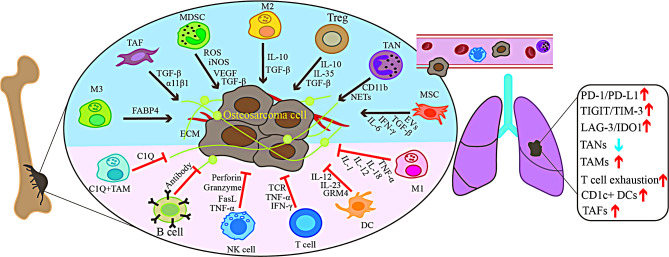
- The osteosarcoma TME is immunosuppressive: TAMs are the most abundant immune cells and account for approximately 50% of immune cells, with M2-type TAMs predominant. PD-L1 positivity was found in 13% of primary tumors, 25% of relapses, and 48% of metastases, and correlated with high T-cell infiltration.
- Clinical ICI results are limited: in SARC028, 2 (5%) of 40 bone sarcoma patients had an objective response, including 1 (5%) of 22 osteosarcoma patients; a phase II pembrolizumab trial in 12 relapsed osteosarcoma patients showed no clinical benefit; and a pembrolizumab plus cyclophosphamide trial had only one partial response.
- CAR-T and combination trials show some signals: in a HER2-CAR-T phase I/II trial of 19 patients (16 osteosarcoma), 4 of 17 evaluable patients had stable disease for 12 weeks to 14 months and median OS was 10.3 months; apatinib plus camrelizumab in 43 chemotherapy-refractory osteosarcoma patients had an ORR of 20.9% and 6-month PFS of 50.9%; MASCT-I plus camrelizumab and apatinib in 6 osteosarcoma patients had an ORR of 33.3%, DCR of 50.0%, and median PFS of 5.7 months.
Methods
- Narrative review of the osteosarcoma immune microenvironment and immunotherapy strategies, including immune checkpoint inhibitors, CAR-T/CAR-M/CAR-NK cells, dendritic cell vaccines, cytokines, bispecific antibodies, and combination regimens.
- Synthesizes preclinical studies and clinical trial results, with tables summarizing clinical trials of ICIs, adoptive cell therapies, and bispecific antibodies in osteosarcoma.
- No primary patient cohort or new experimental data are reported; the analysis is a descriptive literature synthesis.
Limitations
- The paper states that osteosarcoma has low immunogenicity and an immunosuppressive microenvironment, immunotherapy has not yet been approved for osteosarcoma, and many strategies remain in early or preclinical stages. It also notes that single immunotherapy has a low response rate and that CAR-NK/CAR-M therapies have not made promising progress in osteosarcoma.
- Evident from the text: this is a narrative review without a systematic search strategy or quantitative meta-analysis, so selection and interpretation of cited studies may be subject to bias.
- Evident from the text: many cited clinical trials are small, include mixed sarcoma populations with only subsets of osteosarcoma patients, or are terminated, withdrawn, suspended, or have unknown status, limiting the strength of conclusions about osteosarcoma-specific efficacy.
Model-written summary. Check it against the paper before relying on it.
Integrity signals
Registry
Cites
Statistics
Figures
Verification
Claims the paper makes
107 Valid · 7 Not valid · 44 Not checked · 15 Own results and interpretations
At least one cited source doesn’t support this claim or points to a different paper, and none confirmed it — see the verdicts below.
In the paper
“and is associated with adverse clinical outcomes [103]”
§ Advances on immunotherapy for osteosarcoma > Studies of CAR-modified cellular therapies for osteosarcoma > CAR-T therapy
What the sources say
- Disputedcites [103] Wang SL, et al. Prognostic significance of the expression of HER family members in primary osteosarcoma. Oncol Lett. 2018;16(2):2185–94. 30008917 PMC6036504 sourceExperimental — accuracy not yet measured
The Discussion reports HER-2 staining in 13 (22%) osteosarcoma samples but says it had no prognostic significance. Its conclusion instead links EGFR, HER-3 and HER-4 expression to unfavorable clinical outcomes. (LLM, conf=0.90)
Checked by a reasoning model — may be wrong.
plainstates an association- Asserted: passes — The authors put it forward as true.
- Checkable: passes — It can be checked against evidence.
- Load-bearing: unclear — It is unclear whether the paper’s conclusions depend on it.
- Based: passes — The paper gives a reason why it holds.
- Disputed
Some cited sources support this claim and some don’t — read each source’s verdict below.
In the paper
“Zhang et al. conducted the third-generation CAR-T cells targeting B7-H3 and proved the killing effects for tumor cells in vitro and in vivo using the patientderived xenografts (PDXs) model of osteosarcoma [116–125].”
§ Advances on immunotherapy for osteosarcoma > Studies of CAR-modified cellular therapies for osteosarcoma > B7-H3
What the sources say
- Supportedcites [116] Zhang Q, et al. B7-H3 targeted CAR-T cells show highly efficient anti-tumor function against osteosarcoma both in vitro and in vivo. BMC Cancer. 2022;22(1):1124. 36320072 10.1186/s12885-022-10229-8 PMC9628043 source
The paper’s Abstract (Results) identifies the cells as third-generation B7-H3-targeted CAR-T cells. The Conclusion reports tumor-cell killing in vitro, and the Results section on osteosarcoma PDX models reports that treated tumors shrank or disappeared in vivo. (LLM, conf=0.91)
- Not checked — no full text of the sourcecites [117] Fritsche-Guenther R, et al. De novo expression of EphA2 in osteosarcoma modulates activation of the mitogenic signalling pathway. Histopathology. 2010;57(6):836–50. 21166698 10.1111/j.1365-2559.2010.03713.x source
- Could not verifycites [118] Posthumadeboer J, et al. Surface proteomic analysis of osteosarcoma identifies EPHA2 as receptor for targeted drug delivery. Br J Cancer. 2013;109(8):2142–54. 24064975 10.1038/bjc.2013.578 PMC3798973 sourceExperimental — accuracy not yet measured
The Materials and methods section describes EPHA2-targeted adenoviral delivery in osteosarcoma cells, not B7-H3 CAR-T cells. Searches for B7-H3, third-generation CAR-T cells, and patient-derived osteosarcoma xenografts found no passage in our copy reporting the attributed experiment; the Zhang papers listed in References concern proteomics. (LLM, conf=0.78)
- Disputedcites [119] Hsu K, et al. Chimeric Antigen receptor-modified T cells targeting EphA2 for the immunotherapy of paediatric bone tumours. Cancer Gene Ther. 2021;28(3–4):321–34. 32873870 10.1038/s41417-020-00221-4 PMC8057949 sourceExperimental — accuracy not yet measured
The in vivo efficacy and osteosarcoma metastatic-model sections describe CAR T cells targeting EphA2, not B7-H3. They identify the xenografts as derived from the 143B osteosarcoma cell line, not patient-derived tumours; the abstract reports EphA2 CAR T-cell activity in vitro and in vivo. (LLM, conf=0.88)
Checked by a reasoning model — may be wrong.
- Could not verifycites [120] Campbell CL, et al. Increased expression of the interleukin-11 receptor and evidence of STAT3 activation in prostate carcinoma. Am J Pathol. 2001;158(1):25–32. 11141475 10.1016/S0002-9440(10)63940-5 PMC1850253 sourceExperimental — accuracy not yet measured
Our copy of Campbell et al. (2001, Am J Pathol) is entirely about IL-11Rα/gp130 expression and tyrosine-phosphorylated STAT3 in normal prostate, BPH and prostate carcinoma tissues and cell lines (Abstract, Immunohistochemical Analysis of Prostatic Tissues and Cell Lines, Expression of Tyrosine-Phosphorylated STAT3..., Discussion). Searches for 'B7-H3 CAR-T osteosarcoma patient-derived xenograft' and 'chimeric antigen receptor T cells third-generation costimulatory domain tumor killing' returned no passage addressing B7-H3, CAR-T constructs, osteosarcoma or PDX models; the paper neither states nor contradicts the claim, and it names no alternative source for it. (LLM, conf=0.75)
- Not checked — no full text of the sourcecites [121] Schwertschlag US, et al. Hematopoietic, immunomodulatory and epithelial effects of interleukin-11. Leukemia. 1999;13(9):1307–15. 10482979 10.1038/sj.leu.2401514 source
- Could not verifycites [122] Lewis VO, et al. The interleukin-11 receptor alpha as a candidate ligand-directed target in osteosarcoma: consistent data from cell lines, orthotopic models, and human tumor samples. Cancer Res. 2009;69(5):1995–9. 19244100 10.1158/0008-5472.CAN-08-4845 sourceExperimental — accuracy not yet measured
Our full copy of Lewis et al. (2009) is entirely about the IL-11/IL-11Ra ligand-receptor pair as a ligand-directed targeting system in osteosarcoma: the Results and Discussion sections report IL-11Ra surface expression on KRIB, OS187, Dunn-LM and K7M3 cells, CGRRAGGSC-phage internalization, systemic phage targeting in intratibial orthotopic nude-mouse tumors, and IL-11Ra staining in human primary osteosarcomas and lung metastases. Searches for 'B7-H3 CAR-T cells patient-derived xenograft' and for T-cell/immunotherapy content returned no passage mentioning B7-H3, CAR-engineered T cells, or PDX models — the in vivo work here is phage-display targeting, not cell therapy. Since our copy simply does not address the claim's subject (and does not credit it to another named work), the attribution cannot be verified from this source. (LLM, conf=0.75)
- Disputedcites [123] Huang G, et al. Genetically modified T cells targeting interleukin-11 receptor alpha-chain kill human osteosarcoma cells and induce the regression of established osteosarcoma lung metastases. Cancer Res. 2012;72(1):271–81. 22075555 10.1158/0008-5472.CAN-11-2778 PMC3833671 sourceExperimental — accuracy not yet measured
The Discussion identifies the receptor as IL-11Rα and describes a second-generation CAR, not a third-generation B7-H3 CAR. Materials and Methods (Animal model) describes mice injected with the KRIB osteosarcoma cell line, not a patient-derived xenograft; the paper does report in vitro killing and regression of lung metastases. (LLM, conf=0.90)
Checked by a reasoning model — may be wrong.
- Not checked — no full text of the sourcecites [124] Pollak M. The insulin and insulin-like growth factor receptor family in neoplasia: an update. Nat Rev Cancer. 2012;12(3):159–69. 22337149 10.1038/nrc3215 source
- Disputedcites [125] Cui B, et al. Targeting ROR1 inhibits epithelial-mesenchymal transition and metastasis. Cancer Res. 2013;73(12):3649–60. 23771907 10.1158/0008-5472.CAN-12-3832 PMC3832210 sourceExperimental — accuracy not yet measured
The Materials and Methods section (Cell culture; page unavailable) identifies the experimental cells as breast-cancer cell lines. The Results section (Silencing ROR1 Inhibits Experimental Lung And Bone Metastasis; page unavailable) describes ROR1-shRNA treatment and metastasis in mice, not B7-H3 CAR-T cells or an osteosarcoma patient-derived xenograft. (LLM, conf=0.88)
Checked by a reasoning model — may be wrong.
plainstates a cause- Asserted: passes — The authors put it forward as true.
- Checkable: passes — It can be checked against evidence.
- Load-bearing: passes — The paper’s conclusions depend on it.
- Based: passes — The paper gives a reason why it holds.
- Supported
Every source the paper cites for this claim was checked and supports it.
In the paper
“And the immunoreceptor inhibitory checkpoint marker TIGIT was highly expressed by the CD8+ T, CD4+ T, Treg and NKT cells in osteosarcoma lesions.”
§ Advances on immunotherapy for osteosarcoma > Studies of ICIs for osteosarcoma > TIM-3
What the sources say
- Supportedcites [4] Zhou Y, et al. Single-cell RNA landscape of intratumoral heterogeneity and immunosuppressive microenvironment in advanced osteosarcoma. Nat Commun. 2020;11(1):6322. 33303760 10.1038/s41467-020-20059-6 PMC7730477 source
The Discussion states that TIGIT was widely expressed in T-reg, CD8+ T, CD4+ T, and NKT cells in osteosarcoma. The Results also describe relatively high TIGIT expression in T-reg cells and widespread expression in the other three cell types. Page numbers are not provided in our copy. (LLM, conf=0.93)
plainstates an association- Asserted: passes — The authors put it forward as true.
- Checkable: passes — It can be checked against evidence.
- Load-bearing: passes — The paper’s conclusions depend on it.
- Based: passes — The paper gives a reason why it holds.
- Supported
The cited sources support only part of this claim — read each source’s verdict below.
In the paper
“The study demonstrated that ALCAM was associated with tumorigenesis in osteosarcoma [111].”
§ Advances on immunotherapy for osteosarcoma > Studies of CAR-modified cellular therapies for osteosarcoma > ALCAM
What the sources say
- Partly supportedcites [111] Federman N, et al. Enhanced growth inhibition of osteosarcoma by cytotoxic polymerized liposomal nanoparticles targeting the alcam cell surface receptor. Sarcoma. 2012;2012:p126906. 10.1155/2012/126906 PMC3447386 23024593 sourceExperimental — accuracy not yet measured
Results §3.1 reports ALCAM expression in all ten osteosarcoma specimens tested, supporting an association with osteosarcoma tumors. The Discussion §4 says the biological consequences of increased expression are difficult to gauge; the study does not demonstrate that ALCAM is involved in tumorigenesis. (LLM, conf=0.84)
boostedstates an association- Asserted: passes — The authors put it forward as true.
- Checkable: passes — It can be checked against evidence.
- Load-bearing: passes — The paper’s conclusions depend on it.
- Based: passes — The paper gives a reason why it holds.
- Partly supported
The cited sources support only part of this claim — read each source’s verdict below.
In the paper
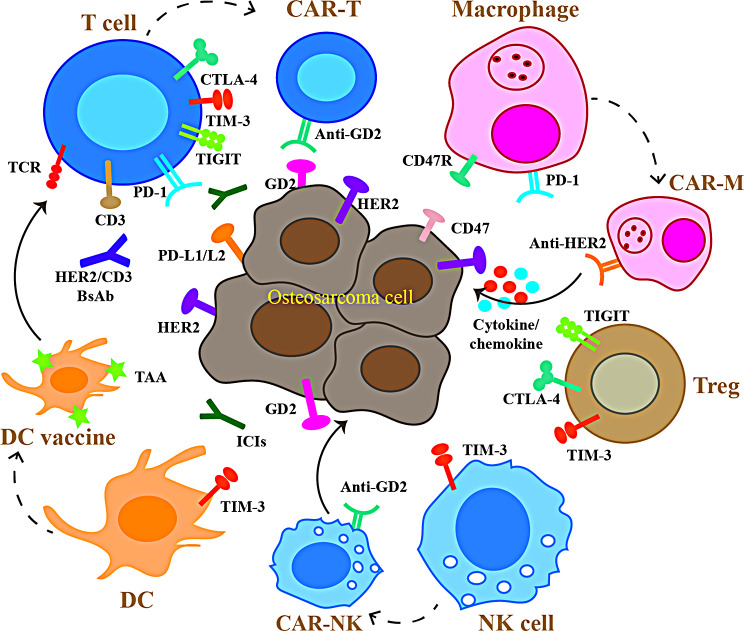
“In vitro and in vivo osteosarcoma models demonstrated that anti-CD47 monoclonal antibody can block the CD47-SIRPα signaling pathway, thus enhancing the anti-tumor ability of macrophages [96].”
§ Advances on immunotherapy for osteosarcoma > Studies of ICIs for osteosarcoma > CD47
What the sources say
- Partly supportedcites [96] Xu JF, et al. CD47 blockade inhibits tumor progression human osteosarcoma in xenograft models. Oncotarget. 2015;6(27):23662–70. 26093091 10.18632/oncotarget.4282 PMC4695143 sourceExperimental — accuracy not yet measured
The Results section reports that anti-CD47 antibodies significantly increased macrophage phagocytosis of osteosarcoma cells in a co-culture assay. The Discussion describes enhanced macrophage phagocytosis in vivo as a possibility, not a demonstrated result; the claim overstates that part of the evidence. No page numbers are available in our copy. (LLM, conf=0.85)
boostedstates a cause- Asserted: passes — The authors put it forward as true.
- Checkable: passes — It can be checked against evidence.
- Load-bearing: passes — The paper’s conclusions depend on it.
- Based: passes — The paper gives a reason why it holds.
- Partly supported
97 more claims · 59 with their cited sources checked
Create a free account to see all 173 claims and to verify the 11 references still open.
- It may state two separate claims as one. 66
- Probably not a substantial claim. 8
Self-check
Percentages, sums and reported differences re-computed from the paper’s own numbers.
Each contradiction between two passages listed here was confirmed by an independent check.
Rated minor: it would not touch a result — a value no result rests on, a p-value that stays on the same side of the significance level, or a conflict that is clerical, resolved elsewhere in the paper, or outside its own findings.
In the paper
§ Advances on immunotherapy for osteosarcoma > Studies of ICIs for osteosarcoma > TIM-3
“NCT03359018 | Apatinib Plus Anti-PD1 Therapy in Patients With Advanced Osteosarcoma | PD-L1VEGFR | Apatinib + SHR−1210 | Completed | Phase 2”
§ Advances on immunotherapy for osteosarcoma > Combination therapy strategies > Combination of anti-PD-1/PD-L1 and anti-angiogenic treatment
“apatinib (anti-VEGFR2 inhibitor) plus camrelizumab (anti-PD-1 antibody) in patients with chemotherapy-refractory osteosarcoma (NCT03359018).”
Rated minor: it would not touch a result — a value no result rests on, a p-value that stays on the same side of the significance level, or a conflict that is clerical, resolved elsewhere in the paper, or outside its own findings.
In the paper
§ Advances on immunotherapy for osteosarcoma > Studies of CAR-modified cellular therapies for osteosarcoma > CAR-NK therapy
“T-Cell Membrane-Anchored Tumor Targeted Il12 (Attil12)- T-Cell Therapy”
§ Advances on immunotherapy for osteosarcoma > Studies of CAR-modified cellular therapies for osteosarcoma > CAR-NK therapy
“AttIL2-T cell therapy”
Rated minor: it would not touch a result — a value no result rests on, a p-value that stays on the same side of the significance level, or a conflict that is clerical, resolved elsewhere in the paper, or outside its own findings.
In the paper
§ Advances on immunotherapy for osteosarcoma > Conclusions and future directions
“other CAR-engineered adoptive cell therapies, such as CAR-NK and CAR-M, are still in the preclinical research phase.”
§ Advances on immunotherapy for osteosarcoma > Studies of CAR-modified cellular therapies for osteosarcoma > CAR-NK therapy
“NCT05703854 | CAR.70-engineered IL15-transduced Cord Blood-derived NK Cells in Conjunction With Lymphodepleting Chemotherapy for the Management of Advanced Renal Cell Carcinoma, Mesothelioma and Osteosarcoma | | CAR.70/IL15-transduced CB-derived NK cells | Recruiting | Phase 1/2”
Citations
Cites
Pembrolizumab versus Chemotherapy for PD-L1-Positive Non-Small-Cell Lung Cancer
Reck, M., Rodríguez-Abreu, D., Robinson, A. G., Hui, R., Csőszi, T., Fülöp, A., Gottfried, M., Peled, N., Tafreshi, A., Cuffe, S., et al. (2016) · New England Journal of Medicine · doi:10.1056/nejmoa1606774 · Cited by 10,089 · cited 1×
“Importantly, due to their impressive efficacy, ICIs are recommended for the treatment of several human malignancies, including melanoma [10], non-small-cell lung cancer [11], head and neck cancers [12] and so on.”
BackgroundNivolumab for Recurrent Squamous-Cell Carcinoma of the Head and Neck
Ferris, R. L., Blumenschein, G., Fayette, J., Guigay, J., Colevas, A. D., Licitra, L., Harrington, K., Kasper, S., Vokes, E. E., Even, C., et al. (2016) · New England Journal of Medicine · doi:10.1056/nejmoa1602252 · Cited by 5,101
Aran, D., Looney, A. P., Liu, L., Wu, E., Fong, V., Hsu, A., Chak, S., Naikawadi, R. P., Wolters, P. J., Abate, A. R., et al. (2019) · Nature Immunology · doi:10.1038/s41590-018-0276-y · Cited by 4,984 · cited 1×
“In addition, the M3-TAMs, actually the FABP4 + TAMs previously identified as the alveolar macrophages in the lung, were dominant in the lung metastatic osteosarcoma lesion [24].”
BackgroundInnate and adaptive immune cells in the tumor microenvironment
Gajewski, T. F., Schreiber, H., & Fu, Y.-X. (2013) · Nature Immunology · doi:10.1038/ni.2703 · Cited by 4,148 · cited 1×
“In addition, CAR-Ms promoted an inflammatory state within the TME and were capable of antigen cross-presentation to tumor-specific CD8 + T cells [135].”
BackgroundThe evolving tumor microenvironment: From cancer initiation to metastatic outgrowth
de Visser, K. E., & Joyce, J. A. (2023) · Cancer Cell · doi:10.1016/j.ccell.2023.02.016 · Cited by 4,059
Chimeric Antigen Receptor–Modified T Cells for Acute Lymphoid Leukemia
Grupp, S. A., Kalos, M., Barrett, D., Aplenc, R., Porter, D. L., Rheingold, S. R., Teachey, D. T., Chew, A., Hauck, B., Wright, J. F., et al. (2013) · New England Journal of Medicine · doi:10.1056/nejmoa1215134 · Cited by 3,509 · cited 1×
“Chimeric antigen receptor T (CAR-T) cells as an adoptive cell therapy (ACT) have showed remarkable clinical outcome in the treatment of malignant hematological tumors, such as acute lymphoblastic leukemia [13], chronic lymphocytic leukemia [14], and non-hodg-kin lymphoma [15].”
BackgroundNeutrophil extracellular traps in immunity and disease
Papayannopoulos, V. (2018) · Nature Reviews Immunology · doi:10.1038/nri.2017.105 · Cited by 3,397 · cited 1×
“Web-like chromatin structures known as neutrophil extracellular traps (NETs) plays important roles in immune protection, inflammatory and autoimmune diseases and cancer [40].”
BackgroundUse of CAR-Transduced Natural Killer Cells in CD19-Positive Lymphoid Tumors
Liu, E., Marin, D., Banerjee, P., Macapinlac, H. A., Thompson, P., Basar, R., Nassif Kerbauy, L., Overman, B., Thall, P., Kaplan, M., et al. (2020) · New England Journal of Medicine · doi:10.1056/nejmoa1910607 · Cited by 2,217 · cited 1×
“The trial in adults with chronic lymphocytic leukemia demonstrated that CAR-NK targeting CD19 are safe and effective [143].”
BackgroundMyeloid-Derived Suppressor Cells
Gabrilovich, D. I. (2017) · Cancer Immunology Research · doi:10.1158/2326-6066.cir-16-0297 · Cited by 1,882
Porter, D. L., Hwang, W.-T., Frey, N. V., Lacey, S. F., Shaw, P. A., Loren, A. W., Bagg, A., Marcucci, K. T., Shen, A., Gonzalez, V., et al. (2015) · Science Translational Medicine · doi:10.1126/scitranslmed.aac5415 · Cited by 1,729 · cited 1×
“Chimeric antigen receptor T (CAR-T) cells as an adoptive cell therapy (ACT) have showed remarkable clinical outcome in the treatment of malignant hematological tumors, such as acute lymphoblastic leukemia [13], chronic lymphocytic leukemia [14], and non-hodg-kin lymphoma [15].”
Background
Cited by
Deep learning models in classifying primary bone tumors and bone infections based on radiographs
Wang, H., He, Y., Wan, L., Li, C., Li, Z., Li, Z., Xu, H., & Tu, C. (2025) · npj Precision Oncology · doi:10.1038/s41698-025-00855-3 · Cited by 74
Structural Engineering of Layered Nanomaterials for Biomedical Applications
Hu, T., Yang, Y. S., Wang, T., Ge, M., Yu, C., Zha, J., Pan, X., Zhou, Z., Ma, L., Liang, R., et al. (2025) · Chemical Reviews · doi:10.1021/acs.chemrev.5c00193 · Cited by 59
Chemotherapy, immunotherapy, and targeted therapy for osteosarcoma: Recent advancements
Adewuyi, E. E., Chorya, H. P., Muili, A. O., Moradeyo, A. A., Kayode, A. T., Naik, A., Odedele, J. T., & Obasanjo, O. M. (2024) · Critical Reviews in Oncology/Hematology · doi:10.1016/j.critrevonc.2024.104575 · Cited by 50
Zou, Q.-M., Zhou, X., Lai, J., Zhou, H., Su, J., Zhang, Z., Zhuang, X.-S., Liu, L., Yuan, R., Li, S., et al. (2024) · Redox Biology · doi:10.1016/j.redox.2024.103460 · Cited by 42
“Despite the use of chemotherapy (cisplatin, doxorubicin, and methotrexate), surgery, and radiation therapy, survival rates have not improved over the past four decades [46].”
Osteosarcoma: current insights and advances
Brar, G. S., Schmidt, A. A., Willams, L. R., Wakefield, M. R., & Fang, Y. (2025) · Exploration of Targeted Anti-tumor Therapy · doi:10.37349/etat.2025.1002324 · Cited by 47
Targeting metastasis in paediatric bone sarcomas
Bull, E. C., Singh, A., Harden, A. M., Soanes, K., Habash, H., Toracchio, L., Carrabotta, M., Schreck, C., Shah, K. M., Riestra, P. V., et al. (2025) · Molecular Cancer · doi:10.1186/s12943-025-02365-z · Cited by 42
“Sarcoma TMEs are abundant with M2 like tumour associated macrophages (TAMs) [187, 188], which represent around 50% of the immune cell population [188, 189].”
Emerging immunotherapies in osteosarcoma: from checkpoint blockade to cellular therapies
Han, Z., Chen, G., & Wang, D. (2025) · Frontiers in Immunology · doi:10.3389/fimmu.2025.1579822 · Cited by 38
“Recent advances in tumor immunology have revealed that osteosarcoma, despite being historically considered immunologically “ cold, ” exhibits an immunosuppressive tumor microenvironment (TME) that can be modulated to improve immune responsiveness (5, 6).”
Liu, R., Liu, Q., Wang, Y., Liu, T., Zhang, Z., Zhao, C., Tao, H., Ogando‐Rivas, E., Castillo, P., & Zhang, W. (2025) · Journal for ImmunoTherapy of Cancer · doi:10.1136/jitc-2025-012269 · Cited by 26
Xu, R., Zhu, S., Zhang, W., Xu, H., Tu, C., Wang, H., Wang, L., He, N., Liu, T., Guo, X., et al. (2025) · Advanced Science · doi:10.1002/advs.202500632 · Cited by 26
Osteosarcoma immune microenvironment: cellular struggle and novel therapeutic insights
Zhang, Y., Jiang, S., Lv, J., Feng, W., Yu, Y., & Zhao, H. (2025) · Frontiers in Immunology · doi:10.3389/fimmu.2025.1584450 · Cited by 29
RNA methyltransferase METTL16: From molecular mechanisms to therapeutic prospects in cancers
Shi, Z., Cao, X., Ma, Y., Li, K., Wang, X., Lin, J., Tang, H., & Zhu, X. (2025) · Cancer Letters · doi:10.1016/j.canlet.2025.217698 · Cited by 23
Manganese-based nanozymes for the dynamic regulation of the osteogenic microenvironment
Li, X., Shi, B., Lu, Y., Yu, Y., Yu, P., Zheng, Y., & Xia, D. (2025) · EBioMedicine · doi:10.1016/j.ebiom.2025.105958 · Cited by 17
Pei, Y., & Li, S. (2024) · International Journal of Surgery · doi:10.1097/js9.0000000000002195 · Cited by 16
Zeng, J., Yan, Z., Wang, D., He, T., Tong, Z., Miao, J., Li, J., Tan, W., Chen, S., & Deng, Y. (2025) · Bioactive Materials · doi:10.1016/j.bioactmat.2025.08.029 · Cited by 42
“Despite recent advances in cancer immuno-therapy, the immunosuppressive tumor microenvironment (ITME) in OS restricts cytotoxic T lymphocyte (CTL) infiltration and hampers effective antitumor immune activation [4].”
Su, W., Li, Y., Yang, G., Zhao, Y., Zhou, X., Liu, G., Huang, X., Sohail, M., Hussaın, I., Liu, Q., et al. (2025) · International Journal of Nanomedicine · doi:10.2147/ijn.s549587 · Cited by 19
Myeloid Cells in the Immunosuppressive Microenvironment as Immunotargets in Osteosarcoma
Sholevar, C. J., Liu, N. M., Mukarrama, T., Kim, J., Lawrence, J., & Canter, R. J. (2025) · ImmunoTargets and Therapy · doi:10.2147/itt.s485672 · Cited by 13
“64 One murine model of OSA utilizing the K7M2 cell line in immune competent BALB/C mice found significant PD-L1 expression on stromal cells in the majority of osteosarcoma tissues.”
Manipulating the cGAS-STING Axis: advancing innovative strategies for osteosarcoma therapeutics
Li, B., Zhang, C., Xu, X.-J., Shen, Q., Luo, S., & Hu, J. (2025) · Frontiers in Immunology · doi:10.3389/fimmu.2025.1539396 · Cited by 13
Fan, M., Liu, C., Zhang, Y., Zhang, J., Yang, L., Su, K., Tian, P., Zhou, Y., Zhang, L., Gao, X., et al. (2025) · Nature Communications · doi:10.1038/s41467-025-63270-z · Cited by 20
Decoding ferroptosis: transforming orthopedic disease management
Huo, G., Lin, Y., Liu, L., He, Y., Qu, Y., Liu, Y., Zhu, R., Wang, B., Gong, Q., Han, Z., et al. (2024) · Frontiers in Pharmacology · doi:10.3389/fphar.2024.1509172 · Cited by 11
Wang, L., Huang, Y., Zhang, X., Chen, W., & Dai, Z. (2025) · APOPTOSIS · doi:10.1007/s10495-024-02071-z · Cited by 13
Zhang, L., Jiang, H., & Ma, H. (2025) · Frontiers in Immunology · doi:10.3389/fimmu.2025.1548527 · Cited by 16
Intelligent Nanomedicine Systems Utilizing Diverse Nanoparticles for Osteosarcoma Therapy: A Review
Cai, J., Yang, H., He, Z., & Wu, C. (2025) · International Journal of Nanomedicine · doi:10.2147/ijn.s560865 · Cited by 10
Recent advances in targeting the cGAS–STING pathway for immunotherapy in orthopedic diseases
Wu, F., Hui, S., Li, D., Pan, G., & Zhang, W. (2025) · Frontiers in Immunology · doi:10.3389/fimmu.2025.1726423 · Cited by 15
“In OS, activation of cGAS – STING can enhance antigen presentation and recruit T cells into the bone tumor microenvironment, providing a mechanistic basis for combinations with chemotherapy/radiotherapy or checkpoint blockade (109).”
Targeting OxLDL-mediated CD36 + CAF reprogramming potentiates PD-1 immunotherapy in osteosarcoma
Zeng, A., Chen, H., Luo, T., Chen, W., Song, Y., Xu, Y., Chen, Z., Tang, Q., Zhu, X., Deng, C., et al. (2025) · Molecular Cancer · doi:10.1186/s12943-025-02516-2 · Cited by 16
“While advancements in surgery and chemotherapy have improved survival rates for localized disease, the prognosis for metastatic or recurrent osteosarcoma remains dismal, with a five-year survival rate below 30% [2].”
Advances in cell therapy for orthopedic diseases: bridging immune modulation and regeneration
Wang, J., Xu, S., Chen, B., & Qin, Y. (2025) · Frontiers in Immunology · doi:10.3389/fimmu.2025.1567640 · Cited by 14
Liu, W., Zheng, D., Huang, X., Wei, Z., Wei, Z., & Guo, W. (2025) · Cell Death and Disease · doi:10.1038/s41419-025-08070-5 · Cited by 10
He, M., Liu, Y., Li, T., Liu, Y., Wang, X., Xie, J., Wang, A., Wang, Y., Yuan, Y., Cui, M., et al. (2025) · Journal of Translational Medicine · doi:10.1186/s12967-025-07358-6 · Cited by 11
“Osteosarcoma (OS), a primary malignant tumor originating in the bone marrow, poses a significant health threat to young adults aged 10 to 25 years [1].”
Decoding osteosarcoma from heterogeneity to precision therapy
Xu, Y., Bai, Y., Yang, F., Yang, B., Huang, Z., Su, L., & Peng, K. (2025) · Discover Oncology · doi:10.1007/s12672-025-04256-7 · Cited by 12
A 10-year bibliometric analysis in the field of osteosarcoma treatment from 2014 to 2023
Shen, Y., Shao, X.-B., Chen, J., & Tang, X. (2025) · Discover Oncology · doi:10.1007/s12672-025-02007-2 · Cited by 7
“Although the technology for isolating and expanding TILs from OS patients is still immature, studies have shown that the proportion of TILs is positively correlated with patient prognosis [44].”
Yu, J., Zhang, C., Zhang, Q., Lu, B., Lu, G., Zhang, C., Qiu, R., Wang, X., Zou, C., Chu, J., et al. (2025) · Cell Death and Disease · doi:10.1038/s41419-025-07640-x · Cited by 11
“Although immunotherapy has emerged as a promising approach for various cancers, its success in osteosarcoma has been limited [3, 4].”
Yu, L., Bi, K., Gu, J., Yu, Z., Li, S., & Chen, Y. (2025) · Bioorganic Chemistry · doi:10.1016/j.bioorg.2025.108557 · Cited by 8
Lu, Y., Zhou, J., Gou, F., & Wu, J. (2025) · Advanced Intelligent Systems · doi:10.1002/aisy.202500455 · Cited by 11
Recent advances in hydrogel-assisted treatment of malignant bone tumors
Qian, X., Guan, L., Shen, L., Zhai, C., Cheng, Y., Pan, G., & Jiang, Z. (2025) · Materials Today Bio · doi:10.1016/j.mtbio.2025.102088 · Cited by 8
“In contrast, M2 macrophages are associated with promoting carcinogenesis [71].”
Dong, Y., Wang, L., Zhang, H., Li, M., Luo, Z. Y., Hu, Y., & Cai, C.-Y. (2025) · Advanced Science · doi:10.1002/advs.202512363 · Cited by 11
Lin, S., Liu, H., Lv, L., Jin, G.-Y., Xiang, X., Yu, B., Su, Y., Zhang, S., Wang, Z., Yang, Z., et al. (2025) · Bioactive Materials · doi:10.1016/j.bioactmat.2025.10.001 · Cited by 24
Advances in osteosarcoma research: Pathogenesis and emerging therapeutic strategies
Yan, L. ‐., Dong, X., & Chen, S. (2026) · Critical Reviews in Oncology/Hematology · doi:10.1016/j.critrevonc.2026.105252 · Cited by 11
Scutellarein Inhibits Osteosarcoma Growth by Targeting the TLR4/TRAF6/NF-κB Pathway
Shi, Y., Tang, Y., Sun, Z., Sui, P., Shao, Y., Wang, Z., Zhang, J., & Gao, M. J. (2025) · Drug Design Development and Therapy · doi:10.2147/dddt.s489092 · Cited by 8
Zhang, Z., He, F., Li, W., Liu, B., Deng, C. D., & Qin, X. (2025) · Journal of Functional Biomaterials · doi:10.3390/jfb16060213 · Cited by 8
“Currently, the standard clinical treatment approach involves preoperative neoadjuvant chemotherapy, surgical resection, and postoperative adjuvant radiotherapy [6].”
Butyrate derived from intratumoral microbiome facilitates pulmonary metastasis in osteosarcoma
Yu, J., Lu, W., Chen, Y., Li, Y., Yang, J., Cai, Z., Li, L., Fang, K., Guo, Y., Kang, H., et al. (2025) · Pharmacological Research · doi:10.1016/j.phrs.2025.107897 · Cited by 7
Zou, Y., Kang, J., Zhu, S., Ren, X., Zheng, L., Niu, J., Qin, X., Li, H., Xiang, L., Jiang, W., et al. (2025) · Frontiers in Immunology · doi:10.3389/fimmu.2025.1651858 · Cited by 7
The emerging role of ferredoxin 1 in cancer: Insights into cuproptosis and therapeutic innovation
Wu, A., Tu, K., & Xia, G. (2025) · International Journal of Biological Macromolecules · doi:10.1016/j.ijbiomac.2025.147996 · Cited by 14
Huang, Y.-J., Chen, H., Jiang, Y., Meng, Z., She, C., Miao, Z., & Fan, Y. (2025) · Journal of Ethnopharmacology · doi:10.1016/j.jep.2025.120716 · Cited by 11
Wang, H., Zhu, T., Yang, K., Xu, C., Zhang, Z., Liu, G., & Ren, H. (2025) · Frontiers in Oncology · doi:10.3389/fonc.2025.1702219 · Cited by 11
D'Anna, G., Hanurry, E., Piperno, A., & Scala, A. (2025) · International Journal of Nanomedicine · doi:10.2147/ijn.s539722 · Cited by 9
“13 The aim of these strategies is to boost the natural immune response to recognize and destroy cancer cells, offering encouraging prospects for treating OS, especially in immuno-combination strategies.”
Jia, S., Gong, B., Chen, H., Chen, Y., Zhuo, C., Wu, H., Qu, X., & Cai, H. (2026) · International Journal of Nanomedicine · doi:10.2147/ijn.s586319 · Cited by 13
“21,22 exhibit distinct genetic and phenotypic characteristics compared to primary tumors, often acquiring properties that enhance survival in the pulmonary microenvironment.”
Bi, J., Han, Y., Han, X., Wu, Y., Liao, S., Zhang, Y., Han, X., Wang, Z., Li, J., Zheng, A., et al. (2025) · Nano Today · doi:10.1016/j.nantod.2025.102717 · Cited by 7
Xanthohumol Regulates Mitophagy in Osteosarcoma Cells via AMPK ‐ ULK1 ‐ FUNDC1 Signaling Pathway
Ge, Q., Yan, Z., Tian, Q., Zhang, J., Li, J., Cai, F., Zhang, L., & Zhu, Y. (2025) · Phytotherapy Research · doi:10.1002/ptr.8468 · Cited by 7
The Double Life of microRNAs in Bone Sarcomas: Oncogenic Drivers and Tumor Suppressors
Zoroddu, S., Sias, F., & Bagella, L. (2025) · International Journal of Molecular Sciences · doi:10.3390/ijms26104814 · Cited by 7
“Characterized by high aggressiveness, fast development, and a predisposition for early metastasis, this malignancy provides major hurdles in both diagnosis and treatment [33].”
Jin, K., Shen, C., Yu, W., Lin, J., Zhu, J., Tao, H., & Liu, B. (2025) · Chemico-Biological Interactions · doi:10.1016/j.cbi.2025.111420 · Cited by 7
Cao, J., Zhang, H., Wang, C., He, L., Li, Y., Wang, Z., Li, X., Aziz, F., Yang, M., & Zhu, X. (2025) · Toxicology and Applied Pharmacology · doi:10.1016/j.taap.2025.117348 · Cited by 5
Song, D., Liu, Q., Zhang, D., Yan, Z., Su, M., Zhang, Q., Zhang, H., Shi, L., Fan, Y., & Yang, H. (2025) · Journal of Translational Medicine · doi:10.1186/s12967-025-06735-5 · Cited by 6
Cui, Y., Wu, Y., Jiang, D., & Ding, T. (2025) · PLoS ONE · doi:10.1371/journal.pone.0333809 · Cited by 9
Nanodynamic therapies for osteosarcoma: Recent advances and future perspectives
Xin, Y., Yao, J., Qiao, W., Liu, W., Hua, X., Zheng, X., Hui, J., & Fan, D. (2025) · Chemical Engineering Journal · doi:10.1016/j.cej.2025.171582 · Cited by 8
m6A methylation regulators and ncRNAs in osteosarcoma: Potential therapeutic strategies
Shi, C., Chen, L., Huang, K., Yang, G., Shi, T., Li, J., & Zheng, H. (2024) · Progress in Biophysics and Molecular Biology · doi:10.1016/j.pbiomolbio.2024.10.003 · Cited by 5
Li, M., Li, N., Fan, Y., et al. (2025) · Journal of Experimental & Clinical Cancer Research · doi:10.1186/s13046-025-03456-x · Cited by 5
Barriers in bone tumor treatment: the emerging role of drug delivery systems
Liu, J., Liu, X.-H., Zhong, N., Xiao, Y., Wang, G.-R., Liu, B., & Bu, L. (2025) · Medical Oncology · doi:10.1007/s12032-025-02853-8 · Cited by 9
“Additionally, there are issues such as the limited monotherapy efficacy of immune checkpoint inhibitors and the difficulty of CAR-T cells in effectively penetrating into the core region of bone tumors [47].”
Shi, Z., Zhao, J., Lv, Q., Liao, K., Cao, L., Yang, J., Wang, M., Zhou, L., Xu, H., Ge, J., et al. (2025) · Bone Research · doi:10.1038/s41413-025-00453-w · Cited by 4
Qiu, Y., Pu, C., Wang, C., & Quan, Z. (2025) · Cancers · doi:10.3390/cancers17172928 · Cited by 6
Zhao, X., Zhang, C., Qu, L., Gao, J., Wu, S., Zhang, Y., & Zhang, Y. (2025) · Frontiers in Immunology · doi:10.3389/fimmu.2025.1647931 · Cited by 7
Ren, Q., Zhang, X., Wu, X., Zhao, H., Zhang, Y., Yao, Y., Leng, Y., Zhang, X., Liu, W., Xiao, J., et al. (2025) · BMC Medicine · doi:10.1186/s12916-025-04424-0 · Cited by 6
“These markers provide insights into the hypoxia-immune landscape of the tumor, which is critical for understanding prognosis and potential therapeutic targets [44, 45].”
Single-cell RNA sequencing in osteosarcoma: applications in diagnosis, prognosis, and treatment
Asmar, C., Awad, G., Boutros, M., Daccache, S., Chebly, A., Alix‐Panabières, C., & Kourié, H. R. (2025) · Medical Oncology · doi:10.1007/s12032-025-03121-5 · Cited by 5
“Recently, targeted therapies and immunotherapies have been introduced for patients with refractory or metastatic disease, though their efficacy remains under investigation [ 4–7].”
He, X., Li, H., Wang, H., Zuo, D., Dong, H., Mu, H., Yang, B., Tao, Y., Yang, X., Zhao, B., et al. (2025) · Journal for ImmunoTherapy of Cancer · doi:10.1136/jitc-2025-012591 · Cited by 4
Cai, J., Qiu, S., Sun, B., Ge, J., Yu, Z., & Wang, C. (2025) · Discover Oncology · doi:10.1007/s12672-025-04315-z · Cited by 5
“They impair T cell responses through the production of reactive oxygen species, nitric oxide, and arginase [14], while also promoting angiogenesis and epithelial-to-mesenchymal transition via TGF-β and hepatocyte growth factor (HGF) [15].”
Pan, S., Hu, W., Xie, P., Zhang, Z., Ma, J., & Wang, C. (2026) · Journal of Translational Medicine · doi:10.1186/s12967-025-07633-6 · Cited by 5
“The current standard of care includes radical surgical resection, neoadjuvant chemotherapy, adjuvant chemoradio-therapy, and immunotherapy [3, 4].”
Pan, J., Chen, S., Jin, L., Chen, K., Ye, Z., & Li, B. (2026) · Biochimica et Biophysica Acta (BBA) - Reviews on Cancer · doi:10.1016/j.bbcan.2026.189544 · Cited by 8
Song, Z., Zhang, R., Yan, Z.-C., et al. (2026) · Chemical Engineering Journal · doi:10.1016/j.cej.2026.174971 · Cited by 4
Zeng, Y., Xiang, Y., Chen, L., Wen, Y., Deng, C., Huang, X., Feng, L., Liu, S., & Zhao, H. (2026) · Frontiers in Immunology · doi:10.3389/fimmu.2026.1802194 · Cited by 4
Fatahichegeni, M., Ansarian, M. A., Xiao, M., Gao, W., & Shi, R. (2026) · Cancer Immunology Immunotherapy · doi:10.1007/s00262-026-04384-1 · Cited by 6
Liu, Z., Liu, Z., & Liu, X. (2025) · International Immunopharmacology · doi:10.1016/j.intimp.2025.114198 · Cited by 4
LncRNA OLMALINC promotes osteosarcoma progression through USP1-mediated autophagy suppression
Li, J., Yu, B., Xue, Z., Liang, Y., Chen, S., Gui, T., Liu, Z., Zhang, L., & Peng, R. (2025) · Human Cell · doi:10.1007/s13577-025-01221-y · Cited by 4
“The prognosis for patients with metastatic or recurrent OS remains poor, with overall survival rates around 20% [7], highlighting the urgent need for more effective therapeutic approaches.”
Jian, G., Wang, S., Wang, X., Lu, Q., Zhu, X., Wan, S., Wang, S., Li, D., Wang, C., He, Q., et al. (2025) · Bioactive Materials · doi:10.1016/j.bioactmat.2025.04.029 · Cited by 20
“OS is known for its pronounced invasiveness, rapid metastasis, and high mortality rates [3, 4].”
SQLE promotes osteosarcoma progression via activating TGFβ/SMAD signaling pathway
Qi, S., He, L., & Feng, J. B. (2024) · Molecular and Cellular Probes · doi:10.1016/j.mcp.2024.101993 · Cited by 4
Yin, C., Chi, K., Chen, Z., Zhuang, S., Ye, Y., Zhang, B., & Cai, C. (2025) · Frontiers in Pharmacology · doi:10.3389/fphar.2025.1529525 · Cited by 4
“OS primarily occurs in the metaphysis of long bones in extremities, particularly the distal femur, proximal tibia, and proximal humerus, with potential metastasis to adjacent bone tissues or distant organs (primarily lungs) (Chen et al., 2021; Yu and Yao, 2024).”
Hosseini, F., Ahmadi, A., Sarvi, Z. N., Iranshahi, M., & Rassouli, F. B. (2025) · Naunyn-Schmiedeberg s Archives of Pharmacology · doi:10.1007/s00210-025-03847-z · Cited by 5
“In terms of immunotherapy, while this approach has shown promise in treating various cancers, its effectiveness in OS is limited by low immunogenicity and the presence of an immunosuppressive microenvironment (Yu and Yao 2024).”
Zhang, Y., Zhu, Y., Qin, C., Wu, D., Wu, Z., Liu, Z., Jia, X., & Liu, W. (2025) · ACS Applied Nano Materials · doi:10.1021/acsanm.5c03004 · Cited by 3
Liu, W., Xia, K., Tong, K., Huang, X., Wei, Z., Wei, Z., & Guo, W. (2025) · International Immunopharmacology · doi:10.1016/j.intimp.2025.115482 · Cited by 3
Batista, A., Valverde, T. M., Silva, C., Silva, R. M. F. D. C. E., Costa, G. M. J., Fabris, J. D., Ardisson, J. D., Ferreira, J. M. F., dos Santos, V. M. R., & Andrade, Â. L. (2025) · Magnetic Medicine · doi:10.1016/j.magmed.2025.100039 · Cited by 5
Liu, X., Xu, J., Zhu, J., Wang, Z., Fang, H., Guo, W., Cao, L., Cheng, Y. Y., & Song, K. (2025) · Tissue and Cell · doi:10.1016/j.tice.2025.103212 · Cited by 3
Zhu, T., Song, H., Yu, Y., Huang, W., Zhang, Y., Zhang, Z., Tan, M., Xu, N., & Zhou, L. (2025) · Cancer Letters · doi:10.1016/j.canlet.2025.218121 · Cited by 6
NGF/BDNF–Trk/p75NTR signaling in osteosarcoma immunity: biomarkers and therapeutic opportunities
An, L. K., Zhuang, Y., & Sun, H. (2025) · Frontiers in Immunology · doi:10.3389/fimmu.2025.1719012 · Cited by 4
Exploiting B7-H3: Molecular Insights and Immunotherapeutic Strategies for Osteosarcoma
Xie, Y., Wang, H., Zeng, F., Zhang, Y., Huang, J., Chen, C., & Wang, S. (2025) · Bioengineering · doi:10.3390/bioengineering12121344 · Cited by 5
“These approaches have shown promising results in various solid tumors, offering new hope for the treatment of OS [3].”
InfluentialLiu, P., Wang, W., Zhang, H., Liu, M. Q., Li, J., Teng, Y., Zhao, K., Shang, A., & Sun, Y. (2025) · Journal of Translational Medicine · doi:10.1186/s12967-025-07564-2 · Cited by 3
“Despite the introduction of multi-agent chemotherapy combined with surgical resection in the late 20th century, the 5-year overall survival rate has plateaued at 60–70% for patients with localized disease, but remains dismal-below 30%-for those with metastatic or recurrent OS [8, 9].”
Extracellular Vesicles in Osteosarcoma: Mechanisms, Diagnostics and Therapeutic Applications
Yin, C., Wu, Y., Qu, X., Wu, W., Zhang, B., & Chen, J. (2026) · Drug Design Development and Therapy · doi:10.2147/dddt.s565059 · Cited by 7
Aging reshapes the osteosarcoma ecosystem through immune dysfunction and tumor cell reprogramming
Shen, R., Chen, M., Zhu, X., & Lin, J. (2026) · Cellular Oncology · doi:10.1007/s13402-026-01162-0 · Cited by 4
“Osteosarcoma (OS) is an aggressive bone malignancy with a bimodal age distribution, affecting both adolescents and the elderly [1, 2].”
Jin, H., Huang, C. P., Dong, Y., Xiong, Q., Wang, D., He, Z., Shang, Y., Shen, L., Ma, C., Wang, Z., et al. (2026) · Frontiers in Oncology · doi:10.3389/fonc.2025.1665299 · Cited by 5
Guo, Q., Ran, C., Wang, Z., Zhang, X., Yao, Y., Chen, X. Y., Zhang, Y., Yang, J., You, Y., & Dw, Z. (2026) · Regenerative Biomaterials · doi:10.1093/rb/rbag031 · Cited by 3
Fluorinated polymeric nanoplatform relieves tumor hypoxia and enhances chemo-sonodynamic therapy
Lin, S., Yang, Z., Yu, B., Guanyu, J. I. N., Lv, L., Wang, L., Liu, L., Zhang, S., Xiang, S., Xiang, X., et al. (2026) · Acta Biomaterialia · doi:10.1016/j.actbio.2026.03.008 · Cited by 3
Tong, Z., Li, Y., Zhang, L., Wen, S., Wang, D., Li, Z., Peng, Y., Wang, W., Miao, J., Xiao, H., et al. (2026) · Bioactive Materials · doi:10.1016/j.bioactmat.2026.03.032 · Cited by 9
“Osteosarcoma (OS) is a highly aggressive bone cancer primarily affecting adolescents, posing a significant clinical challenge due to high postoperative relapse rates, inherent chemoresistance, and a profoundly immunosuppressive tumor microenvironment (ITME) [1,2].”
Gao, Z., & Wu, C. (2026) · Frontiers in Pharmacology · doi:10.3389/fphar.2026.1791228 · Cited by 3
Zhu, J., Jian, Z., Liu, F., & Le, L. (2025) · Cellular Signalling · doi:10.1016/j.cellsig.2025.111590 · Cited by 4
Liao, Q., Tong, S., Li, L., Wang, J., & Tong, K. (2025) · Cellular Signalling · doi:10.1016/j.cellsig.2025.112077 · Cited by 3
A review of immunotherapy for bone tumors
Wang, C., Chen, Z., Mo, H., Wang, J., & Zhou, W. (2025) · Frontiers in Immunology · doi:10.3389/fimmu.2025.1580598 · Cited by 6
“In the fi eld of bone tumors, immunotherapy has also shown great potential, bringing new hope for improving patient outcomes (24).”
Musculoskeletal Diseases: Mechanisms and Therapeutic Advances
Ma, X., Yinwang, E., Chai, X., Wang, F., Chen, Z., Wang, S., Zhou, H., Xue, Y., Lei, J., Chen, F., et al. (2025) · MedComm · doi:10.1002/mco2.70519 · Cited by 14
Anoikis-related PLCB4 is linked to immunotherapy response in osteosarcoma
Liu, G., Yu, F., Li, J., & Chen, Z. (2025) · Discover Oncology · doi:10.1007/s12672-025-01970-0 · Cited by 7
Liu, Z., Sun, H., Shan, Y., Wang, H., Luo, W., Gu, R., & Wang, Z. (2025) · Journal of Materials Chemistry B · doi:10.1039/d5tb00364d · Cited by 2
Zhang, H.-J., Yang, Z., Huang, W., Chen, D., Xiang, J., & Chen, W. C. (2025) · Journal of Orthopaedic Surgery and Research · doi:10.1186/s13018-025-06171-7 · Cited by 2
“Osteosarcoma (OS) is the most common primary malignancy of the bone and has a high propensity for local invasion and metastasis [20, 21].”
Iacobescu, G. L., Corlatescu, A.-D., Costin, H. P., Spiridonica, R., Popa, M.-I.-G., & Cîrstoiu, C. (2025) · Current Issues in Molecular Biology · doi:10.3390/cimb47080629 · Cited by 3
“Primary tumours and, even more, lung metastases contain three hierarchically related macrophage states: pro-inflammatory M1, immunosuppressive M2, and a metastasis-enriched FABP4 + programme that fuels cancer-stem-cell renewal and drug resistance [54].”
Silva, J. A., Gunasinghe, K., Jonus, H. C., Branella, G. M., Bustamante, A. Y. S., Okáľová, J., Yustein, J. T., & Spencer, H. T. (2025) · Frontiers in Immunology · doi:10.3389/fimmu.2025.1657760 · Cited by 3
“We show CI using V g 9V d 2 gd T cells represent a promising avenue for the treatment of OS, particularly in the context of lung metastasis, where standard therapies fall short (6, 9, 56 – 58).”
Wang, L., Dou, R., Ma, Y., Zhang, J., Cai, X., Liu, J., Liu, X., & Chen, J. (2025) · Chemical Engineering Journal · doi:10.1016/j.cej.2025.168704 · Cited by 3
Zhu, C., Bi, Z., Liu, B., Xia, M. X., Wei, Y., Sun, L., Li, D., Cai, B., Li, D., & Bi, Z. (2026) · Tissue Engineering Part B Reviews · doi:10.1177/19373341251377104 · Cited by 3
Metadata
- Authors
- Yu, S., & Yao, X.
- Affiliations
- The Affiliated Yongchuan Hospital of Chongqing Medical University (CN)
- Second Affiliated Hospital of Chongqing Medical University (CN)
- Corresponding author
- Yao, Xudong
- Venue
- Molecular Cancer
- Published
- 2024-09-09
- Volume
- 23
- Issue
- 1
- Pages
- 192-192
- ISSN
- 1476-4598 (ISSN-L)
- PMC
- PMC11382402
- OpenAlex
- W4402357381
- Cited by
- 270
- References
- 167
- Citations by year
- 2026: 126 · 2025: 136 · 2024: 7
- FWCI
- 44.96
- Type
- journal article
- Language
- en
- Open access
- gold
- doi.org
- Licence
- cc-by-nc-nd
- creativecommons.org/licenses/by-nc-nd/4.0 (tdm)
- creativecommons.org/licenses/by-nc-nd/4.0 (vor)
- Locations
- Molecular Cancer (publishedVersion, cc-by-nc-nd)
- PubMed (publishedVersion)
- PubMed Central (submittedVersion, cc-by-nc-nd)
- DOAJ (DOAJ: Directory of Open Access Journals) (submittedVersion, cc-by-sa)
- Funders
- National Natural Science Foundation of China (82203007)
- China Postdoctoral Science Foundation (2023MD744162)
- Topics
- Health Sciences › Medicine › Oncology › CAR-T cell therapy research
- Life Sciences › Immunology and Microbiology › Immunology › Immunotherapy and Immune Responses
- Life Sciences › Immunology and Microbiology › Immunology › Immune Cell Function and Interaction
- Keywords
- osteosarcoma, immunotherapy, tumor microenvironment, immune checkpoint inhibitors, chimeric antigen receptor T cells, bispecific antibodies, natural killer cells, macrophages
- MeSH terms
- Animals, Bone Neoplasms, Humans
About these checks
Registry, retraction, Cites and statistics results are computed, not judged, with one exception: a printed reference that no index lists is read once by a model before it counts as a citation error. Claims are extracted by a model and kept only when their quote appears verbatim in the text; each cited source is then checked, with a model’s help, for whether it says what the claim relies on. Those verdicts can be wrong — read the claim’s quote and the cited source before relying on one.
The claim verdicts this report counts are experimental: their accuracy is not yet measured.
A language model drew the claims from the paper on 2026-10-10, under version 3 of the claim definition (model deepseek-v4.1-flash, prompt extract-v3).
A second model labelled each claim on 2026-10-10 (model jev-1.13-20260917, definition revision gold-guideline-v0.2).
Cited sources are checked with a language model’s help (gpt-6-sol and qwen3.8-omni-flash).
Statistics and arithmetic are recomputed, not judged.
Confidence bands are shown only for fields calibrated on our annotated test set. None is calibrated yet, so no band is shown.
What counts as a claim ›How we measure confidence ›How we check this ›
Are you an author, or do you see a problem with this page? Request a review
Data sources
Bibliographic data: Semantic Scholar, OpenAlex, Crossref.
Contains information from the Semantic Scholar Academic Graph Datasets, made available under the ODC Attribution License (ODC-BY 1.0).
Semantic Scholar’s data is described in: Kinney, R., et al. (2023). The Semantic Scholar Open Data Platform. arXiv:2301.10140.
