

Advances on immunotherapy for osteosarcoma
Open accessThe DOI matches its Crossref record; 166 of the 167 references it cites were found in a registry or an index; 119 of the 174 sources its claims cite were checked for support.
Abstract
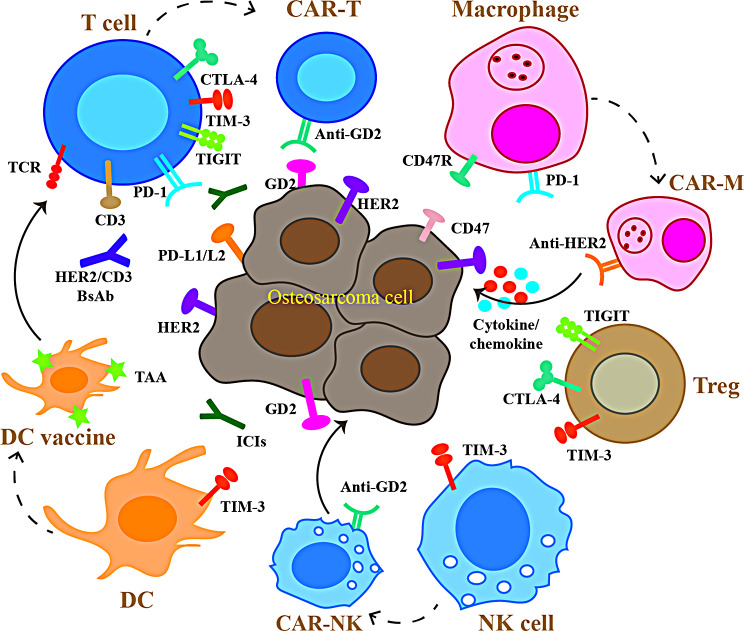
Osteosarcoma is the most common primary bone cancer in children and young adults. Limited progress has been made in improving the survival outcomes in patients with osteosarcoma over the past four decades. Especially in metastatic or recurrent osteosarcoma, the survival rate is extremely unsatisfactory. The treatment of osteosarcoma urgently needs breakthroughs. In recent years, immunotherapy has achieved good therapeutic effects in various solid tumors. Due to the low immunogenicity and immunosuppressive microenvironment of osteosarcoma, immunotherapy has not yet been approved in osteosarcoma patients. However, immune-based therapies, including immune checkpoint inhibitors, chimeric antigen receptor T cells, and bispecfic antibodies are in active clinical development. In addition, other immunotherapy strategies including modified-NK cells/macrophages, DC vaccines, and cytokines are still in the early stages of research, but they will be hot topics for future study. In this review, we showed the functions of cell components including tumor-promoting and tumor-suppressing cells in the tumor microenvironment of osteosarcoma, and summarized the preclinical and clinical research results of various immunotherapy strategies in osteosarcoma, hoping to provide new ideas for future research in this field.
Overview
CoChat Summary
TL;DR
This review summarizes the immunosuppressive tumor microenvironment of osteosarcoma and the preclinical/clinical landscape of immunotherapies, including immune checkpoint inhibitors, CAR-modified cell therapies, vaccines, cytokines, and bispecific antibodies. It concludes that immunotherapy has not yet been approved for osteosarcoma and that single-agent approaches show limited efficacy, making biomarker-guided combination strategies the likely future direction.
Key findings
- Osteosarcoma is the most common primary bone cancer in children and young adults, with an incidence of 3–5 per million per year; about 60% of patients are 10–20 years old. Localized disease has a 5-year survival of 60–70%, but metastatic or recurrent disease has only 20–30% 5-year survival.
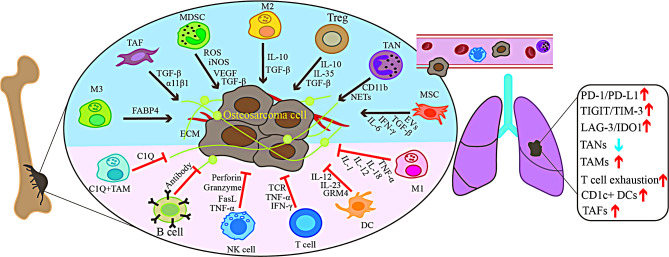
- The osteosarcoma TME is immunosuppressive: TAMs are the most abundant immune cells and account for approximately 50% of immune cells, with M2-type TAMs predominant. PD-L1 positivity was found in 13% of primary tumors, 25% of relapses, and 48% of metastases, and correlated with high T-cell infiltration.
- Clinical ICI results are limited: in SARC028, 2 (5%) of 40 bone sarcoma patients had an objective response, including 1 (5%) of 22 osteosarcoma patients; a phase II pembrolizumab trial in 12 relapsed osteosarcoma patients showed no clinical benefit; and a pembrolizumab plus cyclophosphamide trial had only one partial response.
- CAR-T and combination trials show some signals: in a HER2-CAR-T phase I/II trial of 19 patients (16 osteosarcoma), 4 of 17 evaluable patients had stable disease for 12 weeks to 14 months and median OS was 10.3 months; apatinib plus camrelizumab in 43 chemotherapy-refractory osteosarcoma patients had an ORR of 20.9% and 6-month PFS of 50.9%; MASCT-I plus camrelizumab and apatinib in 6 osteosarcoma patients had an ORR of 33.3%, DCR of 50.0%, and median PFS of 5.7 months.
Methods
- Narrative review of the osteosarcoma immune microenvironment and immunotherapy strategies, including immune checkpoint inhibitors, CAR-T/CAR-M/CAR-NK cells, dendritic cell vaccines, cytokines, bispecific antibodies, and combination regimens.
- Synthesizes preclinical studies and clinical trial results, with tables summarizing clinical trials of ICIs, adoptive cell therapies, and bispecific antibodies in osteosarcoma.
- No primary patient cohort or new experimental data are reported; the analysis is a descriptive literature synthesis.
Limitations
- The paper states that osteosarcoma has low immunogenicity and an immunosuppressive microenvironment, immunotherapy has not yet been approved for osteosarcoma, and many strategies remain in early or preclinical stages. It also notes that single immunotherapy has a low response rate and that CAR-NK/CAR-M therapies have not made promising progress in osteosarcoma.
- Evident from the text: this is a narrative review without a systematic search strategy or quantitative meta-analysis, so selection and interpretation of cited studies may be subject to bias.
- Evident from the text: many cited clinical trials are small, include mixed sarcoma populations with only subsets of osteosarcoma patients, or are terminated, withdrawn, suspended, or have unknown status, limiting the strength of conclusions about osteosarcoma-specific efficacy.
Model-written summary. Check it against the paper before relying on it.
Integrity signals
Registry
Cites
Statistics
Figures
Verification
Claims the paper makes
107 Valid · 7 Not valid · 44 Not checked · 15 Own results and interpretations
At least one cited source doesn’t support this claim or points to a different paper, and none confirmed it — see the verdicts below.
In the paper
“and is associated with adverse clinical outcomes [103]”
§ Advances on immunotherapy for osteosarcoma > Studies of CAR-modified cellular therapies for osteosarcoma > CAR-T therapy
What the sources say
- Disputedcites [103] Wang SL, et al. Prognostic significance of the expression of HER family members in primary osteosarcoma. Oncol Lett. 2018;16(2):2185–94. 30008917 PMC6036504 sourceExperimental — accuracy not yet measured
The Discussion reports HER-2 staining in 13 (22%) osteosarcoma samples but says it had no prognostic significance. Its conclusion instead links EGFR, HER-3 and HER-4 expression to unfavorable clinical outcomes. (LLM, conf=0.90)
Checked by a reasoning model — may be wrong.
plainstates an association- Asserted: passes — The authors put it forward as true.
- Checkable: passes — It can be checked against evidence.
- Load-bearing: unclear — It is unclear whether the paper’s conclusions depend on it.
- Based: passes — The paper gives a reason why it holds.
- Disputed
Some cited sources support this claim and some don’t — read each source’s verdict below.
In the paper
“Zhang et al. conducted the third-generation CAR-T cells targeting B7-H3 and proved the killing effects for tumor cells in vitro and in vivo using the patientderived xenografts (PDXs) model of osteosarcoma [116–125].”
§ Advances on immunotherapy for osteosarcoma > Studies of CAR-modified cellular therapies for osteosarcoma > B7-H3
What the sources say
- Supportedcites [116] Zhang Q, et al. B7-H3 targeted CAR-T cells show highly efficient anti-tumor function against osteosarcoma both in vitro and in vivo. BMC Cancer. 2022;22(1):1124. 36320072 10.1186/s12885-022-10229-8 PMC9628043 source
The paper’s Abstract (Results) identifies the cells as third-generation B7-H3-targeted CAR-T cells. The Conclusion reports tumor-cell killing in vitro, and the Results section on osteosarcoma PDX models reports that treated tumors shrank or disappeared in vivo. (LLM, conf=0.91)
- Not checked — no full text of the sourcecites [117] Fritsche-Guenther R, et al. De novo expression of EphA2 in osteosarcoma modulates activation of the mitogenic signalling pathway. Histopathology. 2010;57(6):836–50. 21166698 10.1111/j.1365-2559.2010.03713.x source
- Could not verifycites [118] Posthumadeboer J, et al. Surface proteomic analysis of osteosarcoma identifies EPHA2 as receptor for targeted drug delivery. Br J Cancer. 2013;109(8):2142–54. 24064975 10.1038/bjc.2013.578 PMC3798973 sourceExperimental — accuracy not yet measured
The Materials and methods section describes EPHA2-targeted adenoviral delivery in osteosarcoma cells, not B7-H3 CAR-T cells. Searches for B7-H3, third-generation CAR-T cells, and patient-derived osteosarcoma xenografts found no passage in our copy reporting the attributed experiment; the Zhang papers listed in References concern proteomics. (LLM, conf=0.78)
- Disputedcites [119] Hsu K, et al. Chimeric Antigen receptor-modified T cells targeting EphA2 for the immunotherapy of paediatric bone tumours. Cancer Gene Ther. 2021;28(3–4):321–34. 32873870 10.1038/s41417-020-00221-4 PMC8057949 sourceExperimental — accuracy not yet measured
The in vivo efficacy and osteosarcoma metastatic-model sections describe CAR T cells targeting EphA2, not B7-H3. They identify the xenografts as derived from the 143B osteosarcoma cell line, not patient-derived tumours; the abstract reports EphA2 CAR T-cell activity in vitro and in vivo. (LLM, conf=0.88)
Checked by a reasoning model — may be wrong.
- Could not verifycites [120] Campbell CL, et al. Increased expression of the interleukin-11 receptor and evidence of STAT3 activation in prostate carcinoma. Am J Pathol. 2001;158(1):25–32. 11141475 10.1016/S0002-9440(10)63940-5 PMC1850253 sourceExperimental — accuracy not yet measured
Our copy of Campbell et al. (2001, Am J Pathol) is entirely about IL-11Rα/gp130 expression and tyrosine-phosphorylated STAT3 in normal prostate, BPH and prostate carcinoma tissues and cell lines (Abstract, Immunohistochemical Analysis of Prostatic Tissues and Cell Lines, Expression of Tyrosine-Phosphorylated STAT3..., Discussion). Searches for 'B7-H3 CAR-T osteosarcoma patient-derived xenograft' and 'chimeric antigen receptor T cells third-generation costimulatory domain tumor killing' returned no passage addressing B7-H3, CAR-T constructs, osteosarcoma or PDX models; the paper neither states nor contradicts the claim, and it names no alternative source for it. (LLM, conf=0.75)
- Not checked — no full text of the sourcecites [121] Schwertschlag US, et al. Hematopoietic, immunomodulatory and epithelial effects of interleukin-11. Leukemia. 1999;13(9):1307–15. 10482979 10.1038/sj.leu.2401514 source
- Not checked yetcites [122] Lewis VO, et al. The interleukin-11 receptor alpha as a candidate ligand-directed target in osteosarcoma: consistent data from cell lines, orthotopic models, and human tumor samples. Cancer Res. 2009;69(5):1995–9. 19244100 10.1158/0008-5472.CAN-08-4845 source
Checked before — its earlier verdict is held back until a new check runs.
- Disputedcites [123] Huang G, et al. Genetically modified T cells targeting interleukin-11 receptor alpha-chain kill human osteosarcoma cells and induce the regression of established osteosarcoma lung metastases. Cancer Res. 2012;72(1):271–81. 22075555 10.1158/0008-5472.CAN-11-2778 PMC3833671 sourceExperimental — accuracy not yet measured
The Discussion identifies the receptor as IL-11Rα and describes a second-generation CAR, not a third-generation B7-H3 CAR. Materials and Methods (Animal model) describes mice injected with the KRIB osteosarcoma cell line, not a patient-derived xenograft; the paper does report in vitro killing and regression of lung metastases. (LLM, conf=0.90)
Checked by a reasoning model — may be wrong.
- Not checked — no full text of the sourcecites [124] Pollak M. The insulin and insulin-like growth factor receptor family in neoplasia: an update. Nat Rev Cancer. 2012;12(3):159–69. 22337149 10.1038/nrc3215 source
- Disputedcites [125] Cui B, et al. Targeting ROR1 inhibits epithelial-mesenchymal transition and metastasis. Cancer Res. 2013;73(12):3649–60. 23771907 10.1158/0008-5472.CAN-12-3832 PMC3832210 sourceExperimental — accuracy not yet measured
The Materials and Methods section (Cell culture; page unavailable) identifies the experimental cells as breast-cancer cell lines. The Results section (Silencing ROR1 Inhibits Experimental Lung And Bone Metastasis; page unavailable) describes ROR1-shRNA treatment and metastasis in mice, not B7-H3 CAR-T cells or an osteosarcoma patient-derived xenograft. (LLM, conf=0.88)
Checked by a reasoning model — may be wrong.
plainstates a cause- Asserted: passes — The authors put it forward as true.
- Checkable: passes — It can be checked against evidence.
- Load-bearing: passes — The paper’s conclusions depend on it.
- Based: passes — The paper gives a reason why it holds.
- Supported
Every source the paper cites for this claim was checked and supports it.
In the paper
“And the immunoreceptor inhibitory checkpoint marker TIGIT was highly expressed by the CD8+ T, CD4+ T, Treg and NKT cells in osteosarcoma lesions.”
§ Advances on immunotherapy for osteosarcoma > Studies of ICIs for osteosarcoma > TIM-3
What the sources say
- Supportedcites [4] Zhou Y, et al. Single-cell RNA landscape of intratumoral heterogeneity and immunosuppressive microenvironment in advanced osteosarcoma. Nat Commun. 2020;11(1):6322. 33303760 10.1038/s41467-020-20059-6 PMC7730477 source
The Discussion states that TIGIT was widely expressed in T-reg, CD8+ T, CD4+ T, and NKT cells in osteosarcoma. The Results also describe relatively high TIGIT expression in T-reg cells and widespread expression in the other three cell types. Page numbers are not provided in our copy. (LLM, conf=0.93)
plainstates an association- Asserted: passes — The authors put it forward as true.
- Checkable: passes — It can be checked against evidence.
- Load-bearing: passes — The paper’s conclusions depend on it.
- Based: passes — The paper gives a reason why it holds.
- Supported
The cited sources support only part of this claim — read each source’s verdict below.
In the paper
“The study demonstrated that ALCAM was associated with tumorigenesis in osteosarcoma [111].”
§ Advances on immunotherapy for osteosarcoma > Studies of CAR-modified cellular therapies for osteosarcoma > ALCAM
What the sources say
- Partly supportedcites [111] Federman N, et al. Enhanced growth inhibition of osteosarcoma by cytotoxic polymerized liposomal nanoparticles targeting the alcam cell surface receptor. Sarcoma. 2012;2012:p126906. 10.1155/2012/126906 PMC3447386 23024593 sourceExperimental — accuracy not yet measured
Results §3.1 reports ALCAM expression in all ten osteosarcoma specimens tested, supporting an association with osteosarcoma tumors. The Discussion §4 says the biological consequences of increased expression are difficult to gauge; the study does not demonstrate that ALCAM is involved in tumorigenesis. (LLM, conf=0.84)
boostedstates an association- Asserted: passes — The authors put it forward as true.
- Checkable: passes — It can be checked against evidence.
- Load-bearing: passes — The paper’s conclusions depend on it.
- Based: passes — The paper gives a reason why it holds.
- Partly supported
The cited sources support only part of this claim — read each source’s verdict below.
In the paper
“In vitro and in vivo osteosarcoma models demonstrated that anti-CD47 monoclonal antibody can block the CD47-SIRPα signaling pathway, thus enhancing the anti-tumor ability of macrophages [96].”
§ Advances on immunotherapy for osteosarcoma > Studies of ICIs for osteosarcoma > CD47
What the sources say
- Partly supportedcites [96] Xu JF, et al. CD47 blockade inhibits tumor progression human osteosarcoma in xenograft models. Oncotarget. 2015;6(27):23662–70. 26093091 10.18632/oncotarget.4282 PMC4695143 sourceExperimental — accuracy not yet measured
The Results section reports that anti-CD47 antibodies significantly increased macrophage phagocytosis of osteosarcoma cells in a co-culture assay. The Discussion describes enhanced macrophage phagocytosis in vivo as a possibility, not a demonstrated result; the claim overstates that part of the evidence. No page numbers are available in our copy. (LLM, conf=0.85)
boostedstates a cause- Asserted: passes — The authors put it forward as true.
- Checkable: passes — It can be checked against evidence.
- Load-bearing: passes — The paper’s conclusions depend on it.
- Based: passes — The paper gives a reason why it holds.
- Partly supported
97 more claims · 59 with their cited sources checked
Create a free account to see all 173 claims and to verify the 12 references still open.
- It may state two separate claims as one. 66
- Probably not a substantial claim. 8
Self-check
Percentages, sums and reported differences re-computed from the paper’s own numbers.
Each contradiction between two passages listed here was confirmed by an independent check.
Rated minor: it would not touch a result — a value no result rests on, a p-value that stays on the same side of the significance level, or a conflict that is clerical, resolved elsewhere in the paper, or outside its own findings.
In the paper
§ Advances on immunotherapy for osteosarcoma > Studies of ICIs for osteosarcoma > TIM-3
“NCT03359018 | Apatinib Plus Anti-PD1 Therapy in Patients With Advanced Osteosarcoma | PD-L1VEGFR | Apatinib + SHR−1210 | Completed | Phase 2”
§ Advances on immunotherapy for osteosarcoma > Combination therapy strategies > Combination of anti-PD-1/PD-L1 and anti-angiogenic treatment
“apatinib (anti-VEGFR2 inhibitor) plus camrelizumab (anti-PD-1 antibody) in patients with chemotherapy-refractory osteosarcoma (NCT03359018).”
Rated minor: it would not touch a result — a value no result rests on, a p-value that stays on the same side of the significance level, or a conflict that is clerical, resolved elsewhere in the paper, or outside its own findings.
In the paper
§ Advances on immunotherapy for osteosarcoma > Studies of CAR-modified cellular therapies for osteosarcoma > CAR-NK therapy
“T-Cell Membrane-Anchored Tumor Targeted Il12 (Attil12)- T-Cell Therapy”
§ Advances on immunotherapy for osteosarcoma > Studies of CAR-modified cellular therapies for osteosarcoma > CAR-NK therapy
“AttIL2-T cell therapy”
Rated minor: it would not touch a result — a value no result rests on, a p-value that stays on the same side of the significance level, or a conflict that is clerical, resolved elsewhere in the paper, or outside its own findings.
In the paper
§ Advances on immunotherapy for osteosarcoma > Conclusions and future directions
“other CAR-engineered adoptive cell therapies, such as CAR-NK and CAR-M, are still in the preclinical research phase.”
§ Advances on immunotherapy for osteosarcoma > Studies of CAR-modified cellular therapies for osteosarcoma > CAR-NK therapy
“NCT05703854 | CAR.70-engineered IL15-transduced Cord Blood-derived NK Cells in Conjunction With Lymphodepleting Chemotherapy for the Management of Advanced Renal Cell Carcinoma, Mesothelioma and Osteosarcoma | | CAR.70/IL15-transduced CB-derived NK cells | Recruiting | Phase 1/2”
Citations
Cites
Pembrolizumab versus Chemotherapy for PD-L1-Positive Non-Small-Cell Lung Cancer
Reck, M., Rodríguez-Abreu, D., Robinson, A. G., Hui, R., Csőszi, T., Fülöp, A., Gottfried, M., Peled, N., Tafreshi, A., Cuffe, S., et al. (2016) · New England Journal of Medicine · doi:10.1056/nejmoa1606774 · Cited by 10,089 · cited 1×
“Importantly, due to their impressive efficacy, ICIs are recommended for the treatment of several human malignancies, including melanoma [10], non-small-cell lung cancer [11], head and neck cancers [12] and so on.”
BackgroundNivolumab for Recurrent Squamous-Cell Carcinoma of the Head and Neck
Ferris, R. L., Blumenschein, G., Fayette, J., Guigay, J., Colevas, A. D., Licitra, L., Harrington, K., Kasper, S., Vokes, E. E., Even, C., et al. (2016) · New England Journal of Medicine · doi:10.1056/nejmoa1602252 · Cited by 5,101
Aran, D., Looney, A. P., Liu, L., Wu, E., Fong, V., Hsu, A., Chak, S., Naikawadi, R. P., Wolters, P. J., Abate, A. R., et al. (2019) · Nature Immunology · doi:10.1038/s41590-018-0276-y · Cited by 4,984 · cited 1×
“In addition, the M3-TAMs, actually the FABP4 + TAMs previously identified as the alveolar macrophages in the lung, were dominant in the lung metastatic osteosarcoma lesion [24].”
BackgroundInnate and adaptive immune cells in the tumor microenvironment
Gajewski, T. F., Schreiber, H., & Fu, Y.-X. (2013) · Nature Immunology · doi:10.1038/ni.2703 · Cited by 4,148 · cited 1×
“In addition, CAR-Ms promoted an inflammatory state within the TME and were capable of antigen cross-presentation to tumor-specific CD8 + T cells [135].”
BackgroundThe evolving tumor microenvironment: From cancer initiation to metastatic outgrowth
de Visser, K. E., & Joyce, J. A. (2023) · Cancer Cell · doi:10.1016/j.ccell.2023.02.016 · Cited by 4,059
Chimeric Antigen Receptor–Modified T Cells for Acute Lymphoid Leukemia
Grupp, S. A., Kalos, M., Barrett, D., Aplenc, R., Porter, D. L., Rheingold, S. R., Teachey, D. T., Chew, A., Hauck, B., Wright, J. F., et al. (2013) · New England Journal of Medicine · doi:10.1056/nejmoa1215134 · Cited by 3,509 · cited 1×
“Chimeric antigen receptor T (CAR-T) cells as an adoptive cell therapy (ACT) have showed remarkable clinical outcome in the treatment of malignant hematological tumors, such as acute lymphoblastic leukemia [13], chronic lymphocytic leukemia [14], and non-hodg-kin lymphoma [15].”
BackgroundNeutrophil extracellular traps in immunity and disease
Papayannopoulos, V. (2018) · Nature Reviews Immunology · doi:10.1038/nri.2017.105 · Cited by 3,397 · cited 1×
“Web-like chromatin structures known as neutrophil extracellular traps (NETs) plays important roles in immune protection, inflammatory and autoimmune diseases and cancer [40].”
BackgroundUse of CAR-Transduced Natural Killer Cells in CD19-Positive Lymphoid Tumors
Liu, E., Marin, D., Banerjee, P., Macapinlac, H. A., Thompson, P., Basar, R., Nassif Kerbauy, L., Overman, B., Thall, P., Kaplan, M., et al. (2020) · New England Journal of Medicine · doi:10.1056/nejmoa1910607 · Cited by 2,217 · cited 1×
“The trial in adults with chronic lymphocytic leukemia demonstrated that CAR-NK targeting CD19 are safe and effective [143].”
BackgroundMyeloid-Derived Suppressor Cells
Gabrilovich, D. I. (2017) · Cancer Immunology Research · doi:10.1158/2326-6066.cir-16-0297 · Cited by 1,882
Porter, D. L., Hwang, W.-T., Frey, N. V., Lacey, S. F., Shaw, P. A., Loren, A. W., Bagg, A., Marcucci, K. T., Shen, A., Gonzalez, V., et al. (2015) · Science Translational Medicine · doi:10.1126/scitranslmed.aac5415 · Cited by 1,729 · cited 1×
“Chimeric antigen receptor T (CAR-T) cells as an adoptive cell therapy (ACT) have showed remarkable clinical outcome in the treatment of malignant hematological tumors, such as acute lymphoblastic leukemia [13], chronic lymphocytic leukemia [14], and non-hodg-kin lymphoma [15].”
BackgroundKochenderfer, J. N., Dudley, M. E., Kassim, S. H., Somerville, R. P. T., Carpenter, R. O., Stetler-Stevenson, M., Yang, J. C., Phan, G. Q., Hughes, M. S., Sherry, R. M., et al. (2015) · Journal of Clinical Oncology · doi:10.1200/jco.2014.56.2025 · Cited by 1,595 · cited 1×
“Chimeric antigen receptor T (CAR-T) cells as an adoptive cell therapy (ACT) have showed remarkable clinical outcome in the treatment of malignant hematological tumors, such as acute lymphoblastic leukemia [13], chronic lymphocytic leukemia [14], and non-hodg-kin lymphoma [15].”
BackgroundOsteosarcoma: Current Treatment and a Collaborative Pathway to Success
Isakoff, M. S., Bielack, S. S., Meltzer, P., & Gorlick, R. (2015) · Journal of Clinical Oncology · doi:10.1200/jco.2014.59.4895 · Cited by 1,567 · cited 1×
“Osteosar-coma exhibits a predilection to occur in the metaphysis of long extremity bones, such as distal femur, proximal tibia, proximal femur, and proximal humerus [3].”
BackgroundHuman chimeric antigen receptor macrophages for cancer immunotherapy
Klichinsky, M., Ruella, M., Shestova, O., Lu, X. M., Best, A., Zeeman, M., Schmierer, M., Gabrusiewicz, K., Anderson, N. R., Petty, N. E., et al. (2020) · Nature Biotechnology · doi:10.1038/s41587-020-0462-y · Cited by 1,495 · cited 2×
“CAR macrophage (CAR-M) studies are mainly at the nascent stage with one phase I trial ongoing which uses autologous CAR-M targeting HER2 overexpressing solid tumors [134].”
BackgroundTawbi, H. A., Burgess, M., Bolejack, V., Van Tine, B. A., Schuetze, S. M., Hu, J., D'Angelo, S., Attia, S., Riedel, R. F., Priebat, D. A., et al. (2017) · The Lancet Oncology · doi:10.1016/s1470-2045(17)30624-1 · Cited by 1,452 · cited 1×
“And the adverse events were acceptable [85].”
Human dendritic cell subsets: an update
Collin, M., & Bigley, V. (2018) · Immunology · doi:10.1111/imm.12888 · Cited by 1,301 · cited 1×
“DCs DCs, as professional antigen-presenting cells (APCs), act crucial roles between innate and adaptive immunity [59].”
BackgroundThe insulin and insulin-like growth factor receptor family in neoplasia: an update
Pollak, M. (2012) · Nature Reviews Cancer · doi:10.1038/nrc3215 · Cited by 1,116 · cited 1×
“The binding of ligand and IGF1R contributes to the proliferation, survival, transformation, metastasis, and angiogenesis [124].”
BackgroundAhmed, N., Brawley, V. S., Hegde, M., Robertson, C., Ghazi, A., Gerken, C., Liu, E., Dakhova, O., Ashoori, A., Corder, A., et al. (2015) · Journal of Clinical Oncology · doi:10.1200/jco.2014.58.0225 · Cited by 1,004 · cited 1×
“Further analysis found that the CAR-T cells persisted for up to 18 weeks in peripheral blood, and they were detected in tumor sites [107].”
BackgroundCTLA-4: new insights into its biological function and use in tumor immunotherapy
Egen, J. G., Kuhns, M. S., & Allison, J. P. (2002) · Nature Immunology · doi:10.1038/ni0702-611 · Cited by 940 · cited 1×
“Cytotoxic T lymphocyte-associated antigen-4 (CTLA-4) participates in the negative regulation of T cell activation and proliferation, which suppresses anti-tumor response [91].”
BackgroundChauvin, J.-M., & Zarour, H. M. (2020) · Journal for ImmunoTherapy of Cancer · doi:10.1136/jitc-2020-000957 · Cited by 794 · cited 1×
“TIGIT inhibits human NK cytotoxicity against the tumor by interacting with the ligands, including CD155 and CD112 [70].”
BackgroundD'Angelo, S. P., Mahoney, M. R., Van Tine, B. A., Atkins, J., Milhem, M. M., Jahagirdar, B. N., Antonescu, C. R., Horvath, E., Tap, W. D., Schwartz, G. K., et al. (2018) · The Lancet Oncology · doi:10.1016/s1470-2045(18)30006-8 · Cited by 759 · cited 1×
“Enrolled patients were allocated to receive either nivolumab Nivolumab combined with ipilimumab demonstrated promising response rate with a manageable safety profile, which need further study [154].”
BackgroundMajzner, R. G., Theruvath, J. L., Nellan, A., Heitzeneder, S., Cui, Y., Mount, C. W., Rietberg, S. P., Linde, M. H., Xu, P., Rota, C., et al. (2019) · Clinical Cancer Research · doi:10.1158/1078-0432.ccr-18-0432 · Cited by 681
Zhou, Y., Yang, D., Yang, Q., Lv, X., Huang, W., Zhou, Z., Wang, Y., Zhang, Z., Yuan, T., Ding, X., et al. (2020) · Nature Communications · doi:10.1038/s41467-020-20059-6 · Cited by 672 · cited 3×
“The proportion of CD1c + DCs is larger in lung metastatic lesions than that in primary and recurrent lesions [4].”
BackgroundInfluentialBeird, H. C., Bielack, S. S., Flanagan, A. M., Gill, J., Heymann, D., Janeway, K. A., Livingston, J. A., Roberts, R. D., Strauss, S. J., & Gorlick, R. (2022) · Nature Reviews Disease Primers · doi:10.1038/s41572-022-00409-y · Cited by 660
B cell regulation in cancer and anti-tumor immunity
Sarvaria, A., Madrigal, J. A., & Saudemont, A. (2017) · Cellular & Molecular Immunology · doi:10.1038/cmi.2017.35 · Cited by 630 · cited 1×
“…cytotoxic T lymphocytes (CTLs), macrophages, and DCs by secreting inhibitory cytokines such as IL-10, TGF-β, IL-35, and expressing membrane surface regulatory molecules such as FasL and CD1d, and promote the transformation of T cells into Tregs, thus weakening anti-tumor immune responses [72].”
BackgroundMechanisms of natural killer cell-mediated cellular cytotoxicity
Prager, I., & Watzl, C. (2019) · Journal of Leukocyte Biology · doi:10.1002/jlb.mr0718-269r · Cited by 627
Molecular Pathways: Targeting B7-H3 (CD276) for Human Cancer Immunotherapy
Picarda, E., Ohaegbulam, K. C., & Zang, X. (2016) · Clinical Cancer Research · doi:10.1158/1078-0432.ccr-15-2428 · Cited by 582 · cited 1×
“B7-H3 (CD276) is a checkpoint molecule that contributes to tumor immune evasion, metastasis and poor prognosis [113, 114].”
BackgroundUpdate on Survival in Osteosarcoma
Anderson, M. E. (2016) · Orthopedic Clinics of North America · doi:10.1016/j.ocl.2015.08.022 · Cited by 560
Tsai, R. K., & Discher, D. E. (2008) · The Journal of Cell Biology · doi:10.1083/jcb.200708043 · Cited by 486 · cited 1×
“CD47 as a transmembrane protein inhibits macrophage phagocytosis when it binds to macrophage SIRPα [95].”
BackgroundThe parallel lives of angiogenesis and immunosuppression: cancer and other tales
Motz, G. T., & Coukos, G. (2011) · Nature Reviews Immunology · doi:10.1038/nri3064 · Cited by 481 · cited 1×
“Immunosuppression promoted by tumor angiogenesis, and more immune cells are related with angiogenesis [156].”
BackgroundThe Osteosarcoma Microenvironment: A Complex but Targetable Ecosystem
Corre, I., Verrecchia, F., Crenn, V., Redini, F., & Trichet, V. (2020) · Cells · doi:10.3390/cells9040976 · Cited by 474 · cited 1×
“Analyses of TME of osteosarcoma demonstrate an immune cell infiltrate consisting of both macrophages and T cells [53, 54].”
BackgroundGenome-Informed Targeted Therapy for Osteosarcoma
Sayles, L. C., Breese, M. R., Koehne, A. L., Leung, S. G., Lee, A. G., Liu, H.-Y., Spillinger, A., Shah, A. T., Tanasa, B., Straessler, K., et al. (2019) · Cancer Discovery · doi:10.1158/2159-8290.cd-17-1152 · Cited by 452
The Role of Myeloid-Derived Suppressor Cells (MDSC) in Cancer Progression
Umansky, V., Blattner, C., Gebhardt, C., & Utikal, J. (2016) · Vaccines · doi:10.3390/vaccines4040036 · Cited by 438 · cited 1×
“MDSCs establish pre-metastatic niches in distant organs, creating favorable conditions for the spread and colonization of tumor cells [30].”
BackgroundZhang, Y., Wallace, D. L., De Lara, C. M., Ghattas, H., Asquith, B., Worth, A., Griffin, G. E., Taylor, G. P., Tough, D. F., Beverley, P. C. L., et al. (2007) · Immunology · doi:10.1111/j.1365-2567.2007.02573.x · Cited by 376 · cited 1×
“NK cells have a relatively short half-life, typically less than 10 days [144], which is a double-edge sword in CAR-NK therapy.”
BackgroundTumor-Associated Neutrophils in Cancer: Going Pro
Wu, L., Saxena, S., Awaji, M., & Singh, R. K. (2019) · Cancers · doi:10.3390/cancers11040564 · Cited by 337 · cited 1×
“Infiltrating neutrophils combat tumor cells by orchestrating the recruitment of immune cells and also by facilitating antibody-dependent cellular cytotoxicity [37].”
BackgroundDavis, K. L., Fox, E., Merchant, M. S., Reid, J. M., Kudgus, R. A., Liu, X., Minard, C. G., Voss, S., Berg, S. L., Weigel, B. J., et al. (2020) · The Lancet Oncology · doi:10.1016/s1470-2045(20)30023-1 · Cited by 337 · cited 2×
“Davis et al. initiated a phase I/II clinical study to test the safety, pharmacokinetics, and anti-tumor activity of nivolumab in children and young adults with recurrent or refractory non-CNS solid tumors or lymphoma [84].”
BackgroundResultMolecular Biology of Osteosarcoma
Czarnecka, A. M., Synoradzki, K., Firlej, W., Bartnik, E., Sobczuk, P., Fiedorowicz, M., Grieb, P., & Rutkowski, P. (2020) · Cancers · doi:10.3390/cancers12082130 · Cited by 336 · cited 1×
“It originates from mesenchymal stem cells, characterized by osteoid product [2].”
BackgroundPhase I Clinical Trial of Ipilimumab in Pediatric Patients with Advanced Solid Tumors
Merchant, M. S., Wright, M., Baird, K., Wexler, L. H., Rodriguez-Galindo, C., Bernstein, D., Delbrook, C., Lodish, M., Bishop, R., Wolchok, J. D., et al. (2016) · Clinical Cancer Research · doi:10.1158/1078-0432.ccr-15-0491 · Cited by 331 · cited 1×
“The results suggested that ipilimumab showed incredible safety and increased numbers of activated and cycling T cells, but not regulatory T cells [94].”
Duffaud, F., Mir, O., Boudou-Rouquette, P., Piperno-Neumann, S., Penel, N., Bompas, E., Delcambre, C., Kalbacher, E., Italiano, A., Collard, O., et al. (2019) · The Lancet Oncology · doi:10.1016/s1470-2045(18)30742-3 · Cited by 331 · cited 1×
“These anti-angiogenic drugs, do have certain effects on metastatic osteosarcoma, but they have short progression-free survival (PFS) time and insufficient objective response rate (ORR) [9].”
BackgroundDuluc, D., Corvaisier, M., Blanchard, S., Catala, L., Descamps, P., Gamelin, E., Ponsoda, S., Delneste, Y., Hebbar, M., & Jeannin, P. (2009) · International Journal of Cancer · doi:10.1002/ijc.24401 · Cited by 329
Interaction of tumor-associated macrophages and cancer chemotherapy
Larionova, I., Cherdyntseva, N., Liu, T., Patysheva, M., Rakina, M., & Kzhyshkowska, J. (2019) · OncoImmunology · doi:10.1080/2162402x.2019.1596004 · Cited by 322 · cited 1×
“TAM-derived cathepsins may mediate the activation of the nuclear factor-kappa B (NF-kB) signaling pathway and the signal transducer and activator of transcription 3 (STAT3) to facilitate therapeutic resistance [77].”
BackgroundCancer stem cells in osteosarcoma
Brown, H. K., Tellez-Gabriel, M., & Heymann, D. (2017) · Cancer Letters · doi:10.1016/j.canlet.2016.11.019 · Cited by 303 · cited 1×
“Cancer stem cells (CSCs) CSCs are a subset of tumor cells that play a pivotal role in various stages of cancer development, including tumorigenesis, drug resistance, recurrence and metastasis [43, 44].”
BackgroundPicci, P., Sangiorgi, L., Rougraff, B. T., Neff, J. R., Casadei, R., & Campanacci, M. (1994) · Journal of Clinical Oncology · doi:10.1200/jco.1994.12.12.2699 · Cited by 300 · cited 1×
“Osteosarcoma cells express high level GD2 antigen that can be a potential target [108].”
BackgroundCommon Musculoskeletal Tumors of Childhood and Adolescence
Arndt, C. A. S., Rose, P. S., Folpe, A. L., & Laack, N. N. (2012) · Mayo Clinic Proceedings · doi:10.1016/j.mayocp.2012.01.015 · Cited by 298
Haist, M., Stege, H., Grabbe, S., & Bros, M. (2021) · Cancers · doi:10.3390/cancers13020210 · Cited by 295
Developmental and Functional Control of Natural Killer Cells by Cytokines
Wu, Y., Tian, Z., & Wei, H. (2017) · Frontiers in Immunology · doi:10.3389/fimmu.2017.00930 · Cited by 269 · cited 1×
“All these clinical trials are at the phase I/II trial stage [142].”
BackgroundHudecek, M., Schmitt, T. M., Baskar, S., Lupo-Stanghellini, M. T., Nishida, T., Yamamoto, T. N., Bleakley, M., Turtle, C. J., Chang, W.-C., Greisman, H. A., et al. (2010) · Blood · doi:10.1182/blood-2010-05-283309 · Cited by 266 · cited 1×
“And the limited expression of ROR1 in normal tissues is another advantage for it to be an attractive therapeutic target in sarcomas [126].”
BackgroundImmuno-genomic landscape of osteosarcoma
Wu, C.-C., Beird, H. C., Andrew Livingston, J., Advani, S., Mitra, A., Cao, S., Reuben, A., Ingram, D., Wang, W.-L., Ju, Z., et al. (2020) · Nature Communications · doi:10.1038/s41467-020-14646-w · Cited by 251 · cited 1×
“Besides, there are likely multiple immune-suppressive mechanisms in play in osteosarcoma [75].”
BackgroundYu, A. L., Uttenreuther-Fischer, M. M., Huang, C. S., Tsui, C. C., Gillies, S. D., Reisfeld, R. A., & Kung, F. H. (1998) · Journal of Clinical Oncology · doi:10.1200/jco.1998.16.6.2169 · Cited by 250 · cited 1×
“However, clinical trials of trastuzumab (anti-HER2) or dinutuximab (anti-GD2) for metastatic or refractory osteosarcoma were not successful [145, 146].”
BackgroundEbb, D., Meyers, P., Grier, H., Bernstein, M., Gorlick, R., Lipshultz, S. E., Krailo, M., Devidas, M., Barkauskas, D. A., Siegal, G. P., et al. (2012) · Journal of Clinical Oncology · doi:10.1200/jco.2011.37.4546 · Cited by 243 · cited 1×
“However, clinical trials of trastuzumab (anti-HER2) or dinutuximab (anti-GD2) for metastatic or refractory osteosarcoma were not successful [145, 146].”
BackgroundDiab, A., Tannir, N. M., Bentebibel, S.-E., Hwu, P., Papadimitrakopoulou, V., Haymaker, C., Kluger, H. M., Gettinger, S. N., Sznol, M., Tykodi, S. S., et al. (2020) · Cancer Discovery · doi:10.1158/2159-8290.cd-19-1510 · Cited by 237 · cited 1×
“Bempegaldesleukin, a CD122-preferential IL-2 pathway agonist, is associated with increased proliferation and activation of TILs among patients with solid tumors [163].”
BackgroundBone marrow adipocytes promote tumor growth in bone via FABP4-dependent mechanisms
Herroon, M. K., Rajagurubandara, E., Hardaway, A. L., Powell, K., Turchick, A., Feldmann, D., & Podgorski, I. (2013) · Oncotarget · doi:10.18632/oncotarget.1482 · Cited by 218 · cited 1×
“High expression of FABP4 provides fatty acids for tumor cells to promote the occurrence and development of cancer [25].”
BackgroundNKG2D ligands as therapeutic targets.
(2013) · Europe PMC (PubMed Central) · Cited by 218
TIM-3: An update on immunotherapy
Zhao, L., Cheng, S., Fan, L., Zhang, B., & Xu, S. (2021) · International Immunopharmacology · doi:10.1016/j.intimp.2021.107933 · Cited by 217 · cited 2×
“Subsequently, TIM-3 was found to be expressed on the surface of various immune cells, including CD8 + T, CD4 + T, Treg, macrophage, NK cells and DCs, playing different roles [98].”
BackgroundAhmed, N., Salsman, V. S., Yvon, E., Louis, C. U., Perlaky, L., Wels, W. S., Dishop, M. K., Kleinerman, E. E., Pule, M., Rooney, C. M., et al. (2009) · Molecular Therapy · doi:10.1038/mt.2009.133 · Cited by 215 · cited 1×
“The HER2-positive CAR-T cells showed markedly regression of osteosarcoma both in locoregional and lung metastatic models [105].”
BackgroundLussier, D. M., Johnson, J. L., Hingorani, P., & Blattman, J. N. (2015) · Journal for ImmunoTherapy of Cancer · doi:10.1186/s40425-015-0067-z · Cited by 206
Bacci, G., Rocca, M., Salone, M., Balladelli, A., Ferrari, S., Palmerini, E., Forni, C., & Briccoli, A. (2008) · Journal of Surgical Oncology · doi:10.1002/jso.21140 · Cited by 203
He, Z., & Zhang, S. (2021) · Frontiers in Immunology · doi:10.3389/fimmu.2021.741305 · Cited by 203 · cited 1×
“…tumor progression by releasing specific cytokines and chemokines, such as producing anti-inflammatory cytokines like IL-10 and transforming growth factor-beta (TGF-β), which are involved in anti-inflammatory responses, and participate in tumor angiogenesis and extracellular matrix remodeling [22].”
BackgroundSheng, G., Gao, Y., Yang, Y., & Wu, H. (2021) · Frontiers in Oncology · doi:10.3389/fonc.2021.780264 · Cited by 201
Enhanced T-Cell Immunity to Osteosarcoma Through Antibody Blockade of PD-1/PD-L1 Interactions
Lussier, D. M., O’Neill, L., Nieves, L. M., McAfee, M. S., Holechek, S. A., Collins, A. W., Dickman, P., Jacobsen, J., Hingorani, P., & Blattman, J. N. (2015) · Journal of Immunotherapy · doi:10.1097/cji.0000000000000065 · Cited by 197 · cited 1×
“Block-ade of PD-1/PD-L1 interactions significantly promotes the anti-tumor activity of tumor-infiltrating CTLs in vitro and in vivo [82].”
BackgroundModulation of regulatory T cell function and stability by co-inhibitory receptors
Lucca, L. E., & Dominguez-Villar, M. (2020) · Nature Reviews Immunology · doi:10.1038/s41577-020-0296-3 · Cited by 189 · cited 1×
“Treg cells not only help tumor cells evade immune surveillance but also participate in promoting tumor angiogenesis [36].”
BackgroundTargeting ROR1 Inhibits Epithelial–Mesenchymal Transition and Metastasis
Cui, B., Zhang, S., Chen, L., Yu, J., Widhopf, G. F., Fecteau, J.-F., Rassenti, L. Z., & Kipps, T. J. (2013) · Cancer Research · doi:10.1158/0008-5472.can-12-3832 · Cited by 187 · cited 2×
“Overexpression of tyrosine kinase-like orphan receptor 1 (ROR1) involved in tumor cell migration and invasiveness [125].”
BackgroundExosomes originating from MSCs stimulated with TGF‐β and IFN‐γ promote Treg differentiation
Zhang, Q., Fu, L., Liang, Y., Guo, Z., Wang, L., Ma, C., & Wang, H. (2018) · Journal of Cellular Physiology · doi:10.1002/jcp.26436 · Cited by 186
Martin-Broto, J., Hindi, N., Grignani, G., Martinez-Trufero, J., Redondo, A., Valverde, C., Stacchiotti, S., Lopez-Pousa, A., D'Ambrosio, L., Gutierrez, A., et al. (2020) · Journal for ImmunoTherapy of Cancer · doi:10.1136/jitc-2020-001561 · Cited by 183 · cited 1×
“[157].”
CD300ld on neutrophils is required for tumour-driven immune suppression
Wang, C., Zheng, X., Zhang, J., Jiang, X., Wang, J., Li, Y., Li, X., Shen, G., Peng, J., Zheng, P., et al. (2023) · Nature · doi:10.1038/s41586-023-06511-9 · Cited by 181 · cited 1×
“Recent study has discovered that CD300ld, a surface molecule on MDSCs, plays a significant role in the immune-suppressive function of MDSCs and may potentially serve as a novel therapeutic target [32].”
BackgroundMason, N. J., Gnanandarajah, J. S., Engiles, J. B., Gray, F., Laughlin, D., Gaurnier-Hausser, A., Wallecha, A., Huebner, M., & Paterson, Y. (2016) · Clinical Cancer Research · doi:10.1158/1078-0432.ccr-16-0088 · Cited by 178 · cited 1×
“They found that ADXS31-164 induced HER2/neu-specifific immunity and reduced the incidence of metastatic disease and prolonged OS [148].”
BackgroundHematopoietic, immunomodulatory and epithelial effects of interleukin-11
Schwertschlag, U., Trepicchio, W., Dykstra, K., Keith, J., Turner, K., & Dorner, A. (1999) · Leukemia · doi:10.1038/sj.leu.2401514 · Cited by 176 · cited 1×
“Interleukin-11 (IL-11), a member of a family of pleiotropic cytokines [120], specifically binds to IL-11 receptor α-chain (IL-11Rα) and active the signaling pathways involved in adipogenesis, osteoclastogenesis, neurogenesis, and megakaryocyte maturation and platelet production [121].”
BackgroundLe Cesne, A., Marec-Berard, P., Blay, J.-Y., Gaspar, N., Bertucci, F., Penel, N., Bompas, E., Cousin, S., Toulmonde, M., Bessede, A., et al. (2019) · European Journal of Cancer · doi:10.1016/j.ejca.2019.07.018 · Cited by 174
Geoerger, B., Zwaan, C. M., Marshall, L. V., Michon, J., Bourdeaut, F., Casanova, M., Corradini, N., Rossato, G., Farid-Kapadia, M., Shemesh, C. S., et al. (2020) · The Lancet Oncology · doi:10.1016/s1470-2045(19)30693-x · Cited by 171 · cited 1×
“However, the therapeutic effect of atezolizumab monotherapy was limited [90].”
BackgroundHan, Q., Shi, H., & Liu, F. (2016) · International Immunopharmacology · doi:10.1016/j.intimp.2016.01.023 · Cited by 160 · cited 1×
“TIM-3( + )PD-1( + ) T cells-spe-cific immunosuppression that was amplified by M2-type tumor-associated macrophages. depletion of CD163( + ) macrophages significantly improved T cell proliferation and proinflammatory cytokine production [55].”
BackgroundEpithelial-Mesenchymal Transition and Metastasis under the Control of Transforming Growth Factor β
Tsubakihara, Y., & Moustakas, A. (2018) · International Journal of Molecular Sciences · doi:10.3390/ijms19113672 · Cited by 160
Zhang, C., Zheng, J.-H., Lin, Z.-H., Lv, H.-Y., Ye, Z.-M., Chen, Y.-P., & Zhang, X.-Y. (2020) · Aging · doi:10.18632/aging.102824 · Cited by 160 · cited 2×
“A study found that in group with high immune scores, the quantity of resting DCs was significantly higher than that in the low immune score group, and the degree of DC activation was positively related with anti-tumor therapy response [61].”
BackgroundTekle, C., Nygren, M. K., Chen, Y., Dybsjord, I., Nesland, J. M., Mælandsmo, G. M., & Fodstad, Ø. (2012) · International Journal of Cancer · doi:10.1002/ijc.26238 · Cited by 159 · cited 1×
“B7-H3 (CD276) is a checkpoint molecule that contributes to tumor immune evasion, metastasis and poor prognosis [113, 114].”
BackgroundSomaiah, N., Conley, A. P., Parra, E. R., Lin, H., Amini, B., Solis Soto, L., Salazar, R., Barreto, C., Chen, H., Gite, S., et al. (2022) · The Lancet Oncology · doi:10.1016/s1470-2045(22)00392-8 · Cited by 159 · cited 2×
“62 patients diagnosed as advanced or metastatic sarcoma were enrolled into the clinical trial (NCT02815995) to evaluate the safety and efficacy of the combination of durvalumab (anti-PD-L1 antibody) and tremelimumab anti-CTLA-4 antibody) [155].”
BackgroundMethodMesenchymal Stromal Cell-Derived Exosomes Affect mRNA Expression and Function of B-Lymphocytes
Khare, D., Or, R., Resnick, I., Barkatz, C., Almogi-Hazan, O., & Avni, B. (2018) · Frontiers in Immunology · doi:10.3389/fimmu.2018.03053 · Cited by 154 · cited 1×
“MSC-EVs inhibit T cell proliferation and the immunological effects of B cells [46, 47].”
BackgroundCampbell, C. L., Jiang, Z., Savarese, D. M. F., & Savarese, T. M. (2001) · The American Journal of Pathology · doi:10.1016/s0002-9440(10)63940-5 · Cited by 151
Zheng, B., Ren, T., Huang, Y., Sun, K., Wang, S., Bao, X., Liu, K., & Guo, W. (2018) · Journal of Hematology & Oncology · doi:10.1186/s13045-018-0560-1 · Cited by 151 · cited 1×
“The further study of mechanisms indicated that nivolumab promotes tumor lymphocyte infiltration (CD4 + and CD8 + lymphocytes) and enhances the cytolytic activity of CD8 lymphocytes in lung metastases [83].”
BackgroundImpairment of NKG2D-Mediated Tumor Immunity by TGF-β
Lazarova, M., & Steinle, A. (2019) · Frontiers in Immunology · doi:10.3389/fimmu.2019.02689 · Cited by 149
Xie, L., Xu, J., Sun, X., Guo, W., Gu, J., Liu, K., Zheng, B., Ren, T., Huang, Y., Tang, X., et al. (2020) · Journal for ImmunoTherapy of Cancer · doi:10.1136/jitc-2020-000798 · Cited by 145 · cited 1×
“13 of 43 patients were progression free at 6 months and the 6-month PFS rate was 50.9% [159].”
BackgroundInfluentialOverall Survival and Response with Nivolumab and Relatlimab in Advanced Melanoma
Long, G. V., Hodi, F. S., Lipson, E. J., Schadendorf, D., Ascierto, P. A., Matamala, L., Salman, P., Gutiérrez, E. C., Rutkowski, P. L., Gogas, H. J., et al. (2023) · NEJM Evidence · doi:10.1056/evidoa2200239 · Cited by 142
Huang, G., Yu, L., Cooper, L. J. N., Hollomon, M., Huls, H., & Kleinerman, E. S. (2012) · Cancer Research · doi:10.1158/0008-5472.can-11-2778 · Cited by 127 · cited 1×
“Besides, the cytotoxicity of IL-11Rα-CAR-T cells correlated with level of IL-11Ra expression on osteosarcoma cells [123].”
BackgroundZheng, Y., Wang, G., Chen, R., Hua, Y., & Cai, Z. (2018) · Stem Cell Research & Therapy · doi:10.1186/s13287-018-0780-x · Cited by 127 · cited 1×
“Tumor cells Tumor cells, as the key components of TME, which can actively interact with the immune system and promote the formation of inhibitory immune networks [17].”
BackgroundLigon, J. A., Choi, W., Cojocaru, G., Fu, W., Hsiue, E. H.-C., Oke, T. F., Siegel, N., Fong, M. H., Ladle, B., Pratilas, C. A., et al. (2021) · Journal for ImmunoTherapy of Cancer · doi:10.1136/jitc-2020-001772 · Cited by 124 · cited 4×
“Tumor infiltrating lymphocytes (TILs) are mainly distributed in the region expressing human leukocyte antigen Class I, whereas CD4 + and CD8 + T cells concentrated at the pulmonary metastases interface [33].”
BackgroundInfluentialWolf-Dennen, K., Gordon, N., & Kleinerman, E. S. (2020) · OncoImmunology · doi:10.1080/2162402x.2020.1747677 · Cited by 123 · cited 1×
“Analyses of TME of osteosarcoma demonstrate an immune cell infiltrate consisting of both macrophages and T cells [53, 54].”
BackgroundThe role of tumor-associated macrophages in osteosarcoma progression – therapeutic implications
Huang, Q., Liang, X., Ren, T., Huang, Y., Zhang, H., Yu, Y., Chen, C., Wang, W., Niu, J., Lou, J., et al. (2021) · Cellular Oncology · doi:10.1007/s13402-021-00598-w · Cited by 118 · cited 2×
“TAMs TAMs are the most abundant immune cells in the immune microenvironment of osteosarcoma and account for approximately 50% of the immune cells [19].”
BackgroundRainusso, N., Brawley, V. S., Ghazi, A., Hicks, M. J., Gottschalk, S., Rosen, J. M., & Ahmed, N. (2012) · Cancer Gene Therapy · doi:10.1038/cgt.2011.83 · Cited by 114 · cited 1×
“In addition, HER2-specific CAR-T cells also decreased sar-cosphere formation of drug resistant tumor-initialing cells [106].”
BackgroundImmune checkpoints in osteosarcoma: Recent advances and therapeutic potential
Yang, W., Tang, F., Tu, C., Hornicek, F. J., Duan, Z., & Min, L. (2022) · Cancer Letters · doi:10.1016/j.canlet.2022.215887 · Cited by 114 · cited 1×
“TIM-3 was originally found to be expressed on the surface of f type 1 T helper (Th1) cells [97].”
BackgroundZhou, Y., Slone, N., Chrisikos, T. T., Kyrysyuk, O., Babcock, R. L., Medik, Y. B., Li, H. S., Kleinerman, E. S., & Watowich, S. S. (2020) · Journal for ImmunoTherapy of Cancer · doi:10.1136/jitc-2019-000474 · Cited by 112
Pembrolizumab in advanced osteosarcoma: results of a single-arm, open-label, phase 2 trial
Boye, K., Longhi, A., Guren, T., Lorenz, S., Næss, S., Pierini, M., Taksdal, I., Lobmaier, I., Cesari, M., Paioli, A., et al. (2021) · Cancer Immunology, Immunotherapy · doi:10.1007/s00262-021-02876-w · Cited by 112 · cited 1×
“The results demonstrated that pembrolizumab was well tolerated but did not show clinical benefit [86].”
BackgroundSundara, Y. T., Kostine, M., Cleven, A. H. G., Bovée, J. V. M. G., Schilham, M. W., & Cleton-Jansen, A.-M. (2017) · Cancer Immunology, Immunotherapy · doi:10.1007/s00262-016-1925-3 · Cited by 111 · cited 4×
“Osteosarcoma has been shown to have variable PD-L1 expression and frequent deletions of MHC class I, which may promote immune evasion [56].”
BackgroundInfluentialIGF1R- and ROR1-Specific CAR T Cells as a Potential Therapy for High Risk Sarcomas
Huang, X., Park, H., Greene, J., Pao, J., Mulvey, E., Zhou, S. X., Albert, C. M., Moy, F., Sachdev, D., Yee, D., et al. (2015) · PLOS ONE · doi:10.1371/journal.pone.0133152 · Cited by 109 · cited 1×
“The preclinical study conducted by Huang et al. demonstrated that IGF1R and ROR1 CAR-T cells exhibited significantly tumor growth inhibition and survival extension on sarcoma [127].”
MethodMemory T Cells Expressing an NKG2D-CAR Efficiently Target Osteosarcoma Cells
Fernández, L., Metais, J.-Y., Escudero, A., Vela, M., Valentín, J., Vallcorba, I., Leivas, A., Torres, J., Valeri, A., Patiño-García, A., et al. (2017) · Clinical Cancer Research · doi:10.1158/1078-0432.ccr-17-0075 · Cited by 108 · cited 1×
“CD45RA + memory T cells expressing an NKG2D CAR effectively killed the osteosarcoma cells in vitro and inhibited the tumor growth in mouse models of metastatic osteosarcoma with no toxicity to healthy tissues [130].”
BackgroundKailayangiri, S., Altvater, B., Spurny, C., Jamitzky, S., Schelhaas, S., Jacobs, A. H., Wiek, C., Roellecke, K., Hanenberg, H., Hartmann, W., et al. (2017) · OncoImmunology · doi:10.1080/2162402x.2016.1250050 · Cited by 104 · cited 2×
“GD2-specific CAR-NK cells for Ewing sarcoma failed to eliminate GD2-positive sarcoma in xenografts models [71].”
BackgroundTanaka, M., Tashiro, H., Omer, B., Lapteva, N., Ando, J., Ngo, M., Mehta, B., Dotti, G., Kinchington, P. R., Leen, A. M., et al. (2017) · Clinical Cancer Research · doi:10.1158/1078-0432.ccr-16-2138 · Cited by 104 · cited 1×
“Tanaka et al. generated the GD2-CAR-modified varicella zoster virus (VZV)-specific T cells and conducted a phase I trail (NCT01953900) to evaluate the activity of combined application of CAR-T cells and vaccine in advanced osteosarcoma and neuro-blastoma [165].”
MethodKoirala, P., Roth, M. E., Gill, J., Chinai, J. M., Ewart, M. R., Piperdi, S., Geller, D. S., Hoang, B. H., Fatakhova, Y. V., Ghorpade, M., et al. (2016) · Scientific Reports · doi:10.1038/srep31154 · Cited by 100 · cited 1×
“Another inhibitory molecule HHLA2, a newly defined B7 family member, widely expressed in osteosarcoma, which is associated with metastases and worse survival [100].”
BackgroundShao, X., Xiang, S., Chen, Y., Zhang, N., Cao, J., Zhu, H., Yang, B., Zhou, Q., Ying, M., & He, Q. (2019) · Acta Pharmacologica Sinica · doi:10.1038/s41401-019-0262-4 · Cited by 100 · cited 1×
“For example, they may interact with cancer stem cells, supporting the function of cancer stem cells [23].”
BackgroundSánchez-Paulete, A. R., Mateus-Tique, J., Mollaoglu, G., Nielsen, S. R., Marks, A., Lakshmi, A., Khan, J. A., Wilk, C. M., Pia, L., Baccarini, A., et al. (2022) · Cancer Immunology Research · doi:10.1158/2326-6066.cir-21-1075 · Cited by 98
Miwa, S., Nishida, H., Tanzawa, Y., Takeuchi, A., Hayashi, K., Yamamoto, N., Mizukoshi, E., Nakamoto, Y., Kaneko, S., & Tsuchiya, H. (2017) · Cancer · doi:10.1002/cncr.30606 · Cited by 95 · cited 1×
“However, in clinical trials, DC vaccines showed limited effect for the treatment of osteosarcoma [65, 66].”
BackgroundWang, J.-W., Wu, X.-F., Gu, X.-J., & Jiang, X.-H. (2019) · Oncology Research Featuring Preclinical and Clinical Cancer Therapeutics · doi:10.3727/096504018x15336368805108 · Cited by 94 · cited 1×
“Tumor-associated fibroblasts (TAFs) TAFs comprise a large proportion of cells in the microenvironment and produce components of the extracellular matrix that facilitate communication between cells, promote cell adhesion, and stimulate proliferation [50].”
BackgroundHarnessing and Enhancing Macrophage Phagocytosis for Cancer Therapy
Chen, S., Lai, S. W. T., Brown, C. E., & Feng, M. (2021) · Frontiers in Immunology · doi:10.3389/fimmu.2021.635173 · Cited by 91 · cited 1×
“Moreover, engineered CAR-Ms have leaded to increase of anti-tumor cytokines, such as IL-6, and chemokines, such as CXCL18, in the TME of osteosarcoma [138, 139].”
BackgroundMacrophages in Osteosarcoma Immune Microenvironment: Implications for Immunotherapy
Luo, Z.-W., Liu, P.-P., Wang, Z.-X., Chen, C.-Y., & Xie, H. (2020) · Frontiers in Oncology · doi:10.3389/fonc.2020.586580 · Cited by 89 · cited 3×
“Therefore, therapeutic strategies targeting M2-type TAMs, such as promoting the polarization shift of M2-type TAMs to M1-type or targeting the immune checkpoints of TAMs, may provide new directions for targeted therapy of osteosarcoma [21].”
BackgroundInfluentialCD47 blockade inhibits tumor progression human osteosarcoma in xenograft models
Xu, J.-F., Pan, X.-H., Zhang, S.-J., Zhao, C., Qiu, B.-S., Gu, H.-F., Hong, J.-F., Cao, L., Chen, Y., Xia, B., et al. (2015) · Oncotarget · doi:10.18632/oncotarget.4282 · Cited by 88 · cited 2×
“In vitro and in vivo osteosarcoma models demonstrated that anti-CD47 monoclonal antibody can block the CD47-SIRPα signaling pathway, thus enhancing the anti-tumor ability of macrophages [96].”
BackgroundGD2 or HER2 targeting T cell engaging bispecific antibodies to treat osteosarcoma
Park, J. A., & Cheung, N.-K. V. (2020) · Journal of Hematology & Oncology · doi:10.1186/s13045-020-01012-y · Cited by 88 · cited 1×
“Besides, PD-1/PD-L1 blockade significantly enhanced anti-tumor activity of GD2-BsAb and HER2-BsAb [147].”
BackgroundFernández, L., Valentín, J., Zalacaín, M., Leung, W. H., Patiño‐García, A., & Pérez‐Martínez, A. (2015) · Cancer Letters · doi:10.1016/j.canlet.2015.07.042 · Cited by 86 · cited 1×
“They chose natural killer cell group 2D (NKG2D) as the target of CAR-T cells [128].”
BackgroundLewis, V. O., Ozawa, M. G., Deavers, M. T., Wang, G., Shintani, T., Arap, W., & Pasqualini, R. (2009) · Cancer Research · doi:10.1158/0008-5472.can-08-4845 · Cited by 79 · cited 1×
“The overexpression of IL-11Rα was found in several cancer types, including osteosarcoma [122].”
BackgroundAnti-CD166/4-1BB chimeric antigen receptor T cell therapy for the treatment of osteosarcoma
Wang, Y., Yu, W., Zhu, J., Wang, J., Xia, K., Liang, C., & Tao, H. (2019) · Journal of Experimental & Clinical Cancer Research · doi:10.1186/s13046-019-1147-6 · Cited by 75 · cited 1×
“In murine models, ALCAM-CAR-T cells inhibited the tumor growth with no obvious toxicity [112].”
BackgroundHimoudi, N., Wallace, R., Parsley, K. L., Gilmour, K., Barrie, A.-U., Howe, K., Dong, R., Sebire, N. J., Michalski, A., Thrasher, A. J., et al. (2012) · Clinical and Translational Oncology · doi:10.1007/s12094-012-0795-1 · Cited by 74 · cited 1×
“However, in clinical trials, DC vaccines showed limited effect for the treatment of osteosarcoma [65, 66].”
BackgroundSurface proteomic analysis of osteosarcoma identifies EPHA2 as receptor for targeted drug delivery
PosthumaDeBoer, J., Piersma, S. R., Pham, T. V., van Egmond, P. W., Knol, J. C., Cleton-Jansen, A. M., van Geer, M. A., van Beusechem, V. W., Kaspers, G. J. L., van Royen, B. J., et al. (2013) · British Journal of Cancer · doi:10.1038/bjc.2013.578 · Cited by 73 · cited 1×
“EphA2 is a promising target because of the high expression in tumors and low expression in normal tissue [118].”
BackgroundOsteosarcoma-Derived Extracellular Vesicles Induce Lung Fibroblast Reprogramming
Mazumdar, A., Urdinez, J., Boro, A., Migliavacca, J., Arlt, M. J. E., Muff, R., Fuchs, B., Snedeker, J. G., & Gvozdenovic, A. (2020) · International Journal of Molecular Sciences · doi:10.3390/ijms21155451 · Cited by 71 · cited 1×
“TAFs can be reprogrammed in lung under the influence of TGF-β1 in osteosarcoma-derived EVs, which promotes metastatic progression of osteosarcoma [51].”
BackgroundImmune-related prognosis biomarkers associated with osteosarcoma microenvironment
Hong, W., Yuan, H., Gu, Y., Liu, M., Ji, Y., Huang, Z., Yang, J., & Ma, L. (2020) · Cancer Cell International · doi:10.1186/s12935-020-1165-7 · Cited by 70 · cited 1×
“…to detect the correlation between microenvironment and clinical parameters, Hong et al. calculated immune and stromal scores based on the ESTIMATE algorithm in 83 osteosarcoma samples and found that 137 genes were dysregulated, including 134 upregulated genes and three downregulated genes [79].”
MethodNew perspective into mesenchymal stem cells: Molecular mechanisms regulating osteosarcoma
Chang, X., Ma, Z., Zhu, G., Lu, Y., & Yang, J. (2021) · Journal of Bone Oncology · doi:10.1016/j.jbo.2021.100372 · Cited by 70 · cited 1×
“Extensive research suggests that osteosarcoma may arise from mesenchymal stem cells (MSCs), which contribute to modulate immune responses, facilitate cell fusion and differentiation [45].”
BackgroundDe novo expression of EphA2 in osteosarcoma modulates activation of the mitogenic signalling pathway
Fritsche‐Guenther, R., Noske, A., Ungethüm, U., Kuban, R., Schlag, P. M., Tunn, P., Karle, J., Krenn, V., Dietel, M., & Sers, C. (2010) · Histopathology · doi:10.1111/j.1365-2559.2010.03713.x · Cited by 69 · cited 1×
“In osteosarcoma, overexpression of EphA2 has association with oncogenic signalling, the promotion of angiogenesis and tumor progression [117].”
BackgroundInvolvement of Mesenchymal Stem Cells in Cancer Progression and Metastases
Chang, A., Schwertschkow, A., Nolta, J., & Wu, J. (2015) · Current Cancer Drug Targets · doi:10.2174/1568009615666150126154151 · Cited by 63 · cited 1×
“Cancer stem cells (CSCs) CSCs are a subset of tumor cells that play a pivotal role in various stages of cancer development, including tumorigenesis, drug resistance, recurrence and metastasis [43, 44].”
BackgroundJia, X.-H., Feng, G.-W., Wang, Z.-L., Du, Y., Shen, C., Hui, H., Peng, D., Li, Z.-J., Kong, D.-L., & Tian, J. (2016) · Oncotarget · doi:10.18632/oncotarget.8064 · Cited by 62 · cited 1×
“Furthermore, MSCs can promote the polarization of TAMs towards the M2 phenotype by secreting IL-6 [49].”
BackgroundLu, Y. J., Chu, H., Wheeler, L. W., Nelson, M., Westrick, E., Matthaei, J. F., Cardle, I. I., Johnson, A., Gustafson, J., Parker, N., et al. (2019) · Frontiers in Oncology · doi:10.3389/fonc.2019.00151 · Cited by 61 · cited 1×
“For FR + osteosarcoma cells, EC17 controlled CAR-T cells showed potent anti-tumor activity in mice models [132].”
BackgroundPilot study of bempegaldesleukin in combination with nivolumab in patients with metastatic sarcoma
D’Angelo, S. P., Richards, A. L., Conley, A. P., Woo, H. J., Dickson, M. A., Gounder, M., Kelly, C., Keohan, M. L., Movva, S., Thornton, K., et al. (2022) · Nature Communications · doi:10.1038/s41467-022-30874-8 · Cited by 60 · cited 1×
“However, in osteosarcoma, although it has a higher tumor mutational burden, there is no significant response to the combination therapy [164].”
BackgroundCharan, M., Dravid, P., Cam, M., Audino, A., Gross, A. C., Arnold, M. A., Roberts, R. D., Cripe, T. P., Pertsemlidis, A., Houghton, P. J., et al. (2020) · International Journal of Cancer · doi:10.1002/ijc.32743 · Cited by 59 · cited 1×
“GD2-specific CAR-T cells exhibited therapeutic potency in Ewing sarcoma priclin-cal models [109].”
BackgroundLi, X., Chen, Y., Liu, X., Zhang, J. C., Xu, H., Teng, G., & Yu, D. (2017) · International Immunopharmacology · doi:10.1016/j.intimp.2017.01.006 · Cited by 58 · cited 1×
“And the interaction between T cell immunoglobulin and mucin-domain containing 3 (TIM-3) + T cells and monocytes, naive CD4 + T cells, and Gal9-expressing CD4 + CD25 + Tregs could resulting in progressive suppression of Th1 responses [35].”
BackgroundTreating osteosarcoma with CAR T cells
Köksal, H., Müller, E., Inderberg, E. M., Bruland, Ø. S., & Wälchli, S. (2019) · Scandinavian Journal of Immunology · doi:10.1111/sji.12741 · Cited by 58 · cited 1×
“In osteosarcoma, CAR-M is a promising tool, which specifically recognize and eliminate tumor cells [136, 137].”
BackgroundGenomics and the Immune Landscape of Osteosarcoma
Wu, C.-C., & Livingston, J. A. (2020) · Advances in Experimental Medicine and Biology · doi:10.1007/978-3-030-43085-6_2 · Cited by 58 · cited 1×
“…mutated and rearranged osteosarcoma genome may not generate sufficient neoantigens to elicit an immune response, (2) Aneuploidy and copy number changes alterations and (3) Deregulation of tumor-intrinsic immunosuppressive pathways such as IFNG, MAPK/PI3K/mTOR, and JAK/STAT signal pathways [76].”
BackgroundFu, Y., Bao, Q., Liu, Z., He, G., Wen, J., Liu, Q., Xu, Y., Jin, Z., & Zhang, W. (2021) · Frontiers in Cell and Developmental Biology · doi:10.3389/fcell.2021.633607 · Cited by 56 · cited 1×
“Hypoxia may downregulate immune cells, thereby facilitating tumor immune evasion and metastasis [39].”
BackgroundInfiltrating Myeloid Cells Drive Osteosarcoma Progression via GRM4 Regulation of IL23
Kansara, M., Thomson, K., Pang, P., Dutour, A., Mirabello, L. J., Acher, F., Pin, J., Demicco, E. G., Yan, J., Teng, M. W. L., et al. (2019) · Cancer Discovery · doi:10.1158/2159-8290.cd-19-0154 · Cited by 55 · cited 1×
“Compared with wild-type DCs, GRM4-knockout DCs secrete more IL-23 and IL-12, leading to rapid tumor growth and accelerated progression in vivo [63].”
BackgroundAnti-TGF-β Antibody Combined with Dendritic Cells Produce Antitumor Effects in Osteosarcoma
Kawano, M., Itonaga, I., Iwasaki, T., Tsuchiya, H., & Tsumura, H. (2012) · Clinical Orthopaedics & Related Research · doi:10.1007/s11999-012-2299-2 · Cited by 51
KAWANO, M., ITONAGA, I., IWASAKI, T., & TSUMURA, H. (2013) · Oncology Reports · doi:10.3892/or.2013.2224 · Cited by 51
Hsu, K., Middlemiss, S., Saletta, F., Gottschalk, S., McCowage, G. B., & Kramer, B. (2021) · Cancer Gene Therapy · doi:10.1038/s41417-020-00221-4 · Cited by 51 · cited 1×
“Besides, EphA2-CAR-T cells showed superior efficacy for liver and lung metastatic osteosarcoma cells when delivered systemically [119].”
BackgroundZhang, Q., Zhang, Z., Liu, G., Li, D., Gu, Z., Zhang, L., Pan, Y., Cui, X., Wang, L., Liu, G., et al. (2022) · BMC Cancer · doi:10.1186/s12885-022-10229-8 · Cited by 51 · cited 1×
“Zhang et al. conducted the third-generation CAR-T cells targeting B7-H3 and proved the killing effects for tumor cells in vitro and in vivo using the patientderived xenografts (PDXs) model of osteosarcoma [116–125].”
Liu, T., Ma, Q., Zhang, Y., Wang, X., Xu, K., Kang, Y., Dong, W., Fan, Q., Zhang, Y., & Qiu, X. (2019) · Cell Death and Disease · doi:10.1038/s41419-019-1795-7 · Cited by 49 · cited 1×
“Under the impact of local and systemic treatment, some tumor cells can still survive in small amounts and escape from the primary lesion into the circulatory system, causing distant metastasis or recurrence of osteosarcoma [18].”
Background(2020) · PubMed Central · Cited by 47
Park, J. A., Espinosa-Cotton, M., Guo, H.-F., Monette, S., & Cheung, N.-K. V. (2023) · Journal for ImmunoTherapy of Cancer · doi:10.1136/jitc-2023-006680 · Cited by 46 · cited 1×
“In addition to ICIs, Park et al. conducted the preclinical study demonstrating that VEGF blockade enhanced the infiltration of tumor-antigens (GD2/HER2/GPC3) armed T cells into tumor microenvironment and increased CD8 + T cells survival and dispersion [160].”
BackgroundTim-3 as a diagnostic and prognostic biomarker of osteosarcoma
Ge, W., Li, J., Fan, W., Xu, D., & Sun, S. (2017) · Tumor Biology · doi:10.1177/1010428317715643 · Cited by 45
Targeting autophagy enhances atezolizumab-induced mitochondria-related apoptosis in osteosarcoma
Liu, Z., Wang, H., Hu, C., Wu, C., Wang, J., Hu, F., Fu, Y., Wen, J., & Zhang, W. (2021) · Cell Death & Disease · doi:10.1038/s41419-021-03449-6 · Cited by 45
Federman, N., Chan, J., Nagy, J. O., Landaw, E. M., McCabe, K., Wu, A. M., Triche, T., Kang, H., Liu, B., Marks, J. D., et al. (2012) · Sarcoma · doi:10.1155/2012/126906 · Cited by 44 · cited 1×
“The study demonstrated that ALCAM was associated with tumorigenesis in osteosarcoma [111].”
BackgroundHerceptin: From the Bench to the Clinic
Colomer, R., Shamon, L. A., Tsai, M. S., & Lupu, R. (2001) · Cancer Investigation · doi:10.1081/cnv-100000074 · Cited by 43 · cited 1×
“Due to the low expression level of HER2, anti-HER2 monoclonal antibodies were ineffective for osteosarcoma patients with HER2-positive [104].”
BackgroundShemesh, C. S., Chanu, P., Jamsen, K., Wada, R., Rossato, G., Donaldson, F., Garg, A., Winter, H., Ruppel, J., Wang, X., et al. (2019) · Journal for ImmunoTherapy of Cancer · doi:10.1186/s40425-019-0791-x · Cited by 43 · cited 1×
“The safe dose of atezolizumab was confirmed in pediatric and young adult patients, supportive of weight-based dosing in pediatric patients [89].”
BackgroundAmato, R. J., Shetty, A., Lu, Y., Ellis, R., & Low, P. S. (2013) · Journal of Immunotherapy · doi:10.1097/cji.0b013e3182917f59 · Cited by 42 · cited 1×
“EC17 penetrates solid tumors within minutes and strongly bind with folate receptor (FR), whereas unbound EC17 will be rapidly cleared [131].”
BackgroundMoreno, C. M., Haynie, C., Cheever, A., & Weber, K. S. (2022) · Biomedicines · doi:10.3390/biomedicines10071493 · Cited by 41
Xu, Y., Deng, C., Chen, H., Song, Y., Xu, H., Song, G., Wang, X., Luo, T., Chen, W., Ma, J., et al. (2024) · Cancer Research · doi:10.1158/0008-5472.can-23-1307 · Cited by 41 · cited 1×
“The interaction of osteosarcoma cells expressing CXCL14 and fibroblasts expressing integrin α11β1 promotes metastasis and demonstrate that targeting the CXCL14-integrin α11β1 axis is a potential strategy to inhibit osteosarcoma lung metastasis [52].”
BackgroundComprehensive analysis of prognostic tumor microenvironment-related genes in osteosarcoma patients
Hu, C., Liu, C., Tian, S., Wang, Y., Shen, R., Rao, H., Li, J., Yang, X., Chen, B., & Lin, Y. (2020) · BMC Cancer · doi:10.1186/s12885-020-07216-2 · Cited by 39 · cited 1×
“…et al. analyzed the data of 89 osteosarcoma samples and identified 769 TME-related genes by comparing the high-immune score and low-immune score osteosarcoma patients, which confirmed that patients with higher immune score had a favorable overall survival (OS) and disease free survival (DFS) [80].”
ResultData-Driven Mathematical Model of Osteosarcoma
Le, T., Su, S., Kirshtein, A., & Shahriyari, L. (2021) · Cancers · doi:10.3390/cancers13102367 · Cited by 39 · cited 1×
“This resistance results in diminished DC activation, ultimately allowing the tumor to evade the immune surveillance [60].”
BackgroundApproaches to Enhance Natural Killer Cell-Based Immunotherapy for Pediatric Solid Tumors
Quamine, A. E., Olsen, M. R., Cho, M. M., & Capitini, C. M. (2021) · Cancers · doi:10.3390/cancers13112796 · Cited by 39
Dendritic cells combined with anti-GITR antibody produce antitumor effects in osteosarcoma
KAWANO, M., TANAKA, K., ITONAGA, I., IWASAKI, T., MIYAZAKI, M., IKEDA, S., & TSUMURA, H. (2015) · Oncology Reports · doi:10.3892/or.2015.4161 · Cited by 38 · cited 1×
“This strategy not only facilitates the elimination of regulatory T cells but also effectively inhibites osteosarcoma growth in vivo [150].”
BackgroundYang, B., Su, Z., Chen, G., Zeng, Z., Tan, J., Wu, G., Zhu, S., & Lin, L. (2021) · Oncology Letters · doi:10.3892/ol.2021.12441 · Cited by 36 · cited 2×
“In addition, high levels of tumor-infiltrating immune cells may suppress metastasis [38].”
BackgroundImmune classification of osteosarcoma
Le, T., Department of Mathematics and Statistics, U. O. M. A., Su, S., & Shahriyari, L. (2021) · Mathematical Biosciences and Engineering · doi:10.3934/mbe.2021098 · Cited by 35 · cited 1×
“A study claimed that CD8 + T cells have a positive association with prognosis, whereas γδT cells are associated with poor prognosis [58].”
BackgroundTumor-associated macrophages: Prognostic and therapeutic targets for cancer in humans and dogs
Brady, R. V., & Thamm, D. H. (2023) · Frontiers in Immunology · doi:10.3389/fimmu.2023.1176807 · Cited by 35 · cited 1×
“Moreover, engineered CAR-Ms have leaded to increase of anti-tumor cytokines, such as IL-6, and chemokines, such as CXCL18, in the TME of osteosarcoma [138, 139].”
BackgroundTang, F., Tie, Y., Lan, T., Yang, J., Hong, W., Chen, S., Shi, H., Li, L., Zeng, H., Min, L., et al. (2023) · Advanced Science · doi:10.1002/advs.202207518 · Cited by 34 · cited 1×
“M3-TAMs contribute to the metastasis and colonization of osteosarcoma cells in the lungs [26], exacerbating the malignant progression of the tumor.”
BackgroundLiang, H., Cui, M., Tu, J., & Chen, X. (2024) · Frontiers in Cell and Developmental Biology · doi:10.3389/fcell.2024.1394339 · Cited by 34 · cited 1×
“The immune cells in the TME not only play a crucial role in the occurrence and development of tumors, but also are important targets of anti-tumor immunotherapy [16].”
BackgroundT cell exhaustion drives osteosarcoma pathogenesis
Sun, C.-Y., Zhang, Z., Tao, L., Xu, F.-F., Li, H.-Y., Zhang, H.-Y., & Liu, W. (2021) · Annals of Translational Medicine · doi:10.21037/atm-21-3928 · Cited by 29 · cited 2×
“TIM-3 blockade restored the T cell alloreactive function of the CD8 + T cells in vitro and in vivo [57].”
BackgroundTu, J., Wang, D., Zheng, X., & Liu, B. (2023) · Frontiers in Immunology · doi:10.3389/fimmu.2023.911368 · Cited by 27
He, J., Wang, J., Wang, D., Dai, S., Yv, T., Chen, P., Ma, R., Diao, C., & Lv, G. (2014) · Endocrine · doi:10.1007/s12020-013-0050-8 · Cited by 24 · cited 1×
“The study suggested that CTLA-4 genetic polymorphisms also potentially associated with osteosarcoma risk [92, 93].”
BackgroundRan, S., & Wilber, A. C. (2017) · Journal of Leukocyte Biology · doi:10.1189/jlb.1mr1016-434rr · Cited by 24 · cited 1×
“MDSCs also contribute to tumor angiogenesis through the secretion of factors like vascular endothelial growth factor (VEGF) and matrix metalloproteinase 9 (MMP9) [28].”
BackgroundLi, G.-Q., Wang, Y.-K., Zhou, H., Jin, L.-G., Wang, C.-Y., Albahde, M., Wu, Y., Li, H.-Y., Zhang, W.-K., Li, B.-H., et al. (2021) · Frontiers in Cell and Developmental Biology · doi:10.3389/fcell.2021.630355 · Cited by 24 · cited 1×
“Osteosarcoma patients with high infiltration of B cells had a better prognosis and activated B cells were positively correlated with survival [73].”
BackgroundHe, Y.-T., Zhang, Q.-M., Kou, Q.-C., & Tang, B. (2016) · Oncology Letters · doi:10.3892/ol.2016.4714 · Cited by 22 · cited 1×
“In osteosarcoma, researchers tested the efficacy of DC vaccines in preclinical studies and demonstrated that DCs vaccines induced tumor suppression [64].”
BackgroundLagerweij, T., Pérez-Lanzón, M., & Baglio, S. R. (2018) · Journal of Visualized Experiments · doi:10.3791/56932 · Cited by 22
PD‑L1/PD‑1 axis serves an important role in natural killer cell‑induced cytotoxicity in osteosarcoma
Zhang, M., Chen, L., Li, Y., & Kong, D. (2019) · Oncology Reports · doi:10.3892/or.2019.7299 · Cited by 22 · cited 1×
“But the anti-tumor effects of NK cells are also affected by the PD-1/ PD-L1 interactions [68] In the osteosarcoma microenvironment, NK cells were suppressed, but TGF-β expression increased.”
BackgroundLi, F., Tang, H., Luo, X., Li, X., Luo, K., Liu, S., Liang, J., Liao, S., Zhong, C., Zhan, X., et al. (2023) · Cancer Science · doi:10.1111/cas.15821 · Cited by 22
Zhou, Y., Li, M., Zhang, B., Yang, C., Wang, Y., Zheng, S., Tang, L., Zhou, C., Qian, G., Huang, Y., et al. (2023) · BMC Medicine · doi:10.1186/s12916-023-03132-x · Cited by 22 · cited 1×
“No treatment-related deaths occurred [158].”
Prognostic significance of the expression of HER family members in primary osteosarcoma
Wang, S., Zhong, G., Wang, X., Yu, F., Weng, D., Wang, X., & Lin, J. (2018) · Oncology Letters · doi:10.3892/ol.2018.8931 · Cited by 20 · cited 1×
“HER2 expression has been reported in 60-70% of primary osteosarcoma [102] and is associated with adverse clinical outcomes [103].”
BackgroundHER-2 Immunohistochemical Expression in Bone Sarcomas: A New Hope for Osteosarcoma Patients
Khalifa, S. E., & Fathy, Y. (2018) · Open Access Macedonian Journal of Medical Sciences · doi:10.3889/oamjms.2018.318 · Cited by 20
(2013) · Europe PMC (PubMed Central) · doi:10.3978/j.issn.1000-9604.2013.11.06 · Cited by 16 · cited 1×
“The study suggested that CTLA-4 genetic polymorphisms also potentially associated with osteosarcoma risk [92, 93].”
BackgroundNuytemans, L., Sys, G., Creytens, D., & Lapeire, L. (2021) · Acta Clinica Belgica · doi:10.1080/17843286.2019.1683129 · Cited by 16 · cited 1×
“Thus it can be seen, it is important that identifying biomarkers to select patients with high response rates to immunotherapy [153].”
BackgroundXie, L., Liang, X., Xu, J., Sun, X., Liu, K., Sun, K., Li, Y., Tang, X., Li, X., Zhan, X., et al. (2023) · BMC Cancer · doi:10.1186/s12885-023-11390-4 · Cited by 14
Osteosarcoma neutrophil extracellular trap network-associated gene recurrence and metastasis model
Tang, H., Xie, J., Du, Y.-X., Tan, Z.-J., & Liang, Z.-T. (2024) · Journal of Cancer Research and Clinical Oncology · doi:10.1007/s00432-023-05577-2 · Cited by 14
Analysis of Immune Gene Expression Subtypes Reveals Osteosarcoma Immune Heterogeneity
Wan, B., Wang, R., Nie, J., Sun, Y., Zhang, B., Liu, W., & Chen, D. (2021) · Journal of Oncology · doi:10.1155/2021/6649412 · Cited by 13
Genetically Modified T-Cell Therapy for Osteosarcoma: Into the Roaring 2020s
DeRenzo, C., & Gottschalk, S. (2020) · Advances in Experimental Medicine and Biology · doi:10.1007/978-3-030-43032-0_10 · Cited by 12 · cited 1×
“Human epidermal growth factor receptor-2 (HER2) CAR-T cells, disialoganglioside (GD2) CAR-T cells, and B7H3 CAR-T cells have been discussed the most in osteosarcoma [101].”
BackgroundLin, Y., Tang, H., Teng, H., Feng, W., Li, F., Liu, S., Liu, Y., & Wei, Q. (2024) · International Immunopharmacology · doi:10.1016/j.intimp.2023.111364 · Cited by 12 · cited 1×
“In osteosarcoma, a signature derived from NETs is associated with tumor recurrence and metastasis, and can predict patient prognosis [41, 42].”
BackgroundLagerweij, T., Pérez-Lanzón, M., & Baglio, S. R. (2018) · Journal of Visualized Experiments · doi:10.3791/56932-v · Cited by 10 · cited 1×
“MSC-EVs inhibit T cell proliferation and the immunological effects of B cells [46, 47].”
BackgroundDendritic Cells Drive Osteosarcomagenesis through Newly Identified Oncogene and Tumor Suppressor
Jones, K. B. (2019) · Cancer Discovery · doi:10.1158/2159-8290.cd-19-0994 · Cited by 7 · cited 1×
“A study reported that DCs drive the pathogenesis of osteosarcoma through oncogenes and the tumor suppressor glutamate metabotropic receptor 4 (GRM4) [62].”
Background
Cited by
Deep learning models in classifying primary bone tumors and bone infections based on radiographs
Wang, H., He, Y., Wan, L., Li, C., Li, Z., Li, Z., Xu, H., & Tu, C. (2025) · npj Precision Oncology · doi:10.1038/s41698-025-00855-3 · Cited by 74
Structural Engineering of Layered Nanomaterials for Biomedical Applications
Hu, T., Yang, Y. S., Wang, T., Ge, M., Yu, C., Zha, J., Pan, X., Zhou, Z., Ma, L., Liang, R., et al. (2025) · Chemical Reviews · doi:10.1021/acs.chemrev.5c00193 · Cited by 59
Chemotherapy, immunotherapy, and targeted therapy for osteosarcoma: Recent advancements
Adewuyi, E. E., Chorya, H. P., Muili, A. O., Moradeyo, A. A., Kayode, A. T., Naik, A., Odedele, J. T., & Obasanjo, O. M. (2024) · Critical Reviews in Oncology/Hematology · doi:10.1016/j.critrevonc.2024.104575 · Cited by 50
Zou, Q.-M., Zhou, X., Lai, J., Zhou, H., Su, J., Zhang, Z., Zhuang, X.-S., Liu, L., Yuan, R., Li, S., et al. (2024) · Redox Biology · doi:10.1016/j.redox.2024.103460 · Cited by 42
“Despite the use of chemotherapy (cisplatin, doxorubicin, and methotrexate), surgery, and radiation therapy, survival rates have not improved over the past four decades [46].”
Osteosarcoma: current insights and advances
Brar, G. S., Schmidt, A. A., Willams, L. R., Wakefield, M. R., & Fang, Y. (2025) · Exploration of Targeted Anti-tumor Therapy · doi:10.37349/etat.2025.1002324 · Cited by 47
Metadata
- Authors
- Yu, S., & Yao, X.
- Affiliations
- The Affiliated Yongchuan Hospital of Chongqing Medical University (CN)
- Second Affiliated Hospital of Chongqing Medical University (CN)
- Corresponding author
- Yao, Xudong
- Venue
- Molecular Cancer
- Published
- 2024-09-09
- Volume
- 23
- Issue
- 1
- Pages
- 192-192
- ISSN
- 1476-4598 (ISSN-L)
- PMC
- PMC11382402
- OpenAlex
- W4402357381
- Cited by
- 270
- References
- 167
- Citations by year
- 2026: 126 · 2025: 136 · 2024: 7
- FWCI
- 44.96
- Type
- journal article
- Language
- en
- Open access
- gold
- doi.org
- Licence
- cc-by-nc-nd
- creativecommons.org/licenses/by-nc-nd/4.0 (tdm)
- creativecommons.org/licenses/by-nc-nd/4.0 (vor)
- Locations
- Molecular Cancer (publishedVersion, cc-by-nc-nd)
- PubMed (publishedVersion)
- PubMed Central (submittedVersion, cc-by-nc-nd)
- DOAJ (DOAJ: Directory of Open Access Journals) (submittedVersion, cc-by-sa)
- Funders
- National Natural Science Foundation of China (82203007)
- China Postdoctoral Science Foundation (2023MD744162)
- Topics
- Health Sciences › Medicine › Oncology › CAR-T cell therapy research
- Life Sciences › Immunology and Microbiology › Immunology › Immunotherapy and Immune Responses
- Life Sciences › Immunology and Microbiology › Immunology › Immune Cell Function and Interaction
- Keywords
- osteosarcoma, immunotherapy, tumor microenvironment, immune checkpoint inhibitors, chimeric antigen receptor T cells, bispecific antibodies, natural killer cells, macrophages
- MeSH terms
- Animals, Bone Neoplasms, Humans
About these checks
Registry, retraction, Cites and statistics results are computed, not judged, with one exception: a printed reference that no index lists is read once by a model before it counts as a citation error. Claims are extracted by a model and kept only when their quote appears verbatim in the text; each cited source is then checked, with a model’s help, for whether it says what the claim relies on. Those verdicts can be wrong — read the claim’s quote and the cited source before relying on one.
The claim verdicts this report counts are experimental: their accuracy is not yet measured.
A language model drew the claims from the paper on 2026-10-10, under version 3 of the claim definition (model deepseek-v4.1-flash, prompt extract-v3).
A second model labelled each claim on 2026-10-10 (model jev-1.13-20260917, definition revision gold-guideline-v0.2).
Cited sources are checked with a language model’s help (gpt-6-sol and qwen3.8-omni-flash).
Statistics and arithmetic are recomputed, not judged.
Confidence bands are shown only for fields calibrated on our annotated test set. None is calibrated yet, so no band is shown.
What counts as a claim ›How we measure confidence ›How we check this ›
Are you an author, or do you see a problem with this page? Request a review
Data sources
Bibliographic data: Semantic Scholar, OpenAlex, Crossref.
Contains information from the Semantic Scholar Academic Graph Datasets, made available under the ODC Attribution License (ODC-BY 1.0).
Semantic Scholar’s data is described in: Kinney, R., et al. (2023). The Semantic Scholar Open Data Platform. arXiv:2301.10140.
