

Diacylglycerol-evoked activation of PKC and PKD isoforms in regulation of glucose and lipid metabolism: a review
Open accessThe DOI matches its Crossref record; 206 of the 206 references it cites were found in a registry or an index.
Abstract
Protein kinase C (PKC) and Protein kinase D (PKD) isoforms can sense diacylglycerol (DAG) generated in the different cellular compartments in various physiological processes. DAG accumulates in multiple organs of the obese subjects, which leads to the disruption of metabolic homeostasis and the development of diabetes as well as associated diseases. Multiple studies proved that aberrant activation of PKCs and PKDs contributes to the development of metabolic diseases. DAG-sensing PKC and PKD isoforms play a crucial role in the regulation of metabolic homeostasis and therefore might serve as targets for the treatment of metabolic disorders such as obesity and diabetes.
Overview
The claims and statistics of this paper haven’t been checked yet.
Free: it reads the open-access text and checks the first 5 claims that cite a source we can check. Create a free account to check every claim.
Integrity signals
Registry
Cites
Statistics
Figures
Verification
Claims the paper makes
The claims and statistics of this paper haven’t been checked yet.
Free: it reads the open-access text and checks the first 5 claims that cite a source we can check. Create a free account to check every claim.
Claims other papers make about this one
Each is checked against this paper’s own text: does it say what the citing paper says it does?
The source backs part of the claim, not all of it — or backs it for a different population, condition or comparison.
In the citing paper
“Treatment with GLP-1RAs can alleviate insulin signaling by reducing the phosphorylation of Akt protein (Decreased Akt-P) and activating Protein Kinase C-ε (PKC-ε).485,486”
From Glucagon-like peptide-1 receptor: mechanisms and advances in therapy (2024) · cites this paper as [486]
Experimental — accuracy not yet measured
Self-check
Percentages, sums and reported differences re-computed from the paper’s own numbers.
The self-check needs the paper’s full text.
Citations
Cites
Calcium's Role in Mechanotransduction during Muscle Development
Benavides Damm, T., & Egli, M. (2014) · Cellular Physiology and Biochemistry · doi:10.1159/000356667 · Cited by 14,502
The role of protein kinase C in cell surface signal transduction and tumour promotion
Nishizuka, Y. (1984) · Nature · doi:10.1038/308693a0 · Cited by 7,454
In situ click chemistry generation of cyclooxygenase-2 inhibitors
Bhardwaj, A., Kaur, J., Wuest, M., & Wuest, F. (2017) · Nature Communications · doi:10.1038/s41467-016-0009-6 · Cited by 7,448
Structural absorption by barbule microstructures of super black bird of paradise feathers
McCoy, D. E., Feo, T., Harvey, T. A., & Prum, R. O. (2018) · Nature Communications · doi:10.1038/s41467-017-02088-w · Cited by 7,424
Reactive oxygen species have a causal role in multiple forms of insulin resistance
Houstis, N., Rosen, E. D., & Lander, E. S. (2006) · Nature · doi:10.1038/nature04634 · Cited by 2,525
Mechanisms for Insulin Resistance: Common Threads and Missing Links
Samuel, V. T., & Shulman, G. I. (2012) · Cell · doi:10.1016/j.cell.2012.02.017 · Cited by 2,294
Skeletal Muscle Insulin Resistance Is the Primary Defect in Type 2 Diabetes
DeFronzo, R. A., & Tripathy, D. (2009) · Diabetes Care · doi:10.2337/dc09-s302 · Cited by 2,102
Yu, C., Chen, Y., Cline, G. W., Zhang, D., Zong, H., Wang, Y., Bergeron, R., Kim, J. K., Cushman, S. W., Cooney, G. J., et al. (2002) · Journal of Biological Chemistry · doi:10.1074/jbc.m200958200 · Cited by 1,561
Adipogenesis and metabolic health
Ghaben, A. L., & Scherer, P. E. (2019) · Nature Reviews Molecular Cell Biology · doi:10.1038/s41580-018-0093-z · Cited by 1,395
Itani, S. I., Ruderman, N. B., Schmieder, F., & Boden, G. (2002) · Diabetes · doi:10.2337/diabetes.51.7.2005 · Cited by 1,390
Cited by
Items 101–200 of 205
Diress, M., Ionescu, C. M., Foster, T., Lim, P., Sen, L. Y., Kovačević, B., Wagle, S. R., Mooranian, A., & Al‐Salami, H. (2025) · Journal of Drug Delivery Science and Technology · doi:10.1016/j.jddst.2025.107172 · Cited by 5
Sun, J.-M., Jan, J., Hsieh, C.-T., Taliyan, R., Yang, C.-H., Teng, R.-D., & Yen, T. (2025) · Antioxidants · doi:10.3390/antiox15010054 · Cited by 4
“Chronic nutrient excess, notably elevated glucose and free fatty acids, elevates intracellular diacylglycerol (DAG) levels, activating protein kinase C (PKC) [61].”
Tao, Y., Yao, M., He, Q., Kang, X., Shi, F., Hu, X., Meng, Z., Gan, H. K., Gu, R., Sun, Y., et al. (2025) · Metabolites · doi:10.3390/metabo15050291 · Cited by 5
“Lipid metabolism disorders are pathologically linked to hyperlipidemia, with lipid accumulation in metabolic organs—characterized by elevated levels of TG, DG, and CE—disrupting metabolic balance and contributing to insulin resistance, diabetes, and cardiovascular risk [48,49].”
Metabolomics for Preclinical Detection of Diabetic Kidney Disease: A Comprehensive Review
Garoufis, M., Sakkou, S. F., Kostara, C. E., Bairaktari, E. T., & Tsimihodimos, V. (2026) · International Journal of Molecular Sciences · doi:10.3390/ijms27020998 · Cited by 6
“Diacylglycerol binds to the cysteine-rich C1 region of PKC, triggering its activation [62,63].”
Dense but not alpha granules of platelets are required for insulin secretion from pancreatic β cells
Kolczyńska, K., Karwen, T., Loeffler, M., Hawro, I., Kassouf, T., Stegner, D., & Sumara, G. (2024) · Biochemical and Biophysical Research Communications · doi:10.1016/j.bbrc.2024.150753 · Cited by 4
Self-citationAdvanced lipidomics using UHPLC-ESI-QTOF-MS/MS reveals novel lipids in hibernating syrian hamsters
González-Riaño, C., León‐Espinosa, G., Regalado-Reyes, M., García, A., DeFelipe, J., & Barbas, C. (2025) · Journal of Chromatography A · doi:10.1016/j.chroma.2025.465692 · Cited by 4
LPIN1 Induces Gefitinib Resistance in EGFR Inhibitor-Resistant Non-Small Cell Lung Cancer Cells
Cho, J. H., You, Y.-M., Koo, H., Lee, D. C., Yeom, Y. I., & Park, K. C. (2022) · Cancers · doi:10.3390/cancers14092222 · Cited by 4
“Diacylglycerol (DAG), a precursor of TG synthesis, commonly activates conventional and novel PKC subfamily members, which are involved in a variety of cellular functions, including survival and motility [24,25].”
BackgroundKuranov, S. O., Pon`kina, D., Meshkova, Y. V., Marenina, M. K., Khvostov, M. V., Luzina, O. A., Tolstikova, T. G., & Salakhutdinov, N. F. (2023) · International Journal of Molecular Sciences · doi:10.3390/ijms24098022 · Cited by 4
“IP3 triggers calcium mobilization from the endoplasmic reticulum, causing insulin secretion [19], and DAG can activate protein kinase C and protein kinase D1, which may also stimulate insulin secretion [20].”
BackgroundHula, N., Kirschenman, R. D., Quon, A., Spaans, F., Phillips, T. J., Case, C. P., Cooke, C. M., & Davidge, S. T. (2023) · American Journal of Physiology-Heart and Circulatory Physiology · doi:10.1152/ajpheart.00238.2023 · Cited by 4
Mueller, P., & Hopfgartner, G. (2025) · Analytical Chemistry · doi:10.1021/acs.analchem.4c05976 · Cited by 8
NAT10-mediated ac4C modification of Lipin1 mRNA contributes to the pathogenesis of PWMI
Li, X., Zhang, M., Liu, Y., Guo, C., Liu, Y., Han, L., Feng, Z., Wei, X., & Yao, R. (2025) · JCI Insight · doi:10.1172/jci.insight.193712 · Cited by 3
“Although OPCs may undergo compensatory proliferation, their failure to differentiate leads to impaired axonal myelination, particularly in the corpus callosum (9–11).”
Chen, S., Zhang, X., Lu, T., Lin, H., Yu, X., Wang, J., Lou, D., & Huang, D. (2026) · iScience · doi:10.1016/j.isci.2025.114610 · Cited by 4
“58 Inoue et al. demonstrated that liraglutide may attenuate myocardial lipid uptake and iScience Review inflammation by activating the AMPK-Sirt1 pathway and inhibiting the DAG-PKC-NAD(P)H axis.”
Nutrient regulation of inflammatory signalling in obesity and vascular disease
Palmer, T. M., & Salt, I. P. (2021) · Clinical Science · doi:10.1042/cs20190768 · Cited by 6
Therapeutic potential of lipin inhibitors for the treatment of cancer
Slane, E. G., Tambrini, S. J., & Cummings, B. S. (2024) · Biochemical Pharmacology · doi:10.1016/j.bcp.2024.116106 · Cited by 3
Protein kinase D2 modulates hepatic insulin sensitivity in male mice
Rada, P., Carceller-López, E., Hitos, A. B., Gómez‐Santos, B., Fernández-Hernández, C., Rey, E., Pose‐Utrilla, J., García‐Monzón, C., González‐Rodríguez, Á., Sabio, G., et al. (2024) · Molecular Metabolism · doi:10.1016/j.molmet.2024.102045 · Cited by 4
“In the last decade, multiple studies have shed light on the relevance and tissue-speci fi city of PKDs in metabolic homeostasis [53].”
Novel function of TREK-1 in regulating adipocyte differentiation and lipid accumulation
Kim, A., Jung, S., Kim, Y., Jung, J., Lee, S., Lee, H., Kim, M. J., Park, J., Hwang, E. M., & Lee, J. (2025) · Cell Death and Disease · doi:10.1038/s41419-025-07478-3 · Cited by 3
APOE genotype and biological age impact inter-omic associations related to bioenergetics
Ellis, D., Watanabe, K., Wilmanski, T. M., Lustgarten, M. S., Korat, A. V. A., Glusman, G., Hadlock, J., Fiehn, O., Sebastiani, P., Price, N. D., et al. (2025) · Aging · doi:10.18632/aging.206243 · Cited by 5
“DAGs act as secondary messengers to activate protein kinase C (PKC) and thus propel cascades producing reactive oxygen species (ROS) and inflammatory cytokines [36], are associated with insulin resistance [36–38], and have been suggested as biomarkers for sustained immune activation [35].”
Yokoyama, H., Masuyama, T., Tanaka, Y., Tsubakihara, I., Kondo, K., & Yoshinari, K. (2022) · The Journal of Toxicological Sciences · doi:10.2131/jts.47.19 · Cited by 4
Prodanović, R., Kirovski, D., Vujanac, I., Djordjevic, A. D., Romić, S., Pantelić, M., & Korićanac, G. (2022) · Research in Veterinary Science · doi:10.1016/j.rvsc.2022.04.012 · Cited by 4
Crosstalk between P2Y receptors and cyclooxygenase activity in inflammation and tissue repair
Povo‐Retana, A., Sánchez‐García, S., Alvarez‐Lucena, C., Landauro‐Vera, R., Prieto, P., Delgado, C., Martín‐Sanz, P., & Boscá, L. (2023) · Purinergic Signalling · doi:10.1007/s11302-023-09938-x · Cited by 5
Hamshaw, I., Ellahouny, Y., Malusickis, A., Newman, L., Ortiz-Jacobs, D., & Müeller, A. (2023) · Cellular Signalling · doi:10.1016/j.cellsig.2023.110966 · Cited by 3
SPIRAL MRI for in vivo lithium-7 imaging: a feasibility study in mice after oral lithium treatment
Memhave, T. R., Moussavi, A., & Boretius, S. (2024) · Scientific Reports · doi:10.1038/s41598-023-50841-7 · Cited by 3
Yu, Z., Yang, J., Jiang, Y., Wei, M., Lyu, Y., Yang, D., Shen, S., Han, Y., & Li, M. (2024) · Metabolic Brain Disease · doi:10.1007/s11011-024-01376-x · Cited by 4
“…DG levels can activate the protein kinase C signaling pathway, leading to oxidative stress, inflammatory responses, and ultimately, nerve dam - age (Kolczynska et al. 2020; Szendroedi et al. 2014). the spinal cord may be postulated to wield a pivotal influ - ence on the pathophysiology of PDN.…”
BackgroundRegulation of pro-apoptotic and anti-apoptotic factors in obesity-related esophageal adenocarcinoma
Agrawal, S., Podber, A., Gillespie, M., Dietz, N., Hansen, L. A., & Nandipati, K. C. (2024) · Molecular Biology Reports · doi:10.1007/s11033-024-09931-6 · Cited by 3
Jeong, M., McColl, T. J., & Clarke, D. C. (2025) · Applied Physiology, Nutrition, and Metabolism · doi:10.1139/apnm-2025-0017 · Cited by 5
Zhang, Y., Huang, L., Liu, R., Jiang, J., Li, H., Chen, S., Wu, G., & Liu, K. (2025) · Food & Function · doi:10.1039/d5fo02583d · Cited by 3
Multidimensional Research on Hair Loss in Young Chinese Females With Oily Scalps
Shao, S., Li, B., Yang, J., Qi, F., Liu, Q., & Zhao, F. (2025) · Journal of Cosmetic Dermatology · doi:10.1111/jocd.70426 · Cited by 3
“For example, DG(18:0_22:0) and DG(18:1_20:3) play an important role in cellular signaling and intermediates of lipid metabolism [32], which may have an impact on signaling in scalp cells and lipid metabolism in the scalp.”
Ishikawa, Y., Shiiba, I., Kozakura, E., Yabu, H., Hirose, S., Oshio, H., Yamada, K.-I., Okamatsu‐Ogura, Y., Inatome, R., & Yanagi, S. (2026) · Journal of Biological Chemistry · doi:10.1016/j.jbc.2026.111177 · Cited by 3
“While diacylglycerol is hydrolyzed by HSL, it can act as a second messenger for PKC (23).”
Wang, X., Li, M., Chi, Z., Wang, M., Liu, J., Li, A., Song, B., & Tong, L. (2026) · Frontiers in Endocrinology · doi:10.3389/fendo.2026.1769545 · Cited by 5
“It also functioned as an endocrine organ that participates in systemic metabolic regulation through the secretion of myokines (5, 6).”
CD36 as a key player in insulin resistance: From molecular pathways to drug development
Ahtsham, A., Kumar, S., Parveen, S., Gupta, P., & Banerjee, M. (2026) · Gene Reports · doi:10.1016/j.genrep.2026.102472 · Cited by 2
Wang, X., Lu, G., Zhou, Y., & Zhao, G. (2026) · Journal of Endocrinological Investigation · doi:10.1007/s40618-026-02891-7 · Cited by 4
“…models), GLP-1RA treat-ment has been reported to remodel hepatic insulin sig-naling—modulating Akt phosphorylation and PKC-ε activity—which is consistent with the concept of selective hepatic insulin resistance, in which insulin signaling is differentially rewired across metabolic branches [60–62].”
Metabolic reprogramming contributes to radioprotection by protein kinase Cδ
Ohm, A. M., Affandi, T., Reisz, J. A., Caino, M. C., D’Alessandro, A., & Reyland, M. E. (2023) · Journal of Biological Chemistry · doi:10.1016/j.jbc.2023.105186 · Cited by 3
Kawabata, K. (2024) · YAKUGAKU ZASSHI · doi:10.1248/yakushi.24-00119 · Cited by 2
Deng, X., Suito, T., Tominaga, M., & Sokabe, T. (2025) · Communications Biology · doi:10.1038/s42003-025-08154-0 · Cited by 2
“Because MGATs can derive the speci fi c DAG isomer, 1,2-sn DAG, to activate PKCs 58,59 , bishu-1 -dependent DAG production and PKC activation might control br – zif formation in DOCCs.”
Hafeez, A., Farooq, A., Shabbir, M., Badshah, Y., Ashraf, N. M., Trembley, J. H., Afsar, T., Abusharha, A., Zafar, S., & Razak, S. (2025) · Journal of Biomolecular Structure and Dynamics · doi:10.1080/07391102.2025.2550618 · Cited by 2
“It is activated by diacylglycerol (DAG) and is calcium independent (Kolczynska et al., 2020).”
Phosphorylated PKM2 regulates endothelium-dependent vasodilation in diabetes.
Lu, B., Tang, L., Li, L., Zhou, X., Leng, Y., & Quan, C. (2023) · PubMed Central · doi:10.11817/j.issn.1672-7347.2023.220541 · Cited by 2
Linciano, P., Nasti, R., Listro, R., Amadio, M., Pascale, A., Potenza, D., Vasile, F., Minneci, M., Ann, J., Lee, J., et al. (2021) · Chirality · doi:10.1002/chir.23406 · Cited by 2
Future Drug Treatments for Type 2 Diabetes
Bailey, C. J. (2024) · Wiley eBooks · doi:10.1002/9781119697473.ch79 · Cited by 2
Omega-3 & Aspirin Boost in Periodontal Therapy for Type II Diabetes: A Systematic ReviewPreprint
Walker, E., Franklin, J. D., & Robinson, J. (2024) · medRxiv · doi:10.1101/2024.10.10.24315256 · Cited by 2
Ruíz Moleón, V., Fotouhi, M., Alende, C., Ayoubi, R., Bedford, L. M., Southern, K., Richardson, T. I., Laflamme, C., NeuroSGC/YCharOS/EDDU collaborative group, & ABIF consortium (2024) · F1000Research · doi:10.12688/f1000research.146156.1 · Cited by 1
Molehin, O. R., Adefegha, S. A., Ajiboye, I. O., & Ogunleye, T. M. (2023) · Elsevier eBooks · doi:10.1016/b978-0-323-95698-7.00002-4 · Cited by 1
Taya, N., Katakami, N., Omori, K., Hosoe, S., Watanabe, H., Takahara, M., Miyashita, K., Konya, Y., Obara, S., Hidaka, A., et al. (2025) · International Journal of Molecular Sciences · doi:10.3390/ijms26146977 · Cited by 1
“In these cells, DGs can be either synthesized during de novo lipid biosynthesis or generated from other intracellular lipid species [19].”
Ginseng Nanosizing: The Second Spring of Ginseng Therapeutic Applications
Jian, W., Liu, H., Ding, X., Liu, T., Li, Q., Li, R., Yuan, Y., Yan, X., & Su, J. (2025) · Antioxidants · doi:10.3390/antiox14080961 · Cited by 1
“Membrane lipids, such as diacylglycerol, can act as secondary messengers by activating protein kinases C and D [58].”
Mechanisms of Location Bias in G Protein-Coupled Receptors
Pham, U., Chundi, A., & Rajagopal, S. (2025) · Handbook of experimental pharmacology · doi:10.1007/164_2025_764 · Cited by 2
Hadid, K. A., Zaki, M., Alassaf, F. A., & Abed, M. N. (2025) · World Academy of Sciences Journal · doi:10.3892/wasj.2025.413 · Cited by 1
“…the DAG‑PKC pathway increases ROS production via NADPH oxidase, reinforcing OS, while simultaneously disrupting mitochondrial electron transport, uncoupling endothelial nitric oxide synthetase and influ‑ encing transcription factors, such as NF‑ κ B, which promotes pro‑inflammatory signaling (38).”
The multifactorial role of HDAC9 at the maternal–fetal interface in the pathogenesis of preeclampsia
Opichka, M. A., McIntosh, J. J., & Grobe, J. L. (2025) · Clinical Science · doi:10.1042/cs20242385 · Cited by 1
“DAG activates protein kinases, including conventional and novel PKC isoforms, and contributes to downstream activation of protein kinase D (PKD) [321].”
Protein kinase D: Integrating cancer and metabolic disorders
Shemy, A., Sanchez, B., Mizuno, H., Lint, J. V., & Voet, A. R. D. (2026) · Molecular Aspects of Medicine · doi:10.1016/j.mam.2026.101446 · Cited by 1
Quantitative lipidomic analysis of blood and milk in jennies with high and low milk fat content
Zhang, L.-T., Zhang, K., Yan, Q., Deng, L., Degen, A., Liu, L.-L., & Zhou, X.-L. (2026) · Veterinary and Animal Science · doi:10.1016/j.vas.2026.100607 · Cited by 1
“As a type of 1,2-diacylglycerols (DAGs) localized on the plasma membrane, DSG acts as a second messenger to activate protein kinase C (PKC) (Lyu et al., 2020), thereby regulating cellular functions such as signal transduction, metabolism, and secretion (Kolczynska et al., 2020).”
Skalska, M., Kamińska, A., Surowiec, P., Kurdziel, J., Klupa, T., Malecki, M. T., & Stępień, E. Ł. (2026) · Advances in Medical Sciences · doi:10.1016/j.advms.2026.03.008 · Cited by 1
Lipidomic remodeling is associated with hemodynamic severity in calcific aortic valve stenosis
Surendran, A., Stamenković, A., Jassal, D. S., Shah, A., & Ravandi, A. (2026) · American Journal of Physiology-Heart and Circulatory Physiology · doi:10.1152/ajpheart.00960.2025 · Cited by 1
Wang, J., Gong, Y., Yue, T., Li, X., Wang, Q., Wei, T., Yang, L., Zheng, X., Luo, S., Ding, Y., et al. (2026) · iScience · doi:10.1016/j.isci.2026.116994 · Cited by 1
“26,27 This mechanism may reduce placental insulin sensitivity and alter nutrient transporter activity.”
Yen, T.-H., Negi, C. K., Sakolish, C., Baker, E. S., & Rusyn, I. (2026) · Toxicology in Vitro · doi:10.1016/j.tiv.2026.106290 · Cited by 1
“Cers have been extensively studied for their role in regulating apoptosis, whereas DGs have been implicated in multiple signaling pathways (Kolczynska et al., 2020; Yu et al., 2025).”
Alam, M., Abbas, K., Saifi, M. F., Abedi, S. M. H., Hussain, M., & Kausar, S. (2023) · The Journal of Phytopharmacology · doi:10.31254/phyto.2023.12601 · Cited by 1
“PKCδ is primarily located in the cytoplasm but can translocate to different cellular compartments, such as the plasma membrane, nucleus, and mitochondria, upon activation [5] .”
BackgroundKumari, A. (2024) · IntechOpen eBooks · doi:10.5772/intechopen.1005568 · Cited by 3
Yokoyama, H., Masuyama, T., Tanaka, Y., Shimazaki, T., Yasui, Y., Abe, T., & Yoshinari, K. (2024) · Toxicology Letters · doi:10.1016/j.toxlet.2024.08.004 · Cited by 1
Design, Synthesis and Characterization of Novel sn-1 Heterocyclic DAGlactones as PKCe ActivatorsPreprint
Elhalem, E., Bellomo, A., Cooke, M., Scravaglieri, A., Pearce, L. V., Peach, M. L., Gandolfi-Donadío, L., Kazanietz, M. G., & Comin, M. J. (2020) · ChemRxiv · doi:10.26434/chemrxiv.13107194 · Cited by 1
Mueller, P., & Gérard Hopfgartner, D. (2024) · ChemRxiv · doi:10.26434/chemrxiv-2024-2xh03 · Cited by 1
Zhang, D., Yu, Z., Yao, R., Wang, J., Cui, W., Dai, J., & Zhao, X. (2024) · doi:10.22541/au.172114287.71985927/v1 · Cited by 1
Akl, M. M., & Ahmed, A. K. K. (2024) · Qeios · doi:10.32388/l6amnd · Cited by 2
PKC-alpha promotes phosphorylation of KRAS suppressing its oncogenic propertiesPreprint
Joglekar, T., Ku, A., Schollaert, E., Gong, Y., Stewart-Ornstein, J., Urisman, A., & Wang, M.-T. (2022) · bioRxiv (Cold Spring Harbor Laboratory) · doi:10.1101/2022.05.24.493257 · Cited by 1
“Indeed, activation of PKC promotes a broad range of signaling pathways involved in tumor promotion and/or acute systemic toxicity [21-23], diminishing the enthusiasm for developing PKC agonists as an anti-KRAS therapy.”
BackgroundEid, A. A., Njeim, R., Khuri, F. R., & Thomas, D. K. (2022) · Wiley eBooks · doi:10.1002/9781119000822.hfcm125.pub2
Yoo, H.-S. (2022) · Carleton University's Institutional Repository (MacOdrum Library, Carleton University) · doi:10.22215/etd/2022-15194
High glucose leads to redistribution of the proteasomal system
Grune, T., Schnell, V., & Jung, T. (2023) · BioFactors · doi:10.1002/biof.1937
“Hyperglycemia increases diacylglycerol (DAG) concentration, a neutral lipid, involved in protein transport, vesicle secretion, insulin signaling, cell growth and proliferation.(10) DAG is removed by specific enzymes of the DAG kinase family, while those kinases are regulated by glucose and consequently dysregulated by…”
BackgroundCardoso, L. G. Z. (2022) · Digital Library of Theses and Dissertations (Universidade de São Paulo) · doi:10.11606/d.9.2022.tde-14022023-165009
Altable, M., & de la Serna, J. M. (2023) · doi:10.32388/pawhk2
de Araújo, C. O. D., Pedroso, A. P., Boldarine, V. T., Fernandes, A. M. A. P., Perez, J. J. M., Montenegro, R. M., Montenegro, A. P. D. R., de Carvalho, A. B., Fernandes, V. O., Oyama, L. M., et al. (2023) · Prostaglandins Leukotrienes and Essential Fatty Acids · doi:10.1016/j.plefa.2023.102584
Targeting phospholipase C using synthetic inhibitors of EGFR signaling for cancer treatment
Krishnamoorthy, S., Periyasamy, L., Gnanagurusamy, J., Sabanayagam, R., Elango, H., Vishwanathan, M., & Muthusami, S. (2023) · Elsevier eBooks · doi:10.1016/b978-0-323-95699-4.00018-9
Imunologia do Diabetes Mellitus do tipo 1 e vias de glico-oxidação relacionadas a hiperglicemia
Renzi, D. F., & Forno, G. O. D. (2023) · Research Society and Development · doi:10.33448/rsd-v12i8.42986 · Cited by 2
PKC regulates αKlotho gene expression in MDCK and NRK-52E cells
Wolf, L., Vogt, J., Alber, J., Franjic, D., Feger, M., & Föller, M. (2023) · Pflügers Archiv - European Journal of Physiology · doi:10.1007/s00424-023-02863-3 · Cited by 1
The Application of 4-Hexylresorcinol in Tissue Engineering
Kim, S. (2024) · Springer eBooks · doi:10.1007/978-981-97-0637-2_7
Ubeysinghe, S., Thotamune, W., & Karunarathne, A. (2024) · Cell chemical biology · doi:10.1016/j.chembiol.2024.06.007
Deng, X., Suito, T., Tominaga, M., & Sokabe, T. (2024) · bioRxiv (Cold Spring Harbor Laboratory) · doi:10.1101/2024.08.02.606314
Moldovan, R. A., Hidalgo, M. R., Castañé, H., Jiménez-Franco, A., Joven, J., Burks, D. J., Galán, A., & Garcia‐García, F. (2024) · bioRxiv (Cold Spring Harbor Laboratory) · doi:10.1101/2024.09.18.613678
“These factors significantly contribute to the development of insulin resistance and T2D via multiple signaling pathways, including PI3K/AKT [19, 20], RAS/MAPK [21–23], or Wnt [24–27].”
BackgroundDezki, M. J., & Shariati, M. (2024) · Jentashapir Journal of Cellular and Molecular Biology · doi:10.5812/jjcmb-150870
Strategies to Overcome Metabolic Syndrome and Related Diseases
(2025) · Frontiers research topics · doi:10.3389/978-2-8325-5556-9
Activation of Proteolysis During Oocyte In Vitro Maturation
Tepeköy, F., Bulut, B., & Karaöz, E. (2025) · Molecular Reproduction and Development · doi:10.1002/mrd.70013
“In DOG groups, although proteolytic activation was achieved, the oocytes were not able to complete maturation, potentially related to DOG's interfering with the metabolic activity of the oocytes (Kolczynska et al. 2020).”
PI(4,5)P2 Imaging Using a GFP Reporter in Living Cells
Alkandari, M., McMaster, C. R., & Tavasoli, M. (2025) · BIO-PROTOCOL · doi:10.21769/bioprotoc.5336
Miled, N., Koubaa, M., Bagarish, A. G., Alkhaled, M., AlQriqri, M. A., Bin-Melaih, H. H., Debs, E., & Louka, N. (2025) · 3 Biotech · doi:10.1007/s13205-025-04503-2
Martin, C. M. P., Miquel, M., Alquier‐Bacquie, V., Polizzi, A., Lasserre, F., Huillet, M., Rives, C., Bruse, J., Jarrasier, J., Perrier, P., et al. (2025) · bioRxiv (Cold Spring Harbor Laboratory) · doi:10.1101/2025.11.26.690531
Taniguchi‐Ponciano, K., Hinojosa‐Álvarez, S., Hernández-Pérez, J., Santoscoy, R. C., Remba-Shapiro, I., Guinto, G., Magallón-Gayón, E., Telles-Ramirez, B., de Leon-Conconi, R. P., Vela-Patiño, S., et al. (2024) · Figshare · doi:10.6084/m9.figshare.26944560
Olešová, D., Dobešová, D., Majerová, P., Brumarová, R., Kvasnička, A., Kouřil, Š., Stevens, E., Hanes, J., Fialová, Ľ., Michalicová, A., et al. (2024) · Figshare · doi:10.6084/m9.figshare.26698919
Olešová, D., Dobešová, D., Majerová, P., Brumarová, R., Kvasnička, A., Kouřil, Š., Stevens, E., Hanes, J., Fialová, Ľ., Michalicová, A., et al. (2024) · Figshare · doi:10.6084/m9.figshare.26698931
Olešová, D., Dobešová, D., Majerová, P., Brumarová, R., Kvasnička, A., Kouřil, Š., Stevens, E., Hanes, J., Fialová, Ľ., Michalicová, A., et al. (2024) · Figshare · doi:10.6084/m9.figshare.25495284
Olešová, D., Dobešová, D., Majerová, P., Brumarová, R., Kvasnička, A., Kouřil, Š., Stevens, E., Hanes, J., Fialová, Ľ., Michalicová, A., et al. (2024) · Figshare · doi:10.6084/m9.figshare.26698913
Olešová, D., Dobešová, D., Majerová, P., Brumarová, R., Kvasnička, A., Kouřil, Š., Stevens, E., Hanes, J., Fialová, Ľ., Michalicová, A., et al. (2024) · Figshare · doi:10.6084/m9.figshare.26698916
Olešová, D., Dobešová, D., Majerová, P., Brumarová, R., Kvasnička, A., Kouřil, Š., Stevens, E., Hanes, J., Fialová, Ľ., Michalicová, A., et al. (2024) · Figshare · doi:10.6084/m9.figshare.26698925
Olešová, D., Dobešová, D., Majerová, P., Brumarová, R., Kvasnička, A., Kouřil, Š., Stevens, E., Hanes, J., Fialová, Ľ., Michalicová, A., et al. (2024) · Figshare · doi:10.6084/m9.figshare.26698934
Olešová, D., Dobešová, D., Majerová, P., Brumarová, R., Kvasnička, A., Kouřil, Š., Stevens, E., Hanes, J., Fialová, Ľ., Michalicová, A., et al. (2024) · Figshare · doi:10.6084/m9.figshare.26698922
Taniguchi‐Ponciano, K., Hinojosa‐Álvarez, S., Hernández-Pérez, J., Santoscoy, R. C., Remba-Shapiro, I., Guinto, G., Magallón-Gayón, E., Telles-Ramirez, B., de Leon-Conconi, R. P., Vela-Patiño, S., et al. (2024) · Figshare · doi:10.6084/m9.figshare.26944554
Olešová, D., Dobešová, D., Majerová, P., Brumarová, R., Kvasnička, A., Kouřil, Š., Stevens, E., Hanes, J., Fialová, Ľ., Michalicová, A., et al. (2024) · Figshare · doi:10.6084/m9.figshare.26698928
Taniguchi‐Ponciano, K., Hinojosa‐Álvarez, S., Hernández-Pérez, J., Santoscoy, R. C., Remba-Shapiro, I., Guinto, G., Magallón-Gayón, E., Telles-Ramirez, B., de Leon-Conconi, R. P., Vela-Patiño, S., et al. (2024) · Figshare · doi:10.6084/m9.figshare.26944557
Olešová, D., Dobešová, D., Majerová, P., Brumarová, R., Kvasnička, A., Kouřil, Š., Stevens, E., Hanes, J., Fialová, Ľ., Michalicová, A., et al. (2024) · Figshare · doi:10.6084/m9.figshare.25495135
Taniguchi‐Ponciano, K., Hinojosa‐Álvarez, S., Hernández-Pérez, J., Santoscoy, R. C., Remba-Shapiro, I., Guinto, G., Magallón-Gayón, E., Telles-Ramirez, B., de Leon-Conconi, R. P., Vela-Patiño, S., et al. (2024) · Figshare · doi:10.6084/m9.figshare.26944551
Qian, W., Chen, Q., Hu, H., Wang, S., Yao, H., & Tang, H. (2026) · Science China Life Sciences · doi:10.1007/s11427-025-3222-4
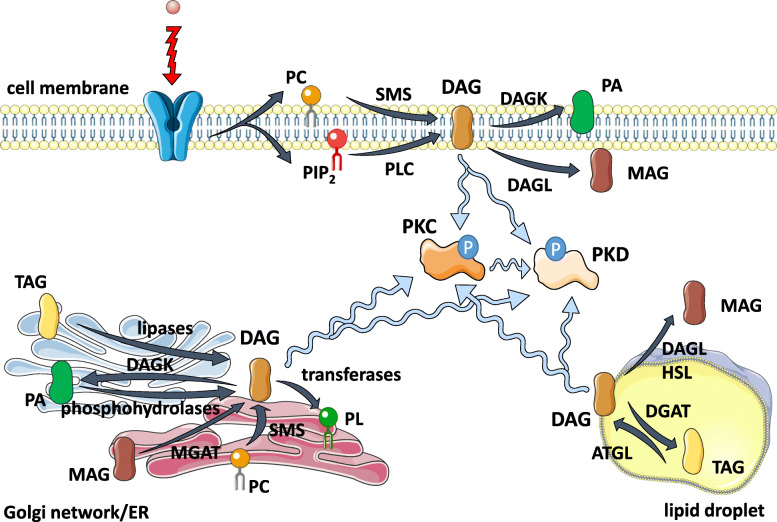
“In the ER and Golgi, DG was produced through multiple pathways, including hydrolysis of TG, PA, PC, or MG (Kolczynska et al., 2020).”
Mechanistic Insights into Redox-Dependent Macropinocytosis in Primary Human Neutrophils
Addo, S. A., Babay, I., Sreekumar, A., Sloan, D., Roy, T., Sudha, A., Thomas, J., Harris, R. A., Benyó, Z., & Csányi, G. (2026) · Antioxidants · doi:10.3390/antiox15070904
“DAG is a central lipid second messenger generated downstream of receptor signaling that mediates activation of PKC [22,23].”
Liu, Q., Kou, W., Ma, J., Lua, S., Chen, P., Chen, J., Zhang, P., An, X., & Liang, X. (2026) · Hypertension Research · doi:10.1038/s41440-026-02771-w
“DAG functions as a second messenger that activates protein kinase C (PKC) subtypes, which can promote cardiac hypertrophy and fi brosis through multiple signaling pathways [43].”
Light-Triggered Decoding of Hydrophobic Interactions in Living Systems
Ji, P., Chadwick, S. R., Harjung, A., Chen, W., & Devaraj, N. K. (2026) · Journal of the American Chemical Society · doi:10.1021/jacs.6c11056
lagCI enables inference of temporal causal relationships from dense multi-omic time series
Ge, Y., Bai, S., Qiang, Z., Liu, Y., Wu, Y., & Shen, X. (2026) · Briefings in Bioinformatics · doi:10.1093/bib/bbag464
Role of Protein Kinase C in Insulin Resistance and Metabolic Syndrome
Cruz-Villarreal, D. E., Hernández-González, K. D., & Olivares-Reyes, J. A. (2026) · Kinases and Phosphatases · doi:10.3390/kinasesphosphatases4030025
“Despite these challenges, studies in animal models and humans suggest that modulating PKC activity can enhance insulin sensitivity and reduce obesity-related complications [61,137].”
InfluentialJiménez-Flores, E., Reytor-González, C., Gavilanes, D. J., Rossetti, G., Pilone, V., Parrillo, L., Cavallo, M., Cobellis, L., Simancas-Racines, D., & Schiavo, L. (2026) · Nutrients · doi:10.3390/nu18183075
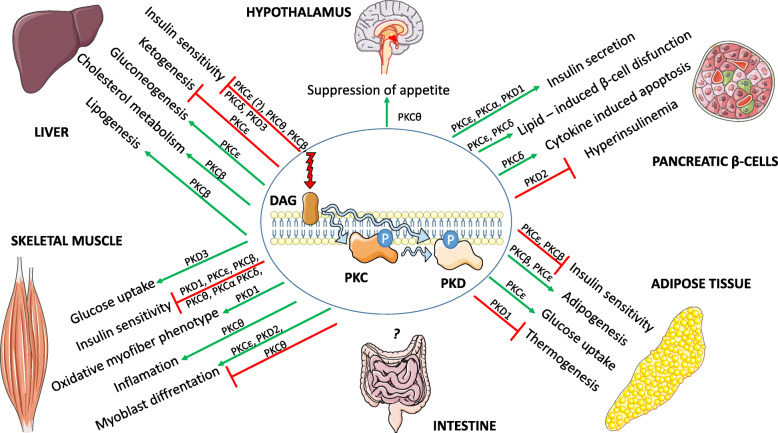
“…accumulation of lipid intermediates such as ceramides and DAGs [42], which directly impair insulin signaling by activating protein kinase C (PKC) isoforms (particularly PKC θ in muscle and PKC ε in liver) and by promoting serine phosphorylation of insulin receptor substrate (IRS) proteins [43,47].”
Metadata
- Authors
- Kolczynska, K., Loza-Valdes, A., Hawro, I., & Sumara, G.
- Affiliations
- Instytut Biologii Doświadczalnej im. Marcelego Nenckiego (PL)
- Corresponding author
- Sumara, Grzegorz
- Venue
- Lipids in Health and Disease
- Published
- 2020-05-28
- Volume
- 19
- Issue
- 1
- Pages
- 113-113
- ISSN
- 1476-511X (ISSN-L)
- PMC
- PMC7257441
- OpenAlex
- W3030139699
- Cited by
- 199
- References
- 206
- Citations by year
- 2026: 23 · 2025: 41 · 2024: 59 · 2023: 29 · 2022: 22 · 2021: 17 · 2020: 8
- FWCI
- 1.87
- Type
- journal article
- Language
- en
- Open access
- gold
- doi.org
- Licence
- cc-by
- creativecommons.org/licenses/by/4.0 (tdm)
- creativecommons.org/licenses/by/4.0 (vor)
- Locations
- Lipids in Health and Disease (publishedVersion, cc-by)
- PubMed Central (publishedVersion, cc-by)
- PubMed (publishedVersion)
- DOAJ (DOAJ: Directory of Open Access Journals) (submittedVersion, cc-by-sa)
- Funders
- H2020 European Research Council (678119 - SiCMetabol)
- Polish Ministry of Science and Higher Education (Dioscuri Centre of Scientific Excellence)
- European Molecular Biology Organization (EMBO Installation Grant 2020 - GSumara)
- Topics
- Life Sciences › Biochemistry, Genetics and Molecular Biology › Molecular Biology › Protein Kinase Regulation and GTPase Signaling
- Life Sciences › Biochemistry, Genetics and Molecular Biology › Molecular Biology › Metabolism, Diabetes, and Cancer
- Life Sciences › Biochemistry, Genetics and Molecular Biology › Molecular Biology › Sphingolipid Metabolism and Signaling
- Keywords
- diacylglycerol, protein kinase C, protein kinase D, PKC isoforms, glucose metabolism, lipid metabolism, metabolic homeostasis, obesity, diabetes mellitus, metabolic disorders
- MeSH terms
- Animals, Diabetes Mellitus, Diglycerides, Glucose, Humans, Insulin, Obesity, Protein Kinase C, Signal Transduction, Lipid Metabolism
About these checks
Registry, retraction, Cites and statistics results are computed, not judged, with one exception: a printed reference that no index lists is read once by a model before it counts as a citation error. Claims are extracted by a model and kept only when their quote appears verbatim in the text; each cited source is then checked, with a model’s help, for whether it says what the claim relies on. Those verdicts can be wrong — read the claim’s quote and the cited source before relying on one.
Statistics and arithmetic are recomputed, not judged.
Confidence bands are shown only for fields calibrated on our annotated test set. None is calibrated yet, so no band is shown.
What counts as a claim ›How we measure confidence ›How we check this ›
Are you an author, or do you see a problem with this page? Request a review
Data sources
Bibliographic data: Semantic Scholar, OpenAlex, Crossref.
Contains information from the Semantic Scholar Academic Graph Datasets, made available under the ODC Attribution License (ODC-BY 1.0).
Semantic Scholar’s data is described in: Kinney, R., et al. (2023). The Semantic Scholar Open Data Platform. arXiv:2301.10140.
