

Effects of whey protein on glycemic control and serum lipoproteins in patients with metabolic syndrome and related conditions: a systematic review and meta-analysis of randomized controlled clinical trials
Open accessThe DOI matches its Crossref record; 53 of the 53 references it cites were found in a registry or an index.
Abstract
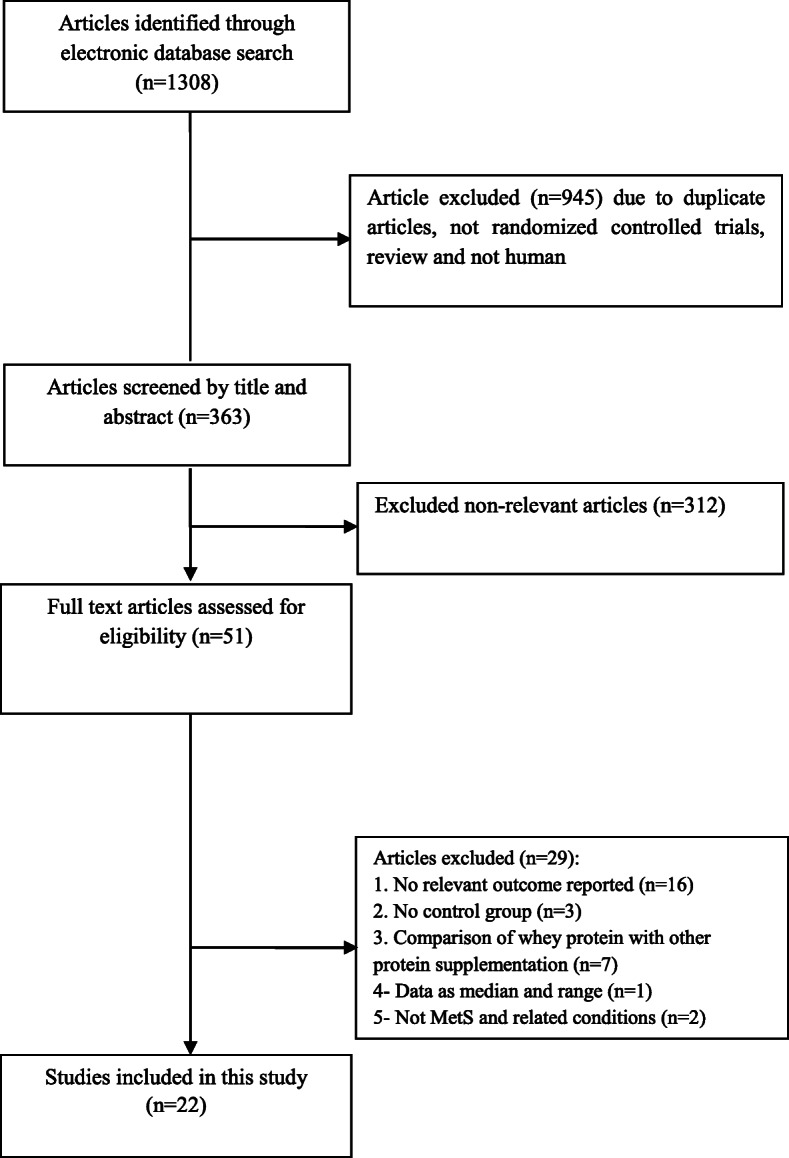
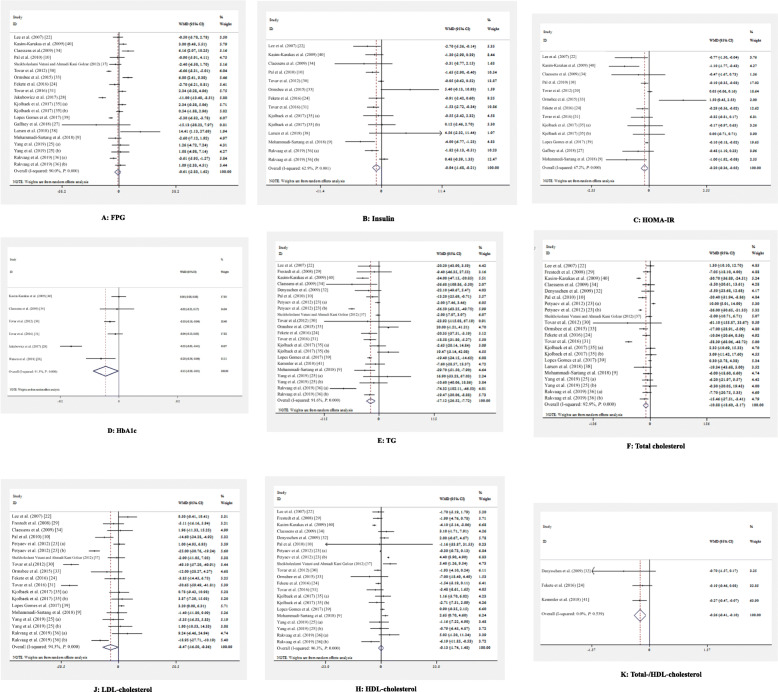
Background: This systematic review and meta-analysis aimed to assess the effects of whey protein on serum lipoproteins and glycemic status in patients with metabolic syndrome (MetS) and related disorders. Methods: Online databases, such as Web of Science, Cochrane Library, PubMed and Scopus were systematically searched by two independent authors from inception until 30th April 2020 for English randomized clinical trials investigating the efficacy of whey protein administration in subjects with Mets or related conditions on the parameters of glycemic and lipid control compared to certain control. In order to evaluate the included studies’ methodological quality, Cochrane Collaboration risk of bias tool was applied. Using Cochrane’s Q test and I-square (I 2 ) statistic, the included trials’ heterogeneity was also examined. Using a random-effects model, data were pooled, and weighted mean difference (WMD) was considered as the overall effect size. Results: Twenty-two studies were selected to be included in this meta-analysis. Consumption of whey protein resulted in significant reduction of HbA1c (WMD: -0.15; 95% CI: − 0.29, − 0.01) insulin (WMD: -0.94; 95% CI: − 1.68, − 0.21) and homeostasis model assessment-estimated insulin resistance (HOMA-IR) (WMD: -0.20; 95% CI: − 0.36, − 0.05). A significant reduction in triglycerides levels (WMD: -17.12; 95% CI: − 26.52, − 7.72), total cholesterol (WMD: -10.88; 95% CI -18.60, − 3.17), LDL-cholesterol levels (WMD: -8.47 95% CI: − 16.59, − 0.36) and total cholesterol/HDL-cholesterol ratio (WMD: -0.26; 95% CI: − 0.41, − 0.10) was found as well. Conclusions: This meta-analysis suggests that supplementation with whey protein had beneficial effect on several indicators of glycemic control and lipid parameters in patients with MetS and related conditions.
Overview
The claims and statistics of this paper haven’t been checked yet.
Free: it reads the open-access text and checks the first 5 claims that cite a source we can check. Create a free account to check every claim.
Integrity signals
Registry
Cites
Statistics
Figures
Verification
Claims the paper makes
The claims and statistics of this paper haven’t been checked yet.
Free: it reads the open-access text and checks the first 5 claims that cite a source we can check. Create a free account to check every claim.
Claims other papers make about this one
Each is checked against this paper’s own text: does it say what the citing paper says it does?
The cited source doesn’t support the claim as written.
In the citing paper
“A meta-analysis of 37 randomized controlled trials confirmed that higher protein intake reduced body weight by ~1.6 kg, with prediabetic subjects benefiting the most [163].”
From Nutritional Approaches to Enhance GLP-1 Analogue Therapy in Obesity: A Narrative Review (2025) · cites this paper as [163]
Checked by a reasoning model — may be wrong.
Experimental — accuracy not yet measuredThe source backs part of the claim, not all of it — or backs it for a different population, condition or comparison.
In the citing paper
“A recent systematic review and meta-analysis of 22 RCTs examining the effects of whey protein on glycemic status in patients with metabolic syndrome, reported that consumption of whey protein decreased significantly HbA1c, insulin/triglyceride/total cholesterol levels, and IR without effects on HDL cholesterol and fasting blood glucose levels [427].”
From Effects of diet, lifestyle, Chrononutrition and alternative dietary interventions on postprandial Glycemia and insulin resistance (2022) · cites this paper as [427]
Experimental — accuracy not yet measuredThe cited source says what the claim attributes to it.
In the citing paper
“Whey protein is an excellent source of branched-chain amino acids (BCAAs) and it has been shown that after its digestion, a rapid increase in amino acids, particularly BCAAs leads to insulin release, which may improve postprandial hyperglycemia [427].”
From Effects of diet, lifestyle, Chrononutrition and alternative dietary interventions on postprandial Glycemia and insulin resistance (2022) · cites this paper as [427]
In the citing paper
“A meta-analysis of 37 randomized controlled trials confirmed that higher protein intake reduced body weight by ~1.6 kg, with prediabetic subjects benefiting the most [163].”
From Nutritional Approaches to Enhance GLP-1 Analogue Therapy in Obesity: A Narrative Review (2025) · cites this paper as [163]
In the citing paper
“Whey protein intake has been suggested to improve metabolic parameters due to bioactive substances, including immunoglobulins, glutamine, lactoferrin, and lactalbumin, which have been shown to activate the release of incretin hormones including GIP and GLP-1, whilst peptides from whey hydrolyzation have also been shown to inhibit dipeptidyl peptidase-IV and inhibit degradation of GIP and GLP-1 [”
From Effects of diet, lifestyle, Chrononutrition and alternative dietary interventions on postprandial Glycemia and insulin resistance (2022) · cites this paper as [427]
Self-check
Percentages, sums and reported differences re-computed from the paper’s own numbers.
The self-check needs the paper’s full text.
Citations
Cites
Measuring inconsistency in meta-analyses
Higgins, J. P. T., Thompson, S. G., Deeks, J. J., & Altman, D. G. (2003) · BMJ · doi:10.1136/bmj.327.7414.557 · Cited by 63,139
Bias in meta-analysis detected by a simple, graphical test
Egger, M., Smith, G. D., Schneider, M., & Minder, C. (1997) · BMJ · doi:10.1136/bmj.315.7109.629 · Cited by 56,722
Alberti, K. G. M. M., Eckel, R. H., Grundy, S. M., Zimmet, P. Z., Cleeman, J. I., Donato, K. A., Fruchart, J.-C., James, W. P. T., Loria, C. M., & Smith, S. C. (2009) · Circulation · doi:10.1161/circulationaha.109.192644 · Cited by 14,860
Wan, X., Wang, W., Liu, J., & Tong, T. (2014) · BMC Medical Research Methodology · doi:10.1186/1471-2288-14-135 · Cited by 11,735
Grundy, S. M., Brewer, H. B., Cleeman, J. I., Smith, S. C., & Lenfant, C. (2004) · Circulation · doi:10.1161/01.cir.0000111245.75752.c6 · Cited by 5,982
Plea for routinely presenting prediction intervals in meta-analysis.
IntHout, J., Ioannidis, J. P. A., Rovers, M. M., & Goeman, J. J. (2016) · BMJ Open · doi:10.1136/bmjopen-2015-010247 · Cited by 2,264
Dairy Consumption, Obesity, and the Insulin Resistance Syndrome in Young Adults: The CARDIA Study
Pereira, M. A., Jacobs, Jr., Van Horn, L., Slattery, M. L., Kartashov, A. I., & Ludwig, D. S. (2002) · JAMA · doi:10.1001/jama.287.16.2081 · Cited by 1,102
Choosing effect measures and computing estimates of effect
Higgins, J. P., Li, T., & Deeks, J. J. (2019) · Cochrane Handbook for Systematic Reviews of Interventions · doi:10.1002/9781119536604.ch6 · Cited by 977
Golden, S. H., Robinson, K. A., Saldanha, I., Anton, B., & Ladenson, P. W. (2009) · The Journal of Clinical Endocrinology & Metabolism · doi:10.1210/jc.2008-2291 · Cited by 542 · cited 1×
“It is estimated that over 20% of adults in Western countries have MetS with a clear tendency to increase [2, 3].”
BackgroundCicero, A. F. G., Fogacci, F., & Colletti, A. (2017) · British Journal of Pharmacology · doi:10.1111/bph.13608 · Cited by 317
Cited by
Papakonstantinou, E., Oikonomou, C., Nychas, G., & Dimitriadis, G. D. (2022) · Nutrients · doi:10.3390/nu14040823 · Cited by 199
Pepe, R. B., Lottenberg, A. M., Fujiwara, C. T. H., Beyruti, M., Cintra, D. E., Machado, R. M., Rodrigues, A., Jensen, N. S. O., Caldas, A. P. S., Fernandes, A. E., et al. (2023) · Diabetology & Metabolic Syndrome · doi:10.1186/s13098-023-01037-6 · Cited by 72
“Also, there was a beneficial effect on several indicators of glycemic control [527–529] and blood lipids, including triglycerides [527–529] and HDL-C [527–529], and on blood pressure [528, 529], thus improving cardiovascular risk factors.”
BackgroundKirk, B., Mooney, K., Vogrin, S., Jackson, M. J., Duque, G., Alizadehkhaiyat, O., & Amirabdollahian, F. (2021) · Journal of Cachexia Sarcopenia and Muscle · doi:10.1002/jcsm.12805 · Cited by 57
Nutrients, Physical Activity, and Mitochondrial Dysfunction in the Setting of Metabolic Syndrome
Lemos, G., Torrinhas, R. S., & Waitzberg, D. L. (2023) · Nutrients · doi:10.3390/nu15051217 · Cited by 63
Sepandi, M., Samadi, M., Shirvani, H., Alimohamadi, Y., Taghdir, M., Goudarzi, F., & Akbarzadeh, I. (2022) · Clinical Nutrition ESPEN · doi:10.1016/j.clnesp.2022.05.020 · Cited by 36
Lesgards, J. (2023) · Nutrients · doi:10.3390/nu15051294 · Cited by 40
“21) but did not have an effect on fasting plasma glucose levels [42].”
BackgroundInfluentialZhang, M., Zhu, L., Wu, G., Zhang, H., Wang, X., & Qi, X. (2023) · Critical Reviews in Food Science and Nutrition · doi:10.1080/10408398.2023.2256400 · Cited by 25
“Consistent with this, whey protein supplementation also improved humans’ glycemic levels via stimulating gut hormone secretion (Amirani et al. 2020).”
Schulze, M. B., Haardt, J., Amini, A. M., Kalotai, N., Lehmann, A. C., Schmidt, A., Buyken, A. E., Egert, S., Ellinger, S., Kroke, A., et al. (2023) · European Journal of Nutrition · doi:10.1007/s00394-023-03234-5 · Cited by 27
Matsuda, T., Suzuki, H., Sugano, Y., Suzuki, Y., Yamanaka, D., Araki, R., Yahagi, N., Sekiya, M., Kawakami, Y., Osaki, Y., et al. (2022) · Nutrients · doi:10.3390/nu14193917 · Cited by 24
“Conversely, a meta-analysis showed that whey protein administration significantly reduced HbA1c, insulin, TG, and LDL-C levels [57].”
BackgroundZhu, R., Xu, H., Cai, H., Wang, S., Mao, J., Zhang, J., Xiong, X., Wang, X., Zhou, W., & Guo, L. (2023) · Nutrition Metabolism and Cardiovascular Diseases · doi:10.1016/j.numecd.2023.04.020 · Cited by 22
Estimation of bioactive peptide content of milk from different species using an in silico method
Parastouei, K., Jabbari, M., Javanmardi, F., Barati, M., Mahmoudi, Y., Khalili-Moghadam, S., Ahmadi, H., Davoodi, S. H., & Khaneghah, A. M. (2022) · Amino Acids · doi:10.1007/s00726-022-03152-6 · Cited by 19
“LMW-peptides more efficiently supply required amino acids for the human body (Soop et al. 2012; Amirani et al. 2020).”
BackgroundProkopidis, K., Morgan, P. T., Veronese, N., Morwani‐Mangnani, J., Triantafyllidis, K. K., Kechagias, K. S., Roberts, J., Hurst, C., Stevenson, E., Vlachopoulos, D., et al. (2024) · Clinical Nutrition · doi:10.1016/j.clnu.2024.12.003 · Cited by 23
Peng, L., Lin, M., Tseng, S., Yen, K.-H., Lee, H., Hsiao, F., & Chen, L. (2024) · Journal of Cachexia Sarcopenia and Muscle · doi:10.1002/jcsm.13481 · Cited by 19
“38 The discrepancies in these fi ndings primarily stem from differences in research design, methodologies, demographics of the study participants, and study duration.”
BackgroundZhou, S., Cheng, F., He, J., Xu, T., Zhang, X., Wan, S., Qi, J., He, J., Chen, F., Luo, J., et al. (2024) · Clinical Nutrition · doi:10.1016/j.clnu.2024.06.013 · Cited by 17
Mohammadi, S., Asbaghi, O., Dolatshahi, S., Omran, H. S., Amirani, N., Koozehkanani, F. J., Garmjani, H. B., Goudarzi, K., & Ashtary‐Larky, D. (2023) · Nutrition Journal · doi:10.1186/s12937-023-00878-1 · Cited by 15
“A meta-analysis of 22 RCTs indicated that WP administration significantly decreased the values of HOMA-IR, HBA1c, and fasting insulin in patients with metabolic syndrome, but did not have any impact on FBG levels [90].”
BackgroundMethodJahan-Mihan, A., Khoury, D. T. D. E., Brewer, G. J., & Chapleau, A. (2025) · Nutrients · doi:10.3390/nu17223528 · Cited by 15
Jamshidi, S., Mohsenpour, M. A., Masoumi, S. J., Fatahi, S., Nasimi, N., Sharifi‐Zahabi, E., Pourrajab, B., & Shidfar, F. (2021) · Diabetes & Metabolic Syndrome Clinical Research & Reviews · doi:10.1016/j.dsx.2021.102372 · Cited by 12
Milanović, M., Milošević, N., Ružić, M., Abenavoli, L., & Milić, N. (2025) · Metabolites · doi:10.3390/metabo15080516 · Cited by 12
“…in a significant reduction in HbA1c (WMD: − 0.15; 95% CI: − 0.29, − 0.01), insulin (WMD: − 0.94; 95% CI: − 1.68, − 0.21), and HOMA-IR (WMD: − 0.20; 95% CI: − 0.36, − 0.05) in comparison to control in patients with metabolic syndrome and related conditions according to a meta-analysis [76].”
InfluentialImpact of whey protein on lipid profiles: A systematic review and meta-analysis
Gataa, I. S., Abdullah, Z., Cabrera, M. V. G., RenukaJyothi, S., Verma, S., Arora, I., Monsi, M., Muzammil, K., & Zainul, R. (2025) · Nutrition Metabolism and Cardiovascular Diseases · doi:10.1016/j.numecd.2025.103858 · Cited by 10
Cow’s Milk Bioactive Molecules in the Regulation of Glucose Homeostasis in Human and Animal Studies
Yuzbashian, E., Berg, E. V., Zani, S. C. D. C., & Chan, C. B. (2024) · Foods · doi:10.3390/foods13172837 · Cited by 10
“Chronically, whey reduced fasting insulin, FBG, and HOMA-IR in a sub-analysis pooling the results of 36 RCTs [230], consistent with three other recent meta-analyses [231–235].”
ResultPires, C. M. B. F. (2023) · Medicina · doi:10.3390/medicina59071184 · Cited by 10
“Yoghurt naturally includes lactic acid bacteria, which can promote favourable changes in gut microbiota, the amelioration of glycaemic control and insulin resistance and an increase in glucagon-like peptide 1 (GLP-1), with an anorexigenic effect.”
BackgroundInfluentialNutritional Approaches to Enhance GLP-1 Analogue Therapy in Obesity: A Narrative Review
Dias, D. D., Vasconcelos, A. R., Souza, A. C. R., Menezes, C. D., Silva, I. S. T. E., & Name, J. J. (2025) · Obesities · doi:10.3390/obesities5040088 · Cited by 8
“WP has also been shown to improve systolic and diastolic blood pressure, waist circumference, triglycerides, cholesterol profile, fasting blood glucose, and insulin resistance in metabolic syndrome [159,160].”
Connolly, G., Wang, Y., Bergia, R. E., Davis, E. M., Byers, A. W., Reed, J. B., & Campbell, W. W. (2023) · Current Developments in Nutrition · doi:10.1016/j.cdnut.2023.102017 · Cited by 11
Mohammadi, S., Ashtary‐Larky, D., Beyki, M., Sough, N. K., Alaghemand, N., Amirani, N., Omran, H. S., Dolatshahi, S., & Asbaghi, O. (2025) · Nutrition Reviews · doi:10.1093/nutrit/nuaf068 · Cited by 6
Mousavi, S. N., Dorraji, M. S. S., Pourmansouri, Z., Mohammadian, M., Chiti, H., Moghaddam, N., & Hosseini, E. (2021) · Journal of Functional Foods · doi:10.1016/j.jff.2021.104904 · Cited by 6
Wu, J., Jia, M., Dong, A., Dong, J., Tian, R., Zhou, J. M., & Shen, C. (2026) · Analytical Chemistry · doi:10.1021/acs.analchem.5c07523 · Cited by 5
Sugiharto, S., Adli, D. N., Ujilestari, T., Sholikin, M. M., & Inggrida, J. A. (2025) · The Journal of Agricultural Science · doi:10.1017/s0021859625100130 · Cited by 5
Dairy intake and risk of type 2 diabetes and metabolic syndrome: A narrative review
Vimaleswaran, K. S., & Mohan, V. (2025) · Nutrition · doi:10.1016/j.nut.2025.113064 · Cited by 3
Griffen, C., Renshaw, D. W., Duncan, M., Dallaway, A., Randeva, H. S., Weickert, M. O., & Hattersley, J. G. (2026) · Experimental Gerontology · doi:10.1016/j.exger.2026.113101 · Cited by 3
Developing Production of Specialized Dairy Foods in Russia
Novokshanova, A. L. (2024) · Dairy Industry · doi:10.21603/1019-8946-2024-4-2 · Cited by 3
van den Belt, M., van der Haar, S., Oosterink, E., van Loenhout, T., Ishiguro, T., & Esser, D. (2022) · Nutrients · doi:10.3390/nu15010049 · Cited by 3
Mehrabi, F., Safdari, A., Moslemi, A., Salehi, M., Agharazi, A., & Rezvanfar, M. R. (2024) · Contemporary Clinical Trials Communications · doi:10.1016/j.conctc.2024.101401 · Cited by 3
Drummond, M. D. M., da Silva, R. Â. D., Carvas, N., de Melo, M. S., & Ferreira, M. H. L. (2026) · Translational Sports Medicine · doi:10.1155/tsm2/5557511 · Cited by 4
KhKh, S., Novokshanova, A. L., Kochetkova, A. A., Плотникова, О. А., Исмаиловна, А. Р., Пилипенко, В. В., Alekseev, V. A., Sukharev, K., & Oksenenko, O. (2024) · Voprosy Pitaniya · doi:10.33029/0042-8833-2024-93-6-67-75 · Cited by 2
Khalafi, M., Fatolahi, S., Jafari, R., Rosenkranz, S. K., Symonds, M. E., Bidgoli, Z. A., Fernández, M. L., Dinizadeh, F., & Batrakoulis, A. (2025) · Healthcare · doi:10.3390/healthcare13212814 · Cited by 2
“Current meta-analyses suggest that WP has beneficial effects on some lipid profile markers and glycemic control in healthy adults (aged 50 years) with overweight or obesity, and in patients with metabolic syndrome and related conditions [40,41].”
Fu, M., Han, W., Zhou, H., Zhang, Y., Xu, J., Shen, Y., Xu, B., Guo, H., & Chen, B. (2026) · BMC Endocrine Disorders · doi:10.1186/s12902-026-02211-3 · Cited by 1
“…nutraceuticals — such as flaxseed oil, which can reduce oxidative stress [32]; whey protein, which may improve glycemic control and lipid profiles [33]; and resistant starch, which has been associated with improved fasting glucose and cholesterol levels [34] — can influence metabolic syndrome…”
Phosat, C., Phosat, C., Hudthagoso, C., Phienluphon, P. P., & Kwanbunjan, K. (2022) · Malaysian Journal of Nutrition · doi:10.31246/mjn-2021-0100 · Cited by 1
Cookie enriquecido com concentrado proteico de soro de leite e seus benefícios no metabolismo ósseo
Dias, T. A., Carli, G. D., Gutkoski, L. C., Alves, A. L. S., & Bertolin, T. E. (2022) · Brazilian Journal of Health Review · doi:10.34119/bjhrv5n4-205 · Cited by 1
МОРОЖЕНОЕ С УЛУЧШЕННОЙ ПИЩЕВОЙ ЦЕННОСТЬЮ
Зайцев, К. А., & Novokshanova, A. L. (2023) · Социально-гуманитарные исследования: векторы развития науки и образования · doi:10.14341/omdcr-2023-17
Znaczenie i wykorzystanie białkowych składników serwatki
Chrzanowska, J., Dąbrowska, A. M., & Nowak, M. (2023) · Engineering Sciences And Technologies · doi:10.15611/nit.2023.39.03
Dmitriy, B. N., Елена, М. Щ., & Tarmaeva, I. Y. (2024) · Ползуновский вестник · doi:10.25712/astu.2072-8921.2024.03.013
Novokshanova, A. L., Михайловна, Щ. Е. М. Щ. Е., & Сергеевна, Б. А. С. Б. А. (2024) · Ползуновский вестник · doi:10.25712/astu.2072-8921.2024.02.009
Diet therapy for dyslipidemia: A review of clinical trials
Chutani, A. M., Bakshi, A., & Basu‐Ray, I. (2024) · Elsevier eBooks · doi:10.1016/b978-0-323-99645-7.00026-3
Dileep, N., Peter, N., Das, S., & Pradhan, C. (2025) · Aquaculture Science and Management. · doi:10.1186/s44365-025-00016-4 · Cited by 1
“Studies in human subjects have shown that proteins from various sources and of differing qualities elicits distinct metabolic responses including lipid lowering effect [4, 5].”
Ward, K. L., Asemota, V. O., Kallop, K. P., Johnson, D. F., Ray, S. L., Fernando, S. T., & Smith, M. D. (2025) · Journal of Chiropractic Medicine · doi:10.1016/j.jcm.2025.07.002
Leitão, A. E. (2025) · Digital Library of Theses and Dissertations (Universidade de São Paulo) · doi:10.11606/t.39.2025.tde-23102025-153202
Mohammadi, S., Asbaghi, O., Dolatshahi, S., Omran, H. S., Amirani, N., Koozehkanani, F. J., Garmjani, H. B., Goudarzi, K., & Ashtary‐Larky, D. (2023) · Figshare · doi:10.6084/m9.figshare.24257536
Kutlay, Ö., Aslan, E., & Akan, T. (2026) · Ankara Üniversitesi Veteriner Fakültesi Dergisi · doi:10.33988/auvfd.1772261
Barasara, S., Chauhan, Y. V., Gada, J. V., Sanamandra, P., Rahate, S. S., Paranjape, J., & Bhagwat, N. M. (2026) · Indian Journal of Endocrinology and Metabolism · doi:10.4103/ijem.ijem_994_25
“[9] Collectively, these data align with our findings that a pre‑breakfast whey protein pre‑load attenuates postprandial glucose excursions predominantly through enhancement of insulin and incretin responses, supporting its physiological relevance in patients with early T2DM studied under…”
О подтверждении соответствия специализированной пищевой продукции
Novokshanova, A. L., & Starodubova, A. V. (n.d.) · CyberLeninK (CyberLeninka)
Systematization of data on foods for special dietary uses for an adult population in Russia
Novokshanova, A. L., & Sarkisyan, V. A. (2026) · Agricultural science Euro-North-East · doi:10.30766/2072-9081.2026.27.3.635-645
Lactobacillus paragasseri OLL2716 Promotes Ghrelin Expression in Gastric Cells
Fujieda, A., Yamada, N., & Nagira, A. (2026) · Probiotics and Antimicrobial Proteins · doi:10.1007/s12602-026-11172-x
Khosravi, K., Asadi, Z., Sartang, M. M., & Mansoori, A. (2026) · Nutrition Reviews · doi:10.1093/nutrit/nuag107
Corsetti, G., & Pasini, E. (2026) · Frontiers in Nutrition · doi:10.3389/fnut.2026.1970280
Gheri, C. F., Luisi, M., Lucarini, L., Biffi, B., Madiai, S., Roccotelli, A., Zipoli, R., Sgambellone, S., Provensi, G., Macchi, C., et al. (2026) · Biomolecules · doi:10.3390/biom16101484
“In contrast to previous evidence [53], we observed no significant changes in total cholesterol, LDL cholesterol, and triglycerides levels between the two groups.”
Metadata
- Authors
- Amirani, E., Milajerdi, A., Reiner, Ž., Mirzaei, H., Mansournia, M. A., & Asemi, Z.
- Affiliations
- Kashan University of Medical Sciences (IR)
- Tehran University of Medical Sciences (IR)
- University Hospital Centre Zagreb (HR)
- Corresponding author
- Asemi, Zatollah
- Venue
- Lipids in Health and Disease
- Published
- 2020-09-21
- Volume
- 19
- Issue
- 1
- Pages
- 209-209
- ISSN
- 1476-511X (ISSN-L)
- PMC
- PMC7504833
- OpenAlex
- W3087238407
- Cited by
- 47
- References
- 53
- Citations by year
- 2026: 10 · 2025: 8 · 2024: 7 · 2023: 12 · 2022: 7 · 2021: 3
- FWCI
- 0.84
- Type
- journal article
- Language
- en
- Open access
- gold
- doi.org
- Licence
- cc-by
- creativecommons.org/licenses/by/4.0 (tdm)
- creativecommons.org/licenses/by/4.0 (vor)
- Locations
- Lipids in Health and Disease (publishedVersion, cc-by)
- PubMed Central (publishedVersion, cc-by)
- PubMed (publishedVersion)
- DOAJ (DOAJ: Directory of Open Access Journals) (submittedVersion, cc-by-sa)
- Topics
- Health Sciences › Medicine › Endocrinology, Diabetes and Metabolism › Diabetes, Cardiovascular Risks, and Lipoproteins
- Health Sciences › Nursing › Nutrition and Dietetics › Muscle metabolism and nutrition
- Health Sciences › Medicine › Endocrinology, Diabetes and Metabolism › Diet, Metabolism, and Disease
- Keywords
- whey protein, metabolic syndrome, glycemic control, serum lipoproteins, insulin resistance, HbA1c, triglycerides, LDL cholesterol, total cholesterol, HDL cholesterol, dietary supplementation, lipid profile, insulin sensitivity, dyslipidemia, prediabetes, type 2 diabetes, obesity, polycystic ovary syndrome
- MeSH terms
- Whey Proteins, Glycemic Control, Blood Glucose, Diabetes Mellitus, Type 2, Glycated Hemoglobin, Humans, Hypertension, Insulin Resistance, Cholesterol, HDL, Cholesterol, LDL, Obesity, Triglycerides, Randomized Controlled Trials as Topic, Dietary Supplements, Metabolic Syndrome, Dyslipidemias
About these checks
Registry, retraction, Cites and statistics results are computed, not judged, with one exception: a printed reference that no index lists is read once by a model before it counts as a citation error. Claims are extracted by a model and kept only when their quote appears verbatim in the text; each cited source is then checked, with a model’s help, for whether it says what the claim relies on. Those verdicts can be wrong — read the claim’s quote and the cited source before relying on one.
Statistics and arithmetic are recomputed, not judged.
Confidence bands are shown only for fields calibrated on our annotated test set. None is calibrated yet, so no band is shown.
What counts as a claim ›How we measure confidence ›How we check this ›
Are you an author, or do you see a problem with this page? Request a review
Data sources
Bibliographic data: Semantic Scholar, OpenAlex, Crossref.
Contains information from the Semantic Scholar Academic Graph Datasets, made available under the ODC Attribution License (ODC-BY 1.0).
Semantic Scholar’s data is described in: Kinney, R., et al. (2023). The Semantic Scholar Open Data Platform. arXiv:2301.10140.
