

Effects of whey protein on glycemic control and serum lipoproteins in patients with metabolic syndrome and related conditions: a systematic review and meta-analysis of randomized controlled clinical trials
Open accessThe DOI matches its Crossref record; 53 of the 53 references it cites were found in a registry or an index.
Abstract
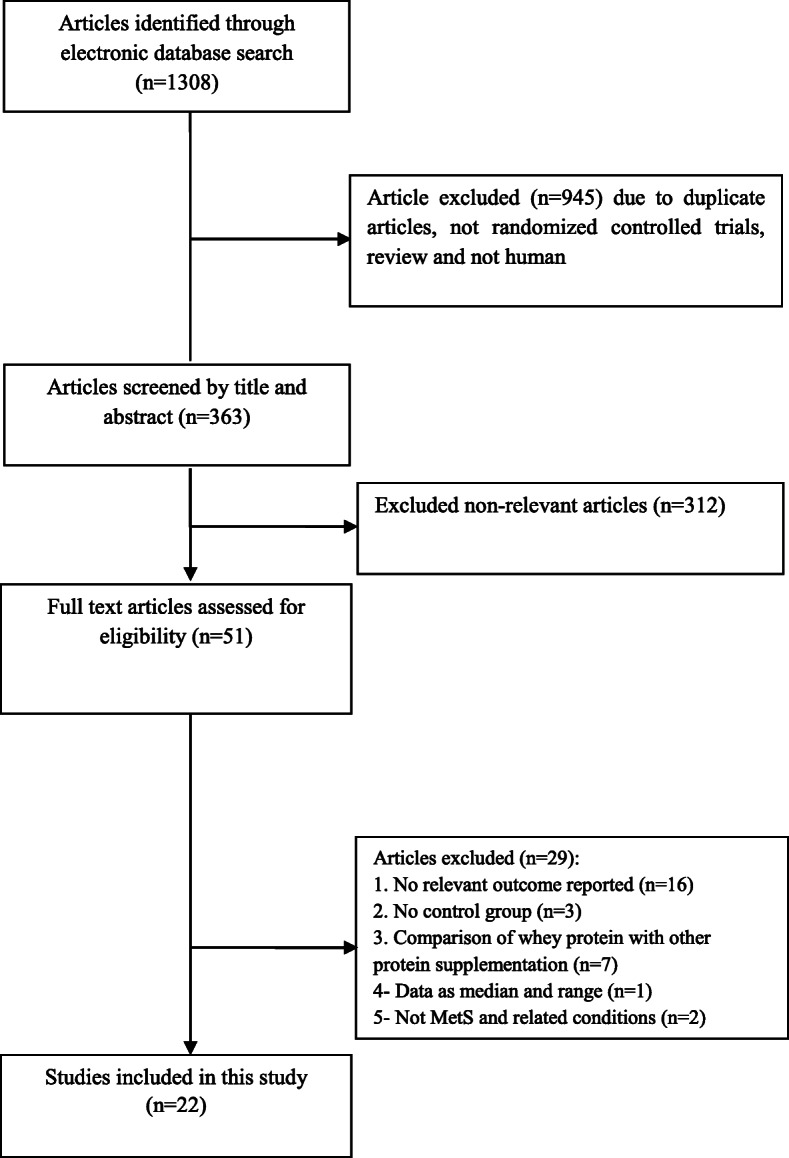
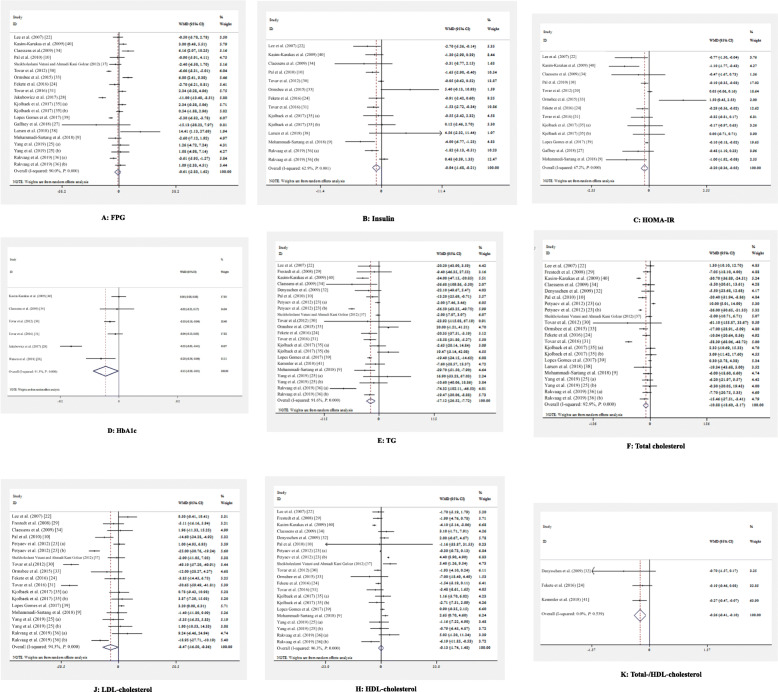
Background: This systematic review and meta-analysis aimed to assess the effects of whey protein on serum lipoproteins and glycemic status in patients with metabolic syndrome (MetS) and related disorders. Methods: Online databases, such as Web of Science, Cochrane Library, PubMed and Scopus were systematically searched by two independent authors from inception until 30th April 2020 for English randomized clinical trials investigating the efficacy of whey protein administration in subjects with Mets or related conditions on the parameters of glycemic and lipid control compared to certain control. In order to evaluate the included studies’ methodological quality, Cochrane Collaboration risk of bias tool was applied. Using Cochrane’s Q test and I-square (I 2 ) statistic, the included trials’ heterogeneity was also examined. Using a random-effects model, data were pooled, and weighted mean difference (WMD) was considered as the overall effect size. Results: Twenty-two studies were selected to be included in this meta-analysis. Consumption of whey protein resulted in significant reduction of HbA1c (WMD: -0.15; 95% CI: − 0.29, − 0.01) insulin (WMD: -0.94; 95% CI: − 1.68, − 0.21) and homeostasis model assessment-estimated insulin resistance (HOMA-IR) (WMD: -0.20; 95% CI: − 0.36, − 0.05). A significant reduction in triglycerides levels (WMD: -17.12; 95% CI: − 26.52, − 7.72), total cholesterol (WMD: -10.88; 95% CI -18.60, − 3.17), LDL-cholesterol levels (WMD: -8.47 95% CI: − 16.59, − 0.36) and total cholesterol/HDL-cholesterol ratio (WMD: -0.26; 95% CI: − 0.41, − 0.10) was found as well. Conclusions: This meta-analysis suggests that supplementation with whey protein had beneficial effect on several indicators of glycemic control and lipid parameters in patients with MetS and related conditions.
Overview
The claims and statistics of this paper haven’t been checked yet.
Free: it reads the open-access text and checks the first 5 claims that cite a source we can check. Create a free account to check every claim.
Integrity signals
Registry
Cites
Statistics
Figures
Verification
Claims the paper makes
The claims and statistics of this paper haven’t been checked yet.
Free: it reads the open-access text and checks the first 5 claims that cite a source we can check. Create a free account to check every claim.
Claims other papers make about this one
Each is checked against this paper’s own text: does it say what the citing paper says it does?
The cited source doesn’t support the claim as written.
In the citing paper
“A meta-analysis of 37 randomized controlled trials confirmed that higher protein intake reduced body weight by ~1.6 kg, with prediabetic subjects benefiting the most [163].”
From Nutritional Approaches to Enhance GLP-1 Analogue Therapy in Obesity: A Narrative Review (2025) · cites this paper as [163]
Checked by a reasoning model — may be wrong.
Experimental — accuracy not yet measuredThe source backs part of the claim, not all of it — or backs it for a different population, condition or comparison.
In the citing paper
“A recent systematic review and meta-analysis of 22 RCTs examining the effects of whey protein on glycemic status in patients with metabolic syndrome, reported that consumption of whey protein decreased significantly HbA1c, insulin/triglyceride/total cholesterol levels, and IR without effects on HDL cholesterol and fasting blood glucose levels [427].”
From Effects of diet, lifestyle, Chrononutrition and alternative dietary interventions on postprandial Glycemia and insulin resistance (2022) · cites this paper as [427]
Experimental — accuracy not yet measuredThe cited source says what the claim attributes to it.
In the citing paper
“Whey protein is an excellent source of branched-chain amino acids (BCAAs) and it has been shown that after its digestion, a rapid increase in amino acids, particularly BCAAs leads to insulin release, which may improve postprandial hyperglycemia [427].”
From Effects of diet, lifestyle, Chrononutrition and alternative dietary interventions on postprandial Glycemia and insulin resistance (2022) · cites this paper as [427]
In the citing paper
“A meta-analysis of 37 randomized controlled trials confirmed that higher protein intake reduced body weight by ~1.6 kg, with prediabetic subjects benefiting the most [163].”
From Nutritional Approaches to Enhance GLP-1 Analogue Therapy in Obesity: A Narrative Review (2025) · cites this paper as [163]
In the citing paper
“Whey protein intake has been suggested to improve metabolic parameters due to bioactive substances, including immunoglobulins, glutamine, lactoferrin, and lactalbumin, which have been shown to activate the release of incretin hormones including GIP and GLP-1, whilst peptides from whey hydrolyzation have also been shown to inhibit dipeptidyl peptidase-IV and inhibit degradation of GIP and GLP-1 [”
From Effects of diet, lifestyle, Chrononutrition and alternative dietary interventions on postprandial Glycemia and insulin resistance (2022) · cites this paper as [427]
Self-check
Percentages, sums and reported differences re-computed from the paper’s own numbers.
The self-check needs the paper’s full text.
Citations
Cites
Measuring inconsistency in meta-analyses
Higgins, J. P. T., Thompson, S. G., Deeks, J. J., & Altman, D. G. (2003) · BMJ · doi:10.1136/bmj.327.7414.557 · Cited by 63,139
Bias in meta-analysis detected by a simple, graphical test
Egger, M., Smith, G. D., Schneider, M., & Minder, C. (1997) · BMJ · doi:10.1136/bmj.315.7109.629 · Cited by 56,722
Alberti, K. G. M. M., Eckel, R. H., Grundy, S. M., Zimmet, P. Z., Cleeman, J. I., Donato, K. A., Fruchart, J.-C., James, W. P. T., Loria, C. M., & Smith, S. C. (2009) · Circulation · doi:10.1161/circulationaha.109.192644 · Cited by 14,860
Wan, X., Wang, W., Liu, J., & Tong, T. (2014) · BMC Medical Research Methodology · doi:10.1186/1471-2288-14-135 · Cited by 11,735
Grundy, S. M., Brewer, H. B., Cleeman, J. I., Smith, S. C., & Lenfant, C. (2004) · Circulation · doi:10.1161/01.cir.0000111245.75752.c6 · Cited by 5,982
Plea for routinely presenting prediction intervals in meta-analysis.
IntHout, J., Ioannidis, J. P. A., Rovers, M. M., & Goeman, J. J. (2016) · BMJ Open · doi:10.1136/bmjopen-2015-010247 · Cited by 2,264
Dairy Consumption, Obesity, and the Insulin Resistance Syndrome in Young Adults: The CARDIA Study
Pereira, M. A., Jacobs, Jr., Van Horn, L., Slattery, M. L., Kartashov, A. I., & Ludwig, D. S. (2002) · JAMA · doi:10.1001/jama.287.16.2081 · Cited by 1,102
Choosing effect measures and computing estimates of effect
Higgins, J. P., Li, T., & Deeks, J. J. (2019) · Cochrane Handbook for Systematic Reviews of Interventions · doi:10.1002/9781119536604.ch6 · Cited by 977
Golden, S. H., Robinson, K. A., Saldanha, I., Anton, B., & Ladenson, P. W. (2009) · The Journal of Clinical Endocrinology & Metabolism · doi:10.1210/jc.2008-2291 · Cited by 542 · cited 1×
“It is estimated that over 20% of adults in Western countries have MetS with a clear tendency to increase [2, 3].”
BackgroundCicero, A. F. G., Fogacci, F., & Colletti, A. (2017) · British Journal of Pharmacology · doi:10.1111/bph.13608 · Cited by 317
Guasch-Ferré, M., Satija, A., Blondin, S. A., Janiszewski, M., Emlen, E., O’Connor, L. E., Campbell, W. W., Hu, F. B., Willett, W. C., & Stampfer, M. J. (2019) · Circulation · doi:10.1161/circulationaha.118.035225 · Cited by 304
Major Scientific Advances with Dairy Foods in Nutrition and Health
Huth, P. J., DiRienzo, D. B., & Miller, G. D. (2006) · Journal of Dairy Science · doi:10.3168/jds.s0022-0302(06)72190-7 · Cited by 293
Christensen, R., Lorenzen, J. K., Svith, C. R., Bartels, E. M., Melanson, E. L., Saris, W. H., Tremblay, A., & Astrup, A. (2009) · Obesity Reviews · doi:10.1111/j.1467-789x.2009.00599.x · Cited by 290
Beydoun, M. A., Gary, T. L., Caballero, B. H., Lawrence, R. S., Cheskin, L. J., & Wang, Y. (2008) · The American Journal of Clinical Nutrition · doi:10.1093/ajcn/87.6.1914 · Cited by 278
Pal, S., Ellis, V., & Dhaliwal, S. (2010) · British Journal of Nutrition · doi:10.1017/s0007114510000991 · Cited by 271
Balkau, B., Vernay, M., Mhamdi, L., Novak, M., Arondel, D., Vol, S., Tichet, J., & Eschwège, E. (2003) · Diabetes & Metabolism · doi:10.1016/s1262-3636(07)70067-8 · Cited by 268
Bendtsen, L. Q., Lorenzen, J. K., Bendsen, N. T., Rasmussen, C., & Astrup, A. (2013) · Advances in Nutrition · doi:10.3945/an.113.003723 · Cited by 245
Including variants on randomized trials
Higgins, J. P., Eldridge, S., & Li, T. (2019) · Cochrane Handbook for Systematic Reviews of Interventions · doi:10.1002/9781119536604.ch23 · Cited by 243
Coenzyme Q10 in health and disease
Overvad, K., Diamant, B., Holm, L., Hølmer, G., Mortensen, S., & Stender, S. (1999) · European Journal of Clinical Nutrition · doi:10.1038/sj.ejcn.1600880 · Cited by 192
Dietary whey protein lessens several risk factors for metabolic diseases: a review
Sousa, G. T., Lira, F. S., Rosa, J. C., de Oliveira, E. P., Oyama, L. M., Santos, R. V., & Pimentel, G. D. (2012) · Lipids in Health and Disease · doi:10.1186/1476-511x-11-67 · Cited by 189
Frestedt, J. L., Zenk, J. L., Kuskowski, M. A., Ward, L. S., & Bastian, E. D. (2008) · Nutrition & Metabolism · doi:10.1186/1743-7075-5-8 · Cited by 165
Mortensen, L. S., Hartvigsen, M. L., Brader, L., Astrup, A. V., Schrezenmeir, J., Holst, J. J., Thomsen, C., & Hermansen, K. (2009) · American Journal of Clinical Nutrition · doi:10.3945/ajcn.2008.27281 · Cited by 163
Chen, Q., & Reimer, R. A. (2009) · Nutrition · doi:10.1016/j.nut.2008.08.012 · Cited by 161
Claessens, M., van Baak, M. A., Monsheimer, S., & Saris, W. H. M. (2009) · International Journal of Obesity · doi:10.1038/ijo.2008.278 · Cited by 132
Fekete, Á. A., Giromini, C., Chatzidiakou, Y., Givens, D. I., & Lovegrove, J. A. (2016) · The American Journal of Clinical Nutrition · doi:10.3945/ajcn.116.137919 · Cited by 123
Lee, Y., Skurk, T., Hennig, M., & Hauner, H. (2006) · European Journal of Nutrition · doi:10.1007/s00394-006-0625-8 · Cited by 103
Mohammadi-Sartang, M., Bellissimo, N., Totosy de Zepetnek, J. O., Brett, N. R., Mazloomi, S. M., Fararouie, M., Bedeltavana, A., Famouri, M., & Mazloom, Z. (2018) · Nutrition, Metabolism and Cardiovascular Diseases · doi:10.1016/j.numecd.2018.03.001 · Cited by 100
Adams, R. L., & Broughton, K. S. (2016) · Annals of Nutrition and Metabolism · doi:10.1159/000448665 · Cited by 82
Zhang, X., & Beynen, A. C. (1993) · British Journal of Nutrition · doi:10.1079/bjn19930111 · Cited by 81
Gomes, D. L., Moehlecke, M., da Silva, F. B. L., Dutra, E. S., Schaan, B. D., & de Carvalho, K. M. B. (2016) · Obesity Surgery · doi:10.1007/s11695-016-2308-8 · Cited by 79 · cited 3×
“5 g/kg body weight [34] in other studies.”
BackgroundMethodSphingolipids in human ileostomy content after meals containing milk sphingomyelin
Ohlsson, L., Hertervig, E., Jönsson, B., Duan, R., Nyberg, L., Svernlöv, R., & Nilsson, Å. (2010) · American Journal of Clinical Nutrition · doi:10.3945/ajcn.2009.28311 · Cited by 72
Vatani, D. S., & Golzar, F. A. K. (2012) · Appetite · doi:10.1016/j.appet.2012.08.005 · Cited by 70
Kemmler, W., Kohl, M., Freiberger, E., Sieber, C., & von Stengel, S. (2018) · BMC Geriatrics · doi:10.1186/s12877-018-0759-6 · Cited by 66 · cited 3×
“A significant decrease of total−/HDL-cholesterol ratio was demonstrated in one study [37], while it was unaffected by treatment in two studies [25, 32].”
BackgroundResultResistance training with soy vs whey protein supplements in hyperlipidemic males
DeNysschen, C. A., Burton, H. W., Horvath, P. J., Leddy, J. J., & Browne, R. W. (2009) · Journal of the International Society of Sports Nutrition · doi:10.1186/1550-2783-6-8 · Cited by 65
Recent advances in dietary proteins and lipid metabolism
El Khoury, D., & Anderson, G. H. (2013) · Current Opinion in Lipidology · doi:10.1097/mol.0b013e3283613bb7 · Cited by 64
Wirunsawanya, K., Upala, S., Jaruvongvanich, V., & Sanguankeo, A. (2018) · Journal of the American College of Nutrition · doi:10.1080/07315724.2017.1344591 · Cited by 61
Jakubowicz, D., Wainstein, J., Landau, Z., Ahren, B., Barnea, M., Bar-Dayan, Y., & Froy, O. (2017) · The Journal of Nutritional Biochemistry · doi:10.1016/j.jnutbio.2017.07.005 · Cited by 59
Watson, L. E., Phillips, L. K., Wu, T., Bound, M. J., Checklin, H. L., Grivell, J., Jones, K. L., Clifton, P. M., Horowitz, M., & Rayner, C. K. (2019) · Diabetes, Obesity and Metabolism · doi:10.1111/dom.13604 · Cited by 58 · cited 6×
“Six trials used whey protein in dosages between 20 and ≤ 40mg/d [25, 30, 33, 36, 38, 40].”
BackgroundMethodResultInfluentialKasim-Karakas, S. E., Almario, R. U., & Cunningham, W. (2009) · Fertility and Sterility · doi:10.1016/j.fertnstert.2008.05.065 · Cited by 57
Petyaev, I. M., Dovgalevsky, P. Y., Klochkov, V. A., Chalyk, N. E., & Kyle, N. H. (2012) · The Scientific World JOURNAL · doi:10.1100/2012/269476 · Cited by 56
Effect of whey protein on blood lipid profiles: a meta-analysis of randomized controlled trials
Zhang, J.-W., Tong, X., Wan, Z., Wang, Y., Qin, L.-Q., & Szeto, I. M. Y. (2016) · European Journal of Clinical Nutrition · doi:10.1038/ejcn.2016.39 · Cited by 51
Ormsbee, M. J., Kinsey, A. W., Eddy, W. R., Madzima, T. A., Arciero, P. J., Figueroa, A., & Panton, L. B. (2015) · Applied Physiology, Nutrition, and Metabolism · doi:10.1139/apnm-2014-0256 · Cited by 48 · cited 3×
“Combined isolate plus concentrate [30], hydrolysate [41], and intact [23] whey protein was reported each in one trial.”
BackgroundMethodTovar, J., Nilsson, A. C., Johansson, M., Ekesbo, R. W., Aberg, A.-M., Johansson, U., & Björck, I. (2012) · Nutrition & Metabolism · doi:10.1186/1743-7075-9-29 · Cited by 48
Kjølbæk, L., Sørensen, L. B., Søndertoft, N. B., Rasmussen, C. K., Lorenzen, J. K., Serena, A., Astrup, A., & Larsen, L. H. (2017) · The American Journal of Clinical Nutrition · doi:10.3945/ajcn.115.129528 · Cited by 48
Badely, M., Sepandi, M., Samadi, M., Parastouei, K., & Taghdir, M. (2019) · Diabetes & Metabolic Syndrome: Clinical Research & Reviews · doi:10.1016/j.dsx.2019.11.001 · Cited by 48
Tovar, J., Johansson, M., & Björck, I. (2015) · European Journal of Nutrition · doi:10.1007/s00394-015-1039-2 · Cited by 37 · cited 5×
“A significant decrease of total cholesterol was shown in 5 studies [24, 25, 29, 31, 32], and one effect size [28] (b), while it was unaffected by treatment in 10 studies [9, 22, 23, 27, 30, 34, 35, 39–41], and one effect size [28] (a).”
BackgroundMethodResultInfluentialRigamonti, A. E., Leoncini, R., Casnici, C., Marelli, O., De Col, A., Tamini, S., Lucchetti, E., Cicolini, S., Abbruzzese, L., Cella, S. G., et al. (2019) · Nutrients · doi:10.3390/nu11020247 · Cited by 36 · cited 1×
“[44], taking whey proteins improved glucometabolic homeostasis in young obese women.”
BackgroundYang, J., Wang, H., Tong, X., Li, Z., Xu, J., Zhou, L., Zhou, B., & Qin, L. (2019) · Food Science & Nutrition · doi:10.1002/fsn3.1040 · Cited by 34
Larsen, A. E., Bibby, B. M., & Hansen, M. (2018) · Nutrients · doi:10.3390/nu10121918 · Cited by 33 · cited 1×
“Among studies analyzed in this meta-analysis concerning the significance of between group changes for glycemic parameters, significant decrease of FPG was reported in one study [33], while it was unaffected by treatment in 12 studies [9, 22, 24, 27, 30–32, 34, 35, 38, 40, 41], and it was increased in two studies [29,…”
ResultRakvaag, E., Fuglsang-Nielsen, R., Knudsen, K. E. B., Landberg, R., Hjelholt, A. J., Søndergaard, E., Hermansen, K., & Gregersen, S. (2019) · Nutrients · doi:10.3390/nu11092091 · Cited by 32 · cited 4×
“Five other studies used it at a daily dose between 40 and 60mg [10, 26, 31, 35, 41].”
BackgroundResultInfluentialNil Whey Protein Effect on Glycemic Control after Intense Mixed-Mode Training in Type 2 Diabetes
Gaffney, K., Lucero, A. A., Stoner, L. R., Faulkner, J., Whitfield, P., Krebs, J. D., & ROWLANDS, D. S. (2017) · Medicine & Science in Sports & Exercise · doi:10.1249/mss.0000000000001404 · Cited by 30
Mollahosseini, M., Shab‐Bidar, S., Rahimi, M. H., & Djafarian, K. (2017) · Clinical Nutrition ESPEN · doi:10.1016/j.clnesp.2017.04.002 · Cited by 29
Cicero, A. F. G., Fogacci, F., Veronesi, M., Grandi, E., Dinelli, G., Hrelia, S., & Borghi, C. (2018) · Nutrients · doi:10.3390/nu10111666 · Cited by 19 · cited 1×
“Different proteins from different sources and qualities could cause different metabolic effects [49, 50].”
Background
Cited by
Papakonstantinou, E., Oikonomou, C., Nychas, G., & Dimitriadis, G. D. (2022) · Nutrients · doi:10.3390/nu14040823 · Cited by 199
Pepe, R. B., Lottenberg, A. M., Fujiwara, C. T. H., Beyruti, M., Cintra, D. E., Machado, R. M., Rodrigues, A., Jensen, N. S. O., Caldas, A. P. S., Fernandes, A. E., et al. (2023) · Diabetology & Metabolic Syndrome · doi:10.1186/s13098-023-01037-6 · Cited by 72
“Also, there was a beneficial effect on several indicators of glycemic control [527–529] and blood lipids, including triglycerides [527–529] and HDL-C [527–529], and on blood pressure [528, 529], thus improving cardiovascular risk factors.”
BackgroundKirk, B., Mooney, K., Vogrin, S., Jackson, M. J., Duque, G., Alizadehkhaiyat, O., & Amirabdollahian, F. (2021) · Journal of Cachexia Sarcopenia and Muscle · doi:10.1002/jcsm.12805 · Cited by 57
Nutrients, Physical Activity, and Mitochondrial Dysfunction in the Setting of Metabolic Syndrome
Lemos, G., Torrinhas, R. S., & Waitzberg, D. L. (2023) · Nutrients · doi:10.3390/nu15051217 · Cited by 63
Sepandi, M., Samadi, M., Shirvani, H., Alimohamadi, Y., Taghdir, M., Goudarzi, F., & Akbarzadeh, I. (2022) · Clinical Nutrition ESPEN · doi:10.1016/j.clnesp.2022.05.020 · Cited by 36
Metadata
- Authors
- Amirani, E., Milajerdi, A., Reiner, Ž., Mirzaei, H., Mansournia, M. A., & Asemi, Z.
- Affiliations
- Kashan University of Medical Sciences (IR)
- Tehran University of Medical Sciences (IR)
- University Hospital Centre Zagreb (HR)
- Corresponding author
- Asemi, Zatollah
- Venue
- Lipids in Health and Disease
- Published
- 2020-09-21
- Volume
- 19
- Issue
- 1
- Pages
- 209-209
- ISSN
- 1476-511X (ISSN-L)
- PMC
- PMC7504833
- OpenAlex
- W3087238407
- Cited by
- 47
- References
- 53
- Citations by year
- 2026: 10 · 2025: 8 · 2024: 7 · 2023: 12 · 2022: 7 · 2021: 3
- FWCI
- 0.84
- Type
- journal article
- Language
- en
- Open access
- gold
- doi.org
- Licence
- cc-by
- creativecommons.org/licenses/by/4.0 (tdm)
- creativecommons.org/licenses/by/4.0 (vor)
- Locations
- Lipids in Health and Disease (publishedVersion, cc-by)
- PubMed Central (publishedVersion, cc-by)
- PubMed (publishedVersion)
- DOAJ (DOAJ: Directory of Open Access Journals) (submittedVersion, cc-by-sa)
- Topics
- Health Sciences › Medicine › Endocrinology, Diabetes and Metabolism › Diabetes, Cardiovascular Risks, and Lipoproteins
- Health Sciences › Nursing › Nutrition and Dietetics › Muscle metabolism and nutrition
- Health Sciences › Medicine › Endocrinology, Diabetes and Metabolism › Diet, Metabolism, and Disease
- Keywords
- whey protein, metabolic syndrome, glycemic control, serum lipoproteins, insulin resistance, HbA1c, triglycerides, LDL cholesterol, total cholesterol, HDL cholesterol, dietary supplementation, lipid profile, insulin sensitivity, dyslipidemia, prediabetes, type 2 diabetes, obesity, polycystic ovary syndrome
- MeSH terms
- Whey Proteins, Glycemic Control, Blood Glucose, Diabetes Mellitus, Type 2, Glycated Hemoglobin, Humans, Hypertension, Insulin Resistance, Cholesterol, HDL, Cholesterol, LDL, Obesity, Triglycerides, Randomized Controlled Trials as Topic, Dietary Supplements, Metabolic Syndrome, Dyslipidemias
About these checks
Registry, retraction, Cites and statistics results are computed, not judged, with one exception: a printed reference that no index lists is read once by a model before it counts as a citation error. Claims are extracted by a model and kept only when their quote appears verbatim in the text; each cited source is then checked, with a model’s help, for whether it says what the claim relies on. Those verdicts can be wrong — read the claim’s quote and the cited source before relying on one.
Statistics and arithmetic are recomputed, not judged.
Confidence bands are shown only for fields calibrated on our annotated test set. None is calibrated yet, so no band is shown.
What counts as a claim ›How we measure confidence ›How we check this ›
Are you an author, or do you see a problem with this page? Request a review
Data sources
Bibliographic data: Semantic Scholar, OpenAlex, Crossref.
Contains information from the Semantic Scholar Academic Graph Datasets, made available under the ODC Attribution License (ODC-BY 1.0).
Semantic Scholar’s data is described in: Kinney, R., et al. (2023). The Semantic Scholar Open Data Platform. arXiv:2301.10140.
