

Injecting-related health harms and overuse of acidifiers among people who inject heroin and crack cocaine in London: a mixed-methods study
Open accessThe DOI matches its Crossref record; 31 of the 31 references it cites were found in a registry or an index.
Abstract
Background: Venous access is a priority for people who inject drugs (PWID). Damage and scarring of peripheral veins can exacerbate health harms, such as skin and soft tissue infections (SSTI), and promote transitions to femoral and subcutaneous injecting. Brown heroin available in Europe requires acidification for injection preparation. In this paper, we present mixed-methods data to explore our hypothesis of a link between overly acidic injection solutions, venous damage and SSTI risk. Methods: We present a structured survey (n = 455) and in-depth qualitative interview (n = 31) data generated with PWID in London for the Care & Prevent study. Participants provided life history data and detail on injecting environments and drug preparation practices, including the use of acidifiers. Bivariate and multivariate analyses were conducted using a logistic regression for binary outcomes to explore associations between outcomes and excessive acidifier use. Grounded theory principles informed inductive qualitative analysis. Mixed-methods triangulation was iterative with results comparison informing the direction and questions asked of further analyses. Results: Of the 455 participants, most (92%) injected heroin and/or crack cocaine, with 84% using citric as their primary acid for drug preparation. Overuse of acidifier was common: of the 418 who provided an estimate, 36% (n = 150) used more than ½ a sachet, with 30% (n = 127) using a whole sachet or more. We found associations between acidifier overuse, femoral injecting and DVT, but not SSTI. Qualitative accounts highlight the role of poor heroin quality, crack cocaine use, information and manufacturing constraints in acidifier overuse. Painful injections and damage to peripheral veins were common and often attributed to the use of citric acid. Conclusions: To reduce injecting-related injury and associated consequences, it is crucial to understand the interplay of environmental and practice-based risks underpinning venous damage among PWID. Overuse of acidifier is a modifiable risk factor. In the absence of structural supports such as safe injecting facilities or the prescribing of pharmaceutical diamorphine, there is an urgent need to revisit injecting paraphernalia design and distribution in order to alleviate health harms and distress among the most marginalised.
Overview
The claims and statistics of this paper haven’t been checked yet.
Free: it reads the open-access text and checks the first 5 claims that cite a source we can check. Create a free account to check every claim.
Integrity signals
Registry
Cites
Statistics
Figures
Verification
Claims the paper makes
The claims and statistics of this paper haven’t been checked yet.
Free: it reads the open-access text and checks the first 5 claims that cite a source we can check. Create a free account to check every claim.
Claims other papers make about this one
Each is checked against this paper’s own text: does it say what the citing paper says it does?
The check wasn’t confident either way, so it gives no verdict — never disputed.
In the citing paper
“racial and ethnic minority patients experience more adverse childhood events (ACEs), including greater exposure to criminal and legal system trauma.[216][217][218]”
From The ASAM/AAAP Clinical Practice Guideline on the Management of Stimulant Use Disorder (2024) · cites this paper as [216]
Experimental — accuracy not yet measured
Self-check
Percentages, sums and reported differences re-computed from the paper’s own numbers.
The self-check needs the paper’s full text.
Citations
Cites
Designing and Conducting Mixed Methods Research
Robinson, P. (2007) · Australian and New Zealand Journal of Public Health · doi:10.1111/j.1753-6405.2007.00096.x · Cited by 23,258
(2014) · Cited by 15,747
Designing and Conducting Mixed Methods Research
นิลพันธุ์, ม. (2010) · Silpakorn Educational Research Journal · Cited by 9,343
(2006) · Cited by 7,081
Developing and Implementing a Triangulation Protocol for Qualitative Health Research
Farmer, T., Robinson, K., Elliott, S. J., & Eyles, J. (2006) · Qualitative Health Research · doi:10.1177/1049732305285708 · Cited by 997
Risk environments and drug harms: a social science for harm reduction approach
Rhodes, T. (2009) · International Journal of Drug Policy · doi:10.1016/j.drugpo.2008.10.003 · Cited by 948
Open data kit: tools to build information services for developing regions
Hartung, C., Lerer, A., Anokwa, Y., Tseng, C., Brunette, W., & Borriello, G. (2010) · Proceedings of the 4th ACM/IEEE International Conference on Information and Communication Technologies and Development · doi:10.1145/2369220.2369236 · Cited by 646
Measham, F. C. (2019) · International Journal of Drug Policy · doi:10.1016/j.drugpo.2018.11.001 · Cited by 171
Skin and soft tissue infections in injection drug users.
Ebright, J. R., & Pieper, B. (2002) · Infectious Disease Clinics of North America · doi:10.1016/s0891-5520(02)00017-x · Cited by 164
Ciccarone, D. (2009) · International Journal of Drug Policy · doi:10.1016/j.drugpo.2008.08.003 · Cited by 154
Self-citation
Research works printed but not linked: 7
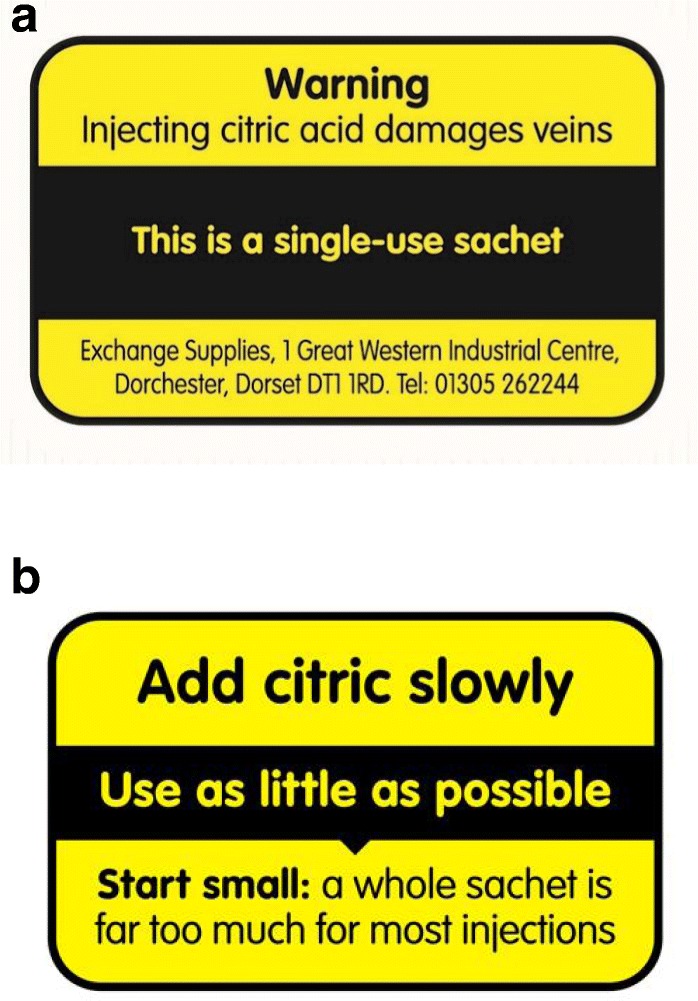
- Garden J Evaluation of the provision of single use citric acid sachets to injecting drug users 2003 Edinburgh Effective Interventions Unit, Scottish Executive Drug Misuse Research Programme, University of Paisley
- Finberg S Drug abuse: clarification please Pharm J 2000 264 7 883
- Exchange Supplies Drug paraphernalia and UK law 2019
- Public Health England, H.P.S., Public Health Wales, Public Health Agency Northern Ireland Shooting up: infections among people who inject drugs in the UK, 2014 2015 London Public Health England
- Harris M, Brathwaite R. Care & Prevent: public injecting, wounds and barriers to care, National Needle Exchange Forum Conference. Birmingham; 2018. http://www.nnef.org.uk/images/nnef2018.pdf.
- Bournemouth Borough Council Bournemouth Drug and Alcohol Commissioning Team Newsletter, in Harm minimisation: citric acid 2018 1 7
- Exchange Supplies How much citric? 2008
Cited by
The ASAM/AAAP Clinical Practice Guideline on the Management of Stimulant Use Disorder
(2024) · Journal of Addiction Medicine · doi:10.1097/adm.0000000000001299 · Cited by 78
Wright, T., Hope, V., Ciccarone, D., Lewer, D., Scott, J., & Harris, M. (2020) · PLOS ONE · doi:10.1371/journal.pone.0235350 · Cited by 59
Self-citationHarris, M., Scott, J., Hope, V., Wright, T., McGowan, C., & Ciccarone, D. (2020) · Harm Reduction Journal · doi:10.1186/s12954-020-00369-0 · Cited by 58
Self-citationHarris, M. (2020) · International Journal of Drug Policy · doi:10.1016/j.drugpo.2020.102829 · Cited by 48
“Modelling data for 2017 estimate 52,677 people who use crack but not opiates (Hay et al., 2019).”
InfluentialSelf-citationDoran, J., Harris, M., Hope, V. D., Wright, T., Edmundson, C., Sinka, K., & Heinsbroek, E. (2020) · Drug and Alcohol Dependence · doi:10.1016/j.drugalcdep.2020.108080 · Cited by 37
Self-citationSoft Tissue, Bone, and Joint Infections in People Who Inject Drugs
Saldana, C. S., Vyas, D. A., & Wurcel, A. G. (2020) · Infectious Disease Clinics of North America · doi:10.1016/j.idc.2020.06.007 · Cited by 51
Injecting drug use, the skin and vasculature
Robertson, R., Broers, B., & Harris, M. (2021) · Addiction · doi:10.1111/add.15283 · Cited by 42
Self-citationHarm Reduction Services to Prevent and Treat Infectious Diseases in People Who Use Drugs
Thakarar, K., Nenninger, K., & Agmas, W. (2020) · Infectious Disease Clinics of North America · doi:10.1016/j.idc.2020.06.013 · Cited by 47
Severe bacterial infections in people who inject drugs: the role of injection-related tissue damage
Hrycko, A., Mateu‐Gelabert, P., Ciervo, C., Linn-Walton, R., & Eckhardt, B. J. (2022) · Harm Reduction Journal · doi:10.1186/s12954-022-00624-6 · Cited by 49
Harm Reduction in Health Care Settings
Chan, C. A., Canver, B., McNeil, R., & Sue, K. L. (2021) · Medical Clinics of North America · doi:10.1016/j.mcna.2021.09.002 · Cited by 39
Lewer, D., Hope, V. D., Harris, M., Kelleher, M., Jewell, A., Pritchard, M., Strang, J., & Morley, K. I. (2020) · Drug and Alcohol Dependence · doi:10.1016/j.drugalcdep.2020.108057 · Cited by 31
Self-citationBrothers, T. D., Bonn, M., Lewer, D., Comeau, E. M., Kim, I., Webster, D., Hayward, A. C., & Harris, M. (2023) · Addiction · doi:10.1111/add.16257 · Cited by 35
Self-citationPredictors of skin and soft tissue infections among sample of rural residents who inject drugs
Baltes, A., Akhtar, W. Z., Birstler, J., Olson-Streed, H. K., Eagen, K., Seal, D. W., Westergaard, R. P., & Brown, R. (2020) · Harm Reduction Journal · doi:10.1186/s12954-020-00447-3 · Cited by 26
Harris, M., Holland, A., Lewer, D., Brown, M., Eastwood, N., Sutton, G., Sansom, B., Cruickshank, G., Bradbury, M., Guest, I., et al. (2022) · BMC Medicine · doi:10.1186/s12916-022-02351-y · Cited by 25
Self-citationDeep Vein Thrombosis in Intravenous Drug Users: An Invisible Global Health Burden
Jain, N., Avanthika, C., Singh, A., Jhaveri, S., la Hoz, I. D., Hassen, G., Camacho-Leon, G., & Carrera, K. G. (2021) · Cureus · doi:10.7759/cureus.18457 · Cited by 22
“Although knowledge of the exact mechanism behind this association is still limited, repeated trauma to the vein may be partly responsible along with the intrinsic properties of the injected substances and the acidity of some preparations [6-10].”
Conway, A., Read, P. J., Gilliver, R., McNaughton, T., Valerio, H., Cunningham, E. B., Henderson, C. R., Hadlow, B., Molloy, K., Doab, A., et al. (2022) · Viruses · doi:10.3390/v14112463 · Cited by 16
“A number of environmental and behavioural factors can provoke venous damage in people who inject drugs [29], making the venepuncture process arduous and painful [30].”
BackgroundBrothers, T. D., Lewer, D., Bonn, M., Webster, D., & Harris, M. (2021) · BMJ Open · doi:10.1136/bmjopen-2021-049924 · Cited by 16
Self-citationDoran, J., Hope, V. D., Wright, T., Scott, J., Ciccarone, D., & Harris, M. (2021) · Drug and Alcohol Review · doi:10.1111/dar.13389 · Cited by 12
“The latter question was included as it provides a strong indication of peripheral venous damage [30].”
Self-citationHigh prevalence of albuminuria amongst people who inject drugs: A cross-sectional study
McGowan, C. R., Wright, T., Nitsch, D., Lewer, D., Brathwaite, R., Scott, J., Hope, V. D., Ciccarone, D., Dunn, J., Gillmore, J. D., et al. (2020) · Scientific Reports · doi:10.1038/s41598-020-63748-4 · Cited by 10
Self-citationKesten, J. M., Hussey, D., Lord, C., Roberts, L., Bayliss, J., Erswell, H., Preston, A. S., Telfer, M., Scott, J., Harris, M., et al. (2023) · Harm Reduction Journal · doi:10.1186/s12954-023-00823-9 · Cited by 8
“…to handwashing facilities when injecting in public spaces [36, 41]; (ii) acidifier sachets containing more than is needed for a single injection [35]; (iii) limited access to sterile water for injection preparation [36]; (iv) lack of access to sterile injecting equipment [45]; and (v) riskier…”
BackgroundResultSelf-citationMacLeod, C. S., Nagy, J., Radley, A., Khan, F., Rae, N., Wilson, M. S. J., Suttie, S. A., Munro, E. N., Flett, M. M., Hussey, K. K., et al. (2024) · European Journal of Vascular and Endovascular Surgery · doi:10.1016/j.ejvs.2024.04.016 · Cited by 9
MacLeod, C. S., O'Neill, H., Shaalan, R., Nagy, J., Flett, M. M., Guthrie, G. J. K., McLeod, G., Suttie, S. A., & on behalf of the East of Scotland Vascular Network (ESVN) (2023) · International Journal of Surgery · doi:10.1097/js9.0000000000000367 · Cited by 7
Hepatitis A virus survival on drug paraphernalia
Medrzycki, M., Kamili, S., & Purdy, M. A. (2020) · Journal of Viral Hepatitis · doi:10.1111/jvh.13379 · Cited by 5
Clarke, S. E. D., Megerian, C. E., Suen, L. W., Wenger, L. D., Lambdin, B. H., Davidson, P. J., & Kral, A. H. (2022) · Drug and Alcohol Dependence · doi:10.1016/j.drugalcdep.2022.109686 · Cited by 5
Brothers, T. D., Lewer, D., Bonn, M., Kim, I., Comeau, E. M., Figgatt, M. C., Eger, W. H., Webster, D., Hayward, A. C., & Harris, M. (2024) · medRxiv · doi:10.1101/2024.09.20.24313898 · Cited by 6
Self-citationCeasar, R. C., Goldshear, J. L., Brothers, S., Wenger, L. D., Kral, A. H., & Bluthenthal, R. N. (2021) · International Journal of Drug Policy · doi:10.1016/j.drugpo.2021.103297 · Cited by 4
Bergström, M. A., Andersson, M., & Larsson, S. B. (2023) · Drug Testing and Analysis · doi:10.1002/dta.3614 · Cited by 3
Vuolo, M., Janssen, É., & Laffont, I. F. (2022) · Deviant Behavior · doi:10.1080/01639625.2022.2111671 · Cited by 5
“Relatedly, the practice of injecting crack cocaine has been noted in the literature (Cadet-Taïrou et al. 2021; Harris et al. 2019).”
BackgroundMacLeod, C. S., Radley, A., Strachan, D., Khan, F., Nagy, J., & Suttie, S. A. (2023) · BMJ Open · doi:10.1136/bmjopen-2022-070615 · Cited by 3
Pinpointing the additive: A peculiar skin manifestation among intravenous drug injectors
Munasinghe, B. M., Pranavan, S., & Mayorathan, U. (2023) · Sri Lanka Journal of Medicine · doi:10.4038/sljm.v32i1.359 · Cited by 1
Pavarin, R. M. (2024) · Epidemiology Biostatistics and Public Health · doi:10.54103/2282-0930/22517 · Cited by 1
“…services following problems caused by crack use, many of whom reported concomitant heroin and alcohol use, and results confirmed what has been reported in the literature concerning the characteristics [3, 5, 6, 20] and the elevated mortality risk connected to crack cocaine use [18, 21, 22, 23, 25].”
BackgroundResultPlatt, L., Harris, M., & Sweeney, S. (2020) · Addiction · doi:10.1111/add.14918 · Cited by 1
Self-citationThe space to heal heroin addiction: The psychoanalytic case for harm reduction
Mosdell, C., & Mongiello, M. (2021) · International Journal of Applied Psychoanalytic Studies · doi:10.1002/aps.1693
Commentary on Andersen et al .: Time for drug checking for heroin users?
Scott, J., & Henderson, G. (2021) · Addiction · doi:10.1111/add.15610
Self-citationWhitten, C., Randell, S., Denic, N., & Ibrahim, K. (2025) · World Journal of Public Health · doi:10.11648/j.wjph.20251002.15
MacLeod, C. S., Strachan, D., Radley, A., Khan, F., Nagy, J., & Suttie, S. A. (2025) · European Journal of Vascular and Endovascular Surgery · doi:10.1016/j.ejvs.2025.06.030
Pavarin, R. M. (2025) · Journal of Immigrant and Minority Health · doi:10.1007/s10903-025-01775-x
Hagene, H. S., Clausen, T., & Gjersing, L. (2026) · Journal of Substance Use and Addiction Treatment · doi:10.1016/j.josat.2026.209999
When life gives you limes… it gives you Candida: a case of lime-contaminated IV injection
Lopez, P., Lama, T., Kodan, P., & Sivapalan, V. (2026) · Oxford Medical Case Reports · doi:10.1093/omcr/omag077
“These agents, although inexpensive and readily available, are non-sterile and often contaminated with environmental microorganisms [12, 13].”
InfluentialThe Groin and People Who Inject Drugs—Management and Pitfalls
Jackman, J., Guthrie, G. J. K., & Suttie, S. A. (2026) · British Journal of Hospital Medicine · doi:10.31083/bjhm54135
What’s in your heroin? The importance of drug composition monitoring in the synthetic opioid Era
Balcaen, M., Deconinck, E., Lievens, S., Canfyn, M., Campenhout, P. V., & Gremeaux, L. (2026) · Harm Reduction Journal · doi:10.1186/s12954-026-01502-1
“The composition of heroin is highly unpredictable, and its consumption entails substantial uncertainty regarding potency and adulteration, increasing the risk of severe and unforeseen health consequences [1].”
Metadata
- Authors
- Harris, M., Scott, J., Wright, T., Brathwaite, R., Ciccarone, D., & Hope, V.
- Affiliations
- London School of Hygiene & Tropical Medicine (GB)
- University of Bath (GB)
- King's College London (GB)
- University of California, San Francisco (US)
- Liverpool John Moores University (GB)
- Corresponding author
- Harris, Magdalena
- Venue
- Harm Reduction Journal
- Published
- 2019-11-13
- Volume
- 16
- Issue
- 1
- Pages
- 60-60
- ISSN
- 1477-7517 (ISSN-L)
- PMC
- PMC6854679
- OpenAlex
- W2988659282
- Semantic Scholar
- 039588c9ecf3efe0a29e76fdd1022a7a620df43b
- Cited by
- 41
- References
- 31
- Citations by year
- 2026: 4 · 2025: 3 · 2024: 4 · 2023: 6 · 2022: 5 · 2021: 7 · 2020: 12
- FWCI
- 4.57
- Type
- journal article
- Language
- en
- Open access
- gold
- doi.org
- Licence
- cc-by
- creativecommons.org/licenses/by/4.0/ (tdm)
- creativecommons.org/licenses/by/4.0/ (vor)
- Locations
- Harm Reduction Journal (publishedVersion, cc-by)
- PubMed Central (publishedVersion, cc-by)
- PubMed (publishedVersion)
- Liverpool John Moores University (acceptedVersion)
- LSHTM Research Online (London School of Hygiene and Tropical Medicine) (acceptedVersion)
- DOAJ (DOAJ: Directory of Open Access Journals) (submittedVersion)
- eScholarship (California Digital Library) (submittedVersion)
- eScholarship (California Digital Library) (submittedVersion, cc-by)
- Bristol Research (University of Bristol) (submittedVersion)
- Funders
- National Institute for Health Research (CDF-2016-09-014)
- Topics
- Health Sciences › Medicine › Epidemiology › HIV, Drug Use, Sexual Risk
- Health Sciences › Medicine › Epidemiology › Substance Abuse Treatment and Outcomes
- Health Sciences › Medicine › Emergency Medicine › Intramuscular injections and effects
- Keywords
- people who inject drugs, heroin, crack cocaine, skin and soft tissue infections, deep vein thrombosis, citric acid, London
- MeSH terms
- Cicatrix, Heroin Dependence, Humans, Hydrogen-Ion Concentration, London, Risk Factors, Skin Diseases, Infectious, Veins, Substance Abuse, Intravenous, Crack Cocaine, Soft Tissue Infections, Citric Acid, Cocaine-Related Disorders, Harm Reduction
About these checks
Registry, retraction, Cites and statistics results are computed, not judged, with one exception: a printed reference that no index lists is read once by a model before it counts as a citation error. Claims are extracted by a model and kept only when their quote appears verbatim in the text; each cited source is then checked, with a model’s help, for whether it says what the claim relies on. Those verdicts can be wrong — read the claim’s quote and the cited source before relying on one.
Statistics and arithmetic are recomputed, not judged.
Confidence bands are shown only for fields calibrated on our annotated test set. None is calibrated yet, so no band is shown.
What counts as a claim ›How we measure confidence ›How we check this ›
Are you an author, or do you see a problem with this page? Request a review
Data sources
Bibliographic data: Semantic Scholar, OpenAlex, Crossref.
Contains information from the Semantic Scholar Academic Graph Datasets, made available under the ODC Attribution License (ODC-BY 1.0).
Semantic Scholar’s data is described in: Kinney, R., et al. (2023). The Semantic Scholar Open Data Platform. arXiv:2301.10140.
