

The DOI matches its Crossref record; 78 of the 91 references it cites were found in a registry or an index.
Quality of life assessment instruments for adults: a systematic review of population-based studies
Open accessAbstract
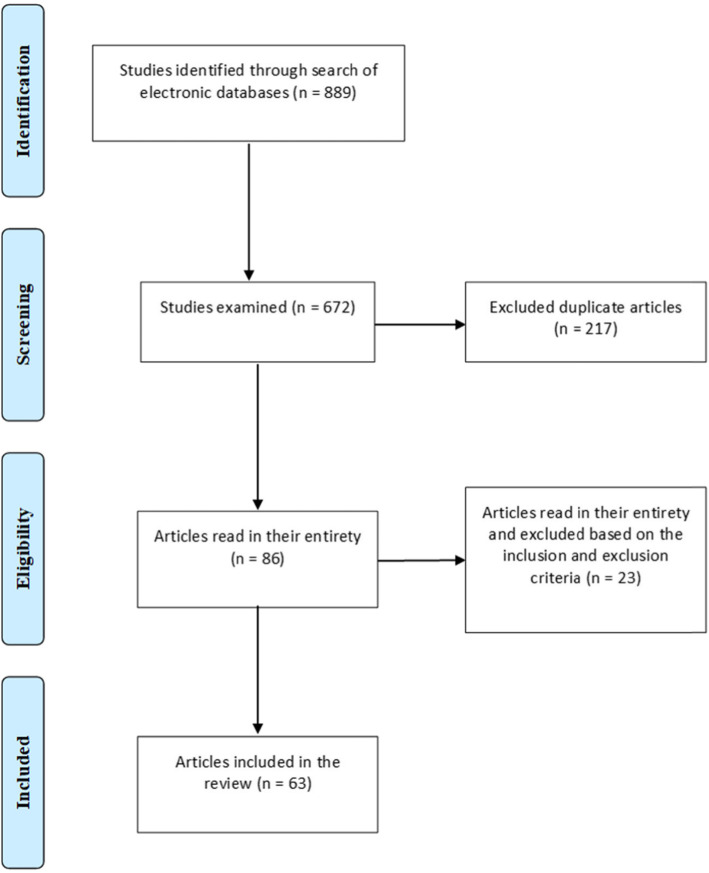
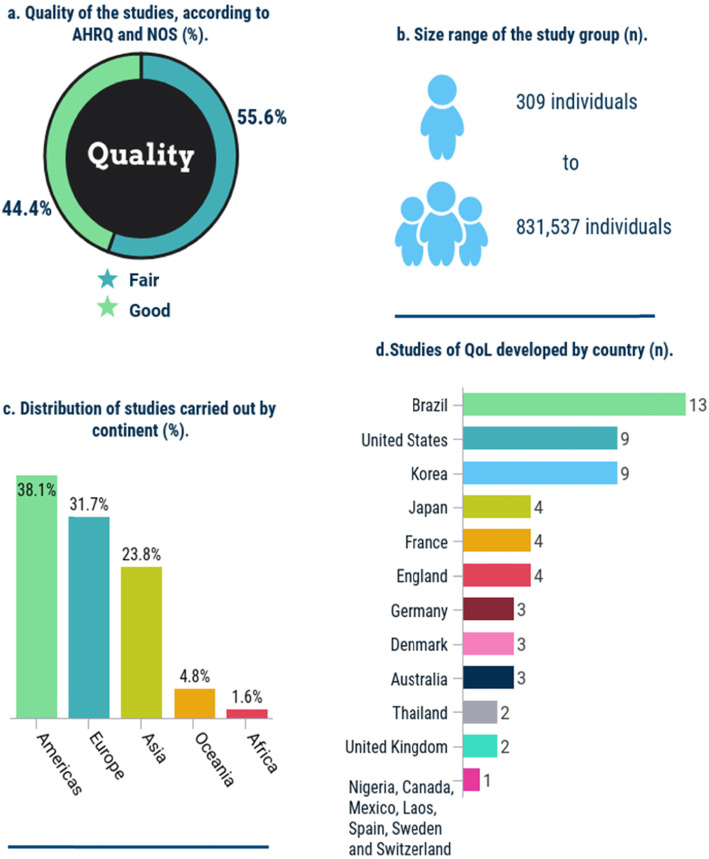
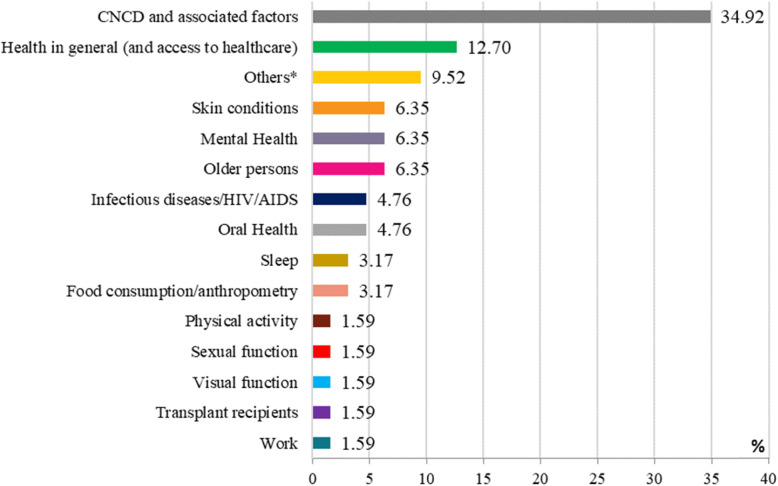
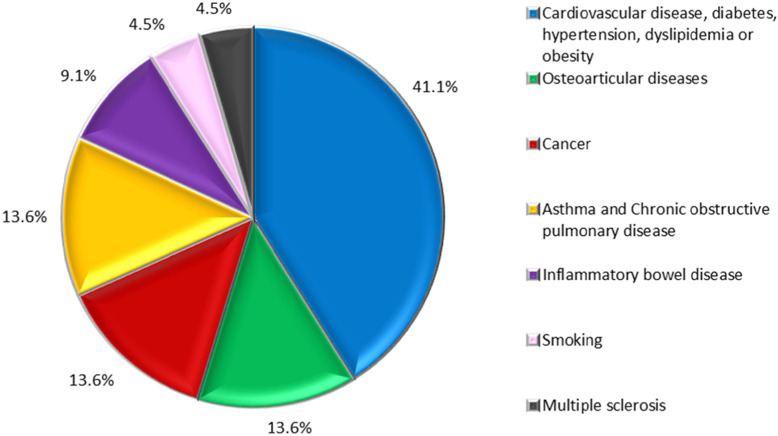
Background: Against a backdrop of population aging and improving survival rates for chronic noncommunicable diseases (CNCD), researchers are placing growing emphasis on health-related quality of life (HRQoL). The aim of this study was to identify the QoL assessment instruments used in population-based studies with adults conducted around the world. Methods: A systematic review of original research published in all languages between 2008 and 2018 was conducted. Systematic reviews and meta-analyses were excluded. Results: Sixty-three articles (38.1% conducted in the Americas) fitted the eligibility criteria. Based on the AHRQ checklist for cross-sectional studies and the Newcastle-Ottawa scale for cohort studies, methodological quality was shown to be fair in the majority of studies (55.6%) and good in 44.4%. The country with the highest number of publications was Brazil (20.6%). Twelve types of generic instruments and 11 specific instruments were identified. The generic instrument SF-36 was the most frequently used measure (33.3% of studies). In-home interviewing was exclusively used by 47.6% of the studies, while 39 studies (61.9%) reported the use of self-administered questionnaires. Over two-thirds of the studies (34.9%) used questionnaires to investigate the association between chronic diseases and/or associated factors. Conclusions: It was concluded that the wide range of instruments and modes of questionnaire administration used by the studies may hinder comparisons between population groups with the same characteristics or needs. There is a lack of research on QoL and the factors affecting productive capacity. Studies of QoL in older persons should focus not only on the effects of disease and treatment, but also on the determinants of active aging and actions designed to promote it. Further research is recommended to determine which QoL instruments are best suited for population-based studies.
Overview
The claims and statistics of this paper haven’t been checked yet.
Run the check — free, no account needed. It reads the open-access text and checks the sources it cites.
Integrity signals
Registry
Cites
Statistics
Figures
Verification
Claims the paper makes
The claims and statistics of this paper haven’t been checked yet.
Run the check — free, no account needed. It reads the open-access text and checks the sources it cites.
Claims other papers make about this one
Each is checked against this paper’s own text: does it say what the citing paper says it does?
The cited source says what the claim attributes to it.
In the citing paper
“Measures of quality of life are praised to be multi-dimensional and broadly applicable, but are often criticized for not being sensitive to specific aspects of quality of life for different health conditions (Pequeno et al., 2020).”
From A Systematic Review and Meta-Analysis Exploring Effects of Third-Wave Psychological Therapies on Hearing-Related Distress, Depression, Anxiety, and Quality of Life in People With Audiological Problems. (2022) · cites this paper as Pequeno et al., 2020
Self-check
Percentages, sums and reported differences re-computed from the paper’s own numbers.
The self-check needs the paper’s full text.
Citations
Cites
van der Togt, H. (2003) · Journal of Network and Computer Applications · doi:10.1016/s1084-8045(02)00061-9 · Cited by 302,642
PRISMA-P Group, Moher, D., Shamseer, L., Clarke, M., Ghersi, D., Liberati, A., Petticrew, M., Shekelle, P., & Stewart, L. A. (2015) · Systematic Reviews · doi:10.1186/2046-4053-4-1 · Cited by 26,223
The Whoqol Group (1998) · Social Science & Medicine · doi:10.1016/s0277-9536(98)00009-4 · Cited by 3,802
Measuring Health-Related Quality of Life
Guyatt, G., Feeny, D., & Patrick, D. (1993) · Annals of Internal Medicine · doi:10.7326/0003-4819-118-8-199304150-00009 · Cited by 2,168
Conceptual Model of Health‐Related Quality of Life
Ferrans, C. E., Zerwic, J. J., Wilbur, J. E., & Larson, J. L. (2005) · Journal of Nursing Scholarship · doi:10.1111/j.1547-5069.2005.00058.x · Cited by 1,069
A Comparative Review of Generic Quality-of-Life Instruments
Coons, S. J., Rao, S. R., Keininger, D. L., & Hays, R. D. (2000) · PharmacoEconomics · doi:10.2165/00019053-200017010-00002 · Cited by 834
Physical activity and health related quality of life
Anokye, N., Trueman, P., Green, C., Pavey, T., & Taylor, R. S. (2012) · BMC Public Health · doi:10.1186/1471-2458-12-624 · Cited by 379
Chronic pain and other sequelae in long-term breast cancer survivors: nationwide survey in Denmark.
Peuckmann, V., Ekholm, O., Rasmussen, N. K., Groenvold, M., Christiansen, P., Møller, S., Eriksen, J., & Sjøgren, P. (2009) · European Journal of Pain · doi:10.1016/j.ejpain.2008.05.015 · Cited by 264
Muehlhausen, W., Doll, H., Quadri, N., Fordham, B., O'Donohoe, P., Dogar, N., & Wild, D. (2015) · Health and Quality of Life Outcomes · doi:10.1186/s12955-015-0362-x · Cited by 259
Mújica-Mota, R., Roberts, M. J., Abel, G., Elliott, M. N., Lyratzopoulos, G., Roland, M. O., & Campbell, J. (2014) · Quality of Life Research · doi:10.1007/s11136-014-0820-7 · Cited by 244
Research works printed but not linked: 7
- AHRQ. Agency for Healthcare Research and Quality. Newcastle-Ottawa Quality Assessment Form for Cohort Studies. Available at: https://www.ncbi.nlm.nih.gov/books/NBK115843/bin/appe-fm3.pdf.
- Cichy KE, et al. Non-vocational health-related correlates of quality of life for older adults living with multiple sclerosis. J Rehabil. 2016;82(3):36–44.
- El Khoury AC, Vietri J, Prajapati G. Health-related quality of life in patients with hepatitis C virus infection in Brazil. Rev Panam Salud Publica. 2014;35(3):200–6.
- Pavão A, Ploubidis G, Werneck G, Campos M, Werneck G, Rodrigues Campos M. Racial Discrimination and health in Brazil: evidence from a population-based survey. Ethn Dis. 2012;22:353–9.
- Kim Y, Cho W-K. Factors associated with successful smoking cessation in Korean adult males: findings from a National Survey. Iran J Public Health. 2014;43(11):1486–96.
- Lima MG. Barros, M.B.d.A. and Alves MCGP, Rio. Sllep Duration And Health Status Self-Assessment in the elderly 2012;28(9):1674–1684. · DOI
- Gomes JRAA, Hamann EM, Gutierrez MMU. Aplicação do WHOQOL-BREF em segmento da comunidade como subsídio para ações de promoção da saúde. Rev Bras Epidemiol. 2014:495–516. · DOI
Cited by
Sorted by citations
Items 201–228 of 228
Patient-Centered Outcomes in Non-Melanoma Skin Cancer Management: A Comprehensive Review
Udupa, M., Roberge, D., Huang, H.-Z., & Pehr, K. (2025) · Journal of Cutaneous Medicine and Surgery · doi:10.1177/12034754251375044
Amza, M., Hamoud, B. H., Sima, R., Gorecki, G.-P., Poenaru, M. O., Diaconescu, A.-S., Gică, N., Constantin, A.-A., Popescu, M., & Pleș, L. (2025) · Journal of Clinical Medicine · doi:10.3390/jcm14176281 · Cited by 2
“Quality of life depends on a series of factors such as psychological state, physical health, social relationships, level of autonomy, and professional activities [1].”
[Evaluation of quality of life of pregnant adolescents: a scoping review].
Rodrigues, I., Pinheiro, P. N. D. C., Lima, F. E. T., Rebouças, C., de Carvalho, A. R. D. F. A., Maia, I. C. V. D. L., & Ribeiro, S. G. (2025) · Ciência & Saúde Coletiva · doi:10.1590/1413-81232025308.03112024
Hassan, M. B., Goswami, D. K., Bai, P., Nenwani, M., Obaidulla, Z., & Karim, A. (2025) · International Urology and Nephrology · doi:10.1007/s11255-025-04688-8
Virvescu, D., Forna, D. A., Tudorici, T., Bârlean, M. C., Budala, D., Tărăboanță-Gamen, A., & Bida, F. C. (2025) · Romanian Journal of Oral Rehabilitation · doi:10.62610/rjor.2025.1.17.77
Unanue-Arza, S., Hernon, O., Lurueña‐Rodríguez, S., Duggan, C., Armenteros‐Yeguas, V., & Carr, P. J. (2025) · Enfermería Clínica (English Edition) · doi:10.1016/j.enfcle.2025.102145
Turkish validation of the Hernia-Specific Quality of Life Assessment Instrument
Gülmez, R., Dönder, Y., Çarkıt, S., & Sevim, Y. (2025) · Marmara Medical Journal · doi:10.5472/marumj.1627901
Quality of Life and the Role of Gender in Patients With Non-Melanoma Skin Cancer in Greece
Dareioti, N. S., Lampropoulos, C. Τ., Stavros, B. B., Georgiou, S., Gourzis, P., & Mastronikolis, N. (2025) · Cureus · doi:10.7759/cureus.77195
“To measure QoL, several tools have been created, which try to capture and evaluate it both before and after treatment [8].”
Oral Quality of Life in Tobacco Users: Need of a Newer Perspective
Aditya, A. (2025) · Journal of Indian Academy of Oral Medicine and Radiology · doi:10.4103/jiaomr.jiaomr_23_25
Unanue-Arza, S., Hernon, O., Lurueña‐Rodríguez, S., Duggan, C., Armenteros‐Yeguas, V., & Carr, P. J. (2024) · Enfermería Clínica · doi:10.1016/j.enfcli.2024.08.005
Tools for Assessing Quality of Life in People with Stroke-Induced Aphasia: A Literature Review
Babaei, Z., & Yadegari, F. (2024) · Folia Phoniatrica et Logopaedica · doi:10.1159/000541400
Mayo, N. E., Auais, M. A., Barclay, R., Branin, J. J., Dawes, H., Korfage, I. J., Sawchuk, K., Tal, E., White, C. L., Ayoubi, Z., et al. (2024) · Quality of Life Research · doi:10.1007/s11136-024-03714-z · Cited by 1
Self-assessment of health in the elderly population
Dantas, E. H. M., Santos, A. C. S., Moura, B. C. F., Barreto, B. S., Dantas, K. B. A., de Oliveira, L. A. R., da Costa, L. F. G. R., Prazeres, N. C. S. D., & Coelho, V. K. V. (2024) · Cuerpo Cultura y Movimiento · doi:10.15332/2422474x.9893
“…of their living conditions within their cultural context and value system, taking into consideration their goals, expectations, and concerns, as well as being directly influenced by the person's physical and psychological state (Pequeno et al, 2020; World Health Organization [WHO], 1998).”
BackgroundAlekseeva, А. P. (2024) · Continuing Medical Education and Science · doi:10.64566/2949-6292-2024-19-1-7-23
Değerli, M. N. Ö., Altuntaş, O., & Bumi̇n, G. (2024) · British Journal of Occupational Therapy · doi:10.1177/03080226241249283
“These assessments are based only on general health, diseases, sleep, successful aging, and social relationships (Pequeno et al., 2020).”
M'ibui, G., Karani, C. K., Nkonge, A. N., & Ireri, E. M. (2024) · African Journal of Science Technology and Social Sciences · doi:10.58506/ajstss.v2i2.130
Pietraszek, M., Greczka, G., Bartochowska, A., & Gawęcki, W. (2024) · Otolaryngologia polska = The Polish otolaryngology · doi:10.5604/01.3001.0054.3355
Antibiotic prophylaxis for leptospirosis
Win, T. Z., Perinpanathan, T., Mukadi, P., Smith, C. E., Edwards, T., Han, S. M., Maung, H. T., Brett‐Major, D. M., & Lee, N. (2024) · Cochrane Database of Systematic Reviews · doi:10.1002/14651858.cd014959.pub2 · Cited by 15
Diasamidze, E. D., & Діасамідзе, М. Е. (2023) · Ukrainian Dental Almanac · doi:10.31718/2409-0255.4.2023.13
Weerapakorn, W., Chintavalakorn, C., Kantagowit, P., Phitakwongroj, T., Ratanalert, W., Angspatt, A., Phungrasmi, P., Iamphongsai, S., Promniyom, P., Phanuphak, N., et al. (2023) · European journal of plastic surgery · doi:10.1007/s00238-023-02140-7
“Globally used and validated instruments for evaluating health-related quality of life are SF-36 and WHOQOL-100 [35].”
MethodRavindra, B., Chonari, T. A., Kumar, B. P. S., Dahim, M., & Mohan, A. (2023) · Journal of Current Research in Scientific Medicine · doi:10.4103/jcrsm.jcrsm_61_23 · Cited by 1
Observational Study of Pediatric Cochlear Implant Recipients: Two-year Follow-up Outcomes
Cesur, S., Çiprut, A. A., & Terlemez, Ş. (2023) · Medeniyet Medical Journal · doi:10.4274/mmj.galenos.2023.35305 · Cited by 5
Efectos del ejercicio físico sobre la calidad de vida en personas mayores. Revisión de la literatura
Carrasco, C. V., & Pizarro-Mena, R. A. (2022) · Memorias del Instituto de Investigaciones en Ciencias de la Salud · doi:10.18004/mem.iics/1812-9528/2022.020.01.118 · Cited by 3
“Dentro de los más utilizados se encuentran la Evaluación de la CV de la Organización Mundial de la Salud (WHOQOL), el Formulario corto de 36 elementos del Estudio de resultados médicos (SF-36) y la Encuesta de salud de formato corto de 12 elementos (SF-12) (12) .”
BackgroundThe Effects of COVID-19 On The Quality of Life Among a Sample of The General Lebanese PopulationPreprint
Haddad, C., Malhab, S. B., Sacre, H., THEBIAN, R., Salame, H., Hleyhel, M., Hamieh, H., Chahine, N. B., Hoteit, M., Souheil, A. A., et al. (2021) · Research Square · doi:10.21203/rs.3.rs-1070681/v1
Assessment of the quality of life of patients with cancer: Current state of the problem
Alekseeva, A. P. (2021) · Russian Journal of Oncology · doi:10.17816/onco106648
Commentary: Quality of Life is Remembered Long After the Surgery is Forgotten.
Hassanabad, A., Tam, D. Y., & Ouzounian, M. (2021) · Seminars in Thoracic and Cardiovascular Surgery · doi:10.1053/j.semtcvs.2021.04.019
de Paula, T., Alcântara-Silva, T. R. D. M., Citon, L. F., & Porto, C. (2021) · Research Square · doi:10.21203/rs.3.rs-215111/v1
“Still, the adequate selection of the evaluation instruments is of remarkable recognition and value, preferably those speci c to the context under analysis, as these can produce results that are closer and more reliable to the reality under study (23).”
BackgroundLuciano, C., & Morales, I. (2023) · Asian Journal of Periodontics and Orthodontics · doi:10.51847/6vaiwdzfyx
Metadata
- Authors
- Pequeno, N. P. F., Cabral, N. L. D. A., Marchioni, D. M., Lima, S. C. V. C., & Lyra, C. D. O.
- Affiliations
- Universidade Federal do Rio Grande do Norte (BR)
- Universidade de São Paulo (BR)
- Corresponding author
- Pequeno, Nila Patrícia Freire
- ORCID
- Venue
- Health and Quality of Life Outcomes
- Published
- 2020-06-30
- Volume
- 18
- Issue
- 1
- Pages
- 208-208
- ISSN
- 1477-7525 (ISSN-L)
- PMC
- PMC7329518
- OpenAlex
- W3039908902
- Cited by
- 252
- References
- 91
- Citations by year
- 2026: 30 · 2025: 43 · 2024: 60 · 2023: 50 · 2022: 44 · 2021: 23 · 2020: 2
- FWCI
- 4.84
- Type
- journal article
- Language
- en
- Open access
- gold
- doi.org
- Locations
- Health and Quality of Life Outcomes (publishedVersion, cc-by)
- PubMed Central (publishedVersion, cc-by)
- PubMed (publishedVersion)
- LA Referencia (Red Federada de Repositorios Institucionales de Publicaciones Científicas) (publishedVersion, cc-by)
- LA Referencia (Red Federada de Repositorios Institucionales de Publicaciones Científicas) (publishedVersion, other-oa)
- DOAJ (DOAJ: Directory of Open Access Journals) (submittedVersion, cc-by-sa)
- Funders
- Postgraduate Program in Public Health at Federal University of Rio Grande do Norte (23077.014305/2019-29)
- Coordenação de Aperfeiçoamento de Pessoal de Nível Superior (Finance Code 001)
- Topics
- Social Sciences › Economics, Econometrics and Finance › Economics and Econometrics › Health Systems, Economic Evaluations, Quality of Life
- Health Sciences › Nursing › Research and Theory › Health Education and Validation
- Health Sciences › Medicine › Public Health, Environmental and Occupational Health › Aging, Health, and Disability
- Keywords
- health-related quality of life, quality of life instruments, population-based study, adults, SF-36, questionnaire administration mode, non-communicable diseases, active ageing, older adults, methodological quality
- MeSH terms
- Adult, Aged, Aged, 80 and over, Cross-Sectional Studies, Female, Humans, Male, Psychometrics, Quality of Life, Surveys and Questionnaires
About these checks
Registry, retraction, Cites and statistics results are computed, not judged, with one exception: a printed reference that no index lists is read once by a model before it counts as a citation error. Claims are extracted by a model and kept only when their quote appears verbatim in the text; each cited source is then checked, with a model’s help, for whether it says what the claim relies on. Those verdicts can be wrong — read the claim’s quote and the cited source before relying on one.
Statistics and arithmetic are recomputed, not judged.
Confidence bands are shown only for fields calibrated on our annotated test set. None is calibrated yet, so no band is shown.
What counts as a claim ›How we measure confidence ›How we check this ›
Are you an author, or do you see a problem with this page? Request a review
