

Measuring the resilience of health systems in low- and middle-income countries: a focus on community resilience
Open accessThe DOI matches its Crossref record; 39 of the 39 references it cites were found in a registry or an index.
Abstract
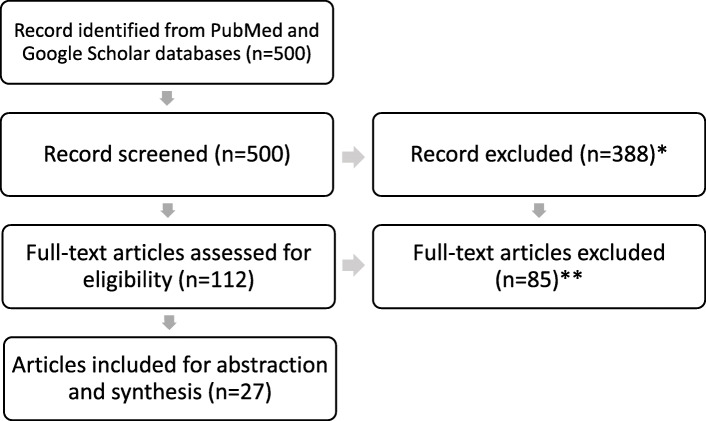
The concept of community resilience has gained considerable attention in the global health discussions since the Ebola outbreak of West Africa in 2014–2015. However, there are no measurement models to quantify community resilience. Without measurement models, it is unclear how to test strategies for building community resilience or to describe their likely intended and unintended results and their impact on health outcomes. We propose a measurement model for community resilience with relevant constructs and indicators to measure these constructs. We conducted a scoping review, systematically searching, screening and selecting relevant articles from two bibliographic databases (PUBMED and Google Scholar) for literature using search terms such as “resilience”, “community resilience” and “health systems resilience”. We screened 500 papers, then completed a full text review of 112 identified as relevant based on their title and abstract. A total of 27 papers and reports were retained for analysis. We then aggregated and synthesised the various definitions of community resilience and the frameworks for understanding these definitions. We identified key constructs from these frameworks and organised these constructs into domains and sub-domains. We proposed indicators to capture aspects of these domains and sub-domains and operationalised these indicators as a measurement model for quantifying community resilience in health systems. We propose a model with 20 indicators to assess community resilience. These indicators tap into various constructs from different theoretical frameworks of community resilience and are useful for assessing the level of knowledge, financial resources, and human, social and physical capital that are needed (or lacking) to respond to any types of shock, including health shock at the community level. This is an initial attempt to describe a multilevel measurement model for quantifying community resilience. This model will help to guide the development and testing of strategies for strengthening community resilience and will require further work to assess its relevance, reliability and validity in different LMIC settings.
Overview
The claims and statistics of this paper haven’t been checked yet.
Free: it reads the open-access text and checks the first 5 claims that cite a source we can check. Create a free account to check every claim.
Integrity signals
Registry
Cites
Statistics
Figures
Verification
Claims the paper makes
The claims and statistics of this paper haven’t been checked yet.
Free: it reads the open-access text and checks the first 5 claims that cite a source we can check. Create a free account to check every claim.
Claims other papers make about this one
Each is checked against this paper’s own text: does it say what the citing paper says it does?
The check wasn’t confident either way, so it gives no verdict — never disputed.
In the citing paper
“Traditional scales, such as the Connor–Davidson resilience scale126, were developed in high-income countries and emphasize Western constructs like self-efficacy and individual coping125.”
From Resilience and brain health in global populations (2025) · cites this paper as [125]
Experimental — accuracy not yet measured
Self-check
Percentages, sums and reported differences re-computed from the paper’s own numbers.
The self-check needs the paper’s full text.
Citations
Cites
A typology of reviews: an analysis of 14 review types and associated methodologies
Grant, M. J., & Booth, A. (2009) · Health Information & Libraries Journal · doi:10.1111/j.1471-1842.2009.00848.x · Cited by 10,817
Community Resilience as a Metaphor, Theory, Set of Capacities, and Strategy for Disaster Readiness
Norris, F. H., Stevens, S. P., Pfefferbaum, B., Wyche, K. F., & Pfefferbaum, R. L. (2008) · American Journal of Community Psychology · doi:10.1007/s10464-007-9156-6 · Cited by 5,476
A Framework to Quantitatively Assess and Enhance the Seismic Resilience of Communities
Bruneau, M., Chang, S. E., Eguchi, R. T., Lee, G. C., O'Rourke, T. D., Reinhorn, A. M., Shinozuka, M., Tierney, K., Wallace, W. A., & von Winterfeldt, D. (2003) · Earthquake Spectra · doi:10.1193/1.1623497 · Cited by 5,440
Social and ecological resilience: are they related?
Adger, W. N. (2000) · Progress in Human Geography · doi:10.1191/030913200701540465 · Cited by 4,825
Navigating Social-Ecological Systems: Building Resilience for Complexity and Change
Berkes, F., Colding, J., & Folke, C. (2008) · Cited by 2,793
A metric and frameworks for resilience analysis of engineered and infrastructure systems
Francis, R., & Bekera, B. (2014) · Reliability Engineering & System Safety · doi:10.1016/j.ress.2013.07.004 · Cited by 1,152
Navigating Social-Ecological Systems: Building Resilience for Complexity and Change
(2001) · Cambridge University Press eBooks · doi:10.1017/cbo9780511541957 · Cited by 1,059
Defining and measuring economic resilience to disasters
Rose, A. (2004) · Disaster Prevention and Management: An International Journal · doi:10.1108/09653560410556528 · Cited by 856
What is a resilient health system? Lessons from Ebola
Kruk, M. E., Myers, M., Varpilah, S. T., & Dahn, B. T. (2015) · The Lancet · doi:10.1016/s0140-6736(15)60755-3 · Cited by 828
Disruptions in Place Attachment
Brown, B. B., & Perkins, D. D. (1992) · Place Attachment · doi:10.1007/978-1-4684-8753-4_13 · Cited by 762
Governance and Capacity to Manage Resilience of Health Systems: Towards a New Conceptual Framework
Blanchet, K., Nam, S. L., Ramalingam, B., & Pozo-Martin, F. (2017) · International Journal of Health Policy and Management · doi:10.15171/ijhpm.2017.36 · Cited by 500
Patel, S. S., Rogers, M. B., Amlôt, R., & Rubin, G. J. (2017) · PubMed · doi:10.1371/currents.dis.db775aff25efc5ac4f0660ad9c9f7db2 · Cited by 347 · cited 4×
“[19] propose breaking down the concept of community resilience into nine different elements that overlapped the adaptive capacities by Norris et al.”
BackgroundInfluentialBuilding resilient health systems: a proposal for a resilience index
Kruk, M. E., Ling, E. J., Bitton, A., Cammett, M., Cavanaugh, K., Chopra, M., el-Jardali, F., Macauley, R. J., Muraguri, M. K., Konuma, S., et al. (2017) · BMJ · doi:10.1136/bmj.j2323 · Cited by 341
Towards an understanding of resilience: responding to health systems shocks
Hanefeld, J., Mayhew, S., Legido-Quigley, H., Martineau, F., Karanikolos, M., Blanchet, K., Liverani, M., Yei Mokuwa, E., McKay, G., & Balabanova, D. (2018) · Health Policy and Planning · doi:10.1093/heapol/czx183 · Cited by 282
Community Disaster Resilience: a Systematic Review on Assessment Models and Tools
Ostadtaghizadeh, A., Ardalan, A., Paton, D., Jabbari, H., & Khankeh, H. R. (2015) · PLoS Currents · doi:10.1371/currents.dis.f224ef8efbdfcf1d508dd0de4d8210ed · Cited by 253
Gilson, L., Barasa, E., Nxumalo, N., Cleary, S., Goudge, J., Molyneux, S., Tsofa, B., & Lehmann, U. (2017) · BMJ Global Health · doi:10.1136/bmjgh-2016-000224 · Cited by 251
Health-system resilience: reflections on the Ebola crisis in western Africa
Kieny, M.-P., Evans, D. B., Schmets, G., & Kadandale, S. (2014) · Bulletin of the World Health Organization · doi:10.2471/blt.14.149278 · Cited by 243
A measurement of community disaster resilience in Korea
Yoon, D. K., Kang, J. E., & Brody, S. D. (2016) · Journal of Environmental Planning and Management · doi:10.1080/09640568.2015.1016142 · Cited by 241
Resilience thinking in health protection
Castleden, M., McKee, M., Murray, V., & Leonardi, G. (2011) · Journal of Public Health · doi:10.1093/pubmed/fdr027 · Cited by 239
Barasa, E. W., Cloete, K., & Gilson, L. (2017) · Health Policy and Planning · doi:10.1093/heapol/czx118 · Cited by 227
Community resilience and the impact of stress: Adult response to Israel's withdrawal from Lebanon
Kimhi, S., & Shamai, M. (2004) · Journal of Community Psychology · doi:10.1002/jcop.20012 · Cited by 218
Building Resilience to Mass Trauma Events
Pfefferbaum, B. J., Reissman, D. B., Pfefferbaum, R. L., Klomp, R. W., & Gurwitch, R. H. (2007) · Handbook of Injury and Violence Prevention · doi:10.1007/978-0-387-29457-5_19 · Cited by 208
Ahmed, R., Seedat, M., van Niekerk, A., & Bulbulia, S. (2004) · South African Journal of Psychology · doi:10.1177/008124630403400304 · Cited by 200
Developing Community Resilience as a Foundation for Effective Disaster Recovery
Coles, E., & Buckle, P. D. (2004) · Australian Journal of Emergency Management · Cited by 199
Community Resilience to Volcanic Hazard Consequences
Paton, D., Millar, M., & Johnston, D. (2001) · Natural Hazards · doi:10.1023/a:1011882106373 · Cited by 197
Community Resilience Interventions: Participatory, Assessment-Based, Action-Oriented Processes
Pfefferbaum, B., Pfefferbaum, R. L., & Van Horn, R. L. (2015) · American Behavioral Scientist · doi:10.1177/0002764214550298 · Cited by 150
Alonge, O., Sonkarlay, S., Gwaikolo, W., Fahim, C., Cooper, J. L., & Peters, D. H. (2019) · Global Health Action · doi:10.1080/16549716.2019.1662682 · Cited by 146
Self-citationStawicki, S. P., Kalra, S., Kelkar, D. S., Galwankar, S., Papadimos, T. J., Arquilla, B., Hoey, B., Sharpe, R., Sabol, D. M., & Jahre, J. A. (2014) · Journal of Global Infectious Diseases · doi:10.4103/0974-777x.145247 · Cited by 134
Conceptualizing community resilience to natural hazards – the emBRACE framework
Kruse, S., Abeling, T., Deeming, H., Fordham, M., Forrester, J. M., Jülich, S., Karanci, A. N., Kuhlicke, C., Pelling, M., Pedoth, L., et al. (2017) · Natural hazards and earth system sciences · doi:10.5194/nhess-17-2321-2017 · Cited by 128
Community Resilience: Lessons Derived from Gilo Under Fire
Ganor, M., & Ben-Lavy, Y. (2003) · Journal of Jewish communal service · Cited by 115
Lemyre, L., Clément, M., Corneil, W., Craig, L. V., Boutette, P., Tyshenko, M. G., Karyakina, N. A., Clarke, R., & Krewski, D. R. (2005) · Biosecurity and Bioterrorism Biodefense Strategy Practice and Science · doi:10.1089/bsp.2005.3.316 · Cited by 73
Kirsch, T. D., Moseson, H., Massaquoi, M. B. F., Nyenswah, T., Goodermote, R., Rodríguez-Barraquer, I., Lessler, J., Cumings, D. A. T., & Peters, D. H. (2016) · Health Policy and Planning · doi:10.1093/heapol/czw113 · Cited by 71
Nygren, B. L., O'Reilly, C. E., Rajasingham, A., Omore, R., Ombok, M., Awuor, A. O., Jaron, P., Moke, F., Vulule, J., Laserson, K., et al. (2016) · The American Society of Tropical Medicine and Hygiene · doi:10.4269/ajtmh.15-0393 · Cited by 61
Interrogating resilience in health systems development
van de Pas, R., Ashour, M., Kapilashrami, A., & Fustukian, S. (2017) · Health Policy and Planning · doi:10.1093/heapol/czx110 · Cited by 56
Supported education as an empowerment intervention for people with mental illness
Bellamy, C. D., & Mowbray, C. T. (1998) · Journal of Community Psychology · doi:10.1002/(sici)1520-6629(199809)26:5<401::aid-jcop1>3.0.co;2-u · Cited by 53
Community resilience: A social justice perspective
Morrow, B. H. (2008) · doi:10.13140/rg.2.1.1278.9604 · Cited by 45
The Australian Natural Disaster Resilience Index
Thoms, M. C. (2016) · EGU General Assembly Conference Abstracts · Cited by 21
Resilience Dividend Valuation Model: Framework Development and Initial Case Studies
Bond, C. A., Strong, A., Burger, N., Weilant, S., Saya, U. Y., & Chandra, A. (2017) · RAND Corporation eBooks · doi:10.7249/rr2129 · Cited by 18 · cited 2×
“natural disaster, terrorist attack) Castleden, 2011 [23] Community Capability (or process) of a community adapting and functioning in the face of disturbance Range of attribute definitions incorporating the absence of adverse effects Brown, 1992 [24] Community The ability to recover from or adjust easily to misfortune…”
BackgroundThe Australian Natural Disaster Resilience Index
Parsons, M. E., Reeve, I., McGregor, J., Glavac, S. M., Hastings, P., McNeill, J. M., Stayner, R., Marshall, G. R., & Morley, P. (2015) · RUNE (Research UNE) · Cited by 16
Research works printed but not linked: 6
- Health Systems Global. Vancouver statement for the fourth global symposium on health systems research. 2016. http://healthsystemsresearch. org/hsr2016/wp-content/uploads/Vancouver-Statement-FINAL.pdf. Accessed 11 Aug 2019.
- Gunderson LH, Holling CS. Resilience and adaptive cycles. In: Panarchy: Understanding Transformations in Human and Natural Systems. Island Press; 2001. p. 25-62.
- Booth A, Sutton A, Papaioannou D. Systematic approaches to a successful literature review. Thousand Oaks: SAGE Publications Ltd; 2016. https://uk. sagepub.com/en-gb/eur/systematic-approaches-to-a-successful-literature- review/book244586. Accessed 11 Aug 2019.
- Sonn CC, Fisher AT. Sense of community: Community resilient responses to oppression and change. Journal of Community Psychology. 1998;26:457- 472. · DOI · Paper page
- W.A. F, Kafle SK. Integrated Community Based Risk Reduction: An Approach to Building Disaster Resilient Communities. 4th Annual International Workshop & Expo on Sumatra Tsunami Disaster & Recovery. 2009.
- The Rockefeller Foundation, ARUP. City resilience framework. 2014. https:// assets.rockefellerfoundation.org/app/uploads/20140410162455/City- Resilience-Framework-2015.pdf. Accessed 11 Aug 2019.
Cited by
Camacho, C., Bower, P., Webb, R. T., & Munford, L. A. (2023) · International Journal of Disaster Risk Reduction · doi:10.1016/j.ijdrr.2023.103870 · Cited by 86
Terrana, A., & Al‐Delaimy, W. K. (2023) · Transcultural Psychiatry · doi:10.1177/13634615231167661 · Cited by 80
Zhang, Y., & Zhao, W. G. (2024) · World Development · doi:10.1016/j.worlddev.2023.106515 · Cited by 66
Are Pandemics Gender Neutral? Women's Health and COVID-19
Simba, H., & Ngcobo, S. (2020) · Frontiers in Global Women s Health · doi:10.3389/fgwh.2020.570666 · Cited by 56
Resilience and brain health in global populations
Udeh-Momoh, C. T., Migeot, J., Blackmon, K., Mielke, M. M., Melloni, M., Cox, L., Yaffe, K., Santamaria-Garcia, H., Stern, Y., & Ibanez, A. (2025) · Nature Medicine · doi:10.1038/s41591-025-03846-w · Cited by 42
“Traditional scales, such as the Connor–Davidson resilience scale 126 , were developed in high-income countries and emphasize Western constructs like self-efficacy and individual coping 125 .”
Metadata
- Authors
- Bhandari, S., & Alonge, O.
- Affiliations
- Johns Hopkins University (US)
- Corresponding author
- Alonge, Olakunle
- Venue
- Health Research Policy and Systems
- Published
- 2020-07-17
- Volume
- 18
- Issue
- 1
- Pages
- 81-81
- ISSN
- 1478-4505 (ISSN-L)
- PMC
- PMC7368738
- OpenAlex
- W3043190314
- Cited by
- 58
- References
- 39
- Citations by year
- 2026: 6 · 2025: 13 · 2024: 15 · 2023: 12 · 2022: 5 · 2021: 5 · 2020: 2
- FWCI
- 1.05
- Type
- journal article
- Language
- en
- Open access
- gold
- doi.org
- Licence
- cc-by
- creativecommons.org/licenses/by/4.0 (tdm)
- creativecommons.org/licenses/by/4.0 (vor)
- Locations
- Health Research Policy and Systems (publishedVersion, cc-by)
- PubMed Central (publishedVersion, cc-by)
- PubMed (publishedVersion)
- DOAJ (DOAJ: Directory of Open Access Journals) (submittedVersion, cc-by-sa)
- Topics
- Social Sciences › Sociology and Political Science › Disaster Management and Resilience
- Health Sciences › Medicine › Public Health, Environmental and Occupational Health › Community Health and Development
- Social Sciences › Psychology › Clinical Psychology › Resilience and Mental Health
- Keywords
- community resilience, health system resilience, measurement model, resilience indicators, low- and middle-income countries, social capital, financial resources, human capital, physical capital, Ebola outbreak, multilevel measurement
- MeSH terms
- Africa, Western, Delivery of Health Care, Developing Countries, Humans, Reproducibility of Results, Hemorrhagic Fever, Ebola
About these checks
Registry, retraction, Cites and statistics results are computed, not judged, with one exception: a printed reference that no index lists is read once by a model before it counts as a citation error. Claims are extracted by a model and kept only when their quote appears verbatim in the text; each cited source is then checked, with a model’s help, for whether it says what the claim relies on. Those verdicts can be wrong — read the claim’s quote and the cited source before relying on one.
Statistics and arithmetic are recomputed, not judged.
Confidence bands are shown only for fields calibrated on our annotated test set. None is calibrated yet, so no band is shown.
What counts as a claim ›How we measure confidence ›How we check this ›
Are you an author, or do you see a problem with this page? Request a review
Data sources
Bibliographic data: Semantic Scholar, OpenAlex, Crossref.
Contains information from the Semantic Scholar Academic Graph Datasets, made available under the ODC Attribution License (ODC-BY 1.0).
Semantic Scholar’s data is described in: Kinney, R., et al. (2023). The Semantic Scholar Open Data Platform. arXiv:2301.10140.
