

The DOI matches its Crossref record; 87 of the 88 references it cites were found in a registry or an index.
Senescence-associated IL-6 and IL-8 cytokines induce a self- and cross-reinforced senescence/inflammatory milieu strengthening tumorigenic capabilities in the MCF-7 breast cancer cell line
Open accessAbstract
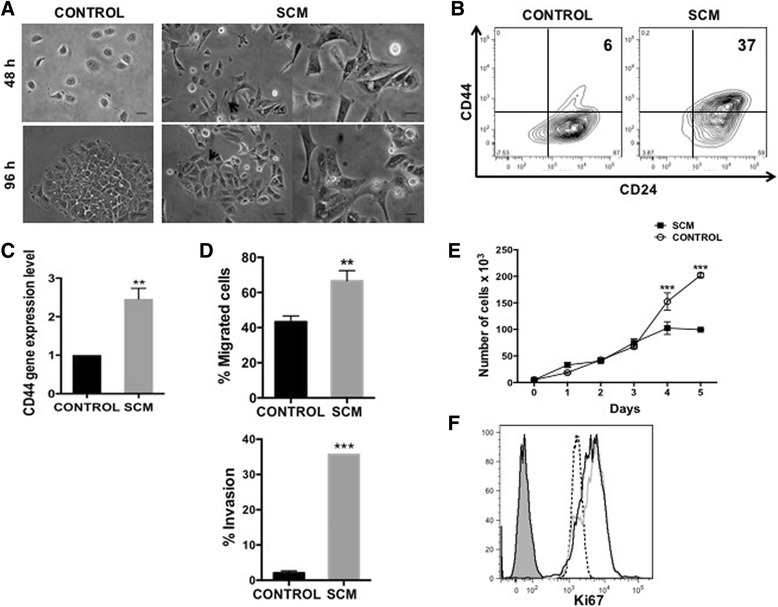
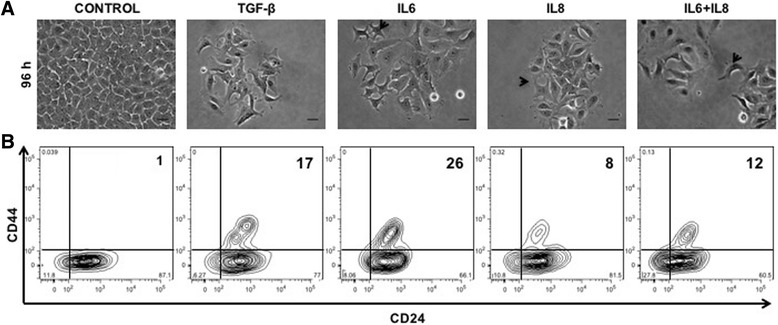
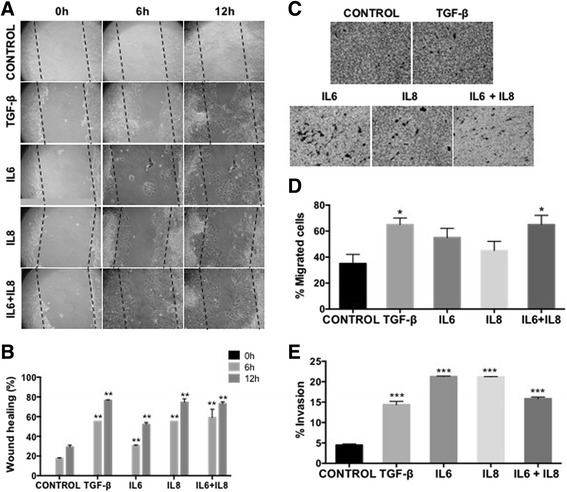
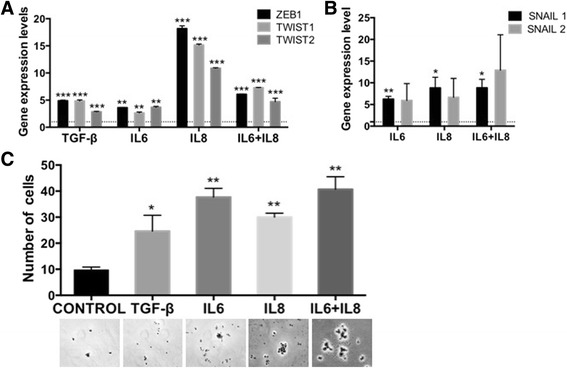
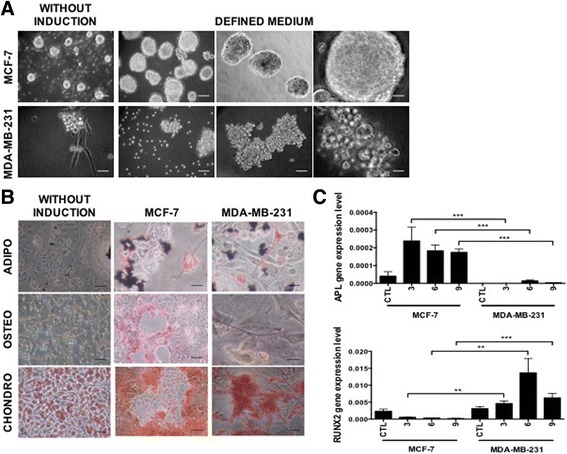
BACKGROUND: There is compelling evidence associating senescent cells with the malignant progression of tumours. Of all senescence-related mechanisms, the so-called senescence-associated secretory phenotype (SASP) has attracted much attention. Since the pro-inflammatory cytokines IL-6 and IL-8 are consistently present in the SASP, and secreted by highly aggressive breast cancer cell lines, we aimed at elucidating their role on the less aggressive breast cancer cell line MCF-7, which does not secret these cytokines. METHODS: The MCF-7 cell line was treated with either senescence-conditioned medium (SCM), IL-6 or IL-8 and then evaluated for phenotypic (CD44 and CD24 by FACS) and functional changes associated with an EMT program (migration/invasion) and for the acquisition of stem cell properties: mammosphere-forming capacity, expression of reprogramming factors (by qRT-PCR) and multilineage differentiation potential. We also evaluated the role of IL6 and IL8 in the cytokine-secreting, highly tumorigenic cell line MDA-MB-231. RESULTS: Our results show that treatment of MCF-7 cells with IL6 and IL8, alone or together, induced the appearance of cells with fibroblastoid morphology, increased CD44 expression and migration, self-renewal and multilineage differentiation capacity, all characteristics compatible with an EMT program and stemness. These changes closely resembled those induced by a SCM. Interestingly, SCM treatments further increased IL6 and IL8 secretion by MCF-7 cells, thus suggesting the participation of an autocrine loop. Indeed, neutralizing antibodies against IL6 and IL8 reversed the effects of SCM on MCF-7, pinpointing these cytokines as major mediators of EMT and stemness-related effects associated with the senescent microenvironment. Additionally, prolonged exposure of MCF cells to IL6 or IL8 induced the appearance of senescent cells, suggesting a mechanism by which senescence and inflammation are reinforced favouring the acquisition of EMT and stem-like features at the population level, thus increasing tumour aggressiveness. Strikingly, our results also show that both IL6 and IL8 are important to maintain aggressive traits in MDA-MB-231 cells, a highly tumorigenic cell line, which appears to be devoid of stemness-related features. CONCLUSIONS: This study demonstrates that, similar to what is observed with a senescent microenvironment, purified IL6 and IL8 induce a self- and cross-reinforced senescence/inflammatory milieu responsible for the emergence of epithelial plasticity and stemness features, thus conferring more aggressive phenotypes to a luminal breast cancer cell line. On the other hand, the basal-like MDA-MB-231 cells, whose aggressiveness-related features depend on IL6 and IL8 secretion, almost completely lack mammosphere formation and differentiation capacities, suggesting that tumour aggressiveness is not always related to stemness.
Overview
The claims and statistics of this paper haven’t been checked yet.
Run the check — free, no account needed. It reads the open-access text and checks the sources it cites.
Integrity signals
Registry
Cites
Statistics
Figures
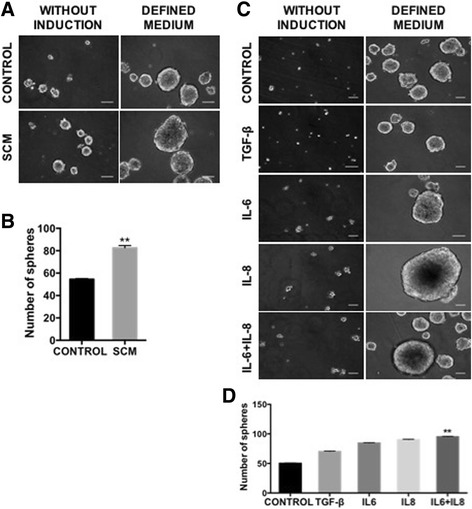
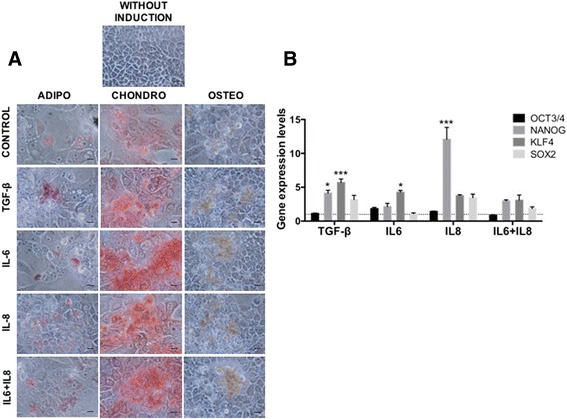
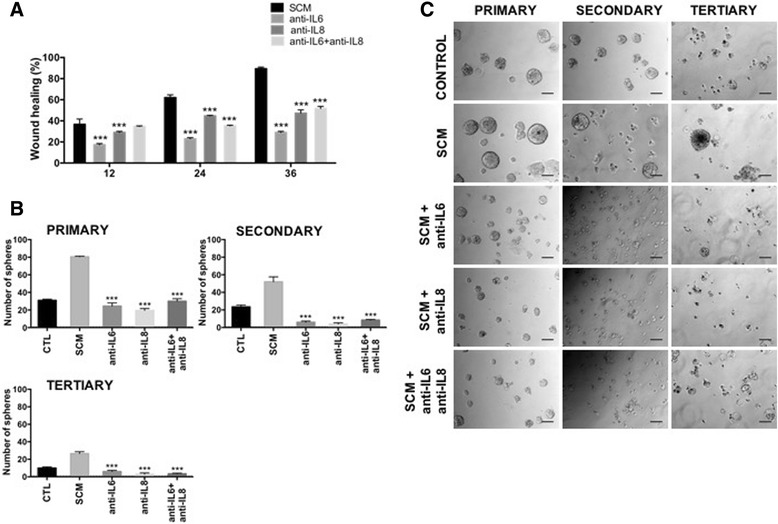
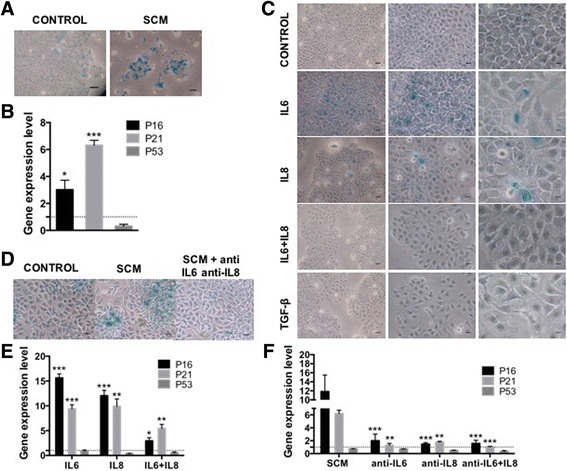
Verification
Claims the paper makes
The claims and statistics of this paper haven’t been checked yet.
Run the check — free, no account needed. It reads the open-access text and checks the sources it cites.
Claims other papers make about this one
Each is checked against this paper’s own text: does it say what the citing paper says it does?
The source backs part of the claim, not all of it — or backs it for a different population, condition or comparison.
In the citing paper
“IL-6 and IL-8, two well- characterized and abundant SASP factors, are known drivers of cancer proliferation 163,164 .”
From Senescence and cancer — role and therapeutic opportunities (2022) · cites this paper as [164]
Experimental — accuracy not yet measuredThe source backs part of the claim, not all of it — or backs it for a different population, condition or comparison.
In the citing paper
“but also enhance SASP autocrine loop, as found in multiple previous studies,124,125,126,127”
From Single-cell senescence identification reveals senescence heterogeneity, trajectory, and modulators (2024) · cites this paper as [126]
Experimental — accuracy not yet measured
Self-check
Percentages, sums and reported differences re-computed from the paper’s own numbers.
The self-check needs the paper’s full text.
Citations
Cites
Analyzing real-time PCR data by the comparative CT method
Schmittgen, T. D., & Livak, K. J. (2008) · Nature Protocols · doi:10.1038/nprot.2008.73 · Cited by 26,190
The Epithelial-Mesenchymal Transition Generates Cells with Properties of Stem Cells
Mani, S. A., Guo, W., Liao, M.-J., Eaton, E. N., Ayyanan, A., Zhou, A. Y., Brooks, M. W., Reinhard, F., Zhang, C. C., Shipitsin, M. V., et al. (2008) · Cell · doi:10.1016/j.cell.2008.03.027 · Cited by 8,839
p53 Mutations in Human Cancers
Hollstein, M., Sidransky, D., Vogelstein, B., & Harris, C. C. (1991) · Science · doi:10.1126/science.1905840 · Cited by 8,018
Specific Association of Human Telomerase Activity with Immortal Cells and Cancer
Kim, N. W., Piatyszek, M. A., Prowse, K. R., Harley, C. B., West, M. D., Ho, P. L. C., Coviello, G. M., Wright, W. E., Weinrich, S. L., & Shay, J. W. (1994) · Science · doi:10.1126/science.7605428 · Cited by 7,091
The senescence-associated secretory phenotype: the dark side of tumor suppression
Coppé, J.-P., Desprez, P.-Y., Krtolica, A., & Campisi, J. (2010) · Annual Review of Pathology: Mechanisms of Disease · doi:10.1146/annurev-pathol-121808-102144 · Cited by 5,206
TGF-β-induced epithelial to mesenchymal transition
Xu, J., Lamouille, S., & Derynck, R. (2009) · Cell Research · doi:10.1038/cr.2009.5 · Cited by 2,804
A survey of telomerase activity in human cancer
Shay, J. W., & Bacchetti, S. (1997) · European Journal of Cancer · doi:10.1016/s0959-8049(97)00062-2 · Cited by 2,794
Ben‐Porath, I., Thomson, M., Carey, V. J., Ge, R., Bell, G. W., Regev, A., & Weinberg, R. A. (2008) · Nature Genetics · doi:10.1038/ng.127 · Cited by 2,571
Senescence and tumour clearance is triggered by p53 restoration in murine liver carcinomas
Xue, W., Zender, L., Miething, C., Dickins, R. A., Hernando, E., Krizhanovsky, V., Cordon-Cardo, C., & Lowe, S. W. (2007) · Nature · doi:10.1038/nature05529 · Cited by 2,473
A complex secretory program orchestrated by the inflammasome controls paracrine senescence
Acosta, J. C., Banito, A., Wuestefeld, T., Georgilis, A., Janich, P., Morton, J. P., Athineos, D., Kang, T.-W., Lasitschka, F., Andrulis, M., et al. (2013) · Nature Cell Biology · doi:10.1038/ncb2784 · Cited by 2,278 · cited 1×
“This paracrineinduced senescence has also been shown recently for TGF-β, VEGF and CCL2 suggesting that this is a general mechanism for senescence propagation involving not only tumour cells but also surrounding stromal cells [81].”
Background
Cited by
Sorted by citations
Aging and aging-related diseases: from molecular mechanisms to interventions and treatments
Guo, J., Huang, X., Dou, L., Yan, M., Shen, T., Tang, W., & Li, J. (2022) · Signal Transduction and Targeted Therapy · doi:10.1038/s41392-022-01251-0 · Cited by 1,976
Cancer stem cells—Origins and biomarkers: Perspectives for targeted personalized therapies
Walcher, L., Kistenmacher, A.-K., Suo, H., Kitte, R., Dluczek, S., Strauß, A., Blaudszun, A.-R., Yevsa, T., Fricke, S., & Kossatz-Boehlert, U. (2020) · Frontiers in Immunology · doi:10.3389/fimmu.2020.01280 · Cited by 1,007
Unmasking senescence: context-dependent effects of SASP in cancer
Faget, D. V., Ren, Q., & Stewart, S. A. (2019) · Nature Reviews Cancer · doi:10.1038/s41568-019-0156-2 · Cited by 863
The senescence-associated secretory phenotype and its physiological and pathological implications
Wang, B., Han, J., Elisseeff, J. H., & Demaria, M. (2024) · Nature Reviews Molecular Cell Biology · doi:10.1038/s41580-024-00727-x · Cited by 948
Senescence and cancer — role and therapeutic opportunities
Schmitt, C. A., Wang, B., & Demaria, M. (2022) · Nature Reviews Clinical Oncology · doi:10.1038/s41571-022-00668-4 · Cited by 794
Strategies for targeting senescent cells in human disease
Gasek, N. S., Kuchel, G. A., Kirkland, J. L., & Xu, M. (2021) · Nature Aging · doi:10.1038/s43587-021-00121-8 · Cited by 501
Senescent cell clearance by the immune system: Emerging therapeutic opportunities
Prata, L. G. P. L., Ovsyannikova, I. G., Tchkonia, T., & Kirkland, J. L. (2018) · Seminars in Immunology · doi:10.1016/j.smim.2019.04.003 · Cited by 497
Hough, K. P., Curtiss, M. L., Blain, T. J., Liu, R.-M., Trevor, J., Deshane, J. S., & Thannickal, V. J. (2020) · Frontiers in Medicine · doi:10.3389/fmed.2020.00191 · Cited by 432
Therapy-Induced Senescence: An “Old” Friend Becomes the Enemy
Saleh, T., Bloukh, S., Carpenter, V. J., Alwohoush, E., Bakeer, J., Darwish, S., Azab, B., & Gewirtz, D. A. (2020) · Cancers · doi:10.3390/cancers12040822 · Cited by 295
Cellular senescence and SASP in tumor progression and therapeutic opportunities
Dong, Z., Luo, Y., Yuan, Z., Tian, Y., Jin, T., & Feng, X. (2024) · Molecular Cancer · doi:10.1186/s12943-024-02096-7 · Cited by 315
Cellular senescence: the sought or the unwanted?
Sun, Y., Coppé, J.-P., & Lam, E. W.-F. (2018) · Trends in Molecular Medicine · doi:10.1016/j.molmed.2018.08.002 · Cited by 208
The Cancer SENESCopedia: A delineation of cancer cell senescence
Jochems, F., Thijssen, B., De Conti, G., Jansen, R., Pogacar, Z., Groot, K., Wang, L., Schepers, A., Wang, C., Jin, H., et al. (2021) · Cell Reports · doi:10.1016/j.celrep.2021.109441 · Cited by 201
Hallmarks of aging and immunosenescence: Connecting the dots
Rodrigues, L. P., Teixeira, V. R., Alencar‐Silva, T., Simonassi-Paiva, B., Pereira, R. W., Pogue, R. E., & Carvalho, J. L. (2021) · Cytokine & Growth Factor Reviews · doi:10.1016/j.cytogfr.2021.01.006 · Cited by 193
Han, Z., Wang, K., Ding, S., & Zhang, M. (2024) · Bone Research · doi:10.1038/s41413-024-00375-z · Cited by 207
The exercise IL-6 enigma in cancer
Orange, S. T., Leslie, J., Ross, M., Mann, D. A., & Wackerhage, H. (2023) · Trends in Endocrinology and Metabolism · doi:10.1016/j.tem.2023.08.001 · Cited by 158
Single-cell senescence identification reveals senescence heterogeneity, trajectory, and modulators
Tao, W., Yu, Z., & Han, J.-D. J. (2024) · Cell Metabolism · doi:10.1016/j.cmet.2024.03.009 · Cited by 147
Neutrophils in aging and aging‐related pathologies
Avondt, K. V., Strecker, J., Tulotta, C., Minnerup, J., Schulz, C., & Soehnlein, O. (2022) · Immunological Reviews · doi:10.1111/imr.13153 · Cited by 155
IL-6: The Link Between Inflammation, Immunity and Breast Cancer
Chen, J., Wei, Y., Yang, W., Huang, Q., Chen, Y., Zeng, K., & Chen, J. (2022) · Frontiers in Oncology · doi:10.3389/fonc.2022.903800 · Cited by 151
Joseph, D. B., Henry, G. H., Malewska, A., Reese, J. C., Mauck, R. J., Gahan, J. C., Hutchinson, R. C., Malladi, V. S., Roehrborn, C. G., Vezina, C. M., et al. (2021) · The Journal of Pathology · doi:10.1002/path.5751 · Cited by 134
Microbiota-Derived Extracellular Vesicles as New Systemic Regulators
Badi, S. A., Moshiri, A., Fateh, A., Jamnani, F. R., Sarshar, M., Vaziri, F., & Siadat, S. D. (2017) · Frontiers in Microbiology · doi:10.3389/fmicb.2017.01610 · Cited by 131
Ionizing radiation-induced cellular senescence promotes tissue fibrosis after radiotherapy. A review
Nguyen, H. Q., To, N. H., Zadigue, P., Kerbrat, S., TAILLE, A. D. L., Gouvello, S. L., & Belkacémi, Y. (2018) · Critical Reviews in Oncology/Hematology · doi:10.1016/j.critrevonc.2018.06.012 · Cited by 129
Targeting inflammation as cancer therapy
Wang, M., Chen, S., He, X., Yuan, Y., & Wei, X. (2024) · Journal of Hematology & Oncology · doi:10.1186/s13045-024-01528-7 · Cited by 126
Allgayer, H., Mahapatra, S., Mishra, B., Swain, B., Saha, S., Khanra, S., Kumari, K., Panda, V. K., Malhotra, D., Patil, N. S., et al. (2025) · Molecular Cancer · doi:10.1186/s12943-025-02338-2 · Cited by 127
Cellular Pliancy and the Multistep Process of Tumorigenesis
Puisieux, A., Pommier, R. M., Morel, A., & Lavial, F. (2018) · Cancer Cell · doi:10.1016/j.ccell.2018.01.007 · Cited by 114
The Role of the IL-6 Cytokine Family in Epithelial–Mesenchymal Plasticity in Cancer Progression
Abaurrea, A., Araujo, A. M., & Caffarel, M. M. (2021) · International Journal of Molecular Sciences · doi:10.3390/ijms22158334 · Cited by 112
Palangat, M., Anastasakis, D. G., Fei, D. L., Lindblad, K. E., Bradley, R. K., Hourigan, C. S., Hafner, M., & Larson, D. R. (2019) · Genes & Development · doi:10.1101/gad.319590.118 · Cited by 101
MicroRNAs, Regulatory Messengers Inside and Outside Cancer Cells
Anfossi, S., Fu, X., Nagvekar, R., & Călin, G. A. (2018) · Advances in experimental medicine and biology · doi:10.1007/978-3-319-74470-4_6 · Cited by 100
Disrupting mechanotransduction decreases fibrosis and contracture in split-thickness skin grafting
Chen, K., Henn, D., Januszyk, M., Barrera, J. A., Noishiki, C., Bonham, C. A., Griffin, M., Tevlin, R., Carlomagno, T., Shannon, T., et al. (2022) · Science Translational Medicine · doi:10.1126/scitranslmed.abj9152 · Cited by 98
Liu, H., Zhao, H., & Sun, Y. (2021) · Seminars in Cancer Biology · doi:10.1016/j.semcancer.2021.11.004 · Cited by 100
The Roles of Autophagy and Senescence in the Tumor Cell Response to Radiation
Patel, N. H., Sohal, S. S., Manjili, M. H., Harrell, J. C., & Gewirtz, D. A. (2020) · Radiation Research · doi:10.1667/rade-20-00009 · Cited by 90
The redox-senescence axis and its therapeutic targeting
Ngoi, N. Y. L., Liew, A. Q. X., Chong, S. J. F., Davids, M. S., Clement, M., & Pervaiz, S. (2021) · Redox Biology · doi:10.1016/j.redox.2021.102032 · Cited by 94
Zhang, F., Guo, J., Yu, S., Zheng, Y., Duan, M., Zhao, L., Wang, Y., Yang, Z., & Jiang, X. (2024) · 癌症:英文版 · doi:10.1002/cac2.12591 · Cited by 100
Oxidative Stress and Inflammation: Drivers of Tumorigenesis and Therapeutic Opportunities
Wang, M., Xiao, Y., Miao, J., Zhang, X., Liu, M., Zhu, L., Liu, H., Shen, X., Wang, J., Xie, B., et al. (2025) · Antioxidants · doi:10.3390/antiox14060735 · Cited by 101
Senescence-Associated Pro-inflammatory Cytokines and Tumor Cell Plasticity
Vernot, J. (2020) · Frontiers in Molecular Biosciences · doi:10.3389/fmolb.2020.00063 · Cited by 85
Self-citationHypoxia-Inducible Factor-1α: The Master Regulator of Endothelial Cell Senescence in Vascular Aging
Alique, M., Sánchez‐López, E., Bodega, G., Giannarelli, C., Carracedo, J., & Ramírez, R. (2020) · Cells · doi:10.3390/cells9010195 · Cited by 88
Faheem, M. M., Seligson, N. D., Ahmad, S. M., Rasool, R. U., Gandhi, S. G., Bhagat, M., & Goswami, A. (2020) · Cell Death Discovery · doi:10.1038/s41420-020-0286-z · Cited by 84
Frataxin deficiency promotes endothelial senescence in pulmonary hypertension
Culley, M. K., Zhao, J., Tai, Y., Tang, Y., Perk, D., Negi, V., Yu, Q., Woodcock, C.-. C., Handen, A. L., Speyer, G., et al. (2021) · Journal of Clinical Investigation · doi:10.1172/jci136459 · Cited by 81
Modulating secreted components of tumor microenvironment: A masterstroke in tumor therapeutics
Patel, H., Nilendu, P., Jahagirdar, D., Pal, J. K., & Sharma, N. K. (2017) · Cancer Biology & Therapy · doi:10.1080/15384047.2017.1394538 · Cited by 81
Ma, B., Zhang, L., Zou, Y., He, R., Wu, Q., Han, C., & Zhang, B. (2019) · Journal of Experimental & Clinical Cancer Research · doi:10.1186/s13046-019-1034-1 · Cited by 78
Hu, Q., Peng, J., Jiang, L., Li, W., Su, Q., Zhang, J., Li, H., Song, M., Cheng, B., Xia, J., et al. (2020) · Cell Death and Disease · doi:10.1038/s41419-020-03126-0 · Cited by 78
Bustos, S. O., Antunes, F., Rangel, M. C., & Chammas, R. J. (2020) · Frontiers in Oncology · doi:10.3389/fonc.2020.606436 · Cited by 79
Cellular Plasticity: A Route to Senescence Exit and Tumorigenesis
Blander, H. D., Morel, A., Senaratne, A. P., Ouzounova, M., & Puisieux, A. (2021) · Cancers · doi:10.3390/cancers13184561 · Cited by 82
Modulation of the Senescence-Associated Inflammatory Phenotype in Human Fibroblasts by Olive Phenols
Menicacci, B., Cipriani, C., Margheri, F., Mocali, A., & Giovannelli, L. (2017) · International Journal of Molecular Sciences · doi:10.3390/ijms18112275 · Cited by 75
Alam, P., Haile, B., Arif, M., Pandey, R., Rokvic, M., Nieman, M. L., Maliken, B. D., Paul, A., Wang, Y., Sadayappan, S., et al. (2019) · Journal of the American Heart Association · doi:10.1161/jaha.119.012089 · Cited by 71
Bouris, P., Manou, D., Sopaki-Valalaki, A., Kolokotroni, A., Moustakas, A., Kapoor, A., Iozzo, R. V., Karamanos, N. K., & Theocharis, A. D. (2018) · Matrix Biology · doi:10.1016/j.matbio.2018.05.011 · Cited by 72
PIM1 is responsible for IL-6-induced breast cancer cell EMT and stemness via c-myc activation
Gao, X., Liu, X., Lu, Y., Wang, Y., Cao, W., Liu, X., Hu, H., & Wang, H. (2019) · Breast Cancer · doi:10.1007/s12282-019-00966-3 · Cited by 70
Targeting tumor cell senescence and polyploidy as potential therapeutic strategies
Saleh, T., Carpenter, V. J., Bloukh, S., & Gewirtz, D. A. (2020) · Seminars in Cancer Biology · doi:10.1016/j.semcancer.2020.12.010 · Cited by 70
Pro- and anti-tumorigenic functions of the senescence-associated secretory phenotype
Lau, L., & David, G. (2019) · Expert Opinion on Therapeutic Targets · doi:10.1080/14728222.2019.1565658 · Cited by 74
Ghosh, D., Peña, C. M., Quach, N. D., Xuan, B., Lee, A. H., & Dawson, M. (2020) · Journal of Cell Science · doi:10.1242/jcs.232470 · Cited by 70
Zhang, Y., Yang, B., Wang, J., Cheng, F., Shi, K., Ying, L., Wang, C., Xia, K., Huang, X., Gong, Z., et al. (2020) · Oxidative Medicine and Cellular Longevity · doi:10.1155/2020/9503562 · Cited by 70
Profiling Cancer-Associated Fibroblasts in Melanoma
Papaccio, F., Kovacs, D., Bellei, B., Caputo, S., Migliano, E., Cota, C., & Picardo, M. (2021) · International Journal of Molecular Sciences · doi:10.3390/ijms22147255 · Cited by 67
Biofunction of Polydopamine Coating in Stem Cell Culture
Deng, Z., Wang, W., Xu, X., Nie, Y. G., Liu, Y., Gould, O. E. C., Ma, N., & Lendlein, A. (2021) · ACS Applied Materials & Interfaces · doi:10.1021/acsami.0c22565 · Cited by 67
Liu, Y., Lomeli, I., & Kron, S. J. (2024) · Cells · doi:10.3390/cells13151281 · Cited by 74
The controversial role of senescence-associated secretory phenotype (SASP) in cancer therapy
Cao, L., Li, K., Li, Q., Tong, Q., Wang, Y., & Huang, L. (2025) · Molecular Cancer · doi:10.1186/s12943-025-02475-8 · Cited by 79
Pancreatic Cancer and Cellular Senescence: Tumor Microenvironment under the Spotlight
Cortesi, M., Zanoni, M., Pirini, F., Tumedei, M. M., Ravaioli, S., Rapposelli, I. G., Frassineti, G. L., & Bravaccini, S. (2021) · International Journal of Molecular Sciences · doi:10.3390/ijms23010254 · Cited by 62
Cellular senescence in ionizing radiation (Review)
Chen, Z., Cao, K., Xia, Y., Li, Y., Hou, Y., Wang, L., Li, L., Chang, L., & Li, W. (2019) · Oncology Reports · doi:10.3892/or.2019.7209 · Cited by 69
Blokland, K. E. C., Waters, D. W., Schuliga, M. J., Read, J. M., Pouwels, S. D., Grainge, C., Jaffar, J., Westall, G. P., Mutsaers, S. E., Prêle, C. M., et al. (2020) · Pharmaceutics · doi:10.3390/pharmaceutics12040389 · Cited by 58
Inflammation-Driven Breast Tumor Cell Plasticity: Stemness/EMT, Therapy Resistance and Dormancy
Baram, T., Rubinstein-Achiasaf, L., Ben-Yaakov, H., & Ben‐Baruch, A. (2021) · Frontiers in Oncology · doi:10.3389/fonc.2020.614468 · Cited by 61
Carpenter, V. J., Saleh, T., Lee, S. M., Murray, G. F., Reed, J. C., Souers, A. J., Faber, A. C., Harada, H., & Gewirtz, D. A. (2021) · Biochemical Pharmacology · doi:10.1016/j.bcp.2021.114765 · Cited by 57
Chou, L.-Y., Ho, C.-T., & Hung, S. (2022) · Cells · doi:10.3390/cells11203324 · Cited by 59
Xiong, J., Dong, L., Lv, Q., Yin, Y., Zhao, J., Ke, Y., Wang, S., Zhang, W., & Wu, M. (2024) · Clinical and Translational Medicine · doi:10.1002/ctm2.1772 · Cited by 58
Rubinstein-Achiasaf, L., Morein, D., Ben-Yaakov, H., Liubomirski, Y., Meshel, T., Elbaz, E., Dorot, O., Pichinuk, E., Gershovits, M., Weil, M., et al. (2021) · Cancers · doi:10.3390/cancers13061472 · Cited by 53
Luo, J., Sun, T., Liu, Z., Liu, Y., Liu, J., Wang, S., Shi, X., & Zhou, H. (2025) · International Journal of Oral Science · doi:10.1038/s41368-025-00380-w · Cited by 61
IFN-γ and TNF Induce Senescence and a Distinct Senescence-Associated Secretory Phenotype in Melanoma
Homann, L., Rentschler, M., Brenner, E., Böhm, K., Röcken, M., & Wieder, T. (2022) · Cells · doi:10.3390/cells11091514 · Cited by 58
Luo, H., Xiao, T., Sun, X., Song, Y., Shi, W., Lu, K., Chen, D., Sun, C., & Bian, Q. (2023) · The Science of The Total Environment · doi:10.1016/j.scitotenv.2023.163512 · Cited by 54
Kumar, D., Patel, S. A., Hassan, M. K., Mohapatra, N., Pattanaik, N., & Dixit, M. (2021) · Cell Death and Disease · doi:10.1038/s41419-021-03673-0 · Cited by 52
Adem, Y., Galderisi, U., & Alessio, N. (2023) · Frontiers in Bioengineering and Biotechnology · doi:10.3389/fbioe.2023.1148761 · Cited by 55
Senescent cells in cancer therapy: why and how to remove them
Zhang, J., Zhang, D., & Yu, B. (2021) · Cancer Letters · doi:10.1016/j.canlet.2021.07.002 · Cited by 52
The senescence-associated secretory phenotype: Fueling a wound that never heals
Pulido, T., Velarde, M. C., & Alimirah, F. (2021) · Mechanisms of Ageing and Development · doi:10.1016/j.mad.2021.111561 · Cited by 54
Mechanisms of cancer cell killing by metformin: a review on different cell death pathways
Wu, X., Xu, W., Huan, X., Wu, G., Li, G., Zhou, Y., & Najafi, M. (2022) · Molecular and Cellular Biochemistry · doi:10.1007/s11010-022-04502-4 · Cited by 52
Du, M., Sun, L., Guo, J. J., & Lv, H. (2024) · Pharmacological Research · doi:10.1016/j.phrs.2024.107198 · Cited by 51
Bang, M., Kim, D. G., Gonzales, E. L., Kwon, K. J., & Shin, C. Y. (2019) · Biomolecules & Therapeutics · doi:10.4062/biomolther.2019.151 · Cited by 47
Cellular senescence in cancer: molecular mechanisms and therapeutic targets
Jin, P., Duan, X., Li, L., Zhou, P., Zou, C., & Xie, K. (2024) · MedComm · doi:10.1002/mco2.542 · Cited by 51
Single-cell analysis of senescent epithelia reveals targetable mechanisms promoting fibrosis
O’Sullivan, E. D., Mylonas, K. J., Bell, R., Carvalho, C., Baird, D. P., Cairns, C., Gallagher, K. M., Campbell, R., Docherty, M., Laird, A., et al. (2022) · JCI Insight · doi:10.1172/jci.insight.154124 · Cited by 43
Klepacki, H., Kowalczuk, K., Łepkowska, N., & Hermanowicz, J. M. (2025) · Cells · doi:10.3390/cells14130942 · Cited by 49
Protective effects of carotenoid fucoxanthin in fibroblasts cellular senescence
Guvatova, Z. G., Dalina, A. A., Marusich, E., Pudova, E. A., Snezhkina, A. V., Krasnov, G. S., Kudryavtseva, A. V., Leonov, S., & Moskalev, A. (2020) · Mechanisms of Ageing and Development · doi:10.1016/j.mad.2020.111260 · Cited by 46
Aging, ROS, and cellular senescence: a trilogy in the progression of liver fibrosis
Almalki, W. H., & Almujri, S. S. (2024) · Biogerontology · doi:10.1007/s10522-024-10153-3 · Cited by 45
Wang, P., Liao, B., Gong, S., Guo, H., Zhao, L., Liu, J., & Wu, N. (2025) · Cell Death and Disease · doi:10.1038/s41419-025-07617-w · Cited by 42
Cellular senescence: from anti-cancer weapon to anti-aging target
Yuan, L., Alexander, P. B., & Wang, X. (2020) · Science China Life Sciences · doi:10.1007/s11427-019-1629-6 · Cited by 42
Ruan, H., Luan, J., Gao, S., Li, S., Jiang, Q., Liu, R., Liang, Q. L., Zhang, R., Zhang, F., Li, X., et al. (2021) · Molecules · doi:10.3390/molecules26154491 · Cited by 42
Social disadvantage accelerates aging
Mika Kivimaki, B., Pentti, J., Frank, P., Liu, F., Blake, A., Nyberg, S. T., Vahtera, J., Singh‐Manoux, A., Wyss‐Coray, T., Walker, K. A., et al. (2025) · Nature Medicine · doi:10.1038/s41591-025-03563-4 · Cited by 45
Different sensitivities of senescent breast cancer cells to immune cell‐mediated cytotoxicity
Inao, T., Kotani, H., Iida, Y., Kartika, I. D., Okimoto, T., Tanino, R., Shiba, E., & Harada, M. (2019) · Cancer Science · doi:10.1111/cas.14116 · Cited by 41
Sreekumar, P. G., Reddy, S. T., Hinton, D. R., & Kannan, R. (2022) · Experimental Eye Research · doi:10.1016/j.exer.2021.108918 · Cited by 42
Ashraf, S., Santerre, P., & Kandel, R. A. (2021) · The FASEB Journal · doi:10.1096/fj.202002201r · Cited by 41
Senescence, NK cells, and cancer: navigating the crossroads of aging and disease
Gergues, M., Bari, R., Koppisetti, S., Gosiewska, A., Kang, L., & HARIRI, R. J. (2025) · Frontiers in Immunology · doi:10.3389/fimmu.2025.1565278 · Cited by 46
Morales-Valencia, J., Lau, L., Martí-Nin, T., Özerdem, U., & David, G. (2022) · Oncogene · doi:10.1038/s41388-022-02433-4 · Cited by 42
Senescence Induced by UVB in Keratinocytes Impairs Amino Acids Balance
Bauwens, É., Parée, T., Meurant, S., Bouriez, I., Hannart, C., Wéra, A.-C., Khelfi, A., Fattaccioli, A., Burteau, S., Demazy, C., et al. (2022) · Journal of Investigative Dermatology · doi:10.1016/j.jid.2022.11.017 · Cited by 41
Cellular senescence signaling in cancer: A novel therapeutic target to combat human malignancies
Fakhri, S., Moradi, S. Z., DeLiberto, L. K., & Bishayee, A. (2022) · Biochemical Pharmacology · doi:10.1016/j.bcp.2022.114989 · Cited by 39
Emerging Roles of Vitamin B12 in Aging and Inflammation
Simonenko, S. Y., Bogdanova, D. A., & Kuldyushev, N. A. (2024) · International Journal of Molecular Sciences · doi:10.3390/ijms25095044 · Cited by 41
Peng, C., Wang, T., Lee, S., Hsieh, P., Liao, Y., Tsai, L., Fang, C., Yu, C., & Hsieh, C. (2018) · Journal of Oral Pathology and Medicine · doi:10.1111/jop.12711 · Cited by 37
Targeting redox regulation and autophagy systems in cancer stem cells
Khan, S. U., Rayees, S., Sharma, P., & Malik, F. A. (2022) · Clinical and Experimental Medicine · doi:10.1007/s10238-022-00955-5 · Cited by 36
Cellular senescence in liver diseases: From mechanisms to therapies
Ge, T., Shao, Y., Bao, X., Xu, W., & Lu, C. (2023) · International Immunopharmacology · doi:10.1016/j.intimp.2023.110522 · Cited by 37
Bonilla, X., Vanegas, N.-D. P., & Vernot, J. (2019) · Stem Cells International · doi:10.1155/2019/3864948 · Cited by 36
Self-citationSenescence Alterations in Pulmonary Hypertension
Roger, I., Milara, J., Belhadj, N., & Cortijo, J. (2021) · Cells · doi:10.3390/cells10123456 · Cited by 41
Senescence in cancer: Advances in detection and treatment modalities
Billimoria, R., & Bhatt, P. (2023) · Biochemical Pharmacology · doi:10.1016/j.bcp.2023.115739 · Cited by 37
Xu, D., Moru, P., Liao, K., Song, W., Yang, P., Zang, D., Cai, C., & Zhou, H. (2024) · Experimental Gerontology · doi:10.1016/j.exger.2024.112609 · Cited by 38
Oxidative Stress, Inflammation, and Cellular Senescence in Neuropathic Pain: Mechanistic Crosstalk
Stojanović, B., Bevc, I. M., Stojanovic, M. D., Stojanović, B., Lazarević, T., Spasić, M., Petrovic, M., Stefanovic, I., Marković, M., Nešić, J., et al. (2025) · Antioxidants · doi:10.3390/antiox14101166 · Cited by 39
Cellular Senescence Triggers Altered Circadian Clocks With a Prolonged Period and Delayed Phases
Ahmed, R., Nakahata, Y., Shinohara, K., & Bessho, Y. (2021) · Frontiers in Neuroscience · doi:10.3389/fnins.2021.638122 · Cited by 32
Fibroblasts potentiate melanoma cells in vitro invasiveness induced by UV-irradiated keratinocytes
Jobe, N. P., Bandúrová, V., Fíková, A., Rösel, D., Dvořánková, B., Kodet, O., Strnad, H., Kolář, M., Šedo, A., Smetana, K., et al. (2018) · Histochemistry and Cell Biology · doi:10.1007/s00418-018-1650-4 · Cited by 31
Metadata
- Authors
- Ortiz-Montero, P., Londoño-Vallejo, A., & Vernot, J.-P.
- Affiliations
- Universidad Nacional de Colombia (CO)
- Corresponding author
- Vernot, Jean-Paul
- ORCID
- Vernot, Jean-Paul
- Venue
- Cell Communication and Signaling
- Published
- 2017-05-04
- Volume
- 15
- Issue
- 1
- Pages
- 17-17
- ISSN
- 1478-811X (ISSN-L)
- PMC
- PMC5418812
- OpenAlex
- W2611479744
- Cited by
- 428
- References
- 88
- Citations by year
- 2026: 58 · 2025: 87 · 2024: 57 · 2023: 35 · 2022: 47 · 2021: 63 · 2020: 37 · 2019: 20 · 2018: 21 · 2017: 3
- FWCI
- 16.40
- Type
- journal article
- Language
- en
- Open access
- gold
- doi.org
- Licence
- cc-by
- Locations
- Cell Communication and Signaling (publishedVersion, cc-by)
- PubMed Central (publishedVersion, cc-by)
- PubMed (publishedVersion)
- HAL (submittedVersion, cc-by)
- DOAJ (DOAJ: Directory of Open Access Journals) (submittedVersion, cc-by-sa)
- Funders
- Patrimonio Autónomo Fondo Nacional de Financiamiento para la Ciencia, la Tecnología y la Innovación, Francisco José de Caldas, Colciencias (Contract No RC-692–2013)
- DIEB and Faculty of Medicine, Universidad Nacional de Colombia. (30174)
- Topics
- Life Sciences › Biochemistry, Genetics and Molecular Biology › Cell Biology › Telomeres, Telomerase, and Senescence
- Health Sciences › Medicine › Oncology › Cancer Cells and Metastasis
- Life Sciences › Biochemistry, Genetics and Molecular Biology › Molecular Biology › TGF-β signaling in diseases
- Keywords
- senescence-associated secretory phenotype, interleukin-6, interleukin-8, senescence, breast cancer, MCF-7 cells, MDA-MB-231 cells, epithelial-mesenchymal transition, cancer stemness, tumorigenicity, autocrine loop, inflammation, multilineage differentiation, CD44, CD24
- MeSH terms
- Breast Neoplasms, Humans, Inflammation, Phenotype, Interleukin-6, Interleukin-8, Cellular Senescence, Culture Media, Conditioned, MCF-7 Cells, Carcinogenesis
About these checks
Registry, retraction, Cites and statistics results are computed, not judged, with one exception: a printed reference that no index lists is read once by a model before it counts as a citation error. Claims are extracted by a model and kept only when their quote appears verbatim in the text; each cited source is then checked, with a model’s help, for whether it says what the claim relies on. Those verdicts can be wrong — read the claim’s quote and the cited source before relying on one.
Statistics and arithmetic are recomputed, not judged.
Confidence bands are shown only for fields calibrated on our annotated test set. None is calibrated yet, so no band is shown.
What counts as a claim ›How we measure confidence ›How we check this ›
Are you an author, or do you see a problem with this page? Request a review
