

The DOI matches its Crossref record; 87 of the 88 references it cites were found in a registry or an index.
Senescence-associated IL-6 and IL-8 cytokines induce a self- and cross-reinforced senescence/inflammatory milieu strengthening tumorigenic capabilities in the MCF-7 breast cancer cell line
Open accessAbstract
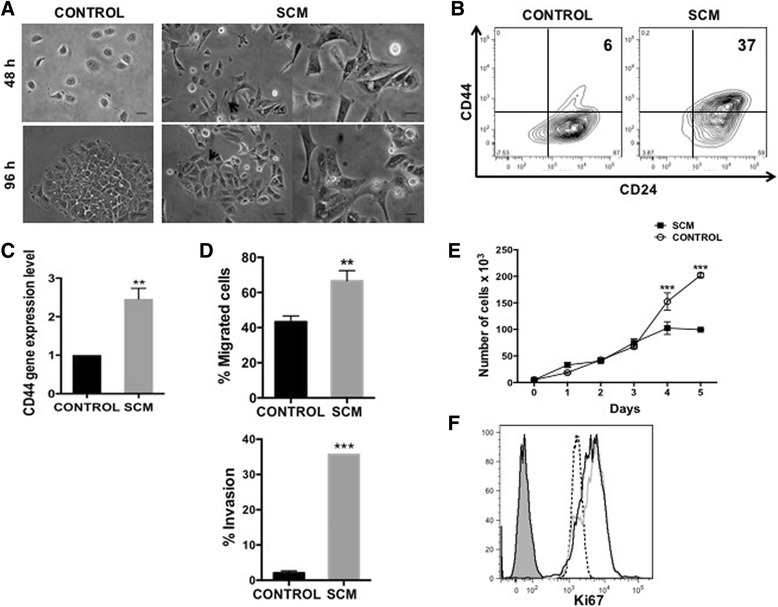
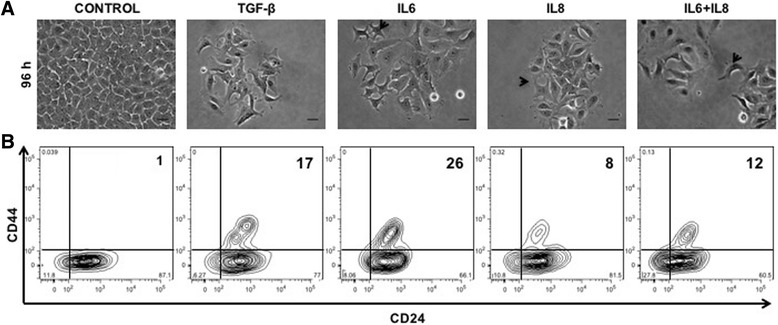
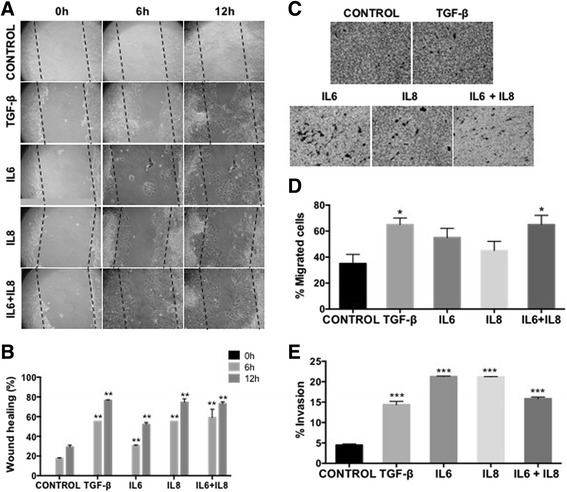
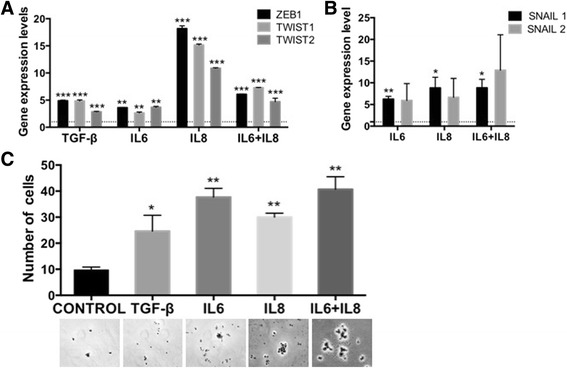
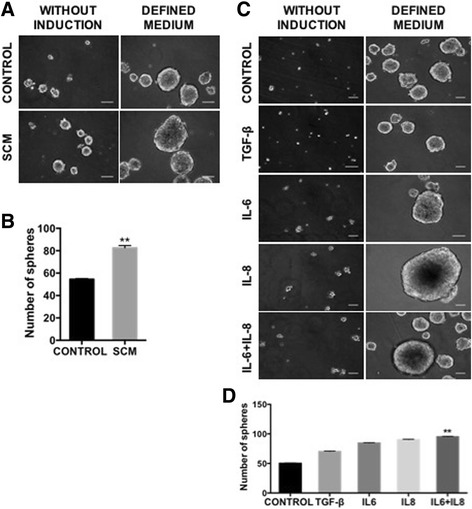
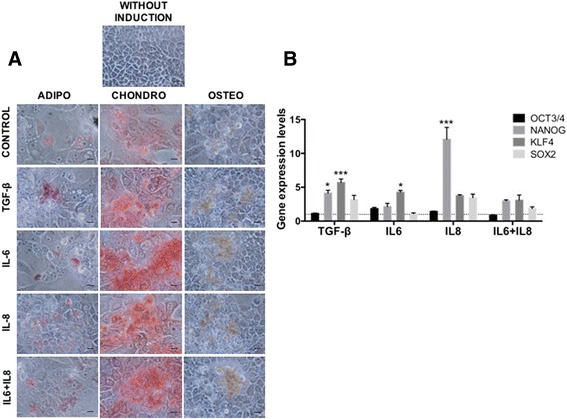
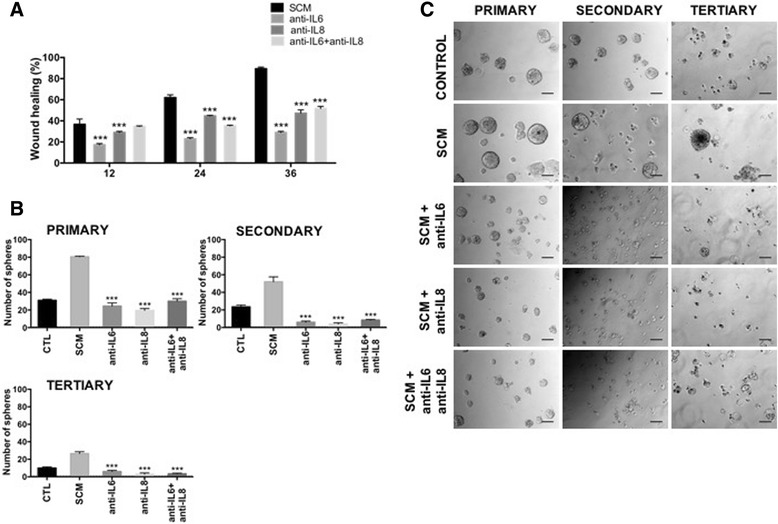
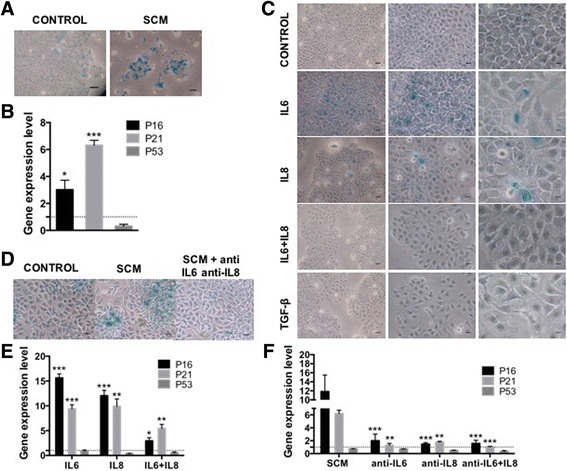
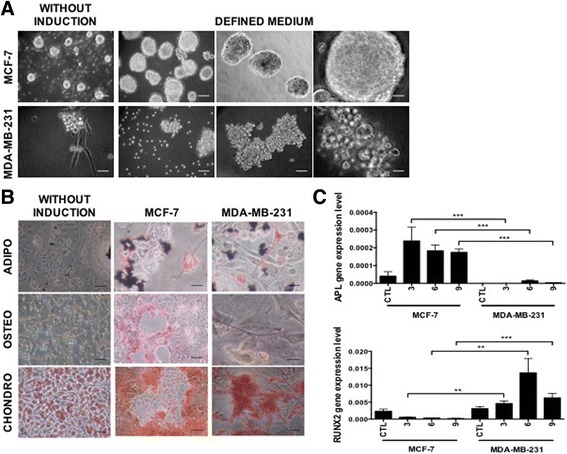
BACKGROUND: There is compelling evidence associating senescent cells with the malignant progression of tumours. Of all senescence-related mechanisms, the so-called senescence-associated secretory phenotype (SASP) has attracted much attention. Since the pro-inflammatory cytokines IL-6 and IL-8 are consistently present in the SASP, and secreted by highly aggressive breast cancer cell lines, we aimed at elucidating their role on the less aggressive breast cancer cell line MCF-7, which does not secret these cytokines. METHODS: The MCF-7 cell line was treated with either senescence-conditioned medium (SCM), IL-6 or IL-8 and then evaluated for phenotypic (CD44 and CD24 by FACS) and functional changes associated with an EMT program (migration/invasion) and for the acquisition of stem cell properties: mammosphere-forming capacity, expression of reprogramming factors (by qRT-PCR) and multilineage differentiation potential. We also evaluated the role of IL6 and IL8 in the cytokine-secreting, highly tumorigenic cell line MDA-MB-231. RESULTS: Our results show that treatment of MCF-7 cells with IL6 and IL8, alone or together, induced the appearance of cells with fibroblastoid morphology, increased CD44 expression and migration, self-renewal and multilineage differentiation capacity, all characteristics compatible with an EMT program and stemness. These changes closely resembled those induced by a SCM. Interestingly, SCM treatments further increased IL6 and IL8 secretion by MCF-7 cells, thus suggesting the participation of an autocrine loop. Indeed, neutralizing antibodies against IL6 and IL8 reversed the effects of SCM on MCF-7, pinpointing these cytokines as major mediators of EMT and stemness-related effects associated with the senescent microenvironment. Additionally, prolonged exposure of MCF cells to IL6 or IL8 induced the appearance of senescent cells, suggesting a mechanism by which senescence and inflammation are reinforced favouring the acquisition of EMT and stem-like features at the population level, thus increasing tumour aggressiveness. Strikingly, our results also show that both IL6 and IL8 are important to maintain aggressive traits in MDA-MB-231 cells, a highly tumorigenic cell line, which appears to be devoid of stemness-related features. CONCLUSIONS: This study demonstrates that, similar to what is observed with a senescent microenvironment, purified IL6 and IL8 induce a self- and cross-reinforced senescence/inflammatory milieu responsible for the emergence of epithelial plasticity and stemness features, thus conferring more aggressive phenotypes to a luminal breast cancer cell line. On the other hand, the basal-like MDA-MB-231 cells, whose aggressiveness-related features depend on IL6 and IL8 secretion, almost completely lack mammosphere formation and differentiation capacities, suggesting that tumour aggressiveness is not always related to stemness.
Overview
The claims and statistics of this paper haven’t been checked yet.
Run the check — free, no account needed. It reads the open-access text and checks the sources it cites.
Integrity signals
Registry
Cites
Statistics
Figures
Verification
Claims the paper makes
The claims and statistics of this paper haven’t been checked yet.
Run the check — free, no account needed. It reads the open-access text and checks the sources it cites.
Claims other papers make about this one
Each is checked against this paper’s own text: does it say what the citing paper says it does?
The source backs part of the claim, not all of it — or backs it for a different population, condition or comparison.
In the citing paper
“IL-6 and IL-8, two well- characterized and abundant SASP factors, are known drivers of cancer proliferation 163,164 .”
From Senescence and cancer — role and therapeutic opportunities (2022) · cites this paper as [164]
Experimental — accuracy not yet measuredThe source backs part of the claim, not all of it — or backs it for a different population, condition or comparison.
In the citing paper
“but also enhance SASP autocrine loop, as found in multiple previous studies,124,125,126,127”
From Single-cell senescence identification reveals senescence heterogeneity, trajectory, and modulators (2024) · cites this paper as [126]
Experimental — accuracy not yet measured
Self-check
Percentages, sums and reported differences re-computed from the paper’s own numbers.
The self-check needs the paper’s full text.
Citations
Cites
Analyzing real-time PCR data by the comparative CT method
Schmittgen, T. D., & Livak, K. J. (2008) · Nature Protocols · doi:10.1038/nprot.2008.73 · Cited by 26,190
The Epithelial-Mesenchymal Transition Generates Cells with Properties of Stem Cells
Mani, S. A., Guo, W., Liao, M.-J., Eaton, E. N., Ayyanan, A., Zhou, A. Y., Brooks, M. W., Reinhard, F., Zhang, C. C., Shipitsin, M. V., et al. (2008) · Cell · doi:10.1016/j.cell.2008.03.027 · Cited by 8,839
p53 Mutations in Human Cancers
Hollstein, M., Sidransky, D., Vogelstein, B., & Harris, C. C. (1991) · Science · doi:10.1126/science.1905840 · Cited by 8,018
Specific Association of Human Telomerase Activity with Immortal Cells and Cancer
Kim, N. W., Piatyszek, M. A., Prowse, K. R., Harley, C. B., West, M. D., Ho, P. L. C., Coviello, G. M., Wright, W. E., Weinrich, S. L., & Shay, J. W. (1994) · Science · doi:10.1126/science.7605428 · Cited by 7,091
The senescence-associated secretory phenotype: the dark side of tumor suppression
Coppé, J.-P., Desprez, P.-Y., Krtolica, A., & Campisi, J. (2010) · Annual Review of Pathology: Mechanisms of Disease · doi:10.1146/annurev-pathol-121808-102144 · Cited by 5,206
TGF-β-induced epithelial to mesenchymal transition
Xu, J., Lamouille, S., & Derynck, R. (2009) · Cell Research · doi:10.1038/cr.2009.5 · Cited by 2,804
A survey of telomerase activity in human cancer
Shay, J. W., & Bacchetti, S. (1997) · European Journal of Cancer · doi:10.1016/s0959-8049(97)00062-2 · Cited by 2,794
Ben‐Porath, I., Thomson, M., Carey, V. J., Ge, R., Bell, G. W., Regev, A., & Weinberg, R. A. (2008) · Nature Genetics · doi:10.1038/ng.127 · Cited by 2,571
Senescence and tumour clearance is triggered by p53 restoration in murine liver carcinomas
Xue, W., Zender, L., Miething, C., Dickins, R. A., Hernando, E., Krizhanovsky, V., Cordon-Cardo, C., & Lowe, S. W. (2007) · Nature · doi:10.1038/nature05529 · Cited by 2,473
A complex secretory program orchestrated by the inflammasome controls paracrine senescence
Acosta, J. C., Banito, A., Wuestefeld, T., Georgilis, A., Janich, P., Morton, J. P., Athineos, D., Kang, T.-W., Lasitschka, F., Andrulis, M., et al. (2013) · Nature Cell Biology · doi:10.1038/ncb2784 · Cited by 2,278 · cited 1×
“This paracrineinduced senescence has also been shown recently for TGF-β, VEGF and CCL2 suggesting that this is a general mechanism for senescence propagation involving not only tumour cells but also surrounding stromal cells [81].”
Background
Cited by
Sorted by citations
Items 201–300 of 428
Kumar, K., Moon, B., Kumar, S., Angdisen, J. J., Kallakury, B., Fornace, A. J., & Suman, S. (2025) · Aging · doi:10.18632/aging.206183 · Cited by 11
Chen, Y., Xue, Y., Yan, C., Jin, J., Liu, Y., Li, J., Han, S., & Liu, J. (2025) · Advanced Healthcare Materials · doi:10.1002/adhm.202404642 · Cited by 12
Tilton, M., Liao, J., Kim, C., Shaygani, H., Potes, M. D. A., Cordova, D. J., Kirkland, J. L., & Miller, K. M. (2025) · Small · doi:10.1002/smll.202408517 · Cited by 13
Impacts of ageing on the efficacy of CAR-T cell therapy
Qi, S., Li, J., Gu, X., Zhang, Y., Zhou, W., Wang, F., & Wang, W. (2025) · Ageing Research Reviews · doi:10.1016/j.arr.2025.102715 · Cited by 11
The paracrine effects of fibroblasts on Doxorubicin-treated breast cancer cells
Fourie, C., Davis, T., Kriel, J., & Engelbrecht, A. (2019) · Experimental Cell Research · doi:10.1016/j.yexcr.2019.05.020 · Cited by 12
Palbociclib-Induced Cellular Senescence Is Modulated by the mTOR Complex 1 and Autophagy
Cayo, Á., Venturini, W., Rebolledo-Mira, D., Moore‐Carrasco, R., Herrada, A. A., Nova‐Lamperti, E., Valenzuela, C. A., & Brown, N. E. (2023) · International Journal of Molecular Sciences · doi:10.3390/ijms24119284 · Cited by 11
Diwan, B., Yadav, R., Goyal, R., & Sharma, R. (2024) · Biogerontology · doi:10.1007/s10522-024-10092-z · Cited by 11
Ospina-Muñoz, N., & Vernot, J. (2020) · Tumor Biology · doi:10.1177/1010428320979438 · Cited by 11
Self-citationImmunosenescence: Molecular Mechanisms, Diseases, and Therapeutic Innovations
Gong, N., Pan, X., Deng, Y., Che, J., Bao, J., Wang, M., Xu, C., Liu, X., & Shi, Y. (2025) · MedComm · doi:10.1002/mco2.70515 · Cited by 14
Cellular senescence in cancer: Friend or fraud?
Chen, Q., Liu, J., Wu, J., Xiang, X., Zhou, X., Mi, J., Wei, J., Zou, X., & Wu, A. (2026) · Drug Resistance Updates · doi:10.1016/j.drup.2026.101363 · Cited by 15
Nanomaterials intervene in cell senescence to reinforce cancer therapy
Sun, S., Yang, N., Nie, J., Yang, Z., Pei, Z., Ding, R., & Cheng, L. (2025) · Coordination Chemistry Reviews · doi:10.1016/j.ccr.2025.217012 · Cited by 10
LAM Cells as Potential Drivers of Senescence in Lymphangioleiomyomatosis Microenvironment
Bernardelli, C., Ancona, S., Lazzari, M., Lettieri, A., Selvaggio, P., Massa, V., Gervasini, C., Marco, F. D., Chiaramonte, R., & Lesma, E. A. (2022) · International Journal of Molecular Sciences · doi:10.3390/ijms23137040 · Cited by 10
Berger, K., Persson, E., Gregersson, P., Ruiz‐Martínez, S., Jonasson, E., Ståhlberg, A., Rhost, S., & Landberg, G. (2023) · Cancers · doi:10.3390/cancers15245757 · Cited by 10
Eiró, N., Cid, S., Fraile, M., Cabrera, J. R., González, L. O., & Vizoso, F. J. (2020) · Diagnostics · doi:10.3390/diagnostics10110865 · Cited by 10
Nevi, L., Costantini, D., Safarikia, S., Matteo, S. D., Melandro, F., Berloco, P. B., & Cardinale, V. (2019) · Cells · doi:10.3390/cells8111443 · Cited by 12
Boumya, S., Fallarini, S., Siragusa, S., Petrarolo, G., Aprile, S., Audrito, V., Motta, C. L., Garavaglia, S., Moro, L., & Pinton, G. (2023) · International Journal of Molecular Sciences · doi:10.3390/ijms24076689 · Cited by 9
Pan, Q., Ye, Z., Ye, Z., Zhang, H., Wang, J., Yi, G., Li, Z., Xu, R., Wang, L., Wu, Z., et al. (2025) · BMEMat · doi:10.1002/bmm2.12137 · Cited by 9
Liu, W., Fan, B., Fang, T., Li, H., Zhang, J., Liu, B., & Liu, Z. (2025) · Acta Pharmaceutica Sinica B · doi:10.1016/j.apsb.2025.08.010 · Cited by 10
Alsalem, M., Ellaithy, A., Bloukh, S., Haddad, M., & Saleh, T. (2024) · Supportive Care in Cancer · doi:10.1007/s00520-023-08287-0 · Cited by 11
Sergi, D., Melloni, M., Passaro, A., & Neri, L. M. (2024) · Nutrients · doi:10.3390/nu16193243 · Cited by 9
Celastrol mediates CAV1 to attenuate pro-tumorigenic effects of senescent cells
Zhang, S., Zhu, N., Shi, Y., Zeng, Q., Zhang, C., Li, H., & Li, Q. (2024) · Phytomedicine · doi:10.1016/j.phymed.2024.155614 · Cited by 8
Rajabi, F., Smith, R., Liu-Bordes, W.-Y., Schertzer, M. J., Huet, S., & Londoño‐Vallejo, A. (2024) · Molecular Biology of the Cell · doi:10.1091/mbc.e24-08-0370 · Cited by 8
Self-citationWang, D., & Guan, H. (2025) · Pathology - Research and Practice · doi:10.1016/j.prp.2025.156115 · Cited by 9
Targeting Senescence in Oncology: An Emerging Therapeutic Avenue for Cancer
Meguro, S., Makabe, S., Yaginuma, K., Onagi, A., Tanji, R., Matsuoka, K., Hoshi, S., Koguchi, T., Kayama, E., Hata, J., et al. (2025) · Current Oncology · doi:10.3390/curroncol32080467 · Cited by 8
Almudimeegh, S., Almutairi, M. M., Softah, A., Alhazzani, K., Binobaid, L., Alshammari, M. A., Sobeai, H. M. A., Saleh, T., Alotaibi, M. R., & Alhoshani, A. (2025) · Saudi Pharmaceutical Journal · doi:10.1007/s44446-025-00034-2 · Cited by 8
Yu, G., Yuan, Q., Sun, Z., Jiang, Z., Feng, X., & Niu, M. (2026) · npj Precision Oncology · doi:10.1038/s41698-026-01448-4 · Cited by 10
You, J., Woo, J., Roh, K., Jeon, K., Jang, Y., Choi, S., Ryu, D., Cho, E., Park, D., Lee, J., et al. (2023) · Journal of Cosmetic Dermatology · doi:10.1111/jocd.15978 · Cited by 8
Kim, D., Cooper, J. A., & Helfman, D. M. (2024) · Scientific Reports · doi:10.1038/s41598-024-76868-y · Cited by 8
Morris, C., Durand, S., & Jalinot, P. (2021) · Oncotarget · doi:10.18632/oncotarget.27923 · Cited by 8
Mohamed, H. T., El-Sharkawy, A. A., El‐Shinawi, M., Schneider, R. J., & Mohamed, M. M. (2022) · Frontiers in Oncology · doi:10.3389/fonc.2022.899622 · Cited by 8
Chen, X., Li, Y., Zhou, Z., Zhang, Y., Chang, L., Gao, X., Li, Q., Luo, H., Westover, K. D., Zhu, J., et al. (2023) · Cancer Medicine · doi:10.1002/cam4.6607 · Cited by 8
Zhou, T., Yan, J., Xu, B., Zhang, Y., Mao, G., Xie, Y., Fang, Q., Wang, B., Liu, Z., Zou, Y., et al. (2024) · Cancer Letters · doi:10.1016/j.canlet.2024.217408 · Cited by 7
Antioxidant Senotherapy by Natural Compounds: A Beneficial Partner in Cancer Treatment
Aleksandrova, Y. R., & Неганова, М. Е. (2025) · Antioxidants · doi:10.3390/antiox14020199 · Cited by 8
Ullah, A., Singla, R. K., Cao, D., Chen, B., & Shen, B. (2025) · Genes & Diseases · doi:10.1016/j.gendis.2025.101606 · Cited by 9
Bo, M. D., Gambirasi, M., Vruzhaj, I., Cecchin, E., Pishdadian, A., Toffoli, G., & Safa, A. (2025) · International Journal of Molecular Sciences · doi:10.3390/ijms26114982 · Cited by 8
Lactate Is a Major Promotor of Breast Cancer Cell Aggressiveness
Khajah, M. A., Khushaish, S., & Luqmani, Y. A. (2025) · Cancers · doi:10.3390/cancers17111793 · Cited by 7
Charoensedtasin, K., Kheansaard, W., Roytrakul, S., & Tanyong, D. I. (2024) · BMC Complementary Medicine and Therapies · doi:10.1186/s12906-024-04641-9 · Cited by 7
Xu, F., Li, Z., Liu, T., Pang, X., Chang, F., & Jiang, H. (2024) · Cytokine · doi:10.1016/j.cyto.2024.156762 · Cited by 7
The prognostic implications and oncogenic role of NSUN5 in clear cell renal cell carcinoma
Huang, C., Luo, M.-Y., Wen, N., Chen, Y.-M., Zhang, L., & Cao, Y. (2024) · Clinical and Experimental Medicine · doi:10.1007/s10238-024-01507-9 · Cited by 7
Walters, H., & Cox, L. S. (2019) · Biogerontology · doi:10.1007/s10522-018-09792-0 · Cited by 7
A Mouse Model to Investigate the Role of Cancer-associated Fibroblasts in Tumor Growth
Jelínek, D., Zhang, E. R., Ambrus, A., Haley, E. M., Guinn, E. J., Vo, A., Le, P., Kesaf, A. E., Nguyen, J., Guo, L., et al. (2020) · Journal of Visualized Experiments · doi:10.3791/61883 · Cited by 7
Targeting the stress support network regulated by autophagy and senescence for cancer treatment
Kim, J., Lee, Y., Roh, K., Kim, M.-S., & Kang, C. (2021) · Advances in cancer research · doi:10.1016/bs.acr.2021.01.003 · Cited by 7
Profile of soluble factors in pleural effusions predict prognosis in mesothelioma
Dick, I. M., Lee, Y. C. G., Cheah, H. M., Miranda, A., Robinson, B. W. S., & Creaney, J. (2021) · Cancer Biomarkers · doi:10.3233/cbm-210280 · Cited by 7
Regulation of Cr(VI)‐Induced Premature Senescence in L02 Hepatocytes by ROS‐Ca 2+ ‐NF‐ κ B Signaling
Zhang, Y., Yang, G., Huang, S., Yang, X., Yuan, F., Song, Y., Liu, S., & Yu, X. (2022) · Oxidative Medicine and Cellular Longevity · doi:10.1155/2022/7295224 · Cited by 7
Kitaeva, K. V., Solovyeva, V. V., Blatt, N. L., & Rizvanov, A. A. (2024) · International Journal of Molecular Sciences · doi:10.3390/ijms25010643 · Cited by 7
Trophoblast Side-Population Markers are Dysregulated in Preeclampsia and Fetal Growth Restriction
Wong, G. P., Hartmann, S., Simmons, D. G., Ellis, S. L., Nonn, O., Cannon, P., Nguyen, T. V., Nguyen, A., Bartho, L. A., Tong, S. Y. C., et al. (2024) · Stem Cell Reviews and Reports · doi:10.1007/s12015-024-10764-w · Cited by 7
Targeting senescent cells and tumor therapy (Review)
Wang, Z., Gao, J., Liu, H., Ohno, Y., & Xu, C. (2020) · International Journal of Molecular Medicine · doi:10.3892/ijmm.2020.4705 · Cited by 8
Role of Nrf2 in Methotrexate-Induced Epithelial–Mesenchymal Transition in Alveolar A549 Cells
Kawami, M., Honda, M., Hara, T., Yumoto, R., & Takano, M. (2022) · Biological and Pharmaceutical Bulletin · doi:10.1248/bpb.b22-00010 · Cited by 7
Hasanaj, E., Beaulieu, D., Wang, C., Hu, Q., Bueno, M., Sembrat, J., Pineda, R., Melo-Narváez, M. C., Cárdenes, N., Yanwu, Z., et al. (2024) · bioRxiv (Cold Spring Harbor Laboratory) · doi:10.1101/2024.12.21.629928 · Cited by 7
Rademacher, D. J., Exline, J. E., & Foecking, E. M. (2025) · Biomedicines · doi:10.3390/biomedicines13061400 · Cited by 8
Alghamdi, E., & Kono, K. (2025) · Cancer Science · doi:10.1111/cas.70223 · Cited by 7
Wei, J., Cui, F., Huang, Z., Li, Z., Mao, Z., & Zhang, P. (2025) · Frontiers in Aging · doi:10.3389/fragi.2025.1684450 · Cited by 8
Xin, X., Dong, L., Li, J., Zhang, J., & Wu, H. (2025) · Annals of Medicine · doi:10.1080/07853890.2025.2565437 · Cited by 7
Liu, X., Bin, C., Gao, Q., Li, M., Xue, L., Zhou, Z., Liu, M., Ji, X., & Wei, S. (2026) · Biomarker Research · doi:10.1186/s40364-026-00914-2 · Cited by 8
Cytokine Production by Tumor Bioptate at Different Pathological Prognostic Stages in Breast Cancer
Autenshlyus, A. I., Александровна, С. А., Анатольевич, В. Н., & Lyakhovich, V. V. (2021) · Doklady Biochemistry and Biophysics · doi:10.1134/s1607672921020010 · Cited by 6
Zhang, X.-X., Yu, X., Zhu, L., & Luo, J.-H. (2023) · Medicine · doi:10.1097/md.0000000000035923 · Cited by 6
CD58 defines regulatory macrophages within the tumor microenvironment
Wu, B., Zhan, X., & Jiang, M. (2024) · Communications Biology · doi:10.1038/s42003-024-06712-6 · Cited by 6
RNA m6A methylation regulatory mechanism of resveratrol in premature senescence cells
Zhang, X., Zhu, C., Zhang, L., Tan, L., Cheng, W., Li, M., Zhang, X., Zhang, W., & Zhang, W. (2024) · Food Science & Nutrition · doi:10.1002/fsn3.4487 · Cited by 6
Temozolomide-Resistant Human T2 and T98G Glioblastoma Cells
Pinevich, A. A., Bode, I. I., Левоновна, В. Н., Киселева, Л. Н., Владимирович, К. А., & Samoilovich, M. P. (2022) · Cell and Tissue Biology · doi:10.1134/s1990519x22040058 · Cited by 6
Bernardelli, C., Caretti, A., & Lesma, E. A. (2023) · Frontiers in Medicine · doi:10.3389/fmed.2023.1124008 · Cited by 7
MIR-34C REGULATES THE PROLIFERATION AND APOPTOSIS OF LUNG CANCER CELLS
Jiang, X., Li, M., & Kei, L. (2020) · Clinical and investigative medicine · doi:10.25011/cim.v43i4.34997 · Cited by 6
Fang, J., Dai, Y., Chen, J., Zhang, H., Li, H., & Chen, W. (2025) · Food Bioscience · doi:10.1016/j.fbio.2024.105822 · Cited by 6
Aging and tumors: a dynamic interaction
Zhang, Y., Zhu, S., Liu, Z., Hu, Y., Zhang, Y., Shang, L., & Li, L. (2025) · Discover Oncology · doi:10.1007/s12672-025-01808-9 · Cited by 5
Cellular senescence—from solid organs to vascularized composite allotransplants
Knoedler, L., Schroeter, A., Iske, J., Dean, J., Boroumand, S., Schaschinger, T., Niederegger, T., Knoedler, S. A., Panayi, A. C., Heiland, M., et al. (2025) · GeroScience · doi:10.1007/s11357-025-01788-2 · Cited by 6
Naruhn, J., Gröper, M. N., Öcal, E., Salvermoser, L., Hirner-Eppeneder, H., Schäfer, J. N., Kazmierczak, P. M., Corradini, S., Well, J., Ricke, J., et al. (2025) · Radiotherapy and Oncology · doi:10.1016/j.radonc.2025.111068 · Cited by 5
Chrysin mitigates therapy-induced senescence in breast cancer via cGAS–STING pathway inhibition
Billimoria, R., & Bhatt, P. (2025) · Medical Oncology · doi:10.1007/s12032-025-02993-x · Cited by 6
Zhou, T., Yang, Z., Ni, B., Zhou, H. Q., Zhou, Y., Xu, H., Lin, X., Lin, S., Wei, Y. Z., He, C., et al. (2025) · Investigative Ophthalmology & Visual Science · doi:10.1167/iovs.66.12.44 · Cited by 5
The drug discovery and therapeutic nano-strategies targeting cellular senescence
Wang, Y., Liu, M., Chen, X., Wang, S., Li, J., Sun, Y., Zheng, X., Zhang, J.-X., & Li, H. (2025) · Materials Today Bio · doi:10.1016/j.mtbio.2025.102480 · Cited by 6
The impact of cellular senescence on aging skeletal muscle
Kamal, M. J., Bevington, R. T., Johnson, A., & Parise, G. (2025) · Frontiers in Cell and Developmental Biology · doi:10.3389/fcell.2025.1719279 · Cited by 7
Parekh, M., Adhikari, Y., Deshpande, N. R., Wong, R., Price, M. O., Price, F. W., & Jurkunas, U. V. (2026) · Cell Death and Disease · doi:10.1038/s41419-026-08425-6 · Cited by 7
Mushii, O., PAVLOVA, A., Bazas, V., Borikun, T., & Lukianova, N. Y. (2025) · Experimental Oncology · doi:10.15407/exp-oncology.2024.04.311 · Cited by 5
Yang, D., Xiao, F., Yuan, Y., Li, J., Wang, S., Fan, X., Ni, Q., Li, Y., Zhang, M., Gu, X., et al. (2023) · International Journal of Molecular Sciences · doi:10.3390/ijms24076169 · Cited by 5
Pan, T., Hu, Z., Xu, D.-Y., Zhou, Y., Zhang, S., & Chen, Y. (2023) · Medicine · doi:10.1097/md.0000000000034018 · Cited by 5
Kleine, A., Kühle, M., Ly, T.-D., Schmidt, V., Faust, I., Knabbe, C., & Fischer, B. (2024) · Biomedicines · doi:10.3390/biomedicines12030572 · Cited by 5
Liu, X., Yang, B., Li, Y., Yang, Z., Xue, L., Zhang, M., Chen, G., Chinnathambi, A., & Alahmadi, T. A. (2020) · Pharmacognosy Magazine · doi:10.4103/pm.pm_165_20 · Cited by 5
Varela-Eirín, M., Varela-Vázquez, A., Paı́no, C. L., Casado‐Díaz, A., Continente, A. J. C., Mato‐Abad, V., Fonseca, E., Kandouz, M., Blanco, A., Caeiro, J. R., et al. (2019) · bioRxiv (Cold Spring Harbor Laboratory) · doi:10.1101/686535 · Cited by 5
de Mendonça, L. B., Lenz, G., & Filippi‐Chiela, E. C. (2025) · Biochemical Society Transactions · doi:10.1042/bst20253054 · Cited by 5
Sarcinella, A., Villacis, J. S. G., & Brizzi, M. F. (2025) · International Journal of Molecular Sciences · doi:10.3390/ijms262311462 · Cited by 4
Ju, N., Zhao, L., Yin, S., Yang, X., Zhou, J., Gao, J., & Qi, F. (2026) · International Journal of Cancer · doi:10.1002/ijc.70442 · Cited by 4
Zheng, Y., Qiu, Y., Gao, M., Wang, Q., Yu, L., Cao, Z., & Luan, X. (2024) · Poultry Science · doi:10.1016/j.psj.2024.104529 · Cited by 4
Shboul, S. A., Karsaneh, O. A. A., Alrjoub, M., Alqudah, M. A. Y., El‐Sadoni, M., Alhesa, A., Ramadan, M., Barukba, M., Al-Quran, E. F., Masaadeh, A. H., et al. (2025) · International Journal of Immunopathology and Pharmacology · doi:10.1177/03946320251324821 · Cited by 4
Pezeshki, P. S., Ganjaroudi, N. M., Azimzadeh, A., Zolbin, M. M., Mohammadpour, H., Miri, S. R., Molaei, H., & Kajbafzadeh, A. M. (2025) · Scientific Reports · doi:10.1038/s41598-025-12196-z · Cited by 4
Association between T-helper cell-mediated immune response and airway remodeling in allergic asthma
Arora, P., & Nainwal, L. M. (2024) · Elsevier eBooks · doi:10.1016/b978-0-443-15502-4.00007-0 · Cited by 4
A novel signature of cartilage aging-related immunophenotyping biomarkers in osteoarthritis
Lan, Z., Yang, Y., Sun, R., Lin, X., Xue, D., Wu, Z., & Jin, Q. (2025) · Computers in Biology and Medicine · doi:10.1016/j.compbiomed.2025.109816 · Cited by 4
Xie, J., Shu, X., Xie, Z., Tang, J., & Guo, W. (2025) · European Journal of Pharmacology · doi:10.1016/j.ejphar.2025.177475 · Cited by 4
Ju, G., Lin, Q., Lu, L., Lin, Z., Huang, D., Lin, Y., Huang, X., Lin, Q., Xu, H., Bai, Y., et al. (2025) · International Journal of Biological Macromolecules · doi:10.1016/j.ijbiomac.2025.143543 · Cited by 6
Yuan, Y., Zhu, Y., Ou, M., Mao, Y., Liu, Z., Lin, Z., Zhao, R., Long, H., Hu, Z., Guo, H., et al. (2025) · Advanced Functional Materials · doi:10.1002/adfm.202501622 · Cited by 4
Evans, B. L., Fenger, J. M., Ballash, G., & Brown, M. E. (2021) · Veterinary Medicine and Science · doi:10.1002/vms3.633 · Cited by 4
Identification of key pathways and genes in vestibular schwannoma using bioinformatics analysis
Wu, B., Dou, G., Zhang, Y., Wang, J., Wang, X., Jiang, S., Zhong, S., Ren, J., Zhang, Z., Li, J., et al. (2022) · Experimental and Therapeutic Medicine · doi:10.3892/etm.2022.11141 · Cited by 4
Prostate fibroblasts enhance androgen receptor splice variant 7 expression in prostate cancer cells
Sasaki, T., Yoshikawa, Y., Kageyama, T., Sugino, Y., Kato, M., Masui, S., Nishikawa, K., & Inoue, T. (2022) · The Prostate · doi:10.1002/pros.24468 · Cited by 4
A strategy for the treatment of gastrointestinal cancer: Targeting tumor senescent cells
Liu, Y., Zhang, Q., Ni, W., Ji, G., & Xu, H. (2023) · Frontiers in Molecular Biosciences · doi:10.3389/fmolb.2023.1139840 · Cited by 4
SIX1 transmits signals for breast cancer progression via the ZEB1/IL6/STAT3 signaling axis
Guo, L., Rao, Y., Song, Y., Hu, J., Luo, Z., Sun, S., Chen, C., & Kong, D. (2025) · Oncogene · doi:10.1038/s41388-025-03499-6 · Cited by 3
Pan, L., Shi, C., Choi, J., & Lin, J. (2025) · Cells · doi:10.3390/cells14201602 · Cited by 3
Yang, Q.-M., Chen, K.-C., Qiu, L., Wang, Y.-D., You, F., Ye, L., Yang, J., Lan, D.-L., Kuang, L., & Fu, W. (2025) · Ecotoxicology and Environmental Safety · doi:10.1016/j.ecoenv.2025.119452 · Cited by 4
Influence of Stress-Induced Senescence on the Secretome of Primary Mesenchymal Stromal Cells
Kashirina, D. N., Константиновна, М. Д., Ездакова, М. И., Brzhozovskiy, A. G., Kononikhin, A. S., Pastushkova, L. K., Larina, I., Николаев, Е. Н., Buravkova, L. B., & Ratushnyy, A. Y. (2025) · Biomolecules · doi:10.3390/biom15121734 · Cited by 3
Peripheral Vascular Calcification
Lee, S., Woo, J. M., Chen, Y., Arya, S., & Allison, M. (2026) · Arteriosclerosis Thrombosis and Vascular Biology · doi:10.1161/atvbaha.125.322138 · Cited by 3
Feng, Y. R., Zhi, X., Xiao, T., & Feng, L. (2026) · Mechanisms of Ageing and Development · doi:10.1016/j.mad.2026.112158 · Cited by 5
Inflammatory milieu and role of epigenetic modifications in high-grade serous ovarian cancer
Pradhan, S., Kabekkodu, S. P., Eswaran, S., Kumar, N. A. N., Upadhya, D., Chakrabarty, S., & Devi, V. (2026) · Clinical Epigenetics · doi:10.1186/s13148-026-02080-6 · Cited by 3
Choi, M., Lee, D., Yang, W.-H., & Cha, J. (2026) · Cell Death and Disease · doi:10.1038/s41419-026-08688-z · Cited by 4
Senescence Programs Shape the Chronic Wound Microenvironment
Shvedova, M., Cho, M., Eyckmans, J., & Roh, D. S. (2026) · Advances in Wound Care · doi:10.1177/21621918261441046 · Cited by 3
Metadata
- Authors
- Ortiz-Montero, P., Londoño-Vallejo, A., & Vernot, J.-P.
- Affiliations
- Universidad Nacional de Colombia (CO)
- Corresponding author
- Vernot, Jean-Paul
- ORCID
- Vernot, Jean-Paul
- Venue
- Cell Communication and Signaling
- Published
- 2017-05-04
- Volume
- 15
- Issue
- 1
- Pages
- 17-17
- ISSN
- 1478-811X (ISSN-L)
- PMC
- PMC5418812
- OpenAlex
- W2611479744
- Cited by
- 428
- References
- 88
- Citations by year
- 2026: 58 · 2025: 87 · 2024: 57 · 2023: 35 · 2022: 47 · 2021: 63 · 2020: 37 · 2019: 20 · 2018: 21 · 2017: 3
- FWCI
- 16.40
- Type
- journal article
- Language
- en
- Open access
- gold
- doi.org
- Licence
- cc-by
- Locations
- Cell Communication and Signaling (publishedVersion, cc-by)
- PubMed Central (publishedVersion, cc-by)
- PubMed (publishedVersion)
- HAL (submittedVersion, cc-by)
- DOAJ (DOAJ: Directory of Open Access Journals) (submittedVersion, cc-by-sa)
- Funders
- Patrimonio Autónomo Fondo Nacional de Financiamiento para la Ciencia, la Tecnología y la Innovación, Francisco José de Caldas, Colciencias (Contract No RC-692–2013)
- DIEB and Faculty of Medicine, Universidad Nacional de Colombia. (30174)
- Topics
- Life Sciences › Biochemistry, Genetics and Molecular Biology › Cell Biology › Telomeres, Telomerase, and Senescence
- Health Sciences › Medicine › Oncology › Cancer Cells and Metastasis
- Life Sciences › Biochemistry, Genetics and Molecular Biology › Molecular Biology › TGF-β signaling in diseases
- Keywords
- senescence-associated secretory phenotype, interleukin-6, interleukin-8, senescence, breast cancer, MCF-7 cells, MDA-MB-231 cells, epithelial-mesenchymal transition, cancer stemness, tumorigenicity, autocrine loop, inflammation, multilineage differentiation, CD44, CD24
- MeSH terms
- Breast Neoplasms, Humans, Inflammation, Phenotype, Interleukin-6, Interleukin-8, Cellular Senescence, Culture Media, Conditioned, MCF-7 Cells, Carcinogenesis
About these checks
Registry, retraction, Cites and statistics results are computed, not judged, with one exception: a printed reference that no index lists is read once by a model before it counts as a citation error. Claims are extracted by a model and kept only when their quote appears verbatim in the text; each cited source is then checked, with a model’s help, for whether it says what the claim relies on. Those verdicts can be wrong — read the claim’s quote and the cited source before relying on one.
Statistics and arithmetic are recomputed, not judged.
Confidence bands are shown only for fields calibrated on our annotated test set. None is calibrated yet, so no band is shown.
What counts as a claim ›How we measure confidence ›How we check this ›
Are you an author, or do you see a problem with this page? Request a review
