

Variation in population levels of physical activity in European children and adolescents according to cross-European studies: a systematic literature review within DEDIPAC
Open accessThe DOI matches its Crossref record; 62 of the 63 references it cites were found in a registry or an index.
Abstract
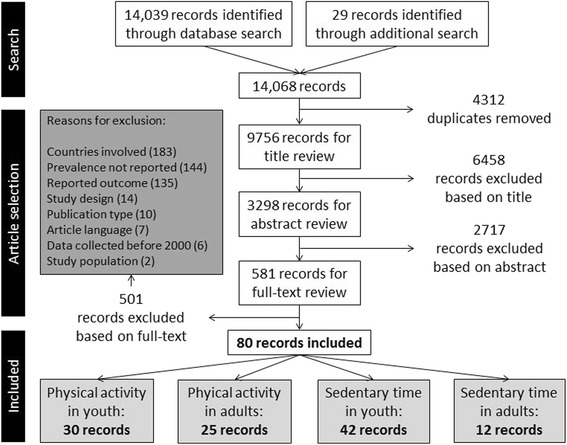
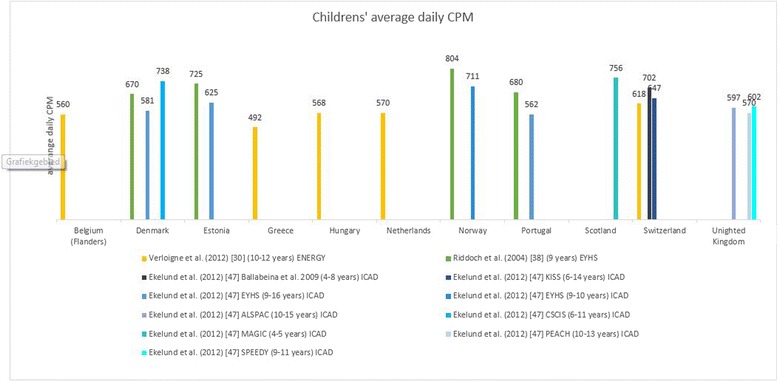
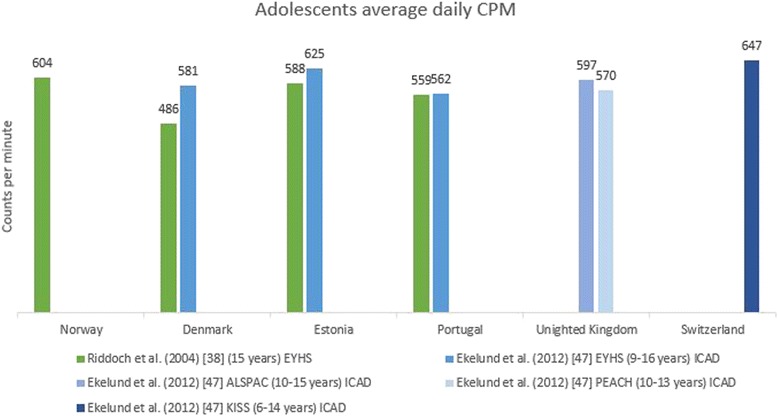
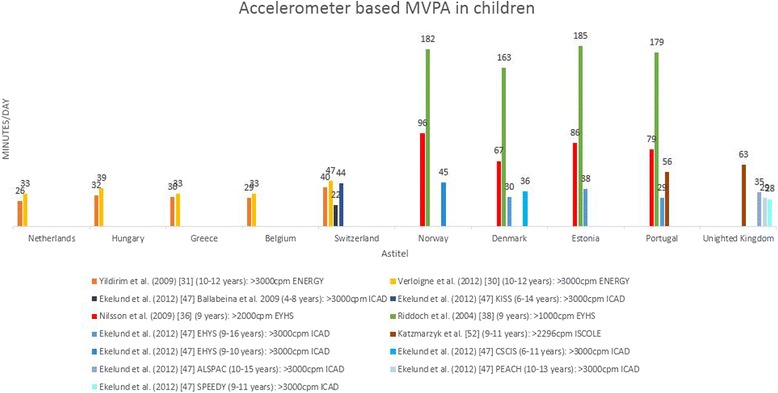
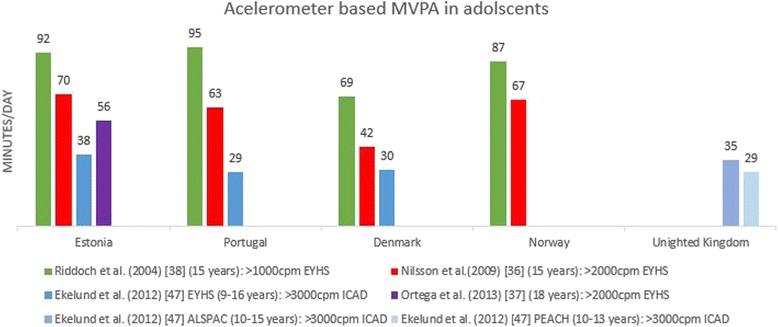
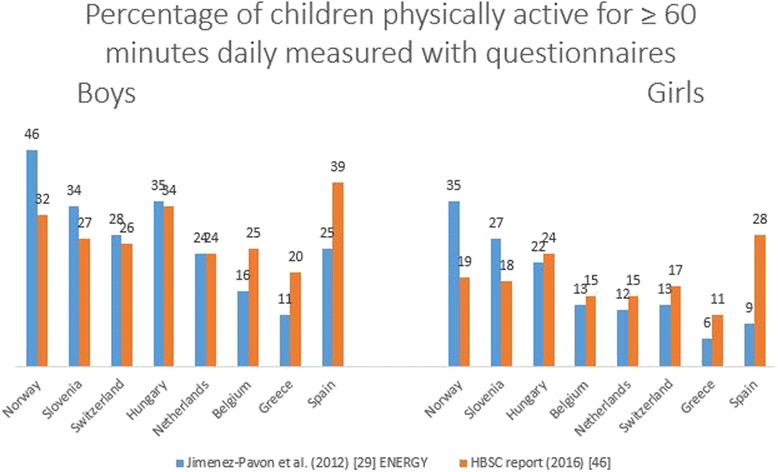
Regular physical activity is associated with physical, social and mental health benefits, whilst insufficient physical activity is associated with several negative health outcomes (e.g. metabolic problems). Population monitoring of physical activity is important to gain insight into prevalence of compliance to physical activity recommendations, groups at risk and changes in physical activity patterns. This review aims to provide an overview of all existing studies that measure physical activity in youth, in cross-European studies, to describe the variation in population levels of physical activity and to describe and define challenges regarding assessment methods that are used. A systematic search was performed on six databases (PubMed, EMBASE, CINAHL, PsycINFO, SportDiscus and OpenGrey), supplemental forward- and backward tracking was done and authors’ and experts’ literature databases were searched to identify relevant articles. Journal articles or reports that reported levels of physical activity in the general population of youth from cross-European studies were included. Data were reviewed, extracted and assessed by two researchers, with disagreements being resolved by a third researcher. The review protocol of this review is published under registration number CRD42014010684 in the PROSPERO database. The search resulted in 9756 identified records of which 30 articles were included in the current review. This review revealed large differences between countries in prevalence of compliance to physical activity recommendations (i.e. 60 min of daily moderate- to vigorous-intensity physical activity (MVPA)) measured subjectively (5–47 %) and accelerometer measured minutes of MVPA (23–200 min). Overall boys and children were more active than girls and adolescents. Different measurement methods (subjective n = 12, objective n = 18) and reported outcome variables ( n = 17) were used in the included articles. Different accelerometer intensity thresholds used to define MVPA resulted in substantial differences in MVPA between studies conducted in the same countries when assessed objectively. Reported levels of physical activity and prevalence of compliance to physical activity recommendations in youth showed large variation across European countries. This may reflect true variation in physical activity as well as variation in assessment methods and reported outcome variables. Standardization across Europe, of methods to assess physical activity in youth and reported outcome variables is warranted, preferably moving towards a pan-European surveillance system combining objective and self-report methods.
Overview
The claims and statistics of this paper haven’t been checked yet.
Free: it reads the open-access text and checks the first 5 claims that cite a source we can check. Create a free account to check every claim.
Integrity signals
Registry
Cites
Statistics
Figures
Verification
Claims the paper makes
The claims and statistics of this paper haven’t been checked yet.
Free: it reads the open-access text and checks the first 5 claims that cite a source we can check. Create a free account to check every claim.
Self-check
Percentages, sums and reported differences re-computed from the paper’s own numbers.
The self-check needs the paper’s full text.
Citations
Cites
Health benefits of physical activity: the evidence
Warburton, D. E. R. (2006) · Canadian Medical Association Journal · doi:10.1503/cmaj.051351 · Cited by 8,007 · cited 1×
“Such levels of physical activity are associated with physical, social and mental health benefits [2 – 4].”
Janssen, I., & LeBlanc, A. G. (2010) · International Journal of Behavioral Nutrition and Physical Activity · doi:10.1186/1479-5868-7-40 · Cited by 4,829
Systematic reviews: CRD's guidance for undertaking reviews in health care
Tacconelli, E. (2010) · The Lancet Infectious Diseases · doi:10.1016/s1473-3099(10)70065-7 · Cited by 3,245 · cited 1×
“Before the search commenced, review protocols were written based on the “ Centre for Reviews and Dissemination ’ s guidance for undertaking reviews in health care ” [20], and registered in the PROSPERO data-base [21].”
Calibration of two objective measures of physical activity for children
Evenson, K. R., Catellier, D. J., Gill, K., Ondrak, K. S., & McMurray, R. G. (2008) · Journal of Sports Sciences · doi:10.1080/02640410802334196 · Cited by 2,677 · cited 1×
“[59] which were recommended by Trost et al.”
Standard Quality Assessment Criteria for Evaluating Primary Research Papers from a Variety of Fields
Kmet, L. M., Cook, L. S., & Lee, R. C. (2004) · University of Alberta Library · doi:10.7939/r37m04f16 · Cited by 1,682
Physical activity from childhood to adulthood
Telama, R., Yang, X., Viikari, J., Välimäki, I., Wanne, O., & Raitakari, O. (2005) · American Journal of Preventive Medicine · doi:10.1016/j.amepre.2004.12.003 · Cited by 1,585 · cited 1×
“Besides, physical activity in childhood and adolescence is positively related to adult physical activity [4, 5] and health [4, 6].”
Andersen, L. B., Harro, M., Sardinha, L. B., Froberg, K., Ekelund, U., Brage, S., & Anderssen, S. A. (2006) · The Lancet · doi:10.1016/s0140-6736(06)69075-2 · Cited by 1,473 · cited 5×
“…participants ≥ 2 days/week VPA 5 HBSC [41 – 44 MVPA children (0 – 12 years old) > 1000 CPM 1 EYHS [38] > 1680 CPM 1 IDEFICS [49] > 2000 CPM 4 EYHS [34 – 37] > 2296 CPM 4 [26], IDEFICS [50, 51], ISCOLE [52] > 3000 CPM 4 ENERGY [30, 31], ICAD [47, 48] MVPA adolescents (13 – 18 years old) > 1500 CPM…”
InfluentialSelf-citationAge and gender differences in objectively measured physical activity in youth
TROST, S. G., PATE, R. R., SALLIS, J. F., FREEDSON, P. S., TAYLOR, W. C., DOWDA, M., & SIRARD, J. (2002) · Medicine and Science in Sports and Exercise · doi:10.1097/00005768-200202000-00025 · Cited by 1,451 · cited 1×
“This is consistent with previous literature [57].”
Comparison of Accelerometer Cut Points for Predicting Activity Intensity in Youth
TROST, S. G., LOPRINZI, P. D., MOORE, R., & PFEIFFER, K. A. (2011) · Medicine & Science in Sports & Exercise · doi:10.1249/mss.0b013e318206476e · Cited by 1,360 · cited 2×
“[13] evaluated the validity of 5 different intensity thresholds used to define MVPA with ActiGraph accelerometers in youth and used indirect calorimetry as reference.”
Janssen, I., Katzmarzyk, P. T., Boyce, W. F., Vereecken, C., Mulvihill, C., Roberts, C., Currie, C., Pickett, W., & The Health Behaviour in School‐Aged Children Obesity Working Group (2005) · Obesity Reviews · doi:10.1111/j.1467-789x.2005.00176.x · Cited by 1,169 · cited 7×
“If there was more than one article per study reporting exactly the same outcome variable in a similar way in the same sample, the article with the largest amount of information was chosen [28 – 30, 32, 38, 39, 42, 44, 46, 47, 49, 50].”
Influential
Research works printed but not linked: 2
- WHO Global recommendations on physical activity for health 2010 26180873
- WHO. Review of physical activity surveillance data sources in European Union Member States. 2010 Contract No.: Report no. 6.
Cited by
Items 101–173 of 173
Activity patterns of primary school children during participation in The Daily Mile
Hatch, L. M., Williams, R. A., Dring, K. J., Sunderland, C. D., Nevill, M. E., & Cooper, S. B. (2021) · Scientific Reports · doi:10.1038/s41598-021-86631-2 · Cited by 9
Nyberg, G., Andermo, S., Nordenfelt, A., Lidin, M., & Hellénius, M.-L. (2020) · International Journal of Environmental Research and Public Health · doi:10.3390/ijerph17113794 · Cited by 13
Papamichael, M. M., Karaglani, E., Boutsikou, Τ., Dedousis, V., Cardon, G., Iotova, V., Chakarova, N. Y., Usheva, N., Wikström, K., Rurik, I., et al. (2022) · Nutrition · doi:10.1016/j.nut.2022.111834 · Cited by 12
Benavente‐Marín, J. C., Barón-López, F. J., Barcenilla, B. G., Abril, G. L., Aguirre, J. M. R., Pérez‐Farinós, N., & Wärnberǵ, J. (2024) · PeerJ · doi:10.7717/peerj.16990 · Cited by 12
Aars, N. A., Beldo, S. K., Jacobsen, B. K., Horsch, A., Morseth, B., Emaus, N., Furberg, A., & Grimsgaard, S. (2020) · BMJ Open · doi:10.1136/bmjopen-2020-036991 · Cited by 13
Kawalec, A., & Pawlas, K. (2021) · International Journal of Environmental Research and Public Health · doi:10.3390/ijerph18073704 · Cited by 8
Individual-Level Fitness and Absenteeism in New York City Middle School Youths, 2006–2013
D’Agostino, E., Day, S. E., Konty, K., Larkin, M., Saha, S., & Wyka, K. (2018) · Preventing Chronic Disease · doi:10.5888/pcd15.170152 · Cited by 7
Bailey, R. P., Payne, R., Demidoff, A. R., Samsudin, N., & Scheuer, C. (2024) · Health Education Journal · doi:10.1177/00178969241254187 · Cited by 14
“In addition, PA levels differ between samples from different countries, with a 15%–20% difference between the highest and lowest countries at ages 9–10 years, and a 26%–28% difference at ages 12–13 years (Van Hecke et al., 2016).”
Bianconi, A., Fiore, M., Zauli, E., Martellucci, C. A., Rosso, A., Dallolio, L., Flacco, M. E., & Manzoli, L. (2024) · European Journal of Clinical Investigation · doi:10.1111/eci.14294 · Cited by 9
Brandes, B., Busse, H., Sell, L., Christianson, L., & Brandes, M. (2020) · BMJ Open · doi:10.1136/bmjopen-2020-037848 · Cited by 7
Sadia, L., Barua, L., Banik, P. C., & Faruque, M. (2020) · Lifestyle Medicine · doi:10.1002/lim2.14 · Cited by 8
Christiansen, F., Ahlqvist, V. H., Nyroos, M., Löfgren, H. O., & Berglind, D. (2021) · International Journal of Environmental Research and Public Health · doi:10.3390/ijerph182111041 · Cited by 7
“Since females engage in less PA than males during adolescence [28], this could contribute to the higher levels of PA and lower ST observed at baseline in the control group.”
BackgroundInfant gross motor development and childhood physical activity: Role of adiposity
Aoyama, T., Hikihara, Y., Watanabe, M., Wakabayashi, H., Hanawa, S., Omi, N., Takimoto, H., & Tanaka, S. (2023) · JSAMS Plus · doi:10.1016/j.jsampl.2023.100021 · Cited by 14
“Nevertheless, many children and adolescents do not meet the current guideline-based recommendations [2,3] that suggest they should engage in moderate-to-vigorous-intensity physical activity (MVPA) for (cid:2) 60 min/day [1].”
Child and adolescent patterns of commuting to school
Power, C., & Fitzpatrick, P. (2023) · Preventive Medicine Reports · doi:10.1016/j.pmedr.2023.102404 · Cited by 9
Beldo, S. K., Morseth, B., Christoffersen, T., Halvorsen, P. A., Hansen, B. H., Furberg, A., Ekelund, U., & Horsch, A. (2020) · BMC Public Health · doi:10.1186/s12889-020-09171-w · Cited by 6
“For example, the lower cut-point for MVPA ranges from 1000 CPM to 3000 CPM [20], affecting comparison between studies.”
BackgroundResultInfluentialSelf-citationComoutos, N., Karamitrou, A., Κrommidas, C., Morres, I. D., Violatzi, A., Dimitriou, E., Hassandra, M., Papaioannou, A. G., & Theodorakis, Y. (2025) · Scientific Reports · doi:10.1038/s41598-025-23046-3 · Cited by 10
“…able to help girls to mitigate the negative effect of eco-anxiety on their well-being, and become more resilient to climate-change challenges, compared to boys who already display high levels of PA 17,19 , and are more resilient (higher well-being 19 , and lower eco-anxiety 41 compared to girls.”
InfluentialRodrigues, D., Padez, C. M. P., & Machado‐Rodrigues, A. M. (2017) · Sport Sciences for Health · doi:10.1007/s11332-017-0382-5 · Cited by 6
“However, children have become less physically active in recent decades and it is estimated that in many countries most children do not achieve the recommended levels of 60 min of daily to moderate vigorous physical activity (MVPA) [2, 3].”
BackgroundInfluentialCampos-Garzón, P., Sevil‐Serrano, J., Barranco-Ruíz, Y., & Chillón, P. (2020) · International Journal of Environmental Research and Public Health · doi:10.3390/ijerph17165936 · Cited by 8
Shubayr, M. A., & Mattoo, K. A. (2020) · Saudi Medical Journal · doi:10.15537/smj.2020.5.25049 · Cited by 7
“49 While there is a decline in physical activities with age across the life span of an individual, 50 the physical activity patterns that are developed during childhood may continue into adulthood and are important for tackling obesity.”
Hayes, G., Dowd, K., MacDonncha, C., & Donnely, A. (2021) · Journal for the Measurement of Physical Behaviour · doi:10.1123/jmpb.2021-0023 · Cited by 4
Aixa‐Requena, S., Pano-Rodríguez, Á., Hernández‐González, V., Conesa‐Milian, E., Batalla-Gavaldà, A., Beltrán-Garrido, J. V., López‐Laval, I., Corbi, F., Arnau-Salvador, R., & Masià, J. R. (2025) · Children · doi:10.3390/children12050581 · Cited by 7
Santos, L. S., Ribeiro, D. S. S., Barreto, Í. D. D. C., Oliveira, V. H. F., da Silva, D. R. P., & Menezes, A. S. (2019) · Motriz Revista de Educação Física · doi:10.1590/s1980-6574201900030003 · Cited by 7
Lazaridis, A., Κrommidas, C., Syrmpas, I., & Digelidis, N. M. (2021) · International Journal of Research in Education and Science · doi:10.46328/ijres.1522 · Cited by 5
“A significant number of studies (e.g., Guthold, Stevens, Riley, & Bull, 2020; Van Hecke et al., 2016) revealed that the vast majority of children and adolescents worldwide are physically inactive.”
BackgroundResultInfluentialTranchita, E., Cafiero, G., Giordano, U., Palermi, S., Gentili, F., Guzzo, I., Spada, M., Morolli, F., Drago, F., & Turchetta, A. (2023) · Healthcare · doi:10.3390/healthcare11111610 · Cited by 3
“However, a sedentary lifestyle is also becoming typical of the population of healthy young people too [14], especially after the COVID-19 pandemic [15].”
BackgroundPeltonen, H., Kukkonen, A. K., Korkalo, L., Fogelholm, M., Mäkelä, M. J., Erkkola, M., & Vepsäläinen, H. (2024) · BMC Pediatrics · doi:10.1186/s12887-024-05218-8 · Cited by 5
Physical activity differences between two European countries: does motivation matter?
Solana, A. A., Chanal, J. P., Casterad, J. Z., Lanaspa, E. G., & Bois, J. E. (2022) · Educational Psychology · doi:10.1080/01443410.2022.2047616 · Cited by 3
“How levels of physical activity and the prevalence of compliance with physical activity recommendations in youth show large variations across European countries (Van Hecke et al., 2016) has been widely studied.”
BackgroundVaquero‐Solís, M., Tapia‐Serrano, M. Á., & Miguel, P. A. S. (2022) · Children · doi:10.3390/children9111656 · Cited by 9
“However, in most European countries, less than 50% of children and adolescents do not comply with these recommendations [5].”
BackgroundVypasniak, I., Ivanyshyn, I., Lutskyi, V., Huzak, O., Yukhymuk, V., Салатенко, І., & Svatiev, A. V. (2022) · Pedagogy of Physical Culture and Sports · doi:10.15561/26649837.2022.0608 · Cited by 4
“0608 activity of student youth from different countries of the world [6, 7, 8, 9, 10] and also directions of its intensification [11].”
BackgroundBoberska, M., Zarychta, K., Knoll, N., Keller, J., Hohl, D. H., Horodyska, K., Kruk, M., & Łuszczyńska, A. (2020) · Journal of Behavioral Medicine · doi:10.1007/s10865-020-00138-1 · Cited by 4
Mínguez-Mínguez, L. A. (2020) · Repositorio Institucional de la Universidad de Burgos (University of Burgos) · doi:10.36443/10259/5451 · Cited by 8
Objective and Subjective Physical Activity Levels in Austrian Middle School Students
Greier, C., Drenowatz, C. J., Riechelmann, H., & Greier, K. (2021) · Advances in Physical Education · doi:10.4236/ape.2021.114037 · Cited by 3
“Nevertheless, a majority of children and adolescents are insufficiently active and their behavioral pattern has been characterized by a predominantly sedentary lifestyle (Finger et al., 2018; Tremblay et al., 2016; Van Hecke et al., 2016; Guthold et al., 2020).”
Improving Body Mass Index in Students with Excess Weight through a Physical Activity Programme
Scurt, M., Balint, L., & Mijaică, R. (2022) · Children · doi:10.3390/children9111638 · Cited by 2
An Exploration of Swedish Adolescents’ Experiences of Mobile Apps for Physical Activity
Olander, A., Wilhelmsson, J., Davis, P., Gomes, L., Pereira, H. V., Teixeira, D., & Nyström, M. B. T. (2024) · Psihologijske teme · doi:10.31820/pt.33.1.5 · Cited by 2
“In most European Union (EU) countries, PA levels have decreased drastically in the 11-15 age group (Van Hecke et al., 2016), and there is a downward trend with a decrease in PA between 2006 and 2018 (OECD & European Union, 2020).”
BackgroundDelvert, J., Wadensjö, H. V., Bornehag, C., & Wikström, S. (2024) · Children · doi:10.3390/children11060616 · Cited by 8
Associação entre sedentarismo e nível socioeconômico em adolescentes
Carlos, F. D. M., de Sousa, P. H. A., Campos, C. G., Lamounier, J. A., Bila, W. C., & Romano, M. C. C. (2022) · Revista CUIDARTE · doi:10.15649/cuidarte.2082 · Cited by 7
Tilga, H., Kalajas-Tilga, H., Hein, V., & Koka, A. (2023) · PsyArXiv (OSF Preprints) · doi:10.31234/osf.io/uy9sm · Cited by 3
Jee, H. (2023) · Journal of Exercise Rehabilitation · doi:10.12965/jer.2346352.176 · Cited by 4
Yabinze, B., Okoroafor, S., Walsh, M., Powell, D., Barbosa, A., Whiting, S., Mendes, R., Smith, B. H., & Leese, C. J. (2026) · Pediatric Research · doi:10.1038/s41390-026-05103-3 · Cited by 3
Petersen, T. L., Brønd, J. C., Kristensen, P. L., Aadland, E., Grøntved, A., & Jepsen, R. (2021) · Medicine & Science in Sports & Exercise · doi:10.1249/mss.0000000000002718 · Cited by 1
“At a population level, studies have reported high levels of sedentary behavior and low levels of moderate to vigorous PA (MVPA) and vigorous PA (VPA) in all age-groups (5,6), which is concerning from a public health perspective (6).”
BackgroundEngel, F. A., & Bauer, N. (2022) · B&G Bewegungstherapie und Gesundheitssport · doi:10.1055/a-1870-8986 · Cited by 2
“Trotz dieses hohen Stellenwerts der körperli-chen Aktivität ist das Niveau der körperlichen Aktivität von Kindern und Jugendlichen weltweit [6], in Europa [7] sowie in Deutschland [8] relativ niedrig und bleibt oft unter rezenten Empfehlungen zur körperlichen Aktivität [9].”
BackgroundRodríguez‐Gómez, I., MARTÍN-GARCÍA, M., Alegre, L. M., Cuartero, B. G., Vergaz, A. G., Carcavilla, A., Aragonés, Á., & Ara, I. (2025) · Medicine & Science in Sports & Exercise · doi:10.1249/mss.0000000000003690 · Cited by 1
D’Agostino, E., Day, S. E., Konty, K., Larkin, M., Saha, S., & Wyka, K. (2018) · Journal of Physical Activity and Health · doi:10.1123/jpah.2017-0388 · Cited by 2
SOCIOMETRIC STATUS OF ADOLESCENTS AND SPORT ORIENTATION: CASE STUDY
Maksimović, J., & Jovanović, A. S. (2019) · Research in Pedagogy · doi:10.17810/2015.101 · Cited by 3
“Research shows that boys and children of younger age are more active than girls and adolescents (Van Hecke et al., 2016).”
BackgroundTallon, J. M., Saavedra, R., Silva, A. J., Barros, A. B., & Costa, A. M. (2019) · Biometrics & Biostatistics International Journal · doi:10.15406/bbij.2019.08.00288 · Cited by 1
Donnelly, P., Healy, C., Paradis, K. F., Horgan, P., & McKay, M. T. (2022) · Journal of Adolescence · doi:10.1002/jad.12106 · Cited by 1
Stappen, V. V., Cardon, G., Iotova, V., Chakarova, N. Y., Rurik, I., Lindström, J., Kivelä, J., Luis, A. M., Mavrogrianni, C., Μanios, Y., et al. (2020) · doi:10.21203/rs.3.rs-97223/v1 · Cited by 1
“0% and 47% of the European children (17) and between 7.”
BackgroundPhysical Activity and Health in Dutch and Chinese Children
Lu, C. (2020) · University of Groningen research database (University of Groningen / Centre for Information Technology) · doi:10.33612/diss.131752838
Young people's lifestyle and frequency of physical activity – an original study
Janota, B., Szczepańska, E., & Janion, K. (2020) · Pomeranian Journal of Life Sciences · doi:10.21164/pomjlifesci.681
“Unfortunately, as research on the physical activity of young people shows, over 50% of young Europeans do not meet these recommendations [23].”
BackgroundAssociation between parents’ physical activity and mode of commuting with their offspringsPreprint
Rodríguez‐Rodríguez, F., Huertas‐Delgado, F. J., Barranco-Ruíz, Y., Aranda-Balboa, M. J., & Chillón, P. (2020) · Research Square · doi:10.21203/rs.3.rs-40678/v1
“On the other hand, the studies have shown overall that boys and children are more active than girls and adolescents, respectively (Van Hecke et al., 2016).”
BackgroundFitzgerald, C. M., Cunningham, S. D., Berry, A. K., Gahagan, S., Joinson, C. J., Lindberg, S. M., Newman, D. K., Schmitz, K. H., Smith, A. L., Sutcliffe, S., et al. (2023) · International Urogynecology Journal · doi:10.1007/s00192-023-05639-6
Impact of socioeconomic level on the physical condition of schools: A motor gap
Llorens, P. B., Perez-Turpin, J. A., Jiménez, M. A., Gomis-Gomis, M. J., & Pena-Pérez, X. (2023) · Sustainability and Sports Science Journal · doi:10.61486/foin3991
“This factor is decisive in the accentuation of the motor gap that occurs in childhood stages (Van Hecke et al., 2016), associating a low NSC with unhealthy habits and lifestyles (de Frenne et al., 1997).”
BackgroundResultLeón‐Ramírez, Y. M. D., Dominguez, X. A. H., & Arroyo-Helguera, O. E. (2023) · Horizonte Sanitario · doi:10.19136/hs.a23n3.5442
The influence of promotional strategies of recruitmaent and adherence to federated rowing
González, I., Pérez, M. D. C. I., & Vila, P. V. (2024) · Journal of Sport and Health Research · doi:10.58727/jshr.97375
Mohammadi, M., Peyman, N., Jafari, M., & Sabouri, S. (2024) · مجله علمی دانشگاه علوم پزشکی رفسنجان · doi:10.61186/jrums.23.6.499
Physical Activity of Car Dealership Employees Assessed Using the IPAQ-SF Questionnaire
Czeczelewski, J. (2024) · Polish Journal of Sport and Tourism · doi:10.2478/pjst-2024-0018
Rostkowska, A., Kupisiak, S., Draim, M., Pasierb, N., Rękas, B., Kosowska, M., & Dzierzgowska, W. N. (2024) · Quality in Sport · doi:10.12775/qs.2024.36.56566
van Hyfte, E., Coppens, E., Sasanguie, D., de Martelaer, K., Haerens, L., & Lenoir, M. (2025) · European Physical Education Review · doi:10.1177/1356336x251327553
“However, in several European countries, a large proportion of children fail to meet the recommended 60 minutes of daily MVPA (Van Hecke et al., 2016).”
Lin, C.-R., Liu, Y., Huang, I., Chen, Y., Chen, C., & Lin, K. (2025) · Journal of Cardiovascular Development and Disease · doi:10.3390/jcdd12060204
“…and females could be partially explained by the differences in their fat-free mass and hemoglobin concentrations [28,32]; furthermore, females usually have more sedentary lifestyles and are involved in lower levels of moderate to vigorous physical activity, which could lead to a poor CPF [33].”
Iliano, E., Cardon, G., & Latomme, J. (2025) · Journal of Aging and Physical Activity · doi:10.1123/japa.2024-0257 · Cited by 1
Prieto-Ayuso, A., Koolwijk, P., Martínez, A. H., & de Vries, S. I. (2025) · Journal of Sports Sciences · doi:10.1080/02640414.2025.2555119
“It would therefore be interesting to investigate how this is balanced in primary school-aged children (Brug et al., 2012; Janssen et al., 2005; Van Hecke et al., 2016), and what role or motivational role adults may have in the practice of out-of-school physical activity in the Spanish population.”
Queiroz, D. D. R., Alarcón-Aguilar, J., Guimarães, T. G. M., de Lima, M. M. A., Rocha, K. B. D. S., Germano-Soares, A. H., Hardman, C. M., Tassitano, R. M., Lima, R. A., dos Santos, M. A. M., et al. (2025) · Revista Brasileira de Atividade Física & Saúde · doi:10.12820/rbafs.30e0411
Badiola, A., Ibañez, I., Iturricastillo, A., Yanci, J., & Arruabarrena, O. U. (2025) · Societies · doi:10.3390/soc15120326
Nimptsch, K., Jiao, Y., Oliver-Stanley, L., Widmann, J., Jaeschke, L., Steinbrecher, A., Dowd, K., & Pischon, T. (2025) · BMC Public Health · doi:10.1186/s12889-025-25776-5 · Cited by 2
Craemer, M. D., Stappen, V. V., Brondeel, R., Iotova, V., Chakarova, N. Y., Rurik, I., Lindström, J., Kivelä, J., Moreno, L. A., Mavrogianni, C., et al. (2022) · Figshare · doi:10.6084/m9.figshare.20619795
Craemer, M. D., Stappen, V. V., Brondeel, R., Iotova, V., Chakarova, N. Y., Rurik, I., Lindström, J., Kivelä, J., Moreno, L. A., Mavrogianni, C., et al. (2022) · Figshare · doi:10.6084/m9.figshare.20619798
Montgomery, S. C., Donnelly, M., Badham, J., Kee, F., Dunne, L., & Hunter, R. F. (2021) · Figshare · doi:10.6084/m9.figshare.13544413
Effects of high-intensity interval training in adolescents
Jovanović, R., Kesic, M., Đorđević, B., Stojiljković, V., & Trajković, N. (2024) · Acta stomatologica Naissi · doi:10.5937/asn2490972j
Mateos-Marañón, X., Larrínaga-Undabarrena, A., Albisua, N., Isla, J. R. S., & Río, X. (2026) · Revista Iberoamericana de Ciencias de la Actividad Física y el Deporte · doi:10.24310/riccafd.15.1.2026.23061
Portrait of Student Physical Activity: A Descriptive Study on Indonesia
Pasaribu, A. M. N. (2025) · COMPETITOR Jurnal Pendidikan Kepelatihan Olahraga · doi:10.26858/cpjok.v17i3.474
Analysis of Man 1 Sinjai Students' Participation In Aerobic Physical Activity
Fadlan, M. R., Usman, A., & Hudain, M. A. (2025) · COMPETITOR Jurnal Pendidikan Kepelatihan Olahraga · doi:10.26858/cpjok.v17i2.90
Kastrinou, M., da Silva, L. C., Compernolle, S., Chaix, B., Clays, E., & Dyck, D. V. (2026) · Health & Place · doi:10.1016/j.healthplace.2026.103720
Cortés, I. V., Valdivia, K. E., Quijada-Mateluna, N., Rivas-Valenzuela, J., Jorquera-Aguilera, C., & Rodríguez‐Rodríguez, F. (2026) · Behavioral Sciences · doi:10.3390/bs16091476
Mamen, A., Buer, J., & Fredriksen, P. M. (2026) · BMC Pediatrics · doi:10.1186/s12887-026-07631-7
Metadata
- Authors
- on behalf of the DEDIPAC consortium, Van Hecke, L., Loyen, A., Verloigne, M., van der Ploeg, H. P., Lakerveld, J., Brug, J., De Bourdeaudhuij, I., Ekelund, U., Donnelly, A., Hendriksen, I., & Deforche, B.
- Affiliations
- Amsterdam Public Health (NL)
- Ghent University (BE)
- Norwegian School of Sport Sciences (NO)
- University of Limerick (IE)
- Netherlands Organisation for Applied Scientific Research (NL)
- Vrije Universiteit Brussel (BE)
- Corresponding author
- Loyen, Anne
- ORCID
- Venue
- International Journal of Behavioral Nutrition and Physical Activity
- Published
- 2016-06-28
- Volume
- 13
- Issue
- 1
- ISSN
- 1479-5868 (ISSN-L)
- PMC
- PMC5399406
- OpenAlex
- W4253267310
- Semantic Scholar
- 53372a4dbc26b929ff7bac7222394f85344c7db0
- Cited by
- 173
- References
- 63
- Citations by year
- 2026: 5 · 2025: 13 · 2024: 14 · 2023: 12 · 2022: 21 · 2021: 21 · 2020: 33 · 2019: 28 · 2018: 13 · 2017: 9 · 2016: 3
- FWCI
- 2.08
- Type
- journal article
- Language
- en
- Open access
- gold
- doi.org
- Licence
- cc-by
- Locations
- International Journal of Behavioral Nutrition and Physical Activity (publishedVersion, cc-by)
- PubMed Central (publishedVersion, cc-by)
- Amsterdam UMC (VU Amsterdam) - Institutional Repository (publishedVersion)
- BIBSYS Brage (BIBSYS (Norway)) (acceptedVersion)
- University of Limerick Institutional Repository (University of Limerick) (acceptedVersion, other-oa)
- Ghent University Academic Bibliography (Ghent University) (submittedVersion, cc-by)
- TNO Repository (submittedVersion)
- Pure Amsterdam UMC (submittedVersion, other-oa)
- Arrow@dit (Dublin Institute of Technology) (submittedVersion, cc-by-nc-sa)
- NORA - Norwegian Open Research Archives (submittedVersion, other-oa)
- Repository hosted by TU Delft Library (TU Delft) (submittedVersion)
- VUBIR (Vrije Universiteit Brussel) (submittedVersion)
- Data Archiving and Networked Services (DANS) (submittedVersion, other-oa)
- Data Archiving and Networked Services (DANS) (submittedVersion)
- Figshare (cc-by)
- Funders
- Fonds Wetenschappelijk Onderzoek
- ZonMw
- Norges Forskningsråd
- Health Research Board
- Topics
- Health Sciences › Medicine › Public Health, Environmental and Occupational Health › Physical Activity and Health
- Social Sciences › Life-span and Life-course Studies › Recreational Sport and Physical Activity
- Health Sciences › Medicine › Public Health, Environmental and Occupational Health › Obesity, Physical Activity, Diet
- Keywords
- physical activity level, children, adolescents, moderate-to-vigorous physical activity, cross-national variation, sex differences in physical activity, DEDIPAC
About these checks
Registry, retraction, Cites and statistics results are computed, not judged, with one exception: a printed reference that no index lists is read once by a model before it counts as a citation error. Claims are extracted by a model and kept only when their quote appears verbatim in the text; each cited source is then checked, with a model’s help, for whether it says what the claim relies on. Those verdicts can be wrong — read the claim’s quote and the cited source before relying on one.
Statistics and arithmetic are recomputed, not judged.
Confidence bands are shown only for fields calibrated on our annotated test set. None is calibrated yet, so no band is shown.
What counts as a claim ›How we measure confidence ›How we check this ›
Are you an author, or do you see a problem with this page? Request a review
Data sources
Bibliographic data: Semantic Scholar, OpenAlex, Crossref.
Contains information from the Semantic Scholar Academic Graph Datasets, made available under the ODC Attribution License (ODC-BY 1.0).
Semantic Scholar’s data is described in: Kinney, R., et al. (2023). The Semantic Scholar Open Data Platform. arXiv:2301.10140.
