

Variation in population levels of physical activity in European children and adolescents according to cross-European studies: a systematic literature review within DEDIPAC
Open accessThe DOI matches its Crossref record; 62 of the 63 references it cites were found in a registry or an index.
Abstract
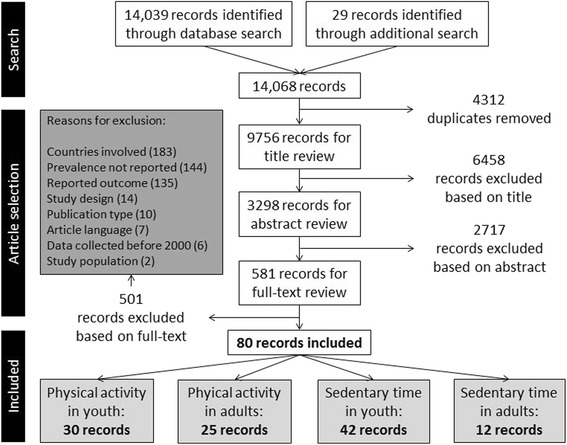
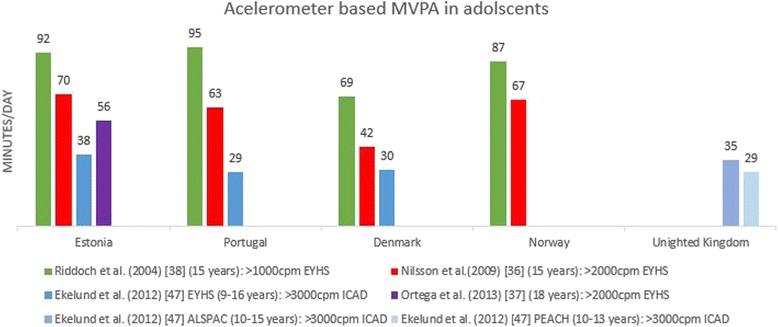
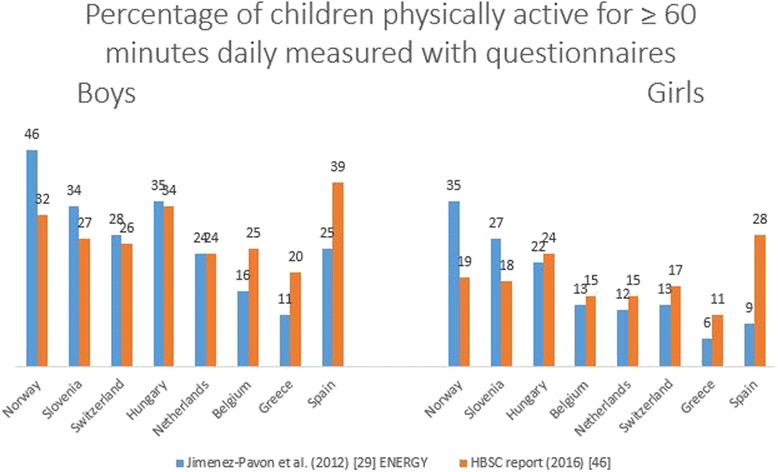
Regular physical activity is associated with physical, social and mental health benefits, whilst insufficient physical activity is associated with several negative health outcomes (e.g. metabolic problems). Population monitoring of physical activity is important to gain insight into prevalence of compliance to physical activity recommendations, groups at risk and changes in physical activity patterns. This review aims to provide an overview of all existing studies that measure physical activity in youth, in cross-European studies, to describe the variation in population levels of physical activity and to describe and define challenges regarding assessment methods that are used. A systematic search was performed on six databases (PubMed, EMBASE, CINAHL, PsycINFO, SportDiscus and OpenGrey), supplemental forward- and backward tracking was done and authors’ and experts’ literature databases were searched to identify relevant articles. Journal articles or reports that reported levels of physical activity in the general population of youth from cross-European studies were included. Data were reviewed, extracted and assessed by two researchers, with disagreements being resolved by a third researcher. The review protocol of this review is published under registration number CRD42014010684 in the PROSPERO database. The search resulted in 9756 identified records of which 30 articles were included in the current review. This review revealed large differences between countries in prevalence of compliance to physical activity recommendations (i.e. 60 min of daily moderate- to vigorous-intensity physical activity (MVPA)) measured subjectively (5–47 %) and accelerometer measured minutes of MVPA (23–200 min). Overall boys and children were more active than girls and adolescents. Different measurement methods (subjective n = 12, objective n = 18) and reported outcome variables ( n = 17) were used in the included articles. Different accelerometer intensity thresholds used to define MVPA resulted in substantial differences in MVPA between studies conducted in the same countries when assessed objectively. Reported levels of physical activity and prevalence of compliance to physical activity recommendations in youth showed large variation across European countries. This may reflect true variation in physical activity as well as variation in assessment methods and reported outcome variables. Standardization across Europe, of methods to assess physical activity in youth and reported outcome variables is warranted, preferably moving towards a pan-European surveillance system combining objective and self-report methods.
Overview
The claims and statistics of this paper haven’t been checked yet.
Free: it reads the open-access text and checks the first 5 claims that cite a source we can check. Create a free account to check every claim.
Integrity signals
Registry
Cites
Statistics
Figures
Verification
Claims the paper makes
The claims and statistics of this paper haven’t been checked yet.
Free: it reads the open-access text and checks the first 5 claims that cite a source we can check. Create a free account to check every claim.
Self-check
Percentages, sums and reported differences re-computed from the paper’s own numbers.
The self-check needs the paper’s full text.
Citations
Cites
Health benefits of physical activity: the evidence
Warburton, D. E. R. (2006) · Canadian Medical Association Journal · doi:10.1503/cmaj.051351 · Cited by 8,007 · cited 1×
“Such levels of physical activity are associated with physical, social and mental health benefits [2 – 4].”
Janssen, I., & LeBlanc, A. G. (2010) · International Journal of Behavioral Nutrition and Physical Activity · doi:10.1186/1479-5868-7-40 · Cited by 4,829
Systematic reviews: CRD's guidance for undertaking reviews in health care
Tacconelli, E. (2010) · The Lancet Infectious Diseases · doi:10.1016/s1473-3099(10)70065-7 · Cited by 3,245 · cited 1×
“Before the search commenced, review protocols were written based on the “ Centre for Reviews and Dissemination ’ s guidance for undertaking reviews in health care ” [20], and registered in the PROSPERO data-base [21].”
Calibration of two objective measures of physical activity for children
Evenson, K. R., Catellier, D. J., Gill, K., Ondrak, K. S., & McMurray, R. G. (2008) · Journal of Sports Sciences · doi:10.1080/02640410802334196 · Cited by 2,677 · cited 1×
“[59] which were recommended by Trost et al.”
Standard Quality Assessment Criteria for Evaluating Primary Research Papers from a Variety of Fields
Kmet, L. M., Cook, L. S., & Lee, R. C. (2004) · University of Alberta Library · doi:10.7939/r37m04f16 · Cited by 1,682
Physical activity from childhood to adulthood
Telama, R., Yang, X., Viikari, J., Välimäki, I., Wanne, O., & Raitakari, O. (2005) · American Journal of Preventive Medicine · doi:10.1016/j.amepre.2004.12.003 · Cited by 1,585 · cited 1×
“Besides, physical activity in childhood and adolescence is positively related to adult physical activity [4, 5] and health [4, 6].”
Andersen, L. B., Harro, M., Sardinha, L. B., Froberg, K., Ekelund, U., Brage, S., & Anderssen, S. A. (2006) · The Lancet · doi:10.1016/s0140-6736(06)69075-2 · Cited by 1,473 · cited 5×
“…participants ≥ 2 days/week VPA 5 HBSC [41 – 44 MVPA children (0 – 12 years old) > 1000 CPM 1 EYHS [38] > 1680 CPM 1 IDEFICS [49] > 2000 CPM 4 EYHS [34 – 37] > 2296 CPM 4 [26], IDEFICS [50, 51], ISCOLE [52] > 3000 CPM 4 ENERGY [30, 31], ICAD [47, 48] MVPA adolescents (13 – 18 years old) > 1500 CPM…”
InfluentialSelf-citationAge and gender differences in objectively measured physical activity in youth
TROST, S. G., PATE, R. R., SALLIS, J. F., FREEDSON, P. S., TAYLOR, W. C., DOWDA, M., & SIRARD, J. (2002) · Medicine and Science in Sports and Exercise · doi:10.1097/00005768-200202000-00025 · Cited by 1,451 · cited 1×
“This is consistent with previous literature [57].”
Comparison of Accelerometer Cut Points for Predicting Activity Intensity in Youth
TROST, S. G., LOPRINZI, P. D., MOORE, R., & PFEIFFER, K. A. (2011) · Medicine & Science in Sports & Exercise · doi:10.1249/mss.0b013e318206476e · Cited by 1,360 · cited 2×
“[13] evaluated the validity of 5 different intensity thresholds used to define MVPA with ActiGraph accelerometers in youth and used indirect calorimetry as reference.”
Janssen, I., Katzmarzyk, P. T., Boyce, W. F., Vereecken, C., Mulvihill, C., Roberts, C., Currie, C., Pickett, W., & The Health Behaviour in School‐Aged Children Obesity Working Group (2005) · Obesity Reviews · doi:10.1111/j.1467-789x.2005.00176.x · Cited by 1,169 · cited 7×
“If there was more than one article per study reporting exactly the same outcome variable in a similar way in the same sample, the article with the largest amount of information was chosen [28 – 30, 32, 38, 39, 42, 44, 46, 47, 49, 50].”
InfluentialEkelund, U. (2012) · JAMA · doi:10.1001/jama.2012.156 · Cited by 1,158
Self-citationPhysical Activity Assessment in Children and Adolescents
Sirard, J. R., & Pate, R. R. (2001) · Sports Medicine · doi:10.2165/00007256-200131060-00004 · Cited by 1,049 · cited 1×
“Traditionally, physical activity is assessed by means of self-report questionnaires, especially in larger population studies [9, 10].”
Physical Activity and Bone Health
Kohrt, W. M., Bloomfield, S. A., Little, K. D., Nelson, M. E., & Yingling, V. R. (2004) · Medicine & Science in Sports & Exercise · doi:10.1249/01.mss.0000142662.21767.58 · Cited by 1,043
A Physical Activity Screening Measure for Use With Adolescents in Primary Care
Prochaska, J. J., Sallis, J. F., & Long, B. (2001) · Archives of Pediatrics & Adolescent Medicine · doi:10.1001/archpedi.155.5.554 · Cited by 1,002
Adolescent Physical Activity and Health: A Systematic Review
Hallal, P. C., Victora, C. G., Azevedo, M. R., & Wells, J. C. K. (2006) · Sports Medicine · doi:10.2165/00007256-200636120-00003 · Cited by 986
Physical activity levels and patterns of 9- and 15-yr-old European children
RIDDOCH, C. J., BO ANDERSEN, L., WEDDERKOPP, N., HARRO, M., KLASSON-HEGGEBØ, L., SARDINHA, L. B., COOPER, A. R., & EKELUND, U. (2004) · Medicine & Science in Sports & Exercise · doi:10.1249/01.mss.0000106174.43932.92 · Cited by 900 · cited 12×
“Table 4 Assessment methods and reported outcome variables in the articles included in the systematic review (Continued) LPA (500–2000 CPM) 1 EYHS [35] MVPA (>1680 CPM) 1 IDEFICS [49] MVPA (>2000 CPM) 1 EYHS [35] VPA (>3000) 1 EYHS [35] % of participants meeting recommendations 15 [27], ENERGY [29, 30], EPAPA [32], HBS…”
InfluentialSelf-citationMachine Learning Methods for Classifying Human Physical Activity from On-Body Accelerometers
Mannini, A., & Sabatini, A. M. (2010) · Sensors · doi:10.3390/s100201154 · Cited by 781 · cited 1×
“Thereby removing the need for “counts” based intensity thresholds, and allowing the possibility of identifying specific activities from the accelerometer data using neural networking or machine learning to identify activities followed by the use of “look up” tables to find an associated energy cost [71, 72].”
Pedometer Measures of Free-Living Physical Activity: Comparison of 13 Models
SCHNEIDER, P. L., CROUTER, S. E., & BASSETT, D. R. (2004) · Medicine & Science in Sports & Exercise · doi:10.1249/01.mss.0000113486.60548.e9 · Cited by 752 · cited 1×
“For example, consensus still has to be reached regarding the accuracy of steps recorded by different pedometers [12], as well as the specific accelerometer intensity thresholds [11, 13] that correspond with low intensity physical activity (LPA), MVPA or VPA in youth.”
Assessment of physical activity in youth
Corder, K., Ekelund, U., Steele, R. M., Wareham, N. J., & Brage, S. (2008) · Journal of Applied Physiology · doi:10.1152/japplphysiol.00094.2008 · Cited by 581 · cited 1×
“Traditionally, physical activity is assessed by means of self-report questionnaires, especially in larger population studies [9, 10].”
Self-citationCliff, D. P., Reilly, J. J., & Okely, A. D. (2009) · Journal of Science and Medicine in Sport · doi:10.1016/j.jsams.2008.10.008 · Cited by 464 · cited 1×
“Furthermore, this outcome needs calibration in order to be converted into a meaningful outcome such as minutes spent in MVPA [60].”
Ekelund, U., Sardinha, L. B., Anderssen, S. A., Harro, M., Franks, P. W., Brage, S., Cooper, A. R., Andersen, L. B., Riddoch, C., & Froberg, K. (2004) · The American Journal of Clinical Nutrition · doi:10.1093/ajcn/80.3.584 · Cited by 428 · cited 3×
“Table 4 Assessment methods and reported outcome variables in the articles included in the systematic review (Continued) LPA (500–2000 CPM) 1 EYHS [35] MVPA (>1680 CPM) 1 IDEFICS [49] MVPA (>2000 CPM) 1 EYHS [35] VPA (>3000) 1 EYHS [35] % of participants meeting recommendations 15 [27], ENERGY [29, 30], EPAPA [32], HBS…”
Self-citationStaudenmayer, J., Pober, D., Crouter, S., Bassett, D., & Freedson, P. (2009) · Journal of Applied Physiology · doi:10.1152/japplphysiol.00465.2009 · Cited by 361 · cited 1×
“Thereby removing the need for “counts” based intensity thresholds, and allowing the possibility of identifying specific activities from the accelerometer data using neural networking or machine learning to identify activities followed by the use of “look up” tables to find an associated energy cost [71, 72].”
on behalf of the HELENA Study Group, Moreno, L. A., De Henauw, S., González-Gross, M., Kersting, M., Molnár, D., Gottrand, F., Barrios, L., Sjöström, M., Manios, Y., et al. (2008) · International Journal of Obesity · doi:10.1038/ijo.2008.177 · Cited by 353 · cited 1×
“Such an example is the HELENAstudy (Healthy lifestyle in Europe by nutrition in adolescence) [69].”
What proportion of youth are physically active? Measurement issues, levels and recent time trends
Ekelund, U., Tomkinson, G., & Armstrong, N. (2011) · British Journal of Sports Medicine · doi:10.1136/bjsports-2011-090190 · Cited by 311 · cited 4×
“In European countries for which data was reported in the included articles, 5 to 47% of children and adolescents complied with the recommended levels of physical activity when measured subjectively, which was consistent with previous research [55].”
InfluentialSelf-citationObjective Measurement of Physical Activity in Youth: Current Issues, Future Directions
Trost, S. G. (2001) · Exercise and Sport Sciences Reviews · doi:10.1097/00003677-200101000-00007 · Cited by 306 · cited 1×
“To establish accurate prevalence data and to monitor changes in physical activity in youth, valid and reliable measures are required [7, 8].”
Ortega, F. B., Konstabel, K., Pasquali, E., Ruiz, J. R., Hurtig-Wennlöf, A., Mäestu, J., Löf, M., Harro, J., Bellocco, R., Labayen, I., et al. (2013) · PLoS ONE · doi:10.1371/journal.pone.0060871 · Cited by 281 · cited 9×
“[37] used a longitudinal design, but only follow up data of this study were included in the review, because baseline data were collected before 2000 and Ekelund et al.”
InfluentialVerloigne, M., Van Lippevelde, W., Maes, L., Yildirim, M., Chinapaw, M., Manios, Y., Androutsos, O., Kovacs, E., Bringolf-Isler, B., Brug, J., et al. (2012) · International Journal of Behavioral Nutrition and Physical Activity · doi:10.1186/1479-5868-9-34 · Cited by 258 · cited 10×
“…MVPA (>1680 CPM) 1 IDEFICS [49] MVPA (>2000 CPM) 1 EYHS [35] VPA (>3000) 1 EYHS [35] % of participants meeting recommendations 15 [27], ENERGY [29, 30], EPAPA [32], HBSC [39 – 46], IDEFICS [50, 51], TOYBOX [53] ≥ 60 min on ≥ 5 days 4 HBSC [39 – 41, ≥ 180 min on ≥ 7 days 1 TOYBOX [53] physical…”
InfluentialSelf-citationComparison of three generations of ActiGraph™ activity monitors in children and adolescents
Robusto, K. M., & Trost, S. G. (2012) · Journal of Sports Sciences · doi:10.1080/02640414.2012.710761 · Cited by 254 · cited 1×
“However, others have concluded that different models of the Actigraph accelerometer yield comparable results [62 – 66].”
Kalman, M., Inchley, J., Sigmundova, D., Iannotti, R. J., Tynjala, J. A., Hamrik, Z., Haug, E., & Bucksch, J. (2015) · The European Journal of Public Health · doi:10.1093/eurpub/ckv024 · Cited by 239 · cited 14×
“The HBSC study [46] included one single item question on the number of days over the ‘ past ’ week that participants were physically active for a total of at least 60 min per day.”
InfluentialObjectively measured physical activity in European children: the IDEFICS study
on behalf of the IDEFICS consortium, Konstabel, K., Veidebaum, T., Verbestel, V, Moreno, L. A., Bammann, K., Tornaritis, M., Eiben, G., Molnár, D., Siani, A., et al. (2014) · International Journal of Obesity · doi:10.1038/ijo.2014.144 · Cited by 236 · cited 4×
“Table 4 Assessment methods and reported outcome variables in the articles included in the systematic review (Continued) LPA (500–2000 CPM) 1 EYHS [35] MVPA (>1680 CPM) 1 IDEFICS [49] MVPA (>2000 CPM) 1 EYHS [35] VPA (>3000) 1 EYHS [35] % of participants meeting recommendations 15 [27], ENERGY [29, 30], EPAPA [32], HBS…”
InfluentialA hitchhiker's guide to assessing young people's physical activity: Deciding what method to use
Dollman, J., Okely, A. D., Hardy, L., Timperio, A., Salmon, J., & Hills, A. P. (2009) · Journal of Science and Medicine in Sport · doi:10.1016/j.jsams.2008.09.007 · Cited by 224 · cited 1×
“Furthermore, pedometer and accelerometer assessments do not provide information regarding the context of physical activity [14].”
Physical Activity, Sedentary Time, and Obesity in an International Sample of Children
KATZMARZYK, P. T., BARREIRA, T. V., BROYLES, S. T., CHAMPAGNE, C. M., CHAPUT, J.-P., FOGELHOLM, M., HU, G., JOHNSON, W. D., KURIYAN, R., KURPAD, A., et al. (2015) · Medicine & Science in Sports & Exercise · doi:10.1249/mss.0000000000000649 · Cited by 222 · cited 4×
“Table 4 Assessment methods and reported outcome variables in the articles included in the systematic review (Continued) LPA (500–2000 CPM) 1 EYHS [35] MVPA (>1680 CPM) 1 IDEFICS [49] MVPA (>2000 CPM) 1 EYHS [35] VPA (>3000) 1 EYHS [35] % of participants meeting recommendations 15 [27], ENERGY [29, 30], EPAPA [32], HBS…”
Influentialthe HBSC Obesity Writing Group, Haug, E., Rasmussen, M., Samdal, O., Iannotti, R., Kelly, C., Borraccino, A., Vereecken, C., Melkevik, O., Lazzeri, G., et al. (2009) · International Journal of Public Health · doi:10.1007/s00038-009-5408-6 · Cited by 215 · cited 3×
“…meeting recommendations 15 [27], ENERGY [29, 30], EPAPA [32], HBSC [39 – 46], IDEFICS [50, 51], TOYBOX [53] ≥ 60 min on ≥ 5 days 4 HBSC [39 – 41, ≥ 180 min on ≥ 7 days 1 TOYBOX [53] physical activity accumulated in 10 min bouts ≥ 60 min on ≥ 7 days 1 EPAPA [32] % of participants ≥ 2…”
Comparison of Four ActiGraph Accelerometers during Walking and Running
JOHN, D., TYO, B., & BASSETT, D. R. (2010) · Medicine & Science in Sports & Exercise · doi:10.1249/mss.0b013e3181b3af49 · Cited by 183
Verloigne, M., Loyen, A., Van Hecke, L., Lakerveld, J., Hendriksen, I., De Bourdheaudhuij, I., Deforche, B., Donnelly, A., Ekelund, U., Brug, J., et al. (2016) · International Journal of Behavioral Nutrition and Physical Activity · doi:10.1186/s12966-016-0395-5 · Cited by 175
Self-citationInternational children's accelerometry database (ICAD): Design and methods
Sherar, L. B., Griew, P., Esliger, D. W., Cooper, A. R., Ekelund, U., Judge, K., & Riddoch, C. (2011) · BMC Public Health · doi:10.1186/1471-2458-11-485 · Cited by 162 · cited 1×
“This can be done by building on previous work, for example the International Children’s Accelerometry Database (ICAD) project pooled individual accelerometer data files and cleaned, reduced and processed it using standardized methods [70].”
Self-citationGuinhouya, B. C., Samouda, H., & de Beaufort, C. (2013) · Public Health · doi:10.1016/j.puhe.2013.01.020 · Cited by 151 · cited 3×
“In previous reviews, results suggested prevalence data between 0 and 100% [55, 56].”
on behalf of the DEDIPAC consortium, Loyen, A., Van Hecke, L., Verloigne, M., Hendriksen, I., Lakerveld, J., Steene-Johannessen, J., Vuillemin, A., Koster, A., Donnelly, A., et al. (2016) · International Journal of Behavioral Nutrition and Physical Activity · doi:10.1186/s12966-016-0398-2 · Cited by 144
Self-citationNilsson, A., Anderssen, S. A., Andersen, L. B., Froberg, K., Riddoch, C., Sardinha, L. B., & Ekelund, U. (2009) · Scandinavian Journal of Medicine & Science in Sports · doi:10.1111/j.1600-0838.2007.00762.x · Cited by 133 · cited 12×
“[36] were 15 years old compared to 18 years in the article of Ortega et al.”
InfluentialSelf-citation13 Physical Activity Epidemiology Applied to Children and Adolescents
CASPERSEN, C. J., NIXON, P. A., & DuRANT, R. H. (1998) · Exercise and Sport Sciences Reviews · doi:10.1249/00003677-199800260-00015 · Cited by 125 · cited 1×
“To establish accurate prevalence data and to monitor changes in physical activity in youth, valid and reliable measures are required [7, 8].”
Vanhelst, J., Mikulovic, J., Bui-Xuan, G., Dieu, O., Blondeau, T., Fardy, P., & Béghin, L. (2012) · BMC Research Notes · doi:10.1186/1756-0500-5-187 · Cited by 122 · cited 1×
“However, others have concluded that different models of the Actigraph accelerometer yield comparable results [62 – 66].”
Guinhouya, C. B., Hubert, H., Soubrier, S., Vilhelm, C., Lemdani, M., & Durocher, A. (2006) · Obesity · doi:10.1038/oby.2006.89 · Cited by 117 · cited 2×
“Because such self-report measures are prone to bias, recently more objective assessment methods (e.g. pe-dometers or accelerometers) are also being used [11].”
Comparison of the ActiGraph 7164 and the ActiGraph GT1M during Self-Paced Locomotion
KOZEY, S. L., STAUDENMAYER, J. W., TROIANO, R. P., & FREEDSON, P. S. (2010) · Medicine & Science in Sports & Exercise · doi:10.1249/mss.0b013e3181c29e90 · Cited by 113
Maternal employment and childhood obesity – A European perspective
Gwozdz, W., Sousa‐Poza, A., Reisch, L. A., Ahrens, W., Eiben, G., Fernández-Alvira, J. M., Hadjigeorgiou, C., Henauw, S. D., Kovács, E., Lauria, F., et al. (2013) · Journal of Health Economics · doi:10.1016/j.jhealeco.2013.04.003 · Cited by 101 · cited 5×
“In the ENERGY study [30, 31], IDEFICS study [49 – 51] and ICAD study [47, 48] a combination of different models was used: the ENERGY-study used one old (Actitrainer) and two new (GT1M, GT3X) ActiGraph models, the IDEFICS-study used one old (Acti-trainer) and one newer ActiGraph model (GT1M) and the ICAD-study pooled s…”
InfluentialRütten, A., Vuillemin, A., Ooijendijk, W., Schena, F., Sjöström, M., Stahl, T., Vanden Auweele, Y., Welshman, J., & Ziemainz, H. (2003) · Public Health Nutrition · doi:10.1079/phn2002449 · Cited by 93 · cited 1×
“This was decided as national studies often do not use standardised self-report instruments and data reduction and processing methods are diverse, which limits comparability between countries [16, 68].”
Differences in Energy Balance-Related Behaviours in European Preschool Children: The ToyBox-Study
Craemer, M. D., Lateva, M. P., Iotova, V., Decker, E. D., Verloigne, M., Bourdeaudhuij, I. D., Androutsos, O., Socha, P., Kułaga, Z., Moreno, L. A., et al. (2015) · PLoS ONE · doi:10.1371/journal.pone.0118303 · Cited by 85 · cited 5×
“…ENERGY [29, 30], EPAPA [32], HBSC [39 – 46], IDEFICS [50, 51], TOYBOX [53] ≥ 60 min on ≥ 5 days 4 HBSC [39 – 41, ≥ 180 min on ≥ 7 days 1 TOYBOX [53] physical activity accumulated in 10 min bouts ≥ 60 min on ≥ 7 days 1 EPAPA [32] % of participants ≥ 2 days/week VPA 5 HBSC [41 – 44 MVPA children…”
InfluentialSelf-citationFernández-Alvira, J. M., De Bourdeaudhuij, I., Singh, A. S., Vik, F. N., Manios, Y., Kovacs, E., Jan, N., Brug, J., & Moreno, L. A. (2013) · International Journal of Behavioral Nutrition and Physical Activity · doi:10.1186/1479-5868-10-5 · Cited by 80 · cited 3×
“Table 4 Assessment methods and reported outcome variables in the articles included in the systematic review (Continued) LPA (500–2000 CPM) 1 EYHS [35] MVPA (>1680 CPM) 1 IDEFICS [49] MVPA (>2000 CPM) 1 EYHS [35] VPA (>3000) 1 EYHS [35] % of participants meeting recommendations 15 [27], ENERGY [29, 30], EPAPA [32], HBS…”
Self-citationWeekday and weekend physical activity patterns of French and Spanish adolescents
Solana, A. A., Bois, J. E., Casterad, J. Z., Lanaspa, E. G., Paillard, T., & Fairclough, S. J. (2013) · European Journal of Sport Science · doi:10.1080/17461391.2013.829127 · Cited by 78 · cited 4×
“Table 4 Assessment methods and reported outcome variables in the articles included in the systematic review (Continued) LPA (500–2000 CPM) 1 EYHS [35] MVPA (>1680 CPM) 1 IDEFICS [49] MVPA (>2000 CPM) 1 EYHS [35] VPA (>3000) 1 EYHS [35] % of participants meeting recommendations 15 [27], ENERGY [29, 30], EPAPA [32], HBS…”
Influentialon behalf of the DEDIPAC consortium, Loyen, A., Verloigne, M., Van Hecke, L., Hendriksen, I., Lakerveld, J., Steene-Johannessen, J., Koster, A., Donnelly, A., Ekelund, U., et al. (2016) · International Journal of Behavioral Nutrition and Physical Activity · doi:10.1186/s12966-016-0397-3 · Cited by 77
Self-citationRico, E. R., Hilland, T. A., Foweather, L., García, E. F., & Fairclough, S. J. (2013) · European Journal of Sport Science · doi:10.1080/17461391.2013.827242 · Cited by 75 · cited 5×
“…VPA 5 HBSC [41 – 44 MVPA children (0 – 12 years old) > 1000 CPM 1 EYHS [38] > 1680 CPM 1 IDEFICS [49] > 2000 CPM 4 EYHS [34 – 37] > 2296 CPM 4 [26], IDEFICS [50, 51], ISCOLE [52] > 3000 CPM 4 ENERGY [30, 31], ICAD [47, 48] MVPA adolescents (13 – 18 years old) > 1500 CPM 1 EYHS [38] > 2000 CPM…”
InfluentialLakerveld, J., van der Ploeg, H. P., Kroeze, W., Ahrens, W., Allais, O., Andersen, L. F., Cardon, G., Capranica, L., Chastin, S., Donnelly, A., et al. (2014) · International Journal of Behavioral Nutrition and Physical Activity · doi:10.1186/s12966-014-0143-7 · Cited by 70 · cited 1×
“to monitor dietary, physical activity and sedentary behaviours and changes in these behaviours across the life course and within populations to identify targets and target populations for (policy) interventions” [15].”
Self-citationJiménez‐Pavón, D., Fernández-Alvira, J. M., Velde, S. J. T., Brug, J., Bere, E. T., Jan, N., Kovacs, E., Androutsos, O., Μanios, Y., Bourdeaudhuij, I. D., et al. (2012) · Preventive Medicine · doi:10.1016/j.ypmed.2012.07.011 · Cited by 61 · cited 7×
“The ENERGY study [29] on the other hand included questions on sports participation (2 questions) and active transport (4 questions) in a ‘usual’ week.”
InfluentialSelf-citationA cross‐cultural study of adolescents' physical activity levels in France and Spain
Solana, A. A., Bois, J. E., Lanaspa, E. G., Casterad, J. Z., & Paillard, T. (2012) · European Journal of Sport Science · doi:10.1080/17461391.2012.746733 · Cited by 50 · cited 4×
“Table 4 Assessment methods and reported outcome variables in the articles included in the systematic review (Continued) LPA (500–2000 CPM) 1 EYHS [35] MVPA (>1680 CPM) 1 IDEFICS [49] MVPA (>2000 CPM) 1 EYHS [35] VPA (>3000) 1 EYHS [35] % of participants meeting recommendations 15 [27], ENERGY [29, 30], EPAPA [32], HBS…”
InfluentialLee, K., Macfarlane, D. J., & Cerin, E. (2013) · European Journal of Sport Science · doi:10.1080/17461391.2011.643925 · Cited by 43
Hildebrand, M., Kolle, E., Hansen, B. H., Collings, P. J., Wijndaele, K., Kordas, K., Cooper, A. R., Sherar, L. B., Andersen, L. B., Sardinha, L. B., et al. (2015) · American Journal of Clinical Nutrition · doi:10.3945/ajcn.114.103648 · Cited by 43 · cited 4×
“Table 4 Assessment methods and reported outcome variables in the articles included in the systematic review (Continued) LPA (500–2000 CPM) 1 EYHS [35] MVPA (>1680 CPM) 1 IDEFICS [49] MVPA (>2000 CPM) 1 EYHS [35] VPA (>3000) 1 EYHS [35] % of participants meeting recommendations 15 [27], ENERGY [29, 30], EPAPA [32], HBS…”
InfluentialSelf-citationGrydeland, M., Hansen, B. H., Ried-Larsen, M., Kolle, E., & Anderssen, S. A. (2014) · BMC Sports Science, Medicine and Rehabilitation · doi:10.1186/2052-1847-6-26 · Cited by 42 · cited 1×
“…and models of the same type of accelerometer may produce different results for the same acceleration which need to be considered when interpreting accelerometer derived physical activity data Van Hecke et al. International Journal of Behavioral Nutrition and Physical Activity (2016) 13:70 [61].”
Biddle, S., Soós, I., Hamar, P., Șandor, I., Šimonek, J., & Karsai, I. (2009) · European Journal of Sport Science · doi:10.1080/17461390902829234 · Cited by 38 · cited 2×
“…IDEFICS [49 – 51], ISCOLE [52] Pedometer 2 [25], TOYBOX [53] Questionnaire 10 ENERGY [28, 29], HBSC [39 – 46] Ecological momentary assessment 2 [24, 27] Accelerometer model ActiGraph GT1M 8 [26], ENERGY [30, 31], IDEFICS [49 – 51], ICAD [47, 48] GT3X 5 ENERGY [30, 31], EPAPA [32, 33], ISCOLE…”
Adherence to combined lifestyle factors and their contribution to obesity in the IDEFICS study
Kovács, E., Hunsberger, M., Reisch, L., Gwozdz, W., Eiben, G., De Bourdeaudhuij, I., Russo, P., Veidebaum, T., Hadjigeorgiou, C., Sieri, S., et al. (2015) · Obesity Reviews · doi:10.1111/obr.12349 · Cited by 37 · cited 1×
“Table 4 Assessment methods and reported outcome variables in the articles included in the systematic review (Continued) LPA (500–2000 CPM) 1 EYHS [35] MVPA (>1680 CPM) 1 IDEFICS [49] MVPA (>2000 CPM) 1 EYHS [35] VPA (>3000) 1 EYHS [35] % of participants meeting recommendations 15 [27], ENERGY [29, 30], EPAPA [32], HBS…”
Yıldırım, M., Schoeni, A., Singh, A. S., Altenburg, T. M., Brug, J., Bourdeaudhuij, I. D., Kovacs, E., Bringolf‐Isler, B., Μanios, Y., & Chinapaw, M. J. M. (2014) · Journal of Physical Activity and Health · doi:10.1123/jpah.2012-0102 · Cited by 26 · cited 5×
“(2001) [67]) 8 HBSC [39–46] Mode of questionnaire administration Self-administered 10 ENERGY [28, 29], HBSC [39–46] Timing physical activity measurement Average per week 2 ENERGY [28, 29] Last seven days/week 8 HBSC [39–46] Reported outcome variables Total physical activity 12 [24, 25], ENERGY [28, 30, 31], EYHS [34–3…”
InfluentialSelf-citationSoós, I., Biddle, S., Ling, J., Hamar, P., Șandor, I., Boroș-Balint, I., Szabó, P., & Šimonek, J. (2014) · Hrčak Portal of scientific journals of Croatia (University Computing Centre) · Cited by 24
Valverde, P. R., Brooks, F. M., García‐Moya, I., Rivera, F., & Moreno, C. (2013) · The Social Science Journal · doi:10.1016/j.soscij.2013.09.017 · Cited by 21 · cited 1×
“…4 ENERGY [30, 31], ICAD [47, 48] MVPA adolescents (13 – 18 years old) > 1500 CPM 1 EYHS [38] > 2000 CPM 3 EYHS [34, 36, 37] > 2296 CPM 4 [26], EPAPA [32, 33], ISCOLE [52] > 3000 CPM 2 ICAD [47, 48] Guidelines mentioned in article ≥ 60 min physical activity on at ≥ 5 days 4 HBSC [39 – 41, 43] ≥ 60”
Comparisons in ambulatory physical activity in children from the United Kingdom and Belgium
Duncan, M. J., Birch, S. L., Eyre, E. L. J., Bryant, E. C., Rutten, C., Boen, F., & Seghers, J. (2014) · Annals of Human Biology · doi:10.3109/03014460.2014.944568 · Cited by 3 · cited 3×
“Table 4 Assessment methods and reported outcome variables in the articles included in the systematic review (Continued) LPA (500–2000 CPM) 1 EYHS [35] MVPA (>1680 CPM) 1 IDEFICS [49] MVPA (>2000 CPM) 1 EYHS [35] VPA (>3000) 1 EYHS [35] % of participants meeting recommendations 15 [27], ENERGY [29, 30], EPAPA [32], HBS…”
Research works printed but not linked: 2
- WHO Global recommendations on physical activity for health 2010 26180873
- WHO. Review of physical activity surveillance data sources in European Union Member States. 2010 Contract No.: Report no. 6.
Cited by
Nutrition in adolescents: physiology, metabolism, and nutritional needs
Das, J. K., Salam, R. A., Thornburg, K. L., Prentice, A. M., Campisi, S., Lassi, Z. S., Koletzko, B., & Bhutta, Z. A. (2017) · Annals of the New York Academy of Sciences · doi:10.1111/nyas.13330 · Cited by 597
Farooq, A., Martin, A., Janssen, X., Wilson, M. G., Gibson, A., Hughes, A., & Reilly, J. J. (2020) · Obesity Reviews · doi:10.1111/obr.12953 · Cited by 460
“Current guidelines recommend that children engage in at least 60 minute day of MVPA, yet many children and adolescents do not meet these recommendations globally.(11,12) Furthermore, based on few longitudinal studies with 5 years or more of follow‐up, MVPA appears to decline with age,(13-15) but it is not clear how ea…”
BackgroundOn behalf of the Determinants of Diet and Physical Activity knowledge hub (DEDIPAC); International Children’s Accelerometry Database (ICAD) Collaborators, I. C. A. H. C., Steene-Johannessen, J., Hansen, B. H., Dalene, K. E., Kolle, E., Northstone, K., Møller, N. C., Grøntved, A., Wedderkopp, N., Kriemler, S., et al. (2020) · International Journal of Behavioral Nutrition and Physical Activity · doi:10.1186/s12966-020-00930-x · Cited by 415
Self-citationGarrido-Miguel, M., Cavero-Redondo, I., Álvarez-Bueno, C., Rodríguez-Artalejo, F., Moreno, L. A., Ruiz, J. R., Ahrens, W., & Martínez-Vizcaíno, V. (2019) · JAMA Pediatrics · doi:10.1001/jamapediatrics.2019.2430 · Cited by 321
Lounassalo, I., Salin, K., Kankaanpää, A., Hirvensalo, M., Palomäki, S., Tolvanen, A., Yang, X., & Tammelin, T. H. (2019) · BMC Public Health · doi:10.1186/s12889-019-6513-y · Cited by 248
Metadata
- Authors
- on behalf of the DEDIPAC consortium, Van Hecke, L., Loyen, A., Verloigne, M., van der Ploeg, H. P., Lakerveld, J., Brug, J., De Bourdeaudhuij, I., Ekelund, U., Donnelly, A., Hendriksen, I., & Deforche, B.
- Affiliations
- Amsterdam Public Health (NL)
- Ghent University (BE)
- Norwegian School of Sport Sciences (NO)
- University of Limerick (IE)
- Netherlands Organisation for Applied Scientific Research (NL)
- Vrije Universiteit Brussel (BE)
- Corresponding author
- Loyen, Anne
- ORCID
- Venue
- International Journal of Behavioral Nutrition and Physical Activity
- Published
- 2016-06-28
- Volume
- 13
- Issue
- 1
- ISSN
- 1479-5868 (ISSN-L)
- PMC
- PMC5399406
- OpenAlex
- W4253267310
- Semantic Scholar
- 53372a4dbc26b929ff7bac7222394f85344c7db0
- Cited by
- 173
- References
- 63
- Citations by year
- 2026: 5 · 2025: 13 · 2024: 14 · 2023: 12 · 2022: 21 · 2021: 21 · 2020: 33 · 2019: 28 · 2018: 13 · 2017: 9 · 2016: 3
- FWCI
- 2.08
- Type
- journal article
- Language
- en
- Open access
- gold
- doi.org
- Licence
- cc-by
- Locations
- International Journal of Behavioral Nutrition and Physical Activity (publishedVersion, cc-by)
- PubMed Central (publishedVersion, cc-by)
- Amsterdam UMC (VU Amsterdam) - Institutional Repository (publishedVersion)
- BIBSYS Brage (BIBSYS (Norway)) (acceptedVersion)
- University of Limerick Institutional Repository (University of Limerick) (acceptedVersion, other-oa)
- Ghent University Academic Bibliography (Ghent University) (submittedVersion, cc-by)
- TNO Repository (submittedVersion)
- Pure Amsterdam UMC (submittedVersion, other-oa)
- Arrow@dit (Dublin Institute of Technology) (submittedVersion, cc-by-nc-sa)
- NORA - Norwegian Open Research Archives (submittedVersion, other-oa)
- Repository hosted by TU Delft Library (TU Delft) (submittedVersion)
- VUBIR (Vrije Universiteit Brussel) (submittedVersion)
- Data Archiving and Networked Services (DANS) (submittedVersion, other-oa)
- Data Archiving and Networked Services (DANS) (submittedVersion)
- Figshare (cc-by)
- Funders
- Fonds Wetenschappelijk Onderzoek
- ZonMw
- Norges Forskningsråd
- Health Research Board
- Topics
- Health Sciences › Medicine › Public Health, Environmental and Occupational Health › Physical Activity and Health
- Social Sciences › Life-span and Life-course Studies › Recreational Sport and Physical Activity
- Health Sciences › Medicine › Public Health, Environmental and Occupational Health › Obesity, Physical Activity, Diet
- Keywords
- physical activity level, children, adolescents, moderate-to-vigorous physical activity, cross-national variation, sex differences in physical activity, DEDIPAC
About these checks
Registry, retraction, Cites and statistics results are computed, not judged, with one exception: a printed reference that no index lists is read once by a model before it counts as a citation error. Claims are extracted by a model and kept only when their quote appears verbatim in the text; each cited source is then checked, with a model’s help, for whether it says what the claim relies on. Those verdicts can be wrong — read the claim’s quote and the cited source before relying on one.
Statistics and arithmetic are recomputed, not judged.
Confidence bands are shown only for fields calibrated on our annotated test set. None is calibrated yet, so no band is shown.
What counts as a claim ›How we measure confidence ›How we check this ›
Are you an author, or do you see a problem with this page? Request a review
Data sources
Bibliographic data: Semantic Scholar, OpenAlex, Crossref.
Contains information from the Semantic Scholar Academic Graph Datasets, made available under the ODC Attribution License (ODC-BY 1.0).
Semantic Scholar’s data is described in: Kinney, R., et al. (2023). The Semantic Scholar Open Data Platform. arXiv:2301.10140.
