

The DOI matches its Crossref record; 59 of the 59 references it cites were found in a registry or an index.
Using computer, mobile and wearable technology enhanced interventions to reduce sedentary behaviour: a systematic review and meta-analysis
Open accessAbstract
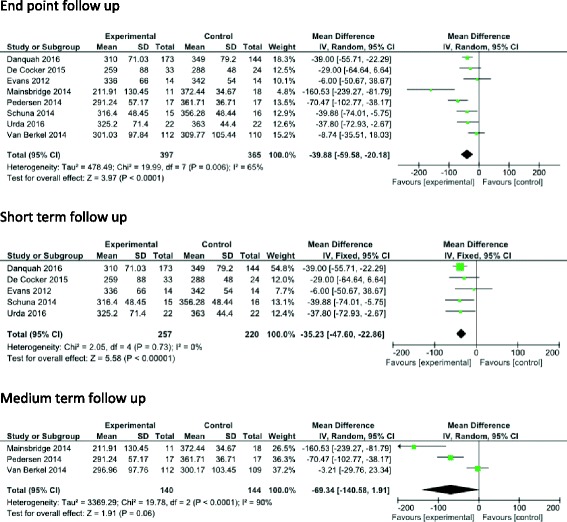
BACKGROUND: High levels of sedentary behaviour (SB) are associated with negative health consequences. Technology enhanced solutions such as mobile applications, activity monitors, prompting software, texts, emails and websites are being harnessed to reduce SB. The aim of this paper is to evaluate the effectiveness of such technology enhanced interventions aimed at reducing SB in healthy adults and to examine the behaviour change techniques (BCTs) used. METHODS: Five electronic databases were searched to identify randomised-controlled trials (RCTs), published up to June 2016. Interventions using computer, mobile or wearable technologies to facilitate a reduction in SB, using a measure of sedentary time as an outcome, were eligible for inclusion. Risk of bias was assessed using the Cochrane Collaboration's tool and interventions were coded using the BCT Taxonomy (v1). RESULTS: Meta-analysis of 15/17 RCTs suggested that computer, mobile and wearable technology tools resulted in a mean reduction of -41.28 min per day (min/day) of sitting time (95% CI -60.99, -21.58, I2 = 77%, n = 1402), in favour of the intervention group at end point follow-up. The pooled effects showed mean reductions at short (≤ 3 months), medium (>3 to 6 months), and long-term follow-up (>6 months) of -42.42 min/day, -37.23 min/day and -1.65 min/day, respectively. Overall, 16/17 studies were deemed as having a high or unclear risk of bias, and 1/17 was judged to be at a low risk of bias. A total of 46 BCTs (14 unique) were coded for the computer, mobile and wearable components of the interventions. The most frequently coded were "prompts and cues", "self-monitoring of behaviour", "social support (unspecified)" and "goal setting (behaviour)". CONCLUSION: Interventions using computer, mobile and wearable technologies can be effective in reducing SB. Effectiveness appeared most prominent in the short-term and lessened over time. A range of BCTs have been implemented in these interventions. Future studies need to improve reporting of BCTs within interventions and address the methodological flaws identified within the review through the use of more rigorously controlled study designs with longer-term follow-ups, objective measures of SB and the incorporation of strategies to reduce attrition. TRIAL REGISTRATION: The review protocol was registered with PROSPERO: CRD42016038187.
Overview
The claims and statistics of this paper haven’t been checked yet.
Run the check — free, no account needed. It reads the open-access text and checks the sources it cites.
Integrity signals
Registry
Cites
Statistics
Figures
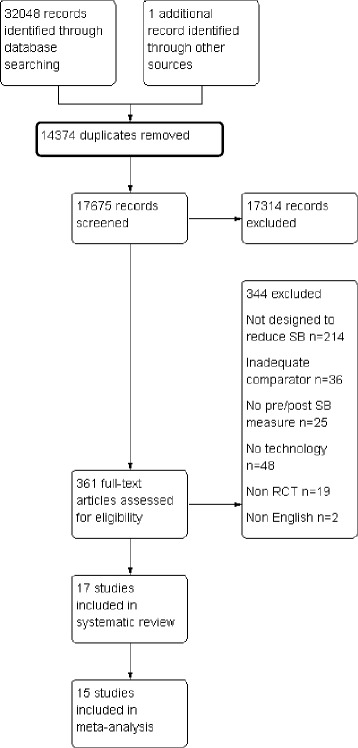
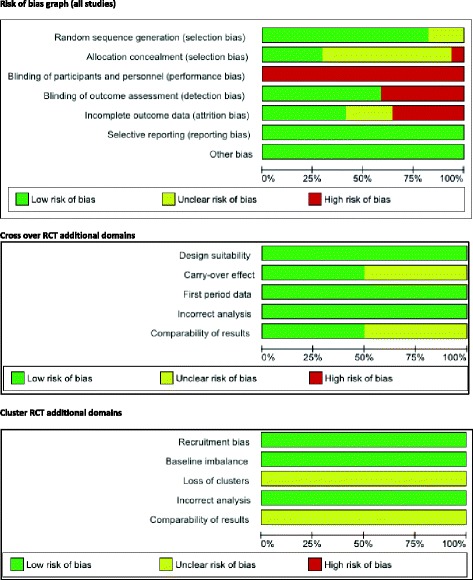
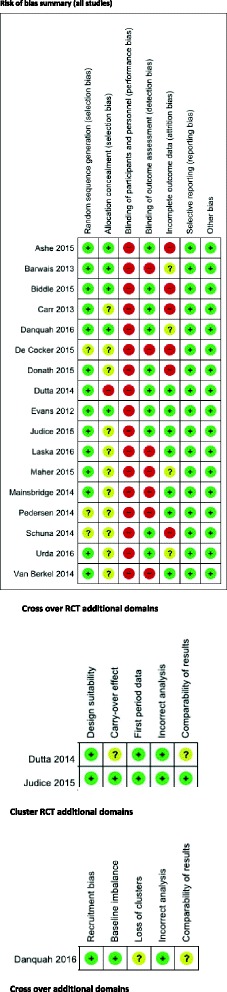
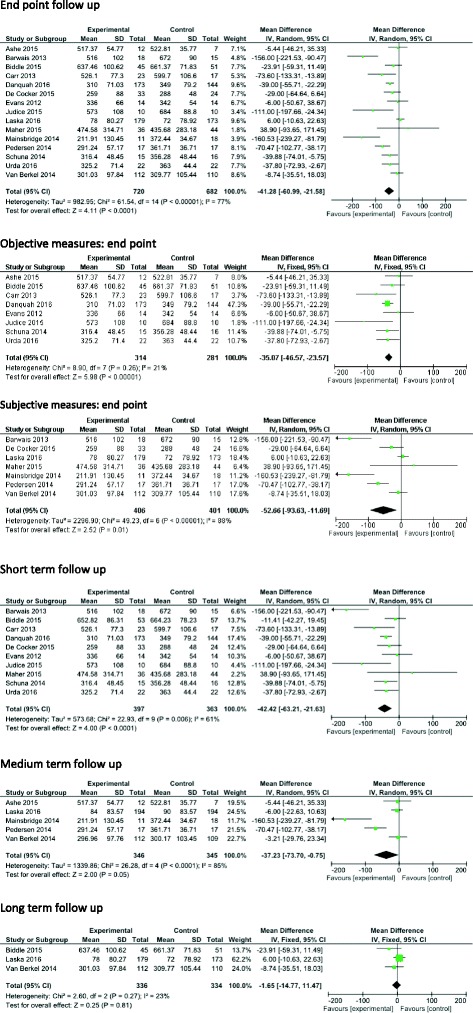
Verification
Claims the paper makes
The claims and statistics of this paper haven’t been checked yet.
Run the check — free, no account needed. It reads the open-access text and checks the sources it cites.
Claims other papers make about this one
Each is checked against this paper’s own text: does it say what the citing paper says it does?
In the citing paper
“Mobile phones can deliver programs to support behavioral change [1,2], data management or surveillance [3,4], and other essential public health activities.”
From Assessing the Cross-Cultural Adaptation and Translation of a Text-Based Mobile Smoking Cessation Program in Samoa (TXTTaofiTapaa): Pilot Study (2018) · cites this paper as [2]
Self-check
Percentages, sums and reported differences re-computed from the paper’s own numbers.
The self-check needs the paper’s full text.
Citations
Cites
Preferred Reporting Items for Systematic Reviews and Meta-Analyses: the PRISMA statement
Moher, D., Liberati, A., Tetzlaff, J., Altman, D. G., & for the PRISMA Group (2009) · BMJ · doi:10.1136/bmj.b2535 · Cited by 83,823
Preferred reporting items for systematic reviews and meta-analyses: the PRISMA Statement.
(2009) · PubMed Central · Cited by 44,859
Preferred reporting items for systematic reviews and meta-analyses: The PRISMA statement
Moher, D., Liberati, A., Tetzlaff, J., Altman, D. G., & the PRISMA Group* (2009) · Annals of Internal Medicine · doi:10.7326/0003-4819-151-4-200908180-00135 · Cited by 37,554
Cochrane Handbook for Systematic Reviews of Interventions: Cochrane Book Series
(2008) · doi:10.1002/9780470712184 · Cited by 25,048
Michie, S., Richardson, M., Johnston, M., Abraham, C., Francis, J., Hardeman, W., Eccles, M. P., Cane, J., & Wood, C. E. (2013) · Annals of Behavioral Medicine · doi:10.1007/s12160-013-9486-6 · Cited by 7,629
Cochrane Handbook for Systematic Reviews of Interventions
Higgins, J. P. T., Green, S., & Ben Van Den, A. (2020) · International Coaching Psychology Review · doi:10.53841/bpsicpr.2020.15.2.123 · Cited by 5,670
Amount of Time Spent in Sedentary Behaviors in the United States, 2003-2004
Matthews, C. E., Chen, K. Y., Freedson, P. S., Buchowski, M. S., Beech, B. M., Pate, R. R., & Troiano, R. P. (2008) · American Journal of Epidemiology · doi:10.1093/aje/kwm390 · Cited by 2,631
Eysenbach, G. (2005) · Journal of Medical Internet Research · doi:10.2196/jmir.7.1.e11 · Cited by 2,524
Letter to the Editor: Standardized use of the terms “sedentary” and “sedentary behaviours”
Networ, S. B. R. (2012) · Applied Physiology, Nutrition, and Metabolism · doi:10.1139/h2012-024 · Cited by 1,873
Free, C., Phillips, G., Galli, L., Watson, L., Felix, L., Edwards, P., Patel, V., & Haines, A. (2013) · PLoS Medicine · doi:10.1371/journal.pmed.1001362 · Cited by 1,766 · cited 1×
“These have been successfully applied to improve diet/Physical Activity (PA) [11, 12], sexual health behaviours [13], weight management [14], alcohol reduction [12] and smoking cessation [15, 16].”
Research works printed but not linked: 1
- Michie S, Atkins L, West R. The behaviour change wheel. 1st ed. London: Silverback Publishing; 2014.
Cited by
Sorted by citations
A systematic review of just-in-time adaptive interventions (JITAIs) to promote physical activity
Hardeman, W., Houghton, J., Lane, K., Jones, A., & Naughton, F. (2019) · International Journal of Behavioral Nutrition and Physical Activity · doi:10.1186/s12966-019-0792-7 · Cited by 396
“These interventions significantly reduced sitting time up to 6 months after the intervention, but only in studies with shorter follow-ups [4].”
Fitbit-based interventions for healthy lifestyle outcomes: systematic review and meta-analysis
Ringeval, M., Wagner, G., Denford, J., Paré, G., & Kitsiou, S. (2020) · Journal of Medical Internet Research · doi:10.2196/23954 · Cited by 225
“Furthermore, there is inconclusive evidence that wearable-based interventions are effective at achieving healthier lifestyles through decreases in sedentary behavior [16,34] or through weight loss [28,30,32,35].”
BackgroundBidargaddi, N., Almirall, D., Murphy, S., Nahum-Shani, I., Kovalcik, M., Pituch, T., Maaieh, H., & Strecher, V. (2018) · JMIR mHealth and uHealth · doi:10.2196/10123 · Cited by 189
Digital Interventions on Healthy Lifestyle Management: Systematic Review
Chatterjee, A., Prinz, A., Gerdes, M. W., & Martínez, S. (2021) · Journal of Medical Internet Research · doi:10.2196/26931 · Cited by 229
Müller, A. M., Maher, C. A., Vandelanotte, C., Hingle, M., Middelweerd, A., Lopez, M. L., DeSmet, A., Short, C. E., Nathan, N., Hutchesson, M. J., et al. (2018) · Journal of Medical Internet Research · doi:10.2196/jmir.8954 · Cited by 180
Metadata
- Authors
- Stephenson, A., McDonough, S. M., Murphy, M. H., Nugent, C. D., & Mair, J. L.
- Affiliations
- University of Ulster (GB)
- Corresponding author
- Stephenson, Aoife
- Venue
- International Journal of Behavioral Nutrition and Physical Activity
- Published
- 2017-08-11
- Volume
- 14
- Issue
- 1
- Pages
- 105-105
- ISSN
- 1479-5868 (ISSN-L)
- PMC
- PMC5553917
- OpenAlex
- W2744204866
- Cited by
- 290
- References
- 59
- Citations by year
- 2026: 16 · 2025: 28 · 2024: 29 · 2023: 25 · 2022: 44 · 2021: 49 · 2020: 52 · 2019: 22 · 2018: 20 · 2017: 4
- FWCI
- 3.29
- Type
- journal article
- Language
- en
- Open access
- gold
- doi.org
- Licence
- cc-by
- Locations
- International Journal of Behavioral Nutrition and Physical Activity (publishedVersion, cc-by)
- PubMed Central (publishedVersion, cc-by)
- PubMed (publishedVersion)
- Ulster University Research Portal (Ulster University) (submittedVersion, cc-by)
- DOAJ (DOAJ: Directory of Open Access Journals) (submittedVersion, cc-by-sa)
- Edinburgh Napier Research Repository (Edinburgh Napier University) (submittedVersion, cc-by)
- Funders
- Ulster University (PhD Scholarship)
- Topics
- Health Sciences › Medicine › Public Health, Environmental and Occupational Health › Physical Activity and Health
- Health Sciences › Health Professions › General Health Professions › Mobile Health and mHealth Applications
- Physical Sciences › Computer Science › Computer Vision and Pattern Recognition › Context-Aware Activity Recognition Systems
- Keywords
- sedentary behavior, technology-based interventions, mobile application, wearable activity trackers, computer-based intervention, behaviour change techniques, sitting time reduction, self-monitoring, prompts and cues, social support, goal setting, healthy adults, intervention effectiveness, attrition, long-term follow-up, risk of bias
- MeSH terms
- Wearable Electronic Devices, Health Promotion, Humans, Health Behavior, Randomized Controlled Trials as Topic, Databases, Factual, Sedentary Behavior, Mobile Applications
About these checks
Registry, retraction, Cites and statistics results are computed, not judged, with one exception: a printed reference that no index lists is read once by a model before it counts as a citation error. Claims are extracted by a model and kept only when their quote appears verbatim in the text; each cited source is then checked, with a model’s help, for whether it says what the claim relies on. Those verdicts can be wrong — read the claim’s quote and the cited source before relying on one.
Statistics and arithmetic are recomputed, not judged.
Confidence bands are shown only for fields calibrated on our annotated test set. None is calibrated yet, so no band is shown.
What counts as a claim ›How we measure confidence ›How we check this ›
Are you an author, or do you see a problem with this page? Request a review
