

Effects of school-based physical activity on mathematics performance in children: a systematic review
Open accessThe DOI matches its Crossref record; 80 of the 84 references it cites were found in a registry or an index.
Abstract
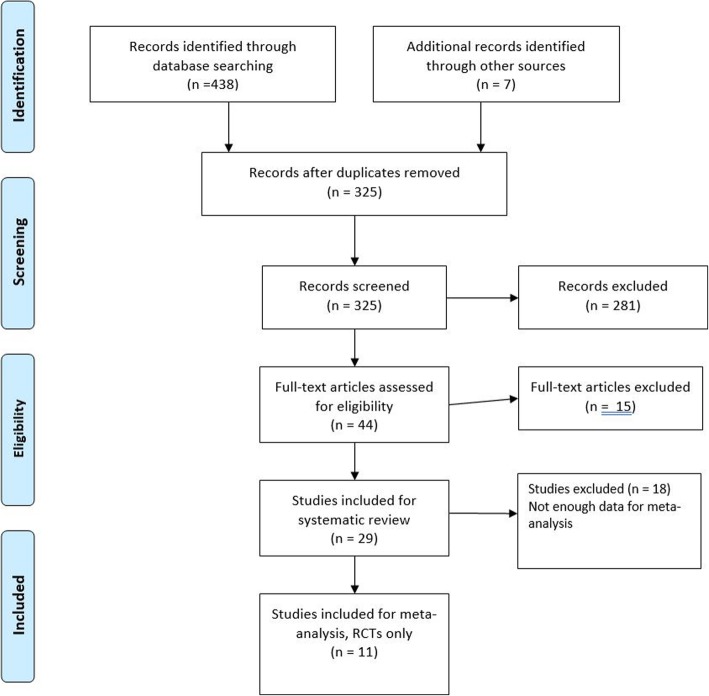
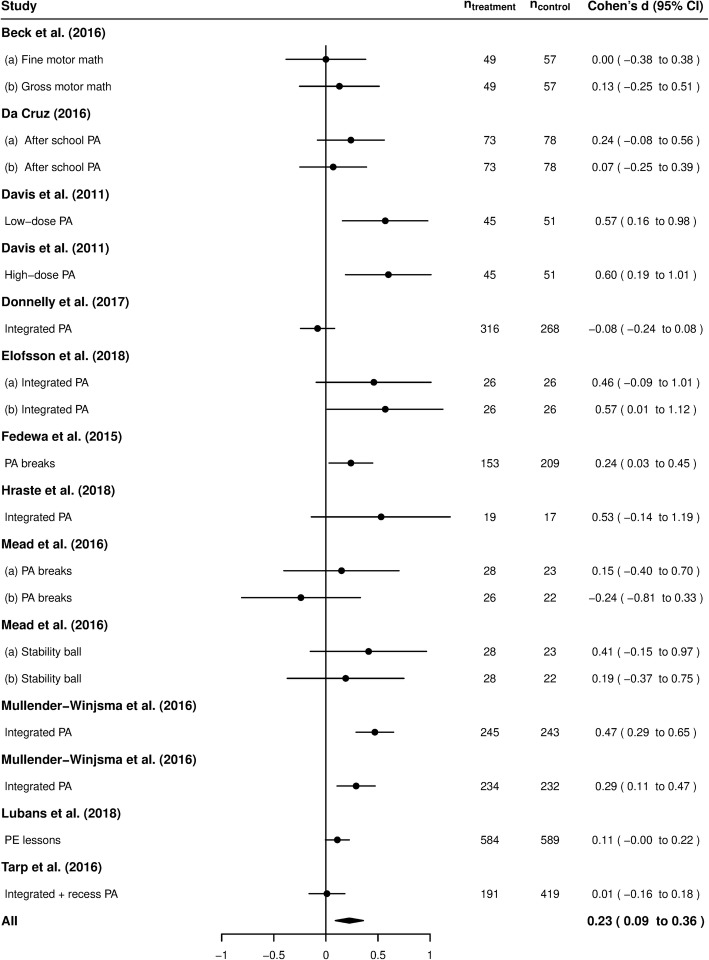
Background: The benefits of physical activity (PA) on children’s health and wellbeing are well established. However, the benefits of PA on academic performance and particularly on mathematics performance warrant systematic analysis. Mathematics is one of the core subjects in school education globally. Methods: We systematically searched, analysed and synthesized the literature on the effects of school-based PA interventions on mathematics performance in children aged 4–16. A total of 29 studies consisting of randomised trials and other interventions with control groups were identified through a systematic search, and 11 of them provided sufficient data and appropriate design for a meta-analysis. Results: Of the 29 studies involving 11,264 participants, positive overall effects of a PA intervention on mathematics performance were found in 13 studies (45%) and neutral overall effects in 15 studies (52%). Only one study reported a significant negative result for a subgroup of children in the first half of the intervention. In a risk-of-bias assessment, 12 studies had low, 17 moderate, and none had a high risk of bias. The meta-analysis of 11 studies suggested an overall small positive effect (ES = 0.23) of the interventions. Only one study in the meta-analysis indicated a negative effect in one of the intervention groups. Conclusions: Adding PA to the school day may enhance children’s mathematics performance or has no negative effects on performance. Several types of PA interventions can be recommended to be added to the school day.
Overview
The claims and statistics of this paper haven’t been checked yet.
Free: it reads the open-access text and checks the first 5 claims that cite a source we can check. Create a free account to check every claim.
Integrity signals
Registry
Cites
Statistics
Figures
Verification
Claims the paper makes
The claims and statistics of this paper haven’t been checked yet.
Free: it reads the open-access text and checks the first 5 claims that cite a source we can check. Create a free account to check every claim.
Claims other papers make about this one
Each is checked against this paper’s own text: does it say what the citing paper says it does?
The source backs part of the claim, not all of it — or backs it for a different population, condition or comparison.
In the citing paper
“The effects of PA on mathematics were null [23,24,28,33,34,35], small [39], or medium [27,31,36].”
From Physical Activity and Academic Achievement: An Umbrella Review (2020) · cites this paper as [36]
Experimental — accuracy not yet measuredThe cited source says what the claim attributes to it.
In the citing paper
“The assessment of bias risk in the final sample (n = 44 studies) was conducted using the criteria previously used by Sneck et al. (78), including the criterion of power calculations.”
From Children's Physical Activity, Academic Performance, and Cognitive Functioning: A Systematic Review and Meta-Analysis (2020) · cites this paper as [78]
In the citing paper
“Mathematics was the subject where positive associations were found with more consistency [27,31,33,36,39,52,61].”
From Physical Activity and Academic Achievement: An Umbrella Review (2020) · cites this paper as [36]
Self-check
Percentages, sums and reported differences re-computed from the paper’s own numbers.
The self-check needs the paper’s full text.
Citations
Cites
Quantifying heterogeneity in a meta‐analysis
Higgins, J. P. T., & Thompson, S. G. (2002) · Statistics in Medicine · doi:10.1002/sim.1186 · Cited by 36,763 · cited 1×
“The I2 statistic was calculated [49] to evaluate heterogeneity among the studies, and the following values were used for interpretation: < 30%, mild; 30–50%, moderate and > 50%, high heterogeneity [50].”
MethodConducting Meta-Analyses in R with the metafor Package
Viechtbauer, W. (2010) · Journal of Statistical Software · doi:10.18637/jss.v036.i03 · Cited by 20,464
Diamond, A. (2013) · Annual Review of Psychology · doi:10.1146/annurev-psych-113011-143750 · Cited by 13,268 · cited 1×
“Executive functions involve inhibition, working memory and cognitive flexibility [24], which in turn have been found to be associated with achievement in both reading and mathematics [25].”
BackgroundCohen, J. (1992) · Psychological Bulletin · doi:10.1037//0033-2909.112.1.155 · Cited by 8,771
Janssen, I., & LeBlanc, A. G. (2010) · International Journal of Behavioral Nutrition and Physical Activity · doi:10.1186/1479-5868-7-40 · Cited by 4,829
Be smart, exercise your heart: Exercise effects on brain and cognition
Hillman, C. H., Erickson, K. I., & Kramer, A. F. (2008) · Nature Reviews Neuroscience · doi:10.1038/nrn2298 · Cited by 3,563
Donnelly, J. E., Hillman, C. H., Castelli, D., Etnier, J. L., Lee, S., Tomporowski, P., Lambourne, K., & Szabo-Reed, A. N. (2016) · Medicine & Science in Sports & Exercise · doi:10.1249/mss.0000000000000901 · Cited by 1,864
Physical Activity for Cognitive and Mental Health in Youth: A Systematic Review of Mechanisms
Lubans, D., Richards, J., Hillman, C., Faulkner, G., Beauchamp, M., Nilsson, M., Kelly, P., Smith, J., Raine, L., & Biddle, S. (2016) · Pediatrics · doi:10.1542/peds.2016-1642 · Cited by 1,548 · cited 1×
“There is extensive evidence indicating that participating in PA is associated with a variety of benefits for children and adolescents, including better physical health [1, 2] better cognitive and mental health [3], a more positive physical self-concept [4], enhanced global self-esteem [4], and improved academic outcom…”
Backgroundvan Sluijs, E. M. F., McMinn, A. M., & Griffin, S. J. (2007) · BMJ · doi:10.1136/bmj.39320.843947.be · Cited by 1,120
Parenting Stress, Mental Health, Dyadic Adjustment: A Structural Equation Model
Rollè, L., Prino, L. E., Sechi, C., Vismara, L., Neri, E., Polizzi, C., Trovato, A., Volpi, B., Molgora, S., Fenaroli, V., et al. (2017) · Frontiers in Psychology · doi:10.3389/fpsyg.2017.00839 · Cited by 1,007
Research works printed but not linked: 4
- 1. 2018 Physical Activity Guidelines Advisory Committee. 2018 Physical Activity Guidelines Advisory Committee Scientific Report. 2018 Physical activity guidelines advisory committee scientific report. Washington, DC: U.S. Department of Health and Human Services; 2018.
- 11. World Health Organization. Global recommendations on physical activity for health, vol. 60. Geneva: World Heal Organ; 2010.
- 48. Dong N, Maynard RA. PowerUp! A tool for calculating minimum detectable effect sizes and sample size requirements for experimental and quasi- experimental designs. J Res Educ Eff. 2013;6(1):24-67.
- 53. Kelley K. Confidence Intervals for Standardized Effect Sizes : J Stat Softw. 2007;20(8):1-24.
Cited by
Sember, V., Meh, K., Sorić, M., Starc, G., Rocha, P., & Jurak, G. (2020) · International Journal of Environmental Research and Public Health · doi:10.3390/ijerph17197161 · Cited by 266
Physical Activity and Academic Achievement: An Umbrella Review
Barbosa, A., Whiting, S., Simmonds, P., Scotini Moreno, R., Mendes, R., & Breda, J. (2020) · International Journal of Environmental Research and Public Health · doi:10.3390/ijerph17165972 · Cited by 189
“Author, Year Aim Participants Typeand Age (years old) Number and Type of Included Studies PA Assessment AA Assessment Setting Li et al., 2017 [52] To investigate whether exercise, proposed to enhance neuroplasticity and potentially cognitive function and AP may be beneficial during adolescence when important developme…”
BackgroundMethodInfluentialMeh, K., Jurak, G., Sorić, M., Rocha, P. M., & Sember, V. (2021) · International Journal of Environmental Research and Public Health · doi:10.3390/ijerph18094602 · Cited by 176
“The risk of bias assessment of the final sample of 14 included articles was conducted, following the criteria previously set by Sneck [38] and Sember [23,39], following Cochrane’s guidelines for Systematic Reviews and Interventions [40].”
MethodSember, V., Jurak, G., Kovač, M., Morrison, S. A., & Starc, G. (2020) · Frontiers in Public Health · doi:10.3389/fpubh.2020.00307 · Cited by 126
Wassenaar, T. M., Williamson, W., Johansen-Berg, H., Dawes, H., Roberts, N., Foster, C., & Sexton, C. E. (2020) · International Journal of Behavioral Nutrition and Physical Activity · doi:10.1186/s12966-020-00959-y · Cited by 97
Owen, K., Foley, B. C., Wilhite, K. L., Booker, B., Lonsdale, C., & Reece, L. J. (2021) · Medicine & Science in Sports & Exercise · doi:10.1249/mss.0000000000002786 · Cited by 108
“There is some evidence that physical activity is most beneficial for mathematics as physical activity improves executive function, working memory, and cognitive flexibility, which are important components in mathematics (25).”
BackgroundVasilopoulos, F., Jeffrey, H., Wu, Y., & Dumontheil, I. (2023) · Educational Psychology Review · doi:10.1007/s10648-023-09760-2 · Cited by 78
“may allow enhancing PA without losing academic instruction time (Mavilidi et al., 2018a, b; Sneck et al., 2019; Vazou & Skrade, 2017).”
BackgroundSolberg, R. B., Steene-Johannessen, J., Anderssen, S. A., Ekelund, U., Säfvenbom, R., Haugen, T., Berntsen, S., Åvitsland, A., Lerum, Ø., Resaland, G. K., et al. (2021) · BMC Public Health · doi:10.1186/s12889-021-10901-x · Cited by 37
Magistro, D., Cooper, S. B., Carlevaro, F., Marchetti, I., Magno, F., Bardaglio, G., & Musella, G. (2022) · Psychology of sport and exercise · doi:10.1016/j.psychsport.2022.102254 · Cited by 65
Cichy, I., Kaczmarczyk, M., Wawrzyniak, S., Kruszwicka, A., Przybyła, T., Klichowski, M., & Rokita, A. (2020) · Frontiers in Psychology · doi:10.3389/fpsyg.2020.02194 · Cited by 52
Lerum, Ø., Tjomsland, H. E., Leirhaug, P. E., McKenna, J., Quarmby, T., Bartholomew, J. B., Jenssen, E. S., Daly-Smith, A., & Resaland, G. K. (2021) · Teaching and Teacher Education · doi:10.1016/j.tate.2021.103434 · Cited by 45
Physical Activity in High School Classrooms: A Promising Avenue for Future Research
Fenesi, B., Graham, J. D., Crichton, M. C., Ogrodnik, M., & Skinner, J. K. (2022) · International Journal of Environmental Research and Public Health · doi:10.3390/ijerph19020688 · Cited by 35
“, time-on-task) and various aspects of academic achievement, with these effects occurring both acutely and over the long-term [12,16,54,55].”
BackgroundDaly-Smith, A., Hobbs, M., Morris, J. L., Defeyter, M. A., Resaland, G. K., & McKenna, J. (2021) · International Journal of Environmental Research and Public Health · doi:10.3390/ijerph18030990 · Cited by 34
“This finding presents a paradox, as maths performance is shown to improve with physical activity, yet this was the least active part of the school day [20,51].”
BackgroundUnpacking physically active learning in education: a movement didaktikk approach in teaching?
Mandelid, M. B., Resaland, G. K., Lerum, Ø., Teslo, S. B., Chalkley, A. E., Singh, A. S., Bartholomew, J. B., Daly-Smith, A., Thurston, M. N., & Tjomsland, H. E. (2022) · Scandinavian Journal of Educational Research · doi:10.1080/00313831.2022.2148271 · Cited by 35
“This resonates with Sneck et al. (2019), who proposed that attention from teachers or a change in routine might themselves contribute to learning.”
BackgroundSneck, S., Syväoja, H. J., Järvelä, S., & Tammelin, T. (2022) · Education Inquiry · doi:10.1080/20004508.2022.2058166 · Cited by 37
“Based on a review of 29 intervention studies (Sneck et al., 2019), there is evidence indicating that increased PA during the school day in various ways may have positive effects on children’s maths performance in particular.”
BackgroundSelf-citationWang, J., Sankaridurg, P. R., Naduvilath, T. J., Li, W., Morgan, I. G., Rose, K. A., Weng, R., Xu, X., & He, X. (2023) · BMC Public Health · doi:10.1186/s12889-023-15532-y · Cited by 30
Effects of a games-based physical education lesson on cognitive function in adolescents
Gilbert, L. M., Dring, K. J., Williams, R. A., Boat, R., Sunderland, C. D., Morris, J. G., Nevill, M. E., & Cooper, S. B. (2023) · Frontiers in Psychology · doi:10.3389/fpsyg.2023.1098861 · Cited by 31
“However, the reduction in teaching hours for PE is somewhat counterintuitive given that physical activity is positively associated with cognition and academic achievement (Sneck et al., 2019; GarciaHermoso et al., 2021).”
BackgroundMartín-Martínez, C., Valenzuela, P. L., Martinez‐Zamora, M. D., & Martínez‐de‐Quel, Ó. (2022) · Journal of science and medicine in sport · doi:10.1016/j.jsams.2022.12.007 · Cited by 31
The Effects of the ACTIVE VALUES Program on Psychosocial Aspects and Executive Functions
Jiménez-Parra, J. F., Belando‐Pedreño, N., & Valenzuela, A. V. (2022) · International Journal of Environmental Research and Public Health · doi:10.3390/ijerph20010595 · Cited by 24
“academic and cognitive performance [6,7], positively influencing different processes of cognition in general [8] and executive functions in particular [9].”
BackgroundPupils’ experiences and perceptions of engagement during the Moving Maths programme
Sneck, S., Järvelä, S., Syväoja, H. J., & Tammelin, T. (2020) · Education 3-13 · doi:10.1080/03004279.2020.1857816 · Cited by 22
Self-citationApproaching physically active learning as a multi, inter, and transdisciplinary research field
Mandelid, M. B. (2023) · Frontiers in Sports and Active Living · doi:10.3389/fspor.2023.1228340 · Cited by 26
Syväoja, H. J., Sneck, S., Kukko, T., Asunta, P., Räsänen, P., Viholainen, H., Kulmala, J., Hakonen, H., & Tammelin, T. (2024) · British Journal of Educational Psychology · doi:10.1111/bjep.12684 · Cited by 30
Self-citationIlham, M., Mukhibin, A., Naser, A. D. M., & Dasari, D. (2022) · Prisma Sains Jurnal Pengkajian Ilmu dan Pembelajaran Matematika dan IPA IKIP Mataram · doi:10.33394/j-ps.v11i1.6595 · Cited by 13
Online physically active academic lessons in COVID-19 times: A pilot study
Beserra, V., Nussbaum, M., Navarrete, M., & Cabezas, N. G. (2022) · Teaching and Teacher Education · doi:10.1016/j.tate.2022.103750 · Cited by 17
Active Learning: A Review of European Studies of Active Lessons
Bailey, R. P., Ríes, F., Heck, S., & Scheuer, C. (2023) · Sustainability · doi:10.3390/su15043413 · Cited by 32
“Interestingly, mathematics seemed to be particularly adaptable to PA interventions [23,47].”
BackgroundActive Breaks and Motor Competencies Development in Primary School: A Systematic Review
Colella, D., Monacis, D., & Limone, P. (2020) · Advances in Physical Education · doi:10.4236/ape.2020.103020 · Cited by 26
Solberg, R. B., Steene‐Johannessen, J., Fagerland, M. W., Anderssen, S. A., Berntsen, S., Resaland, G. K., van Sluijs, E. M. F., Ekelund, U., & Kolle, E. (2021) · Preventive Medicine Reports · doi:10.1016/j.pmedr.2021.101648 · Cited by 23
“form, it is plausible that the components in the PAL intervention, in addition to enhancing aerobic fitness, also resulted in students being more focused in these learning situations and therefore taking better advantage of the lessons (Daly-Smith et al., 2018; Norris et al., 2020; Sneck et al., 2019).”
BackgroundElish, P. N., Bryan, C. S., Boedeker, P., Calvert, H. G., Kay, C. M., Meyer, A. M., & Gazmararian, J. A. (2022) · International Journal of Behavioral Nutrition and Physical Activity · doi:10.1186/s12966-022-01328-7 · Cited by 21
“Furthermore, some prior systematic reviews evaluating school-day PA have found no impact on academic achievement,12while others have found a balance of evidence suggesting a null or slightly positive relationship [15, 38].”
BackgroundWalker, T. J., Pfledderer, C. D., Craig, D. W., Robertson, M. C., Heredia, N. I., & Bartholomew, J. B. (2023) · Frontiers in Public Health · doi:10.3389/fpubh.2023.1193442 · Cited by 18
Martyn, L., Bigelow, H., Graham, J. D., Ogrodnik, M., Chiodo, D., & Fenesi, B. (2022) · BMC Public Health · doi:10.1186/s12889-022-14359-3 · Cited by 17
Luan, X., Ji, L., & Luo, X. (2022) · Frontiers in Psychology · doi:10.3389/fpsyg.2022.764842 · Cited by 13
Behringer, H. K., Saksvig, E. R., Boedeker, P., Elish, P. N., Kay, C. M., Calvert, H. G., Meyer, A. M., & Gazmararian, J. A. (2022) · International Journal of Behavioral Nutrition and Physical Activity · doi:10.1186/s12966-022-01348-3 · Cited by 20
Herold, F., Ludyga, S., Mavilidi, M. F., Benzing, V., Vazou, S., Tomporowski, P. D., & Pesce, C. (2025) · Educational Psychology Review · doi:10.1007/s10648-025-10031-5 · Cited by 15
“…a beneficial influence of regular physical activity on cognitive and academic performance is inconclusive (Daly-Smith et al., 2018; Singh et al., 2018; Wassenaar et al., 2020) except for math performance (García-Hermoso et al., 2021; Loturco et al., 2022; Singh et al., 2018; Sneck et al., 2019).”
Teaching through dance: An opportunity to introduce physically active academic lessons
Beserra, V., Nussbaum, M., Navarrete, M., & Alvares, D. (2021) · Teaching and Teacher Education · doi:10.1016/j.tate.2021.103450 · Cited by 11
Zask, A., Pattinson, M., Ashton, D., Ahmadi, M. N., Trost, S. G., Irvine, S., Stafford, L., Delbaere, K., & Adams, J. (2023) · Health Promotion Journal of Australia · doi:10.1002/hpja.688 · Cited by 20
Oueslati, G., Ouergui, I., Ammar, A., Trabelsi, K., Ardigò, L. P., & Chtourou, H. (2024) · BMC Pediatrics · doi:10.1186/s12887-024-05145-8 · Cited by 9
“Additionally, Sneck et al. [71] reported that physical activity can enhance cognitive function and concentration and can improve academic performance by enhancing mathematics’ performance in children.”
Background“I’m Doing Something Fun…”: Primary School Pupils’ Perceptions of Physically Active Lessons
Quarmby, T., Powell, D., & Daly-Smith, A. (2024) · Translational Journal of the American College of Sports Medicine · doi:10.1249/tjx.0000000000000256 · Cited by 12
Bellacicco, R., Capone, F., Sorrentino, C., & Martino, V. D. (2025) · Education Sciences · doi:10.3390/educsci15010047 · Cited by 28
“This result is consistent with the findings from the moderator analysis conducted by Sneck et al. (2019), which indicated that longer duration of intervention (e.g. 21 weeks) was negatively associated with effect sizes, suggesting that longer interventions are not necessarily more effective than…”
InfluentialScott, J., Jay, T., & Spray, C. M. (2024) · Journal of Intelligence · doi:10.3390/jintelligence12020022 · Cited by 16
“In more recent systematic reviews, Sneck et al. (2019) and James et al. (2023) examined PA interventions in relation to academic achievement in children and adolescents and found positive effects, and no harmful or negative effects, of PA interventions on mathematics achievement.”
BackgroundGrasaas, E., Sandbakk, Ø. B., Ostojic, S. M., Hovrerak, M. O., & Stea, T. H. (2025) · Frontiers in Sports and Active Living · doi:10.3389/fspor.2025.1613391 · Cited by 12
Reducing Children’s Obesity in the Age of Telehealth and AI/IoT Technologies in Gulf Countries
Faisal, M., ElGibreen, H., Alafif, N. O., & Joumaa, C. (2022) · Systems · doi:10.3390/systems10060241 · Cited by 5
Molloy, C. S., Beatson, R. M., Harrop, C., Perini, N., & Goldfeld, S. R. (2024) · Research Papers in Education · doi:10.1080/02671522.2024.2414318 · Cited by 6
“Several reviews identified experimental primary studies conducted with children in Grades K-3 (Martin and Murtagh 2017; Norris et al. 2015; Sneck et al. 2019; Vetter et al. 2020; Watson et al. 2017).”
Oginni, J., Oluwayomi, A., Ajiborisade, E., Osuji, C., Okely, A. D., Chong, K. H., Cross, P. L., & Gao, Z. (2025) · Frontiers in Public Health · doi:10.3389/fpubh.2025.1506705 · Cited by 7
Widarto, D. A. S., Sugiharto, S., & Supriyadi, S. (2021) · Jurnal Pendidikan Teori Penelitian dan Pengembangan · doi:10.17977/jptpp.v6i5.14848 · Cited by 8
ATAKAN, M. M., & Atakan, B. (2023) · Sports Medicine and Health Science · doi:10.1016/j.smhs.2023.12.008 · Cited by 7
“31 However, the impact of acute light-to-moderate intensity exercise interventions in school-based settings, speci fi cally involving plyometric and Pilates exercises, which are easy to do and require no equipment, on the enhancement of mathematics performance in high school students remains largely…”
BackgroundResultInfluentialIntegrating Fundamental Movement Skills and Mathematics in Early Childhood: A Pilot Study
Capio, C. M., Cheung, S. K., Fung, S. S. W., & Hu, X. (2024) · Children · doi:10.3390/children11040457 · Cited by 14
“For instance, a systematic review found 9 studies (out of 29 reviewed papers) that integrated movement with mathematics lessons [23].”
BackgroundCece, V., Fargier, P., Roure, C., & Lentillon‐Kaestner, V. (2024) · Technology Pedagogy and Education · doi:10.1080/1475939x.2024.2407380 · Cited by 5
The Use of Physically Active Academic Lessons During the Transition to Face-to-Face Classes
Beserra, V., Nussbaum, M., Navarrete, M., Cabezas, N. G., & Alvares, D. (2024) · SAGE Open · doi:10.1177/21582440241255429 · Cited by 4
“Now, even before COVID-19, schools worldwide have been called upon to promote the practice of physical activity throughout the school routine (Bedard et al., 2019; Sneck et al., 2019).”
BackgroundIslam, M. S., Sarker, M. S. R., Abir, S. S., Kamal, F., & Roy, B. K. (2024) · IJORER International Journal of Recent Educational Research · doi:10.46245/ijorer.v5i6.715 · Cited by 7
“However, Mathematics often poses challenges for many students, which may result in low academic achievement (Sneck et al., 2019).”
Kuhn, A. P., Choudhary, A., Zemanick, A., Lane, H., Armstrong, B., Wang, Y., Deitch, R., & Hager, E. R. (2024) · Preventive Medicine Reports · doi:10.1016/j.pmedr.2024.102944 · Cited by 3
Skrettingland-Haarr, K., & Dyrstad, S. M. (2025) · Norsk pedagogisk tidsskrift · doi:10.18261/npt.109.1.4 · Cited by 2
Monzonís‐Carda, I., Adelantado‐Renau, M., Beltran‐Valls, M. R., & Moliner‐Urdiales, D. (2025) · Sports Medicine and Health Science · doi:10.1016/j.smhs.2025.07.006 · Cited by 2
Herold, F., Giurgiu, M., Ebner‐Priemer, U., Brakenridge, C. J., Hallgren, M. Å., Owen, N. G., & Gronwald, T. (2025) · Exercise and Sport Sciences Reviews · doi:10.1249/jes.0000000000000377 · Cited by 4
Mandelid, M. B. (2026) · Frontiers in Sports and Active Living · doi:10.3389/fspor.2025.1712844 · Cited by 3
Domingues, M. R. D. S., Moura-Silva, M. G., Cordeiro, F. B., de Souza, M. C., da Rocha, R. W. G., Bento-Torres, N. V. O., & Neto, J. B. T. (2022) · Amazônia Revista de Educação em Ciências e Matemáticas · doi:10.18542/amazrecm.v18i40.11170 · Cited by 8
Carr, J. M., Schoephoerster, K., & Riegel, C. (2024) · Mathematical Thinking and Learning · doi:10.1080/10986065.2024.2343036 · Cited by 9
“…to support the argument that academic performance decreases when more time is allotted to physical activity during the school day (Donnelly & Lambourne, 2011; Sneck et al., 2019; Vetter et al., 2019), few schools are embracing movement-focused programming on a large scale (Kohl & Cook, 2013).”
Martín, M. S., Sánchez, M., Moreno, E. M. O., & Navarro‐Mateu, F. (2024) · Cogent Education · doi:10.1080/2331186x.2024.2385785 · Cited by 9
Physical Activity and Health Through Physical Education
Muntaner‐Mas, A. (2024) · Springer eBooks · doi:10.1007/978-3-031-65595-1_7 · Cited by 5
Egger, F., Gasser, M., Kamer, M., & Schmidt, M. (2024) · European Journal of Psychology and Educational Research · doi:10.12973/ejper.7.3.159 · Cited by 7
Fiziksel Aktivitenin Akademik Başarı Üzerindeki Etkisi: Sistematik Bir Derleme
Nalbant, S., & Kaya, D. N. (2025) · Journal of Physical Education and Sports Studies · doi:10.55929/besad.1588870 · Cited by 4
Hubungan Aktivitas Olahraga dengan Prestasi Akademik pada Atlet Akademi Arema U-14
Jauhari, R., Supriatna, S., Fadhli, N. R., & Roesdiyanto, R. (2022) · Sport Science and Health · doi:10.17977/um062v4i102022p881-893 · Cited by 8
“…penelitian lain menunjukkan bahwa anak yang aktif secara fisik memiliki nilai sekolah diatas rata-rata, sedangkan anak-anak yang tidak aktif melakukan kegiatan fisik memiliki nilai sekolah di bawah rata-rata diukur dengan indeks prestasi kumulatif (IPK) dan nilai matematikanya (Sneck et al., 2019).”
BackgroundZhang, F., Erwin, H. E., & Beighle, A. E. (2024) · Journal of School Health · doi:10.1111/josh.13521 · Cited by 4
Do physical activity and virtues predict school grades?
Rahe, M., & Jansen, P. (2025) · Acta Psychologica · doi:10.1016/j.actpsy.2025.104979 · Cited by 2
Hermassi, S., Dhahbi, W., Jebabli, N., Alneama, A., Ketelhut, S., & van den Tillaar, R. (2025) · Frontiers in Education · doi:10.3389/feduc.2025.1590300 · Cited by 1
Syväoja, H. J., Takalo, S., Kukko, T., Salmela, N., Hakonen, H., Kulmala, J., Lindfors, H., Oksanen, H., Räsänen, P., Mäkitalo, K., et al. (2026) · JMIR Research Protocols · doi:10.2196/84601 · Cited by 3
“In school-based interventions, PA has been implemented into academic lessons in various ways, such as through PA breaks and physically active learning (PAL) [12,13].”
Self-citationPhysical Activity as a Tool for Enhancing Learning
Rahman, A. A., Teo, W., Chua, T. B. K., & Chia, M. (2023) · Springer eBooks · doi:10.1007/978-981-99-5378-3_8 · Cited by 2
Sun, N., Chen, L., Liu, W., & Zheng, Z. (2025) · Journal of Transport & Health · doi:10.1016/j.jth.2025.102005 · Cited by 3
Cassar, S., Salmon, J., Timperio, A. F., Shea, C. M., Ma, J., & Koorts, H. (2025) · Translational Journal of the American College of Sports Medicine · doi:10.1249/tjx.0000000000000316 · Cited by 2
The school on the move for the promotion of reading competence: a theoretical review
Schmitz, H., Tejada, J., & da Silva, D. R. P. (2022) · Educação e Pesquisa · doi:10.1590/s1678-4634202248242455eng · Cited by 1
A escola em movimento em prol da promoção da competência de leitura: uma revisão teórica
Schmitz, H., Tejada, J., & da Silva, D. R. P. (2022) · Educação e Pesquisa · doi:10.1590/s1678-4634202248242455por · Cited by 1
Can Physical Activity Breaks Assist Mathematics Learning? A Domain Learning Theory Perspective
Wang, W.-Y., & Chen, A. (2023) · Journal of Teaching in Physical Education · doi:10.1123/jtpe.2022-0199 · Cited by 4
The Impact of a School-Based Academic Support Program on Students’ Psychosocial Impairment
White, G. W., Hatchimonji, D. R., Vaid, E., Caldwell, R. A., & Elias, M. J. (2023) · Journal of Educational and Developmental Psychology · doi:10.5539/jedp.v13n1p87 · Cited by 1
“, 2018; McBreen & Savage, 2021), executive functioning (Jacob & Parkinson, 2015), physical activity (Centers for Disease Control and Prevention, 2010; Sneck et al., 2019), bullying (Gaffney et al.”
Bigelow, H., Singh, S., & Fenesi, B. (2023) · Education Sciences · doi:10.3390/educsci13101060 · Cited by 1
The association between physical activity during preschool hours and early numeracy
Stalchenko, N., Vanhala, A., Korhonen, J., & Pirjo Aunio, A. (2023) · Journal of Early Childhood Education Research · doi:10.58955/jecer.127930 · Cited by 5
“On the other hand, several reviews indicate inconsistency in findings regarding children’s PA and cognitive f unctions (Best, 2010; Sibley & Etnier, 2003; Sneck et al., 2019; St Laurent et al., 2021) or academic achievement (Hillman et al., 2008).”
BackgroundHill, L. J. B., Boom, S., Bingham, D. D., Daly-Smith, A., Llewellyn, B., & Davison, J. (2024) · PsyArXiv (OSF Preprints) · doi:10.31234/osf.io/upk2z · Cited by 1
Physical Activity and Its Relationship With National‐Based Examination Results Among Adolescents
Venugopal, V., Ismail, M. A., Mohamed, M. N. A., Chinna, K., Jalaludin, M. Y., Su, T. T., & Majid, H. A. (2025) · Journal of Adolescence · doi:10.1002/jad.12479 · Cited by 1
Isnaini, N. H., & Martono, M. (2025) · doi:10.56984/8zg7d19lute
Wang, N., Wang, Q., Wang, M., & Rahman, M. N. B. A. (2025) · Frontiers in Public Health · doi:10.3389/fpubh.2025.1592098
Okuyama, K., Lönn, S. L., Khoshnood, A., Sundquist, J., & Sundquist, K. (2025) · European Journal of Public Health · doi:10.1093/eurpub/ckaf164
Elish, P. N., Bryan, C. S., Boedeker, P., Calvert, H. G., Kay, C. M., Meyer, A. M., & Gazmararian, J. A. (2022) · Figshare · doi:10.6084/m9.figshare.20364978
Wang, J., Sankaridurg, P. R., Naduvilath, T. J., Li, W., Morgan, I. G., Rose, K. A., Weng, R., Xu, X., & He, X. (2023) · Figshare · doi:10.6084/m9.figshare.22622965
Majauskienė, D., Aukštikalnis, T., Istomina, N., Valančienė, D., Dadelienė, R., Šidlauskienė, A., Strazdaite, E., Žilinskienė, R., Gintilienė, M., Šarkauskienė, A., et al. (2026) · Scientific Reports · doi:10.1038/s41598-026-37324-1
“However, studies investigating the links between physical activity, fitness, physical education, and academic achievement have reported mixed results 22,41,42,45,44 .”
Kertész, T., Bognár, J., & Szakály, Z. (2026) · International Journal of Educational Research · doi:10.1016/j.ijer.2026.102962
Fysisk aktiv læring i fremtidens skole: Perspektiver i politikk, forskning og praksis
Teslo, S. B., Dyngeland, E. H., Chalkley, A. E., & Mandelid, M. B. (2026) · Norsk pedagogisk tidsskrift · doi:10.18261/npt.110.2.6
Krogh‐Jensen, O., Damsgaard, L., Rohde, R. A., Nielsen, G., Fosnaes, O., Hauge, J., & Wienecke, J. (2026) · Educational Psychology Review · doi:10.1007/s10648-026-10175-y
“As shown in a meta-analysis by Sneck et al. (2019 ) age was a significant moderator (β = − 0.051, p = .045), indicating better effectiveness of PA-interventions on mathematic performance on younger children within the age group of six to twelve years old.”
InfluentialByman, A., Ulmanen, S., Pyhältö, K., Syväoja, H. J., Kulmala, J., & Tammelin, T. (2026) · PLoS ONE · doi:10.1371/journal.pone.0351971
“For instance, in-school PA has been associated with performance improvements in mathematics [5] as well as gains in language skills [6].”
Self-citationThe impact of physical activity on children’s attention and math performance: A meta-analysis
Li, Q., Zhang, Z., Zhong, Z., Lu, X., Wang, C., Li, C., Li, L., & Li, D. (2026) · European Journal of Pediatrics · doi:10.1007/s00431-026-07229-2
Investigating the Usefullness of Physical Activity in Informatics Education
Christ, L., & Dittert, N. (2026) · Workshop in Primary and Secondary Computing Education · doi:10.1145/3801749.3801780
Brief moderate-intensity cycling, momentary nervousness, and mathematics performance in young adults
Ouwehand, K., Mavilidi, M. F., van Nooijen, C. C. A., Lindemann, O., de Koster, M., Schmidt, M., Zou, L., Qian, Y., de Koning, B. B., & Paas, F. (2026) · Frontiers in Psychology · doi:10.3389/fpsyg.2026.1824734
“In contrast, more consistent evidence for improvements in adolescents’ mathematics performance comes from studies on chronic physical activity exposure (Álvarez-Bueno et al., 2017; Sneck et al., 2019; Watson et al., 2017).”
Metadata
- Authors
- Sneck, S., Viholainen, H., Syväoja, H., Kankaapää, A., Hakonen, H., Poikkeus, A.-M., & Tammelin, T.
- Affiliations
- LIKES – Foundation for Sport and Health Sciences (FI)
- University of Jyväskylä (FI)
- Corresponding author
- Sneck, S.
- Venue
- International Journal of Behavioral Nutrition and Physical Activity
- Published
- 2019-11-21
- Volume
- 16
- Issue
- 1
- Pages
- 109-109
- ISSN
- 1479-5868 (ISSN-L)
- PMC
- PMC6873534
- OpenAlex
- W2990173175
- Cited by
- 90
- References
- 84
- Citations by year
- 2026: 9 · 2025: 18 · 2024: 16 · 2023: 13 · 2022: 19 · 2021: 8 · 2020: 7
- FWCI
- 1.01
- Type
- journal article
- Language
- en
- Open access
- gold
- doi.org
- Licence
- cc-by
- creativecommons.org/licenses/by/4.0/ (tdm)
- creativecommons.org/licenses/by/4.0/ (vor)
- Locations
- International Journal of Behavioral Nutrition and Physical Activity (publishedVersion, cc-by)
- PubMed Central (publishedVersion, cc-by)
- PubMed (publishedVersion)
- Jyväskylä University Digital Archive (University of Jyväskylä) (submittedVersion, cc-by)
- DOAJ (DOAJ: Directory of Open Access Journals) (submittedVersion, cc-by-sa)
- Funders
- Ministry of Education and Culture, Finland (OKM/79/626/2018)
- Topics
- Health Sciences › Medicine › Public Health, Environmental and Occupational Health › Physical Activity and Health
- Social Sciences › Psychology › Developmental and Educational Psychology › Children's Physical and Motor Development
- Social Sciences › Education › Physical Education and Pedagogy
- Keywords
- school-based physical activity, mathematics achievement, children, academic performance, physical activity interventions, school day
- MeSH terms
- Adolescent, Child, Child, Preschool, Educational Measurement, Humans, Mathematics, School Health Services, Schools, Exercise
About these checks
Registry, retraction, Cites and statistics results are computed, not judged, with one exception: a printed reference that no index lists is read once by a model before it counts as a citation error. Claims are extracted by a model and kept only when their quote appears verbatim in the text; each cited source is then checked, with a model’s help, for whether it says what the claim relies on. Those verdicts can be wrong — read the claim’s quote and the cited source before relying on one.
Statistics and arithmetic are recomputed, not judged.
Confidence bands are shown only for fields calibrated on our annotated test set. None is calibrated yet, so no band is shown.
What counts as a claim ›How we measure confidence ›How we check this ›
Are you an author, or do you see a problem with this page? Request a review
Data sources
Bibliographic data: Semantic Scholar, OpenAlex, Crossref.
Contains information from the Semantic Scholar Academic Graph Datasets, made available under the ODC Attribution License (ODC-BY 1.0).
Semantic Scholar’s data is described in: Kinney, R., et al. (2023). The Semantic Scholar Open Data Platform. arXiv:2301.10140.
