

Descriptive epidemiology of physical activity energy expenditure in UK adults (The Fenland study)
Open accessPublished version of a preprint
The DOI matches its Crossref record; 41 of the 41 references it cites were found in a registry or an index.
Abstract
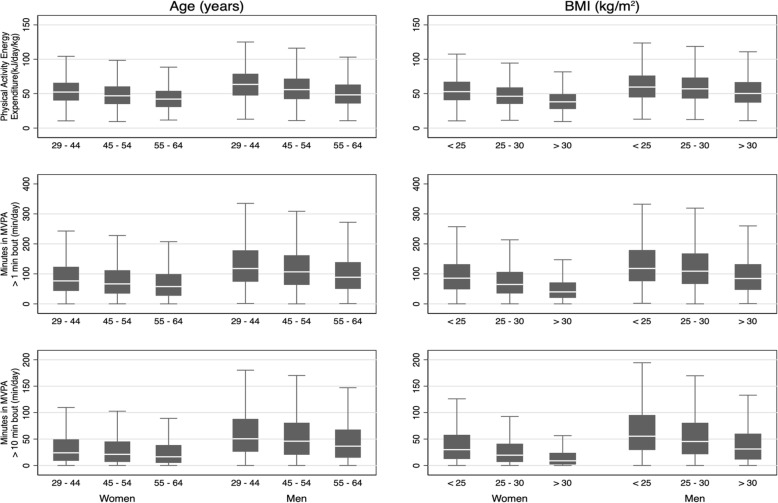
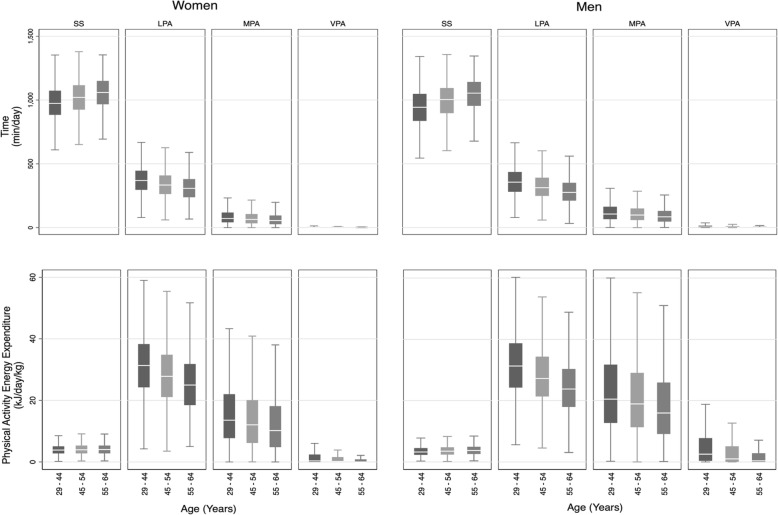
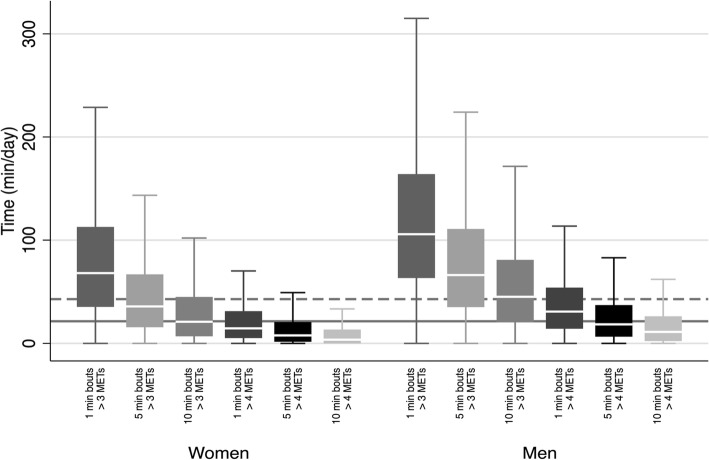
Background: Physical activity (PA) plays a role in the prevention of a range of diseases including obesity and cardiometabolic disorders. Large population-based descriptive studies of PA, incorporating precise measurement, are needed to understand the relative burden of insufficient PA levels and to inform the tailoring of interventions. Combined heart and movement sensing enables the study of physical activity energy expenditure (PAEE) and intensity distribution. We aimed to describe the sociodemographic correlates of PAEE and moderate-to-vigorous physical activity (MVPA) in UK adults. Methods: The Fenland study is a population-based cohort study of 12,435 adults aged 29–64 years-old in Cambridgeshire, UK. Following individual calibration (treadmill), participants wore a combined heart rate and movement sensor continuously for 6 days in free-living, from which we derived PAEE (kJ•day − 1 •kg − 1 ) and time in MVPA (> 3 & > 4 METs) in bouts greater than 1 min and 10 min. Socio-demographic information was self-reported. Stratum-specific summary statistics and multivariable analyses were performed. Results: Women accumulated a mean (sd) 50(20) kJ•day − 1 •kg − 1 of PAEE, and 83(67) and 33(39) minutes•day − 1 of 1-min bouted and 10-min bouted MVPA respectively. By contrast, men recorded 59(23) kJ•day − 1 •kg − 1 , 124(84) and 60(58) minutes•day − 1 . Age and BMI were also important correlates of PA. Association with age was inverse in both sexes, more strongly so for PAEE than MVPA. Obese individuals accumulated less PA than their normal-weight counterparts, whether considering PAEE or allometrically-scaled PAEE (− 10 kJ•day − 1 •kg − 1 or − 15 kJ•day − 1 •kg -2/3 in men). Higher income and manual work were associated with higher PA; manual workers recorded 13–16 kJ•kg − 1 •day − 1 more PAEE than sedentary counterparts. Overall, 86% of women and 96% of men accumulated a daily average of MVPA (> 3 METs) corresponding to 150 min per week. These values were 49 and 74% if only considering bouts > 10 min (15 and 31% for > 4 METs). Conclusions: PA varied by age, sex and BMI, and was higher in manual workers and those with higher incomes. Light physical activity was the main driver of PAEE; a component of PA that is currently not quantified as a target in UK guidelines.
Overview
The claims and statistics of this paper haven’t been checked yet.
Free: it reads the open-access text and checks the first 5 claims that cite a source we can check. Create a free account to check every claim.
Integrity signals
Registry
Cites
Statistics
Figures
Verification
Claims the paper makes
The claims and statistics of this paper haven’t been checked yet.
Free: it reads the open-access text and checks the first 5 claims that cite a source we can check. Create a free account to check every claim.
Claims other papers make about this one
Each is checked against this paper’s own text: does it say what the citing paper says it does?
The cited source doesn’t support the claim as written.
In the citing paper
“The scale of UK Biobank is several orders of magnitude greater than the largest datasets used by the current state-of-the-art such as the Fenland data9 (n = 160,000).”
From Self-supervised learning for human activity recognition using 700,000 person-days of wearable data (2024) · cites this paper as [9]
Checked by a reasoning model — may be wrong.
Experimental — accuracy not yet measuredThe cited source says what the claim attributes to it.
In the citing paper
“We have shown that activity levels in this cohort are similar to those reported in national UK surveys [11,26], suggesting that fitness, as the capacity to undertake physical activity, may also be similar to national levels.”
From Resting heart rate is a population-level biomarker of cardiorespiratory fitness: The Fenland Study (2023) · cites this paper as [11]
Self-check
Percentages, sums and reported differences re-computed from the paper’s own numbers.
The self-check needs the paper’s full text.
Citations
Cites
The Physical Activity Guidelines for Americans
Piercy, K. L., Troiano, R. P., Ballard, R. M., Carlson, S. A., Fulton, J. E., Galuska, D. A., George, S. M., & Olson, R. D. (2018) · JAMA · doi:10.1001/jama.2018.14854 · Cited by 9,755
‘Small Changes' to Diet and Physical Activity Behaviors for Weight Management
Hills, A. P., Byrne, N. M., Lindstrom, R., & Hill, J. O. (2013) · Obesity Facts · doi:10.1159/000345030 · Cited by 9,493
Lee, I.-M., Shiroma, E. J., Lobelo, F., Puska, P., Blair, S. N., & Katzmarzyk, P. T. (2012) · The Lancet · doi:10.1016/s0140-6736(12)61031-9 · Cited by 8,215
Physical Activity in the United States Measured by Accelerometer
TROIANO, R. P., BERRIGAN, D., DODD, K. W., MÂSSE, L. C., TILERT, T., & MCDOWELL, M. (2008) · Medicine & Science in Sports & Exercise · doi:10.1249/mss.0b013e31815a51b3 · Cited by 7,638
Age-predicted maximal heart rate revisited
Tanaka, H., Monahan, K. D., & Seals, D. R. (2001) · Journal of the American College of Cardiology · doi:10.1016/s0735-1097(00)01054-8 · Cited by 3,775
Fit Yourself and Take Your Lungs to Heart
Palange, P., & Bonini, M. (2013) · Respiration · doi:10.1159/000350831 · Cited by 2,779
Biodiversity on the Rocks: Macrofauna Inhabiting Authigenic Carbonate at Costa Rica Methane Seeps
Levin, L. A., Mendoza, G. F., Grupe, B. M., Gonzalez, J. P., Jellison, B., Rouse, G., Thurber, A. R., & Waren, A. (2015) · PLOS ONE · doi:10.1371/journal.pone.0131080 · Cited by 2,167
Pipkins, H. R., Bradshaw, J. L., Keller, L. E., Swiatlo, E., & McDaniel, L. S. (2017) · PLOS ONE · doi:10.1371/journal.pone.0179159 · Cited by 1,338
Doherty, A., Jackson, D., Hammerla, N., Plötz, T., Olivier, P., Granat, M. H., White, T., van Hees, V. T., Trenell, M. I., Owen, C. G., et al. (2017) · PLOS ONE · doi:10.1371/journal.pone.0169649 · Cited by 1,250 · cited 1×
“Despite the energy expenditure differences between men and women as measured by combined sensing, there was no sex difference in movement as measured by accelerometry, as has also been observed in other cohorts [25].”
ResultSelf-citationReliability and validity of the combined heart rate and movement sensor Actiheart
Brage, S., Brage, N., Franks, P. W., Ekelund, U., & Wareham, N. J. (2005) · European Journal of Clinical Nutrition · doi:10.1038/sj.ejcn.1602118 · Cited by 667
Self-citation
Research works printed but not linked: 3
- Brage S Westgate K Wijndaele K Godinho J Griffin S Wareham N Evaluation of a method for minimising diurnal information bias in objective sensor data ICAMPAM (Amherst). 2013
- Sarrus M Rameaux J Rapport sur un memoire adresse a l’academie royale de medicine Bull l’Academie R Med 1838 3 1094 1100
- Chief Medical Officers UK UK Chief Medical Officers ’ physical activity guidelines 2019
Cited by
Mapping the proteo-genomic convergence of human diseases
Pietzner, M., Wheeler, E., Carrasco-Zanini, J., Cortes, A., Koprulu, M., Wörheide, M. A., Oerton, E., Cook, J., Stewart, I. D., Kerrison, N. D., et al. (2021) · Science · doi:10.1126/science.abj1541 · Cited by 657
“Here, we present a genome-proteome–wide association study targeting 4775 distinct proteins measured from plasma samples of 10,708 generally healthy European-descent individuals who were participants in the Fenland study (table S1) (11).”
BackgroundSelf-citationWearable-device-measured physical activity and future health risk
Strain, T., Wijndaele, K., Dempsey, P. C., Sharp, S. J., Pearce, M., Jeon, J., Lindsay, T., Wareham, N., & Brage, S. (2020) · Nature Medicine · doi:10.1038/s41591-020-1012-3 · Cited by 355
Self-citationSynergistic insights into human health from aptamer- and antibody-based proteomic profiling
Pietzner, M., Wheeler, E., Carrasco-Zanini, J., Kerrison, N. D., Oerton, E., Koprulu, M., Luan, J., Hingorani, A. D., Williams, S. A., Wareham, N. J., et al. (2021) · Nature Communications · doi:10.1038/s41467-021-27164-0 · Cited by 234
Self-citationA cross-platform approach identifies genetic regulators of human metabolism and health
MacTel Consortium, Lotta, L. A., Pietzner, M., Stewart, I. D., Wittemans, L. B. L., Li, C., Bonelli, R., Raffler, J., Biggs, E. K., Oliver-Williams, C., et al. (2021) · Nature Genetics · doi:10.1038/s41588-020-00751-5 · Cited by 200
Self-citationStrain, T., Wijndaele, K., Garcia, L., Cowan, M., Guthold, R., Brage, S., & Bull, F. C. (2020) · British Journal of Sports Medicine · doi:10.1136/bjsports-2020-102601 · Cited by 161
Self-citationSelf-supervised learning for human activity recognition using 700,000 person-days of wearable data
Yuan, H., Chan, S., Creagh, A. P., Tong, C., Acquah, A., Clifton, D. A., & Doherty, A. (2024) · npj Digital Medicine · doi:10.1038/s41746-024-01062-3 · Cited by 166
MC3R links nutritional state to childhood growth and the timing of puberty
Lam, B. Y. H., Williamson, A., Finer, S., Day, F. R., Tadross, J. A., Gonçalves Soares, A., Wade, K., Sweeney, P., Bedenbaugh, M. N., Porter, D. T., et al. (2021) · Nature · doi:10.1038/s41586-021-04088-9 · Cited by 139
Self-citationPuyana, M. G., Fernández‐Batanero, J. M., Fennell, C., & Sañudo, B. (2020) · International Journal of Environmental Research and Public Health · doi:10.3390/ijerph17103499 · Cited by 122
“There is a global concern suggesting that individuals are not engaging in sufficient amounts of physical activity, participating in high amounts of sedentary activity [1,2], and spending a great amount of time in front of screens (i.”
BackgroundPaudel, S., Ahmadi, M. N., Phongsavan, P., Hamer, M., & Stamatakis, E. (2023) · British Journal of Sports Medicine · doi:10.1136/bjsports-2022-105435 · Cited by 104
Williamson, A., Norris, D. M., Yin, X., Broadaway, K. A., Moxley, A. H., Vadlamudi, S., Wilson, E. P., Jackson, A. U., Ahuja, V., Andersen, M. K., et al. (2023) · Nature Genetics · doi:10.1038/s41588-023-01408-9 · Cited by 80
“Modified Stumvoll Insulin Sensitivity Index (ISI) and insulin fold change (IFC) were highly correlated with post-challenge measures of glucose and insulin during an OGTT in the Fenland study but were shown to capture different aspects of post-challenge insulin resistance suggesting value in studying both traits in par…”
InfluentialGonzales, T. I., Westgate, K., Strain, T., Hollidge, S., Jeon, J., Christensen, D. L., Jensen, J., Wareham, N. J., & Brage, S. (2021) · Scientific Reports · doi:10.1038/s41598-021-94768-3 · Cited by 59
Self-citationProteomic signatures for identification of impaired glucose tolerance
Carrasco-Zanini, J., Pietzner, M., Lindbohm, J. V., Wheeler, E., Oerton, E., Kerrison, N., Simpson, M., Westacott, M., Drolet, D., Kivimaki, M., et al. (2022) · Nature Medicine · doi:10.1038/s41591-022-02055-z · Cited by 52
Self-citationResting heart rate is a population-level biomarker of cardiorespiratory fitness: The Fenland Study
Gonzales, T. I., Jeon, J. Y., Lindsay, T., Westgate, K., Perez-Pozuelo, I., Hollidge, S., Wijndaele, K., Rennie, K., Forouhi, N., Griffin, S., et al. (2023) · PLOS ONE · doi:10.1371/journal.pone.0285272 · Cited by 44
“In a large UK population-based study, we assess cross-sectional associations between different measures of RHR and fitness estimated from a submaximal treadmill test [11].”
MethodResultInfluentialSelf-citationMapping biological influences on the human plasma proteome beyond the genome
Carrasco-Zanini, J., Wheeler, E., Uluvar, B., Kerrison, N. D., Koprulu, M., Wareham, N. J., Pietzner, M., & Langenberg, C. (2024) · Nature Metabolism · doi:10.1038/s42255-024-01133-5 · Cited by 53
“A detailed description of objective physical activity assessment has been previously described 31 .”
BackgroundMethodInfluentialSelf-citationWatts, E., Saint-Maurice, P., Doherty, A., Fensom, G., Freeman, J. R., Gorzelitz, J., Jin, D., McClain, K., Papier, K., Patel, S., et al. (2023) · JAMA Network Open · doi:10.1001/jamanetworkopen.2022.56186 · Cited by 32
Perry, A., Farber‐Eger, E. H., Gonzales, T. I., Tanaka, T., Robbins, J., Murthy, V. L., Stolze, L. K., Zhao, S., Huang, S., Colangelo, L. A., et al. (2024) · Nature Medicine · doi:10.1038/s41591-024-03039-x · Cited by 47
Self-citationPearce, M., Strain, T., Kim, Y., Sharp, S. J., Westgate, K., Wijndaele, K., Gonzales, T., Wareham, N. J., & Brage, S. (2020) · International Journal of Behavioral Nutrition and Physical Activity · doi:10.1186/s12966-020-00937-4 · Cited by 37
“The Fenland Study. medRxiv.”
MethodInfluentialSelf-citationEekelen, E. W.-V., van der Velde, J. H. P. M., Boone, S. C., Westgate, K. L., Brage, S., Lamb, H. J., Rosendaal, F. R., & de Mutsert, R. (2021) · Medicine & Science in Sports & Exercise · doi:10.1249/mss.0000000000002712 · Cited by 39
“The authors’ responsibilities were as follows: R. dM. and F. R. R. designed the study; R. dM. and H. J. L. conducted the study; E.W.-vE., S. C. B., J. H. P. M. vdV., K. W., and S. B. performed data collection and Actiheart data processing; E. W.-vE. analyzed data;E. W.-vE. drafted the manuscript; E. W.-vE. and RdM had…”
Self-citationLongitudinal cardio-respiratory fitness prediction through wearables in free-living environments
Spathis, D., Perez-Pozuelo, I., Gonzales, T. I., Wu, Y., Brage, S., Wareham, N., & Mascolo, C. (2022) · npj Digital Medicine · doi:10.1038/s41746-022-00719-1 · Cited by 30
Self-citationBrage, S., Lindsay, T., Venables, M., Wijndaele, K., Westgate, K., Collins, D., Roberts, C., Bluck, L., Wareham, N., & Page, P. (2020) · International Journal of Epidemiology · doi:10.1093/ije/dyaa005 · Cited by 25
Self-citationLindsay, T., Wijndaele, K., Westgate, K. L., Dempsey, P. C., Strain, T., Rolfe, E. D. L., Forouhi, N. G., Griffin, S. J., Wareham, N. J., & Brage, S. (2021) · International Journal of Obesity · doi:10.1038/s41366-021-00970-8 · Cited by 23
Self-citationSANDERCOCK, G. R. H., Moran, J., & Cohen, D. D. (2022) · PLoS ONE · doi:10.1371/journal.pone.0267277 · Cited by 34
“Stipulating a minimum bout duration reduces estimates of how many adults meet aerobic activity guidelines [43].”
BackgroundLi, Y., Cheng, Y., Consolato, F., Schiano, G., Chong, M. R., Pietzner, M., Nguyen, N. Q. H., Scherer, N., Biggs, M. L., Kleber, M. E., et al. (2022) · JCI Insight · doi:10.1172/jci.insight.157035 · Cited by 22
“…Health Research in the Region Augsburg (KORA) study (62), the LUdwigshafen RIsk and Cardiovascular Health (LURIC) study (63), the Outcome Reduction with an Initial Glargine Intervention (ORIGIN) trial (64), the Atherosclerosis Risk in Communities (ARIC) (65) study and the Fenland study (66).”
BackgroundKyriakidou, Y., Cooper, I. D., Kraev, I., Lange, S., & Elliott, B. (2021) · Frontiers in Physiology · doi:10.3389/fphys.2021.723931 · Cited by 23
Lockhart, S. M., Mušo, M., Zvetkova, I., Lam, B., Ferrari, A., Schoenmakers, E., Duckett, K., Leslie, J., Collins, A., Romartínez-Alonso, B., et al. (2024) · Nature Metabolism · doi:10.1038/s42255-024-01126-4 · Cited by 24
“To discover carriers of damaging mutations in the ligand-binding domain of LXRα in the Fen-land study (a population cohort study, previously described in detail 61 ), we sequenced the coding region of NR1H3 using a pooled-sequencing approach as previously described 62 .”
Self-citationZhao, J., Zeng, J., Zhu, C., Li, X., Liu, D., Zhang, J., Li, F., Targher, G., & Fan, J. (2023) · BMC Medicine · doi:10.1186/s12916-023-03185-y · Cited by 25
“…instrumenting for amino acids in our study were obtained from a meta-analysis of metabolite GWAS using data from up to 23 cohorts included in three previous GWASs [22, 34, 35] and three independent studies (the Fenland cohort [36], EPIC-Norfolk Study [37] and INTERVAL trial [38]) (Table 1).”
MethodPorta, M., Orrù, P. F., & Pau, M. (2021) · Ergonomics · doi:10.1080/00140139.2021.1948107 · Cited by 18
Dempsey, P. C., Aadland, E., Strain, T., Kvalheim, O. M., Westgate, K. L., Lindsay, T., Khaw, K., Wareham, N. J., Brage, S., & Wijndaele, K. (2022) · Preventive Medicine · doi:10.1016/j.ypmed.2022.106977 · Cited by 24
Self-citationCross-platform proteomics to advance genetic prioritisation strategies
Pietzner, M., Wheeler, E., Carrasco-Zanini, J., Kerrison, N. D., Oerton, E., Koprulu, M., Luan, J., Hingorani, A. D., Williams, S. A., Wareham, N. J., et al. (2021) · bioRxiv (Cold Spring Harbor Laboratory) · doi:10.1101/2021.03.18.435919 · Cited by 15
Self-citationLotta, L. A., Pietzner, M., Stewart, I. D., Wittemans, L. B. L., Li, C., Bonelli, R., Raffler, J., Biggs, E. K., Oliver‐Williams, C., Auyeung, V. P. W., et al. (2020) · bioRxiv (Cold Spring Harbor Laboratory) · doi:10.1101/2020.02.03.932541 · Cited by 15
Self-citationGonzales, T. I., Jeon, J. Y., Lindsay, T., Westgate, K. L., Perez-Pozuelo, I., Hollidge, S. E., Wijndaele, K., Rennie, K. L., Forouhi, N. G., Griffin, S. J., et al. (2020) · medRxiv · doi:10.1101/2020.07.01.20144154 · Cited by 20
Self-citationPrediction of total and regional body composition from 3D body shape
Qiao, C., Rolfe, E. D. L., Mak, E., Sengupta, A., Powell, R., Watson, L. P. E., Heymsfield, S. B., Shepherd, J., Wareham, N. J., Brage, S., et al. (2024) · npj Digital Medicine · doi:10.1038/s41746-024-01289-0 · Cited by 18
“Details of the study have been described elsewhere [25].”
MethodSelf-citationFreyberg, J., Brage, S., Kessing, L. V., & Faurholt‐Jepsen, M. (2020) · Journal of Affective Disorders · doi:10.1016/j.jad.2020.01.110 · Cited by 14
“Indeed, the activity level of this group did appear to be higher than observed for other healthy controls of similar age sampled from the general population (Lindsay et al., 2019).”
BackgroundSelf-citationSeyres, D., Cabassi, A., Lambourne, J. J., Burden, F., Farrow, S., McKinney, H., Batista, J., Kempster, C., Pietzner, M., Slingsby, O. C., et al. (2022) · Clinical Epigenetics · doi:10.1186/s13148-022-01257-z · Cited by 15
“Phosphatidylcholine (40:7), (38:7), (38:6), (35:2) and O (36:2) were inversely associated with all factors except for adiponectin and HDL-Further supporting our findings, phosphatidylcholine (38:6 and 36:2) had previously been identified in obesity studies84; and, triacylglycerol (50:1 and 52:2) had previously been li…”
InfluentialSelf-citationHamer, M., & Stamatakis, E. (2020) · Journal of Epidemiology & Community Health · doi:10.1136/jech-2020-213783 · Cited by 10
“Standing accounted for nearly of third of total waking hours, which is consistent with recent data suggesting light activity is the main driver of physical activity energy expenditure (18).”
Collings, P. J., Backes, A., Aguayo, G., Malisoux, L., on behalf of the ORISCAV-LUX study group, Alkerwi, A., Noppe, S., Delagardelle, C., Beissel, J., Chioti, A., et al. (2022) · International Journal of Behavioral Nutrition and Physical Activity · doi:10.1186/s12966-022-01380-3 · Cited by 17
“High rates of adherence to the new PA guideline have also been reported in the UK (≥86%) [7, 46], Germany (100%) [47], and Finland (99.”
BackgroundInfluentialPowell, R., Rolfe, E. D. L., Day, F. R., Perry, J. R. B., Griffin, S. J., Forouhi, N. G., Brage, S., Wareham, N. J., Langenberg, C., & Ong, K. K. (2020) · medRxiv · doi:10.1101/2020.12.16.20248330 · Cited by 12
Self-citationPhysical determinants of daily physical activity in older men and women
Karavirta, L., Aittokoski, T., Pynnönen, K., Rantalainen, T., Westgate, K. L., Gonzales, T. I., Palmberg, L., Neuvonen, J., Lipponen, J. A., Turunen, K. M., et al. (2025) · PLoS ONE · doi:10.1371/journal.pone.0314456 · Cited by 12
Self-citationMueller, J., Ahern, A. L., Jones, R. A. P., Sharp, S. J., Davies, A., Zuckerman, A., Perry, B. I., Khandaker, G. M., Rolfe, E. D. L., Wareham, N. J., et al. (2024) · PLoS ONE · doi:10.1371/journal.pone.0295117 · Cited by 13
Self-citationCheng, T. S., Brage, S., van Sluijs, E. M. F., & Ong, K. K. (2023) · International Journal of Epidemiology · doi:10.1093/ije/dyad063 · Cited by 15
“Finally, these values were internally standardized by adjusting for age at measurement, total wear time, number of valid measure days, proportion of weekdays measured, season during measurement (coded as two orthogonal sine functions; ‘Winter’ peaking at 1 on 1 January and reaching a minimum of 1 on 1 July, and ‘Sprin…”
Self-citationVicente-Gabriel, S., Lugones‐Sánchez, C., Tamayo‐Morales, O., Prieto, A. V., González‐Sánchez, S., Martín, S. C., Gómez‐Sánchez, M., Rodríguez‐Sánchez, E., García‐Ortiz, L., Gómez‐Sánchez, L., et al. (2024) · Frontiers in Public Health · doi:10.3389/fpubh.2024.1322437 · Cited by 16
Hoenink, J. C., Burgoine, T., Brage, S., Forouhi, N. G., Griffin, S. J., Monsivais, P., Wareham, N. J., Ahern, A. L., & Adams, J. M. (2023) · International Journal of Obesity · doi:10.1038/s41366-023-01290-9 · Cited by 9
“METHODS Study sample Between 2005 and 2015, adults born between 1950 and 1975 were recruited to the Fenland Study from the population-based registers of general practices in Cambridgeshire, the UK [22].”
Self-citationTrichia, E., Koulman, A., Stewart, I. D., Brage, S., Griffin, S. J., Griffin, J. L., Khaw, K., Langenberg, C., Wareham, N. J., Imamura, F., et al. (2023) · Molecular Nutrition & Food Research · doi:10.1002/mnfr.202300154 · Cited by 11
Self-citationEstimating maximal oxygen consumption from heart rate response to submaximal ramped treadmill test
Gonzales, T. I., Westgate, K., Hollidge, S., Lindsay, T., Jeon, J., & Brage, S. (2020) · doi:10.1101/2020.02.18.20024489 · Cited by 7
Self-citationBrage, S., Assah, F. K., & Msyamboza, K. P. (2020) · BMJ Open Sport & Exercise Medicine · doi:10.1136/bmjsem-2020-000941 · Cited by 11
“3 12 – 16 18 – 20 being slightly higher than the equivalent in the Malawian men but slightly lower in the women.”
Self-citationCollings, P. J., Backes, A., & Malisoux, L. (2023) · Atherosclerosis · doi:10.1016/j.atherosclerosis.2023.117185 · Cited by 11
Mendoza, R. M., Roa, R., Fontes, F., Velásquez, I. M., & Quintana, H. K. (2023) · International Journal of Environmental Research and Public Health · doi:10.3390/ijerph20085554 · Cited by 8
“As a consequence, the incorporation of shorter bouts of activity and light-intensity activities might affect the relative domainspecific contributions, as well as the total physical activity estimation [51].”
BackgroundLi, R., Deng, M., Lin, Y., Gao, W., Liu, B., & Xia, H. (2022) · Frontiers in Aging Neuroscience · doi:10.3389/fnagi.2022.938408 · Cited by 7
“(2021) performed a genomewide meta-analysis of 174 circulating metabolites including a dozen of amino acids in 30,977 individuals from the Fenland, EPIC-Norfolk and INTERVAL studies (Lindsay et al., 2019).”
MethodDescriptive Epidemiology of Cardiorespiratory Fitness in UK Adults: The Fenland Study
GONZALES, T. I., WESTGATE, K., HOLLIDGE, S., LINDSAY, T., WIJNDAELE, K., FOROUHI, N. G., GRIFFIN, S., WAREHAM, N., & BRAGE, S. (2023) · Medicine & Science in Sports & Exercise · doi:10.1249/mss.0000000000003068 · Cited by 6
Self-citationA Self-Paced Walk Test for Individual Calibration of Heart Rate to Energy Expenditure
Westgate, K. L., Gonzales, T. I., Hollidge, S. E., Lindsay, T., Wareham, N. J., & Brage, S. (2024) · Journal for the Measurement of Physical Behaviour · doi:10.1123/jmpb.2023-0042 · Cited by 6
Self-citationProteome-Wide Genetic Investigation of Large Artery Stiffness
Dib, M., Azzo, J. D., Zhao, L., Salman, O., Gan, S., Buyzere, M. L. D., Meyer, T. D., Ebert, C., Gunawardhana, K., Liu, L., et al. (2024) · JACC Basic to Translational Science · doi:10.1016/j.jacbts.2024.05.017 · Cited by 5
Williams, H., Andersen, Z. J., Boogaard, H., Brage, S., Browning, M. H. E. M., Cai, Y. S., Chen, X., deSouza, P., Dzhambov, A. M., Fenech, B., et al. (2025) · Environmental Research · doi:10.1016/j.envres.2025.123150 · Cited by 6
“…recommendations for light-intensity physical activity (e.g., casual walking, light household work), due to comparatively fewer studies, despite the fact that light intensity activity is the main driver of total volume of activity energy expenditure (Lindsay et al., 2019) in the general population.”
Self-citationConcurrent Changes in Diet Quality and Physical Activity and Association With Adiposity in Adults
Aryannezhad, S., Imamura, F., Rolfe, E. D. L., Griffin, S. J., Wareham, N. J., Brage, S., & Forouhi, N. G. (2025) · JAMA Network Open · doi:10.1001/jamanetworkopen.2025.45232 · Cited by 11
Self-citationRuggiero, C. F., Kudlek, L., Mueller, J., Griffin, S. J., Sharp, S. J., Wareham, N. J., Brage, S., Forouhi, N. G., Ong, K. K., & Ahern, A. L. (2026) · Appetite · doi:10.1016/j.appet.2026.108466 · Cited by 4
Self-citationGard, A. J. M., & Lavallee, D. E. (2025) · Healthcare · doi:10.3390/healthcare13080856 · Cited by 9
“The gap in PA levels is well discussed in the literature, with women experiencing lower levels of PA than men across their entire lifespan [1,2].”
Objective assessment of physical activity patterns based on accelerometer and GPS data in adults
Miškinytė, A., & Dėdelė, A. (2021) · Travel Behaviour and Society · doi:10.1016/j.tbs.2021.07.002 · Cited by 4
Lin, X., Yang, Y., Ngwa, V. F., Yin, X., Simpson, S., van der Mei, I. A. F., Broadley, S., Ponsonby, A., Ausimmune/ AusLong Investigators Group, Burdon, K. P., et al. (2023) · Journal of Neurology Neurosurgery & Psychiatry · doi:10.1136/jnnp-2022-330259 · Cited by 4
Miwa, T., Mii, K., Chatani, R., & Sugitani, Y. (2026) · PLoS ONE · doi:10.1371/journal.pone.0342543 · Cited by 2
“The table demonstrates that while MVPA values varied across studies, the activity levels of our participants were generally comparable to those reported in other relevant populations of healthy or working adults [6,8,19,22–25].”
Prince, S. A., Chaput, J., Colley, R. C., Dempsey, P. C., Ekelund, U., Janssen, I., Lang, J. J., Stamatakis, E., Tarp, J., Tremblay, M. S., et al. (2026) · British Journal of Sports Medicine · doi:10.1136/bjsports-2025-111179 · Cited by 6
Chanteau, A., Faity, G. V., Mahé, G., Sabia, S., & Faucheur, A. L. (2026) · Sports Medicine - Open · doi:10.1186/s40798-026-01039-4 · Cited by 2
Freyberg, J., Brage, S., Kessing, L. V., & Faurholt‐Jepsen, M. (2020) · Nordic Journal of Psychiatry · doi:10.1080/08039488.2020.1831063 · Cited by 2
“Indeed, the activity level of this group did appear to be higher than observed for other healthy controls of similar age sampled from the general population [43], though it was”
BackgroundSelf-citationDoležalová, N., Gkrania‐Klotsas, E., Morelli, D., Moore, A. K., Cunningham, A. C., Booth, A., Plans, D., Reed, A. B., Aral, M., Rennie, K. L., et al. (2023) · Scientific Reports · doi:10.1038/s41598-023-37301-y · Cited by 3
Self-citationPHYSICAL ACTIVITY AND SITTING DURATIONS AMONG EMPLOYERS AND EMPLOYEES OF MICROENTERPRISES
Kuruoğlu, M. Y. A., Sağınç, S., & Karaca, A. (2022) · Health Problems of Civilization · doi:10.5114/hpc.2022.118702 · Cited by 1
Seyres, D., Cabassi, A., Lambourne, J. J., Burden, F., Farrow, S., McKinney, H., Batista, J., Kempster, C., Pietzner, M., Slingsby, O. C., et al. (2020) · bioRxiv (Cold Spring Harbor Laboratory) · doi:10.1101/2020.03.06.961805 · Cited by 2
Self-citationDempsey, P., Rowlands, A., Strain, T., Zaccardi, F., Dawkins, N., Razieh, C., Davies, M., Khunti, K., Edwardson, C., Wijndaele, K., et al. (2022) · medRxiv · doi:10.1101/2022.02.23.22271386 · Cited by 1
“In contrast, device-based measures of PA can more accurately capture sporadic activity of different intensities throughout the whole waking day, including light-intensity PA (an important contributor to total PA volume (6)), which could enable more specific and targeted PA recommendations.”
BackgroundSelf-citationResting Heart Rate Is a Biomarker of Cardiorespiratory Fitness: The Fenland StudyPreprint
Gonzales, T. I., Jeon, J. Y., Lindsay, T., Westgate, K. L., Perez-Pozuelo, I., Hollidge, S. E., Wijndaele, K., Rennie, K. L., Forouhi, N. G., Griffin, S. J., et al. (2022) · SSRN Electronic Journal · doi:10.2139/ssrn.4099418 · Cited by 1
Self-citationLockhart, S. M., Mušo, M., Zvetkova, I., Lam, B., Ferrari, A., Schoenmakers, E., Duckett, K., Leslie, J., Romartínez-Alonso, B., Tadross, J. A., et al. (2024) · bioRxiv (Cold Spring Harbor Laboratory) · doi:10.1101/2024.04.28.591512 · Cited by 1
“To discover carriers of damaging mutations in the ligand binding domain of LXR a in the Fenland study, a population cohort study (previously described in detail [60]) we sequenced the coding region of NR1H3 using a pooled-sequencing approach as previously described [61].”
MethodSelf-citationMoore, A. K., Doležalová, N., Morelli, D., Gkrania‐Klotsas, E., Cunningham, A. C., Booth, A., Plans, D., Reed, A. B., Aral, M., Rennie, K. L., et al. (2022) · Research Square · doi:10.21203/rs.3.rs-1885504/v1
Self-citationMC3R links nutritional state to childhood growth and the timing of puberty
Lam, B., Williamson, A., Finer, S., Day, F. R., Tadross, J. A., Soares, A. G., Wade, K. H., Sweeney, P., Bedenbaugh, M. N., Porter, D. T., et al. (2022) · Yearbook of pediatric endocrinology · doi:10.1530/ey.19.7.12
Gendre, B., Martinez-Perez, A., Kleber, M., Vlieg, A. V. H., Boland, A., Olaso, R., Germain, M., Munsch, G., Moissl, A., Suchon, P., et al. (2024) · bioRxiv · doi:10.1101/2024.02.08.579474
“- rs75463553 also associated (p = 1.76 x 10 -8 ) with plasma levels of RMDN1 protein in the Fenland study [34], but it was mainly a protein quantitative trait locus (pQTL) (p = 2.92 x 10 -13 ) for Carbonic anhydrase XIII whose structural gene ( CA13 ), located on 8q21.”
BackgroundInfluentialZhao, J., Zeng, J., Zhu, C., Li, X., Liu, D., Zhang, J., Li, F., Targher, G., & Fan, J. (2023) · Figshare · doi:10.6084/m9.figshare.24655902
Physical Activity of Car Dealership Employees Assessed Using the IPAQ-SF Questionnaire
Czeczelewski, J. (2024) · Polish Journal of Sport and Tourism · doi:10.2478/pjst-2024-0018
Clemson, V., Grey, E., Barnett, J. C., Burfitt, E., & Gillison, F. (2024) · doi:10.2196/preprints.68951
Clemson, V., Grey, E., Barnett, J. C., Burfitt, E., & Gillison, F. (2025) · JMIR Aging · doi:10.2196/68951 · Cited by 1
“Older adults are the least active in our society [1], yet they could derive significant benefits from physical activity in terms of preventing and managing chronic disease, promoting strength and function [2], and reducing morbidity [3].”
Proteome- and phenome-wide studies identify circulating protein drivers of kidney diseases
Triozzi, J. L., Mamak, F., Wilson, O. D., Chen, H., Yu, Z., Gravel-Pucillo, K., Ferolito, B. R., Cho, K., Gaziano, J. M., Muralidhar, S., et al. (2026) · Kidney International · doi:10.1101/2025.10.09.25337438
“The Fenland study is a population-based cohort comprising generally healthy individuals residing in Cambridgeshire, United Kingdom 56 . pQTLs were derived from a genome-proteome-wide scan of 10,708 unrelated participants of European ancestry with 4,979 aptamers targeting 4,775 distinct proteins with on the SomaScan v4…”
A framework for estimating cardiorespiratory fitness from diverse exercise tests
Gonzales, T. I., Wareham, N. J., & Brage, S. (2026) · npj Exercise Medicine and Health · doi:10.1038/s44437-026-00004-3
“Finally, to demonstrate its practical epidemiological utility, we applied the framework to the UK-based Fenland study 17,18 to test the hypothesis that individualising fi tness estimation yields unattenuated associations between cardiorespiratory fi tness and cardiometabolic risk factors compared to…”
Self-citationMacniven, R., Blazek, K. D., Ware, L. J., Mels, C. M. C., van Vuren, E. J., & Schutte, A. E. (2025) · Journal of Sports Sciences · doi:10.1080/02640414.2025.2600807 · Cited by 1
“High levels of Actiheart measured over-all AEE have been found in manual workers to typically result from high levels of light intensity occupational activity (Lindsay et al., 2019).”
Zhao, J., Zeng, J., Zhu, C., Li, X., Liu, D., Zhang, J., Li, F., Targher, G., & Fan, J. (2024) · Figshare · doi:10.6084/m9.figshare.24656146
Collings, P. J., Backes, A., Aguayo, G. A., & Malisoux, L. (2024) · Figshare · doi:10.6084/m9.figshare.26558186
Glycolysis-related genes for bladder cancer: A Mendelian randomization analysis
Hong, X., Wang, G., Hong, T., Liu, X., Lin, S., Liu, G., Lin, W., & Zhang, Y. (2026) · Biochemistry and Biophysics Reports · doi:10.1016/j.bbrep.2026.102501
“…from 10,708 participants of European descent and measured 4775 distinct proteins to identify genetic determinants of circulating protein levels [19]; the UKB-PPP pQTL dataset, which included 54,219 UKB participants and characterized plasma proteomic profiles and genetic influences on the…”
Fang, Y., Zhang, S., Zhu, Y., Xu, R., Fang, Z., Ling, L., & Lv, X. (2026) · Discover Oncology · doi:10.1007/s12672-026-04740-8
“Blood-based pQTL summary data were collected from three sources: Fenland, including 10,708 European donors [22]; UKB-PPP, including 54,219 European donors [23]; and deCODE, including 35,559 Ice-landic donors [24].”
Genetic‐Proteomic Integration Identifies Predictive Plasma Proteins for Multiple Sclerosis
Ding, Y., Hamitouche, D., Thebault, S., Kearns, P., Abdelhak, A., & Harroud, A. (2026) · Annals of Neurology · doi:10.1002/ana.78256
Vahid, F., Stopa, V., Malisoux, L., Devaux, Y., Lamy, E., Silva, F. M. S. C. E., Forberger, S., Magistris, T. D., Sureda, A., Monserrat-Mesquida, M., et al. (2026) · Obesity Reviews · doi:10.1111/obr.70175 · Cited by 1
Ruggiero, C. F., Kudlek, L., Kininmonth, A. R., Mueller, J., Sharp, S. J., Griffin, S. J., Wareham, N. J., Brage, S., Forouhi, N. G., Ong, K. K., et al. (2026) · American Journal of Clinical Nutrition · doi:10.1016/j.ajcnut.2026.101529
Self-citationBrown, R., Xu, J., Luan, J., Donadille, B., Aslanzadeh, V., Bellanné‐Chantelot, C., Grasso, V., Collin‐Chavagnac, D., Mucciolo, M., Allix, I., et al. (2026) · Research Square · doi:10.21203/rs.3.rs-10884175/v1
Self-citation
Metadata
- Authors
- Lindsay, T., Westgate, K., Wijndaele, K., Hollidge, S., Kerrison, N., Forouhi, N., Griffin, S., Wareham, N., & Brage, S.
- Affiliations
- University of Cambridge (GB)
- Corresponding author
- Brage, Søren
- ORCID
- Venue
- International Journal of Behavioral Nutrition and Physical Activity
- Published
- 2019-12
- Volume
- 16
- Issue
- 1
- Pages
- 126-126
- ISSN
- 1479-5868 (ISSN-L)
- PMC
- PMC6902569
- OpenAlex
- W2970108297
- Semantic Scholar
- e0516328a767db83b2ede5aa62f71e1e942b7a22
- Cited by
- 83
- References
- 40
- Citations by year
- 2026: 11 · 2025: 7 · 2024: 14 · 2023: 12 · 2022: 14 · 2021: 11 · 2020: 14
- FWCI
- 6.68
- Type
- journal article
- Language
- en
- Open access
- gold
- doi.org
- Licence
- cc-by
- creativecommons.org/licenses/by/4.0/ (tdm)
- creativecommons.org/licenses/by/4.0/ (vor, 8 d)
- Locations
- International Journal of Behavioral Nutrition and Physical Activity (publishedVersion, cc-by)
- medRxiv (acceptedVersion)
- PubMed Central (publishedVersion, cc-by)
- PubMed (publishedVersion)
- DOAJ (DOAJ: Directory of Open Access Journals) (submittedVersion, cc-by-sa)
- Apollo (University of Cambridge) (submittedVersion, cc-by)
- Apollo (cc-by)
- Funders
- Medical Research Council (MC_UU_12015/3, MC_UU_12015/4, MC_UU_12015/1, MC_UU_12015/5)
- National Institute for Health Research (IS-BRC-1215-20014)
- Cambridge Commonwealth, European and International Trust
- St Catharine's College, University of Cambridge
- Topics
- Health Sciences › Medicine › Public Health, Environmental and Occupational Health › Physical Activity and Health
- Physical Sciences › Computer Science › Computer Vision and Pattern Recognition › Context-Aware Activity Recognition Systems
- Health Sciences › Medicine › Public Health, Environmental and Occupational Health › Obesity, Physical Activity, Diet
- Keywords
- physical activity energy expenditure, moderate-to-vigorous physical activity, sociodemographic correlates, sex differences, obesity, body mass index, manual labor, income, age, allometric scaling, adults, sedentary behavior, cardiometabolic health, disease prevention
- MeSH terms
- Adult, Energy Metabolism, Female, United Kingdom, Humans, Male, Middle Aged, Obesity, Cohort Studies, Exercise, Self Report
About these checks
Registry, retraction, Cites and statistics results are computed, not judged, with one exception: a printed reference that no index lists is read once by a model before it counts as a citation error. Claims are extracted by a model and kept only when their quote appears verbatim in the text; each cited source is then checked, with a model’s help, for whether it says what the claim relies on. Those verdicts can be wrong — read the claim’s quote and the cited source before relying on one.
Statistics and arithmetic are recomputed, not judged.
Confidence bands are shown only for fields calibrated on our annotated test set. None is calibrated yet, so no band is shown.
What counts as a claim ›How we measure confidence ›How we check this ›
Are you an author, or do you see a problem with this page? Request a review
Data sources
Bibliographic data: Semantic Scholar, OpenAlex, Crossref.
Contains information from the Semantic Scholar Academic Graph Datasets, made available under the ODC Attribution License (ODC-BY 1.0).
Semantic Scholar’s data is described in: Kinney, R., et al. (2023). The Semantic Scholar Open Data Platform. arXiv:2301.10140.
