

Evidence on physical activity and falls prevention for people aged 65+ years: systematic review to inform the WHO guidelines on physical activity and sedentary behaviour
Open accessThe DOI matches its Crossref record; 24 of the 24 references it cites were found in a registry or an index.
Abstract
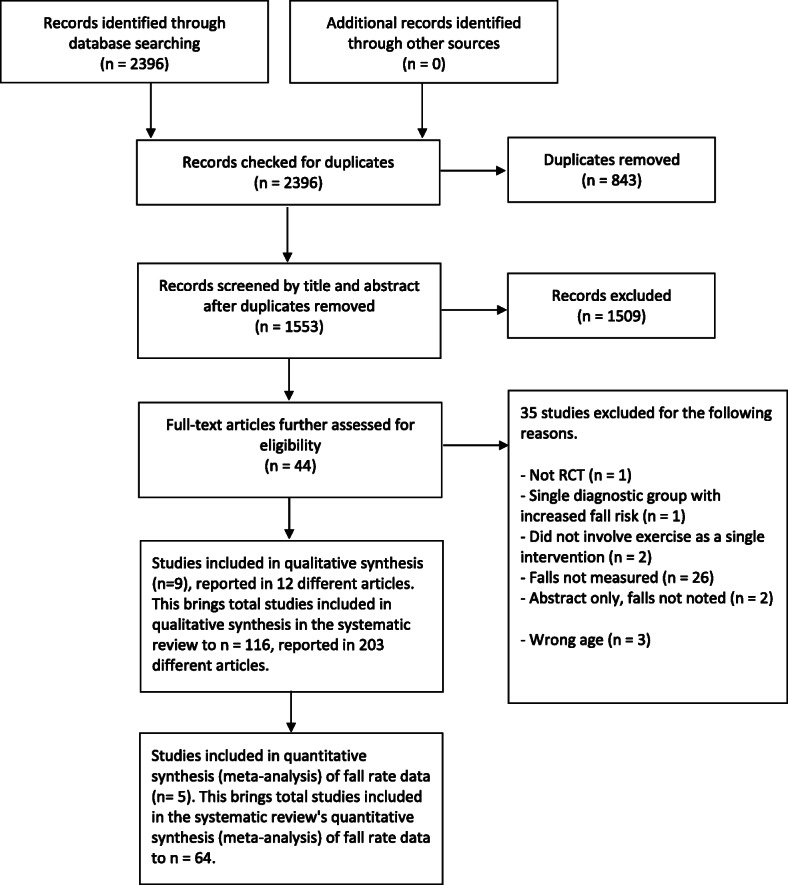
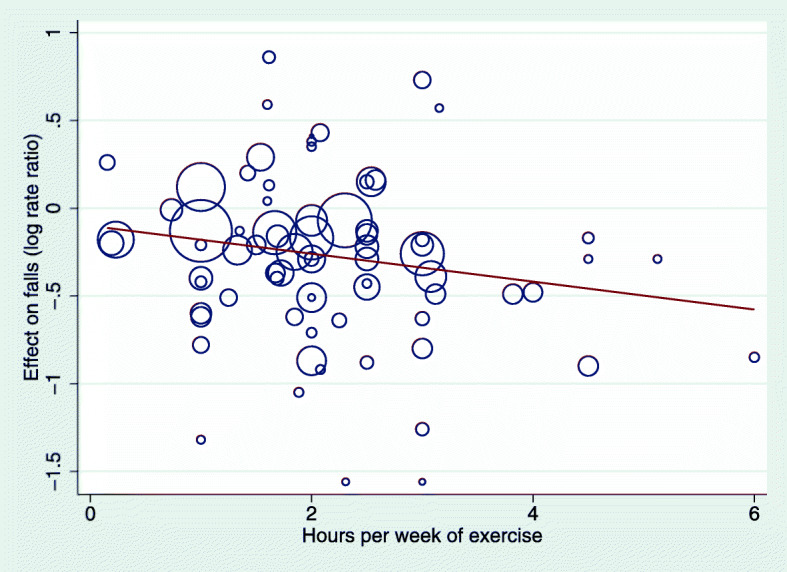
Background: Exercise prevents falls in older adults. Regular updates of estimated effects of exercise on falls are warranted given the number of new trials, the increasing number of older people globally and the major consequences of falls and fall-related injuries. Methods: This update of a 2019 Cochrane Review was undertaken to inform the World Health Organization guidelines on physical activity and sedentary behaviour. Searches were conducted in six databases. We included randomised controlled trials evaluating effects of any form of physical activity as a single intervention on falls in people aged 60+ years living in the community. Analyses explored dose-response relationships. The certainty of the evidence was assessed using Grading of Recommendations Assessment, Development and Evaluation (GRADE). Results: This review included 116 studies, involving 25,160 participants; nine new studies since the 2019 Cochrane Review. Exercise reduces the rate of falls by 23% (pooled rate ratio (RaR) 0.77, 95% confidence interval (CI) 0.71 to 0.83, 64 studies, high certainty evidence). Subgroup analysis showed variation in effects of different types of exercise ( p < 0.01). Rate of falls compared with control is reduced by 24% from balance and functional exercises (RaR 0.76, 95% CI 0.70 to 0.82, 39 studies, high certainty evidence), 28% from programs involving multiple types of exercise (commonly balance and functional exercises plus resistance exercises, RaR 0.72, 95% CI 0.56 to 0.93, 15 studies, moderate certainty evidence) and 23% from Tai Chi (RaR 0.77, 95% CI 0.61 to 0.97, 9 studies, moderate certainty evidence). The effects of programs that primarily involve resistance training, dance or walking remain uncertain. Interventions with a total weekly dose of 3+ h that included balance and functional exercises were particularly effective with a 42% reduction in rate of falls compared to control (Incidence Rate Ratio (IRR) 0.58, 95% CI 0.45 to 0.76). Subgroup analyses showed no evidence of a difference in the effect on falls on the basis of participant age over 75 years, risk of falls as a trial inclusion criterion, individual versus group exercise, or whether a health professional delivered the intervention. Conclusions: Given the strength of this evidence, effective exercise programs should now be implemented at scale.
Overview
The claims and statistics of this paper haven’t been checked yet.
Free: it reads the open-access text and checks the first 5 claims that cite a source we can check. Create a free account to check every claim.
Integrity signals
Registry
Cites
Statistics
Figures
Verification
Claims the paper makes
The claims and statistics of this paper haven’t been checked yet.
Free: it reads the open-access text and checks the first 5 claims that cite a source we can check. Create a free account to check every claim.
Claims other papers make about this one
Each is checked against this paper’s own text: does it say what the citing paper says it does?
The source backs part of the claim, not all of it — or backs it for a different population, condition or comparison.
In the citing paper
“the largest benefits for falls are generally seen with the combination of moderate to high intensity PRT and challenging balance training in sufficient quantities [123].”
From Global consensus on optimal exercise recommendations for enhancing healthy longevity in older adults (ICFSR) (2025) · cites this paper as [123]
Experimental — accuracy not yet measuredThe source backs part of the claim, not all of it — or backs it for a different population, condition or comparison.
In the citing paper
“and the largest benefits for falls are generally seen with the combination of moderate to high intensity PRT and challenging balance training in sufficient quantities [123].”
From Global consensus on optimal exercise recommendations for enhancing healthy longevity in older adults (ICFSR) (2025) · cites this paper as [123]
Experimental — accuracy not yet measuredThe cited source says what the claim attributes to it.
In the citing paper
“On the other hand, multicomponent exercise programs that incorporate PRT, balance, and functional exercises [84,123,130,131], have been demonstrated to effectively reduce the incidence of falls in older adults compared to control groups”
From Global consensus on optimal exercise recommendations for enhancing healthy longevity in older adults (ICFSR) (2025) · cites this paper as [123]
The cited source says what the claim attributes to it.
In the citing paper
“Multicomponent exercise programs that combine PRT, balance plus functional exercises such as transferring from a chair and using steps [84,123,130,131], programs involving balance and functional exercises [123], or an alternative exercise intervention such as Tai Chi [[127], [128], [129]] have been shown to reduce falls compared with control in older adults by 20−40%.”
From Global consensus on optimal exercise recommendations for enhancing healthy longevity in older adults (ICFSR) (2025) · cites this paper as [123]
The check wasn’t confident either way, so it gives no verdict — never disputed.
In the citing paper
“Similarly, while isolated balance training leads to improved balance [123,124], and is associated with reduced falls and fall-related injuries, as well as improved functional mobility [110,125,126], as does Tai Chi in some studies [[127], [128], [129]], these do not address aerobic capacity or sarcopenia.”
From Global consensus on optimal exercise recommendations for enhancing healthy longevity in older adults (ICFSR) (2025) · cites this paper as [123]
Experimental — accuracy not yet measured
8 more claims about this paper
Create a free account to see every claim other papers make about this one.
Self-check
Percentages, sums and reported differences re-computed from the paper’s own numbers.
The self-check needs the paper’s full text.
Citations
Cites
Sensitivity and False Alarm Rate of a Fall Sensor in Long-Term Fall Detection in the Elderly
Kangas, M., Korpelainen, R., Vikman, I., Nyberg, L., & Jämsä, T. (2015) · Gerontology · doi:10.1159/000362720 · Cited by 18,909
World Health Organization 2020 guidelines on physical activity and sedentary behaviour
Bull, F. C., Al-Ansari, S. S., Biddle, S., Borodulin, K., Buman, M. P., Cardon, G., Carty, C., Chaput, J.-P., Chastin, S., Chou, R., et al. (2020) · British Journal of Sports Medicine · doi:10.1136/bjsports-2020-102955 · Cited by 11,657 · cited 8×
“Methods: This update of a 2019 Cochrane Review was undertaken to inform the World Health Organization guidelines on physical activity and sedentary behaviour.”
BackgroundInfluentialSelf-citationHao (2015) · doi:10.1002/14651858 · Cited by 11,321
Risk Factors for Falls among Elderly Persons Living in the Community
Tinetti, M. E., Speechley, M., & Ginter, S. F. (1988) · New England Journal of Medicine · doi:10.1056/nejm198812293192604 · Cited by 6,509 · cited 1×
“years fall each year [1, 2] with the rate of fall-related injuries increasing with age [3].”
BackgroundInterventions for preventing falls in older people living in the community
Gillespie, L. D., Robertson, M. C., Gillespie, W. J., Sherrington, C., Gates, S., Clemson, L., & Lamb, S. E. (2012) · Cochrane Database of Systematic Reviews · doi:10.1002/14651858.cd007146.pub3 · Cited by 3,966
Self-citationLamb, S. E., Jørstad‐Stein, E. C., Hauer, K., Becker, C., & on behalf of the Prevention of Falls Network Europe and Outcomes Consensus Group (2005) · Journal of the American Geriatrics Society · doi:10.1111/j.1532-5415.2005.53455.x · Cited by 2,073 · cited 8×
“Components of studies in categories of exercise not found to prevent falls Abbreviations CI: Confidence interval; GRADE: Grading of Recommendations Assessment, Development and Evaluation; IQR: Interquartile range; ProFaNE: Prevention of Falls Network Europe; RaR: Pooled rate ratio; RCTs: Randomised controlled trials A…”
MethodInfluentialExercise for preventing falls in older people living in the community
Sherrington, C., Fairhall, N. J., Wallbank, G. K., Tiedemann, A., Michaleff, Z. A., Howard, K., Clemson, L., Hopewell, S., & Lamb, S. E. (2019) · Cochrane Database of Systematic Reviews · doi:10.1002/14651858.cd012424.pub2 · Cited by 1,282 · cited 6×
“This systematic review was undertaken to inform the World Health Organization guidelines on Physical Activity and Sedentary Behaviour [10] and involved an update of the Cochrane Review of randomised controlled trials published in 2019 [11] that found high certainty evidence that exercise interventions reduced the rate…”
BackgroundMethodResultInfluentialSelf-citationExercise to prevent falls in older adults: an updated systematic review and meta-analysis
Sherrington, C., Michaleff, Z. A., Fairhall, N., Paul, S. S., Tiedemann, A., Whitney, J., Cumming, R. G., Herbert, R. D., Close, J. C. T., & Lord, S. R. (2017) · British Journal of Sports Medicine · doi:10.1136/bjsports-2016-096547 · Cited by 1,095
Self-citationHarbord, R. M., & Higgins, J. P. T. (2008) · The Stata Journal: Promoting communications on statistics and Stata · doi:10.1177/1536867x0800800403 · Cited by 897
CAMPBELL, A. J., BORRIE, M. J., SPEARS, G. F., JACKSON, S. L., BROWN, J. S., & FITZGERALD, J. L. (1990) · Age and Ageing · doi:10.1093/ageing/19.2.136 · Cited by 803
Research works printed but not linked: 5
- World Health Organization. Guidelines for physical activity and sedentary behaviour. Geneva: World Health Organization; 2020.
- Higgins JPT, Green S. Cochrane Collaboration. Cochrane handbook for systematic reviews of interventions, vol. xxi. Chichester and Hoboken: Wiley-Blackwell; 2011. p. 649.
- Schünemann HJOA, Higgins JP, Vist GE, Glasziou P, Akl E, on behalf of the Cochrane GRADEing Methods Group (formerly Applicability and Recommendations Methods Group) and the Cochrane Statistical Methods Group, et al. Chapter 11: Completing ‘Summary of findings’ tables and grading the confidence in or quality of the evidence. In: Cochrane handbook for systematic reviews of interventions [internet]. The Cochrane Collaboration; 2017.
- Norway C. How to write a plain language summary of a Cochrane intervention review 2017 [Available from: https://www.cochrane.no/how-write-plain-language-summary.
- Review Manager (Revman) [Computer program]. Version 5.3. Copenhagen: The Nordic Cochrane Centre, The Cochrane Collaboration. 2014.
Cited by
World guidelines for falls prevention and management for older adults: a global initiative
Montero-Odasso, M., van der Velde, N., Martin, F. C., Petrovic, M., Tan, M. P., Ryg, J., Aguilar-Navarro, S., Alexander, N. B., Becker, C., Blain, H., et al. (2022) · Age and Ageing · doi:10.1093/ageing/afac205 · Cited by 1,756
“• Higher supervision levels or smaller group numbers are recommended for those at higher risk of a fall including those who are frail [137, 141].”
InfluentialSelf-citationRisk Assessment and Prevention of Falls in Older Community-Dwelling Adults: A Review
Colón-Emeric, C. S., McDermott, C. L., Lee, D. S., & Berry, S. D. (2024) · JAMA · doi:10.1001/jama.2024.1416 · Cited by 278
Izquierdo, M., de Souto Barreto, P., Arai, H., Bischoff-Ferrari, H. A., Cadore, E. L., Cesari, M., Chen, L.-K., Coen, P. M., Courneya, K. S., Duque, G., et al. (2025) · The Journal of nutrition, health and aging · doi:10.1016/j.jnha.2024.100401 · Cited by 273
Guirguis‐Blake, J., Perdue, L. A., Coppola, E. L., & Bean, S. (2024) · JAMA · doi:10.1001/jama.2024.4166 · Cited by 202
Evidence-Based Guideline for the management of osteoporosis in men
Fuggle, N. R., Beaudart, C., Bruyère, O., Abrahamsen, B., Al‐Daghri, N. M., Burlet, N., Chandran, M., Rosa, M. M., Cortet, B., Demonceau, C., et al. (2024) · Nature Reviews Rheumatology · doi:10.1038/s41584-024-01094-9 · Cited by 159
“117), again emphasizing the potential benefits of exercise on musculoskeletal health.”
Sun, M., Min, L., Xu, N., Huang, L., & Li, X. (2021) · International Journal of Environmental Research and Public Health · doi:10.3390/ijerph182312562 · Cited by 200
“These indicators have been proven to be effective objective predictors [23].”
BackgroundKilgour, A. H. M., Rutherford, M., Higson, J., Meredith, S. J., McNiff, J., Mitchell, S., Wijayendran, A., Lim, S. E. R., & Shenkin, S. D. (2024) · Age and Ageing · doi:10.1093/ageing/afae080 · Cited by 123
Community-Based Peer-Led Intervention for Healthy Ageing and Evaluation of the’ HAPPY’ Program
Merchant, R. A., Tsoi, C. T., Tan, W. M., Lau, W., Sandrasageran, S., & Arai, H. (2021) · The Journal of nutrition, health and aging · doi:10.1007/s12603-021-1606-6 · Cited by 89
“A recent systematic review has shown that interventions which included balance and functional exercise with a total weekly dose of ≥ 3 hours can reduce falls by 42% (28).”
BackgroundFatigue and the prediction of negative health outcomes: A systematic review with meta-analysis
Knoop, V., Cloots, B., Costenoble, A., Debain, A., Azzopardi, R. V., Vermeiren, S., Jansen, B., Scafoglieri, A., Bautmans, I., Bautmans, I., et al. (2021) · Ageing Research Reviews · doi:10.1016/j.arr.2021.101261 · Cited by 97
Wong, M. Y. C., Ou, K.-L., Chung, P., Chui, K. Y. K., & Zhang, C. (2023) · Frontiers in Public Health · doi:10.3389/fpubh.2022.914548 · Cited by 127
van der Ploeg, H. P., & Bull, F. (2020) · International Journal of Behavioral Nutrition and Physical Activity · doi:10.1186/s12966-020-01051-1 · Cited by 111
“The papers in this IJBNPA series focus on the new guidelines for children and adolescents aged 5–17 [2]; the sedentary behaviour recommendations for adults [3]; the role of physical activity in falls prevention [4] and prevention of osteoporosis [5], which were both commissioned reviews to inform the development of th…”
BackgroundMair, J. L., Hayes, L. D., Campbell, A. K., Buchan, D. S., Easton, C., & Sculthorpe, N. F. (2022) · JMIR Formative Research · doi:10.2196/34662 · Cited by 88
“Long-term PA has been shown to protect against vascular decline in old age [6], and there is convincing evidence that PA can reduce risk of falls [7] and prevent osteoporosis [8] in older adults.”
BackgroundDevasahayam, A. J., Farwell, K., Lim, B., Morton, A., Fleming, N., Jagroop, D., Aryan, R., Saumur, T. M., & Mansfield, A. (2022) · Physical Therapy · doi:10.1093/ptj/pzac154 · Cited by 74
Yang, G., Hunter, J., Bu, F.-L., Hao, W., Zhang, H., Wayne, P. M., & Liu, J. (2022) · Systematic Reviews · doi:10.1186/s13643-022-02100-5 · Cited by 56
“interventions for falls [109, 110] nor its moderate quality 2020 update [111] was selected as they missed more of the eligible Tai Chi studies, partly due to not searching Chinese language databases.”
BackgroundDifferences in fall-related characteristics across cognitive disorders
Minta, K., Colombo, G., Taylor, W. R., & Schinazi, V. R. (2023) · Frontiers in Aging Neuroscience · doi:10.3389/fnagi.2023.1171306 · Cited by 61
“For example, balance and functional exercises were shown to reduce the number of falls by 24%, while programs combining balance, functional and resistance exercises by 28% (Sherrington et al., 2020).”
BackgroundZhou, M., Kuang, L., & Hu, N. (2023) · International Journal of Environmental Research and Public Health · doi:10.3390/ijerph20075361 · Cited by 49
“Growing evidence also identified PA as a potential low-cost intervention in reducing mortality [22], falls [23], and improving the quality of life [24] for older adults.”
BackgroundValidation and comparison of fall screening tools for predicting future falls among older adults
Burns, E. R., Lee, R., Hodge, S. E., Pineau, V. J., Welch, B., & Zhu, M. (2022) · Archives of Gerontology and Geriatrics · doi:10.1016/j.archger.2022.104713 · Cited by 61
“…such as cancer patients or those with cognitive impairment (Ambrose et al., 2013; Chantanachai et al., 2021; Dautzenberg et al., 2021; Gillespie et al., 2012; Grossman & Curry, 2018; Hammouda et al., 2021; Hopewell et al., 2018; Sherrington et al., 2020; Tinetti et al., 1986; Wildes et al., 2015).”
Fear of falling and associated factors among older adults in Southeast Asia: a systematic review
Vo, M. T. H., Thonglor, R., Moncatar, T. R. T., Han, T. D. T., Tejativaddhana, P., & Nakamura, K. (2022) · Public Health · doi:10.1016/j.puhe.2022.08.012 · Cited by 46
Nørgaard, J. E., Jørgensen, M. G., Ryg, J., Andreasen, J., Danielsen, M. B., Steiner, D. K., & Andersen, S. (2021) · Age and Ageing · doi:10.1093/ageing/afab105 · Cited by 41
Bell, E. C., Wallis, J. A., Goff, A. J., Crossley, K. M., O’Halloran, P., & Barton, C. J. (2022) · Osteoarthritis and Cartilage · doi:10.1016/j.joca.2022.07.008 · Cited by 46
Economic evaluations of fall prevention exercise programs: a systematic review
Pinheiro, M. B., Sherrington, C., Howard, K., Caldwell, P., Tiedemann, A., Wang, B., Oliveira, J. S., Santos, A. C., Bull, F., Willumsen, J. F., et al. (2022) · British Journal of Sports Medicine · doi:10.1136/bjsports-2022-105747 · Cited by 41
Self-citationChantanachai, T., Taylor, M. E., Lord, S. R., Menant, J. C., Delbaere, K., Sachdev, P. S., Kochan, N. A., Brodaty, H., & Sturnieks, D. L. (2022) · PeerJ · doi:10.7717/peerj.13484 · Cited by 43
“However, it should be noted that walking alone has not been shown to prevent falls (Sherrington et al., 2020).”
Backgroundvan Gameren, M., Hoogendijk, E. O., van Schoor, N. M., Bossen, D., Visser, B., Bosmans, J. E., & Pijnappels, M. A. G. M. (2022) · BMC Geriatrics · doi:10.1186/s12877-022-03383-y · Cited by 45
Jansen, C.-P., Nerz, C., Labudek, S. E., Gottschalk, S., Kramer-Gmeiner, F., Klenk, J., Dams, J., König, H., Clemson, L. M., Becker, C., et al. (2021) · International Journal of Behavioral Nutrition and Physical Activity · doi:10.1186/s12966-021-01190-z · Cited by 44
Baldelli, G., Santi, M. D., Felice, F. D., & Brandi, G. (2021) · Geriatric Nursing · doi:10.1016/j.gerinurse.2021.04.011 · Cited by 41
The Interconnection Between Muscle and Bone: A Common Clinical Management Pathway
Smith, C., Sim, M., Via, J. D., Levinger, I., & Duque, G. (2023) · Calcified Tissue International · doi:10.1007/s00223-023-01146-4 · Cited by 38
“A recent Cochrane review including 116 studies (25,160 people aged > 60 years) shows that exercise can reduce the rate of falls by 23% (pooled rate ratio 0.77 95% CI 0.71–0.83) [68].”
InfluentialThe prediction model of fall risk for the elderly based on gait analysis
Jia, S., Si, Y., Guo, C., Wang, P., Li, S., Wang, J., & Wang, X. (2024) · BMC Public Health · doi:10.1186/s12889-024-19760-8 · Cited by 34
Physical activity: associations with health and summary of guidelines
Borodulin, K., & Anderssen, S. A. (2023) · Food & Nutrition Research · doi:10.29219/fnr.v67.9719 · Cited by 51
“Balance and functional exercises, as compared to control, showed a 24% decrease in the rate of falls in 39 studies and further a 42% reduction in rate of falls if the weekly dose of training exceeded 3 h (74).”
BackgroundWaugh, M., Youdan, G., Casale, C. E., Balaban, R., Cross, E. S., & Merom, D. (2024) · PLoS ONE · doi:10.1371/journal.pone.0311889 · Cited by 42
“Many of these factors require progressive and individuated challenges to generate health benefits and are often dose dependent [4, 11, 26, 148, 149].”
O’Malley, N., Clifford, A. M., Conneely, M., Casey, B., & Coote, S. B. (2021) · BMC Neurology · doi:10.1186/s12883-021-02402-6 · Cited by 32
“There is conclusive evidence regarding the effectiveness of exercise at reducing falls among older adults [71, 72], a much further advanced research field than falls prevention for people with neurological diseases and therefore, further high-quality research is required to determine its effectiveness for people with…”
BackgroundAddressing the leading risk factors for ill health
Everest, G., Marshall, L., Fraser, C., & Briggs, A. D. M. (2022) · doi:10.37829/hf-2022-p10 · Cited by 37
The Impact of the COVID-19 Pandemic on Physical Activity, Function, and Quality of Life
Said, C. M., Batchelor, F., & Duque, G. (2022) · Clinics in Geriatric Medicine · doi:10.1016/j.cger.2022.04.003 · Cited by 38
Daniels, K., Lemmens, R. J. M., Knippenberg, E., Marinus, N., Vonck, S., Baerts, J., Bergs, J., Spooren, A. I. F., Hansen, D., & Bonnechère, B. (2023) · Frontiers in Public Health · doi:10.3389/fpubh.2023.1280941 · Cited by 38
Money, A., MacKenzie, A., Parchment, A., Norman, G., Harris, D., Ahmed, S., McGarrigle, L., Hawley-Hague, H., & Todd, C. J. (2025) · BMC Geriatrics · doi:10.1186/s12877-025-05768-1 · Cited by 34
“This dose-response is very similar to evidence within systematic reviews reporting on the effects of strength and balance training for falls prevention [77].”
Papp, M. E., Kronhed, A.-C. G., Lundin, H. R., & Salminen, H. (2021) · Aging Clinical and Experimental Research · doi:10.1007/s40520-021-02016-5 · Cited by 28
“Associations between higher self-rated health and physical activity among older adults is clear [45, 46].”
BackgroundLee, S. Y., Pang, B. W. J., Lau, L. K., Jabbar, K. B. A., Seah, W. T., Chen, K. K., Ng, T. P., & Wee, S. L. (2021) · BMJ Open · doi:10.1136/bmjopen-2021-052557 · Cited by 29
Yuan, Y., Li, J., Fu, P., Jing, Z., Wang, Y., & Zhou, C. (2022) · BMC Public Health · doi:10.1186/s12889-022-12773-1 · Cited by 32
Bates, A., Furber, S. E., Sherrington, C., van den Dolder, P., Ginn, K. A., Bauman, A. E., Howard, K., Kershaw, M., Franco, L., Chittenden, C., et al. (2022) · BMC Geriatrics · doi:10.1186/s12877-022-03050-2 · Cited by 35
“On average participants in the intervention group completed the exercises less than twice per week over the 12 month period, which may not have been a high enough dose of exercise to prevent falls [39].”
BackgroundSelf-citationPreissner, C. E., Kaushal, N., Charles, K., & Knaüper, B. (2022) · The Journals of Gerontology Series B · doi:10.1093/geronb/gbac105 · Cited by 31
“The latter coping strategy is problematic as regular PA is an effective approach to counteract functional decline and future falls in older adults (Sherrington et al., 2020), and to improve mental, psychological, and social aspects of well-being among this demographic (Langhammer et al., 2018).”
Sarcopenia and MASLD: novel insights and the future
Liu, C., Zeng, Q., Kim, W. K., Kim, S. U., Younossi, Z. M., Targher, G., Byrne, C. D., Mantzoros, C. S., Charatcharoenwitthaya, P., Leclercq, I. A., et al. (2025) · Nature Reviews Endocrinology · doi:10.1038/s41574-025-01197-7 · Cited by 43
“In this case, resistance training is important for improving muscle quality and function 132 .”
Wattanapisit, A., Ng, C. J., Angkurawaranon, C., Wattanapisit, S., Chaovalit, S., & Stoutenberg, M. (2022) · Heliyon · doi:10.1016/j.heliyon.2022.e11259 · Cited by 34
Self-citationMeulenbroeks, I., Mercado, C., Gates, P., Nguyen, A., Seaman, K. L., Wabe, N., Silva, S. S. M., Zheng, W. Y., Debono, D. S., & Westbrook, J. I. (2024) · BMC Geriatrics · doi:10.1186/s12877-023-04624-4 · Cited by 28
“Reviews often reported no difference in fall-related outcomes with intervention characteristics [26], such as who led exercise interventions [35], or route of administration or adherence [37].”
BackgroundHicks, C., Menant, J. C., Delbaere, K., Sturnieks, D. L., Brodaty, H., Sachdev, P. S., & Lord, S. R. (2024) · Age and Ageing · doi:10.1093/ageing/afae192 · Cited by 23
Leisure-Time Physical Activity and Falls With and Without Injuries Among Older Adult Women
Kwok, W. S., Khalatbari‐Soltani, S., Dolja‐Gore, X., Byles, J., Tiedemann, A., Pinheiro, M. B., Oliveira, J. S., & Sherrington, C. (2024) · JAMA Network Open · doi:10.1001/jamanetworkopen.2023.54036 · Cited by 24
Self-citationSerra‐Prat, M., Terradellas, M., Lorenzo, I., Arús, M., Burdoy, E., Salietti, A., Ramírez, S., Palomera, E., Papiol, M., & Pleguezuelos, E. (2021) · The Journal of Frailty & Aging · doi:10.14283/jfa.2021.38 · Cited by 24
“There is abundant evidence on the positive effects of physical exercise and healthy diet in improving muscle strength and physical performance in older populations (27).”
BackgroundTiedemann, A., Sturnieks, D. L., Burton, E., Thom, J. M., Lord, S. R., Scott, S., & Sherrington, C. (2024) · Journal of science and medicine in sport · doi:10.1016/j.jsams.2024.09.003 · Cited by 23
Self-citationThe Science of Tai Chi and Qigong as Whole Person Health-Part I: Rationale and State of the Science
Wayne, P. M., Ahn, A. C., Clark, J., Irwin, M. R., Kong, J., Lavretsky, H., Li, F., Manor, B. D., Mehling, W. E., Oh, B., et al. (2025) · Journal of Integrative and Complementary Medicine · doi:10.1089/jicm.2024.0957 · Cited by 27
Ong, T. I. W., Lim, L., Chan, S. P., Chee, W. S. S., Ch’ng, A. S. H., Chong, E. G. M., Damodaran, P., Hew, F. L., Ibrahim, L., Khor, H. M., et al. (2023) · Osteoporosis and Sarcopenia · doi:10.1016/j.afos.2023.06.002 · Cited by 23
“Interventions with a total weekly dose of > 3 hrs [25,30] that included balance, functional and resistance exercises were particularly effective in reducing the rate of falls [30,31].”
BackgroundLim, S. E. R., Meredith, S. J., Agnew, S., Clift, E., Ibrahim, K., & Roberts, H. C. (2023) · BMC Geriatrics · doi:10.1186/s12877-023-04184-7 · Cited by 25
“Introduction Physical activity (PA) has multiple benefits for older adults, including reducing falls risk [1], improvement in physical function [2] and mental well-being [3].”
BackgroundLehmann, N., Kuhn, Y., Keller, M., Aye, N., Herold, F., Draganski, B., Taube, W., & Taubert, M. (2025) · Neurobiology of Aging · doi:10.1016/j.neurobiolaging.2025.07.001 · Cited by 20
Arkkukangas, M., Bååthe, K. S., Ekholm, A., & Tonkonogi, M. (2022) · International Journal of Environmental Research and Public Health · doi:10.3390/ijerph19127370 · Cited by 23
Thwaites, C. K., Nayyar, R., Blennerhassett, J. M., Egerton, T., Tan, J. S., & Bower, K. J. (2022) · Clinical Rehabilitation · doi:10.1177/02692155221133468 · Cited by 19
“, exercise with multifactorial and multidisciplinary interventions including education).(72) As noted in a recent rapid review of telehealth-delivered rehabilitation for stroke, implementation measures of adoption and reach, in addition to effectiveness, are critical to develop and improve this area.”
BackgroundExercise for Postmenopausal Bone Health – Can We Raise the Bar?
Kumar, S., Smith, C., Clifton-Bligh, R. J., Beck, B. R., & Girgis, C. M. (2025) · Current Osteoporosis Reports · doi:10.1007/s11914-025-00912-7 · Cited by 21
“A total weekly dose of at least 1.5–3.0 h of multimodal exercise for a minimum of three to six months is required to observe an effect however the most effective exercise prescription for falls prevention is not established due to lack of head-to-head trials [15, 17, 18].”
InfluentialKirk-Sanchez, N. J., McDonough, C. M., Avin, K. G., Blackwood, J., & Hanke, T. A. (2025) · Journal of Geriatric Physical Therapy · doi:10.1519/jpt.0000000000000454 · Cited by 26
“15 The details are provided in the Falls Management Algorithm (Figure 1).”
The Use of Static Posturography Cut-Off Scores to Identify the Risk of Falling in Older Adults
Wiśniowska-Szurlej, A., Ćwirlej-Sozańska, A. B., Wilmowska-Pietruszyńska, A., & Sozański, B. (2022) · International Journal of Environmental Research and Public Health · doi:10.3390/ijerph19116480 · Cited by 16
“, performing exercises reduces the frequency of falls by 23% [32].”
BackgroundYang, Y., Xu, H., Liu, X., Li, J., Liew, Z., Liu, X., Huang, C., Zhu, J., Zhang, J., Chen, L., et al. (2022) · Frontiers in Public Health · doi:10.3389/fpubh.2022.1005260 · Cited by 23
Oliveira, J. S., Sherrington, C., Rissel, C. E., Howard, K., Tong, A., Merom, D., Wickham, J. B., Bauman, A. E., Lord, S. R., Lindley, R. I., et al. (2024) · British Journal of Sports Medicine · doi:10.1136/bjsports-2023-107027 · Cited by 22
Self-citationLeal, J. C., Belo, V. S., Santos, I. M., Ferreira, R. V., de Melo, S. N., & da Silva, E. S. (2023) · Healthcare · doi:10.3390/healthcare11131872 · Cited by 20
“As a result, besides achieving balance control during the exercises, exergames allow participants to attain more effective movement or posture [20,67,68].”
BackgroundÇakın, Ö., Karaveli, A., Aktepe, M. Y., Gümüş, A., & Yildirim, Ö. E. (2024) · Journal of Clinical Medicine · doi:10.3390/jcm13144011 · Cited by 20
“Over the past few years, there has been an increasing trend in the percentage of adults aged 60 and older within the overall population [1].”
BackgroundKendrick, P., Kelly, Y. O., Baumann, M. M., Kahn, E., Compton, K., Schmidt, C., Sylte, D. O., Li, Z., Motte‐Kerr, W. L., Daoud, F., et al. (2024) · The Lancet Public Health · doi:10.1016/s2468-2667(24)00122-1 · Cited by 17
Gómez‐Bruton, A., Torres, O. L., Gómez‐Cabello, A., Rodríguez‐Gómez, I., Pérez‐Gómez, J., Pedrero‐Chamizo, R., Gusi, N., Ara, I., Casajús, J. A., González‐Gross, M., et al. (2021) · Experimental Gerontology · doi:10.1016/j.exger.2021.111301 · Cited by 16
Feasibility of a Small Group Otago Exercise Program for Older Adults Living with Dementia
Ries, J. D., & Carroll, M. (2022) · Geriatrics · doi:10.3390/geriatrics7020023 · Cited by 17
“Comorbidities 8 (a [3], b [2], f, g [2]) 6 (a [2], b, d, h [2]) 5 (a [2], d [2], d) 4 (a, c, e, g) 4(a [3], g) 5 (a [2], b, c, e) 7 (a [2], b, c, d, e, f) 5.”
Vranceanu, A., Kronish, I. M., Plys, E., Syme, M. L., Yu, F., & Gaugler, J. E. (2025) · The Gerontologist · doi:10.1093/geront/gnaf123 · Cited by 20
Kwok, W. S., Dolja‐Gore, X., Khalatbari‐Soltani, S., Byles, J., Oliveira, J. S., Pinheiro, M. B., Naganathan, V., Tiedemann, A., & Sherrington, C. (2023) · Age and Ageing · doi:10.1093/ageing/afad108 · Cited by 18
Self-citationWingood, M., Bonnell, L. N., LaCroix, A. Z., Rosenberg, D. E., Walker, R. L., Bellettiere, J., Greenwood-Hickman, M. A., Wing, D., & Gell, N. (2021) · Journal of Aging and Physical Activity · doi:10.1123/japa.2021-0194 · Cited by 21
Nørgaard, J. E., Andersen, S., Ryg, J., Stevenson, A. J. T., Andreasen, J., Danielsen, M. B., Oliveira, A. S., & Jørgensen, M. G. (2022) · BMJ Open · doi:10.1136/bmjopen-2021-052492 · Cited by 14
Multicomponent Exercise and Functional Fitness: Strategies for Fall Prevention in Aging Women
Schneider, A., Leite, L. B., Teixeira, J. E., Forte, P. M., Barbosa, T. M., & Monteiro, A. M. (2025) · Sports · doi:10.3390/sports13060159 · Cited by 20
“Regular physical activity is widely recognized as one of the most effective interventions for reducing the risks associated with aging [26], especially in decreasing fall incidence in older adults [27,28].”
Ji, L., & Qiang, F. (2022) · Behavioral Sciences · doi:10.3390/bs12060175 · Cited by 13
“This result is to be expected, since prior studies have voiced concerns regarding the absence of health guidelines at both national and international levels in making targeted recommendations addressing the multidimensionality of activity type and intensity for healthy ageing [24].”
ResultWegener, E. K., & Kayser, L. (2023) · Experimental Gerontology · doi:10.1016/j.exger.2023.112282 · Cited by 16
“Eckert et al. find that older in risk of malnutrition are 66 % more likely to fall within a year (Eckert et al., 2022) and Sherrington et al. show that, exercise reduces the fall rate by 23 % (Sherrington et al., 2020).”
Ashe, M. C., dos Santos, Í. K., Erome, J., Grant, J., Mollins, J., & Soh, S. (2024) · PLOS Digital Health · doi:10.1371/journal.pdig.0000579 · Cited by 19
Gacek, M., Wojtowicz, A., Kosiba, G., Majer, M., Gradek, J., Koteja, A., & Czerwińska-Ledwig, O. (2023) · International Journal of Environmental Research and Public Health · doi:10.3390/ijerph20031877 · Cited by 10
Ferrer-Ramos, P., Garnacho‐Castaño, M. V., Farrés, M. G., Faúndez-Zanuy, M., & Serra‐Payá, N. (2024) · Archives of Gerontology and Geriatrics · doi:10.1016/j.archger.2024.105722 · Cited by 14
Physical Activity and Cancer Incidence and Mortality: Current Evidence and Biological Mechanisms
Kruk, J., Aboul-Enein, B. H., Gołębiewska, M. E., Duchnik, E., Czerniak, U., & Marchlewicz, M. (2025) · Cancers · doi:10.3390/cancers17091410 · Cited by 16
Hezel, N., Buchner, T., Becker, C., Bauer, J. M., Sloot, L. H., Steib, S., & Werner, C. (2025) · European Review of Aging and Physical Activity · doi:10.1186/s11556-025-00375-w · Cited by 14
Conneely, M., Leahy, A. M., O’Connor, M., Barry, L. A., Corey, G., Griffin, A., O’Shaughnessy, Í., O’Carroll, I., Leahy, S., Trépel, D., et al. (2022) · Pilot and Feasibility Studies · doi:10.1186/s40814-021-00954-5 · Cited by 14
“The evidence for the benefits of exercise in improving age-related decline and preventing falls are significant [56].”
BackgroundExercise as a Therapy for Successful Aging
Ara, I., Gómez‐Cabrera, M. C., & Garatachea, N. (2025) · Scandinavian Journal of Medicine and Science in Sports · doi:10.1111/sms.70133 · Cited by 13
“In contrast, aerobic exercise alone does not significantly improve muscular strength or postural stability, rendering it in-adequate as a sole intervention for older adults [93].”
Yu, H., Zhong, J., Li, M., & Chen, S. (2025) · PeerJ · doi:10.7717/peerj.20190 · Cited by 18
“Full-size DOI: 10.7717/peerj.20190/fig-12 confidence in independent activities and improving their sense of fall efficacy ( Sherrington et al., 2020 ).”
InfluentialTong, Y., Rong, J., Tian, X., Wang, Y., Chen, Z., Adams, R. D., Witchalls, J. B., Waddington, G. S., El‐Ansary, D., Wu, S. S. X., et al. (2023) · Journal of Aging and Physical Activity · doi:10.1123/japa.2022-0341 · Cited by 11
Bradshaw, E. L., Anderson, J., Banday, M. A. J., Basarkod, G., Daliri-Ngametua, R., Ferber, K. A., Henry, D., & Ryan, R. M. (2023) · The Gerontologist · doi:10.1093/geront/gnad135 · Cited by 12
“For example, strides have been made in improving residents’ nutrition (Gaskill et al., 2008) and levels of physical activity (Sherrington et al., 2020).”
BackgroundZhou, Y., Zhu, J., Huang, Y., Ma, Y., Liu, Y., Wu, K., Lin, Q., Zhou, J., Tu, T., & Liu, Q. (2024) · Scandinavian Journal of Medicine and Science in Sports · doi:10.1111/sms.14582 · Cited by 14
Ambrens, M., Macniven, R., Perram, A., Andrews, S. C., Hawley-Hague, H., Razee, H., Todd, C. J., Valenzuela, T., & Delbaere, K. (2024) · Journal of Applied Gerontology · doi:10.1177/07334648241238315 · Cited by 10
“Physical inactivity is also linked with an increased fall risk in older people (Becker et al., 2018; Sherrington et al., 2019, 2020).”
Arkkukangas, M., Bååthe, K. S., Hamilton, J., Hassan, A., & Tonkonogi, M. (2024) · BMC Geriatrics · doi:10.1186/s12877-024-05575-0 · Cited by 18
“Findings from the 2019 Cochrane Review focusing on older adults living independently have confirmed that exercise intervention significantly reduces the occurrence of falls, with balance and functional exercises contributing to a 24% reduction in the fall rate [2, 3].”
Pettersson, B., Lundin‐Olsson, L., Skelton, D. A., Liv, P., Zingmark, M., Rosendahl, E., & Sandlund, M. (2025) · Journal of Medical Internet Research · doi:10.2196/67539 · Cited by 18
“Research by Sherrington et al [9] found consistent effectiveness of exercise interventions across various baseline fall risk levels.”
Adaptation to repeated standing-slips in professional ballet dancers
Simpkins, C., & Yang, F. (2023) · Journal of Biomechanics · doi:10.1016/j.jbiomech.2023.111572 · Cited by 11
Liang, C., Shi, L., Li, B., & He, Z. (2023) · Healthcare · doi:10.3390/healthcare11243146 · Cited by 11
“The aging process can bring about a decrease in physical activity [31], cognitive function, motor neuron function, and skeletal muscle mass, as well as an increase in sarcopenia [32].”
BackgroundCrockett, R. A., Hsu, C. L., Dao, E. A., Tam, R. C., Alkeridy, W. A., Eng, J. J., Handy, T. C., & Liu-Ambrose, T. Y. L. (2021) · Neurobiology of Aging · doi:10.1016/j.neurobiolaging.2021.09.023 · Cited by 12
Gidgup, M. J. R., Kickett, M., Jacques, A., Weselman, T., Hill, K., Coombes, J., Ivers, R., Bowser, N., Palacios, V., & Hill, A. (2022) · Frontiers in Public Health · doi:10.3389/fpubh.2022.904158 · Cited by 10
“The program focused on exercises that have been shown to be effective in reducing falls, namely exercises that have a strong balance and functional component (34).”
BackgroundHezel, N., Sloot, L. H., Wanner, P., Becker, C., Bauer, J. M., Steib, S., & Werner, C. (2023) · BMJ Open · doi:10.1136/bmjopen-2023-073135 · Cited by 11
Nørgaard, J. E., Andersen, S., Ryg, J., Andreasen, J., Oliveira, A. S., Stevenson, A. J. T., Danielsen, M. B., & Jørgensen, M. G. (2024) · BMJ Open · doi:10.1136/bmjopen-2023-080550 · Cited by 16
“• I also assume that the authors relate this statement to community-dwelling older adults, as there are some studies in other patient groups available, e.g. Parkinson’s disease/spincal cord injury patients, that evaluated such outcomes after a detraining period.”
Dizziness and impaired walking balance in aging patients during chemotherapy
Piper, K. S., Myhre, K. K., Jensen, H. E., Madsen, K. S., Mikkelsen, M. K., & Lund, C. M. (2024) · Journal of Geriatric Oncology · doi:10.1016/j.jgo.2024.102059 · Cited by 11
Opportunities to Digitally Enable Falls Prevention in Older Adults
Gulline, H., Melder, A., Barker, A. L., Dickins, M., Smith, K. L., & Ayton, D. (2025) · The Gerontologist · doi:10.1093/geront/gnaf016 · Cited by 12
“Although short-term programs may be effective at reducing falls, ongoing intervention is required to maintain benefits (Sherrington et al., 2020).”
Characteristics of Falls among Community-Dwelling Older Adults: The SCOPE Study
Melzer, I., Freiberger, E., Britting, S., Lattanzio, F., Melzer, Y., Ben-Romano, R., Roller‐Wirnsberger, R., Wirnsberger, G. H., Mattace-Raso, F. U. S., Tap, L., et al. (2025) · Gerontology · doi:10.1159/000544962 · Cited by 15
Preventative approaches to falls and frailty
Hashimoto, S., Hosoi, T., Yakabe, M., Yunoki, M., Matsumoto, S., Kase, Y., Miyawaki, M., Ishii, M., & Ogawa, S. (2025) · Osteoporosis and Sarcopenia · doi:10.1016/j.afos.2025.04.002 · Cited by 14
“Sherrington et al. [37] conducted a systematic review and found that exercise reduces fall rates by 23% compared to controls, with a pooled rate ratio of 0.77 (95% CI: 0.71 – 0.83).”
InfluentialWallbank, G., Sherrington, C., Hassett, L. M., Kwaśnicka, D., Chau, J. Y., Phongsavan, P., Grunseit, A. C., Martin, F., Canning, C. G., Baird, M., et al. (2022) · Translational Behavioral Medicine · doi:10.1093/tbm/ibab161 · Cited by 11
Self-citationAnalysis of Trunk Neuromuscular Activation During Equine-Assisted Therapy in Older Adults
de Mello, E. C., Diniz, L. H., Lage, J. B., Ribeiro, M. F., Bevilacqua, D. E., Rosa, R. C., Cardoso, F. A. G., Ferreira, A. A., Ferraz, M. L. F., Teixeira, V. D. P. A., et al. (2022) · Perceptual and Motor Skills · doi:10.1177/00315125221112249 · Cited by 11
“…the symmetry of trunk muscle activity, muscle balance, mobility, gait ability, and muscle strength (Hilliere et al., 2018; Lakomy-Gawryszewska et al., 2019; Rigby & Grandjean, 2016), all of which are associated in turn with reduced falls or fall risks (Diniz et al., 2020; Sherrington et al., 2020).”
BackgroundPettersson, B., Bajraktari, S., Skelton, D. A., Zingmark, M., Rosendahl, E., Lundin‐Olsson, L., & Sandlund, M. (2022) · Digital Health · doi:10.1177/20552076221126050 · Cited by 10
Wang, B. Y., Sherrington, C., Fairhall, N., Kwok, W. S., Michaleff, Z. A., Tiedemann, A., Wallbank, G., & Pinheiro, M. B. (2023) · Journal of Clinical Epidemiology · doi:10.1016/j.jclinepi.2023.05.003 · Cited by 12
Self-citationArdle, R. M., Taylor, L. M., Cavadino, A., Rochester, L., Din, S. D., & Kerse, N. M. (2024) · JMIR Aging · doi:10.2196/53020 · Cited by 11
“Loss of physical mobility (eg, reduced volume of walking) is associated with increased safety risks (eg, falls), social withdrawal, and poorer well-being [4,5].”
BackgroundPopelsky, B., Gabriel, K. P., Dooley, E. E., & Ylitalo, K. R. (2024) · The Journals of Gerontology Series A · doi:10.1093/gerona/glae129 · Cited by 10
Gao, C., Wang, S., Li, P., Jia, W., & Feng, K. (2024) · Frontiers in Public Health · doi:10.3389/fpubh.2024.1452120 · Cited by 10
“However, there is a gap in the literature regarding comprehensive evaluation methods for assessing the aging-suitability of community outdoor spaces, particularly in rapidly urbanizing contexts (5–8).”
Background
Metadata
- Authors
- Sherrington, C., Fairhall, N., Kwok, W., Wallbank, G., Tiedemann, A., Michaleff, Z. A., Ng, C. A. C. M., & Bauman, A.
- Affiliations
- The University of Sydney (AU)
- Bond University (AU)
- The University of Western Australia (AU)
- Corresponding author
- Sherrington, Catherine
- ORCID
- Venue
- International Journal of Behavioral Nutrition and Physical Activity
- Published
- 2020-11-26
- Volume
- 17
- Issue
- 1
- ISSN
- 1479-5868 (ISSN-L)
- PMC
- PMC7689963
- OpenAlex
- W4213292530
- Cited by
- 420
- References
- 24
- Citations by year
- 2026: 70 · 2025: 111 · 2024: 78 · 2023: 62 · 2022: 66 · 2021: 31 · 2020: 2
- FWCI
- 9.45
- Type
- journal article
- Language
- en
- Open access
- gold
- doi.org
- Licence
- cc-by
- creativecommons.org/licenses/by/4.0/ (tdm)
- creativecommons.org/licenses/by/4.0/ (vor)
- Locations
- International Journal of Behavioral Nutrition and Physical Activity (publishedVersion, cc-by)
- Bond University Research Portal (Bond University) (publishedVersion, cc-by)
- UWA Profiles and Research Repository (UWA) (publishedVersion, cc-by)
- Funders
- The World Health Organisation
- Topics
- Health Sciences › Health Professions › Physical Therapy, Sports Therapy and Rehabilitation › Balance, Gait, and Falls Prevention
- Health Sciences › Medicine › Public Health, Environmental and Occupational Health › Physical Activity and Health
- Health Sciences › Medicine › Geriatrics and Gerontology › Frailty in Older Adults
- Keywords
- fall prevention, physical activity, older adults, balance training, functional training, resistance training, Tai Chi, sedentary behavior, WHO physical activity guidelines, dose-response relationship, fall-related injuries, community-dwelling older adults, walking, dance, fall risk, exercise frequency, exercise intensity, exercise duration, exercise adherence, exercise safety
About these checks
Registry, retraction, Cites and statistics results are computed, not judged, with one exception: a printed reference that no index lists is read once by a model before it counts as a citation error. Claims are extracted by a model and kept only when their quote appears verbatim in the text; each cited source is then checked, with a model’s help, for whether it says what the claim relies on. Those verdicts can be wrong — read the claim’s quote and the cited source before relying on one.
Statistics and arithmetic are recomputed, not judged.
Confidence bands are shown only for fields calibrated on our annotated test set. None is calibrated yet, so no band is shown.
What counts as a claim ›How we measure confidence ›How we check this ›
Are you an author, or do you see a problem with this page? Request a review
Data sources
Bibliographic data: Semantic Scholar, OpenAlex, Crossref.
Contains information from the Semantic Scholar Academic Graph Datasets, made available under the ODC Attribution License (ODC-BY 1.0).
Semantic Scholar’s data is described in: Kinney, R., et al. (2023). The Semantic Scholar Open Data Platform. arXiv:2301.10140.
